Jump to ratings and reviews
Rate this book

The Tidal Zone

Rate this book
Adam is a stay-at-home dad who is also working on a history of the bombing and rebuilding of Coventry Cathedral. He is a good man and he is happy. But one day, he receives a call from his daughter's school to inform him that, for no apparent reason, fifteen-year-old Miriam has collapsed and stopped breathing. In that moment, he is plunged into a world of waiting, agonising, not knowing.

The story of his life and the lives of his family are rewritten and re-told around this shocking central event, around a body that has inexplicably failed. In this exceptionally courageous and unflinching novel of contemporary life Sarah Moss goes where most of us wouldn't dare to look, and the result is riveting - unbearably sad, but also miraculously funny and ultimately hopeful.

The Tidal Zone explores parental love, overwhelming fear, illness and recovery. It is about clever teenagers and the challenges of marriage. It is about the NHS, academia, sex and gender in the twenty-first century, the work-life juggle, and the politics of packing lunches and loading dishwashers. It confirms Sarah Moss as a unique voice in modern fiction and a writer of luminous intelligence.

Paperback

First published July 7, 2016

117 people are currently reading
10197 people want to read

About the author

Sarah Moss

33 books1,883 followers
Sarah Moss is the award-winning author of six novels: Cold Earth, Night Waking, selected for the Fiction Uncovered Award in 2011, Bodies of Light, Signs for Lost Children and The Tidal Zone, all shortlisted for the prestigious Wellcome Prize, and her new book Ghost Wall, out in September 2018.

She has also written a memoir of her year living in Iceland, Names for the Sea, which was shortlisted for the RSL Ondaatje Prize in 2013.

Sarah Moss is Professor of Creative Writing at the University of Warwick in England.

Ratings & Reviews

What do you think?
Rate this book

Friends & Following

Create a free account to discover what your friends think of this book!

Community Reviews

5 stars
1,246 (27%)
4 stars
1,880 (41%)
3 stars
1,084 (23%)
2 stars
288 (6%)
1 star
76 (1%)
Displaying 1 - 30 of 656 reviews
Profile Image for Helene Jeppesen.
711 reviews3,581 followers
July 16, 2016
This book was really really good! It deals with the parents to a child who one day suddenly stops breathing out of the blue and is clinically dead for some minutes. She is revived, but subsequently her parents - seen from the perspective of her dad - are constantly worrying about her and whether she's going to collapse again.
It's amazing how Sarah Moss manages to mix a lot of different themes into this novel. While it's about death and parental worries, it's also about gender roles, immigrants and heritage. The family in itself which consists of the parents and their two daughters is endearing and so so lovable, and I found myself flying through the pages. Definitely one of the best reading surprises this month and definitely worth a recommendation from me.
Profile Image for Rebecca.
4,188 reviews3,452 followers
July 19, 2017
(Nearly 4.5) It’s a clichéd image from television and films: new parents tiptoe into their baby’s room every night to make sure he or she is still breathing. But 15 years later, narrator Adam Goldschmidt starts doing the same thing for his teenage daughter, Miriam, after she collapses on her school’s sports field and stops breathing for a few minutes. Thanks to a teacher’s quick thinking, CPR and paramedics soon see her stable again, but for Adam and his wife Emma, herself a GP, this is like a biblical loss of innocence: for the first time they realize that something calamitous could happen to Miriam or their eight-year-old, Rose, at any moment. Adam feels himself part of a global web of suffering parents, including those whose children are bombed in the Middle East or shot by police in America. All he sees are potential Pietàs.
It comforts me to think that most parents in most of time and most of the world have lived with this fear as a matter of course. It comforts me to think that while I have little fellowship in my fear with the parents at the school gate, the massed ghosts of England and the majority of parents living in the world now are with me. Although it turns out, of course, once people have a reason to tell you, that more of the school-gate parents than you used to imagine live in the overlap between ordinary life and tragedy.

Miriam is a delightfully sarcastic kid, lefty and socially engaged. I love her banter with the rest of the family. She was never going to be a meek angel in a hospital bed. Still, she’s ready to resume regular life long before Adam and Emma are ready to let her out of their sight for more than an hour or two. Meanwhile, Adam has to keep things ticking over at home. A stay-at-home dad in Coventry, he teaches the occasional art history class at the local university and is slowly writing a book about Coventry Cathedral, which was bombed to destruction during World War II and later rebuilt. Occasional chapters about the cathedral’s history make the narrative arc even clearer: this is all about catastrophe and reconstruction. How does a family, or a city, bounce back from what looked like the end?

Eventually a diagnosis and suggested treatment arrive, but the mystery remains of what caused Miriam’s cardiac arrest in the first place. What combination of factors – what she’d eaten, how much she’d exercised, what was in the air – could account for a failure to keep breathing? And could there be a genetic aspect to this condition that could link back to Adam’s mother’s unexpected death when he was nine?

It’s from Adam’s early memories of his mother that the title comes: when he was a boy they explored the tidal zone at the Cornwall coast, looking for creatures in the rock pools. Just as tidal pools mark the boundary between the land and the sea, this novel probes the liminal space between survival and death. But it also recognizes that even in that crucial gap, daily activities continue: hanging up the laundry, emptying the dishwasher, fielding pleas for a cat, and carping about NHS and university bureaucracy. Moss writes so well about normal life – something I also noticed in Night Waking, the other novel of hers that I’ve read, which is narrated by a mother of young children (and a character who’s briefly mentioned here, as Adam’s friend) – she lends correct weight to the everyday without overlooking epiphanies and moments of timelessness.

I admired many things about the novel, particularly how easily Moss writes from a male viewpoint and the ways in which she reflects on the storytelling impulse. The extraordinary first chapter opens with “Once upon a time” and narrates the quotidian miracles of conception, pregnancy, birth and child development before making this personal, proceeding from “the girl” to “you” and finally to “I” in the second chapter. On several (perhaps one too many) occasions Moss repeats that fairytale opener to tell about Miriam’s medical journey or explain how Adam’s mother and American-born father met at a commune. This emphasizes the way we construct narratives around everything from our origins to our health.
A plan is a story about the future … a diagnosis is a story, brings a story’s promise of safe conduct through time and place to an anticipated ending.

I felt a bit too much time was spent on Adam’s father, and in the back of my mind was the niggling thought that this First World family is never facing true disaster because they have all kinds of safety nets in place; Moss’s is a very middle-class vision. I also think some readers could struggle with the slight aimlessness of the plot, though by the end you do get the sense that the characters are looking to the future in simple ways.

However, I don’t think those small complaints detract from the novel’s power. It’s a sobering but ultimately reassuring story with a simple message: we are all fragile, and we must appreciate life and health while we can.
You can’t go round not loving things because they’ll die.

May we forget. It is a pity that the things we learn in crisis are all to be found on fridge magnets and greetings cards: seize the day, savour the moment, tell your love—May we live long enough to despise the clichés again, may we heal enough to take for granted sky and water and light, because the state of blind gratitude for breath and blood is not a position of intelligence.

[This is Sarah Moss’s third consecutive appearance on the Wellcome Book Prize shortlist, after Bodies of Light in 2015 and Signs for Lost Children in 2016, a pair of linked novels about a female doctor in the nineteenth century. Her fiction shows true commitment to probing issues of health and medicine, then, and she’s an underrated author in general. Glancing back at the description of the books the Wellcome Prize panel is looking for (“At some point, medicine touches all our lives. … The subjects these books grapple with might include birth and beginnings, illness and loss, pain, memory, and identity”), I think this novel is a very strong contender indeed.]

Originally published with images on my blog, Bookish Beck.
Profile Image for Jan-Maat.
1,686 reviews2,498 followers
Read
June 1, 2021
After reading Names for the Sea: Strangers in Iceland I thought to myself, hmm let me read more by this mossy woman and see if I like her voice as much in fiction as in non-fiction, and can I see if Iceland still infects her writing ? So fate lead me to this book in which Adam narrates, mostly through his stream of consciousness and dialogue, the story of how his elder daughter has a medical emergency. Most of the book deals with the first couple of months following on from the phone call he receives telling him how his daughter has collapsed at school and that an ambulance has been called, and we live through his reactions over time how the fear settles in to a steady anxiety and stress, how perhaps he, and they as a family achieve a tidal zone between wariness and (over)security. How life changes and how it stays the same. Not the kind of book I would have picked for myself to read but for the decision to read more Mossy books.

And I read it compulsively, the narrator's thoughts triggering my own reminding me of how after my Father died I went with my Mother carrying a batch of Death Certificates (I think I requested a dozen copies, in case any institution wanted to keep one - which they didn't, I felt the registrar's sigh as she signed each one - the sigh which she was professional enough not to breath) on a slow round of banks getting accounts closed, balances transferred, names changed and so on, at one I remember the expression on the clerk's face - it was as though she had just acquired a husband and was very satisfied with her selection and now, just now, only my words were making her realise for the first time that a husband is but a transitory thing , not to be relied upon to be there for the duration. I felt sorry for her, see was a picture of lost innocence, I was a harbinger of the promise of death and I didn't even have a chessboard with me.

Moss reminded me of that because of her close description of Adam's thoughts, his observations of his wife, how she grows thin on stress and worry, of the studied obliviousness of the younger daughter, the smell of the washing forgotten damp overnight in the washing machine, the kitchen that suddenly is bare of food when you find that you have to be jaunty and magic up a dinner for six from air and nothings quickly evaluating the possibilities as you glance through the echoing chambers of the fridge. The pattern of hospital visits.

It is a British novel, about a middle class family, if that those are trigger warnings for you. The writing I felt was very fine. Madame Moss teaches creative writing, I feel I would be scared to be her student having read this, so many sentences seem quotable, cast on the page with the kind of casual ease that requires a frightening amount of work.

Not the kind of book I would be drawn to, too many memories and thoughts of my own maybe, but despite or because of all that a deeply satisfying book, interspersed with folktale like family stories and Adam's research into the destruction and reconstruction of Coventry cathedral, this he tells us is irrelevant, but who finds a narrator reliable these days?
Profile Image for Vanessa.
960 reviews1,213 followers
February 7, 2017
I was relieved, to say the least, to find after reading this book that I wasn't disappointed by it. YouTube hype can often ruin a book for me, but luckily this one passed with flying colours. It might not be one of my favourite books I've ever read, and it's too early to say if it will be in my 2016 favourites list, but it was definitely a highly entertaining read.

The book follows the narrator Adam, a stay-at-home dad who receives a phone call from his 15 year old daughter Miriam's headteacher to say she has collapsed at school. Miriam's heart stops and she stops breathing, but is luckily brought back by a teacher who performs CPR. However, the reason for her collapse is shrouded in mystery, and from here we follow Adam and his family, and witness how they try and deal with this situation and the fear that it may happen again.

Sarah Moss is a truly excellent writer, and has a real way with words. At times the narrative lapses into stream of consciousness territory, but luckily this didn't put me off, instead managing to emotively communicate Adam's heartbreak and fear with regards to Miriam's health. Moss also managed to effectively capture Adam's frustration and the isolation he feels surrounded by his other young daughter Rose and his wife Emma, as each family member has a completely different way of dealing with Miriam's situation.

I really liked that Moss drew a great deal of attention towards Adam's status as the primary caregiver to his family. I feel as though this kind of gender-bias sexism towards men who aren't the family breadwinner is still rife today, and is something that is rarely talked about, so I thoroughly enjoyed Moss's portrayal of Adam's often-isolated perspective.

One element of the book that I didn't particularly enjoy however were the chapters on Coventry Cathedral, written from the perspective of Adam when he was trying to take his mind off his familial situation by throwing himself into project work for a local university. Although some of these chapters were interesting (e.g. chapters on the bombing of the cathedral itself), most of the time these little asides took me out of the flow of the story and I found my mind wandering off. Although I can understand why Moss included them, I just felt like they didn't capture me in the way they did for other people.

Overall though I am very happy that I read this book, and I will definitely be checking out more of Sarah Moss's work because I think her writing style is fantastic.
Profile Image for Warda.
1,311 reviews23.2k followers
March 24, 2017
3.5 stars

What a ride of emotions!
This book takes off after Adam, a stay-at-home father, receives a call from his daughters school to say that she collapsed due to her having problems breathing.

It started of so, so well for me, that I'm almost disappointed that I'm giving it a 3.5 star rating. I was hooked from the beginning. The writing was an absolute delight, showcasing the emotions of Adam, our narrator, ridiculously well. It brought it to the forefront. It tore my heart to pieces at times. I understood - to an extent - how deeply ingrained the love a parent has for their child can be. The sickening and constant worry that something, anything, might happen to them. And if it did, the loss and emptiness that would follow suit. The theme of death and grief and love was amazingly written about.

Adam was such a beautiful character. Devoted father to his children and loving to his wife. I love that the author explored the uncomfortable strain it could put on a marriage when a child is harmed. I found the topic of gender roles really intriguing: I don't ever recall reading a book on a stay-at-home father and the mother being the workaholic, not knowing when to stop, making Adam bring to light what is more valuable; family or work?

Other themes such as the NHS, immigration, feminism and war was also touched upon and it felt very current to our times.

However halfway through, I began to lose interest in the story. It started to feel repetitive and the plot felt stagnant. It is definitely more heavy on character exploration. Which is fine, but there was nothing that was moving the plot forward. The focus was only on the father, and not necessarily the family members, thus no attachment was formed when it came to them. There were chapters that covered a historical aspect, which completely failed to grab me and towards the end, I was skipping them. It just got to a point where I wanted the book to end and when I finally reached the final page, I was left underwhelmed and unsatisfied. It didn't impact me as much as I hoped it would.

However, I'd still recommend it if the synopsis sounds remotely interesting to you. The writing and the significance of parental love is something everyone should read.
Profile Image for shakespeareandspice.
357 reviews510 followers
October 28, 2016
Perfection in every way: characters, writing, atmosphere, emotions, everything. It tore my heart in pieces and yet left me fully satisfied with the experience of reading it.

The Tidal Zone opens when the father of a fifteen-year-old Miriam, Adam, receives a call informing him that his daughter collapsed in school and almost died. Then comes the struggle with dealing with this tragedy and how to deal with the aftermath of this episode and what it means for their family.

The book is told through Adam’s perspective and his was best narrative choice for me because often times his narration hit close to home. The way he discusses living with the fear of your loved dying and then always having to deal with that no matter the time or day it is is both a strange comfort and a terror you can’t escape from. Because I’ve been through a similar experience and actually lost the person close to me to their condition, most of the time the fear Moss describes was accurate enough to cut into some deep wounds. It might get repetitive for some people, but then I personally don’t think it covers even half the emotions running through a parent’s head when something such as this happens to your child.

Miriam, his daughter, was another wonderful character and possibly one of the most insightful teenage characters I’ve read about. While it’s clear she still has a lot of growing up to do and it’s evident she’s is still just a fifteen year old with not a ton of real world experience, she’s constantly reaching out to right the world and I think that’s the best thing anyone can ask of her.

Emma’s character initially felt rather dull and unimaginative, but in a way her position in this family kind of puts her in that place. She’s a workaholic mother who doesn’t know when or how to leave her work at the hospital. Towards the end she becomes more ‘alive’ and this is when I was able to finally reach out to the last member of this family and sympathize with them. Otherwise, I think it might have fallen just a teensy bit short.

This book is also very political; it is very current and relevant to our time and our world. Moss gives us a lot of chapters on Adam researching and talking about his project and it’s extremely clever the way the past, the current, and the possible future has been compared and connected together. Moss tackles discussions on terrorism, feminism, fair pay, economics, global crisis, genocides, Black lives matter, the EU, and so much more that I have a hard time remembering everything.

This novel was funny, poignant, moving, and it made me both very happy and very sad at the same time. Adam constantly struggles with letting his children flourish in their own right but also struggling to keeping them alive and that struggle is felt throughout the novel—even in the lighter parts of the book. And because the kind of grief Adam is dealing with is one that I’ve been through, I’m not ashamed to say I shed quite a few tears thinking about my personal loss.

Video review: https://youtu.be/DN_qwveAvGA
Profile Image for Dannii Elle.
2,331 reviews1,831 followers
January 12, 2019
The Tidal Zone is a novel that, by focusing one set of circumstances, illuminates a larger picture for the reader. When Adam's daughter, Miriam, stops breathing, with no known cause, the reader becomes privy to the consistent fears that begin to plague him. His entire life now revolves around visiting times and he resides largely inside waiting rooms and hospital wards. His future fears and the stress of the present cause him to look both internally and into the past, where he assesses his immigrant ancestors and his current place in the world.

Through her father, we also become aware of the angst and sarcasm Mim wears as armour but also the fear of death that unsettles her whenever darkness descends,the feminist ideologies she defines her personality by, and the divide in generations between daughter, father, and grandfather that are all bridged by this sudden and unsettling potential tragedy that has befallen this family.

This book is without much action but there was much to ponder here and it made for a thought-provoking read that will continue to stay with me for some time.
Profile Image for fatma.
1,021 reviews1,179 followers
May 29, 2017
2.5 stars

description

*Sigh* This has got to be one of my most disappointing reads of the year.

I was so ready to love this. I'd been eyeing it for months, anticipating the day that I would finally read it. You can imagine my disappointment, then, when my reaction to finishing this was to chuck it aside because I was so damn frustrated by it. The beginning was great; it grappled with exactly what I wanted it to grapple with: how to deal with death as a part of life, to accept the fact that it could arrive at any moment. However, as I quickly found, that got really really redundant halfway through the book. I understand that Miriam's dad was going through a lot, but having the same thoughts repeated to me over and over and over again just didn't make for a particularly compelling story. It just couldn't—and didn't—sustain the whole book. I got very bored very quickly, and then pretty much forced myself to finish the book. Also, I couldn't care less about all those Coventry Cathedral sections. I may or may not have skim read them all. Sorry not sorry.

One thing I did appreciate was the portrayal of a stay-at-home dad and all the baggage that comes with that. It's something I rarely see in any of the books I read, so hats off to Sarah Moss for that.

I'd like to stop thinking about this book now. Let's just leave it in the past, where it belongs.
Profile Image for Laura .
447 reviews225 followers
September 5, 2022
This was very easy to read. There is a pleasant and surprising blend of three narratives. The main one is a fictional account of a family in crisis. The eldest daughter has collapsed, and requires a two-week stay in a NHS hospital for investigations. The story is told by the stay-at-home father, Adam and it follows his day-to-day activities, his anxieties over the health of both his daughters, his relationship with their GP mother, Emma, and his research into a project he is writing, on Coventry Cathedral.

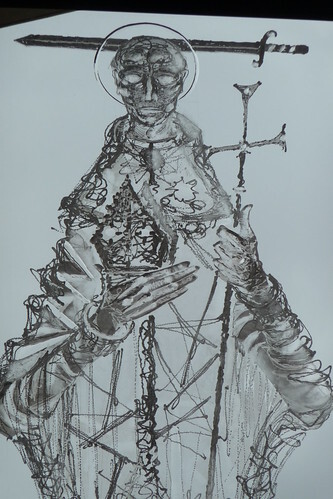
The cathedral project is full of factual and fascinating information about the building of a new cathedral, which began in the 1950s alongside the restoration of the Medieval cathedral, which was bombed and almost destroyed in 1940. Basil Spence, is the architect who won the national competition in 1950, and he was the brains and driving inspiration behind retaining the old damaged cathedral and linking it to his new building. The two cathedrals side-by-side are a metaphor for the structure of the book, which brings the past into connection with the present. I loved all the cathedral sections and I spent a long time on Google looking at many beautiful pictures and also of the floor flans, showing the relationship of the old to the new. Like the author, I was particularly taken with the West Screen, a wall of glass etched with drawings of Saints and Angels by John Hutton.


I don't live in the UK, so I didn't know anything about the new cathedral, although I was aware of the massive large-scale destruction of Coventry in 1940. Moss, provides a detailed account of the war-time bombing (449 bombers in one night in November 1940) and after the war the desire to rebuild, with the cathedrals as a symbol of peace and longevity. It was one of a number of projects to restore the image of the UK as a nation with pride; Moss mentions the Festival of Britain and the South Bank project. And, her research is skilfully interwoven into the contemporary story, of the family. They live a short distance from the cathedrals and Adam who also works as a part-time lecturer in one of the West Midlands' universities, thus provides a commentary on a range of topics forming the basis of British life today: schools, hospitals, universities, the loss of green-zones, parking difficulties, academic politics, midland architecture, the continual erosion of old with new buildings, the state of the NHS, over-worked nurses and GPs, Government cuts in local spending etc.

The third narrative, which came as a pleasant surprise was the story told by Adam's father. He comes by train from his remote location of Porthleven, Cornwall, to help with the care of the girls. The grandfather tells how he broke with his middle-class parent's aspirations. He packed a rucksack and travelled west across the States, looking for an alternative life-style (1960s anti-Vietnam protests etc). He also goes back to his parents' story, of Jews escaping the horrors of East Europe and settling in the USA to start a new life. Initially he talks to Miriam to distract her from her anxieties and boredom in the hospital, and then this oral telling opens to include Rose, the younger daughter.

I think Moss's skill lies in drawing all the different strands together, blending the past and present into a relevant present-day story. She has a few odd sentence structures, a syntax written, I think in an attempt to authenticate the male voice of her narrator.

I had some reservations, which mostly hit on my own particular value system. I think the father and doctor-mother, came across as 'helicopter parents'. It is, however, part of the narrative, as they learn to step back from micro-managing their daughters' lives. My other personal resistance, is the drama about death; especially the deep grief felt by parents of children with terminal illnesses - this is a difficult subject but, sometimes, I feel as if the grief is excessive (excessive in the book, as well as in general). The author tries to mitigate some of it by having her narrator, refer to the tragedies occurring elsewhere in the world. Adam contemplates the death of children in war-zones, as well as neglected and abused children in first world countries.

Four stars because I think there is a very slight element of 'allow me to teach', which I never like in novels. 5 plus golden stars for all the fabulous information on Coventry Cathedral - I strongly advise anyone in the region to go have a look - it's wonderful.

Profile Image for Doug.
2,549 reviews918 followers
January 2, 2021
4.5, rounded up. Great way to start a new year of reading!

We all live in patterns we do not see. We are all following magic ravens, even when we are lost. Otherwise, there would be no stories.

# 3 in my ongoing Moss-athon (after Summerwater and Ghost Wall), and I am still kvelling over Moss's prose style, intelligence, psychological acuity, and plotting. My only qualm on this one is that I'm still not quite sure how all the disparate strands of the three main narrative thrusts fit together (1. the main story involving the Goldschmidt family's travails when eldest daughter Miriam almost dies of an unexplainable bout of exercise-induced anaphylaxis; 2. patriarch Adam, who narrates the first part, and his PhD research into the destruction of Coventry Cathedral during WWII, and its reconstruction; 3. the backstory of Adam's father, Eli, during the turbulent sixties and his experiences in various communes and the counterculture) - but they needn't have all their ducks lined up in a row, particularly, for it to still work for me - and that lack of closure might well be intentional. Moss is quickly becoming a favorite author, and I'm now moving on to her early trilogy of related novels.
Profile Image for Carmel Hanes.
Author 1 book177 followers
May 26, 2021
"Who can believe that his wife will die while cooking dinner in her own kitchen, that his children, tonight , won't survive bath time? Perhaps more importantly, how can we live once we have understood that any or all of us may be killed while tying our shoelaces or going up the stairs? While reading a novel, or writing one? Two children died in the Coventry raid because the older one had left their Anderson shelter to take her younger brother back to the house to use the toilet. A man survived because he'd left a shelter to pee in a neighbour's garden and the shelter received a direct hit while he did so."

Death is inevitable.It hangs like that carrot on a stick, trotting along in front of us, an unwelcome reminder we work to ignore, focusing instead on the scenery to the right and left of us. Our knowledge of it shoved into the abstract corners of our awareness...not this day, not this time, not this way. Fingers in our ears...na, na, na, na.....

Until we run right into that capricious carrot.

I've read several books by Sarah Moss. She's brilliant, eloquent, creative, and an astute observer of our humanity. I find her writing impeccable.

The bulk of this story follows a family upended by the inexplicable medical emergency the fifteen year old daughter suffers. Suddenly robbed of their comfortable complacency, the family is forced to examine what this means, now and in the future; for this daughter as well as the younger one. Told through the eyes of the father, the narrative exposes the blood marrow of parental anxiety.

"As if I could no longer distinguish between an absent child and a lost one, as if I had lost what in babies is called object constancy, meaning the knowledge that something absent continues to exist out of sight and hearing"...."The problem, it seemed to me in those days, is that object constancy is one of those lies we tell ourselves to make it possible to live. Important things may cease to exist when you look away. "

Having helped my husband through heart surgery, after a near miss on avoiding the death carrot, I found familiar ground in this book; the checking for breath, touching the back to feel for warmth, texting to find out why he's half an hour late coming home, mistakenly telling myself that my very presence will be protection from something bad happening. Ground that must feel all the more unstable when it's a child you are concerned about, and which Moss captures brilliantly.

The primary story is compelling enough, but Moss also adds historical and cultural relevance to this read. Embedded in the narrative are indictments of England's health care system, references to larger losses due to war, our drive to rebuild after destruction (our lives as well as our surroundings), the personal choices directing the course of our lives, the push and pull of embracing or rejecting certain lifestyles or values, the comparing of loss, which all hits the human spirit with identical force regardless of circumstances, the ultimate impotence we feel even as we struggle to control something.

I would categorize this as a cerebral read, disguised as a family drama. Character rich, plot poor, and ultimately delicious to my particular brain palate . That question....how can we go on when danger and death could lurk just around the corner, hanging threateningly on that stick? Because we must. Because life moments fill our marrow with enough satisfaction, love, and connection to override the curse of the unknowns. Because we lie to ourselves about object constancy.
Profile Image for Peter Boyle.
581 reviews742 followers
October 2, 2016
"It is a pity that the things we learn in crisis are all to be found on fridge magnets and greeting cards: seize the day, savour the moment, tell your love- May we live long enough to despise the cliches again, may we heal enough to take for granted sky and water and light, because the state of blind gratitude for breath and blood is not a position of intelligence."

I am not a parent, but some of my friends are. I see how their priorities have changed. They are no longer the most important person in their own life. And this brings a new set of fears - any threat to the well-being of their children is what frightens them most in this world.

That's precisely what happens to Adam Goldschmidt, a stay-at-home father of two. One terrifying day, his 15-year-old daughter Miriam lies down beneath a tree at school and stops breathing. Thanks to some quick-thinking teachers and paramedics she is resuscitated and rushed to the local hospital. The next few days are a blur of uncertainty as the doctors try to figure out the cause of Miriam's collapse. They are joined in the ward by youngest child Rose and mother Emma, herself an exhausted and overworked doctor. Adam immediately realises how incredibly lucky he is that his daughter survived. But he also resigns himself to the fact that their lives will never be the same again.

I loved how the relationship between father and daughter is depicted in this story. Adam is a clever and well-educated man who is currently researching a history of Coventry cathedral. Miriam is also fiercely intelligent and extremely assertive. She is more than capable of disputing her Dad's beliefs and these squabbles were some of my favourite parts of the book. Though she infuriates him at times, you really get the sense of how proud Adam is at having raised such a well-informed and self-assured daughter. His family mean absolutely everything to him and this is heartrendingly demonstrated when Miriam asks what he would have done with her belongings if she had died:
"We would, I did not say, probably have moved house, to get away from the emptiness of your bedroom or maybe been unable ever to move away from the place where you had lived. We would have had to go away, to take a year or six months and run away from all the places you had been and at the same time would have needed to stay where your feet had walked and your hands had touched, where your skin was only gradually departing from the dust and the marks of your grubby fingers were still imprinted on the paint under the light switch."

It's primarily a story about the joys and trials of parenthood, the many anxieties and responsibilities it brings. But Moss manages to eloquently address several other topics too like the NHS, gender roles and the state of modern Britain. There are a number of chapters given over to the hippy exploits of Adam's father in America and the rebuilding of Coventry cathedral after the war, and I must admit these diversions did not grip me as much as the Goldschmidt family plight. But there is a whole lot to admire in this cerebral, poignant and powerful novel.
Profile Image for Banu Yıldıran Genç.
Author 2 books1,424 followers
May 24, 2018
modern anne-babaların modern dünyada çocuklarının sebebi bilinmeyen hayati tehlike taşıyan bir hastalıkla baş etmeye çalışmalarına dair çok iyi bir roman.
o kadar sade, o kadar içten yazılmış ki. ve çocuk sahibi olan herkesin kelimesi kelimesine aynı sözcüklerle ifade edeceği duygularla dolu ama ne duygu sömürüsü var ne de melodram.
bir kadın yazar tarafından modern dünyada çalışmayan ve çocuklarına bakan babanın yazılması, hele bu kadar ustalıkla yazılması, çok gelişmiş sandığımız ingiltere'de bile bu durumun zorluğu, evlilikteki bastırılmış sözcükler ise hakikaten şaşırttı beni.
ve yine ingiliz sağlık sisteminin, akademisyen dünyasının, inşaat sektörünün bizimkine benzemesi ne yalan söyleyeyim "oh be, yalnız değilmişiz" hissi veriyor.
minimum olay örgüsüyle ne kadar derin bir roman yazılabiliyor, dedirtti bana.
kitap hakkında agos'a yazdım:
http://tembelveyazar.blogspot.com.tr/...
Profile Image for Annelies.
165 reviews3 followers
October 22, 2018
This book gets under your skin. It's about a healthy teenager that gets a cardiac arrest and how her family deals with it afterwards. It's the way death can 'overcomes' someone in the middle of life. It's actually the fact that death nearly did happen in life and the possibility that it could have happened. How you cope with it. The manner in wich it alters daily life for you and your family, that you're never will forget about it. The daily terror it will put on you; you'll never before were aware of it. And how you come to live with it because you knowthat's the only way out of it. How you find live again.
Profile Image for Summer York.
1 review1 follower
April 26, 2017
I found the middle class privileged neurotic narration of this book mind bogglingly frustrating. Everything about them annoyed me - from moaning incessantly about the NHS, to forgiving minor characters their failings because awww poor them they don't know any better being uneducated and working for minimum wage - I hated the whole family. I did enjoy the grandfathers story but it was so small and unfinished that it couldn't redeem this book past it's one star rating. All I wanted was for one of them to die, after drudging through the whole book I didn't mind which one of them bit the dust (it could have ended with all of them dying in a 'tragic' plane crash on their way to the spur of the minute holiday they decided to take because y'know... they can afford it. Adam can save all the bitching about how his wife paid for it all and wank about it later, after emptying the washing machine and doing the dishes, eating a fresh croissant from the good bakery and puréeing some organic veg, ugh) I just wanted a death, just one lousy death to cheer me up at the end of a dull nagging annoying book that epitomises white privilege, and I didn't even get that. Boo!
This entire review has been hidden because of spoilers.
Profile Image for Renee Godding.
855 reviews979 followers
December 26, 2021
5/5 stars, all time favorite

“Suddenly, you will stop, you and me and all of us. Your lungs will rest at last and the electric pulse in your pulse will vanish into the darkness from which it came.
Put your fingers in your ears, lay your head on the pillow, listen to the footsteps of your blood.
You are alive.”


There is a universal truth that we all know to be true, but can’t quite fathom in all its gravity: we are always just one breath away from disaster.
It’s thanks to the mercy of our mind’s compartmentalisation, that we can put that knowledge on a backburner and live our everyday lives worry-free. Tragedy happens to others, not to us, and certainly not to our partners, friends or (God forbid) children… Right…?
But what happens if this protective bubble of rationalisation is burst wide open, the moment we come face to face with the loss of our own life, or that of a loved one? The Tidal Zone explores the aftermath of such an event. An event that will send ripples throughout the lives of the people involved, far passed what outsiders will see.

What began as any other day ends in a parent’s worst nightmare for Adam, when his 15-year old daughter Miriam collapses and stops breathing while at school, for no apparent reason. Her condition is labled idiopathic anaphylaxis: a severe and potentially deadly allergic reaction to an unknown stimulus. In other words: the doctors don’t exactly know what causes it, and therefore have no way of knowing if and when this will ever happen again.
Despite the fact that Miriam survives without any physical damage, the ordeal leaves a permanent mark on the entire family. The Tidal Zone follows the way each family member moves forward, and the push and pull of their different strategies, that may drive them apart or unite them even stronger.

The Tidal Zone was a beautifully crafted, layered experience that left a deep impression on me. What could have easily become a melodramatic or overly-heavy slog was kept light through its relatable and likable characters. Most easy to like is Miriam herself, as a smart and sassy teen, who doesn’t take any over-protective “bullshit” from her dad. But cautious and protective stay-at-home dad Adam, and rational Emma who uses her medical knowledge as a GP to build up a wall, also make for a lovable cast.
Sarah Moss manages to pack an impressive layered experience in such a short and compact book. Not only emotionally layered; demonstrating the juggling of a life altering event with the mundanity of everyday life, but also thematically layered. Through the eyes of Emma, we get an insight into the British NHS, experienced as a GP and as a mother. Through Adam’s eyes we see the echoes of his own childhood and relationship with his father, mirrored in his approach to his daughter. We also see parallels with Adams personal fascination: the reconstruction of the nearby Covenant Cathedral, which initially feels out of place, but is woven neatly into the narrative.
Overall The Tidal Zone is, in my humble opinion, close to a masterpiece, only held back by some minor pacing-issues around the 60%-mark. Considering everything else it managed to do, that was easily forgivable.

On a personal note:
The Tidal Zone has a deeper layer of personal connection to me, due to my own history and experiences. I too almost lost my life due to a potentially deadly illness as a child, and experienced this “realisation of mortality” alongside my family at a young age. Adding to the similarities, I also have one parent who is a GP, and am currently in training as a doctor myself. Safe to say, I recognised a lot of myself in this book, which I haven’t seen anywhere else in fiction so far.
Many books (for better or worse) take on the topic of grief, and even grief over the loss of a child. No book I’ve read before has ever covered grief over a death that could’ve happened, and the crushing fear that comes from knowing it could still happen at any time. I’ve seen people disliking this novel for being about “overprotective parenting” or “exaggerated mundane fears”. I’ve even seen “how long can you milk something that didn’t even happen”. This is exactly the kind of response that family’s like Miriams, and like mine, will realistically encounter, and it pains me to see this level of misunderstanding from people who haven’t been in this situation. I’m so thankful and glad that this book exists, and was in the hands of an eloquent, compassionate and capable author such as Moss. I's without a doubt her best work to date.
Profile Image for alittlelifeofmel.
933 reviews403 followers
June 18, 2017
4.5 stars, surprisingly good.

Here's the thing about this book, I love it, but I don't know that I'd recommend it. This book is good for a certain kind of people, those who like mundane. I love reading books about mundane boring life, the more details the better. I will read 24 pages about someone getting up, making breakfast, taking a shower, etc. I love that kind of stuff, and this book is full of it. But it's not for everyone, and this book has nothing to offer people who don't like that. This book is full of mundane life and boring details and day to day routine that I loved, but I know most will not.

There is a plot, Adam, the narrator of the book, receives a call one day that his 15 year old daughter's heart stopped and she temporarily died. She was able to be resuscitated but that trauma and event lingers with Adam and his wife. But this is like the first 10 pages of the book. The other 319 pages is his life, his family's life, his fear about his daughter's heart stopping again. Day to day routine. So again, while I love that stuff, there's not much of a plot to read about. The characters, and the relationships within this little 4 people family more than make up for the lack of plot, in my opinion.

The thing I loved the most about this book was the writing. This book is what I think is the exact definition of "I would read that author's grocery list." Something we say often, but would rather something more exciting. That wasn't the case for this book, it felt as mundane as reading Sarah Moss' grocery list and I loved it, would gladly do it again.

So yes, loved this. Actually surprised at how much. Docked off the .5 stars, and rounded down, just because there was a lot of inclusions about architecture and the history of the architect behind one church that I just found dreadfully boring but overall I loved this.
Profile Image for Hally.
281 reviews113 followers
September 21, 2016
I started this stunning book knowing very little; only that it is about the relationship between a father and his daughter who collapses and stops breathing one day at school out of the blue, and that the handful of my Goodreads friends having reviewed it had all given it a five star rating. I didn't want to be swayed by the latter and am still struggling to decide whether to give it four or five stars.

Things I love about the book are;
-The parallel story lines (I'm a sucker for this kind of thing, like in Pan's Labyrinth etc). Moss juxtaposes the rebuilding of Coventry cathedral after its bombing during WW11 with the desecration of a family's feelings of security after their oldest daughter stops breathing one day, her body having failed her with no warning.

-The sensuous descriptions of everyday family life. Of food, nature, the beauty in small things.

-The pervasiveness of Adam's anxiety regarding his daughters' wellbeing after the 'incident', and how I felt it so strongly myself, always thinking that something tragic was about to happen.

-The constant rumination and the way the book makes you think think think. About the many layers of privilege, about gender roles, about what it means to be human. To be mortal and fragile and living in a nonsensical world.

I wouldn't say that it was a flawless book. Chapter titles like 'azure and purple and gold' seemed to me a bit contrived in their pursuit of an aesthetic response.

The ambiguous changes in perspective between Adam and his father telling his story distracted me slightly, but maybe just because I've been focusing on that stuff a lot as a creative writing student. Really I think Moss gets away with it.

I'm being picky, but there were also a few repeated ideas that packed more of a punch the first time around. Things like this sentence;
It is a pity that the things we learn in crisis are all to be found on fridge magnets and greeting cards: seize the day, savour the moment, tell your love- May we live long enough to despise the cliches again [...]

Just wow. I once covered a whole page of A4 trying to say what Moss captures right there in a line, (and she does this a lot, just gets it bang on, yanno?) I just thought the message was diluted when it cropped up again near the end.

Finally, I found myself relating to the family less near the end of the book. I felt sort of distanced from them and their intellectual and domestic privilege, but probably this was intentional. It was like Moss was leading me out of the front door, holding a plate of leftovers wrapped in tinfoil.

Four and a half stars, whatever, it's full of gems.

Update: Love it even more after this video of Sarah Moss talking about her book https://www.youtube.com/watch?v=gCSCw...
Profile Image for Viv JM.
735 reviews172 followers
January 29, 2021
I am not sure why I have never read anything by Sarah Moss before but based on this, I feel I must immediately remedy that by reading everything she has ever written because her prose is sublime. I loved this book.
Profile Image for Kirsty.
2,792 reviews190 followers
June 5, 2017
The Tidal Zone was a highly anticipated read for me, as it was the last outstanding Moss I had to read. I love her writing, and have been engrossed in every single one of her books to date. I am so pleased to say that The Tidal Zone was the cherry on rather a delicious cake. I love the way in which the novel's plot circles around a singular moment, drifting back and forth in time. From the first, Moss' writing is beautifully poetic, and the entirety of the novel is profound and compelling. Moss masterfully ties so much together here - history, biology, geography, relationships, the NHS, and the Second World War - whilst making it an unfailing human novel. Wonderfully paced, with an authentic narrative voice and an achingly realistic cast of characters at its heart, The Tidal Zone is a sheer masterpiece.
Profile Image for Julie.
2,559 reviews34 followers
December 9, 2025
I've loved other titles by Sarah Moss and this one was included in the "New to Library" section of BorrowBox (an App for borrowing eBooks and eAudiobooks) for Herefordshire libraries.

The Tidal Zone revolves around an incident at school where the older of the two daughters collapses and stops breathing. It was a life changing moment for the entire family and much of the parents’ time spent going forwards is in anticipation of a repeat event, especially as they have no real answer to the question of why it happened in the first place. They must fight the urge to never let their daughters out of their sight and they consider the closeness of medical facilities when deciding on vacation destinations. Things that other parents with healthy children may never even consider.

Interspersed with chapters on the family and the ongoing medical dilemma are chapters on the father’s work on ‘The Coventry Cathedral Project,’ which were interesting and added another dimension to the story. I especially enjoyed learning about the details of the tapestry and the history of the cathedral and rebuilding after it was bombed in World War Two. I visited this beautiful cathedral earlier this year and appreciate the description of the artistic details of the as “handmade, artisanal.”

Sarah Moss describes the family member as carer hospital experience in a way that resonated with me. “For days we drifted in hospital time […] the aim is to pass minutes without noticing them, to be pleasantly surprised when you look at the clock.”

“It is an outing to walk down the corridor to refill the plastic jug with fresh water, perhaps glimpsing a new arrival or exchanging smiles with another [person] on the way.”

“It is a social event to ask a nurse for a box of tissues. If you are lucky, you will have time to exchange sentences about the weather or traffic.”

Moss includes a version of the story, ‘The Eagle and the Raven,’ which felt a bit surreal and added a mystical quality to the story.

Finally, I appreciated the passage on tracing the roots of ancestors:
After describing the typical tourist experience of New York City, the father leads the family “to Brooklyn to walk down the street where my father grew up.”

He goes on to say, “My pilgrimage the negative of those of Americans who appear in the poorer and more picturesque bits of Britain looking for what their ancestors fled. We are all in flight, all trying to look for our forefathers’ ghosts.”

Quote that caught my ears: "A plan is a story about the future."
Profile Image for Ylenia.
1,089 reviews415 followers
August 4, 2016
- ̗̀ 3.75 stars ̖́-

I personally find literary fiction very hard to review - manly because there's so much I could say I never know where to start.

The Tidal Zone was a very interesting book - I think you should know very little about it before reading it.
Adam is a stay-at-home dad who's working on a research of the Coventry Cathedral after it got rebuild. One day he receives a phone call: her older daughter had in incident and stopped breathing, no one can explain why it happened or if it will happen again.
This event is what sets in motion the entire book, that was narrated by Adam for the entire time (great choice).

I really liked this book but I lost interest around the last 50 pages.
The writing style was very specific and unique, so I can see many people not liking it but many more other loving it - like I did.
I think the author succeeded perfectly at getting her message to the reader but I, as a reader, in the end, was too tired to be totally involved in the book. And that's 100% not-being-in-the-right-mood-but-reading-anyway's fault.

Overall, I would totally recommend this.
Profile Image for Olga Kowalska (WielkiBuk).
1,694 reviews2,908 followers
April 28, 2018
„Będziemy musieli zaufać światu. Tak to teraz będzie.”

Mogłoby się wydawać, że trudna tematyka, jaką podejmuje Sarah Moss sprawi, że lektura „Między falami” będzie nieznośna, a nawet bolesna, a całość stanie się przeprawą nie do opisania. Jednak stało się inaczej, bo tę powieść pochłania się całymi fragmentami, zachłystuje się tą historią, zanurza się w niej i płynie z prądem. Odnajdujemy tu własne lęki, obawy, fobie, dostrzegamy znajome portrety i często czujemy się jak morskie żyjątka pozbawione ochronnych muszli, których nagość nagle pochłania moc surowych, niezwykle prawdziwych emocji. Rodzina Adama mogłaby być każdą nowoczesną rodziną, odbiciem współczesnych obaw o jutro, które może nigdy nie nadejść, a jednocześnie zdaje się być przypomnieniem, że: Nie można unikać kochania, bo obiekt naszej miłości kiedyś umrze. To ciężka dla serca lekcja, to skomplikowana dla skołatanego umysłu nauka, która kiedy wreszcie zostanie przyswojona, przynosi upragnione katharsis.
Profile Image for Ferdy.
944 reviews1,287 followers
February 4, 2017
Great: A story with the husband as a stay at home dad and the wife as the overworked bread winner. Thought Adam's resentful passive aggressive attitude was perfectly written, I was on his side and not on his side at the same time when it came to his bitterness and attitude towards his wife and well as his life in general.

Good: All about family and relationships, and how they handle grief/fear and everyday life when one family member inexplicably drops dead for a little while. It was really well done.

Not So Good: Didn't like all the chapters on the history/making of the Coventry cathedral. Or the grandfather's chapters about his hippie past. Also, hated Rose, she was an annoying brat.
Profile Image for Michael Livingston.
795 reviews291 followers
May 21, 2019
4.5

I listened to the audio book of this and really, really enjoyed it. Moss' main character Adam is brilliantly created - he feels deeply real, full of love, resentment, anxiety and fear - and the story of how he (and his family) adjust to having a sick daughter is gorgeously rendered. The two sub-stories: one about the rebuilding of the Coventry Cathedral after WW2 and the other about Adam's fathers wanderings as a young man are occasionally meandering - I just wanted to spend more time with the family.
Profile Image for D.
526 reviews84 followers
September 17, 2022
Excellent. A pleasure to read, I enjoyed the style as well as the contents. The book's blurb provides a good summary of the main story. However there are a few more stories woven through the narrative, providing further background on some of the characters. Nothing annoying and plenty to enjoy so 5*.
Profile Image for Imi.
396 reviews147 followers
April 19, 2017
The second book I've read by Sarah Moss and I have to say I don't she's a good fit for me personally. Her writing style really appeals to me, but I think, not being a parent myself, I just can't relate to many of the issues her characters face. Both this and Night Waking felt like blow-by-blow accounts of parenting and domestic issues, something that I started to find so dull that I couldn't help skimming in parts. In The Tidal Zone, Moss weaves 2 side-plots into the main storyline which centres on a father's torment after his daughter goes into cardiac arrest due to an unknown cause. The first sideplot is the story of the protagonist's father and his early life in US communes, the second is of the rebuilding of Coventry Cathedral. Surprisingly both sideplots, although only relating to parenting symbolically, as a metaphor for rebuilding and moving forward after a family tragedy, also bored me and again I found myself skimming in parts. Sadly, this book just didn't do much for me at all.
Profile Image for Eric Anderson.
716 reviews3,925 followers
July 5, 2016
When you experience a personal tragedy it fills your whole world. You’re aware and empathize with the suffering other individuals have experienced in the past and continue to experience all over the world. But this knowledge is more likely to colour your daily existence rather than saturate it. How do you contextualize your personal loss without turning it into just another story like the many stories of heartache we read about every day in the news? Sarah Moss’ new novel “The Tidal Zone” has an astounding way of looking at a potential personal tragedy within one household and simultaneously shows how it is situated in the expansive tapestry of human experience. She does this writing in a way which is poetic, profound and filled with wry humour, but it’s also a story firmly grounded in the small details of real life.

Read my full review of The Tidal Zone by Sarah Moss on LonesomeReader
Displaying 1 - 30 of 656 reviews

Can't find what you're looking for?

Get help and learn more about the design.