

What do you think?
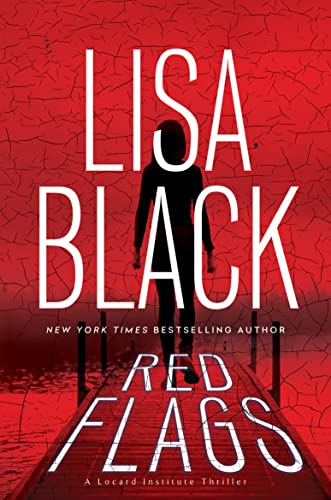
Locard Institute Thriller #1
Red Flags
New York Times bestselling author Lisa Black launches a pulse-pounding new series with a taut, compelling forensic thriller that introduces Dr. Ellie Carr and Dr. Rachael Davies, who must combine their expertise to solve deadly crimes . . .
When D.C. crime scene analyst Dr. Ellie Carr is called to investigate the heartrending case of a missing baby, she’s shocked to discover that the child’s mother is her own cousin. Close during their impoverished childhoods, Ellie and Rebecca eventually drifted apart. Rebecca is now half of a Washington power couple, and she and her wealthy lobbyist husband, Hunter, have been living a charmed life in an opulent mansion—until their infant son is taken.
“Every contact leaves a trace.” That’s the basic principle of forensic science followed by pathologist Dr. Rachael Davies. A reluctant Ellie is teamed with Rachael, employed by Hunter to help with the investigation. Rachael is assistant dean at the prestigious Locard Forensic Institute, named in honor of the French criminologist who inspired the profession. But in this case, discovering where those traces lead quickly becomes a dangerous journey through a web of greed and deadly ambition.
At first antagonists, then allies, Ellie and Rachael race to find the baby alive and bring the kidnappers to justice. What seemed like a simple ransom grab reveals links to a lobbying effort to loosen regulations on a billion-dollar gaming empire. Unless they can piece together the evidence before the Senate hearing, Rebecca’s son—and others like him—will face an unthinkable fate . . .
When D.C. crime scene analyst Dr. Ellie Carr is called to investigate the heartrending case of a missing baby, she’s shocked to discover that the child’s mother is her own cousin. Close during their impoverished childhoods, Ellie and Rebecca eventually drifted apart. Rebecca is now half of a Washington power couple, and she and her wealthy lobbyist husband, Hunter, have been living a charmed life in an opulent mansion—until their infant son is taken.
“Every contact leaves a trace.” That’s the basic principle of forensic science followed by pathologist Dr. Rachael Davies. A reluctant Ellie is teamed with Rachael, employed by Hunter to help with the investigation. Rachael is assistant dean at the prestigious Locard Forensic Institute, named in honor of the French criminologist who inspired the profession. But in this case, discovering where those traces lead quickly becomes a dangerous journey through a web of greed and deadly ambition.
At first antagonists, then allies, Ellie and Rachael race to find the baby alive and bring the kidnappers to justice. What seemed like a simple ransom grab reveals links to a lobbying effort to loosen regulations on a billion-dollar gaming empire. Unless they can piece together the evidence before the Senate hearing, Rebecca’s son—and others like him—will face an unthinkable fate . . .
320 pages, Kindle Edition
First published July 26, 2022
About the author
Lisa Black
599 books589 followersLisa Black spent the happiest five years of her life in a morgue. Strange, perhaps, but true. After ten years as a secretary, she went back to school to get a Bachelor’s degree in Biology from Cleveland State University. In her job as a forensic scientist at the Cuyahoga County Coroner’s Office, she analyzed gunshot residue on hands and clothing, hairs, fibers, paint, glass, DNA, blood and many other forms of trace evidence, as well as crime scenes.
She had her life sorted out just the way she liked it until her husband got fed up with Cleveland snow and moved them to Florida, 1400 miles away from her family and her career. Not that she’s bitter or anything. Now she works as a Certified Latent Print Examiner and Certified Crime Scene Analyst for the city of Cape Coral, Florida, police department.
Lisa has lectured at writer’s conventions and appeared on panels. In her life as a writer she’s a member of Sisters In Crime, Mystery Writers of America and International Thriller Writers. In her life as a forensic specialist she’s a member of the American Academy of Forensic Scientists, the International Association for Identification, and the International Association of Bloodstain Pattern Analysts. She has had over 1050 hours of instruction in forensic topics and has testified in over 60 trials.
Her book Perish was shortlisted for the inaugural Sue Grafton Memorial Award by Putnam and Mystery Writers of America. Her That Darkness is a #1 Amazon bestseller and Evidence of Murder is a NYT bestseller. Lisa was a Guest of Honor at 2021 Killer Nashville.
She had her life sorted out just the way she liked it until her husband got fed up with Cleveland snow and moved them to Florida, 1400 miles away from her family and her career. Not that she’s bitter or anything. Now she works as a Certified Latent Print Examiner and Certified Crime Scene Analyst for the city of Cape Coral, Florida, police department.
Lisa has lectured at writer’s conventions and appeared on panels. In her life as a writer she’s a member of Sisters In Crime, Mystery Writers of America and International Thriller Writers. In her life as a forensic specialist she’s a member of the American Academy of Forensic Scientists, the International Association for Identification, and the International Association of Bloodstain Pattern Analysts. She has had over 1050 hours of instruction in forensic topics and has testified in over 60 trials.
Her book Perish was shortlisted for the inaugural Sue Grafton Memorial Award by Putnam and Mystery Writers of America. Her That Darkness is a #1 Amazon bestseller and Evidence of Murder is a NYT bestseller. Lisa was a Guest of Honor at 2021 Killer Nashville.
Ratings & Reviews
Friends & Following
Create a free account to discover what your friends think of this book!
Community Reviews
Displaying 1 - 30 of 157 reviews

May 4, 2022
I have mixed feelings about this one, it was interesting in some ways and raised some ethical issues but it also felt flat at times/overly focused on details that weren't interesting to me. about gaming. The ending was unexpected and I liked that 3.5 rounded up to 4

October 17, 2022
3.5 stars
Red Flags by Lisa Black is the first in the Locard Institute thriller series.
First, let me thank NetGalley, the publisher Kensington Books and of course the author, for providing me with a copy of this book in exchange for an honest review. All opinions are my own.
Series Information:
Dr. Rachel Davies (a former forensic pathologist) is the assistant director of The Locard Institute which conducts research in forensic topics, from ballistics to DNA analysis, and trains scientists and technicians and law enforcement personnel from around the country. They have state-of-the-art technology available, and are often in demand. Dr. Ellie Carr is a forensic scientist for the FBI in DC.
My Synopsis: (No major reveals, but if concerned, skip to My Opinions)
When baby Mason is kidnapped, Ellie is right there dusting for prints, and she is stunned to learn that his mother is actually her cousin Becca, who she hasn't really seen in years. Becca is a policy advisor to the senate, and her husband, Hunter, is a lobbyist. They are well-to-do, and often have the ears of the government. Hunter decides the FBI aren't enough, and he hires The Locard Insititute to work with the FBI to find his child. Instead of saying it's a conflict of interest, the FBI determine that Ellie should work with Locard. She isn't thrilled, and is concerned that if things go badly, she'll be made the scapegoat.
However, Ellie will do anything she can to help find her cousin's child. Determining the reason for the missing boy is problematic. It seems that whoever took Mason must have been able to come and go easily, so it may have been an inside job. But why? Is it for ransom, or does it have something to do with the work that Becca and Hunter are involved with right now. Gaming is a billion dollar enterprise, and some are trying to stop their client from allowing in-game chats and selling classified information on the gamers. Hunter would lose a lot of money if they lost this case.
My Opinions:
Okay, I'm not a fan of political thrillers, and a lot of this was based on lobbyists and senate procedures, which I could have done without. It was overly-detailed. Yes, I may have skimmed. However, perhaps I should have realized it may be political when I read that it takes place in DC. Hopefully, the next book will deal with less politics.
As well, the topic of on-line child predators is a little scary, but quite often I felt like I was being preached to. Again, everything was explained non-stop -- too many details, and repetitive.
I did, however, like both Ellie and Rachel, so that helps me to see that the series could be good. I really enjoyed reading about what they were doing to solve the crime. So the forensics was interesting, the characters great, the topic good, but the overall book a little too detailed/boring.
Anyway, I will definitely read a second book in this series, and see how it goes.
For a more complete review of this book and others (including the reason I chose to read/review this book, author information and contact details, as well as a favorite quotation or two from the book), please visit my blog: http://katlovesbooksblog.wordpress.com/

May 18, 2022
In Lisa Blacks first book in the series, Locard Institute Thriller, Red Flags, Ellie Carr is a successful forensic investigator despite a rocky start in life filled with varied foster families but lots of love. One of those families is with her cousin, Rebecca, who with her politically-motivated husband has grown up to be in the top levels of influence in national politics. When their infant son is kidnapped, they ask for Ellie's help, claiming she is the only one they can trust. The problem is, Ellie never felt that close to Rebecca when she lived with her and isn't sure she is telling the truth about the events surrounding the kidnapping. When the children of other business friends of the Washington power couple are also kidnapped, it becomes clear this isn't personal to Rebecca's family but may be related to a business venture that provides online games for kids that may or may not be addictive.
The story is clever, fast-moving, complicated enough to keep my interest, with maybe too much backstory that slows the pace. It includes a lot of tech wizardry to solve the crime which I always enjoy. When I finished the story, I realized the author had two messages: 1) Beware of people you meet online, especially if you're a child, and 2) Online games are designed to be addictive. It's a good cautionary story that I enjoyed reading.
The story is clever, fast-moving, complicated enough to keep my interest, with maybe too much backstory that slows the pace. It includes a lot of tech wizardry to solve the crime which I always enjoy. When I finished the story, I realized the author had two messages: 1) Beware of people you meet online, especially if you're a child, and 2) Online games are designed to be addictive. It's a good cautionary story that I enjoyed reading.

June 21, 2022
This is an amazingly detailed book that actually took me quite a bit of notating to keep the characters cohesive. The storyline is both complex and seems to compound (and sometimes confound). The interpersonals are well set up to continue into more in series, and that is a very good thing. The publisher's blurb is a good hook and not recap is needed. Loved it!
I requested and received a free e-book copy from Kensington Books via NetGalley. Thank you!
I requested and received a free e-book copy from Kensington Books via NetGalley. Thank you!

November 3, 2022
Ok, I am the first to admit, I started reading Lisa Black several years ago and I have love every story since. This one is no exception. Ellie is an FBI agent sent to work on the case of a missing child. Little does Ellie realize, the child is the son of her cousin Becca whom she hasn’t talked to in a long time. Becca is a policy advisor to the senate and her husband Hunter is a lobbyist. This book is goes at a rapid pace and will have you turning the pages as quickly as you possibly can to get to the conclusion.
Lisa Black is an author that every time I see she’s written another book, it’s a definite must have for me. She keeps the reader immersed and invested in the storyline.
Thank you to #netgalley and #kensingtonpublishing for allowing me to read the eARC of this book. All opinions expressed above are my own.
Lisa Black is an author that every time I see she’s written another book, it’s a definite must have for me. She keeps the reader immersed and invested in the storyline.
Thank you to #netgalley and #kensingtonpublishing for allowing me to read the eARC of this book. All opinions expressed above are my own.

June 30, 2022
Interesting first in a series premise, where FBI agent Ellie meets up with a private lab doc, Rachael, over the disappearance of her infant cousin. While she and her cousin, the baby's mom, haven't kept up over the years, she's still family, and despite there being a bit of a conflict of interest, Ellie is assigned the case by her new boss (also her ex). While this was a perfectly good thriller I thought the author was juggling a few too many threads - Ellie's family backstory, the baby's disappearance, and another string of kidnappings of children. All of the missing children are connected to her cousin's company, a video game outfit aimed at kids, that's about to attempt an IPO. There's a hearing in front of congress to get through. There's quite a bit of pretty interesting info on the mechanics of datamining and just how kids might encounter predators online during the course of playing a game. There's also quite a bit of forensic detail, which is interesting. I felt ultimately the author might have chosen one insanely detailed area to focus on instead of two, not to mention the kidnap story overlaying everything. Don't get me wrong, this was a fast, hard to put down read, and I'm interested to see where the second book might take Ellie and Rachael.

September 27, 2022
Check out all my reviews at: https://www.avonnalovesgenres.com
RED FLAGS (Locard Forensic Institute Thriller Book #1) by Lisa Black is an intense and intricately plotted first book in a new forensic thriller series featuring two female forensic experts and the Locard Forensic Institute.
FBI analyst Dr. Ellie Carr from the D.C. Evidence Response Team is called to the scene of a kidnapping. When she arrives, it is to find the missing baby belongs to her cousin, Becca who Ellie has been estranged from for many years. What Ellie discovers is her cousin is now a part of a D.C. power couple of lobbyists on the verge of making millions when their friend’s kid focused on-line gaming company goes public. Ellie has been all over the house and can find no evidence of a break-in.
Becca’s husband, Hunter hires the Locard Forensic Institute and Dr, Rachel Davies. Ellie is reluctant at first to work with Rachel, but in working the kidnapping, they begin to trust each other. As more children are kidnapped, Ellie and Rachel are in a race to discover who the kidnappers are and why they are focusing on the children of the gaming company involved in a Senate hearing on children’s’ on-line gaming regulations.
I always enjoy Ms. Black’s intelligent main characters and her detailed explanations of different types of forensic science. There is a lot going on in this book and while some is extremely interesting, especially the chat and ad regulations in children’s on-line gaming, there are times when the information, especially about IPOs slowed down the pace a bit. The plot is a web of several interconnecting yet different motives and crimes that all come together in an ending that surprised me. Ellie and Rachel’s professional relationship is realistically portrayed and paced throughout from standoffish and suspicious to understanding and the start of a friendship and partnership.
I am looking forward to following both Ellie and Rachel in their personal lives and on their future investigations in this new series.
RED FLAGS (Locard Forensic Institute Thriller Book #1) by Lisa Black is an intense and intricately plotted first book in a new forensic thriller series featuring two female forensic experts and the Locard Forensic Institute.
FBI analyst Dr. Ellie Carr from the D.C. Evidence Response Team is called to the scene of a kidnapping. When she arrives, it is to find the missing baby belongs to her cousin, Becca who Ellie has been estranged from for many years. What Ellie discovers is her cousin is now a part of a D.C. power couple of lobbyists on the verge of making millions when their friend’s kid focused on-line gaming company goes public. Ellie has been all over the house and can find no evidence of a break-in.
Becca’s husband, Hunter hires the Locard Forensic Institute and Dr, Rachel Davies. Ellie is reluctant at first to work with Rachel, but in working the kidnapping, they begin to trust each other. As more children are kidnapped, Ellie and Rachel are in a race to discover who the kidnappers are and why they are focusing on the children of the gaming company involved in a Senate hearing on children’s’ on-line gaming regulations.
I always enjoy Ms. Black’s intelligent main characters and her detailed explanations of different types of forensic science. There is a lot going on in this book and while some is extremely interesting, especially the chat and ad regulations in children’s on-line gaming, there are times when the information, especially about IPOs slowed down the pace a bit. The plot is a web of several interconnecting yet different motives and crimes that all come together in an ending that surprised me. Ellie and Rachel’s professional relationship is realistically portrayed and paced throughout from standoffish and suspicious to understanding and the start of a friendship and partnership.
I am looking forward to following both Ellie and Rachel in their personal lives and on their future investigations in this new series.

August 7, 2022
Red Flags by Lisa Black
Locard Institute #1
Great introduction to a new forensic research, study, and investigation series that will provide cases for private investigators with mad skills to solve a variety of cases with and perhaps without government, state, and local law enforcement agencies.
What I liked:
* Dr. Ellie Carr: DC FBI crime scene analyst, divorced, dedicated, difficult backstory that I hope to hear more about, on a case that many might recuse themselves from, would like to know more about her.
* Dr. Rachael Davies: assistant director of Locard Institute, single parent to deceased sister’s toddler, counts on her mother for child care, has a proposition for Ellie at the end of the book
* Ellie’s extended family (most of them): there for Ellie when she found herself an orphan at eleven
* Taylor: Ellie’s first cousin once removed, a bystander in the disappearance of her younger brother, has much to contend with
* The look into the gaming industry and its impact on children, the parental controls that may or may not be sufficient, and the “what-ifs” that were introduced
* The plot, writing, and pacing
* That it made me think and care about the outcome
* The unexpected twist toward the end of the story
* That though it took me awhile to get into the story…I could not put it down once engaged
* That there are more books to look forward to
What I didn’t like:
* Who and what I was meant not to like
* The mental anguish that some of the characters must have experienced
* The cold calculating nature of a few of the characters
Did I enjoy this book? Yes
Would I read more in this series? Yes
Thank you to NetGalley and Kensington Publishing for the ARC – This is my honest review.
4-5 Stars
Locard Institute #1
Great introduction to a new forensic research, study, and investigation series that will provide cases for private investigators with mad skills to solve a variety of cases with and perhaps without government, state, and local law enforcement agencies.
What I liked:
* Dr. Ellie Carr: DC FBI crime scene analyst, divorced, dedicated, difficult backstory that I hope to hear more about, on a case that many might recuse themselves from, would like to know more about her.
* Dr. Rachael Davies: assistant director of Locard Institute, single parent to deceased sister’s toddler, counts on her mother for child care, has a proposition for Ellie at the end of the book
* Ellie’s extended family (most of them): there for Ellie when she found herself an orphan at eleven
* Taylor: Ellie’s first cousin once removed, a bystander in the disappearance of her younger brother, has much to contend with
* The look into the gaming industry and its impact on children, the parental controls that may or may not be sufficient, and the “what-ifs” that were introduced
* The plot, writing, and pacing
* That it made me think and care about the outcome
* The unexpected twist toward the end of the story
* That though it took me awhile to get into the story…I could not put it down once engaged
* That there are more books to look forward to
What I didn’t like:
* Who and what I was meant not to like
* The mental anguish that some of the characters must have experienced
* The cold calculating nature of a few of the characters
Did I enjoy this book? Yes
Would I read more in this series? Yes
Thank you to NetGalley and Kensington Publishing for the ARC – This is my honest review.
4-5 Stars

June 20, 2022
I’m a long time lover of CSI and love the challenge of trying to solve a case before the professionals, so this book was a good fit for me. I’ll admit to being hesitant to start this one after reading the synopsis and discovering that it centered around the kidnapping of children. However, I was surprised how fast-paced and intense this book was and will admit to putting off several things I should have been doing in order to finish this book!
Stuffed full of ethical ponderings and shocking secrets, this book is told from a unique perspective. Where most investigative style books are written from the investigating police officer’s point of view, this one is refreshingly told from the crime scene analyst’s viewpoint. I noticed that after some initial hand holding, I was running ahead of the analyst and noting things to investigate as evidence. It kept me engaged.
While the forensic technology and process intrigued me, I’d be remiss if I didn’t mention that I skimmed plenty over the gaming sections. I did get the intended message, of online safety, despite skipping large sections. In the same way, I did enjoy an intelligent read, but ended up scribbling crib notes for myself as clues and as reminders for character reference as I felt there were too many for me to remember!
This is a great thriller written by a forensic scientist and crime scene investigator who at one time also worked in the coroner’s office trace evidence lab. It definitely oozes authenticity.
I was gifted this advance copy by Lisa Black, Kensington Books, and NetGalley and was under no obligation to provide a review.
Stuffed full of ethical ponderings and shocking secrets, this book is told from a unique perspective. Where most investigative style books are written from the investigating police officer’s point of view, this one is refreshingly told from the crime scene analyst’s viewpoint. I noticed that after some initial hand holding, I was running ahead of the analyst and noting things to investigate as evidence. It kept me engaged.
While the forensic technology and process intrigued me, I’d be remiss if I didn’t mention that I skimmed plenty over the gaming sections. I did get the intended message, of online safety, despite skipping large sections. In the same way, I did enjoy an intelligent read, but ended up scribbling crib notes for myself as clues and as reminders for character reference as I felt there were too many for me to remember!
This is a great thriller written by a forensic scientist and crime scene investigator who at one time also worked in the coroner’s office trace evidence lab. It definitely oozes authenticity.
I was gifted this advance copy by Lisa Black, Kensington Books, and NetGalley and was under no obligation to provide a review.

July 16, 2022
Lisa Black’s books are always on my must have list and book one of the Locard Institute series Red Flags is no exception. Enriched with the interesting world of forensics through the eyes of heroine, Ellie Carr, I was captivated from the start. I also got a glimpse into the terrifying influence technology, specifically gaming, has on children. I look forward to the next book.

November 19, 2022
This was a struggle for me to get through. Heavy with details of gaming and forensics, I found it difficult to enjoy the actual storyline and became easily distracted throughout the book.
September 2, 2022
I like to try new authors and I did enjoy this story. Female heroines for a change of pace lately. Author is a forensic scientist, which greatly influenced my choice.
Rated 3.5 for Very readable and a convoluted conclusion that is mostly believable. The drawback to a higher rating is that but you don’t care about the villains or the heroes because there is no meaningful character development. Title refers to clues and misdirection, of course.
As we expect, both women are brainy and beautiful, one black, one white, the best in their fields, both currently single, so —also expectedly— they clash at first; but in time they find that working together makes them both even better and they become friends.
--Story is about Hunter (lobbyist) whose client with whom he’s overly invested (invented a video game to be highly addictive to children to include a “chat” to enhance profits because kids prefer it over games without the instant-chat capability.) A hot topic.
Dr. ELLIE CARR, D.C. FBI crime scene analyst, will investigate case of a missing 4-month old baby boy (MASON); the child’s mother is her own cousin who is a Congressional committee woman who is married to the wealthy lobbyist (HUNTER), living in a 30-plus-room opulent D.C. mansion. Parents, REBECCA (BECCA) CARLISLE) and HUNTER will be automatic suspects before they get a ransom note, plus it’s a private home with servants, not a crowded shopping mall with easy access to victims of kidnappers. They also have a little girl named TAYLOR, 11 years old.
Dr. RACHEL DAVIES, pathologist is employed by HUNTER to team up with Ellie to help with the investigation; she’s an assistant dean at Locard Forensic Institute (& Lab). The trace evidence discovered will lead to deadly ambition and greed with the kidnappers’ links to a lobbying effort to loosen regulations on a gaming empire; the investigating team is racing against a scheduled Senate hearing. (This part makes the story less believable.)
Rated 3.5 for Very readable and a convoluted conclusion that is mostly believable. The drawback to a higher rating is that but you don’t care about the villains or the heroes because there is no meaningful character development. Title refers to clues and misdirection, of course.
As we expect, both women are brainy and beautiful, one black, one white, the best in their fields, both currently single, so —also expectedly— they clash at first; but in time they find that working together makes them both even better and they become friends.
--Story is about Hunter (lobbyist) whose client with whom he’s overly invested (invented a video game to be highly addictive to children to include a “chat” to enhance profits because kids prefer it over games without the instant-chat capability.) A hot topic.
Dr. ELLIE CARR, D.C. FBI crime scene analyst, will investigate case of a missing 4-month old baby boy (MASON); the child’s mother is her own cousin who is a Congressional committee woman who is married to the wealthy lobbyist (HUNTER), living in a 30-plus-room opulent D.C. mansion. Parents, REBECCA (BECCA) CARLISLE) and HUNTER will be automatic suspects before they get a ransom note, plus it’s a private home with servants, not a crowded shopping mall with easy access to victims of kidnappers. They also have a little girl named TAYLOR, 11 years old.
Dr. RACHEL DAVIES, pathologist is employed by HUNTER to team up with Ellie to help with the investigation; she’s an assistant dean at Locard Forensic Institute (& Lab). The trace evidence discovered will lead to deadly ambition and greed with the kidnappers’ links to a lobbying effort to loosen regulations on a gaming empire; the investigating team is racing against a scheduled Senate hearing. (This part makes the story less believable.)
April 14, 2022
A young child has gone missing and the clock is ticking to find them. Dr Ellie Carr has just arrived at the mansion and she hopes that she can find some forensic evidence. But the case just gets harder once she finds out that the one parent is her cousin Becca. There is even more pressure on her to find something anything that will help with finding the baby Mason.
Once Locard the private institute is brought on board everything changes and Ellie hopes that this can only help find Mason. There are too many unanswered questions why kidnap Mason? Who has the most to gain by destroying the Carlisle's? What are they hiding?
The list of suspects is long but Ellie thinks that the suspect is closer to home they just need to find the proof? But will they be too late?
A thrilling read. The family has tons of secrets and they didn't realize how much they would hurt everyone. You never know who you can trust.
I liked Ellie as she wants to do the right thing and she knows that she always falls in line but this time she can't stick up for family as that would just be wrong. I felt for her as she never had a great childhood as the girls made her a pawn in the games.
Thank you Netgalley & the publisher Kensington books for the ARC copy. This is my voluntary review.
Once Locard the private institute is brought on board everything changes and Ellie hopes that this can only help find Mason. There are too many unanswered questions why kidnap Mason? Who has the most to gain by destroying the Carlisle's? What are they hiding?
The list of suspects is long but Ellie thinks that the suspect is closer to home they just need to find the proof? But will they be too late?
A thrilling read. The family has tons of secrets and they didn't realize how much they would hurt everyone. You never know who you can trust.
I liked Ellie as she wants to do the right thing and she knows that she always falls in line but this time she can't stick up for family as that would just be wrong. I felt for her as she never had a great childhood as the girls made her a pawn in the games.
Thank you Netgalley & the publisher Kensington books for the ARC copy. This is my voluntary review.
April 20, 2022
When a kidnapping involves an infant, and then no ransom note. Parents are well known, living in a mansion. Surprised to find this was a cousin from when they were together in teen years. Conflict of interest, Ellie was asked to stay on the case.
Ellie is a crime analyst, with a puzzling case. A kidnapping or a well organized plot
Baffling, twisted with power, money and a young four month old child is now involved. Well done and will definitely keep readers interest and to enjoy
Given ARC for my voluntary review and my honest opinion for Net Galley
and Kensington.
Ellie is a crime analyst, with a puzzling case. A kidnapping or a well organized plot
Baffling, twisted with power, money and a young four month old child is now involved. Well done and will definitely keep readers interest and to enjoy
Given ARC for my voluntary review and my honest opinion for Net Galley
and Kensington.

July 23, 2022
Ellie has a family matter to attend. Her cousin’s baby is missing and Ellie needs to assist in the investigation.
As the clues pile up, Ellie is beginning to have misgivings.
It’s a fast paced read with lots of puzzles to ponder and unravel.
Nobody knows a person better than family or do they?
Thanks to Kensington and NetGalley for the advance copy.
As the clues pile up, Ellie is beginning to have misgivings.
It’s a fast paced read with lots of puzzles to ponder and unravel.
Nobody knows a person better than family or do they?
Thanks to Kensington and NetGalley for the advance copy.

December 30, 2023
The book was a bit long and dragged however, I loved the forensic details and the realistic aspects to the story. Honestly, would not likely have Finnished if the author was not from Ohio and I was not reading for book club. The ending was great but the beginning and middle was absolutely exhausting.

April 11, 2022
This ARC was provided to me via Kindle, Kensington Books and by #NetGalley. Opinions expressed are completely my own.
Fast paced and full of thrills, Red Flags I’d nonstop entertainment with everything you want in a mystery.
Fast paced and full of thrills, Red Flags I’d nonstop entertainment with everything you want in a mystery.

January 26, 2024
I had a hard time with this one. But that's my opinion. I have weird choices in books, and this just didn't fit in my me and what I like to read.
Others may love this book. That's why I said it's just me not the book. (Sounds like I'm breaking up with it )
Others may love this book. That's why I said it's just me not the book. (Sounds like I'm breaking up with it )

April 30, 2022
A very clever story line with memorable characters. Books that involve missing babies and/or children are always a taut read. I'd be happy to read more from this author and her forensic folks!

July 24, 2022
7/24/2022 Draggy middle more than made up for by the punchy ending. Full review tk at CriminalElement.com.

July 27, 2022
Red Flags by Lisa Black is a very highly recommended forensic thriller and the first book in a new series.
Dr. Ellie Carr, a D.C. crime scene analyst and part of the FBI’s evidence response team, is called to investigate the case of a 4 month old missing baby, Mason Carlisle. Once she arrives at the scene, a mansion on the banks of the Potomac, she is shocked to discover that the child’s mother, Rebecca, is her own cousin that she hasn't seen in fifteen years. Rebecca, is a policy adviser to the Senate Committee on Commerce, Science, and Transportation while her husband Hunter owns a wealthy lobbying firm.
There is no clear trace what happened to Mason and Hunter hires Dr. Rachael Davies, a Washington DC forensic scientist and assistant dean at the prestigious Locard Forensic Institute to assist in the investigation. Now Ellie and Rachel are working together. The case becomes much more involved and complicated and involves blackmailing a lobbying effort on gaming industry regulations.
Red Flags is a great introduction to a new series. The writing is excellent and the tension rises as various scenarios are looked at and suspects are considered. The case is complicated and information and clues are uncovered as well as clever insights. The investigation is interesting to follow and there are several twists to surprise you or point you in a different direction concerning the case. There are fascinating details for crime scene fans to follow.
Both Ellie and Rachel are equally interesting characters and the investigations are compelling and detailed. The narrative moves quickly and developments are rapid in the plot and the investigations. There are plenty of forensic details and discoveries in the cases. The whole case suddenly involves a multilayered investigation and technical details. The two women work well together and this portends well for the new series. I'm looking forward to the next novel in the series.
Disclosure: My review copy was courtesy of Kensington via NetGalley.
http://www.shetreadssoftly.com/2022/0...
Dr. Ellie Carr, a D.C. crime scene analyst and part of the FBI’s evidence response team, is called to investigate the case of a 4 month old missing baby, Mason Carlisle. Once she arrives at the scene, a mansion on the banks of the Potomac, she is shocked to discover that the child’s mother, Rebecca, is her own cousin that she hasn't seen in fifteen years. Rebecca, is a policy adviser to the Senate Committee on Commerce, Science, and Transportation while her husband Hunter owns a wealthy lobbying firm.
There is no clear trace what happened to Mason and Hunter hires Dr. Rachael Davies, a Washington DC forensic scientist and assistant dean at the prestigious Locard Forensic Institute to assist in the investigation. Now Ellie and Rachel are working together. The case becomes much more involved and complicated and involves blackmailing a lobbying effort on gaming industry regulations.
Red Flags is a great introduction to a new series. The writing is excellent and the tension rises as various scenarios are looked at and suspects are considered. The case is complicated and information and clues are uncovered as well as clever insights. The investigation is interesting to follow and there are several twists to surprise you or point you in a different direction concerning the case. There are fascinating details for crime scene fans to follow.
Both Ellie and Rachel are equally interesting characters and the investigations are compelling and detailed. The narrative moves quickly and developments are rapid in the plot and the investigations. There are plenty of forensic details and discoveries in the cases. The whole case suddenly involves a multilayered investigation and technical details. The two women work well together and this portends well for the new series. I'm looking forward to the next novel in the series.
Disclosure: My review copy was courtesy of Kensington via NetGalley.
http://www.shetreadssoftly.com/2022/0...

September 20, 2022
Great kick off for a new series for Lisa Black. Ellie Carr is a forensic investigator with the FBI. She’s summoned to the scene of a kidnapped four month old boy, Mason, the infant son of a very wealthy power couple, Becca and Hunter, In Washington DC.
Unbeknownst to Ellie when she enters the mansion, that Becca is her cousin. They were close when they were young teenagers, but have drifted apart and only see each other at occasional family gatherings. Hunter is a lobbyist, (to be honest I had no real understanding what a lobbyist does), thankfully Ellie didn’t know either, so as it was explained and I got a basic understanding of it. The story involves Gaming on the internet for kids. Hunter and his friend, Gabriel, have invented a game that could prove to bring in billions of dollars, they just need approval from a Senate hearing. Another group is trying to get the game banned saying too much information is being gathered of kids that leaves them open to pedophiles. Suddenly three more kids are kidnapped who are children of three people who have a major role in the game’s development.
Very interesting story of the cutthroat side of the Washington ‘power couples’ at work.
Hunter hires Rachel of Locard Investigation to help find his son. Ellie is FBI and Rachel is Private, and the two are put together to solve this very confusing and time sensitive case.
Unbeknownst to Ellie when she enters the mansion, that Becca is her cousin. They were close when they were young teenagers, but have drifted apart and only see each other at occasional family gatherings. Hunter is a lobbyist, (to be honest I had no real understanding what a lobbyist does), thankfully Ellie didn’t know either, so as it was explained and I got a basic understanding of it. The story involves Gaming on the internet for kids. Hunter and his friend, Gabriel, have invented a game that could prove to bring in billions of dollars, they just need approval from a Senate hearing. Another group is trying to get the game banned saying too much information is being gathered of kids that leaves them open to pedophiles. Suddenly three more kids are kidnapped who are children of three people who have a major role in the game’s development.
Very interesting story of the cutthroat side of the Washington ‘power couples’ at work.
Hunter hires Rachel of Locard Investigation to help find his son. Ellie is FBI and Rachel is Private, and the two are put together to solve this very confusing and time sensitive case.
May 14, 2022
WOW! What a suspenseful, fast paced thriller that starts with the disappearance of a baby and continues with several more children being kidnapped. I was captivated from the start and could not put this book down so invested was I in baby Mason’s fate. This is my first Lisa Black novel, and I will be checking out her back list very soon.
Family secrets, corrupt Washington politics, ethical questions regarding gaming, data protection, underaged users are just some of the issues raised all the while keeping the reader hooked on the plot. We hear from many perspectives, and I especially enjoyed the voice of the Sophie and Noah.
The characters are beautifully drawn. Dr Ellie Carr won my heart as she does all she can to help her estranged cousin find her child. Even though she is technically undermined when the family chose to bring in private forensics, she puts herself aside and works for the higher purpose. I enjoyed Rachael Davies and her backstory almost as much as Ellie’s. It’s nice to see women working collaboratively together in a professional setting like this.
If you are someone who enjoys forensic science you’ll love the amount of detail described with FBI and private labs capabilities compared. I am no expert but everything seemed authentic, accurate and highly up to date.
Family secrets, corrupt Washington politics, ethical questions regarding gaming, data protection, underaged users are just some of the issues raised all the while keeping the reader hooked on the plot. We hear from many perspectives, and I especially enjoyed the voice of the Sophie and Noah.
The characters are beautifully drawn. Dr Ellie Carr won my heart as she does all she can to help her estranged cousin find her child. Even though she is technically undermined when the family chose to bring in private forensics, she puts herself aside and works for the higher purpose. I enjoyed Rachael Davies and her backstory almost as much as Ellie’s. It’s nice to see women working collaboratively together in a professional setting like this.
If you are someone who enjoys forensic science you’ll love the amount of detail described with FBI and private labs capabilities compared. I am no expert but everything seemed authentic, accurate and highly up to date.

November 14, 2022
Red Flags is the first novel I’ve read by Lisa Black and it was an outstanding read. I had a really great time through all the twists and turns. What made it so great was the solid third-person past-tense writing. The narrative had a bit of characterization but didn’t bog down too much from the action. The only thing that I wasn’t real happy about was the long chapters. I prefer short chapters which makes the action more intense. At the same time, there was plenty of action and the payoff in the end was worth it all. I was able to close the book with a smile on my face. Highly recommended.
April 6, 2024
Red flags are right! Warnings against: corrupt government committees; telephones; internet; kids games; manufactured addiction! Seems our society is falling apart 😟. Kidnapping is used to show us all these ills! 🥸

February 18, 2023
Baby Morgan has been kidnapped in the middle of the day but there's no camera sighting of anyone unusual coming or leaving the house. FBI agents believe it may be a family affair until other DC children also are kidnapped.
All the individuals have a gaming connection and its obvious someone wants a certain testimony in a hearing on Capital Hill.
Lots of mystery.
All the individuals have a gaming connection and its obvious someone wants a certain testimony in a hearing on Capital Hill.
Lots of mystery.

October 4, 2023
Start of a new series, has potential. Like the Ellie and Rachel team. Knew there was something off about the parents of the kidnapped child, but didn't guess the ending!
April 24, 2022
This looks to be the start of a promising new series from Lisa Black. Dr. Ellie Carr is an FBI crime scene specialist, called in to handle a case of a missing baby--only to discover that it's the child of an estranged cousin. Despite an apparent conflict of interest, she's asked to stay on the case by the FBI and finds herself paired up with a private consultant, Dr. Raechael Davies, hired by the child's father. As to be expected from Lisa Black, the techniques and procedures ring true--and the discussions of how the reward structures of video games are created to keep players playing are chilling in their own way. I loved the interplay between Ellie and Raechel and can't wait to see how their working relationship develops in the future. Highly recommended.
Thanks to Kensington Books for access to a digital ARC on NetGalley.
Thanks to Kensington Books for access to a digital ARC on NetGalley.

August 23, 2022
Lisa Black's "Red Flags" is a convoluted tale about a D. C. power couple, Hunter and Becca Carlisle, whose four-month-old baby, Mason, is kidnapped from his crib. Ellie Carr, a member of the FBI's Evidence Response Team, is Becca's cousin, but against all logic, Ellie is on the team investigating Mason's disappearance. Normally, members of law enforcement would be required to steer clear of an inquiry involving a relative. In addition, Hunter hires former forensic pathologist, Rachael Davies, assistant director of a well-equipped private forensic lab, to assist in the search for Mason. The author is a forensic scientist who explains at length how crime scene techs use DNA, fingerprints, fibers, and other evidence to identify possible suspects.
Hunter Carlisle owns a lobbying firm, and his wife is a policy advisor to a U. S. Senate committee. At the time that their baby vanished, Hunter and Becca were preoccupied with a forthcoming hearing that could affect Hunter and Becca's financial future. A group of activists are concerned that the designers of KidFun, a gaming company with which Hunter is affiliated, use secret algorithms in their platform that addict children to their products. In addition, KidFun's executives routinely sell private data about their customers to marketers. Parents opposed to these practices want legislators to impose restrictions that would safeguard young gamers, while Hunter is determined to stop his detractors from undermining his investment.
The author's prose style is long-winded, and her heavy-handed and far-fetched plot has numerous red herrings, some of which are tangential to the central proceedings. When we finally learn who did what to whom and why, the solutions to the crimes are unconvincing and distasteful. Furthermore, Black's characters are underdeveloped and her passages about the evils of gaming are preachy and repetitious. "Red Flags" starts out promisingly, but, overall, it is a lackluster effort that fails to engage us intellectually or emotionally.
Hunter Carlisle owns a lobbying firm, and his wife is a policy advisor to a U. S. Senate committee. At the time that their baby vanished, Hunter and Becca were preoccupied with a forthcoming hearing that could affect Hunter and Becca's financial future. A group of activists are concerned that the designers of KidFun, a gaming company with which Hunter is affiliated, use secret algorithms in their platform that addict children to their products. In addition, KidFun's executives routinely sell private data about their customers to marketers. Parents opposed to these practices want legislators to impose restrictions that would safeguard young gamers, while Hunter is determined to stop his detractors from undermining his investment.
The author's prose style is long-winded, and her heavy-handed and far-fetched plot has numerous red herrings, some of which are tangential to the central proceedings. When we finally learn who did what to whom and why, the solutions to the crimes are unconvincing and distasteful. Furthermore, Black's characters are underdeveloped and her passages about the evils of gaming are preachy and repetitious. "Red Flags" starts out promisingly, but, overall, it is a lackluster effort that fails to engage us intellectually or emotionally.
August 16, 2022
FIVE STARS I DIDN'T FIGURE IT OUT UNTIL THE VERY END!!! It is rare in this type of book that I don't figure things out well before the end of the book. I was totally thinking someone else had committed the murder and for completely different reasons (won't say more because I don't want to spoil it).
The character creation was amazing, especially the distant cousin being the FBI crime scene tech that comes to the house to find information in a "supposed" kidnapping. The cousin and her husband are definitely the stereotypical power couple of Washington D.C., but instead of being cheesy, it totally worked. Their daughter was also a stereotypical pre-teen with the regular issues and a few that aren't so regular which made her character very intriguing throughout the book.
The storyline where the children of co-workers were kidnapped because of "addicting" video games added a whole other layer of depth and chaos to the book that worked for this particular book and added additional twists and turns that kept me from figuring out the book until the very end.
While the Locard Institute played a role in helping process the evidence from the kidnapping/killing and the FBI had to figure out how to work with them because it was an order, I didn't see them playing the biggest role in this book. I'm guessing the role will be greater in any books that follow since the main FBI character accepts a job there at the end of the book. Would have like to see them play a bit more of a role.
The character creation was amazing, especially the distant cousin being the FBI crime scene tech that comes to the house to find information in a "supposed" kidnapping. The cousin and her husband are definitely the stereotypical power couple of Washington D.C., but instead of being cheesy, it totally worked. Their daughter was also a stereotypical pre-teen with the regular issues and a few that aren't so regular which made her character very intriguing throughout the book.
The storyline where the children of co-workers were kidnapped because of "addicting" video games added a whole other layer of depth and chaos to the book that worked for this particular book and added additional twists and turns that kept me from figuring out the book until the very end.
While the Locard Institute played a role in helping process the evidence from the kidnapping/killing and the FBI had to figure out how to work with them because it was an order, I didn't see them playing the biggest role in this book. I'm guessing the role will be greater in any books that follow since the main FBI character accepts a job there at the end of the book. Would have like to see them play a bit more of a role.
Displaying 1 - 30 of 157 reviews