

What do you think?
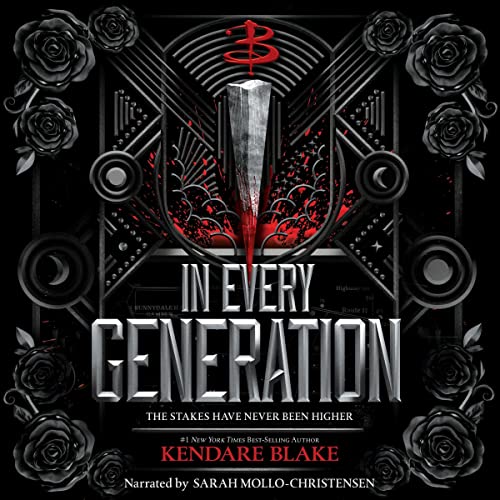
In Every Generation #1
In Every Generation
A new Slayer for a new generation...
Frankie Rosenberg is passionate about the environment, a sophomore at New Sunnydale High School, and the daughter of the most powerful witch in Sunnydale history. Her mom, Willow, is slowly teaching her magic on the condition that she use it to better the world. But Frankie’s happily quiet life is upended when new girl Hailey shows up with news that the annual Slayer convention has been the target of an attack, and all the Slayers—including Buffy, Faith, and Hailey’s older sister Vi—might be dead. That means it’s time for this generation’s Slayer to be born.
But being the first ever Slayer-Witch means learning how to wield a stake while trying to control her budding powers. With the help of Hailey, a werewolf named Jake, and a hot but nerdy sage demon, Frankie must become the Slayer, prevent the Hellmouth from opening again, and find out what happened to her Aunt Buffy, before she’s next.
Get ready for a whole new story within the world of Buffy!
The first in an all-new series by New York Times best-selling author Kendare Blake continues the world of Buffy the Vampire Slayer featuring the next generation of Scoobies and Slayers who must defeat a powerful new evil.
Frankie Rosenberg is passionate about the environment, a sophomore at New Sunnydale High School, and the daughter of the most powerful witch in Sunnydale history. Her mom, Willow, is slowly teaching her magic on the condition that she use it to better the world. But Frankie’s happily quiet life is upended when new girl Hailey shows up with news that the annual Slayer convention has been the target of an attack, and all the Slayers—including Buffy, Faith, and Hailey’s older sister Vi—might be dead. That means it’s time for this generation’s Slayer to be born.
But being the first ever Slayer-Witch means learning how to wield a stake while trying to control her budding powers. With the help of Hailey, a werewolf named Jake, and a hot but nerdy sage demon, Frankie must become the Slayer, prevent the Hellmouth from opening again, and find out what happened to her Aunt Buffy, before she’s next.
Get ready for a whole new story within the world of Buffy!
The first in an all-new series by New York Times best-selling author Kendare Blake continues the world of Buffy the Vampire Slayer featuring the next generation of Scoobies and Slayers who must defeat a powerful new evil.
Audible Audio
First published January 4, 2022
About the author
Kendare Blake
45 books55.3k followersSo, I write books. The Anna Dressed in Blood duo is horror, The Goddess War trilogy is mythology, and Three Dark Crowns is fantasy, because the world don't move to the beat of just one drum. What might be right for you, may not be right for some. Love to read, too. Fiction, philosophy, good books, bad books, because you take the good you take the bad you take them both and there you have a stack of books and stuff. I mean, you've got to be adventurous. There's more to life that what you're living, so take a chance and face the wind.
There's more coming soon like ALL THESE BODIES and a new fantasy series, so don't waste another minute on your cryin. We're nowhere near the end.
My likes include animals, food, and nostalgia. I mean, whatever happened to predictability? The milkman, the paperboy, the evening TV? Used to be everywhere you look, there's a heart, a hand to hold on to.
Anyway, I love to hear from readers so drop me a line here or at my website and we'll talk about friends to know, and ways to grow, and how if you threw a party you would see that the biggest gift would be from me and the card attached would say, thank you for being a friend.
We can also talk about all the sitcom theme songs in this bio. Sha la la la.
There's more coming soon like ALL THESE BODIES and a new fantasy series, so don't waste another minute on your cryin. We're nowhere near the end.
My likes include animals, food, and nostalgia. I mean, whatever happened to predictability? The milkman, the paperboy, the evening TV? Used to be everywhere you look, there's a heart, a hand to hold on to.
Anyway, I love to hear from readers so drop me a line here or at my website and we'll talk about friends to know, and ways to grow, and how if you threw a party you would see that the biggest gift would be from me and the card attached would say, thank you for being a friend.
We can also talk about all the sitcom theme songs in this bio. Sha la la la.
Ratings & Reviews
Friends & Following
Create a free account to discover what your friends think of this book!
Community Reviews
Displaying 1 - 30 of 964 reviews

July 12, 2021
A new Slayer for a new generation...

I'll admit, like a publisher's dream, that tagline got me. As soon as I read it, I knew that I needed to pick up this book.
The Buffy television series premiered when I was in college and quickly became part of my weekly routine. My best friend and I absolutely loved the show and would always watch it together.
Therefore, the series holds a lot of nostalgia for us. Sarah Michelle Gellar was our Queen. Those were good times.

In Every Generation follows Willow's daughter, Frankie, who is a Sophomore at New Sunnydale High School.
Willow has been slowly introducing Frankie to magic, as long as Frankie promises always to use it for good. Frankie, it seems, is all for that, being quite ecologically-minded.
Willow's dark times still haunt her and she doesn't want her daughter to have to go through the nightmarish things that she did as a young adult. We all want better for our kids, Witches or not.

When Vi's younger sister Hailey shows up in Sunnydale, she comes bearing bad news. It appears the annual Slayer convention has been attacked and all the Slayers in attendance, including Buffy, Faith and Vi, may be dead.
This leaves a major Slayer vacancy and therefore a new Slayer must be called. Hello, Frankie.

Frankie would be the first ever Slayer-Witch, but first she needs to learn to control her powers in order to be effective.
Unfortunately for Frankie, she is a little pressed for time, what with the hellmouth threatening to be reopened.

Together with a whole new group of Scoobies, Frankie must try to figure out what happened to the old Slayers, as well as defeat the forces of evil before it is too late.
Y'all, I had so much fun listening to this audiobook. I'm not going to lie, I was laughing my foolish head off while listening to this.
The narrator has great comedic timing and I feel like Blake definitely nailed, or should I say staked, that classic Buffy-humor that we all enjoyed so much.

While I know this won't be for every Reader, for me it held just the perfect blend of old with new. It doffed its cap at the original series without going into copycat territory.
Also, I feel like Blake did a great job creating new characters to care about and root for. This fulfilled my hopes for a nostalgic read, but still felt fresh and modern. I would love to read more adventures with this cast of characters.

Thank you to the publisher, Disney-Hyperion and Disney Audio, for providing me with copies to read and review. A great start to a series!
I'll admit, like a publisher's dream, that tagline got me. As soon as I read it, I knew that I needed to pick up this book.
The Buffy television series premiered when I was in college and quickly became part of my weekly routine. My best friend and I absolutely loved the show and would always watch it together.
Therefore, the series holds a lot of nostalgia for us. Sarah Michelle Gellar was our Queen. Those were good times.
In Every Generation follows Willow's daughter, Frankie, who is a Sophomore at New Sunnydale High School.
Willow has been slowly introducing Frankie to magic, as long as Frankie promises always to use it for good. Frankie, it seems, is all for that, being quite ecologically-minded.
Willow's dark times still haunt her and she doesn't want her daughter to have to go through the nightmarish things that she did as a young adult. We all want better for our kids, Witches or not.
When Vi's younger sister Hailey shows up in Sunnydale, she comes bearing bad news. It appears the annual Slayer convention has been attacked and all the Slayers in attendance, including Buffy, Faith and Vi, may be dead.
This leaves a major Slayer vacancy and therefore a new Slayer must be called. Hello, Frankie.
Frankie would be the first ever Slayer-Witch, but first she needs to learn to control her powers in order to be effective.
Unfortunately for Frankie, she is a little pressed for time, what with the hellmouth threatening to be reopened.
Together with a whole new group of Scoobies, Frankie must try to figure out what happened to the old Slayers, as well as defeat the forces of evil before it is too late.
Y'all, I had so much fun listening to this audiobook. I'm not going to lie, I was laughing my foolish head off while listening to this.
The narrator has great comedic timing and I feel like Blake definitely nailed, or should I say staked, that classic Buffy-humor that we all enjoyed so much.
While I know this won't be for every Reader, for me it held just the perfect blend of old with new. It doffed its cap at the original series without going into copycat territory.
Also, I feel like Blake did a great job creating new characters to care about and root for. This fulfilled my hopes for a nostalgic read, but still felt fresh and modern. I would love to read more adventures with this cast of characters.
Thank you to the publisher, Disney-Hyperion and Disney Audio, for providing me with copies to read and review. A great start to a series!

August 3, 2021
I am a HUGE Buffy fan, so I was highly anticipating this novel— and I’m here to report that it’s a mixed bag, filled with a lot to love and not so much love.
Things I liked:
- The writing style. This book very much felt like Buffy, the show, in terms of voice and setting. It really felt like the early three seasons of the show. If you miss that vibe, I think you’ll enjoy it here in this book. It also seemed like the writer was trying to imagine this story as if it could take place on screen, and I thought that was charming; for example, there are reasons integrated into the plot for returning immortal characters to appear the actor’s actual age.
- The new Scoobies. I really enjoyed the new characters and how they were related to the old Scoobies in surprisingly fun ways. Jake was easily my favorite, a cute werewolf boy who has a good heart. The friendships within the group were also strong, I thought.
- References to the show. There are so many references scattered throughout the book, and if you’re a big fan, they’ll all make you smile! Some are very in your face, especially at the beginning, but then others are subtle. It felt like this book had the perfect amount of throwbacks.
- The old Scoobies. Unlike the previous Slayer YA duology, this book really leans into making some of the OG Scoobies integral to the story. Seeing them interact with the new generation was really fun, and especially seeing them interact with one another in present day. Willow and Oz specifically have a lot explored with them, and I’m here for the concept of that. Spike and Vi (Felicia Day’s minor character from season 7) also have a lot to do. And besides them, off the top of my head, we get some cameos and mentions of Xander, Dawn, Buffy, Faith, Giles, Angel, and Andrew as well.
- The new continuity. Also unlike the Slayer YA duology, this book establishes its own continuity post-season 7. I’m a diehard comics canon fan, so I appreciated Slayer trying (but also kinda failing) to keep with the canon, but it just didn’t work and I’m sure it was confusing for new readers and fans who didn’t read a decade of comics material. In Every Generation scraps all of that, and while I would have loved to keep with continuity for my OCD sake— having a new continuity was exciting! Not knowing where these OG characters have been was interesting and I wanted to get to know them again. If this book had tried to stay with comics canon, like Slayer tried, I think it would have failed.
- The fanfiction-y aspect. This book seems to know what it is: published Buffy fanfiction. Some people will take that to mean that this book isn’t good then, but that’s not true! Much fanfiction is great! And this reads like someone who has dabbled in Buffy fanfic back in the day (a compliment!). And besides, any novel continuing the show’s narrative is just inevitably going to feel like fanfiction; let’s accept that. So if you go into this knowing what it is and appreciating what it is, I think you could enjoy it too. And since we’ve established that this is just one of a few continuities post-season 7, don’t hate on it just for existing and or see it as trying to replace another continuity; it’s a choose-your-own-adventure game! And this fanfiction-y option has a lot of fun in it!
Things I disliked:
- How Willow’s sexuality was portrayed. To start off, Willow, the iconic lesbian witch, was magically impregnated because of a side effect from a spell— something she apparently didn’t have any consent in. That sucks! The Buffy and Angel shows have a history of treating female characters awfully in terms of pregnancy storylines, so I’m a tad surprised the lesson wasn’t learned here; and with the lesbian character, it sucks in a whole new way. But wait! There’s more!! The book is pretty dismissive of Willow’s lesbian identity in order to fuel a “will they, won’t they”-esque trope between her and Oz. I’m all for exploring a complicated relationship between Willow and Oz, as it’s ripe for material with them having dated and her since having realized she’s gay, but… this ain’t it. The narration and multiple characters question if Willow and Oz are currently together romantically because they’re sort-of “co-parenting” (which is cute, ngl). The thing is, Willow. Is. A. Lesbian! And everyone knows this! She is an iconic lesbian character. And she has to defend her identity to her friends and family?! This book questioning that identity in such a fickle way feels icky to me. And untrue to the character and what she stood for. She straight up defends her sexuality with “No! I’m gay!” during one of the times sometime speculates she’s banging Oz currently in the book. And theres at least two more speculative moments about it afterwards. Willow and Oz are shoved into romantic situations throughout the book, and it was very uncomfortable to me. Oz is hardcore still into Willow, but she does officially friend zone him near the end. To me though, it reads like her sexuality is just being treated as an obstacle keeping them apart. If a new reader picked up this book, I think they would assume and even want Willow and Oz to end up together romantically— and that sucks! This book read like it had a Willow/Oz romance agenda, and you can’t have that without erasing and being dismissive of Willow’s lesbian identity. I understand that sexuality is fluid and a journey, and honestly Willow could have been bi if the show had gone in that direction— but she and the show defined her as a lesbian. She’s a lesbian icon. The comics continued defining her as a lesbian for years. Willow is a lesbian. And to question that identity now, after 20+ years, is ignorant, especially in the context it was presented in here. I get the vibe that the writer truly loves Willow’s character, but the handling of her sexuality seemed borderline offensive to me, and I won’t be shocked if it’s extremely offensive to lesbians who grew up with the show.
- Frankie the Vampire Slayer. Besides that fact that Frankie is a result of the sloppy the-lesbian-got-impregnated-without-consent plot, she also was the least memorable new character introduced. She felt pretty basic, and I never felt like she was undergoing much character growth even when the book seemed to think she was. She constantly is saved by men in the book, and it was frustrating. Her magic/Slayer combo powers are cool and something new to explore, but that was the main thing I liked about her— and the fact that her mom is Willow, because I love Willow. I didn’t really connect with her character.
- “Murdering” all the strong female protagonists from the show off-page within the first 20 pages. Okay, so this was a complete plot device to isolate Frankie, our new Slayer, so that she could be the “Chosen ONE.” And I get it. But it still sucks! If the Buffy fandom is anything like the Terminator fandom, I think they won’t take too kindly to their strong female protagonists like Buffy and Faith being killed off off-screen at the beginning of this story. Sure, maybe they’re alive, but the longer the book goes on, the more likely it is many of them are at least really dead, including Faith. Is Buffy still alive? Probably. But we don’t get any answers in this book, so they’re all still counted as dead for now. And it doesn’t sound good for Faith specifically, and she’s one of my favorites, so I’m really upset she was treated so badly. Anyways, this whole thing was a giant plot device, and for whatever reason the writer didn’t want to explore the empowerment themes from the end of the show, where tons of women were Slayers. In order to go back to the roots of seasons 1-3, I understand why this plot device was needed to tell the story that she wanted to tell. It just still kinda sucks from the way it was handled.
- The illogical and/or incorrect references. I’m bunching these two things together; there were a handful of moments throughout the book where I went, “What? How?” or “No, that’s incorrect.” And those stemmed from me either not being able to suspend my disbelief enough based off of what we’d been told already in the narrative, or the writer wrote something that didn’t add up with something already established in the show(s). For example, Sunnydale was destroyed but was rebuilt to be brand new and different— so how can a character recognize Giles’ old Magic Box shop and the alley behind it? It’s illogical and doesn’t jive with what’s been established in the novel already. And more on me just being a know-it-all fan, for example— a character who should know better is surprised when a vampire’s detached limbs don’t turn to ash, but the show has already established cut limbs from vamp’s don’t turn to ash (re: Angel season 5).
- The cisgender/heteronormative aspects. There’s a repetitive menstruation joke narrative throughout the book, and at one point it’s played as “haha, all women deal with these issues! Feminism bonding!” And it was just super cis based because, no, not all women deal with that. I understand the miscalculation, but the Buffy fan base is so queer that this joke felt really out of place to me, especially for this franchise. And while the show is known for similar dated jokes, it was the 90s. Having gags like this one isn’t great. Virginal blood is also a huge part of this book’s plot, and while it acknowledges that that type of thinking is from the patriarchy and sucks, we really only look at it from a heteronormative POV. What makes a virgin? Just not having straight, vaginal sex? This is something I’d let slide usually, but it’s such a big part of the book that it felt unexplored; and when combined with the other issues I had with how sexuality and gender were portrayed in the book, it was worth mentioning here. Side note— there ain’t any queer rep to be found outside of Willow’s fiasco, which mainly just highlights her dead lover (Tara, RIP) from years ago. I would have loved to have seen Willow living her life with a new woman and being happy. I would have loved to see some queer rep in the new characters. I really thought Jake and Sig were going to get together for a hot moment, but nah. It’s such a shame because the Slayer YA duology had such good queer rep, despite some of its other flaws. Alas, I guess I can still headcanon anyone as bi? I’m lowering my rep expectations for book 2.
- The ending. The ending left a lot to be desired, and it just kind of ended. A lot of this has to do with things I mentioned previously, like the “are the Slayers still alive” plot and Frankie’s (lack of?) character growth. No answers are given to the “are Buffy and Faith alive” thing, but more questions are raised. It was frustrating and felt a bit mean. (And like I said, it doesn’t sound good for my girl, Faith.) I feel like we needed more answers before raising more questions, and it kind of feels like the author just doesn’t know how to handle having more than one Slayer around— but she also doesn’t want to kill them all off because it’ll anger fans. So instead, we’re left a “they’re dead, but not really, maybe not, maybe you’ll find out by the end of book 3” situation. And it’s so unsatisfying. And the ending scene hinders on the reader believing in Frankie’s growth throughout the novel, and I didn’t, so the ending note didn’t land for me.
The verdict:
As you can see, I found a lot to enjoy and not enjoy here. As an uber queer, uber Buffy fan, I came to this reading with a very specific POV, but I think it’s a POV many people are going to be coming with. I’m the target audience for this book, basically, and I was hoping to be treated a bit better in terms of queerness. The other target audience, new readers, may enjoy this book in a different way, overlook some of the problems I had (like Willow’s portrayal), and take it just as its own YA thing. I did love seeing old characters again though, and I found a lot of love in the new character of Jake and the new team dynamic. In the end, I love the old school Buffy vibe this book was determined to go back to, but it possibly sacrificed too much to get there. 3/5 stars.
Things I liked:
- The writing style. This book very much felt like Buffy, the show, in terms of voice and setting. It really felt like the early three seasons of the show. If you miss that vibe, I think you’ll enjoy it here in this book. It also seemed like the writer was trying to imagine this story as if it could take place on screen, and I thought that was charming; for example, there are reasons integrated into the plot for returning immortal characters to appear the actor’s actual age.
- The new Scoobies. I really enjoyed the new characters and how they were related to the old Scoobies in surprisingly fun ways. Jake was easily my favorite, a cute werewolf boy who has a good heart. The friendships within the group were also strong, I thought.
- References to the show. There are so many references scattered throughout the book, and if you’re a big fan, they’ll all make you smile! Some are very in your face, especially at the beginning, but then others are subtle. It felt like this book had the perfect amount of throwbacks.
- The old Scoobies. Unlike the previous Slayer YA duology, this book really leans into making some of the OG Scoobies integral to the story. Seeing them interact with the new generation was really fun, and especially seeing them interact with one another in present day. Willow and Oz specifically have a lot explored with them, and I’m here for the concept of that. Spike and Vi (Felicia Day’s minor character from season 7) also have a lot to do. And besides them, off the top of my head, we get some cameos and mentions of Xander, Dawn, Buffy, Faith, Giles, Angel, and Andrew as well.
- The new continuity. Also unlike the Slayer YA duology, this book establishes its own continuity post-season 7. I’m a diehard comics canon fan, so I appreciated Slayer trying (but also kinda failing) to keep with the canon, but it just didn’t work and I’m sure it was confusing for new readers and fans who didn’t read a decade of comics material. In Every Generation scraps all of that, and while I would have loved to keep with continuity for my OCD sake— having a new continuity was exciting! Not knowing where these OG characters have been was interesting and I wanted to get to know them again. If this book had tried to stay with comics canon, like Slayer tried, I think it would have failed.
- The fanfiction-y aspect. This book seems to know what it is: published Buffy fanfiction. Some people will take that to mean that this book isn’t good then, but that’s not true! Much fanfiction is great! And this reads like someone who has dabbled in Buffy fanfic back in the day (a compliment!). And besides, any novel continuing the show’s narrative is just inevitably going to feel like fanfiction; let’s accept that. So if you go into this knowing what it is and appreciating what it is, I think you could enjoy it too. And since we’ve established that this is just one of a few continuities post-season 7, don’t hate on it just for existing and or see it as trying to replace another continuity; it’s a choose-your-own-adventure game! And this fanfiction-y option has a lot of fun in it!
Things I disliked:
- How Willow’s sexuality was portrayed. To start off, Willow, the iconic lesbian witch, was magically impregnated because of a side effect from a spell— something she apparently didn’t have any consent in. That sucks! The Buffy and Angel shows have a history of treating female characters awfully in terms of pregnancy storylines, so I’m a tad surprised the lesson wasn’t learned here; and with the lesbian character, it sucks in a whole new way. But wait! There’s more!! The book is pretty dismissive of Willow’s lesbian identity in order to fuel a “will they, won’t they”-esque trope between her and Oz. I’m all for exploring a complicated relationship between Willow and Oz, as it’s ripe for material with them having dated and her since having realized she’s gay, but… this ain’t it. The narration and multiple characters question if Willow and Oz are currently together romantically because they’re sort-of “co-parenting” (which is cute, ngl). The thing is, Willow. Is. A. Lesbian! And everyone knows this! She is an iconic lesbian character. And she has to defend her identity to her friends and family?! This book questioning that identity in such a fickle way feels icky to me. And untrue to the character and what she stood for. She straight up defends her sexuality with “No! I’m gay!” during one of the times sometime speculates she’s banging Oz currently in the book. And theres at least two more speculative moments about it afterwards. Willow and Oz are shoved into romantic situations throughout the book, and it was very uncomfortable to me. Oz is hardcore still into Willow, but she does officially friend zone him near the end. To me though, it reads like her sexuality is just being treated as an obstacle keeping them apart. If a new reader picked up this book, I think they would assume and even want Willow and Oz to end up together romantically— and that sucks! This book read like it had a Willow/Oz romance agenda, and you can’t have that without erasing and being dismissive of Willow’s lesbian identity. I understand that sexuality is fluid and a journey, and honestly Willow could have been bi if the show had gone in that direction— but she and the show defined her as a lesbian. She’s a lesbian icon. The comics continued defining her as a lesbian for years. Willow is a lesbian. And to question that identity now, after 20+ years, is ignorant, especially in the context it was presented in here. I get the vibe that the writer truly loves Willow’s character, but the handling of her sexuality seemed borderline offensive to me, and I won’t be shocked if it’s extremely offensive to lesbians who grew up with the show.
- Frankie the Vampire Slayer. Besides that fact that Frankie is a result of the sloppy the-lesbian-got-impregnated-without-consent plot, she also was the least memorable new character introduced. She felt pretty basic, and I never felt like she was undergoing much character growth even when the book seemed to think she was. She constantly is saved by men in the book, and it was frustrating. Her magic/Slayer combo powers are cool and something new to explore, but that was the main thing I liked about her— and the fact that her mom is Willow, because I love Willow. I didn’t really connect with her character.
- “Murdering” all the strong female protagonists from the show off-page within the first 20 pages. Okay, so this was a complete plot device to isolate Frankie, our new Slayer, so that she could be the “Chosen ONE.” And I get it. But it still sucks! If the Buffy fandom is anything like the Terminator fandom, I think they won’t take too kindly to their strong female protagonists like Buffy and Faith being killed off off-screen at the beginning of this story. Sure, maybe they’re alive, but the longer the book goes on, the more likely it is many of them are at least really dead, including Faith. Is Buffy still alive? Probably. But we don’t get any answers in this book, so they’re all still counted as dead for now. And it doesn’t sound good for Faith specifically, and she’s one of my favorites, so I’m really upset she was treated so badly. Anyways, this whole thing was a giant plot device, and for whatever reason the writer didn’t want to explore the empowerment themes from the end of the show, where tons of women were Slayers. In order to go back to the roots of seasons 1-3, I understand why this plot device was needed to tell the story that she wanted to tell. It just still kinda sucks from the way it was handled.
- The illogical and/or incorrect references. I’m bunching these two things together; there were a handful of moments throughout the book where I went, “What? How?” or “No, that’s incorrect.” And those stemmed from me either not being able to suspend my disbelief enough based off of what we’d been told already in the narrative, or the writer wrote something that didn’t add up with something already established in the show(s). For example, Sunnydale was destroyed but was rebuilt to be brand new and different— so how can a character recognize Giles’ old Magic Box shop and the alley behind it? It’s illogical and doesn’t jive with what’s been established in the novel already. And more on me just being a know-it-all fan, for example— a character who should know better is surprised when a vampire’s detached limbs don’t turn to ash, but the show has already established cut limbs from vamp’s don’t turn to ash (re: Angel season 5).
- The cisgender/heteronormative aspects. There’s a repetitive menstruation joke narrative throughout the book, and at one point it’s played as “haha, all women deal with these issues! Feminism bonding!” And it was just super cis based because, no, not all women deal with that. I understand the miscalculation, but the Buffy fan base is so queer that this joke felt really out of place to me, especially for this franchise. And while the show is known for similar dated jokes, it was the 90s. Having gags like this one isn’t great. Virginal blood is also a huge part of this book’s plot, and while it acknowledges that that type of thinking is from the patriarchy and sucks, we really only look at it from a heteronormative POV. What makes a virgin? Just not having straight, vaginal sex? This is something I’d let slide usually, but it’s such a big part of the book that it felt unexplored; and when combined with the other issues I had with how sexuality and gender were portrayed in the book, it was worth mentioning here. Side note— there ain’t any queer rep to be found outside of Willow’s fiasco, which mainly just highlights her dead lover (Tara, RIP) from years ago. I would have loved to have seen Willow living her life with a new woman and being happy. I would have loved to see some queer rep in the new characters. I really thought Jake and Sig were going to get together for a hot moment, but nah. It’s such a shame because the Slayer YA duology had such good queer rep, despite some of its other flaws. Alas, I guess I can still headcanon anyone as bi? I’m lowering my rep expectations for book 2.
- The ending. The ending left a lot to be desired, and it just kind of ended. A lot of this has to do with things I mentioned previously, like the “are the Slayers still alive” plot and Frankie’s (lack of?) character growth. No answers are given to the “are Buffy and Faith alive” thing, but more questions are raised. It was frustrating and felt a bit mean. (And like I said, it doesn’t sound good for my girl, Faith.) I feel like we needed more answers before raising more questions, and it kind of feels like the author just doesn’t know how to handle having more than one Slayer around— but she also doesn’t want to kill them all off because it’ll anger fans. So instead, we’re left a “they’re dead, but not really, maybe not, maybe you’ll find out by the end of book 3” situation. And it’s so unsatisfying. And the ending scene hinders on the reader believing in Frankie’s growth throughout the novel, and I didn’t, so the ending note didn’t land for me.
The verdict:
As you can see, I found a lot to enjoy and not enjoy here. As an uber queer, uber Buffy fan, I came to this reading with a very specific POV, but I think it’s a POV many people are going to be coming with. I’m the target audience for this book, basically, and I was hoping to be treated a bit better in terms of queerness. The other target audience, new readers, may enjoy this book in a different way, overlook some of the problems I had (like Willow’s portrayal), and take it just as its own YA thing. I did love seeing old characters again though, and I found a lot of love in the new character of Jake and the new team dynamic. In the end, I love the old school Buffy vibe this book was determined to go back to, but it possibly sacrificed too much to get there. 3/5 stars.

December 15, 2021
ive never seen buffy the vampire slayer and i had no idea this was a “continuation” retelling when i picked it up.
thus, i am not a part of the demographic this book was specifically written for, which is why my thoughts are probably going to be vastly different than someones who is familiar with the franchise.
so this review is going to be for fellow readers who enjoy vampire stories and/or KBs previous books (my reasons for reading this in the first place). i thought these things would help me push through this, and they did to an extent. this story isnt hard to follow. yes, obviously, im missing past context for the characters and world-building, but its not impossible to treat it all as completely new without prior history and still understand everything.
the thing that lost my interest is just how much this feels like fan-fiction that tries way too hard. but i think thats just an inherent quality when it comes to continuation stories - they is, at their core, fan-fic. i just really want to emphasise the trying too hard bit. which i think is because this is trying to cater to younger audiences when really it should be to adult buffy fans. also, no one likes menstruation humour. like, literally no one.
overall, a miss for me (again, im not in the demographic for this, so not surprising), but im sure fans of the series will enjoy being in the buffyverse.
thanks for the ARC, disney-hyperion.
↠ 2.5 stars
thus, i am not a part of the demographic this book was specifically written for, which is why my thoughts are probably going to be vastly different than someones who is familiar with the franchise.
so this review is going to be for fellow readers who enjoy vampire stories and/or KBs previous books (my reasons for reading this in the first place). i thought these things would help me push through this, and they did to an extent. this story isnt hard to follow. yes, obviously, im missing past context for the characters and world-building, but its not impossible to treat it all as completely new without prior history and still understand everything.
the thing that lost my interest is just how much this feels like fan-fiction that tries way too hard. but i think thats just an inherent quality when it comes to continuation stories - they is, at their core, fan-fic. i just really want to emphasise the trying too hard bit. which i think is because this is trying to cater to younger audiences when really it should be to adult buffy fans. also, no one likes menstruation humour. like, literally no one.
overall, a miss for me (again, im not in the demographic for this, so not surprising), but im sure fans of the series will enjoy being in the buffyverse.
thanks for the ARC, disney-hyperion.
↠ 2.5 stars

Read
January 4, 2022This was very much a mixed bag and this review said a lot of what I was thinking and feeling, definitely recommend reading it: https://www.goodreads.com/review/show...
I'm a fan of Buffy and was really excited to see what Kendare Blake would do with this new story. Here are some of the things I liked:
It's clear Blake is a fan of the show, the voice feels very much like the show, the original characters feel (mostly) true to form, and the book is really littered with references to the original, which is a lot of fun for fans. And with that, I really enjoyed a lot of the scenes with the original characters interacting, some of them now parents. It was fun to see what they might be like 18 years on. And the big bad felt very like early Buffy vibes.
However, I agree with the above review that this will they, won't they subplot with Willow and Oz is a a real choice when Willow is a lesbian icon. And yes, the magical pregnancy that she didn't consent to is also weird. And the choice to center so much of the plot on virgin blood with a minimum of deconstructing the patriarchal (briefly mentioned) and heteronormative (entirely ignored) problems with that concept. As far as our witch/slayer Frankie and the other new characters are concerned, they were honestly pretty bland. The ending was also quite abrupt and leaves you with more questions than answers. It was also kind of a weird to choice to have Frankie crushing on this immortal guy, the Hunter of Thrace. I get that it's meant to mirror Buffy/Angel but he's really written to feel like a grown man and it's uncomfortable, even if nothing really happens.
Overall, parts of this were great and really fun if you're a fan of the show, but other things were lackluster or downright questionable. A really mixed bag. I received a copy of this book for review via NetGalley, all opinions are my own.
I'm a fan of Buffy and was really excited to see what Kendare Blake would do with this new story. Here are some of the things I liked:
It's clear Blake is a fan of the show, the voice feels very much like the show, the original characters feel (mostly) true to form, and the book is really littered with references to the original, which is a lot of fun for fans. And with that, I really enjoyed a lot of the scenes with the original characters interacting, some of them now parents. It was fun to see what they might be like 18 years on. And the big bad felt very like early Buffy vibes.
However, I agree with the above review that this will they, won't they subplot with Willow and Oz is a a real choice when Willow is a lesbian icon. And yes, the magical pregnancy that she didn't consent to is also weird. And the choice to center so much of the plot on virgin blood with a minimum of deconstructing the patriarchal (briefly mentioned) and heteronormative (entirely ignored) problems with that concept. As far as our witch/slayer Frankie and the other new characters are concerned, they were honestly pretty bland. The ending was also quite abrupt and leaves you with more questions than answers. It was also kind of a weird to choice to have Frankie crushing on this immortal guy, the Hunter of Thrace. I get that it's meant to mirror Buffy/Angel but he's really written to feel like a grown man and it's uncomfortable, even if nothing really happens.
Overall, parts of this were great and really fun if you're a fan of the show, but other things were lackluster or downright questionable. A really mixed bag. I received a copy of this book for review via NetGalley, all opinions are my own.

January 6, 2022
Reread April 2024
I swear, this book gets better and better every time I read it.
Reread February 2023
I tried the audio this time and I think I loved it even more!
Sarah Mollo-Christensen's narration is fantastic! She really pulls the personalities through beautifully and I got sucked into the story even further.
Blake crafted such a fabulous story and manages to twine it with nostalgia while presenting a modern tale. I am so excited to start One Girl in All the World today and find out what these Scoobies get up to next!
Original Review: 2022
And just like that this jumped to the top of my "books I must own".
You can tell the author is a fan of the Buffyverse with how beautifully she pulls in characters we already know and love while creating new Scoobies to get attached to.
With the way this ends, all I gotta say is...there better be more books!

Much love to NetGalley, Disney Publishing Worldwide, and of course Kendare Blake
I loved everything about this and cannot wait for more to be released in this new offshoot series!!!
I swear, this book gets better and better every time I read it.
Reread February 2023
I tried the audio this time and I think I loved it even more!
Sarah Mollo-Christensen's narration is fantastic! She really pulls the personalities through beautifully and I got sucked into the story even further.
Blake crafted such a fabulous story and manages to twine it with nostalgia while presenting a modern tale. I am so excited to start One Girl in All the World today and find out what these Scoobies get up to next!
Original Review: 2022
And just like that this jumped to the top of my "books I must own".
You can tell the author is a fan of the Buffyverse with how beautifully she pulls in characters we already know and love while creating new Scoobies to get attached to.
With the way this ends, all I gotta say is...there better be more books!
Much love to NetGalley, Disney Publishing Worldwide, and of course Kendare Blake
I loved everything about this and cannot wait for more to be released in this new offshoot series!!!

August 2, 2021
I’m finished!! I loved this book but it mostly worked for me because it was exactly what I was looking for: a fun, light-paced read with BTVS vibes that stay pretty close to the original show. Buffy is my favorite tv show ever and, even though I’ve finished it and am rewatching it, I’m glad to experience the Buffyverse a little more with IN EVERY GENERATION.
Full RTC
——————————————————————————
Update 11-23: I HAVE GOOD NEWS!!! Kendare Blake sent me an arc!!! I can’t wait to read it and I’ll post a review ASAP.
I watched Buffy for the first time this year and I’ve fallen head-over-heels in love. I absolutely can not wait to read Kendare’s addition to the Buffyverse. This is going to be great, y’all.
Full RTC
——————————————————————————
Update 11-23: I HAVE GOOD NEWS!!! Kendare Blake sent me an arc!!! I can’t wait to read it and I’ll post a review ASAP.
I watched Buffy for the first time this year and I’ve fallen head-over-heels in love. I absolutely can not wait to read Kendare’s addition to the Buffyverse. This is going to be great, y’all.

February 13, 2022
Actual rating is 3.5 stars.
This book takes in the Buffyverse. The time frame is in the present time. Willow has a daughter and we pick up the action where she is called to be the next slayer. But for this to happen something must have happened to all the other slayers.
My feelings on this book kept on wavering. I went from "Really. That is what we are doing!" to "I really like this". I can say my feelings felt this way for the plot, the dialogue, the new characters, and the handling of the old characters. My issues with the plot was to set the stage we had action that happened off screen. I understand why the author did this as this book is about the next generation of the Scoobies. It also added to the mystery aspect in this book. But to do that to Buffy and Faith. Right away I was not pleased. I did enjoy meeting and interacting with the new Scoobies and I did start enjoying this book. I also had an issue with the handling of the old characters. It seemed like they were depowered and sidelined. This book isn't about them and it is about the next generation of heroes.
At times I thought this book captured the essence of the Buffyverse. At other times I thought it was trying a little too hard. Sometimes, the dialogue was a little off or a reference seemed forced. That being said I believe fans of this universe will like the references and nods to the television show. I also believe fans of the show will enjoy being back in Sunnydale. For readers that haven't watched the show a lot of minute details will be lost on them.
This book takes in the Buffyverse. The time frame is in the present time. Willow has a daughter and we pick up the action where she is called to be the next slayer. But for this to happen something must have happened to all the other slayers.
My feelings on this book kept on wavering. I went from "Really. That is what we are doing!" to "I really like this". I can say my feelings felt this way for the plot, the dialogue, the new characters, and the handling of the old characters. My issues with the plot was to set the stage we had action that happened off screen. I understand why the author did this as this book is about the next generation of the Scoobies. It also added to the mystery aspect in this book. But to do that to Buffy and Faith. Right away I was not pleased. I did enjoy meeting and interacting with the new Scoobies and I did start enjoying this book. I also had an issue with the handling of the old characters. It seemed like they were depowered and sidelined. This book isn't about them and it is about the next generation of heroes.
At times I thought this book captured the essence of the Buffyverse. At other times I thought it was trying a little too hard. Sometimes, the dialogue was a little off or a reference seemed forced. That being said I believe fans of this universe will like the references and nods to the television show. I also believe fans of the show will enjoy being back in Sunnydale. For readers that haven't watched the show a lot of minute details will be lost on them.
June 5, 2023
فرنکی رزنبرگ، دختر ویلو رزنبرگ بزرگترین ساحره جهان که یه بار کم مونده بود دنیا رو به نابودی بکشونه، متوجه می شه که علاوه بر جادوی مادرش، قدرتی دیگه هم به ارث برده.
اون قراره جانشین بزرگترین شکارچی خون آشام تاریخ، یعنی بافی سامرز بشه!
«در هر نسل» یه مجموعه سه جلدی و به روایتی، اسپین آف سریال مشهور Buffy The Vampire Slayer ئه که البته حتی بدون دیدن اون سریال هم می شه این مجموعه رو بخونید چون کلا محوریت مجموعه داستان شخصیت هایی متفاوت از اون سریاله.
باید بگم که تموم شخصیتای کتاب دوست داشتنی ان. از فرنکی و هیلی و جیک که کرکترای اصلی ان گرفته تا اسپایک، آز، ویلو، سیگموند و گریملاچ...
طنزی که در داستان وجود داره، جاذبه ای عمیق ایجاد می کنه که خواننده رو به سمت خودش می کشونه و اونو تا خوندن آخرین خط، کتاب به دست نگه می داره. این جادوی قلم کندارا بلیکه که هر چه بنویسد، خوش آید!!!
هیچوقت فکر نمی کردم ترغیب شم سریال قدیمی بافیِ خون آشام کُش رو ببینم ولی این مجموعه باعث شد که دانلودش کنم و استارت دیدنش رو بزنم😁
پ. ن: کرکتر موردعلاقه م گریملاچ بود و امیدوارم توی جلد دوم هم حضور پررنگ و کلیدی از خودش نشون بده❤
اون قراره جانشین بزرگترین شکارچی خون آشام تاریخ، یعنی بافی سامرز بشه!
«در هر نسل» یه مجموعه سه جلدی و به روایتی، اسپین آف سریال مشهور Buffy The Vampire Slayer ئه که البته حتی بدون دیدن اون سریال هم می شه این مجموعه رو بخونید چون کلا محوریت مجموعه داستان شخصیت هایی متفاوت از اون سریاله.
باید بگم که تموم شخصیتای کتاب دوست داشتنی ان. از فرنکی و هیلی و جیک که کرکترای اصلی ان گرفته تا اسپایک، آز، ویلو، سیگموند و گریملاچ...
طنزی که در داستان وجود داره، جاذبه ای عمیق ایجاد می کنه که خواننده رو به سمت خودش می کشونه و اونو تا خوندن آخرین خط، کتاب به دست نگه می داره. این جادوی قلم کندارا بلیکه که هر چه بنویسد، خوش آید!!!
هیچوقت فکر نمی کردم ترغیب شم سریال قدیمی بافیِ خون آشام کُش رو ببینم ولی این مجموعه باعث شد که دانلودش کنم و استارت دیدنش رو بزنم😁
پ. ن: کرکتر موردعلاقه م گریملاچ بود و امیدوارم توی جلد دوم هم حضور پررنگ و کلیدی از خودش نشون بده❤

December 6, 2021
Thanks to Netgalley and Disney Hyperion for providing me with a copy of this in exchange for an honest review.
Can this be made into a TV show? Please? Going into this, I was expecting a cheesy lame attempt to recreate the snark of Buffy without all the heart. It was not. It had the heart.
It had a new set of Scoobies. It had appearances from the OGs - heck some of them are still major players. It had a new and really fun villain. It had tension and buildup. It had snark and silly one-liners.
Was it perfect? No. Was it a great homage to BtVS and a lot of fun? Heck yes.
Recommended for Buffy fans who like YA books.
Can this be made into a TV show? Please? Going into this, I was expecting a cheesy lame attempt to recreate the snark of Buffy without all the heart. It was not. It had the heart.
It had a new set of Scoobies. It had appearances from the OGs - heck some of them are still major players. It had a new and really fun villain. It had tension and buildup. It had snark and silly one-liners.
Was it perfect? No. Was it a great homage to BtVS and a lot of fun? Heck yes.
Recommended for Buffy fans who like YA books.
November 21, 2022
Eh, this book was a bummer.
I love all things Buffy, so when (yet another) new book came out, I was super excited. Unfortunately, it was a disappointment.
While it was fun to have some returning favorites (Willow, Spike, Oz) none of them actually FELT like those characters. There was a lot of mentions of the series, which I should have loved, but it just felt annoying. It also was pretty preachy at points with the save the planet, don't eat meat, and it's OK to be you stuff.
*sigh*
I love all things Buffy, so when (yet another) new book came out, I was super excited. Unfortunately, it was a disappointment.
While it was fun to have some returning favorites (Willow, Spike, Oz) none of them actually FELT like those characters. There was a lot of mentions of the series, which I should have loved, but it just felt annoying. It also was pretty preachy at points with the save the planet, don't eat meat, and it's OK to be you stuff.
*sigh*

January 3, 2022
A new generation of both slayer and scoobies, while still visiting some of our favorite characters.
Frankie Rosenberg is Willow's daughter, and after an accident that leaves everyone wondering what happened to the slayers, Frankie is awakened as the first new-generation vampire slayer. Now with the help of her witch mother, her mother's old werewolf friend Oz, his cousin, and Frankie's friend Jake and Vi the slayer's little sister Hailey, Frankie must learn what it means to be a slayer. Now her life is filled with training with her watcher, the souled vampire Spike, and saving Sunnydale from evil once again.
Incredible. I absolutely loved this book. I'm a big Buffy fan. I even liked the Angel spin-off. So to have the story continue with a new generation of both slayer and scoobies while still staying true to old beloved characters was truly amazing. I want to thank Kendare Blake and everyone else who made this book possible. It even looks like this could be a series. Please Buffy-gods, let this be true. Absolute must-read. I refuse to say more. I don't want to spoil a minute of this book.
Can we take a moment for that cover? It's gorgeous and almost everything I could want from a Buffy book. However, with my version at least, after I took off the dust jacket, it was badness. The under cover would have been great, there is a nice spine and artwork. But it is all upside down. Yep, completely upside down. This was a brand new copy from Barnes & Noble too. I'm going to be stewing about that for a while.
I would say 13+ for this book.
*Content Warnings*
Violence, witchcraft, virgin sacrifices.
Follow me on Instagram:
https://www.instagram.com/darklittomes/
Frankie Rosenberg is Willow's daughter, and after an accident that leaves everyone wondering what happened to the slayers, Frankie is awakened as the first new-generation vampire slayer. Now with the help of her witch mother, her mother's old werewolf friend Oz, his cousin, and Frankie's friend Jake and Vi the slayer's little sister Hailey, Frankie must learn what it means to be a slayer. Now her life is filled with training with her watcher, the souled vampire Spike, and saving Sunnydale from evil once again.
Incredible. I absolutely loved this book. I'm a big Buffy fan. I even liked the Angel spin-off. So to have the story continue with a new generation of both slayer and scoobies while still staying true to old beloved characters was truly amazing. I want to thank Kendare Blake and everyone else who made this book possible. It even looks like this could be a series. Please Buffy-gods, let this be true. Absolute must-read. I refuse to say more. I don't want to spoil a minute of this book.
Can we take a moment for that cover? It's gorgeous and almost everything I could want from a Buffy book. However, with my version at least, after I took off the dust jacket, it was badness. The under cover would have been great, there is a nice spine and artwork. But it is all upside down. Yep, completely upside down. This was a brand new copy from Barnes & Noble too. I'm going to be stewing about that for a while.
I would say 13+ for this book.
*Content Warnings*
Violence, witchcraft, virgin sacrifices.
Follow me on Instagram:
https://www.instagram.com/darklittomes/

January 25, 2022
Oh, this is super fun! Buffy and her crew are now grown and parents of their own teens. Frankie Rosenberg is the daughter of the most powerful witch, Willow, in Sunnydale. After an accident, Frankie is now THE slayer and gets the help she needs from her mom and her mom's friends. The story HAS TO be the set up for a new series since the cast of new Scoobies is set to take action. Frankie trains with her watcher, the souled vampire Spike in order to save the world from a new baddie.
The story takes place in the same universe as Buffy did and it is spot-on. Superfans won't be disappointed and the writing is just perfect and snarky, just like the original. The story also gives a refresher in case you are not familiar with the Buffy world. This needs to be filmed immediately.
The story takes place in the same universe as Buffy did and it is spot-on. Superfans won't be disappointed and the writing is just perfect and snarky, just like the original. The story also gives a refresher in case you are not familiar with the Buffy world. This needs to be filmed immediately.

August 31, 2021
I enjoyed this book. I buddy read it with some friends of mine and we all agree that this is one to read if you're a Buffy fan! It is so nostalgic and makes you want to start a re-watch ASAP!
My favorite part was getting to see some of our favorite Buffy characters again as they now guide the new generation of slayers in a new battle. The friendships take precedence in this one which I enjoyed.
The ending did feel a bit rushed and leaves so many unanswered questions. I'm hoping for more because there's so much I need to know!! If you don't know much about Buffy you may get a bit lost. If it weren't for the ending this would have been a five star read for me but overall I still recommend it. It's fun, fast-paced, and brings back so many of those nostalgic feels.
My favorite part was getting to see some of our favorite Buffy characters again as they now guide the new generation of slayers in a new battle. The friendships take precedence in this one which I enjoyed.
The ending did feel a bit rushed and leaves so many unanswered questions. I'm hoping for more because there's so much I need to know!! If you don't know much about Buffy you may get a bit lost. If it weren't for the ending this would have been a five star read for me but overall I still recommend it. It's fun, fast-paced, and brings back so many of those nostalgic feels.
![Profile Image for julia ☆ [owls reads].](https://i.gr-assets.com/images/S/compressed.photo.goodreads.com/users/1636739475i/5520447._UX200_CR0,0,200,200_.jpg)
January 22, 2022
2.5 stars
I am weak for most things BtVS, so I thought to give this book a try since I have enjoyed Blake's writing in the past. Also, the cover looks super cool!
l knew some of the original characters from the show were going to show up here since this book is legit about Willow's daughter (she had a daughter?) and my gut reaction to their introductions can be summed up by: :D I also really liked the new characters introduced, especially the "new" Scoobies: Frankie, Jake, and Hailey.
There were a looot of nods to TV show canon. Mostly I found them to be super entertaining! I personally had fun remembering the episodes/events/lines of dialogue the characters were referencing. It was obvious Blake knew the show and how to incorporate some bits of it in her writing.
I do have some other thoughts, though. Book/show (and one comic) spoilers ahead:
In the end, I think there was too much going on for this to read like a smooth story. The plot got a bit too convoluted trying to deal with 3 big mysteries at once--none of them were developed with the care they deserved--that then turned out to be connected in some way. There were too many players in only one book; I know this is going to be a series, so I'm not sure why one subplot wasn't cut. The new Scoobies were pretty entertaining throughout, but they (and the story) lacked the charm and humor from the original series. Not sure if I'll pick up the sequel to see how things go.
I am weak for most things BtVS, so I thought to give this book a try since I have enjoyed Blake's writing in the past. Also, the cover looks super cool!
l knew some of the original characters from the show were going to show up here since this book is legit about Willow's daughter (she had a daughter?) and my gut reaction to their introductions can be summed up by: :D I also really liked the new characters introduced, especially the "new" Scoobies: Frankie, Jake, and Hailey.
There were a looot of nods to TV show canon. Mostly I found them to be super entertaining! I personally had fun remembering the episodes/events/lines of dialogue the characters were referencing. It was obvious Blake knew the show and how to incorporate some bits of it in her writing.
I do have some other thoughts, though. Book/show (and one comic) spoilers ahead:
In the end, I think there was too much going on for this to read like a smooth story. The plot got a bit too convoluted trying to deal with 3 big mysteries at once--none of them were developed with the care they deserved--that then turned out to be connected in some way. There were too many players in only one book; I know this is going to be a series, so I'm not sure why one subplot wasn't cut. The new Scoobies were pretty entertaining throughout, but they (and the story) lacked the charm and humor from the original series. Not sure if I'll pick up the sequel to see how things go.

February 8, 2022

Buffy the Vampire Slayer is my all time favorite tv show and I hold it very dear to my heart. So I'm going to be very judgey when it comes to people expanding the universe. When I heard about this book, I didn't want to get my hopes up but I love Blake's previous works and just hoped this would be good. I should not have worried. I loved it.

In Every Generation is the story of Frankie Rosenberg, daughter of the lovely Willow. Frankie is a witch in training of sorts, dabbling in magic here and there but nothing near what Willow used to do. When tragedy strikes, Frankie is thrust into a role she never expected and her life suddenly changes.
I adored every aspect of this book. There were so many throwbacks to the series that my heart just was ready to explode. You could tell that Blake was a fan and that came across in the writing. I loved how she mixed established characters with a new brand of "Scoobies". And this new gang was fun. We had Frankie of course, then Hailey - the sister of missing slayer Vi, Jake - Oz's werewolf nephew, and Sigmund - a half demon who specializes in portals. Their comradery together just cracked me up. I loved watching them try to figure out their new roles together. I feel like we're going to get some fun experiences with them in the future.
Was this book perfect? I mean, it had a few issues that I didn't really 100% get on board with - and all of that mostly surrounded Willow. The way her sexuality plays out here is a little confusing. From those who watched the show, Willow came out and was a lesbian icon in an era where we didn't really see same sex relationships on popular shows. However, Blake tends to show Willow as more of a bi character with her interactions with Oz. While my heart will always swoon for Willow and Oz, I much prefer the platonic sides we got to see here. I guess we will see what happens in future books with these 2 characters.
This book left off with some major questions - who is the big bad? Who survived the blast? What is going on??? And I cannot wait until the next one!


December 13, 2021
I remember a few years back, when Kiersten White wrote a YA novel that was based in the world of Buffy. That book is shadowed compared to this.
Kendare Blake brought back one of my FAVORITE fictional worlds, beloved characters, and overall mood of the franchise. Instead of feeling like a story that was written in an already-made world but felt withdrawn from the characters, Kendare brings a whole new generation of scoobies forth while keeping the heart of the original.
It also brings back old favorite ships and fully feeds on my love of Spike - giving readers Spike as a librarian. Instant heart eyes.
Thank you, Kendare, for reminding me why I love Buffy.
Kendare Blake brought back one of my FAVORITE fictional worlds, beloved characters, and overall mood of the franchise. Instead of feeling like a story that was written in an already-made world but felt withdrawn from the characters, Kendare brings a whole new generation of scoobies forth while keeping the heart of the original.
It also brings back old favorite ships and fully feeds on my love of Spike - giving readers Spike as a librarian. Instant heart eyes.
Thank you, Kendare, for reminding me why I love Buffy.

January 20, 2022
“Into every generation, there is a Chosen One. One girl in all the world. She alone will wield the strength and skill to stand against the vampires, the demons, and the forces of darkness; to stop the spread of their evil and the swell of their numbers. She is the Slayer.”
3.5 stars rounded up to 4
You can read all of my reviews at Nerd Girl Loves Books.
Let me preface this review by saying that I am a huge Buffy the Vampire Slayer fan. HUGE. As in I own the entire series on DVD (yeah, remember those old things?) and routinely play them in the background while I'm cleaning, getting ready for the day or to go out, or when I want comfortable coziness. I love all things Buffyverse. Sooooo, when I hear of anything related to Buffy, I leap. That is what I did when I got a chance to read this book. And because I'm such a fan, I will both giddily gush with excitement, and be dramatically picky, about all new things "Buffy" in this review.
So let's get to the book. Set in a new and allegedly demon-free Sunnydale, Frankie Rosenberg is the 16 year old daughter of witch extraordinaire Willow. Frankie is passionate about the environment and is using her newly developing witchy skills to help the world. She's friends with werewolf Jake, who is the nephew of Oz. Oz has returned to Sunnydale to watch over Jake ever since Jake's parents took their other son (and the one that bit Oz and made him a werewolf) to an exclusive wolf community. Together Frankie and Jake navigate typical high school stuff, something that past Sunnydale High alumni never got a chance to do - ya know, with all the death, demons and killing and all.
Their nirvana is abruptly shattered when Willow gets a call from Xander saying that a convention, at which all living slayers attended, exploded, presumably killing every slayer in existence, including Buffy and Faith. Xander and Dawn are at the site looking for survivors, and Willow and Oz stay helplessly in Sunnydale waiting for news. At the same time, Frankie feels a surge in her body and passes out at school. When she awakes Spike is in town with Hailey, the sister of missing slayer Vi, and Frankie is the new Chosen One.
New Scoobies unite! With Frankie a woefully unprepared slayer and Spike her less than stellar Watcher, Frankie can use all the help she can get. Hailey is not formally trained, but has gotten into enough fights to take a punch and give one back. She's laser focused on finding out what happened to her sister and will do anything that may help in the cause. Jake is big, strong and loyal. Often impulsive, he doesn't hesitate to jump into a fight. Lending a hand with research and portal magic knowledge, new character and sage demon Sigmund, is the son of Willow's friend. He's smart but doesn't fight, at all, and has a tendency to jet when the fists start flying.
The new Big Bad. Is sadly lacking in character development, depth and well, "badness". Without going into too much detail, there was nothing scary about the Big Bad other than what is typically scary about vampires and demons. The Big Bad seemed to be thrown in as an afterthought to give Frankie a big obstacle to overcome, but I'd much rather have read more about her training and her and the new Scoobie's character development (which was sorely lacking) and have her overcome smaller obstacles, than a less-than scary, kind of silly, Big Bad. I mean, who can forget Snake- Mayor and the Ascension?!
Because this review is already so very long, let me just hit you with some likes and dislikes:
Likes:
We're back in the Buffyverse, baby!!
The old Scoobies.
The language and cadence used by the author felt very "Buffy" the show.
There are several "Easter eggs" throughout the book that are clearly apparent to any Buffy fan.
Jake and Hailey - but they need more character development.
Sigmund - kind of. Something just seems off about him and I kept waiting for the other shoe to drop. But perhaps I'm just too suspicious by nature...
Mysterious Demon - yeah. tell me more....:-)
Dislikes
The new Big Bad - see above
Spike - as in Need.More.Spike.
Ditto for Xander and Dawn. Off-screen action is not a good look for either of them.
The author's obsession with virgins. You'll know what I mean when you read it.
Willow and Oz "coziness??" - Um, no. nyet. uh uh.
Frankie's father - WHAT?! {scratches head and gazes off into the distance}.
The author's fighting scenes. Perhaps I've been spoiled by too many fantasy novels, but the fighting scenes here are tough to read. For a book about a girl fighting demons, this area needs to smooth out. A lot.
If you like Buffy, you'll like this book. Hopefully the second book will improve on certain areas now that the author has the first one under her belt. Don't get me wrong, it's a good book and I recommend you read it, but there's room for improvement. I, for one, look forward to reading the next book in what I hope will be a long series.
I received a complimentary copy of this book from NetGalley and Disney Publishing Worldwide, Hyperion. All opinions are my own.
3.5 stars rounded up to 4
You can read all of my reviews at Nerd Girl Loves Books.
Let me preface this review by saying that I am a huge Buffy the Vampire Slayer fan. HUGE. As in I own the entire series on DVD (yeah, remember those old things?) and routinely play them in the background while I'm cleaning, getting ready for the day or to go out, or when I want comfortable coziness. I love all things Buffyverse. Sooooo, when I hear of anything related to Buffy, I leap. That is what I did when I got a chance to read this book. And because I'm such a fan, I will both giddily gush with excitement, and be dramatically picky, about all new things "Buffy" in this review.
So let's get to the book. Set in a new and allegedly demon-free Sunnydale, Frankie Rosenberg is the 16 year old daughter of witch extraordinaire Willow. Frankie is passionate about the environment and is using her newly developing witchy skills to help the world. She's friends with werewolf Jake, who is the nephew of Oz. Oz has returned to Sunnydale to watch over Jake ever since Jake's parents took their other son (and the one that bit Oz and made him a werewolf) to an exclusive wolf community. Together Frankie and Jake navigate typical high school stuff, something that past Sunnydale High alumni never got a chance to do - ya know, with all the death, demons and killing and all.
Their nirvana is abruptly shattered when Willow gets a call from Xander saying that a convention, at which all living slayers attended, exploded, presumably killing every slayer in existence, including Buffy and Faith. Xander and Dawn are at the site looking for survivors, and Willow and Oz stay helplessly in Sunnydale waiting for news. At the same time, Frankie feels a surge in her body and passes out at school. When she awakes Spike is in town with Hailey, the sister of missing slayer Vi, and Frankie is the new Chosen One.
New Scoobies unite! With Frankie a woefully unprepared slayer and Spike her less than stellar Watcher, Frankie can use all the help she can get. Hailey is not formally trained, but has gotten into enough fights to take a punch and give one back. She's laser focused on finding out what happened to her sister and will do anything that may help in the cause. Jake is big, strong and loyal. Often impulsive, he doesn't hesitate to jump into a fight. Lending a hand with research and portal magic knowledge, new character and sage demon Sigmund, is the son of Willow's friend. He's smart but doesn't fight, at all, and has a tendency to jet when the fists start flying.
The new Big Bad. Is sadly lacking in character development, depth and well, "badness". Without going into too much detail, there was nothing scary about the Big Bad other than what is typically scary about vampires and demons. The Big Bad seemed to be thrown in as an afterthought to give Frankie a big obstacle to overcome, but I'd much rather have read more about her training and her and the new Scoobie's character development (which was sorely lacking) and have her overcome smaller obstacles, than a less-than scary, kind of silly, Big Bad. I mean, who can forget Snake- Mayor and the Ascension?!
Because this review is already so very long, let me just hit you with some likes and dislikes:
Likes:
We're back in the Buffyverse, baby!!
The old Scoobies.
The language and cadence used by the author felt very "Buffy" the show.
There are several "Easter eggs" throughout the book that are clearly apparent to any Buffy fan.
Jake and Hailey - but they need more character development.
Sigmund - kind of. Something just seems off about him and I kept waiting for the other shoe to drop. But perhaps I'm just too suspicious by nature...
Mysterious Demon - yeah. tell me more....:-)
Dislikes
The new Big Bad - see above
Spike - as in Need.More.Spike.
Ditto for Xander and Dawn. Off-screen action is not a good look for either of them.
The author's obsession with virgins. You'll know what I mean when you read it.
Willow and Oz "coziness??" - Um, no. nyet. uh uh.
Frankie's father - WHAT?! {scratches head and gazes off into the distance}.
The author's fighting scenes. Perhaps I've been spoiled by too many fantasy novels, but the fighting scenes here are tough to read. For a book about a girl fighting demons, this area needs to smooth out. A lot.
If you like Buffy, you'll like this book. Hopefully the second book will improve on certain areas now that the author has the first one under her belt. Don't get me wrong, it's a good book and I recommend you read it, but there's room for improvement. I, for one, look forward to reading the next book in what I hope will be a long series.
I received a complimentary copy of this book from NetGalley and Disney Publishing Worldwide, Hyperion. All opinions are my own.
Want to Read
April 30, 2021*Sees the cover reveal* *gets all kinds of flashbacks of Buffy episodes*
Alexa, play Buffy the Vampire Slayer theme song.

************************************************
*Sees Kendares's new book announcement which will set in the same universe as Buffy, gets excited and immediately gets an idea of making a meme.*
Can't promise if I succeeded in it or not(meaning: if it's cringe-y or not). You guys be the judge of it.

Alexa, play Buffy the Vampire Slayer theme song.
************************************************
*Sees Kendares's new book announcement which will set in the same universe as Buffy, gets excited and immediately gets an idea of making a meme.*
Can't promise if I succeeded in it or not
May 6, 2022
I’m not going to say much except that this is probably the closest you’re going to get to going back to Sunnydale in a new adventure. Fantastic job writing the characters, the flow of the story, a believable villain and nods to pure Buffy nostalgia. A must read for any Buffy fan. I’d love to see this as a reboot of the show. I’d totally watch that

July 13, 2021
THANK YOU EDELWEISS FOR THE ARC! *immediately sits down to read*
I need the next book NOW. Oh my gosh. How amazing. I love the new Scoobies and all the fantastic references to the show and appearances by beloved characters. Thank you for writing this book!!
I need the next book NOW. Oh my gosh. How amazing. I love the new Scoobies and all the fantastic references to the show and appearances by beloved characters. Thank you for writing this book!!

February 17, 2023
Oh, nostalgia. What can I say: I missed my boy! My sweet perfect boy! Xan-- lol, psych. Obviously Spike.
Anyway, this was fine. A fun Next-Gen style book. I guarantee you there are many fics available on the internet for free with a similar premise: some better, some worse, one the appalling one I wrote as a teenager. But Spike as a Watcher was fun -- nice to see some the "Restless" fulfillment. Spike and Willow's genuine friendship was lovely, as was Willow and Oz's (Blake is clearly on team "bisexual Willow," which I appreciate). I liked Willow's daughter Frankie, and Oz's cousin Jake, and the other new characters were...there. Definitely present. It's unfortunate that none of them can execute a plan for shit.
The premise launches from the idea that Buffy and Faith and a bunch of other Slayers have been suddenly killed, whicb I refuse to believe, and I don't think this meshes with the "canon" of the comics at all, but I can't say for sure as I long ago gave up on them. So publishers are really just putting out fanfic now! Okay!At least it's not more Reylo.
Anyway Spike was there and I liked that.
Anyway, this was fine. A fun Next-Gen style book. I guarantee you there are many fics available on the internet for free with a similar premise: some better, some worse, one the appalling one I wrote as a teenager. But Spike as a Watcher was fun -- nice to see some the "Restless" fulfillment. Spike and Willow's genuine friendship was lovely, as was Willow and Oz's (Blake is clearly on team "bisexual Willow," which I appreciate). I liked Willow's daughter Frankie, and Oz's cousin Jake, and the other new characters were...there. Definitely present. It's unfortunate that none of them can execute a plan for shit.
The premise launches from the idea that Buffy and Faith and a bunch of other Slayers have been suddenly killed, whicb I refuse to believe, and I don't think this meshes with the "canon" of the comics at all, but I can't say for sure as I long ago gave up on them. So publishers are really just putting out fanfic now! Okay!
Anyway Spike was there and I liked that.

Read
July 8, 2024FINAL RTC
OOOOOOH THIS WAS SO FUN AND SO NOSTALGIC!!!
I have been properly reading through various Buffyverse novels this year and I think after Bloody Fool for Love, this might be my favourite so far!
NOTES WHILE READING / SPOILERS:
- There’s a new Slayerfest 😂
- Spike is a Watcher!
- Sunnydale was rebuilt after the ‘sinkhole’
- Oz is taking care of his werewolf nephew 🥺
- Willow doesn’t do magic anymore?
- Oh the reasoning for Frankie being the Slayer is interesting! 👀
- Fourteen months of pregnancy?!? Poor Willow!
- ‘Sunnyhole’ LMFAO
- Jordy reference!! (S2, Oz’s baby nephew who bit him.)
- ‘The city planners are very optimistic’ 🤣
- SPIKE THE SCHOOL LIBRARIAN?!?!
- Haunted high school? Check! 😱
- Elizabeth Báthory as the vampire Countess definitely took me by surprise.
Other Buffyverse Reviews:
My review of Bloody Fool for Love by William Ritter is here.
My review of Pretty Maids All in a Row Christopher Golden is here.
My review of The Bewitching Hour by Ashley Poston is here.
My review of Slayer by Kiersten White is here.
My review of Big Bad by Lily Anderson is here.
☆ Book Reviews | Bluesky | Twitter | Threads ☆
OOOOOOH THIS WAS SO FUN AND SO NOSTALGIC!!!
I have been properly reading through various Buffyverse novels this year and I think after Bloody Fool for Love, this might be my favourite so far!
NOTES WHILE READING / SPOILERS:
- There’s a new Slayerfest 😂
- Spike is a Watcher!
- Sunnydale was rebuilt after the ‘sinkhole’
- Oz is taking care of his werewolf nephew 🥺
- Willow doesn’t do magic anymore?
- Oh the reasoning for Frankie being the Slayer is interesting! 👀
- Fourteen months of pregnancy?!? Poor Willow!
- ‘Sunnyhole’ LMFAO
- Jordy reference!! (S2, Oz’s baby nephew who bit him.)
- ‘The city planners are very optimistic’ 🤣
- SPIKE THE SCHOOL LIBRARIAN?!?!
- Haunted high school? Check! 😱
- Elizabeth Báthory as the vampire Countess definitely took me by surprise.
Other Buffyverse Reviews:
My review of Bloody Fool for Love by William Ritter is here.
My review of Pretty Maids All in a Row Christopher Golden is here.
My review of The Bewitching Hour by Ashley Poston is here.
My review of Slayer by Kiersten White is here.
My review of Big Bad by Lily Anderson is here.
☆ Book Reviews | Bluesky | Twitter | Threads ☆

February 1, 2022
In every generation book review (spoiler free)
Hello bookish world of the interment! Welcome or welcome back to my account and happy first day of February! Today I am here with a spoiler free book review of: in every generation by kendare Blake! Before we begin I wanted to say my review date was yesterday but Jamie was so kind to let me do it today since I was only halfway through the book yesterday but today I finished it!
———————————————
So first off I love kendare Blake’s writing I fell in love with her writing through her popular 3 dark crowns series. And this one was just as good as that first book! This is set in the buffy the vampire universe and despite me not seeing a single episode I still enjoy it! (Shocking gasp, Ik)
This follows our main character name Frankie who is the daughter of willow and Frankie is the last slayer in the line of her family. There was a lot of action in this book. For me the beginning was a little slow just because I was learning who all these characters are. But I also loved the banter between these characters! This book also had two of my favorite trope: the chooses one, and found family!
This book is hard to talk about without spoiling it! But I cannot wait for book two! Now it’s time for me to go and watch the buffy shows! Overall rating: 4/5 stars!
#ineverygeneration #kendareblake #disneybooks #letstalkya #rockstarbooktour #yalit #buffythevampireslayer #buffyverse #paranormal #vampires #magic #booksagram #bookish #bookworm #bookreview #spoilerfreebookreview #igbooks #igreads
Hello bookish world of the interment! Welcome or welcome back to my account and happy first day of February! Today I am here with a spoiler free book review of: in every generation by kendare Blake! Before we begin I wanted to say my review date was yesterday but Jamie was so kind to let me do it today since I was only halfway through the book yesterday but today I finished it!
———————————————
So first off I love kendare Blake’s writing I fell in love with her writing through her popular 3 dark crowns series. And this one was just as good as that first book! This is set in the buffy the vampire universe and despite me not seeing a single episode I still enjoy it! (Shocking gasp, Ik)
This follows our main character name Frankie who is the daughter of willow and Frankie is the last slayer in the line of her family. There was a lot of action in this book. For me the beginning was a little slow just because I was learning who all these characters are. But I also loved the banter between these characters! This book also had two of my favorite trope: the chooses one, and found family!
This book is hard to talk about without spoiling it! But I cannot wait for book two! Now it’s time for me to go and watch the buffy shows! Overall rating: 4/5 stars!
#ineverygeneration #kendareblake #disneybooks #letstalkya #rockstarbooktour #yalit #buffythevampireslayer #buffyverse #paranormal #vampires #magic #booksagram #bookish #bookworm #bookreview #spoilerfreebookreview #igbooks #igreads

January 22, 2022
If you know me really well, you know that I ADORE Buffy the Vampire Slayer. I can tell you details of probably every episode after watching the first minute, I've seen it so many times. My dog is named Buffy. So when I saw In Every Generation I was nervous-excited. The cover was gorgeous, and the premise actually sounded really promising. So I did something I RARELY do. I pre-ordered the Hardcover and started reading it the day after release. I honestly can't remember the last time I pre-ordered a book AND started reading it immediately. And I really REALLY wanted to love it. Well...
I Did! Yay!! Here's why:
1- Kendare Blake is quite clearly a fan. She throws in so many small references that do nothing to hurt the flow of the book if you don't know BTVS, but if you do they are fun little treats!
2 - While we're focusing on a new Slayer - Frankie - we do see some of the original Scoobies. And Kendare Blake chose characters I really wanted to see more of to be at the center of the story... Willow, Spike and Oz - Literally my favorites. I would have loved to also see Faith and Giles, but I can't complain with this line up.
3- It just fits. All the explanations/mythology, the humor/snark, and the emotion all matched. I was surprised to see how well Kendare Blake captured the personalities of characters that are practically real people to me.
4 - The story itself was solid. I don't want to spoil anything here, but we're back in Sunnydale (I know, right? How? you'll see LOL) and there's a new big bad to face -- and a new slayer, Willow's daughter (I know right?!?! Who? How? You'll see LOL) Frankie, to face it. And a new crew of Scoobies to fight alongside her.
5 - I enjoyed all the characters - old and new. I like the way the new characters are distinct and yet you also see a little bit of a mirror of the original Scoobies, kind of for nostalgia's sake.
6- the ending! Ok, I'm ready for book 2 now please!
I do have a couple *small* problems:
1 - they keep saying the Frankie is the first ever Slayer-Witch. We know this is not true. When they defeated Adam in season 4, they called upon the powers of old slayers - including one(s) that had magical abilities. It wasn't just Willow's magic that did the defeating there. Willow wasn't at that level yet.
2- I don't love the way Willow's sexuality seems to be up for debate. I get that Oz is there and we all loved him and Willow BUT I think we all loved the way Willow truly came into herself once she realized she was a lesbian. It's a huge part of what made the show great - the way it embraced her sexuality. So I hope future books don't play on that.
3- Ok I alluded to Sunnydale and while yeah, I can semi-believe the New Sunnydale scenario, I also saw that hole and I'm trying to figure out how you recognize someplace like the old Magic Box store? If there's a town, it's all brand new. There's no way anything is still recognizable after Spikeplosion (I do love that term lol).
... Those were really my only qualms, I think. There may have been other small things, but I loved the nostalgia mixed with the new so much I was willing to forgive and forget.
I'm so excited to keep reading. Also, I would very much love to see this become a new tv series. Unlike any other reboots I've heard thrown about in the past, this is original, fits 2022, AND has a really legitimate way to incorporate some of the original cast (but could they afford Alyson Hannigan and Seth Green these days???) Anyway, yeah this could absolutely be the tv show.
I Did! Yay!! Here's why:
1- Kendare Blake is quite clearly a fan. She throws in so many small references that do nothing to hurt the flow of the book if you don't know BTVS, but if you do they are fun little treats!
2 - While we're focusing on a new Slayer - Frankie - we do see some of the original Scoobies. And Kendare Blake chose characters I really wanted to see more of to be at the center of the story... Willow, Spike and Oz - Literally my favorites. I would have loved to also see Faith and Giles, but I can't complain with this line up.
3- It just fits. All the explanations/mythology, the humor/snark, and the emotion all matched. I was surprised to see how well Kendare Blake captured the personalities of characters that are practically real people to me.
4 - The story itself was solid. I don't want to spoil anything here, but we're back in Sunnydale (I know, right? How? you'll see LOL) and there's a new big bad to face -- and a new slayer, Willow's daughter (I know right?!?! Who? How? You'll see LOL) Frankie, to face it. And a new crew of Scoobies to fight alongside her.
5 - I enjoyed all the characters - old and new. I like the way the new characters are distinct and yet you also see a little bit of a mirror of the original Scoobies, kind of for nostalgia's sake.
6- the ending! Ok, I'm ready for book 2 now please!
I do have a couple *small* problems:
1 - they keep saying the Frankie is the first ever Slayer-Witch. We know this is not true. When they defeated Adam in season 4, they called upon the powers of old slayers - including one(s) that had magical abilities. It wasn't just Willow's magic that did the defeating there. Willow wasn't at that level yet.
2- I don't love the way Willow's sexuality seems to be up for debate. I get that Oz is there and we all loved him and Willow BUT I think we all loved the way Willow truly came into herself once she realized she was a lesbian. It's a huge part of what made the show great - the way it embraced her sexuality. So I hope future books don't play on that.
3- Ok I alluded to Sunnydale and while yeah, I can semi-believe the New Sunnydale scenario, I also saw that hole and I'm trying to figure out how you recognize someplace like the old Magic Box store? If there's a town, it's all brand new. There's no way anything is still recognizable after Spikeplosion (I do love that term lol).
... Those were really my only qualms, I think. There may have been other small things, but I loved the nostalgia mixed with the new so much I was willing to forgive and forget.
I'm so excited to keep reading. Also, I would very much love to see this become a new tv series. Unlike any other reboots I've heard thrown about in the past, this is original, fits 2022, AND has a really legitimate way to incorporate some of the original cast (but could they afford Alyson Hannigan and Seth Green these days???) Anyway, yeah this could absolutely be the tv show.

April 24, 2022
* 4.5 stars, this was definitely super fun! I'll be reading the next instalments

October 14, 2021
In Every Generation by Kendare Blake is a riveting and even, at times, emotional beginning to a new generation of slayers and slayer fans.
What I Loved
What I loved the most about In Every Generation is how true it stays to the original TV series it is based on. Even the most minor details are not overlooked, including the tone and atmosphere that reminded me of the first few seasons. I actually double-checked those details against pivotal episodes in the series. Happily, I found that every element that stood out to me was spot on. It is a young adult story, but OG fans, like me, who are no longer YA but still enjoy stories targeted to that age group, also have something to connect to regarding the next generation.
Spike, Willow, Oz are active characters, and Xander calls with updates, mentioning Dawn often. Vi, the slayer played by Felicia Day in the last season, is also significant in the story. Catching up with those characters made me incredibly happy. I found it so heartwarming that Willow stayed faithful to her word and never stopped waiting for Oz and that they have entered a close, loving friendship, much like she shares with Xander. Not surprisingly, Oz still shows minor signs of romantic love for Willow, but he is Oz. And Oz will always take what is offered without insisting on more, which is good since Willow openly declared her LGBTQ+ status all those years ago. Though the teens have thrown out conjecture about the nature of their relationship, they have not shown any more than a close, loving friendship and a much-needed support system.
The new generation, led by Willow’s daughter Frankie, has lots of room for development in upcoming stories. Most of this book saw Frankie living in Aunt Buffy’s shadow rather than finding her own strength and identity as a slayer. But she is a witch slayer, so as she continues to grow and find her own identity, I can easily see her blooming right before our eyes. I’m just giddy with the thought of all the possibilities. She is joined by Oz’s nephew/cousin, Jake, a werewolf, Vi’s sister, Hailey, and Sigmund, a half-demon who is the son of one of Willow’s demon friends. They are all fun and bring so many different dynamics to the group.
The basics of how Frankie is activated are a little hard to swallow. Still, as the book progresses, you learn that it’s unclear who perished in the explosion, what caused it, and where any possible survivors would be. This is a compelling mystery that may last for several books in the series. And I really loved that it is the point where Frankie finally admits to herself that the indestructible Buffy very well might have been one of those who died in the accident is the exact point where she begins to come out of the shadows. I found myself a little emotional at that, as well, as I realized I was admitting its possibility to myself at the same time. As a long-time fan, that’s a harsh realization.
Characters
As I mentioned, the OG characters are so like their television counterparts. I thought the author did an excellent job of capturing their distinct voices and mannerisms. And the new support characters all have strong personalities that will be fun to see grow over time. Frankie is the only one that stood out as a vague representation of what I expected, that is, until she stepped out of the shadows and owned her power. At that point, I could see a world of possibilities and loved that a quiet, environmental witch could turn into a strong, independent slayer taking on the beings who threaten life itself.
What I Wish
My wishes are forward-looking rather than towards this particular book. I wish that Frankie continues to grow in her strength and identity and allows the reader to experience the world of possibilities that I can imagine are possible.
To Read or Not to Read
If you loved Buffy the Vampire Slayer and/or have a next generation of your own that you’d love to introduce to this women-empowered world, you MUST buy this book, read this story, and introduce your next generation to all the wonderful things this world can bring to them.
What I Loved
What I loved the most about In Every Generation is how true it stays to the original TV series it is based on. Even the most minor details are not overlooked, including the tone and atmosphere that reminded me of the first few seasons. I actually double-checked those details against pivotal episodes in the series. Happily, I found that every element that stood out to me was spot on. It is a young adult story, but OG fans, like me, who are no longer YA but still enjoy stories targeted to that age group, also have something to connect to regarding the next generation.
Spike, Willow, Oz are active characters, and Xander calls with updates, mentioning Dawn often. Vi, the slayer played by Felicia Day in the last season, is also significant in the story. Catching up with those characters made me incredibly happy. I found it so heartwarming that Willow stayed faithful to her word and never stopped waiting for Oz and that they have entered a close, loving friendship, much like she shares with Xander. Not surprisingly, Oz still shows minor signs of romantic love for Willow, but he is Oz. And Oz will always take what is offered without insisting on more, which is good since Willow openly declared her LGBTQ+ status all those years ago. Though the teens have thrown out conjecture about the nature of their relationship, they have not shown any more than a close, loving friendship and a much-needed support system.
The new generation, led by Willow’s daughter Frankie, has lots of room for development in upcoming stories. Most of this book saw Frankie living in Aunt Buffy’s shadow rather than finding her own strength and identity as a slayer. But she is a witch slayer, so as she continues to grow and find her own identity, I can easily see her blooming right before our eyes. I’m just giddy with the thought of all the possibilities. She is joined by Oz’s nephew/cousin, Jake, a werewolf, Vi’s sister, Hailey, and Sigmund, a half-demon who is the son of one of Willow’s demon friends. They are all fun and bring so many different dynamics to the group.
The basics of how Frankie is activated are a little hard to swallow. Still, as the book progresses, you learn that it’s unclear who perished in the explosion, what caused it, and where any possible survivors would be. This is a compelling mystery that may last for several books in the series. And I really loved that it is the point where Frankie finally admits to herself that the indestructible Buffy very well might have been one of those who died in the accident is the exact point where she begins to come out of the shadows. I found myself a little emotional at that, as well, as I realized I was admitting its possibility to myself at the same time. As a long-time fan, that’s a harsh realization.
Characters
As I mentioned, the OG characters are so like their television counterparts. I thought the author did an excellent job of capturing their distinct voices and mannerisms. And the new support characters all have strong personalities that will be fun to see grow over time. Frankie is the only one that stood out as a vague representation of what I expected, that is, until she stepped out of the shadows and owned her power. At that point, I could see a world of possibilities and loved that a quiet, environmental witch could turn into a strong, independent slayer taking on the beings who threaten life itself.
What I Wish
My wishes are forward-looking rather than towards this particular book. I wish that Frankie continues to grow in her strength and identity and allows the reader to experience the world of possibilities that I can imagine are possible.
To Read or Not to Read
If you loved Buffy the Vampire Slayer and/or have a next generation of your own that you’d love to introduce to this women-empowered world, you MUST buy this book, read this story, and introduce your next generation to all the wonderful things this world can bring to them.
September 25, 2021
Two stars because the story for better near the end. Before it got worse again.
Ugh. I wanted to like this book. I mean, I really did. I love Buffy. I have since I was a kid. And this book just didn't so the Slayerverse justice.
It was like it couldn't decide if it wanted to be about the original characters or the new ones. Honestly, I would have been fine with either. But as soon as the newer characters took the lead, there had to be some old info drop or line to throw it off again. It just wasn't realistic dialogue how often they brought up the past.
Speaking of past that didn't need to be brought up, Willow is gay. She made it so abundantly clear to Oz in the middle of the series that she is a lesbian. Yet they kept bringing up Willow and Oz rekindling that relationship. Just no.
Another no- the menstruation humor. Honestly, just no. Ew. No one does that.
It was like Blake was desperate to be hip with the youngins that she wrote in things that just don't make sense.
The plot only picked up in the middle of the story. At least the end plot. There was a whole different Instagram or whatever plot until the middle then all of a sudden the story was about the Countess. Like the story couldn't make up it's mind.
Hailey, Jake, and Frankie could have been the same character. You know how there are those little quizzes, Which character said this line? Yeah, you wouldn't be able to tell these three apart.
Overall, big disappointment.
Ugh. I wanted to like this book. I mean, I really did. I love Buffy. I have since I was a kid. And this book just didn't so the Slayerverse justice.
It was like it couldn't decide if it wanted to be about the original characters or the new ones. Honestly, I would have been fine with either. But as soon as the newer characters took the lead, there had to be some old info drop or line to throw it off again. It just wasn't realistic dialogue how often they brought up the past.
Speaking of past that didn't need to be brought up, Willow is gay. She made it so abundantly clear to Oz in the middle of the series that she is a lesbian. Yet they kept bringing up Willow and Oz rekindling that relationship. Just no.
Another no- the menstruation humor. Honestly, just no. Ew. No one does that.
It was like Blake was desperate to be hip with the youngins that she wrote in things that just don't make sense.
The plot only picked up in the middle of the story. At least the end plot. There was a whole different Instagram or whatever plot until the middle then all of a sudden the story was about the Countess. Like the story couldn't make up it's mind.
Hailey, Jake, and Frankie could have been the same character. You know how there are those little quizzes, Which character said this line? Yeah, you wouldn't be able to tell these three apart.
Overall, big disappointment.

December 27, 2021
*Source* Publisher
*Genre* Young Adult / Paranormal / Fantasy
*Rating* 4.0
*Thoughts*
Kendare Blake's In Every Generation begins a brand-new reimagining of the Buffy the Vampire Slayer universe. This story takes place 18 years after the curtains fell on the Buffy TV series. This series features the next generation of Scoobies and Slayers who must defeat a powerful new evil. A Buffy superfan herself, Blake deftly creates a new story within the Buffy world, fresh and exciting enough for those unfamiliar with the series, and rich enough to satisfy existing fans. This series is timed to launch with the 25th anniversary of the Buffy the Vampire Slayer TV show, when hunger for all-things Buffy will be high.
*Full Review @ Gizmos Reviews*
https://gizmosreviews.blogspot.com/20...
*Genre* Young Adult / Paranormal / Fantasy
*Rating* 4.0
*Thoughts*
Kendare Blake's In Every Generation begins a brand-new reimagining of the Buffy the Vampire Slayer universe. This story takes place 18 years after the curtains fell on the Buffy TV series. This series features the next generation of Scoobies and Slayers who must defeat a powerful new evil. A Buffy superfan herself, Blake deftly creates a new story within the Buffy world, fresh and exciting enough for those unfamiliar with the series, and rich enough to satisfy existing fans. This series is timed to launch with the 25th anniversary of the Buffy the Vampire Slayer TV show, when hunger for all-things Buffy will be high.
*Full Review @ Gizmos Reviews*
https://gizmosreviews.blogspot.com/20...
December 29, 2021
OMG!!! This book took me down memory lane! I use to watch Buffy weekly and not miss an episode. I was so so excited when I heard about this book and it totally didn't disappoint. I LOVED that the old gang was part of the book, It was so much fun to read and loved all the new and younger characters. It has the same feeling like the old buffy shows and I love it! I really hope this gets picked up for a tv show I really think it would work out. I love how the old scoobies get to show the new scoobies the way. Kendare Blake did an amazing job on being able to read this book without knowing very of the old buffy stories and it's good for this generation. I really really enjoyed this book and hope there will be more.
Thanks to Netgalley and Disney Hyperion for providing me with a copy of this in exchange for an honest review.
Thanks to Netgalley and Disney Hyperion for providing me with a copy of this in exchange for an honest review.

June 20, 2022
I couldnt do it I love Buffy just too chessy for me I love Ms. Blake though! Nice cover
Displaying 1 - 30 of 964 reviews