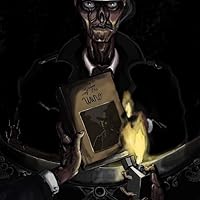
The brilliant science-fiction talent of Philip K. Dick is at its best in this new book, which contains one complete short novel & four long novelettes. Here are unusual adventures in the future, powerful stories of such varied subjects as the ultimate guided missile, psi-power crime prevention, mutational supermen & the unexpected in robots. In an introduction to this book, Anthony Boucher says that these stories "show the same fertile speculative mind that distinguishes the novels, plus an exuberant, almost extravagant love of wild, melodramatic action. As in the novels, you'll find reflections of our own society in these pictures of the future, plus one of Dick's most characteristic qualities: the chilling symbolism of absolute nightmare." Contents: The Variable Man (1953) novella Second Variety (1953) The Minority Report (1956) Autofac (1955) A World of Talent (1954)
Philip Kindred Dick was a prolific American science fiction author whose work has had a lasting impact on literature, cinema, and popular culture. Known for his imaginative narratives and profound philosophical themes, Dick explored the nature of reality, the boundaries of human identity, and the impact of technology and authoritarianism on society. His stories often blurred the line between the real and the artificial, challenging readers to question their perceptions and beliefs.
Raised in California, Dick began writing professionally in the early 1950s, publishing short stories in various science fiction magazines. He quickly developed a distinctive voice within the genre, marked by a fusion of science fiction concepts with deep existential and psychological inquiry. Over his career, he authored 44 novels and more than 100 short stories, many of which have become classics in the field.
Recurring themes in Dick's work include alternate realities, simulations, corporate and government control, mental illness, and the nature of consciousness. His protagonists are frequently everyday individuals—often paranoid, uncertain, or troubled—caught in surreal and often dangerous circumstances that force them to question their environment and themselves. Works such as Ubik, The Three Stigmata of Palmer Eldritch, and A Scanner Darkly reflect his fascination with perception and altered states of consciousness, often drawing from his own experiences with mental health struggles and drug use.
One of Dick's most influential novels is Do Androids Dream of Electric Sheep?, which served as the basis for Ridley Scott's iconic film Blade Runner. The novel deals with the distinction between humans and artificial beings and asks profound questions about empathy, identity, and what it means to be alive. Other adaptations of his work include Total Recall, Minority Report, A Scanner Darkly, and The Man in the High Castle, each reflecting key elements of his storytelling—uncertain realities, oppressive systems, and the search for truth. These adaptations have introduced his complex ideas to audiences well beyond the traditional readership of science fiction.
In the 1970s, Dick underwent a series of visionary and mystical experiences that had a significant influence on his later writings. He described receiving profound knowledge from an external, possibly divine, source and documented these events extensively in what became known as The Exegesis, a massive and often fragmented journal. These experiences inspired his later novels, most notably the VALIS trilogy, which mixes autobiography, theology, and metaphysics in a narrative that defies conventional structure and genre boundaries.
Throughout his life, Dick faced financial instability, health issues, and periods of personal turmoil, yet he remained a dedicated and relentless writer. Despite limited commercial success during his lifetime, his reputation grew steadily, and he came to be regarded as one of the most original voices in speculative fiction. His work has been celebrated for its ability to fuse philosophical depth with gripping storytelling and has influenced not only science fiction writers but also philosophers, filmmakers, and futurists.
Dick's legacy continues to thrive in both literary and cinematic spheres. The themes he explored remain urgently relevant in the modern world, particularly as technology increasingly intersects with human identity and governance. The Philip K. Dick Award, named in his honor, is presented annually to distinguished works of science fiction published in paperback original form in the United States. His writings have also inspired television series, academic studies, and countless homages across media.
Through his vivid imagination and unflinching inquiry into the nature of existence, Philip K. Dick redefined what science fiction could achieve. His wor
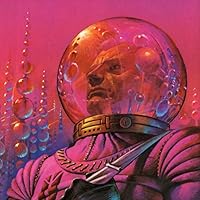
This is a collection of four novelettes and a novella from early in Dick's career, 1953 - '56. It was apparent that from the beginning of his career that his was a unique and brilliant talent. One of the stories was first published in Fantastic Universe magazine, while there are two each from Galaxy and Space SF. At least two of the stories have been successfully filmed, Minority Report and Second Variety (as Screamers). The other two, besides the title novella, are A World of Talent and Autofac, which is my favorite of the five, though Second Variety, of course, is a close second. Ace published the collection in 1957, and I believe it was his first U.S. collection. It appeared with a very good Ed Emshwiller cover (and a cover price of a whopping thirty-five cents); the cover of the 1976 second edition is less appealing, and the price was up to a buck-and-a-half.
Billed as a complete novel along with a selection of shorts, The Variable Man itself is more of a novella these days. A man is pulled accidentally from his own time into the 22nd century where his very existence is a variable factor that the computers planning the war against Centarus can't plan for.
This story is very much of its age, with the idea of all-seeing computers, where you just feed in the data to complex sociological questions and the answer pops right out. Thomas Cole, the variable man himself, is a sort of genius with his fingers, able to repair almost anything. Dick couldn't have predicted the integrated circuit revolution that was only a decade away and which would change so much, with pathways being embedded directly into silicon, removing the need for micro-wiring and effectively rendering the whole premise obsolete. Beyond that, Dick does raise the spectre of the human versus the machine that is such a mainstay of the genre, with the slavish obedience to the output of the machine being played against human creativity which works well.
I enjoyed the other stories in the collection as well, apart from Autofac about a network of automated factories that were no longer needed and the attempts of the human population to shut them down. I don't know why this didn't engage me, but it felt flat all the way through.
Minority Report is a pretty different beast from the Hollywood film of the same name, but is an enjoyable action romp, with a bit of Dick-ian twisty logic thrown in there; Second Variety is about the evolution of robots designed for war and A World of Talent shows the ultimate psi talent emerging, but unrecognised, on a breakaway colony world.
A good collection of fairly early PKD and solid SF of the era.
A second hand book bargain. A bargain because I don't think I actually have two of the stories in this book; and the others I read long enough ago that I came to them almost fresh. Two of these have been made into movies - Minority Report and Second Variety. Minority Report was a good movie, and Screamers (Second Variety) a not bad B-Movie. But movies never really seem to capture the downbeat nature of Philip K Dick - his books have protagonists rather than heroes.
Although the central character of Minority Report sacrifices his career to save a system he believes in you are left asking yourself whether he did the right thing. Should we carry on detaining people for "metaphysical crimes".
The thing that really stands out for me in these stories, written in the 1950s, are that Dick saw automation as the threat to humanity, not overpopulation. His machines are not actively malevolent like SkyNet. They do what we have asked them to do, ever more efficiently, squeezing us out in the process. The machines in Autofac strip the earth of resources while continuing to churn out goods that are unwanted by the remaining population. They can't be reasoned with or stopped, they blindly follow their original directives while adapting to changed circumstance. This is what should worry us about the AI revolution - not that self-aware machines will spontaneously arise and decide to eliminate us.
The Variable Man is a collection of science fiction stories by American writer Philip K. Dick. It was first published by Ace Books in 1957. The stories had originally appeared in the magazines Space Science Fiction, Fantastic Universe and Galaxy Science Fiction Contents
"The Variable Man", 1953 "Second Variety", 1953 "The Minority Report", 1955 "Autofac", 1955 "A World of Talent", 1954
The Terran system is encircled by the Proxima Centauri empire with both being constantly at war and developing their own weapons to fight the other. Terran mathematically calculates its chances of winning and develops a bomb called Icarus. With the help of 'The Variable Man' who has arrived from the past by accident in what is called the 'Time Bubble'.......
"The Variable Man and Other Stories" is a collection of science fiction short stories written by Philip K. Dick. The book contains a total of eight stories, each of which presents a unique perspective on the future and humanity's relationship with technology.
One of the standout stories in the collection is "The Variable Man," which tells the story of a man from the past who is accidentally transported to a future world where his knowledge and skills are considered obsolete. The story explores themes of adaptation and the changing nature of technology, as well as the importance of human ingenuity and resourcefulness.
Another noteworthy story is "The Minority Report," which presents a world where a group of precogs can predict future crimes, leading to a system of pre-emptive justice. The story raises important questions about the nature of free will and the ethics of punishing people for crimes they have not yet committed.
Dick's writing style is engaging and thought-provoking, and his stories are filled with complex characters and intriguing plot twists. He explores the intersection of technology and humanity with a keen eye, delving into the ways in which our inventions can both help and hinder us.
Overall, "The Variable Man and Other Stories" is an excellent collection of science fiction that will appeal to both longtime fans of the genre and newcomers alike. Dick's stories are timeless, and his insights into the human condition are as relevant today as they were when they were first written. Highly recommended.
This book taught me that I like Philip K. Dick stories in small portions. Instead of two hundred pages of a interesting idea in a setting that is not particularly captivating, the creativity of Philip K. Dick is fleshed out quickly and appreciated by the time I am ready to move on to a new tale.
I was most fond of the Variable Man and the Minority Report. In both cases, the concept of the story were not only far fetched, they were also intriguing. What could happen if we resorted to robots with artificial intelligence to help us win a war that we were losing? What could happen if we had an imperfect systems to predict who would commit a violent crime and we could stop them?
It's interesting to see the notion of underground bases and factories mentioned in mutliple stories by Philip K. Dick. However, I find myself distracted when the economic viability of having your industry and agriculture below ground is not explained. How are subterranean settlements on the moon suppose to support both its population and a fighting force on a nuclear devastated Earth?
The other short stories found in this book consisted of fantastical ideas in which I had trouble suspending my disbelief. Since they were short stories, they were concluded before I felt that they became a chore to read.
Preciso di aver letto solo L’uomo variabile e mi è piaciuto tantissimo.
La sensazione è stata di leggere una storia completa non solo un racconto, anche se mi è dispiaciuto finisse così presto. I personaggi sono vividi anche se ovviamente non tanto approfonditi visto il poco tempo. Mi ha colpita l’originalità della soluzione trovata alla fine, dove la bomba, quindi la distruzione potenziale, diventa invece, grazie alla genialità di Cole, una nuova possibilità di evitare la guerra del tutto. Mi è sembrato un inno alla pace, oggi attualissimo. Inoltre ho apprezzato tantissimo questo voler sottolineare che l’uomo che ha capacità di fare e aggiustare e inventiva non esiste più e che il consumismo regna sovrano perché le cose non si aggiustano più ma si buttano: diciamo che ci ha già preso sul presente senza andare tanto lontano 😅 E poi la soluzione democratica per saltare il Consiglio degli anziani, affinché il popolo manifesti la propria opinione ed oltre un certo numero diventi subito una proposta senza bisogno di approvazioni è spettacolare! Dovremmo prenderla come spunto…
An enjoyable range of stories by the venerable author: The Variable Man, The Second Variety, The Defenders, Piper in the Woods, and Foster, You're Dead - none of which I'd read previously. In all, they I enjoyed the book as a whole, I found the lead story the most satisfying, though all were quite readable. As I've found with many PKD stories, some contained a bit too much telegraphing of the end, but The Variable Man overcame this fault admirably and was a delight to read. Don't get me wrong. The remaining stories are very much worth your time, especially if you're ticking off PDK stories to complete his collection. Well worth getting the book even just for the lead story.
Very enjoyable collection! Five stories all with a similar scifi-action vibe. I thought they went together quite well. And they hold up even after 70 years! Two of the stories have been adapted into films (The Second Variety and Minority Report). But the other three are interesting too.
The title story, The Variable Man, was a new one for me. I found it pretty exciting. A man from the past is accidentally teleported into the future, and his presence creates an unknown variable that causes all their prediction algorithms to crash. Fantastic premise, like many of PKD's works. I'm surprised it hasn't ever been adapted for the screen.
I found this old, well-worn paperback copy from 1957 in a used bookstore in Vancouver. it is a nice gem to add to my collection.
The Man in the High Castle this isn't, but this collection of five stories and novellas from early in PKD's career is very entertaining, quirky but fast-moving, with not a dud in the bunch. Among them is Minority Report, the story on which the movie was based. In the title story, a fix-it man who operates from a horse-drawn wagon is mistakenly whisked from 1914 to the 22nd Century, where he proves crucial to an interplanetary war. Ha ha!
Poor Thomas Cole. One day, wandering about a pre WWI world. The next moment, brought 200 years into the future. People studying the past accidently bring Cole to the future and inadvertanly allow him to escape. He goes into a war-torn world, fighting an alien force from Proxima Centuri. They have the Terran forces blocked, and the earth forces will only fight when their odds are in their favor. Each side play a game of chess, moving but never striking. Finally, the earthlings create an ultimate weapon, but cannot get it to work due to their ultra-specialization (seems in the future everyone has forgotten how to fix anything). This is where Cole comes into play. Being pre-WWI, he still has the ability to fix things. Taken captive, Cole makes it work, but turns it into a hyperdrive. The Terrans fight, sending Icarus at the Cenurians. The machine disappears, and the Terran forces suffer a horrible defeat, and the Terran government looks for a peace settlement. Lo and behold, it is discovered what Cole has done and the Terrans can freely move beyond the Centurian perimiters.
Four novelettes & a complete short novel ('The Variable Man') by Mr Dick. Includes 'The Minority Report' (shock of shocks, it's better than the movie). I remember liking 'Autofac' the most, though it's been a while since I last read it. Overall, it's a collection of good, not great, classic Dick fare (read: pre- Valis). Nice to have around to thumb through every so often. And the cover (1957 printing) is nifty, too.
Some of Dick's earliest short stories are presented here. And what does the reader find? Signs of genius, signs of what would come, and so forth. All these stories are good. And by that I mean real good. Some of these stories would be latered turned into full novels, such as Dr. Bloodmoney with the character Hoppy Harrington. The very first short story by Dick ever published is here, the Wub one. And already in this first story we can see the potential this man had. Good stuff here.
These are stories from the early 1950s, and it shows - not my favorite writing era, because everything has to be so bombastic and full of things that we find dated now, stylistically. Oh, the adverbs...
At any rate, I could have passed on the title story, but it was nice to be able to read Second Variety and Minority Report, finally.
Cole, a man from 1913, is brought into the future where mankind has colonised outer space but is still trying to blow each other up. As a teenager I Loved his ideas and how well he wrote them. Another very collection enjoyable sci fi stories from one of my favourite authors. Innovative material from the 1950's. Reads liked my own teenage dreams.
I probably picked this up at Knack's Drugstore in Bridgman, Michigan at a time when I knew nothing of Philip K. Dick. The "Second Variety" story about World War III scared the hell out of me as I sat reading it at the trestle table on the porch we used for eating when there were guests.
Jako jako jako stari SF. Znam da je Dick bio pionir u svačemu, ali ne mogu se mislima vratiti u 53. godinu sve da hoću. Ni tata mi se tada nije rodio:)