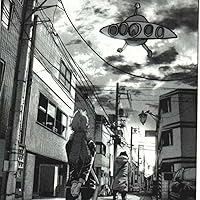
Tsukimoto (conhecido como “Smile”) e Hoshino (conhecido como “Peco”) são amigos de infância. Apesar de terem personalidades completamente diferentes, os dois são inseparáveis desde o Ensino Fundamental, quando começaram a jogar Tênis de Mesa no dojo “Ping Pong Tamura”, em frente à estação de trem. Hoshino é um gênio no esporte, que faz só o que lhe dá na telha, e vive fugindo dos treinamentos no clube. Já Tsumoto é introvertido e guarda o seu talento no Tênis de Mesa de todos.
Although Taiyo Matsumoto desired a career as a professional soccerplayer at first, he eventually chose an artistic profession. He gained his first success through the Comic Open contest, held by the magazine Comic Morning, which allowed him to make his professional debut. He started out with 'Straight', a comic about basketball players. Sports remain his main influence in his next comic, 'Zéro', a story about a boxer.
In 1993 Matsumoto started the 'Tekkonkinkurito' trilogy in Big Spirits magazine, which was even adapted to a theatre play. He continued his comics exploits with several short stories for the Comic Aré magazine, which are collected in the book 'Nihon no Kyodai'. Again for Big Spirits, Taiyo Matsumoto started the series 'Ping Pong' in 1996. 'Number Five' followed in 2001, published by Shogakukan.
Just read because I plan to see Marty Supreme, a (supposedly) ping pong film (my son says there's less about ping pong than this ping pong--ahem! table tennis!--playing family would hope for), Marty played byTimothee Chalamet. But he and his table tennis nerd friends liked it any way. This, a 2014 first volume only, a brick of a book but a fast read, by great manga-ka Taiyo Matsumoto, has a bunch of ping pong in it and as is usual with him, sweet character development. A couple other sports comics/manga I have read and recommend include Czech, Please, Fence, Dragon Hoops, Southern Bastards.
This was great - I loved the loose, descriptive art style and love that the characters' designs grew as they did (just a real high schoolers do). The action scenes were clear and kinetic and I actually learned something about ping pong. The plot was a fairly standard "mystical sports savant" story, but with a few interesting twists around the point of competition, friendship vs. winning, and what young people do when an identity they have had their whole life ("winner" or "better at sports") goes away as others grow into their talents. Great read and I look forward to reading part two and the other books by this artist.
**Thanks to the artist, publisher, and NetGalley for a free copy in exchange for an honest review.
A fast paced read with some nail biting moments. You get all of the sound effects of shoes squeaking on the floor (Kweek! Skrik!) as well as the sound effects of the ping pong ball hitting the table and paddle (the pak, pok.) You also get to "hear" the roar of the crowds -- Waah! Yaah!
A good graphic novel which could be improved with color and illustrations more like 'Speed Racer' or some other manga comics. The cover could do well with more color and having less pictures in my opinion. It was just too busy for my taste.
I really did enjoy the storyline; and wow, I'm left hanging until volume two!
Four stars for me (I really like it.)
Thanks to NetGalley for the opportunity to read this book.
if you like this review, i now have website: www.michaelkamakana.com 210715: have only read this volume one but so far it is excellent artwork, crumply, expressive, representative, tells the story well. the story is fairly typical sports-narrative, so less interesting than tekkon kinkreet or sunny, but still great to look at...
by now i have read enough/rated enough to comment on my own process of evaluation. when first beginning goodreads in 2010 i read a lot of books that were 'ok', that served as basis, history, for the genres that interested me, so the average rating was probably low threes. in time, over the years, there has been some average increase partly because i then had a better idea of what i wanted to read, partly through natural inflation, recognition that i must have at least 'liked' so many works to read them...
my editor told me a three counted as 'algorithmically negative' so soon i found myself giving out fours. i do not want to be negative. and so discovered more and more works i could honestly assess as four. in time, it became clear to me that virtually every book i wanted to read was somewhere between three and four and even rare fives. distinction came only according to which books it followed and their ratings, genre expectations met or subverted, surprise or disappointment, any engaging stylistic or meta textual aspects etc. most books are read 'according to' their genre and i rate them according to that, not to some hypothetical 'universal book'...
it is not difficult for me to rate work four: i really like to read, i read all the time, i have wide-ranging tastes. in nonfiction most work start off automatically four, after all i know what it is about, i know what i want to read. this is certainly the case in most all the philosophy i have read. fiction is another case. here i am guided by previous readings, reputations, word of mouth, recommendations, but all the same i can be pleasantly surprised or shocked and dismayed. on the other hand, i have come to rarely give out twos anymore because if the work is just 'ok', there are so many more i want to read...
as far as reviews go, i try to give reviews to anything i rate a five and sometimes a four. it surprises me i have written so many reviews, particularly philosophy, but however amateur they are quite sincere and product of a lot of independent thinking. i have not studied philosophy in years (decades...) but certainly have read a lot. i never wanted to be 'captured' by one or the other way of particular thinkers, but have in the eventual been drawn to continental thinkers and more recently to Indic thought...
of the now 5 002 books of all sorts read, this includes not only the non-fiction (philosophy, art, literature), the graphic (novels, art, comics), and the fiction (novels, poetry, plays) with some overlap, but mostly 1 356 nonfiction, 3 646 fiction...
Sports manga about high school table tennis. (Despite the character ages, this is solidly a seinen title.)
I thought the art was absolutely masterful. The characters were also well-realized, so even though the story was kind of tropey/predictable if you read sports stuff and occasionally annoying too (especially re: the Chinese exchange student), I tore through this and already put the second volume on hold at the library. Much staring at panels was involved. How does he do it??? Sometimes when I read a graphic novel, I go like "sure, I could also draw that", but with this I was like "there is ABSOLUTELY NO WAY I could draw that". Very dynamic, very immersive.
I read Blue Spring way way back and was wondering where'd the author go from there. Now I know :) ______ Source of the book: Lawrence Public Library
I remember seeing the film of Ping Pong back in 2002 - just after I came back from a trip to Japan. I remember liking it a lot, there was something about the use of this odd indoor sport, heavy on reaction timing and stylistic quirks, that bought out the exaggerated extremes in the personalities of its leads. So now, finally, I get to read eighteen years later a translation of the manga it is based on, and discover quite how much in common they have. Japanese sports manga are a large genre, and one I know little about, but even so my sense is that Ping Pong is more interested in some of that coming of age stuff, than the game - despite the manga probably being about 75% gameplay.
One of the things that impressed me about the film was the innovative (SFX heavy) presentation of the sports action scenes. Table Tennis is a fast game, but very contained. The film came out just after the innovation of bullet time, and that, and some computer graphics made it visually very exciting. But the book - whilst formally quite traditional - excels are the near impossible p visualising ping pong playing styles, motion, speed, and the action. Whilst splattered "Pok Pok" effects give us the rhythm and the sound of the game, we also get trainer squeaks, squeals as the scores mount up. About a third of the 500 pages here are taken up with a regional tournament, and three games in particular, and you can glean the player style from the presentation. The art is jerky but precise, its very clean linework (one of those lovelythin technical drawing pens) particularly wobbly on renditions of advertising logos, but clean on the four or five telling traits of its lead characters. There are occasional flips to colour linework, but it is mainly in very stark uncoloured black and white, which is a contrast to the story being told which at the heart of it is trying to reconcile the personalities of the kids, with the personality of a winner. Is it sportsmanlike to play down to a weaker opponent? What role does confidence, arrogance and personality play?
The volume starts pretty philosophically, but once we get into the tournaments it has little time for its observation that blood tastes like metal. This volume finishes on a mild cliffhanger, there are more games to be played and one of the leads has sacked off of Table Tennis (and I can remember what happens in the film, so know there is more to come). I don't know enough Manga to judge it within the genre, but after a slowish start it really finds its own storytelling pace (which is at once breathless and extremely decompressed) and I want to come back and see how this plays out in the next volume. I have never been the best at reading action in comics, and there is a lot of quite frenetic action here, and so I am impressed with how well it worked, and sucked me in. My sense is this is a bit of a classic from the film, and its overall presentation, and like any kind of classic it has its was of drawing in even a casual reader of manga.
Basically it's about a genius who's great at Ping Pong but has no real ambition to do it. Feels like it's not that important. However, his best friend loves Ping Pong and is good but not nearly as good. He learns that soon as he sees his friend excel at it. Smile is the name of the main character and when he begins to get coached and takes the game serious he becomes a monster of a player. This first volume is his growth as a player while also giving us a look into other kids trying their best to win the championship and be the best.
And the thing is it has all the right ingredients. The art is different but works real well for action. The motivation to keep going is there. The idea we get to see how ALL the kids struggle to better themselves is always nice. But I just couldn't seem to connect to anyone personally. I get the idea of it and where they were going but it didn't get me that invested.
Saying that it is still a really solid book and much better than I expected any manga/book to be about Ping Pong. A 3.5 out of 5.
You have Smile and then you have all the other table tennis players.
Peco is determined, wanting to be the best, but he's not nearly as obsessed as some of the others. Demon (Manabu) and Dragon (Ryuichi) are more focused, bordering on obsessed with being the best. Lastly, there's Wenge. Disgraced, he left his home to come to Japan in an attempt to regain his glory and return to China.
That leaves us with Smile. He's really the best of the best although ping pong isn't his dream, unlike all of the others. Smile plays because he enjoys it, but the training, the practicing, all the stuff needed to be truly good, bores him. However, his natural talent and love of the game draws him into the competition despite himself.
Each has their own reasons for playing, their own style, and motivation. These internal desires push the players to do their best and, as it is in the way of sports, develop rivalries as well as partnerships, with the other players.
Although table tennis can be fascinating to watch - I'm far too uncoordinated to return a simple lob! - it never was something that interested me a whole lot. However, I know that it is big in a lot of areas much like basketball or football are here in the states. So, I thought that, even without a good knowledge of the techniques and styles, the competition would draw me into the story. I'm glad I took a chance on this unusual manga.
I will admit that I was hesitant in regards to the art style at first. It seems simplistic but the deeper you get into the manga, the better it suits the story. This is shown best during the match scenes where the clean, clear lines of the art effectively presents the stress, the anticipation, and the fears of the players. Oh, and the triumphs as well.
Ping Pong is fast-paced and full of drama and tension. The characters are dynamic and likable, even when they're being obnoxious jerks. I was drawn into the struggles and achievements of each player, wanting the best for them all in the end, even if I wasn't rooting for them at the start. Despite being the biggest manga I've ever read - a little over 500 pages - I'm anxious to see how the story ends in the next volume.
*Thanks to Netgalley, the author, and the publisher for a copy of this book.
2024 Review for volume 1 and 2: content notes for smoking, the angst of a child prodigy, and intense school sports.
Keywords that came to mind were speed, sweat, intensity, competition and line.
Written and illustrated by Taiyo Matsumoto it has apparently been three years since I told y'all that this dude is one favourite mangaka of all time.
Writing wise, I will admit to initially being a bit surprised that Matsumoto had written a sports manga as it didn't seem to be totally in his wheelhouse based off of the rest of his work I had read up until that point. On the one hand, there's definitely very Matsumoto ways in which he approaches this sports manga, and on the other hand apparently his editor kind of forced the idea onto him. Reading the essay in the back by said editor Yasuki Hori was kind of weird. Dude could apparently not decide if it was ok that Tekkonkinkreet was good but not mainstream or not. And would apparently tell Matsumoto contradictory things in every conversation.Fun!
Overall it is a very character driven story, there's some interesting meta moments, but with enough action that I still found it a bit hard to engage with on a plot level. Although the action was really well done visually.
Much more obviously Matsumoto, the art really made the book for me. The intensity of the action, the line quality, the sweat, the dramatic page layouts - when Matsumoto pulled out the stops it was all out.
Looking at the identities and representation as we always do.
Similar to most of Matsumoto's translated work, Ping Pong is dominated by men. There's a few women and girls bouncing around, but it's all about the team and the competition which are all gender segregated apparently.
Again, the focus on bettering ones self at sports and winning didn't leave much room for sexuality either. Although the anime seemed to include more heterosexual dating.
Race and nationality are a thing that come up fairly regularly in the fact that our protagonists are Japanese and one of the big contenders is Chinese. Can't really comment on the quality of the representation. I know reading about Hikaru No Go there was some drama about the international competition at the end of the series... And I've been learning a lot this past year about the history of military aggression by Japan against Korea and China etc. But I've still got a long way to go. And my light web search did not turn up any obvious answers.
Class was much more glossed over then in some of Matsumoto's other work.
In contrast disability did come up a bit more then usual. Because when it comes to ping pong these children are serious! They have workout regimens and follow nutritional guidance. Some kids get injured and others face limitations based on their physical abilities. It's not dived into but it's there at least.
Wrapping things up, while not a complete reproduction of the books, I did find the anime a lot easier to follow and engage with. It also felt like it compliments Matsuomoto's style very well. So I would highly recommend, especially if you are having a hard time reading the book like I did.
2021 Review: Originally serialized from 1996 to 1997 in Big Comic Spirits it actually came a few years after Tekkonkinkreet and right before GoGo Monster. As far as keywords go I would say sports, self discovery, and coming of age. Although, honestly, the reason I'm not continuing the series is because I was totally unable to actually connect with what was happening. I was literally reading page after page and it was going in one ear and out the other as they say. But, as someone who has proven themselves to me (and many others) over and over again, I'm sure that's more a me issue then a Matsumoto issue. The art certainly did not disappoint! Vivid, dramatic, sweaty, and still not quite like anyone else I've read. If you, unlike myself, are a bit more into traditional sports manga you might find this easier to connect to. Can't say how it depicts or doesn't depict anything though, because I really don't know what happened or who anyone was lol.
This review is based on a digital copy that I received from NetGalley.
I am not into sports, and despite having played a handful of sports like basketball, my adult laziness has outgrown them. As for table tennis, which was founded in 1880s Victorian England, it is a sport that nowadays is perhaps taken more seriously in other countries other than the UK and the United States, with notable players of the sport being based in China. Of all of the sports he can use to make as a psychological drama, manga artist Taiyō Matsumoto uses table tennis as the basis of a coming-of-age tale about two high school boys.
Yutaka Hoshino/"Peco" and Makoto Tsukimoto/"Smile" have been friends since childhood, despite having drastically different personalities. Both talented members of the table tennis club of Katase High School. When both become contestants for the upcoming Interhigh Table Tennis Qualifier Men's Singles, their elderly coach Jō Koizumi, who has a deep sense of commitment to the sport, is determined to bring out the best of his players, in particular the quiet and reserved Smile.
Upon reading the initial pages, the art will be the turning point on whether readers will appreciate the book or not, because Matsumoto’s style is unconventional compared to the normalcy of most manga. With the attempt of illustrating a reality that we would be familiar with, from the advertisements of Coca-Cola or children playing Sega Rally at the arcade, Matsumoto’s characters are sketchy at best as the anatomy can be loose, notably the hands looking really large, which I guess you need to have if you’re playing table tennis.
With this art-style and the cold characterization through the eyes of Smile, who is perhaps the book’s main protagonist, reading most of this volume I was left emotionally cold. The drama is static and even though there are clichés such as the tough coach mentoring his student to reach his maximum effort, this is when the book perks up by presenting a tone that is actually funny even if sounding serious.
Despite not feeling compelled by the introductions of some of the players, all of which develop a rivalry between each other, by the time we reach the Men's Singles, that’s when Matsumoto’s visual storytelling starts to really work. Like sports movies that should be as enjoyable as the best action movies, the action of sports depicted in manga is highly stylized to the point it’s almost like witnessing a Dragon Ball Z fight sequence. Through dynamic panel layouts, speed lines and sound effects, Matsumoto’s art can still be rough around the edges, but there is enough surrealism to add enjoyment to the matches that also forms as an extension of the characters.
Adapted into an acclaimed anime series in 2014, Taiyō Matsumoto’s Ping Pong is an odd mixture of cold characterization and surreal table tennis matches that gives just enough to see how the story continues in the next volume.
In most sports fiction, the sport itself isn't really the point; it's everything else going on around it. It's a coming-of-age story, a story about competition, friendship, how success can go to your head, or the difference between talent and effort. It's why you don't need to be an athlete yourself to enjoy a good sports movie – these themes are universal. What makes Ping Pong stand out is while it's juggling all those themes I mentioned, it plays them a lot closer to its chest, particularly in the manga version of this story. They're all there, but it's also very easy to read this manga on the surface as a story about the electric feeling of playing this sport. And it's exciting and informative just on that level, in a way that will draw you in regardless of how you felt about table tennis before this.
The first in a two volume manga set that I received for Christmas, this is simply excellent.
The dynamism of the inking, the equally energetic paneling? Excellent. The vibrant, organic character of Matsumoto's style, which is both technically sophisticated and impressionistic at turns? Excellent. The narrative itself, of the increasing success of one of two friends who are utterly absorbed in the world of competitive ping pong? Sure, some of it is familiar. But it's all lovingly crafted, with well realized characters and believable relationships.
Utterly engrossing, and...taken with the second volume as one narrative...one of the most mature and satisfying graphic novels I've read.
Matsumoto is a manga god and it only takes a single frame to recognise his signature style. What makes this series so good is the way it simplifies Shonen to the core. There's no special moves or enormous cut scene backstories, there's no melodrama. It's just two boys trying to be come great Ping Pong players. Matsumoto always does so much with so little. This is a bildungsroman on par with any literary attempt I've read. It's probably too quirky to get non fans into manga but it's a must read for existing fans.
First of all, 4* because Matsumoto managed to interest me in a ping pong manga when I can barely hold a racket (and don't give a damn).
Then 4* because, of course, it doesn't matter what sport you play, it's the players' state of mind and how they evolve that counts and Matsumoto makes it exciting.
Finally 4* because it's Matsumoto and I'm fascinated by anything he does despite a drawing that remains an acquired taste. His storytelling, with its silences and contemplative moments, and his characters with their sometimes out-of-space retorts, always leave me a little dreamy and, let's face it, admiring.
sé que las cosas van a mejorar pero por el momento todo va de mal en peor. y lo peor del caso es que son conflictos muy muy realistas así que no es como en las historias de fantasía donde pido que los dejen en paz
In eighteen chapters Matsumoto packs such a strong thematic punch with a stylish flair throughout, it's hard not to think of this manga as the peak of sports shonen.
baby’s first manga! I read this for a book bingo category “new-to-you format” and was overall impressed by what a fun read it was and how well they handled translation/giving cultural context!
A beautifully produced and arted book with a passion for its subject. Characters are interesting and well conceived. Not my personally preferred genre or style.