The men of Captain Scott’s Polar Party were heroes of their age, enduring tremendous hardships to further the reputation of the Empire they served by reaching the South Pole. But they were also husbands, fathers, sons and brothers.
For the first time, the story of the race for the South Pole is told from the perspective of the women whose lives would be forever changed by it, five women who offer a window into a lost age and a revealing insight into the thoughts and feelings of the five heroes.
Kathleen Scott, the fierce young wife of the expedition leader, campaigned relentlessly for Scott’s reputation, but did her ambition for glory drive her husband to take unnecessary risks? Oriana Wilson, a true help-mate and partner to the expedition’s doctor, was a scientific mind in her own right and understood more than most what the men faced in Antarctica. Emily Bowers was a fervent proponent of Empire, having spent much of her life as a missionary teacher in the colonies. The indomitable Caroline Oates was the very picture of decorum and everything an Edwardian woman aspired to be, but she refused all invitations to celebrate her son Laurie’s noble sacrifice. Lois Evans led a harder life than the other women, constantly on the edge of poverty and forced to endure the media’s classist assertions that her husband Taff, the sole ‘Jack Tar’ in a band of officers, must have been responsible for the party’s downfall. Her story, brought to light through new archival research, is shared here for the first time.
In a gripping and remarkable feat of historical reconstruction, Katherine MacInnes vividly depicts the lives, loves and losses of five women shaped by the unrelenting culture of Empire and forced into the public eye by tragedy. It also reveals the five heroes, not as the caricatures of legend, but as the real people they were.
A fascinating book, that’s well written with the events that is set over a century ago when attitudes to the role of women, to class, education, religion, parenting, marriage,race and sexuality were very different.
I loved a picture of a wedding of Kathleen Bruce’s marriage to Robert Falcon Scott, where the bridesmaids wear really big hats. Although the marriage didn’t last, this still happens to be my favourite picture in this book is of Kathleen Bruce’s marriage to Robert Falcon Scott at the Chapel Royal, Hampton Court on the 2nd September 1908.
The Times report of the wedding of Kathleen Bruce and Robert Falcon Scott’s married ended.
The marriage will make no difference to Captain Scott’s future plans with regard to Antarctic exploration.
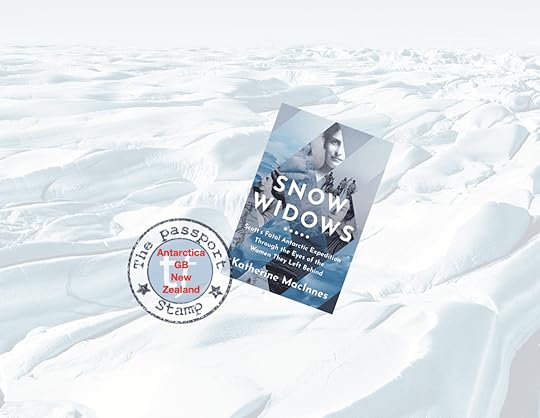
Now for the very first time, and with unprecedented access to family archives, Katherine MacInnes retells the story of the race for the South Pole from the perspective of the women whose lives would be forever changed by it.
Snow Widows offers a fresh perspective to a familiar story, and a fascinating window onto a lost world.
The author Katherine MacInnes researched Snow Widows for over a decade, it is packed with primary research and informed by many interviews with people no longer with us. Inside are unseen photographs.
Katherine MacInnes first became interested in the wives of the Antarctic explorers when her husband left to climb Everest.
Snow Widows is an account of the Antarctic expedition to reach the South Pole, that was undertaken in the early 20th century by Robert Falcon Scott and his team. It aims to describe the expedition as experienced by the women they left behind. The book is the result of the author’s ten years of research into Scott’s voyage, told through the correspondence, journals and images that survive. The focus of the retelling is on the women – the wives and mothers of the explorers – and the personal journeys that each of them undertook while their menfolk were away. The result is an accurate and moving account of life in a time when long-distance travel and communication were much slower and more difficult than they are today.
As friends of TripFiction, we often choose books to match where we’re going on our next holiday. We might want to learn more about the destination before we go or perhaps to immerse ourselves in a story with the characters inhabiting the same places as we’re visiting. In the case of Snow Widows, much of the action takes place in the Antarctic, which even today is an unlikely spot for tourism. In addition to the polar landscape, the author writes a social history of life in Edwardian England in the years leading to the world wars.
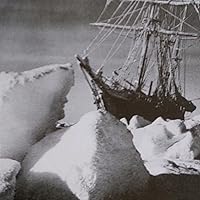
Most of us will have at least some idea of the story of Scott and the men who went with him to the South Pole. Yet few will have heard of their wives and mothers, even though they were remarkable and many of them achieved great things in their own right. The account begins with the women waving goodbye to the ship, the Terra Nova, as she sailed away from Cardiff for the southern hemisphere, knowing that it would be a year, two years, or more, before they know whether the mission had succeeded. It explains the limitations of communication at the time – telegrams and cable messages were new and hadn’t reached many parts of the world, let alone the polar regions. What a contrast for us! We can follow planes on radar to “check’ that they land as expected, even text in mid-air, and we expect to be in touch with family and friends almost constantly.
Snow Widows is written using the values of the day, mostly the years between 1910-20s, so we see the experiences of the women through this lens. Much was made of appearances, so we see the women making choices based on what is expected of them. Equally, the men – and particularly Scott himself – are driven to achieve what they believe will make their women proud of them, creating an almost inevitable mixture of “heroism and disaster.” The book describes the different backgrounds of the families; from Lois Evans trying to make ends meet as the wife of a sailor living in rural Wales, to the grand manor house and estate of benefactor Caroline Oates.
Snow Widows describes the women’s attitudes to the expedition, their place in society, their views on the suffragette movement and much more. It links to other great moments in history, such as the sinking of the Titanic, and scientific and artistic developments. Through the eyes of the women, we experience the agony of distance – we realise that it could take a year to receive news from the expedition; that the expedition is “a world of dangers that [they] cannot share.”
Naturally, the Norwegian Amundsen’s voyage is part of the narrative and there’s an interesting debate to be had about whether the twin journeys were a race, a competition, or simply two ways to address the same challenge.
Descriptions of the Antarctic journeys are mainly from the documentation that survives: diaries detailing the extreme cold and the challenges of crevasses and mountain slopes. By contrast, we see some of the women travelling to New Zealand, where they experience comparative luxury and civilisation, as well as contrasting landscapes. In addition, the author describes cold, stormy winters in Scotland, warm visits to Italy and day-to-day life in various parts of England and South Wales.
Although as readers we already know the outcome of the expedition, the author describes the way that the news reached the families of the men and creates great tension. Similarly in recounting the challenges that the women face, both in keeping themselves out of abject poverty, in some cases, and in their attitudes to trying to find out what went wrong. This is not a dry history book – it would be hard not to feel great compassion for each of the women, due to the separation, anxiety and grief they experience. There’s humour too: when Kathleen Scott is effectively hiding from society in New York she bumps into American explorer Robert Peary and learns that Amundsen is giving a lecture in the same building. Exasperated, she asks, “Is the whole building booby trapped with polar explorers?”
Snow Widows is written as a chronological account – with a few exceptions – and will appeal most to readers who enjoy social history and hearing the voices of women. It can be a little difficult to work out which women belong to which men at first, and a diagram of Scott’s journey would have been helpful, but these are small things in a book that is a serious achievement and a thoroughly engaging read.
All in all, this was good to fine throughout with moments of excellence. This book commendably shifts attention to the woman left behind by the five men who perished with Scott on his return from the South Pole - mainly three widows and two mothers but others too. Original research pairs with a reconsideration of known sources to produce a work that is unique amongst polar narratives.
Telling this story from at least five different points of view (but many more in reality) was ambitious and creates many intriguing sub-plots and arcs within the wider story. The characters, contradictions, and scale involved creates a story that feels true to life. This is reinforced by the authors choice to write in the present tense in a style that resembles fiction with plenty of primary sources pasted in. This is done in such a way that seemingly doesn't compromise the work's historical integrity. The connections drawn between the woman were fascinating as the unifying tragedy and resulting grief contrasted with the woman's personalities, beliefs, responsibilities, class, and beliefs. (One surprising element was to discover the anti-suffrage attitudes of some of these women, especially in the case of Kathleen Scott.)
This ambition in scale and style leads to some of the drawbacks with Snow Widows. The style limits MacInnes' ability for more direct commentary and analysis at points. The many POVs could be considered disorientating or disappointing as you risk being taken away from your preferred characters. I found the pacing off in parts too, sometimes it lingered too long in duller parts and skipped over parts which seemed like they could've been expanded upon. Took too long to get to the actual tragedy, but from then on, the book is thoroughly and consistently excellent. I generally feel like some of the content could've been trimmed. I also have some questions about the footnoting, especially when it comes to citing apparent primary sources from secondary sources or from conversations the author had. I'm not marking her down for this as it may be my own misunderstanding.
Brilliant in parts, slow in some others but overall good. I feel like there was unrealised potential but overall I'm glad I've read it. May have additional enjoyment for those less familiar with Scott and his final expedition.
I really enjoyed this for the most part, it was really interesting to hear from The Women in the polar story. I went to a talk by the author and also she very kindly gave me a lift once so I am maybe a bit biased 😅
There were a couple of parts that confused me, for example, how do we know exactly what was said between Kathleen Scott and Fridtjof Nansen? We may have some letters but in terms of informal meetings? Surely we can't possibly know.
I really enjoyed learning more about Lois Evans who sounds brilliant, and Caroline Oates (Captain Oates' mum). I'm never sure how seriously we can take letters sent from the men to their confidantes, being cooped up with a load of guys they might not like that much, they're going to complain about EVERYTHING. Does it mean everything was massively bad? Nah, familiarity breeds contempt. Ran Fiennes has a good bit on this in his Scott biog.
The unusual structure caused me to struggle at the beginning, but once the Terra Nova left New Zealand, the true genius of the structure revealed itself. Thoroughly researched and empathetically imagined, this book brought the 5 doomed men of the Scott expedition alive and illuminated their inner thoughts in a way that other books I had read about the expedition did not.
Overall, an excellent book, detailed without muddying the waters too much with excessive information. Detailing the events of the expedition as well alongside the events survived by the women left behind helped to humanise the individuals involved, and overall I was interested and entertained. One thing I found it hard to wrap my head around was the character of Kathleen Scott, clearly a brilliant and intelligent woman that seemingly hated all other women including those like her. Against the vote for women, constantly talking down any other women around her and genuinely only interested in men. She was clearly a complicated woman, and she wouldn't have liked me! Exploring her story from a nuanced perspective was certainly worthwhile, if tough. There wasn't as much personal material to facilitate telling the stories of the other widows, but I still found them interesting and took pleasure in hearing about them. 3.5 stars
A very slow burn with a lot of conjecture to fill in the space. I found the book didn't get interesting until Capt Scott and the polar push crew finally died, and then you followed the ensuing fallout. This book didn't add as much insight as I had hoped.
This is a powerful book indeed. Many readers who have reviewed it seemed to expect a more forensic view of Scott’s expedition but that is not what the book is about. There are many such texts already. No, this book features the key events from the expedition but they aren’t the direct focus and the book is all the more insightful for that. It is harrowing - that the wives (and the public) only found out about the deaths of the five who pushed to the pole a full year after it happened is heartbreaking. Add to that, as they were dying the explorers’ last letters which spoke of optimism were delivered to the wives.
After reading this book I feel I need to come up for air.
We know so much from history about those intrepid Antarctic explorers who risked life and limb to conquer places which, to most of us, still remain out of reach. And yet we rarely give a thought to the women they left behind to follow these ambitious dreams and of the consequences on the lives of their families. Snow Widows seeks to redress the balance and gives a comprehensive look at the five women behind the heroes, wives and mothers who, it must be said, are heroines in their own indomitable way.
Kathleen Scott - Wife Oriana Wilson - Wife Emily Bowers -Mother Caroline Oates - Mother Lois Evans - Wife
Scott's ill fated final expedition to the Antarctic in 1912 is well documented but this unique account is shown through the eyes of each of the women who lived with the staunch ambition of their husbands and sons. Snow Widows brings, not only this vision to life in an authentically and meticulously researched account, but it also allows the Edwardian era to come alive with striking perception. I enjoyed getting to know these five very different women and by juxtaposing their individual accounts with what was happening to the Terra Nova we gain a remarkable insight into how much they all sacrificed in order to allow their menfolk the freedom they took for granted.
This is not a book to be rushed as the detail is considerable but it is definitely a fascinating and very readable biographical account by a writer whose passion for her subject shines through with every well written word. I felt immersed in detail, both large and small, transported back to the time of this fateful expedition and to those women who waited, in vain, for their return.
It felt fitting to read this book in Women’s History Month, and while Richard Cohen’s book Making History is being read on BBC Radio 4. In it, he questions whether there is such a thing as objective history. The conclusion is unsurprising, and proves that there is always room to re-examine what we think we know about historical events – both great and small. By looking at Scott’s final Antarctic Expedition through the lens of the women left behind Katherine MacInnes offers a new perspective on the planning and momentum of the expedition, and the sacrifices made by more than just the explorers. It is a gripping, page-turning read. MacInnes writes in the present tense, which is a masterstroke, driving the story forward and keeping the reader on the edge of their seat - quite something given that we all know what befell Scott's final expedition. In many ways these women were just as invested in the expedition as the men who captured the headlines, and we are given countless examples of when it was their words that led the men to make certain decisions. I wish there were more images in the book, but MacInnes draws these women so vividly that were I to be transported back to a crowded drawing room in Edwardian England I have no doubt I'd be able to identify each of them in a heartbeat, such is the book's filmic quality. Whatever you think you already know about polar exploration I urge you to read Snow Widows. MacInnes has researched her subjects in forensic detail and with such empathy, it is as if the story is being told for the first time.
Oh my goodness. An excellent book about the three wives and two mothers left behind by the five men who perished on Scott’s journey to reach the South Pole. Parts are deeply moving, as MacInnes shows the women left behind writing to their men in diaries kept for them, and referring to them in letters to others, while those men were already dead. I’m glad to have learned about Oriana Wilson, who MacInnes portrays as an intelligent and loving woman; I suspect I would not have liked Scott’s wife Kathleen, but then I imagine that that wouldn’t have worried Kathleen at all. She did not like women!
And, oh, the British class system is appalling. Peter Scott, three years old when news came about his father, received more as an individual from the donations made for the dependents of the dead men than Lois Evans, widow of Petty Officer ‘Taff’ Evans, received for herself and her three children. Just appalling. And suggestions that because the class divide between upper and lower decks was maintained on the expedition, with the hut split down the middle to divide masters from men, Evans may have lacked the necessary companionship that might have kept him sane on ajourée with four of the upper deck. Just awful!
I knew very little about Scott’s expeditions to Antarctica so reading this book was eye opening. The story is told largely through the eyes of the wives and mothers of the final expedition party. I learned a lot about what happened to the men in Antarctica. Life was so harsh and cold for the explorers. The rest of the world were enthralled by the story and excited to see how they were getting on and to see if the would reach the South Pole. When it became known that the men had perished there the devastating news affected everyone.
It was also a wonderful insight into life in the Edwardian era (an era I have always found fascinating), not really that long ago, but very different to today. The fact that news took so long to travel, communications were much slower then, and the women had to wait so long to find out how their men were doing. Letters home, giving hope that everything was well, when in fact the tragedy had already happened and the men had already perished. Heart wrenching.
It was beautifully written. I would definitely recommend.
This is a well-written, gripping, harrowing account of a well-known historical event from a new perspective. MacInnes has scoured sources from archives to relatives to interviews with biographers, and combines a unique present-tense fiction-like narrative with direct historical quotes wherever possible. I really enjoyed this and many sections moved me to tears. My only warning is that (and MacInnes says this in the intro) several events are moved around in the timeline to up the drama, largely regarding Shackleton as far as I noticed, and I had to very carefully check letter dates in the endnotes to try and not get the timeline jumbled in my head.
Well, this was a sobering book and no mistake. I've read a lot about the polar expeditions, including this final one of Scott's, but adding the perspective of the women who were bravely getting on with their lives while hoping against hope that their husbands and sons would come back alive - when you know they won't - ratchets up the tragedy factor considerably. There was quite a bit more detail about the wives' lives than I needed, especially after the expedition ended. A well-researched book that was very interesting but I'm not going to say I enjoyed it. 500+ pages of tragedy is a lot to read.
I found it very interesting to read about the lives of the women whose loved ones perished on the way back from the South Pole. Whatever the whys and where fors and rights and wrongs of that expedition, the women waiting for the return of their men with such an absence of up to date communications bore an awful load. What was horrifying and shocking was the way that the women faired depending on their class and place in society, especially the one rating’s wife amongst them. The injustice and inequality meted out to that one woman and her children was staggering. A good read for lovers of social history.
I think there might have been a shorter, interesting book inside this tome, mostly focused on Kathleen Scott, who was something else. But overall, the stuff women are doing back on the home front is not nearly as interesting as dying in Antarctica, so it's really tempting to skim every time the story turns to them.
Was a bit hard to get into at first but really enjoyed it. It’s more of a social history of women in 1910s Britain - v interesting insights into their views on masculinity, patriotism, class, and God. i am now firmly a taff evans defender and a Scott hater
This didn’t really leave me knowing as much about these women as I was hoping. Perhaps I had different expectations of the book from what the author was trying to portray
One of the first books I have read that centers on the wives and mothers of explorers. Absolutely fascinating and deserving of all the praise it has received!
this book has taken me very long by my standards to read but nevertheless I enjoyed it immensely and especially loved the way it was written like a novel
An interesting premise of looking at Scott's fatal polar trip from the perspective of the 'snow widows'. The level of detail about the main characters' thoughts and responses to situations is impressive, and yet exhausting eventually. Having read another author's similar take on the story (which I believe came out the same year) I probably didn't need to read this one as it didn't uncover anything new really.
I would define this work as "faction". It was thoroughly researched, but details conversations that no-one could possibly know, since they were between individuals that never returned from Scott's disastrous polar exhibition. What it does appear to prove is that many of those taking part realised early on that bad decisions had been taken. They would have been fairly sure that they were walking to their deaths-making them either heroes or fools. You decide..