Despite widespread skepticism on the matter, a significant number of people today have stories of religious experience—moments of inexplicable terror or rapturous joy, visions, near-death experiences of the afterlife, encounters with angels, heavenly voices, and premonitions. How should rationally minded people respond?
What would your reaction be if someone told you that, one night while sitting alone, she saw through the window a brilliant light descend from the sky until it was so large that it filled the room—and that it radiated a feeling of “pure love”? And what would you say if a friend confided that one night he woke up and could not move, felt he was being suffocated, and sensed an evil spirit in the room?
By default in the secular age we are skeptical about anything mysterious or supernatural. More likely than not, most people would respond to the stories above with embarrassment and concern about the person’s grasp of reality, or they would attempt to explain them away through rational or scientific means. But the truth is that religious experiences like these are not as uncommon as they seem—although talking about such experiences often is. This is the case even in a faith tradition such as Christianity, despite the Bible’s numerous accounts of miraculous and mysterious happenings.
In Encountering Mystery, noted biblical scholar Dale Allison makes the argument that stories of religious experience are meaningful and not to be marginalized—and that we have a moral prerogative to lovingly engage with such stories regardless of whether we have had similar experiences. Through a close look at phenomena such as moments of inexplicable terror or rapturous joy, visions, near-death experiences of the afterlife, encounters with angels, heavenly voices, and premonitions, Allison shows how ordinary practices of faith need not be at odds with individual religious experiences. Above all, he enjoins us to be honest about the persistence of religious experience in a secular age and to make space for those who encounter mystery in their lives.
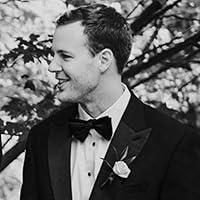
Dr. Dale C. Allison Jr., an Errett M. Grable professor of New Testament exegesis and early Christianity, has been on the faculty of Pittsburgh Theological Seminary since 1997. Before then he served on the faculties of Texas Christian University (Fort Worth, Texas) and Friends University (Wichita, Kan.).
His areas of expertise include Second Temple Judaism, and he is the author of books on early Christian eschatology, the Gospel of Matthew, the so-called Sayings Source or Q, and the historical Jesus.
He has also written The Luminous Dusk, a book on religious experience in the modern world, and a full-length commentary on the Testament of Abraham. His most recently published works are The Love There That’s Sleeping: The Art and Spirituality of George Harrison, The Historical Christ and the Theological Jesus, and Constructing Jesus: History, Memory, and Imagination. He is currently at work on a full-length commentary on the Epistle of James. He is married to Kristine Allison and they have three children.
Dale Allison wants pastors and theologians to stop ignoring stories of religious experience. He makes a great argument that these experiences might be more common than we think. People are just scared to share their stories for fear that they’ll be laughed at or dismissed.
Allison wants to cram every page of the book with stories of religious experience. In order to get such a large number of stories, he has to keep each one incredibly brief. They’re more snapshots than full narratives. So many snapshots thrown at you one after the other turns everything into a blur. Few stand out as memorable. They all sound the same.
I wish Allison had written a memoir instead. From the introduction, he’s open about his own religious experiences over the years. Tell us those stories! And more than just the cliff notes. I don’t think we can fully understand or appreciate the significance of these moments without the context of life before and after. We look at the fruit.
I would have loved a more in depth account of Allison’s encounters with the supernatural, what it did to his relationship with God, reality, himself, and others. What reactions did he get from family and friends? What was it like to seek out and meet others with similar experiences?
Toward the end of the book Allison says that since theologians and pastors are so silent on these experiences, our relationship with them remains shallow. He says something like Christians can only respond to these stories with “that’s neat” while those from other religious backgrounds may have more dots to connect and a deeper explanation of everything. But I feel like this book could have the same critique. I’m given all these short summaries of wild and extraordinary stories without any depth or detail and all I can say is “neat.”
The soberest case for the truth of religious experiences (out-of-body, near-death, angelic visitations, etc.), presented by historical Jesus expert Dale Allison.
I was not convinced, but I am discomforted. To hold to secularism materialism, I am forced to A) reject the first-hand attestations of countless sincere experiencers and B) believe that science can eventually explain these experiences (i.e. have, problematically, faith).
Living as we do in a post-Enlightenment world, where, following David Hume, we should have developed a healthy skepticism of out-of-the-ordinary claims to religious experiences. Even religious people, especially religious scholars, want to stick with the explainable. Yet, a lot of people report having had experiences that are unexplainable. That is especially true of near-death experiences. For the most part religious scholars stay clear of those kinds of conversations. To delve into them might give the wrong impression. One scholar who has chosen to cross the Rubicon and engage such things is Dale C. Allison, a well-regarded New testament professor who teaches at Princeton Seminary. You don't expect Princeton professors to engage in conversations that would be deemed undignified. Yet, here he is.
Dale Allison teaches at Princeton and has written a number of books and commentaries. I've found his work intriguing, especially his book on eschatology -- Night Comes: Death, Imagination, and the Last Things. That he has written on death, imagination, and Last Things, could have been good preparation for an engagement with religious experience. What he seeks to do here is report on what others have shared regarding their experiences, while offering his take, which is very open, even if with an appropriate amount of skepticism. While written by a well-regarded scholar, it is not intended to be read as an academic treatise. Instead, he seeks to offer it as a pastoral work, seeking to help those who have had experiences sort them out.
Allison begins the book by sharing several personal experiences that are out of the ordinary. In the chapter "Stars Descending," he shares four convictions that guide the conversation here. 1) He takes the transcendent dimension of his own experiences as not a curiosity. 2) The "theological idea of grace is not uninformed theory. Perhaps indeed grace is built into the structure of things." 3) Cod can speak through the natural world. 4) "Appearances are deceiving. Things are not what they seem to be most of the time." (pp. 6-7). These are, he writes, truths gained from personal experience.
The message from the beginning is that we should at least keep an open mind to reports of religious/spiritual experiences, some of which are a blessing and others that are not. While there has been academic studies of such phenomena, religious scholars often steer clear. Interestingly, Allison reports that people are increasingly open to sharing their experiences. There appears to be less stigma than in previous generations. While there is still scientific skepticism and religious disinterest, people are sharing their near-death experiences and angelic encounters. Though there is still hesitancy because not everyone is open to hearing them.
In the third chapter of the book, Allison begins to explore more deeply reported experiences, some of which are blissful and others terrorizing. The latter involves experiences of oppressive spiritual forces. With this exploration of experiences that often come randomly and from places unexpected, he moves to prayer, noting the way different people pray and what they experience. The point here is the experiences vary widely. From prayer, we move to "the Lore of Angels" in chapter 5. Interestingly many reports of angel sightings involve a person appearing out of nowhere, dressed in white. He notes that these experiences do have a biblical interpretive framework. While he notes that many of the reports can be explained as "overinterpretation of mundane events," not all can be explained in that way. Again, Allison is less interested in explaining these experiences as reporting them and letting us, the reader, ponder the experiences of others and perhaps our own experiences.
In Chapter 6 we move into conversations about death. He reports various phenomena experienced by people approaching death, including seeing long-dead loved ones visiting them, and offering comfort. That is "death bed visitations" or DBV. Perhaps you have heard reports of persons appearing after death. From DBVs we turn to "Death from Within." That is, Near Death Experiences. Again, Allison reports what others have shared, studies that interpret such experiences, and does so with an open mind. He notes that when it comes to understanding these experiences, "professional theologians and biblical scholars [are] of next to no hope. Most of them display not even a modicum of curiosity as they continue to write about death and eschatology with nary a word on NDEs. The unstated implication is that such experiences are irrelevant for theology and of no significance for deciding whether there might be something beyond death or what it might look like" (pp. 138-139). I will admit I have looked on reports of NDEs with a great deal of skepticism, assuming that they represent some form of brain response to nearing of death, but Allison helpfully opens us up to other possibilities without coming down on a particular interpretation. This chapter is probably worth the cost of the book. For those who have these experiences, they are not like a dream. They are very real. So, perhaps we should pay attention.
The first seven chapters largely report the experiences of others, though he shares some of his own. It's only in the final two chapters that he turns to analysis. Chapter 8 offers "Rational Analysis." Here he takes note of the reports and how they come to be. He notes that he cannot vouch for the veracity of the testimonies, but that doesn't mean they are of no value. He reminds us that while a single report standing by itself might not be of much value, the overwhelming number of reports of similar experiences requires at least some interest in the possibility that there is some truth. He writes that "my conviction is this. If enough people independently report the same sort of experience, that is reason to take note" (p. 153). The final chapter (chapter 9) lifts up theological issues. He is after all a biblical scholar, so he has that lens through which to interpret these reports, and he does. He also responds to those who question the value of experience but notes the so-called Wesleyan Quadrilateral, which brings experience into the theological conversation along with Scripture, Tradition, and Reason. So again, he warns against reductionism and disinterest, suggesting openness to possibilities. He concludes the book by confessing that this isn't a how-to book or a manual for mystics. Rather it provides an attempt to "enlarge understanding, as well as to counter ill-informed prejudices." (p. 196).
There is a bit of boldness here for an academic of his stature choosing to engage in such a conversation, functioning largely as a journalist, reporting testimonies with an openness to the possibilities without embracing all of them. That is a helpful response. Thus, this is a book with pastoral implications. Indeed, chapter 10 is brief but titled "The Pastoral Imperative." That's really what this is, a pastoral response to increasing numbers of reports of spiritual/religious experiences that might sound odd to many. Yes, perhaps there is more to reality than can be demonstrated scientifically!
This book shook me up. I’ve been guilty of ignoring or minimizing things like near-death experiences, visions of angels and so on, largely because I was unaware of the extent to which these experiences have been documented, studied, and grouped into patterns, not only in the modern West but spanning centuries and cultures.
Dale Allison is a good writer and his personal experiences lend a certain unity and added credibility to the book. My only complaint is that he repeats himself a lot (e.g. when telling us how he’s not jumping to any conclusions, there is room for doubt, and yet in the aggregate…) so the book is longer than it needs to be.
Or shorter than it should have been, in another way: while I (a Catholic) appreciate Allison’s ecumenical attitude, he doesn’t touch on Marian apparitions, exorcisms, Eucharistic miracles, incorruptible saints, or other saint-related visions or miracles. I’ll have to look elsewhere for someone who sorts through the wheat and the chaff of the literature on these more Catholic phenomena.
A Biblical Scholar takes on a subject few in his field are willing to.
This is a fascinating book from a renowned Bible scholar. Combining a range of interview data and writings from across the decades, Allison explores the various phenomena that modern religious folks tend to want to avoid. From encounters with angels, near and beyond death experiences and various other unexplained encounters with the mysterious the reader is invited to think beyond the confines of immanence that plague the secular world.
Allison’s data is engagingly presented and he has no apparent ax to grind except to point out that unexplained encounters with something spiritual are much more commonplace than is socially acceptable to posit.
As such, as a pastor, the real challenge of the book is why is it that so many religious people are uncomfortable encountering the very types of mystery that scripture is full of - and what are the impact on congregants when pastors don’t take this sort of thing seriously. As such, even if you were to just skim through the first seven chapters, the final three give the reader pause to stop and consider better how to navigate the general strangeness of real life.
So for those interested in the mystical, perhaps this book will help you have ears to hear that which we are often trained to ignore.
All of my reading about the mystics and my own pentecostal upbringing caused me to pick up this book at the recommendation of a friend. Allison is not offering here a theology of religious encounter (which is perhaps what I hoped it would be), but instead a survey of religious encounters inspired by his own in an effort to say that these sorts of things happen often and should be acknowledged - especially by religious (especially Christian) leaders. This book is marked with Allison’s curiosity, a curiosity that I and many people I know share, a curiosity that serves as a fitting and much needed critique against skeptics.
I’m honestly not sure how to feel about this book. I’m a skeptic and have a hard time believing in “metanormal” experiences, etc. But I have on my whiteboard a magnet version of Fox Mulder’s poster “I Want to Believe.” I really do want to believe, but so often the more I read (or listen to) works on supernatural stuff, the more entrenched I become in my skepticism. There are plenty of stories that give me pause, but by-and-large I find stories of the weird and bizarre to be just that: stories. They don’t compel me to belief. I need better evidence than someone’s first hand experience of an angel or a near death experience. But I’ll sit with this book in my mind for a while.
3.5 stars as it started to be repetitive. The content is amazing and I wish some things were more acceptable for mainstream.. The toxic culture of the world is to disagree with anything that is not sealed by the writers of the Bible.. But I won't go into the blind hatred of people in the United States. This is written out in such a way that anyone who is a skeptic about angels and near death experiences will be baby stepped through these moments that are well researched and documented by the author.
read for book club, was ok - anecdotal descriptions were compelling and was well written. also altho title speaks broadly of religion the book is predominantly discussion of christian religious experiences
An unusual book for a popular audience by Dr. Dale C. Allison, Jr., a biblical scholar who is the Richard J. Dearborn Professor of New Testament Studies at Princeton Theological Seminary. It reflects growing recognition of metanormal religious experiences. His arguments contain research and critical thinking, and support his conclusion that it “is human to have mystical and other hard-to-classify experiences” (17) and that “commitment to the materialist view among academic elites [has] obscured knowledge of a real phenomenon” (130). Dr. Allison suggests that when sober, well-adjusted individuals seek to confide and relate an unusual experience we should attend with real interest, without hurry, and without condescension. We should assure people, if they are anxious, that what has happened to them does not indicate pathology. Many are surprised and relieved to learn they are not alone. This book is one that better prepares us to help a person explore how a particular experience has changed the way they think, act, or feel. The book does not suggest that we ought to hunger and thirst after mystical moments, epiphanies, visions, prophetic dreams, and other encounters, but rather encourages us to enlarge our understanding of these experiences, and to counter ill-informed prejudices.
I love that Allison wrote a book on this topic. I was aware how he, a no-nonsense historian, has personally had some unusual experiences that don’t fit neatly in the secular worldview, for example, in his book on the resurrection, he referenced some experiences he has had, as well as research, suggesting that numerous individuals have had seemingly real (sometimes physical) interaction with those who had died, for a window of time after the loved one's departure, and sometimes more than one individual sees, hears, and interacts with the deceased. It seems to be a reasonable hypothesis that something like this happened after the death of Jesus, and these sparks, due to the dry kindling (things Jesus said, apocalyptic beliefs, and readings of scripture), exploded into a confident belief that Jesus had been raised, and the rest is history. Allison didn't insist that this is what likely happened, only that it is a reasonable explanation that apologists tend to ignore, in order to attack the weaker explanations. But anyhow, in this book, I learned that Allison has had other religious experiences as well. It is wonderful to have a serious scholar who does not at all seem like an overly credulous charlatan neck deep in woo woo, sympathetically and curiously explore the paranormal in a non-ideological manner.
Allison muses, quite rightly (in my opinion), that perhaps a number of pronouncements (well beyond verification) in religious texts could have their origin in religious experiences.
He also seems open, as I am, to tentatively allow people’s religious experience to work as raw data, on which we speculate on what is after and the nature of reality and the spiritual realm.
He is perplexed and saddened by the disinterest many Christians have in these experiences. Christians, like the new atheist, dismiss the powerful evidence for the supernatural because of disdain for Charismatic Christianity and the fact that numerous experiences don’t fit neatly within doctrinal frameworks. Other Christians, who are more open to the possibility of the extraordinary, will fear and distrust things, labeling them all demonic.
The fact that certain experiences are universal and have certain similarities and are experienced by people regardless of belief systems, expectations and that they have continued in our secular age, is quite telling. Philosophical naturalism is an incredibly fragile ideology, for only one (out of tens of thousands of powerful first-hand experiences) need be genuine, for materialism to be falsified. In light of so many accounts, and some from close friends whom I trust, philosophical naturalism, the dominant ideology in the West, seems to be almost certainly false.
I am someone who discovered that Sola Scriptura and biblicism are absurd and impossible. Though resistant to the reality, I learned the Bible is not an univocal, timeless, and immutable truth dictated from on high in Hebrew and Greek, but instead is an all too human attempt to grapple with the ineffable and interpret and make sense of reality. Freed from the restraints of evangelical ideology and identity politics, I am free to gather what I can from reason, and I think the best we can do is inductively gather testimony and gradually draw tentative conclusions on supernatural realities. There most definitely seems to be more to reality, and as poor as the evidence seems to be to a skeptical mind, experience and testimony of the numinous and otherworldly seem the best data we have.
Allison extensively documents what many secularists are inclined to deny--powerful experiences prior to death, appearances of apparitions, even glowing light, reported by many people. prior to death. He describes case after case of people knowing things that they should not have been able to know, that they only could have known if, as they claimed, they'd floated out of their body and looked around prior to death.
It's unclear exactly how seriously to take these stories. The world is a big place and has many anomalies. I don't think that these are enough to, were one to be a convicted physicalist, for instance, convince them to abandon the view. However, if one is inclined--as they should be--to think that physicalism struggles in a number of areas, they should find what Allison argues both intriguing and evidentially significant. Allison also documents these cases in quite a thorough and scholarly way, unlike the rather trite way that is common in books for popular consumption.
One of the most interesting books I’ve read this past year. Dr. Allison provides a good introduction to mystical experiences, NDEs, etc, in this short but informative book. I’ve had actually had an experience of the Old Hag, a topic Dr. Allison touches on in this book, so I’ll be reading Dr. Allison’s source he references in this book for further study of this experience. I also can relate to telling others about these type of language defying experiences and getting naive, simplistic, scientistic answers about my “brain malfunctioning”. We simply do not know the cause of these experiences and we probably never will. Those who want neat comfortable answers won’t find it in this book. Dr. Allison neither pushes God as the agent behind the experiences to align with his Christian faith, but neither does his buy the overly simplistic answers about neurons malfunctioning as the cause of these mystical phenomenon.
This book is especially helpful for someone who has had a mystical or religious experience and is trying to make sense of it. It shows that such experiences are not as rare as people may think, helps readers understand how others have experienced similar events, and offers reassurance that having such an experience does not necessarily mean they are irrational or “mad.”
It is also useful for anyone who wants to explain mystical experiences to secular or atheist friends in a sensible and intellectually responsible way. It may not offer much that is new to a well-read mystic, but it is an excellent introduction for someone who has recently had an unusual experience, as well as for a skeptical reader who wants to understand what religious experiences are actually like.
A helpful addition to considerations of mystical experiences that are often encoded by religion, but transcend any given faith. These include unbidden experience of peace or oneness and experiences around the time of death and more. The author helpfully shows how such common human experiences not associated with pathology need a more sympathetic hearing, especially from people of varying faiths.
I know firsthand about such experience and second and third hand about so many more. Considering the stigma, many remain silent rather than share what they saw and felt and the long impact the experience has had on their lives.
Aside from being a world-renowned biblical scholar, Allison shares a lay-perspective on a wide variety of religious experiences, especially those related to near death experiences, angelic encounters, and similar phenomena. The final chapter offers some pastoral advice about how to respond to such experiences, without having to explain away the mysteriousness of such encounters. With everything considered, this book reads like an updated, less tedious, and more coherently arranged version of William James's "Varieties of Religious Experience." (Let the reader understand.)
Encountering Mystery is an excellent volume that informs on the widespread phenomenon of people having experiences with the supernatural, including ostensible encounters with angels, evil forces, mystical experiences, deathbed visions, and near-death experiences (NDEs), among other things. This book I think serves as a successfully-delivered indictment not only to materialism but also the clergy and the religious communities, especially in the West, that tend to be dismissive of the reality of spiritual experiences.
I am glad I read this book and tried to read it with the open mind that Professor Allison calls for. He states that if there was just one story of an angel's appearance or a near death expeerience one might be skeptical. But when many stories have similar characteristics one should pay attention. He regrets that many who have mystical experiences are hesitant to tell them to anyone, even to their pastors. I particularly appreciated his chapter on prayer.
This book was a selection for a church book club. As I have grown older, my willingness to embrace mystery—not knowing— has increased significantly. I love the examples of end-of-life experiences and near-death experiences. Just because I have not had an experience does not mean that it is questionable. The personal story of the author who had an unexplainable thing happen while he was preparing blueberry muffins was pure gold. Glad I read it.
I loved this book. Save perhaps one chapter, it was incredibly accessible and was a great introduction and summary to mystic experiences. Dr. Allison is passionate where he needs to be and is humble enough to admit when he doesn't know something. I know some reviewers felt that the examples and testimonies became tiresome but I really appreciated these and they were fascinating to read. I honestly just wish it would've been more extensive.
More works like these are needed. Despite a few quibbles here and there, this book is an inviting window into the strange world that we inhabit. The author doesn't make any firm conclusions from the data, but this is done admittedly on purpose. His main goal is to expand the reader's horizons on what might be possible in the world--and the evidence points to much more than materialism will allow.
This is a lively, densely footnoted, scholarly expansion on "there are more things in heaven and earth, Horatio, than are dreamt of in your philosophy"-- especially if Horatio's philosophy is scientific materialism. A brilliant, profoundly interesting book which touches on how we've all conditioned one another to not talk about the things that, potentially, matter most to us, and about which there appears to be more empirical evidence than either scientists or pastors are comfortable with. Fun and very worthwhile.
Thoroughly informed and well written, as well as thought provoking. Dale Allison doesn't come off as overly credulous, but does a good job of pushing firmly back on hyper-skepticism surrounding meta-normal experiences. I'll definitely be reading the recommended works in the back of the book since my interest has been piqued.
Allison is more skeptical than I am, but that aids in his clear-eyed presentation of evidence against physicalism. Not an apologetic text for any one faith, but a strong rebuttal of materialism as an assumption w/o need of justification.
This was my second read of this book. While don’t know if I can say it is my favorite book, I can say it is the most influential. It introduced me to Dale Allison and his scholarship on New Testament history, which in turned introduced me to other writers such as Richard Rohr and Peter Enns. Writers such as Dale show that there is more than one way to interpret the nature of God and scripture apart from a rigid evangelical or atheistic philosophy.
That being said, I loved this book. The book reviews various mystical religious experiences, from near death experiences, to encounters with angels. Admittedly, some of these experiences are harder to believe than others. But Dale takes the subject matter seriously, and will himself say throughout the book that even he does not know what to make of some experiences.
The crux of his argument as to whether to believe in reports of religious experience is because of emerging patterns and the consistency of data. Whatever weakness may lie in any particular story, the sheer volume would imply some unknown phenomenon must be happening.
What people will always harp on is whether “this really happened.” But maybe the more important point is the impact it had on the person. Even granting that mystical experiences are hallucinatory, imaginative, or a misfire of neurons, why are they so often described as the most profound and important thing that has ever happened to the person? Dale is not necessarily interested in trying to discover the source of these experiences, only that they occur regardless of an individual’s religious affiliation or lack thereof, and they are extremely meaningful. Are some of these experiences the result of organic disorders? Of course. Does that mean ALL experiences have similar etiologies? That would be adding a layer of inference or favoring a worldview that is not 100% warranted.
But to be fair, cannot one say the exact same thing about UFOs, ghosts, and Bigfoot? Would it not be cognitive dissonance to believe NDEs because of the consistency in the reports, and yet reject those who report seeing flying saucers? Where does one draw the line? Repeating patterns and data may be enough to persuade someone that SOMETHING is going on, but beyond that, one cannot say anything more with confidence.
Dale does address this by stating that the credibility of such reports will vary based on an individual’s worldview. If one has never seen or experienced anything that could not be explained naturally, one will have little reason to believe these reports (I feel the vast majority of us will be in this camp). If however one has experienced something that does not so easily fit into a naturalistic worldview, one would be more open minded to reports of the extraordinary. Dale goes on to tell the story of how a jar of honey he had placed on the counter one day in 1980 while making blueberry muffins seemingly transported into a lid of flour. This is just one of several personal supernatural stories Dale shares in the book. I do not believe Dale is lying or making up these stories, but I can’t discount the possibility either. I’ve also heard him speak several times on various interviews, and do not believe him to be crazy. So where does that leave me when I read a story about a jar of honey that defies the laws of physics? Plus non-plussed. I wasn’t there, and I have no way of ever knowing what really happened. I don’t discount it out of hand, but I don’t believe it without question either. That’s largely where I land with the stories presented in this book.
I doubt this book will convince a skeptic with a naturalistic worldview of the possibility of the supernatural. I myself don’t know what to do with most of the anecdotes in this book. But it is an enjoyable read well written by an intellectually honest scholar.