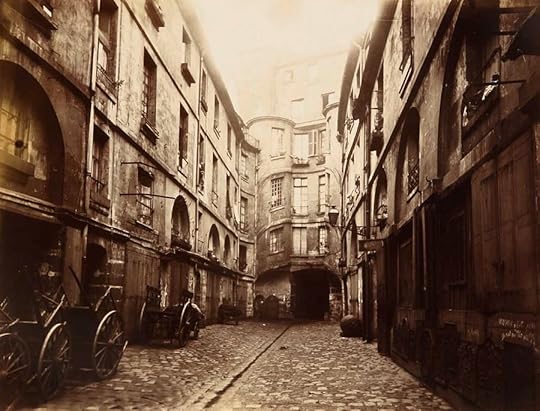
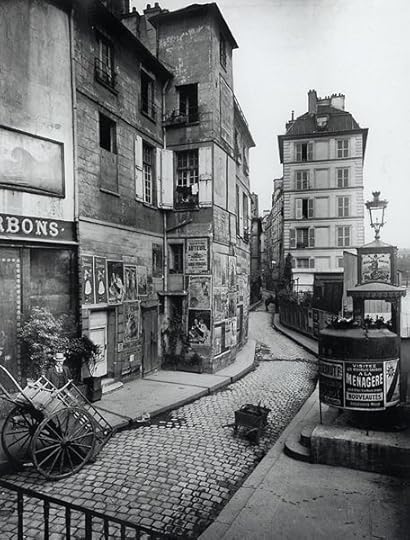
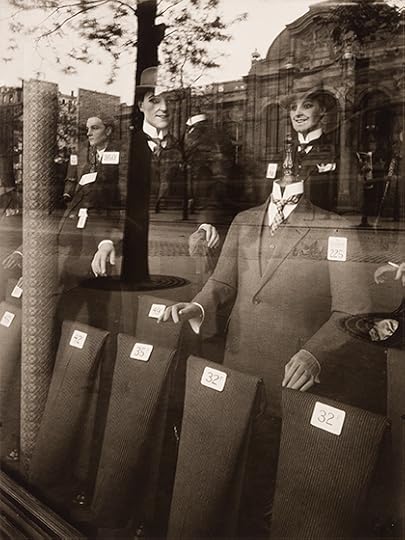
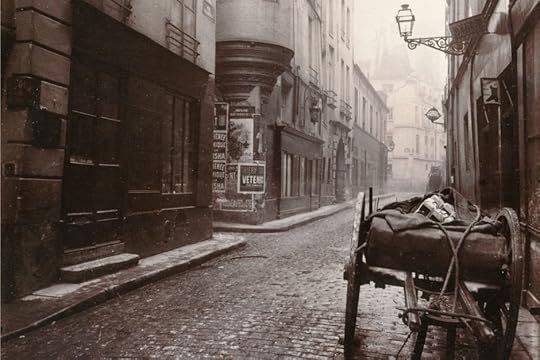
Unraveling the mystery of Eugene Atget's life and work (1857-1927) is easier said than done. Now considered to be one of history's most important photographers, Atget (1857-1927) was relatively unknown until well after his death. We know that he made his living selling his prints, mainly to architects, artists, and institutions, but his categorical, obsessive method of photographing Paris street by street (doorknob by doorknob in some cases) lacks clear explanation.Atget wrote in 1920, "I may say that I have in my possession all of Old Paris". Indeed, he knew the city like the back of his hand and had the pictures to prove it. He captured the historical, atmospheric Paris: churches, monuments, and buildings, as well as bars, shop windows, street-peddlers, and prostitutes. Traversing all of its layers, he immortalized the true spirit of Old Paris.
Why did he choose to spend his life roaming the streets with his heavy camera equipment, systematically cataloguing everything Parisian? The answer, if it can be discovered, must be found in the pictures themselves. Whether he intended to or not, Atget has left us with an impeccable record of turn-of-the-century Paris, not to mention a huge collection of stunningly beautiful photographs. This new book features 200 of Atget's most impressive images, many of which have rarely been seen before. Take a trip back in time and immerse yourself in Atget's Paris.
Apparently Eugene Atget strapped his forty pound camera to his back and put the rest of the gubbins in a cart and trundled round Paris for 40 years photographing everything he could that was a) really old, b) very melancholy and c) didn’t contain people. So this is Paris in 1880-1920 after the neutron bomb. Well, there are a few tramps and hawkers and peddlers and knife-sharpeners to be seen, but rarely. The lack of people is explained by the long exposure of film required in those days – the people who were there were not fixed on the film because they moved too fast. But also I think M Atget didn’t like people.
This is great : he took 10,000 photos of Paris and totally ignored the Eiffel Tower. It was way too modern for him.
Truly a fantastic photographer and a great trip back to Old Paris. Now imagine high buildings with narrow streets and a feeling of phobia, where the working class was living. Then imagine open spaces full of gardens, those were the places for the aristocracy. He photographs street dealers, categorizing them in essence but very good ideas on new job opportunities. From the window cleaner to the one that repairs house items, everything was found on the streets (looking for customers, not locked in a shop, paying rent and waiting for a customer to come). The circus, the house of pleasure, this guy captured the 1890-1910 Paris with good detail and also a way to inspire us, if we want to go back in times where there was a bit of romanticism and good slow life.
A fine introduction to Eugene Atget's work and his person. Many individual images are compelling whereas others are of interest in series. Atget did not attain constant photographic technical perfection but he did not attempt to. He strived to document or to be an intermediary to other artists. Be that as it may, his compositions and the contrast of his prints can be very compelling as well as his subject matter (e. g., Old Paris).
I think I romanticize almost everything about the past. Except the world wars, the holocaust and Hitler.
I have never heard of or read about Eugene Atget until I decided I wanted to learn about people who loved photography before I was around. Eugene Atget's work is, for me, a sort of love letter - it speaks to me not with sappy, cliched lines, but has truly honest insights of one whose put his whole heart into doing what brings him joy.
Well at least, I that's what I felt when I pored over his photographs. Like I said, I tend to romanticize the past.
For my Birthday and a Christmas break, me and my partner went to Paris for the first time. I fell in love with the city and wanted some of the things we had seen to be with us forever; this book brought back fond memories and rekindled our affair with the City of Light.