

What do you think?

Wayward
A NEW YORK TIMES NOTABLE BOOK OF THE YEAR • A “furious and addictive new novel” ( The New York Times ) about mothers and daughters, and one woman's midlife reckoning as she flees her suburban life.
“Exhilarating ... reads like a burning fever dream. A virtuosic, singular and very funny portrait of a woman seeking sanity and purpose in a world gone mad.” — The New York Times Book Review
Samantha Raymond's life has begun to come apart: her mother is ill, her teenage daughter is increasingly remote, and at fifty-two she finds herself staring into "the Mids" — that hour of supreme wakefulness between three and four in the morning in which women of a certain age suddenly find themselves contemplating motherhood, mortality, and, in this case, the state of our unraveling nation.
When she falls in love with a beautiful, decrepit house in a hardscrabble neighborhood in Syracuse, she buys it on a whim and flees her suburban life — and her family — as she grapples with how to be a wife, a mother, and a daughter, in a country that is coming apart at the seams.
Dana Spiotta's Wayward is a stunning novel about aging, about the female body, and about female complexity in contemporary America. Probing and provocative, brainy and sensual, it is a testament to our weird times, to reforms and resistance and utopian wishes, and to the beauty of ruins.
“Exhilarating ... reads like a burning fever dream. A virtuosic, singular and very funny portrait of a woman seeking sanity and purpose in a world gone mad.” — The New York Times Book Review
Samantha Raymond's life has begun to come apart: her mother is ill, her teenage daughter is increasingly remote, and at fifty-two she finds herself staring into "the Mids" — that hour of supreme wakefulness between three and four in the morning in which women of a certain age suddenly find themselves contemplating motherhood, mortality, and, in this case, the state of our unraveling nation.
When she falls in love with a beautiful, decrepit house in a hardscrabble neighborhood in Syracuse, she buys it on a whim and flees her suburban life — and her family — as she grapples with how to be a wife, a mother, and a daughter, in a country that is coming apart at the seams.
Dana Spiotta's Wayward is a stunning novel about aging, about the female body, and about female complexity in contemporary America. Probing and provocative, brainy and sensual, it is a testament to our weird times, to reforms and resistance and utopian wishes, and to the beauty of ruins.
336 pages, Paperback
First published July 6, 2021
About the author
Dana Spiotta
14 books487 followersScribner published Dana Spiotta’s first novel, Lightning Field, in 2001. The New York Times called it “the debut of a wonderfully gifted writer with an uncanny feel for the absurdities and sadnesses of contemporary life, and an unerring ear for how people talk and try to cope today.” It was a New York Times Notable Book of the year, and a Los Angeles Times Best Book of the West.
Her second novel, Eat the Document, was published in 2006 by Scribner. It was a finalist for the 2006 National Book Award and a recipient of the Rosenthal Foundation Award from the American Academy of Arts and Letters. Michiko Kakutani wrote in her review in The New York Times that Eat The Document was “stunning” and described it as “a book that possesses the staccato ferocity of a Joan Didion essay and the razzle-dazzle language and the historical resonance of a Don DeLillo novel.”
Stone Arabia is the title of Spiotta’s third novel. Scribner will publish it on July 12, 2011.
Her second novel, Eat the Document, was published in 2006 by Scribner. It was a finalist for the 2006 National Book Award and a recipient of the Rosenthal Foundation Award from the American Academy of Arts and Letters. Michiko Kakutani wrote in her review in The New York Times that Eat The Document was “stunning” and described it as “a book that possesses the staccato ferocity of a Joan Didion essay and the razzle-dazzle language and the historical resonance of a Don DeLillo novel.”
Stone Arabia is the title of Spiotta’s third novel. Scribner will publish it on July 12, 2011.
Ratings & Reviews
Friends & Following
Create a free account to discover what your friends think of this book!
Community Reviews
Displaying 1 - 30 of 950 reviews

August 30, 2021
Library Audiobook…
Read by Susan Bennett
9 hours and 13 minutes
Reviews are low. My expectations were low…
and Dana Spiotta has been hit & miss with me —
but for me —
this novel was a genuine-engaging walking companion. (favorite Spiotta book I’ve read).
There are some very interesting issues worth contemplating—
Wife, daughter, mother, middle age, life disenchantment, political-social, and cultural issues,
choices we make and the consequences that follow…..
all in a context that reminded me of just how scary our current times are today. …
both personally and globally!
Full five stars from me!!!
Read by Susan Bennett
9 hours and 13 minutes
Reviews are low. My expectations were low…
and Dana Spiotta has been hit & miss with me —
but for me —
this novel was a genuine-engaging walking companion. (favorite Spiotta book I’ve read).
There are some very interesting issues worth contemplating—
Wife, daughter, mother, middle age, life disenchantment, political-social, and cultural issues,
choices we make and the consequences that follow…..
all in a context that reminded me of just how scary our current times are today. …
both personally and globally!
Full five stars from me!!!
July 19, 2021
A silly book about a silly, selfish, privileged white lady.

June 27, 2021
4.5 stars, rounded slightly down. Begins as a somewhat conventional domestic novel, in which Sam Raymond, aged 53, experiences menopause (which she artfully gives the old-school name "the climacteric") and slowly crumples under the emotional demands of midlife, mishandling her relationships with her sexually-active teenage daughter and her ailing mother.
Sam takes some startling and unpredictable risks, as she springs herself from what she sees as a trap: she leaves the upscale white suburbs behind, and abandons her decent but boring lawyer husband, after becoming besotted with an old house with great bones (a cheap impulse buy) in an inner-city neighborhood of Syracuse.
Spiotta channels Sam's midlife feminine rage with great clarity and mordant wit, as she befriends and unbefriends a cast of kindred spirits on secret Facebook groups with names like Hardcore Hags, Harridans, and Harpies, as well as in real life at protests and open-mic nights at a strip-mall comedy club. In a separate narrative strand, we also see Sam as her daughter Ally sees her: as a controlling, obsessive helicopter parent.
Spiotta moves the narrative backward and forward along a narrow loop of time that includes the fallout of the 2016 election, police violence, and Black Lives Matter. But this isn't an earnest or ironic state-of-the-nation novel, because Spiotta makes Sam's inner monologue seem like a natural response to the acute crisis of Trumpism and the chronic morbidity of American patriarchy, effortlessly unspooling the chains of thoughts and decisions that brought her to the brink of self-knowledge. All of the major characters are rendered with such insight and compassion, and they're self-aware enough to acknowledge their own white bourgeois privilege.
More intriguingly and ambitiously, in the novel's final third, Spiotta dives much more deeply into Syracuse's post-industrial decline, the life of a fictional suffragette, and the Oneida community, a 19th-century commune/sex cult, demonstrating larger historical patterns of well-intentioned failure.
This was a wonderfully immersive and propulsive read, and I would recommend it as one of the finest novels I've read this summer.
Many thanks to Knopf and Netgalley for giving me an ARC of Wayward in exchange for an honest and unbiased review.
Sam takes some startling and unpredictable risks, as she springs herself from what she sees as a trap: she leaves the upscale white suburbs behind, and abandons her decent but boring lawyer husband, after becoming besotted with an old house with great bones (a cheap impulse buy) in an inner-city neighborhood of Syracuse.
Spiotta channels Sam's midlife feminine rage with great clarity and mordant wit, as she befriends and unbefriends a cast of kindred spirits on secret Facebook groups with names like Hardcore Hags, Harridans, and Harpies, as well as in real life at protests and open-mic nights at a strip-mall comedy club. In a separate narrative strand, we also see Sam as her daughter Ally sees her: as a controlling, obsessive helicopter parent.
Spiotta moves the narrative backward and forward along a narrow loop of time that includes the fallout of the 2016 election, police violence, and Black Lives Matter. But this isn't an earnest or ironic state-of-the-nation novel, because Spiotta makes Sam's inner monologue seem like a natural response to the acute crisis of Trumpism and the chronic morbidity of American patriarchy, effortlessly unspooling the chains of thoughts and decisions that brought her to the brink of self-knowledge. All of the major characters are rendered with such insight and compassion, and they're self-aware enough to acknowledge their own white bourgeois privilege.
More intriguingly and ambitiously, in the novel's final third, Spiotta dives much more deeply into Syracuse's post-industrial decline, the life of a fictional suffragette, and the Oneida community, a 19th-century commune/sex cult, demonstrating larger historical patterns of well-intentioned failure.
This was a wonderfully immersive and propulsive read, and I would recommend it as one of the finest novels I've read this summer.
Many thanks to Knopf and Netgalley for giving me an ARC of Wayward in exchange for an honest and unbiased review.

January 11, 2022
I found this intriguing rather than absorbing or particularly likable, it examines three generations of women in one American family: Lily nearing the end of her life, Sam experiencing menopause and her daughter Ally. For much of the book the focus is on Sam, an affluent, white housewife, who suddenly jettisons her life in the cloistered suburbs for a rundown, Arts and Crafts house in edgy, inner-city Syracuse. Dana Spiotta seems to be reclaiming the mid-life crisis novel so firmly linked to a particular form of masculinity, a territory carved out by men like Bellow and Roth, and others who've followed in their footsteps. What makes Sam’s character stand out is her departure from the script that's formed her life up until now’s not precipitated by abandonment or an affair of her own, but by a house, a symbol of another path from the one she’s been pursuing. A space which creates a link to an America profoundly other than the one she’s inhabited until now. Although, as a symbol, I found it quite problematic, it suggested an idea of a settled past that'd been buried or forgotten: life as art morphed into life as easy consumption of pre-selected markers of social status, like the Eileen Fisher clothes Sam rifles through in stores tailored to her demographic.
Sam’s decision to reinvent herself coincides with the election of Donald Trump, presented as a kind of wake-up call for a particular grouping of Gen X Americans, a rupture that exposes numerous, previously-submerged fault-lines. Racked with a rather rudimentary type of guilt, Sam sees herself as an archetypal, complacent white woman who’s managed to evade or avoid the traumas or the challenges many of the people around her have had to face. Although it’s hard to view her as any form of middle-aged, white everywoman, her wealth, her sheltered existence mark her out – reading about her kept making me want to check statistics, she’s so unlike the women in their fifties I’ve read about or know, certainly the many in the U.K. either still working but dealing with a massive gender pay gap coupled with growing age discrimination, or those losing or on the brink of losing their jobs, unlikely to find new ones, their pension prospects poor, marginalised economically as much as anything else. But this is clearly a deliberate stance by removing financial worries - Sam’s husband continues to fund her lifestyle - workplace issues or relationship woes, Spiotta can dispense with a great many of the harsher realities of aging for women in Western societies and adopt a more streamlined perspective; but in doing so, it seemed to me, she reinforces many of the stereotypes circulating about women like Sam, casual assumptions about automatic privilege in all areas of their lives. Sam’s juxtaposed with her mother Lily who’s dying but, again, Sam, unlike many women in her age group's not now facing life as a carer: baby boomer Lily’s another relatively wealthy character who conveniently requires no actual or material support. Instead, Lily and Sam’s daughter Ally shift the novel's central concerns from midlife crisis to slightly unorthodox rite of passage, in which different life stages are represented in a rudimentary, compare-and-contrast style.
Sam appears to be an unusually naïve, hollow individual - given her background and her intensely analytical, self-conscious manner - her break from her former world involves trying on readymade online identities, taking up with other, would-be rebellious women and pondering the physical changes sparked by menopause. Although I suppose she might also be seen as the outcome of a specific phase of consumer capitalism, someone in search of an ever-elusive, ideal of an authentic self? Certainly, in terms of literature she fills a traditionally empty space, the point just beyond the end of the narrative, too old for the marriage plot or the coming-of-age story, in the wrong book for wise crone or similar. The only clear role Sam seems to have been scripted for is mothering, and much of the book is bound up with her obsessive approach to parenting, and her subsequent attempts to step back from this and allow Ally breathing space. The first two-thirds of the novel are curiously static, despite the shift in Sam’s material circumstances, Spiotta adds in commentary on contemporary American culture from MAGA, immigration, gun control, to the rapid deterioration of cities like Syracuse but I found these asides and references unconvincing, they seemed overlaid rather than integral to what’s ultimately quite a conventional story. Spiotta brings in themes and elements common to her earlier work: relationships with technology; the external things that can define us; alongside a mish-mash of genres from embedded letters and essays, to text messages. She also brings in a fictional figure Clara Loomis, part of an actual historical community known as Oneida, one of the many Utopian bodies founded in nineteenth-century America. Loomis’s role relates to issues around patriarchy and about cancel culture; what freedoms are on offer to women; how we judge past generations and by extension present ones. But it felt too much like a plot device, as more disturbingly, does Sam’s epiphany brought about by witnessing the murder of an unarmed, young Black man by police officers. A plot development I found difficult to fathom, it’s not clear to me whether this event is meant to be taken seriously or intended as some kind of ironic commentary, either way I was uncomfortable with its use as a means of adding momentum or weight to Sam’s character’s experiences. So, although I think Spiotta's an interesting, skilful, at times even inventive writer, overall, this left me fairly cold. It could be because I’m so obviously not the implied reader here, I’m not white and, crucially, I’m not American, so it may be that for others this taps into a zeitgeist that I can’t fully comprehend or adequately decode.
Thanks to Netgalley and publisher Virago for an arc
Sam’s decision to reinvent herself coincides with the election of Donald Trump, presented as a kind of wake-up call for a particular grouping of Gen X Americans, a rupture that exposes numerous, previously-submerged fault-lines. Racked with a rather rudimentary type of guilt, Sam sees herself as an archetypal, complacent white woman who’s managed to evade or avoid the traumas or the challenges many of the people around her have had to face. Although it’s hard to view her as any form of middle-aged, white everywoman, her wealth, her sheltered existence mark her out – reading about her kept making me want to check statistics, she’s so unlike the women in their fifties I’ve read about or know, certainly the many in the U.K. either still working but dealing with a massive gender pay gap coupled with growing age discrimination, or those losing or on the brink of losing their jobs, unlikely to find new ones, their pension prospects poor, marginalised economically as much as anything else. But this is clearly a deliberate stance by removing financial worries - Sam’s husband continues to fund her lifestyle - workplace issues or relationship woes, Spiotta can dispense with a great many of the harsher realities of aging for women in Western societies and adopt a more streamlined perspective; but in doing so, it seemed to me, she reinforces many of the stereotypes circulating about women like Sam, casual assumptions about automatic privilege in all areas of their lives. Sam’s juxtaposed with her mother Lily who’s dying but, again, Sam, unlike many women in her age group's not now facing life as a carer: baby boomer Lily’s another relatively wealthy character who conveniently requires no actual or material support. Instead, Lily and Sam’s daughter Ally shift the novel's central concerns from midlife crisis to slightly unorthodox rite of passage, in which different life stages are represented in a rudimentary, compare-and-contrast style.
Sam appears to be an unusually naïve, hollow individual - given her background and her intensely analytical, self-conscious manner - her break from her former world involves trying on readymade online identities, taking up with other, would-be rebellious women and pondering the physical changes sparked by menopause. Although I suppose she might also be seen as the outcome of a specific phase of consumer capitalism, someone in search of an ever-elusive, ideal of an authentic self? Certainly, in terms of literature she fills a traditionally empty space, the point just beyond the end of the narrative, too old for the marriage plot or the coming-of-age story, in the wrong book for wise crone or similar. The only clear role Sam seems to have been scripted for is mothering, and much of the book is bound up with her obsessive approach to parenting, and her subsequent attempts to step back from this and allow Ally breathing space. The first two-thirds of the novel are curiously static, despite the shift in Sam’s material circumstances, Spiotta adds in commentary on contemporary American culture from MAGA, immigration, gun control, to the rapid deterioration of cities like Syracuse but I found these asides and references unconvincing, they seemed overlaid rather than integral to what’s ultimately quite a conventional story. Spiotta brings in themes and elements common to her earlier work: relationships with technology; the external things that can define us; alongside a mish-mash of genres from embedded letters and essays, to text messages. She also brings in a fictional figure Clara Loomis, part of an actual historical community known as Oneida, one of the many Utopian bodies founded in nineteenth-century America. Loomis’s role relates to issues around patriarchy and about cancel culture; what freedoms are on offer to women; how we judge past generations and by extension present ones. But it felt too much like a plot device, as more disturbingly, does Sam’s epiphany brought about by witnessing the murder of an unarmed, young Black man by police officers. A plot development I found difficult to fathom, it’s not clear to me whether this event is meant to be taken seriously or intended as some kind of ironic commentary, either way I was uncomfortable with its use as a means of adding momentum or weight to Sam’s character’s experiences. So, although I think Spiotta's an interesting, skilful, at times even inventive writer, overall, this left me fairly cold. It could be because I’m so obviously not the implied reader here, I’m not white and, crucially, I’m not American, so it may be that for others this taps into a zeitgeist that I can’t fully comprehend or adequately decode.
Thanks to Netgalley and publisher Virago for an arc

July 18, 2021
My thoughts on this are a little jumbled. Dana Spiotta is such a smart and courageous author. This book cuts right to the heart of what it is to be a 50-ish woman in today’s world. Somewhat invisible, unneeded by either your child or your parent, filled with rage, confusion, sleeplessness, searching - there were moments that I felt so “seen” that I wondered if Spiotta is actually inside my head. But then there’s all this other stuff - internet jargon, architectural detail, politics and economics, eugenics and utopias - again all smart, but it interfered with the flow for me.

January 27, 2021
Maybe I'm just not the right reader for Wayward. I almost quit on it with a DNF several times. A fifty-two year old suburban woman, Sam, and her teenage daughter, Ally, are the main voices. It starts with Sam, devastated by the results of the 2016 election. It was easy to identify with her at that moment. Sam's story is slowly revealed through a sort of endless stream of consciousness rant. From the outside it would seem Samantha has an ideal life. She has a nice home, an attractive husband who provides a comfortable lifestyle and good sex. She has a healthy daughter who makes good grades and stays out of trouble. But Sam is not happy, in fact, she's miserable, suffering through menopause, worrying about everything, and trying to micromanage her daughter's life. Sam has a part time job as a guide at the historical Clara Loomis house. She's very involved in Clara's story, her history and the history of Syracuse. Parts of the novel read like a travel guide to Syracuse. One chapter actually is a brochure about Syracuse written by Sam.
Okay. Perhaps I'm just too plebian to appreciate Dana Spiotta.
Here's a cut-and-paste from the publisher's blurb: "Dana Spiotta's Wayward is a stunning novel about aging, about the female body, and about female difficulty--female complexity--in the age of Trump. Probing and provocative, brainy and sensual, it is a testament to our weird, off-kilter America, to reforms and resistance and utopian wishes, and to the beauty of ruins. Tremendous new work from one of the most gifted writers of her generation"
Okay. Perhaps I'm just too plebian to appreciate Dana Spiotta.

August 2, 2021
It is refreshing to read about an older woman struggling through peri menopause, her roles as a wife and mother, and the fact she is becoming invisible to society. Most of the books I read seem to have much younger protagonists. This novel handles the very real issues of aging.
The book begins with Sam (wife and mother) falling in love with a decrepit house in urban Syracuse, in a poorer section of the neighborhood, and buying it. Then comes a brief discussion about why Sam is leaving suburbia and her well-employed, kind, and sexually satisfying husband along with their beautiful 15-year-old daughter. And here is where I got stuck. The most cogent reason for abandoning her family is she couldn’t stand her suburban house. “I can’t stand it here, in this house.” Sam’s voice trembled; the intensity of her emotion surprised her. She touched the door of the small bath off the kitchen. “Who puts a bathroom off a kitchen, you know? And this door—” She pounded on the wood and the hollow, shallow sound disgusted her. She turned the button knob. “I could break down this door. It’s cheap and ugly. I can’t bear it.” Why not move? As the book progresses, we find Sam feels she’s sitting on the edge of a life “unlived.” She’s having an existential crisis, in part because Trump was elected.
So, without much explanation, and seemingly impulsively, Sam moves to the decrepit home in the city. It seems she wants to subject herself to the poverty of the neighborhood. In a way, the house seems like her interior self—good bones but in need of a complete makeover. She joins protest groups and just generally seeks to find herself. Her actions lead to complete alienation from her teenage daughter, who begins an affair with a 29-year-old man that is her father’s associate.
Sam doesn’t seem to grow during the story. It’s unclear how dropping a bomb on her family and living by herself improves her life. It seems she want independence but her husband continues to provide financial assistance. Sam just isn’t a likable character.
The book does a nice job of discussing the aging process for women in a patriarchal society. And it looks at the relationships between mothers (including Sam’s mother) and daughters. But I had a hard time seeing why Sam left in the first place. At no time does she seem better off for leaving her family.
Also, there’s a random scene involving BlackLivesMatter that seems wholly out of place in this book about a privileged white woman having an existential crisis.
I can’t really recommend this one.
The book begins with Sam (wife and mother) falling in love with a decrepit house in urban Syracuse, in a poorer section of the neighborhood, and buying it. Then comes a brief discussion about why Sam is leaving suburbia and her well-employed, kind, and sexually satisfying husband along with their beautiful 15-year-old daughter. And here is where I got stuck. The most cogent reason for abandoning her family is she couldn’t stand her suburban house. “I can’t stand it here, in this house.” Sam’s voice trembled; the intensity of her emotion surprised her. She touched the door of the small bath off the kitchen. “Who puts a bathroom off a kitchen, you know? And this door—” She pounded on the wood and the hollow, shallow sound disgusted her. She turned the button knob. “I could break down this door. It’s cheap and ugly. I can’t bear it.” Why not move? As the book progresses, we find Sam feels she’s sitting on the edge of a life “unlived.” She’s having an existential crisis, in part because Trump was elected.
So, without much explanation, and seemingly impulsively, Sam moves to the decrepit home in the city. It seems she wants to subject herself to the poverty of the neighborhood. In a way, the house seems like her interior self—good bones but in need of a complete makeover. She joins protest groups and just generally seeks to find herself. Her actions lead to complete alienation from her teenage daughter, who begins an affair with a 29-year-old man that is her father’s associate.
Sam doesn’t seem to grow during the story. It’s unclear how dropping a bomb on her family and living by herself improves her life. It seems she want independence but her husband continues to provide financial assistance. Sam just isn’t a likable character.
The book does a nice job of discussing the aging process for women in a patriarchal society. And it looks at the relationships between mothers (including Sam’s mother) and daughters. But I had a hard time seeing why Sam left in the first place. At no time does she seem better off for leaving her family.
Also, there’s a random scene involving BlackLivesMatter that seems wholly out of place in this book about a privileged white woman having an existential crisis.
I can’t really recommend this one.

July 9, 2021
I didn’t like the characters. I kept reading in hopes that I would like them more, but they were not appealing. There are some excellent descriptions of aspects of Syracuse and its history, but I was hopeful that the characters would also be interesting.

July 28, 2021
White lady wokeness ...
Pretentious tripe, I mean Wayard is so far up its ass it can perform its own colonoscopy. Do we really need more books about angsty, privileged, middle-aged white women???
In this self-indulgent book, we meet Sam, who after being extremely pissy about Trump’s election, decides to buy a fixer upper and proceeds to leave her husband and teenage daughter. So she’s just like, peace out family without any real explanation other than, “I can’t live in this house anymore.” Ok you could have just asked your husband to move, but you do you. Her daughter stops talking to her, finally something that makes sense. Sam joins various leftist women’s Facebook groups, which always help organize your thoughts 😂 Then the book transitions into a travel guide of Syracuse, New York, which is cool if you’re really into Syracuse. Then we meander through “the change” and how women’s bodies are a hot mess and that sucks, more angst!!! But all's good because her daughter forgives her. THE END …
The only positives about this book was that it was available at the library and it was 288 pages so this torture didn’t cost me any money or too much time.
Pretentious tripe, I mean Wayard is so far up its ass it can perform its own colonoscopy. Do we really need more books about angsty, privileged, middle-aged white women???
In this self-indulgent book, we meet Sam, who after being extremely pissy about Trump’s election, decides to buy a fixer upper and proceeds to leave her husband and teenage daughter. So she’s just like, peace out family without any real explanation other than, “I can’t live in this house anymore.” Ok you could have just asked your husband to move, but you do you. Her daughter stops talking to her, finally something that makes sense. Sam joins various leftist women’s Facebook groups, which always help organize your thoughts 😂 Then the book transitions into a travel guide of Syracuse, New York, which is cool if you’re really into Syracuse. Then we meander through “the change” and how women’s bodies are a hot mess and that sucks, more angst!!! But all's good because her daughter forgives her. THE END …
The only positives about this book was that it was available at the library and it was 288 pages so this torture didn’t cost me any money or too much time.

October 10, 2021
It's easy to balk when a white middle-class woman runs away from home - runs away from her nice suburban house, her distant, but nice, generous, handsome lawyer husband with whom she has great sex, her smart, sophisticated, if distant, 17 year-old daughter, her life encompassing all of that, along with a job she works that's not necessary for bill-paying, as a part-time paid guide at the preserved house of a fictional 19th century woman, Clara Loomis, who went her own way as a young woman, though that way turned problematic. Did I love this novel? No, but I was mostly engaged, and rooting for Sam in her midlife, when the end is nearer than the beginning, facing and articulating the "misogyny of menopause" (and how strange that menopause, the exclusive arena of women, has men as its prefix) and wanting something else, or something that simply is different, to figure out less who she is and more what she should be doing to have some sort of impact, though she's not sure how or in what way or if it's possible. Sam - Samantha - Raymond, 53, a lonely-ish wife, a smothering and intrusive mother, a loving daughter to a mother who has grown distant too for reasons she'll learn, is going through the haywire of the "climacteric," the old name for menopause, and the whole country has gone haywire in the wake of Trump's election and inauguration, and she has hot flashes and can't sleep, and in the "Mid" of the night, she's no longer satisfied with the life she has, wants perhaps to at least get some distance and perspective. Her nice husband thinks her sudden abandonment of him and suburban life, her impulsive purchase of a tiny and neglected historical Arts and Crafts bungalow in a once-vibrant and now neglected Syracuse neighborhood, is because of Trump's election, that she has lost it. And perhaps she has lost it, but the notion of a woman going crazy is a reductive view for any man (or woman) to take. It's a midlife crisis novel, wrested back from the purview of male novelists, and replete with ALL the politics of the day - #metoo, cancel culture, strange Facebook groups, police shootings, refugees, MAGA, and more. Though a few chapters are narrated by her teenaged daughter, and there are letters and diary entries by Clara Loomis who followed her own desires to a different life, and pamphlet entries Sam has written about Syracuse, the controlling voice is Sam's -- funny, angry, self-absorbed, sometimes strident, occasionally boring, aware that saying yes to this new version of her life means saying no to the old version of her life. Absolutely true is that only someone with some modicum of privilege would have the ability to make this choice. Syracuse, its history and transitions, is a character here as well, and the breezy prose and descriptions of Sam's life there in 2017 is sad and often humorous - she sends up most everyone - but underneath are the larger and perplexing questions about the interplay between idealism and pragmatism, the longing for a better world without summarily jettisoning everything of value from the past, what relationships are worth preserving, how do we handle human frailty in ourselves and others? Our culture prefers neat narrative arcs, though life doesn't have that, nor does this novel. To fix the global and country-wide wrongs seems impossible, the ability of any single individual having the power to do so futile, but a woman who was nice enough and is now furious is trying to find her voice, trying to see things clearly, despite all the potholes she'll fall into and all the rocks that will be pitched her way.
July 25, 2021
This novel should have been very good. Both adolescent daughter and perimenopausal mother were making some bad decisions and were distancing from each other in the midst of their self absorbed actions. That relationship, the strained marital relationship, the daughter’s recognition that her father is also self absorbed, and the grandmother’s wisdom enabling her to communicate most effectively were all complicated and interesting. But the author pushed social issues way too hard. I like subtly when authors don’t insult my intelligence. In this case too many issues about gentrification, suburban/urban friction, sexting, me too, police brutality, and wealth gap were forced. All from the viewpoint of a spoiled privileged woman who was too self righteous to recognize she comes from a place of safe and cushy wealth. I just don’t want to be hit in the head with a 2x4 when an author is getting the point across. Still this novel seemed average enough for a 3-star review except the fact that the protagonist inserted herself in the police brutality narrative that was not her story to tell. The author had no business going there, dropping a storyline as though she wanted to tick every progressive box.

January 13, 2023
Syracuse, 2017: Die 53-jährige Sam Raymond ist unzufrieden mit ihrem Leben. Sie hat sich von ihrem Mann entfremdet, die Beziehung zu ihrer jugendlichen Tochter ist verstimmt, in ihrem Reihenhaus in der Vorstadt fühlt sie sich unwohl. Eines ihrer Hobbys ist es, bei öffentlichen Wohnungs- und Hausbesichtigungen in andere Wohnsituationen einzutauchen. Bei einem dieser Termine verliebt sie sich in ein heruntergekommenes Craftsman-Haus im Problemviertel von Syracuse - und kauft es kurzerhand. Dass mit diesem Kauf auch der Entschluss feststeht, ihre Familie zumindest räumlich zu verlassen, realisiert sie erst einen Atemzug später...
Dana Spiottas Roman "Unberechenbar", aus dem Amerikanischen übersetzt von Andrea O´Brien, erzählt einerseits von einer Protagonistin im Umbruch, andererseits porträtiert er aber auch die amerikanische Stadt Syracuse. Ich lese selten Romane über Menschen in ihren 50ern, weshalb ich das Thema des Buchs zunächst ungemein spannend und auch relevant finde, berichtet es doch von einer Frau in einer Midlife-Crisis, die ihre Familie verlässt, alleine in ein baufälliges Haus in einem Problemviertel zieht - und damit eine große Veränderung durchmacht. Dabei taucht man als Leser*in immer tiefer in Sams Leben ein, man erfährt immer neue Details, die die Protagonistin einerseits nahbarer und menschlicher machen, andererseits aber auch für mich immer unsympathischer werden lassen. Gerade auch dank einiger Perspektivwechsel, die die Möglichkeit eröffnen, einen Blick in den Kopf der Tochter Ally zu werfen, wird das komplette Ausmaß der Beziehung zwischen Sam und ihrem Kind spürbar.
Die Grundidee von "Unberechenbar" hat mir also durchaus zugesagt, trotzdem konnte mich der Roman nicht begeistern, und das aus verschiedenen Gründen. Zum einen hat mir nicht gefallen, dass Dana Spiotta von einem gesellschaftskritischen Thema zum nächsten springt, ohne dass eines mit der gebührenden Tiefe betrachtet werden würde. Sexismus, Rassismus, Polizeigewalt, Social Media, Politik, Elternschaft, Älterwerden und Tod, Aktivismus - für mich ist die Lektüre vor allem an dieser Themenfülle gescheitert. Ein roter Faden, ein Fokus auf ausgewählte Thematiken hätte meines Erachtens dem Roman gut getan, wobei das wohl auch an dem sehr amerikanischen Stil der Autorin liegen könnte. Zum anderen war ich auch einfach etwas genervt von der sehr weißen, privilegierten Position Sams, allein dass sie einfach so ein Haus kaufen kann, die finanziellen Mittel (mit ihrem Ehemann) besitzt, dieses neben einem Reihenhaus zu unterhalten, ist für mich doch eine recht fragwürdige und zu oft literarisch abgehandelte Perspektive.
Ich habe "Unberechenbar" nicht ungern gelesen, habe mir aber einfach etwas mehr Tiefgang und das Hauptaugenmerk auf die Veränderung im Leben der Protagonistin erwartet. Diese Art amerikanischer Romane ist wohl einfach nicht wirklich mein Ding. Sehr gefallen hat mir hingegen die Optik und Haptik des Buchs, das im neu gegründeten Münchner Kjona Verlag erschienen ist. Der Verlag agiert unter dem Motto "Nachhaltig. Neugierig. Unabhängig" - wie wunderbar! Ich freue mich auf weitere Projekte des Verlags und bin begeistert von der nachhaltigen Produktion, dem puren Design und vor allem der Nennung der Übersetzer*innen auf dem Cover.
Dana Spiottas Roman "Unberechenbar", aus dem Amerikanischen übersetzt von Andrea O´Brien, erzählt einerseits von einer Protagonistin im Umbruch, andererseits porträtiert er aber auch die amerikanische Stadt Syracuse. Ich lese selten Romane über Menschen in ihren 50ern, weshalb ich das Thema des Buchs zunächst ungemein spannend und auch relevant finde, berichtet es doch von einer Frau in einer Midlife-Crisis, die ihre Familie verlässt, alleine in ein baufälliges Haus in einem Problemviertel zieht - und damit eine große Veränderung durchmacht. Dabei taucht man als Leser*in immer tiefer in Sams Leben ein, man erfährt immer neue Details, die die Protagonistin einerseits nahbarer und menschlicher machen, andererseits aber auch für mich immer unsympathischer werden lassen. Gerade auch dank einiger Perspektivwechsel, die die Möglichkeit eröffnen, einen Blick in den Kopf der Tochter Ally zu werfen, wird das komplette Ausmaß der Beziehung zwischen Sam und ihrem Kind spürbar.
Die Grundidee von "Unberechenbar" hat mir also durchaus zugesagt, trotzdem konnte mich der Roman nicht begeistern, und das aus verschiedenen Gründen. Zum einen hat mir nicht gefallen, dass Dana Spiotta von einem gesellschaftskritischen Thema zum nächsten springt, ohne dass eines mit der gebührenden Tiefe betrachtet werden würde. Sexismus, Rassismus, Polizeigewalt, Social Media, Politik, Elternschaft, Älterwerden und Tod, Aktivismus - für mich ist die Lektüre vor allem an dieser Themenfülle gescheitert. Ein roter Faden, ein Fokus auf ausgewählte Thematiken hätte meines Erachtens dem Roman gut getan, wobei das wohl auch an dem sehr amerikanischen Stil der Autorin liegen könnte. Zum anderen war ich auch einfach etwas genervt von der sehr weißen, privilegierten Position Sams, allein dass sie einfach so ein Haus kaufen kann, die finanziellen Mittel (mit ihrem Ehemann) besitzt, dieses neben einem Reihenhaus zu unterhalten, ist für mich doch eine recht fragwürdige und zu oft literarisch abgehandelte Perspektive.
Ich habe "Unberechenbar" nicht ungern gelesen, habe mir aber einfach etwas mehr Tiefgang und das Hauptaugenmerk auf die Veränderung im Leben der Protagonistin erwartet. Diese Art amerikanischer Romane ist wohl einfach nicht wirklich mein Ding. Sehr gefallen hat mir hingegen die Optik und Haptik des Buchs, das im neu gegründeten Münchner Kjona Verlag erschienen ist. Der Verlag agiert unter dem Motto "Nachhaltig. Neugierig. Unabhängig" - wie wunderbar! Ich freue mich auf weitere Projekte des Verlags und bin begeistert von der nachhaltigen Produktion, dem puren Design und vor allem der Nennung der Übersetzer*innen auf dem Cover.

August 24, 2021
I don’t understand the hype over this book. Blurbs used the word “complex,” which I think is the opposite of how the author portrays this protagonist. She seems like a person with little agency, buffeted about by popular culture. Her understanding of the complexity of US society is very shallow. I was underwhelmed by her.
Most of the other characters are flat out stereotypes. What in the world was the point of the “crone” groups and the “resistance” meetings other than ridicule? And to have a gratuitous episode where the main character witnesses a teenager murdered by police? It seems like the author was trying to make a random tapestry of the last five years of American history through the eyes of one white woman, with low stakes, low consequences, little jeopardy.
Parts of the novel infuriated me. In particular, the subplot of one woman being “canceled” seemingly for no reason. In a bizarre choice, the author doesn’t even share the story of what happened. As readers, we’re just supposed to accept that “woke” groups wake up one day and mysteriously decide to shun one of their members for no reason and isn’t that crazy? Why not allow the reader to know what happened so she can judge for herself?
This book just seems like a mess to me
Most of the other characters are flat out stereotypes. What in the world was the point of the “crone” groups and the “resistance” meetings other than ridicule? And to have a gratuitous episode where the main character witnesses a teenager murdered by police? It seems like the author was trying to make a random tapestry of the last five years of American history through the eyes of one white woman, with low stakes, low consequences, little jeopardy.
Parts of the novel infuriated me. In particular, the subplot of one woman being “canceled” seemingly for no reason. In a bizarre choice, the author doesn’t even share the story of what happened. As readers, we’re just supposed to accept that “woke” groups wake up one day and mysteriously decide to shun one of their members for no reason and isn’t that crazy? Why not allow the reader to know what happened so she can judge for herself?
This book just seems like a mess to me
This entire review has been hidden because of spoilers.

June 9, 2025
I want to give this 3 stars but I can't in good faith. The saying goes "better than the sum of its parts" well this book is the opposite of that. In totality it is not as good as many of its parts. Reading about women breaking up her family and living alone in the hood while experiencing menopause in a trump America is interesting and this book is good when that is the topic. The issues with motherhood good. And also some history about architecture and a city is good. But put it all together and book is just confused and poorly put together.

September 14, 2021
I spent years reading fantasy and novels that imagine our future, but lately I've also been drawn to fiction set in the now, with a capital N. Specifically, how women are coping with it.
I was worried a story told from the pov of a white, privileged, 50-something, suburban American mom wouldn't be progessive enough for me. But with representation of perimenopause/menopause being so rare in western culture, I was drawn to a novel centered on it. I'm glad I took the chance. It's very much a character study of a woman experiencing "the change" but I found lots to appreciate in the other areas Spiotta set her gaze: the 2016 US election, our climate crisis, grief, motherhood, internalized misogyny, white privilege, the commodification of higher education, marriage, online chat groups, utopian cults, ageism, tech bro culture/capitalism, consent and respecting heritage buildings
I felt less positive about the structure of the last third of the novel and the commentary on systemic racism - which to me, felt like an afterthought.
From an interview with Spiotta:
"A lot of times when people write about mid-life crisis, especially for a woman, you have a sexual affair because you’re feeling like your allure is fading or something, and that’s how you deal. Before I even knew who Sam was, I had this idea that this woman was looking at this old house that was once beautiful, but it’s falling apart....I liked the idea that instead of falling in love with a person as a way out of the marriage, she falls in love with a specific place."
https://electricliterature.com/waywar...
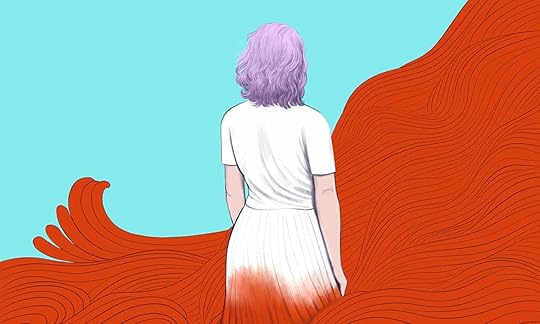
artist: silja goetz
I was worried a story told from the pov of a white, privileged, 50-something, suburban American mom wouldn't be progessive enough for me. But with representation of perimenopause/menopause being so rare in western culture, I was drawn to a novel centered on it. I'm glad I took the chance. It's very much a character study of a woman experiencing "the change" but I found lots to appreciate in the other areas Spiotta set her gaze: the 2016 US election, our climate crisis, grief, motherhood, internalized misogyny, white privilege, the commodification of higher education, marriage, online chat groups, utopian cults, ageism, tech bro culture/capitalism, consent and respecting heritage buildings
I felt less positive about the structure of the last third of the novel and the commentary on systemic racism - which to me, felt like an afterthought.
From an interview with Spiotta:
"A lot of times when people write about mid-life crisis, especially for a woman, you have a sexual affair because you’re feeling like your allure is fading or something, and that’s how you deal. Before I even knew who Sam was, I had this idea that this woman was looking at this old house that was once beautiful, but it’s falling apart....I liked the idea that instead of falling in love with a person as a way out of the marriage, she falls in love with a specific place."
https://electricliterature.com/waywar...
artist: silja goetz

January 16, 2022
The premise of Dana Spiotta's new novel “Wayward” really drew me in as it concerns a woman named Samantha in her early 50s who impetuously decides to buy a small house. This plot reminded me of one of my favourite novels “Ladder of Years” by Anne Tyler. It also feels like a kind of wish fulfilment as I've occasionally spent time online dreamily looking at shabby little houses in remote locations that I fantasize about spontaneously buying and moving into. In 2017 Samatha leaves her suburban house as well as her husband and teenage daughter because “What Sam wanted was not a safe house or an escape or even a sanctuary but, rather, a place to be alone, to do some time, to change herself. Whatever she was – the sum total of fifty-three years on the earth in this body – was insufficient to what would come next. She clearly had to change. The only certainty she felt was that she had done everything wrong.” The story hinges on the question: is she running away from her life or running towards it? But the book also gives a broad overview of current American and online culture from the point of view of an individual who feels like she's underrated by her own family and ignored by the larger society.
Read my full review of Wayward by Dana Spiotta at LonesomeReader
Read my full review of Wayward by Dana Spiotta at LonesomeReader

March 6, 2022
Dana Spiotta never lets me down. She is like a complex friend, uniquely herself, intelligent but somewhat wily. This is the fourth novel of hers I have read.
Sam is a wife and mother, entering menopause, feeling claustrophobic in her suburban home. Her 17-year-old daughter Ally obviously has secrets she is not telling her mother. Sam has been a stalker, via technology, of her precocious and overachieving daughter, though she knows it is not really right. She is also filled with rage about almost everything including that terrible President who was just elected as the story opens.
Sam goes wayward. She buys (with "their" money, made by her husband) a rundown but formerly fabulous little house in the city of Syracuse; she leaves her home and husband thinking Ally will go with her. Ally is furious, elects to stay with Dad and is somewhat relieved to be out from under her mom's scrutiny.
The best thing about all the crazy, cranky things that Sam does, is that I had no idea how the story was going to end. Also I was taken completely by surprise when it did. This author deals in different kinds of desperate women and Sam is another one.
Sam is a wife and mother, entering menopause, feeling claustrophobic in her suburban home. Her 17-year-old daughter Ally obviously has secrets she is not telling her mother. Sam has been a stalker, via technology, of her precocious and overachieving daughter, though she knows it is not really right. She is also filled with rage about almost everything including that terrible President who was just elected as the story opens.
Sam goes wayward. She buys (with "their" money, made by her husband) a rundown but formerly fabulous little house in the city of Syracuse; she leaves her home and husband thinking Ally will go with her. Ally is furious, elects to stay with Dad and is somewhat relieved to be out from under her mom's scrutiny.
The best thing about all the crazy, cranky things that Sam does, is that I had no idea how the story was going to end. Also I was taken completely by surprise when it did. This author deals in different kinds of desperate women and Sam is another one.

September 17, 2021
Honest to goodness, y’all, this book seemed so much like a recounting of the life of a former friend of mine that it was very unsettling to read.
The failing mom, the failing marriage, the failing and overly controlling relationship with the daughter, the menopause, the rage, the new set of friends, the “faux-po’”……like, criminy, is there a script I was supposed to be following that didn’t get handed out to me or something?
And the utter fucking self-centered- and cluelessness of this woman. Oy vey!
That said, it was very, very good.
Until it wasn’t.
Been wondering what happened that last part of the book to make me go from, “Oh yeah, Dana Spiotta is spiotta on” [sorry] to, “Well, that got all ‘literary’ in a hurry’.” I guess it’s the Clara Loomis letter and journal entries that ruined it for me in the end.
Still, I enjoyed/appreciated this book enough that I would recommend it to any female in any stage of menopause who dealt with any sort of negative emotions after the 2016 U.S. presidential election. Or who wants to understand that sort of person who is/was in their life.
The failing mom, the failing marriage, the failing and overly controlling relationship with the daughter, the menopause, the rage, the new set of friends, the “faux-po’”……like, criminy, is there a script I was supposed to be following that didn’t get handed out to me or something?
And the utter fucking self-centered- and cluelessness of this woman. Oy vey!
That said, it was very, very good.
Until it wasn’t.
Been wondering what happened that last part of the book to make me go from, “Oh yeah, Dana Spiotta is spiotta on” [sorry] to, “Well, that got all ‘literary’ in a hurry’.” I guess it’s the Clara Loomis letter and journal entries that ruined it for me in the end.
Still, I enjoyed/appreciated this book enough that I would recommend it to any female in any stage of menopause who dealt with any sort of negative emotions after the 2016 U.S. presidential election. Or who wants to understand that sort of person who is/was in their life.

Did Not Finish
October 3, 2021Nope. Not this one.

December 11, 2021
This was perfectly mediocre.

August 16, 2021
Dana Spiotta is able to distill the ambient anxieties and challenges of being alive in 2021. The novel, the best I have read this year, revolves around Sam, a married middle aged woman, mother of a teenage girl, living in Syracuse NY. As a great writer can, Spiotta relates a story of our specific time and place but gets so deep in her depiction of this one life on Earth, that Sam’s life resounds with meaning across time, gender and age.
Never an easy person, Sam is jolted into examining her life by the election of a President who is her polar opposite, a man who who embodied “the most American of myopias, this unapologetic - boastful, even - attention to the surface self.” She realizes that, “Always she liked to imagine herself as subtly different from everyone else, enjoying the tension and mystique of being ordinary on the surface but with a radical, original interior life.” The novel takes us through Sam’s process of making this secret inner life visible. It’s no longer enough for her to object to obnoxious Facebook posts, “Laughing at them was a shabby use of her time, but she knew part of what made Facebook - and the internet, really - addicting was simultaneously indulging your own obsessions while mocking (deriding, denouncing even) the obsessions of others from the safety of your screen. It was hard to resist, and indulging in this impulse - even silently to yourself - made everything worse, made you worse, she was sure of it.”
Sam, described objectively as mother, wife, middle aged woman, examines and challenges herself to reimagine and then change how she inhabits each of these roles. This is exhilarating to read, and leaves one inspired to find that level of courage. She is a modern hero.
The anxiety of being a parent is beautifully rendered. My mom told me when I became a parent that I would from here on always be “a hostage to fate.” Sam understands that. “What you don’t get from having a mother versus being a mother is how consuming it was, how profoundly one-sided. The child’s job was need her mother less and less, a progression toward independence. But the mother’s job was to always help, always be there when needed, and never, ever stop worrying.” This is one of the many instances in which Spiotta writes very definitely of her life as a woman, but it echoes and deepens my own experience as a father.
An example of how she approaches her life with a new courage is how she deals with waking in the dead of night with a pit of nagging anxiety and regret in the stomach. She considers the advice of a new friend, “You wake for a reason. It is time for a special kind of thinking, middle-of-the night thinking. Don’t fight it. Wake for your night office, your nocturna. Get out of bed, fall to your knees, attend the moment.” Sam increases her visibility, no longer willing to be seen peripherally. Sam’s husband, she realizes listens to her as if she were a, “talkative child or a needy dog; doling out just enough attention to be acceptable but not enough to encourage her to keep going.” She is a complex and fascinating person, someone who values art, the gravity of living in a a hand crafted home with history, who finds inspiration in the past lives of activist heroes. Attention must be paid to Sam. She is a force of nature.
One of the figures Sam admires and challenges is Clara Loomis from whose writings Spiotta includes, “And be not conformed to this world: but be ye transformed by the renewing of your mind, that ye may prove what is that good, and acceptable, and perfect, will of God.” (I wish Spiotta had included Matilda Electa Gage (1826-1898) an early central NY suffragette, Native American rights activist, abolitionist and freethinker who described herself as “born with a hatred of oppression.” The ‘Matilda Effect’, which describes the tendency to not give women in science their due credit is named after her.)
The specter of death and destruction haunt the novel as it haunts our lives. Spiotta’s Sam looks unsparingly at humanity’s past and future, giving her words the power of authenticity. “the stories told, the meals prepared, the gravestones attended, all the little and big rituals. Poignant, tragic even, but not ridiculous. Beautiful in their totality. Weren’t they? Maybe we were going extinct, but did that make it all a failure, all meaningless? No it it did not.”
Never an easy person, Sam is jolted into examining her life by the election of a President who is her polar opposite, a man who who embodied “the most American of myopias, this unapologetic - boastful, even - attention to the surface self.” She realizes that, “Always she liked to imagine herself as subtly different from everyone else, enjoying the tension and mystique of being ordinary on the surface but with a radical, original interior life.” The novel takes us through Sam’s process of making this secret inner life visible. It’s no longer enough for her to object to obnoxious Facebook posts, “Laughing at them was a shabby use of her time, but she knew part of what made Facebook - and the internet, really - addicting was simultaneously indulging your own obsessions while mocking (deriding, denouncing even) the obsessions of others from the safety of your screen. It was hard to resist, and indulging in this impulse - even silently to yourself - made everything worse, made you worse, she was sure of it.”
Sam, described objectively as mother, wife, middle aged woman, examines and challenges herself to reimagine and then change how she inhabits each of these roles. This is exhilarating to read, and leaves one inspired to find that level of courage. She is a modern hero.
The anxiety of being a parent is beautifully rendered. My mom told me when I became a parent that I would from here on always be “a hostage to fate.” Sam understands that. “What you don’t get from having a mother versus being a mother is how consuming it was, how profoundly one-sided. The child’s job was need her mother less and less, a progression toward independence. But the mother’s job was to always help, always be there when needed, and never, ever stop worrying.” This is one of the many instances in which Spiotta writes very definitely of her life as a woman, but it echoes and deepens my own experience as a father.
An example of how she approaches her life with a new courage is how she deals with waking in the dead of night with a pit of nagging anxiety and regret in the stomach. She considers the advice of a new friend, “You wake for a reason. It is time for a special kind of thinking, middle-of-the night thinking. Don’t fight it. Wake for your night office, your nocturna. Get out of bed, fall to your knees, attend the moment.” Sam increases her visibility, no longer willing to be seen peripherally. Sam’s husband, she realizes listens to her as if she were a, “talkative child or a needy dog; doling out just enough attention to be acceptable but not enough to encourage her to keep going.” She is a complex and fascinating person, someone who values art, the gravity of living in a a hand crafted home with history, who finds inspiration in the past lives of activist heroes. Attention must be paid to Sam. She is a force of nature.
One of the figures Sam admires and challenges is Clara Loomis from whose writings Spiotta includes, “And be not conformed to this world: but be ye transformed by the renewing of your mind, that ye may prove what is that good, and acceptable, and perfect, will of God.” (I wish Spiotta had included Matilda Electa Gage (1826-1898) an early central NY suffragette, Native American rights activist, abolitionist and freethinker who described herself as “born with a hatred of oppression.” The ‘Matilda Effect’, which describes the tendency to not give women in science their due credit is named after her.)
The specter of death and destruction haunt the novel as it haunts our lives. Spiotta’s Sam looks unsparingly at humanity’s past and future, giving her words the power of authenticity. “the stories told, the meals prepared, the gravestones attended, all the little and big rituals. Poignant, tragic even, but not ridiculous. Beautiful in their totality. Weren’t they? Maybe we were going extinct, but did that make it all a failure, all meaningless? No it it did not.”

August 1, 2021
I probably put this book on my library hold list because it mentioned a woman in her 50s buying an old house in Syracuse. That hits three of my "must read" triggers: middle-aged female protagonist; old house; Western/Central New York. What I didn't realize was that it was going to go so deeply into each one of them.
First, the protagonist is a middle-aged Gen Xer, which is not something I've seen much of yet. I mean, even the oldest of us are just hitting mid-50s, and some of the earliest ones are more in line, philosophically, with the Boomers. But Sam, the protagonist of this book, is full-on Gen X. In 2016 and 2017 she was finding like minds in Facebook groups, only to meet up in real life and discover that they maybe weren't quite what they seemed like on Facebook. She has a teenage daughter whose experience is completely different from her own. She is facing her mother's mortality.
And so she buys an old house with her husband's money (it's only $38K, which is not unrealistic in Syracuse in 2016). She knows a lot about architecture and falls in love with the house (is there anyone who loves old houses who wouldn't be taken in by an inglenook and custom Arts & Crafts tile?). She begins fixing it up in a way that isn't completely defined; I'm sure there was a lot more wrong with that house than what we are allowed to see. In fact, it's more like a house in a dream than a dream house. We just see the vague, blurry outlines of the house: Sam sleeps on an iron bed in the living room and sits by the fire, in the inglenook. We know about the red oak floors and the tile. Otherwise, there's not much detail about either the house or what she's doing to fix it up.
And then there's the New York part. The description of March snow that starts in the first couple of pages was what kept me reading, because I know how March snow has a different quality than February snow or January snow, and I like it, like Sam does. Syracuse, even more than Rochester or Buffalo, has beautiful abandoned buildings that make you wonder about them: who lived there, or went to school or church there? And Sam works in a beautiful old building that houses a museum for a (fictional) woman who was important to the history of feminism but is "problematic" (as a new acquaintance tells her) now. That woman was a member of the Oneida Community, and that, of course, sent me off down a book-finding rabbit hole, because I've always been fascinated by intentional communities like that (and btw, the "Cults" podcast has a very promising-looking segment on Oneida).
So basically, this book had everything I chose it for, and then some: there's a lot about menopause, and teenage children, and waking up in the middle of the night, and the "radical" women you meet online who turn out to not be quite so radical when you meet them in person, and all kinds of other interesting things.
I did find that some characters or storylines seemed to start off in a particular direction and then just kind of taper off without ever getting anywhere. But in general, I found this book extremely satisfying, and now have to read everything else Dana Spiotta has written.
First, the protagonist is a middle-aged Gen Xer, which is not something I've seen much of yet. I mean, even the oldest of us are just hitting mid-50s, and some of the earliest ones are more in line, philosophically, with the Boomers. But Sam, the protagonist of this book, is full-on Gen X. In 2016 and 2017 she was finding like minds in Facebook groups, only to meet up in real life and discover that they maybe weren't quite what they seemed like on Facebook. She has a teenage daughter whose experience is completely different from her own. She is facing her mother's mortality.
And so she buys an old house with her husband's money (it's only $38K, which is not unrealistic in Syracuse in 2016). She knows a lot about architecture and falls in love with the house (is there anyone who loves old houses who wouldn't be taken in by an inglenook and custom Arts & Crafts tile?). She begins fixing it up in a way that isn't completely defined; I'm sure there was a lot more wrong with that house than what we are allowed to see. In fact, it's more like a house in a dream than a dream house. We just see the vague, blurry outlines of the house: Sam sleeps on an iron bed in the living room and sits by the fire, in the inglenook. We know about the red oak floors and the tile. Otherwise, there's not much detail about either the house or what she's doing to fix it up.
And then there's the New York part. The description of March snow that starts in the first couple of pages was what kept me reading, because I know how March snow has a different quality than February snow or January snow, and I like it, like Sam does. Syracuse, even more than Rochester or Buffalo, has beautiful abandoned buildings that make you wonder about them: who lived there, or went to school or church there? And Sam works in a beautiful old building that houses a museum for a (fictional) woman who was important to the history of feminism but is "problematic" (as a new acquaintance tells her) now. That woman was a member of the Oneida Community, and that, of course, sent me off down a book-finding rabbit hole, because I've always been fascinated by intentional communities like that (and btw, the "Cults" podcast has a very promising-looking segment on Oneida).
So basically, this book had everything I chose it for, and then some: there's a lot about menopause, and teenage children, and waking up in the middle of the night, and the "radical" women you meet online who turn out to not be quite so radical when you meet them in person, and all kinds of other interesting things.
I did find that some characters or storylines seemed to start off in a particular direction and then just kind of taper off without ever getting anywhere. But in general, I found this book extremely satisfying, and now have to read everything else Dana Spiotta has written.

August 29, 2021
If you sometimes feel that you don’t know what to do with all the rage within yourself and feel panic about what that rage is doing to you, turning you into, then this is the book for you. It took me back to 2016 and perfectly captured that post-election rage felt by middle class educated Gen-X white women (the ones who didn’t vote for Trump). As good as Wayward is, Spiotta may have tried to cover a little too much ground here. I struggled with Sam’s witnessing of a police shooting in particular, but where this book shines brightest is its excavation of mother–daughter relationships and all that rage. Write from a place of rage and I am yours, especially if you can control it and my god can Spiotta channel and use rage! Dana Spiotta is a favourite of mine and she has a remarkable ability to write our flawed humanity book after book.

July 22, 2021
Wayward is a furiously addicting and seditious novel about a middle aged woman whose life is coming unglued.
The novel is set during the election season of 2016 and is a story about womanhood and parenthood in suburbia.
The writing is incredibly wild and witty, full of female complexites and provocative questioning of life, relationships, and just being a woman in America.
In a deeply moving story, Spiotta captures significant points of life in a very creative and evocative manner.
I found this read insightful, a crisis of sorts, and also brilliant and whimsical.
The novel is set during the election season of 2016 and is a story about womanhood and parenthood in suburbia.
The writing is incredibly wild and witty, full of female complexites and provocative questioning of life, relationships, and just being a woman in America.
In a deeply moving story, Spiotta captures significant points of life in a very creative and evocative manner.
I found this read insightful, a crisis of sorts, and also brilliant and whimsical.

January 4, 2023
Als Samantha Raymonds Wechseljahre nicht länger zu verdrängen sind, beschließt sie Hals über Kopf, ein renovierungsbedürftiges Haus von 1913 zu kaufen und sich von ihrem Mann Matt zu trennen. Geld scheint keine Rolle zu spielen; und dass Sam von Renovierungsarbeiten keine Ahnung hat, ignoriert sie elegant. Backstein, Eichenholz, Bleiglasfenster, Ofenkacheln, hochwertige Schreinerarbeiten – ein Träumchen von einem Architektenhaus, wenn Sam auch nur einen Funken handwerklichen Verstand einzubringen hätte.
Bis Mitte 50 hatte sie ein überschaubares Leben als Mutter einer inzwischen 16-jährigen Tochter gelebt und ehrenamtlich das kleine Museum über Clara Loomis geführt, eine (fiktive) Lokalgröße, die bereits 1895 eine Broschüre zur Empfängnisverhütung verfasste und eine Portiokappe zur Verhütung entwickelte. Sam wirkte auf mich zunächst wie eine Person, die ihr Mäntelchen nach dem Wind hängt, indem sie dem Zeitgeist nicht widerspricht. Wie akribisch Sam das Loomis House als Teil der Stadt- und Frauengeschichte aufbaute, wird erst in einem späteren Kapitel klar.
Im Geheimen bestand Sam stets darauf, anders zu sein als der Mainstream vorgibt, und wirkt entschlossen, das mit dem Ende ihrer fruchtbaren Jahre endlich ausleben zu können. Verborgen blieb bisher, dass sie aus übertriebener Fürsorge ihrer Tochter Ally eine penetrant kontrollierende, übergriffige Mutter war. Für Dana Spiottas Leser:innen wird früh deutlich, dass Sam daran scheitern wird, Ally vor gesellschaftlichen Normen zu schützen, die sexuelle Gewalt durch Täter-Opfer-Umkehr unter den Teppich kehren. Der Roman spielt circa 2017, kurz bevor 2018 der Fall Kavanaugh bestätigen sollte, dass wegen Vergewaltigung angeklagte Männer vor amerikanischen Gerichten gern zu „armen Jungs“ stilisiert wurden, die um ihre Karriere bangen, klagende Frauen dagegen zu leichtfertigen Geschöpfen, die zu kurze Röcke trugen und ihr Getränk nicht vehement genug gegen K.O.-Tropfen schützten. Neben ihrem Versagen gegenüber Ally muss sich Sam auch eingestehen, dass ihre eigene Mutter sie zum absehbaren nahen Lebensende nicht sehen möchte: keine Ratschläge, keine Besuche und keine selbstlos pflegende Tochter, fordert Lily. Dass sie zu ihrer Enkelin Ally jedoch eine innige Beziehung pflegt, scheint ein weiterer Punkt auf Sams Liste der Misserfolge zu werden.
Vor der Hintergrundfolie von Spiottas Heimatstadt Syracuse tritt ihr Roman einer Hausfrau und Mutter in den Wechseljahren an im Wettbewerb mit einem bisher in der zeitgenössischen Literatur vorwiegend männlichen Blick à la Philip Roth auf männliche Befindlichkeiten und Hormonhaushalte. Mit Focus auf drei Frauengenerationen und eine fiktive Aktivistin für Frauenrechte schafft die Autorin einen raffinierten Plot mit überraschenden Wendungen. Die unbedarft wirkende Sam hat mich einige Male genervt die Augen verdrehen lassen, bevor ihre Schöpferin schließlich alle Karten auf den Tisch legte.
Bis Mitte 50 hatte sie ein überschaubares Leben als Mutter einer inzwischen 16-jährigen Tochter gelebt und ehrenamtlich das kleine Museum über Clara Loomis geführt, eine (fiktive) Lokalgröße, die bereits 1895 eine Broschüre zur Empfängnisverhütung verfasste und eine Portiokappe zur Verhütung entwickelte. Sam wirkte auf mich zunächst wie eine Person, die ihr Mäntelchen nach dem Wind hängt, indem sie dem Zeitgeist nicht widerspricht. Wie akribisch Sam das Loomis House als Teil der Stadt- und Frauengeschichte aufbaute, wird erst in einem späteren Kapitel klar.
Im Geheimen bestand Sam stets darauf, anders zu sein als der Mainstream vorgibt, und wirkt entschlossen, das mit dem Ende ihrer fruchtbaren Jahre endlich ausleben zu können. Verborgen blieb bisher, dass sie aus übertriebener Fürsorge ihrer Tochter Ally eine penetrant kontrollierende, übergriffige Mutter war. Für Dana Spiottas Leser:innen wird früh deutlich, dass Sam daran scheitern wird, Ally vor gesellschaftlichen Normen zu schützen, die sexuelle Gewalt durch Täter-Opfer-Umkehr unter den Teppich kehren. Der Roman spielt circa 2017, kurz bevor 2018 der Fall Kavanaugh bestätigen sollte, dass wegen Vergewaltigung angeklagte Männer vor amerikanischen Gerichten gern zu „armen Jungs“ stilisiert wurden, die um ihre Karriere bangen, klagende Frauen dagegen zu leichtfertigen Geschöpfen, die zu kurze Röcke trugen und ihr Getränk nicht vehement genug gegen K.O.-Tropfen schützten. Neben ihrem Versagen gegenüber Ally muss sich Sam auch eingestehen, dass ihre eigene Mutter sie zum absehbaren nahen Lebensende nicht sehen möchte: keine Ratschläge, keine Besuche und keine selbstlos pflegende Tochter, fordert Lily. Dass sie zu ihrer Enkelin Ally jedoch eine innige Beziehung pflegt, scheint ein weiterer Punkt auf Sams Liste der Misserfolge zu werden.
Vor der Hintergrundfolie von Spiottas Heimatstadt Syracuse tritt ihr Roman einer Hausfrau und Mutter in den Wechseljahren an im Wettbewerb mit einem bisher in der zeitgenössischen Literatur vorwiegend männlichen Blick à la Philip Roth auf männliche Befindlichkeiten und Hormonhaushalte. Mit Focus auf drei Frauengenerationen und eine fiktive Aktivistin für Frauenrechte schafft die Autorin einen raffinierten Plot mit überraschenden Wendungen. Die unbedarft wirkende Sam hat mich einige Male genervt die Augen verdrehen lassen, bevor ihre Schöpferin schließlich alle Karten auf den Tisch legte.

August 26, 2021
Wow, so much enthusiastic hatred of this novel’s protagonist flourishing in the Goodreads community! I get that. Sam is infuriating. We are offered so little insight into her history: she leaves her husband and teenage daughter, both of whom seem to care deeply for her, and pours all of her affections into a run-down house in a sketchy neighborhood in Syracuse—and seems to want to congratulate herself for the politics of that decision, rather than understanding the ways she is merely replicating gentrification. The selfishness of her response to learning about her mother’s illness is almost breathtaking. She is not an appealing character—even if, for this middle-aged white woman reader, she is recognizable. (And might some of the hostility other readers experience also be a symptom of seeing, in Sam, our own choices and thoughts from unflattering angles?)
What I think is so insightful about this book is the way it connects this latest (post-2016) surge of white feminism to first-wave American feminism through the figure of Clara Loomis, a fictional suffragette and member of the (historical) Oneida community. Loomis, like many early C20 radicals, sees in the eugenics of Galton et al. the vision of a radically egalitarian future. And until WWII, almost everyone was blind to the way eugenics could lead to terrifying white supremacy and genocide that we now see as its inevitable conclusion. Sam, politically frustrated and well-meaning but not educated in the history of American racism or social movements (never went to college, despite all of the complaints reviewers have about her privilege), similarly doesn’t understand the bigger picture—the difference between a pussy hat parade and a BLM protest, the limits of her effectiveness as a witness to a police shooting of an unarmed Black man, the deep currents of racism and classism that are inextricable from sexism. The failure to make common cause dooms Sam’s feminism to marginality and ineffectiveness just as Clara Loomis’s did. And hate her all you want, but I bet you don’t know how to do any better. I know I don’t.
Also, Dana Spiotta is a beautiful writer, and I will fight you about that.
What I think is so insightful about this book is the way it connects this latest (post-2016) surge of white feminism to first-wave American feminism through the figure of Clara Loomis, a fictional suffragette and member of the (historical) Oneida community. Loomis, like many early C20 radicals, sees in the eugenics of Galton et al. the vision of a radically egalitarian future. And until WWII, almost everyone was blind to the way eugenics could lead to terrifying white supremacy and genocide that we now see as its inevitable conclusion. Sam, politically frustrated and well-meaning but not educated in the history of American racism or social movements (never went to college, despite all of the complaints reviewers have about her privilege), similarly doesn’t understand the bigger picture—the difference between a pussy hat parade and a BLM protest, the limits of her effectiveness as a witness to a police shooting of an unarmed Black man, the deep currents of racism and classism that are inextricable from sexism. The failure to make common cause dooms Sam’s feminism to marginality and ineffectiveness just as Clara Loomis’s did. And hate her all you want, but I bet you don’t know how to do any better. I know I don’t.
Also, Dana Spiotta is a beautiful writer, and I will fight you about that.
July 5, 2021
When this book opens Samantha falls in love with an old Arts & Crafts house. She makes the decision to buy the house almost immediately. But that decision is life-altering for her because she is married with a child. She knows at this point her marriage is over and she must get out of her current house. As you can imagine, there is much surprise by her family, and causes a major rift with her 17 year old daughter Ally.
Samantha, is likely going through a mid-life crisis at this point. What Spiotta writes is a thoughtful story told from Sam and Ally. No one is perfect in this story, just people trying to make it through turbulent times.
The author put a lot of thought and reflection into this short novel. The writing was simple but flowed beautifully. I had many, what would you do in this situation, moments while reading this book. In the end, I absolutely loved this book. It is very quiet, but I think it will stay on many people’s minds for quite a long time.
Thank you NetGalley and Knopf for an Advanced Reader’s Copy of this book in exchange for an honest review.
Samantha, is likely going through a mid-life crisis at this point. What Spiotta writes is a thoughtful story told from Sam and Ally. No one is perfect in this story, just people trying to make it through turbulent times.
The author put a lot of thought and reflection into this short novel. The writing was simple but flowed beautifully. I had many, what would you do in this situation, moments while reading this book. In the end, I absolutely loved this book. It is very quiet, but I think it will stay on many people’s minds for quite a long time.
Thank you NetGalley and Knopf for an Advanced Reader’s Copy of this book in exchange for an honest review.

January 12, 2022
Smart, political, witty, occasionally raging novel about mothers and daughters, aging, perimenopausal stuff and an existential crisis. I liked it , but sometimes felt that Spiotta wanted to include too much social issues here. Especially the Clara Loomis letters/diary bits near the end bugged me. What was the point of that?
Thank you Little Brown and Netgalley UK for the ARC.
Thank you Little Brown and Netgalley UK for the ARC.

May 3, 2022
There were parts of this book that resonated. In the early pages, Sam, facing incipient changes due to menopausal changes, falls in love with a house that she thinks can be restored to former state as a home, and, disenchanted with her suburban Talbot-clad life, moves in. What she's really undergoing is change of life in all its messy glory. Then there are the sections dealing with her daughter Ally who cuts her off, which sections were somewhat clumsy with unoriginality. On the other hand, Dana Spiotta brings to life the city of Syracuse, a place rich in history and potential. For that matter, there seemed to be a parallel between the character of Sam and her city, but I didn't feel the whole thing hung together well.
August 7, 2021
I bought this novel because of a great review in the NYT. The story and characters sounded fascinating. Unfortunately, the characters do not ring true and I never cared about any of them, especially Sam, the main character. Her reaction to (and the author’s description of) peri-menopause, menopause and aging in general lacked heart and soul.
The story wandered through the newspaper crises of the past few years. Politics? Check. Me Too movement? Check. Racism? Check. Police violence? Check.
Anything new and fresh on any of it? No.
Argh. Maybe her other novels are better …
The story wandered through the newspaper crises of the past few years. Politics? Check. Me Too movement? Check. Racism? Check. Police violence? Check.
Anything new and fresh on any of it? No.
Argh. Maybe her other novels are better …
Displaying 1 - 30 of 950 reviews