I’ve never read anything by McCracken before so I didn't know what to expect, particularly since there is so much variety in peoples' reactions to the book. Now that I've read "Hero," I understand why. As Allison Larkin wrote in her review for the Washington Post (10/11/2022), “The book is hard to categorize. It doesn’t have a splashy hook, and it purposefully defies genre. Page by page, it’s the quiet story of an adult child mourning a parent. As a whole, it’s a map of how to love someone.” I would add to this, it's an endearing, self-aware, sometimes serious/sometimes playful, meditation on how to talk about that love and loss.
Who is the eponymous hero of the book? (What does it say about me that the title brings to mind my daughter’s favorite book when she was young, “The Monster at the End of This Book”? Something, surely.) The author answers the question herself: “My mother loved stories, particularly stories about herself, and she is, I think, the hero of this book, which she would like. But it’s my story, too, I might tell her, even if you are the hero of it.” I'm intrigued by that "but it's my story too," what it's meant to mean. Likewise with mom's the hero "I think."
The author (or her avatar, because... see below) is indeed present in the story too. “The Hero of This Book” is filled with her memories, reflections, thoughts, and feelings about her mother, their relationship with one another, and with writing. More, she lets us know time and again that she's there behind the curtain, commenting, performing, not quite the "I" on the page. There’s no plot to speak of — I’ll come back to that in a minute — but I finished the book with the feeling that it had indeed taken me to somewhere from somewhere else, and that things had happened on its pages.
The book has split character. On one hand, the emotions expressed — grief, sadness, powerlessness, and, yes, joy — all feel authentic and weighty and true. But the interjections and comments -- wry, playful, disingenuous -- frequently take us somewhere else. Make the reader unsure about what it is that he/she is reading, whether the author is signaling a reluctance to share too much, expose her feelings too much. McCracken asserts several times in “Hero” that it is not a memoir: If this were a memoir—it isn’t—the author might talk at length about her own connection to her grandmother on the subject of self-recrimination, how easy it is to blame yourself for the harm that comes to children during pregnancy, and how other people, even well-meaning ones, will blame you, too. It isn’t; she won’t.
So OK, it's not a memoir. But that assertion is less than entirely convincing, since the author writes elsewhere in the book, as if addressing the students taking her writing course, “Perhaps you fear writing a memoir, reasonably. Invent a single man and call your book a novel. The freedom one fictional man grants you is immeasurable.” Is that what she's doing here? Pretending a memoir isn't a memoir - or not quite a memoir? Who, besides the obvious walk-ons, are the true “invented” characters and who the “real”ones? What stories are "true"?
As I was reading “Hero” I imagined myself in conversation with the author and leaning forward conspiratorially to ask how much of the book was real or true. Her enigmatic reply, as I imagined it: “All of it. None of it. Some of it. What do you mean by ‘real’ and 'true'? C'mon, have some more wine.”
Here’s the thing: It is by design that we're uncertain about what to believe in "The Hero of This Book." A large part of that uncertainty is inherent in the genre, of course. Novels, McCracken says, give writers license to lie, to misdirect and deflect (“I’m going to start to say something,” I tell my students, “and we’ll see if I still believe it by the end of the sentence.”). “Hero” takes this misdirection to heart and flaunts it. The author speaks self-deprecatingly of herself and her role as author of the book we’re reading, about writing in general. “Writers are dull by themselves,” she tells us, “intolerable when they gather. Intolerable always. I find myself intolerable, the author of these sentences, which means I am writing a book about a writer.” The transitive law of metafiction.
It's a bit of a Hall of Mirrors. An American writer, half Jewish, in mourning for her mother, walks the streets of London, goes to a show, but she admits it's a guise: “The fictional me is unmarried, an only child, childless. The actual me is not. (The fictional me is the narrator of this book. The actual me is the author.)”
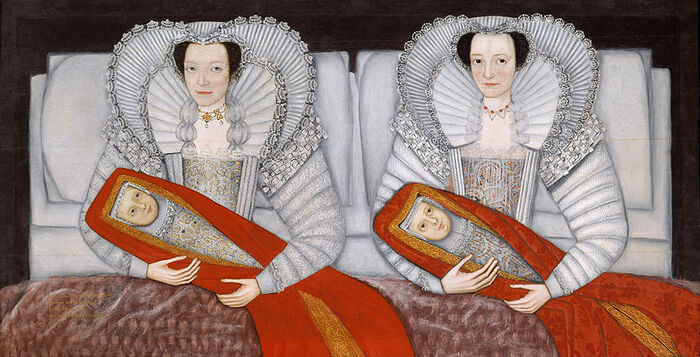
McCracken writes, “My mother had achieved a lot in her life, mostly by ignoring the muttering people who suggested that she might be incapable of things because of her body or gender or religion.” I read this and other things she says about her mom or what her mom herself said, and to me her mother is a complicated, fully formed person. She is short, her mother. She is a Jew from a small town near Des Moines, Iowa. She has a twin sister. She has cerebral palsy. She is fearless. She is stubborn. As I say, she appears fully formed. But does all of this begin to tell us who she was? No: it’s not her mother on the page, it's a character in a book. “My mother. My flesh-and-blood mother, who cannot be represented in any autobiographical or fictional or autofictional prose, not even this sentence I’m currently typing.” Words aren’t enough. Ever.
“Our family is the first novel you know,” McCracken tells us, leaving us to ponder what that means. And so her mother becomes a fictional character in her daughter’s novel, and the author herself also becomes a fictional character in her own novel. And the walls between reality and fiction lose definition. “This sounds like a dream as I describe it now, or a made-up place. It’s not a made-up place, though this is a novel, and the theater might be fictional, and my insistence fictional, and my mother the only real thing, though this version of her is also fictional.”
Or as McCracken writes: "I don’t give a fuck. Or I do, and I’ve just said that to throw you off the trail."
(Readers who need to know the wall between real and unreal is intact in the books they read are now muttering to themselves, ‘Build that wall!’ I'm not serious, of course, but the joke lets me segue to McCracken’s nods to how inconsequential and tenuous ideas like lies and truth now feel, especially to one who invents truths for a living, who probably expresses her rage through postings on social media: The monsters, too, whose power lived in the way they convinced you that you could defeat them with words they’d never read… I had a fantasy that someday I would meet one or two of these monsters, shake a hand, lean forward, and whisper the one thing each would most hate to hear. You do know you’re going to hell. Fat ass. Everyone can tell how stupid you are. God doesn’t love you. Your wife doesn’t love you. Your children will forget you. You’re going to hell. You’re going to hell. You’re going to hell.) [insert sound of my head nodding in fervent agreement]
I loved “The Hero of This Book.” It’s touching, authentically thought-provoking, and often funny as hell. McCracken enjoys the occasional aside, the kind of thing a wordsmith would say. This, for example: “Bedclothes: what a beautiful, mysterious word. No other furniture wears clothing.” And this: “The least appetizing words in the world concern English food: salad cream, baps, butties, carvery, goujons.” (Autocorrect truly doesn’t know what to do with half these words! Me, I’m saving them for Scrabble and Lexulous.)
I must seek out McCracken's other books. And look up what baps, butties, and goujons are.