

What do you think?

Imagine If...: Creating a Future for Us All
An urgent manifesto for re-defining human potential in our turbulent times, from the bestselling author of
The Element
'As we face an increasingly febrile future, the answer is not to do better what we've done before. We have to do something else . . . We must urgently re-imagine education and schools'
Imagination and creativity are at the root of every uniquely human achievement and those achievements have brought us to this present moment. As we reckon with the extractive practices that have depleted our natural resources and threaten our survival as a species, Sir Ken Robinson argues that we must also find a better way of cultivating human potential in order to navigate our uncertain future.
This incisive book distills the thought and expertise that underpinned Sir Ken's influential work as educator, speaker and adviser; grounded in his unwavering belief in the indispensable value of human potential. Imagine If . . . reframes the ongoing debate in a compelling new way, bringing fresh inspiration and much-needed clarity, and sets out the blueprint for creating new systems of education that are based on diversity, creativity and collaboration.
'As we face an increasingly febrile future, the answer is not to do better what we've done before. We have to do something else . . . We must urgently re-imagine education and schools'
Imagination and creativity are at the root of every uniquely human achievement and those achievements have brought us to this present moment. As we reckon with the extractive practices that have depleted our natural resources and threaten our survival as a species, Sir Ken Robinson argues that we must also find a better way of cultivating human potential in order to navigate our uncertain future.
This incisive book distills the thought and expertise that underpinned Sir Ken's influential work as educator, speaker and adviser; grounded in his unwavering belief in the indispensable value of human potential. Imagine If . . . reframes the ongoing debate in a compelling new way, bringing fresh inspiration and much-needed clarity, and sets out the blueprint for creating new systems of education that are based on diversity, creativity and collaboration.
ebook
Published March 1, 2022
About the author
Ken Robinson
52 books1,697 followersLibrarian Note: There is more than one author by this name in the Goodreads database.
Sir Ken Robinson is an internationally recognized leader in the development of innovation and human resources. He has worked with national governments in Europe and Asia, with international agencies, Fortune 500 companies, national and state education systems, non-profit corporations and some of the world’s leading cultural organizations. They include the Royal Shakespeare Company, Sir Paul McCartney’s Liverpool Institute for Performing Arts, the Royal Ballet, the Hong Kong Academy for Performing Arts, the European Commission, UNESCO, the Council of Europe, the J Paul Getty Trust and the Education Commission of the States. From 1989 - 2001, he was Professor of Arts Education at the University of Warwick.
Sir Ken Robinson is an internationally recognized leader in the development of innovation and human resources. He has worked with national governments in Europe and Asia, with international agencies, Fortune 500 companies, national and state education systems, non-profit corporations and some of the world’s leading cultural organizations. They include the Royal Shakespeare Company, Sir Paul McCartney’s Liverpool Institute for Performing Arts, the Royal Ballet, the Hong Kong Academy for Performing Arts, the European Commission, UNESCO, the Council of Europe, the J Paul Getty Trust and the Education Commission of the States. From 1989 - 2001, he was Professor of Arts Education at the University of Warwick.
Ratings & Reviews
Friends & Following
Create a free account to discover what your friends think of this book!
Community Reviews
Displaying 1 - 30 of 80 reviews

November 29, 2022
Mi-a plăcut extrem de mult normalitatea regăsită între paginile cărții. Cu accentul pus pe educație și bunăstarea planetei, autorii ne explică pe scurt cât de mult putem transforma lumea în care trăim. Sunt lucruri de bun simț la care tânjim cu toții. Un reminder foarte bun să nu uităm că viața nu mai este la fel ca în trecut și că lucrurile trebuie schimbate nu peticite.

May 31, 2024
I didn't agree with everything, but at the same time it has great ideas for our world. A bit of everything, from education to consumerism etc.
3 stars
3 stars

February 27, 2025
Received this as a gift from Duke’s Education program at graduation. Probably my favorite manifesto. This book was short and sweet. I found it interesting that so many of the education practices suggested here are part of the design of the high school I currently teach at, so they are ideas and ways of structuring school that I both do and don’t take for granted.
Some notes:
Chapter 4: The Promise of Education
"Education must enable students to understand the world around them and the talents within them so that they can become fulfilled individuals and active, compassionate citizens."
- The purpose of education is to understand the two worlds you live in: the one in you plus the one around you. It can be divided into four main categories: Personal, Cultural, Economic, Social ("Democracy has to be born anew every generation, and education is its midwife" - John Dewey).
- Eight Core Competencies of Education:
- Curiosity - the ability to ask questions and explore how the world works
- Creativity - the ability to generate new ideas and to apply them in practice
- Criticism - the ability to analyze information and ideas and to form reasoned arguments and judgments
- Communication - the ability to express thoughts and feelings clearly and confidently in a range of media and forms
- Collaboration - the ability to work constructively with others
- Compassion - the ability to empathize with others and to act accordingly
- Composure - the ability to connect with the inner life of feeling and develop a sense of personal harmony and balance
- Citizenship - the ability to engage constructively with society and to participate in the processes that sustain it
(this closely mirrors the six core competencies (divided then among 15 foundational credits) of the mastery transcript that my school uses, as opposed to a traditional transcript that has grades/GPA).
Chapter 5: From the Factory to the Farm:
"We are depleting our human resources in the same way we are depleting Earth's resources. Our future depends on tackling both crises urgently."
- This chapter was broken down into: industrial farming -> industrial education-> regenerative farming -> rewilding education
- I am struck by how seamlessly and frequently this books draws connections between education and environmentalism, and nature and even farming. I suppose it's because all are about life and growth.
Chapter 6: Creating Miracles
"Our role is to create the right conditions for life and learning to flourish. When we do that, we realize we have been in the miracle business all along."
- The chapter is then broken down into:
- a community of learners
(adaptive and part of wider cultural ecosystem)
- invigorating the living culture
(default position of children is to learn. core purpose of a school is to create optimal conditions for learning to happen)
- it values its teachers
(heart of education is the relationship between teachers and students)
- it is interdisciplinary
(disciplines instead of subjects, natural cross-pollination, dynamic fields of inquiry)
- it mixes age groups
(grouped by stages of mastery)
- it personalizes learning
("You cannot force a person to learn. It is a deeply personal act and has to be personalized to be fully effective. There is an argument... that personalizing education for every student is impossible... expensive... impractical... There are two answers to this. The first is that there is no alternative, education is personal. When it comes to expense, personalized learning is an investment, not a cost... The second argument is that it is possible to personalize learning for every student, especially through creative use of new technologies." We personalize cards, diets, phones. Why not education?)
(What it means to personalize education: "recognizing that intelligence is diverse and multifaceted, and enabling students to pursue their particular interests and strengths.")
- its schedule is flexible
(purpose of schedule is to facilitate learning. think! if a business required employees to pause what they were doing every 45 min and switch, it would be crazy and get nothing done. Yet that is how many traditional schools operate!)
- it keeps assessment in perspective
(it's more than a description - assessments compare individual performances against each other. It has several roles: diagnostic (help identify aptitude and development), formative (gather info), summative (make judgments on overall performance at end)).
- it understands the importance of play (more play! it's how kids learn! perhaps not as applicable to my high schoolers? perhaps also just as applicable)
- it makes meaningful connections (with local communities/institutions/cultures)
- it considers its physical environment (the school/ learning space)
- it values the voices of its participants (the students! the kids!)
- creating the conditions for miracles (which are happening every day)
A personal takeaway from Ch 7 - when and where am I in my Element? ("The Element is the place in which the things we love to do and the things we are good at come together. It is where natural aptitude meets personal passion")
I think some of the biggest problems with education (within education itself, so momentarily setting aside our many societal problems that infiltrate education), is that people do things because that is how they have been done (aka, doing things that result in efficiency in the moment, and standardized output/results). This book is great because it goes back to the ROOT of it all, the purpose of education in the first place. Someone might read this book and think it's a load of fluff. Or someone might read it and think, "yeah no shit do you even need to say this?" But the reality is, yes we do, because our education systems have strayed SO far from what education can and should look like. My job has me questioning what I'm doing ALL the time. It's important and honestly just helpful to have a strong sense of purpose as a guide on days when I'm dreading a conversation with a senior, or feeling stuck on a lesson plan, or tired of trying to wrangle a project out of a freshman. And I'm lucky(ish) enough to already work at a super nontraditional, project-based, no-grades school that is already in line with practically all the suggestions in Chapter 6! If a lot more of us embodied Robinson's views, learning and growth (beyond schools, for everyone) would be much healthier, effective, fun, and inspiring. The existence of this book does feel necessary because so many people seem to agree with Robinson's ideals for education to some extent but either not think about it, practice it, or fight against a system that currently perpetuates the opposite of it.
Some notes:
Chapter 4: The Promise of Education
"Education must enable students to understand the world around them and the talents within them so that they can become fulfilled individuals and active, compassionate citizens."
- The purpose of education is to understand the two worlds you live in: the one in you plus the one around you. It can be divided into four main categories: Personal, Cultural, Economic, Social ("Democracy has to be born anew every generation, and education is its midwife" - John Dewey).
- Eight Core Competencies of Education:
- Curiosity - the ability to ask questions and explore how the world works
- Creativity - the ability to generate new ideas and to apply them in practice
- Criticism - the ability to analyze information and ideas and to form reasoned arguments and judgments
- Communication - the ability to express thoughts and feelings clearly and confidently in a range of media and forms
- Collaboration - the ability to work constructively with others
- Compassion - the ability to empathize with others and to act accordingly
- Composure - the ability to connect with the inner life of feeling and develop a sense of personal harmony and balance
- Citizenship - the ability to engage constructively with society and to participate in the processes that sustain it
(this closely mirrors the six core competencies (divided then among 15 foundational credits) of the mastery transcript that my school uses, as opposed to a traditional transcript that has grades/GPA).
Chapter 5: From the Factory to the Farm:
"We are depleting our human resources in the same way we are depleting Earth's resources. Our future depends on tackling both crises urgently."
- This chapter was broken down into: industrial farming -> industrial education-> regenerative farming -> rewilding education
- I am struck by how seamlessly and frequently this books draws connections between education and environmentalism, and nature and even farming. I suppose it's because all are about life and growth.
Chapter 6: Creating Miracles
"Our role is to create the right conditions for life and learning to flourish. When we do that, we realize we have been in the miracle business all along."
- The chapter is then broken down into:
- a community of learners
(adaptive and part of wider cultural ecosystem)
- invigorating the living culture
(default position of children is to learn. core purpose of a school is to create optimal conditions for learning to happen)
- it values its teachers
(heart of education is the relationship between teachers and students)
- it is interdisciplinary
(disciplines instead of subjects, natural cross-pollination, dynamic fields of inquiry)
- it mixes age groups
(grouped by stages of mastery)
- it personalizes learning
("You cannot force a person to learn. It is a deeply personal act and has to be personalized to be fully effective. There is an argument... that personalizing education for every student is impossible... expensive... impractical... There are two answers to this. The first is that there is no alternative, education is personal. When it comes to expense, personalized learning is an investment, not a cost... The second argument is that it is possible to personalize learning for every student, especially through creative use of new technologies." We personalize cards, diets, phones. Why not education?)
(What it means to personalize education: "recognizing that intelligence is diverse and multifaceted, and enabling students to pursue their particular interests and strengths.")
- its schedule is flexible
(purpose of schedule is to facilitate learning. think! if a business required employees to pause what they were doing every 45 min and switch, it would be crazy and get nothing done. Yet that is how many traditional schools operate!)
- it keeps assessment in perspective
(it's more than a description - assessments compare individual performances against each other. It has several roles: diagnostic (help identify aptitude and development), formative (gather info), summative (make judgments on overall performance at end)).
- it understands the importance of play (more play! it's how kids learn! perhaps not as applicable to my high schoolers? perhaps also just as applicable)
- it makes meaningful connections (with local communities/institutions/cultures)
- it considers its physical environment (the school/ learning space)
- it values the voices of its participants (the students! the kids!)
- creating the conditions for miracles (which are happening every day)
A personal takeaway from Ch 7 - when and where am I in my Element? ("The Element is the place in which the things we love to do and the things we are good at come together. It is where natural aptitude meets personal passion")
I think some of the biggest problems with education (within education itself, so momentarily setting aside our many societal problems that infiltrate education), is that people do things because that is how they have been done (aka, doing things that result in efficiency in the moment, and standardized output/results). This book is great because it goes back to the ROOT of it all, the purpose of education in the first place. Someone might read this book and think it's a load of fluff. Or someone might read it and think, "yeah no shit do you even need to say this?" But the reality is, yes we do, because our education systems have strayed SO far from what education can and should look like. My job has me questioning what I'm doing ALL the time. It's important and honestly just helpful to have a strong sense of purpose as a guide on days when I'm dreading a conversation with a senior, or feeling stuck on a lesson plan, or tired of trying to wrangle a project out of a freshman. And I'm lucky(ish) enough to already work at a super nontraditional, project-based, no-grades school that is already in line with practically all the suggestions in Chapter 6! If a lot more of us embodied Robinson's views, learning and growth (beyond schools, for everyone) would be much healthier, effective, fun, and inspiring. The existence of this book does feel necessary because so many people seem to agree with Robinson's ideals for education to some extent but either not think about it, practice it, or fight against a system that currently perpetuates the opposite of it.

June 11, 2022
Sir Ken Robinson has single handedly done for education what governments across the world collectively have failed to achieve. With a revolutionary approach that places practicality over the pedantic, dialogue over dissertation and multiculturalism over monoculture, Robinson made it an uncompromising mission in his life to overhaul a rigid and stereotyped educational system whose primary, and at times sole motive lay in churning out students in the same way Model Ts were churned out by the mass assembly plants conceptualised by by Henry Ford. Conveyor in-Conveyor Out. His irresistible TED talk “Do Schools Kill Creativity” is the most watched TED talk in history (over 400 million viewers across the globe have savoured the speech), and his books, The Element and Finding your Element, have been translated into twenty-three languages.
Robinson, who got his Knighthood 2003, was also the recipient of a plethora of awards including the Nelson Mandela Changemaker Award, the Benjamin Franklin Medal of the Royal Society of Arts and the LEGO Prize for international achievements in education, among others. Before his demise in 2020, he envisioned Imagine If as a synthesis and a concise distillation of all his previous works, that would serve as a handy manifesto for furthering the prospects of an educational system that would be fit for purpose, pragmatic and philosophical even. His daughter Kate Robinson completed this work whose publication Sir Robinson unfortunately did not live to see.
Just 113 pages long – or short – the book is deceptively marvelous. The wisdom packed between the covers of such a spright book can set off a revolutionary process in thinking lasting years or even decades. Shades of Sir James Lovelock’s Gaia Hypothesis threads through the book as Sir Robinson and Kate Robinson make a case for a holistic and original thinking that has parallels to the working of Planet Earth towards sustaining its populace. At the heart of the book is a plea to introduce the attribute of ‘imagination’ in every curricula. Since we happen to be the creators of the worlds we inhabit outside, we can channel the world which lives within each one of us to recreate an external world that is as different from its current contemporary.
Robinson & Robinson propose that any education system worth its salt must embed within four uncompromising purposes and eight desirable core competencies. These must form the bedrock of an institution that proposes to nurture and groom future leaders. The four purposes being: personal, cultural, economic and social. The personal purpose has at its edifice, the engagement of young minds with the world within them. The cultural purpose strives to instill in children an awareness as well as respect not just for their individual cultures but also to the tenet of culture as a whole. This will promote a climate of cultural tolerance and co-existence. The economic purpose seeks to dissolve the divide between academic and vocational programmes which would enable students to experience the world of work in academia itself. Finally the social purpose should have as its quintessential objective the transformation of inquisitive children into responsible and compassionate citizens.
The eight core competencies that complement and supplement the four purposes are:
Curiosity: To spur the natural curiosity which children are awash with and encouraging them to ask questions that goes beyond the confines of the curricula;
Criticism: Ushering in a wave of critical thinking is vital in a click-bait era where fact blurs into fiction and disinformation reigns supreme. Children should be assisted to inculcate a habit of constructive criticism and balanced assessment.
Communication: This goes beyond the usual and accepted verbal medium of words. Communication also should encompass within its frame literary communication, the use of metaphors, allusions and poetry. Children must be allowed to express themselves freely and fairly.
Collaboration: Schools currently excel in imparting lessons on working in groups. However the modalities of teaching must transcend this model and enable children to work as groups. Such a practice will help children feed off each other’s strengths in a more systematic manner and develop unique problem solving skills.
Composure: Schools need to urgently introduce calming techniques such as mindfulness and meditation. This is highly relevant in an age where juvenile suicides and depression in young children is fast becoming more a frightening norm than a sporadic exception.
Citizenship: Children should be prepared to develop abilities to engage constructively with society and to actively participate in the processes that sustain society.
Compassion: A self-explanatory crying need of the hour
Creativity: To nurture the inclination to think out of the box and to apply imagination to the common good of society
According to the father daughter duo, our current schooling system is comparable to the process of industrial farming. Educational institutions of today are factory farms that specialise in “mass rearing of humans with good exam grades… a poor imitation of learning” oriented around the needs of the workplace and a legacy of the industrial revolution.’
Robinson & Robinson also appeal directly to the parents, the community, teachers and business to put their heads together and come up with a consensual and collaborative overhaul of an academic system that is not just unsustainable, but is creaking at the seams. Before it comes apart – it is still not too late – we as representatives of humanity can still salvage the situation. This fervent appeal and frenzied appeal of the authors is a jeremiad to the appalling intransigence displayed by all concerned stakeholders who are willfully oblivious to a dangerous malfunction.
We all owe our future generations a life well led, a life that is spent examined and a life that is subject to contemplation. Hence it is time for us to Imagine If…
Robinson, who got his Knighthood 2003, was also the recipient of a plethora of awards including the Nelson Mandela Changemaker Award, the Benjamin Franklin Medal of the Royal Society of Arts and the LEGO Prize for international achievements in education, among others. Before his demise in 2020, he envisioned Imagine If as a synthesis and a concise distillation of all his previous works, that would serve as a handy manifesto for furthering the prospects of an educational system that would be fit for purpose, pragmatic and philosophical even. His daughter Kate Robinson completed this work whose publication Sir Robinson unfortunately did not live to see.
Just 113 pages long – or short – the book is deceptively marvelous. The wisdom packed between the covers of such a spright book can set off a revolutionary process in thinking lasting years or even decades. Shades of Sir James Lovelock’s Gaia Hypothesis threads through the book as Sir Robinson and Kate Robinson make a case for a holistic and original thinking that has parallels to the working of Planet Earth towards sustaining its populace. At the heart of the book is a plea to introduce the attribute of ‘imagination’ in every curricula. Since we happen to be the creators of the worlds we inhabit outside, we can channel the world which lives within each one of us to recreate an external world that is as different from its current contemporary.
Robinson & Robinson propose that any education system worth its salt must embed within four uncompromising purposes and eight desirable core competencies. These must form the bedrock of an institution that proposes to nurture and groom future leaders. The four purposes being: personal, cultural, economic and social. The personal purpose has at its edifice, the engagement of young minds with the world within them. The cultural purpose strives to instill in children an awareness as well as respect not just for their individual cultures but also to the tenet of culture as a whole. This will promote a climate of cultural tolerance and co-existence. The economic purpose seeks to dissolve the divide between academic and vocational programmes which would enable students to experience the world of work in academia itself. Finally the social purpose should have as its quintessential objective the transformation of inquisitive children into responsible and compassionate citizens.
The eight core competencies that complement and supplement the four purposes are:
Curiosity: To spur the natural curiosity which children are awash with and encouraging them to ask questions that goes beyond the confines of the curricula;
Criticism: Ushering in a wave of critical thinking is vital in a click-bait era where fact blurs into fiction and disinformation reigns supreme. Children should be assisted to inculcate a habit of constructive criticism and balanced assessment.
Communication: This goes beyond the usual and accepted verbal medium of words. Communication also should encompass within its frame literary communication, the use of metaphors, allusions and poetry. Children must be allowed to express themselves freely and fairly.
Collaboration: Schools currently excel in imparting lessons on working in groups. However the modalities of teaching must transcend this model and enable children to work as groups. Such a practice will help children feed off each other’s strengths in a more systematic manner and develop unique problem solving skills.
Composure: Schools need to urgently introduce calming techniques such as mindfulness and meditation. This is highly relevant in an age where juvenile suicides and depression in young children is fast becoming more a frightening norm than a sporadic exception.
Citizenship: Children should be prepared to develop abilities to engage constructively with society and to actively participate in the processes that sustain society.
Compassion: A self-explanatory crying need of the hour
Creativity: To nurture the inclination to think out of the box and to apply imagination to the common good of society
According to the father daughter duo, our current schooling system is comparable to the process of industrial farming. Educational institutions of today are factory farms that specialise in “mass rearing of humans with good exam grades… a poor imitation of learning” oriented around the needs of the workplace and a legacy of the industrial revolution.’
Robinson & Robinson also appeal directly to the parents, the community, teachers and business to put their heads together and come up with a consensual and collaborative overhaul of an academic system that is not just unsustainable, but is creaking at the seams. Before it comes apart – it is still not too late – we as representatives of humanity can still salvage the situation. This fervent appeal and frenzied appeal of the authors is a jeremiad to the appalling intransigence displayed by all concerned stakeholders who are willfully oblivious to a dangerous malfunction.
We all owe our future generations a life well led, a life that is spent examined and a life that is subject to contemplation. Hence it is time for us to Imagine If…

February 13, 2023
Finaly !
5/5 ⭐
Susțin Imaginează daca ar fi .....
Pune-ti intrebarea mai mereu in aceea ce faci si s-ar putea să găsești soluția , la unele din schimbările pe care le vezi in lume !
" Lecția pe care ar trebui să o învățăm cel mai bine este că viața pe Pământ nu se rezumă la ființe umane și că a fi om înseamnă mai mult decât a-ți urmări propriul interes . Viitorul nostru depinde în întregime de învățarea pe de rost a acestei lecții ". Sir Ken Robinson
5/5 ⭐
Susțin Imaginează daca ar fi .....
Pune-ti intrebarea mai mereu in aceea ce faci si s-ar putea să găsești soluția , la unele din schimbările pe care le vezi in lume !
" Lecția pe care ar trebui să o învățăm cel mai bine este că viața pe Pământ nu se rezumă la ființe umane și că a fi om înseamnă mai mult decât a-ți urmări propriul interes . Viitorul nostru depinde în întregime de învățarea pe de rost a acestei lecții ". Sir Ken Robinson
May 1, 2023
The best that can be said about this book is that it's short. A treatise by the author (father and daughter duo) on his thoughts on education. I don't know why he's famous, I was given this book by my organisation. By the time I finished, I still didn't understand why his view points were important in any way. They were the most basic and generic thoughts about education. The gimmick of paralleling education with farming/human's treatment of the environment was good but unnecessary. I don't understand why this was even published.
January 8, 2024
A very high level look at how education should be. Found the brevity annoying at times, but this has made me interested to read more from Ken Robinson
March 1, 2022
As the author says, the book began as an abridgement but is now so much more. Described as a love letter to human potential, you really get an inspirational rally cry at every turn.
The chapter quotes alongside their illustrations surprised me, and I can see these on a number of walls around the world I’m sure.
A truly inspirational read and quality throughout. This will undoubtedly live in the top pocket for a very long time.
The chapter quotes alongside their illustrations surprised me, and I can see these on a number of walls around the world I’m sure.
A truly inspirational read and quality throughout. This will undoubtedly live in the top pocket for a very long time.

August 4, 2022
Average book that summarises major issues around our education system and gives top level solutions to this issue.

April 25, 2022
Few TED Talks come close to the power and impact of Sir Ken Robinson's "Do schools kill creativity?" and his books seem to share his trademark combination of equal parts humor, concern, and optimism for the future. Imagine If… is indeed "a short manifesto of [Sir Ken Robinson's] beliefs," as envisioned by literary agent Peter Miller and realized in collaboration with Sir Ken's daughter, Kate Robinson. The book focuses on the role of education in human life in general and over the last few centuries, culminating in suggestions for how education can improve the future.
Unsurprisingly, creativity is a central theme. The definition of creativity as applying imagination to solving real problems and improving life was especially helpful. The Robinsons clarify their belief that many different types of intelligence contribute to a broad spectrum of creativity. In their eyes, everybody has the capacity to contribute in some meaningful way to making the world a better place.
Education is depicted as the crucible in which humans come to understand the nature of the world around them while developing their talents to make the world a better place. Unfortunately, the Robinsons confuse education in the general sense with schools, especially quasi-monopoly public schools. Many of Sir Ken's examples of great educational initiatives come from private schools, while his hopes for improving education lie primarily in the radical reimagination of public schools.
By the middle of the book, the Robinsons begin mixing their dire premonitions about the earth's limited resources with dire assessments about the general state of education. Yet, if they genuinely believe that creativity can solve the world's problems and that every generation has a fresh opportunity to improve education, creative minds can surely find innovative solutions to any perceived resource limitations. Surely daily life and the future looked bleaker for most humans during the vast majority of our history than it does today.
Though we indeed have more than "one shot" to fix education, there is hope in the Robinsons' acknowledgment that we shouldn't wait for the government to initiate the innovations we need to improve our future as a society. The monumental revolutionary ideas have come from individuals and, contrary to the Robinsons' admiration for altruism, largely from rational self-interest.
Although the sentiment of the final quote of the book is well-intended, it embodies an unnecessarily narrow view of both self-interest and the corollary importance of the non-human aspects of our world. It reads, "the lesson we most need to learn is that there is more to life on earth than human beings and more to being human than self-interest. Our futures all depend on learning this lesson by heart."
Surely from the perspective of perpetuating our race, nothing is more important than investing in everything that contributes to an environment in which human descendants can indefinitely thrive. Moreover, history shows us that as humans become educated and can more easily take care of their basic needs, they naturally care more about the long-range husbandry of the environment.
The Robinsons have inspired many to try to reform education and promote creativity. However, the ultimate solution to improving both education and our future is via more competition in the realm of education. Ironically, the greatest boon to competition might involve decoupling education from "school" by removing school attendance mandates, embracing apprenticeships, and otherwise expanding unfettered educational choices. Nevertheless, the Robinsons' unbridled optimism about the limitless possibilities of creativity implies eternal optimism for the future of human beings and their environment.
Unsurprisingly, creativity is a central theme. The definition of creativity as applying imagination to solving real problems and improving life was especially helpful. The Robinsons clarify their belief that many different types of intelligence contribute to a broad spectrum of creativity. In their eyes, everybody has the capacity to contribute in some meaningful way to making the world a better place.
Education is depicted as the crucible in which humans come to understand the nature of the world around them while developing their talents to make the world a better place. Unfortunately, the Robinsons confuse education in the general sense with schools, especially quasi-monopoly public schools. Many of Sir Ken's examples of great educational initiatives come from private schools, while his hopes for improving education lie primarily in the radical reimagination of public schools.
By the middle of the book, the Robinsons begin mixing their dire premonitions about the earth's limited resources with dire assessments about the general state of education. Yet, if they genuinely believe that creativity can solve the world's problems and that every generation has a fresh opportunity to improve education, creative minds can surely find innovative solutions to any perceived resource limitations. Surely daily life and the future looked bleaker for most humans during the vast majority of our history than it does today.
Though we indeed have more than "one shot" to fix education, there is hope in the Robinsons' acknowledgment that we shouldn't wait for the government to initiate the innovations we need to improve our future as a society. The monumental revolutionary ideas have come from individuals and, contrary to the Robinsons' admiration for altruism, largely from rational self-interest.
Although the sentiment of the final quote of the book is well-intended, it embodies an unnecessarily narrow view of both self-interest and the corollary importance of the non-human aspects of our world. It reads, "the lesson we most need to learn is that there is more to life on earth than human beings and more to being human than self-interest. Our futures all depend on learning this lesson by heart."
Surely from the perspective of perpetuating our race, nothing is more important than investing in everything that contributes to an environment in which human descendants can indefinitely thrive. Moreover, history shows us that as humans become educated and can more easily take care of their basic needs, they naturally care more about the long-range husbandry of the environment.
The Robinsons have inspired many to try to reform education and promote creativity. However, the ultimate solution to improving both education and our future is via more competition in the realm of education. Ironically, the greatest boon to competition might involve decoupling education from "school" by removing school attendance mandates, embracing apprenticeships, and otherwise expanding unfettered educational choices. Nevertheless, the Robinsons' unbridled optimism about the limitless possibilities of creativity implies eternal optimism for the future of human beings and their environment.

March 31, 2023
lol i went into this book without knowing anything about it prior. and it was actually so good.
Cool topics:
- the definition of intelligence and how it ties to creativity. (the highest form of intelligence is creativity).
- why the education system sucks and how to fix it.
- the role of imagination in humanity's rise and downfall.
considering its brevity, its one of the most dense texts i've read in a while. fr 10/10 length to learnings ratio.
Cool topics:
- the definition of intelligence and how it ties to creativity. (the highest form of intelligence is creativity).
- why the education system sucks and how to fix it.
- the role of imagination in humanity's rise and downfall.
considering its brevity, its one of the most dense texts i've read in a while. fr 10/10 length to learnings ratio.

February 27, 2022
This quick read is a compilation or summary of ideas to create a future for all in what has been described as a "long letter". It is hopeful and provides an overview of how to change education, consider the ecosystem of learning how it intersects with the environment and how to make the world a better place for everyone by starting with imagination and creativity.
it was written by the late Sir Ken Robinson in collaboration with his daughter and only touched on subjects briefly.
Luckily, I have a signed copy of Finding Your Element and will give it a read to dig deeper into some of his ideas.
it was written by the late Sir Ken Robinson in collaboration with his daughter and only touched on subjects briefly.
Luckily, I have a signed copy of Finding Your Element and will give it a read to dig deeper into some of his ideas.
January 2, 2023
Citind cartea „Imagine if...” (Cum să construim un viitor pentru noi toți) la început de an calendaristic, am simțit-o ca pe o ocazie să reflectez asupra implicării mele în educație, dar și să îmi setez să fiu (mai) atentă la următoarele aspecte subliniate de autori:
- să facem lucrurile în mod diferit în educație, la locul de muncă și în comunitățile noastre;
- să îi ajutăm pe copii să înțeleagă lumea din jurul lor și talentele din ei, astfel încât să poată deveni indivizi împliniți și cetățeni activi și plini de compasiune;
- să introducem cele 8 competențe (curiozitatea, creativitatea, spiritul critic, comunicarea, colaborarea compasiunea, stăpânirea de sine, spiritul civic) încă de la începutul parcursului educațional al elevului și să le cultivăm pe parcurs, nu să le lăsăm să se dezvolte odată cu vârsta;
- să îi învățăm pe copii să lucreze ca grupuri, nu în grupuri;
- să ne concentrăm pe proces, nu pe rezultat („Dacă elevii nu învață, educația nu are loc!”);
- cheia procesului să fie diversitatea.
Ce mi-a plăcut:
1) o definiție a școlii care corespunde (și) dorinței mele de a transforma fiecare unitate școlară într-o comunitate de învățare: „școala = o comunitate a celor care învață, un grup de oameni care se întâlnesc pentru a învăța împreună cu ceilalți și unii de la alții”.
2)un citat de impact: „Copiii se nasc cu capacități nelimitate; ce se întâmplă cu ei mai departe depinde în totalitate de modul în care sunt educați.”
3) să recitesc sintetizate caracteristicile unui ecosistem școlar înfloritor.
Recomand cartea tuturor celor implicați în educație.
- să facem lucrurile în mod diferit în educație, la locul de muncă și în comunitățile noastre;
- să îi ajutăm pe copii să înțeleagă lumea din jurul lor și talentele din ei, astfel încât să poată deveni indivizi împliniți și cetățeni activi și plini de compasiune;
- să introducem cele 8 competențe (curiozitatea, creativitatea, spiritul critic, comunicarea, colaborarea compasiunea, stăpânirea de sine, spiritul civic) încă de la începutul parcursului educațional al elevului și să le cultivăm pe parcurs, nu să le lăsăm să se dezvolte odată cu vârsta;
- să îi învățăm pe copii să lucreze ca grupuri, nu în grupuri;
- să ne concentrăm pe proces, nu pe rezultat („Dacă elevii nu învață, educația nu are loc!”);
- cheia procesului să fie diversitatea.
Ce mi-a plăcut:
1) o definiție a școlii care corespunde (și) dorinței mele de a transforma fiecare unitate școlară într-o comunitate de învățare: „școala = o comunitate a celor care învață, un grup de oameni care se întâlnesc pentru a învăța împreună cu ceilalți și unii de la alții”.
2)un citat de impact: „Copiii se nasc cu capacități nelimitate; ce se întâmplă cu ei mai departe depinde în totalitate de modul în care sunt educați.”
3) să recitesc sintetizate caracteristicile unui ecosistem școlar înfloritor.
Recomand cartea tuturor celor implicați în educație.

August 22, 2023
It’s not merely a recommendation, but an imperative read at this point.
Sir Ken Robinson’s life work has been culminated into this short 100 page book, which serves as a shining beacon of hope and also a desperate plea for help, akin to Ted Talk that is impossible to ignore.
The initial half of the book is just mesmerising and insightful. He doesn’t just highlights the problems, he offers practical solutions. His proposals are not theoretical whims but actionable steps. This remarkable individual has adeptly identified issues and provided solutions for an entire generation and those yet to come, all within 50 pages.
Transitioning into the second half, I do wish they was a deeper analysis on the same. (Only because his views and data are compelling) Instead the writer has transformed it into an inspirational ode to the readers, which, in hindsight is exactly how it’s supposed to be. It serves the reader to become active participants in the change that the author advocates.
In short, it’s a noble man’s passionate plea and a road map to action. It commands our utmost respect to him.
Personal favourite: 1. The Human Advantage | Call and Response | “the only time our lives look this sequential and intentional is when we sit down…. … … ….rarely a straight line moving upward across a page.”
Sir Ken Robinson’s life work has been culminated into this short 100 page book, which serves as a shining beacon of hope and also a desperate plea for help, akin to Ted Talk that is impossible to ignore.
The initial half of the book is just mesmerising and insightful. He doesn’t just highlights the problems, he offers practical solutions. His proposals are not theoretical whims but actionable steps. This remarkable individual has adeptly identified issues and provided solutions for an entire generation and those yet to come, all within 50 pages.
Transitioning into the second half, I do wish they was a deeper analysis on the same. (Only because his views and data are compelling) Instead the writer has transformed it into an inspirational ode to the readers, which, in hindsight is exactly how it’s supposed to be. It serves the reader to become active participants in the change that the author advocates.
In short, it’s a noble man’s passionate plea and a road map to action. It commands our utmost respect to him.
Personal favourite: 1. The Human Advantage | Call and Response | “the only time our lives look this sequential and intentional is when we sit down…. … … ….rarely a straight line moving upward across a page.”

October 5, 2025
"Real life is [...] like a scribble, looping across the page. Life is complex and unpredictable, and because of our powers of imagination and creativity, we are able to navigate it."
Imagine If... is a "short book" or "long letter"—a précis of Ken Robinson's key philosophies, compressed into a compact manifesto. I read it in one sitting, "scribbling" copious notes and pondering Robinson's compelling legacy. The overarching ideology is that Earth's problems could be solved with a major transformation of the education system, focusing on creativity and individuality rather than conformity and productivity.
Robinson writes with heart and vision, offering hopeful alternatives and trusting in today's younger generations. He supports diversity of intelligence and creativity, arguing that current mainstream education is biased towards a very specific form of academic ability, which in turn minimises the experience and interests of most young people: "Children love to learn, they do it naturally; many have a hard time with education, and some have big problems with school".
Robinson draws parallels between nature and human society. This makes for a touching analogy while highlighting the interconnectivity of societal problems with the climate disaster: "If the soil is healthy, life will flourish indefinitely." I learnt a great deal about the natural world from this book (including the phenomenon of mycorrhiza), which was an unexpected bonus! Another repeated theme is exponential progress in technology, which could not be more relevant today.
Robinson's propensity towards the holistic and mindful is not fluffy. Stark issues like addiction, suicide and depression as a direct result of mainstream education really hit home. Similarly, I was interested to read the history of IQ tests and their link to eugenics and Nazism.
I found it strange that disability was not explored explicitly (although hinted at through "biodiversity" references). SEND is one of the most pressing issues in modern education. It is only mentioned twice: once detailing a programme "training blind people to see" and again in reference to mental health statistics. There was an anti-meds sentimentality throughout, and as someone who relies on multiple medications to get through a day and as an autistic person in the "Tylenol" era, I found this problematic. The passages about milestones and babies' speech also sat uncomfortably for me as a parent of children with disabilities.
I rolled my eyes at the "Change from within" call to action. As a teacher, I spent years trying to do just this. My powerlessness as a miniscule cog in a massive greasy machine was absolutely demoralising. Similarly, as a parent of children with disabilities, I have run myself into the ground advocating relentlessly for them. Robinson doesn't acknowledge how damaging the constant battle can be, nor the gender inequalities of said battle (maybe he does in his longer books?).
Overall, Robinson clearly was, and remains, on the right side of history. I am impressed with the energy and momentum of his vision despite society's ingrained norms. If every policymaker, head teacher, educator, parent and child read and understood Imagine If..., some proper change really could happen.
Imagine If... is a "short book" or "long letter"—a précis of Ken Robinson's key philosophies, compressed into a compact manifesto. I read it in one sitting, "scribbling" copious notes and pondering Robinson's compelling legacy. The overarching ideology is that Earth's problems could be solved with a major transformation of the education system, focusing on creativity and individuality rather than conformity and productivity.
Robinson writes with heart and vision, offering hopeful alternatives and trusting in today's younger generations. He supports diversity of intelligence and creativity, arguing that current mainstream education is biased towards a very specific form of academic ability, which in turn minimises the experience and interests of most young people: "Children love to learn, they do it naturally; many have a hard time with education, and some have big problems with school".
Robinson draws parallels between nature and human society. This makes for a touching analogy while highlighting the interconnectivity of societal problems with the climate disaster: "If the soil is healthy, life will flourish indefinitely." I learnt a great deal about the natural world from this book (including the phenomenon of mycorrhiza), which was an unexpected bonus! Another repeated theme is exponential progress in technology, which could not be more relevant today.
Robinson's propensity towards the holistic and mindful is not fluffy. Stark issues like addiction, suicide and depression as a direct result of mainstream education really hit home. Similarly, I was interested to read the history of IQ tests and their link to eugenics and Nazism.
I found it strange that disability was not explored explicitly (although hinted at through "biodiversity" references). SEND is one of the most pressing issues in modern education. It is only mentioned twice: once detailing a programme "training blind people to see" and again in reference to mental health statistics. There was an anti-meds sentimentality throughout, and as someone who relies on multiple medications to get through a day and as an autistic person in the "Tylenol" era, I found this problematic. The passages about milestones and babies' speech also sat uncomfortably for me as a parent of children with disabilities.
I rolled my eyes at the "Change from within" call to action. As a teacher, I spent years trying to do just this. My powerlessness as a miniscule cog in a massive greasy machine was absolutely demoralising. Similarly, as a parent of children with disabilities, I have run myself into the ground advocating relentlessly for them. Robinson doesn't acknowledge how damaging the constant battle can be, nor the gender inequalities of said battle (maybe he does in his longer books?).
Overall, Robinson clearly was, and remains, on the right side of history. I am impressed with the energy and momentum of his vision despite society's ingrained norms. If every policymaker, head teacher, educator, parent and child read and understood Imagine If..., some proper change really could happen.

April 15, 2026
I love Sir Ken Robinson, and this little book gives a glimpse into why. It's a distillation of his philosophy of education, a posthumously published summation of all of his prior work, from TED talks to books.
If ... if only American educators and policy makers would take his words to heart, we would transform our education system into one that is more humane, more successful, and more beneficial for humanity and the planet. We would create a happier population and unleash all the buried talents and passions that we routinely squander through our outdated schools and curricula. We would have a true Renaissance of imagination and creativity, and who knows what large scale problems we would solve?
As a long time educator, there are two ideas that haunt me. The first is one I realized after reading Richard Louv's Last Child in the Woods. Far too much of what happens in our schools is child abuse. We thwart children's natural impulses and needs, their need for play, their need to spend time in nature, and it has only grown worse since No Child Left Behind and the imposition of test upon test upon test each in every year of their schooling. Schools in America (unlike Finland) are relatively joyless places.
The second is that our approach to education is hurting us as a society, not helping. I derived this from an essay in Antoine de Saint-Exupéry's Wind, Sand, and Stars, in which he describes seeing a child sleeping between his peasant parents in a third class train car and realizing that the mere accident of birth means that this child will likely never realize his full potential. He calls it "the sight of Mozart murdered." I see lots of Mozarts murdered in our schools, murdered by a system that isn't set up to encourage their talents to emerge ... unless it's a talent for taking standardized tests on a tablet screen.
Robinson has the antidote, and we would do well to take it. My favorite chapter includes a section on what Robinson considers the "Eight Core Competencies." These are: Curiosity, Creativity, Criticism (critical thinking), Communication, Collaboration, Compassion, Composure (nurturing the inner life), and Citizenship. Imagine if we framed our educational program around these, consciously designed learning experiences for these competencies.
It's time to reimagine education and free our children to become all they are capable of being ... mostly themselves. If not now, when?
Sir Ken Robinson was a treasure, and so is this, his final book.
If ... if only American educators and policy makers would take his words to heart, we would transform our education system into one that is more humane, more successful, and more beneficial for humanity and the planet. We would create a happier population and unleash all the buried talents and passions that we routinely squander through our outdated schools and curricula. We would have a true Renaissance of imagination and creativity, and who knows what large scale problems we would solve?
As a long time educator, there are two ideas that haunt me. The first is one I realized after reading Richard Louv's Last Child in the Woods. Far too much of what happens in our schools is child abuse. We thwart children's natural impulses and needs, their need for play, their need to spend time in nature, and it has only grown worse since No Child Left Behind and the imposition of test upon test upon test each in every year of their schooling. Schools in America (unlike Finland) are relatively joyless places.
The second is that our approach to education is hurting us as a society, not helping. I derived this from an essay in Antoine de Saint-Exupéry's Wind, Sand, and Stars, in which he describes seeing a child sleeping between his peasant parents in a third class train car and realizing that the mere accident of birth means that this child will likely never realize his full potential. He calls it "the sight of Mozart murdered." I see lots of Mozarts murdered in our schools, murdered by a system that isn't set up to encourage their talents to emerge ... unless it's a talent for taking standardized tests on a tablet screen.
Robinson has the antidote, and we would do well to take it. My favorite chapter includes a section on what Robinson considers the "Eight Core Competencies." These are: Curiosity, Creativity, Criticism (critical thinking), Communication, Collaboration, Compassion, Composure (nurturing the inner life), and Citizenship. Imagine if we framed our educational program around these, consciously designed learning experiences for these competencies.
It's time to reimagine education and free our children to become all they are capable of being ... mostly themselves. If not now, when?
Sir Ken Robinson was a treasure, and so is this, his final book.

January 13, 2025
#Frankómetro: 86%
Pudo haberse llamado: Educando ando
Lo recomienda: Jean Piaget
Léelo si te gustó: Escuelas Creativas
**^^**^^**^^**
No he dejado de prodigar loas a Sir Ken Robinson desde que leí “El Elemento” y el hacerlo cambió mi vida, tanto como la de otros millones. Desde entonces, me he convertido en asiduo receptor de sus libros posteriores, como “Encuentra tu Elemento”, “Tu hijo y la escuela” y “Escuelas Creativas”. Ken es ante todo, un educador y un gran divulgador que irrumpió en la cultura popular a través de su Ted Talk, una de las más vistas hasta el día de hoy.
Lamentablemente Sir Ken nos dejó hace poco tiempo a causa de un agresivo cáncer. Es su hija Kate quien en este libro toma la estafeta. Este es un libro póstumo editado por ella a partir de apuntes y escritos de su padre. El tomo es, sobre todo, un llamado a la revolución educativa que Robinson impulsó por tantos años; es una campana de urgencia ante la necesidad de educar personas para el mundo del futuro y no para el mundo del pasado. Es un canto de inspiración para los que se desvelan (nos desvelamos) en las aulas formando las mentes y motivando los corazones de nuestros alumnos. Es un recuento de los temas urgentes que por los que vale la pena luchar.
En este sentido, es un gran libro. Donde queda corto, sin embargo, no es en los “qués”, ni tampoco en los “por qués”; sino en los “cómos”. Si bien propone un ideario amplio y en apariencia magnífico, es una obra breve que obvia el decirnos cómo podemos hacerlo, y no presenta estrategias, herramientas o datos clave que nos faciliten la tarea. Si fuera un libro de arquitectura, nos diría “cómo” debe ser una casa (bella, útil, espaciosa y muy moderna), pero olvida ofrecernos tanto la ciencia teórica como la masa práctica. Es un libro de corte normativo e idealista -a veces un poco woke- que disfruté profundamente, pero al que espero pronto le acompañe un manual más científico y práctico.
Como sea, si eres soñador, educador o fan de Ken, estoy seguro que lo vas a disfrutar y te va a obligar a replantearte dos o tres cosas sobre tu propio elemento y tu misión.
Pudo haberse llamado: Educando ando
Lo recomienda: Jean Piaget
Léelo si te gustó: Escuelas Creativas
**^^**^^**^^**
No he dejado de prodigar loas a Sir Ken Robinson desde que leí “El Elemento” y el hacerlo cambió mi vida, tanto como la de otros millones. Desde entonces, me he convertido en asiduo receptor de sus libros posteriores, como “Encuentra tu Elemento”, “Tu hijo y la escuela” y “Escuelas Creativas”. Ken es ante todo, un educador y un gran divulgador que irrumpió en la cultura popular a través de su Ted Talk, una de las más vistas hasta el día de hoy.
Lamentablemente Sir Ken nos dejó hace poco tiempo a causa de un agresivo cáncer. Es su hija Kate quien en este libro toma la estafeta. Este es un libro póstumo editado por ella a partir de apuntes y escritos de su padre. El tomo es, sobre todo, un llamado a la revolución educativa que Robinson impulsó por tantos años; es una campana de urgencia ante la necesidad de educar personas para el mundo del futuro y no para el mundo del pasado. Es un canto de inspiración para los que se desvelan (nos desvelamos) en las aulas formando las mentes y motivando los corazones de nuestros alumnos. Es un recuento de los temas urgentes que por los que vale la pena luchar.
En este sentido, es un gran libro. Donde queda corto, sin embargo, no es en los “qués”, ni tampoco en los “por qués”; sino en los “cómos”. Si bien propone un ideario amplio y en apariencia magnífico, es una obra breve que obvia el decirnos cómo podemos hacerlo, y no presenta estrategias, herramientas o datos clave que nos faciliten la tarea. Si fuera un libro de arquitectura, nos diría “cómo” debe ser una casa (bella, útil, espaciosa y muy moderna), pero olvida ofrecernos tanto la ciencia teórica como la masa práctica. Es un libro de corte normativo e idealista -a veces un poco woke- que disfruté profundamente, pero al que espero pronto le acompañe un manual más científico y práctico.
Como sea, si eres soñador, educador o fan de Ken, estoy seguro que lo vas a disfrutar y te va a obligar a replantearte dos o tres cosas sobre tu propio elemento y tu misión.
March 13, 2024
This is a tiny paperback written by the last Sir Ken Robinson and his daughter Kate Robinson.
There are lots of snippets of wisdom in this book but because it's written posthumously and therefore in partnership with his daughter, it doesn't feel as dense with ideas and solutions as it might have been if he'd been alive to complete the project himself.
Having said that, there are many words of encouragement and wisdom that are akin to bathing in stardust of inspiration, and change makers need that frequently just to keep going, so I think it's worth a read for that alone.
Ken talks about rewilding the land in the same breath as rewilding the education system. Indeed, a man after my own heart. The routes of all our problems are the same, and therefore the solutions are the same!
This book is split into 8 teeny chapters; an accumulation of Ken's life's work. Ken, a champion of the human capacity for creativity and imagination suggests the very qualities that set us apart from all other life on Earth is actually our way out of the mess we have made of our beautiful planet.
Ken advocates for the conditions in education that foster children's ability to discover their passion, because when passion meets purpose, the result is electrifying!
Imagine the possibilities!
Ken and Kate end their collaboration with a simple call to change-makers to remember that 'Roll 'n' Roll was not a government led initiative'.
We all need to go out and LIVE and breathe the change, as if it's already happened. From my personal experience, this is far harder in reality, but knowing that there is a growing community of people who believe in radical education reform does make it easier.
Thank you Ken Robinson, for all your magnificent years of change-making. And thank you Kate Robinson, for bringing Ken's important vision to us in this heartfelt and most beautiful little book. I will read it often when I need inspiration to keep on trying to be the change.
There are lots of snippets of wisdom in this book but because it's written posthumously and therefore in partnership with his daughter, it doesn't feel as dense with ideas and solutions as it might have been if he'd been alive to complete the project himself.
Having said that, there are many words of encouragement and wisdom that are akin to bathing in stardust of inspiration, and change makers need that frequently just to keep going, so I think it's worth a read for that alone.
Ken talks about rewilding the land in the same breath as rewilding the education system. Indeed, a man after my own heart. The routes of all our problems are the same, and therefore the solutions are the same!
This book is split into 8 teeny chapters; an accumulation of Ken's life's work. Ken, a champion of the human capacity for creativity and imagination suggests the very qualities that set us apart from all other life on Earth is actually our way out of the mess we have made of our beautiful planet.
Ken advocates for the conditions in education that foster children's ability to discover their passion, because when passion meets purpose, the result is electrifying!
Imagine the possibilities!
Ken and Kate end their collaboration with a simple call to change-makers to remember that 'Roll 'n' Roll was not a government led initiative'.
We all need to go out and LIVE and breathe the change, as if it's already happened. From my personal experience, this is far harder in reality, but knowing that there is a growing community of people who believe in radical education reform does make it easier.
Thank you Ken Robinson, for all your magnificent years of change-making. And thank you Kate Robinson, for bringing Ken's important vision to us in this heartfelt and most beautiful little book. I will read it often when I need inspiration to keep on trying to be the change.

August 28, 2022
We humans have the most enviable gift of #imagination. And that's what really makes us so different from rest of the creatures on the planet. Everything we've ever made once started its journey in someone's mind as an imagination - a challenge to the status quo, questioning the established mental models, a departure from the social norms, swimming upstream against the establish business models,...literally anything and perhaps everything! As humans, we are born with the innate power of imagination. And just like a good seed needs the right soil and nutrition, we too need just the right environment to give wings to this power of imagination and build the future. I won't shy away to call it as a #superpower of the humans.
And yet, our #education system makes such a horrible mess of our budding capabilities. We are taught conformance rather than creativity, we are expected to comply rather than question. Rest of the damage is completed at #workplaces that treat people as "human machines". In what might be the biggest irony, our education system was designed for the #industrialage when we needed a hierarchy of workers at each level to support mass production. Now that the industrial age is practically over, it is time to reset the way we teach our children, the way we design our future. And who better than Late Ken Robinson to guide us with his radical ideas? I totally enjoyed listening to the audiobook narration of his last book by his daughter Kate Robinson. One word of caution: some books are meant to generally entertain, and some are there to provide readymade answers and canned wisdom. This book does none. But this will make you think so that hopefully one day you might come up with ideas to change the world. And I think that is the most audacious hope. #imagineif...
And yet, our #education system makes such a horrible mess of our budding capabilities. We are taught conformance rather than creativity, we are expected to comply rather than question. Rest of the damage is completed at #workplaces that treat people as "human machines". In what might be the biggest irony, our education system was designed for the #industrialage when we needed a hierarchy of workers at each level to support mass production. Now that the industrial age is practically over, it is time to reset the way we teach our children, the way we design our future. And who better than Late Ken Robinson to guide us with his radical ideas? I totally enjoyed listening to the audiobook narration of his last book by his daughter Kate Robinson. One word of caution: some books are meant to generally entertain, and some are there to provide readymade answers and canned wisdom. This book does none. But this will make you think so that hopefully one day you might come up with ideas to change the world. And I think that is the most audacious hope. #imagineif...
March 28, 2023
Ultima carte pe care-si va fi trecut numele regretatul Sir Ken Robinson, este finalizata si publicata impreuna cu fiica sa, Kate Robinson, care decide sa duca mai departe mostenirea tatalui sau.
Cartea de fata este “o scrisoare (de dragoste) mai lunga”, inchinata potentialului uman, asa cum insusi autorul ne spune, si, desi a fost conceputa ca rezumat al intregii sale activitati, ea a devenit mult mai mult de atat: o incredintare a unei misiuni de-o viata, un apel la mobilizare.
In ea gasim informatii despre provocarile cu care ne confruntam, despre schimbarile de care avem nevoie si pasii practici pe care ii putem face pentru a reforma educatia si sistemul educational, in conditiile in care ne confruntam cu un viitor din ce in ce mai problematic. Solutia propusa nu este de a face mai bine ceea ce am facut pana acum, ci de a face cu totul altceva.
Aflam de asemenea ca avem nevoie sa integram inca de la inceputul parcursului educational al elevilor opt concepte esentiale ce-i vor ajuta sa faca fata provocarilor personale, culturale, economice si sociale cu care se vor confrunta ulterior in viata. Acestea sunt curiozitatea, creativitatea, spiritul critic, comunicarea, colaborarea, compasiunea, autocontrolul si spiritul civic.
Pentru ca in educatie se regasesc solutiile tuturor problemelor, sta in puterea noastra sa regandim din temelie acest sistem educational. Si putem face asta plecand de la o formulare simpla ce a schimbat lumea deja de foarte multe ori pana acum: “Imagineaza-ti cum ar fi daca…”
Cartea de fata este “o scrisoare (de dragoste) mai lunga”, inchinata potentialului uman, asa cum insusi autorul ne spune, si, desi a fost conceputa ca rezumat al intregii sale activitati, ea a devenit mult mai mult de atat: o incredintare a unei misiuni de-o viata, un apel la mobilizare.
In ea gasim informatii despre provocarile cu care ne confruntam, despre schimbarile de care avem nevoie si pasii practici pe care ii putem face pentru a reforma educatia si sistemul educational, in conditiile in care ne confruntam cu un viitor din ce in ce mai problematic. Solutia propusa nu este de a face mai bine ceea ce am facut pana acum, ci de a face cu totul altceva.
Aflam de asemenea ca avem nevoie sa integram inca de la inceputul parcursului educational al elevilor opt concepte esentiale ce-i vor ajuta sa faca fata provocarilor personale, culturale, economice si sociale cu care se vor confrunta ulterior in viata. Acestea sunt curiozitatea, creativitatea, spiritul critic, comunicarea, colaborarea, compasiunea, autocontrolul si spiritul civic.
Pentru ca in educatie se regasesc solutiile tuturor problemelor, sta in puterea noastra sa regandim din temelie acest sistem educational. Si putem face asta plecand de la o formulare simpla ce a schimbat lumea deja de foarte multe ori pana acum: “Imagineaza-ti cum ar fi daca…”

January 4, 2026
I resisted giving this two stars as I feel like some of my expectations ahead of time were not fully informed. The book has many insightful nuggets of wisdom and research from the late, great Sir Ken Robsinson but it is also meant to be a compilation and it's difficult to know how much of it was written, edited, selected by his daughter who is credited as Co author. There is an overall lack of cohesion and despite the caveat of being a compilation I still found it didnt flesh out some key concepts as well as it could have and even at times contradicted itself with conflicting metaphors and intellectual points. The advice to parents is the worst and this may be from Sir Ken himself, that they should not trust the system more than themselves nor their child. I agree to consider parental knowledge as important but if only more parents would have more trust for professionals in education, mental health and behavior analysis. Children do lie too, not always maliciously or even intentionally, but they aren't a source to fully base an opinion on. Listen to them but also get more sources of information!
March 8, 2022
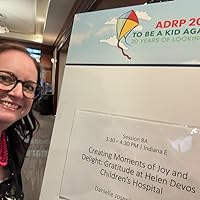
Several years ago I was working in higher education philanthropy, and one of my roles was the planning of a donor-funded lecture series along with our honors college. One year the idea of bringing Sir Ken Robinson came up and while I was not too familiar with him, I began reading about him and reading things he had written. I thoroughly enjoyed his vision for education and truly enjoyed his lecture. What a great surprise to see a new book being published!
This book is like a love letter to our human potential and what we can do to improve and reimagine our education systems. From empowering kids to be creative to the importance of partnerships throughout the communities in which the schools are located. I really appreciated his encouragement of mentoring; whether it’s a mixed-age classroom where the older students are mentoring the younger ones or business leaders mentoring and shaping interns.
Highly recommend for anyone who is part of the educational community or who cares about our future generations.
This book is like a love letter to our human potential and what we can do to improve and reimagine our education systems. From empowering kids to be creative to the importance of partnerships throughout the communities in which the schools are located. I really appreciated his encouragement of mentoring; whether it’s a mixed-age classroom where the older students are mentoring the younger ones or business leaders mentoring and shaping interns.
Highly recommend for anyone who is part of the educational community or who cares about our future generations.

July 16, 2023
What forms the bedrock of your philosophy of education? What methodology do you follow? What curriculum do you use?
Most educators field these questions at some point: homeschoolers and traditional schoolers, alike.
I can't think of a better place to start in answering that question than with the late Sir Ken Robinson.
Imagine If... and Creative Schools offer a portrait of education for our time. Robinson asks: Why do most kids start school alive with imagination only to have that same force zapped by the end of their studies?
In these pages, Robinson provides a way forward, asking us to consider our human advantage: our imagination. Intelligence is diverse and dynamic and inextricably tied to creativity. We must tap into those energies to face the challenges of our era of human existence.
We are no longer an agrarian society. Our schools should not function as factories (i.e., systems) churning out workers. We have the capacity to design spaces where life and learning flourish, but only if we are brave enough to accept that challenge.
A manifesto, a rallying cry, a sage for our time. Hands-down, a must-read if this synopsis speaks to you.
Most educators field these questions at some point: homeschoolers and traditional schoolers, alike.
I can't think of a better place to start in answering that question than with the late Sir Ken Robinson.
Imagine If... and Creative Schools offer a portrait of education for our time. Robinson asks: Why do most kids start school alive with imagination only to have that same force zapped by the end of their studies?
In these pages, Robinson provides a way forward, asking us to consider our human advantage: our imagination. Intelligence is diverse and dynamic and inextricably tied to creativity. We must tap into those energies to face the challenges of our era of human existence.
We are no longer an agrarian society. Our schools should not function as factories (i.e., systems) churning out workers. We have the capacity to design spaces where life and learning flourish, but only if we are brave enough to accept that challenge.
A manifesto, a rallying cry, a sage for our time. Hands-down, a must-read if this synopsis speaks to you.
October 25, 2022
I've loved Sir Ken's talks for years, and so was excited to get into this to get some real insight into his solutions for reforming education. Sadly you won't find this in this book. This book contains a lot of filler - drawn out analogies about the troubles of the world, sociology and cosmic significance. The three solutions that I took from this book were that kids need to be age integrated, teaching need sto be based on disciplines rather than ridged subjects, and timetabling needs to allow for more flexibility. If you've not read any modern philosophy before, or if you want to inundated with interesting factoids about the highs and lows of human potential, then this book will enlightening. If you're looking for Sir Ken's solutions for how to fix education, in detail - the culmination of a lifetime if work, look elsewhere.
This entire review has been hidden because of spoilers.
June 13, 2022
“The revolution we need calls for a global reset of our social systems. It’s calls for a new, wider conception of human ability, and an embrace of the richness of our diversity of talents. It’s is based on a belief in the value of the individual, the right to self-determination, our potential to evolve, and the importance of civic responsibility and respect for others. And it begins with Education.”
A wonderful, passionate and accessible work which is Sir Ken’s manifesto on life, focused towards creativity and education. A smorgasbord of food for thought, for change, for the future. Essential reading for all-especially Educators, but aren’t we all involved in education in some form or another?
A wonderful, passionate and accessible work which is Sir Ken’s manifesto on life, focused towards creativity and education. A smorgasbord of food for thought, for change, for the future. Essential reading for all-especially Educators, but aren’t we all involved in education in some form or another?
September 13, 2022
Manifest that includes Ken Robinson’s worldview and vision for the educational system. The worldview includes that we need to develop human potential (diverse intelligence, imagination, and creativity) and create a better future.
For education, he outlines a higher level purpose, four core purposes, eight competencies, and a list of things (e.g., mixed age-groups) that schools and the educational system can do differently.
For being an inspiring introduction to the educational system and the potential it holds for individuals and the world - including what we can do differently as educators - I give it 5 stars.
However, if you’re looking for a rigorous (e.g., explicitly evidence-based) guide for what can be done differently you’ll be disappointed (~2-3 stars).
For education, he outlines a higher level purpose, four core purposes, eight competencies, and a list of things (e.g., mixed age-groups) that schools and the educational system can do differently.
For being an inspiring introduction to the educational system and the potential it holds for individuals and the world - including what we can do differently as educators - I give it 5 stars.
However, if you’re looking for a rigorous (e.g., explicitly evidence-based) guide for what can be done differently you’ll be disappointed (~2-3 stars).

March 18, 2023
I think this is a good summary of Sir Ken Robinson's work and legacy.
Throughout the book, there's an emphasis on the need for education to embrace creativity and individuality, rather than enforcing standardized testing and conformity. The author also stresses the importance of collaboration and community in fostering innovation and problem-solving. Moreover, broader social issues, such as the need for environmental sustainability and the importance of empathy and understanding in our relationships with others is also brought in the discussion here.
Overall I believe, the book highlights Sir Ken Robinson's beliefs in the transformative power of imagination and creativity in shaping a better world.
Throughout the book, there's an emphasis on the need for education to embrace creativity and individuality, rather than enforcing standardized testing and conformity. The author also stresses the importance of collaboration and community in fostering innovation and problem-solving. Moreover, broader social issues, such as the need for environmental sustainability and the importance of empathy and understanding in our relationships with others is also brought in the discussion here.
Overall I believe, the book highlights Sir Ken Robinson's beliefs in the transformative power of imagination and creativity in shaping a better world.
April 18, 2025
"Imagine If..." by Sir Ken Robinson is an inspiring and heartfelt call to reimagine education—not just as a system, but as a deeply human experience that nurtures creativity, individuality, and passion. With his signature clarity and wisdom, Robinson invites us to challenge conventional thinking and to envision an education system that truly serves the potential of every child.
This short but impactful book is filled with powerful insights about what learning should be: meaningful, personalized, and driven by curiosity. It’s a reminder that education should not be about conformity, but about cultivating the unique talents of each individual.
A must-read for parents, educators, and anyone who believes that the future depends on how we educate the next generation. Thought-provoking, hopeful, and beautifully written.
This short but impactful book is filled with powerful insights about what learning should be: meaningful, personalized, and driven by curiosity. It’s a reminder that education should not be about conformity, but about cultivating the unique talents of each individual.
A must-read for parents, educators, and anyone who believes that the future depends on how we educate the next generation. Thought-provoking, hopeful, and beautifully written.
May 1, 2022
This is a concise tribute/memoir finished by Ken Robinson's daughter, Kate. Years ago I was inspired by Robinson's popular TED Talk about the education system stifling creativity. This book provides inspiration for all adults to nature and celebrate creativity in children and ourselves. It's an important recognition that our imagination is a gift to humanity. I appreciated the identification of the core competencies Robinson espouses - especially curiosity, compassion and citizenship. The book articulates the "imagine if of change"; it's up to readers to identify and work on ways to achieve the aim.

July 18, 2022
It is a book that allows you to think about the academic structures and the consequences that entail the development of our future as humanity or the destruction of the life that inhabits the planet.
Practically, the author's thesis presents a perspective of the construction of values that we can generate for the creation of the world we want, and as a consequence, he speaks of two fundamental skills for humanity's progress and transformation: IMAGINATION AND CREATIVITY.
The author maintains a very well-founded position, but I consider that he lacked the essence of what led him to such an extraordinary title: Imagine if...
Practically, the author's thesis presents a perspective of the construction of values that we can generate for the creation of the world we want, and as a consequence, he speaks of two fundamental skills for humanity's progress and transformation: IMAGINATION AND CREATIVITY.
The author maintains a very well-founded position, but I consider that he lacked the essence of what led him to such an extraordinary title: Imagine if...
This entire review has been hidden because of spoilers.
Displaying 1 - 30 of 80 reviews