

What do you think?

El festín del amor
Una mágica novela sobre los amores extraordinarios de la gente corriente.
En esta novela, un narrador llamado Charles Baxter se propone descubrir el secreto de la poderosa fuerza que mueve nuestras vidas: el amor. A través de las voces entretejidas de personajes con historias y visiones muy dispares, el lector completa una hermosa panorámica sobre este ineludible sentimiento universal. El dueño de una cafetería recuerda el día en que su primera mujer se acercó por un instante a la perfección. Ella, a su vez, rememora su fascinación ante la belleza de una contrincante en un partido de softball. Una pareja de adolescentes se pasa las horas alimentando la idea de un amor ardiente. Un profesor de filosofía intenta explicar lo imposible: las razones del corazón.
Publicada en el año 2000 y merecedora del Premi Llibreter 2002, esta mágica novela sobre los amores extraordinarios de la gente corriente cautivó a medio mundo. Escrita con una exquisita perfección formal y repleta de vida, es una lectura tan divertida como melancólica que nos conmueve, deleita y enseña. Recuperada ahora en una nueva traducción, El festín del amor es un auténtico banquete para el lector.
En esta novela, un narrador llamado Charles Baxter se propone descubrir el secreto de la poderosa fuerza que mueve nuestras vidas: el amor. A través de las voces entretejidas de personajes con historias y visiones muy dispares, el lector completa una hermosa panorámica sobre este ineludible sentimiento universal. El dueño de una cafetería recuerda el día en que su primera mujer se acercó por un instante a la perfección. Ella, a su vez, rememora su fascinación ante la belleza de una contrincante en un partido de softball. Una pareja de adolescentes se pasa las horas alimentando la idea de un amor ardiente. Un profesor de filosofía intenta explicar lo imposible: las razones del corazón.
Publicada en el año 2000 y merecedora del Premi Llibreter 2002, esta mágica novela sobre los amores extraordinarios de la gente corriente cautivó a medio mundo. Escrita con una exquisita perfección formal y repleta de vida, es una lectura tan divertida como melancólica que nos conmueve, deleita y enseña. Recuperada ahora en una nueva traducción, El festín del amor es un auténtico banquete para el lector.
344 pages, Paperback
First published April 25, 2000
About the author
Charles Baxter
91 books434 followersCharles Baxter was born in Minneapolis and graduated from Macalester College, in Saint Paul. After completing graduate work in English at the State University of New York at Buffalo, he taught for several years at Wayne State University in Detroit. In 1989, he moved to the Department of English at the University of Michigan--Ann Arbor and its MFA program. He now teaches at the University of Minnesota.
Baxter is the author of 4 novels, 4 collections of short stories, 3 collections of poems, a collection of essays on fiction and is the editor of other works. His works of fiction include Believers , The Feast of Love (nominated for the National Book Award), Saul and Patsy , and Through the Safety Net . He lives in Minneapolis.
Baxter is the author of 4 novels, 4 collections of short stories, 3 collections of poems, a collection of essays on fiction and is the editor of other works. His works of fiction include Believers , The Feast of Love (nominated for the National Book Award), Saul and Patsy , and Through the Safety Net . He lives in Minneapolis.
Ratings & Reviews
Friends & Following
Create a free account to discover what your friends think of this book!
Community Reviews
Displaying 1 - 30 of 1,058 reviews

November 2, 2008

Charles Baxter - image from Sycamore Review
This a delicious novel. Structurally it is a sort of extended spokes on a wheel. The central character is Bradley. We learn of his relationship history, and of people connected with him. A young couple, who outwardly seem very punky are in fact the most traditional. We see his relationship with a very harsh, intense woman who marries him almost for a lark and who then dumps him to return to her boyfriend. In another relationship his first wife leaves him for another woman. This gives us nothing of the charm of the book. He has painted a wonderful image, also named The Feast of Love, and it is this central theme that holds the elements together. What is love? How is it expressed? Is it what life is really about? What are its side effects? Although nothing much happens I was charmed. The short-story format worked well enough, and the characters were well-drawn, enough to care about.


The author’s personal site

December 11, 2020
SOGNO DI UNA NOTTE DI MEZZA ESTATE
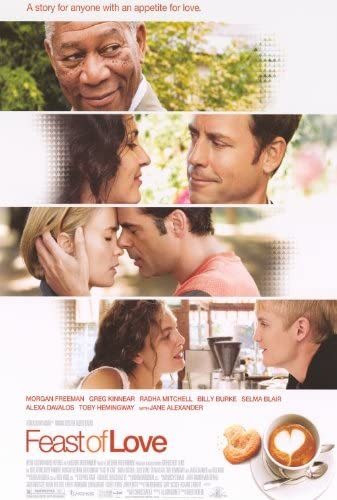
Il film omonimo di Robert Benton è del 2007: sposta l’azione dal Michigan a Portland nell’Oregon, e a cucire le varie voci non è lo scrittore, ma quello che nel romanzo è un personaggio, il professore di filosofia.
Mi piace far smarrire il lettore – dice Charles Baxter – La forma narrativa standard che va da un punto A a un punto B non mi interessa.
Non sono sicuro che il lettore si smarrisca, almeno non in questo romanzo, ma è vero che la struttura adottata non è certo quella che va da un punto A a un punto B. Questo è il fascino maggiore di quest’opera.
Il suo andamento rapsodico, il suo essere quasi un romanzo composto da racconti: che però non seguono capitoli precisi, non sono rigidamente divisi come in altre narrazioni del genere, ma s’incastrano l’uno nell’altro, s’intrecciano, sbocciano uno dall’altro.
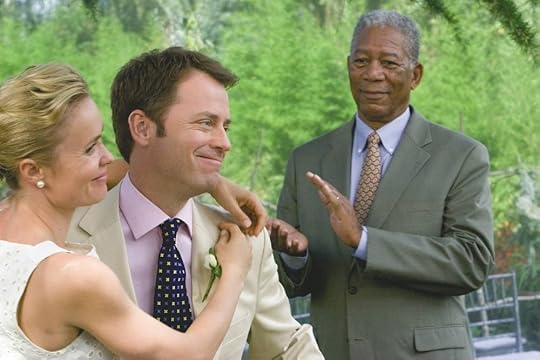
I tre interpreti principali: Radha Mitchell è Diana, Greg Kinnear è Bradley, e Morgan Freeman è il professore di filosofia che funge da voce narrante.
Una ronde di personaggi, ognuno con la sua voce, ma soprattutto, ognuno col suo punto di vista. Un coro, un mosaico di voci.
E come si sa, lo stesso fatto, la stessa situazione, raccontata da prospettive diverse, presenta differenze, può sembrare quasi un’altra storia.
È quel meccanismo reso celebre dal magnifico film del maestro giapponese Akira Kurosawa, Rashomon. Le tante facce di una verità.

Lei, nelle prime pagine, si porta via la prima moglie di Bradley.
Non so neppure se sia davvero un racconto di felicità. Perché, a dire il vero (il mio vero), di dolore ce n’è eccome: prima di trovare il probabile amore giusto, Bradley divorzia due volte, entrambe le volte in un modo abbastanza brutale, anche se non violento. C’è la morte di un personaggio quanto mai luminoso. Un altro, al contrario piuttosto oscuro, sparisce e non riappare più: potrebbe forse essersi suicidato come aveva annunciato più volte?
Felicità o meno, a me pare un inno all’amore. Alle gioie e ai dolori, alle pene e al piacere, la felicità e la disperazione che l’amore porta e comporta.
In questo senso il titolo, festa d’amore, è quanto mai azzeccato.
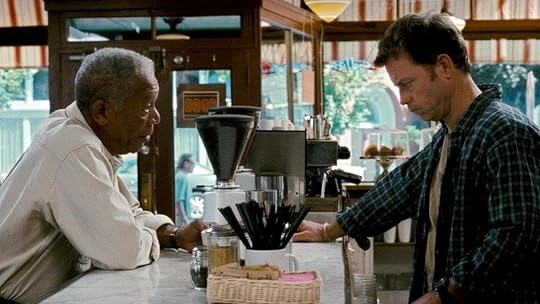
La cafeteria si chiama Jitters e non è in un centro commerciale, ma in pittoresco angolo di strada.
Ed è proprio innamoramento e amore, la nascita, e l’eventuale fine, di una nuova storia d’amore, la coppia che si forma: un uomo e una donna, oppure due donne, forse anche due uomini. Non importa: l’amore è quello che emerge. E vince.
L’amore filiale è sfiorato, ma rimane ai margini.
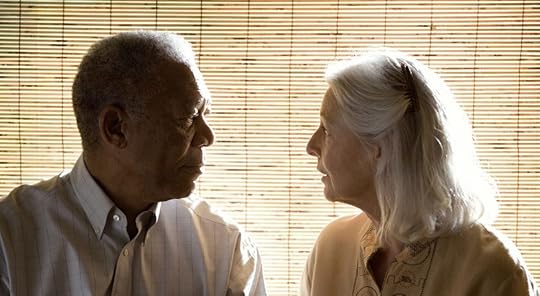
Jane Alxander è Esther, l’affettuosissima e innamoratissima moglie del prof di filosofia.
Uno scrittore afflitto da insonnia passeggia di notte per la città: strade, parchi, boschi… Su una panchina incontra il suo vicino, Bradley, altrettanto insonne, che ha portato a spasso il suo cane, che si chiama Bradley come lui. Bradley dirige una caffetteria dove lo scrittore è solito andare.
Cominciano a parlare: perché sei a zonzo, perché non riesco a dormire, che pensieri hai, cosa sogni, e avanti di questo passo. Ah, il famoso blocco dello scrittore, non riesci a dormire perché non riesci a scrivere. E come comincia il libro che stai scrivendo. Inizia così:
L’uomo – io, niente di diverso, a quanto pare – si risveglia spaventato.
Che è proprio l’incipit del libro che ho letto.
Bradley ha un’idea, che è un suggerimento, e consiglia allo scrittore - che si chiama Charles Baxter proprio come il Charles Baxter che firma questo romanzo – di incontrare i personaggi della storia, di parlare con loro, intervistarli, raccogliere la loro versione della storia.

La coppia giovane, Chloe e Oscar, azzeccatissimi sia sulla pagina che nel film.
Un gioco di rimandi e specchi che sembrerebbe contraddetto dal grande specchio antico che lo scrittore ha in casa vicino alla porta d’ingresso: uno specchio così vecchio che ha perso la capacità di specchiare, di riflettere immagini, tanto che lo scrittore lo definisce “disluminescente”.
E Charles Baxter incontra i personaggi, che poi entreranno nella sua storia, li stimola a raccontare, li ascolta, prende appunti mentali. E anche quelli che all’inizio recalcitrano, che asseriscono di non voler raccontare perché sono fatti loro, privati, presto diventano cantori, voci del coro.
E mentre si compone l’inno all’amore, prende forma anche un inno alla letteratura e al suo potere salvifico.
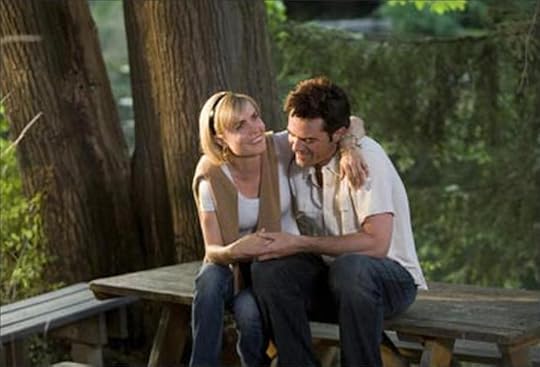
Diana e David, Radha Mitchell e Billy Burke, la coppia focosa.
PS
Nonostante l’ampio ricorso a foto dal film, non lo definirei un buon adattamento.
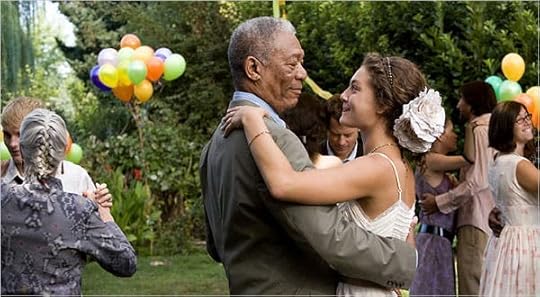
La festa d’amore.
Il film omonimo di Robert Benton è del 2007: sposta l’azione dal Michigan a Portland nell’Oregon, e a cucire le varie voci non è lo scrittore, ma quello che nel romanzo è un personaggio, il professore di filosofia.
Mi piace far smarrire il lettore – dice Charles Baxter – La forma narrativa standard che va da un punto A a un punto B non mi interessa.
Non sono sicuro che il lettore si smarrisca, almeno non in questo romanzo, ma è vero che la struttura adottata non è certo quella che va da un punto A a un punto B. Questo è il fascino maggiore di quest’opera.
Il suo andamento rapsodico, il suo essere quasi un romanzo composto da racconti: che però non seguono capitoli precisi, non sono rigidamente divisi come in altre narrazioni del genere, ma s’incastrano l’uno nell’altro, s’intrecciano, sbocciano uno dall’altro.
I tre interpreti principali: Radha Mitchell è Diana, Greg Kinnear è Bradley, e Morgan Freeman è il professore di filosofia che funge da voce narrante.
Una ronde di personaggi, ognuno con la sua voce, ma soprattutto, ognuno col suo punto di vista. Un coro, un mosaico di voci.
E come si sa, lo stesso fatto, la stessa situazione, raccontata da prospettive diverse, presenta differenze, può sembrare quasi un’altra storia.
È quel meccanismo reso celebre dal magnifico film del maestro giapponese Akira Kurosawa, Rashomon. Le tante facce di una verità.
Lei, nelle prime pagine, si porta via la prima moglie di Bradley.
Non so neppure se sia davvero un racconto di felicità. Perché, a dire il vero (il mio vero), di dolore ce n’è eccome: prima di trovare il probabile amore giusto, Bradley divorzia due volte, entrambe le volte in un modo abbastanza brutale, anche se non violento. C’è la morte di un personaggio quanto mai luminoso. Un altro, al contrario piuttosto oscuro, sparisce e non riappare più: potrebbe forse essersi suicidato come aveva annunciato più volte?
Felicità o meno, a me pare un inno all’amore. Alle gioie e ai dolori, alle pene e al piacere, la felicità e la disperazione che l’amore porta e comporta.
In questo senso il titolo, festa d’amore, è quanto mai azzeccato.
La cafeteria si chiama Jitters e non è in un centro commerciale, ma in pittoresco angolo di strada.
Ed è proprio innamoramento e amore, la nascita, e l’eventuale fine, di una nuova storia d’amore, la coppia che si forma: un uomo e una donna, oppure due donne, forse anche due uomini. Non importa: l’amore è quello che emerge. E vince.
L’amore filiale è sfiorato, ma rimane ai margini.
Jane Alxander è Esther, l’affettuosissima e innamoratissima moglie del prof di filosofia.
Uno scrittore afflitto da insonnia passeggia di notte per la città: strade, parchi, boschi… Su una panchina incontra il suo vicino, Bradley, altrettanto insonne, che ha portato a spasso il suo cane, che si chiama Bradley come lui. Bradley dirige una caffetteria dove lo scrittore è solito andare.
Cominciano a parlare: perché sei a zonzo, perché non riesco a dormire, che pensieri hai, cosa sogni, e avanti di questo passo. Ah, il famoso blocco dello scrittore, non riesci a dormire perché non riesci a scrivere. E come comincia il libro che stai scrivendo. Inizia così:
L’uomo – io, niente di diverso, a quanto pare – si risveglia spaventato.
Che è proprio l’incipit del libro che ho letto.
Bradley ha un’idea, che è un suggerimento, e consiglia allo scrittore - che si chiama Charles Baxter proprio come il Charles Baxter che firma questo romanzo – di incontrare i personaggi della storia, di parlare con loro, intervistarli, raccogliere la loro versione della storia.
La coppia giovane, Chloe e Oscar, azzeccatissimi sia sulla pagina che nel film.
Un gioco di rimandi e specchi che sembrerebbe contraddetto dal grande specchio antico che lo scrittore ha in casa vicino alla porta d’ingresso: uno specchio così vecchio che ha perso la capacità di specchiare, di riflettere immagini, tanto che lo scrittore lo definisce “disluminescente”.
E Charles Baxter incontra i personaggi, che poi entreranno nella sua storia, li stimola a raccontare, li ascolta, prende appunti mentali. E anche quelli che all’inizio recalcitrano, che asseriscono di non voler raccontare perché sono fatti loro, privati, presto diventano cantori, voci del coro.
E mentre si compone l’inno all’amore, prende forma anche un inno alla letteratura e al suo potere salvifico.
Diana e David, Radha Mitchell e Billy Burke, la coppia focosa.
PS
Nonostante l’ampio ricorso a foto dal film, non lo definirei un buon adattamento.
La festa d’amore.

September 24, 2024
“Están loquísimos, querida... los hombres. Lo que tienes que buscar es uno que tenga una locura lo suficientemente grande, tranquila y generosa como para incluirte”No creo que la locura sea una prerrogativa del hombre, también la mujer tiene lo suyo, el problema es que estamos condenados a compatibilizarlas. Baxter reúne en este gran festín del amor unas cuantas de esas locuras que te arrancarán sonrisas, gestos de aprobación o reconocimiento, sentimientos de ternura, de tristeza, de rabia también, en unas pocas historias entrelazadas de gente corriente inmersa en su vida corriente a la que el amor ilumina con distintas intensidades de luz.
“A diferencia de los demás cuadros (…), aquél, el festín del amor, constaba de colores. Una mesa al sol, sobre la que había colocados platos, tazas y vasos, desbordaba de luz. La mesa y el banquete ocupaban el primer plano, y por todos lados el trasfondo se sumía en una especie de oscuridad visible (…) Luego advertí que la parte frontal de la mesa parecía inclinada hacia el espectador, como si toda aquella luz, toda aquella comida y todo aquel amor estuviesen a punto de derramarse sobre nuestras rodillas. El festín del amor era el festín de la luz, y estaba a punto de convertirse en nuestro. Esther suspiró: —Oh oh oh. Es precioso. —Y acto seguido dijo—: ¿Dónde está la gente? —No hay —le dijo Bradley. —¿Por qué no? —Porque a nadie se le permite llegar ahí —dijo él—. Puedes verlo, pero no alcanzarlo”Esto último, dicho desde el desamor, no es, evidentemente, cierto. Es verdad que no todo el mundo tiene el privilegio de alcanzarlo, pero hay quién sí, incluso cuando lo daba ya todo por perdido, también hay quién lo alcanza y lo pierde o se lo arrebatan. De todo hay en estos relatos que les atraparán con cada una de sus distintas y fácilmente identificables voces que en primera persona van contando a un escritor insomne y en horas bajas sus historias de amor o desamor (a veces con versiones muy distintas de sus protagonistas), aunque alguno hay que lo llamaría solo (¿sólo?) sexo (“Hacer el amor con él era como entrar en un túnel de lavado de automóviles, salvo en que salías más sucia y más viva por el otro extremo”).
“Toda relación goza, como mínimo, de un día estupendo”Como comenta Chloé, un personaje del que se enamorarán inmediatamente y para el que el amor es lo único importante, “El amor contiene algún ingrediente de locura absoluta”. Un sentimiento, este del amor, insondable, infinito, inagotable, del que los dioses nos han investido con el único propósito de divertirse a nuestra costa, que diría Kierkegaard, el filósofo de cabecera de uno de los personajes secundarios que acompañan maravillosamente a los entrañables personajes que protagonizan esta novela en la que el gran funambulista Charles Baxter consigue mantenerse con agilidad y belleza en esa estrecha franja de la que es muy fácil salirse hacia la cursilería o el sentimentalismo más ñoño y simplón.
“… sólo hay dos realidades: la de la gente enamorada o que se ama, y la de quienes permanecen al margen de todo eso”

April 27, 2009
If an older, male author is seized by the urge to speak through the mouth of a pierced, teenage nymphette, he'd better do it convincingly. The parts of this book narrated by the earnestly vapid Chloe read a little like how old men impersonating young girls in chat rooms must come off. She intersperses slang with a few ten-cent words like "mellifluous" (and then reassures us she looked the word up somewhere so we won't suspect she's really an aging academic) and, at one point refers to her "girl-grip" while giving her young man a handjob - I'll spare you more gagworthy quotes from the land of the male gaze. Of course, she's cuddly and wholesome at heart, despite the joy division t-shirts and excessive piercings, because all she and her punker boy really want is to get married, procreate, and collect consumer goods. For which everyone in the novel applauds them, adopts them, and somehow transforms them and their endless lovemaking into the stuff of greek myths.
Heavy-handed symbolism, characters as flat as Midwestern parking lots, and humdrum acts of violence against women comprise this tedious and annoying novel.
Heavy-handed symbolism, characters as flat as Midwestern parking lots, and humdrum acts of violence against women comprise this tedious and annoying novel.

July 6, 2008
A celebration of Eros, a god to be reckoned with--dangerous, transformative, irrational--as told in at least five different voices by characters who have experienced his power. Baxter is a fine stylist, and the different voices are precisely delineated.

September 16, 2007
Uh, no. Boring. Charles Baxter has an anoying writing style that got on my nerves, Charles does. The dialog was written horribly, not at all like actual people conversing. And I am not just talking about the two youth characters. All of the characters. They were unnecassarily repetitive. The two youth were the worst though. I know that he was trying emulate the way immature 20-year-olds would actually talk, but . . . gag! I could barely plow through one particular passage were the two idiots were discussing foyers. The "likes" and "you knows" were incessant and and had me rolling my eyes. The book did get a bit better in the last quarter, so I was OK with my decision to go ahead and finish the book, but you? Dont' waste your time. Oh, and WHAT is this National Book Award that made this book a finalist?

April 15, 2024
Me interesa mucho esta forma de escribir de Baxter con ese rollo tipo Rachel Cusk; no sé realmente quien se inspira en quien. Esas mujeres y esos hombres que se van confesando ante el novelista. Son micronovelas periféricas que van tejiendo la novela central. Por momentos es divertida como el capítulo del rescate del perro, o por momentos es sensual como el arranque de algunas relaciones, o incluso en momentos es trágica. Variadito, no resulta aburrido para nada.
El arranque ya te deja un poco sorprendido, aparenta ser metaficción, aunque está muy lejos de los que de verdad trabajan ese género. Ya en las primeras páginas te sientes atrapado.
¿De que habla este libro? Todas las historias cruzadas hablan de ese concepto tan universal como esquivo que es el AMOR…ohhh. Las distintas formas de entenderlo, de interpretarlo. Los roles que adquieren las parejas. Los errores de partida en las relaciones, lo complejo del éxito, etc, etc.
Me ha gustado, me ha entretenido y lo que es más importante me ha sorprendido.
El arranque ya te deja un poco sorprendido, aparenta ser metaficción, aunque está muy lejos de los que de verdad trabajan ese género. Ya en las primeras páginas te sientes atrapado.
¿De que habla este libro? Todas las historias cruzadas hablan de ese concepto tan universal como esquivo que es el AMOR…ohhh. Las distintas formas de entenderlo, de interpretarlo. Los roles que adquieren las parejas. Los errores de partida en las relaciones, lo complejo del éxito, etc, etc.
Me ha gustado, me ha entretenido y lo que es más importante me ha sorprendido.

October 4, 2007
A seemingly disoriented post-midnight walk through several lives and loves. People clumsily come together, and come apart, shifting narrators and tones--all thick with the theme of love (and loss) in its' many, many forms.
I loved this books and had a hard time putting it down, literally. (Which rarely happens to me.) At times, however, I was worried it was too cute a novel, given the occasional all-too-precious line, but before my skepticism could fully take hold, Baxter quickly won me back with a succinct, beautifully eloquent line: More than enough to effectivly counteract his unfourtunate lapsess of syrupyness. As such, I found myself underlining often, and it is safe to say I am a big fan of his writing.
I would have given it five stars, were it not for the too-cutesy bits and the fact that, towards the end, the novel shifts heavily onto Chole's character--far from my favorite.
Having previosly been a teenage girl myself, I am not sure if I found her character unbelievable, or simply annoying. Of course, I empathized with, and could relate to some defining aspects of her story, but overall, I found her language tiresome and her development somewhat shallow.
Besides Chole and her lover; Oscar, I was totally engrossed in all the characters and their stories.
Particularly, the less prominent: Harry, an aging Jewish man, who constantly ruminates on Kierkegaardian theory, and the dissapearence of his adult son.
All in all, a great book about the trouble, complexity and wonder of love.
***Oh, and appraently this has just been made into a movie. The movie takes place in Oregon, and well, last time I checked, Ann Arbor ain't in Oregon. Their failure to get this primary detail correct, gives me little faith that the film will do ANY sort of justice to the book. (Though I do so love Morgan Freeman! XOXO!!!)
And shit--look at what the silver screen did to Girl, Interrupted!--I am still grumbling about that one.
So please read before you watch, and don't judge a book by it's movie!!!
I loved this books and had a hard time putting it down, literally. (Which rarely happens to me.) At times, however, I was worried it was too cute a novel, given the occasional all-too-precious line, but before my skepticism could fully take hold, Baxter quickly won me back with a succinct, beautifully eloquent line: More than enough to effectivly counteract his unfourtunate lapsess of syrupyness. As such, I found myself underlining often, and it is safe to say I am a big fan of his writing.
I would have given it five stars, were it not for the too-cutesy bits and the fact that, towards the end, the novel shifts heavily onto Chole's character--far from my favorite.
Having previosly been a teenage girl myself, I am not sure if I found her character unbelievable, or simply annoying. Of course, I empathized with, and could relate to some defining aspects of her story, but overall, I found her language tiresome and her development somewhat shallow.
Besides Chole and her lover; Oscar, I was totally engrossed in all the characters and their stories.
Particularly, the less prominent: Harry, an aging Jewish man, who constantly ruminates on Kierkegaardian theory, and the dissapearence of his adult son.
All in all, a great book about the trouble, complexity and wonder of love.
***Oh, and appraently this has just been made into a movie. The movie takes place in Oregon, and well, last time I checked, Ann Arbor ain't in Oregon. Their failure to get this primary detail correct, gives me little faith that the film will do ANY sort of justice to the book. (Though I do so love Morgan Freeman! XOXO!!!)
And shit--look at what the silver screen did to Girl, Interrupted!--I am still grumbling about that one.
So please read before you watch, and don't judge a book by it's movie!!!

August 12, 2020
Touching slice(s) of life, with wonderful structure to its arc; what started off like separate, brilliantly droll and intimate vignettes, grew into teasingly intersecting threads and kept binding together into one shared narrative, driven forward through the variety of distinct, compellingly human voices.
A cavalcade of delightfully and pitifully fumbling relationships and interactions, as a selection of hopelessly human individuals try to carry on, hoping to get their own share of 'the feast of love'.
______
Reading updates.
A cavalcade of delightfully and pitifully fumbling relationships and interactions, as a selection of hopelessly human individuals try to carry on, hoping to get their own share of 'the feast of love'.
______
Reading updates.

August 5, 2008
There are few books that have possessed me -- taken ahold of me, owned me, inhabited me -- like Feast of Love has. I have been dreaming about the characters. I have been dreaming about reading the book, which is also like living inside the book. I will be thinking about Nude Descending a Staircase, as a painting and as a metaphor, and the next chapter I pick up will mention the painting. I will read a chapter that uses votive candles as a reality and as a metaphor and I will close the book and open my email to a note from a long-lost friend about votive candles. These are the concrete ways in which Baxter has been having a conversation with my life, but more compelling has been his influence on my thoughts of love and death and the divine. I don't remember ever quite feeling so much like a novel was a dialogue. I will read and then stop and think for a few days, about the book and about the life the book comes out of, and then, reading again, I will find he has some good answers for my thoughts in unexpected ways. I say "he" as in Baxter, but really I mean "they" as in Bradley, Chloe, Diana, and Harry. They are too alive to be tied too strictly to their author.
At one point, two characters begin to spend time together and subtly, subtly, subtly, you can see the younger character's energy and cadences seep -- slightly -- into the older's. It is a little like the way your mother's coworkers can always tell when you are home visiting because she starts to talk differently -- not necessarily in vocabulary, but in rhythm. I have never quite seen this captured before and it made me happy about feeling a small new depth of language to think about: cross-characterization; hybrid language.
I think there's a little something for almost everybody in this book, except perhaps the staunchly hopeless or the gluttons for literary punishment. This book is a joy.
At one point, two characters begin to spend time together and subtly, subtly, subtly, you can see the younger character's energy and cadences seep -- slightly -- into the older's. It is a little like the way your mother's coworkers can always tell when you are home visiting because she starts to talk differently -- not necessarily in vocabulary, but in rhythm. I have never quite seen this captured before and it made me happy about feeling a small new depth of language to think about: cross-characterization; hybrid language.
I think there's a little something for almost everybody in this book, except perhaps the staunchly hopeless or the gluttons for literary punishment. This book is a joy.

April 28, 2012
Someone, or something I read, caused me to pick up this book several years ago at a used-books sale, because its synopsis is not one that would normally have tempted me into buying it, but whatever that something was, I have no recollection of it any longer. And it can't be the "A Midsummer Night's Dream" references as that isn't even one of my favorite Shakespeare plays.
I can tell Baxter is a smart man (his character of Harry proves that) and also a very good writer from the writing in the "preludes" and the 'postludes,' but I didn't care for all of the voices (monologues really) he provided for the characters, especially that of Chloe. I know her style of speaking was supposed to be 'quirky' and 'unique,' but what it was to me was tedious, and unnecessarily repetitive.
Another character starts off a scene about rescuing his dog by saying something about its 'sense of comedy.' Perhaps the voice (and that's what this book is: different voices) was being ironic, but all I could think while reading the passage that follows is that it could be made into a comic scene in a movie (which this book was) and I know I wouldn't find it funny. (As I've said in many other reviews, that probably says more about me than anything else.)
I don't mean to be too harsh toward this book; it had its moments, but only enough for me to give it enough stars to say 'it was ok.' At least, it only cost me $1.50; I'd say that's about right, but Germinal at the same sale cost me only 50 cents.
I can tell Baxter is a smart man (his character of Harry proves that) and also a very good writer from the writing in the "preludes" and the 'postludes,' but I didn't care for all of the voices (monologues really) he provided for the characters, especially that of Chloe. I know her style of speaking was supposed to be 'quirky' and 'unique,' but what it was to me was tedious, and unnecessarily repetitive.
Another character starts off a scene about rescuing his dog by saying something about its 'sense of comedy.' Perhaps the voice (and that's what this book is: different voices) was being ironic, but all I could think while reading the passage that follows is that it could be made into a comic scene in a movie (which this book was) and I know I wouldn't find it funny. (As I've said in many other reviews, that probably says more about me than anything else.)
I don't mean to be too harsh toward this book; it had its moments, but only enough for me to give it enough stars to say 'it was ok.' At least, it only cost me $1.50; I'd say that's about right, but Germinal at the same sale cost me only 50 cents.

July 26, 2012
I've read this book about ten times and bought it at least four times because I keep giving my copies away to friends. Over time, I've come to see that it's not a perfect book - certain turns of phrase clunk, certain character traits don't ring true. But it's perfect to me, and no matter how many times I've read it, there are still passages that blow me away, move me to tears, and strike me as profoundly true and correct.
There are also lines that I've never noticed before that get my attention on each new read. Most recently, I fell in love with this one:
"As my mother once said to me, They're quite crazy, dear - men are. What you look for is one of them whose insanity is large enough, and calm and generous enough, to include you."
There are also lines that I've never noticed before that get my attention on each new read. Most recently, I fell in love with this one:
"As my mother once said to me, They're quite crazy, dear - men are. What you look for is one of them whose insanity is large enough, and calm and generous enough, to include you."

September 14, 2022
Really a 2.5, rounding down for now -
I saw the movie adaptation of this at some point during covid, and it was pretty bad. Greg Kinnear was as he usually is, good enough but not very good, in one of the two lead roles. Morgan Freeman in the other lead role was visibly going through the motions. The story was cheesy in a touched-by-an-angel sort of way. I assumed it was just a bad adaptation, I had heard good things about this book and about Charles Baxter's skills in general so I decided I had to read the book and not leave my opinion tied to the film. So I read the book. The good news is that the movie adaptation really was not a bad adaptation, it was mostly bad in the way that the book was bad.
There is one thing that the book did better than the movie. In the film they inexplicably moved the setting from Ann Arbor, MI to Portland. OR. The Ann Arbor setting is quite important to this story, and there are aspects of A2 and of midwestern life more generally that Baxter really nails. Those things, the embrace of "normal", the prepackaged family values, worrying about what the neighbors will think, the ways people need to twist themselves to be successful shop rats and how that impacts their families and communities, the expectation that no one around you will do anything or go anywhere, make less sense when superimposed on the live-and-let-live highly transient denizens of Portland. Though the books gets credit for setting the scene, it had a big problem that totally overshadowed the deft portrait of this midwestern college town.
The characters in this book were so poorly drawn I started to wonder if Baxter had ever actually had a conversation with a live woman or any person without education at a good college. Baxter's women are tropes. The worst is Chloe (pronounced CLO-WAY because she decided to customize it. This was so annoying. I kept thinking of "cloaca" and no one wants others to think about a bird's combination of rectum and vagina every time their name is used.) She is the sex loving uneducated woowoo shit-spouting manic pixie dream girl. She careens between being dull-witted in a standard way and appearing to have taken large doses of thorazine spiked with LSD. She feels the need to explain how she learned certain words by seeing them once in a book or hearing them at the coffee place she works at. "Mellifluous" is one of those words. And yet, without remark, she uses other words that this character would never use. "Misogynist" comes to mind. She is the personification of every mediocre boy's dream. Always ready for a tumble, loves to define herself totally by her love for her man, demands nothing of her moronic drug addled boyfriend but that he be in love with her. She has no friends, and no family relationships, and no interests, that could muck up her total focus on her man. She is a great contrast to Diana, who is a heartless harridan (the personification of that misogynist trope, the "career woman" - think Sigourney Weaver in Working Girl) propelled forward by professional ambition and her quest for full body orgasms. Every time something happens she behaves with depraved indifference and self-interest, and it is always explained by the narrator pointing out that she is a lawyer. When one character is in extremis, near death, the only thing she thinks about is whom she might sue. There is Kathryn whom we immediately learn loves softball, so of course she is a secret lesbian. It goes on and on. The one-dimensional thing is not limited to women. No, just as trope-y is the next door neighbor, Harry. He is the Jewish intellectual, a philosophy professor whose thoughts about Kierkegaard were the only parts of the book that interested me at all. Of course he was the central casting intellectual Jew. Whenever he and his wife were featured it was like somehow Hal Linden and Lainie Kazan were dropped down into this midwestern town. These people were too intellectual to say Kaddish after the loss of a parent but believed in dybbuks. The uneducated men, Clo-WAY's and Oscar's fathers, are beer swilling slack-jawed losers. And there are a lot of nauseatingly precious elements. Our narrator is named Charles Baxter, just like the author, and so he gives our main character. Bradley a dog also also named Bradley for a kind of parallel to that. Cute!
A lot of this "cute" is the problem. I am not a huge fan of cute, but Baxter clearly is. There is a lot of cute stuff going on here. Cute is a convenient substitute for real. The book made me feel like I had been covered in syrup. I raced through this book mostly because I wanted to get it over with. When I turned the last page I immediately chucked the book into my giveaway box. I hope the next owner likes it better than I..
I saw the movie adaptation of this at some point during covid, and it was pretty bad. Greg Kinnear was as he usually is, good enough but not very good, in one of the two lead roles. Morgan Freeman in the other lead role was visibly going through the motions. The story was cheesy in a touched-by-an-angel sort of way. I assumed it was just a bad adaptation, I had heard good things about this book and about Charles Baxter's skills in general so I decided I had to read the book and not leave my opinion tied to the film. So I read the book. The good news is that the movie adaptation really was not a bad adaptation, it was mostly bad in the way that the book was bad.
There is one thing that the book did better than the movie. In the film they inexplicably moved the setting from Ann Arbor, MI to Portland. OR. The Ann Arbor setting is quite important to this story, and there are aspects of A2 and of midwestern life more generally that Baxter really nails. Those things, the embrace of "normal", the prepackaged family values, worrying about what the neighbors will think, the ways people need to twist themselves to be successful shop rats and how that impacts their families and communities, the expectation that no one around you will do anything or go anywhere, make less sense when superimposed on the live-and-let-live highly transient denizens of Portland. Though the books gets credit for setting the scene, it had a big problem that totally overshadowed the deft portrait of this midwestern college town.
The characters in this book were so poorly drawn I started to wonder if Baxter had ever actually had a conversation with a live woman or any person without education at a good college. Baxter's women are tropes. The worst is Chloe (pronounced CLO-WAY because she decided to customize it. This was so annoying. I kept thinking of "cloaca" and no one wants others to think about a bird's combination of rectum and vagina every time their name is used.) She is the sex loving uneducated woowoo shit-spouting manic pixie dream girl. She careens between being dull-witted in a standard way and appearing to have taken large doses of thorazine spiked with LSD. She feels the need to explain how she learned certain words by seeing them once in a book or hearing them at the coffee place she works at. "Mellifluous" is one of those words. And yet, without remark, she uses other words that this character would never use. "Misogynist" comes to mind. She is the personification of every mediocre boy's dream. Always ready for a tumble, loves to define herself totally by her love for her man, demands nothing of her moronic drug addled boyfriend but that he be in love with her. She has no friends, and no family relationships, and no interests, that could muck up her total focus on her man. She is a great contrast to Diana, who is a heartless harridan (the personification of that misogynist trope, the "career woman" - think Sigourney Weaver in Working Girl) propelled forward by professional ambition and her quest for full body orgasms. Every time something happens she behaves with depraved indifference and self-interest, and it is always explained by the narrator pointing out that she is a lawyer. When one character is in extremis, near death, the only thing she thinks about is whom she might sue. There is Kathryn whom we immediately learn loves softball, so of course she is a secret lesbian. It goes on and on. The one-dimensional thing is not limited to women. No, just as trope-y is the next door neighbor, Harry. He is the Jewish intellectual, a philosophy professor whose thoughts about Kierkegaard were the only parts of the book that interested me at all. Of course he was the central casting intellectual Jew. Whenever he and his wife were featured it was like somehow Hal Linden and Lainie Kazan were dropped down into this midwestern town. These people were too intellectual to say Kaddish after the loss of a parent but believed in dybbuks. The uneducated men, Clo-WAY's and Oscar's fathers, are beer swilling slack-jawed losers. And there are a lot of nauseatingly precious elements. Our narrator is named Charles Baxter, just like the author, and so he gives our main character. Bradley a dog also also named Bradley for a kind of parallel to that. Cute!
A lot of this "cute" is the problem. I am not a huge fan of cute, but Baxter clearly is. There is a lot of cute stuff going on here. Cute is a convenient substitute for real. The book made me feel like I had been covered in syrup. I raced through this book mostly because I wanted to get it over with. When I turned the last page I immediately chucked the book into my giveaway box. I hope the next owner likes it better than I..

January 5, 2009
A dear friend told me about this book several years ago. I bought it, like I always do, and there it sat on my shelf for years - waiting to be read. When asked for a book club suggestion, I gazed at my shelf and it screamed at me "pick me! pick me!" So, it won the suggestion and became the early January pick for book club.
It was beautiful. Well written, heartfelt, and just an overall good read. It was a terrific portrayal of how, despite our good intentions, some things just don't work out the way we plan. There are about 9 major characters throughout the book - all of whom are somehow interwoven with the others. It's a novel ... but written much like a memoir. The characters tell their own stories, which makes the book way more profound than had the author been a narrator. I am all about learning from books I read (yes, eve novels) so here's what I learned:
It was beautiful. Well written, heartfelt, and just an overall good read. It was a terrific portrayal of how, despite our good intentions, some things just don't work out the way we plan. There are about 9 major characters throughout the book - all of whom are somehow interwoven with the others. It's a novel ... but written much like a memoir. The characters tell their own stories, which makes the book way more profound than had the author been a narrator. I am all about learning from books I read (yes, eve novels) so here's what I learned:
When we tell our stories to someone else, we illuminate those parts of the stories that most affect us. By telling our story, we become more aware of the power of our thought. Telling someone else helps us to see the things we need to celebrate as well as the things we need to mourn and move past.
No matter how hard we try, we can't always choose who or when we fall in love. We can work really hard to love someone with all that we are, but if we are not in love with that person, we will never be able to love them the way they love us.
When we hide our fears from other people, we really make them worse. People around us end up picking at those fears like scabs, whether they realize it or not. Unless we claim the fear as our own and work towards healing it, the scabs get opened and our fears become scars.
Well written books not only help us escape from our own lives, but also allow us to use that escape to look on our own lives from an outside perspective. This book did just that. It took me outside of my own world - to the world of 9 beautiful, wonderfully messed up people. In each character, I found a glimpse of me. I discovered something else about myself. Sometimes good, sometimes bad. Well-written books become a part of us. The characters become our friends. Charles Baxter did a wonderful job at making these 9 characters a part of my life.

September 12, 2017
I had such high hopes for this. Baxter is well awarded and I assumed this would be great. It's terribly disappointing and somewhat insulting. This is a boomer male who tries to write in the voice of a mix of characters but they all sort of sound the same. Of particular annoyance is the character Chloe, a teen punk whose monologue is a mix of weird slang (that Baxter seems to think teens use) and MFA-type $5 words. Read the 1-star reviews by members Emily and Corina, I agree with them entirely. I am baffled at why this was a finalist for the National Book Award. This makes me want to avoid all other NBA finalists. There are so many other great books out there that you can read instead of this one. Life is too short.

March 10, 2008
I almost "really liked" this book, but something kept me from getting up and over that slope. It's a really large-hearted novel - and very, very well-written - but its scope was a little small for my tastes.
In terms of the characters (which, in the end, is all this novel is), I loved reading the Ginsburgs and their careworn intelligence and parental heartbreak, and I enjoyed Diana's immediately recognizable, warfaring vanity; but I couldn't stand reading Chloe and Oscar and their impoverished, unwashed amour fou. Baxter doesn't let this issue slide entirely, to his credit, but in which atlas are these proletariat sensualists within a day's drive of the bourgeois professionals that inhabit the rest of the novel? I grew up in the Midwest: you may be surprised to learn that, as elsewhere, class divisions exist there. I also couldn't really place Bradley, who was supposedly at the center of this story. It seemed to me that he was a different character entirely to every other character (the narrator included). Maybe that's the point but, well, if that's the point... make that the point.
I did like the the construction of the narrative, and I found that there were some wonderful writerly gems ("America, of course, is a country vast enough to lose a child in" really stuck out for me; as did the image of the Dragon with the Rubber Nose; I also really liked "Ginsburg's" understanding of child sacrifice vis-a-vis the Kierkegaardian Abraham, but that may just be because that's all I recall of the time I spent with Fear and Trembling).
I guess I struggle, systematically, with renderings of human experience so focused on love, or sex, as the prime mover of identity. I suppose you might ask a waiting room of thoughtful people which description of human life's value they'd pin their name to, if pressed; I suppose a percentage of them might say love, some, even, without having to think about it first. This book is written for them. It's well-written and has moments of brilliant perceptiveness - I almost "really liked" it - but, for my tastes, its scope is a little small (as I mentioned).
In terms of the characters (which, in the end, is all this novel is), I loved reading the Ginsburgs and their careworn intelligence and parental heartbreak, and I enjoyed Diana's immediately recognizable, warfaring vanity; but I couldn't stand reading Chloe and Oscar and their impoverished, unwashed amour fou. Baxter doesn't let this issue slide entirely, to his credit, but in which atlas are these proletariat sensualists within a day's drive of the bourgeois professionals that inhabit the rest of the novel? I grew up in the Midwest: you may be surprised to learn that, as elsewhere, class divisions exist there. I also couldn't really place Bradley, who was supposedly at the center of this story. It seemed to me that he was a different character entirely to every other character (the narrator included). Maybe that's the point but, well, if that's the point... make that the point.
I did like the the construction of the narrative, and I found that there were some wonderful writerly gems ("America, of course, is a country vast enough to lose a child in" really stuck out for me; as did the image of the Dragon with the Rubber Nose; I also really liked "Ginsburg's" understanding of child sacrifice vis-a-vis the Kierkegaardian Abraham, but that may just be because that's all I recall of the time I spent with Fear and Trembling).
I guess I struggle, systematically, with renderings of human experience so focused on love, or sex, as the prime mover of identity. I suppose you might ask a waiting room of thoughtful people which description of human life's value they'd pin their name to, if pressed; I suppose a percentage of them might say love, some, even, without having to think about it first. This book is written for them. It's well-written and has moments of brilliant perceptiveness - I almost "really liked" it - but, for my tastes, its scope is a little small (as I mentioned).

June 19, 2007
Oh, did I love this book. Clever, but not for the sake of being clever; self-aware, but not self-absorbed. And so beautiful. Charles Baxter himself is the narrator, visible only periodically, and his neighbor Bradley is telling his own story intertwined with those of people he knows.
I turned down about 15 different pages that had passages I liked... here are two:
The upshot of it was, I kept Bradley. I fed him and petted him and I built him a doghouse and called his name when I came home, and in return he loved me. My sister and brother-in-law found another dogm, as I knew they would. Whom they also named Bradley. Now there are three Bradleys. Their Bradley is smarter than this Bradley, but I don't care about that at all, not really, because at least with pets, and for all I know, people too, intelligence and quick-wittedness have nothing to do with a talent for being loved, or being kind, nothing at all, less than nothing. (62)
I loved him and we fused together. He didn't save me from anything. I was the same person I always was. But as they say: one phase of my life was over, and another one began. (211)
I turned down about 15 different pages that had passages I liked... here are two:
The upshot of it was, I kept Bradley. I fed him and petted him and I built him a doghouse and called his name when I came home, and in return he loved me. My sister and brother-in-law found another dogm, as I knew they would. Whom they also named Bradley. Now there are three Bradleys. Their Bradley is smarter than this Bradley, but I don't care about that at all, not really, because at least with pets, and for all I know, people too, intelligence and quick-wittedness have nothing to do with a talent for being loved, or being kind, nothing at all, less than nothing. (62)
I loved him and we fused together. He didn't save me from anything. I was the same person I always was. But as they say: one phase of my life was over, and another one began. (211)
October 2, 2007
Goodness this was hard to get through. I couldn't finish it. It was written Phil Donahue confessional style. Everyone seems to have the same voice, even if they're an old Jewish man grieving the loss of his drug addict son, a young tattoed alternative in-love couple, or a middle-aged man surviving the tatters of a second failed marriage. Maybe the movie is better?

May 13, 2012
Nooooooope.

March 25, 2019
I like to read local authors before heading to a new vacation destination so this fit the bill. I was part-way through before recognizing I'd seen the movie version just a few months ago! Ha! (Big duh, I knew something seemed familiar!) It was fun, engaging, meaningful writing throughout and by the end came together in lovely ways I hadn't expected. Per usual, while the movie was decent, the book provided a depth that the film couldn't achieve.

November 28, 2008
I LOVE LOVE LOVE this book. It has become an all time favorite (for teh moment :). I can't quite articulate what about it I love so much. It's a good story told in an interesting way. The dialogue is perfect. I just find it so inspiring as a writer. He breaks the rules and he tells a good story.

April 24, 2013
The writing style of this book is so labored there is no way I can continue reading it.

June 20, 2026
The best contemporary novel I've read in a very long time. I'm glad I ignored the (few) reviewers on here who (for some reason) didn't like it. I thought it was absolutely brilliant. Tore through it in three days.

January 16, 2009
Baxter's novel unfolds like an origami swan. The entire concept is beautiful and intricate. Upon first inspection it wows. How complex! Amazing! What an original narrative, layering individual perspectives within, among, alongside one overarching meta-narrative. The whole novel is deeply hyper-conscious of its own creation from page one.
The characters, residents of the same Michinan town are all comfortably familiar, sketched as someone recognizable. Baxter illuminates Ann Arbor's sedate Midwesterness, the residents are familiar with one another before their intermingling.
The book reads as a series of character portraits, told in the first person. The individuals appear at first resistant, and then yielding participants in the story. Each a work of art not unlike the basemented art of our "protagonist" Bradley. A solitary man, the owner of a mall coffee shop, Bradley's lovers describe him as both downtrodden and yet optimistic. One particularly mean lover, Diana, takes to calling him "toad" before dismissing him altogether after 2 months of marriage. We follow all of the people Bradley encounters, in a series of almost-interviews these people tell Bradley their story in first-hand accounts. At times initially unwilling participants in his novel, the characters are unrealistically verbose in describing minutiae of their daily existence to this man. We hear from his former and future lovers, past lovers' future partners, his employees and their lovers, his next door neighbors' relationship.
Each one of these stories in inextricably linked to the others - yet reads as its own narrative. What does this tell the reader about Baxter's view of the world? I can't help but imagine the place he imagines he holds - the as silent observer - noticing more about those around them than they know he does.
When the plot begins jettisoning forward and back through time I grow weary. Why do I honestly care about Bradley the coffee shop owner and his dog Bradley? What about his ill-starred home and overly-friendly workplace draw such curious characters into his life? Is anyone really that interesting when you get down to the nitty-gritty of their daily existence?
Baxter has 42 more pages to show me. I hope he delivers.
Update: I have only one chapter left and I'm a little bit afraid to pick it up one last time. I don't want the story to conclude! Baxter does reveal the connections between all the threads. Like a masterwork of macrame.
The characters, residents of the same Michinan town are all comfortably familiar, sketched as someone recognizable. Baxter illuminates Ann Arbor's sedate Midwesterness, the residents are familiar with one another before their intermingling.
The book reads as a series of character portraits, told in the first person. The individuals appear at first resistant, and then yielding participants in the story. Each a work of art not unlike the basemented art of our "protagonist" Bradley. A solitary man, the owner of a mall coffee shop, Bradley's lovers describe him as both downtrodden and yet optimistic. One particularly mean lover, Diana, takes to calling him "toad" before dismissing him altogether after 2 months of marriage. We follow all of the people Bradley encounters, in a series of almost-interviews these people tell Bradley their story in first-hand accounts. At times initially unwilling participants in his novel, the characters are unrealistically verbose in describing minutiae of their daily existence to this man. We hear from his former and future lovers, past lovers' future partners, his employees and their lovers, his next door neighbors' relationship.
Each one of these stories in inextricably linked to the others - yet reads as its own narrative. What does this tell the reader about Baxter's view of the world? I can't help but imagine the place he imagines he holds - the as silent observer - noticing more about those around them than they know he does.
When the plot begins jettisoning forward and back through time I grow weary. Why do I honestly care about Bradley the coffee shop owner and his dog Bradley? What about his ill-starred home and overly-friendly workplace draw such curious characters into his life? Is anyone really that interesting when you get down to the nitty-gritty of their daily existence?
Baxter has 42 more pages to show me. I hope he delivers.
Update: I have only one chapter left and I'm a little bit afraid to pick it up one last time. I don't want the story to conclude! Baxter does reveal the connections between all the threads. Like a masterwork of macrame.

December 24, 2015
There's such a thing as comfort-eating. Food you turn to when feeling sad or lonely. Food that is familiar, yet delicious and can help get your spirits up each time you turn to it. Well, I believe there is also such a thing as comfort reading. It is one of the best novels that I read last year. After reading it for the first time, I've found myself returning to it again and again, turning to favorite pieces, or simply reading it from cover to cover, on long, rainy, lonely weekends. It's the kind of novel that makes you step out of your everyday-world, forget all that's on your mind and live through the characters inhabiting the book.
I've been a fan of Charles Baxter for ages. It came as a surprise, because it's different from other works by Baxter. It's a novel, but it's also a collection of stories, so in this way Charles Baxter doesn't move far from his usual style of writing. One of the surprises is the fact that the author appears as a character in the book. This trick could work or could not and then would be considered just a party-trick and thus, tacky. Here, it works.
Charlie is a blocked writer who suffers from insomnia and wonders the streets of Ann Arbour, Michigan during long nights, looking for ideas but finding none. On one of his nightly walks he meets his neighbor Bradley, who's walking his dog, also named Bradley. Why not name your new novel feast of love? Bradley suggests. I could tell you stories about myself and people around me and you could talk to some of them yourself. This is the basic idea of the book and the stories start unfolding, one more enchanting than the next.
This book vaguely reminded me of "things we talk about when we talk about love" by Raymond Carver. It's one of the best collections of love stories I've ever read and for me getting such a strong emotional response from a book is reason enough to love it. There's no point in getting into details about the actual love stories. Just read this book, read it when you're in the right frame of mind and enjoy it.
I've been a fan of Charles Baxter for ages. It came as a surprise, because it's different from other works by Baxter. It's a novel, but it's also a collection of stories, so in this way Charles Baxter doesn't move far from his usual style of writing. One of the surprises is the fact that the author appears as a character in the book. This trick could work or could not and then would be considered just a party-trick and thus, tacky. Here, it works.
Charlie is a blocked writer who suffers from insomnia and wonders the streets of Ann Arbour, Michigan during long nights, looking for ideas but finding none. On one of his nightly walks he meets his neighbor Bradley, who's walking his dog, also named Bradley. Why not name your new novel feast of love? Bradley suggests. I could tell you stories about myself and people around me and you could talk to some of them yourself. This is the basic idea of the book and the stories start unfolding, one more enchanting than the next.
This book vaguely reminded me of "things we talk about when we talk about love" by Raymond Carver. It's one of the best collections of love stories I've ever read and for me getting such a strong emotional response from a book is reason enough to love it. There's no point in getting into details about the actual love stories. Just read this book, read it when you're in the right frame of mind and enjoy it.
October 28, 2014
It's normal fiction. If it hadn't been required reading for creative writing, I never would have touched it. And now several things suddenly become very clear to me about my teacher's preferences in fiction. Oh, the prose was very fluid, and stylistically it's hard to find fault. Baxter does a number of things very well, and even managed to handle a shifting first person viewpoint without confusing or annoying me. What ANNOYED me was the content. Vastly annoyed me. Perhaps the title will give some small clue. I could be kind and say Baxter is examining love, but he chooses to do this almost exclusively through different forms and types of sex. Someone is having sex at least once every two pages, usually far more often. Sometimes there's far more detail than I want to read. I will come across as a prude if I go in front of class and say the book offended me, but I think I will, because it did. It is about people who are consumed with the idea that sex equals love, and go after that with all their hearts. There was one character I didn't mind, only one who wasn't cheating on his wife or having sex with anyone he thought was cute. Gah, I could rant about this all night, but I think you get the idea.
July 26, 2008
I know a lot of people loved this book. There were parts that interested me, and I was interested in how all of the characters' lives fleshed out. But I had several problems that really interrupted my interest in the stories. One is that Charles Baxter can't write in the voice of a 16-year-old girl to save his life. How many say "Fuck and alas?" None I've ever heard, yet Chloe does repeatedly. Also, could the philosophical discussions by Harry be any more boring? They totally make a story line stop dead. Finally, several characters go off on rants or stream-of-consciousness stories that seem to never end. For instance, when Diana was talking for nearly two pages on all the people she would sue at a certain critical plot point, I thought I'd scream when it kept going on and on. And Chloe's 10-page end-of-book soliloquy was more distracting than profound. This book had its interesting moments. But it was also very flawed.

January 23, 2015
Una grande storia che si dipana attraversando tante altre storie, più piccole. La stessa storia che non è mai veramente la stessa, contaminata nella narrazione da differenti punti di vista, voci e modi di sentire. Mondi che collidono, impegnati tutti nella ricerca di qualcosa.
Un quadro a cui prestare attenzione, apprezzandone sì la visione generale a creare un senso condiviso, ma nel quale soffermarsi soprattutto sui particolari fatti di gesti, reazioni e riflessioni personali.
Davvero bravo Charles Baxter a tenere in piedi i due aspetti più immediati di questo ottimo romanzo, il suo insieme e ogni singolarità. Ritmo sempre molto buono, forse una voce ha un passo meno sicuro delle altre, e incedere mutevole, a volte ricco di humour, altre pronto a lambire la disillusione più cupa, ma sempre conscio che la possibilità è là, a portata di mano.
http://www.subliminalpop.com/?p=9525
Un quadro a cui prestare attenzione, apprezzandone sì la visione generale a creare un senso condiviso, ma nel quale soffermarsi soprattutto sui particolari fatti di gesti, reazioni e riflessioni personali.
Davvero bravo Charles Baxter a tenere in piedi i due aspetti più immediati di questo ottimo romanzo, il suo insieme e ogni singolarità. Ritmo sempre molto buono, forse una voce ha un passo meno sicuro delle altre, e incedere mutevole, a volte ricco di humour, altre pronto a lambire la disillusione più cupa, ma sempre conscio che la possibilità è là, a portata di mano.
http://www.subliminalpop.com/?p=9525

January 30, 2011
Although I generally prefer Charles Baxter's brilliant short stories to his novels (unfair of me since his novels are also exceptionally well-written) Feast of Love ranks up there with his best short stories. His writing remains sharp and his focus tight and the novel is controlled and beautiful.
I would include Feast of Love in my list of must-read Baxter.
I would include Feast of Love in my list of must-read Baxter.

July 16, 2007
This is a book I often recommend when asked to recommend a book by someone whose taste I don't know well.
It's not that it's "safe" (although everyone seems to like it) but that it's one of those transcendent middebrow books like Salinger's--Shawshank Redemption, which everyone also likes, does the same thing in the movie genre--that confirms everything you already thought or wanted to believe, and makes it seem richer than you'd ever thought. For which I'm grateful.
It's not that it's "safe" (although everyone seems to like it) but that it's one of those transcendent middebrow books like Salinger's--Shawshank Redemption, which everyone also likes, does the same thing in the movie genre--that confirms everything you already thought or wanted to believe, and makes it seem richer than you'd ever thought. For which I'm grateful.
Displaying 1 - 30 of 1,058 reviews