Art today: From abstract expressionism to surrealism. The definitive overview of the richest, most controversial and perhaps most thoroughly confusing epoch in the whole history of the visual arts: the period from 1960 to the present
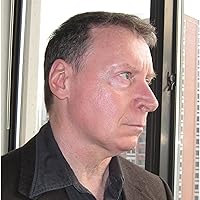
John Edward McKenzie Lucie-Smith, known as Edward Lucie-Smith, was an English writer, poet, art critic, curator and broadcaster.
Lucie-Smith was born in Kingston, Jamaica, moving to the United Kingdom in 1946. He was educated at The King's School, Canterbury, and, after a little time in Paris, he read History at Merton College, Oxford from 1951 to 1954.
After serving in the Royal Air Force as an Education Officer and working as a copywriter, he became a full-time writer (as well as anthologist and photographer). He succeeded Philip Hobsbaum in organising The Group, a London-centred poets' group.
At the beginning of the 1980s he conducted several series of interviews, Conversations with Artists, for BBC Radio 3. He is also a regular contributor to The London Magazine, in which he writes art reviews. A prolific writer, he has written more than one hundred books in total on a variety of subjects, chiefly art history as well as biographies and poetry.
In addition he has curated a number of art exhibitions, including three Peter Moores projects at the Walker Art Gallery in Liverpool; the New British Painting (1988–90) and two retrospectives at the New Orleans Museum of Art. He was a curator of the Bermondsey Project Space.
Edward Lucie-Smith died in July 2026, at the age of 93.
Information about Lucie-Smith's death from Wikipedia
I can't rate it fully yet, but I'm having a very hot and cold reaction to this book. On one hand, it helps make sense of the wildly diverse state of art today by connecting contemporary trends (or... more accurately, trends of ten years ago, since it was published in 1995) with the movements of the successive Modern movements and spin-offs. And even though I'm something of an art history appreciator, and already "know" about these movements, it seems to give me a new slant on even my own work as an artist. But. The bad rub is the unfortunate art history ghettoizing... "This was an important movement... these artists (without qualifying them as white men) did this and this AND ALSO some women and Latinos jumped on the train..." Lucie-Smith even does some strange things like grouping Martin Puryear into a minorities chapter. Yes, he's a black sculptor, but his work is less about race than it is about a multitude of other things. So. We'll see.
Update: stayed in the range outlined above, but served as a good structure for the class I was teaching (Issues in Contemporary Art)
Great book about modern art in the 20 & 21st centuries. about the new movement in art, including: cubism, surrealism, pop art, neo-expressionism, prestroika art and many many more.. with many illustrations and work of arts that will blew your mind.. it's a must to any bookshelf!
La versión en español está en Cátedra. Un repaso exhaustivo a los distintos movimientos artísticos del siglo XX. Los que más me gustan son el expresionismo abstracto, el pop art y la escultura de posguerra.