Jump to ratings and reviews
Rate this book

Life Trilogy #2

Living Planet: The Web of Life on Earth

Rate this book
A new, fully updated narrative edition of David Attenborough’s seminal biography of our world, The Living Planet . Nowhere on our planet is devoid of life. Plants and animals thrive or survive within every extreme of climate and habitat that it offers. Single species, and often whole communities adapt to make the most of ice cap and tundra, forest and plain, desert, ocean and volcano. These adaptations can be truly fish that walk or lay eggs on leaves in mid-air; snakes that fly; flightless birds that graze like deer; and bears that grow hair on the soles of their feet.
In The Living Planet, David Attenborough’s searching eye, unfailing curiosity and infectious enthusiasm explain and illuminate the intricate lives of the these colonies, from the lonely heights of the Himalayas to the wild creatures that have established themselves in the most recent of environments, the city. By the end of this book it is difficult to say which is the more astonishing – the ingenuity with which individual species contrive a living, or the complexity of their interdependence on each other and on the habitations provided by our planet.
In this new edition, the author, with the help of zoologist Matthew Cobb, has added all the most up-to-date discoveries of ecology and biology, as well as a full-colour 64-page photography section. He also addresses the urgent issues facing our living climate change, pollution and mass extinction of species.

320 pages, Paperback

First published January 1, 1984

294 people are currently reading
3642 people want to read

About the author

David Attenborough

173 books2,723 followers
Sir David Frederick Attenborough is a naturalist and broadcaster, who is most well-known for writing and presenting the nine "Life" series, produced in conjunction with BBC's Natural History Unit. The series includes Life on Earth (1979), The Living Planet (1984), The Trials of Life (1990), Life in the Freezer (about Antarctica; 1993), The Private Life of Plants (1995), The Life of Birds (1998), The Life of Mammals (2002), Life in the Undergrowth (2005) and Life in Cold Blood (2008).

He is the younger brother of director and actor Richard Attenborough.

Photo credit: Wildscreen's photograph of David Attenborough at ARKive's launch in Bristol, England © May 2003

Ratings & Reviews

What do you think?
Rate this book

Friends & Following

Create a free account to discover what your friends think of this book!

Community Reviews

5 stars
1,009 (49%)
4 stars
766 (37%)
3 stars
231 (11%)
2 stars
27 (1%)
1 star
6 (<1%)
Displaying 1 - 30 of 161 reviews
Profile Image for Pramod Nair.
233 reviews213 followers
September 1, 2015
Written by ‘David Attenborough’, ‘The Living Planet: A Portrait of the Earth’, is the companion volume to his incredibly successful BBC nature documentary series from 1984, which portrays the diverse history of life on our planet in staggering detail. This documentary series and the book is a follow up to his own much acclaimed series ‘Life on Earth’ from 1979 - which investigated the story of evolution - and carries on with his in-depth study in to the intricate and amazing ways in which animal life – and often human beings - adapts to their surroundings. This is a great way to get acquainted with the various habitats and the life that surround them on our planet.

The main focus of the book is to closely inspect the changes that are happening on our planet on a constant basis - the physical changes like mountains getting worn down by rivers and glaciers, rivers altering their courses, Lakes getting filled up with sediments converting them to marsh lands and even plain lands, continental drifts etc – and study how the animal and plant life respond to these changes.

“The story of the building of the Himalayas and their subsequent colonization by animals and plants is only one example of the many changes that are proceeding continuously all over our planet… Each of these physical changes demands a response from the community of plants and animals undergoing it. Some organisms will adapt and survive. Others will fail to do so and disappear.

Similar environments will call for similar adaptations and produce animals in different parts of the world which comes from quiet different ancestors, but which bear a marked resemblance to one another. So almost every corner of the planet has acquired its population of interdependent plants and animals. It is the nature of these adaptations, that have enabled living organisms to spread so widely through our varied planet, that is the theme of this book.”
Attenborough doesn’t limit this search to any specific geographical spot on our planet; instead he inspects a wide variety of environments across the globe and explains to us the ways in which the living forms adapt to these physical changes with microscopic detail. The book is segmented into chapters based on the varied environments that Attenborough inspects for these evidences of adaptation.

In the chapter titled ‘The furnaces of the Earth’ we see a world that is in constant upheaval and undergoing physical changes due to volcanic activities and instances of life sustaining in such ‘fountains of hell’.

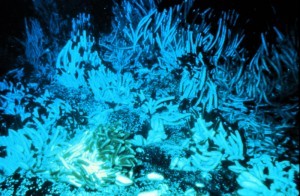
Hydrothermal vent tubeworms

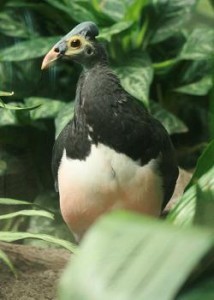
Attenborough takes the reader to the Galapagos Islands and introduces the curious ecosystem that is thriving in a sea floor that is boiling with the hot chemical jets formed by the underwater volcanoes that form a ridge south of these Islands. In these seemingly non-hospitable conditions great concentrations of bacteria’s, immense tubeworms, huge clams and strange ‘blind white crabs’ form colonies of life. In another curious case of living forms utilizing the physical changes in their habitat, we meet the Maleo birds in the Indonesian island of Sulawesi, which utilize the black volcanic sands – which remain heated both through volcanic steam and sunshine - at the beaches as artificial incubators for hatching their eggs.

The maleo
The maleo [Source]

The reader will get familiarized with a number of such instances where life thrives in volcanic or extreme hot conditions in this chapter.

In the chapter titled ‘The seas of grass’, the reader gets a ringside seat to life forms, which live, in harmony with the vast open habitats provided by open plains covered with grass. In these unique habitats, which are formed by the tangled roots, matted stems and clumps of growing leaves we meet a variety of small inhabitants like termites, ants, worms, grass hopers etc and a variety of other bigger animals which thrive either on the grass and roots or on these small inhabitants.

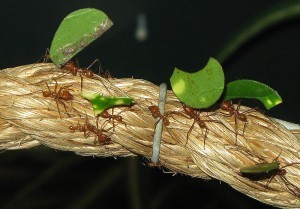
Leafcutter ant
Leafcutter ant

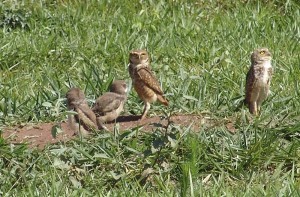
While ‘leaf-cutter ants’ - the largest and most complex animal societies on Earth, next to humans - make use of the grass and leaves for their survival, other animals like anteaters, thrive on these ants and insects. Then there are life forms, which burrow into these grasslands like ‘burrowing owls’.

A family of burrowing owls.
A family of burrowing owls. [Source]

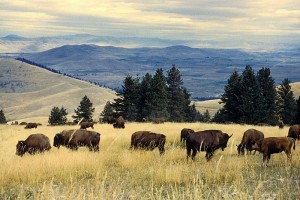
In the rich grasslands of North American Prairies we meet the magnificent Bison and the amazing story of them making a strong come back after getting almost extinct.

Bison herd grazing at the National Bison Range in Montana

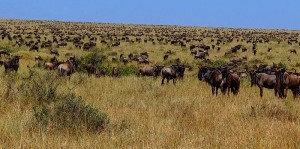
In the savannahs of Africa, Attenborough introduces us to some great instances of large herds of animals migrating from one location to another based on seasonal changes. One of the examples that he refer is the case of a million strength herd of wildebeests that migrate across the Serengeti.

Wildebeest in Masai Mara during the Great Migration
Wildebeest in Masai Mara during the Great Migration. [Source]

The book composes of ten more chapters like these two, which we sampled, and the clarity and great detail with which they are drafted makes this a worthy volume to pursue.

Attenborough with his comprehensive knowledge, keen observation, eagerness and unlimited curiosity is a huge success even while presenting complex topics and he avoids technical scientific terms whenever possible and try to make what he is narrating crystal clear for his audience. This is definitely one of the best natural history titles I have come across and is an excellent introductory volume, which will get the reader familiar with a lot of details. If you are a nature enthusiast, then this well researched, clean and crisp narrative with its selection of superb photographs will captivate you as a reader.
Profile Image for Trish.
2,386 reviews3,744 followers
March 29, 2022
This book is an update on the one Sir Attenborough published back in the 80s - and comparing what we knew then to what we know now is awesome!


This book is also based on a series of programmes made for the BBC, called Life on Earth (yes, I have the whole set and watched the series many times). The documentaries are describing the way in which animals and plants developed on this planet over the past couple of million years and how they evolved over time.

The book is divided into 12 chapters that tell us about the amazingly different habitats on Earth: volcanos, ice shelves, forests, jungles, grasslands, deserts, the sky, fresh water (like rivers and ponds), oceans etc. We walk down the timeline and thus see dead ends, mass extinctions, catastrophic natural phenomena, but also the emergence of humans.

In general, I love documentaries and science books, but the chance this book offered - looking at the differences from now to then, comparing what we knew and what was back in 1984 with today - made this special.

It doesn't hurt that Sir Attenborough is an international treasure and has personally seen and often documented the changes himself - and that he has one of the best voices for telling you anything (yes, I listened to the audiobook in addition to having this signed print copy).

Moreover, I very much enjoyed that he didn't just pick one aspect of the natural world (mammals or birds or plants or ocean life for example) but gave a comprehensive look on the entire planet and the interlocking ecosystems. It's a love letter to our home and the cosmic chain of events that coincided to lead us to this moment in time.


P.S.: Sorry that I lost track of time while reading this and that it then took me so long to write my review, that usually doesn#t happen to me, but it in no way reflects on the quality of the book - the book is awesome!
Profile Image for Mark Hartzer.
328 reviews6 followers
November 4, 2022
I clearly remember enjoying Mr. Attenborough's show back in the 1980s. I promptly went out and bought the companion book and enjoyed it immensely as well. It was the mid 80s, and there was actually something intelligent on TV.

This book covers regions of the Earth such as Oceans, Deserts, the Arctic, etc... While making some high level observations, he also drills down to individual species to illustrate a point. This makes it a fabulous tool for younger readers to get a better handle on the Earth as a planet of living organisms.

Because this was published almost 40 years ago, there are some quaint observations such as 'The Soviet Union', but otherwise harmless. A great introduction for a young naturalist.
Profile Image for Ryan.
Author 1 book36 followers
September 7, 2012
David Attenborough is as accomplished a writer as he is a TV presenter, having always written books to accompany the documentary series that he creates and presents. The Living Planet followed on the back of the series most responsible for his fame - Life on Earth. It surveys the Earth ecologically, describing the major biomes and explaining how their respective plants and animals are adapted to the specific habitats. The author is truly one of the great naturalists of 20th century, having a broad yet comprehensive knowledge of nature in a time where biologists are increasingly specialized in narrow fields. As we head further into the Anthropocene, such a holistic view is necessary to address the global problems of human ecology.

Today's high definition BBC series such as Planet Earth and Life may look better and slicker, but I would say these two landmark series produced in the 70s/80s had already set the high mark for nature documentaries, arguably with a lot more substance than today's productions.
Profile Image for Sher.
764 reviews17 followers
September 13, 2009
I learned so much about the earth from this book. I recommend it to everyone.
Profile Image for Tess.
92 reviews8 followers
September 18, 2022
Gentle and beautiful reading - each chapter a different habitat of history, adaptations and seriously cool nature facts 🤓
Profile Image for Kelly.
263 reviews1 follower
November 21, 2022
Brilliant!

This was all about insects and animals and geography.
I liked learning about capybara and other types of rodent. Capybara are chubby. Another rodent was a "portly spaniel" where capybara are pig sized.
I think Attenborough must have favourites, like sloths and caiman and armidillo, and various anteater. He loves the Komodo dragon. I remember he described the rotting goat he made up in order to film the Komodo dragon. A monitor lizard creature of the largest kind.
I loved all the geography. The volcano section took me back to secondary school, as did the jungle. The coral being limestone, I could just about get my head round, it forms polyps or mineral which is edible to some fish and promotes others.
I learned ants are related to wasps, termites to cockroaches.

An extremely powerful message about climate change. It's such a shame, everything that has happened in the world. The Victorians factories must have really affected the ozone layer as well, I've always pondered if it caused the hole in the ozone layer. And now the new factories and cars. It's terrible.
Profile Image for Nathan Haines.
213 reviews7 followers
October 26, 2021
Certainly a very interesting and comprehensive read for those who would broadly like to know more about how creatures interact with eachother in different habitats across the world. It also provides an important message about how humans need to change the way we interact with the planet if we would like to continue our survival
Profile Image for Cameron.
216 reviews11 followers
September 15, 2025
I thought this was a beautifully written book that covers the various biomes of our planet. It was interesting and digestible for someone new to conservation while covering a wealth of knowledge. The author read the audiobook which made it very relaxing and conveyed his passion for the subject.
Profile Image for Adam.
25 reviews1 follower
May 23, 2025
All hail king Attenborough
Profile Image for Hayley.
1,223 reviews22 followers
August 21, 2025
This was an interesting look at how nature and animals have changed and adapted to their environment over time. I really appreciated how each chapter was broken into separate sections such as jungle, desert, forest, etc. I liked this so much that I want to watch the original documentary.
Profile Image for Dominic Gowland.
73 reviews
December 9, 2023
Oh! To be a plough snail, riding my surfboard in search of tasty microscopic snacks!
Profile Image for Vanya Prodanova.
830 reviews25 followers
November 13, 2022
Не очаквах тази книга да е толкова изпълнена с терминология от света на природата. Ето, дори не знам на български език как се нарича, какво остава на английски.

Трудна ми дойде за четене, единствено и само заради купищата термини, които на моменти бяха толкова много в едно изречение, че беше невъзможно да разбера какво ми казва без речник, че и тогава гледах на моменти тъпо, тъй като географията и биологията никога не са ми били силни. И, David Attenborough, всъщност се е постарал да не е много пълна с термини и пак ми дойде по нагорнище.
Оставаме настрана, че имало една дузина видове от всяко живо нещо на тази планета, когато вкарваше елемент на разказване в описанието на животни и растения - е, тогава всичко разбирах. :Р

Определено не е лоша книга, но си е ниво на английски език, което ако не владееш, няма как максимално да се насладиш. Пишейки това, въобще не съжалявам, че я прочетох и научих някои интересни неща, особено за репродукцията на рибите. Някои картини не мисля, че ще мога да ги изтрия от съзнанието си някога. И в стил на David Attenborough, разбира се, завърши с бърз урок по natural history и влиянието на хората върху природата. Четеш и си уау-нат какви сме ги свършили. Трудно е да не ни видиш като паразити, четейки тази книга. Не знам как David Attenborough запазва позитивизма си спрямо човешката раса. Аз отдавна съм го загубила. :)
Profile Image for Holly.
34 reviews
May 11, 2023
This is the best popular science book I've ever read, and I'm genuinely devastated that I've finished it. I love David Attenborough (obviously), and this reads like one of his documentaries - and it is so evocative that you feel like you're watching one. It feels like a love letter to the natural world, and does such an incredible job of reminding us how beautiful it all is.
I'll come back to this one again and again, I'm sure.
4,069 reviews84 followers
November 4, 2014
The Living Planet: A Portrait of the Earth by David Attenborough (Little, Brown and Company 1984) (575). This book was made to accompany the beautiful PBS television series of the same name. It's sort of a “history of the natural world” for non-scientists. My rating: 7/10, finished 10/25/14.
Profile Image for Gabriel Iqbal.
Author 16 books16 followers
December 14, 2014
The book and the film are my favourite companions. I grew up with David's documentaries and so are my kids... We just love the man and the soulful relationship that he sparks vis-a-vis our existence on a Living Planet.
Profile Image for Suzy.
244 reviews1 follower
July 19, 2014
Wonderful book, been looking at this book with my 9 year old son. He found it very fascinating.
Profile Image for Nick.
433 reviews6 followers
March 29, 2017
Really good general history of the geology, geography, biology and botany of the planet we live on. It accompanies the BBC television series, made in the early 1980's.
Profile Image for Bree T.
2,425 reviews100 followers
January 20, 2022
I bought this a little bit before Christmas – actually the first time I visited a bookstore in person in months after we exited our most recent lockdown. I love David Attenborough, I think he’s just the most amazing person and I love watching his documentaries and listening to his voice. Although I’ve listened to him narrate several of his books on audio, this is the first time I’ve actually bought and read one but it’s impossible not to hear his voice in my head as I was reading this.

This is a revised and updated edition of the book published in 1984 which was a companion piece to a documentary Attenborough did of the same name. Despite the fact that January is “Attenborough month” on Australia’s subscription cable/satellite TV and the fact that various other documentaries from Attenborough appear on various other platforms, I can’t find this one to watch which is a bit disappointing! I would’ve been really nice to watch it and absorb this information in a visual way, because there is a lot of information in this book.

Despite it only being 290 pages of actual story it took me 2 full days to read it. It’s very dense but I don’t mean that in a bad way. It’s just very thorough and contains so much information. It breaks the earth down into sections, basically, with different features and/or climates, so things like the polar world, the jungle, the sea, the grasslands, etc. And then talks about the sort of species that live and thrive in those environments and how in many cases, they have adapted over thousands of years in order to be able to do so.

It’s just so interesting. I really enjoy stuff like geography and the natural world so learning about stuff like this is fascinating to me. I really liked the way the sections were broken down as well, focusing on each “type” of environment as a whole – not even region specific, there are areas with the same or very similar environmental parameters and factors that stretch across the globe and many of those different locations have species that are very similar, sometimes the only real difference being the name they’re known by. In other places, plants and animals have evolved very specifically to suit their exact location, this seems especially true when that location is isolated, such as islands in the middle of the Indian or Pacific Oceans. An example is species of birds on some of these islands who, because of their remoteness, face no predators and so over the years, have lost their ability to fly simply because they do not need to anymore. The island provides everything they need to thrive and they have no need to leave it, nor any threats to fly away from.

The most disturbing things in this book I think were the times Attenborough talks about how humans have either systematically wiped out or almost wiped out entire species, particularly of animals. There are plenty of examples given of animals slaughtered almost to the point of extinction and in many cases, for no particular reason other than they were there or in the way of something humans wanted to do. In some cases, they did wipe them out (the dodo is probably the one that comes to mind for most people, named so because it was so trusting you could get close enough to hit it on the head). Even now with the understanding of how important biodiversity is, how crucial it is to maintain the balance in ecosystems, there are still so many different species under extreme threat. Many are declining at alarming rates and almost all of it is because of direct human action or as a consequence of human actions resulting in things like climate change. It’s honestly just incredibly sad to think about the loss of whole species and how it’s going to continue to happen.

I finished this and felt inspired for more Attenborough content and given it is Attenborough month, I picked Blue Planet to watch. I watched the first episode the same day I finished this and it actually included one or two examples of things that I’d read in this book, which was awesome, especially as one of them was footage of turtles laying eggs on a beach in Costa Rica. That was amazing to see after reading a detailed description.

Really enjoyed this but David Attenborough can do no wrong for me.
Profile Image for Wing.
372 reviews18 followers
August 31, 2025
The TV series itself is remarkable, and this companion book is equally so. Throughout its pages, you can hear the familiar, authoritative voice of David Attenborough. Drawing on geography, geology, botany, zoology, and evolutionary biology, he inspires awe as he reveals the ingenious ways life—in all its glorious forms—solves the challenges and seizes the opportunities presented by the many varied habitats that make up our home, hence the eponymous title. I find one sentence in particular especially profound and worth meditating on: “They simply exist, testifying to the moving fact that life, even at its simplest level, occurs, apparently, just for its own sake” (p. 23). His sagacious warnings about human custodianship of Earth toward the end of the book are immediate and pressing. Five stars.
Profile Image for Ellie Cripps.
687 reviews
July 8, 2025
Thrilled that this landmark book, recently updated considering changes to the natural world since the 1980s, is my thousandth 'read' book on this app!
It's brilliant, jumps from place to place exploring many of the creatures of the world, appreciating each and every one for its individual value not to humans as resources, but to the planet as part of a glorious earth we should be fighting to protect.
Profile Image for Rebecca.
250 reviews11 followers
March 30, 2022
I really enjoyed dipping in & out of this book. The chapters do flow into each other & the photographs follow along with the book, although I picked chapters randomly to read & that worked too. It reads like each episode of an Attenborough series & his voice narrated it in my head, but this book also covers a lot more & easily stands alone.
Profile Image for Ray Smillie.
739 reviews
May 25, 2022
Having watched and enjoyed David Attenborough's flora and fauna TV documentaries for decades, it recently struck me that I have never read any of his books. Not one. Until now. You cannot help but read it with his voice in your head and this is as educational and informative as you would expect from a living legend.
1,045 reviews8 followers
December 15, 2023
I’m guessing the book came before the TV documentary, but either way, this is a fascinating look at all the living creatures in the various environments on earth. Whether it is in the jungle, desert, ice cap, or ocean, the author shows how creatures have so amazingly adapted to survive ad thrive. I have no idea how scientists discovered some of these facts.

There’s so much in this book, that I had to put it down and read only parts at a time. Other than describing the odd species that is extinct, Attenborough only talks about climate change and environmental destruction in the last few pages. Unfortunately the people who should read it and be alarmed and take action, won’t.
Profile Image for Brian.
144 reviews10 followers
February 2, 2022
Fantastic book (trilogy actually). Sure some of the info is inaccurate because of the age of the research, but if you pick this up you should have already accepted that.

David Attenborough is a worldwide treasure.
Displaying 1 - 30 of 161 reviews

Can't find what you're looking for?

Get help and learn more about the design.