Jump to ratings and reviews
Rate this book
Rate this book
The final volume in the legendary Pyat “Moorcock has the bravura of the nineteenth-century novelist; he takes risks, he uses fiction as if it were a divining rod for the age’s most significant concerns.”–Peter Ackroyd

480 pages, Paperback

First published January 1, 1999

5 people are currently reading
221 people want to read

About the author

Michael Moorcock

1,208 books3,748 followers
Michael John Moorcock is an English writer primarily of science fiction and fantasy who has also published a number of literary novels.

Moorcock has mentioned The Gods of Mars by Edgar Rice Burroughs, The Apple Cart by George Bernard Shaw and The Constable of St. Nicholas by Edward Lester Arnold as the first three books which captured his imagination. He became editor of Tarzan Adventures in 1956, at the age of sixteen, and later moved on to edit Sexton Blake Library. As editor of the controversial British science fiction magazine New Worlds, from May 1964 until March 1971 and then again from 1976 to 1996, Moorcock fostered the development of the science fiction "New Wave" in the UK and indirectly in the United States. His serialization of Norman Spinrad's Bug Jack Barron was notorious for causing British MPs to condemn in Parliament the Arts Council's funding of the magazine.

During this time, he occasionally wrote under the pseudonym of "James Colvin," a "house pseudonym" used by other critics on New Worlds. A spoof obituary of Colvin appeared in New Worlds #197 (January 1970), written by "William Barclay" (another Moorcock pseudonym). Moorcock, indeed, makes much use of the initials "JC", and not entirely coincidentally these are also the initials of Jesus Christ, the subject of his 1967 Nebula award-winning novella Behold the Man, which tells the story of Karl Glogauer, a time-traveller who takes on the role of Christ. They are also the initials of various "Eternal Champion" Moorcock characters such as Jerry Cornelius, Jerry Cornell and Jherek Carnelian. In more recent years, Moorcock has taken to using "Warwick Colvin, Jr." as yet another pseudonym, particularly in his Second Ether fiction.

Ratings & Reviews

What do you think?
Rate this book

Friends & Following

Create a free account to discover what your friends think of this book!

Community Reviews

5 stars
64 (48%)
4 stars
44 (33%)
3 stars
21 (16%)
2 stars
1 (<1%)
1 star
1 (<1%)
Displaying 1 - 15 of 15 reviews
Profile Image for Ian "Marvin" Graye.
949 reviews2,786 followers
February 7, 2021
SERENDIPITOUS EPIGRAPHS:

"Italy has a large appetite and rotten teeth." (Otto von Bismarck)

"The Italians fled, lock, stock and barrel-organ." (H.R. Knickerbocker)

"Italian design and engineering presented a flair even the French could not match." (Colonel Maxim Pyat/Max Peters)

"My achievements are a matter of history. A record. I am the voice and the conscience of civilised Europe. I am one of the great inventors of my age. I am a child of the [twentieth] century and as old as the century." (Colonel Maxim Pyat/Max Peters)

"Not every lesson is, after all, a big lesson. Big lessons are made up of many small lessons." (The Jew in Arcadia)

"I've got to 'and it to yer, Ivan. Yo're one in a million, an' no mistake. Bloody amazin'. I sometimes wonder if yo're real! (Mrs. Cornelius to Colonel Maxim "Ivan" Pyat/Max Peters)


CRITIQUE:

Gangsters Rule Everywhere

The fourth and by far the most expansive volume of the "Pyat Quartet" covers the pre-war period between 1930 and 1939, with a brief post-script that sketches Colonel Pyat's escape to London and his life there with his "muse and ideal", Mrs Cornelius and her three children (Jerry, Frank and Catherine from "The Cornelius Quartet").

The setting is Italy, Germany and Spain. Moorcock via Pyat gives us an overview of between the wars world politics from a Fascist perspective. Pyat (known by his stage name of Max Peters) ingratiates himself with the dictators, Mussolini, Hitler and Franco. In contrast to what Il Duce (whom he favours) was doing for Italy -

"The communists were ruining Germany, civil war in France was almost inevitable, republicanism was destroying Spain, the union-bankrupted British were effectively a spent force, American neutralism was fuelled by their vast domestic problems, and Stalin threatened the very foundations of Christendom. The old political structures were proving useless in the modern world; party divisions were defeating the very democracy they were supposed to defend, creating only misery and uncertainty. The majority of people were not anyway natural democrats. Careless liberalism was the enemy of everyone, even those it pretended to represent.

"Fear is becoming a way of life in far too many parts of the world, especially in Europe. The power has been torn from the hands of the men of conscience. Gangsters rule everywhere - in Russia, in Germany, in America, and increasingly in Spain. Their 'revolutions' are meaningless, self-serving and cruel. They have no religion or morality. But we cannot merely replace one tyranny with another...

"The will of a single individual is what it takes - if his will represents also the will of the nation. Really, it's all fascism offers - security through unity. But it takes a great man to combine the best ideas from a collection of isms, shape them into a coherent whole and create unity. Unity must be more important than our differences. Unity must be desired by the common will. Unity cannot be imposed from above. Only a very great man can express the public will in a broad, far-ranging programme of dramatic, even revolutionary ideas. Mussolini offers our antidote to the lure of Bolshevism [and Red Jewry]...And the Church must help...[establish our new Roman Empire]...

"To fight Stalin, we need a champion of the same metal. And with one exception we have only pygmies. The planet is crying out for a paladin, for some new Charlemagne, to drag Christendom from the Dark Ages. Or are we too far degenerated into chaos to be rescued?"


This Masquerade

Peters masquerades as an American actor (of English/Spanish descent), "a native-born son of Spain" and "a Russian aristocrat preferring not to use his title [Prince Maxim Arturovitch Pyatnitski] and so reveal his true ancestry."

But most suspect him of being of Jewish origin, because of his dark skin colour. (Ernst Röhm, who becomes his lover shortly before the Night of the Long Knives, warns him that he "looks too Jewish for his own good.")

Still, initially, Peters manages to find a sympathetic audience for his claims to be "the voice and the conscience of civilised Europe" and "one of the great inventors of my age".

At the same time, he implies that "I fly no flag...I am my own man...I was the twentieth century Leonardo, as familiar with the arts as I was skilled in the sciences", even though he continually seeks (and struggles to find) government or private financial supporters for his military inventions.

When they eventually meet, Mussolini calls him "a hard-working Renaissance man." Goebbels compliments him, "I'm so glad you're one of us."

Assertion, Denial, Deviance and Self-Delusion

Max is practised at assertion, denial and self-delusion, all of which derive from his deviance. It remains to see whether these qualities will bring him down. The novel labours under the title of "The Vengeance of Rome", and we must wait to see who or what constitutes or triggers the vengeance.

For all of the vicissitudes Max struggles through, he continues to find young(ish) women with whom to have perverse, cocaine-fuelled relationships or "romances" - Miranda [Maddy] Butter (an American journalist), Margherita Sarfatti (an Italian Jewess and art expert), Kitty von Ruckstuhl (the daughter of an aristocratic German paramour) and Zoyea (an Italian gypsy dancer and daughter of an organ grinder, whom he describes as an "exotic minx...innocently striking all the poses of the harlot and drowning me in her eyes").

Like Humbert Humbert (and perhaps Lewis Carroll), Max pleads,

"She promises me so much. She promises me a return to my past, to a time when I was happy...It is my heart that longs for her again, not my loins...If a man cannot love the innocence and sweetness of little girls, he has no soul, no feeling."
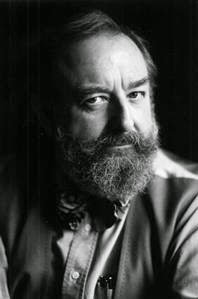
description

Michael Moorcock:
Source:
https://tvtropes.org/pmwiki/pmwiki.ph...

A Liar and a Charlatan...

Kitty's mother alleges that Max is "a liar and a charlatan". He suspects that it's because he discontinued an affair with her (the mother).

Max vehemently denies that he is a Jew. "I am not a Jew. I am not a pornographer. I am not a seducer of little Christian girls."

Max Peters doth protest too much, methinks.

Much later he writes, "In the thirties I became a convinced Zionist and remain one to this day. I am deeply philo-Semitic. I do share with many Jews, however, the conviction that intermarriage is a mistake."

Max descends into several kinds of hell over the course of the novel, including a spell in Dachau. Upon his arrival, he declares, "I am not a Jew. I am an engineer. An inventor. An actor. I have played many races."

The Sturmführer sees him for what he is:

"You are mixed up...Mixed-up blood, mind, reality...You are a man of many identities. The doctors will be interested in you."

...But, Worse Still, An Unreliable Narrator

There's little reason to believe any of Max' assertions. The chameleon is indeed a charlatan. The whole of the novel persuades the reader that Max is a thoroughly unreliable narrator...

Or must we believe that Moorcock himself is responsible? That he has made it all up? That Mrs Cornelius is right to question whether Max is real? That he is, after all, an invention, a fiction?

Whatever, Max' Odyssey (from 1920's Odessa to 1970's Notting Hill) makes spellbinding reading.


SOUNDTRACK:
Profile Image for Michael Battaglia.
531 reviews64 followers
July 1, 2015
After three books of tall tales that often completely conflict with history, genius "inventions", rampant drug use, rape and more unnecessary and arbitrary insults directed at Jews than there are Jews in the world, what's left for a potentially insane and completely unlikeable protagonist to go? Why, by doubling down on all such things by involving the one group that pretty much everyone can agree was just no darn good: Nazis!

Yes, it's that rascally fellow Colonel Pyat back again, telling us the story of what he did in those fun years between the two World Wars in such a way as to make us doubt almost every single thing he tells us. Having taken us through World War One and its immediate aftermath, a tour of the US with the KKK and stops in Morocco and France along the way, we're nearly up to the point where the idea of "between the wars" no longer applies as the Second World War is getting ready to start. To that end, Pyat decides to finally do something about all those comments he's been making all along about Mussolini and Hitler and embarks on setting out to meet them, one deliberately, the other not so much.

Very deliberately, as it turns out, as Pyat has a giant man-crush on ol' Benito and there are moments when the book reads like one long love letter to Fascism written by a deranged person and thus the last person you actually want to sell Fascism to people. But just when you're ready to insist that Pyat get a room with the cheery dictator (and thus create his own fairly unique category of slash-fiction), he winds up getting sent to Germany, where he gets to hang out with a whole new cast of people whose names are generally seen together as a list of defendants in the Nuremberg trials (if they managed to survive that long) and while he's not so big on Nazism, he does quite enjoy hanging out with SA leader Ernst Rohm. And by "hanging out" I mean, "indulging in sexual relations" while also praising the leader of the Brownshirts to the high heavens as well.

By this point in the series, you pretty much know what to expect from Pyat and while he doesn't say anything as grossly shocking as he's shown he's capable of previously (amusingly the one aside that did catch my eye was a so-out-of-left-field-that-it-must-be-thrown-from-right-field-in-the-wrong-direction comment that John Wayne had a sex change) sticking Pyat amongst a group of people who are collectively responsible for more death and destruction than is comfortable to think about, and then have him more or less being all for their ideals, ups the ante quite a bit and while not surprising if you're been paying attention to the series, is still a bold move on Moorcock's part, even moreso than having him hang with the KKK in the earlier novel, especially since, as extraordinarily unpleasant as they were, the Nazis tend to make almost everyone else look like kindergarteners when it comes to racially cleansing everything in sight based on flimsy notions of purity.

To some extent having real (and very notorious) historical figures in the novel should unbalance it slightly and after three books of him claiming meetings with various obscure historical figures, having him encountering both Hitler and Mussolini (and Rohm, repeatedly) only a few chapters apart does seem to lather on another strange layer of unreality onto a suspect narrative to begin with since it seems even more likely that he's simply making it up (or convinced himself that it was true, as he does with several events in earlier books that he clearly told as lies and now seems to accept as completely true). It doesn't suck any of the power out of the book, if anything watching him revel in Mussolini's presence and claim intimate relations with Hitler only proves how delusional he potentially is.

Beyond that, it's Pyat-as-usual, with the typical mix of inventions that conveniently never seem to work due to the fault of others, out of nowhere racial swipes, the rationalizing of various untoward acts such as coveting minors and the downplaying of what can only be a rampaging cocaine habit (there must be a mountain snorted over the course of this series) . . . Moorcock mixes it up enough so it never seems repetitive (even when it is) but the clear racing toward the end of the narrative adds another level of intensity to what before had become old hat, echoing the disintegration of an entire culture, even as Pyat insists this is clearly the best place to be.

But he still makes for the perfect vehicle to view the madness that was the Nazi regime and the gradual unraveling mess that was Europe in the late 1930s before it all really went to hell, as he gets arrested and treated as Jewish despite his protests that, gosh fellows, he hates them too, and is shuttled from prison to prison and ultimately to a concentration camp (some of the novel's most intensely scathing scenes are here, oddly in the guise of a Nazi commander who starts to pick apart Pyat's haphazardly constructed persona) before finally becoming the person we first meet him as, an old man railing about crackpot things, insisting that every decent invention of the 20th century was somehow stolen from him and selling old clothes like he's doing everyone a favor.

To that end, the final scenes in the novel are the most powerful and a culmination of everything the series has been building up to, and even when you expect it the moment is just as satisfying and surprising and sad as anything Moorcock has ever written, with Pyat's insistence on illogical delusion mirroring our century's sometimes dogged insistence on rewriting history to convince ourselves that it wasn't as bad as the scars and the endless fields of corpses seem to suggest. In that fashion he functions almost as the opposite of Jerry Cornelius, who lived in an elaborately constructed fantasy (unlike his mother, who is a complete realist and even more of a survivor than anyone else in the series) that was gradually stripped away and scaled back, revealing a young man who was more than slightly sad. Here Pyat also inhabits his own fanciful construction but when faced with the borders of his own creation his response is to turn away and burrow deeper inside, insisting that it's the epitome of contentment and secure in his rightness (despite no evidence beyond what he manufactures), and that winds up being an even sadder fate. At least when it's all torn down and you're left with nothing you can recognize that and build again. But when you've surrounded yourself with thick walls of your own dreams, there will be no one around to help when the collapse finally comes and leaves you trapped inside the remains of your own wreckage.
Profile Image for Tim Pendry.
1,154 reviews488 followers
March 23, 2008
This is the fourth of four novels and bear in mind that I have not read the others - but it stands alone as one of the most remarkable attempts to get inside the mind of the idealistic European fascist. It contains one of the most disgusting sex-scenes in contemporary literature and there are occasional moments of obscure linguistic invention but if you get past the first ten pages, I think you are in for a treat and will find it hard to put down.

A basic knowledge of early twentieth century European history will help but it will teach more than it requires knowledge. Pyat is naive, the worst sort of idealist but only Moorcock can insidiously get away with making romantic fascism and national socialism come alive. A truly transgressive novelist even if the closing pages (no spoilers here) look like a necessary cop-out ...
5 reviews
April 13, 2013
Thank goodness after all these years I no longer have to live within the mind of Maximilian Pyat (if that is his true name). A magnificent end to this series: one of the author's best works. I love an unreliable narrator and Pyat (and Moorcock?) is one of the best. It is shameful that Moorcock has never won the Booker but that's what writing science fiction and hanging out with Hawkwind does for your literary street credentials.
Profile Image for Simon Mcleish.
Author 2 books142 followers
February 26, 2013
Originally published on my blog here in April 2006.

After twenty-five years, the final volume of the Pyat Quartet has now at last appeared; it has spent almost all that time listed at the front of Moorcock's publications as "in preparation". The quartet as a whole must rank as one of the most ambitious novel series of the period, as well as one of the most slowly written; not content with being a historical narrative of the first half of the twentieth century, Moorcock has immersed himself in the repellent personality of Maxim Pyat and produced a study of how such a person appears to themselves while making it clear how others perceive them at the same time.

The story of The Vengeance of Rome takes Pyat from a fugitive in Morocco - the ending of the previous volume - to friendship with Mussolini in Fascist Italy, and then close links with the Nazi hierarchy in thirties Germany (extremely close in some cases), through imprisonment in the camp at Dachau to eventually meeting the young Moorcock while running a second hand clothes shop near Notting Hill in the sixties.

Like many historical novels, a lot of the fascination in this series lies in the way in which Pyat's story is threaded into the major events of the time. Though the most obvious counterpart to the quartet may seem to be George MacDonald Fraser's Flashman series, the tone here is much more serious, and Pyat's character and role in history are both far more ambiguous. At the heart of the whole series, and emphasised particularly in this final novel, is the conflict between Pyat's anti-Semitism and his appearance: being constantly taken for a Jew is not a good thing in thirties Italy and Germany.

The conceit of the series is that the novels are in fact memoirs edited together by Moorcock from Pyat's papers and memories of conversations the two of them had. There is an introductory page, which suggests that the main task of the (fictional) editorial hand has had to try to harmonise conflicting accounts. One of the usual characteristics of Moorcock's fantasy genre writing is that he positively revels in incompatible versions of stories; this is particularly clear in the recent Second Ether trilogy, each of which treats incompatibility in a different way. So this is a somewhat ironic statement, one of many in The Vengeance of Rome of various different kinds.

One of the most interesting of these, because it reveals a lot about the character and the author's attitude to him, occurs when Pyat is interrogated by the SS about his career as an inventor: "I invented it all", he says, apparently without realising what this suggests about his history; and yet Moorcock also states in the introduction that he found corroborating evidence for many of the incidents that initially seemed most fabulous; this is clearly a deliberate contradiction. The reader, of course, knows that this is fiction, but it is being presented as true as any memoirs - with hints like this that it is at the very least, significantly embellished.

Moorcock fans may have wished to see the quartet completed more quickly, but there are obvious reasons why the novels would be difficult to write (and those obvious reasons may not of course have affected the author, no matter how strongly the novels may suggest them). These are the requirements of historical research and the repellent personality of Pyat already mentioned, together with the difficulty of writing from the point of view of an individual whose opinions in almost every subject seem to be diametrically opposed to those of the author. (Moorcock's own views can be read in the essays in The Opium General, for example, or on his website, Moorcock's Miscellany - currently down after attacks by hackers, an event that is itself something of a commentary on his views.)

It is possible to see the Pyat quartet as a sustained attack on racism. Indeed, the idea that an anti-Semite is so unable to see that Jewish people are just as human as he is leads him to be unable to perceive his own Jewishness is a barbed comment on the stupidity of such a view. But there is much more to it than that, and ranks as Moorcock's literary masterpiece, as The Dancers at the End of Time is its equivalent in the science fiction genre.
Profile Image for Paul Dembina.
694 reviews165 followers
February 22, 2020
Things get very dark in this final instalment as Pyat gets matey 1stly with Mussollinni and then (much more dangerously) with the Nazis. Of course he chooses the faction that loses during the Night of the Long Knives

Watch out for a devastating final scene
Profile Image for Jim Leckband.
787 reviews1 follower
January 20, 2014
If you have made it through the first three volumes of Colonel Pyat's outrageous memoirs of outright lies, half-truths, evasions, cover-ups, rationalizations and even quibbles, then you know what you are going to get in this book where our anti-hero stumbles into his Fascist wonderlands in Italy, Germany and even Spain.

Half the fun in this book is ferreting out what is the actual truth that might be leaking from the ferret's mouth unbeknownst to his ferret-self. Did he really have drawings and plans for fabulous inventions such as the multi-story Land Rover? Was he really the unwitting fall-ferret for his betrayals by Kolya, Rohm, Mussolini and etc.? Or did he do some equal betraying he ain't fessing up to? He leaves little tiny ferret droppings of clues, but he is wily in not letting us get the big picture.

The biggest achievement of the novel is that it makes us have some compassion for Pyat when he winds up in Dachau and other concentration camps. Even though we know he is telling lies, the torture and degradation he suffers is way beyond what we might feel he deserves. Even through this ordeal, there was still a little idea that the Fascist hell he found himself in is the culmination of what Pyat was striving for in his Byzantium worship over "Carthage".

In the previous books, Pyat blathered on and on about the tough-guy ideal of the Roman and Byzantium empires as opposed to the theistic or communistic ones of the Bolsheviks or the Muslims. And while the disasters of the "Carthage" way of life is well deplored by Pyat - he doesn't see the horrors of the "Byzantium" until he is on the wrong side of Byzantium - as pretty much all of us would be in time, it is the nature of the beast.

Moorcock's point is to be boring - he has Pyat run a used clothes shop and have his National Health insurance. Byzantium and Carthage are useless to have a functioning and healthy society, but it sure is more interesting to read about them, if only as a "there but for the grace of God."
Profile Image for Colin.
Author 5 books141 followers
July 21, 2020
The final installment of the Colonel Pyat Quartet was as brilliant and horrific as the first 3 volumes - Colonel Pyat is a terrible antihero created by Michael Moorcock, an author known for his antiheroes (like Elric, who certainly secured Moorcock's place on the "Appendix N" of Gary Gygax, the list of authors and books who inspired the creation of Dungeons & Dragons and thus role-playing games in general). And Colonel Pyat is truly a despicable antihero - the self-pitying "Russian," racist and self-denying Jewish anti-Semite, cocaine addict, swindler, pedophile and pervert, the character has a tremendous capacity for self-deception and delusion. He was allegedly born on January 1st, 1900, and in some ways is the personification of the horrors of the 20th century. The first book told of his perils in Russia and Ukraine during the rising tide of the Bolshevik revolution; the second told of his escape from Turkey to Italy and France, where he became involved in a massive fraud scheme (of which he saw himself as the victim!) and his subsequent escape to America, where he became involved in the Ku Klux Klan and Hollywood. In the third volume he escapes debt and accusations of fraud again, to North Africa, in theory to make more movies, but really as much to escape his own past and gratify himself as anything else. In this fourth volume we find him returning first to Italy, where he becomes a friend of Mussolini, and then sent on to Germany, where he is witness to the rise of the Nazis to power. Small revolutions in the Nazi party, however, remove his protectors and patrons from power, and he ends up imprisoned in Dachau. When he finally escapes, he manages to escape to London, where we know from the beginning he spent the remainder of his life, dying in 1977. He remains connected to Mrs. Cornelius throughout the 4 books, and as he kept running into her wherever his travels took him in his life, so she is his companion in retirement. His delusional belief that a Cheka agent named Brodmann has been shadowing him his entire life remains with him to the end. But his last reminiscing is of hearing from a long-lost childhood sweetheart from Ukraine, Esme, after the war, who claims that his mother is still alive and offers to put them in touch. Pyat assumed his mother dead in Stalin's Soviet Union, and is excited to be reunited with her! He recognizes both Esme and his mother at the meeting, and all is sweet, until she gets him a copy of his original birth certificate - and it shows his birth name was not Maxim, but Moishe, and confirms that his father was not a Russian Cossack, but a Jew! At this point the delusional, self-denying anti-Semite Pyat convinces himself that despite his recognition, the old woman is NOT his mother - cannot be - but some delusional old woman who has conned Esme! And so we are left with Pyat, once more denying the realities of his past to live in his own delusions; Mrs. Cornelius, as always, seems to see through his self-constructed realities, but he chooses to regard her clear view as the impaired one, with sad amusement. Incidentally, his connection to the character of Mrs. Corelius links the Colonel Pyat Quartet to the Cornelius Quartet (whose protagonist, Jerry Cornelius, is her son, though presumably not Pyat's). Anyway, the whole quartet is great, though very uncomfortable, reading.
Profile Image for Old-Barbarossa.
295 reviews2 followers
August 28, 2014
Horrible as the other books…darkly funny too.
A sad end to the whole saga (which I think was really about Mrs C).
How much of the whole thing was true? How much the rambling reminiscences of a crazy old man mixing fact, fantasy, and wishful thinking?
At times the saga was hard work and uncomfortable reading, but it was worth the journey.
A bittersweet tale, all in all, filled with wild escapes, depravity, delusion, obsession, self-loathing, and unrequited love…all sprinkled over major events in 20th cent Hx.
Profile Image for Andy.
357 reviews
July 1, 2020
I read Moorcock's Colonel Pyat quartet back-to-back and, for better or worse, will always associate the experience with COVID-19 and the Trump administration. Incredible writing and all four books were among the best I've read. Col. Pyat, the narrator, goes by multiple names and is very much an antihero - not nice, good or decent but somehow relatable. At its core I found the series about not being able to escape who we truly are. Great reading experience and one I highly recommend.
436 reviews
December 24, 2015
Brilliant end to an amazing series. More coherent than the previous volumes with less of the rambling digressions and the better for it. Taken as a whole an extraordinary work of fiction which whirls us with great intensity through that strange period of history between the wars. Thought provoking and ultimately quite moving. The denial of history and what we really are is alive and well today.
Profile Image for Pavlo Tverdokhlib.
340 reviews18 followers
May 14, 2017
The last book of the Quartet takes the hapless and intrepid adventurer Pyat from Africa to the darkest parts of early 20th century Europe- first to Mussolini's Italy and then to 1930's Germany.

Armed with his chauvinist right-wing beliefs, the self-hating Jewish Anti-Semite Pyat offers his idealized and willfully blind portrayal of the Fascist societies. Some time after he gets to Germany, things get REALLY bizarre, dark and twisted for a bit, as Pyat recounts in excruciating detail (to the point of almost making me throw up at one point) his involvement with a... "non-traditional" wing of the incumbent Nazi party. If you want to know how bad it gets, just read the 7-page intro by the editor- it pulls no punches and offers a fair warning as to just how much "not for the squeamish" this book is.

Beyond that episode, the tone is mostly lighter than that of the previous volume. Pyat manages to rediscover part of his cheerful, cocaine-fueled optimism, as a recurrent cast of characters rolls in and out of the plot, offering a few last-minute rescues for Pyat that remind us of the work's intended picaresque tone. Even Pyat's recollections of the concentration camps toward the end of the book and his experience there is seemingly dulled by his biases and his blunt willingness to deny the obvious.

This willingness is made obvious by the very last episode of the book's ending. I won't write, because I don't want to spoil it. It's a thought-provoking episode, but i'm not sure yet what conclusions we are supposed to draw from it. Most likely, as with any truly great piece of literature, the conclusion we draw is a reflection of ourselves.

This book concludes Moorcock's journey of the "20th century everyman" Maxim "Colonel" Pyat. taken as a whole, the series offers a chilling and compelling look at the inter-war years in order to portray just how humanity allowed itself to embrace the ideologies that led to some of the most sorrowful pages of humanity's history. I think its value lies primarily in this portrayal, honest, albeit inconsistent of an inherently amoral person, who was, nonetheless, clearly a product of their time, and was accepted as such. It's a warning. It's a parable. And it's a pretty entertaining yarn overall.
408 reviews1 follower
July 15, 2024
My favourites of his alongside Mother London. Troubling, spectacular voice
12 reviews
October 30, 2011
So, at the end of the fourth volume of Moorcock's Millennium Quartet we get confirmation of something we've suspected since early in the first volume. But the way we find out brings home quite how dishonest, disloyal (to everyone except Mrs Cornelius) and self-obsessed Pyat really is. As usual, there are plenty of unbelievable (probably because they're untrue) coincidences to rescue our clay-footed golden boy from his absurd involvement in the major historical events of the mid nineteen-thirties. As things settle down after the war, he becomes more secure in his invented persona. What will happen if somebody challenges this? Read the book to find out...
Displaying 1 - 15 of 15 reviews

Can't find what you're looking for?

Get help and learn more about the design.