

What do you think?

Путеводитель зоолога по Галактике: Что земные животные могут рассказать об инопланетянах – и о нас самих
Наши представления об инопланетянах как о необычной форме жизни зачастую основаны на зрелищных голливудских фильмах и фантастических рассказах. Однако биологические законы, действующие на нашей планете, работают во всех уголках Вселенной. Опираясь на свои профессиональные знания, наблюдения за животными и дарвиновскую теорию эволюции, зоолог Арик Кершенбаум рассказывает о том, какие черты, свойственные обитателям Земли, могут быть присущи формам инопланетной жизни. Автор приводит большой список литературы для тех, кто хочет более глубоко погрузиться в эти темы.
412 pages, Hardcover
First published September 24, 2020
About the author
Arik Kershenbaum
2 books81 followersDr Arik Kershenbaum is a zoologist, College Lecturer, and Fellow at Girton College, University of Cambridge. He has researched animal vocal communication for the past ten years in Europe, Israel and the United States and has published more than twenty academic publications on the topic. He is also a member of the international board of advisors for METI.org, a think tank on the topic of Messaging Extra Terrestrial Intelligence. Arik has done extensive field work on animal communication, following wolves around Yellowstone National Park and the forests of central Wisconsin to uncover the meaning of their different kinds of howls, as well as decoding the whistles of dolphins among the coral reefs of the Red Sea, and the songs of hyraxes in the Galilee
Ratings & Reviews
Friends & Following
Create a free account to discover what your friends think of this book!
Community Reviews
Displaying 1 - 30 of 332 reviews

September 2, 2024
“The more we know about how animals have adapted to the old world, the better we can speculate about the new.”
Science fiction, both in print and on screen, has been full of aliens - cute and monstrous, green and blue and furry, some humanoid with a few exaggerated features (giant heads and eyes seem especially common), some animal-like, some facehuggers. But with a few gagillion of planets in space, the possibility that life is not just an Earth-specific miracle but actually everywhere. And even if we never meet those possibly-more-than-hypothetical aliens, we can be actually curious about what they can actually be like.
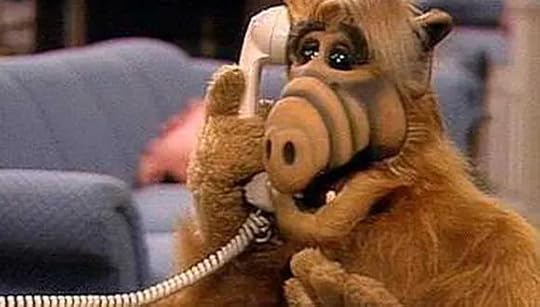
(I’m still hoping they are Alf.)

“Natural selection is not dependent on DNA, or any kind of Earth-bound biochemistry. So we don’t need to know exactly how alien biochemistry works— however it works, natural selection will be behind it.”
On one hand, life can be whatever it wants as it “ummm… finds a way”, but on the other hand, as Cambridge zoologist Dr. Arik Kershenbaum argues, it is also likely to follow universal rules which we can extrapolate from looking at life on our own planet. And that’s why, despite aliens in the title, Dr. Kershenbaum sticks to Earth in this book - but he makes it interesting enough that I can’t even complain about the definite lack of any Alf-like creature.
“Contrary to what some people think, zoologists such as myself don’t just spend our time identifying and classifying animals. Like scientists in all disciplines, we attempt to explain what we see in the world around us. Zoology, and evolutionary biology in general, is about proposing mechanisms for explaining the nature of life. Why do lions live in prides, but tigers hunt alone? Why do birds have only two wings? Why, for that matter, do the vast majority of animals have a left side and a right side? Observation is not enough. We want to derive a set of rules for life, in the same way that physicists derive rules for planets and stars. If those biological rules are universal rules, they will work as well on another planet as the law of gravity.”
Certain things are likely to apply in whichever environment life would take root. Natural selection does its trick in whichever place life sets shop, with kin selection, sex selection and game theory likely taking place. Form and function go hand in hand. Once resource pressures lead to some life forms becoming predators and others prey, movement becomes important. Eventually communication and information play parts in sociality and group life, with necessary intelligence in its various forms arising, and even language - in whichever way that makes sense given environmental conditions.
The aliens that we may or may not meet are not going to be somewhat altered copies of Earth-based life, but yet many things are certain to be common with “our” life. We see that on our own planet in convergent evolution, since many problems end up having a similar solution, even if it takes different paths to arrive there.
“Movement, communication, cooperation: these are evolutionary outcomes that are solutions to universal problems.”
And I can’t forget the little bit in the chapter dealing with what we would consider to even be an animal that made me first laugh and then frantically Google to see if Dr. Kershenbaum is just messing with his readers, but he most definitely isn’t:
“And in case you are surprised that ‘what is an animal?’ is still a question, consider that the Kentucky State Legislature still defines ‘animal’ as ‘every warm-blooded creature except a human being’. That is, reptiles and fish are not animals in Kentucky! As a result, they are not afforded the legal protection against cruelty that is extended to mammals.”
4 stars. It’s interesting, well-presented, and very sensible, and it’s fun to read even if you’re already familiar with evolutionary biology.
——————
Also posted on my blog.

April 6, 2021

Last month I read a collection of short stories by the late science fiction writer Octavia E. Butler that included one called "Amnesty". Aliens have come to Earth and humans must learn to live with them. The story revolves around Noah, a young woman who as a child was abducted by the aliens. She now works for them and recruits other humans, helping them overcome their fear.
That was my favourite story in Bloodchild and Other Stories but, being short, it left me wanting more. One of the questions I wanted answered was how this alien species had evolved. They are plant-like beings... or maybe fungi would be a more appropriate description. What, I wondered, were the physical conditions on their home planet? What drove their evolution into these intelligent... fungi-things?
Though they are imaginary, it is a valid question to ask how any life form evolves. Aside from invoking an intelligent designer - which doesn't answer the question, just sweeps it aside (after all, where did it come from?) - evolution through natural selection is the only explanation we have for the development of complex and intelligent life in our universe.
Knowing what we know of natural selection, is it possible to predict what life forms in other star systems, or even galaxies, are like?
In The Zoologists Guide to the Galaxy zoologist Arik Kershenbaum explains how we can use our observations of the evolution on Earth to infer what alien species might be like. Evolution seems to work similarly in similar situations and Dr. Kershenbaum gives numerous examples of life on Earth to show how conditions drive form and function. When problems arise, natural selection prompts solutions.
We see through convergent evolution that certain traits naturally arise to perform the same function. For instance, eyes with large lenses have evolved at least six times and "giving birth to live young appears to have evolved (quite independently) more than 100 times."
Dr. Kershenbaum looks specifically at how and if aliens would communicate, move, and sense their surroundings. Would they even communicate? How can we know they would be social? If they are, will they communicate with each other through language? And how might they "speak" that language? With audible words? With electricity? With visual symbols?
All of these are interesting questions with interesting answers. It amazes me to look at how life on our planet has evolved from a single-celled organism into the vast assortment of life forms that exist today.
My only problem with this book is the repetition. I wasn't surprised to learn Dr. Kershenbaum is a College Lecturer with the way he uses myriad examples. It's great to make sure everyone in the classroom (or reading the book) "gets it" but for those who require only one or two examples, it becomes tedious after a while. Perhaps part of the problem for me is that much of this is basic evolutionary biology, and I was already familiar with much of the content.
It was still fun to read, especially the beginning of each chapter. After that, when the repetition commenced, my eyes glazed over and I did a fair amount of skimming. It's worthwhile to read and there's a lot of fascinating details if you aren't widely read on this topic. Dr Kershenbaum knows the subject inside and out and shares his knowledge in an enjoyable and accessible way. (I am confused however, why he said "koala bear" rather than "koala". It's not a bear and I'm sure he knows that.)
Whether or not we ever find proof of life on other planets, humans will always wonder if there's life "out there", and supposing that it does, if it is like us. We might never have contact with other intelligent life forms but I hope we will, and unless and until we do, it's worth speculating about how they will be.
P.S. This book has a kick-ass cover!
P.S.S. To any non-Earthlings reading this: Hello! We could use some help down here!

March 19, 2021
I enjoyed the book. The author's enthusiasm is contagious, even if his speculations about life on other planets seems very unlikely to be tested anytime soon. But who knows? He's careful to keep his speculations based on actual science, and he offers many suggestions for further reading on Earthly life, many of which I've read and enjoyed over the years. Highly recommended, if this sounds like your kind of book. He picked an interesting teaching/learning device. And you won't be surprised to learn that Kershenbaum is a fellow science-fiction fan.
Here's the Kirkus review, which is short & sweet: https://www.kirkusreviews.com/book-re...
And a longer review at Science Magazine: https://blogs.sciencemag.org/books/20...
Excerpts from the WSJ review (paywalled) which led me to read the book:
“Zoologist’s Guide” is a wonderful mix of science-based speculation and entertaining whimsy. Each chapter examines a different aspect of animal behavior on Earth that, according to the author, would likely be replicated on other planets: sociality, cooperation, communication, intelligence, language and so forth. He’s always mindful to anchor his conjectures on what is already known—not just about well-studied terrestrial species but, crucially, about universal (hence universe-wide) evolutionary principles. Mr. Kershenbaum proceeds to argue, persuasively, that “we have enough of a diversity of adaptations here on Earth to give us at least potential mechanisms that seem appropriate solutions even on worlds almost unimagiably different from ours.” ....
“If alien animals use sound for their alarm calls, their screams will probably be very much like ours,” he writes. “Don’t believe it if they say ‘no one can hear you scream’—screams evolved to be heard, and to be disturbing. Even if aliens don’t use sound, it’s likely that alien alarm calls will be similarly chaotic in whatever medium they do use. They will have whatever properties are characteristic of the alien signal-production organ when you jump out from behind a rock and give the alien a fright. ‘Scary’ is going to be similar on every planet.”
Here's the Kirkus review, which is short & sweet: https://www.kirkusreviews.com/book-re...
And a longer review at Science Magazine: https://blogs.sciencemag.org/books/20...
Excerpts from the WSJ review (paywalled) which led me to read the book:
“Zoologist’s Guide” is a wonderful mix of science-based speculation and entertaining whimsy. Each chapter examines a different aspect of animal behavior on Earth that, according to the author, would likely be replicated on other planets: sociality, cooperation, communication, intelligence, language and so forth. He’s always mindful to anchor his conjectures on what is already known—not just about well-studied terrestrial species but, crucially, about universal (hence universe-wide) evolutionary principles. Mr. Kershenbaum proceeds to argue, persuasively, that “we have enough of a diversity of adaptations here on Earth to give us at least potential mechanisms that seem appropriate solutions even on worlds almost unimagiably different from ours.” ....
“If alien animals use sound for their alarm calls, their screams will probably be very much like ours,” he writes. “Don’t believe it if they say ‘no one can hear you scream’—screams evolved to be heard, and to be disturbing. Even if aliens don’t use sound, it’s likely that alien alarm calls will be similarly chaotic in whatever medium they do use. They will have whatever properties are characteristic of the alien signal-production organ when you jump out from behind a rock and give the alien a fright. ‘Scary’ is going to be similar on every planet.”

Read
March 29, 2023Basically, a book about how evolution works, and what features of life on earth would be the same or parallel for aliens. Doesn't go into stuff like whether there could be a silicon based life form or what aliens might look like or be like; more about what sort of conditions would cause eg an advanced intelligence to arise in principle (sociability, communication, ongoing challenge). I think this would be fascinating to the right reader and the writing is very accessible, but fundamentally it was a longer discussion of principles than I was really up for. Perfectly good book but basically the publisher oversold it, what's new.

April 3, 2021
Really a 2.5. In my opinion, needed way more aliens, as I think what I was looking for was not what the author was really there to discuss.
I approached wanting to hear some good, science-based speculation on various logical ways alien life could evolve, backed up by zoological and evolutionary principles. Instead, this book is a book about Earth zoology and evolutionary principles, with a mention every now and then about relevance to alien life. Many, many times that mention was along the lines of "We don't know if these are all the possible ways to deal with Problem, but because X and Y immutable properties hold on other planets, we expect that these possible ways of dealing with Problem will evolve there, too." which...just wasn't that much fun? The author would discuss a lot of Earth-based things for a whole chapter, and then maybe have a throw-away sentence or two of juicy speculation about how a certain sensory suite or locomotion would evolve on another planet, and that was just not the balance I was looking for.
There were also whole chapters where the author really lost my attention. It started with a whole chapter about how we couldn't really define "intelligence", and then another about how we couldn't really define "language", then a chapter about "artificial intelligence" that didn't even attempt to touch on the actual field of AI at all, and by the time we got to the last chapter where the author was discussing how we couldn't define "humanity" (when I thought that was way too specific and that the more interesting concept was how we would define "person"), I was ready to be done.
So...yeah. A nice refresher on evolutionary theory and Earth animals, but not what I was looking for.
I approached wanting to hear some good, science-based speculation on various logical ways alien life could evolve, backed up by zoological and evolutionary principles. Instead, this book is a book about Earth zoology and evolutionary principles, with a mention every now and then about relevance to alien life. Many, many times that mention was along the lines of "We don't know if these are all the possible ways to deal with Problem, but because X and Y immutable properties hold on other planets, we expect that these possible ways of dealing with Problem will evolve there, too." which...just wasn't that much fun? The author would discuss a lot of Earth-based things for a whole chapter, and then maybe have a throw-away sentence or two of juicy speculation about how a certain sensory suite or locomotion would evolve on another planet, and that was just not the balance I was looking for.
There were also whole chapters where the author really lost my attention. It started with a whole chapter about how we couldn't really define "intelligence", and then another about how we couldn't really define "language", then a chapter about "artificial intelligence" that didn't even attempt to touch on the actual field of AI at all, and by the time we got to the last chapter where the author was discussing how we couldn't define "humanity" (when I thought that was way too specific and that the more interesting concept was how we would define "person"), I was ready to be done.
So...yeah. A nice refresher on evolutionary theory and Earth animals, but not what I was looking for.

July 31, 2021
"Remain skeptical. I may err."
Edward Walter Maunder "together with his wife Annie Russell, also an astronomer who graduated from Girston College, Cambridge at a time when women were not permitted to receive degrees... founded the British Astronomical Association, in protest against the Royal Astronomical Society, which did not permit women to become members."
"According to popular accounts, [chemist George] Price was so taken by the inevitability of evolutionary forces that despite having been a committed atheist, he converted to Christianity, gave away his possessions, devoted the rest of his life to helping the homeless and sank into a deep depression, eventually dying in a dilapidated squat." (What? I need to research.) (according to wikipedia, "He believed that there had been too many coincidences in his life" which I guess means that he got confused about destiny vs free will & etc.) (ok, here's lots more: https://qz.com/780142/the-true-story-...)
"Predation is universal, because no ecosystem can exist for long without someone trying to take a bite out of somebody else..."
" ... we always need to look for the benefit to the sender if we want to understand why communication exists." (People who are more self-reliant are quieter...? Something I want to think about.)
[in the case of some colonial insects] "Females are 50% related to their parents, and to their daughters, just like us. But males hatch from unfertilized eggs and so have no father--they share 100% of their genes with their mothers. The surprising result is that sisters--who generally make up the bulk of the colony--are related to each other not just by 50% like in humans but they actually serve share 75% of their genes with each other." Which explains why they are so dedicated to survival of the colony above their own individual life.
I've been trying to learn to identify at least a few birds by ear because my eyes are going. But nobody else has ever pointed out to me that "... tweets work especially well in woodlands, and warbles in grassland."
" ... dolphins and apes don't currently seem to be under that kind of pressure... driving them to evolve language..." Well, what about the need to communicate to us convincingly enough to stop driving them to extinction?"
"... one of the things about science is that sometimes you just have to do the experiments to convince yourself that the experiment was pointless."
Based on his notes, I want to read:
Life's Solution: Inevitable Humans in a Lonely Universe by Simon Conway Morris
Are Dolphins Really Smart?: The Mammal Behind the Myth
Baboon Metaphysics: The Evolution of a Social Mind
What It's Like to Be a Dog: And Other Adventures in Animal Neuroscience
perhaps Anthropology from a Pragmatic Point of View by Immanuel Kant
and because he says " it seems likely that dogs are, in fact, descended from a smaller cousin of the ancestor of modern wolves, rather than from wolf-ancestors directly" Dawn of the Dog: The Genesis of a Natural Species
... and reread the wonderful
The Meme Machine by Susan Blackmore
... and watch Star Trek TNG, which he "consider[s] the Shakespeare science fiction" esp. *Measure of a Man.*
( I like that the author has an annotated bibliography for further reading.)
So, this is a slow read, very dense. Not difficult, but packed with ideas to process, to work through step-by-step. I def. recommend it to authors of SF. For my own enjoyment, the tidbits & further titles that I typed above in lieu of a proper review were the best parts of the book.
Edward Walter Maunder "together with his wife Annie Russell, also an astronomer who graduated from Girston College, Cambridge at a time when women were not permitted to receive degrees... founded the British Astronomical Association, in protest against the Royal Astronomical Society, which did not permit women to become members."
"According to popular accounts, [chemist George] Price was so taken by the inevitability of evolutionary forces that despite having been a committed atheist, he converted to Christianity, gave away his possessions, devoted the rest of his life to helping the homeless and sank into a deep depression, eventually dying in a dilapidated squat." (What? I need to research.) (according to wikipedia, "He believed that there had been too many coincidences in his life" which I guess means that he got confused about destiny vs free will & etc.) (ok, here's lots more: https://qz.com/780142/the-true-story-...)
"Predation is universal, because no ecosystem can exist for long without someone trying to take a bite out of somebody else..."
" ... we always need to look for the benefit to the sender if we want to understand why communication exists." (People who are more self-reliant are quieter...? Something I want to think about.)
[in the case of some colonial insects] "Females are 50% related to their parents, and to their daughters, just like us. But males hatch from unfertilized eggs and so have no father--they share 100% of their genes with their mothers. The surprising result is that sisters--who generally make up the bulk of the colony--are related to each other not just by 50% like in humans but they actually serve share 75% of their genes with each other." Which explains why they are so dedicated to survival of the colony above their own individual life.
I've been trying to learn to identify at least a few birds by ear because my eyes are going. But nobody else has ever pointed out to me that "... tweets work especially well in woodlands, and warbles in grassland."
" ... dolphins and apes don't currently seem to be under that kind of pressure... driving them to evolve language..." Well, what about the need to communicate to us convincingly enough to stop driving them to extinction?"
"... one of the things about science is that sometimes you just have to do the experiments to convince yourself that the experiment was pointless."
Based on his notes, I want to read:
Life's Solution: Inevitable Humans in a Lonely Universe by Simon Conway Morris
Are Dolphins Really Smart?: The Mammal Behind the Myth
Baboon Metaphysics: The Evolution of a Social Mind
What It's Like to Be a Dog: And Other Adventures in Animal Neuroscience
perhaps Anthropology from a Pragmatic Point of View by Immanuel Kant
and because he says " it seems likely that dogs are, in fact, descended from a smaller cousin of the ancestor of modern wolves, rather than from wolf-ancestors directly" Dawn of the Dog: The Genesis of a Natural Species
... and reread the wonderful
The Meme Machine by Susan Blackmore
... and watch Star Trek TNG, which he "consider[s] the Shakespeare science fiction" esp. *Measure of a Man.*
( I like that the author has an annotated bibliography for further reading.)
So, this is a slow read, very dense. Not difficult, but packed with ideas to process, to work through step-by-step. I def. recommend it to authors of SF. For my own enjoyment, the tidbits & further titles that I typed above in lieu of a proper review were the best parts of the book.

March 30, 2021
Arik Kershenbaum is a zoologist, and College Lecturer at Girton College, Cambridge. In this book, he uses his deep knowledge of zoology on this planet to work out what alien life might be like, if and when we find it.
He starts from the assumption that both the same physical laws will apply everywhere, and that evolution is the only reasonable mechanism to govern the development of life. We can't say exactly what alien life forms will be like, but we can make reasonable projections of how life forms might move, communicate, and socialize in environments we can plausibly envision existing on other worlds.
Kershenbaum takes us through some of the ways evolution has created animals to populate what are from the human perspective truly bizarre and alien environments right here on Earth, including the deep ocean--and the ways very different types of organisms have evolved essentially the same solution to similar problems. An obvious example is birds and bats, both of which have arms, or forelegs if you prefer, evolved into wings. They're not even the only two groups of animals that have evolved that very similar solution, but they're the two most similar that we're all familiar with.
He goes on to examine ways in which aliens in a variety of types of environments might move, get energy, and communicate with each other--and perhaps, eventually, communicate with us. He also examines whether we would, if the opportunity arises, consider intelligent aliens as people, or even human. I'm not persuaded by his argument for the usefulness of extending the word "human" to include intelligent aliens; I think it's more reasonable to stick with "people," since I'm not sure these hypothetical intelligent aliens would necessarily be flattered by us deciding we're all the same species. But who knows, we haven't met them yet. It's all speculation, and Kershenbaum's argument is interesting.
He's got some really fascinating speculation about what kind of life we might find in the interior oceans of worlds like Saturn's moon, Enceladus, which are potentially capable of supporting life, or whether there may be aliens who, like some of Earth's cephalopods, use the ability to control their displays of color to convey impressively complex communication. These are just specific examples; this is a fascinating and delightful book.
Highly recommended.
I bought this audiobook.
He starts from the assumption that both the same physical laws will apply everywhere, and that evolution is the only reasonable mechanism to govern the development of life. We can't say exactly what alien life forms will be like, but we can make reasonable projections of how life forms might move, communicate, and socialize in environments we can plausibly envision existing on other worlds.
Kershenbaum takes us through some of the ways evolution has created animals to populate what are from the human perspective truly bizarre and alien environments right here on Earth, including the deep ocean--and the ways very different types of organisms have evolved essentially the same solution to similar problems. An obvious example is birds and bats, both of which have arms, or forelegs if you prefer, evolved into wings. They're not even the only two groups of animals that have evolved that very similar solution, but they're the two most similar that we're all familiar with.
He goes on to examine ways in which aliens in a variety of types of environments might move, get energy, and communicate with each other--and perhaps, eventually, communicate with us. He also examines whether we would, if the opportunity arises, consider intelligent aliens as people, or even human. I'm not persuaded by his argument for the usefulness of extending the word "human" to include intelligent aliens; I think it's more reasonable to stick with "people," since I'm not sure these hypothetical intelligent aliens would necessarily be flattered by us deciding we're all the same species. But who knows, we haven't met them yet. It's all speculation, and Kershenbaum's argument is interesting.
He's got some really fascinating speculation about what kind of life we might find in the interior oceans of worlds like Saturn's moon, Enceladus, which are potentially capable of supporting life, or whether there may be aliens who, like some of Earth's cephalopods, use the ability to control their displays of color to convey impressively complex communication. These are just specific examples; this is a fascinating and delightful book.
Highly recommended.
I bought this audiobook.

July 20, 2022
3.75??? I liked the premise of this book, but I suppose carrying it out in a world where most people are basically science-illiterate could have been problematic for the author. The book is good, don’t get me wrong: I learned a few cool facts about some Earth creatures. However, it is not a book about xenobiology. The author never gets too in depth or too creative with all the possible variables that might affect alien life, nor all their possible variants.
What I liked: he sticks to science, albeit only the science he knows. He uses examples from myriad Terran flora and fauna. The book is engaging, despite its lack of detail and supposition.
What I did not like: the author claims that wisdom teeth and appendices have no purpose—this just isn’t true. Wisdom teeth were meant to replace our teeth that go bad (before modern dentistry), and appendices are not well understood. It is quite possible that they have a really important purpose, we just do not fully understand it yet. But to say they both have no purpose is misleading.
The author says we haven’t created meat that can be grown out of a vat yet. This is just false. As a vegetarian, I know for a fact that it has been done. Perhaps we are still waiting on the monetary benefits of making this a large-scale industry thing, but it definitely has been done already, and well before this book was published, too! I was surprised no one fact-checked him on these things.
I had several problems with the section of the book pertaining to language. I understand that different fields of study define language differently. However, language is a means of communication, and animals can communicate in different ways. For the author to describe the way cephalopods communicate as “smell,” well, that just seems strange to me. Cephalopods exchange chemicals on their tentacles by touch. These chemicals send messages to them. We still do not fully understand this mechanism of transfer fully, but I don’t think calling it “smelling” is very descriptive or accurate here. It just falls short. The author then goes on to claim that cephalopods do not have a language, after he tells us about their use of color and patterns externally (and skips over their chemical receptors that transmit Cthulhu-knows-what to their neuro-pathways). Questionable! Similarly, the author states that sign language is not really a language, but rather something that portrays a language, which yeah, I guess if you want to be arbitrary, maybe it could be classified as such, but to do so is disrespectful to deaf culture. Again, this is a book about biology and not a pedantic linguistic tome. Language communicates. Sign language communicates. It’s exclusionary to suggest that the deaf cannot have language. He then goes on to say that no Earth language is conveyed in exactly the way we see or hear the thing that is being talked about (i.e. obviously descriptive pictograms), so I guess he forgot that there are actually a few languages (and more than a few not in use anymore) that utilize ideograms. I don’t know. That just seems very exclusionary to me. Whole cultures use that. Also exclusionary are his attempts to explain how language cannot be circular in time (think “The Arrival”), because in no way can time be circular because he doesn’t think it is here). But several First Nations people have a culture based on the premise that time is circular, and their language and stories convey that in many different ways. Just because most white men don’t see it doesn’t mean it can’t possibly exist. The author likes to say that no animal (aside from humans) has language, in fact. But he admits that they do use body language (again, body language is a way of conveying meaning, so how is it not a language??). He explains that at least two creatures on Earth are known to have not just one specific word for something, but more than a few words that represent one clear object and are always used in the same situation, and despite how awesome he agrees that this is, he insists on reiterating that no animal has language aside from humans. It’s…mind-boggling to me the lack of logic in some of his statements!
Another point of contention that came up in the book is when the author proclaims that no simple life forms (like bacteria) can make decisions. Again, this is flat out wrong. Scientists have known for a while now that certain apparently unicellular (but can act as communal) organisms are capable of decision-making, as seen in many slime mold species. This is something that was well-known well before publication of this book. Another person that reviewed this book here also pointed out that the author contends that genetic memory doesn’t exist. It has been proven that genetic memory exists in many species, even in humans to some extent. How is this dood a zoologist?! How did I forget that perplexing claim?! Thanks to the person here that caught that!
Furthermore, the author states that legal personhood was petitioned for, but not granted to, orcas that have been held in captivity in places like Seaworld, but he neglects to mention that most are no longer forced to perform, and the ones that were able to be reintroduced into the wild, have been. That is a huge omission.
My final issue with this book is that all throughout, the author classifies any possible alien as being strictly plant or animal because that’s how it is here (he is quite fond of limiting the possibilities to only how it is here, even though there is quite literally a limitless bound to all of the possibilities of life and the rules governing them), but what about mushrooms???? What about protoclista??? He is leaving out entire kingdoms in this Terran taxonomy he is wont to follow!
Admittedly, the author states in the afterword that he refrained from going into too much detail so as to be the most understood by the largest amount of readers. Perhaps this is why so much was left out, explained poorly, or misrepresented altogether?? I don’t know.
I know after this review you will wonder if I am confused and forgot that I said in the beginning I actually liked the book. I promise I’m not confused. I did actually like the book. It’s not heavy on the science, and surprisingly, it’s not heavy on creative theories either. So don’t go reading it if you truly want to learn more about xenobiology or even zoology as we currently know it here, because at times, it is lacking. That being said, it’s still mildly engaging and mostly accurate, if a little Earth-bound in the topic of aliens.
What I liked: he sticks to science, albeit only the science he knows. He uses examples from myriad Terran flora and fauna. The book is engaging, despite its lack of detail and supposition.
What I did not like: the author claims that wisdom teeth and appendices have no purpose—this just isn’t true. Wisdom teeth were meant to replace our teeth that go bad (before modern dentistry), and appendices are not well understood. It is quite possible that they have a really important purpose, we just do not fully understand it yet. But to say they both have no purpose is misleading.
The author says we haven’t created meat that can be grown out of a vat yet. This is just false. As a vegetarian, I know for a fact that it has been done. Perhaps we are still waiting on the monetary benefits of making this a large-scale industry thing, but it definitely has been done already, and well before this book was published, too! I was surprised no one fact-checked him on these things.
I had several problems with the section of the book pertaining to language. I understand that different fields of study define language differently. However, language is a means of communication, and animals can communicate in different ways. For the author to describe the way cephalopods communicate as “smell,” well, that just seems strange to me. Cephalopods exchange chemicals on their tentacles by touch. These chemicals send messages to them. We still do not fully understand this mechanism of transfer fully, but I don’t think calling it “smelling” is very descriptive or accurate here. It just falls short. The author then goes on to claim that cephalopods do not have a language, after he tells us about their use of color and patterns externally (and skips over their chemical receptors that transmit Cthulhu-knows-what to their neuro-pathways). Questionable! Similarly, the author states that sign language is not really a language, but rather something that portrays a language, which yeah, I guess if you want to be arbitrary, maybe it could be classified as such, but to do so is disrespectful to deaf culture. Again, this is a book about biology and not a pedantic linguistic tome. Language communicates. Sign language communicates. It’s exclusionary to suggest that the deaf cannot have language. He then goes on to say that no Earth language is conveyed in exactly the way we see or hear the thing that is being talked about (i.e. obviously descriptive pictograms), so I guess he forgot that there are actually a few languages (and more than a few not in use anymore) that utilize ideograms. I don’t know. That just seems very exclusionary to me. Whole cultures use that. Also exclusionary are his attempts to explain how language cannot be circular in time (think “The Arrival”), because in no way can time be circular because he doesn’t think it is here). But several First Nations people have a culture based on the premise that time is circular, and their language and stories convey that in many different ways. Just because most white men don’t see it doesn’t mean it can’t possibly exist. The author likes to say that no animal (aside from humans) has language, in fact. But he admits that they do use body language (again, body language is a way of conveying meaning, so how is it not a language??). He explains that at least two creatures on Earth are known to have not just one specific word for something, but more than a few words that represent one clear object and are always used in the same situation, and despite how awesome he agrees that this is, he insists on reiterating that no animal has language aside from humans. It’s…mind-boggling to me the lack of logic in some of his statements!
Another point of contention that came up in the book is when the author proclaims that no simple life forms (like bacteria) can make decisions. Again, this is flat out wrong. Scientists have known for a while now that certain apparently unicellular (but can act as communal) organisms are capable of decision-making, as seen in many slime mold species. This is something that was well-known well before publication of this book. Another person that reviewed this book here also pointed out that the author contends that genetic memory doesn’t exist. It has been proven that genetic memory exists in many species, even in humans to some extent. How is this dood a zoologist?! How did I forget that perplexing claim?! Thanks to the person here that caught that!
Furthermore, the author states that legal personhood was petitioned for, but not granted to, orcas that have been held in captivity in places like Seaworld, but he neglects to mention that most are no longer forced to perform, and the ones that were able to be reintroduced into the wild, have been. That is a huge omission.
My final issue with this book is that all throughout, the author classifies any possible alien as being strictly plant or animal because that’s how it is here (he is quite fond of limiting the possibilities to only how it is here, even though there is quite literally a limitless bound to all of the possibilities of life and the rules governing them), but what about mushrooms???? What about protoclista??? He is leaving out entire kingdoms in this Terran taxonomy he is wont to follow!
Admittedly, the author states in the afterword that he refrained from going into too much detail so as to be the most understood by the largest amount of readers. Perhaps this is why so much was left out, explained poorly, or misrepresented altogether?? I don’t know.
I know after this review you will wonder if I am confused and forgot that I said in the beginning I actually liked the book. I promise I’m not confused. I did actually like the book. It’s not heavy on the science, and surprisingly, it’s not heavy on creative theories either. So don’t go reading it if you truly want to learn more about xenobiology or even zoology as we currently know it here, because at times, it is lacking. That being said, it’s still mildly engaging and mostly accurate, if a little Earth-bound in the topic of aliens.
This entire review has been hidden because of spoilers.

April 13, 2023
This is a book about evolution and how challenges for survival on alien worlds will probably be met with similar solutions to those found here on earth. So, using ourselves as a guide, we can take a guess at what extraterrestrials might look like and how they would behave.
I found Chapter 4 on movement particularly interesting and the easiest to understand. I was looking forward to Chapter 9 on the development of language, but I was surprised the author barely discussed other species of hominins regarding this. We looked at great apes, birds and even dolphins, but didn’t explore whether, say, Neanderthals or Denisovens could talk. This seemed odd. In fact, the book is really only concerned with humans and animals, and how they might inform our ideas regarding alien life, mostly ignoring other extinct hominin species when looking for clues. The book also doesn’t discuss whether silicone based life forms are possible, which would have been interesting.
Despite that, there’s certainly plenty of information in here, but I felt quite up and down with it - one minute I was thinking, ‘wow, that’s a really interesting fact’ but a few paragraphs later I was thinking, ‘this is quite tedious’. I hit a wall with it at times because the writing is a bit like reading a textbook. However, this is great resource for any sci-fi writers looking to create aliens for their stories, or anyone interested in natural history.
I found Chapter 4 on movement particularly interesting and the easiest to understand. I was looking forward to Chapter 9 on the development of language, but I was surprised the author barely discussed other species of hominins regarding this. We looked at great apes, birds and even dolphins, but didn’t explore whether, say, Neanderthals or Denisovens could talk. This seemed odd. In fact, the book is really only concerned with humans and animals, and how they might inform our ideas regarding alien life, mostly ignoring other extinct hominin species when looking for clues. The book also doesn’t discuss whether silicone based life forms are possible, which would have been interesting.
Despite that, there’s certainly plenty of information in here, but I felt quite up and down with it - one minute I was thinking, ‘wow, that’s a really interesting fact’ but a few paragraphs later I was thinking, ‘this is quite tedious’. I hit a wall with it at times because the writing is a bit like reading a textbook. However, this is great resource for any sci-fi writers looking to create aliens for their stories, or anyone interested in natural history.

September 20, 2020
(Full disclosure: I am a friend and collaborator of the author's, received an ARC for comments, and a zoologist by trade. I've also preordered 3 copies to give as gifts because it's one of my favourite popular science books.)
In everyday life, Dr Arik Kershenbaum's work focuses on animal communication and how their evolutionary history shapes their social lives. His book takes these same ideas and applies them not to just the communication of aliens, but their very shapes, social systems, and biology. In a brilliant, erudite trip through the galaxy, he explains how we can take our Earth-based knowledge of how natural selection works and apply it to other planets. Natural selection, he believes, will be like gravity and exist everywhere in the Universe, no matter the mode of reproduction. In the same way that physicists can make predictions about the way gravity will work on Venus, Dr Kershenbaum argues we can do the same with evolutionary histories.
He explores how physics will constrict potential modes of locomotion, but also speculates on how life might exist in perpetual flight, or as gas clouds. How will an alien move through a gas cloud, an ocean, a desert? Will they walk, crawl, slither, scuttle or propel themselves by other means, like the jet-fueled progress of squids? What might that look like in an atmosphere wildly different to our own?
In turn, his knowledge of biology informs his speculation on aliens' lives. Will they be social, like humans? Will they cooperate, share, and communicate in the same ways as us? Will they have sex? If so, what would their mating rituals look like? Will they be intelligent, and if so will they have song or poetry or art? What about culture and heritable knowledge? On Earth, biologists are stunned by the intelligence and ingenuity of octopuses, which can't pass their knowledge onto their offspring because of their reproductive strategy, so don't have culture. What can they potentially tell us about what intelligent but not civilised alien life would look like?
Kershenbaum has an easy to read style that is accessible to the layman reader, and he still manages to fill his book with well-verified scientific facts. In amongst these are gems, like that the creature that swallowed Jonah in the Old Testament was a huge fish, and not a whale, that dolphins have names for each other and teach their daughters to protect the delicate skin of their snouts with sponges while truffling in gravel, and that duck-billed platypuses hunt through mud using electrical impulses. Each fact is meticulously backed up with references from scientific literature and his "Further Reading" section is an excellent guide to the greats of popular science writing.
Kershenbaum also uses humour to help get his points across, as when he uses Winnie the Pooh, Piglet, and Eeyore to explain about the necessary flexibility of hierarchy in language to produce infinite meaning from finite words. Citing Chomsky, he develops the ideas of how grammar is required, and how we can predict the forms that alien communication might take from what we know of communication on earth. A civilisation that uses language based on smells is unlikely, apparently, but it's far more likely that vocal communication will work. Unsurprisingly from a scientist who focus on communication complexity, his chapters on how alien language might evolve and work are particularly compelling and interesting.
Easy to read, clever, funny, and well-researched, A Zoologist's Guide to the Universe is a joy to read. Let Arik take you on a trip through the galaxy and show you the potential of the wonders therein.
I might even call it the best book on alien life with 'guide to the galaxy' in the title not written by Douglas Adams. I hope you enjoy your trip with Arik as your guide as much as I did.
In everyday life, Dr Arik Kershenbaum's work focuses on animal communication and how their evolutionary history shapes their social lives. His book takes these same ideas and applies them not to just the communication of aliens, but their very shapes, social systems, and biology. In a brilliant, erudite trip through the galaxy, he explains how we can take our Earth-based knowledge of how natural selection works and apply it to other planets. Natural selection, he believes, will be like gravity and exist everywhere in the Universe, no matter the mode of reproduction. In the same way that physicists can make predictions about the way gravity will work on Venus, Dr Kershenbaum argues we can do the same with evolutionary histories.
He explores how physics will constrict potential modes of locomotion, but also speculates on how life might exist in perpetual flight, or as gas clouds. How will an alien move through a gas cloud, an ocean, a desert? Will they walk, crawl, slither, scuttle or propel themselves by other means, like the jet-fueled progress of squids? What might that look like in an atmosphere wildly different to our own?
In turn, his knowledge of biology informs his speculation on aliens' lives. Will they be social, like humans? Will they cooperate, share, and communicate in the same ways as us? Will they have sex? If so, what would their mating rituals look like? Will they be intelligent, and if so will they have song or poetry or art? What about culture and heritable knowledge? On Earth, biologists are stunned by the intelligence and ingenuity of octopuses, which can't pass their knowledge onto their offspring because of their reproductive strategy, so don't have culture. What can they potentially tell us about what intelligent but not civilised alien life would look like?
Kershenbaum has an easy to read style that is accessible to the layman reader, and he still manages to fill his book with well-verified scientific facts. In amongst these are gems, like that the creature that swallowed Jonah in the Old Testament was a huge fish, and not a whale, that dolphins have names for each other and teach their daughters to protect the delicate skin of their snouts with sponges while truffling in gravel, and that duck-billed platypuses hunt through mud using electrical impulses. Each fact is meticulously backed up with references from scientific literature and his "Further Reading" section is an excellent guide to the greats of popular science writing.
Kershenbaum also uses humour to help get his points across, as when he uses Winnie the Pooh, Piglet, and Eeyore to explain about the necessary flexibility of hierarchy in language to produce infinite meaning from finite words. Citing Chomsky, he develops the ideas of how grammar is required, and how we can predict the forms that alien communication might take from what we know of communication on earth. A civilisation that uses language based on smells is unlikely, apparently, but it's far more likely that vocal communication will work. Unsurprisingly from a scientist who focus on communication complexity, his chapters on how alien language might evolve and work are particularly compelling and interesting.
Easy to read, clever, funny, and well-researched, A Zoologist's Guide to the Universe is a joy to read. Let Arik take you on a trip through the galaxy and show you the potential of the wonders therein.
I might even call it the best book on alien life with 'guide to the galaxy' in the title not written by Douglas Adams. I hope you enjoy your trip with Arik as your guide as much as I did.

October 26, 2022
The Zoologist's Guide to the Galaxy purports to be an examination of what life must be like, and how it works - on earth and in the rest of the universe. However, in my opinion, Kershenbaum has failed to do this topic justice. Interested readers should rather seek out The Equations of Life: How Physics Shapes Evolution by Charles S. Cockell, which provides a better written and better argued hypothesis that the laws of physics narrowly constrain how life can evolve, making evolution's outcomes predictable to a certain extent.
Kershenbaum tried something similar, but focused on animal biology (no plants or fungi were featured in this book). He tries to extrapolate what we know of Earthling biology, to the biology of off-world species. Each chapter broadly outlines a particular characteristic - movement, communication, intelligence, sociality, information, language, artificial intelligence, and what does it mean to be human. Kershenbaum describes the sequence of events that lead to the evolution of humans, which he asserts is the pinnacle of life on Earth (after all - no other species has built spaceships or has language). He then states that a similar sequence of events must lead to the evolution of intelligent aliens (who would build spaceships - no mention of the necessity of opposable thumbs to build spaceships was made in the whole book, which I thought rather strange). The result is a broad, superficial, and lackluster, summary of high school biology classes, with a minimal hand wave to possible alien life on other planets, accompanied by too many assumptions, which he asserts as true, but doesn't sufficiently demonstrate why they must be true throughout the galaxy. While I'm willing to agree that a large portion (but probably not all) of alien life will resemble Earth-life (i.e. the same as us but different), I did not find Kershenbaum's conclusion well written or argued, nor did I agree with all his assumptions, which I found lacking in terms of adequate research or just did not agree with. He ignores slime molds, which would turn some of his stated assumptions on their head. The sections on morphology and physiology are adequate, but the more fuzzy sections on language, sociality, complexity are narrow-minded and full of cherry-picked definitions and fuzzy reasoning. The chapter on artificial intelligence (AI) is mind-boggling (and not in a good way). I also found Kershenbaum's perspective to be particularly anthropocentric and lacking imagination. This book was disappointing.
In short: Aliens will be the same as us, but different🙄. So go watch some Star Trek if you want aliens.
PS. I wouldn't be the least bit surprised if Kershenbaum's book was a prescribed book for his first year collage class in the hopes that mentioning aliens in the title and text will make his students want to read it. Helpful hint: The epilogue summarises the whole book.
Kershenbaum tried something similar, but focused on animal biology (no plants or fungi were featured in this book). He tries to extrapolate what we know of Earthling biology, to the biology of off-world species. Each chapter broadly outlines a particular characteristic - movement, communication, intelligence, sociality, information, language, artificial intelligence, and what does it mean to be human. Kershenbaum describes the sequence of events that lead to the evolution of humans, which he asserts is the pinnacle of life on Earth (after all - no other species has built spaceships or has language). He then states that a similar sequence of events must lead to the evolution of intelligent aliens (who would build spaceships - no mention of the necessity of opposable thumbs to build spaceships was made in the whole book, which I thought rather strange). The result is a broad, superficial, and lackluster, summary of high school biology classes, with a minimal hand wave to possible alien life on other planets, accompanied by too many assumptions, which he asserts as true, but doesn't sufficiently demonstrate why they must be true throughout the galaxy. While I'm willing to agree that a large portion (but probably not all) of alien life will resemble Earth-life (i.e. the same as us but different), I did not find Kershenbaum's conclusion well written or argued, nor did I agree with all his assumptions, which I found lacking in terms of adequate research or just did not agree with. He ignores slime molds, which would turn some of his stated assumptions on their head. The sections on morphology and physiology are adequate, but the more fuzzy sections on language, sociality, complexity are narrow-minded and full of cherry-picked definitions and fuzzy reasoning. The chapter on artificial intelligence (AI) is mind-boggling (and not in a good way). I also found Kershenbaum's perspective to be particularly anthropocentric and lacking imagination. This book was disappointing.
In short: Aliens will be the same as us, but different🙄. So go watch some Star Trek if you want aliens.
PS. I wouldn't be the least bit surprised if Kershenbaum's book was a prescribed book for his first year collage class in the hopes that mentioning aliens in the title and text will make his students want to read it. Helpful hint: The epilogue summarises the whole book.

September 10, 2021
Despite the catchy title that drew me in, The Zoologist's Guide to the Galaxy did not meet my expectations...
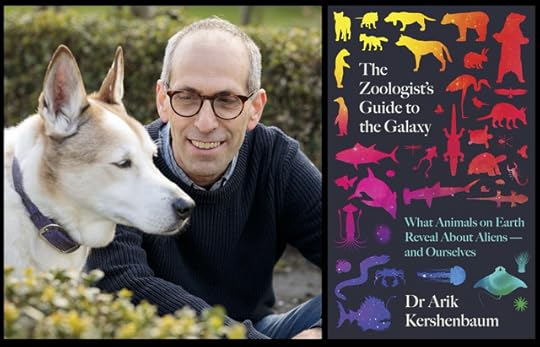
Author Arik Kershenbaum is a zoologist, College Lecturer, and Fellow at Girton College, University of Cambridge. He has researched animal vocal communication for the past ten years in Europe, Israel and the United States and has published more than twenty academic publications on the topic. He is also a member of the international board of advisors for METI.org, a think tank on the topic of Messaging Extra Terrestrial Intelligence.
Arik Kershenbaum:
As its subtitle indicates, the book is a look into what alien life could look like, with life on Earth guiding the discussion and postulates. An extremely interesting topic, to be sure, but Kershenbaum's writing here did not do this topic proper justice, IMHO.
I found much of the writing here to be overly dry and long-winded, a quality that is sadly somewhat typical of British prose. I found Kershenbaum's writing droned on in a monotonous fashion for the duration of the book.
Sadly, the skills that make for great science often do not correlate with the skills that make for great writing...
Unfortunately, the dry and flat tone of this one took away from my appreciation of the content. My reviews are always heavily weighted to correspond with how readable and engaging the writing is, and accordingly that will regrettably see this one penalized fairly harshly.
There was also a bit of curious writing in chapter 6 about intelligence, that I did not agree with. Kershenbaum seemingly decries intelligence testing, and casts doubt on both "g" factor intelligence, as well as the concept of IQ.
Human intelligence has been widely scientifically studied. Large-scale intelligence testing has been done by the Armed Forces of the United States for ~100 years, and SAT scores have also been widely used by academic institutions of higher learning for around as long, as well.
Kershenbaum insinuates that intelligence tests are inherently culturally biased. This is not true. Tests such as Raven's Progressive Matrices are pattern-driven, and have nothing to do with culture...
See Richard J. Haier's The Intelligent Brain for more on this topic. Haier is one of the world's leading intelligence experts, and he takes a deep dive into the topic in that course.
****************************
Despite being excited to start this one, its presentation left much to be desired for me...
I found the writing way too dry for my tastes, and noticed my attention wandering numerous times while reading it.
2.5 stars.
Author Arik Kershenbaum is a zoologist, College Lecturer, and Fellow at Girton College, University of Cambridge. He has researched animal vocal communication for the past ten years in Europe, Israel and the United States and has published more than twenty academic publications on the topic. He is also a member of the international board of advisors for METI.org, a think tank on the topic of Messaging Extra Terrestrial Intelligence.
Arik Kershenbaum:
As its subtitle indicates, the book is a look into what alien life could look like, with life on Earth guiding the discussion and postulates. An extremely interesting topic, to be sure, but Kershenbaum's writing here did not do this topic proper justice, IMHO.
I found much of the writing here to be overly dry and long-winded, a quality that is sadly somewhat typical of British prose. I found Kershenbaum's writing droned on in a monotonous fashion for the duration of the book.
Sadly, the skills that make for great science often do not correlate with the skills that make for great writing...
Unfortunately, the dry and flat tone of this one took away from my appreciation of the content. My reviews are always heavily weighted to correspond with how readable and engaging the writing is, and accordingly that will regrettably see this one penalized fairly harshly.
There was also a bit of curious writing in chapter 6 about intelligence, that I did not agree with. Kershenbaum seemingly decries intelligence testing, and casts doubt on both "g" factor intelligence, as well as the concept of IQ.
Human intelligence has been widely scientifically studied. Large-scale intelligence testing has been done by the Armed Forces of the United States for ~100 years, and SAT scores have also been widely used by academic institutions of higher learning for around as long, as well.
Kershenbaum insinuates that intelligence tests are inherently culturally biased. This is not true. Tests such as Raven's Progressive Matrices are pattern-driven, and have nothing to do with culture...
See Richard J. Haier's The Intelligent Brain for more on this topic. Haier is one of the world's leading intelligence experts, and he takes a deep dive into the topic in that course.
****************************
Despite being excited to start this one, its presentation left much to be desired for me...
I found the writing way too dry for my tastes, and noticed my attention wandering numerous times while reading it.
2.5 stars.

February 21, 2021
With a new rover just delivered to Mars, the question about extraterrestrial life is once again on the headlines. If we want to be prepared for finding it, we have to answer some fundamental questions..
This book is certainly on the science, not science fiction side - you won't find here detailed descriptions of little green people. The parts about potential aliens are not the most interesting - you can even consider them as a little unimaginative (everything will work as on Earth, in short), but well-argued. After all, physics, chemistry, and mathematics are universal, so their effects will be similar on every planet, depending only on the local conditions.
Much more engaging is the main core of this "Guide", which is explaining how evolution works. With a considerable amount of humor and typical British love for puns, Dr. Arik Kershenbaum describes many interesting species and mechanisms, and tries to answer such questions as "what is animal" or "what is intelligence". If you liked "Your Inner Fish" by Neil Shubin, you should like this one, too.
Thanks to the publisher, Penguin Press, and NetGalley for the advance copy of this book.
This book is certainly on the science, not science fiction side - you won't find here detailed descriptions of little green people. The parts about potential aliens are not the most interesting - you can even consider them as a little unimaginative (everything will work as on Earth, in short), but well-argued. After all, physics, chemistry, and mathematics are universal, so their effects will be similar on every planet, depending only on the local conditions.
Much more engaging is the main core of this "Guide", which is explaining how evolution works. With a considerable amount of humor and typical British love for puns, Dr. Arik Kershenbaum describes many interesting species and mechanisms, and tries to answer such questions as "what is animal" or "what is intelligence". If you liked "Your Inner Fish" by Neil Shubin, you should like this one, too.
Thanks to the publisher, Penguin Press, and NetGalley for the advance copy of this book.

April 2, 2021
How and why did we evolve to be the kind of animal that looks at the stars and ponders the existence of life on other planets? Are we really that unique in the cosmos? Find out the answers to these questions and many more in this fascinating guide to the biological galaxy. Though a little dry at times (and under-represented by visuals), this book deserves a yellow highlighter plus an ink pen for additional notes/underlining. If you're too busy for all that, just skip to the final chapter for a condensed (two-page) summary. After all, we're only human.

September 29, 2023
He may not have described what aliens looked like, but it was still a great read!
Using the current science of evolutionary biology and zoology, Dr. Kershenbaum attempts to explain how aliens - particularly intelligent, advanced civilization-type aliens - may evolve and exist in our galaxy. I appreciated the steps through which the author explored this admittedly big concept: function, defining animals, movement, communication, intelligence, sociality, information exchange, language, and artificial intelligence and humanity.
I'm not sure I always agree with his conclusions (which he points out is likely), in part because I don't fully understand all the nuances glossed over in favour of a popular science book and in part because I think it's difficult to remain grounded in science when speculating on types of life that we have absolutely no real conceptualization of (e.g., genetic material not based on RNA/DNA, forms of communication that don't exist on Earth that we know of, etc.). He errs on the side of not speculating (smart) but it leaves the book feeling a little unbalanced. Perhaps that's an unfair critique.
I did really enjoy this book however, and learned a lot. It was well paced, well argued (considering the dearth of data we have in some areas of research), and well written. I think for general audiences, having at least a rudimentary understanding of biology and evolution is essential (at least remember your high school or undergrad courses, if not having already read other popsci biology books). The concepts are quite complex and despite his (good) attempts to simplify, your brain is going to work hard reading this book.
And this is not really a space nonfiction book - it's very much a biology book with a focus on high-level theories of life that could be transferrable to alien species.
One of my favourite elements are all the book recommendations - they're found in the footnotes and collected in the back of the book. There's a bunch of nonfiction and scifi recommendations that I want to read now.
And finally, anyone who calls Star Trek: The Next Generation the Shakespeare of science fiction (iykyk) is worth reading.
Using the current science of evolutionary biology and zoology, Dr. Kershenbaum attempts to explain how aliens - particularly intelligent, advanced civilization-type aliens - may evolve and exist in our galaxy. I appreciated the steps through which the author explored this admittedly big concept: function, defining animals, movement, communication, intelligence, sociality, information exchange, language, and artificial intelligence and humanity.
I'm not sure I always agree with his conclusions (which he points out is likely), in part because I don't fully understand all the nuances glossed over in favour of a popular science book and in part because I think it's difficult to remain grounded in science when speculating on types of life that we have absolutely no real conceptualization of (e.g., genetic material not based on RNA/DNA, forms of communication that don't exist on Earth that we know of, etc.). He errs on the side of not speculating (smart) but it leaves the book feeling a little unbalanced. Perhaps that's an unfair critique.
I did really enjoy this book however, and learned a lot. It was well paced, well argued (considering the dearth of data we have in some areas of research), and well written. I think for general audiences, having at least a rudimentary understanding of biology and evolution is essential (at least remember your high school or undergrad courses, if not having already read other popsci biology books). The concepts are quite complex and despite his (good) attempts to simplify, your brain is going to work hard reading this book.
And this is not really a space nonfiction book - it's very much a biology book with a focus on high-level theories of life that could be transferrable to alien species.
One of my favourite elements are all the book recommendations - they're found in the footnotes and collected in the back of the book. There's a bunch of nonfiction and scifi recommendations that I want to read now.
And finally, anyone who calls Star Trek: The Next Generation the Shakespeare of science fiction (iykyk) is worth reading.

January 16, 2021
I read this book through Netgalley with thanks to the publishers, in exchange for an honest review.
What might aliens look like? A question I think everyone has thought of at least once in their lives. Arik takes you through a sea of possibilities - like how might aliens communicate? Language? Intelligence? Reading this, you don’t only come to speculate life on other planets but come to further understand your own and the life we have on earth.
I loved reading about the parallels between biology and physics too, with the field of astrobiology a fascinating burgeoning field of science. This book definitely captures all the wonders of the stars and deep questions of other life as well as being informative and just an overall, great fun read.
This book provided a unique spin on astrobiology, veering away from the more common questions to address and discusses those that often aren’t included. Focusing on just what complex alien life may look like and the forms they may take and what they may act like based on the science and what we know from our own research and experiences on earth. It makes for a very novel book and it’s just so so interesting, I don’t think it could fail to grab your interest or attention at least once in this book. You’ll definitely come out of it learning something new!
The author writes in such a beautifully legible and easily understandable way, where the writing just flows effortlessly. It makes it a perfect book for those who perhaps don’t read a lot of a science as well as catering for those who do- no discrimination, there’s plenty of explanations and laying the foundations in this book and really helps build the reader up to knowing a fair bit about this topic.
I also love the name for this book. It’s so aptly named ! Overall, a great and informative read and one of the best popular science books in its field that I’ve read so far! I devoured it in two days!
What might aliens look like? A question I think everyone has thought of at least once in their lives. Arik takes you through a sea of possibilities - like how might aliens communicate? Language? Intelligence? Reading this, you don’t only come to speculate life on other planets but come to further understand your own and the life we have on earth.
I loved reading about the parallels between biology and physics too, with the field of astrobiology a fascinating burgeoning field of science. This book definitely captures all the wonders of the stars and deep questions of other life as well as being informative and just an overall, great fun read.
This book provided a unique spin on astrobiology, veering away from the more common questions to address and discusses those that often aren’t included. Focusing on just what complex alien life may look like and the forms they may take and what they may act like based on the science and what we know from our own research and experiences on earth. It makes for a very novel book and it’s just so so interesting, I don’t think it could fail to grab your interest or attention at least once in this book. You’ll definitely come out of it learning something new!
The author writes in such a beautifully legible and easily understandable way, where the writing just flows effortlessly. It makes it a perfect book for those who perhaps don’t read a lot of a science as well as catering for those who do- no discrimination, there’s plenty of explanations and laying the foundations in this book and really helps build the reader up to knowing a fair bit about this topic.
I also love the name for this book. It’s so aptly named ! Overall, a great and informative read and one of the best popular science books in its field that I’ve read so far! I devoured it in two days!

June 25, 2021
This was a decent look at the subject of the evolution of life beyond earth, but was by and large an introductory look at various principles underlying life on earth with very little actual consideration of how those principles might remain consistent or vary in conditions not like our own. Overall, like most popularly intended astrobiology books I've read, I was disappointed to find that The Zoologist's Guide to the Galaxy wasn't as deep, complex or exploratory as I hoped, but most of what it covered was sound and it did provide extra angles for consideration.
With regards to the subject of universal physical characteristics, the only real subject that he delved into was mobility, on land, in air or water and the impact of mobility on bilateral symmetry. He didn't follow this very deeply though, and little or no mention or appraisal of cephalization, notocords, one way guts or other prominent physiological characteristics of terrestrial animals. Likewise, he explicitly declined to speculate on the evolution of sex, or examine its variation on earth.
I did at least find his consideration of the possible evolution of primary forms of communication other than sound, and under what conditions sound-based communication is or is not ideal, interesting. Beyond physiology, he spent a lot of time on sociological factors behind animal behavior and intelligence, and I did find his chapter on language particularly interesting.
With regards to the subject of universal physical characteristics, the only real subject that he delved into was mobility, on land, in air or water and the impact of mobility on bilateral symmetry. He didn't follow this very deeply though, and little or no mention or appraisal of cephalization, notocords, one way guts or other prominent physiological characteristics of terrestrial animals. Likewise, he explicitly declined to speculate on the evolution of sex, or examine its variation on earth.
I did at least find his consideration of the possible evolution of primary forms of communication other than sound, and under what conditions sound-based communication is or is not ideal, interesting. Beyond physiology, he spent a lot of time on sociological factors behind animal behavior and intelligence, and I did find his chapter on language particularly interesting.

May 22, 2022
¡Amé este libro! ¡lo repetiría ad infinitum!
Profundo, bien fundamentado, ilustrativo y hasta divertido.
Advertencia (spoiler alert): ningún extraterrestre es descrito en este libro. Pero leyéndolo alcanza uno a imaginarse a todos los extraterrestres.
Reseña en extenso en cocción…
Profundo, bien fundamentado, ilustrativo y hasta divertido.
Advertencia (spoiler alert): ningún extraterrestre es descrito en este libro. Pero leyéndolo alcanza uno a imaginarse a todos los extraterrestres.
Reseña en extenso en cocción…

September 1, 2025
I don't know how much longer I can endure nonfiction audio books read by men with British accents. No matter how interesting the topic, I'm always bored. Now there was definitely some interesting things here, but also a lot of speculation that is likely never to be known in our lifetimes. I am fascinated by the concept of alien life being very similar to humans but also completely different and the ways humans would react to such life forms. But also, I just find a lot of the hard science around this boring. Biology tends to put me to sleep. Give me physics, or sociological biology instead.
Also the repeated mentions of Richard Dawkins gave me the ick.
Also the repeated mentions of Richard Dawkins gave me the ick.

April 12, 2023
AMAZING READ! This book was super interesting, accessible, and well-cited. I learned so many cool things like Zipf's Law and the pros and cons of Darwinian and Lamarckian evolution (among other stuff). The book was less about answering big questions about aliens and more about understanding the evolution and traits of animals on Earth, although Dr. Kershenbaum also writes about what we can expect from alien life. Regardless of whether you're interested in the topic or not, it's a great book.

January 25, 2026
E' molto affascinante immaginare che tipo di creature possano nascondersi nell'universo, ma forse è ancora più affascinante osservare l'incredibile diversità presente sul nostro pianeta.
Questo titolo cerca di immaginare che caratteristiche potrebbero avere i cosiddetti alieni, ma lo fa ragionando su come e perché le specie sulla Terra si sono evolute in un determinato modo e non in un altro.
Ho imparato, sottolineato, annotato, approfondito...e questo per me significa che ho tra le mani un saggio coi fiocchi.
Questo titolo cerca di immaginare che caratteristiche potrebbero avere i cosiddetti alieni, ma lo fa ragionando su come e perché le specie sulla Terra si sono evolute in un determinato modo e non in un altro.
Ho imparato, sottolineato, annotato, approfondito...e questo per me significa che ho tra le mani un saggio coi fiocchi.

June 17, 2026
2.5 ⭐
The explanations of evolutionary concepts on earth and the examples of earth species were mostly interesting, but the transfer of these to extraterrestrial life really fell short.
In my opinion it was mostly relatively unfounded assumptions and generalizations. A lot of the time the arguments and logical conclusions didn't seem very scientifically sound to me (there also weren't a lot of sources to back them up with).
To top it off, after the first few chapters the speculations became increasingly repetitive and boring.
The explanations of evolutionary concepts on earth and the examples of earth species were mostly interesting, but the transfer of these to extraterrestrial life really fell short.
In my opinion it was mostly relatively unfounded assumptions and generalizations. A lot of the time the arguments and logical conclusions didn't seem very scientifically sound to me (there also weren't a lot of sources to back them up with).
To top it off, after the first few chapters the speculations became increasingly repetitive and boring.

September 13, 2025
I thought the author made some really good points about how animals, people, and other things on earth are greatly related to the cosmos. I'm not sure I agree with him on the aliens piece, although I do believe we are not the only life forms out there. I want to thank the author, the publisher, and Edelweiss+ for giving me an e-copy of this book, in return for an honest review.
June 12, 2026
3.75
This was fun!
This is 100% about earth through the lens of aliens, it really hedges around making any actual predictions. It doesn't go really far or have a lot of fun with the ideas it does bring up.
Still this was like a cute hopeful little book, good, good book
This was fun!
This is 100% about earth through the lens of aliens, it really hedges around making any actual predictions. It doesn't go really far or have a lot of fun with the ideas it does bring up.
Still this was like a cute hopeful little book, good, good book

January 1, 2021
Dr Arik Kershenbaum’s ‘Zoologist's guide to the galaxy’ is a fascinating look into what the appearances and traits of animals on our own planet could tell us about those living their lives in other parts of the universe. I myself picked up this book due to my own interest in animal behaviour and was pleased to find that despite the book’s clear focus on alien species, there was no shortage of interesting information when it came to those much closer to home, as well as a particularly fascinating section focusing on the very start of life on earth. Kershenbaum spares no effort in ensuring his book can easily be understood by anyone, regardless of their previous knowledge of zoology or evolution, making this a perfect first step into the subject for those wishing to learn. However, it must be noted that it is clear that Kershenbaum is a Zoologist first and an author second, as the flow of the book seems to be interrupted fairly frequently to repeat sections which have already clearly been described. Whilst this further highlights the authors focus on making his work accessible to all, these circular patterns would become frustrating at times, especially to those who are already fairly knowledgable on the subject. He also seems to make an unfortunate habit of summarising future and past chapters which provide no clear benefit to the reader. Regardless, if you’re willing to look past the slightly strained writing style, the knowledge ‘Zoologists guide to the galaxy’ provides is invaluable and makes for a brilliant read which can be picked up and put down again with any duration in between.

July 19, 2021
In essence, a speculation on what intelligent life on other planets might be like. Not whether it would have four legs or two or none or whether it would be feathered, furred, scaly or naked—not so much the look of it, but its behaviour. How it might move, how it might communicate, whether or not it would be social, and so on. Kershenbaum uses examples from a wide array of terrestrial living beings (including humans) to show how the environment shapes living creatures and their evolution, and therefore how an environment like (or unlike) our planet may harbour life like—or unlike—that of Earth.
I found this book fascinating, insightful, and thought-provoking. While it is about the possibility of intelligent life on other planets, it is equally a book about life on this planet, and how it is affected by various factors. Besides the zoology (which is Kershenbaum’s main area of work), he also draws on mathematics, physics, anthropology, and a host of other disciplines to explain his arguments. I learnt a lot here, and a good bit of it actually wasn’t just about whether aliens might be little green men. Or Mr Spock.
Kershenbaum is extremely readable, often witty, and the book has loads of examples (including photographs and illustrations) to explain points. He also provides a useful annotated list of reference material and other resources, even (and I am so grateful to him for this) specifying which works are more technical, and which are more suitable for the lay reader.
A superb book, and one I’d recommend for anybody who is interested in zoology and/or astrobiology. Or who just plain wonders if there really could be an ET out there.
I found this book fascinating, insightful, and thought-provoking. While it is about the possibility of intelligent life on other planets, it is equally a book about life on this planet, and how it is affected by various factors. Besides the zoology (which is Kershenbaum’s main area of work), he also draws on mathematics, physics, anthropology, and a host of other disciplines to explain his arguments. I learnt a lot here, and a good bit of it actually wasn’t just about whether aliens might be little green men. Or Mr Spock.
Kershenbaum is extremely readable, often witty, and the book has loads of examples (including photographs and illustrations) to explain points. He also provides a useful annotated list of reference material and other resources, even (and I am so grateful to him for this) specifying which works are more technical, and which are more suitable for the lay reader.
A superb book, and one I’d recommend for anybody who is interested in zoology and/or astrobiology. Or who just plain wonders if there really could be an ET out there.

February 26, 2021
A year ago I’d never even heard of Astrobiology and now I’ve read two really great books about this field. They both have similar conclusions, but differ in other significant ways, which makes clear how much we still don’t know. Most of my non-fiction library is about animals and space, so a book about animals in space seems written just for me. The author starts by analyzing all animals on Earth, including humans, and extrapolates it to how our biology would work on a different planet. Of course, no one knows for a fact but once he explains the reasoning behind his conclusions, they make sense. Since The Zoologist's Guide to the Galaxy needs to understand earthlings before it can focus on ETs, there’s a myriad of facts about animals that are simply fascinating. The author also explores other more non-scientific fields, such as Philosophy and Linguistics. The text is clear and easy to understand, and it’s peppered with anecdotes and pop culture that make it fun. This doesn’t mean that it’s an easy or quick read. If I got even remotely distracted, I’d lose my place and had to start the paragraph and sometimes the chapter from the beginning, but it was really worth the effort. Since I probably won’t get to meet aliens in my lifetime, I hope that at least I’ll be able to see the Yellowstone wolves that helped Kershenbaum with his research. Bonus points for thanking his dog Darwin in the acknowledgements, animals make everything better.
I chose to read this book and all opinions in this review are my own and completely unbiased. Thank you, NetGalley/ Penguin Press!
I chose to read this book and all opinions in this review are my own and completely unbiased. Thank you, NetGalley/ Penguin Press!

January 8, 2024
The title of this book: Is there intelligent life out there in the galaxy?
This book's (brilliant) answer: I don't know, is there intelligent life here on Earth???
Seriously. It's just a wonderful book. It walks through what we know about evolutionary processes, adaptation, life, ecology, and behavior, and extrapolates what extraterrestrial life could be like based on those factors. It is accessible and thought-provoking and mind-bendy in the best possible way. (Why do we seem to think that evolutionary relationships is the best and only way to categorize species??)
Then the last part of the book is where it gets really deep: If we can't manage to treat our own planetmates with dignity, how on Earth do we think we're going to handle aliens well? It's an absorbing argument.
Well-written and engaging. Difficult to put down.
This book's (brilliant) answer: I don't know, is there intelligent life here on Earth???
Seriously. It's just a wonderful book. It walks through what we know about evolutionary processes, adaptation, life, ecology, and behavior, and extrapolates what extraterrestrial life could be like based on those factors. It is accessible and thought-provoking and mind-bendy in the best possible way. (Why do we seem to think that evolutionary relationships is the best and only way to categorize species??)
Then the last part of the book is where it gets really deep: If we can't manage to treat our own planetmates with dignity, how on Earth do we think we're going to handle aliens well? It's an absorbing argument.
Well-written and engaging. Difficult to put down.
April 6, 2021
A fun hook for a whistlestop tour of some big and interesting 'why' questions about Earth biology. Unfortunately, the questions were big enough that I found that the book was able to cover each of them only relatively superficially; nice for an overview, but it didn't really dig far enough to find ideas I wasn't at least somewhat familiar with already.
I could gripe a little about some of the language-related bits, but doing so would make writing this review feel like work, and to be honest it wasn't too bad — better than I normally expect from a non-linguist writing about language.
Overall, a good read that I'd definitely recommend to someone interested in the basics of how evolution behaves and what sort of things it should be expected to produce.
I could gripe a little about some of the language-related bits, but doing so would make writing this review feel like work, and to be honest it wasn't too bad — better than I normally expect from a non-linguist writing about language.
Overall, a good read that I'd definitely recommend to someone interested in the basics of how evolution behaves and what sort of things it should be expected to produce.

April 29, 2022
This was an interesting look at what aliens might be like given what we know about life and evolution. Sure, we don’t know the specifics, but Kershenbaum is able to discuss things like language and cooperation based on what types of things drive evolution on Earth.
Kershenbaum is clearly really into this topic, and it’s always fun to hear someone’s thoughts on a subject they’re extremely passionate about and have spend a long time pondering. He also has a dry sense of humor which kept this whole thing light and fun.
Kershenbaum is clearly really into this topic, and it’s always fun to hear someone’s thoughts on a subject they’re extremely passionate about and have spend a long time pondering. He also has a dry sense of humor which kept this whole thing light and fun.
Displaying 1 - 30 of 332 reviews