

What do you think?

God's Fury, England's Fire: A New History of the English Civil Wars
The sequence of civil wars that ripped England apart in the seventeenth century was one of the most devastating conflicts in its history. It destroyed families and towns, ravaged the population and led many, both supporters of Charles I and his opponents, to believe that England’s people were being punished by a vengeful God.
This masterly new history illuminates what it was like to live through a time of terrifying violence, religious fervour and radical politics. Michael Braddick describes how pamphleteers, armies, iconoclasts, witch-hunters, Levellers, protestors and petitioners were all mobilized in the chaos, as they fought over new ways to imagine their world.
This masterly new history illuminates what it was like to live through a time of terrifying violence, religious fervour and radical politics. Michael Braddick describes how pamphleteers, armies, iconoclasts, witch-hunters, Levellers, protestors and petitioners were all mobilized in the chaos, as they fought over new ways to imagine their world.
758 pages, Paperback
First published February 28, 2008
Ratings & Reviews
Friends & Following
Create a free account to discover what your friends think of this book!
Community Reviews
Displaying 1 - 30 of 48 reviews

October 4, 2010
It's hard to do justice to the complexity of the book. It is the first one I've read that focused more on politics than on religion. Though it starts with religious rebellions in Scotland and Ireland, these rebellions had political as well as religious results.
Braddick shows how England drifted into war or as he says "the war was starting with a series of whimpers rather than a bang..." He also shows how confused it all was "on the ground" with people varying in responses even with themselves. "Fear of popery," writes Braddick, "was juxtaposed to fear of religious and social anarchy. The really pernicious thing about these concerns was, of course, that it was possible to be equally worried by them all: the real political failure of the Long Parliament lay in the fact that they came to be seen as alternatives." He points to the same issue with the prerogatives of Parliament and of the King with people being forced to choose between two things that could have coexisted. One thing to remember is that there were not just two "sides" in these wars. The New Model Army ended up in opposition to the Parliament. Covenanters in Scotland and their sympathizing Presbyterians in England were disliked by others who felt that Presbyterianism was replacing one pope with many.
The people who lost the most, I think, besides the Royalists and Charles himself were the Catholic Irish. Accused of atrocities they were the victims of it during the Civil Wars with surrendering soldiers and their camp followers (including women) being frequently massacred if they were thought to be Irish.
Overall an excellent look at the complexities of the wars.
Braddick shows how England drifted into war or as he says "the war was starting with a series of whimpers rather than a bang..." He also shows how confused it all was "on the ground" with people varying in responses even with themselves. "Fear of popery," writes Braddick, "was juxtaposed to fear of religious and social anarchy. The really pernicious thing about these concerns was, of course, that it was possible to be equally worried by them all: the real political failure of the Long Parliament lay in the fact that they came to be seen as alternatives." He points to the same issue with the prerogatives of Parliament and of the King with people being forced to choose between two things that could have coexisted. One thing to remember is that there were not just two "sides" in these wars. The New Model Army ended up in opposition to the Parliament. Covenanters in Scotland and their sympathizing Presbyterians in England were disliked by others who felt that Presbyterianism was replacing one pope with many.
The people who lost the most, I think, besides the Royalists and Charles himself were the Catholic Irish. Accused of atrocities they were the victims of it during the Civil Wars with surrendering soldiers and their camp followers (including women) being frequently massacred if they were thought to be Irish.
Overall an excellent look at the complexities of the wars.

February 7, 2021
A new history of the civil wars in England in the 1640s and 1650s outlining battles, diseases, religious fervour, and radical politics involving the New Model Army, Levellers, petitioners, pamphleteers, and Charles I.
This book goes into great detail about all these people and the effects the war had on the ordinary people of the country, emphasizing the hardships, misery, and lack of security they would have endured. This information is given in equal measure to the items most people know about these civil wars i.e. Cromwell, Ireton, the Putney debates, the battles of Edgehill, Naseby, and Marston Moor.
The execution of Charles I had not been the main business of civil war politics and neither was the abolition of the monarchy. It was the culmination of a number of revolutionary impulses such as Colonel Pride's purge of the corrupting elements in the House of Commons, so that the remaining members better reflected the feelings of the people.
Michael Braddick also makes the point that in the final weeks of 1648 and in early 1649 the party who most wanted Charles dead was Charles himself. This way the monarchy had a chance of maintaining its role in the future. If Charles had accepted the various agreements put forward to him by the parliamentary side, the role of the monarch and The House of Lords would have been emasculated forever.
This book goes into great detail about all these people and the effects the war had on the ordinary people of the country, emphasizing the hardships, misery, and lack of security they would have endured. This information is given in equal measure to the items most people know about these civil wars i.e. Cromwell, Ireton, the Putney debates, the battles of Edgehill, Naseby, and Marston Moor.
The execution of Charles I had not been the main business of civil war politics and neither was the abolition of the monarchy. It was the culmination of a number of revolutionary impulses such as Colonel Pride's purge of the corrupting elements in the House of Commons, so that the remaining members better reflected the feelings of the people.
Michael Braddick also makes the point that in the final weeks of 1648 and in early 1649 the party who most wanted Charles dead was Charles himself. This way the monarchy had a chance of maintaining its role in the future. If Charles had accepted the various agreements put forward to him by the parliamentary side, the role of the monarch and The House of Lords would have been emasculated forever.
November 3, 2011
One of the best books I have read on the subject of the English Civil wars. Heading into areas that I had not thought of previously such as the written word as a propaganda tool. Superb in detail with a rich bibliography and footnotes. Though not for the beginner or those with just a passing interest this is a highly recommended history for those looking to advance their knowledge.

April 28, 2019
The English Civil War makes for a very messy story. War was never really declared, or even intended; the nation just sort of stumbled into it. And God knows no one at its outset intended it should end as it did, with the abolition of the monarchy, the execution of the king, the radical reformation of the church, the purging of parliament, the imposition of military control over the state. Revolutions are messy, unpredictable things, and they almost never produce what their leaders intend.

February 12, 2017
Painfully detailed for someone looking for an overview. There's no question the author knows his stuff, but for me, this is reference material and not a fun read.

September 17, 2009
Not knowing much about the English civil wars, I was seeking a good introductory history to the subject in "God's Fury, England's Fire". In this regard, it proved to be a frustrating read. I found the bigger-picture narrative of the events of the period to be swallowed up by the copious detail that Braddick brings to his work. In many ways, it read like a university source book, with each chapter almost cataloguing anecdotes and quotes on any given aspect of the wars. In my view, the book and the reader would have benefited immensely from a few chapters here and there along the way in which the author took a step back to summarize key themes and trends before diving back down into the supporting evidence.

January 31, 2021
Very intricate and balanced account of the English Wars of the 1640s. Kind of wished that it extended it's scope a little to conclude with the Stuart Restoration which is just a year outside the scope of the text (or better yet, the Revolution and ascension of William III, but that happens in the 1680s) but the book is already a 600 page doorstop with tiny text. The book is extremely detailed in terms of the disputes between the various protestant factions within England at the time (which can occasionally feel like that one Monty Python People's Front of Judea joke) - as well as the various polemical debates in the emerging publishing business.
I did want more of the sordid details to be honest, this book is at it's best when examining the historical rationalisations behind iconoclasm, violence, what we now term fake news in the press, and the death penalty. The book also has a strong sociological focus, getting away from so-called 'great-man' history and towards a more 'what-it-was-actually-like-to-live-through-these-awful-times' history.
That the book focuses on the minutiae of religious disputes and political infighting within the parliamentarians or royalists is to this books detriment in readability - it's necessary for the text to have this discussion, since the major players cared enormously about these disputes, but to use an overquoted quote from a not-very-witty character "brevity is the soul of wit". I also would have liked to see more discussion of 'the supernatural' i.e witch-hunts, "strange phenoms" etc. because such things featured heavily in the 17th century imagination - it's there to an extent, but there's too much gloss for my liking.
I did want more of the sordid details to be honest, this book is at it's best when examining the historical rationalisations behind iconoclasm, violence, what we now term fake news in the press, and the death penalty. The book also has a strong sociological focus, getting away from so-called 'great-man' history and towards a more 'what-it-was-actually-like-to-live-through-these-awful-times' history.
That the book focuses on the minutiae of religious disputes and political infighting within the parliamentarians or royalists is to this books detriment in readability - it's necessary for the text to have this discussion, since the major players cared enormously about these disputes, but to use an overquoted quote from a not-very-witty character "brevity is the soul of wit". I also would have liked to see more discussion of 'the supernatural' i.e witch-hunts, "strange phenoms" etc. because such things featured heavily in the 17th century imagination - it's there to an extent, but there's too much gloss for my liking.

November 18, 2025
Learned about the things Cromwell did in Ireland, that guy was no good.
I still hate Parliament.
I still hate Parliament.

August 16, 2019
This is a fairly fearsome tome, and I agree with others that it's not a good place to start if you know nothing about the period — which I didn't! This made reading this a bit of a longer term project, but that difficulty has made my understanding quite satisfyingly deep (given the complexity of this book). Braddick perfectly presents a rich picture of events which are impossible to explain by any single formula, as well as the social torments which they no doubt led to.
This book ruminates on the nature of history through its subject matter, as any great history book does. I loved Braddick's refreshingly novel words about that old 'learning from history' idea (clearly brought up by the seventeenth-century obsession with attempting to do so):
'Ours is in some ways a less historically conscious society than [Thomas] May's, or the Victorians'. History is more often a diversion or entertainment than a guide to action, or to justice — a stock of stories to divert rather than experiences in which we can find ourselves reflected, informed, or even corrected. Remote events such as the English civil war are very unlikely to be recruited as a detailed guide to action in current political affairs. That may be a mistake; but it may be one reason why the current generation is more comfortable with a plurality of meanings, or parallel realities and alternative values.' (p. 585)
To have a copiously detailed history book written with this level of thoughtfulness is rare and wonderful.
This book ruminates on the nature of history through its subject matter, as any great history book does. I loved Braddick's refreshingly novel words about that old 'learning from history' idea (clearly brought up by the seventeenth-century obsession with attempting to do so):
'Ours is in some ways a less historically conscious society than [Thomas] May's, or the Victorians'. History is more often a diversion or entertainment than a guide to action, or to justice — a stock of stories to divert rather than experiences in which we can find ourselves reflected, informed, or even corrected. Remote events such as the English civil war are very unlikely to be recruited as a detailed guide to action in current political affairs. That may be a mistake; but it may be one reason why the current generation is more comfortable with a plurality of meanings, or parallel realities and alternative values.' (p. 585)
To have a copiously detailed history book written with this level of thoughtfulness is rare and wonderful.
July 22, 2022
still not over charles, aged 28, having a crying fit over his friend's death, calm down bro

Read
October 15, 2025Fascinating, especially to read about John Poyer and his entanglement with Cromwell. Needless to say it did not end well.

July 25, 2025
Bust.
I just couldn't get past the endless first however many dozens of pages on the ecclesiastical arguments. Extremely strong writing is needed to convey these sort of religious debates without losing a reader and that was not present here.
I just couldn't get past the endless first however many dozens of pages on the ecclesiastical arguments. Extremely strong writing is needed to convey these sort of religious debates without losing a reader and that was not present here.

April 1, 2017
Extremely detailed chronological account of the Civil War. Writing style is only average and detail often excessive, particularly when dealing with his favourite treatment which is to set out pamphlets from the time (a more readable book may have sought to reproduce these in picture with commentary), although it is relatively easy to skim read the interesting parts of the text. Although very much acknowledging a three kingdom relevance to the war (particularly in how Charles approached it) the book deliberately concentrates on the English angle. Particularly interesting is the detailed description of the religious background in Scotland and England and the tensions between Calvinism and traditional ceremony, Episcopacy and Presbyterianism and as the war progresses between independence/freedom of conscience and ordered worship/strict doctrine (which tension gives rise to the possibility of an early form of the accommodation around freedom of worship between Puritans and Catholics during the later part of the restoration monarchy).

October 27, 2012
I often have to separate how good a book was from how much I enjoyed it, and this is no exception. This is a well-written, thoroughly-researched, thought-provoking history of the English Civil War(s), with good explanations of the theological as well as civil conflict. However, as I began to understand how religion determined the course of the descent into violence and anarchy, the needlessness of the conflict made me lose interest.
Separation of church and state is a technology, and one that we depend on as much as electricity or refrigeration for the maintenance of modern civilisation .
Separation of church and state is a technology, and one that we depend on as much as electricity or refrigeration for the maintenance of modern civilisation .

November 30, 2013
Very, very, very, very, very, very, very, very, very, very dry. I need a drink. I'm dehydrated.

August 4, 2024
Last summer, I decided to paint my garden fence and there was a particularly long section, which, to be honest and if you'll excuse the vernacular, seemed to never f**king end! It just felt like it went on and on and on, never, ever ending. It was what I'd imagine Hell would be like, if it existed, just endlessly painting that damn fence on and on, into eternity!
That's what reading this book felt like. It just seemed to drag on and on and on! Finishing it felt like how I'd imagine I'd feel if I'd had a big win on the lottery, although, as I've said in a previous review, I don't do, as it's effectively a tax on morons, but I digress and it's beside the point, the point being, my utter joy and unbridled relief at finally finishing this monstrously prolix tome.
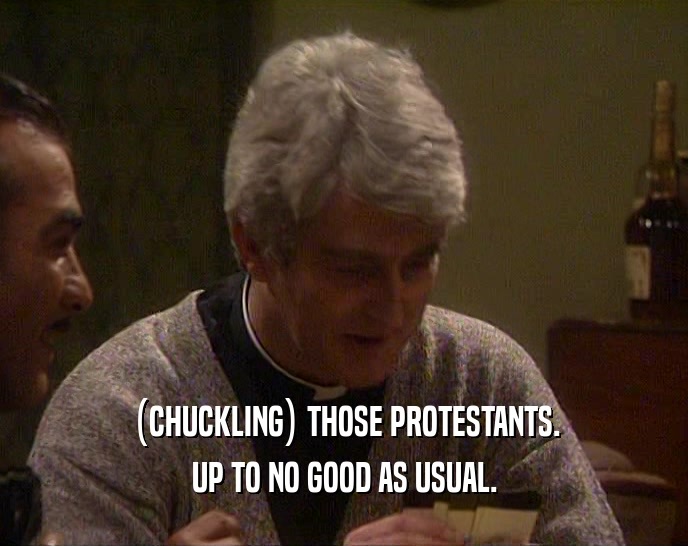
My first thought, after relief, on finishing the book however, was a quote from Father Ted, "Those Protestants, up to no good as usual!"
Joking aside though and straight off the bat, I really must point out that for a while now, I've thought that everyone who existed in the seventeenth century were really quite mad. In fact, utterly insane I'd say, and on completion of this book, it's all but been confirmed. Totally doolally. Doo-la-lly!!
**taps side of head**
”These Christians are crazy!”
I think all religion is pretty much a form of insanity anyway, let alone once you start examining the minutia of all the different sects and schisms and petty prejudices of the fundamentalists, like the total nut jobs that feature in this book. In this case, it's the extremities of Christianity and in particular, Protestantism and it’s various off shoots and the sectarian breeding grounds of loonies and bigots such as the Puritans, Presbyterians, Calvinists and Covenanters whom all get their parochial and intolerant prayers heard here, and where these lunatics really did take over the asylum, from what was effectively other lunatics.
I'd say I enjoyed and fully understood about thirty to forty percent of this intense and exhausting work. The rest was just so complicated and intricate, it was reduced to nothing more than a veritable word salad, a wall of white noise.
A convoluted labyrinth of the complexities of seventeenth century religion, economics and administrative power, where allegiances were paper thin and everyone seemed to hate everyone else with equal measure. The rump of the population did indeed seem to be very lucky, in that their main occupation seemed to also be their hobby, religious persecution and iconoclasm! If patrons of the seventeenth century weren’t religiously persecuting someone, they were out, smashing and burning books, paintings, windows and religious objects from the churches of other religions, or sects of their own religion that they didn’t like. The resulting tangle just made it extremely hard to follow with any degree of understanding, here's an example,
"On the other hand, religious pluralism was denounced in terms of well-established idioms - as a disease or a rupture in the divine order but exactly which forms of belief were pathogens, or threatened the organic moral order?"
Jeezo! That’s as mad as a bag of hedgehogs! So, what I did last night, after finishing the book, was watch Richard Harris in Cromwell, the 1970 epic, and it was like a source key, breaking down some nefarious code, where much of the book seemed to make a lot more sense, actually seeing it more or less fleshed out, thank you Ken Hughes!
Anyway, back to the book, I was only really on firmer ground, when the discussion involved the actual wars and the battles in particular.
The main focus of the book is derived from a few pamphleteer collectors collections of pamphlets and news sheets, which were the precursor of newspapers, some of which were interesting and indeed even amusing, up and to a point, but again, much of it was just left too 'of its day'.
There was also an important and understandable mention of how these particular Civil Wars impacted on women. With a relatively coherent section on how the wars promoted the grift of ’witch hunting’ and the resulting affront to humanity, the ’witch trials’. Where this confidence trick increased exponentially during the war years, mainly at the hands of the so called ’witch hunters’, Matthew Hopkins and John Stearne, but in reality they were nothing more than a couple of egregious con men, who lay bare the utter hypocrisy and venal vileness of so called Christian Puritan Protestantism.
The author points out that the English Civil Wars, 1642 to 1651 , shaped future revolutions, in particular, the American and French. However, I also saw parallels elsewhere. Cromwell seemed to share many characteristics with Adolf Hitler, not least both of their unshakeable belief in providence and they also both shared a propensity for self-aggrandizing and using 'democracy' or in Cromwell’s case, the ‘idea of democracy’, to achieve a dictatorship, with themselves at the apogee of that power.
They both also scapegoated whole sections of society, blaming, in Hitler’s case, Jews, among others and in Cromwell’s, basically all non Puritan Protestants, but especially Catholics, for all the ills of their day.
Also, how the King, Charles I was willing to expediently make deals with anyone and everyone, to gain any kind of advantage, no matter how unlikely or inconceivable, even holding talks with the Catholics! A deal with the Catholics however, was completely beyond the pale, even for his own generals, but still Charles held secret negotiations with a representative of The Vatican, which, unfortunately but inevitably, came back to haunt him at his trial. For me however, this event and scenario has many parallels with the Molotov/Ribbentrop non aggression pact of 1939 in the highly unlikely alliance of Germany and the USSR in the pre-war European theater of that time. Which ultimately came back to haunt first, Uncle Joe and eventually Hitler. There was also a great deal of book burning going on in both these eras. Boy, did the Puritans and the Nazis love to burn books!
This book was definitely a challenge, but was it worth it? On balance, I'd probably say yes, yes it was.
Now, if you’ll excuse me, I really must be off, as I really am a very busy man, because those books, witches, Catholics, Cavaliers, recusants and Anabaptists won’t burn themselves you know! Faggots at the ready!
That's what reading this book felt like. It just seemed to drag on and on and on! Finishing it felt like how I'd imagine I'd feel if I'd had a big win on the lottery, although, as I've said in a previous review, I don't do, as it's effectively a tax on morons, but I digress and it's beside the point, the point being, my utter joy and unbridled relief at finally finishing this monstrously prolix tome.
My first thought, after relief, on finishing the book however, was a quote from Father Ted, "Those Protestants, up to no good as usual!"
Joking aside though and straight off the bat, I really must point out that for a while now, I've thought that everyone who existed in the seventeenth century were really quite mad. In fact, utterly insane I'd say, and on completion of this book, it's all but been confirmed. Totally doolally. Doo-la-lly!!
**taps side of head**
”These Christians are crazy!”
I think all religion is pretty much a form of insanity anyway, let alone once you start examining the minutia of all the different sects and schisms and petty prejudices of the fundamentalists, like the total nut jobs that feature in this book. In this case, it's the extremities of Christianity and in particular, Protestantism and it’s various off shoots and the sectarian breeding grounds of loonies and bigots such as the Puritans, Presbyterians, Calvinists and Covenanters whom all get their parochial and intolerant prayers heard here, and where these lunatics really did take over the asylum, from what was effectively other lunatics.
I'd say I enjoyed and fully understood about thirty to forty percent of this intense and exhausting work. The rest was just so complicated and intricate, it was reduced to nothing more than a veritable word salad, a wall of white noise.
A convoluted labyrinth of the complexities of seventeenth century religion, economics and administrative power, where allegiances were paper thin and everyone seemed to hate everyone else with equal measure. The rump of the population did indeed seem to be very lucky, in that their main occupation seemed to also be their hobby, religious persecution and iconoclasm! If patrons of the seventeenth century weren’t religiously persecuting someone, they were out, smashing and burning books, paintings, windows and religious objects from the churches of other religions, or sects of their own religion that they didn’t like. The resulting tangle just made it extremely hard to follow with any degree of understanding, here's an example,
"On the other hand, religious pluralism was denounced in terms of well-established idioms - as a disease or a rupture in the divine order but exactly which forms of belief were pathogens, or threatened the organic moral order?"
Jeezo! That’s as mad as a bag of hedgehogs! So, what I did last night, after finishing the book, was watch Richard Harris in Cromwell, the 1970 epic, and it was like a source key, breaking down some nefarious code, where much of the book seemed to make a lot more sense, actually seeing it more or less fleshed out, thank you Ken Hughes!
Anyway, back to the book, I was only really on firmer ground, when the discussion involved the actual wars and the battles in particular.
The main focus of the book is derived from a few pamphleteer collectors collections of pamphlets and news sheets, which were the precursor of newspapers, some of which were interesting and indeed even amusing, up and to a point, but again, much of it was just left too 'of its day'.
There was also an important and understandable mention of how these particular Civil Wars impacted on women. With a relatively coherent section on how the wars promoted the grift of ’witch hunting’ and the resulting affront to humanity, the ’witch trials’. Where this confidence trick increased exponentially during the war years, mainly at the hands of the so called ’witch hunters’, Matthew Hopkins and John Stearne, but in reality they were nothing more than a couple of egregious con men, who lay bare the utter hypocrisy and venal vileness of so called Christian Puritan Protestantism.
The author points out that the English Civil Wars, 1642 to 1651 , shaped future revolutions, in particular, the American and French. However, I also saw parallels elsewhere. Cromwell seemed to share many characteristics with Adolf Hitler, not least both of their unshakeable belief in providence and they also both shared a propensity for self-aggrandizing and using 'democracy' or in Cromwell’s case, the ‘idea of democracy’, to achieve a dictatorship, with themselves at the apogee of that power.
They both also scapegoated whole sections of society, blaming, in Hitler’s case, Jews, among others and in Cromwell’s, basically all non Puritan Protestants, but especially Catholics, for all the ills of their day.
Also, how the King, Charles I was willing to expediently make deals with anyone and everyone, to gain any kind of advantage, no matter how unlikely or inconceivable, even holding talks with the Catholics! A deal with the Catholics however, was completely beyond the pale, even for his own generals, but still Charles held secret negotiations with a representative of The Vatican, which, unfortunately but inevitably, came back to haunt him at his trial. For me however, this event and scenario has many parallels with the Molotov/Ribbentrop non aggression pact of 1939 in the highly unlikely alliance of Germany and the USSR in the pre-war European theater of that time. Which ultimately came back to haunt first, Uncle Joe and eventually Hitler. There was also a great deal of book burning going on in both these eras. Boy, did the Puritans and the Nazis love to burn books!
This book was definitely a challenge, but was it worth it? On balance, I'd probably say yes, yes it was.
Now, if you’ll excuse me, I really must be off, as I really am a very busy man, because those books, witches, Catholics, Cavaliers, recusants and Anabaptists won’t burn themselves you know! Faggots at the ready!
August 7, 2024
My first thought on completing this book was to feel a sense of accomplishment, because this is a very long, dense book on a complicated historical topic and getting through it took effort. That goes to the heart of my overall feeling about this book, which is that it is not an easy read but if you are historically inclined it's worth grappling with it because it gives you a rich overview of an incredibly important episode whose reverberations are literally being felt today. If you are not a history buff, I am not going to recommend this, pure and simple.
What I think Braddick does best is what in some ways makes this a difficult read - provide an incredibly encompassing picture of an enormously complicated, really wild time. It is hard to imagine any other wars that have had as many complex moving parts, as much sheer chaos - even those involved often seem to be uncertain what they are fighting for and who their allies are.
Braddick is best in capturing not just the role of key characters in this maelstrom - from Charles I to Oliver Cromwell - but how everyday people contributed to and felt the impact of this conflict. He also brings to life vividly how print and other emerging communications tools affected events in both positive and negative ways, and just the enormity of the intellectual ferment that came out of the struggles. His attention to detail is also first rate.
The downside of Braddick's scholarly effort, though, is that he is often just way, way too far in the weeds. I have never read a book with as many proper names - it is literally strewn with names of people, places, battles, agreements, petitions, treaties, groups, publications, and more, many of which are mentioned once and then show up again 100 pages later. It is literally impossible to keep them straight, and the index is only marginally helpful and in some cases incomplete or incorrect.
Braddick's writing style can also be maddeningly academic-sounding, as if he is engaged in an argument with fellow scholars rather than simply educating regular readers new to the subject. At times he seems to allude to facts rather than simply state them. Part of all this is simply the complexity of the events he is describing but I believe the book would have benefitted from a greater focus on clarity.
Finally, I was surprised that the book stops where it does - with the trial and regicide. I think most people consider the aftermath of the actual fighting - leading up through the restoration - to be part of the story of the English civil wars. After nearly 600 pages, that would of course have required an even longer tome. But it left this reader wishing to hear the end of the story.
What I think Braddick does best is what in some ways makes this a difficult read - provide an incredibly encompassing picture of an enormously complicated, really wild time. It is hard to imagine any other wars that have had as many complex moving parts, as much sheer chaos - even those involved often seem to be uncertain what they are fighting for and who their allies are.
Braddick is best in capturing not just the role of key characters in this maelstrom - from Charles I to Oliver Cromwell - but how everyday people contributed to and felt the impact of this conflict. He also brings to life vividly how print and other emerging communications tools affected events in both positive and negative ways, and just the enormity of the intellectual ferment that came out of the struggles. His attention to detail is also first rate.
The downside of Braddick's scholarly effort, though, is that he is often just way, way too far in the weeds. I have never read a book with as many proper names - it is literally strewn with names of people, places, battles, agreements, petitions, treaties, groups, publications, and more, many of which are mentioned once and then show up again 100 pages later. It is literally impossible to keep them straight, and the index is only marginally helpful and in some cases incomplete or incorrect.
Braddick's writing style can also be maddeningly academic-sounding, as if he is engaged in an argument with fellow scholars rather than simply educating regular readers new to the subject. At times he seems to allude to facts rather than simply state them. Part of all this is simply the complexity of the events he is describing but I believe the book would have benefitted from a greater focus on clarity.
Finally, I was surprised that the book stops where it does - with the trial and regicide. I think most people consider the aftermath of the actual fighting - leading up through the restoration - to be part of the story of the English civil wars. After nearly 600 pages, that would of course have required an even longer tome. But it left this reader wishing to hear the end of the story.
November 9, 2025
This is a remarkable one-volume history of the English Civil Wars, with a balanced focus on the political motivations, military actions, and social consequences that defined that conflict. Although I had some previous knowledge of this time period, this book expanded and deepened my understanding of what the war was about. In particular, this book helped me understand the disagreements between the various factions that made up the Parliamentarian coalition and how each faction maneuvered to advance its own vision of a post-war settlement.
Braddick also reveals the war's impact on popular culture. These were the days when John Milton's writings challenged conventional assumptions to argue in favor of free speech and divorce. Furthermore, the wartime atmosphere of fear and confusion helped fuel the success of the nationally famous astrologer William Lilly, whose predictions helped people find order in an otherwise bewildering course of events.
For me, one of the most surprising takeaways of this book is how little the Parliamentarians were able to achieve with military victory. Braddick writes that during Parliament's postwar (1646) negotiations with the then-captive King Charles I, "what was being offered, and refused, was similar to what had been offered and refused in 1642: the war, it seems, had not really changed the terms of the argument. Worse still, it had not really changed the balance of power. A royal military victory would have broken the deadlock, but a parliamentary one apparently had not." Braddick shows that Charles's refusal to concede on any substantive issue, even after losing a second war in 1648, was a major cause of his eventual execution — an outcome that most Parliamentarians had never sought and that many were still trying to prevent until the very last hour before the axe fell.
Braddick covers the events leading up to the Bishops' Wars but ends his narrative with the execution of King Charles I, meaning that Cromwell's invasion of Ireland and the Third Civil War (1650-1652) are not covered in depth. I recommend Anna Keay's book The Restless Republic: Britain Without a Crown for a highly readable explanation of what happened in England after the King's trial.
Braddick also reveals the war's impact on popular culture. These were the days when John Milton's writings challenged conventional assumptions to argue in favor of free speech and divorce. Furthermore, the wartime atmosphere of fear and confusion helped fuel the success of the nationally famous astrologer William Lilly, whose predictions helped people find order in an otherwise bewildering course of events.
For me, one of the most surprising takeaways of this book is how little the Parliamentarians were able to achieve with military victory. Braddick writes that during Parliament's postwar (1646) negotiations with the then-captive King Charles I, "what was being offered, and refused, was similar to what had been offered and refused in 1642: the war, it seems, had not really changed the terms of the argument. Worse still, it had not really changed the balance of power. A royal military victory would have broken the deadlock, but a parliamentary one apparently had not." Braddick shows that Charles's refusal to concede on any substantive issue, even after losing a second war in 1648, was a major cause of his eventual execution — an outcome that most Parliamentarians had never sought and that many were still trying to prevent until the very last hour before the axe fell.
Braddick covers the events leading up to the Bishops' Wars but ends his narrative with the execution of King Charles I, meaning that Cromwell's invasion of Ireland and the Third Civil War (1650-1652) are not covered in depth. I recommend Anna Keay's book The Restless Republic: Britain Without a Crown for a highly readable explanation of what happened in England after the King's trial.

July 26, 2023
A sweeping survey of the Civil Wars which pays lots of attention to the disruption caused in everyday life, and the search for meaning and truth that the wars inspired.
The coalition which was angry at Charles and Laud in 1640 was plagued by divisions throughout the decade as they struggled to marry a positive vision to their negative politics. Thus it split into the parliamentarians and the Royalists by 1642; then the parliamentarians divided on the subject of church government and the nature of the settlement in 1646; and finally even on the question of regicide in 1648-1649.
The general portrait of England in the 1640s is one in which almost everyone is unsure of themselves. Charles I, John Pym, and Oliver Cromwell may have been more confident about their actions, but most English people appear to have struggled to understand how to live and what to strive for in the midst of utter anarchy.
At the end, Braddock suggests that the story of the Civil Wars is the story of how England moved from the politics of reformation to the politics of the enlightenment, as attempts to deal with the war’s questions about religion and the constitution brought fundamental issues to the center of political discourse. This seems pretty compelling to me.
The coalition which was angry at Charles and Laud in 1640 was plagued by divisions throughout the decade as they struggled to marry a positive vision to their negative politics. Thus it split into the parliamentarians and the Royalists by 1642; then the parliamentarians divided on the subject of church government and the nature of the settlement in 1646; and finally even on the question of regicide in 1648-1649.
The general portrait of England in the 1640s is one in which almost everyone is unsure of themselves. Charles I, John Pym, and Oliver Cromwell may have been more confident about their actions, but most English people appear to have struggled to understand how to live and what to strive for in the midst of utter anarchy.
At the end, Braddock suggests that the story of the Civil Wars is the story of how England moved from the politics of reformation to the politics of the enlightenment, as attempts to deal with the war’s questions about religion and the constitution brought fundamental issues to the center of political discourse. This seems pretty compelling to me.

April 18, 2020
A good overview of the English civil wars up until 1649. Unlike some such histories, it paid attention to pamphlets and grassroots politics and didn't get bogged down in overly detailed descriptions of battles or speak only of powerful individuals. I would still have preferred more on radical and grassroots movements but it nonetheless gave them more prominence than many books. However, I found it rather odd in the way that it stopped with the king's execution in January 1649, rather abruptly, rather than carrying on with the politics and war that continued afterwards.
This a book about the wars in England and Wales, rather than about all the Wars of the Three Kingdoms. Events in Scotland and Ireland seem to me to be well described, with regards to how they affect events in England. This is a much better approach than that taken by authors who claim to be writing about the whole of Britain and Ireland but actually focus on England.
I like the writing style, which is scholarly but engaging, with occasional moments of humour. This is a scholarly book rather than an easy read, but it's more accessible than many.
This a book about the wars in England and Wales, rather than about all the Wars of the Three Kingdoms. Events in Scotland and Ireland seem to me to be well described, with regards to how they affect events in England. This is a much better approach than that taken by authors who claim to be writing about the whole of Britain and Ireland but actually focus on England.
I like the writing style, which is scholarly but engaging, with occasional moments of humour. This is a scholarly book rather than an easy read, but it's more accessible than many.

August 19, 2021
First of all this is not a book for the general reader. Nevertheless it is book worth reading & persevering with because it does provide a much fuller understanding of the period. I have read about the English Civil War, before, & believe me I found much in this book that was both new to me. This new material explained much about of the events of this extraordinary period of English History.
If ever it can be said that a Pandora's Box was opened during English History then this is when it occurred. Briefly, it was a time when there were a series of wars in England, Scotland & Ireland concerning, initially, religion which then morphed into a battle of ideas conducted on the battlefield & via the printing presses. These ideas were as much about politics & governing as they were about religion. To say there was a lot disagreement is understating the problem. There were numerous factions involved making this story both complex & hard to follow at times. Professor Braddick helps us navigate our way through it all & leaving the reader with much to ponder after becoming a lot wiser.
If ever it can be said that a Pandora's Box was opened during English History then this is when it occurred. Briefly, it was a time when there were a series of wars in England, Scotland & Ireland concerning, initially, religion which then morphed into a battle of ideas conducted on the battlefield & via the printing presses. These ideas were as much about politics & governing as they were about religion. To say there was a lot disagreement is understating the problem. There were numerous factions involved making this story both complex & hard to follow at times. Professor Braddick helps us navigate our way through it all & leaving the reader with much to ponder after becoming a lot wiser.

March 18, 2024
The problem with this book was it got complicated however, I did enjoy this book, especially the nuanced details about infighting amongst Parliamentary forces. The difficulties that based Charles and Parliament before the civil war started were immense
I appreciate the authors diligent study on England in the 1630s and the 1640s
Overall, a very good book, however, I gave it three stars because it is not conducive to bedtime reading
I appreciate the authors diligent study on England in the 1630s and the 1640s
Overall, a very good book, however, I gave it three stars because it is not conducive to bedtime reading

February 12, 2025
I gave up about two thirds of the way through. I came (too late) to the judgement that continuing to read this book was a waste of my time.
I thought that reading about the English civil war would make it seem like less of a chaotic mess. Instead I’m affirmed in my view it was a chaotic mess and this book did nothing to make it clearer for me.
The book is far too granular, which means the overarching narrative is difficult to follow.
I thought that reading about the English civil war would make it seem like less of a chaotic mess. Instead I’m affirmed in my view it was a chaotic mess and this book did nothing to make it clearer for me.
The book is far too granular, which means the overarching narrative is difficult to follow.

July 4, 2022
If you're wanting a detailed overview of the English Revolution I'd highly recommend you pick this up if you're interested in the grand events and main players of the conflict. Braddick's book covers everything you need to know for the narrative of the civil wars with some excellent analysis along the way too. It is, however, a little long and has taken me a long time to finish it.

June 22, 2020
It took me 8 years to read. A perfect accompanying background to my English Civil War miniatures project and By the Sword Divided TV show. Thoroughly researched and very well written from the ground up perspective.

June 4, 2021
This is a well researched and thoughtful work about a time that I not very familiar with it cleared some points and was fun. The history of the political back biting that led to the civil war and the back and forth of the round heads and flatheads was fascinating. A lot of fun

August 3, 2021
Just your run-of-the-mill 'Penguin history book,' really. Dull and uninspired, yet providing a detailed narrative of all the relevant events. Fine for a textbook, but not worth reading from cover to cover, as I did.

March 18, 2020
4.5 stars.
October 5, 2021
A bit of a slog, but probably just because this isnt about a period of history I'm normally excited about. Absolutely packed full of information, a really informative book
December 9, 2022
Incredibly detailed, would be great for someone studying the civil war but not so much for a more casual read like I wanted
Displaying 1 - 30 of 48 reviews