

What do you think?
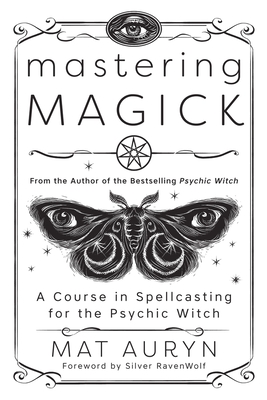
Mastering Magick: A Course in Spellcasting for the Psychic Witch
Create Personalized and Soul-Stirring Magick with Bestselling Author Mat Auryn Boost your psychic ability and incorporate the greater mysteries of magick into your practice. A companion to the international bestseller Psychic Witch , this groundbreaking book features more than sixty spells and is the first of its kind to focus on casting magick to bridge the divide between the seen and unseen worlds. Mat teaches you how to enchant yourself as a powerful psychic witch by connecting with the witch's tools, the elements, the moon, the seasons, and the planets. You'll learn the mechanics of spell work and how to make your magick as effective as possible. In addition to Mat's own tried-and-true castings, Mastering Magick features more than a dozen spells from well-known witches and practitioners, including Christopher Penczak, Judika Illes, Juliet Diaz, Storm Faerywolf, Laura Tempest Zakroff, Devin Hunter, Madame Pamita, and others.
296 pages, Paperback
First published January 1, 2022
About the author
Mat Auryn
27 books624 followersMat Auryn is an influential author and teacher in the fields of occultism and witchcraft, with an audience that extends beyond the United States to an international level. His deep knowledge and experience come from years of dedicated study, practice, and training in a variety of occult traditions and esoteric orders, often under the guidance of prominent knowledgeable mentors. His award-winning books Psychic Witch and Mastering Magick offer practical insight and practices for those interested in psychic and magickal practices. He is also the author of The Psychic Art of Tarot and co-authored Pisces Witch with Ivo Dominguez, Jr. The books draw from a range of traditions such as astrology, Hermeticism, Wicca, Traditional Witchcraft, New Thought, Thelema, parapsychology, Jungian analytical psychology, Neoplatonism, and alchemy, making them versatile yet accessible guides for the spiritual seeker. His books have won multiple awards and have been translated into more than thirteen languages, widening their impact.
To find out more about him and his work visit www.MatAuryn.com or follow him on instagram @matauryn
To find out more about him and his work visit www.MatAuryn.com or follow him on instagram @matauryn
Ratings & Reviews
Friends & Following
Create a free account to discover what your friends think of this book!
Community Reviews
Displaying 1 - 30 of 47 reviews

October 19, 2022
Great book with great tips for ADHD practitioners!

February 16, 2023
I’m a huge fan of May Auryn. Both of his books have fantastic meditations that help tap into subconscious. He explains things in a way that feels a little more logical, and a little less “woowoo” than other books like this. He goes into depth about his personal journey in this book and it’s really inspiring.
January 7, 2024
Great book! The author always delivers!

December 27, 2024
Tai pirmosios knygos „Psychic Witch“ tęsinys. Šioje knygoje autorius vėl mokina kaip įjungti savo smegenis dirbti alpha režimu. Tačiau šioje knygoje jis skiria dėmesį žmonėms turintiems ADHD ir afantaziją. Pateikia nemažai pratimų ir burtų, kuriems nereikia didelio susikoncentravimo.
Kadangi pats turiu ADHD ir man sunku susikaupti, knygos pratimai atrodo iš pažiūros lengvesni nei buvo pirmojoje knygoje. Taip pat autorius vėl primena, kad alpha režimą mes visi pasiekiam skaitydami knygas, ypač fantastines. Autorius nemažai papasakoja apie savo vaikystę su labai religingais ir žiauriais seneliais, nuo kurių slėpė savo knygas apie magiją. Net aprašo labai juokingą istoriją kaip jis kepė sausainius vaikystėje. Tačiau tai ne bereikšmės istorijos, jos padeda lengviau suprasti jo pateikiamą informaciją.
Šioje knygoje autorius glaustai paaiškina knygos „The Kybalion“ esminius okultizmo principus. Taip pat daug dėmesio skiriama elementams ir planetoms. Šituos skyrius buvo įdomiausia skaityti.
Autorius labiausiai aiškina magiją pasitelkdamas pavyzdžius. Skaityti iš tikrųjų buvo lengva ir aiškiai viskas pateikta.
Kadangi pats turiu ADHD ir man sunku susikaupti, knygos pratimai atrodo iš pažiūros lengvesni nei buvo pirmojoje knygoje. Taip pat autorius vėl primena, kad alpha režimą mes visi pasiekiam skaitydami knygas, ypač fantastines. Autorius nemažai papasakoja apie savo vaikystę su labai religingais ir žiauriais seneliais, nuo kurių slėpė savo knygas apie magiją. Net aprašo labai juokingą istoriją kaip jis kepė sausainius vaikystėje. Tačiau tai ne bereikšmės istorijos, jos padeda lengviau suprasti jo pateikiamą informaciją.
Šioje knygoje autorius glaustai paaiškina knygos „The Kybalion“ esminius okultizmo principus. Taip pat daug dėmesio skiriama elementams ir planetoms. Šituos skyrius buvo įdomiausia skaityti.
Autorius labiausiai aiškina magiją pasitelkdamas pavyzdžius. Skaityti iš tikrųjų buvo lengva ir aiškiai viskas pateikta.

January 4, 2023
This is a fantastic follow up to Psychic Witch and takes each exercise and explanation in the first book and expounds on it. Whether you are a beginner or brand new, you will find immense value in the information Mat shares within these covers. What I love about the book: easy to integrate exercises that can inform your practices; the conversational tone and explanation; the lack of any judgment of the reader if they practice differently. What I love less about the book: I would like to see a separate book of all the exercises, indexed in ways we can locate them later for use. While I read through each one, many of them I will not do just yet, they will come with time over years as I add/ integrate into practice. Great read and HIGHLY recommend!
January 26, 2023
Oh yeah
It's a book of magick how could I not love it.
It's gonna help when my kids momma leaves me
and I'll probably grow exponentially.
I love magick soooo much.
Please read this book
.
It's a book of magick how could I not love it.
It's gonna help when my kids momma leaves me
and I'll probably grow exponentially.
I love magick soooo much.
Please read this book
.

September 26, 2024
Mastering Magick by Mat Auryn is an impressive deep dive into spellcasting, offering a level of depth and nuance that I haven’t found in many other books. What struck me most was how it goes beyond the standard approaches to magick, integrating psychic development into each aspect of spellcraft in a way that feels both fresh and profoundly effective. I’ve been practicing for years and have seen countless approaches to ritual and spellwork, but Auryn's method of intertwining psychic awakening with traditional magick is something that really changed the way I think about my practice. Since working through the spells and techniques in this book, I’ve seen significant changes in the strength and clarity of my workings, particularly in the way I channel energy and focus my intentions.
Auryn presents a wide range of spells—over 60 in total—and they aren’t just the usual suspects you find in most spell books. Each one is crafted with a purpose that speaks directly to both psychic and magical development, which is such a rare combination. The book’s section on spells specifically designed for psychic awakening was a standout for me, as there aren’t many resources that focus on developing both psychic skills and spellcasting at the same time. These spells felt incredibly practical, providing tangible results that enhanced not only my psychic sensitivity but also the overall potency of my rituals. It's clear that Auryn understands the deeper layers of magick, and he presents them in a way that both seasoned practitioners and newer witches can grasp.
What makes this book even more exciting is the inclusion of spells from other well-known practitioners in the witchcraft community. As someone who admires each of these contributors—Judika Illes, Christopher Penczak, Storm Faerywolf, and many others—it was such a thrill to see their unique approaches to magick presented alongside Auryn's. Each contribution adds a new layer of insight, making this not just a book by one witch, but a collective offering of knowledge from some of the most respected names in the craft. These contributions add diversity in both technique and perspective, giving the reader a chance to explore different methods and traditions within a single resource.
For me, Mastering Magick has become a key part of my personal practice. The spells, rituals, and psychic development techniques introduced in this book have already enhanced the effectiveness of my magick in ways I hadn’t anticipated. It’s rare to find a book that pushes your practice in new directions while offering tools that are grounded in practicality. Auryn has created something truly unique here—an integration of psychic awakening and spellcasting that’s accessible, powerful, and backed by the wisdom of some of the craft’s most notable figures.
Auryn presents a wide range of spells—over 60 in total—and they aren’t just the usual suspects you find in most spell books. Each one is crafted with a purpose that speaks directly to both psychic and magical development, which is such a rare combination. The book’s section on spells specifically designed for psychic awakening was a standout for me, as there aren’t many resources that focus on developing both psychic skills and spellcasting at the same time. These spells felt incredibly practical, providing tangible results that enhanced not only my psychic sensitivity but also the overall potency of my rituals. It's clear that Auryn understands the deeper layers of magick, and he presents them in a way that both seasoned practitioners and newer witches can grasp.
What makes this book even more exciting is the inclusion of spells from other well-known practitioners in the witchcraft community. As someone who admires each of these contributors—Judika Illes, Christopher Penczak, Storm Faerywolf, and many others—it was such a thrill to see their unique approaches to magick presented alongside Auryn's. Each contribution adds a new layer of insight, making this not just a book by one witch, but a collective offering of knowledge from some of the most respected names in the craft. These contributions add diversity in both technique and perspective, giving the reader a chance to explore different methods and traditions within a single resource.
For me, Mastering Magick has become a key part of my personal practice. The spells, rituals, and psychic development techniques introduced in this book have already enhanced the effectiveness of my magick in ways I hadn’t anticipated. It’s rare to find a book that pushes your practice in new directions while offering tools that are grounded in practicality. Auryn has created something truly unique here—an integration of psychic awakening and spellcasting that’s accessible, powerful, and backed by the wisdom of some of the craft’s most notable figures.

October 21, 2022
I have always loved Mat Auryn's writing ever since we wrote together for Patheos Pagan ages ago. His latest book, Mastering Magick: A Course in Spellcasting for the Psychic Witch, is the perfect follow-up to his wildly successful debut, PsychicWitch. It's intimate, trustworthy, and relatable.
Mat made a bold choice a few years back. Psychic Witch trained the witch's mind first and focused on the practitioner as a vessel and channel for magick. Where most authors dedicate only a chapter to know thyself, Mat wrote an entire book on it. Now with Mastering Magick, he delivers a compendium of magickal exercises and spells and introduces occult concepts, like the Hermetic principles, to take magick to the next level.
Mastering Magick works across many magical traditions to syncretize magic as a journey, not just a destination. I was also impressed at Mat's sensitivity to inclusion for neurodivergent communities who learn differently and offering ways to approach magic in accessible ways. Mat also is very clear about gender inclusion and resonance. Mastering Magick is an intersectional and intentional magick for today!
There is a relatability in Mat’s prose. He draws you in, and it is not lost on a certain generation of witches, warlock’s and magick workers that the foreward to this book was written by the beloved Silver Ravenwolf.
For some, Mastering Magick is an introduction to exquisite magick; for others, it is the next step on their journey. In Mastering Magick, Mat draws inspiration from many sources and weaves them together to demonstrate that while paganism has no litmus test for belief entry, it does have a common vernacular. The grammar of magick is masterful in Mat Auryn's hands, and I hope everyone reads this exciting new work!
Mat made a bold choice a few years back. Psychic Witch trained the witch's mind first and focused on the practitioner as a vessel and channel for magick. Where most authors dedicate only a chapter to know thyself, Mat wrote an entire book on it. Now with Mastering Magick, he delivers a compendium of magickal exercises and spells and introduces occult concepts, like the Hermetic principles, to take magick to the next level.
Mastering Magick works across many magical traditions to syncretize magic as a journey, not just a destination. I was also impressed at Mat's sensitivity to inclusion for neurodivergent communities who learn differently and offering ways to approach magic in accessible ways. Mat also is very clear about gender inclusion and resonance. Mastering Magick is an intersectional and intentional magick for today!
There is a relatability in Mat’s prose. He draws you in, and it is not lost on a certain generation of witches, warlock’s and magick workers that the foreward to this book was written by the beloved Silver Ravenwolf.
For some, Mastering Magick is an introduction to exquisite magick; for others, it is the next step on their journey. In Mastering Magick, Mat draws inspiration from many sources and weaves them together to demonstrate that while paganism has no litmus test for belief entry, it does have a common vernacular. The grammar of magick is masterful in Mat Auryn's hands, and I hope everyone reads this exciting new work!

September 16, 2025
I think it’s a Must have for neurodivergent individuals who practice magic, especially if you have Matt’s first book Psychic witch, this one compliments the first very well.

August 19, 2026
Mastering Magick is exactly what I wanted after Psychic Witch. Where Psychic Witch concentrates on developing the practitioner and the faculties through which magic and psychic perception operate, Mastering Magick takes those foundations and asks the obvious next question: now that you've developed these abilities, what can you actually do with them? The result feels much less like a second beginner book and much more like the second level of a curriculum. It assumes you are willing to practice, experiment, think critically about magic, and eventually understand magical techniques well enough that you don't need an author to hand you a finished spell every time you want to accomplish something.
I've seen the fact that Mastering Magick builds upon Psychic Witch treated as a criticism, but I can't agree with that. It is explicitly a companion to the earlier book, and I appreciate that Auryn doesn't waste half of this one reteaching everything he already explained. You can certainly get useful material from Mastering Magick on its own, but the books become much more powerful when treated as a sequence. Psychic Witch teaches you how to develop and control the instrument; Mastering Magick teaches you how to play it. I wish more occult authors were willing to create genuine progression between books instead of repeatedly resetting everything to beginner level because every volume has to accommodate someone who has never meditated before.
That progression is also why I don't understand the criticism that experienced practitioners may have encountered some of these individual techniques elsewhere. Of course they have. Auryn didn't invent the elements, magical tools, planetary forces, enchantment, symbolism, correspondences, or spellcraft, nor does the book pretend otherwise. What matters is what he does with them. The value of Mastering Magick is in the synthesis: understanding how these different pieces interact and how a witch can consciously assemble them into effective magical work. Knowing that rosemary is associated with protection is information. Understanding how intention, altered consciousness, energy, symbolism, materia, timing, and enchantment can be coordinated toward one goal is magical literacy.
That distinction became increasingly important to me as I worked through the book. There is an enormous difference between knowing a lot of magical techniques and understanding magic well enough to design your own. Beginners understandably rely on recipes because recipes provide structure. Eventually, though, you need to understand why an ingredient is present, why a particular symbol is being used, why timing matters in one working but may be irrelevant in another, what a tool is contributing, and what exactly you think you're doing when you enchant something. Mastering Magick continually pushes the reader toward that level of independence.
I also appreciate that Auryn has an actual magical worldview. I've read plenty of books that try so hard to accommodate every possible belief that they eventually become afraid to say anything substantive about how magic works. Mastering Magick doesn't have that problem. Auryn tells you what he thinks is happening, provides models for understanding it, and then gives you practices through which you can explore those models yourself. I don't agree with every occult author I read, and I don't expect to. I would much rather have a developed system that I can test, question, modify, or reject than a collection of vague statements designed to be impossible for anyone to disagree with.
The same is true when Auryn critiques older occult ideas. I don't think respecting the history of magic means treating every influential occult text as infallible. Traditions develop because practitioners argue with what they inherit. We keep what continues to work, reconsider what doesn't, recognize historical context, and sometimes discover that an idea we've repeated for generations deserves another look. I appreciated seeing older concepts treated as material for active engagement rather than sacred museum pieces we're forbidden to question.
I also didn't experience the book's approach to directing magical energy as inherently hostile or violent. There is a difference between exercising magical will and treating every being in the universe as something to dominate. Learning to direct power deliberately is part of learning magic. At the same time, nothing prevents an animist or spirit-worker from approaching plants, spirits, places, and other beings relationally. If anything, having a clearer understanding of where your own power ends and another being's agency begins can make those relationships more intentional.
One of my favorite aspects of Mastering Magick is its breadth. Auryn moves through tools, elements, celestial influences, symbols, spell construction, enchantment, and numerous other dimensions of practical magic, but these subjects don't feel like random chapters thrown together to make a large witchcraft book. They gradually become components of a magical vocabulary. The more vocabulary you acquire, the more complicated magical sentences you can construct. By the end, I wasn't simply thinking about individual techniques anymore. I was thinking about architecture.
The guest contributions strengthen that enormously. Rather than presenting himself as the sole authority on every possible kind of magic, Auryn brings other accomplished practitioners into the conversation. I loved encountering different voices and approaches because it reinforces one of the book's underlying lessons: there isn't one universally correct way to perform magic. Different witches can understand similar forces differently, develop different relationships with them, and still produce sophisticated magical systems. Seeing those variations helped me think more critically about my own assumptions.
I also think Mastering Magick occupies an important place in contemporary witchcraft publishing because genuinely intermediate material is difficult to write. Beginner books have an obvious curriculum: here are the tools, correspondences, basic rituals, and foundational concepts. Advanced books can specialize intensely. The middle is harder because the author has to help readers transition from following instructions to understanding principles. That's exactly where I think this book succeeds. It doesn't abandon practical exercises and spells, but it increasingly teaches the reader how to stop needing someone else's recipes.
There is a lot here, and I don't think this is a book you're meant to race through. Like Psychic Witch, it rewards actually doing the work. Read a section, experiment with it, incorporate what proves useful, and return later. Some concepts become more valuable once you've accumulated enough experience to recognize what they're solving. I would rather own an occult book that continues opening as my practice develops than one I completely exhaust during the weekend I read it.
What Mastering Magick ultimately gave me was greater independence. Instead of asking, "What spell should I use for this?" I found myself asking better questions: What forces correspond to this goal? What state of consciousness would be useful? What symbols express the change I'm trying to create? What materials reinforce it? Does timing matter? What power am I drawing upon? How should that power be directed? What would make this working coherent rather than merely complicated? Once you begin asking those questions, you aren't simply following spells anymore. You're learning how to construct magic.
That is what I think Auryn means by mastering magick, and it is why the book works so well as a continuation of Psychic Witch. Mastery isn't memorizing every correspondence or collecting increasingly elaborate techniques. It is reaching the point where you understand the principles beneath your practice well enough to make informed choices, experiment intelligently, and create something that is genuinely your own.
I've seen the fact that Mastering Magick builds upon Psychic Witch treated as a criticism, but I can't agree with that. It is explicitly a companion to the earlier book, and I appreciate that Auryn doesn't waste half of this one reteaching everything he already explained. You can certainly get useful material from Mastering Magick on its own, but the books become much more powerful when treated as a sequence. Psychic Witch teaches you how to develop and control the instrument; Mastering Magick teaches you how to play it. I wish more occult authors were willing to create genuine progression between books instead of repeatedly resetting everything to beginner level because every volume has to accommodate someone who has never meditated before.
That progression is also why I don't understand the criticism that experienced practitioners may have encountered some of these individual techniques elsewhere. Of course they have. Auryn didn't invent the elements, magical tools, planetary forces, enchantment, symbolism, correspondences, or spellcraft, nor does the book pretend otherwise. What matters is what he does with them. The value of Mastering Magick is in the synthesis: understanding how these different pieces interact and how a witch can consciously assemble them into effective magical work. Knowing that rosemary is associated with protection is information. Understanding how intention, altered consciousness, energy, symbolism, materia, timing, and enchantment can be coordinated toward one goal is magical literacy.
That distinction became increasingly important to me as I worked through the book. There is an enormous difference between knowing a lot of magical techniques and understanding magic well enough to design your own. Beginners understandably rely on recipes because recipes provide structure. Eventually, though, you need to understand why an ingredient is present, why a particular symbol is being used, why timing matters in one working but may be irrelevant in another, what a tool is contributing, and what exactly you think you're doing when you enchant something. Mastering Magick continually pushes the reader toward that level of independence.
I also appreciate that Auryn has an actual magical worldview. I've read plenty of books that try so hard to accommodate every possible belief that they eventually become afraid to say anything substantive about how magic works. Mastering Magick doesn't have that problem. Auryn tells you what he thinks is happening, provides models for understanding it, and then gives you practices through which you can explore those models yourself. I don't agree with every occult author I read, and I don't expect to. I would much rather have a developed system that I can test, question, modify, or reject than a collection of vague statements designed to be impossible for anyone to disagree with.
The same is true when Auryn critiques older occult ideas. I don't think respecting the history of magic means treating every influential occult text as infallible. Traditions develop because practitioners argue with what they inherit. We keep what continues to work, reconsider what doesn't, recognize historical context, and sometimes discover that an idea we've repeated for generations deserves another look. I appreciated seeing older concepts treated as material for active engagement rather than sacred museum pieces we're forbidden to question.
I also didn't experience the book's approach to directing magical energy as inherently hostile or violent. There is a difference between exercising magical will and treating every being in the universe as something to dominate. Learning to direct power deliberately is part of learning magic. At the same time, nothing prevents an animist or spirit-worker from approaching plants, spirits, places, and other beings relationally. If anything, having a clearer understanding of where your own power ends and another being's agency begins can make those relationships more intentional.
One of my favorite aspects of Mastering Magick is its breadth. Auryn moves through tools, elements, celestial influences, symbols, spell construction, enchantment, and numerous other dimensions of practical magic, but these subjects don't feel like random chapters thrown together to make a large witchcraft book. They gradually become components of a magical vocabulary. The more vocabulary you acquire, the more complicated magical sentences you can construct. By the end, I wasn't simply thinking about individual techniques anymore. I was thinking about architecture.
The guest contributions strengthen that enormously. Rather than presenting himself as the sole authority on every possible kind of magic, Auryn brings other accomplished practitioners into the conversation. I loved encountering different voices and approaches because it reinforces one of the book's underlying lessons: there isn't one universally correct way to perform magic. Different witches can understand similar forces differently, develop different relationships with them, and still produce sophisticated magical systems. Seeing those variations helped me think more critically about my own assumptions.
I also think Mastering Magick occupies an important place in contemporary witchcraft publishing because genuinely intermediate material is difficult to write. Beginner books have an obvious curriculum: here are the tools, correspondences, basic rituals, and foundational concepts. Advanced books can specialize intensely. The middle is harder because the author has to help readers transition from following instructions to understanding principles. That's exactly where I think this book succeeds. It doesn't abandon practical exercises and spells, but it increasingly teaches the reader how to stop needing someone else's recipes.
There is a lot here, and I don't think this is a book you're meant to race through. Like Psychic Witch, it rewards actually doing the work. Read a section, experiment with it, incorporate what proves useful, and return later. Some concepts become more valuable once you've accumulated enough experience to recognize what they're solving. I would rather own an occult book that continues opening as my practice develops than one I completely exhaust during the weekend I read it.
What Mastering Magick ultimately gave me was greater independence. Instead of asking, "What spell should I use for this?" I found myself asking better questions: What forces correspond to this goal? What state of consciousness would be useful? What symbols express the change I'm trying to create? What materials reinforce it? Does timing matter? What power am I drawing upon? How should that power be directed? What would make this working coherent rather than merely complicated? Once you begin asking those questions, you aren't simply following spells anymore. You're learning how to construct magic.
That is what I think Auryn means by mastering magick, and it is why the book works so well as a continuation of Psychic Witch. Mastery isn't memorizing every correspondence or collecting increasingly elaborate techniques. It is reaching the point where you understand the principles beneath your practice well enough to make informed choices, experiment intelligently, and create something that is genuinely your own.

August 12, 2026
Mastering Magick is one of the rare books on witchcraft that genuinely feels like it adds something new to the field. There are countless books that rearrange the same correspondences, techniques, and introductory material into slightly different packages, but Mat Auryn goes in directions I simply haven’t encountered anywhere else. There are exercises, concepts, and approaches here that aren’t just variations on material from other books. They feel like the product of an author who has spent years actually experimenting with magick, developing techniques, and figuring out how different pieces fit together.
The sheer depth is remarkable. This is a massive book, but it earns its length. Auryn moves through energy work, psychic perception, spirits, the elements, planetary and celestial forces, the subtle body, invocation, evocation, spellcraft, glamour, protection, healing, manifestation, and considerably more, while continually building upon earlier practices. It feels less like a collection of unrelated techniques and more like an interconnected magical system. There were multiple exercises that made me stop and think, “I have literally never seen anyone teach this before.”
What surprised me most, though, was how emotional the book could be. For all its technical depth, Mastering Magick has an enormous amount of heart. Auryn writes about magick as something intimately connected to who we are, what we desire, what we fear, and who we are capable of becoming. Some passages unexpectedly hit me on a deeply personal level. There is vulnerability here that is unusual in occult writing, and it prevents the book from ever feeling like a sterile magical textbook.
I also love that Auryn never seems to assume that making something accessible requires making it simplistic. Complicated occult ideas are explained clearly without being stripped of their complexity. The book expects you to think, practice, experiment, and develop. Many of the exercises could easily have been entire chapters, if not entire books, in someone else’s hands.
There is also a generosity to the amount of material included. I kept encountering concepts that another author might have saved for a sequel, course, or separate book altogether. Instead, Mastering Magick just keeps going deeper. It feels like Auryn wanted to put everything he possibly could into the reader’s hands and then trust them to actually do something with it.
This is not a book I would recommend reading once and shelving. It is the kind of book you work through, return to, underline, take notes from, and revisit years later after your practice has changed. Different sections will become relevant at different stages of magical development.
Mastering Magick is ambitious, original, emotionally resonant, and extraordinarily comprehensive. In a genre where genuinely new material can be difficult to find, this book contains ideas and practices I have not encountered anywhere else. It is easily one of the most substantial books on practical magick I’ve read and one that I expect to keep returning to for years. Five stars.
The sheer depth is remarkable. This is a massive book, but it earns its length. Auryn moves through energy work, psychic perception, spirits, the elements, planetary and celestial forces, the subtle body, invocation, evocation, spellcraft, glamour, protection, healing, manifestation, and considerably more, while continually building upon earlier practices. It feels less like a collection of unrelated techniques and more like an interconnected magical system. There were multiple exercises that made me stop and think, “I have literally never seen anyone teach this before.”
What surprised me most, though, was how emotional the book could be. For all its technical depth, Mastering Magick has an enormous amount of heart. Auryn writes about magick as something intimately connected to who we are, what we desire, what we fear, and who we are capable of becoming. Some passages unexpectedly hit me on a deeply personal level. There is vulnerability here that is unusual in occult writing, and it prevents the book from ever feeling like a sterile magical textbook.
I also love that Auryn never seems to assume that making something accessible requires making it simplistic. Complicated occult ideas are explained clearly without being stripped of their complexity. The book expects you to think, practice, experiment, and develop. Many of the exercises could easily have been entire chapters, if not entire books, in someone else’s hands.
There is also a generosity to the amount of material included. I kept encountering concepts that another author might have saved for a sequel, course, or separate book altogether. Instead, Mastering Magick just keeps going deeper. It feels like Auryn wanted to put everything he possibly could into the reader’s hands and then trust them to actually do something with it.
This is not a book I would recommend reading once and shelving. It is the kind of book you work through, return to, underline, take notes from, and revisit years later after your practice has changed. Different sections will become relevant at different stages of magical development.
Mastering Magick is ambitious, original, emotionally resonant, and extraordinarily comprehensive. In a genre where genuinely new material can be difficult to find, this book contains ideas and practices I have not encountered anywhere else. It is easily one of the most substantial books on practical magick I’ve read and one that I expect to keep returning to for years. Five stars.

September 1, 2026
Mat Auryn builds an unusually deep cosmology beneath the practical work, exploring consciousness, subtle reality, spirits, divinity, energy, the elements, the celestial powers, and the mechanics by which intention becomes manifestation, while drawing magical techniques from an astonishing range of traditions and approaches. There are charms, petitions, sigils, glamour, spirit work, planetary and elemental magic, invocation, enchantment, and enough other methods that the book becomes less a collection of spells than an education in how spells can be constructed at all. What has kept me returning to it is the theory beneath that abundance: practices that initially seem unrelated begin revealing themselves as different ways of touching the same hidden machinery. It is rare to find a book this eclectic without becoming shallow, or this theoretical without forgetting that eventually somebody has to light the candle and do the magic. I have worn mental paths through these pages, and I suspect I will be walking them for a very long time.

August 17, 2026
Mat Auryn’s Mastering Magick: A Course in Spellcasting for the Psychic Witch stands among the most comprehensive and illuminating guides to modern witchcraft available today. It expands beautifully upon his earlier work Psychic Witch, guiding readers from inner energy work into the creation of powerful, spirit-filled spells. Inside, you’ll find over sixty spells that blend psychic development, classical correspondences, and practical craft. The book features contributions from respected witches including Christopher Penczak, Judika Illes, Storm Faerywolf, Juliet Diaz, Laura Tempest Zakroff, and Madame Pamita, enriching the material with diverse wisdom.
You’ll discover not only some of the most insightful teachings on spellcasting found in any book, but also rare instruction seldom addressed elsewhere, such as when and why to cast a triangle, a square, or summon the crossroads instead of a circle. Auryn explains the reasoning behind these choices, helping the practitioner understand how form and geometry shape magical current. He also explores why the elemental directions may shift their placements depending on the level of reality or type of work being performed, offering a deeper grasp of cosmology in practice. There is also fascinating material on the relationship between astrology, the tides of the moon, and the turning of the seasons, showing how these cycles affect not only the potency of one’s magic but the movement of one’s psychic sensitivity as well. Each chapter ties practical methods with spiritual understanding, helping the reader align magic with the living rhythms of nature and the inner self.
Chapters cover topics such as embracing the witch’s power, spellcasting theory, cleansing and protection, spatial and energetic shaping, inner and outer tools, synchronizing with the moon and seasons, and working with planetary energies. Mat includes personal narrative, sharing elements of his past, trauma, and how his magical path developed. That vulnerability gives this work emotional resonance alongside technical instruction. He also includes tips and alternative exercises for neurodivergent folks, including those with ADHD and aphantasia, that address challenges some readers experienced in Psychic Witch when working through its meditations and visualizations.
You’ll discover not only some of the most insightful teachings on spellcasting found in any book, but also rare instruction seldom addressed elsewhere, such as when and why to cast a triangle, a square, or summon the crossroads instead of a circle. Auryn explains the reasoning behind these choices, helping the practitioner understand how form and geometry shape magical current. He also explores why the elemental directions may shift their placements depending on the level of reality or type of work being performed, offering a deeper grasp of cosmology in practice. There is also fascinating material on the relationship between astrology, the tides of the moon, and the turning of the seasons, showing how these cycles affect not only the potency of one’s magic but the movement of one’s psychic sensitivity as well. Each chapter ties practical methods with spiritual understanding, helping the reader align magic with the living rhythms of nature and the inner self.
Chapters cover topics such as embracing the witch’s power, spellcasting theory, cleansing and protection, spatial and energetic shaping, inner and outer tools, synchronizing with the moon and seasons, and working with planetary energies. Mat includes personal narrative, sharing elements of his past, trauma, and how his magical path developed. That vulnerability gives this work emotional resonance alongside technical instruction. He also includes tips and alternative exercises for neurodivergent folks, including those with ADHD and aphantasia, that address challenges some readers experienced in Psychic Witch when working through its meditations and visualizations.

August 14, 2026
I loved Psychic Witch, but Mastering Magick is where I really understood just how much Mat Auryn is building an actual system of magic across these books. This isn’t Psychic Witch Part Two so much as the answer to the question, “Okay, I developed all these psychic skills. What do I actually do with them?” The answer, apparently, is a lot.
What really worked for me is the attention to the mechanics underneath spellcasting. Instead of treating tools, elements, planets, lunar forces, and other correspondences as magical ingredients you throw together because a book told you to, Auryn keeps bringing everything back to what you are actually doing with consciousness, energy, intention, and relationship. It made me reconsider some very basic magical practices I thought I already understood.
And there is a LOT here. More than sixty spells, techniques for enchanting yourself and your tools, elemental and planetary work, seasonal and lunar magic, plus contributions from an absurd lineup of practitioners. But somehow it never feels like a random spell collection. Everything is reinforcing the larger system.
Psychic Witch changed how I thought about psychic development. Mastering Magick changed how I thought about spellcasting. Taken together, they’re basically an education in how to stop going through the motions of magic and start understanding what you’re actually doing when you cast a spell.
What really worked for me is the attention to the mechanics underneath spellcasting. Instead of treating tools, elements, planets, lunar forces, and other correspondences as magical ingredients you throw together because a book told you to, Auryn keeps bringing everything back to what you are actually doing with consciousness, energy, intention, and relationship. It made me reconsider some very basic magical practices I thought I already understood.
And there is a LOT here. More than sixty spells, techniques for enchanting yourself and your tools, elemental and planetary work, seasonal and lunar magic, plus contributions from an absurd lineup of practitioners. But somehow it never feels like a random spell collection. Everything is reinforcing the larger system.
Psychic Witch changed how I thought about psychic development. Mastering Magick changed how I thought about spellcasting. Taken together, they’re basically an education in how to stop going through the motions of magic and start understanding what you’re actually doing when you cast a spell.

October 6, 2024
Mat Auryn’s Mastering Magick is an absolute powerhouse of a book. It’s rare to find something that seamlessly blends practical spellcasting with the deep mysteries of the unseen, but Auryn manages to do just that. Building on the foundations he laid in Psychic Witch, this guide takes things to a whole new level by diving into the intricacies of spell mechanics and elevating them with a uniquely psychic approach. You can feel his genuine passion and expertise in every chapter—it’s clear he’s not just sharing techniques; he’s giving you the keys to transform your entire practice.
Right from the start, I was hooked. The spells are anything but cookie-cutter; they feel intentional, layered, and designed to create real change. There’s something for everyone here, whether you’re looking to work with lunar energies, harness elemental forces, or align your magick with the planets. Each spell is more than just a list of ingredients and steps—it’s a chance to deepen your connection with the forces at play. I tried a few myself, and the results were nothing short of tangible. The energy is palpable, and the clarity of the instructions makes even the more advanced techniques accessible.
What really sets this book apart is how he seamlessly weaves in contributions from some of the biggest names in modern witchcraft. Each practitioner’s spell feels like a gift—an invitation to explore new paths and perspectives. The variety and depth of these guest contributions enrich the book and bring so much more to the table than just one author’s voice. It’s a masterclass not just in spellcasting, but in how diverse magical practices can be.
Auryn also excels at teaching the why behind the workings, which is crucial. He doesn’t just want you to follow instructions; he wants you to understand the mechanics so that you can adapt and create spells that are uniquely your own. This focus on empowering the reader to personalize their craft is what makes Mastering Magick such a standout. I loved how he breaks down everything from correspondences to energetic timing, making even the most complex ideas feel approachable.
If Psychic Witch gave you the tools to access your psychic abilities, Mastering Magick shows you how to channel them into spellwork that’s truly transformative. It’s one of those books you’ll keep reaching for again and again, whether you’re looking for inspiration or guidance on crafting your own rituals. By the time I finished reading, I felt more confident and inspired in my practice than I have in years.
Mat Auryn has outdone himself here. Mastering Magick is the perfect blend of wisdom, technique, and sheer magical inspiration. For anyone serious about taking their spellwork to the next level, this book is an absolute must-read. I couldn’t put it down and can’t wait to incorporate more of its teachings into my craft. Highly recommend!
Right from the start, I was hooked. The spells are anything but cookie-cutter; they feel intentional, layered, and designed to create real change. There’s something for everyone here, whether you’re looking to work with lunar energies, harness elemental forces, or align your magick with the planets. Each spell is more than just a list of ingredients and steps—it’s a chance to deepen your connection with the forces at play. I tried a few myself, and the results were nothing short of tangible. The energy is palpable, and the clarity of the instructions makes even the more advanced techniques accessible.
What really sets this book apart is how he seamlessly weaves in contributions from some of the biggest names in modern witchcraft. Each practitioner’s spell feels like a gift—an invitation to explore new paths and perspectives. The variety and depth of these guest contributions enrich the book and bring so much more to the table than just one author’s voice. It’s a masterclass not just in spellcasting, but in how diverse magical practices can be.
Auryn also excels at teaching the why behind the workings, which is crucial. He doesn’t just want you to follow instructions; he wants you to understand the mechanics so that you can adapt and create spells that are uniquely your own. This focus on empowering the reader to personalize their craft is what makes Mastering Magick such a standout. I loved how he breaks down everything from correspondences to energetic timing, making even the most complex ideas feel approachable.
If Psychic Witch gave you the tools to access your psychic abilities, Mastering Magick shows you how to channel them into spellwork that’s truly transformative. It’s one of those books you’ll keep reaching for again and again, whether you’re looking for inspiration or guidance on crafting your own rituals. By the time I finished reading, I felt more confident and inspired in my practice than I have in years.
Mat Auryn has outdone himself here. Mastering Magick is the perfect blend of wisdom, technique, and sheer magical inspiration. For anyone serious about taking their spellwork to the next level, this book is an absolute must-read. I couldn’t put it down and can’t wait to incorporate more of its teachings into my craft. Highly recommend!

September 27, 2024
With Mastering Magick, Mat Auryn elevates spellcasting to a new level by merging it seamlessly with psychic practice, making this book a must-have for both beginners and experienced witches alike. Far more than a collection of recipes and rituals, this work delves deeply into the mechanics of effective magick, bridging the divide between the seen and unseen worlds in a way that few other books manage. As a follow-up to his bestselling Psychic Witch, Auryn continues to expand his readers’ understanding of how to fully harness their inner power and apply it toward transformative results.
The unique strength of Mastering Magick is its focus on blending psychism with spellwork, creating a holistic approach that ensures the reader’s energy and intention are aligned before any spell is even cast. Auryn teaches how to work with the moon, planets, elements, and the witch’s own psychic faculties to craft spells that are not only effective but deeply personal. Each chapter builds on the last, guiding readers through the process of enchanting themselves to become more powerful conduits of magical energy.
Auryn’s style is approachable and straightforward, offering clear instructions without ever feeling simplistic. He provides over sixty spells from his own practice, covering everything from protection and prosperity to transformation and spiritual growth. Yet it is the inclusion of spells from respected practitioners such as Christopher Penczak, Judika Illes, and Juliet Diaz that sets this book apart. These contributions showcase a diversity of perspectives and techniques, giving readers a well-rounded toolkit of tried-and-true workings.
The book’s standout feature is its emphasis on connecting spellwork to the greater mysteries of the craft. Auryn doesn’t just offer spells—he provides a framework for understanding how to make them work better by tapping into the underlying currents of energy that shape our reality. Whether focusing on the alignment of planetary influences or working with the spirits of the land, Auryn gives readers the knowledge needed to elevate their spellcasting to a more advanced, integrated level.
Mastering Magick is not just a spellbook—it is a full course in spellcasting that pushes beyond the basics and into a realm where psychic ability and magical practice converge. This nuanced approach makes it a groundbreaking addition to any witch’s library. With his clear guidance and genuine passion for the subject, Mat Auryn has created another classic that will be recommended for years to come. For those looking to deepen their magical practice and connect more fully with their own power, Mastering Magick is essential reading.
The unique strength of Mastering Magick is its focus on blending psychism with spellwork, creating a holistic approach that ensures the reader’s energy and intention are aligned before any spell is even cast. Auryn teaches how to work with the moon, planets, elements, and the witch’s own psychic faculties to craft spells that are not only effective but deeply personal. Each chapter builds on the last, guiding readers through the process of enchanting themselves to become more powerful conduits of magical energy.
Auryn’s style is approachable and straightforward, offering clear instructions without ever feeling simplistic. He provides over sixty spells from his own practice, covering everything from protection and prosperity to transformation and spiritual growth. Yet it is the inclusion of spells from respected practitioners such as Christopher Penczak, Judika Illes, and Juliet Diaz that sets this book apart. These contributions showcase a diversity of perspectives and techniques, giving readers a well-rounded toolkit of tried-and-true workings.
The book’s standout feature is its emphasis on connecting spellwork to the greater mysteries of the craft. Auryn doesn’t just offer spells—he provides a framework for understanding how to make them work better by tapping into the underlying currents of energy that shape our reality. Whether focusing on the alignment of planetary influences or working with the spirits of the land, Auryn gives readers the knowledge needed to elevate their spellcasting to a more advanced, integrated level.
Mastering Magick is not just a spellbook—it is a full course in spellcasting that pushes beyond the basics and into a realm where psychic ability and magical practice converge. This nuanced approach makes it a groundbreaking addition to any witch’s library. With his clear guidance and genuine passion for the subject, Mat Auryn has created another classic that will be recommended for years to come. For those looking to deepen their magical practice and connect more fully with their own power, Mastering Magick is essential reading.

August 29, 2026
One of my biggest frustrations with books about spellcraft is how often they teach the ingredients of magick without really teaching the mechanics. Light this candle, burn this herb, perform this gesture, say these words. You may learn hundreds of spells that way while remaining dependent upon someone else to tell you what to do.
Mastering Magick is interested in something much more useful: teaching you how to think like a magician.
That makes it an excellent continuation of Psychic Witch. The first book concentrated heavily on developing the faculties of the practitioner: attention, visualization, energy perception, altered states, intuition, psychic awareness, and the ability to deliberately manipulate consciousness. Mastering Magick takes those internal skills and plugs them into the enormous symbolic machinery of practical occultism.
This is where psychology becomes especially fascinating to me because ritual is such an extraordinarily rich manipulation of consciousness. A successful spell can involve sensory stimulation, symbolism, emotional arousal, expectation, memory, imagination, embodied action, environmental cues, focused attention, repetition, altered states, and clearly defined intention. From a psychological perspective alone, there is an enormous amount happening.
Auryn seems deeply interested in that internal architecture. The tools, symbols, gestures, and correspondences aren't simply decorative objects surrounding the "real" magick. They interact with the consciousness of the magician. A ritual knife means something. A particular planetary symbol activates a network of associations. Entering a deliberately prepared ritual space changes expectation and attention. Repeatedly performing particular gestures can condition shifts in consciousness. Timing a working to a lunar or planetary cycle embeds the operation within a larger symbolic structure.
This is one reason I think the distinction between imagination and magick is much more complicated than people often assume.
Psychology has repeatedly demonstrated that imagination can influence emotion, physiology, perception, behavior, and performance. Mental rehearsal can change what we subsequently do. Symbols can activate associations without our consciously tracing the chain of activation. Expectations influence experience. Attention determines which aspects of reality become salient. The fact that imagination participates in magick therefore doesn't make magick less interesting. It makes imagination far more interesting.
Auryn pushes beyond the purely psychological interpretation, however, and this is where the book becomes especially appealing to me. The magician isn't merely reorganizing their internal world. The practices assume interaction with forces, intelligences, patterns, and layers of reality extending beyond the individual psyche.
That brings us directly into metaphysics.
The elements, planets, spirits, subtle energies, and other occult forces in Mastering Magick can be approached through several models. A psychological model might understand them as structures through which consciousness organizes experience. A Jungian approach might emphasize archetypal patterns and the relationship between conscious and unconscious material. A traditional occultist may understand these forces as objectively existing components of a multidimensional cosmos. Another practitioner may move between those interpretations depending upon the experience.
I increasingly suspect that demanding a single explanation too early can actually make these subjects less interesting.
The question I care about is what happens.
Does the ritual alter consciousness? Does it change behavior? Does it produce meaningful psychological transformation? Does it generate unusual information? Do synchronicities increase? Does the intended external outcome occur at rates that become difficult to attribute entirely to coincidence? Can the result be repeated?
That is where practical magick begins brushing against experimental thinking.
I especially appreciate that Mastering Magick teaches principles that allow spells to be constructed and modified rather than merely supplying recipes. Understanding why something is being included in a working is infinitely more valuable than memorizing that it belongs there. Once you understand the relationship between intention, symbolism, timing, state of consciousness, correspondence, energy, and action, you can begin designing experiments of your own.
And that is exactly how a magical practice should mature.
There is also an interesting connection here with predictive processing in psychology and neuroscience. The brain is constantly constructing models of reality, anticipating incoming information, updating expectations, and determining what deserves attention. Ritual deliberately intervenes in many of those processes. It creates a highly controlled environment in which expectation, sensory experience, emotion, symbolism, and intention all converge upon a particular desired state or outcome.
That doesn't prove that spellcasting can directly alter external reality through anomalous means. But it does demonstrate that ritual is psychologically far more sophisticated than the caricature of "superstitious behavior" would suggest.
The remaining question belongs partly to parapsychology.
If intention can affect external systems in ways that exceed known behavioral pathways, we enter the territory traditionally called psychokinesis or mind-matter interaction. If information enters a spell or divination that could not have been obtained through ordinary means, we enter anomalous cognition. If apparently meaningful correlations repeatedly emerge between inner magical work and external events, we have something that at least invites controlled investigation.
I love that Mastering Magick gives me a framework for thinking about those possibilities without requiring me to reduce everything to one mechanism.
The book is also refreshingly aware that minds differ. Readers repeatedly mention its usefulness for neurodivergent practitioners, and I think this matters enormously. Occult training has inherited a lot of assumptions about how attention, visualization, meditation, and ritual "should" work. Psychology tells us that cognition varies tremendously between individuals. A technique that produces an effortless altered state in one person may be frustrating or ineffective for another. Adaptation isn't cheating. It is intelligent experimental design.
There is an impressive amount of material here, including more than sixty spells and contributions from numerous respected practitioners, but strangely, the spells themselves weren't what impressed me most. It was the architecture beneath them. The more I read, the more I found myself thinking about how magical operations are constructed and why particular components might reinforce one another.
That is a much more transferable skill than owning another hundred spells.
Mastering Magick ultimately makes me think about magick as an interface between consciousness and cosmos. Psychology helps explain the magician. Neuroscience helps us investigate the biological processes accompanying attention, trance, visualization, emotion, and altered states. Anthropology and religious studies can help explain ritual and symbolism. Parapsychology can investigate claims that appear to exceed conventional psychological mechanisms. Metaphysics asks what kind of reality could accommodate those findings.
And occultism has spent centuries developing methods for actually entering the laboratory.
The laboratory just happens to be consciousness, symbol, ritual, and the world around us.
That's what I loved about this book. It doesn't merely give the reader more things to believe or more spells to perform. It encourages the development of a personal magical technology: understand the principles, train the practitioner, combine the variables intelligently, observe what happens, refine the method, and eventually create something genuinely your own.
To me, that's a far more meaningful definition of mastering magick than simply becoming good at following instructions.
Mastering Magick is interested in something much more useful: teaching you how to think like a magician.
That makes it an excellent continuation of Psychic Witch. The first book concentrated heavily on developing the faculties of the practitioner: attention, visualization, energy perception, altered states, intuition, psychic awareness, and the ability to deliberately manipulate consciousness. Mastering Magick takes those internal skills and plugs them into the enormous symbolic machinery of practical occultism.
This is where psychology becomes especially fascinating to me because ritual is such an extraordinarily rich manipulation of consciousness. A successful spell can involve sensory stimulation, symbolism, emotional arousal, expectation, memory, imagination, embodied action, environmental cues, focused attention, repetition, altered states, and clearly defined intention. From a psychological perspective alone, there is an enormous amount happening.
Auryn seems deeply interested in that internal architecture. The tools, symbols, gestures, and correspondences aren't simply decorative objects surrounding the "real" magick. They interact with the consciousness of the magician. A ritual knife means something. A particular planetary symbol activates a network of associations. Entering a deliberately prepared ritual space changes expectation and attention. Repeatedly performing particular gestures can condition shifts in consciousness. Timing a working to a lunar or planetary cycle embeds the operation within a larger symbolic structure.
This is one reason I think the distinction between imagination and magick is much more complicated than people often assume.
Psychology has repeatedly demonstrated that imagination can influence emotion, physiology, perception, behavior, and performance. Mental rehearsal can change what we subsequently do. Symbols can activate associations without our consciously tracing the chain of activation. Expectations influence experience. Attention determines which aspects of reality become salient. The fact that imagination participates in magick therefore doesn't make magick less interesting. It makes imagination far more interesting.
Auryn pushes beyond the purely psychological interpretation, however, and this is where the book becomes especially appealing to me. The magician isn't merely reorganizing their internal world. The practices assume interaction with forces, intelligences, patterns, and layers of reality extending beyond the individual psyche.
That brings us directly into metaphysics.
The elements, planets, spirits, subtle energies, and other occult forces in Mastering Magick can be approached through several models. A psychological model might understand them as structures through which consciousness organizes experience. A Jungian approach might emphasize archetypal patterns and the relationship between conscious and unconscious material. A traditional occultist may understand these forces as objectively existing components of a multidimensional cosmos. Another practitioner may move between those interpretations depending upon the experience.
I increasingly suspect that demanding a single explanation too early can actually make these subjects less interesting.
The question I care about is what happens.
Does the ritual alter consciousness? Does it change behavior? Does it produce meaningful psychological transformation? Does it generate unusual information? Do synchronicities increase? Does the intended external outcome occur at rates that become difficult to attribute entirely to coincidence? Can the result be repeated?
That is where practical magick begins brushing against experimental thinking.
I especially appreciate that Mastering Magick teaches principles that allow spells to be constructed and modified rather than merely supplying recipes. Understanding why something is being included in a working is infinitely more valuable than memorizing that it belongs there. Once you understand the relationship between intention, symbolism, timing, state of consciousness, correspondence, energy, and action, you can begin designing experiments of your own.
And that is exactly how a magical practice should mature.
There is also an interesting connection here with predictive processing in psychology and neuroscience. The brain is constantly constructing models of reality, anticipating incoming information, updating expectations, and determining what deserves attention. Ritual deliberately intervenes in many of those processes. It creates a highly controlled environment in which expectation, sensory experience, emotion, symbolism, and intention all converge upon a particular desired state or outcome.
That doesn't prove that spellcasting can directly alter external reality through anomalous means. But it does demonstrate that ritual is psychologically far more sophisticated than the caricature of "superstitious behavior" would suggest.
The remaining question belongs partly to parapsychology.
If intention can affect external systems in ways that exceed known behavioral pathways, we enter the territory traditionally called psychokinesis or mind-matter interaction. If information enters a spell or divination that could not have been obtained through ordinary means, we enter anomalous cognition. If apparently meaningful correlations repeatedly emerge between inner magical work and external events, we have something that at least invites controlled investigation.
I love that Mastering Magick gives me a framework for thinking about those possibilities without requiring me to reduce everything to one mechanism.
The book is also refreshingly aware that minds differ. Readers repeatedly mention its usefulness for neurodivergent practitioners, and I think this matters enormously. Occult training has inherited a lot of assumptions about how attention, visualization, meditation, and ritual "should" work. Psychology tells us that cognition varies tremendously between individuals. A technique that produces an effortless altered state in one person may be frustrating or ineffective for another. Adaptation isn't cheating. It is intelligent experimental design.
There is an impressive amount of material here, including more than sixty spells and contributions from numerous respected practitioners, but strangely, the spells themselves weren't what impressed me most. It was the architecture beneath them. The more I read, the more I found myself thinking about how magical operations are constructed and why particular components might reinforce one another.
That is a much more transferable skill than owning another hundred spells.
Mastering Magick ultimately makes me think about magick as an interface between consciousness and cosmos. Psychology helps explain the magician. Neuroscience helps us investigate the biological processes accompanying attention, trance, visualization, emotion, and altered states. Anthropology and religious studies can help explain ritual and symbolism. Parapsychology can investigate claims that appear to exceed conventional psychological mechanisms. Metaphysics asks what kind of reality could accommodate those findings.
And occultism has spent centuries developing methods for actually entering the laboratory.
The laboratory just happens to be consciousness, symbol, ritual, and the world around us.
That's what I loved about this book. It doesn't merely give the reader more things to believe or more spells to perform. It encourages the development of a personal magical technology: understand the principles, train the practitioner, combine the variables intelligently, observe what happens, refine the method, and eventually create something genuinely your own.
To me, that's a far more meaningful definition of mastering magick than simply becoming good at following instructions.

January 12, 2026
This book is the book is wish I had the i first started out as a witch when I was 14. It builds on the foundational techniques foundational in Mat's first book Psychic Witch. This book moves from the almost purely mental/psychic craft in Psychic Witch to blend Psychic and physical crafting and techniques.
I see this and Mat's other book Psychic Witch as the concise, more direct and contemporary version of Christopher Penczak's temple series. It covers a lot of the practices and foundations of Penczak's works but in a much more accessible and concise way.
highly recommended as a foundational text for all witches, pagans etc.
I see this and Mat's other book Psychic Witch as the concise, more direct and contemporary version of Christopher Penczak's temple series. It covers a lot of the practices and foundations of Penczak's works but in a much more accessible and concise way.
highly recommended as a foundational text for all witches, pagans etc.

October 5, 2024
absolutely loved it. mastering magick is a must-read if you want to take your witchcraft to the next level. mat auryn does an amazing job blending psychic work and magick together, and the spells are super powerful. plus, it’s not just a bunch of spells thrown at you — he really breaks down why things work the way they do, so you can personalize them to fit your own practice. the contributions from other witches are a great bonus too, makes it feel like a whole community coming together. if you’re serious about magick, get this book.
January 12, 2025
I really enjoy Mat's work and this book is no exception. There's a lot of really solid discussion pieces in this book and I appreciate the community aspect of bringing in so many other voices to contribute spells & rituals. I also really appreciate how this book takes reflects on Psychic Witch and gives modifications for a few exercises. Definitely worth reading these two as a pair.
March 4, 2025
I bought this book at the same time as his first one, and after reading that one, nearly decided not to read this one, I think I rated that one with one star. This book however was a pleasant surprise. It was so much better, the story telling was interesting and purposeful, the exercises were things I hadn't seen before, and the tips were fresh. All in all a pretty good book.

December 22, 2024
Another great book from Mat Auryn that will go on the 'must have' shelf for any practising witch! Like Psychic Witch he blends theoretical and practical really well, going in-depth but also making it accessible.

August 27, 2024
I love how this book isn’t JUST for Neurotypical’s. It helps us Neurodivergent’s with creating an effective practice!

October 13, 2025
Practical, clear, and accessible. I’ll probably read this again after I’ve gained more experience and I’ll definitely be referring to it as I practice ⭐️🕯️


September 1, 2026
Psychic Witch taught me to think about psychic ability as something trainable. Mastering Magick made me realize how much of spellcasting is psychic ability put into motion. That connection seems obvious in retrospect, but it completely changed the way I approached this book. Lighting a candle, speaking an incantation, choosing an herb or timing a spell astrologically may be the visible part of witchcraft, but Auryn is relentlessly interested in what the witch is doing internally while those actions occur. Where is attention directed? What is happening with energy? What state of consciousness are you entering? What are you actually doing when you charge, enchant, invoke, project or manifest? Those questions transformed practices I thought I already understood.
This is technically a book containing more than sixty spells, but calling it a spell book almost misses the point. Auryn works through magical tools, elements, celestial and planetary forces, lunar and seasonal magick, enchantment and the mechanics underlying spellcasting, with contributions from practitioners including Christopher Penczak, Judika Illes, Juliet Diaz, Storm Faerywolf, Laura Tempest Zakroff, Devin Hunter and Madame Pamita. The impressive part is how much attention goes into the reasoning underneath all of it. Instead of simply giving correspondences and expecting me to memorize them, he repeatedly asks me to understand the principle involved well enough that I can eventually construct magick for myself.
That may be my favorite thing about Auryn's approach in both books. He seems much more interested in teaching transferable skills than creating dependence upon his particular spells. Even familiar concepts become interesting again because he pulls apart their internal mechanics and reconnects them to consciousness, psychic perception and energy. I also appreciated the accommodations for aphantasia and neurodivergent practitioners. Readers have repeatedly singled this out, and it feels like an extension of the larger philosophy of the book: there isn't one correct kind of brain required for magick. If a technique depends upon entering a particular state or producing a particular internal effect, the important thing is finding a workable route there.
There is also considerably more vulnerability here than I expected. Auryn uses pieces of his own life and magical development to explain why certain practices matter, which keeps a very information-dense book from feeling like an occult textbook. The guest spells reinforce that sense of living tradition. Different witches can work from related principles and produce practices that look completely different because personality, experience and relationship with magick become part of the spell. That was actually more instructive to me than receiving another collection of supposedly universal formulas.
What changed for me while working through Mastering Magick was my understanding of correspondences themselves. A planet, herb, color, element or magical tool stopped feeling like a code where selecting the correct symbol automatically produces the desired result. Correspondences became ways of establishing relationships between consciousness, symbol, energy and intention. Once I started thinking that way, spellcraft became much more creative. I could understand why something belonged in a working, what function it was performing and what I might substitute or redesign while preserving the underlying magical logic.
I loved Psychic Witch because it gave psychic development an architecture. Mastering Magick takes that architecture and builds something with it. It is denser, more outwardly magical and considerably more concerned with application, but underneath all of those spells is the same insistence that the practitioner understand what they are doing. I finished it feeling less interested in collecting spells and much more interested in becoming better at constructing them. That is exactly what I want an advanced practical book on magick to accomplish: eventually, the book closes and the witch knows enough to begin creating something of their own.
This is technically a book containing more than sixty spells, but calling it a spell book almost misses the point. Auryn works through magical tools, elements, celestial and planetary forces, lunar and seasonal magick, enchantment and the mechanics underlying spellcasting, with contributions from practitioners including Christopher Penczak, Judika Illes, Juliet Diaz, Storm Faerywolf, Laura Tempest Zakroff, Devin Hunter and Madame Pamita. The impressive part is how much attention goes into the reasoning underneath all of it. Instead of simply giving correspondences and expecting me to memorize them, he repeatedly asks me to understand the principle involved well enough that I can eventually construct magick for myself.
That may be my favorite thing about Auryn's approach in both books. He seems much more interested in teaching transferable skills than creating dependence upon his particular spells. Even familiar concepts become interesting again because he pulls apart their internal mechanics and reconnects them to consciousness, psychic perception and energy. I also appreciated the accommodations for aphantasia and neurodivergent practitioners. Readers have repeatedly singled this out, and it feels like an extension of the larger philosophy of the book: there isn't one correct kind of brain required for magick. If a technique depends upon entering a particular state or producing a particular internal effect, the important thing is finding a workable route there.
There is also considerably more vulnerability here than I expected. Auryn uses pieces of his own life and magical development to explain why certain practices matter, which keeps a very information-dense book from feeling like an occult textbook. The guest spells reinforce that sense of living tradition. Different witches can work from related principles and produce practices that look completely different because personality, experience and relationship with magick become part of the spell. That was actually more instructive to me than receiving another collection of supposedly universal formulas.
What changed for me while working through Mastering Magick was my understanding of correspondences themselves. A planet, herb, color, element or magical tool stopped feeling like a code where selecting the correct symbol automatically produces the desired result. Correspondences became ways of establishing relationships between consciousness, symbol, energy and intention. Once I started thinking that way, spellcraft became much more creative. I could understand why something belonged in a working, what function it was performing and what I might substitute or redesign while preserving the underlying magical logic.
I loved Psychic Witch because it gave psychic development an architecture. Mastering Magick takes that architecture and builds something with it. It is denser, more outwardly magical and considerably more concerned with application, but underneath all of those spells is the same insistence that the practitioner understand what they are doing. I finished it feeling less interested in collecting spells and much more interested in becoming better at constructing them. That is exactly what I want an advanced practical book on magick to accomplish: eventually, the book closes and the witch knows enough to begin creating something of their own.

March 29, 2024
I read Mastering Magick by May Auryn without having read Psychic Witch first. This book is a continuation of Mat’s previous work, but I can say that it works just as well as a standalone, despite it’s clear that by reading Psychic Witch you could get even more out of this second book. I have to admit that the fact that the foreword is written by Silver Ravenwolf had a lot to do with me picking this book first.
Mastering Magick comes across as a bit more advance than some of the witchcraft books out there these days; I’m thinking of those books that could almost be mistaken for self help books were empowerment sounds just like empty rhetoric. Mat is of course convinced that magick can help you and empower you, but it’s the way he writes about this that differentiates and elevates the contents of this book compared to other works. Magick is considered a very serious matter, as it should be, and it’s not just presented as a mean to an end or a fancy trend.
This is a spellcasting guide that takes into account all the elements that could affect your spells, from the moon phases to the planets and the seasons. It features plenty of spells and exercises, many of which are penned by a long and exciting series of contributors.
I deeply appreciated how the book is inclusive of neurodivergent people and I loved that it’s very personal without becoming almost an autobiography of the practitioner.
Mastering Magick comes across as a bit more advance than some of the witchcraft books out there these days; I’m thinking of those books that could almost be mistaken for self help books were empowerment sounds just like empty rhetoric. Mat is of course convinced that magick can help you and empower you, but it’s the way he writes about this that differentiates and elevates the contents of this book compared to other works. Magick is considered a very serious matter, as it should be, and it’s not just presented as a mean to an end or a fancy trend.
This is a spellcasting guide that takes into account all the elements that could affect your spells, from the moon phases to the planets and the seasons. It features plenty of spells and exercises, many of which are penned by a long and exciting series of contributors.
I deeply appreciated how the book is inclusive of neurodivergent people and I loved that it’s very personal without becoming almost an autobiography of the practitioner.

December 18, 2022
Like Psychic Witch, this book might not be for everyone. It’s a good exploration through Mat Auryn’s practice. I appreciated a lot the inclusion of exercises and spells from others; I feel that strengthens the book tremendously.
Just because what Auryn practices and believes differs from my own practices and beliefs doesn’t necessarily lessen the content of the book. In many ways, it’s made me examine my own practices regarding certain areas such as the tools I use or don’t, the use of ceremony and semiotics.
For some this may strengthen your practice, for others it’ll just be an interesting exportation of someone else’s practice.
Just because what Auryn practices and believes differs from my own practices and beliefs doesn’t necessarily lessen the content of the book. In many ways, it’s made me examine my own practices regarding certain areas such as the tools I use or don’t, the use of ceremony and semiotics.
For some this may strengthen your practice, for others it’ll just be an interesting exportation of someone else’s practice.

February 9, 2025
There’s a lot that I think is incredible about Mastering Magick. One thing I didn’t was a comment about commanding energy at one point. I know it might sometimes be necessary in order to arrange things how you want them, but I’m conflicted—it seems too violent for me. I never quite know the best way to deal with that. Certainly, I have no interest in telling the plant spirits I’m getting to know what they have to do. I’ll be mulling this over for a while. Anyway, the rest of the book was fantastic and I’ll probably reread it at some point.

January 28, 2024
There is a noticeable and positive evolution from Psychic Witch to this book. The structure is less rigid and the more New Age tropes I critiqued in the last one were largely absent. Auryn also does a good job of acknowledging multiple interpretations of certain concepts before offering his own which I appreciated.
Displaying 1 - 30 of 47 reviews