What was it like to survive an illegal abortion, come out as a lesbian, and train to become a doctor in the late 1960s and early ’70s—before Roe v. Wade, before Title IX, and in a largely homophobic nation?
In this unflinching and riveting coming-of-age memoir, Patricia Grayhall chronicles her journey from believing she is the only lesbian in Arizona to dipping her toes into dating in San Francisco, attending medical school in Salt Lake City as one of only five women in a class of one hundred, and completing an internship as the only woman in her cohort in Boston. Battling sexism in a male-dominated profession, she plunges into a life that is never boring—and certainly never without passion.
Tossed around in the rough seas of medical training, chronically exhausted and emotionally drained, Patricia chafes against the toxic masculinity of the culture of medicine and yearns for the same care and support her male colleagues receive from their wives and girlfriends. But while the sexual revolution and women’s movement in 1970s Boston celebrate female eroticism, they provide few models for moving beyond desire and sustaining a healthy relationship with a woman—Patricia soon discovers that maintaining a loving, stable relationship is not easy.
This book, named one of Kirkus Reviews’ Best 100 Indie Books of 2022, is the story of how Patricia navigates these stormy seas without signposts to reach the shores she seeks—often battered, but never broken.
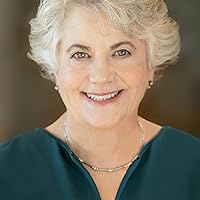
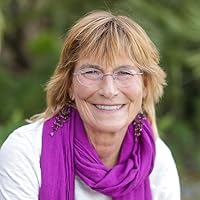
Patricia Grayhall is a retired medical doctor. Her debut memoir, Making the Rounds; Defying Norms in Love and Medicine was an instant success, garnering a starred review in Kirkus Reviews and was among Kirkus' Best 100 Indie Books of 2022.
The memoir won many awards including two first place Best Indie Book Awards, It was also a Reader’s Favorite Award, and Firebird Award first place winner, a Nautilus Award second place winner, and a Nancy Pearl Best Book Award, Golden Crown Literary Award, American Book Fest Best Book Award, and Canadian Book Club Award finalist.
Patricia has published articles in Queer Forty, The Gay and Lesbian Review, The Millions, Lesbian Game Changers, and Seattle Magazine, among others. Podcast and NPR interviews appear on her website.
In 2023, Patricia pivoted to fiction, a pandemic project, publishing a romance novel with her partner, Golden Years and Silver Linings
Her most recent book, is a novel, A Place for Us.
Her current project is a thriller.
Patricia splits her time between Seattle and Vancouver Island, where she and her partner enjoy other people’s dogs, the noisy jostling of seals on the dock, the playfulness of otters, and the occasional sighting of an orca or black bear.
This coming-of-age memoir wasn't what I had expected.
Reading this memoir was like stumbling upon a shipwreck of disappointment — I couldn't look away from it, no matter how much I wished to.
'Making the Rounds' is divided into four parts, plus an Epilogue; sadly, I found only the first part to provide an engaging narrative. As the pages turned, a sense of discomfort and irritation grew within me. Yet, I persisted in reading, and you'll soon know why.
In this memoir, Dr. Patricia Grayhall, writing under a pen name, emerged as a brilliant medical doctor; and I, a 30-year-old closeted lesbian in a society that still clings to heteronormativity, resonated deeply with her struggles. Her journey of acknowledging her own sexuality and continually advocating for it against the conservative norms struck a chord within me. Moreover, I, of course, recognized her perseverance as a female medical doctor in the '70s. But while patients could entrust their well-beings on Dr. Grayhall's hands, it appeared that entrusting women's feelings to her was another matter—entirely.
I found myself overwhelmed by the constant stream of excuses she offered to her inability to commit in romantic relationships. She even—more than once—hid behind the veil of polyamory to justify her infidelity. She gradually evolved into what I could only perceive as a serial cheater, as she wanted everyone to adjust to her needs and wants—not the other way around. Despite experiencing betrayal firsthand, she ended up betraying multiple women herself.
In the end, the author was able to tell her readers that she was a bright, tenacious, and high-achieving woman from the mid-20th century. Yet, intertwined with her remarkable professional trajectory in medicine was a transformation into a selfish and hurtful person. Thinking about those women she hurt along the way of her high-achieving yet tumultuous career took away a great amount of enjoyment from my reading experience. But later on—I got some of it back when she eventually found herself in the same shoes of those women she had more than once callously disregarded. This, I realize, was the driving force that kept me reading. I was able to power through because I badly wanted to see her finally get her own karma—and suffer from it too.
Fast pacing. Brave. Honest. Unapologetic. However, I suggest one shouldn't approach this memoir with the anticipation of finding remarkable inspiration in it, for such expectations might just lead to disappointment. Nonetheless, there's no doubt in me that reading this memoir was an experience in itself. I just find it unfortunate that her professional accomplishments and the significance of her identity as an openly lesbian individual in the '70s were somewhat overshadowed by her regrettable decisions in her twenties—at least within the scope of this memoir.
‘I would become the woman I’d want to be with’ – a journey in to belonging and love
Canadian author Patricia Grayhall (a nom de plume) is a medical doctor who makes her book-publishing debut with this memoir, MAKING THE ROUNDS. She explains her use of a pen name ‘because this is a very personal and frank Memoir about coming out as a lesbian in the late 1960s and training to become a doctor when society disapproved of both for a woman.’ She lives on Vancouver Island in British Columbia.
The author’s immediately accessible manner of writing is suggested in the opening lines: “Being a lesbian in the 1960s was considered a mental illness and, for some, a death sentence. On March 13,1964, a man stabbed Kitty Genovese to death, a lesbian living with her girlfriend in Queens, New York, while she walked to her apartment complex. Decades later, society would label this a hate crime – but not then. I was in elementary school when I discovered my attraction to girls – first Georgina and Becky in my classes, then Elizabeth Taylor in the movies, and my teacher, Miss Chiono…’ This casual, one on one manner of writing brings a special sense of immediacy and honesty that makes this book one of inspiration as well as an overview of social history we all need to visit.
The content has been well condensed as follows: ‘Defying expectations of a woman growing up in Arizona in the 1960s, Patricia Grayhall fled Phoenix at nineteen for the vibrant streets of San Francisco, determined to finally come out as a lesbian after years of trying to be a “normal” girl. Her dream of becoming a physician drew her back to college, and then on to medical school in conservative Salt Lake City. Though Patricia enjoyed a supportive friendship with a male colleague, she longed for an equal, loving relationship with a woman. But her graduate medical training in Boston, with its emotional demands, long hours, lack of sleep, and social isolation, compounded by the free-wheeling sexual revolution of the 1970s, made finding that special relationship difficult. Often disappointed but never defeated, Patricia—armed with wit and determination — battled on against sexism in her male-dominated profession and against discrimination in a still largely homophobic nation, plunging herself into a life that was never boring and certainly never without passion.’
Entertaining, informative, and important, especially to those in the process of coming out, MAKING THE ROUNDS is a superbly written memoir that will find a permanent niche in the LGBTQ+ literature. Recommended.
I have always been in awe of physicians, because I appreciate the ordeals they must endure to become doctors. Nothing in Patricia Grayhall’s memoir, Making the Rounds, dissuades me from that esteem. Indeed, as s a woman and then later as an out lesbian, Grayhall’s trials as a medical student, resident, and working professional in a world dominated by men only add to my appreciation of what patience and fortitude was required of Grayhall to succeed; and succeed, she did. Her every encounter with gender prejudice is as believable as it is infuriating to this reader.
At the same time, some of Grayhall’s problems are solely of her own making. In her youth she was positively tortured by her stubborn fantasy of enjoying a lesbian equivalent of the All-American Happy Family. Every woman she takes up with—and there are many—is immediately sized up as a future monogamous partner, and they all eventually fail the test because they do not share that particular fantasy. (Grayhall’s present spouse of many years, Linda, does not figure in this memoir; she comes into the picture later.) Most of the young Dr. Grayhall’s evenings, if they do not conclude with a fight with a current or former paramour, end with a restorative “glass of wine”: coming home after a day in the trenches of emergency-room medicine, she seldom finds any respite in a personal life racked with tensions and disappointments. Only in the Epilogue does the reader learn that things, in time, worked out—and worked out wonderfully—for Grayhall. But that is not what we take away from her Making the Rounds. What I’ll remember is the tumult she put herself (and her friends) through while trying to do one of the toughest jobs in the world.
The author recounts her life as a young woman in the 1970s from adolescent confusion and trauma to an adult trying figure out who she is. Her story becomes more intense as it is the tale of a lesbian medical student/physician. The medical dramas are enough for a mini series alone -- and to keep any reasonable person away from a teaching hospital. Combined with the challenge of rotating relationships, it's no wonder the narrator is exhausted most of the time as she searches for stability. The author's honest account of her youth provides a believable history during those years and hope to others who might face similar challenges.
I appreciated being able to read an advanced copy of this memoir that releases in October.
Whether you aim to track attitudes and roadblocks LGBTQ women faced, or follow the life of a high achiever, Patricia Grayhall has delivered an honest account of her experience navigating relationships with women and friendships with men as she deals with the patriarchy of medical schools. Completing residencies, earning two masters’ degrees from Harvard and gaining board certifications, the author starts her memoir with early childhood experiences and life in San Francisco, Salt Lake City and Boston in the 70s. This is about her personal journey, navigating the challenges of relationships, monogamous and polygamous, seeking loyalty and fulfillment, the push and pull of lust, defending her own feelings as she seeks whole relationships. Will she reach her goal?The pressures of her field, family ties, attractions and affairs come alive on the page. It is a straight account without the embellishments or pretense one sometimes encounters, a road trip to maturity. She quotes The Baal Shem Tov, ”Let me fall if I must fall. The one I will become will catch me.” Making the Rounds is an intense, well written, page turner. Get a copy!
As a late-to-the-party lesbian—coming of age about the same time as the author, but coming out twenty years after high school—Making the Rounds: Defying Norms in Love and Medicine captivated me. Having followed the expectations of the 70s, I went to college, married, and was a stay-at-home mom, not going to graduate school until I was 40, when the times had changed. But there was a whole other trajectory for some women in the 70s and 80s that went unnoticed by me. The author’s courage and determination to succeed in a male-dominated profession, at the same time being true to who she knew herself to be in the face of familial and societal homophobia, made this flowing, well-written story compelling. If you are a lesbian, a physician, a child of the mid-20th century, or someone looking for courage to follow your dreams against the odds, this book is for you. I couldn’t put it down.
I am honored to have been an early reader and look forward to the October release of Making the Rounds.
Lesbian and women’s history at its best and close-up With this compelling, poignant, and inspiring story of growing up as a lesbian and pursuing a demanding medical career in the 1960s and ‘70s, Patricia Grayhall gives us an insider’s view of the joys and struggles of forging a life as a lesbian in that era as well as the challenges for women pioneers in US medical schools. The personal and professional tales are intertwined, and they are told by a narrator who is determined to create a full life of love and work despite cultural, occupational, and personal obstacles to her goals. Besides creating a fascinating historical account, Grayhall writes scenes of the narrator’s longing for other women that are fresh, innocent, and palpable. While her libido clouds her judgement many times in her twenties, as readers we understand her obstacles and good intentions and are rooting all along for her to find the healthy balanced life that she eventually creates.
I was honored to read an Advanced Reader's Copy of this important book and look forward to its debut in October 2022.
I almost always really like "becoming a doctor" nonfiction. This one is also the story of a gay woman trying to find her way in the '60's and '70's - when she had to to hide her sexuality or risk losing her job.
Patricia recounts all her experiences from believing she was alone in her feelings, then learning how to handle it all while navigating through media training and the wider world in less free and accepting times.
With each and every chapter another part of Patricia’s experience was shared and she’s really been through some difficult and trying times that you certainly will have no idea about unless you were there during these times to experience the world. Memoirs like this absolute fascinate me because it is such a privilege to have someone share their life so openly with us all.
It was quite a journey for Patricia, especially career wise where being her true self had potential consequences to end or hinder her career plans. Sharing very personal experiences that were completely life changing gave such a perspective into how life was for Patricia and just how many difficult choices she had to make to find love and maintain relationships.
Such an experience to be able to take a peek into Patricia’s life and amazing journey.
Patricia Grayhall’s memoir, Making The Rounds: Defying Norms in Love and Medicine, takes us back to the 1960s and 1970s, a time when women were transitioning from traditional roles into expanded career choices. That expansion happened because women like Patricia pushed their way past barriers, fought against limitations imposed on them, and endured harsh treatment for being one of the first. Patricia shares her difficult journey with us in this deeply personal memoir. She faces adversity not only because she is a woman, but also because she is a lesbian, a fact she largely hid for many years due to fear of losing her job and her safety. In her memoir, we learn not only about her education and career struggles, but also the quandary of being a lesbian during an era when the new freedom to explore one’s sexuality with multiple partners conflicted with the desire for a monogamous, loving relationship. Patricia explores her personal experiences with both, including the heartbreak and fallout that accompanied her decisions. In Making the Rounds, Patricia Grayhall has granted us access into her world, and into the life of a complex woman we will not soon forget.
Making the Rounds: Defying Norms in Love and Medicine, by Patricia Grayhall, is a fast paced story that reads like a novel but is her experience as an out lesbian going through medical school in the early 1970s in Salt Lake City, then in Boston. We tumble through her search for love along with the harsh reality of residency. She is driven and gets a job doing research and two masters degrees as well. The amount of school she does, along with the emotional turmoil of her relationships, is the guts of this book. Can a lesbian have a committed long term relationship when there are no such models? One of the questions of the book that is posed along with her feminist understanding of heteronormative enculturation. Which is harder becoming a doctor or finding love? Both are difficult and steep learning curves. I highly recommend this book.
Making the Rounds by Patricia Grayhall is as important and timely as it is compelling. It's the memoir of the author's coming of age as a misfit in the heterosexual-normal world. She then confronts the male-dominated medical world while protecting her secret identity as a lesbian. She details the years of her struggles and heartbreaks with beautiful sensory details and genuinely shared feelings. Her candid point of view is courageous as she puts her passion and pain right on the page. We root for her as she ultimately confronts how she needs to change to achieve the life and love she desires. After reading an early copy, I will buy the final to reread and share with friends once it's published in October.
"Making the Rounds" is a candid and powerful memoir tracing Patricia Grayhall’s early years as the “only lesbian in Arizona” and one of five female medical students at the University of Utah in the 1970s. Through her eyes, we relive her struggle to find true love and gain a successful career in the male-dominated field of medicine. "Making the Rounds" is a reminder of what women were up against before Title IX, and before the legalization of abortion. With the collapse of Roe v. Wade, Grayhall’s memoir calls to mind the importance of a woman’s right to choose and serves as a warning that other freedoms we hold close could be stripped from us at any moment.
I feel grateful to have received an advanced copy of Patricia Grayhall's Making the Rounds: Defying Norms in Love and Medicine. Grayhall is a great storyteller. Her memoir is of growing up with an abusive mother and depressed father and then finding the determination to overcome that childhood rather than deny it. This is not a story of the rotten truth about how female physicians were treated in the 70s. Instead, it is a story of one woman's fierce determination to make a difference as a physician and, at the same time, live an authentic life. I highly recommend this book.
There are many reasons why one should want to read this memoir: for its life lessons; for a trip to the past to remind us of the issues that were plaguing the nation then and that we are still struggling with today (take Roe v. Wade); or simply for a glimpse of the life of a remarkable woman who chased after her dreams and faced down challenges with courage and an indomitable spirit.
Grayhall gives us a captivating and moving account of her life from early childhood to her thirties. Growing up in conservative Arizona during the 50s and 60s, she struggled with her growing awareness of her attraction to other girls. At age 19, realizing that she could never fit into the heteronormative world, she traveled to San Francisco, where she hoped to connect with other women of the same sexual orientation. There she met Judith, a podiatrist who inspired her to return to college and become a medical doctor. She excelled academically and was admitted to medical school in Salt Lake City, Utah.
During the 70s, gender discrimination was systemic in the male-dominated medical profession, and Grayhall chafed at the more menial tasks that were routinely assigned to her. She also railed against the impersonality of institutional health care, which at times seemed anything but caring.
Her difficulties were compounded by her fraught romantic relationships, some of which ended traumatically. There were many affairs, but what she longed for was a sustainable, long-term relationship with a woman she could truly love and trust.
Grayhall’s prose glides effortlessly across the page. She writes with an openness and unguarded specificity, but with a light touch and sensitivity. Her writing is expressive and draws the reader in as a secret sharer. We feel deeply her passion and her pain. We also feel her joy and exhilaration as we ride along with her in the limousine, celebrating the completion of her residency and the beginning of a new life. This well-written memoir should be on every woman’s reading list.
I had the great fortune to read an advance copy of Patricia Grayhall’s contemporary memoir, Making the Rounds: Defying the Norms in Love and Medicine.
Making the Rounds a memoir in which the author reflects on important events in her life across three decades, but it is much more than a chronicling of crucial life experiences in the 1960s, 1970s, and 1980s. It is a work that also carries a message. It is a finely-tuned expose in which the author’s point of view frames the most cataclysmic work, social, and personal relationships of her life against the backdrop of a restrictive upbringing, myogenic medical profession politics, the feminist movement, and the struggle for gay and lesbian rights.
The memoir begins with a chapter set in the 1960s when homosexuality was considered a mental disorder. It describes the author’s first recognition of being attracted to the same sex in elementary school and moves on to describe her home life, dominated by a demanding, intolerant, and unhappy mother along with a debilitated father who was in and out of hospitals with severe chronic depression.
After spending her formative years suppressing her natural inclinations, she goes off to college and tries desperately to be “straight.” As much as she tries to fit-in, she has a deep sense of despair, recognizing she doesn’t belong in the hetero-normal world. Going off to then gay and lesbian mecca of San Francisco to search out other young women like herself, serves only to strengthen her feelings that she is a misfit. This sentiment is carried throughout college and medical school as she craves professional and personal validation in an era where acceptance as a female physician and a lesbian was a rare commodity.
Her pursuit of a loving, stable relationship coupled with her unbridled longing, shepherded her into many untenable situations and heartbreaking moments. These missteps are superimposed over her desire to be an advocate for her patients which allows the reader to embrace both her strengths and insecurities as a doctor and as a woman. She clearly is someone who really cares about people, especially kids and the elderly, and rails against unnecessary treatments. During her medical internship and residency, she internalizes the apocalyptic situations her patients face that only prolong suffering and strip away dignity. She cries and punches the wall in frustration and anguish, exhaustion, and enervation.
In my opinion, Making the Rounds is an important piece of history served up in a crisp writing style entwined with beautiful sensory details, and phrases that will make you go “wow.” The ability of the author to portray a deep connection between herself and the situations she describes is palpable. Her point of view is candid, self-deprecating—at times brutally so—and genuine. She is obviously intelligent and accomplished, but what comes through, is her openness and honesty, qualities rarely seen in similar works.
I promise you—this is a book you do not want to miss.
In Making the Rounds, author Grayhall does indeed make the rounds, both hospital rounds as a doctor and romantic rounds as she works through her own sexuality while struggling with school and career as one of the few women in medical school in the 1970s. Part history, part romance, and all memoir, this book reminds us of how much and how little things have changed for professional women, especially gay women. It’s also an engaging romp through Grayhall’s romances, by turns endearing and heart-breaking. From her teens, when she wonders if she’s the only lesbian in Arizona, to her residency at Harvard, we worry and struggle along with her. We also come to love her best friend, a gay man she meets early in medical school. Informative and entertaining, this is a great read.
Patricia Grayhall writes about life in her late teens and early twenties as she grapples with her identity as a lesbian, whilst following her dreams of becoming a doctor in a male dominated arena. Set against the backdrop of her medical training, this book chronicles her quest to find love and stability in a world that forces her to keep her sexual orientation secret for fear of being ostracized. Set in the late ‘60s and 1970’s, during the second wave feminism and the sexual revolution, Grayhall expertly weaves her story with a spare, honest, and passionate writing style, that is deeply personal, thought-provoking, and compelling for any reader, gay or straight. Married and straight myself, I can identify with its universal themes of what it means to be human. Grayhall’s memoir documents the trajectory of her at times heartbreaking coming-of-age, navigating sexual abuse and me-too trauma, to her first encounters in the San Francisco lesbian community, ever hopeful of finding the love and stability she so craved. This memoir is a testament to identity perseverance, friendship between the sexes, and love in all its messy and beautiful forms. I am honored to have read an early copy.
I am fortunate in being one of the first to read an advanced copy of Patricia Grayhall's courageous and frank coming of age memoirs.
Her writing style is seamless in the way it flows gently across the pages. I read it in two days which is unheard of for me. Once I started reading about her life and tremendous desire for a hard-fought career in medicine and to find a fulfilling love with a woman, I could only stop reading to sleep for a few hours.
Grayhall is a very talented storyteller, weaving a narrative filled with fortitude, courage and passion.
My coming of age was at the same time as hers, so I truly could understand the uphill battles she faced to be her authentic self in an environment of patriarchal supremacy and homophobia. She has lived her life undaunted and accomplished her goals of being a physician and finding her true love. I thoroughly recommend this wonderfully written book to anyone. You won't be disappointed.
Patricia Grayhall, you ROCK! Alexis Hunter, Award-winning author of Joi Lansing: A Body to Die For
A brave portrait of a determined young woman with a rebel streak, who broke the walls of two well-guarded fortresses in the U.S. in the 70s: gender and professional expectations. As a lesbian at a time when such identity was controversial and even dangerous, and a doctor in a male-dominated field where gender discrimination was rampant, she never gave up on those two fundamental aspects of her identity. Yet, her search for a loving, monogamous relationship was full of heartache and betrayal—hers and others. It took time and experience to recognize what she needed to change to achieve her most intimate dreams. Grayhall’s style is sure handed and I found her portrayal of the end of life issues in medicine particularly poignant.
I had the good fortune to read an advance readers copy.
Female professionals—gay or straight, doctor or other—owe a debt of gratitude for the tribulations women like Grayhall endured to hew the path we now traverse. Reverberating with personal angst and professional certitude, “Making the Rounds” is about life. I highly recommend it to anyone who’s ever lived one.
It is inspirational to read about the lives of other women during the same time frame as my coming of age and early adulthood. I was honored to read an early draft of Making the Rounds as a Beta Reader and look forward to the finished version in October.
Patricia is courageous to share all the ups and downs of her encounters and relationships as she matured as a medical professional and woman. Her resilience as she earned her medical degree in what was clearly a man's world of the 1970s gives the reader insight into the strength and discipline the field requires in any era, especially the 70s and 80s. Kudos to Patricia for showing all women that their dreams and desires for everlasting love and a rewarding career can become realities!
DNF at 60% Expected much more discussion about the trials and tribulations associated with being a lesbian woman in medicine in the later half of the 20th century, however it was mostly about her list of women that she was attracted to and kept hurting by not being able to commit.
What do you do when you retire at age 70 and you stumble across some old, maudlin journals from your young adulthood stashed away in the basement? You write a memoir, of course! And you hide behind a pseudonym when publishing it!
I was hoping for a more thoughtful and probing explication of a lesbian woman breaking into the misogynist, male-dominated field of medicine in the late 1960s-early 1970s. Instead, the book is mostly a shallow chronicling of a bunch of random and hurtful relationships, with little acceptance of responsibility.
Essentially, this memoir is a chronological recounting of two parallel tracks in the pseudonymous author’s life during the roughly decade-long period from her late teens to age 30.
The first track is fine. She studies hard and works hard and manages to make it in the cruel and exhausting world of medicine of the late 1960s and early 1970s. Kudos. Good job.
It is the second track that dominates, however: Her sexual life during that period. It’s one destructive relationship after another, with all of the commensurate drama and drinking and cheating and painful breakups. The authors is good at hooking up, not so good at being faithful or ethical with her many lovers.
I had to laugh when she said in an online interview that she was searching for “a permanent monogamous relationship” but found that nigh-on impossible in the freewheeling lesbian-feminist culture of the 1960s-1970s. Maybe it’s self-deception rather than conscious duplicity, but she'd actually found more than one woman who wanted a committed relationship with her, but she repeatedly and callously betrayed them whenever the next cute babe caught her eye.
As I'm sure you are picking up by now, I didn't find Grayhall to be a sympathetic character. Actually, that’s putting it too mildly. She is boorish even by her own self-description. As one example, she relentlessly pursues a female colleague who identifies as heterosexual and who has told her time and time again that she is not interested. Finally, the other woman blows up:
“You insist on imposing your feelings and desires on me and pressuring me to respond. You’re so fucking arrogant! Haven’t you ever had a woman turn you down?”
To which our ever-humble protagonist responds: “No.”
I was a bit shocked that Grayhall included that quote, frankly, as it paints her in such an unsympathetic light.
I totally get why she’s hiding behind a pseudonym. As she explains it, the motivation was to protect former lovers who live as heterosexuals and have never disclosed their relationship with her. However, unlike most pseudonymous authors, she’s out there doing interviews and posing for photographs, so it isn’t hard to ferret out her true identity. Perhaps another good reason to use a pseudonym is so that everyone in her mature professional and personal circles doesn't read about how badly she behaved in her young adulthood. After all, as she notes in the afterword, even her long-time spouse has no desire to read about it.
Making The Rounds: Defying Norms in Love and Medicine – Patricia Grayhall – (2022) Grayhall begins her engaging confessional debut by saying that as she was coming-of-age in the 1960’s, homosexuality was considered a mental illness, when she visited the Phoenix Public Library to learn more, she felt like she was the only lesbian in Arizona. Soon, “The Ladder” (1954-70: the first lesbian magazine published in the U.S.) arrived at her home in a discreet mailing envelope-- her mother found it hidden in her room and threw it away. Eventually, she would read “Sisterhood is Powerful” (1970) a lesbian anthology edited by the feminist poet Robin Morgan. The films she watched: The Fox (1967) and The Conformist (1970) disappointed her and didn’t realistically portray lesbian life. During a break from college, she bravely flew to San Francisco to meet other lesbians and learn more about gay culture.
San Francisco was quite a learning experience for her, as Grayhall began her first of many long-term relationships. During this time period she was accepted in medical school at the University of Utah, (1971) -- students entered this pre-med program (briefly) without completing a four-year degree. There were five female students in a class of one hundred men, only ten of the students were non-Mormon. Grayhall envied her married fellow students and yearned for the support of a loving wife when she worked a full-time schedule. Dave, another closeted med student became her roommate and lifelong friend.
The storyline moved at a quick pace through the issues and challenges of being a gay woman in a male dominated culture and career path: navigating through medical school, her hospital residency in Boston Massachusetts, her parents, friendship with Dave, and a long line of lovers and relationships with women. Nearly all the memoirs written by physicians recall the grueling punishing demands of med school/establishing residency: the constant study, long brutal hospital shifts, demanding patients, exhausting lack of time for personal care, sleep and socialization. It was quite an accomplishment that Grayhall managed to maintain her high GPA, date, and have relationships with so many women and graduate at the top of her class. It was also understandable that with her very active romantic and sex life that she wrote under a pseudonym. Grayhall has retired from medical practice, her writing has been featured in several publications, and she enjoys living in the Pacific Northwest with her life partner. ` 3.5* GOOD
I would love to give this memoir five plus stars if they were only for the person writing it, who is undoubtedly courageous and persistent. Though I am not gay, she and I are about the same age and have much in common in our pasts. That being said, I found much the same problem here that I find with many, if not most, memoirs. Decently written, enough to get by and be published, but not engaging enough or written well enough to stand alongside four or five-star fiction or even the better written non-fiction.
Memoir must stand alongside fiction and others, mustn't it? Nearly all memoir writers have not spent the time or energy learning the tools that good fiction writers must learn. For example, how to express deep emotion, that emotion that readers look for when they read an engaging novel. Most memoir is mainly narrative, as here, and I never feel any strong emotion, not even in scenes or moments it is called for. Emotions, scenes, characters, are skimmed over, because the author has too much progression, rather than focus. It's a bit too much like reading a news article: this happened, then that happened.
There are important themes here, but they are not given enough focus.
Memoir can read like excellent fiction and should to receive four or five stars. There's Maya Angelou, and Peter Godwin's "When a Crocodile Eats the Sun."
This is a review of the written book, not the author, who deserves all the kudos we can give her, including those for an unflinching writing effort.
This is a book more interesting than I've expected...
Just prepare to get your eyes widened by the extraordinarily enriched sex life of a lesbian aiming to become a doctor in the 70s, amid all sorts of discrimination and difficulties. Well I'll just put it this way---The 70s version of the L Word with Patricia Grayhall...
My biggest question: how can Patricia succeed in kissing and making love to each and every of her crush? How particularly charming is she? What's her magic? I really need to know lol...
And this book makes me feel like lesbians are all around in our real life. You just show up to a specific place and you'll bump into one, whereas in my real life I can find none. It must be my problem cause I'm definitely not a charmer.
And my second biggest question: were lesbians that promiscuous in the 70s? I'm a bit put down by the prevailing notion by then that lesbians should not fall into the monogamous heterosexual structure. This notion seems very disturbing to me.
Overall, I really enjoy reading this book. It provides the inner struggles of a lesbian in the 70s, a lot of which I can relate to even today. Also there're some fun parts, e.g. the getting pregnant part. I love Cass, who was always so tender and loving.
Definitely a recommendation to those wanting to get a glimpse of the real life of an intelligent and amorous lesbian in the 70s and 80s.
As a student at the all-female college I attended in the 60s, I recall hearing whispers: some unidentified fellow student had been caught in flagrante with her roommate – leading to both being discreetly expelled. We never learned the identity of those mysterious expellees, but, at our fiftieth reunion, several of our classmates who had managed to graduate “came out”. And, as was made abundantly clear during the reunion on our campus – at a still defiantly all- female college – no one is whispering or hiding in the closet any longer.
Patricia Grayhall brings back the feel of those days with her very personal memoir of being a lesbian at a time and in a place where this identity meant isolation and much worse. Despite struggles that would have undermined a less determined woman, she brilliantly managed to make her way through what was at best a challenging education and internship, made more difficult by establishment members who viewed her as an unwelcome interloper. By sheer grit, resolve, and intelligence, Grayhall achieved professional success while struggling to attain the personal life she craved. She has written a very courageous memoir that helps us all remember how bad things were – and how much we need to fight to ensure that our society does not revert.
I started reading “Making the Rounds” to support a friend’s recommendation but continued because I was so engrossed. This is a well written very personal memoir about being gay and a woman during medical training during the 1970’s. I found myself reflecting on my own medical training experiences as a young woman in what was at the time a male world. In addition my training bookended the AID’s epidemic. Unlike the Covid pandemic there was no acknowledgement of how stressful it was to deal with sickness and death. I used to admit young men daily only to watch them die of an illness that was still not understood. I did not have to deal with being gay and this is the other important theme of the book. It is a brave coming of age story of a young woman coming to terms about her own sexuality and value during a time when being gay was stigmatized and risky. People take it for granted that acceptance of LGBTQ+ is longstanding. The book is a reminder that it’s all pretty new and still evolving.
Patricia is very close to my age and I too first totally came out in Arizona. What other reason to give for me to pick up a book and read it to the end.
Who knows, we could have run into each other there. It's nice to know and identify with some of her frailties in love and the heartache and pain caused by it.
Patricia does eventually learn to love herself and feel comfortable about herself. It takes years of growing. It is only when you reach this point that you can truly find the love of your life.
The one thing that I wish she would have included is more in depth descriptions and stories about her medical training. Other than this one wish, I find this telling of her life enjoyable and brings back memories for me, both good and bad, of all of the things that were thrown in the way of gay relationships. Now that marriage Equality has been reached, we need to keep it legal. There is still a fight ahead, they are trying to take our rights from us. Stay vigilante!