

What do you think?

Cheap Land Colorado: Off-Gridders at America's Edge
From Pulitzer Prize finalist and National Book Critics Circle Award-winning author Ted Conover, a passage through an America lived wild and off the grid.
In May 2017, Ted Conover went to Colorado to explore firsthand a rural way of life that is about living cheaply, on your own land--and keeping clear of the mainstream. The failed subdivisions of the enormous San Luis Valley make this possible. Five-acre lots on the high prairie can be had for five thousand dollars, sometimes less. But along with independence and stunning views come fierce winds, neighbors with criminal pasts, and minimal government and medical services.
Conover volunteered for a local group trying to prevent homelessness during the bitter winters. He encountered an unexpected diversity: veterans with PTSD, families homeschooling, addicts young and old, gay people, people of color, lovers of guns and marijuana, people with social anxiety--most of them spurning charity and aiming, and sometimes failing, to be self-sufficient. And more than a few predicting they'll be the last ones standing when society collapses.
Conover bought his own five acres and immersed himself for parts of four years in the often contentious culture of the far margins. He found many who dislike the government but depend on its subsidies; who love their space but nevertheless find themselves in each other's business; who are generous but wary of thieves; who endure squalor but appreciate beauty. In their struggles to survive and get along, they tell us about an America riven by difference where the edges speak more and more loudly to the mainstream.
In May 2017, Ted Conover went to Colorado to explore firsthand a rural way of life that is about living cheaply, on your own land--and keeping clear of the mainstream. The failed subdivisions of the enormous San Luis Valley make this possible. Five-acre lots on the high prairie can be had for five thousand dollars, sometimes less. But along with independence and stunning views come fierce winds, neighbors with criminal pasts, and minimal government and medical services.
Conover volunteered for a local group trying to prevent homelessness during the bitter winters. He encountered an unexpected diversity: veterans with PTSD, families homeschooling, addicts young and old, gay people, people of color, lovers of guns and marijuana, people with social anxiety--most of them spurning charity and aiming, and sometimes failing, to be self-sufficient. And more than a few predicting they'll be the last ones standing when society collapses.
Conover bought his own five acres and immersed himself for parts of four years in the often contentious culture of the far margins. He found many who dislike the government but depend on its subsidies; who love their space but nevertheless find themselves in each other's business; who are generous but wary of thieves; who endure squalor but appreciate beauty. In their struggles to survive and get along, they tell us about an America riven by difference where the edges speak more and more loudly to the mainstream.
287 pages, Hardcover
First published November 1, 2022
About the author
Ted Conover
33 books267 followersTed Conover, a "master of experience-based narrative nonfiction" (Publisher's Lunch), is the author of many articles and five books including Rolling Nowhere: Riding the Rails with America's Hoboes, Coyotes: A Journey Across Borders with America's Mexican Migrants, Whiteout: Lost in Aspen, Newjack: Guarding Sing Sing (winner of the National Book Critics Circle Award and finalist for the Pulitzer Prize), and, most recently, The Routes of Man: How Roads Are Changing the World and the Way We Live Today. He is a distinguished writer-in-residence at the Arthur L. Carter Journalism Institute of New York University."
Ratings & Reviews
Friends & Following
Create a free account to discover what your friends think of this book!
Community Reviews
Displaying 1 - 30 of 400 reviews

August 26, 2024
I listened to Cheap Land Colorado: Off-Gridders at America's Edge on audiobook. It is read by the author, Ted Conover, which I greatly appreciate.
I grew up in Colorado, so I was very interested in the book. I greatly admire Conover for living in a small, travel trailer where the door froze shut due to the frigid weather conditions. He learned by trial and error how to meet people, make friends, and help serve. He worked for a non-profit organization that focused on helping people who lived off the grid.
I found that the book really dragged in the middle.
My review is an outlier, so I strongly encourage readers to read many reviews on this book.
I grew up in Colorado, so I was very interested in the book. I greatly admire Conover for living in a small, travel trailer where the door froze shut due to the frigid weather conditions. He learned by trial and error how to meet people, make friends, and help serve. He worked for a non-profit organization that focused on helping people who lived off the grid.
I found that the book really dragged in the middle.
My review is an outlier, so I strongly encourage readers to read many reviews on this book.

May 1, 2023
This is an interesting book about some of the people who, for whatever reason, buy cheap land in the San Luis Valley of Colorado, and "move on in".
I found it reminiscent of, and just as interesting as, Nomad, with the people and families living semi-off-grid.
The author lived among them, even going so far as to buy a tract of land and a trailer to live in. He got to know many of the inhabitants of the valley, and shares their stories with us.
There are myriad reasons why people have opted to buy land and make their homes here on the edge of United Statian society. While some of the people are a little scary, and many of them love their guns, I can see the appeal of living out there.
Not all have much of a choice but they all share a determination to make the most of their circumstances.
This is a book well worth reading and one I immensely enjoyed. There are photographs scattered throughout the book that I appreciate, to put a face to some of the people in the book.
I found it reminiscent of, and just as interesting as, Nomad, with the people and families living semi-off-grid.
The author lived among them, even going so far as to buy a tract of land and a trailer to live in. He got to know many of the inhabitants of the valley, and shares their stories with us.
There are myriad reasons why people have opted to buy land and make their homes here on the edge of United Statian society. While some of the people are a little scary, and many of them love their guns, I can see the appeal of living out there.
Not all have much of a choice but they all share a determination to make the most of their circumstances.
This is a book well worth reading and one I immensely enjoyed. There are photographs scattered throughout the book that I appreciate, to put a face to some of the people in the book.

November 9, 2022
Anything, and I do mean anything by Ted Conover is an absolute must read. I'd been looking forward to this for many months. Few immersive authors are able to write so beautifully, with a true command for the craft of top notch writing.

December 6, 2022
Flat. Ted Conover has all the acumen of a trained investigative reporter or ethnographer, but he just doesn't know how to write a narrative that holds interest. Yep, this book is as flat as champagne left in the fridge for over a week. Skip it.
November 23, 2022
This should be assigned reading for all Coloradans.
Having lived in the proximity of the San Luis Valley, I was semi-familiar with the way of life and challenges of those that live in the Valley. I recognized a lot of the surnames of families of historic importance from my Salida car dealership job. But those that live on the prairie/the flats, the names of the area where those off-grid live, have a completely different experience.
I enjoyed learning about the history of this area and the demographic changes over the decades. The land changed hands post Spanish-American War, therefore creating a country within a country. The mentality of these insular Hispanic communities (the author writes that this is what they call themselves), and the lasting effects of land grants, have led to the current popularity of the land with off-grid communities.
The author took such care with the subjects and people covered in the book, you can tell he didn't want to exploit their stories and that he truly cares for the future of the flats.
Having lived in the proximity of the San Luis Valley, I was semi-familiar with the way of life and challenges of those that live in the Valley. I recognized a lot of the surnames of families of historic importance from my Salida car dealership job. But those that live on the prairie/the flats, the names of the area where those off-grid live, have a completely different experience.
I enjoyed learning about the history of this area and the demographic changes over the decades. The land changed hands post Spanish-American War, therefore creating a country within a country. The mentality of these insular Hispanic communities (the author writes that this is what they call themselves), and the lasting effects of land grants, have led to the current popularity of the land with off-grid communities.
The author took such care with the subjects and people covered in the book, you can tell he didn't want to exploit their stories and that he truly cares for the future of the flats.

March 24, 2023
Genres: Memoir/Nonfiction/Cultural
I liked the way this one started. The author richly described the people in this part of Colorado, as well as their "whys" and their "ways". It was colorful and I was looking forward to the conclusion/outcome/reasoning or whatever that comes at the conclusion of this sort of book. I loved the descriptions and the author's tie to these people. So the anticipation for outcome was building.
Then that all stopped. I started asking myself, "Why is this even a book?"
I'm not entirely sure about the last half of this book. I wasn't as connected to that half as I was to the first. It wasn't anything I felt I needed to know let alone wanted to know. And the author didn't give me any reasons to need or want it either. It dragged a lot towards the end. So 3 stars for the promising start.
I liked the way this one started. The author richly described the people in this part of Colorado, as well as their "whys" and their "ways". It was colorful and I was looking forward to the conclusion/outcome/reasoning or whatever that comes at the conclusion of this sort of book. I loved the descriptions and the author's tie to these people. So the anticipation for outcome was building.
Then that all stopped. I started asking myself, "Why is this even a book?"
I'm not entirely sure about the last half of this book. I wasn't as connected to that half as I was to the first. It wasn't anything I felt I needed to know let alone wanted to know. And the author didn't give me any reasons to need or want it either. It dragged a lot towards the end. So 3 stars for the promising start.

November 3, 2022
Ted Conover works as an immersive journalist. He rode the rails with hoboes (Rolling Nowhere). He embedded with Mexican immigrants moving back and forth across the U.S. border for work and for their families back home (Coyotes). He traveled the world exploring the impact of road development from Peru to The Himalayas (The Routes of Man). He worked as a prison guard in the fabled Sing-Sing prison (Newjack). And, drawing from his nearly forty-year career, he’s also written a guide to his style of reporting (Immersion).
Now Conover turns his attention to the San Luis Valley of Colorado and the people who choose to live in sparse, off-grid fashion in often crude trailers, shacks, and campers. Cheap Land Colorado—Off-Gridders At America’s Edge is an engrossing, captivating account of the wide variety of individuals and families who live in these stark, austere conditions. And why.
Conover starts out working with a social service group called La Puente, based in Alamosa. His mentor, Matt Little, cautions Conover not to wear anything blue. The last thing you want when you’re cold-knocking on doors is to be mistaken for a Costilla County code enforcement officer. (Lack of septic systems is a big issue.)
Working for La Puente, Conover brings firewood to the residents and starts, slowly, easing himself into the community. To the surprise of nobody who has read one of Conover’s previous books, characters emerge. We meet Armando, Paul, Kea and Rhonda. The “flats,” both its inhabitants and its topography, turn three-dimensional and kaleidoscopic. There are stories of hard luck, struggling individuals with suicidal thoughts, hard-scrabble folks who possess a simple desire to be left alone, and others who live quite content, thank you, not needing much of anything. Some like the remote location in order to grow their own marijuana and consume it.
Conover, as he has done in all his books, monitors his own impressions and reactions even as he takes copious notes about those he interviews. Conover, who grew up in Denver but lives and teaches in New York, doesn’t hide his own wariness about how he will he be perceived or whether he will be accepted.
“Just about every aspect of this passage intrigued me. I was going into the wild, a place with more pronghorn antelope, feral horses, and coyotes than people. But it also felt at times like a postapocalyptic landscape à la Mad Max, with ruins of old vehicles and junk and things that had burned, some of them still smoking. When the subdivisions have been created, presumably each new road had been marked by a street sign. Most of these now seem to have disappeared, with the occasional remainders evocative of a faded dream, an enterprise that didn’t work out. Instead of an American suburb circa the 1970s, I was headed, in winter, to the far margins to live among the outcasts, the self-sufficient, the alienated., the weed fiends, the wounded, the dreamers, and the hermits.”
Conover buys a 25-foot trailer for $4,000. He plunks it down on a property owned by Frank and Stacy Gruber, whose menagerie includes five children, a Saint Bernard, a ferocious Chihuahua mix, a smart heeler, and a couple of boxers. The Grubers serve as Conover’s home base and connection into the community. Over a four-year period, Conover made 20 trips to the valley, staying for several weeks or a few months at a time. (His teaching gig prevented him from moving in full time.)
Conover’s approach is organic, unforced, and chock full of empathy. He gives a voice to those who didn’t necessarily ask for one. He shows us people helping others with basic needs and simple outreach. Life, death, hopes, dreams, survival, struggle, and renewal. What appears at first to be a series of fiercely independent and solitary individuals who happen to share the same expanse of prairie turns out to be a group that has developed its own unique sense and style of community. Beauty emerges.
In all his previous immersive experiences, Conover was content to walk away when the journalistic work was done. But this time? Well, no spoilers here. But like any great book, it’s a love story in the end.
Now Conover turns his attention to the San Luis Valley of Colorado and the people who choose to live in sparse, off-grid fashion in often crude trailers, shacks, and campers. Cheap Land Colorado—Off-Gridders At America’s Edge is an engrossing, captivating account of the wide variety of individuals and families who live in these stark, austere conditions. And why.
Conover starts out working with a social service group called La Puente, based in Alamosa. His mentor, Matt Little, cautions Conover not to wear anything blue. The last thing you want when you’re cold-knocking on doors is to be mistaken for a Costilla County code enforcement officer. (Lack of septic systems is a big issue.)
Working for La Puente, Conover brings firewood to the residents and starts, slowly, easing himself into the community. To the surprise of nobody who has read one of Conover’s previous books, characters emerge. We meet Armando, Paul, Kea and Rhonda. The “flats,” both its inhabitants and its topography, turn three-dimensional and kaleidoscopic. There are stories of hard luck, struggling individuals with suicidal thoughts, hard-scrabble folks who possess a simple desire to be left alone, and others who live quite content, thank you, not needing much of anything. Some like the remote location in order to grow their own marijuana and consume it.
Conover, as he has done in all his books, monitors his own impressions and reactions even as he takes copious notes about those he interviews. Conover, who grew up in Denver but lives and teaches in New York, doesn’t hide his own wariness about how he will he be perceived or whether he will be accepted.
“Just about every aspect of this passage intrigued me. I was going into the wild, a place with more pronghorn antelope, feral horses, and coyotes than people. But it also felt at times like a postapocalyptic landscape à la Mad Max, with ruins of old vehicles and junk and things that had burned, some of them still smoking. When the subdivisions have been created, presumably each new road had been marked by a street sign. Most of these now seem to have disappeared, with the occasional remainders evocative of a faded dream, an enterprise that didn’t work out. Instead of an American suburb circa the 1970s, I was headed, in winter, to the far margins to live among the outcasts, the self-sufficient, the alienated., the weed fiends, the wounded, the dreamers, and the hermits.”
Conover buys a 25-foot trailer for $4,000. He plunks it down on a property owned by Frank and Stacy Gruber, whose menagerie includes five children, a Saint Bernard, a ferocious Chihuahua mix, a smart heeler, and a couple of boxers. The Grubers serve as Conover’s home base and connection into the community. Over a four-year period, Conover made 20 trips to the valley, staying for several weeks or a few months at a time. (His teaching gig prevented him from moving in full time.)
Conover’s approach is organic, unforced, and chock full of empathy. He gives a voice to those who didn’t necessarily ask for one. He shows us people helping others with basic needs and simple outreach. Life, death, hopes, dreams, survival, struggle, and renewal. What appears at first to be a series of fiercely independent and solitary individuals who happen to share the same expanse of prairie turns out to be a group that has developed its own unique sense and style of community. Beauty emerges.
In all his previous immersive experiences, Conover was content to walk away when the journalistic work was done. But this time? Well, no spoilers here. But like any great book, it’s a love story in the end.

August 19, 2023
P70. Prairie people overall just seemed poor and wanting a different life- one with more self-reliance, fewer bills from utility companies, and, in many cases, lots of distance from neighbors.
P253. Generally speaking, the flats residents I met were not the young and idealistic (though there were exceptions). Rather, they were the restless and the fugitive; the idle and addicted; and the generally disaffected, the done-with-what-we-were-supposed-to-do crowd. People who, feeling chewed up and spit out-had turned away from and sometimes against institutions they’d been involved with all their lives, whether companies or schools or the church.
At some point, almost everyone has dreamt about starting a new life. Getting away from all of the hustle and bustle or perhaps living a more sustainable lifestyle. Roughing it, like real pioneer folk. This daydream is merely fantasy for most of us, but Ted Conover, the author of this work, “Cheap Land Colorado”, decides to live this way. While, what he finds is not often shocking, it is a good reminder to me to enjoy the air conditioning, indoor plumbing and lack of fugitives that I take for granted.
Through a number of years Ted Conover spends intervals of time, in the San Luis Valley of south-central Colorado. As a native, Coloradan, he has a greater understanding of the people of the region than his occupation as a NYU professor would belie. As such, he learns to not go over his skis. He takes a volunteer position at a local non-profit, La Puente, which does out-reach and provides food and shelter for the less fortunate in the area. He tags along with, Matt Little, a seasoned member of the La Puente team who understands the importance of building bridges in the local community. One of the first tasks is providing free firewood for the residents. Where trust and respect are hard-won, it is important to build it incrementally.
In a desolate land primarily populated by outcasts, many of whom are running from something, building trust and earning respect are not simple tasks. As opposed to many books I have read which attempt to create a narrative, often politically driven, this book is almost devoid of sermons or soap box proclamations. While, Ted comes across a few bellicose inhabitants, he treats them with respect. Granted, some of it is based on self-preservation, (no doubt the amount of firearms exceed occupants), and it is an approach I appreciate. He will give his opinion if asked, but he realizes his job is not to elucidate the populace. He is a unique position, in that he is not going to go completely native, but it is imperative that he comes across as sincere and approachable. He also learns and understands in a sense of irony, that for many who consider themselves to be loners or scofflaws, it is the ability to create and further ties of one’s neighbors and immediate community which enables the most success.
The isolation and sense of independence which is often the drawing card for those who plunked down the $2,500 for the five acres of land tend to be the downfall for many of these mavericks. Whether it is the recluse who is found in their trailer half decomposed, the gun nut who has gone cuckoo for Cocoa Puffs, or the wayward couple that is looking for “adventure”, the stories are legion of those who have been swallowed up by the foreboding landscape. All of the work is challenging and mistakes can be costly, so having someone who can help you out or someone who can commiserate with is tantamount for success.
That is not to say that there are plenty of people which to avoid. Lawlessness is a byproduct of the landscape and the widespread nature is home to many who are fugitives from justice. In passing, Ted finds people who are relatives of murderers, those who are on the lam and in the case of the Gruber family, one of his earliest contacts, they have taken in a child whose father is in prison for a long bid and whose delinquent behavior is likely going to result in the same consequence.
Overall, Ted Conover does a commendable job, showcasing the rugged nature and the people who have emigrated there. He builds friendships and connections, but does not become overly familiar or intrusive in their lives. For the most part, he withholds judgements and is receptive to a people that are largely forgotten about or marginalized. While, the grandeur of the land and its stunning vistas are attractive, this is no place for amateurs. It is a place of last resort for many and those with fortitude and determination can eke out subsistence, but there is a clear reason that the land has remained the same price for 50 years. For his accurate portrayal and dispelling many of my homesteading fantasies, this book is worthy of 4 stars.
P253. Generally speaking, the flats residents I met were not the young and idealistic (though there were exceptions). Rather, they were the restless and the fugitive; the idle and addicted; and the generally disaffected, the done-with-what-we-were-supposed-to-do crowd. People who, feeling chewed up and spit out-had turned away from and sometimes against institutions they’d been involved with all their lives, whether companies or schools or the church.
At some point, almost everyone has dreamt about starting a new life. Getting away from all of the hustle and bustle or perhaps living a more sustainable lifestyle. Roughing it, like real pioneer folk. This daydream is merely fantasy for most of us, but Ted Conover, the author of this work, “Cheap Land Colorado”, decides to live this way. While, what he finds is not often shocking, it is a good reminder to me to enjoy the air conditioning, indoor plumbing and lack of fugitives that I take for granted.
Through a number of years Ted Conover spends intervals of time, in the San Luis Valley of south-central Colorado. As a native, Coloradan, he has a greater understanding of the people of the region than his occupation as a NYU professor would belie. As such, he learns to not go over his skis. He takes a volunteer position at a local non-profit, La Puente, which does out-reach and provides food and shelter for the less fortunate in the area. He tags along with, Matt Little, a seasoned member of the La Puente team who understands the importance of building bridges in the local community. One of the first tasks is providing free firewood for the residents. Where trust and respect are hard-won, it is important to build it incrementally.
In a desolate land primarily populated by outcasts, many of whom are running from something, building trust and earning respect are not simple tasks. As opposed to many books I have read which attempt to create a narrative, often politically driven, this book is almost devoid of sermons or soap box proclamations. While, Ted comes across a few bellicose inhabitants, he treats them with respect. Granted, some of it is based on self-preservation, (no doubt the amount of firearms exceed occupants), and it is an approach I appreciate. He will give his opinion if asked, but he realizes his job is not to elucidate the populace. He is a unique position, in that he is not going to go completely native, but it is imperative that he comes across as sincere and approachable. He also learns and understands in a sense of irony, that for many who consider themselves to be loners or scofflaws, it is the ability to create and further ties of one’s neighbors and immediate community which enables the most success.
The isolation and sense of independence which is often the drawing card for those who plunked down the $2,500 for the five acres of land tend to be the downfall for many of these mavericks. Whether it is the recluse who is found in their trailer half decomposed, the gun nut who has gone cuckoo for Cocoa Puffs, or the wayward couple that is looking for “adventure”, the stories are legion of those who have been swallowed up by the foreboding landscape. All of the work is challenging and mistakes can be costly, so having someone who can help you out or someone who can commiserate with is tantamount for success.
That is not to say that there are plenty of people which to avoid. Lawlessness is a byproduct of the landscape and the widespread nature is home to many who are fugitives from justice. In passing, Ted finds people who are relatives of murderers, those who are on the lam and in the case of the Gruber family, one of his earliest contacts, they have taken in a child whose father is in prison for a long bid and whose delinquent behavior is likely going to result in the same consequence.
Overall, Ted Conover does a commendable job, showcasing the rugged nature and the people who have emigrated there. He builds friendships and connections, but does not become overly familiar or intrusive in their lives. For the most part, he withholds judgements and is receptive to a people that are largely forgotten about or marginalized. While, the grandeur of the land and its stunning vistas are attractive, this is no place for amateurs. It is a place of last resort for many and those with fortitude and determination can eke out subsistence, but there is a clear reason that the land has remained the same price for 50 years. For his accurate portrayal and dispelling many of my homesteading fantasies, this book is worthy of 4 stars.

December 2, 2022
And so I came, saw, and left, came, saw, and left, over and over again. I built a fence because it felt right, and because I plan to stay a while longer.
from Cheap Land Colorado by Ted Conover
When Ted Conover was eleven he visited the San Luis Valley on a family car trip. The land looked timeless, its long history of human settlement seeming to have little impact. Indigenous people left their rock carvings, Hispanic people created the first town. Pioneers came for the free land. Now, with some of the cheapest land on the continental United States, the valley still attracts people, the poor who dream of owning a plot of land, people who are drawn to the wide open skies, those who are escaping from the city and mainstream life or their past.
Ted Conover was hired to write a story about South Park and he shared what he had seen with his sister. She had visited the San Luis Valley and told him about a rural outreach group there. Conover visited to learn more. “I had not known that this kind of place existed,” Conover wrote about the off-the grid world he encountered.
Conover lived and taught in New York city but he arranged to work part time with the outreach group. He found a trailer and a place to park it. Every few months, he returned, traveling across the valley, seeking those in need, and learning about the people and their stories. He became a part of the community. He fell in love with this land, and bought land and developed a second home there.
Cheap Land Colorado is a wonderful portrait of this rural, impoverished valley and the people who call it home. With great humanity and acceptance, we come to understand people whose values and choices we don’t agree with or support. We see their dignity, their drive for self-sufficiency and freedom.
Conover himself is at the heart of the story, his growing attachment to the valley, the friends he made, the stories people told him. He sees first hand illegal guns, the impact of meth and opioids, mental health issues, and downright poverty. During the Trump years and Covid, he records their embracing of Facebook ‘truths’, too many becoming ill and dying because of pandemic denial.
“At a time when more and more people seem to believe that almost anything can be true, I wanted a book that could be fact-checked, populated by people who are indisputably real,” Conover concludes.
Thanks to A.A. Knopf for a free book.
from Cheap Land Colorado by Ted Conover
When Ted Conover was eleven he visited the San Luis Valley on a family car trip. The land looked timeless, its long history of human settlement seeming to have little impact. Indigenous people left their rock carvings, Hispanic people created the first town. Pioneers came for the free land. Now, with some of the cheapest land on the continental United States, the valley still attracts people, the poor who dream of owning a plot of land, people who are drawn to the wide open skies, those who are escaping from the city and mainstream life or their past.
Ted Conover was hired to write a story about South Park and he shared what he had seen with his sister. She had visited the San Luis Valley and told him about a rural outreach group there. Conover visited to learn more. “I had not known that this kind of place existed,” Conover wrote about the off-the grid world he encountered.
Conover lived and taught in New York city but he arranged to work part time with the outreach group. He found a trailer and a place to park it. Every few months, he returned, traveling across the valley, seeking those in need, and learning about the people and their stories. He became a part of the community. He fell in love with this land, and bought land and developed a second home there.
Cheap Land Colorado is a wonderful portrait of this rural, impoverished valley and the people who call it home. With great humanity and acceptance, we come to understand people whose values and choices we don’t agree with or support. We see their dignity, their drive for self-sufficiency and freedom.
Conover himself is at the heart of the story, his growing attachment to the valley, the friends he made, the stories people told him. He sees first hand illegal guns, the impact of meth and opioids, mental health issues, and downright poverty. During the Trump years and Covid, he records their embracing of Facebook ‘truths’, too many becoming ill and dying because of pandemic denial.
“At a time when more and more people seem to believe that almost anything can be true, I wanted a book that could be fact-checked, populated by people who are indisputably real,” Conover concludes.
Thanks to A.A. Knopf for a free book.

October 19, 2022
This book introduced me to the history and culture of Colorado's San Luis Valley and some of its more colorful residents. It was an eye-opener for me that anyone could ever get land that cheap anywhere in this state. I'm almost tempted myself! But I think this book could have gone deeper. It needed a thesis (for lack of a better word) or at least something more to unify the characters the author chose to sketch.

July 22, 2024
L’Ovest e il suo mito.
Dopo Moheringer, Desmond e Bruder ancora un altro grande reportage d’inchiesta USA di quelli che, soprattutto per quanto riguarda la collana This Land di Black Coffee che non finirò mai di consigliare, intrecciano il lavoro giornalistico al memoir e, in alcuni casi, a quello sociologico (come Sfrattati: Miseria e profitti nelle città americane e Nomadland. Un racconto d'inchiesta), a quello economico (Sarah Smarsh in Heartland. Al cuore della povertà nel paese più ricco del mondo), o a quello antropologico e discriminatorio (Oltre il fiume), lavori che ho imparato ad apprezzare e a desiderare di leggere in maniera sempre crescente, perché alla fine ho capito che sono queste, ancor più di molti romanzi, le storie che mi interessa leggere e che desidero conoscere, i luoghi in cui mi piace andare, le persone che desidero incontrare e guardare con gli occhi di chi, con umiltà, curiosità e un pizzico di incoscienza, ma con grande serietà e rispetto, si pone al loro fianco per capirne i sogni, le necessità, le motivazioni.*
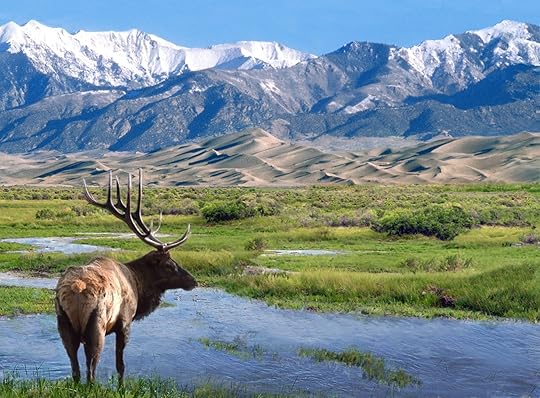
È il caso di Ted Conover che nel 2017 si reca in Colorado nella San Luis Valley per un reportage, ma che finisce poi per fare il volontario per La Puente - l’associazione che assiste le tante persone e famiglie che si trasferiscono a vivere nel deserto per abbracciare la vita rurale attirate dal basso costo della terra (cinque apri per cinquemila dollari - da cui il titolo del libro, che replica le parole usate da Conover per la sua ricerca su Google) senza avere i mezzi economici per mantenersi o per predisporre uno stile di abitativo e di vita dignitoso - e per acquistare lui stesso, dopo aver vissuto in una roulotte ospite nel terreno di un’altra famiglia, i Gruber, della terra e un camper dove poter vivere in autonomia e solitudine per osservare, rendersi utile, scrivere. Passeranno quattro anni, con nel mezzo una pandemia e i mesi trascorsi in famiglia e a New York, quattro anni in cui Conover stringerà relazioni perlopiù amichevoli con gli abitanti delle pianure confinanti o con le persone che si troverà ad assistere nei suoi giri di ricognizione per offrire abiti, legna o pasti caldi, lavorerà per rendere se non confortevoli almeno funzionali i mesi che trascorrerà esposto ai venti gelidi invernali o alle temperature estreme dell’estate, catalogherà idealmente e professionalmente una quantità di storie eterogenea, sorprendente, a volte deprimente o sconvolgente, che servirà a fornire una mappa delle motivazioni che spingono tante persone, provenienti da ogni parte degli Stati Uniti (ma anche emigranti di altre nazioni) a scegliere il deserto per ricominciare, spinte principalmente dalla povertà, ma anche dal disagio economico o dalle discriminazioni razziali, dalle dipendenze di vario genere (dall’alcol alla droga a quelle affettive), dagli abusi e dagli stress post traumatici, dall’incapacità di vivere a stretto contatto con le persone, dall’insofferenza nei confronti delle regole del vivere civile, dalla tendenza a immaginare complottismi e cospirazionismi di ogni genere (survivalismi, suprematismi, ostilità ai documenti di identità, al sistema sanitario o scolastico e a qualsiasi cosa - a esclusione dei sussidi - provenga dallo stato federale o da quello locale), intolleranza nei confronti delle comunità di origina chicana (e viceversa).
«Nella vastità delle pianure confluivano non solo individui in cerca di libertà per buoni motivi, ma anche gente che scappava dai misfatti commessi in passato o che addirittura voleva la libertà di continuare a compierne.»
Il richiamo prepotente è quello a Nomadland (e infatti Bruder, non a caso, è anche nei ringraziamenti finali), sia pure con motivazioni e spinte ancora diverse; lì la crisi abitativa è forse il motore principale per mettersi “on the road” e inseguire il lavoro (qui il lavoro non è centrale, ci si arrangia, perlopiù, si fa affidamento sui sussidi, si ruba, si traffica) e in effetti questo sembra un successivo upgrade, una sorta di Nomadland 2.0, ma se ci si pensa bene - e questo era qualcosa che lo stesso reportage di Jessica Bruder mi aveva fatto pensare - lo spirito è lo stesso che muoveva i pionieri, che spingeva famiglie, avventurieri, disperati, a tentare la carta dell’Ovest, a partire per andare a conquistare un pezzetto di terra mai vista, a cercare e a sperare di trovare l’oro, a sognare il sogno di una vita migliore: una capacità e una volontà di saper ripartire da zero, di pensarsi senza radici, di abbandonare tutto (o quel niente che si possiede) per andare a vedere se di là è meglio: un’attitudine che secondo me nasce da allora, dai tempi in cui l’Ovest era ancora terra di conquista, ma forse ancora prima, da quando ci si imbarcava nei porti europei e si affrontavano viaggi interminabili esponendosi a sofferenze, malattie e morte, e si partiva lasciandosi tutto alle spalle per andare verso l’ignoto, e che forse è ormai insita nello spirito americano, è patrimonio genetico.
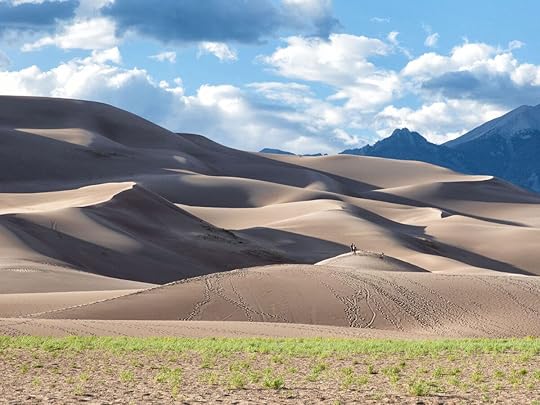
Non vorrei, però, averne dato una visione romantica, visione che già qualcuno ha fatto propria, erroneamente, dopo aver visto il film Nomadland (quella del libro è molto più allarmante), perché non c’è un piano di insediamento nelle praterie, non ci sono altre forme di aiuto o di assistenza se non quelle dei volontari di associazioni di LaPuente e dei sussidi, perché la convivenza è difficilissima e l’isolamento porta a rifiutare sempre più spesso il contatto con le altre persone, perché le armi bene in vista sono la prima forma di saluto che si concede a un estraneo, perché la malnutrizione, l’assenza di cure, l’inquinamento e i rifiuti di ogni genere (soprattutto quelli delle tante case mobili, lamiere e recinti abbandonati) e la violenza si insinuano in ogni casa mobile, in ogni roulotte, e colpisce tutti gli esseri umani, ma anche gli animali domestici e quelli selvatici, perché quella della wilderness è una scelta sempre più diffusa, ma in alcuni luoghi è più dura che in altri, e la prateria finisce per diventare il corrispettivo rurale del ghetto.
«Questo angolo di mondo è il posto ideale per fuggitivi o persone che desiderano scomparire: i vicini sono quasi sempre discreti e le autorità di rado si fanno vedere. Quelli che vogliono scomparire sono comuni criminali, ma per dissidenti organizzati come i membri di questo gruppo l’isolamento è il primo passo verso la distruzione dell’ordine sociale prestabilito.»
Molto interessante, infine, la nascita del progetto di vendita dei terreni, anche per posta tramite un programma pionieristico di direct mailing, che convinse molte persone negli anni Settanta ad acquistare pezzetti di deserto immaginando di avere finalmente trovato il proprio posto in paradiso, e finì per arricchire per davvero quelli che intravidero la possibilità di un nuovo business dove non si vedeva altro che terra arida.
Tanta emozione, invece, nel vedere ancora una volta riconosciuta l’importanza, per tutti quelli che amano e sono mossi dall’amore per le bellezze paesaggistiche incontaminate - «il problema del paradiso è quando ci entriamo» - di Barry Lopez: Horizon è l’unica opera inclusa in This Land che devo ancora leggere, ma penso che lo farò presto.
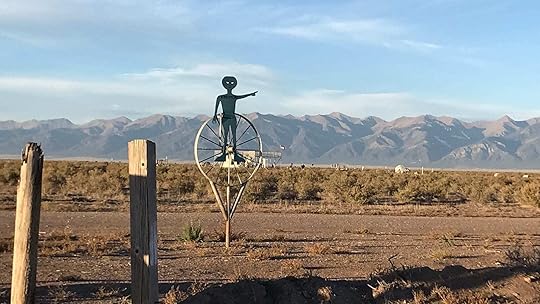
Bellissimo, lo sguardo di Ted Conover, la sua capacità di essere compassionevole e accogliente, ma deciso, efficace, di sapersi rimboccare le maniche per essere utile, per essere parte attiva di una comunità disgregata in cui c’è ancora spazio per lampi di convivenza.
https://harpers.org/archive/2019/08/t...
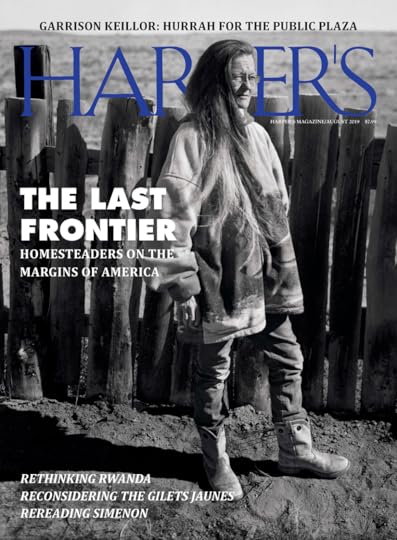
*Poi ci sarebbe anche Eli Saslow: speriamo che qualcuno, prima o poi, si decida a tradurlo, magari insieme a Poverty, by America.
Dopo Moheringer, Desmond e Bruder ancora un altro grande reportage d’inchiesta USA di quelli che, soprattutto per quanto riguarda la collana This Land di Black Coffee che non finirò mai di consigliare, intrecciano il lavoro giornalistico al memoir e, in alcuni casi, a quello sociologico (come Sfrattati: Miseria e profitti nelle città americane e Nomadland. Un racconto d'inchiesta), a quello economico (Sarah Smarsh in Heartland. Al cuore della povertà nel paese più ricco del mondo), o a quello antropologico e discriminatorio (Oltre il fiume), lavori che ho imparato ad apprezzare e a desiderare di leggere in maniera sempre crescente, perché alla fine ho capito che sono queste, ancor più di molti romanzi, le storie che mi interessa leggere e che desidero conoscere, i luoghi in cui mi piace andare, le persone che desidero incontrare e guardare con gli occhi di chi, con umiltà, curiosità e un pizzico di incoscienza, ma con grande serietà e rispetto, si pone al loro fianco per capirne i sogni, le necessità, le motivazioni.*
È il caso di Ted Conover che nel 2017 si reca in Colorado nella San Luis Valley per un reportage, ma che finisce poi per fare il volontario per La Puente - l’associazione che assiste le tante persone e famiglie che si trasferiscono a vivere nel deserto per abbracciare la vita rurale attirate dal basso costo della terra (cinque apri per cinquemila dollari - da cui il titolo del libro, che replica le parole usate da Conover per la sua ricerca su Google) senza avere i mezzi economici per mantenersi o per predisporre uno stile di abitativo e di vita dignitoso - e per acquistare lui stesso, dopo aver vissuto in una roulotte ospite nel terreno di un’altra famiglia, i Gruber, della terra e un camper dove poter vivere in autonomia e solitudine per osservare, rendersi utile, scrivere. Passeranno quattro anni, con nel mezzo una pandemia e i mesi trascorsi in famiglia e a New York, quattro anni in cui Conover stringerà relazioni perlopiù amichevoli con gli abitanti delle pianure confinanti o con le persone che si troverà ad assistere nei suoi giri di ricognizione per offrire abiti, legna o pasti caldi, lavorerà per rendere se non confortevoli almeno funzionali i mesi che trascorrerà esposto ai venti gelidi invernali o alle temperature estreme dell’estate, catalogherà idealmente e professionalmente una quantità di storie eterogenea, sorprendente, a volte deprimente o sconvolgente, che servirà a fornire una mappa delle motivazioni che spingono tante persone, provenienti da ogni parte degli Stati Uniti (ma anche emigranti di altre nazioni) a scegliere il deserto per ricominciare, spinte principalmente dalla povertà, ma anche dal disagio economico o dalle discriminazioni razziali, dalle dipendenze di vario genere (dall’alcol alla droga a quelle affettive), dagli abusi e dagli stress post traumatici, dall’incapacità di vivere a stretto contatto con le persone, dall’insofferenza nei confronti delle regole del vivere civile, dalla tendenza a immaginare complottismi e cospirazionismi di ogni genere (survivalismi, suprematismi, ostilità ai documenti di identità, al sistema sanitario o scolastico e a qualsiasi cosa - a esclusione dei sussidi - provenga dallo stato federale o da quello locale), intolleranza nei confronti delle comunità di origina chicana (e viceversa).
«Nella vastità delle pianure confluivano non solo individui in cerca di libertà per buoni motivi, ma anche gente che scappava dai misfatti commessi in passato o che addirittura voleva la libertà di continuare a compierne.»
Il richiamo prepotente è quello a Nomadland (e infatti Bruder, non a caso, è anche nei ringraziamenti finali), sia pure con motivazioni e spinte ancora diverse; lì la crisi abitativa è forse il motore principale per mettersi “on the road” e inseguire il lavoro (qui il lavoro non è centrale, ci si arrangia, perlopiù, si fa affidamento sui sussidi, si ruba, si traffica) e in effetti questo sembra un successivo upgrade, una sorta di Nomadland 2.0, ma se ci si pensa bene - e questo era qualcosa che lo stesso reportage di Jessica Bruder mi aveva fatto pensare - lo spirito è lo stesso che muoveva i pionieri, che spingeva famiglie, avventurieri, disperati, a tentare la carta dell’Ovest, a partire per andare a conquistare un pezzetto di terra mai vista, a cercare e a sperare di trovare l’oro, a sognare il sogno di una vita migliore: una capacità e una volontà di saper ripartire da zero, di pensarsi senza radici, di abbandonare tutto (o quel niente che si possiede) per andare a vedere se di là è meglio: un’attitudine che secondo me nasce da allora, dai tempi in cui l’Ovest era ancora terra di conquista, ma forse ancora prima, da quando ci si imbarcava nei porti europei e si affrontavano viaggi interminabili esponendosi a sofferenze, malattie e morte, e si partiva lasciandosi tutto alle spalle per andare verso l’ignoto, e che forse è ormai insita nello spirito americano, è patrimonio genetico.
Non vorrei, però, averne dato una visione romantica, visione che già qualcuno ha fatto propria, erroneamente, dopo aver visto il film Nomadland (quella del libro è molto più allarmante), perché non c’è un piano di insediamento nelle praterie, non ci sono altre forme di aiuto o di assistenza se non quelle dei volontari di associazioni di LaPuente e dei sussidi, perché la convivenza è difficilissima e l’isolamento porta a rifiutare sempre più spesso il contatto con le altre persone, perché le armi bene in vista sono la prima forma di saluto che si concede a un estraneo, perché la malnutrizione, l’assenza di cure, l’inquinamento e i rifiuti di ogni genere (soprattutto quelli delle tante case mobili, lamiere e recinti abbandonati) e la violenza si insinuano in ogni casa mobile, in ogni roulotte, e colpisce tutti gli esseri umani, ma anche gli animali domestici e quelli selvatici, perché quella della wilderness è una scelta sempre più diffusa, ma in alcuni luoghi è più dura che in altri, e la prateria finisce per diventare il corrispettivo rurale del ghetto.
«Questo angolo di mondo è il posto ideale per fuggitivi o persone che desiderano scomparire: i vicini sono quasi sempre discreti e le autorità di rado si fanno vedere. Quelli che vogliono scomparire sono comuni criminali, ma per dissidenti organizzati come i membri di questo gruppo l’isolamento è il primo passo verso la distruzione dell’ordine sociale prestabilito.»
Molto interessante, infine, la nascita del progetto di vendita dei terreni, anche per posta tramite un programma pionieristico di direct mailing, che convinse molte persone negli anni Settanta ad acquistare pezzetti di deserto immaginando di avere finalmente trovato il proprio posto in paradiso, e finì per arricchire per davvero quelli che intravidero la possibilità di un nuovo business dove non si vedeva altro che terra arida.
Tanta emozione, invece, nel vedere ancora una volta riconosciuta l’importanza, per tutti quelli che amano e sono mossi dall’amore per le bellezze paesaggistiche incontaminate - «il problema del paradiso è quando ci entriamo» - di Barry Lopez: Horizon è l’unica opera inclusa in This Land che devo ancora leggere, ma penso che lo farò presto.
Bellissimo, lo sguardo di Ted Conover, la sua capacità di essere compassionevole e accogliente, ma deciso, efficace, di sapersi rimboccare le maniche per essere utile, per essere parte attiva di una comunità disgregata in cui c’è ancora spazio per lampi di convivenza.
https://harpers.org/archive/2019/08/t...
*Poi ci sarebbe anche Eli Saslow: speriamo che qualcuno, prima o poi, si decida a tradurlo, magari insieme a Poverty, by America.

October 9, 2023
This book chronicles the four years that Conover (an NYU professor) spent living among off-gridders in the San Luis Valley (“the flats”) of southern Colorado. He encountered extreme weather (he was frozen inside his trailer), drugs, violence, and anti-government plus anti-vax sentiment alongside beautiful landscapes, the patience of La Puente volunteers, and the fierce independent spirit of the locals. It was fascinating to learn more about a place I have traveled near but will never truly experience myself. I wish there had been a clearer structure to the book and more outside research alongside the anecdotes and ethnography.

February 9, 2023
I live on the opposite side of the Sangre de Cristos from the San Luis Valley but I could relate to a lot of Conover's observations and experiences. Though the Wet Mountain Valley is home to more wealthy individuals, the majority of the population is still living in poverty, addiction, PTSD, hiding from the law and are huge conspiracy theorists. Conover is honest and compassionate and ends up buying a place of his own. An excellent look at the stark reality of rural Colorado.

July 24, 2023
A fascinating study of people, mostly dirt poor, who live on the edge of American “civilization” in the San Luis Valley. Entertaining, eye-opening and at times almost unbelievable, but always told with caring by the perceptive author.
June 22, 2025
I drove through the San Luis valley twice during the course of reading this book and almost crashed both times getting too excited about it so that was great

July 22, 2024
‘Sono i margini della società a definire ciò che siamo. E loro sono il margine estremo che pone domande su come tutti noi dovremmo vivere la vita’.
La lettura del reportage di Ted Conover sulla San Luis Valley in Colorado è un passaggio importante per comprendere gli Stati Uniti di oggi. La possibilità di comprare un pezzo di terra per 5000 dollari è una delle facce del sogno americano? Chi sono queste persone? Cosa significa libertà? Come possono convivere desiderio di solitudine e senso di comunità?
Conover si stabilisce in una roulotte nella zona per quattro anni (a periodi alterni), ci racconta anche le sue difficoltà e i suoi errori di giudizio (che spesso si sovrappongono ai nostri), ci fa capire che un paesaggio bello possa anche essere difficile, dare molto ma chiedere anche molto in cambio.
Ci parla anche di un’ostinazione, non solo quella di chi incontra ma anche della sua, che mi ha ricordato molto quella del camionista protagonista del romanzo ‘Il diner nel deserto’, che su quella tratta dimenticata da tutti costruisce la sua vita.
La lettura del reportage di Ted Conover sulla San Luis Valley in Colorado è un passaggio importante per comprendere gli Stati Uniti di oggi. La possibilità di comprare un pezzo di terra per 5000 dollari è una delle facce del sogno americano? Chi sono queste persone? Cosa significa libertà? Come possono convivere desiderio di solitudine e senso di comunità?
Conover si stabilisce in una roulotte nella zona per quattro anni (a periodi alterni), ci racconta anche le sue difficoltà e i suoi errori di giudizio (che spesso si sovrappongono ai nostri), ci fa capire che un paesaggio bello possa anche essere difficile, dare molto ma chiedere anche molto in cambio.
Ci parla anche di un’ostinazione, non solo quella di chi incontra ma anche della sua, che mi ha ricordato molto quella del camionista protagonista del romanzo ‘Il diner nel deserto’, che su quella tratta dimenticata da tutti costruisce la sua vita.

April 4, 2024
If you've ever traveled through the flats of the San Luis valley, noticed the scattered trailer homes and campers, and wondered "who would live out here?" this is the book for you.
https://lapuentehome.org/our-story/
https://lapuentehome.org/our-story/
February 14, 2025
Freedom from v. Freedom to; sanctuary or exile.
Author recounted a quotation from one of his neighbors when he lived in the San Luis Valley: “The trouble with going to paradise is you bring yourself.” Encapsulates the book & this side of heaven pretty well.
Author recounted a quotation from one of his neighbors when he lived in the San Luis Valley: “The trouble with going to paradise is you bring yourself.” Encapsulates the book & this side of heaven pretty well.

February 18, 2023
A must read for Americans, but especially Coloradans wanting to understand our neighbors on the fringe of society. Conover strikes the perfect balance of curiosity and empathy while not flinching from the darkness that often exists in these communities.
April 8, 2026
An interesting read of an area of Colorado I’ve driven thru so many times but never knew its history. The great thing about reading non-fiction is it opens up your world (just like traveling does) and builds more empathy towards people of various walks of life.
June 14, 2023
I took my time reading this book and enjoyed getting to know the people who live off the grid in Western Colorado. While the locations are tangible to me, the lives are different from anything I've ever experienced. Interesting read.

July 4, 2023
3.5 stars. Meandering and slowly paced and with no real plot, this book was not a page turner, yet somehow I still found myself wrapped up in and enjoying this hidden gem of a book and character studies about a unique Colorado community and lifestyle.
December 20, 2022
This was a pretty fascinating book about off-gridders living in a remote part of the San Luis Valley where I live. Conover comes to southern Colorado and becomes interested in people who have purchased cheap land. He visits the area and becomes intrigued. After starting to spend time, he moves into a trailer and eventually purchases land. He writes about the people, their stories why they decide to live where they do. He weaves in some history of the area as well as current happenings. As a person who loves living where I do, surrounded by mountains and plains, I liked his narrative about the scenery, the vast "prairie" as he calls it. He is not someone who just passed through. He devoted a space of time to get to know the Valley. Great book.

April 12, 2023
I was enticed by the cover and the concept but, sadly, I felt bored by the lacklustre description of Ted's life on the prairie. His writing was underdeveloped and didn't bring me there with him in his trailer in Colorado.
It read like a veerry long article written for a different kind of person than me.
The best parts (few and far between) were about the impacts of covid, cost of living, and the harshness of the environment on the flats. I couldn't keep track of the people and struggled to empathise with their situations because they felt more like characters not real men and women.
It read like a veerry long article written for a different kind of person than me.
The best parts (few and far between) were about the impacts of covid, cost of living, and the harshness of the environment on the flats. I couldn't keep track of the people and struggled to empathise with their situations because they felt more like characters not real men and women.

June 21, 2024
Ted Conover Cheap Land Colorado
Kinek kaland, menekülés, számüzetés, vagy egyfajta belföldi turizmus, az ingatlanná parcellázott amerikai vadon maradékában menedéket találni. A San Luis Völgy egy istenhátamögötti pusztaság a Rio Grande forrásvidékén, és itt található Colorado illetve az USA legolcsóbban megvásárolható földje. Bár az egymást váltó forró nyarak és dermesztő telek, valamint a szárazság és sivatagosodás miatt többé-kevésbé lakhatatlan, mégis ide sodródnak a társadalmi kitaszítottak és a kalandvágyók, hogy nekivágjanak a rendszeren kívüli önellátásnak - művelni a földet, illetve különféle függőségeiket. A legálisan termesztett marihuána, kevéssé legálisan kikotyvasztott szpíd, letöltött és letöltendő börtönbüntetések és próbaidők katyvaszában él egy jellegzetes tanyavilág: pickup kisteherautók és vontatott mobilotthonok, kisebb-nagyobb ültetvények, iskolázandó kiscsaládok, és elsősorban szegénység.
A szerző a helyi önszervező segélyszervezet önkénteseként találkozik a helyiekkel, tüzelőfát osztanak a halálosan kemény télre. Végül évekre ott marad és saját kis birtokot vesz, nyugalmat és menedéket talál az íráshoz. A könyv pedig nagyrészt a helyi családok és emberek életével, helytörténettel, útileírásokkal foglalkozik. Vannak itt prepperek, oltástagadók, UFO-hívők, bántalmazott és zavart emberek, szerencsevadászok és rendszertagadók, akik mind boldogulni és élni próbálnak itt a világ végén, a lehetőségekhez mérten több-kevesebb sikerrel. Fizikai munka és újrahasznosítás, lovak, tehenek, vetemény és rengeteg, rengeteg lőfegyver. Mindebből kirajzolódik egy összetett és sokszor tragikus új-vadnyugati szubkultúra. Saját hajunknál fogva kihúzni magunkat a nyomorúságból, életet eszkábálva szinte a semmiből - ez is az amerikai álom egyik archaikus képzete, és sokféle módon találnak rá itt, a peremen.
Részben katasztrófaturizmus, részben valóságshow ez a könyv, ám ahhoz épp elég változatos és izgalmas ez az egész közeg, hogy a tanyasi élet ismétlődő és kissé kilátástalan körkörösségén mégis átvezeti-vonszolja az olvasót.
Kinek kaland, menekülés, számüzetés, vagy egyfajta belföldi turizmus, az ingatlanná parcellázott amerikai vadon maradékában menedéket találni. A San Luis Völgy egy istenhátamögötti pusztaság a Rio Grande forrásvidékén, és itt található Colorado illetve az USA legolcsóbban megvásárolható földje. Bár az egymást váltó forró nyarak és dermesztő telek, valamint a szárazság és sivatagosodás miatt többé-kevésbé lakhatatlan, mégis ide sodródnak a társadalmi kitaszítottak és a kalandvágyók, hogy nekivágjanak a rendszeren kívüli önellátásnak - művelni a földet, illetve különféle függőségeiket. A legálisan termesztett marihuána, kevéssé legálisan kikotyvasztott szpíd, letöltött és letöltendő börtönbüntetések és próbaidők katyvaszában él egy jellegzetes tanyavilág: pickup kisteherautók és vontatott mobilotthonok, kisebb-nagyobb ültetvények, iskolázandó kiscsaládok, és elsősorban szegénység.
A szerző a helyi önszervező segélyszervezet önkénteseként találkozik a helyiekkel, tüzelőfát osztanak a halálosan kemény télre. Végül évekre ott marad és saját kis birtokot vesz, nyugalmat és menedéket talál az íráshoz. A könyv pedig nagyrészt a helyi családok és emberek életével, helytörténettel, útileírásokkal foglalkozik. Vannak itt prepperek, oltástagadók, UFO-hívők, bántalmazott és zavart emberek, szerencsevadászok és rendszertagadók, akik mind boldogulni és élni próbálnak itt a világ végén, a lehetőségekhez mérten több-kevesebb sikerrel. Fizikai munka és újrahasznosítás, lovak, tehenek, vetemény és rengeteg, rengeteg lőfegyver. Mindebből kirajzolódik egy összetett és sokszor tragikus új-vadnyugati szubkultúra. Saját hajunknál fogva kihúzni magunkat a nyomorúságból, életet eszkábálva szinte a semmiből - ez is az amerikai álom egyik archaikus képzete, és sokféle módon találnak rá itt, a peremen.
Részben katasztrófaturizmus, részben valóságshow ez a könyv, ám ahhoz épp elég változatos és izgalmas ez az egész közeg, hogy a tanyasi élet ismétlődő és kissé kilátástalan körkörösségén mégis átvezeti-vonszolja az olvasót.
July 23, 2023
I was initially excited to read this book as it tells stories of the San Luis valley during the same years I lived there. I worked and hung out with La puente Americorps members that are mentioned in the book so it was fun to relate. The book gave insight into historical aspects of the valley I was unfamiliar with and I enjoyed that it depicted southern parts I did not visit as much. However I quickly became annoyed with the author and his ease of sharing detailed stories of people’s lives. I’ve always struggled with the ethics of doing so in writing but it seems especially wrong to do when discussing a small community while often using real names. I also found myself irritated with the authors lack of empathy throughout the novel. He repeatedly details similar scenes in which he is annoyed with a person in a bad situation for not treating him ‘nicely’ and his mind immediately jumps to not allowing them to stay at the shelter or telling them off. While this never occurs because the La puente people are actually ethical workers, he seems to need to learn the same lesson over and over. Lastly in the epilogue he refers to the valley as a “rural ghetto” but unlike a “real ghetto” people choose to be here and generational wealth plays no role. First of all I don’t understand why a mention to the “ghetto” is necessary at all and secondly, it is completely ignorant to say that generational wealth has no effect. A lot of people may be new to the valley but they are not new to poverty. He even details people coming to escape medical debt and people desperate to find cheap land. I really don’t understand that ignorant comment and it effected the way I viewed the authors interactions with residents of the valley and his decision to buy land there.

December 28, 2022
A compelling view from an outsider looking into the poverty of rural Colorado. I really appreciated the care and detail taken to look into the stories and culture of the region - we’re all people after all. I grew up nearby (Teller County) and the stories of wanting to hide from cities and establish a homestead is all too common. I wish there had been some more digging and even criticism into the painful politics of the area and what growing up in such a community means - but that would have been a much bigger and more complicated story. Outsiders always add a different view than those that loved it. While he had spent time in Colorado - his circles had been very affluent, so his view (much like Oscar Wilde of London) was very different from the people he encountered.
A must read for the curious, locals, and social commentary enthusiasts.
A must read for the curious, locals, and social commentary enthusiasts.

March 10, 2023
Here's something that doesn't happen often - you have a job for a year in your 20s that is so special and yet it's so hard to describe exactly what it is about the people, the land, and the group that makes this Valley so memorable - and then a Pulitzer prize finalist comes along, does your exact job, and writes a book about it that captures all of this?!
I loved this book, but for me it was mostly about nostalgia and memories (La Puente, Blanca Peak, Valley View hot springs, Lance and Geneva, the UFO watchtower - all of it). This review probably won't be helpful to many others, but if you happen to be a former La Puente volunteer, this is a great trip down memory lane and love letter to the Valley.
I loved this book, but for me it was mostly about nostalgia and memories (La Puente, Blanca Peak, Valley View hot springs, Lance and Geneva, the UFO watchtower - all of it). This review probably won't be helpful to many others, but if you happen to be a former La Puente volunteer, this is a great trip down memory lane and love letter to the Valley.

October 19, 2023
This was really interesting in a meandering sort of way. Each chapter had a general theme that it eventually got around to talking about, but in between there were lots of stories about people you don't regularly meet and it was fun to hear about how they manage to survive in this desolate space. Also, there was a footnote to explain what a cattle guard is, and this made me laugh pretty hard.
October 18, 2024
Good mix of human interest mixed with prairie living. Makes you want to move back to Colorado, but also sad for a lot of the characters.
Displaying 1 - 30 of 400 reviews