If you had to endure a debilitating condition of body or mind, which would you choose? In this world, everyone suffers.
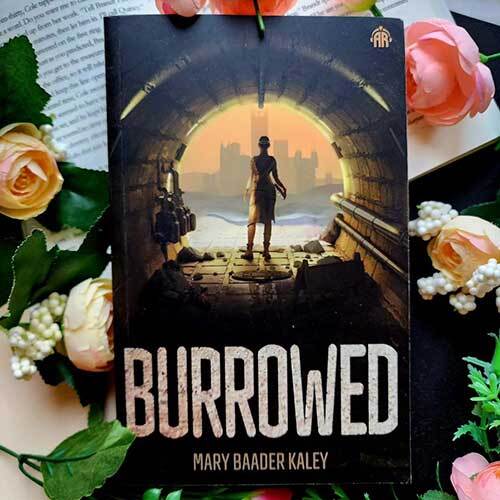
In the far-future aftermath of a genetic plague that separated human society into two different groups – sickly yet super-intelligent Subterraneans and healthy but weak-minded Omniterraneans – a brilliant Subter girl is tasked with fixing the broken genetic code to reunite the two groups in the next generation.
But when a newer plague turns fatal for the surface-dwelling Omnits, the only group able to reproduce (giving birth to both Subter and Omnit children), Zuzan must find a cure or humanity won’t simply remain divided, it will become extinct.
But there's more conflict at hand than a broken genetic code. The fragile connection between Subters and Omnits has frayed to the point of breaking – to the point of war – and it will take more than genius to repair; it will take heart.
3.5 stars Given the premise, I expected a softer, more anthropological type of science fiction story. Instead I was pleasantly surprised to find a lot of interesting scientific ideas within this novel.
In this current political climate, I was worried that a book like this could be a piece of anti-medical propaganda. Thankfully, this was not the case and the author states a clear respect for medical technology while still writing a complex discussion of medical morality.
This book had a lot of layers which made it a longer, more complex narrative. However I would have preferred a more streamlined narrative for this type of story. I think this would have been a more impactful story as a novella.
Overall I liked this one and appreciate such a unique story. I would recommend this one to science fiction readers who enjoy stories that are inspire discussion and debate.
Disclaimer I received a copy of this book from the publisher.
Thank you to NetGalley and the publishers for an advanced copy in exchange for my honest review!
I was really excited for the premise of this book. I love a dystopian sci-fi book! In this world a genetic plague separated human society into two different groups – sickly yet super-intelligent Subterraneans and healthy but weak-minded Omniterraneans. Now there is a new plague and Zuzan, a subterranean girl, must try to figure out a cure.
I was initially intrigued and enjoyed the beginning of this book. I found the world building interesting and original. I loved learning how a portion of the population had to move underground to keep them safer from illnesses and what all that entailed for each population. I also enjoyed our main character Zuzan. While she is shy and not the best at social situations she is smart, caring, and easy to root for. The side characters are also interesting and distinct.
My main issue with this book is the plotting. I was halfway through the book and the synopsis wasn't even fully realized. The middle of the book was very stagnant for me. It felt like nothing was happening. Finally when we did learn about the new plague we didn't even focus on it enough. The ending felt rushed and some things are left open. (Is this supposed to be the start of a series?) Instead, there was a romance, that in my opinion, did not need to happen. Overall, an interesting idea, but meh execution.
I received this book from the wonderful people at Angry Robot in exchange for a fair review!
An intelligent, science-based novel featuring a woman in STEM, Burrowed is also a fast-paced and fun book that you just want to burrow under the covers with.
While a fun and engaging novel, Burrowed's world-build is not fleshed out enough for me. While I love the concept - where society has broken into underground and above-ground populations - I had many questions about the logistics and infrastructure. The thing is, this book felt very YA to me, so if this was a YA book then I can overlook this stuff - because often YA books are character-focused with the setting being a backdrop. But if this book is meant for general adult trade, the worldbuilding is lacking complexity (at least to me).
That being said, nothing about the story really needs complexity to move forward. The plot itself is very fun and it was great to follow along with Zuzan as she discovered what life was like in different parts of her underground world and as she learns more about herself. The novel has a great momentum that drives it forward, as well as quick turns.
One of the best things about the novel is that it’s also a medical thriller. A massive chunk of the latter half of the novel deals with the characters attempting to find a cure for a disease (that’s putting it very simply but I don’t want to give anything away), and that aspect was really interesting to me. I don’t have the science background to tell you if the procedures and practices make any sense or if they were resolved too quickly or slowly, but the fact that this was the crux of the novel, rather than the protagonist fighting someone, was a nice change. There is a lot of medical and science lingo in the dialogue, but it’s still easy to read and is not dry.
The characters were fine. Zuzan was a bit of a Mary Sue, but not in a bad way if this is YA. I think YA requires its characters to have overwhelmingly positive qualities because YA stories are insertion stories. When we read as children, we tend to need to heavily identify with a character, as we aren’t reading consciously - we’re reading mainly for story (we don’t actively notice the prose, the themes, the structure). When we’re adults, we can enjoy stories about characters we don’t like or are villains, because we understand the story isn’t meant to be interpellated. YA, though, still retains that “heavy identification” factor, as many younger teenagers are still reading novels mainly at face value. So, if this is YA, Zuzan is a typical YA heroine - brilliant, discovers her beauty as the story progresses, has multiple dudes fawning over her, it turns out her faults are actually strengths, has a special power/gift (in this case, eidetic memory), and is tough - because we want teenagers to experience those things vicariously as it gives them confidence. Is this a flaw of the novel? No, if it's YA. But, like the world-building, if this is a novel for adults, then Zuzan is a bit flat. She’s inexplicably competent at everything she does. Her struggles are mainly external against the forces that see her low life expectancy and disability as a problem. This a relatable and important issue, but it also leaves her feeling very surface level.
One thing I didn’t like about the novel at all was the love story. On top of not understanding what they saw in one another, as they never talk about anything other than work, there’s a major power-dynamic issue that I found a bit icky, especially given Zuzan’s young age. An age gap if there was one (I'm not entirely sure how old buddy was), is not the problem, but the fact that he’s her boss is not healthy. There’s also a part where the man, to get the young woman to do what he wants, literally picks her up and carries her. That’s kidnapping. Yes, I understand the context isn’t nefarious, but that scene felt like it fell out of the 1950s and rubbed me the wrong way. The relationship also fell flat to me - there was no real tension between them.
To get back to stuff I really liked though, the book is very easy to read and follow. Most of the scenes (not romance scenes) have wonderful tension and I was never sure where the story was going next. The story definitely isn’t formulaic and it was wholly engaging.
I loved the gender parity and the whole slew of women in STEM in the book. The focus on female friendships was excellent, as well as the messages around accommodation for disability and on childrearing that focuses on openness and learning rather than rules and controlling behaviour. This book has so many great things going for it; there were just a few things that made it less than a 5-star for me. And that’s fine - I think a lot of people will really love it and I’m still so happy to have received an ARC.
I do recommend it, though perhaps more to the YA crowd.
I have many issues but a few of the most prominent ones can be summed up in a single quote from a character who is defined multiple ways by the staggering magnitude of her intelligence and scientific understanding: “This fake wall of rock would trick the most astute paleontologist.”
The world is both familiar, and radically different in Mary Baader Kaley's "Burrowed". The population is split between the Omniterraneans (Omnits) and the Subterraneans (Subters). The Omnitss resemble humans of today, but the Subters are generally albino and of small stature. The Subters, who are the children of Omnits, have compromised immunity, and are raised underground in large creches, then work in various fields supporting all humans' lives, genetic engineering being one.
Main character Zuzan Cayan is a Subter, but her eyesight is even more sensitive than her fellow Subters, and has little hope of getting to work as a medera, someone who cares for and raises young Subters, because of her low life expectancy. After a series of tragedies, she gets the chance to work in a respected ganetic engineering facility, and study the problems afflicting humanity's genetics. She also quickly discovers that a new plague has been unleashed on Omnits, and she and various scientists in the facility are under the gun to find the cause and a treatment against the plague.
So, the plot really pulled me in, and I finished the book quickly. I was, on the other hand, unable to connect with any of the characters, despite the wonderful message throughout the book that kindness and empathy are critical.
Thank you to Netgalley and to Angry Robot for this ARC in exchange for my review.
I need a sequel right now, immediately! In the words of Michael Scott: ASAP as possible, please. I thought this was incredible and I can't believe it's a debut. Great world building, complex characters, and the development of relationships felt organic. The characters--whether protagonist or antagonist--felt like real people with the capacity to change (and not just for better, but for worse as well, which created a nice tension). I could definitely see this story having prequels (I want to know about Medera Gelia and Camu growing up together) and sequels and spinoff series....am I getting ahead of myself? Maaaaybe. For the moment I'll be happy if we get a second book.
Thank you Kaley, Angry Robot Books, and NetGalley for the ARC.
This book was not what I expected it to be, and I'm really pleased that I was given the opportunity to review it. Even though it took me a few chapters to get into, I really enjoyed this world. The medical talk and the science aspect is what really made me enjoy this book so much more. It was interesting to read about why a portion of the population had to be moved underground to help keep them safe from illnesses. All together, it's a great sci-fi book that everyone should pick up.
So, I fell wholly in love with Burrowed, and basically could not put it down, didn't want it to end, and devoured it completely. That is all you need to know. But probably not all I should write, so here we go. Also, I will say, that it definitely works as a standalone, but could also very easily be a series. And I am one million percent here for more.
The Characters:
Okay, so I fell in love with Zuzan from the start. She is incredibly sympathetic, even as a child in the beginning, and I simply adored her throughout. She has to go through so much, and at times is handling a lot all on her own. When she finally meets her people, I was thrilled, and I loved watching her relationships grow and evolve over time. I enjoyed the secondary characters almost as much, even when I wasn't totally sure who Zuzan could/should trust.
The World
This is such a unique world, right? I mean just from the synopsis alone, you can tell it will capture your interest. Especially intriguing is that not only are Zuzan and many of her cohorts sicker than those aboveground, but her life expectancy is significantly shorter. And that comes majorly into play. The concept was beyond thought-provoking, and I was so curious as to how the world became this way. Questions were definitely answered, but I am keeping this purposefully short because trust me, you will want to uncover them all for yourself.
The Plot
The story kept me guessing the whole entire time. Legit, I was so invested in the story that I could not stop reading. Not only was I desperate to learn more about the world and the characters, but every bit of what was taking place in the story lent itself to compulsive readability. There was a great blend of character and relationship development, world development, and action. Add to it, there were so many twists that left my jaw dropped, I seriously could not help but devour this book.
The Emotions
Oh, did I feel things! Like I said, I was very invested in the characters, so obviously their losses and joys were emotive. But even finding out information about other things happening in the world elicited huge emotional responses. I had many moments of anxiety and tears, but also a lot of smiling, hopeful moments, too.
Bottom Line:
Barely a week into 2023, and already we have a new favorite.
I did not, could not finish this book, even after getting through 2/3rds of it. The pacing was uneven, and the main character was unbelievable. Actually, none of the characters were likable, and I found myself completely not caring if all humanity was going to go extinct. It tries to be scientifically sound, but it reads like the author read some wikipedia entries on genetics, immunology, and epidemiology, and considered that "research". To me, it's obvious that this book was a pandemic project for the author, as well as a therapeutic exercise for her personal grief that her father died, and her child is/was ill, and - wow, I don't care. So, I have no idea how the story ends, and I'm just fine with that.
This entire review has been hidden because of spoilers.
Such a great book. I love dystopian! I have to disagree with a couple of the previous reviews and say that I loved the main character. She didn’t seem unlikeable at all. More so, she seemed like an introvert who had trouble with typical social interactions. Don’t all introverts? The story was written well and I found myself invested until the end. That was the only part that disappointed me. Great things happened, but it wasn’t the closure I wanted. It was definitely set up for a sequel, just a little too abrupt for me!
Huge thanks to Angry Robot and Netgalley for sending me this ARC for review! All of my reviews are given honestly!
A super intelligent young woman races agains the clock to utilize her talents in curing the world of the genetic disease ailing it.
What you'll be getting
- A dystopian society divided by a man-made genetic plague - A super intelligent yet socially immature young woman trying to save the world - Very interesting and original world-building
The writing, the world-building, and the plot
This story is written in first person present (my least favorite tense for fiction writing) from a single point of view. The writing utilizes some phrases and linguistic choices that marks the world as different from ours, in a way making the language sound more formal somehow. The culture is a curious combination of advanced technology and almost monastery-like living conditions. Everything is guided by the utilitarian notion of doing what most benefits the majority, and while every individual's basic needs are more or less met, their wants don't matter all that much.
After a global genetic plague has nearly annihilated the human population, people are divided into surface dwellers (omnits) and people living below ground (subters). Omnits are able bodied work horses with long life expectansies and the ability to procreate. The omnits aren't capable of tasks requiring higher intelligence, however, and rely on the subters for anything science related, including research about the plague. Subters, on the other hand, rely on the omnits for all matrial goods, and are small, weak bodied, sterile, and ofter riddled with different disabilities and compromised immune systems. They have low life expectansies (which are know individually to the year) and that is a factor that affects which jobs they are assigned to do, in order to maximize the gains from allocated resources. As inferred, they are also highly intelligent and their education lasts until they are 20 and move on to their work placements.
As the plot progresses, more is revealed about the divide between the different groups and it becomes clear that things are more dire than we have been led to believe, on several fronts. There is a lot of hatred and bigotry and fear on both sides, and people seem to be on their way to mutually assured destruction. The central plotline is a race against time to come up with a cure to the most crippling of the gentic ailments plaguing humanity.
I found the world building and themes in this book very interesting, and for me, that is what carried the story. The structures of the society are original and I was very curious about the history of the genetic plague that caused the divide between the subters and the omnits in the first place. I should also add, while one storyline gets more or less wrapped up here, to book definitely ends at the precipice of a propable sequel.
The characters and their relationships
Our main character goes by many names throughout the book, but let's call her "Z" here, for convinience. She is a subter, and a special one at that. Her genome is different from her peers', but more than that (because of that?) she is "super intelligent". She remembers (and understands) everything she ever reads and is especially talented at pattern recognition, which comes in handy with research into genetics and DNA. Her true passion is in teaching and nurturing, but circumstances force her to dedicate herself to science instead. Like many other subters, Z also has various different ailments on top of her weakened immune system, most notably a severe sensitivity to light, which forces her to wear blackout goggles wherever she goes, and to read from paper books in stead of tablets or projections.
As a character, Z is a very frustrating one to me. She is possibly one of the dumbest smart people I've ever read about, and I felt like bashing myself in the head with my Kindle several times reading about her thought processes. She is very rash, impulsive, and obstinate. She questions everything and everyone and always thinks she knows best. Unlike a lot of geniuses in other stories, she isn't machiavellian or even strategic in the least, in fact she willfully rejects all strategic advice she gets as "manipulative" and as such, beneath her. She values "goodness" above all else, often to the detriment of being sensible. This is all very intentional and gets addressed, but it still made me seethe while I was reading.
There are a few antagonistic characters in the story, and I felt like they were pretty well done, in that they made me angry. They range from people in power to Z's peers, and they were easy to hate, although some grew into likeable people by the end. I usually prefer villainous characters where I can at least on some level understand their motivations, even if I don't agree with them, and I felt like that only applied to one of the antagonists in this story.
My least favorite part were the "romantic" sub plots pushed on some relationships. I didn't really feel like they brought any additional value to the story, and I had a hard time seeing the chemistry that was supposed to exist between the characters. They mostly made me roll my eyes. In general, all the interpersonal relationships felt quite thin and Z especially seemed very zero to sixty in her attachments. She would meet someone twice and suddenly that person was a reason for her to live and breath, and when she thought someone had an unkind twinkle in their eye, they became her mortal enemy and so on. In other words, all of her reactions felt disproportionate and I didn't really understand her decisions or motivations a lot of the time.
My reading experience
On the whole, I enjoyed reading Burrowed. I'm not a huge fan of reading from child character's perspectives, so I was very apprehensive at first, but luckily the timeline quickly shifted to the present and I was mostly having a good time. My favorite parts were the ones revolving around the genetic research and the political turmoil going on in the society, and I think those parts were especially well written. I could have done without the romantic undertones, but then again they are generally my least favorite thing in sci-fi books in general, so that's probably just a me thing. The characters in general felt a little one dimensional to me, and their characteristics were a lot of telling and not a lot of showing.
I did rate this four stars in stead of three, though, mainly because the things that weighed against my full enjoyment were mainly due to my personal preference, not so much due to any kind of fault of the author's or the books.
Who would I recommend this book to
I would recommend this book to people who generally tend to enjoy dystopian books and find the idea of genetic manipulation an interesting one. I might not suggest this to people who prefer character driven stories over plot driven ones, though. This would also work well as a first foray into adult dystopian sci-fi for someone who has mostly been reading YA and is wanting to branch out.
The review copy of the book was gotten from NetGalley, and the opinions in this review are honest and entirely my own.
‘There are many things wrong with me. Where shall I start? I am forever unloved’.
‘sometimes hope is scarier than my imaginary ghosts’
‘The thought of her wanting to be so compassionate gives me hope’.
‘You have to believe hard, that’s all. Hard as diamonds’
💉 A heartfelt and gut wrenching dystopian sci-fi novel that still managed to offer glimpses of light and a ‘hard-as-diamonds kind of hope’ in the dark underground tunnels of the burrows.
💉 We follow Z, a seven year old sent to a burrow with other children who have unusual diseases and ailments. Mankind has been split to healthy (Omniterraneans) and unhealthy (Subterraneans) people. The healthy ones live above ground and provide for the ones living in the burrows. They have no contact as the Omnits may pass on diseases to the Subters who cannot handle it. So the Subters are children born by the Omnits but were separated early in life to the burrows. They have women called nursery maids, or na’rms for short, to take care of them that are supposed to treat them like family.
💉 But for some reason, our goggle-wearing light-blind protagonist has not had a good experience with hers who did not even accept the goodbye bead she made for her. Hopefully the one in charge of the kids who were dispatched to the burrows, the Madera, will be kinder to them all.
💉 We are later transported to 12 years after Z’ arrival at the Cayan burrow. And it is time to leave and be assigned to jobs. But what could a girl with impaired eyes and low life expectancy could do? Can she see herself without Maddy and Jal, the inseparable trio of friends?
💉 There are secrets to be revealed, twists to be unraveled, you will gasp, you will cry, you will feel for our characters and you will wish to be there for them in all the hard moments they are facing whilst discovering the truth of the world they live in.
💉 I whole heartedly recommend this stunning and unputdownable (if it is not a word, it should be) book published by Angry Robot Books. I am always taken aback by the quality of stories and the authors’ impeccable writing. These are stories that will stick with you, no matter what.
💉 Thank you to Netgalley, Angry Robot Books as well as Caroline and Amy with I have been in contact with for this book tour.
3.5 out of 5 stars (3.5 / 5) In a future world, a plague has separated people into highly intelligent but physically weak, or physically healthy but weak-minded. Because of this, the intelligent are placed underground as to not infect the healthy.
The premise alone is fascinating, I love a good dystopia! We follow Zuzan from childhood, witnessing her trials, achievements and physical and emotional abuse. The majority of the book is during her 19th year where she is hired for her intelligence to find a cure for a new plague. Her ultimate goal is to bring people back together and to rid the world of this sickness. She is brilliantly smart but caring too, which makes her the best candidate.
The ins and out of the story really came together well. The experiments and information kept from her made it so interesting. The layers that unfolded throughout her discoveries brought an extra level of intensity.
My personal preference is for fast-paced novels. While this was interesting, it was a bit more of a slow read. The information came gradually and I found myself needing a bit more to keep my attention. I felt I knew maybe 2 characters but there were so many others that I had a hard time keeping them straight. I would have loved more introduction into them to keep them separate in my head. I feel I missed a few crucial elements by not being able to connect them with previous experiences. I also felt the “love” element came without much to back it up. I was still trying to determine if their interest was mutual or not when all of a sudden the “L” word is being thrown around. He also felt extremely older, which I don’t believe he was. Just one more thing I didn’t catch!
Overall it was a fun read. The world was interesting with exciting medical technology and a great ending. I also believe it will great for adult and teen readers alike, not many books can do that!
Thank you to Angry Robot and NetGalley for the gifted copy!
I read Scalzi's blog and he does this thing where authors write about the big idea behind their books. I was intrigued by Kaley's post about Burrowed. And, since I try to pick books with diverse casts, an entire book with disabled characters who are thriving and helping each other is a must-read. I downloaded a sample to remind me to check out the book, read it a few weeks later, and bought the book immediately because I wanted to finish the book Right Then.
In Burrowed, the population was split years ago between the healthy but dumber Omniterraneans (Omnits) and their occasional sickly super-smart children called Subterraneans (Subters). The Subters live underground in controlled environments and do their best to raise each other while also providing the world's great scientific breakthroughs. We follow Zuzan, a brilliant child with a very short life expectancy who wants nothing more than to help raise and love the next generation of Subter children. To say she doesn't get what she wants, but somehow achieves so much more is an understatement.
Not only were the characters great--demonstrating great empathy without being cloying--the world building was also fantastic. Kaley walked that fine line between including (a lot of) science into her book without overwhelming the average reader with more than they can handle. And maybe it's because I just didn't want to set this down, but the pacing was swift as well. I really don't know how Kaley managed to cram so much into 350 pages. Especially since this is her first published work. I can only hope she will continue to write, well, anything.
My thanks to Angry Robot for an eARC via NetGalley of ‘Burrowed’ by Mary Baader Kaley.
I was intrigued by the premise of this post-apocalyptic science fiction novel. It is set in a distant future where a genetic plague has separated humanity into two subspecies: the super-intelligent yet sickly Subterraneans, who dwell underground to protect their health and the stronger, surface-dwelling Omniterraneans, who have limited to normal intellect. The kicker is that only the Omnits can reproduce and those infants that exhibit Subter qualities are removed to underground burrows to be raised.
Its main character and the novel’s narrator is Zuzan Cayan, a brilliant Subter girl. She is about to leave the safety of her home burrow, though given her low life expectancy, her options for employment are slim. Then she is offered the chance to study the broken genetic code. This research may lead to a cure that will reunite humanity once again.
However, when a new virus emerges that is proving fatal to the Omnits, it may signal the extinction of all humanity.
I enjoy medical-themed science fiction and ‘Burrowed’ certainly delivered and was intelligent and thought provoking along with strong world building and characterisation. Zuzan Cayan’s voice was compelling.
While I could see no notice of a sequel, the ending does suggest that there may be more of Zuzan’s story to come. Definitely an assured debut novel and whether Mary Baader Kaley returns to explore this future or creates another, I shall be interested in reading her work.
4.5 stars Sign me up for book two! Zuzan's story is one full of riotous emotion and deeply ingrained fear. I loved her growth and how she steadily comes to realize her faults. She's amazing and smart but not infallible, and it made the story better to see her struggle though I will say that I wanted so badly to reach through the pages and throttle a certain character who I refuse to name or spend more time thinking about. Zuzan came through a strong warrior who might lose her confidence at times, something that makes her relatable and genuine. Burrowed is the kind of book that takes you in from the first page. You have to know what's coming next and you won't be able to rest until you discover the truth. I received a copy of this book from netgalley. I was not required to leave a positive review. All thoughts and opinions expressed are my own.
This post apocalyptic/Sci fy/ medical thriller book kept me on the edge of my seat.
I’m always impressed when an author can build a world that feels completely realistic and Mary has done this with BURROWED. The details of the characters and the life of being a Subterranean made me feel like we were one plague away from making this our own reality.
This book is written from the perspective of Zuzan who is a Subter. In BURROWED, the world is divided among Omniterraneans (Omnits) and Subterraneans (Subters). The Omits are physically strong and the Subters have weakened immune systems but have the intellect.
There are a lot of other parts to this read like Zuzan’s life before becoming part of the GCE burrough that will pull you in but know it all leads up to Zuzan being a pivotal component in trying to cure Omnit babies from death.
The Acknowledgement section of this book is a must read. It gave me chills and made me proud to have read this book and be supporting this author.
Generations past a genetic plague swept through humanity, killing many and leaving those who remained split between strong, healthy Omniterraneans and sickly Subterraneans who must dwell in underground tunnels for the sake of their health. In this split world brilliant but sickly Zuzan Cayan’s short life expectancy leaves her with no chance at her dream job, raising the next generation of Subter children. Despite this, she is pushed to join one of the preeminent research Burrows to study the genetic codes of Omnits and Subters. To find a way to bring the shattered remains of humanity back together. At least, that was supposed to be her job until a plague sweeps through the Omnits, threatening humanity as a whole if Zuzan cannot find a cure.
Reviewing Mary Baader Kaley’s Burrowed almost feels unfair. I somehow completely missed that it was a Jane Eyre reimagining and have to admit that I probably would not have picked it up had I noticed. Not that I have anything against Jane Eyre, I simply have not read it and find that other genre retellings tend to feel a bit off, like the author had something interesting they wanted to do but felt constrained by the source material. There is also that going from recombining two vastly different offshoots of the same species to curing a plague that only affects one offshoot is a lot to cover in one book. But I was curious and the idea of a sci-fi post-apocalyptic medical drama has serious promise.
This one moves slowly. There is extended time given to our protagonist’s childhood from leaving her inexplicably terrible nurse maid to her arrival at Cayan Burrow, home to what are apparently simultaneously the sickest Subter children as well as the brightest and most promising, to the days just before her graduation to adulthood. A lot of it feels unnecessary, but it is also some of the more enjoyable writing in the book. Past it we get the introductions of Zuzan’s soon to be boss slash love interest and the almost comically awful antagonist with the promised plot following shortly after, somewhere around the halfway mark of the book.
The romance eats way more page space than it feels like it deserves. Maven Ringol is Zuzan’s boss and is quite happy to pull the boss card on her to make her do things his way, usually her actual job. Seems to be deeply attracted to her and absolutely repelled by her by turns because she refuses to just do her job without all the information needed and without questioning him. And just generally seems to bounce between being a decent guy and a complete jerk. Zuzan also cannot seem to decide if she hates him with every fiber of her being or desperately wants him to love her. None of it works for me as a reader which, unfortunately, means that a lot of the second half of the book feels like a drag. Especially when a lot of the science feels like it was skimmed over in favor of rushing to Zuzan butting into someone else’s project and showing that she is so much better than everyone else at functionally everything.
Like, Zuzan is the rare character that I have little issue with calling too perfect. She has perfect memory, not eddic memory, specifically perfect memory as though she has the actual information right in front of her. She is not allowed to be wrong in significant ways or allowed to fail beyond what it takes to rachet up the drama of a single scene. She is not even allowed to stay ugly by Subter standards and keep her protective goggles that allow her to see. And I hate that so much. Like, the goggles are introduced as something she desperately needs in order to see and interact with the world around her. She has to take tests on paper because the projector tablets everyone else uses do not work with her goggles. This is a big deal and a major part of how Zuzan is more fragile than other Subters. But then she gets to Ringol’s Burrow and they just get replaced no problem.
Cayan Burrow with its highly respected, often imitated medera just did not have the funding to get her anything other than the goggles. It just feels like a weird conflux of Kaley needing Zuzan to be pretty for the romance to happen and the world building not quite being complete. Here is an item that can so totally change Zuzan’s life and, given the existence of the replacement contact lenses, presumably the lives of many other Subters. So, even if not the super expensive version given to Zuzan, why is there not something similar that would be better than her goggles? The Subters have short life spans and need as many people as possible doing as much as they can for society as a whole and this would improve both people’s lives and their chances of helping Subter society. It is kind of similar to my wondering why, despite relying heavily on them for building and maintaining the caves, the Subters and Omnits do not seem to communicate at all. Talking to them could have solved half of the plot to Burrowed or at least given it a bit more depth than just telling the reader that Omnits are dumb and aggressive.
The whole book is kind of a mess like that. Clearly Kaley is a pretty decent writer, but I want to see what she does when not constrained by trying to adapt someone else’s work. I want to see what happens when she digs into her world building a little more and pokes at the mechanics of her world to see what works and why. So, while Burrowed was really not my cup of tea and gets a two out of five from me, I really do want to pick up something she writes again, maybe two or three books from now.
Note: book provided by the publisher through NetGalley in exchange for honest review Rating of 5 rounded up, realistically more like 4.5
Positives: Mary Baader Kaley is a debut author, and is off to a wonderful start! This delivers exactly what the description says and is compelling and engaging all the way through. Enough world building to flesh things out without being bogged down by exposition. I want to see more of this world and will read the sequel when it comes out. It’s science-y but not too much to make me feel lost. The main character is super intelligent but she’s not annoying to read because of it. If you like dystopian science fiction that has heart and shows the importance of nurturing love, this is wonderful option!
Negatives: It’s a series! In the last 150 pages or so I realized there’s no way this going to wrap up neatly, not entirely. The main story thread does resolve, but this leaves many mysteries open that are barely explored so far. It’s not bad it’s a series and I look forward to more, it’s just I didn’t know that going in. Also, for now, the main character Zuzan is fine, she’s very intelligent and compassionate, but super quick to anger and think the worst in people. This causes some unnecessary conflict. She’s young (19) so I mostly can forgive it, but I hope in time she learns and grows emotionally.
Our main character, Zuzan, is a Subterranean, and lives in an underground burrow. Subters live underground as they have bad health and this is the only way they can ensure that no further viruses will infect them. Zuzan - like all other Subters - is very intelligent, whilst the Omniterraneans, who live on the surface, are not such quick thinkers, however they do have perfect health and provide the Subters with what they need to survive below.
I loved the fact that Zuzan was a faulty character - like the rest of us in real life. For a young girl she has to go through a LOT of challenges with people good and bad. And when they're bad - they are REALLY bad. But Zuzan takes everything face-on, with empathy, love, understanding and compassion.
I really enjoyed this debut from Mary Baader-Kaley. It's very well-written, with characters who are believable and realistic (in those situations), and a storyline and pace that will keep you engrossed with every page. If this is only the standard of your debut, Mary, I can't wait to read your future work. If you enjoy good character-based sci-fi, then this is for you.
I chose this ARC from a selection on NetGalley. I voluntarily, and honestly, read and reviewed this book. All opinions are my own. My thanks to the publisher, NetGalley, and the author.
In the apocalyptic future society has split become two. Omnits the strong immune live at surface and Subters, the weaker who stay underground for their safety. Burrowed was following Zuzan's epic survival story, a most vulnerable Subters when deadly plaque lurking her world.
Fantasy is my favorite genre but futuristic science fiction is a hit or miss. Burrowed isn't easy read for me but the story it self so rich, satisfiying and worth all the efforts. Zuzan is unique MC and consider the weakest even from her own Subters. We learn about this fascinating world, political and system through her eyes. I love saw her character developing, growing stronger dan confidence from each difficulties and problems she must take. Sadly I don't feel any connection with other characters.
The writing is good and enjoyable. Slower pace but I think suited this type of story well enough so reader have time to absorb the world and open each layers of informations. The plot is creative and have enough good components to make me engaging until the last page. Overall this is a fascinating read, expecially when the author is totally new name for me.
Thank you Netgalley and Angry Robots for provided me this copy. I really enjoyed this one and my thoughts are my own.
I wanted to read this book, and I hoped that it would not be another chosen one fighting against who she is and what she needs to do. And thankfully I was wrong, and it was a really good book.
The story and setting were delightfully original, a virus has divided humanity into two separate groups, one who is tall, healthy and tough and one who is used to working manual jobs above ground. The others are smaller and weak, but usually more clever but they live underground in closed communities due to vulnerable immune systems. But there is another threat, and there is one group that may be able to save the day, but it will not be an accessible route.
The setting is wonderful, nothing like I have read before, even though I have read books with separated people. It was cleverly thought out, and the science they talk about is not anything that would alienate anyone who has a degree in biology. The characters are good, nasty, flawed, and easy to like and dislike in equal measures. It was a fun read, and I look forward to seeing where the books continue.
This book was interesting and cute and I think it was good. However, it was so YA sci-fi/dystopia. There is nothing wrong with that, of course, I just don’t enjoy reading YA-style fiction anymore. There are so many tropes—one unique girl who can save everyone, all the men around her falling in love with her while she is oblivious to it, and constant—and I mean CONSTANT—soapbox speeches to characters who are fundamentally opposed to what she’s doing who then instantly come around to her side. Tropes are great and exist for a reason but there just got to be too many for me and I got tired of it by the end. Such an interesting premise, though, and pretty great worldbuilding.
I was all in with the set-up, two kinds of humans: those up above ground, the Omnits and those below, the Subters. But very quickly the books started to display some very Harlequin Romance-esque tropes. The way our narrator is instantly furious with the extraordinarily handsome Omnit (who is clearly introduced to rescue her.) She has no reason to dislike him on sight, but because she does she goes to a bad place for the sole purpose of being rescued by him.
She's also really, really smart. But if she's sooooo smart, then why can't she chose something that's good for her? Why did she, for sheer spite, chose a job that nearly got her killed? And why after 19 years investment in schooling her, was she even offered a job that was nothing more than being the plaything of a sadistic overlord?
I felt like I could guess which books the author read as a child: Jane Eyre, Little Women and Harlequin Romances. We have to "special" orphan trope from Jane Eyre. A young girl viewed as a difficult person by all the bad people in charge. We have the "temper" she's supposed to over come like Jo in the Little Women, and then we have the basic structure of the story that is honestly plucked right from the pages of those pink-spined Romance paperbacks. There is exactly one and only one love interest presented who is powerful, handsome, rich and protective of our protagonist and she resents him resists him until she doesn't. . . .Yup. That is the plot of every Harlequin Romance, ever.
There are major plot holes which annoyed me. 1) The Subterranean dwellers can exist only due to the support of the Omniterraneans because of course, you can't grow food underground and someone had to build all those burrows and tunnels and install the plumbing and electricity etc., and if such an expense has been made why on earth (pun intended) would the first Lord Zuzan is sent to, wish to exterminate her? It would make much more sense to euthanize them at birth or abort them before birth if these mutants have no value. But wait, some of the set up the author created is the fact that Sublings, despite being weak and shortlived, are also wildly smarter than their above ground counterparts. If this is true, if this is a the reason they are raised to the age of 20, then even if their life expectancy is a mere 4 more years why waste those years on any kind of manual labor? It doesn't make sense, especially because they're weaker than regular people. They should all, every one of them, be assigned some kind of desk job or research, because the value of 4 years of manual labor would never repay the cost of 20 years investment.
Put it to you this way, if you have a horse you need to feed and care for it for the first two years of life before it's old enough to race. Some would argue three years is better because so many young horses get totally messed up by being ridden too hard to young. So why would anyone race a two year old horse? Because investors don't want to pay for the a third year of food etc without seeing a return on their investment. And we're only talking a single year difference. Now consider the world our author has created: We're supposed to believe the investors pay for 20 years ?
Given this set up it would be more believable that the evil above-worlders would make the sub-worlders start working at 12, like a Dickens' novel from the 19th century. It's also pretty unbelievable that no one tells the kids what to expect. In Ishiguro's book, "Never Let Me Go" the only care the clones get as adults is from other clones, they have no family. But when our narrator in that book chooses to become a carer for her fellow clones she knows what's going to happen, they've all been raised to know what happens. In this book the fellow Subterraneans don't look out for each other which feels hard to believe.
2) If the above ground people resent the sublings why wouldn't they just press abortion? Why bother sabotaging the burrows? The life span of the subterraneans is so short they'll all be gone without any interference in less than 20 decades if no more are born.
3) IF they get their textbooks etc through electronic means then why wouldn't they get current news underground, such as the reality that modern planes do not kill people? Why are the underground people, who are a remarkably young population, so ignorant of current facts?
4) IF you've grown up all your life with people who look a certain height, skin tone, weight etc., then why would you suddenly find Maven Ringol attractive when he's a huge hulking monster compared to what you're used to? I mean I could understand if she came to appreciate how he looked because he was kind and compassionate and nurturing, but her instant attraction while she was still hating on him was just too basic for me
I was disappointed with this book, it started with an intriguing moral premise and just went straight to rom-com
This entire review has been hidden because of spoilers.
The aftermath of a genetic plague is the setting for Burrowed by Mary Baader Kaley. As a result of the plague humanity has been split into two separate groups, the sickly yet super-intelligent Subterraneans who can only survive under the earth and healthy but weak-minded Omniterraneans who live above the earth. The Subters run the intellectual areas of human society, such as science and medical while the Omnits are the builders and heavy lifters.
Only Omnits are fertile, which means that Subter children are taken from their Omnit parents when born and are then raised in group nurseries underground. Burrowed follows the story of one such child, Zuzan, from the nursery to a burrow where she continues her studies as a teenager. In addition to the compromised immune system that all Subters have, Zuzan has a visual impairment that requires her to wear specialised googles that offer her some degree of vision, although it remains very limited and does not correct her colour blindness.
Zuzan eventually finds herself in the middle of a conspiracy that is linked to the growing war between Omnits and Subters. She has the skills to help cure a new plague that is killing Omnit babies, and the Subters need to find it fast. Tensions are rising between the two groups as Omnits believe that Subters are stealing their Omnit babies away from them rather than trying to help cure them. It’s a race against the clock and there is much more going on than Zuzan realises.
On the surface, Burrowed seems like a book with positive chronic illness representation. The problem is that the more I got into the book the more I realised that this representation was just on the surface. For instance, Baader Kaley emphasises the weakened immune system that Subters have throughout the book yet the only example given of it in practise is that they are very susceptible to allergies. As someone who has a compromised immune system and a condition where my immune system constantly attacks itself, I’m very aware of the ways in which this can manifest. Likewise, the range of chronic health conditions that the Subters had were very limited and if I’m honest, either obvious or stereotypical. Again, mostly allergies, and susceptibility to infections. The only specifically named condition, other than Zuzan’s visual impairment, was brittle bones which was named at the start of the novel. After that none are mentioned again as though this part of the plot had been established for the reader.
Instead, the focus moves onto what I believe is the main point of this book; finding a cure. In an interview Baader Kaley mentions that her personal experience with her daughter becoming ill with meningitis played a large part in creating “virus-as-a-villain”. That is fair enough if this was just a book about viruses and pandemics, it’s not. Baader Kaley has chosen to write a book where half the world’s population are physically disabled. It’s a little unclear whether the Omnits are also disabled. While the synopsis suggests mentions “condition of the mind”, in the book they are only referred to as being weak-minded. It is not specifically mentioned whether they have intellectual or learning disabilities, something that I feel was overlooked. The active choice to have disabled characters and such a forceful ongoing narrative for a cure sends the wrong message. It is saying that disability is a problem that needs to be fixed, and that is what it felt like a lot of the time reading this book.
The sub-plot to cure the Omnit babies is one thing, but it is linked to a larger plot to then cure the damage done to humanity by the original plague. Helping Subters is always discussed as a cure rather than ways to relieve symptoms or pain. Of course Subters don’t want to live under the earth, have weakened immune systems or be in pain, but so much emphasis was placed on how terrible their lives were. It was always one bad thing after the other. The very few moments of joy that Zuzan had with her childhood friend always evolved into some catastrophe where the reader is reminded how bad the situation for Subters is. This is unfortunately a common viewpoint from non-disabled writers, where they see every part of disabled lives as being inherently bad and the Subters are the ultimate metaphor of that view.
In the same interview, Baader Kaley is adamant that Burrowed is not a product of the COVID-19 pandemic although interestingly, she cites other outbreaks including HIV/AIDS which is a little concerning. While the author may see a separation between her book and the most recent pandemic, publishing a young adult book about curing characters with chronic illnesses during the pandemic is worrying. Many people, including children and teenagers, are now living with chronic health conditions as a result of COVID-19. Their lives are irreversibly changed and here is a book that talks about people who have developed chronic illnesses from a virus as something wrong, something that needs to be cured.
In case you’re thinking I’m just being pedantic, I’m not. I developed a chronic illness, ME/CFS, due to a virus (flu); I saw myself in these characters and the message I got throughout Burrowed was that I just needed to wait for someone to magically cure me. That isn’t going to happen and that’s a worrying message for a young adult book to be giving out to disabled and non-disabled readers.
I want to emphasise that the issue here is not writing a book about pandemics, viruses or finding a cure for a virus. It’s mixing that with chronic illnesses and disability representation. Essentially the good representation is overwritten by the cure plot line, and it becomes a plot device. And yes, despite the cure trope there is some good representation in Burrowed. There is very good representation of light sensitivity especially with regard to it causing migraines. Zuzan’s perspective throughout the book frequently covers some important topics, although please note that there are some very dark subplots, so please check the content warnings before reading. I’m also not sure if this is a standalone or part of a series as it ended very abruptly and there is no information anywhere with regard to a follow-up book. There were still some unanswered questions and Zuzan’s story does not feel completed to me.
Burrowed is the debut novel from Mary Baader Kaley. It's an interesting sci-fi story, that can be enclosed in the dystopic genre, showing us an Earth in which humans don't exist as a race, and instead, due to the effects of a plague, there are two different kinds: Omniterraneans, weak of mind, but with a competent immune system; and Subterraneans, intelligent but with immunologic problems.
Our protagonist, Zuzan, is a really brilliant Subterranean, living on a burrow waiting for her graduation. Even before this moment that will get her into a new place, she has to experience difficult situations, showing that apart from being intelligent, she's really empathic. The burrow gets discontinued, and due to that, she doesn't really get a graduation, getting assigned to a new burrow, being unaware of what her Medera has planned for her.
Soon, we get to discover that a new plague is infecting the Omniterranean population, and the responsibility of solving this enigma falls on the shoulder of our protagonist, and her mates. A race against the clock that may also reveal the secret behind the division among these species.
The premise is super interesting, and the execution also works certainly well. We get enough time to understand how Zuzan thinks, and how she behaves in difficult situations, as we can see her life being extremely difficult from the start of the book; how she's built is probably the most brilliant aspect of the book. The rest of the cast is certainly interesting, taking Kleo and Ringo the biggest hit on it, something that is kinda natural, as both tend to be the ones that are more involved with Zuzan's work.
Worldbuilding is another of the aspects I liked most, with this dystopic society, which has been forced to be split into two main groups due to the first plague. While we don't get as many details as I would like on how other burrows operate, or on how the power structures work outside of a brief description, you can certainly experience how is life there, and how Subterraneans are dealing with the fact of being immunocompromised.
The whole aspect of the plague and the subsequent virus that is attacking a new population is another one that picked my interest. I tend to be picky when a sci-fi novel involves medical themes, but I can say that Baader Kaley has done an excellent research job, going into the details; said that, it is understandable if some people find this kind of approach arid, despite being really well written.
In summary, Burrowed is a strong debut, a sci-fi novel based on an interesting premise. If you like medical thrillers, or you are a fan of dystopic novels, I think you will like Burrowed. I suspect the world can still be expanded, and I hope it gets at some point because the ending is kinda open.
“Burrowed” is a gripping science fiction dystopian novel with promising characters surrounding a rich world, and I enjoyed reading it.
The story’s highlight is Zuzan, her journey, and her connections with the rest of the cast. Zuzan is a solid and empathetic character, and you see various layers to her as she helps the children get better and figure out her place in life. A lot of the supporting characters also make the plot strong. For instance, I enjoyed the temperamental feelings that Zuzan faces with Crick, Griffith, and Nukleo (I particularly enjoyed Griffith). Similarly, even Maddelyn was interesting, as she appears sporadically but triggers some of the incidents in the tale with her behavior.
Moreover, the author also adds a touch of romance where I warmed up to Zuzan and Ringol. The two of them don’t get off to the best start, and I was intrigued with how the author progressed their relationship, especially towards the climax.
Also, I found myself intrigued with the world-building as we see Subterraneans and the Omniterraneans and the Omnit Rebellion that takes place. Some scenes shocked me, like the horrors she faces at Woynauld Military Academy. Other memorable scenes were Zuzan’s initiation speech and Optotech Hahn examining and changing her life. The author adds some nice twists that you don’t expect that shock and betray Zuzan too.
However, the only downside to the story is that the pacing staggers in the second half. The first half is a whirlwind as we see Zuzan facing unspeakable challenges. But, the excitement in the second half comes down for a while and again picks up. While I enjoyed the medical aspects in the second half, I would have also liked some more danger and excitement.
Overall, “Burrowed” is a gripping dystopian novel worth checking out.
I wished I liked the book more. Maybe I'm not in the demographic, but it reads like a typical YA novel. We have the protagonist Zuzan, who is totally a marry sue. She's literally smarter than every single person, catches the attention of the boys despite not doing anything and is the only reason that a plot moves on. Like literally the only reason any plot point happens is because Zuzan whines. It makes the world feel very small and like a self-insert book. I do like the balance of maternal and scientific qualities, that add some complexity as I find some YA novels don't believe they can be both smart and kind. I like the female friendships and overcoming adversity.
Ringol was the bore. His only traits is that he's tall with dark hair and the Marven. Bro literally has the personality of any wattpad boy that "Only has eyes for her". He has no flavour and trauma doesn't excuse his lack of a morale code. He's also Zuzan's boss which makes this whole relationship thing icky. It's supposed to be romantic, but honestly it was such cringy. His confession was so stupid, her response was also stupid. She literally has no reason to like him, he's abrasive, yells at her. Undermines her and withheld important information. He decides when he wants to be close and then becomes a jerk. I hate this guy so much, justice for Jal.
The other characters were fine, they seemed like just regular secondary characters to make Zuzan look better. Like are we really thinking that no other scientist thought that we should treat the subterranean babies with respect??. Humanity it really dead I guess.
The pacing was also really weird. The final climax was really rushed and didn't allow time for the reader to read and was honestly really boring. Many of the plot-points were hinted throughout the book and the "shock" was just due to not indicating at all, which I personally don't prefer. It frames itself as a mystery, yet there's no real stakes. Not knowing anything else between the world didn't make me care about it all. I liked the book, I wished I love it and there's a couple of things that urked me. It is an easy read so recommend to any people that want a typical YA dystopian novel.
Burrowed is a dystopian sci-fi with a fast-paced, science-heavy plot. Although it's not really marketed this way, I thought it was similar to The Divergent series but with a bit more scientific detail! I'm going to shelve it in the YA Dystopian section of my library with the Divergent series, the Maze Runner series etc. I think it fits in really nicely there, and maybe the readers who disliked it just expected something different. I get why they would, because there's no YA, NA or Adult category given on the Goodreads listing, or anywhere else that I can find. So it makes sense that you wouldn't know the intended audience from that blurb and therefore could be disappointed. It refers to Zuzan, the FMC, as "a girl" in that blurb but that's it. She's actually just younger than 20 when the book starts, and there's a mild, no-spice relationship featured in the book - there's a kiss once or twice but nothing more intimate than that. Having a no-spice romance obviously doesn't mean that the book is YA, but it was just one of a few factors that made it feel that way. So, go into this expecting a YA dystopian story with a light romance and you might really enjoy it!
Burrowed gets deep into the medical science topics. Is the science correct? I have absolutely no idea but it seemed believable enough for me! I'm no expert though so readers with more scientific knowledge of immunology, the spread of disease etc might have a lot more to say on the matter!
Overall, I enjoyed this book, and it was definitely a story that I hadn't read before. The ending seemed rather abrupt though, and I couldn't work out whether it was leaving an opening for a second book or not. I love getting resolute answers in books, and don't like when things are left open, so I appreciate that the main storyline is wrapped up neatly enough, but it's more the personal resolutions for Zuzan and her friends that aren't complete. There's definitely no epilogue that nicely wraps things up for our main characters and shows us what happens to everyone afterwards. So I'll keep my eyes peeled for a potential sequel but it's equally possible that it's just a standalone.