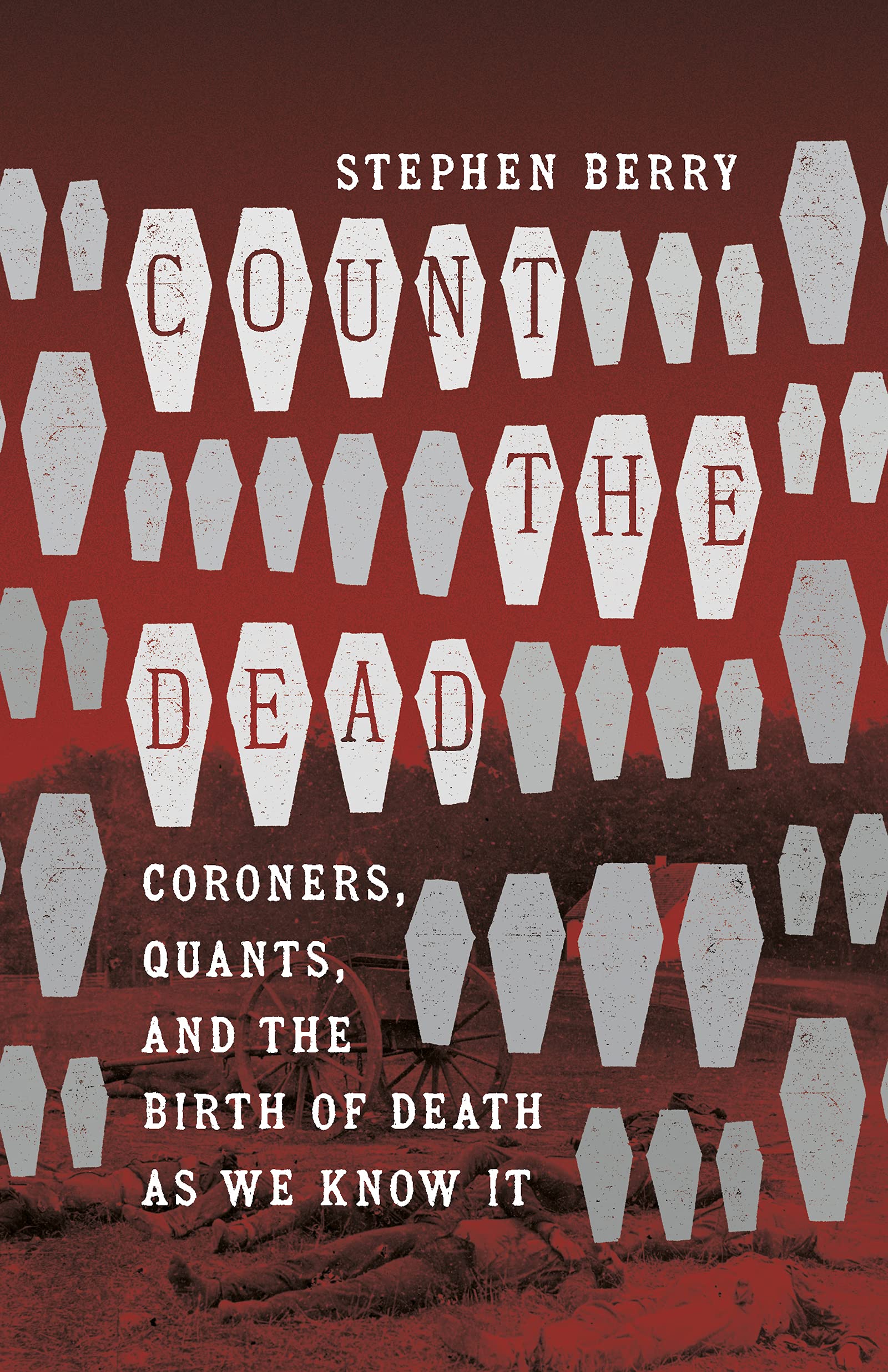
The global doubling of human life expectancy between 1850 and 1950 is arguably one of the most consequential developments in human history, undergirding massive improvements in human life and lifestyles. In 1850, Americans died at an average age of 30. Today, the average is almost 80. This story is typically told as a series of medical breakthroughs—Jenner and vaccination, Lister and antisepsis, Snow and germ theory, Fleming and penicillin—but the lion's share of the credit belongs to the men and women who dedicated their lives to collecting good data. Examining the development of death registration systems in the United States—from the first mortality census in 1850 to the development of the death certificate at the turn of the century— Count the Dead argues that mortality data transformed life on Earth, proving critical to the systemization of public health, casualty reporting, and human rights.
Stephen Berry shows how a network of coroners, court officials, and state and federal authorities developed methods to track and reveal patterns of dying. These officials harnessed these records to turn the collective dead into informants and in so doing allowed the dead to shape life and death as we know it today.
Librarian Note: There is more than one author in the Goodreads database with this name. This profile may contain books from multiple authors of this name.
When I picked up this book, I figured I would enjoy it. I’m a museum worker and spend a large portion of my time trying to decipher the lives of people long past through handfuls of their belongings. I did not expect to be so moved by Berry’s beautiful writing, his empathy for the people he researches, and his mastery of storytelling in the historical context. This book does not only assert the importance of death records, but it does so in a way that strikes at exactly what I find to be so compelling about history. It asks us to see those that have passed before us for the individuals that they were through the collective records they left behind. Through this, the past becomes more of a mirror than mystery. As Berry writes, “I never feel so alive as when I am entombed with my dead in some archival catacombs, convinced I am searching for their humanity, knowing I am searching for my own.”
Please read this book. It is a short read, but that makes it no less impactful.
This book was informative, but the repetition killed me (pun intended, I'm no coward). I am too lazy to go back and count how many times the author used the phrase "count the dead," many times as if it were a new idea introduced in the text. It's the title of the book! We get it!
Aside from that, it seems that this was well-researched and the subject matter interested me.