Modern missional movements have often viewed the historic Christian traditions with suspicion. The old traditions may be beautiful, the thinking goes, but they’re too insular, focused primarily on worship and on the interior lifeof the church, and not looking outward to evangelism and good works.In Liturgical Mission, Winfield Bevins argues that the church's liturgy and sacramental life are in fact deeply missional. He explores the historic practices of the Christian church, demonstrating how they offer a holistic framework for everyday Christian discipleship and mission in the twenty-first century. The result is a book that not only invites all Christians back to the historic liturgy of the church, butalso invites those already in liturgical churches to rediscover the missional life that has too often remained latent in their own traditions.
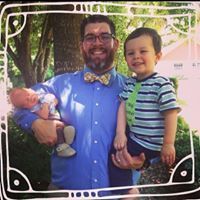
Dr. Winfield Bevins is an internationally recognized author, artist, and the founding director of Creo Arts, which is a non-profit that exists to bring beauty, goodness, and truth to the world through the arts. Winfield is also artist-in-residence at Asbury Theological Seminary where he champions the integration of art, theology, and mission. Over the past decade, he has helped start numerous initiatives and academic programs that have trained leaders from around the world. He frequently speaks at conferences, seminaries, and universities on a variety of topics and is an affiliate professor at several academic institutions.
He is the author of several books, including Liturgical Mission: The Work of the People for the Sake of the World, which was nominated for a Reader’s Choice Award (InterVarsity Press, 2022); Ever Ancient Ever New: The Allure of Liturgy for a New Generation (Zondervan, 2019); and Marks of a Movement (2019), which has been translated into Korean and Spanish. Winfield’s work has been featured in various outlets such as Christianity Today, Publishers Weekly, Outreach Magazine, and Religious News Service.
As an artist, he describes his artwork as “modern inconography” because it explores the intersection where the past and the present meet through sacred art. He believes that we need new forms and expressions of ancient truths to speak to a new generation, that are connected to those who have gone before us, drawing fresh inspiration from the past for our faith for today through art. As an artist, he hopes that his art will invite viewers to slow down and pray to God who is “ever ancient, ever new.” He and his wife have three daughters and live in Kentucky where he has a working studio and runs the Creo Arts Gallery.
Read 2/3 of this book earlier this year. Trying to finish up half read books before I start new ones. This book was a really helpful articulation of what I’m thinking about in terms of the future for our church.
So good! So practical. Simple. Love this book and would recommend, especially to those looking at how mission and the call to mission needs to happen through liturgy, both on a Sunday and in our work weeks.
In “Liturgical Mission,” author Winfield Bevins calls us to discover and embrace how the liturgical and missional sides of our faith fit together. The book expounds upon the importance of “recovering a holistic framework that weaves together faith, worship, and mission” and “the vital link between liturgy and mission.”
In Chapter 1, I found myself encouraged reading of the liturgical renewal that has been happening in the Church from earlier centuries through our current era. Bevins states, “For many people who are embracing liturgy, it is not about reliving the past; it is about retrieving tradition and appropriating it into the context of life in the twenty-first century.”
As a soon-to-be confirmed Anglican, I especially enjoyed Chapters 2 and 3, for the thorough explanation of the different aspects of the liturgy and their impact: “As we come together week after week, we are slowly formed by the words, prayers, and sacred rhythms of the liturgy. The poetic words, the prayers, and the reading of Scripture leave an imprint on our souls, and these practices shape us into men and women of God.“
Describing the importance of both saving souls and meeting physical and other needs, Bevins writes: “Holistic mission reminds us we are to care about the whole person. It means that because we care about the gospel, we should care about people's souls; we should care about their bodies; we should care about their communities; and we should care about creation.”
My only issue with the book is that it was quite repetitive. In one case, there was even a sentence repeated almost exactly verbatim not even a page away from the sentence like it. Another time, the same point was mentioned in only the slightest different wording in not two but three different sentences within the same paragraph.
All in all, “Liturgical Mission” is a helpful book that will assist believers in understanding the different aspects of the liturgy and how liturgy influences mission.
I received a review copy of this book for free from the publisher, and I am leaving this review voluntarily. All opinions are my own.
While I was trying to understand my own pull toward liturgical traditions, I came across this book by Winfield Bevins and learned that I was not alone in my discontent. Bevins contrasts the liturgical traditions of mainline churches with the missional focus of “low church” evangelical denominations, and he encourages a “both/and” approach rather than an “either/or.”
Instead of seeing liturgy as dead ritual, he sees it as a vital link to Christian history and an affirmation of the tenets of faith critical to spiritual formation. But he also acknowledges that many liturgical traditions missed their calling to “go out into all the world” with the good news of the Gospel, a particular emphasis in evangelical denominations. As someone not well educated in church history, this book helped me see the big picture of how religious practices developed and diverged through the centuries. Bevins sees liturgical renewal among evangelicals as a response to the fragmentation and decline of the American church. I’m drawn to his hopeful vision of a movement that embraces the whole church, past, present and future.
A good book that expressed the need for liturgy in our day and age. Definitely enlightening from someone from a low church background. There is a little bit on cross-cultural application of liturgy which was quite interesting but my biggest gripe was the lack of tangible stories or examples of liturgy being put in place in a missional way. It felt very theoretical but still interesting nonetheless. A great read for anyone who is newly exposed to liturgical churches.
Tried to listen to the audiobook on Hoopla. The AI voice (which was throughout the entire book) was pretty rough. I couldn’t get past the forward. Mom of 3, so audiobooks are the best way for me to read right now!