

What do you think?
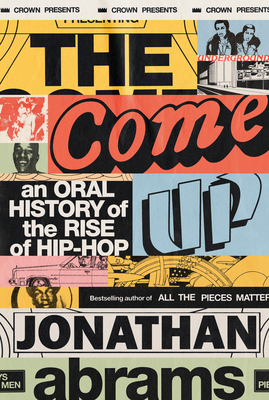
The Come Up: An Oral History of the Rise of Hip-Hop
The essential oral history of hip-hop, from its origins on the playgrounds of the Bronx to its reign as the most powerful force in pop culture—from the award-winning journalist behind All the Pieces Matter, the New York Times bestselling oral history of The Wire
“The Come Up is Abrams at his sharpest, at his most observant, at his most insightful.”—Shea Serrano, #1 New York Times bestselling author of Hip-Hop (And Other Things)
ONE OF THE BEST BOOKS OF THE The Boston Globe, The Guardian, Spin
The music that would come to be known as hip-hop was born at a party in the Bronx in the summer of 1973. Now, fifty years later, it’s the most popular music genre in America. Just as jazz did in the first half of the twentieth century, hip-hop and its groundbreaking DJs and artists—nearly all of them people of color from some of America’s most overlooked communities—pushed the boundaries of music to new frontiers, while transfixing the country’s youth and reshaping fashion, art, and even language.
And yet, the stories of many hip-hop pioneers and their individual contributions in the pre-Internet days of mixtapes and word of mouth are rarely heard—and some are at risk of being lost forever. Now, in The Come Up, the New York Times bestselling author Jonathan Abrams offers the most comprehensive account so far of hip-hop’s rise, a multi-decade chronicle told in the voices of the people who made it happen.
In more than three hundred interviews conducted over three years, Abrams has captured the stories of the DJs, executives, producers, and artists who both witnessed and themselves forged the history of hip-hop. Masterfully combining these voices into a seamless symphonic narrative, Abrams traces how the genre grew out of the resourcefulness of a neglected population in the South Bronx, and from there how it flowed into New York City’s other boroughs, and beyond—from electrifying live gatherings, then on to radio and vinyl, below to the Mason-Dixon Line, west to Los Angeles through gangster rap and G-funk, and then across generations.
Abrams has on record Grandmaster Caz detailing hip-hop’s infancy, Edward “Duke Bootee” Fletcher describing the origins of “The Message,” DMC narrating his role in introducing hip-hop to the mainstream, Ice Cube recounting N.W.A’s breakthrough and breakup, Kool Moe Dee recalling his Grammys boycott, and countless more key players. Throughout, Abrams conveys with singular vividness the drive, the stakes, and the relentless creativity that ignited one of the greatest revolutions in modern music.
The Come Up is an exhilarating behind-the-scenes account of how hip-hop came to rule the world—and an essential contribution to music history.
“The Come Up is Abrams at his sharpest, at his most observant, at his most insightful.”—Shea Serrano, #1 New York Times bestselling author of Hip-Hop (And Other Things)
ONE OF THE BEST BOOKS OF THE The Boston Globe, The Guardian, Spin
The music that would come to be known as hip-hop was born at a party in the Bronx in the summer of 1973. Now, fifty years later, it’s the most popular music genre in America. Just as jazz did in the first half of the twentieth century, hip-hop and its groundbreaking DJs and artists—nearly all of them people of color from some of America’s most overlooked communities—pushed the boundaries of music to new frontiers, while transfixing the country’s youth and reshaping fashion, art, and even language.
And yet, the stories of many hip-hop pioneers and their individual contributions in the pre-Internet days of mixtapes and word of mouth are rarely heard—and some are at risk of being lost forever. Now, in The Come Up, the New York Times bestselling author Jonathan Abrams offers the most comprehensive account so far of hip-hop’s rise, a multi-decade chronicle told in the voices of the people who made it happen.
In more than three hundred interviews conducted over three years, Abrams has captured the stories of the DJs, executives, producers, and artists who both witnessed and themselves forged the history of hip-hop. Masterfully combining these voices into a seamless symphonic narrative, Abrams traces how the genre grew out of the resourcefulness of a neglected population in the South Bronx, and from there how it flowed into New York City’s other boroughs, and beyond—from electrifying live gatherings, then on to radio and vinyl, below to the Mason-Dixon Line, west to Los Angeles through gangster rap and G-funk, and then across generations.
Abrams has on record Grandmaster Caz detailing hip-hop’s infancy, Edward “Duke Bootee” Fletcher describing the origins of “The Message,” DMC narrating his role in introducing hip-hop to the mainstream, Ice Cube recounting N.W.A’s breakthrough and breakup, Kool Moe Dee recalling his Grammys boycott, and countless more key players. Throughout, Abrams conveys with singular vividness the drive, the stakes, and the relentless creativity that ignited one of the greatest revolutions in modern music.
The Come Up is an exhilarating behind-the-scenes account of how hip-hop came to rule the world—and an essential contribution to music history.
544 pages, Hardcover
Published October 18, 2022
About the author
Jonathan Abrams
15 books130 followersJONATHAN ABRAMS is an award-winning journalist who has covered the NBA for ESPN’s Grantland, The New York Times and Los Angeles Times. He is a graduate of the University of Southern California.
Ratings & Reviews
Friends & Following
Create a free account to discover what your friends think of this book!
Community Reviews
Displaying 1 - 30 of 115 reviews

October 18, 2022
This is such a mega book. Massive in scope and super impressive. Overall I was really taken by the book. A few sections were too long.

August 27, 2023
This is a history of hip-hop, written as a mosaic of snippets from interviews of both participants and observers. I have to note at the start that before I knew almost nothing about this music genre/subculture. My choice of this read is based mostly on two points: [1] it is interesting stuff I want to know more about and [2] I think I should learn to appreciate poetry and rap lyrics plus battle culture is definitely an important slice of poetry. I read it as a Buddy read at Non Fiction Book Club group.
The book outlines the history of US English-language hip-hop from its beginnings in the 1970s Bronx, and gives interesting tidbits, like the fact that mostly poor Afro-American artists of this subculture got a great boost after the Blackout of the summer of 1977, when successive lightning strikes strained the area’s overburdened power grid and plunged most of the city into pitch-blackness. The lights remained off for more than a day. In that time, more than 1,500 businesses had been vandalized. This led to a sudden abundance of turntables and other expensive sound-producing systems in the hands of street and party jockeys. This led to the appearance of the first ‘mainstream’ hip-hop hit ‘Rapper’s Delight’ by the Sugarhill Gang, which for some members of the subculture as a sanitized imitation of what they had created.
From the beginnings and pioneers, the book goes both wider (from the Bronx to other boroughs of NY, to other cities and states) and deeper (like the appearance of gansta rap after “6 ’N the Mornin’ ” by Ice-T, or unique Chicago, Memphis or New Orleans sounds) and ends roughly in our present.
I guess this is a solid history outline, which will work especially well for the fans of the subculture, because, as I understand it, all major artists are present. It also supplies titles of all important hits, even if sadly, not as a neat table, but mentioning them in the text. At the same time, I’d like to see extracts of songs themselves (which I found elsewhere on the net).
The book outlines the history of US English-language hip-hop from its beginnings in the 1970s Bronx, and gives interesting tidbits, like the fact that mostly poor Afro-American artists of this subculture got a great boost after the Blackout of the summer of 1977, when successive lightning strikes strained the area’s overburdened power grid and plunged most of the city into pitch-blackness. The lights remained off for more than a day. In that time, more than 1,500 businesses had been vandalized. This led to a sudden abundance of turntables and other expensive sound-producing systems in the hands of street and party jockeys. This led to the appearance of the first ‘mainstream’ hip-hop hit ‘Rapper’s Delight’ by the Sugarhill Gang, which for some members of the subculture as a sanitized imitation of what they had created.
From the beginnings and pioneers, the book goes both wider (from the Bronx to other boroughs of NY, to other cities and states) and deeper (like the appearance of gansta rap after “6 ’N the Mornin’ ” by Ice-T, or unique Chicago, Memphis or New Orleans sounds) and ends roughly in our present.
I guess this is a solid history outline, which will work especially well for the fans of the subculture, because, as I understand it, all major artists are present. It also supplies titles of all important hits, even if sadly, not as a neat table, but mentioning them in the text. At the same time, I’d like to see extracts of songs themselves (which I found elsewhere on the net).

October 9, 2022
Despite nearing 50 years of existence, hip-hop has very few authoritative histories, and the personal stories of the trailblazers and early innovators are at risk of being lost as many early pioneers start receiving their AARP cards. New York Times reporter Jonathan Abrams attempts to fill this gap with his new hip-hop oral history The Come Up and does a fantastic job.
I’ll get this out upfront: I’ve been reviewing books for about ten years now and I haven’t ever been as excited for an advanced copy as I was for The Come Up. I absolutely loved Abrams’ previous books Boys Among Men and All the Pieces Matter and I’m a huge hip-hop fan from Aceyalone to Zev Love X to AZ. And I’m pleased to say that Abrams delivers on this remarkably-personally-compelling premise.
The book’s foundation comes from more than 300 interviews conducted over 4 years. Abrams sits down with DJs, rappers, producers, label executives, reporters, and more, giving a full view of the history of both hip-hop music and the culture surrounding it. Like all oral histories, participation matters. Even the best writer is going to be hamstrung if they can’t get the right people with this. And thankfully Abrams is able to largely deliver on that front, with genre icons and pioneers across all eras covered. You get Kool Moe Dee, Kurtis Blow, Russell Simmons, Ice Cube, Killer Mike, Bun B, and loads more from all cities and eras. And sure, some luminaries like Chuck D and Rakim don’t make an appearance but both artists are covered well through people very close to them like Hank Shocklee from the Bomb Squad and Marley Marl. This helps ensure that no key topic gets short shrift in the narrative. I also thought it was neat how Abrams includes interviews from artists from all eras and cities to show how they influenced each other.
The Come Up proceeds in a largely chronological fashion, hitting on all of the major moments and players that you’d expect. It begins in the early 1970s and continues through roughly the early 2000s. There is some brief coverage of major events from the last 20 years like DAMN by Kendrick Lamar winning a Pulitzer Prize in 2018 and hip-hop becoming the top genre in the US according to Nielsen in 2017 but those passages are largely to illustrate where the genre has gone since rather than analyze recent history in-depth. If you view Eric B and Rakim’s 1987 LP Paid in Full as a dividing line between “early hip-hop” and the start of its “golden age” then about the first third of The Come Up is devoted to that early, pre-1987 era when the rhymes and production were generally simpler. I can’t say I’m a huge fan of early releases from artists like Grandmaster Flash, Kurtis Blow, and the Sugarhill Gang (especially the latter), compared those who followed, but it’s still fascinating to learn about the genre’s roots and early stages when there was so much freewheeling innovation going on and no codified “rules.”
The remaining two-thirds of the book feature Abrams hopscotching across boroughs and regions to illustrate the genre’s spread, still largely chronologically. Some major luminaries like Russell Simmons/Def Jam get entire chapters devoted to them that cover longer timeframes, but it never comes off as disorienting. The book is well-structured overall. Abrams intersperses helpful context between many passages and the reading experience flows very smoothly and Abrams never overshadows the interviews. There are also no awkward transitions or interview non sequiturs that plague some oral histories. Everything fits together like a perfect mosaic, not too dissimilar from the production on Paul’s Boutique or 3 Feet High and Rising (before sample sources got extra litigious). Abrams’ focus extends beyond the music to hip-hop as a cultural phenomenon, with extended coverage of films like Wild Style and the controversies surrounding 2 Live Crew and Ice T that also helped mold all aspects of the genre.
While there haven’t been any oral histories of hip-hop at the scale of The Come Up, the book is going to cover some stories and moments that a fan of the genre will be familiar with. Outside of some southern rappers (I’m not hugely into the Houston scene, mea culpa) I had at least passing familiarity with every artist/album/event that garnered a decent amount of mentions. But, I acknowledge I’m in my early 30s now and have devoted over half my life to inhaling every possible shred of content about hip-hop, and Abrams unearths some entertaining new insights about material I was quite familiar with and fond of. Case in point: I’ve listened to Low End Theory by A Tribe Called Quest billions of times but I had no idea that their record label Jive were so amused by Industry Rule #4080 (record company people are shady) from the song Rap Promoter that they created their own t-shirts celebrating it.
There are way more interesting nuggets like that, such as how legendary producer Pete Rock’s poorly-scheduled barber appointment nearly scuppered a recording session with Will Smith. And how Peanut Butter Wolf (founder of the legendary underground label Stones Throw Records) opened for a young Jay-Z and predicted Hov would never amount to anything. And how Q-Tip got his name, and how Chuck D wrote much of It Takes a Nation of Millions to Hold Us Back on the Long Island Expressway going back and forth from the studio, how (the apparently super-elusive?) Pete Rock flat-out missed recording with Shaquille O’Neal because he just wasn’t home when they came to his house and couldn’t be found anywhere. And and and.
If I haven’t made it abundantly clear how much I liked this book, then I should just hang up my reviewing keyboard and give it up. But yes, I really enjoyed this. It is one of the top 3 (out of many, many, many) books about hip-hop that I’ve ever read. I don’t have any big quibbles with it. I would have appreciated a bit more of a focus on production throughout (though there is a late chapter going into some dedicated detail on the craft of beatmaking), I’m a bit bummed that some of my favorites like De La Soul didn’t participate (but again, the roster of participants is massive and very strong), and I thought the Roots probably warranted more than about half a page (but they’ve always been a sorta self-contained group that is hard to link to other artists/cities outside of I guess the brief-lived Soulquarians) but those are tiny nits that all have parenthetical caveats. If you have no interest in hip-hop whatsoever I guess you won’t get a ton out of The Come Up. But you also wouldn’t have read this far if that was the case, or read this review at all. Simply put, if you like hip-hop at all you owe it to yourself to check this out and you should find it to be outstanding.
9/10
I’ll get this out upfront: I’ve been reviewing books for about ten years now and I haven’t ever been as excited for an advanced copy as I was for The Come Up. I absolutely loved Abrams’ previous books Boys Among Men and All the Pieces Matter and I’m a huge hip-hop fan from Aceyalone to Zev Love X to AZ. And I’m pleased to say that Abrams delivers on this remarkably-personally-compelling premise.
The book’s foundation comes from more than 300 interviews conducted over 4 years. Abrams sits down with DJs, rappers, producers, label executives, reporters, and more, giving a full view of the history of both hip-hop music and the culture surrounding it. Like all oral histories, participation matters. Even the best writer is going to be hamstrung if they can’t get the right people with this. And thankfully Abrams is able to largely deliver on that front, with genre icons and pioneers across all eras covered. You get Kool Moe Dee, Kurtis Blow, Russell Simmons, Ice Cube, Killer Mike, Bun B, and loads more from all cities and eras. And sure, some luminaries like Chuck D and Rakim don’t make an appearance but both artists are covered well through people very close to them like Hank Shocklee from the Bomb Squad and Marley Marl. This helps ensure that no key topic gets short shrift in the narrative. I also thought it was neat how Abrams includes interviews from artists from all eras and cities to show how they influenced each other.
The Come Up proceeds in a largely chronological fashion, hitting on all of the major moments and players that you’d expect. It begins in the early 1970s and continues through roughly the early 2000s. There is some brief coverage of major events from the last 20 years like DAMN by Kendrick Lamar winning a Pulitzer Prize in 2018 and hip-hop becoming the top genre in the US according to Nielsen in 2017 but those passages are largely to illustrate where the genre has gone since rather than analyze recent history in-depth. If you view Eric B and Rakim’s 1987 LP Paid in Full as a dividing line between “early hip-hop” and the start of its “golden age” then about the first third of The Come Up is devoted to that early, pre-1987 era when the rhymes and production were generally simpler. I can’t say I’m a huge fan of early releases from artists like Grandmaster Flash, Kurtis Blow, and the Sugarhill Gang (especially the latter), compared those who followed, but it’s still fascinating to learn about the genre’s roots and early stages when there was so much freewheeling innovation going on and no codified “rules.”
The remaining two-thirds of the book feature Abrams hopscotching across boroughs and regions to illustrate the genre’s spread, still largely chronologically. Some major luminaries like Russell Simmons/Def Jam get entire chapters devoted to them that cover longer timeframes, but it never comes off as disorienting. The book is well-structured overall. Abrams intersperses helpful context between many passages and the reading experience flows very smoothly and Abrams never overshadows the interviews. There are also no awkward transitions or interview non sequiturs that plague some oral histories. Everything fits together like a perfect mosaic, not too dissimilar from the production on Paul’s Boutique or 3 Feet High and Rising (before sample sources got extra litigious). Abrams’ focus extends beyond the music to hip-hop as a cultural phenomenon, with extended coverage of films like Wild Style and the controversies surrounding 2 Live Crew and Ice T that also helped mold all aspects of the genre.
While there haven’t been any oral histories of hip-hop at the scale of The Come Up, the book is going to cover some stories and moments that a fan of the genre will be familiar with. Outside of some southern rappers (I’m not hugely into the Houston scene, mea culpa) I had at least passing familiarity with every artist/album/event that garnered a decent amount of mentions. But, I acknowledge I’m in my early 30s now and have devoted over half my life to inhaling every possible shred of content about hip-hop, and Abrams unearths some entertaining new insights about material I was quite familiar with and fond of. Case in point: I’ve listened to Low End Theory by A Tribe Called Quest billions of times but I had no idea that their record label Jive were so amused by Industry Rule #4080 (record company people are shady) from the song Rap Promoter that they created their own t-shirts celebrating it.
There are way more interesting nuggets like that, such as how legendary producer Pete Rock’s poorly-scheduled barber appointment nearly scuppered a recording session with Will Smith. And how Peanut Butter Wolf (founder of the legendary underground label Stones Throw Records) opened for a young Jay-Z and predicted Hov would never amount to anything. And how Q-Tip got his name, and how Chuck D wrote much of It Takes a Nation of Millions to Hold Us Back on the Long Island Expressway going back and forth from the studio, how (the apparently super-elusive?) Pete Rock flat-out missed recording with Shaquille O’Neal because he just wasn’t home when they came to his house and couldn’t be found anywhere. And and and.
If I haven’t made it abundantly clear how much I liked this book, then I should just hang up my reviewing keyboard and give it up. But yes, I really enjoyed this. It is one of the top 3 (out of many, many, many) books about hip-hop that I’ve ever read. I don’t have any big quibbles with it. I would have appreciated a bit more of a focus on production throughout (though there is a late chapter going into some dedicated detail on the craft of beatmaking), I’m a bit bummed that some of my favorites like De La Soul didn’t participate (but again, the roster of participants is massive and very strong), and I thought the Roots probably warranted more than about half a page (but they’ve always been a sorta self-contained group that is hard to link to other artists/cities outside of I guess the brief-lived Soulquarians) but those are tiny nits that all have parenthetical caveats. If you have no interest in hip-hop whatsoever I guess you won’t get a ton out of The Come Up. But you also wouldn’t have read this far if that was the case, or read this review at all. Simply put, if you like hip-hop at all you owe it to yourself to check this out and you should find it to be outstanding.
9/10
December 6, 2024
My rap period was fairly short, the late 1980s and early 1990s, really, and so I learned so much from this book about artists I knew and artists I did not. I took a lot from this book, but the one thing that sticks with me the most is how much these artists pushed each other forward. Famous beefs get the headlines, but so many of the stories in here are about collaboration in an effort to put out great work that gets everyone over.
It's a rich read, and one of my favorite books of the year.
It's a rich read, and one of my favorite books of the year.
March 31, 2024
love a music oral history!!!!!
shoutout to the author for having who each person is (as in, their profession or what group/label they’re from) next to their name throughout the whole book, because the other oral histories i’ve read only do it the first time and i can’t be expected to remember who all these people are lmao.
some quotes:
“and then, vanilla ice from florida with his thing blows up. meanwhile, everyone’s kicking themselves because ‘under pressure’ was one of those records that was just too obvious to sample. like, ‘who would sample that?’ and then somebody does, and everyone’s pissed off for three reasons: first, ‘fuck, why didn’t i sample that?’ because that’s a perfect record to sample. two, this white boy, he’s doing his thing. so it’s one of those records that when you first heard it, you liked it. but then it was like, ‘what the fuck? it’s a novelty. it’s cool. it’s not supposed to be this.’ and then he’s selling fourteen million records and getting all this respect, and people are like, ‘oh my god. get the fuck out of here.’”
“you know what else i learned from hanging around with pac? this guy is not a fucking rapper. this fucking guy is a musician. his voice was actually an instrument. it’s like he found the beats that actually harmonized with his voice, and with those two combinations, this is how he was killing the game. rappers don’t really harmonize. we’re hardcore. we’re cutthroat. so, he was able to sit in both lanes, and people couldn’t tell the difference because he’ll talk shit to you in the singing type of voice until you’re like, man, this motherfucker cursed me out singing to me.”
“i remember eminem said something that was so crazy, it fucked my self-esteem up for like two minutes.”
content/trigger warnings; discussions of racism, n word, police brutality, gun violence, gang violence, sexism, misogyny, sexual assault, rape, drug use, alcohol use, poverty, incarceration, murder, death,
shoutout to the author for having who each person is (as in, their profession or what group/label they’re from) next to their name throughout the whole book, because the other oral histories i’ve read only do it the first time and i can’t be expected to remember who all these people are lmao.
some quotes:
“and then, vanilla ice from florida with his thing blows up. meanwhile, everyone’s kicking themselves because ‘under pressure’ was one of those records that was just too obvious to sample. like, ‘who would sample that?’ and then somebody does, and everyone’s pissed off for three reasons: first, ‘fuck, why didn’t i sample that?’ because that’s a perfect record to sample. two, this white boy, he’s doing his thing. so it’s one of those records that when you first heard it, you liked it. but then it was like, ‘what the fuck? it’s a novelty. it’s cool. it’s not supposed to be this.’ and then he’s selling fourteen million records and getting all this respect, and people are like, ‘oh my god. get the fuck out of here.’”
“you know what else i learned from hanging around with pac? this guy is not a fucking rapper. this fucking guy is a musician. his voice was actually an instrument. it’s like he found the beats that actually harmonized with his voice, and with those two combinations, this is how he was killing the game. rappers don’t really harmonize. we’re hardcore. we’re cutthroat. so, he was able to sit in both lanes, and people couldn’t tell the difference because he’ll talk shit to you in the singing type of voice until you’re like, man, this motherfucker cursed me out singing to me.”
“i remember eminem said something that was so crazy, it fucked my self-esteem up for like two minutes.”
content/trigger warnings; discussions of racism, n word, police brutality, gun violence, gang violence, sexism, misogyny, sexual assault, rape, drug use, alcohol use, poverty, incarceration, murder, death,
April 23, 2023
I loved, loved, loved this book. I also really enjoyed Abram’s last oral history he wrote on HBO and David Simon’s “The Wire”.
A huge tome in pages, but the conversational tone of an oral history and the way Abrams arranges by scenes, geographical and genre, and periods of time really helps.
As hiphop celebrates it’s 50th year, I can’t think of a better document to read to compliment the understanding of the music and the culture\.
I learned a lot about the twists and turns rap has taken from the 2000’s until now - I am so stuck in my “golden era” comfort zone, that it was fun learning more about Sadat X, Underground Killers, Trap, Mumble rap, etc.
All the heavy hitters are here too, have no fear! I enjoyed getting more info on Marley Marl, seminal NYC clubs like the Latin Quarter, and really digging into the overlooked importance of Monie Love and Queen Latifah in this age of Cardi B, Niki Minaj, etc.
A huge tome in pages, but the conversational tone of an oral history and the way Abrams arranges by scenes, geographical and genre, and periods of time really helps.
As hiphop celebrates it’s 50th year, I can’t think of a better document to read to compliment the understanding of the music and the culture\.
I learned a lot about the twists and turns rap has taken from the 2000’s until now - I am so stuck in my “golden era” comfort zone, that it was fun learning more about Sadat X, Underground Killers, Trap, Mumble rap, etc.
All the heavy hitters are here too, have no fear! I enjoyed getting more info on Marley Marl, seminal NYC clubs like the Latin Quarter, and really digging into the overlooked importance of Monie Love and Queen Latifah in this age of Cardi B, Niki Minaj, etc.
February 29, 2024
This is a very important book, and a worthwhile read, but also LONG and dense. I kept putting it down and picking it up again over the course of a year and a half. I think this is mostly because the format of an oral history is just hard for me to digest. There's lots of names! It's a dialog! When I finally found a copy of the audiobook (none of my libraries had it!!!) I finished the half I had left in like, three days. So I personally recommend it that way. I think it would work great as a documentary.
Anyways, super accessible even if you don't know much about hip-hop but a love letter to the genre if you do. It's a fascinating look at all the cultural aspects that make hip-hop what it is today, and all the work it took to get it recognized. Recommend for sure!
Anyways, super accessible even if you don't know much about hip-hop but a love letter to the genre if you do. It's a fascinating look at all the cultural aspects that make hip-hop what it is today, and all the work it took to get it recognized. Recommend for sure!
March 19, 2023
I thoroughly enjoyed reading this book. It was packed with so much information that I found insightful as it captured the origins of hip-hop. I’m into music heavy especially rap and just to read something that goes into depth on its history I learned so much.
It took awhile to get through this one but I enjoyed the authors personal perspective and how well he constructed the interviews, stories, talent, and backgrounds of so many artist into this one book. Definitely worth the hype and recommend you read if you’re into music. Special thanks to the author, Crown publishing, and Netgalley for my advanced copy!!!
It took awhile to get through this one but I enjoyed the authors personal perspective and how well he constructed the interviews, stories, talent, and backgrounds of so many artist into this one book. Definitely worth the hype and recommend you read if you’re into music. Special thanks to the author, Crown publishing, and Netgalley for my advanced copy!!!

April 10, 2024
Finally finally finished reading this, it was really good I just haven’t had any time to read this semester. I loved the style and the interviews with rappers and producers and record studio executives. Hearing from some of my favorite artists and producers was so interesting and I really learned a lot of cool history. Also got put on to a lot of good music. Definitely would be a good read for anyone but especially fans of the genre will really really enjoy reading this I think.

September 21, 2022
I received this as an eGalley from NetGalley.
Best fact learned from this book:
Pharrell Williams' early rap name was....."Magnum the Verb Lord."
Best fact learned from this book:
Pharrell Williams' early rap name was....."Magnum the Verb Lord."

October 27, 2022
This was a phenomenal look at the origins of hip hop told by those who created it. It’s a massive book, but we’ll worth the time it will take to read.
July 21, 2023
So fun. Will probably read this one again someday.

September 19, 2023
An amazing timeline of the influence of hip hop and how it has affected today’s hip hop and rap music. I loved every part of this book from beginning to end!

April 13, 2024
As a lover of the genre, I really enjoyed this and found it useful in understanding the importance of a lot of influential albums/artists/events in hip-hop history. There are some great stories in here and a wide range of perspectives - I appreciate how Abrams gives weight to contrasting opinions on subjects like sampling, female sexuality in rap music, and the current state of the genre. This was a complete pleasure to read and it provided context that deepened my love for the music. I think it would be a fantastic introduction for someone less familiar with hip-hop.
Since I already was familiar with many of the artists and key moments discussed in this book, I also noticed its deficiencies. For all of the voices included here, it’s a shame that Abrams couldn’t have gotten in touch with people like Questlove, either member of Outkast, or anyone from the Wu-Tang Clan. I know that these aren’t exactly easy gets, but some sections that cover massively important albums and artists end quickly due to a lack of interviews with people connected to those artists. I also think that this is a bit messy chronologically, as Abrams leaps too far forward and pulls too far back between chapters, some of which span massive gaps of 20 years whereas others focus on single moments, or periods of 3-4 years. It’s insane that this history even exists, and knowing how complicated it must have been to organize it helps me understand the cause of these issues, but it does feel strange that stuff like Tupac and Biggie’s murders doesn’t get proper attention until the final hundred or so pages of the book.
Still, I felt overwhelmingly positive while reading this, and I’m glad that these stories were captured while many of the genre’s pioneers are still with us. I hope someday we get more oral histories on hip-hop’s many eras - I’d love to read about the early 2000s bling era, the 2010s mixtape era, the rise of internet rap, etc.
Since I already was familiar with many of the artists and key moments discussed in this book, I also noticed its deficiencies. For all of the voices included here, it’s a shame that Abrams couldn’t have gotten in touch with people like Questlove, either member of Outkast, or anyone from the Wu-Tang Clan. I know that these aren’t exactly easy gets, but some sections that cover massively important albums and artists end quickly due to a lack of interviews with people connected to those artists. I also think that this is a bit messy chronologically, as Abrams leaps too far forward and pulls too far back between chapters, some of which span massive gaps of 20 years whereas others focus on single moments, or periods of 3-4 years. It’s insane that this history even exists, and knowing how complicated it must have been to organize it helps me understand the cause of these issues, but it does feel strange that stuff like Tupac and Biggie’s murders doesn’t get proper attention until the final hundred or so pages of the book.
Still, I felt overwhelmingly positive while reading this, and I’m glad that these stories were captured while many of the genre’s pioneers are still with us. I hope someday we get more oral histories on hip-hop’s many eras - I’d love to read about the early 2000s bling era, the 2010s mixtape era, the rise of internet rap, etc.

February 29, 2024
I read this over the course of about a year because I periodically stopped because of school workload. The whole story has stuck with me, although I wish I had a playlist or albums to listen to support the reading (going into it I wasn’t familiar with much of earlier hip-hop music).
I’m white and I went to a vastly majority white middle and high school. I noticed that some kids often listened to rap and hip-hop to imitate being black or to get “hyped” for a game. Getting hyped for them also involved using a blaccent and an attempt at AAVE. The way people around me interacted with rap and hip-hop always felt off to me. Reading this book helped me understand what hip-hop really is.
Between reading sessions I sometimes listened to a single or an album that was mentioned. As a person who loves pretty much all music, I now feel like I have the context and background to properly listen, enjoy, and analyze hip-hop music.
I think this is a great read for both fans of hip-hop and people who haven’t paid much attention to the genres. I also think that it would be especially helpful for people who don’t read the lyrics or don’t listen from the perspective of social injustice and systemic oppression.
I’m white and I went to a vastly majority white middle and high school. I noticed that some kids often listened to rap and hip-hop to imitate being black or to get “hyped” for a game. Getting hyped for them also involved using a blaccent and an attempt at AAVE. The way people around me interacted with rap and hip-hop always felt off to me. Reading this book helped me understand what hip-hop really is.
Between reading sessions I sometimes listened to a single or an album that was mentioned. As a person who loves pretty much all music, I now feel like I have the context and background to properly listen, enjoy, and analyze hip-hop music.
I think this is a great read for both fans of hip-hop and people who haven’t paid much attention to the genres. I also think that it would be especially helpful for people who don’t read the lyrics or don’t listen from the perspective of social injustice and systemic oppression.

May 28, 2024
Impressive in its scope, integrates multiple regions really well and some of the groundwork on the start of hip-hop is among the best I've seen. The book loses its focus somewhere after the death of Pac and Biggie, which is fine, but the half-in/half-out approach of ambling towards the end gave the conclusion a bit less focus than the rest of the book set it up to deserve.
That said, there's just something very cool about reading a lot of people who were responsible for, or witness to, some of the most important moments in music history share their stories. It must have been a marathon of work to compile so many interviews and Abrams does a wonderful job letting people speak at length without it often feeling like a ramble or run-off. An essential addition to the library for anyone who wants to write or speak about hip-hop with any sort of credible authority.
That said, there's just something very cool about reading a lot of people who were responsible for, or witness to, some of the most important moments in music history share their stories. It must have been a marathon of work to compile so many interviews and Abrams does a wonderful job letting people speak at length without it often feeling like a ramble or run-off. An essential addition to the library for anyone who wants to write or speak about hip-hop with any sort of credible authority.

September 16, 2023
I would give this book 4 stars for content, but 3 stars for format. The content was fantastic and I learned so much about the origins and evolution of hip hop and the regional twists that developed over time. The book is very up front about it being an oral history, so I was expecting the quotations, but while I was reading it, I longed to see a documentary version of it instead. I wanted to hear the beats and songs the interviewees were referencing. I wanted to see the visual styles (fashion, dance, music videos, etc.) they were highlighting as defining characteristics of different crews. This book took me several weeks to read, thanks to the detours of creating looking up songs on Spotify and rabbit holes spent on Wikipedia. If I came away with nothing else, I have a killer hip hop playlist to listen to.

November 9, 2024
Nonfiction>music, history
4 stars for being accessible, informative, relevant, and thorough. I was a little bored at times, but always came back quickly. I liked all the direct quotes from people actually present at the moment or having close knowledge to what he was talking about at the time.
Some memorable things: 90s saw singers with hats become popular- rappers with sideways ball caps and country with cowboy hats 😆; Dr Dre didn't experience Marijuana until the end of putting together The Chronic; stealing equipment during a blackout might be catalyst for explosion of hip hop in NYC.
I did feel at times like he could have done better with staying in chronological order (as the outline of his chapters suggests), but he chose to bounce around a little to possibly introduce West Coast sooner? Idk... seemed like at that point the timeline bounced a lot.
4 stars for being accessible, informative, relevant, and thorough. I was a little bored at times, but always came back quickly. I liked all the direct quotes from people actually present at the moment or having close knowledge to what he was talking about at the time.
Some memorable things: 90s saw singers with hats become popular- rappers with sideways ball caps and country with cowboy hats 😆; Dr Dre didn't experience Marijuana until the end of putting together The Chronic; stealing equipment during a blackout might be catalyst for explosion of hip hop in NYC.
I did feel at times like he could have done better with staying in chronological order (as the outline of his chapters suggests), but he chose to bounce around a little to possibly introduce West Coast sooner? Idk... seemed like at that point the timeline bounced a lot.

January 11, 2023
I recently read "Dilla Time" and "Rap Capital" and I think I prefer those intimate, scene-specific explorations of hip-hop to one that goes this big. I loved listening to a lot of the early NYC stuff and a lot of the Southern stuff that I'd missed (Houston, NOLA, Miami).
He unsurprisingly can't get a lot of the biggest characters in hip hop for this and some of the smaller ones just seem kind of salty that the most popular rappers are not very good...
He unsurprisingly can't get a lot of the biggest characters in hip hop for this and some of the smaller ones just seem kind of salty that the most popular rappers are not very good...
October 19, 2025
Very interesting history! I listened to the audiobook and it was super cool to hear all the people interviewed give their perspectives in their own voices. I also enjoyed listening to the songs mentioned in the book in parallel, it gave me a much richer understanding of the music. I found the beginning with the origins of hip hop and the end as I recognized the artists most engaging. The middle dragged a bit, mostly because there was so much great detail but I wasn’t as familiar with any of it so I found some of the names and timelines harder to track. The structure was also helpful to identify geographic trends, but since the timelines overlapped so much it was hard to place some things in the overall context of the full country.

January 11, 2023
4/5 ⭐️⭐️⭐️⭐️
📖
Finished January 10, 2023
📖
Extensive oral history collection regarding the past, present, and future of the hip-hop music genre.
I learned so much from this book. Stuff I knew some about and then stuff I had no clue about. Very knowledgeable. Very well structured. I listened to this book, which I feel may account for my date confusions. It did jump back and forth a little with dates, but that might be the nature of the interviews. As the book progressed, it became less linear. I chose this on a whim and for the oral history, I’m so glad I did!
📖
Audio - Non-Fiction - 2022
📖
Finished January 10, 2023
📖
Extensive oral history collection regarding the past, present, and future of the hip-hop music genre.
I learned so much from this book. Stuff I knew some about and then stuff I had no clue about. Very knowledgeable. Very well structured. I listened to this book, which I feel may account for my date confusions. It did jump back and forth a little with dates, but that might be the nature of the interviews. As the book progressed, it became less linear. I chose this on a whim and for the oral history, I’m so glad I did!
📖
Audio - Non-Fiction - 2022

February 11, 2023
Really great listen! Loved the historical aspects and hearing the first hand accounts from so many different artists. The only thing that could make this better is if they could sample some of the music that was referenced, like you could push play and hear the song. There’s no way they could do that financially because it would cost so much but it would be cool!

January 23, 2023
This book was masterfully put together, not once did I get lost. The soundtrack to this book is amazing. The stop and start of reading and listening brought it to a whole different level, one I highly recommend. My only wish was more female representation, luckily I had read God Save the Queens first.

Read
September 11, 2025I wanted more modern hip hop info, but this was okay.
February 13, 2026
𝙏𝙝𝙚 𝘾𝙤𝙢𝙚 𝙐𝙥 is not only an oral history book, but it it's also a polished history book on rap music since its origins back in the late 1970s. You can't come away from this book and not be educated on different time periods of rap music. Real hip-hop heads, especially the East Coast rap historians would love the heck out of this book.
𝙏𝙝𝙚 𝘾𝙤𝙢𝙚 𝙐𝙥 is the oral history book that hip-hop needs because a lot of people don't know how rap music even got started (where or how).
I remember near the beginning of the book or on page xiii of the Author's Note section where the author Jonathan Abrams said this, "There are people whom I had hoped to talk to for this book and couldn't get to." Yeah, it's a trip how true that statement was, because yes, I appreciated much of the interviews in this book, but there were a lot of rappers, rap music video directors, and etc. who could have or should have been in this book, but Abrams did the best he could with what he had. Oral history books on any subject are only as good as their interviewee's and what they are willing to share. It was a lot shared in this book but there are so many people in the rap game who should have been interviewed in this book, but a lot of them weren't available and/or declined Abrams' invitation.
You got to give Abrams high credit for doing this book and the man hours he spent putting it together. The man worked on the book from 2018 to 2021 and conducted over three hundred interviews for the book. That's a lot of work and passion.
The book started off in chapter 1 (LEMONADE FROM LEMONS) with the writers' notes and interviews on the 1973 to 1979 period of rap music, or the origins of the art form. Bronx, New York is generally thought of as the place where rap started, and he interviewed some artists and producers who had something to do with rap's origins like 𝗗𝗝 𝗖𝗼𝗼𝗹 𝗛𝗲𝗿𝗰, members of the 𝗖𝗼𝗹𝗱 𝗖𝗿𝘂𝘀𝗵 𝗕𝗿𝗼𝘁𝗵𝗲𝗿𝘀, members of the 𝗚𝗿𝗮𝗻𝗱𝗺𝗮𝘀𝘁𝗲𝗿 𝗙𝗹𝗮𝘀𝗵 𝗮𝗻𝗱 𝘁𝗵𝗲 𝗙𝘂𝗿𝗶𝗼𝘂𝘀 𝗙𝗶𝘃𝗲 group, and others. I'm not a fan of the early years of hip-hop so this chapter didn't really interest me, but I did learn a lot about the origins of rap music which including DJing, how Zulu Nation was instrumental in spreading the word about this new form of music, and more.
There's an interview near the bottom of page 27 of chapter 1 (LEMONADE FROM LEMONS) of journalist and Def Jam publicist 𝗕𝗶𝗹𝗹 𝗔𝗱𝗹𝗲𝗿. That interview needs to be read and heeded by anyone who ever reads this book because it helped to explain why Disco music died before the 1980s even got here and why it was so important for beat producers, DJs, and rappers to be on point as to ensure that this hip hop "fad" (as it was called in the early 1980s) would endure for generations to come.
Chapters 2 and 3 explained (with authors notes and interviews) how important the East Coast region was to the growing or maturation of hip-hop music in the 1978 to 1982 period. None of those chapters really interested me, but I did get the 411 on how important Sugar Hill Records and the song "Rappers Delight" by the Sugarhill Gang were to the commercialism and financial prospects of early hip hop music. I also learned in one of those before mentioned chapters (chapter 3, WHAT IN THE WORLD IS THIS?) that 𝗞𝘂𝗿𝘁𝗶𝘀 𝗕𝗹𝗼𝘄 was rap music's first solo star.
The book kind of heated up for me or took off for me with chapter 5 (NEVER BEEN THE SAME) which discussed the 1983 to 2000 period of hip-hop music within the New York City limits. That was also the chapter where 𝗥𝘂𝗻-𝗗𝗠𝗖 was introduced, which is a rap group that I like very, very much. So glad to see 𝗗𝗠𝗖 (𝗗𝗮𝗿𝗿𝘆𝗹 𝗠𝗰𝗗𝗮𝗻𝗶𝗲𝗹𝘀) be interviewed quite a bit of times in that chapter, but there was no 𝗥𝘂𝗻 (𝗝𝗼𝘀𝗲𝗽𝗵 𝗦𝗶𝗺𝗺𝗼𝗻𝘀) in that chapter. He should have been one of the main people interviewed for this book, but he probably was either too busy, or he just declined to be interviewed. 𝗟𝗟 𝗖𝗼𝗼𝗹 𝗝 should have been in that chapter too, but again his inclusion in the book was probably just like 𝗥𝘂𝗻'𝘀 situation.
Chapter 6 gave me an idea of how important former KDAY music director 𝗚𝗿𝗲𝗴 𝗠𝗮𝗰𝗸 was to the popularity of West Coast rap. That chapter gave him his flowers, and I bet he appreciated that. 𝗜𝗰𝗲 𝗖𝘂𝗯𝗲 was interviewed in that chapter and it was refreshing to read what he had to say about Mack and West Coast rap in general in the 1983 to 1986 period. That whole chapter was pretty much about Mack and KDAY.
Another chapter I enjoyed in the book was chapter 10 (LIKE A BLUEBERRY) where 𝗜𝗰𝗲-𝗧 and members of 𝗡𝗪𝗔 were given the platform to explain the origins of their respective acts or groups.
Chapter 14 (OUT HUSTLING) paid homage to 𝗧𝗼𝗼 $𝗵𝗼𝗿𝘁 among other rappers from the Bay Area who had something to do with the region's rise in the hip-hop game from 1983 to 2006.
One of the interesting things I learned from this book was from an interview with former Interscope rap promoter 𝗙𝗮𝗯𝗶𝗮𝗻 "𝗙𝗮𝗱𝗲" 𝗗𝘂𝘃𝗲𝗿𝗻𝗮𝘆 on page 327 (chapter 16, A HIGHER LEVEL OF EXECUTION) who said that 𝗗𝗿. 𝗗𝗿𝗲 was supposed to have his classic debut album 𝙏𝙝𝙚 𝘾𝙝𝙧𝙤𝙣𝙞𝙘 turned into Death Row Records for release in the latter part of 1991, but instead the record was released in December 1992 because 𝗗𝗿. 𝗗𝗿𝗲 was a perfectionist (nothing wrong with that) when it came to his art, which was producing top-shelf beats.
These days, Diddy is persona non grata to millions of people around the globe, but back in the late 1990s he was a force to be reckoned with when it came to beat production, promoting artists, curating rap and R&B talent, and his mixing and sampling of 1970s, 1980s, and some early 1990s music into the rap and R&B songs of the artists that he managed. And in chapter 19 (THAT STUCK WITH ME) Diddy's contributions to rap music were appreciated, especially by 𝗗𝗝 𝗠𝗶𝘀𝘁𝗲𝗿 𝗖𝗲𝗲 on pages 431-432 and on page 441 by producer 𝗝𝘂𝘀𝘁 𝗕𝗹𝗮𝘇𝗲.
The book ended with an appreciation of hip-hop music-type chapter called THANK GOD BECAUSE OF HIP-HOP (chapter 23). That chapter was an eight-page analysis on what hip-hop gave to the Black community from entertainment, self-esteem, and cultural standpoints.
Pros of 𝙏𝙝𝙚 𝘾𝙤𝙢𝙚 𝙐𝙥: The book explained in 23 chapters how hip-hop grew to what it is today with help from influential and groundbreaking rappers, DJs, beat producers, record companies, radio station workers, and others. The book gave long past their prime hip-hop artists, producers, promoters, and etc. a platform to share their experiences within the hip-hop community from 1973 to the 2010s decade. The book did a good job on promoting the East Coast and West Coast's contributions to the rap game, especially the East Coast.
Cons of the 𝙏𝙝𝙚 𝘾𝙤𝙢𝙚 𝙐𝙥: Not many cons in this book. The book is not a definitive history of hip-hop, but the book did its job with what it had. The only stars interviewed in this book were 𝗜𝗰𝗲 𝗖𝘂𝗯𝗲, 𝗜𝗰𝗲-𝗧, and 𝗗𝗠𝗖, and if you wanted interviews from some of rap's biggest stars from the 1990s and 2000s besides the before mentioned trio, you weren't going to get that in this book. A lot of the interviewees in this book I've never heard of them, and that's not the fault of Abrams, it's just that's just the way it was. Some artists don't always like to lend their names to oral history books or books period unless they write them or they're getting well compensated for their contributions.
In closing, 𝙏𝙝𝙚 𝘾𝙤𝙢𝙚 𝙐𝙥 is a needed book in the pantheon of hip-hop books. You will learn a lot about hip-hop from reading this book and you will come away from the book appreciating the golden ages of the art form. Any historical hip-hop fan will like or love this book. The target demographic for this book is hip hop heads who love the history of the art form. Those who are new age rap fans, the 2010s and 2020s hip-hip fans will not understand or appreciate this book because it's not for them.
𝙏𝙝𝙚 𝘾𝙤𝙢𝙚 𝙐𝙥 is the oral history book that hip-hop needs because a lot of people don't know how rap music even got started (where or how).
I remember near the beginning of the book or on page xiii of the Author's Note section where the author Jonathan Abrams said this, "There are people whom I had hoped to talk to for this book and couldn't get to." Yeah, it's a trip how true that statement was, because yes, I appreciated much of the interviews in this book, but there were a lot of rappers, rap music video directors, and etc. who could have or should have been in this book, but Abrams did the best he could with what he had. Oral history books on any subject are only as good as their interviewee's and what they are willing to share. It was a lot shared in this book but there are so many people in the rap game who should have been interviewed in this book, but a lot of them weren't available and/or declined Abrams' invitation.
You got to give Abrams high credit for doing this book and the man hours he spent putting it together. The man worked on the book from 2018 to 2021 and conducted over three hundred interviews for the book. That's a lot of work and passion.
The book started off in chapter 1 (LEMONADE FROM LEMONS) with the writers' notes and interviews on the 1973 to 1979 period of rap music, or the origins of the art form. Bronx, New York is generally thought of as the place where rap started, and he interviewed some artists and producers who had something to do with rap's origins like 𝗗𝗝 𝗖𝗼𝗼𝗹 𝗛𝗲𝗿𝗰, members of the 𝗖𝗼𝗹𝗱 𝗖𝗿𝘂𝘀𝗵 𝗕𝗿𝗼𝘁𝗵𝗲𝗿𝘀, members of the 𝗚𝗿𝗮𝗻𝗱𝗺𝗮𝘀𝘁𝗲𝗿 𝗙𝗹𝗮𝘀𝗵 𝗮𝗻𝗱 𝘁𝗵𝗲 𝗙𝘂𝗿𝗶𝗼𝘂𝘀 𝗙𝗶𝘃𝗲 group, and others. I'm not a fan of the early years of hip-hop so this chapter didn't really interest me, but I did learn a lot about the origins of rap music which including DJing, how Zulu Nation was instrumental in spreading the word about this new form of music, and more.
There's an interview near the bottom of page 27 of chapter 1 (LEMONADE FROM LEMONS) of journalist and Def Jam publicist 𝗕𝗶𝗹𝗹 𝗔𝗱𝗹𝗲𝗿. That interview needs to be read and heeded by anyone who ever reads this book because it helped to explain why Disco music died before the 1980s even got here and why it was so important for beat producers, DJs, and rappers to be on point as to ensure that this hip hop "fad" (as it was called in the early 1980s) would endure for generations to come.
Chapters 2 and 3 explained (with authors notes and interviews) how important the East Coast region was to the growing or maturation of hip-hop music in the 1978 to 1982 period. None of those chapters really interested me, but I did get the 411 on how important Sugar Hill Records and the song "Rappers Delight" by the Sugarhill Gang were to the commercialism and financial prospects of early hip hop music. I also learned in one of those before mentioned chapters (chapter 3, WHAT IN THE WORLD IS THIS?) that 𝗞𝘂𝗿𝘁𝗶𝘀 𝗕𝗹𝗼𝘄 was rap music's first solo star.
The book kind of heated up for me or took off for me with chapter 5 (NEVER BEEN THE SAME) which discussed the 1983 to 2000 period of hip-hop music within the New York City limits. That was also the chapter where 𝗥𝘂𝗻-𝗗𝗠𝗖 was introduced, which is a rap group that I like very, very much. So glad to see 𝗗𝗠𝗖 (𝗗𝗮𝗿𝗿𝘆𝗹 𝗠𝗰𝗗𝗮𝗻𝗶𝗲𝗹𝘀) be interviewed quite a bit of times in that chapter, but there was no 𝗥𝘂𝗻 (𝗝𝗼𝘀𝗲𝗽𝗵 𝗦𝗶𝗺𝗺𝗼𝗻𝘀) in that chapter. He should have been one of the main people interviewed for this book, but he probably was either too busy, or he just declined to be interviewed. 𝗟𝗟 𝗖𝗼𝗼𝗹 𝗝 should have been in that chapter too, but again his inclusion in the book was probably just like 𝗥𝘂𝗻'𝘀 situation.
Chapter 6 gave me an idea of how important former KDAY music director 𝗚𝗿𝗲𝗴 𝗠𝗮𝗰𝗸 was to the popularity of West Coast rap. That chapter gave him his flowers, and I bet he appreciated that. 𝗜𝗰𝗲 𝗖𝘂𝗯𝗲 was interviewed in that chapter and it was refreshing to read what he had to say about Mack and West Coast rap in general in the 1983 to 1986 period. That whole chapter was pretty much about Mack and KDAY.
Another chapter I enjoyed in the book was chapter 10 (LIKE A BLUEBERRY) where 𝗜𝗰𝗲-𝗧 and members of 𝗡𝗪𝗔 were given the platform to explain the origins of their respective acts or groups.
Chapter 14 (OUT HUSTLING) paid homage to 𝗧𝗼𝗼 $𝗵𝗼𝗿𝘁 among other rappers from the Bay Area who had something to do with the region's rise in the hip-hop game from 1983 to 2006.
One of the interesting things I learned from this book was from an interview with former Interscope rap promoter 𝗙𝗮𝗯𝗶𝗮𝗻 "𝗙𝗮𝗱𝗲" 𝗗𝘂𝘃𝗲𝗿𝗻𝗮𝘆 on page 327 (chapter 16, A HIGHER LEVEL OF EXECUTION) who said that 𝗗𝗿. 𝗗𝗿𝗲 was supposed to have his classic debut album 𝙏𝙝𝙚 𝘾𝙝𝙧𝙤𝙣𝙞𝙘 turned into Death Row Records for release in the latter part of 1991, but instead the record was released in December 1992 because 𝗗𝗿. 𝗗𝗿𝗲 was a perfectionist (nothing wrong with that) when it came to his art, which was producing top-shelf beats.
These days, Diddy is persona non grata to millions of people around the globe, but back in the late 1990s he was a force to be reckoned with when it came to beat production, promoting artists, curating rap and R&B talent, and his mixing and sampling of 1970s, 1980s, and some early 1990s music into the rap and R&B songs of the artists that he managed. And in chapter 19 (THAT STUCK WITH ME) Diddy's contributions to rap music were appreciated, especially by 𝗗𝗝 𝗠𝗶𝘀𝘁𝗲𝗿 𝗖𝗲𝗲 on pages 431-432 and on page 441 by producer 𝗝𝘂𝘀𝘁 𝗕𝗹𝗮𝘇𝗲.
The book ended with an appreciation of hip-hop music-type chapter called THANK GOD BECAUSE OF HIP-HOP (chapter 23). That chapter was an eight-page analysis on what hip-hop gave to the Black community from entertainment, self-esteem, and cultural standpoints.
Pros of 𝙏𝙝𝙚 𝘾𝙤𝙢𝙚 𝙐𝙥: The book explained in 23 chapters how hip-hop grew to what it is today with help from influential and groundbreaking rappers, DJs, beat producers, record companies, radio station workers, and others. The book gave long past their prime hip-hop artists, producers, promoters, and etc. a platform to share their experiences within the hip-hop community from 1973 to the 2010s decade. The book did a good job on promoting the East Coast and West Coast's contributions to the rap game, especially the East Coast.
Cons of the 𝙏𝙝𝙚 𝘾𝙤𝙢𝙚 𝙐𝙥: Not many cons in this book. The book is not a definitive history of hip-hop, but the book did its job with what it had. The only stars interviewed in this book were 𝗜𝗰𝗲 𝗖𝘂𝗯𝗲, 𝗜𝗰𝗲-𝗧, and 𝗗𝗠𝗖, and if you wanted interviews from some of rap's biggest stars from the 1990s and 2000s besides the before mentioned trio, you weren't going to get that in this book. A lot of the interviewees in this book I've never heard of them, and that's not the fault of Abrams, it's just that's just the way it was. Some artists don't always like to lend their names to oral history books or books period unless they write them or they're getting well compensated for their contributions.
In closing, 𝙏𝙝𝙚 𝘾𝙤𝙢𝙚 𝙐𝙥 is a needed book in the pantheon of hip-hop books. You will learn a lot about hip-hop from reading this book and you will come away from the book appreciating the golden ages of the art form. Any historical hip-hop fan will like or love this book. The target demographic for this book is hip hop heads who love the history of the art form. Those who are new age rap fans, the 2010s and 2020s hip-hip fans will not understand or appreciate this book because it's not for them.

December 22, 2022
Good, but not exactly what I wanted. The parts it covered, I quite enjoyed, but there were people I wanted to know about who were left out. And it’s more of a survey than a deep dive. Still, if you’re a fan, you’ll enjoy it.

July 8, 2022
The Come Up: An Oral History of the Rise of Hip-Hop, by Jonathan Abrams, is a wonderful look at the history through the recollections of those involved.
Many oral histories, no matter the subject, consist of a collection of accounts, each told by a participant (or large excerpts from the people grouped thematically). I find the approach here to be both very effective and a lot of fun. Abrams offers the structure through paragraphs that set up what is being discussed. Then shorter but very on-point quotes are used to almost simulate a conversation. So rather than just reading about the history or reading what would amount to several versions of the history if each person was included separately, you feel like you are listening to all of these icons sitting around and remembering what happened.
The one thing this does require of the reader is keeping the various people straight. Abrams includes their roles each time and after a few pages you begin to just follow naturally. So, if you are initially unsettled by always switching speaker, give it time. You'll get used to it and once you do, you'll be well rewarded for the effort.
No matter how well you know the history of hip-hop, this book will offer new information and great perspectives on things you knew. Even having read a couple of other books and taken a MOOC, this volume still both educated and entertained me.
Highly recommended for those with an interest in hip hop and music history more broadly. Many of the insights also speak to how the music industry itself has changed.
Reviewed from a copy made available by the publisher via NetGalley.
Many oral histories, no matter the subject, consist of a collection of accounts, each told by a participant (or large excerpts from the people grouped thematically). I find the approach here to be both very effective and a lot of fun. Abrams offers the structure through paragraphs that set up what is being discussed. Then shorter but very on-point quotes are used to almost simulate a conversation. So rather than just reading about the history or reading what would amount to several versions of the history if each person was included separately, you feel like you are listening to all of these icons sitting around and remembering what happened.
The one thing this does require of the reader is keeping the various people straight. Abrams includes their roles each time and after a few pages you begin to just follow naturally. So, if you are initially unsettled by always switching speaker, give it time. You'll get used to it and once you do, you'll be well rewarded for the effort.
No matter how well you know the history of hip-hop, this book will offer new information and great perspectives on things you knew. Even having read a couple of other books and taken a MOOC, this volume still both educated and entertained me.
Highly recommended for those with an interest in hip hop and music history more broadly. Many of the insights also speak to how the music industry itself has changed.
Reviewed from a copy made available by the publisher via NetGalley.
October 18, 2022
What a great book this was I learned a lot about the differen Types of rap and how The producers and songwriters presented this to this world. I know it's started in the South Brooks And how they were trying to express their views through their music. And how this was really interesting to me because I didn't ever know there were so many different aspects of this and however rap was different depends on where you are going and what part of the country you are in. How West Coast and East Coast had a rivalry because they had 2 different ways of looking at things. I think this book is really important because it shows the producers and how people start at this Music and how they were just trying to be who they were because the mainstream really didn't understand who they were. The basic record companies really didn't really want to embrace us so they started their own movement which is pretty amazing for people who really have nothing at all to start with. Every region had a different form of wrap which was pretty interesting how they compared it to these areas and how it changed over the years. You're not this book is great because it shows people these people are very intelligent people and how they cooperate in these different music and even produce when produce music for movies based on their experience. I wish more people would look at this type of music because it's important. Every music is important but this is especially because it's explaining the way of life from these people. Even winning a Poets are a prize for this type of music that wasn't amazing.
February 23, 2025
Incredible work. This book opened many doors to my hip-hop knowledge, how it started with deeyajs in 70’s, B-boys and evolution of sound and sampling.
I’m born in 1999 and i’m huge hip-hop fan. First encounter with hip-hop happened to be from GTA san andreas, radio los santos,as i was playing it as a kid. English is my third language, i learned it to fluency in my 20’s, so , at first i couldnt understand what they were even talkin’ bout there but i always loved that sound and unique style. Thanks to hip-hop and rappers like joey bada$$, kendrick , Jcole , ms.hill, nas ect. I started reading books and become interested in poetry. Hip-hop is best thing that happened to me in my life. Without hip-hop i would have been stayed ignorant and illiterate.
I’m born in 1999 and i’m huge hip-hop fan. First encounter with hip-hop happened to be from GTA san andreas, radio los santos,as i was playing it as a kid. English is my third language, i learned it to fluency in my 20’s, so , at first i couldnt understand what they were even talkin’ bout there but i always loved that sound and unique style. Thanks to hip-hop and rappers like joey bada$$, kendrick , Jcole , ms.hill, nas ect. I started reading books and become interested in poetry. Hip-hop is best thing that happened to me in my life. Without hip-hop i would have been stayed ignorant and illiterate.

May 14, 2023
Really enjoyed this one. Interesting to learn more about the early years just before I started engaging with the world of hip-hop.
Some of my favorite clips:
In the genre, I found a constant ally. I turned to hip-hop music when I needed inspiration or motivation, to zone out or home in, during times of celebration and mourning, for education and enlightenment.
Kurtis Blow became the first hip-hop artist to sign with a major label when he joined Mercury Records.
The first rappers, the first DJs and MCs are the greatest ever. Why? They were the first. When they came into show business, they had no MCs and DJs to look up to. They had no source to pour from except what they'd been seeing in the industry and musically and commercially all their lives.
Run-DMC became the first hip hop album to be certified gold.
Licensed to Ill was the first hip-hop album to top the Billboard charts.
Rappers are the first to point out when things are hurtful and bad, because they're poets. They're our truth-tellers.
Think about some of the jazz music that came out of the civil rights movement. Think about the blues music that came out of the turn of the last century, literally our of slavery. That's American music - hip-hop, blues, and jazz - that's American music to the core. All that shit came out of hardship, all that shit came out of struggle, came from pain, and they turned the pain into art.
Cheryl James and Sandra Denton met as nursing students at Queensborough Community College, becoming close while working together at Sears. Debuting as Super Nature, the pair changed their name to Salt-N-Pepa.
NWAs Straight Outta Compton began with "You are now about to witness the strength of street knowledge." The album forever changed hip-hop music. The group viscerally and forcefully documented poverty, violence, and disenfranchisement.
We didn't give it the name 'gangster rap'. The press gave it that name, but we'll rock with it. Gangster rap. Me, myself, gangsters are people that basically make their own rules. They don't back up. They say that they're gonna say. So, if that makes you a gangster, I think everybody needs to have a little gangster in them. But I call it reality rap, because it was my reality, but it's not everybody's reality.
When Dre and I finished The Chronic, we looked at each other and Dre said, "Have you ever smoked weed?" And I said, "Hell, no." I said, "Have you?" He said, "No." We didn't tell nobody this shit, right? We said, "Main, we got to smoke a joint before we finish mixing that shit or it won't be authentic, bro." Snoop and them smoked, but we didn't. we was always in the studio. We was just nerds.
Hip-hop is definitely an influential art form. It, to me, molds the culture in many ways that educators and parents seem to be incapable of when it comes to reaching young people.
She renamed her son Tupac Amaru in honor of the Incan leader of the rebellion against the Spanish in Peru.
Those first conversations that I had with Pac, we both felt that globally, everybody's hearts are fucked up. We were all damaged wherever we came from, but the power of money is at the core of most of these issues, and Black people weren't sitting at any tables.
The birth of police in this country was policing slaves, so their whole institution has been built on racism and selective protecting.
Bruce Lee: "You don't fear the man that's done ten thousand kicks once. You fear the man that's done one kick ten thousand times." It's the fact that you put that time in to so many verses.
The genre provided a megaphone for the oppressed and ignored.
Music, as a whole, not just hip-hop, is the closest thing you're going to get to anything that'll desegregate people. Music has no color barriers. You can go back to the roots of R&B and jazz; white people have always embraced it. Hip-hop really brought Black and white kids globally together, because as long as you don't know somebody's story, it's easy to hate them. But once you understand where they're coming from, then you might have some compassion for the situation. It's just another way of communication, music. Unfortunately, we all can't communicate as all just through talking.
Some of my favorite clips:
In the genre, I found a constant ally. I turned to hip-hop music when I needed inspiration or motivation, to zone out or home in, during times of celebration and mourning, for education and enlightenment.
Kurtis Blow became the first hip-hop artist to sign with a major label when he joined Mercury Records.
The first rappers, the first DJs and MCs are the greatest ever. Why? They were the first. When they came into show business, they had no MCs and DJs to look up to. They had no source to pour from except what they'd been seeing in the industry and musically and commercially all their lives.
Run-DMC became the first hip hop album to be certified gold.
Licensed to Ill was the first hip-hop album to top the Billboard charts.
Rappers are the first to point out when things are hurtful and bad, because they're poets. They're our truth-tellers.
Think about some of the jazz music that came out of the civil rights movement. Think about the blues music that came out of the turn of the last century, literally our of slavery. That's American music - hip-hop, blues, and jazz - that's American music to the core. All that shit came out of hardship, all that shit came out of struggle, came from pain, and they turned the pain into art.
Cheryl James and Sandra Denton met as nursing students at Queensborough Community College, becoming close while working together at Sears. Debuting as Super Nature, the pair changed their name to Salt-N-Pepa.
NWAs Straight Outta Compton began with "You are now about to witness the strength of street knowledge." The album forever changed hip-hop music. The group viscerally and forcefully documented poverty, violence, and disenfranchisement.
We didn't give it the name 'gangster rap'. The press gave it that name, but we'll rock with it. Gangster rap. Me, myself, gangsters are people that basically make their own rules. They don't back up. They say that they're gonna say. So, if that makes you a gangster, I think everybody needs to have a little gangster in them. But I call it reality rap, because it was my reality, but it's not everybody's reality.
When Dre and I finished The Chronic, we looked at each other and Dre said, "Have you ever smoked weed?" And I said, "Hell, no." I said, "Have you?" He said, "No." We didn't tell nobody this shit, right? We said, "Main, we got to smoke a joint before we finish mixing that shit or it won't be authentic, bro." Snoop and them smoked, but we didn't. we was always in the studio. We was just nerds.
Hip-hop is definitely an influential art form. It, to me, molds the culture in many ways that educators and parents seem to be incapable of when it comes to reaching young people.
She renamed her son Tupac Amaru in honor of the Incan leader of the rebellion against the Spanish in Peru.
Those first conversations that I had with Pac, we both felt that globally, everybody's hearts are fucked up. We were all damaged wherever we came from, but the power of money is at the core of most of these issues, and Black people weren't sitting at any tables.
The birth of police in this country was policing slaves, so their whole institution has been built on racism and selective protecting.
Bruce Lee: "You don't fear the man that's done ten thousand kicks once. You fear the man that's done one kick ten thousand times." It's the fact that you put that time in to so many verses.
The genre provided a megaphone for the oppressed and ignored.
Music, as a whole, not just hip-hop, is the closest thing you're going to get to anything that'll desegregate people. Music has no color barriers. You can go back to the roots of R&B and jazz; white people have always embraced it. Hip-hop really brought Black and white kids globally together, because as long as you don't know somebody's story, it's easy to hate them. But once you understand where they're coming from, then you might have some compassion for the situation. It's just another way of communication, music. Unfortunately, we all can't communicate as all just through talking.
Displaying 1 - 30 of 115 reviews