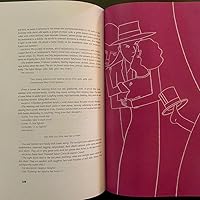
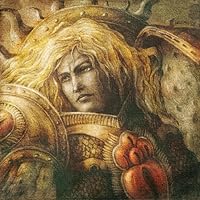
Dépassé par Dracula, Bram Stoker (1847-1912) demeure dans l'ombre que sa créature, au succès éclatant, a étendue sur sa vie et sur le reste de son œuvre. Pourtant, l'écrivain est une figure troublante, profondément attachante, qui s'est choisi un double fantastique. La Coupe de cristal (1872), inédite en français, est sa première nouvelle. Fortement symbolique, « elle est symptomatique des troubles de la personnalité qui affectaient Stoker à l'époque et il s'y met en scène sous les traits d'un tailleur de cristal qui, par son art, tente de retrouver la femme aimée qu'il a perdue ». Avec deux autres nouvelles, ce recueil développe par des fantasmagories aquatiques les thèmes chers à Stoker, le salut par l'Art, la Mort et le Mal.
Irish-born Abraham Stoker, known as Bram, of Britain wrote the gothic horror novel Dracula (1897).
The feminist Charlotte Mathilda Blake Thornely Stoker at 15 Marino crescent, then as now called "the crescent," in Fairview, a coastal suburb of Dublin, Ireland, bore this third of seven children. The parents, members of church of Ireland, attended the parish church of Saint John the Baptist, located on Seafield road west in Clontarf with their baptized children.
Stoker, an invalid, started school at the age of seven years in 1854, when he made a complete and astounding recovery. Of this time, Stoker wrote, "I was naturally thoughtful, and the leisure of long illness gave opportunity for many thoughts which were fruitful according to their kind in later years."
After his recovery, he, a normal young man, even excelled as a university athlete at Trinity college, Dublin form 1864 to 1870 and graduated with honors in mathematics. He served as auditor of the college historical society and as president of the university philosophical society with his first paper on "Sensationalism in Fiction and Society."
In 1876, while employed as a civil servant in Dublin, Stoker wrote a non-fiction book (The Duties of Clerks of Petty Sessions in Ireland, published 1879) and theatre reviews for The Dublin Mail, a newspaper partly owned by fellow horror writer J. Sheridan Le Fanu. His interest in theatre led to a lifelong friendship with the English actor Henry Irving. He also wrote stories, and in 1872 "The Crystal Cup" was published by the London Society, followed by "The Chain of Destiny" in four parts in The Shamrock.
In 1878 Stoker married Florence Balcombe, a celebrated beauty whose former suitor was Oscar Wilde. The couple moved to London, where Stoker became business manager (at first as acting-manager) of Irving's Lyceum Theatre, a post he held for 27 years. The collaboration with Irving was very important for Stoker and through him he became involved in London's high society, where he met, among other notables, James McNeil Whistler, and Sir Arthur Conan Doyle. In the course of Irving's tours, Stoker got the chance to travel around the world.
The Stokers had one son, Irving Noel, who was born on December 31, 1879.
People cremated the body of Bram Stoker and placed his ashes placed in a display urn at Golders green crematorium. After death of Irving Noel Stoker in 1961, people added his ashes to that urn. Despite the original plan to keep ashes of his parents together, after death, people scattered ashes of Florence Stoker at the gardens of rest.
ড্রাকুলা প্রকাশের প্রায় পাঁচ বছর পূর্বে প্রকাশিত এই ছোটগল্পটি আপনাকে নিয়ে যাবে অন্য এক জগতে, যে জগতে আছে ভয়, ভালোবাসা, আক্ষেপ আর আছে প্রতিশোধ। গল্পটি পড়তে গিয়ে এডগার অ্যালান পোর লেখনশৈলীর সাথে খানিকটা মিল অবশ্যই পাবেন। সম্ভবত তার থেকে অনুপ্রাণিত হয়েই তিনি গল্পটি লিখেছিলেন।
Ich war überrascht, wie poetisch Stokers Erstling (?), das Schauer-Märchen DER KRISTALLKELCH, ist. Eine romantische Fabel, in der die Kunst über Tyrannei siegt. Auf der Strecke bleiben gleichwohl nicht nur der Tyrann, sondern auch der Künstler. In der Entwicklung der "Weird Tales" las sich die Story für mich wie ein Bindeglied zwischen Poes makabren Erzählungen und Clark Ashton Smiths "kosmischen" Texten.
Wie sähe wohl ein Kunstwerk aus, das Putin stoppen könnte, den Krieg nach Europa zu tragen?
3.5 Stars rounded up to 4 Stars. This was Bram Stoker's first published work and the influence of Edgar Allan Poe can be read throughout the tale. The tale involves a kidnapped artist and a talent contest that will be paid for with freedom if the artist wins but in this tale freedom is won through death. The beautiful prose unwraps a tale of woe in gothic style with a twist of not having dark and gloomy surroundings but those of beauty and light, yet the tale still provides despair since the artist is denied his freedom and the loneliness brought about by being separated from his heart's love.
A rare "weird" tale from Bram Stoker which tells the story of an artist imprisoned by an "ambitious" king, who apparently captures people until they create a "perfect" beauty. Told at first from the perspective of the artist struggling to make the crystal cup, the POV moves around until, at the end, we're seeing from the POV of a moonbeam that is so moved by its beauty, it longs to be "captured" by the cup. A tragic love story unfolds all the while. --- Read it again to remind myself of its weird beauty. The lyrical, fairy-tale style is probably off-putting to some but I think it's quite remarkable and successful here.
I found the 3 perspectives on beauty quite refreshing, and yet - I was not at all intrigued by the story.
I did really want to see how the crystal cup looked like though 😂
Read:06/10/2019 1st rating: 2 stars Genre/sub-genres: Short story/ view of beauty/ pain and suffering Cover: 3 stars POV: Multiple Will I recommend: No
This was an excellent story. More macabre than Horror, it was fun to see the 3 different perspectives on beauty as well as the value and purpose of ones life. I enjoyed sharing this story with my father.
The Crystal Cup {1872} by Bram Stoker. Three stars.
I. The Dream-Birth A man is in a prison overlooking the ocean, and he is going through a deep grief of leaving his woman, Aurora. He copes by creating this Crystal Cup, pouring everything he has left into it - mainly his sanity and devotion.
“My soul flies on the wings of memory away beyond the blue, smiling sea-away beyond the glancing waves and the gleaming sails, to the land I call my home.”
“How poor they seem to me now! And yet, were I free, I would not give the smallest of them for all I now possess. Possess? How I dream.”
“I will make a vase whose beauty will put to shame the glorious works of Greece in her golden prime! Surely a love like mine and a hope like mine must in time make some form of beauty spring to life!”
“So my days go on, and grow to weeks and months. So will they grow to years, should life so long remain an unwelcome guest within me; for what is man without hope? and is not hope nigh dead within this weary breast?’
“Thee, oh Aurora, I will await in the land of flowers, where thou and I will wander, never more to part, never more! Ah, never more!”
II. The Feast of Beauty Switch of perspective in the story, to the captive’s master I believe (or it’s still the captive). It follows him as he talks to the King, his master, and questions him about the Feast of Beauty. He realises in this conversation that master and slave are not so different, and the King vows that this’ll be the last of the Feast of Beauty and all the slaves will be freed after.
“But hush! I must not dare to think ill of my master or his deeds; and besides, walls have ears.”
“Strange story has that cup. Born to life in the cell of a captive torn from his artist home beyond the sea, to enhance the splendour of a feast by his labour-seen at work by spies, and traced and followed till a chance-cruel chance for him-gave him into the hands of the emissaries of my master. He too, poor moth, fluttered about the flame: the name of freedom spurred him on to exertion till he wore away his life. The beauty of that cup was dearly bought for him. Many a man would forget his captivity whilst he worked at such a piece of loveliness; but he appeared to have some sorrow at his heart, some sorrow so great that it quenched his pride.”
“To me who was born and have dwelt all my life within the precincts of the court-to me who talk daily with my royal master, and take his minutest directions as to the coming feast-to me who had all my life looked up to my king as to a spirit, and had venerated him as more than mortal-came a feeling of almost horror; for my master looked then, in his quiet chamber, half-sleeping amid the drowsy music of the harps and fountains, more like a common man than a God. As the thought came to me I shuddered in affright, for it seemed to me that I had been guilty of sacrilege. So much had my veneration for my royal master become a part of my nature, that but to think of him as another man seemed like the anarchy of my own soul.”
III. The Story of the Moonbeam In the Feast of beauty, the rich drink success to the King and to the Feast of Beauty. During, the prisoner is finally freed from his captivity, and this is symbolised through his Crystal Cup as it “shivers into millions of atoms.” The King dies shortly after.
'Can a sun-spirit mourn, or a crystal vessel weep?’
“Ere I am lost in the great vortex I see the singer throw up her arms and fall, freed at last, and the King sitting, glory-faced, but pallid with the hue of Death.”
A different story than Stoker's usual style, and apparently his first work. The work is somewhat stream-of-consciousness, being shorn of typical placement text (like name of the character, a brief history, etc., etc.), and from three unique voices--one a moonbeam.
Each perspective tells a bit of the works main story--at first, we see the production of the art, then we see a servant talking to the king just before the "Feast of Beauty," and, finally, we see the feast itself. The story is told luridly, and if it is true that this was his first work, then it might be said his style was developed early-on.
Tre racconti brevi. Onirici, oscuri, barocchi. Forse, per i miei gusti, un po' troppo, e questo rende la lettura un po' pesante (ma comunque affascinante). Un lato inedito di Stoker diverso dai suoi lavori più noti.
I feel like this story has a lot of influence from a particular story from Edgar Allen Poe. Apart from that there is not much I can say about this story.
This one was poetic and imaginative. The descriptions hit me hard. There's a quote I have to go back and find later, about beauty so great it makes even light seem less luminous. A fantastic read.
Stream of consciousness with a fairy tale like narration. The shifting points of view were hallucinogenic, it makes one wonder his state of mind when he wrote it
If you love Edgar Allan Poe's "The Masque of the Red Death", this tale might be for you. In Poe's story, there is a Master who organizes a party that seems to be very luxurious and fine but has some dark and macabre scenes.
The story is divided into three parts with different narrators, and therefore, different perspectives of the story. One is the artist who was kidnapped and forced to create a crystal cup, the most beautiful crystal cup ever seen; the other part is narrated by a servant of the master, who helps with the preparations for the Feast of Beauty; and the third is a guest from the feast.
I loved this story! I loved the three viewpoints, particularly the moonbeam. I enjoyed how each viewpoint had a unique voice and style. A very enjoyable and quick read!