From the bestselling author of The Ransom of Black Stealth One
Dean Ing returns to his fascination with experimental aircraft, but this time instead of the big jets of The Ransom of Black Stealth One , this one is about smaller, more insidious flying machines.
Rob Tarrant is a genius at designing flying things, and his work for General Standards Corporation has yielded more than one patent for the aviation giant. But Tarrant's hobby is building miniature UAVs -- Unmanned Arial Vehicles, tiny remote controlled drones. They could be toys, but Tarrant's latest version is so small, and so stable, that he thinks he might be able to mount other miniaturized technology on chemical analyzers, or listening devices.
Being a good company man, Tarrant plans to give his little flying machine design to General Standards. But from the moment he describes the project to his boss, his life becomes a living hell -- for Tarrant has succeeded in building a device that has been the subject of a dozen top secret research projects. And everyone wants to stop him before he shows his new toys to the whole world.
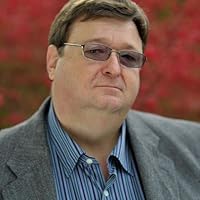
Dean Charles Ing was an American author, who usually wrote in the science fiction and techno-thriller genres.
He earned a bachelor’s degree from Fresno State University (1956), a master’s degree from San Jose State University (1970), and a Ph.D. from the University of Oregon (1974). It was his work in communication theory at the University of Oregon that prompted him to turn to writing in the 1970s.
Dean Ing was a veteran of the United States Air Force, an aerospace engineer, and a university professor who holds a doctorate in communications theory. He became professional writer in 1977. Ing and his wife lived in Oregon.
Much of Ing's fiction includes detailed, practical descriptions of techniques and methods which would be useful in an individual or group survival situation, including instructions for the manufacture of tools and other implements, the recovery of stuck vehicles and avoidance of disease and injury.
In addition to his fiction writing, Ing wrote nonfiction articles for the survivalist newsletter P.S. Letter, edited by Mel Tappan. Following in the footsteps of sci-fi novelist Pat Frank, Ing included a lengthy nonfiction appendix to his nuclear war survival novel Pulling Through.
In Ing’s fiction, his characters are involved with scientific or engineering solutions and entrepreneurial innovation, elements drawn from his own experience. A lifelong tinkerer, designer, and builder, he was an Air Force crew chief and a senior engineer for United Technologies and Lockheed. His characters know how things work, and they use ingenuity and engineering to solve situational challenges. Ing's work reflects the Oregon traditions of self-reliant independence and suspicion of authority.
“Since I deplore the voracious appetite of the public for entertainment-for-entertainment’s sake,” he told an interviewer in 1982, “most of my work has a clear didactic element. . . . I believe that Jefferson’s ideal of the independent yeoman farmer should be familiar to every generation because I mistrust a technological society in which most members are thoroughly incompetent to maintain the hardware or the software.”
The majority of text in the book dealt with an espionage type plot, where the characters and actions wouldn't match up to the Tom Clancy type of real-life expectations that a thriller type book like this should have. The parts of the book dealing with the UAV's were miniscule, which was unfortunate from my viewpoint since the topic could have generated a stronger book. The topic is still current with growing relevance today, 10 years after this book was released. The characters in the book had characteristics of having been generated by a college kid, with limited depth of background for older characters and limited experience with the actual operations of the FBI-CIA type characters. If this was the author's first or an early novel, then there is room and potential for growth in character and plot development.
Interesting story line about an aeronautical engineer whose hobby is building tiny surveillance drones. These little gadgets attract the interest of the Defense Intelligence Agency and others. Ing could have done a better job in describing some scenes as they were difficult for the reader to visualize.
A somewhat interesting suspense story about modern technology and those willing to kill to keep it out of the wrong hands. Not badly done, but nothing special here.