

What do you think?

Pelican Books #40
Around the World in 80 Books: A Literary Journey
'Restlessly curious, insightful, and quirky, David Damrosch is the perfect guide to a round-the-world adventure in reading' Stephen Greenblatt
A transporting and illuminating voyage around the globe, told through eighty classic and modern books
'It is always a pleasure to talk about books with David Damrosch, who has read all of them, and he is so eloquent and understanding about them all' Orhan Pamuk
Inspired by Jules Verne's hero Phileas Fogg, David Damrosch, chair of Harvard's Department of Comparative Literature and founder of Harvard's Institute for World Literature, set out to counter a pandemic's restrictions on travel by exploring eighty exceptional books from around the globe. Following a literary itinerary from London to Venice, Tehran and points beyond, and via authors from Woolf and Dante to Nobel prizewinners Orhan Pamuk, Wole Soyinka, Mo Yan and Olga Tokarczuk, he explores how these works have shaped our idea of the world, and the ways the world bleeds into literature.
To chart the expansive landscape of world literature today, Damrosch explores how writers live in two very different the world of their personal experience, and the world of books that have enabled great writers to give shape and meaning to their lives. In his literary cartography, Damrosch includes compelling contemporary works as well as perennial classics, hard-bitten crime fiction as well as haunting works of fantasy, and the formative tales that introduce us as children to the world we're entering. Taken together, these eighty titles offer us fresh perspective on perennial problems, from the social consequences of epidemics to the rising inequality that Thomas More designed Utopia to combat and the patriarchal structures within and against which many of these books' heroines have to struggle, from the work of Murasaki Shikibu a millennium ago to that of Margaret Atwood today.
Around the World in 80 Books is a global invitation to look beyond ourselves and our surroundings, and to see our world and its literature in new ways.
A transporting and illuminating voyage around the globe, told through eighty classic and modern books
'It is always a pleasure to talk about books with David Damrosch, who has read all of them, and he is so eloquent and understanding about them all' Orhan Pamuk
Inspired by Jules Verne's hero Phileas Fogg, David Damrosch, chair of Harvard's Department of Comparative Literature and founder of Harvard's Institute for World Literature, set out to counter a pandemic's restrictions on travel by exploring eighty exceptional books from around the globe. Following a literary itinerary from London to Venice, Tehran and points beyond, and via authors from Woolf and Dante to Nobel prizewinners Orhan Pamuk, Wole Soyinka, Mo Yan and Olga Tokarczuk, he explores how these works have shaped our idea of the world, and the ways the world bleeds into literature.
To chart the expansive landscape of world literature today, Damrosch explores how writers live in two very different the world of their personal experience, and the world of books that have enabled great writers to give shape and meaning to their lives. In his literary cartography, Damrosch includes compelling contemporary works as well as perennial classics, hard-bitten crime fiction as well as haunting works of fantasy, and the formative tales that introduce us as children to the world we're entering. Taken together, these eighty titles offer us fresh perspective on perennial problems, from the social consequences of epidemics to the rising inequality that Thomas More designed Utopia to combat and the patriarchal structures within and against which many of these books' heroines have to struggle, from the work of Murasaki Shikibu a millennium ago to that of Margaret Atwood today.
Around the World in 80 Books is a global invitation to look beyond ourselves and our surroundings, and to see our world and its literature in new ways.
496 pages, Paperback
First published November 4, 2021
About the author
David Damrosch
145 books98 followersA past president of the American Comparative Literature Association, David Damrosch has written widely on comparative and world literature from antiquity to the present. His books include The Narrative Covenant: Transformations of Genre in the Growth of Biblical Literature (1987), We Scholars: Changing the Culture of the University (1995), What Is World Literature? (2003), The Buried Book: The Loss and Rediscovery of the Great Epic of Gilgamesh (2007), and How to Read World Literature (2008). He is the founding general editor of the six-volume Longman Anthology of World Literature (2004) and the editor of Teaching World Literature (2009) and co-editor of The Princeton Sourcebook in Comparative Literature (2009), The Routledge Companion to World Literature (2011), and Xin fangxiang: bijiao wenxue yu shijie wenxue duben [New Directions: A Reader of Comparative and World Literature], Peking U. P., 2010. He is presently completing a book entitled Comparing the Literatures: What Every Comparatist Needs to Know, and starting a book on the role of global scripts in the formation of national literatures.
Ratings & Reviews
Friends & Following
Create a free account to discover what your friends think of this book!
Community Reviews
Displaying 1 - 30 of 159 reviews

December 8, 2021
Around the world and 80 books in 13 days.
Full review to come.
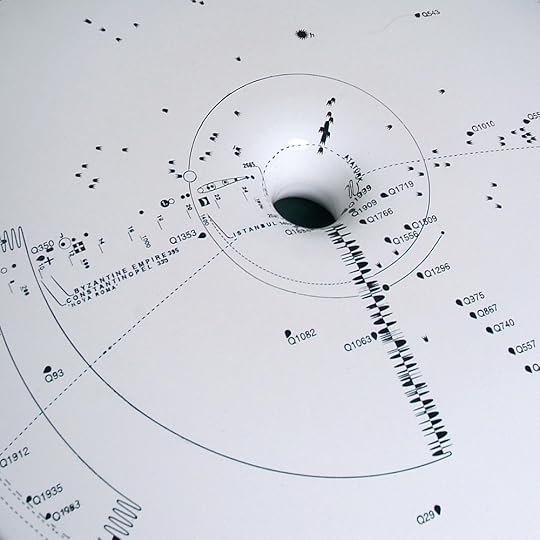
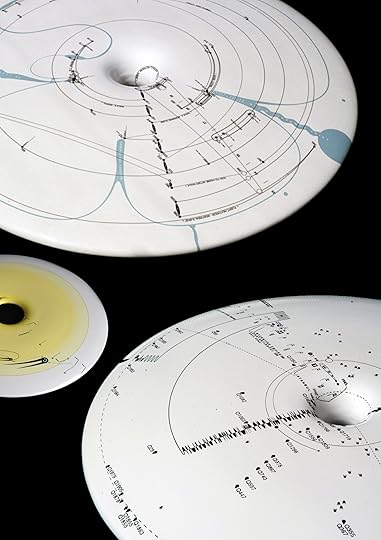

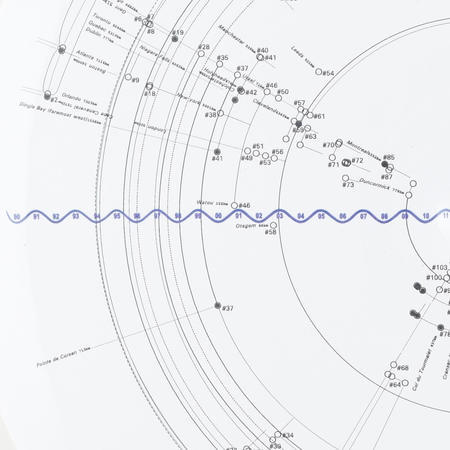
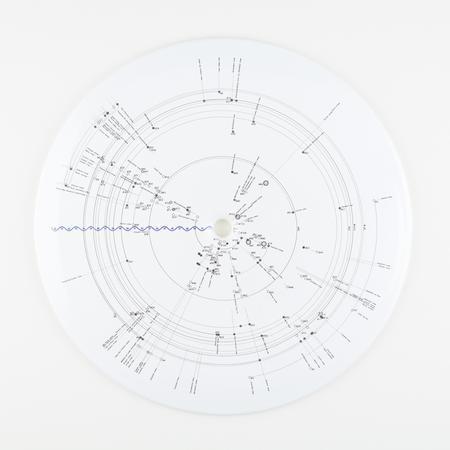
Atlas of Movements
Christoph Fink (Ghent, °1963) has been working on his Atlas of Movements for many years, exploring the borders of the human body and its interaction with its surroundings. This takes the form of detailed accounts of his travels, photographs, sound recordings, etc. which the artist then turns into experimental exhibitions such as space-filling cartographic and acoustic constructions consisting of drawings, diagrams, tables and layers of sound. Fink thus presents an alternative world view in which he calls into question the relationship between the various elements around us.
(from: Museum M)
Full review to come.
Atlas of Movements
Christoph Fink (Ghent, °1963) has been working on his Atlas of Movements for many years, exploring the borders of the human body and its interaction with its surroundings. This takes the form of detailed accounts of his travels, photographs, sound recordings, etc. which the artist then turns into experimental exhibitions such as space-filling cartographic and acoustic constructions consisting of drawings, diagrams, tables and layers of sound. Fink thus presents an alternative world view in which he calls into question the relationship between the various elements around us.
(from: Museum M)

January 10, 2022
I'm not usually one to read popular books about books but I was given this as a present - and it's a delight! Damrosch genuinely eschews the usual suspects and that annihilating concept of 'the Western canon' and ranges widely around the world of global literature. He also ventures into non-novelistic writing, only a dip of a toe, admittedly, but includes occasional plays, books of poetry and essay collections. He's also a delightful companion on this voyage and is happy to discuss the way our individual circumstances, inheritances and baggage inflect the way we read and respond to individual texts. Most of all, he's no book snob and is as happy to discuss Doctor Doolittle and The Lord of The Rings, Wodehouse, Donna Leon and Sherlock Holmes as he is to delve into Dante and Achebe.
For me, personally, it's illuminating to read 'trips' to the Middle East, Africa, Israel and Palestine, Tehran to Shiraz, China and Japan, before returning via Latin America (though slightly odd to locate More's Utopia and Voltaire's Candide under Brazil-Columbia?) and the Caribbean (again, what is Atwood's The Penelopiad doing here? Placing it as a response to Homer, as is Walcott's Omeros is a little eccentric, no?) before returning via New York to London.
Each 'trip' comprises a handful of books and Damrosch makes some careful segues between them. It's sad that out of the eponymous 80 books only 20 are by women - a function of looking at literature historically as well as globally, perhaps? Possibly also limited to books that are easily available in translation and are therefore already deemed 'publishable' for commercial or scholarly reasons?
So not necessarily a book to read cover to cover or all in one go but a lovely tribute to global literature with lots of books I'd like to get to - and who doesn't need to add more to their TBR, eh?!
For me, personally, it's illuminating to read 'trips' to the Middle East, Africa, Israel and Palestine, Tehran to Shiraz, China and Japan, before returning via Latin America (though slightly odd to locate More's Utopia and Voltaire's Candide under Brazil-Columbia?) and the Caribbean (again, what is Atwood's The Penelopiad doing here? Placing it as a response to Homer, as is Walcott's Omeros is a little eccentric, no?) before returning via New York to London.
Each 'trip' comprises a handful of books and Damrosch makes some careful segues between them. It's sad that out of the eponymous 80 books only 20 are by women - a function of looking at literature historically as well as globally, perhaps? Possibly also limited to books that are easily available in translation and are therefore already deemed 'publishable' for commercial or scholarly reasons?
So not necessarily a book to read cover to cover or all in one go but a lovely tribute to global literature with lots of books I'd like to get to - and who doesn't need to add more to their TBR, eh?!

November 14, 2021
Drawing on my experiences abroad, I decided to loosely mimic Phileas Fogg’s route from London eastward through Asia, across the Pacific to the Americas, and finally back to London. I would recall, and often actually revisit, a group of particularly memorable locations and the books I associate with them, both to see how literature enters the world and to think about how the world bleeds into literature. In January of 2020, I was plotting my itinerary, building it around upcoming talks and conferences. Then came Covid-19.
David Damrosch (chair of Harvard University's department of comparative literature) has built a career on introducing (sometimes even translating) non-English texts into the Western canon. Planning a series of literary talks around the world for 2020, Damrosch thought he might visit a globe-encircling series of cities that mimicked Phileas Fogg’s imaginary eighty day journey and write a book about those experiences that could further “introduce a broader readership to the expansive landscape of literature today”; but then Covid hit and the world shut down and Damrosch’s project was iced. Until, that is, he decided to host his tour online — taking inspiration from Xavier de Maistre’s Voyage autour de ma chambre (a fanciful “Grand Tour” of the chambers of an aristocrat who found himself under house arrest in 1790) — with house-bound Damrosch exploring an exotic locale through five books per week, covering eighty diverse books over his sixteen week project. This book is the result of that project.
Starting with novels (and some poetry collections) set in London (mimicking Phileas Fogg’s launching point), Damrosch then voyages out to Paris (discussing Proust to Perec), Kraków (Primo Levi and Franz Kafka to Olga Tokarczuk), Venice, the Middle East, Africa, Israel and Palestine, Tehran, India, China, Japan, South and Central America, Caribbean Islands and an island off the coast of Maine (which was the childhood home of the author; surprisingly more literary than one might anticipate), New York City and back to London (with a special look at Tolkein). Much of the familiar Western canon is referenced throughout — books such as In Search of Lost Time, The Odyssey, and Candide have been reframed countless times by a diverse range of authors through time and space; every memory-inducing bite of rice cracker is a Proustian moment — and Damrosch masterfully uses the familiar to not only demonstrate how world literature has responded to the West, but also to underline how they have developed independent canons of their own. Around the World in 80 Books is quite long , and sometimes dense, but I found it consistently fascinating (and I will say that I imagine it would be infinitely more interesting to actually take a course in Comparative Literature from Damrosch) and it gave me much inspiration for further reading. (Note: I read an ARC through NetGalley and passages quoted may not be in their final forms.)
It would be impossible to go over all eighty (one) of Damrosch’s selections (and countless other references), but to give a sense of how he links things together: Beginning in London, Damrosch notes that the city is well (if very differently) described by authors as diverse as Virginia Woolf, Charles Dickens, and Sir Arthur Conan Doyle. He points out that Woolf didn’t think much of those other two writers (she wrote a famously damning essay on David Copperfield and once wrote of Sherlock Holmes’ beloved sidekick, “to me Dr. Watson is a sack stuffed with straw, a dummy, a figure of fun”). Damrosch further writes of the complexity that Woolf brings to her title character in Mrs. Dalloway: “Devising her own version of Joyce’s stream-of-consciousness technique, and like him adapting the ancient Greek unities of time and place for her novel, Woolf draws on Sophocles and Euripides as well as on Chekhov, Conrad, Eliot, Joyce, and Proust.” (This kind of intertextuality is frequently, exhaustively, noted.) When Damrosch’s imaginary travels take him to India, he begins with an analysis of Rudyard Kipling’s Kim, writing, “Kipling can be said to have invented India for many foreign readers, much as Oscar Wilde thought that Dickens and Turner had invented London.” Part of this analysis is a thorough introduction to Kipling’s Indian character Hurree Chunder Mookerjee (an employee of the colonial government and an agent in the “Great Game” of espionage), and this becomes vital later when Damrosch introduces us to novelist Jamyang Norbu’s most famous work (which sees a resurrected Sherlock Holmes and Hurree Chunder Mookerjee collaborating on a case in the Himalayas):
Grounded in Norbu’s creative rereading of Kipling and Conan Doyle, The Mandala of Sherlock Holmes blends genre fiction and political advocacy in a mode of metafictional play, in which Tibetan Buddhism is shown to be a moral resource for the whole world, transcending greed and the quest for domination, in an ideal blend of religion and science, ancient and modern, East and West together. The book has been translated into many languages, including French, German, Hungarian, Spanish, and Vietnamese.
(I particularly liked the fact that Holmes’ discovery of Buddhism helps him kick his drug addiction.) Many sections play out like this: Damrosch acknowledges that a European first introduced Western readers to a foreign land (as did Kipling for India or Marco Polo for China), then discusses authors (like Salman Rushdie or Norbu) who have written as emigres or exiles about their homelands, and then concludes with a modern author (in this case, Jhumpa Lahiri) who writes for a modern audience at a generational remove from the locale. This feels balanced (acknowledging the initial Westernised view of a location and then including the voices of the locals) and feels like it is giving equal say to two sides of a global conversation. One more example of the depth of intertextuality to be found in this book:
Writers such as (Derek) Walcott, James Joyce, and Jean Rhys, who all grew up on colonized islands, can feel the need to invent a language suited to their island’s modest material circumstances, intense localism, and distance from the metropolitan centers of politics, history, and culture. Island-based writers often orient themselves in the world with reference to other islands, near or far. In this chapter, we’ll proceed from Walcott to two of his inspirations, Joyce and Rhys, and then to Margaret Atwood’s feminist rewriting of Joyce’s rewriting of Homer, and finally to Judith Schalansky’s mapping of remote islands around the world.
And I’ll end with Damrosch’s own conclusion; on the absolute necessity of reading widely in world literature:
Jules Verne didn’t content himself with sending his heroes around the world in eighty days, but also propelled them to the moon and immersed them 20,000 leagues under the sea. In antiquity, restless Odysseus was said to have left Ithaca late in life, not for another sea voyage but for its opposite, a journey on land until he’d find a place where people wouldn’t know what an oar was used for. The list of new literary destinations is endless. With the world falling apart in so many ways, and the pandemic’s aftershocks likely to long remain with us, it’s good to connect in the ways we can, over the things that matter to all of us, as we tend our gardens and perform le tour du monde dans nos chambres.

May 30, 2022
Are you interested in finding out the best books from around the world? Would you like to be guided in your quest by a longtime professor? I can't think of a better guide than David Damrosch and I can't think of a better book than Around the World in 80 Books.
Just for my own information, I'm including a list of the books here:
Chapter one. London : Inventing a City
Virginia Woolf, Mrs. Dalloway
Charles Dickens, Great Expectations
Arthur Conan Doyle, The Complete Sherlock Holmes
P. G. Wodehouse, Something Fresh
Arnold Bennet, Riceyman Steps
Chapter two. Paris : Writers’ Paradise
Marcel Proust, In Search of Lost Time
Djuna Barnes, Nightwood
Marguerite Duras, The Lover
Julio Cortazar, The End of the Game
Georges Perec, W, or the Memory of Childhood
Chapter three. Krakow : After Auschwitz
Primo Levi, The Periodic Table
Franz Kafka, The Metamorphosis and Other Stories
Paul Celan, Poems
Czeslaw Milos, Selected and Last Poems, 1931-2004
Olga Tokarczuk, Flights
Chapter four. Venice-Florence : Invisible cities
Marco Polo, The Travels
Dante Alighieri, The Divine Comedy
Giovanni Boccaccio, The Decameron
Donna Leon, By Its Cover
Italo Calvino, Invisible Cities
Chapter five. Cairo-Istanbul-Muscat : Stories within stories
Love Songs of Ancient Egypt
The Thousand and One Nights
Naguib Mahfouz, Arabian Nights and Days
Orhan Pamuk, My Name Is Red
Jokha Alharthi, Celestial Bodies
Chapter six. The Congo-Nigeria : (Post)Colonial encounters
Joseph Conrad, Heart of Darkness
Chinua Achelbe, Things Fall Apart
Wole Soyinka, Death and the King’s Horseman
Georges Ngal, Giambarista Viko, or The Rape of African Discourse
Chimamanda Negozi Adichie, The Thing Around Your Neck
Chapter seven. Israel/Palestine : Strangers in a strange land
The Hebrew Bible
The New Testament
D. A. Mishani, The Missing File
Emile Habibi, The Secret Life of Saeed the Pessoptimist
Mahmoud Darwish, The Butterfly’s Burden
Chapter eight. Tehran-Shiraz : A desertful of roses
Marjane Satrapi, Persepolis
Farid ud-Din Attar, The Confessions of the Birds
Faces of Love: Haze and the Poets of Shiraz
Ghalib, A Deceitful of Roses
Agha Shahid Ali, Call Me Ishmael Tonight
Chapter nine. Calcutta/Kolkata : Rewriting empire
Rudyard Kipling, Kim
Rabindranath Tagore, The Home and the World
Salman Rushdie, East, West
Jamyan Norbu, The Mandela of Sherlock Holmes
Jhampa Lahiri, Interpreter of Maladies
Chapter ten. Shanghai-Beijing : Journeys to the west
Wu Cheng’en, Journey to the West
Lu Xun, The Real Story of Ah-Q and Other Stories
Eileen Chang, Love in a Fallen City
Mo Yan, Life and Earth Are Wearing Me Out
Bei Dao, The Rose of Time
Chapter eleven. Tokyo-Kyoto : The west of the east
Higuchi Ichiyo, In the Shade of Spring Leaves — 231
Muraski Shikibu, The Tale of Genji — 235
Matsuo Basho, The Narrow Road to the Deep North — 240
Yukio Mishima, The Sea of Fertility — 245
James Merrill, “Prose of Departure” — 250
Chapter tweleve. Brazil-Columbia : Utopias, dystopias, heterotopias
Thomas More, Utopia
Voltaire, Candide, or Optimism
Joaquim Maria Machado de Assis, Posthumours Memoirs of Brds Cubas
Clarice Lispector, Family Ties
Gabriel García Márquez One Hundred Years of Solitude
Chapter thirteen. Mexico-Guatemala : The Pope’s blowgun
Cantares Mexicanos: Songs of the Aztecs
Popol Vuh: The Mayan Book of the Dawn of Life
Sor Juana Ines de la Cruz, Selected Works
Miguel Ángel Asturias, The President
Rosario Casstellanos, The Book of Lamentations
Chapter fourteen. The Antilles and beyond : Fragments of epic memory
Derek Walcott, Omeros — 309
James Joyce, Ulysses — 315
Jean Rhys, Wide Sargasso Sea — 319
Margaret Atwood, The Penelopida — 324
Judith Schalansky, Atlas of Remote Islands — 329
Chapter fifteen. Bar Harbor : the world on a desert island
Robert McCloskey, One Morning in Maine
Sarah Orne Jewett, The Country of the Pointed Firs
Marguerite Yourcenar, Memoirs of Hadrian
Hugh Lofting, The Voyages of Doctor Dolittle
E. B. White, Stuart Little
Chapter sixteen. New York : Migrant metropolis
Madeleine L’Engle, A Wrinkle in Time
Saul Steinberg, The Labyrinth
James Baldwin, Notes of a Native Son
Saul Bellow, Henderson the Rain King
J. R. R. Tolkien, The Lord of the Rings
Epilogue: the Eighty-first Book
Just for my own information, I'm including a list of the books here:
Chapter one. London : Inventing a City
Virginia Woolf, Mrs. Dalloway
Charles Dickens, Great Expectations
Arthur Conan Doyle, The Complete Sherlock Holmes
P. G. Wodehouse, Something Fresh
Arnold Bennet, Riceyman Steps
Chapter two. Paris : Writers’ Paradise
Marcel Proust, In Search of Lost Time
Djuna Barnes, Nightwood
Marguerite Duras, The Lover
Julio Cortazar, The End of the Game
Georges Perec, W, or the Memory of Childhood
Chapter three. Krakow : After Auschwitz
Primo Levi, The Periodic Table
Franz Kafka, The Metamorphosis and Other Stories
Paul Celan, Poems
Czeslaw Milos, Selected and Last Poems, 1931-2004
Olga Tokarczuk, Flights
Chapter four. Venice-Florence : Invisible cities
Marco Polo, The Travels
Dante Alighieri, The Divine Comedy
Giovanni Boccaccio, The Decameron
Donna Leon, By Its Cover
Italo Calvino, Invisible Cities
Chapter five. Cairo-Istanbul-Muscat : Stories within stories
Love Songs of Ancient Egypt
The Thousand and One Nights
Naguib Mahfouz, Arabian Nights and Days
Orhan Pamuk, My Name Is Red
Jokha Alharthi, Celestial Bodies
Chapter six. The Congo-Nigeria : (Post)Colonial encounters
Joseph Conrad, Heart of Darkness
Chinua Achelbe, Things Fall Apart
Wole Soyinka, Death and the King’s Horseman
Georges Ngal, Giambarista Viko, or The Rape of African Discourse
Chimamanda Negozi Adichie, The Thing Around Your Neck
Chapter seven. Israel/Palestine : Strangers in a strange land
The Hebrew Bible
The New Testament
D. A. Mishani, The Missing File
Emile Habibi, The Secret Life of Saeed the Pessoptimist
Mahmoud Darwish, The Butterfly’s Burden
Chapter eight. Tehran-Shiraz : A desertful of roses
Marjane Satrapi, Persepolis
Farid ud-Din Attar, The Confessions of the Birds
Faces of Love: Haze and the Poets of Shiraz
Ghalib, A Deceitful of Roses
Agha Shahid Ali, Call Me Ishmael Tonight
Chapter nine. Calcutta/Kolkata : Rewriting empire
Rudyard Kipling, Kim
Rabindranath Tagore, The Home and the World
Salman Rushdie, East, West
Jamyan Norbu, The Mandela of Sherlock Holmes
Jhampa Lahiri, Interpreter of Maladies
Chapter ten. Shanghai-Beijing : Journeys to the west
Wu Cheng’en, Journey to the West
Lu Xun, The Real Story of Ah-Q and Other Stories
Eileen Chang, Love in a Fallen City
Mo Yan, Life and Earth Are Wearing Me Out
Bei Dao, The Rose of Time
Chapter eleven. Tokyo-Kyoto : The west of the east
Higuchi Ichiyo, In the Shade of Spring Leaves — 231
Muraski Shikibu, The Tale of Genji — 235
Matsuo Basho, The Narrow Road to the Deep North — 240
Yukio Mishima, The Sea of Fertility — 245
James Merrill, “Prose of Departure” — 250
Chapter tweleve. Brazil-Columbia : Utopias, dystopias, heterotopias
Thomas More, Utopia
Voltaire, Candide, or Optimism
Joaquim Maria Machado de Assis, Posthumours Memoirs of Brds Cubas
Clarice Lispector, Family Ties
Gabriel García Márquez One Hundred Years of Solitude
Chapter thirteen. Mexico-Guatemala : The Pope’s blowgun
Cantares Mexicanos: Songs of the Aztecs
Popol Vuh: The Mayan Book of the Dawn of Life
Sor Juana Ines de la Cruz, Selected Works
Miguel Ángel Asturias, The President
Rosario Casstellanos, The Book of Lamentations
Chapter fourteen. The Antilles and beyond : Fragments of epic memory
Derek Walcott, Omeros — 309
James Joyce, Ulysses — 315
Jean Rhys, Wide Sargasso Sea — 319
Margaret Atwood, The Penelopida — 324
Judith Schalansky, Atlas of Remote Islands — 329
Chapter fifteen. Bar Harbor : the world on a desert island
Robert McCloskey, One Morning in Maine
Sarah Orne Jewett, The Country of the Pointed Firs
Marguerite Yourcenar, Memoirs of Hadrian
Hugh Lofting, The Voyages of Doctor Dolittle
E. B. White, Stuart Little
Chapter sixteen. New York : Migrant metropolis
Madeleine L’Engle, A Wrinkle in Time
Saul Steinberg, The Labyrinth
James Baldwin, Notes of a Native Son
Saul Bellow, Henderson the Rain King
J. R. R. Tolkien, The Lord of the Rings
Epilogue: the Eighty-first Book

May 11, 2022
An immersive book that takes readers on a voyage around the world--through literature--during a time when many of us barely left our homes.

November 30, 2021
Reading about books is not as enjoyable as reading books, ya feel me? It's even worse when you're reading an explanation of a book you haven't read. Often times the author would explain books by what other authors have said about them and thus it's hard to keep track of what I'm actually reading about or trying to gain from this.
That said, I decided to approach this more like a fun resource for finding books I would want to read. This book was split into different sections around the world, I'll provide you with the books that I found interesting enough to add to my tbr:
W, or the Memory of Childhood
The Periodic Table
Invisible Cities
My Name Is Red
The Thing Around Your Neck
Interpreter of Maladies
If I learned anything from this book, it's that I don't like books like this - I would take that as a pretty valuable lesson.
Thank you Penguin Group and NetGalley for an advanced copy in exchange for an honest review
what better way to end the year than learning as much as you can about the world? (aka a non-fiction/memoir marathon)
❄ the anthropocene reviewed
❄ around the world in 80 books
That said, I decided to approach this more like a fun resource for finding books I would want to read. This book was split into different sections around the world, I'll provide you with the books that I found interesting enough to add to my tbr:
W, or the Memory of Childhood
The Periodic Table
Invisible Cities
My Name Is Red
The Thing Around Your Neck
Interpreter of Maladies
If I learned anything from this book, it's that I don't like books like this - I would take that as a pretty valuable lesson.
Thank you Penguin Group and NetGalley for an advanced copy in exchange for an honest review
what better way to end the year than learning as much as you can about the world? (aka a non-fiction/memoir marathon)
❄ the anthropocene reviewed
❄ around the world in 80 books

October 25, 2021
David Damrosch’s comp lit world tour has a simple premise. You’re a traveler and the pandemic strikes, how do you travel by book while trapped at home? For those who think travel and reading are unrelated endeavors, I disagree. As a traveler and avid reader, I’ve always found the two intertwined in building a greater understanding of the world. Reading is an essential part of traveling, and I read literature from every place I visit. Why? Because people the world over are guarded, yearning to make good impressions. Because of this, one gets a partial and distorted view of other cultures. Poets and novelists round out the picture by airing the dirty laundry of their people. It’s not that revealing the dark and ugly edges of a culture is their foremost objective, but those are good sources of tension in a novel and of emotional resonance in a poem. [Seeking out what’s not so pretty about a culture might seem like a tawdry undertaking, but falling in love with a place is like falling in love with a person, if you do so without first seeing their bad habits, it’s not really love. It’s just childlike infatuation.]
The book’s organization is straightforward. There are sixteen locales, and five books are discussed for each. I enjoyed Damrosch’s “syllabus.” The eighty books included a pleasant mix of works I’ve read, those I’ve been meaning to read, and [most importantly] those I’d missed altogether. Any source that reveals new reading material to me will definitely find favor.
The book starts in London (apropos of its titular connection to the Jules Verne novel) and moves through Europe, the Middle East, Africa, over through Asia, back around to Latin America, and finally to North America to conclude (as trips generally do) back at home.
The book is weighted heavily toward the literature side of the travel-literature nexus. That’s not a criticism, it’s just worth noting for travelers who aren’t avid readers of literary fiction and poetry, because they may find this book gets a bit deep in the literary weeds. (The sections don’t focus single-mindedly on the listed book, but meander through the author’s oeuvre and influences.) While many of the selections are indisputably excellent choices for traveling by book, others lack a connection that is readily apparent (e.g. the final book, Lord of the Rings.) Again, I didn’t find that to be a negative as there was always something to be learned from the discussions, and – who knows - it may have even expanded my thinking.
If you’re a traveler / reader, you should definitely consider giving this book a read.
The book’s organization is straightforward. There are sixteen locales, and five books are discussed for each. I enjoyed Damrosch’s “syllabus.” The eighty books included a pleasant mix of works I’ve read, those I’ve been meaning to read, and [most importantly] those I’d missed altogether. Any source that reveals new reading material to me will definitely find favor.
The book starts in London (apropos of its titular connection to the Jules Verne novel) and moves through Europe, the Middle East, Africa, over through Asia, back around to Latin America, and finally to North America to conclude (as trips generally do) back at home.
The book is weighted heavily toward the literature side of the travel-literature nexus. That’s not a criticism, it’s just worth noting for travelers who aren’t avid readers of literary fiction and poetry, because they may find this book gets a bit deep in the literary weeds. (The sections don’t focus single-mindedly on the listed book, but meander through the author’s oeuvre and influences.) While many of the selections are indisputably excellent choices for traveling by book, others lack a connection that is readily apparent (e.g. the final book, Lord of the Rings.) Again, I didn’t find that to be a negative as there was always something to be learned from the discussions, and – who knows - it may have even expanded my thinking.
If you’re a traveler / reader, you should definitely consider giving this book a read.

July 26, 2021
(Note: I received an advanced reader copy of this book courtesy of NetGalley)
I love the premise of the book - a literary itinerary that one can use to safely take a global trip of sorts without having to leave one’s favorite reading nook and deal with all the anxieties and travel stresses that come with the ongoing pandemic. And so far I have enjoyed my world literature travels through David Damrosch's reviews quite a bit, though I confess that I have deviated a little from the route that the author has set up. Instead of reading the chapters sequentially, my first few "trips" so far have been to the geographical groupings that Damrosch has designed that personally interest me the most. However, seeing as how the author makes it quite clear upfront that the outlined path in the table of contents is very much based upon his own preferences, I don’t think it’s that big of a deal to personalize the order in which I absorb his thoughts on a diverse world-spanning collection of books.
The one criticism I would have to offer is how Damrosch occasionally includes a book’s ending as part of his exploration of it. Thankfully, so far those instances have been confined to books that I have coincidentally already read and enjoyed. However, I feel that eventually, it will happen to a work that I haven’t tackled just yet, and a potential literary trip will be spoiled before I even had much of a chance to even start it. However, if this does end up happening, the clear passion and glowing enthusiasm that Damrosch’s packs into every one of his individual overviews will still probably make me strongly consider putting a book on my to-read list even if I already know where that specific literary journey will end.
Overall, this has been an enjoyably different change of reading pace. Bibliophiles of all kinds of stripes will probably find something to enjoy here, and if not the whole worldwide literature tour, at least one or several excellent trips through some recommended titles.
I love the premise of the book - a literary itinerary that one can use to safely take a global trip of sorts without having to leave one’s favorite reading nook and deal with all the anxieties and travel stresses that come with the ongoing pandemic. And so far I have enjoyed my world literature travels through David Damrosch's reviews quite a bit, though I confess that I have deviated a little from the route that the author has set up. Instead of reading the chapters sequentially, my first few "trips" so far have been to the geographical groupings that Damrosch has designed that personally interest me the most. However, seeing as how the author makes it quite clear upfront that the outlined path in the table of contents is very much based upon his own preferences, I don’t think it’s that big of a deal to personalize the order in which I absorb his thoughts on a diverse world-spanning collection of books.
The one criticism I would have to offer is how Damrosch occasionally includes a book’s ending as part of his exploration of it. Thankfully, so far those instances have been confined to books that I have coincidentally already read and enjoyed. However, I feel that eventually, it will happen to a work that I haven’t tackled just yet, and a potential literary trip will be spoiled before I even had much of a chance to even start it. However, if this does end up happening, the clear passion and glowing enthusiasm that Damrosch’s packs into every one of his individual overviews will still probably make me strongly consider putting a book on my to-read list even if I already know where that specific literary journey will end.
Overall, this has been an enjoyably different change of reading pace. Bibliophiles of all kinds of stripes will probably find something to enjoy here, and if not the whole worldwide literature tour, at least one or several excellent trips through some recommended titles.
November 27, 2021
This read is fascinating and the kind of nonfiction that fiction and poetry fans will enjoy. It’s essentially a literary itinerary that allows you to take a trip through books, without ever having to leave your cosy reading spot. It begins in London, moving through Europe, to the Middle East, Asia, Africa, and the Americas. It’s a nonfiction book that gives you the immersive escape of a fiction book.
I didn’t connect to every book mentioned, as the choices are based on the author’s own preferences, but I was impressed with the diverse spectrum of titles. It’s a way to revisit old favourites and discover new ones, while travelling across the globe as you turn the pages. One thing to note: this book contains ending spoilers of other books featured!
I didn’t connect to every book mentioned, as the choices are based on the author’s own preferences, but I was impressed with the diverse spectrum of titles. It’s a way to revisit old favourites and discover new ones, while travelling across the globe as you turn the pages. One thing to note: this book contains ending spoilers of other books featured!

November 24, 2021
I have to say I cannot judge this book unbiased as David Damrosch has a special place in my heart. I took the course “The Masterpieces of World Literature” by Damrosch and his colleague Martin Puchner and I was absolutely fascinated by it. When I saw this title by him, I instantly knew I had to get my hands on it and I gave it 5-stars before I even started reading it because I knew it would be magnificent.
Damrosch brings us 80 prominent novels from all over the world with an amazing literary frame inspired by Jules Verne. Just like Phileas Fogg from Around the World in 80 Days, our literary journey starts from London and continues eastward with fantastic examples of world literature. The list includes many well-known authors including Woolf, Dickens, Proust and Kafka as well as some authors especially from Africa and Southern America of whom I’ve never heard. I adore Damrosch’s narrative and style, he highlights some important elements of the literary works as well as a good summary and characters; and he creates enthusiasm and curiosity in readers to search and read for more. I added a significant amount of books to my never-ending reading list and I’ve learnt a great deal about different genres and cultures while reading this. Definitely recommended for bookworms!
Damrosch brings us 80 prominent novels from all over the world with an amazing literary frame inspired by Jules Verne. Just like Phileas Fogg from Around the World in 80 Days, our literary journey starts from London and continues eastward with fantastic examples of world literature. The list includes many well-known authors including Woolf, Dickens, Proust and Kafka as well as some authors especially from Africa and Southern America of whom I’ve never heard. I adore Damrosch’s narrative and style, he highlights some important elements of the literary works as well as a good summary and characters; and he creates enthusiasm and curiosity in readers to search and read for more. I added a significant amount of books to my never-ending reading list and I’ve learnt a great deal about different genres and cultures while reading this. Definitely recommended for bookworms!

November 16, 2021
In January 2020, David Damrosch was developing a plan. He was going to follow in the footsteps of Jules Verne’s legendary hero, Phileas Fogg, and travel around the world and in so doing, reflect on the books he associates with certain locations, and see how literature affects the real world, and vice versa. But when Covid-19 started burning across the world, the restrictions and lockdowns the pandemic brought about ensured that Damrosch wasn’t going to be traveling anywhere for a long time. Instead of sighing in despair and giving up on his round the world journey, though, Damrosch invited readers to follow him on a literary journey, and so for sixteen weeks from May through August 2020, he delved into five books a week, taking his readers to see places and meet people most of them had probably never encountered before– all through the pages of books. Around the World in 80 Books is the result of those literary travels, and invites even more readers to plot a course through the wonders of world literature.
There are probably few American literary luminaries as suited to showcasing the scale and scope of the world’s books as David Damrosch, a Harvard professor of comparative literature and the founder of the Institute for World Literature. He writes as authoritatively about Virginia Woolf’s Mrs. Dalloway as he does about Wu Cheng’en’s Journey to the West, and if he’s wrong about Matsuo Bashō’s poetic influences, it seems that one would have to be as informed about seventeenth-century Japanese poetry as Bashō himself to prove Damrosch wrong. And while it would have been easy for Damrosch to look out from an ivory tower and condescend to walk among the masses to talk down to them about the glories of ancient poetry, it feels more like Damrosch is excited about the books he’s discussing and wants everyone else to be excited about them, too. As for genre, he’s not just bringing Very Serious Books About Very Serious Topics to the table. He throws genre fiction into the mix, speaking glowingly of Donna Leon’s Venetian Commissario Brunetti murder mystery series and Tibetan author Jamyang Norbu’s Sherlock Holmes pastiche novel The Mandala of Sherlock Holmes, as well as giving serious consideration to E.B. White’s children’s classic Stuart Little and finishing off his world tour with a beautiful discussion of J.R.R. Tolkien’s The Lord of the Rings. Everyone is welcome at the table of global literature, and every book is welcome, too.
When opening Around the World in 80 Books for the first time, there are two approaches a reader might take: first, one can devour the entire book in a handful of sittings and take in a smorgasbord of literary offerings all at once; or second, one can slowly sample sections one at a time, getting a taste of this or that and whetting the appetite for more choices down the road. The second one is a little less dizzying in its scope, though however they choose to approach it, the reader would do well to have a pen and paper or preferred book app to hand, as it’s nearly impossible not to find an appealing title that must be added to the endless To Be Read list at every stop along the way.
There is a flock of ” ‘fill in number here‘ Books to Read Before You Die” titles out there, but too few of them portray the breadth and depth of the global literary imagination as fully as Around the World in 80 Books. And though this list of eighty books will provide many readers with enough titles to last them a year or more, Damrosch provides even more suggestions in the final pages. His list, after all, is not the One List to Rule Them All. It’s a list of suggestions of great books that are great for different reasons. But its purpose is exactly what the title suggests it is: a round the world trip that takes place in the comfort of your own living room.
-------
Thank you to NetGalley and Penguin Group for providing me with a free ebook in exchange for an honest review. This did not affect my opinion.
There are probably few American literary luminaries as suited to showcasing the scale and scope of the world’s books as David Damrosch, a Harvard professor of comparative literature and the founder of the Institute for World Literature. He writes as authoritatively about Virginia Woolf’s Mrs. Dalloway as he does about Wu Cheng’en’s Journey to the West, and if he’s wrong about Matsuo Bashō’s poetic influences, it seems that one would have to be as informed about seventeenth-century Japanese poetry as Bashō himself to prove Damrosch wrong. And while it would have been easy for Damrosch to look out from an ivory tower and condescend to walk among the masses to talk down to them about the glories of ancient poetry, it feels more like Damrosch is excited about the books he’s discussing and wants everyone else to be excited about them, too. As for genre, he’s not just bringing Very Serious Books About Very Serious Topics to the table. He throws genre fiction into the mix, speaking glowingly of Donna Leon’s Venetian Commissario Brunetti murder mystery series and Tibetan author Jamyang Norbu’s Sherlock Holmes pastiche novel The Mandala of Sherlock Holmes, as well as giving serious consideration to E.B. White’s children’s classic Stuart Little and finishing off his world tour with a beautiful discussion of J.R.R. Tolkien’s The Lord of the Rings. Everyone is welcome at the table of global literature, and every book is welcome, too.
When opening Around the World in 80 Books for the first time, there are two approaches a reader might take: first, one can devour the entire book in a handful of sittings and take in a smorgasbord of literary offerings all at once; or second, one can slowly sample sections one at a time, getting a taste of this or that and whetting the appetite for more choices down the road. The second one is a little less dizzying in its scope, though however they choose to approach it, the reader would do well to have a pen and paper or preferred book app to hand, as it’s nearly impossible not to find an appealing title that must be added to the endless To Be Read list at every stop along the way.
There is a flock of ” ‘fill in number here‘ Books to Read Before You Die” titles out there, but too few of them portray the breadth and depth of the global literary imagination as fully as Around the World in 80 Books. And though this list of eighty books will provide many readers with enough titles to last them a year or more, Damrosch provides even more suggestions in the final pages. His list, after all, is not the One List to Rule Them All. It’s a list of suggestions of great books that are great for different reasons. But its purpose is exactly what the title suggests it is: a round the world trip that takes place in the comfort of your own living room.
-------
Thank you to NetGalley and Penguin Group for providing me with a free ebook in exchange for an honest review. This did not affect my opinion.

November 8, 2021
Inspired by Around the World in 80 Days, the first film he recalls seeing as a child, David Damrosch, Chair of the Department of Comparative Literature at Harvard, offers readers a literary world tour with his new The World in 80 Books. Conceived as an online course during the pandemic, Damrosch’s book “explores works that have responded to times of crisis and deep memories of trauma.” However, he quickly points out that the chosen books are not “all doom and gloom” because readers also “need literature as a refuge in troubled times.”
Through the pages and his comments on chosen books that fill those pages, Damrosch guides readers on a personally selected itinerary of five books to suit each stop on the route: London, Paris, Krakow, Venice-Florence, Cairo-Istanbul-Muscat, The Congo-Nigeria, Israel-Palestine, Tehran-Shiraz, Calcutta/Kolkata, Shanghai-Beijing, Tokyo-Kyoto, Brazil-Columbia, Mexico-Guatemala, The Antilles and Beyond, Bar Harbor, and New York. The diversity of his book choices mirror the diversity of the destinations: Arthur Conan Doyle’s The Complete Sherlock Holmes and Olga Tokarczuk’s Flights, Boccaccio’s The Decameron and Chimamanda Ngozi Adichie’s The Thing Around Your Neck, Gabriel Garcia Marquez’s One Hundred Years of Solitude and Marjane Satrapi’s graphic novel Persepolis, Dante Alighieri’s The Divine Comedy and Jumpa Lahiri’s Interpreter of Maladies, Murasaki Shikibu’s The Tale of Genji and E. B. White’s Stuart Little, just to name a few.
Each destination also focuses on a different theme. For example, the Cairo-Istanbul-Muskat theme is “Stories within Stories,” the Calcutta/Kolkata theme “Rewriting Empires,” and the Brazil-Columbia theme “Utopias, Dystopias, Heterotopias.” Damrosch repeatedly introduces new places, literary works, and ideas.
Whether readers seek Damrosch’s thoughts on books they already know or wish to discover important global books they have not read, this is a thoughtful, thought-provoking non-fiction look at great literature.
Thanks to NetGalley and Penguin Press for an advance reader copy.
Through the pages and his comments on chosen books that fill those pages, Damrosch guides readers on a personally selected itinerary of five books to suit each stop on the route: London, Paris, Krakow, Venice-Florence, Cairo-Istanbul-Muscat, The Congo-Nigeria, Israel-Palestine, Tehran-Shiraz, Calcutta/Kolkata, Shanghai-Beijing, Tokyo-Kyoto, Brazil-Columbia, Mexico-Guatemala, The Antilles and Beyond, Bar Harbor, and New York. The diversity of his book choices mirror the diversity of the destinations: Arthur Conan Doyle’s The Complete Sherlock Holmes and Olga Tokarczuk’s Flights, Boccaccio’s The Decameron and Chimamanda Ngozi Adichie’s The Thing Around Your Neck, Gabriel Garcia Marquez’s One Hundred Years of Solitude and Marjane Satrapi’s graphic novel Persepolis, Dante Alighieri’s The Divine Comedy and Jumpa Lahiri’s Interpreter of Maladies, Murasaki Shikibu’s The Tale of Genji and E. B. White’s Stuart Little, just to name a few.
Each destination also focuses on a different theme. For example, the Cairo-Istanbul-Muskat theme is “Stories within Stories,” the Calcutta/Kolkata theme “Rewriting Empires,” and the Brazil-Columbia theme “Utopias, Dystopias, Heterotopias.” Damrosch repeatedly introduces new places, literary works, and ideas.
Whether readers seek Damrosch’s thoughts on books they already know or wish to discover important global books they have not read, this is a thoughtful, thought-provoking non-fiction look at great literature.
Thanks to NetGalley and Penguin Press for an advance reader copy.

November 21, 2021
Great fun – a journey round the world through 80 books. All book lovers like a list, even if only to quibble about what’s on it or what’s been left off. The books listed here are the author’s own personal selection and I was delighted to discover it. And so grows my TBR…..

December 23, 2021
I received an ARC of this book via NetGalley.
I liked this book, but it got a little repetitive and in certain places I was a bit bored. It definitely gave me some new books to add to my list, though!
I liked this book, but it got a little repetitive and in certain places I was a bit bored. It definitely gave me some new books to add to my list, though!
April 6, 2023
I wished I'd loved this book more. 80 short pieces about 80 books based in various locations around the world. Some I found truly fascinating but too many didn't hold my interest. I skim read the final half. One to try again in the future.

February 1, 2022
“whichever direction we choose, we certainly can’t stop with eighty.”
at least i got some cool recommendations
at least i got some cool recommendations

December 29, 2021
When COVID-19 hit last year, it put a lot of our plans on hold. For David Damroch, an author and teacher, this mean not going on an epic literary journey around the world, trying to re-create in scope (if not in time and swiftness) much of the travels undertaken in Jules Verne's classic "Around the World in 80 Days." But inspiration struck him when he decided that he could still embark on his journey simply by picking up the books that had inspired him and presenting short essays on each that helped his readers ground themselves in a particular locale. That project spurred the writing of this book itself, a delight from start to finish.
"Around the World in 80 Books" is a travelogue through the pages of some of the best books ever written, and many books that some readers (myself included) may not be familiar with. Full disclosure: I've read a whopping total of seven of the eighty books Damrosch profiles, but this book helped give me some ideas for things to add to my ever-expanding "to be read" list.
Beginning at the starting point that Verne's fictional travelers did (London), Damrosch takes us around the world in a path that doesn't always stay on the specific route as Phileas Fogg. But Damrosch's travels include entertaining stops in Paris, China, Nigeria, and the Caribbean, as well as more sobering locales like Krakow (the site not only of Auschwitz but also the homeland for Damrosch's family) and the Middle East. Each locale is represented by five books that Damrosch has picked, with an eye not just to people from those countries but also including authors whose most popular or best-known works are associated with those spots (thus including Joseph Conrad's "Heart of Darkness" in the stopover in Africa). Like any list, you can pick or choose which ones you agree with or think don't fit entirely (for me, the absence of Haruki Murakami is a glaring oversight in terms of Japan, and I'd argue that a trip across the United States would unearth more than the usual canon of Hemingway/Fitzgerald/Twain, though obviously any trek across America might impede the progress and make "eighty books" become "well over a hundred or more" instead). But Damrosch is an insightful guide to the authors and their works, and he has a sense of humor and a charming way of recounting autobiographical connections to the locations and works he's discussing. In short, there's a reason why he's a professor of literature, and he'd be a great teacher to learn from for any aspiring undergrad.
"Around the World in 80 Books" is one of those charming "books about books" that I love to come across from time to time (what can I say, I'll always be an English major in my heart). You may not have heard of some of these books, but you'll likely compile a list of works you want to pursue after you finish (as I did). Right now we can't really go around the world like Fogg and Verne would want us to do. But we can read about the world and learn a little bit about ourselves along the way.
"Around the World in 80 Books" is a travelogue through the pages of some of the best books ever written, and many books that some readers (myself included) may not be familiar with. Full disclosure: I've read a whopping total of seven of the eighty books Damrosch profiles, but this book helped give me some ideas for things to add to my ever-expanding "to be read" list.
Beginning at the starting point that Verne's fictional travelers did (London), Damrosch takes us around the world in a path that doesn't always stay on the specific route as Phileas Fogg. But Damrosch's travels include entertaining stops in Paris, China, Nigeria, and the Caribbean, as well as more sobering locales like Krakow (the site not only of Auschwitz but also the homeland for Damrosch's family) and the Middle East. Each locale is represented by five books that Damrosch has picked, with an eye not just to people from those countries but also including authors whose most popular or best-known works are associated with those spots (thus including Joseph Conrad's "Heart of Darkness" in the stopover in Africa). Like any list, you can pick or choose which ones you agree with or think don't fit entirely (for me, the absence of Haruki Murakami is a glaring oversight in terms of Japan, and I'd argue that a trip across the United States would unearth more than the usual canon of Hemingway/Fitzgerald/Twain, though obviously any trek across America might impede the progress and make "eighty books" become "well over a hundred or more" instead). But Damrosch is an insightful guide to the authors and their works, and he has a sense of humor and a charming way of recounting autobiographical connections to the locations and works he's discussing. In short, there's a reason why he's a professor of literature, and he'd be a great teacher to learn from for any aspiring undergrad.
"Around the World in 80 Books" is one of those charming "books about books" that I love to come across from time to time (what can I say, I'll always be an English major in my heart). You may not have heard of some of these books, but you'll likely compile a list of works you want to pursue after you finish (as I did). Right now we can't really go around the world like Fogg and Verne would want us to do. But we can read about the world and learn a little bit about ourselves along the way.

January 25, 2022
An erudite meander around the world via literature

The author is Ernest Bernbaum, Professor and Chair of Comparative Literature at Harvard University and director of Harvard’s Institute for World Literature. He is thus incredibly well placed to bring together books that allow insight into familiar and unfamiliar parts of the world.
His love of literature started at age 15 with reading The Life and Opinions of Tristram Shandy, Gentleman by Laurence Sterne, for which he put aside Lord of the Rings. He has always had a love of books and in this book he chooses 5 books for each chosen locale, alighting on authors who have drawn both on their home culture and on traditions beyond their own. He examines how, in these books, they interpret their surroundings and heritage and how they capture images beyond their everyday existence.
He ‘sets out’ on his journey from the Reform Club, where it all began in Verne’s novel ‘Around The World in Eighty Days’
He opens this book with London (London: Inventing a City) and first up is Mrs Dalloway by Virginia Wolf, which takes place on one day in central London in June 1923. He moves on to Charles Dickens of whom he says “Few writers and their cities have ever been so closely linked as Dickens and London”. The author stresses how innumerable guidebooks and websites invite you to join them on tours of Dickens’ city, perfect for people who want to really understand the city having read amazing literature and who want to travel by book.
The next chapter is Paris: Writer’s Paradise – you cannot really discuss literature with a sense of place without mentioning the city of light. Books set in Paris always come top in searches, people love to read evocatively about the city. He opens with Proust and feels “Paris is Proust”. Moving on through Kraków, he descends on Venice – Florence: (Invincible cities) and delves into the works of Boccaccio (the Decameron), Marco Polo and Dante Alighieri, and chooses to feature Donna Leon’s "By Its Cover" (just how do you choose a single Brunetti novel, now that she has written well over 30?). A curated list of books set in Venice has to feature this author! The author says “Literary pilgrims often seek out settings they’ve read about in a favourite author .” (of course!) and Donna Leon, he feels, is “a particularly good guide to her adoptive city, as she views it both as an insider and an outsider“. Much like Boccaccio’s plague, says the author, Venice now has its own plague – tourism – which the publishers of the ‘Dream of Venice” series constantly highlights, innate citywide corruption and bribery notwithstanding.
The author chooses many socially aware titles across the world that offer depth and understanding of the history of any given country, alighting on the major continents and sharing books that he feels will get under the skin of the people, culture and tradition. He ‘travels’ the world from Europe, through the various continents and winds up in the migrant metropolis of New York.
The author acknowledges that it has been a real challenge deciding which places and books to choose and which to leave out. Selected titles, not included in the main body of the book, get a quick mention at the end.
Around the World in 80 Books is a very erudite look at world literature, focussing on the individual interpretation of place and history. Many books featured offer a sense of the footsteps past that shed light on places as they are experienced today. The author has brought together an interesting collection of books in this tome.
The author is Ernest Bernbaum, Professor and Chair of Comparative Literature at Harvard University and director of Harvard’s Institute for World Literature. He is thus incredibly well placed to bring together books that allow insight into familiar and unfamiliar parts of the world.
His love of literature started at age 15 with reading The Life and Opinions of Tristram Shandy, Gentleman by Laurence Sterne, for which he put aside Lord of the Rings. He has always had a love of books and in this book he chooses 5 books for each chosen locale, alighting on authors who have drawn both on their home culture and on traditions beyond their own. He examines how, in these books, they interpret their surroundings and heritage and how they capture images beyond their everyday existence.
He ‘sets out’ on his journey from the Reform Club, where it all began in Verne’s novel ‘Around The World in Eighty Days’
He opens this book with London (London: Inventing a City) and first up is Mrs Dalloway by Virginia Wolf, which takes place on one day in central London in June 1923. He moves on to Charles Dickens of whom he says “Few writers and their cities have ever been so closely linked as Dickens and London”. The author stresses how innumerable guidebooks and websites invite you to join them on tours of Dickens’ city, perfect for people who want to really understand the city having read amazing literature and who want to travel by book.
The next chapter is Paris: Writer’s Paradise – you cannot really discuss literature with a sense of place without mentioning the city of light. Books set in Paris always come top in searches, people love to read evocatively about the city. He opens with Proust and feels “Paris is Proust”. Moving on through Kraków, he descends on Venice – Florence: (Invincible cities) and delves into the works of Boccaccio (the Decameron), Marco Polo and Dante Alighieri, and chooses to feature Donna Leon’s "By Its Cover" (just how do you choose a single Brunetti novel, now that she has written well over 30?). A curated list of books set in Venice has to feature this author! The author says “Literary pilgrims often seek out settings they’ve read about in a favourite author .” (of course!) and Donna Leon, he feels, is “a particularly good guide to her adoptive city, as she views it both as an insider and an outsider“. Much like Boccaccio’s plague, says the author, Venice now has its own plague – tourism – which the publishers of the ‘Dream of Venice” series constantly highlights, innate citywide corruption and bribery notwithstanding.
The author chooses many socially aware titles across the world that offer depth and understanding of the history of any given country, alighting on the major continents and sharing books that he feels will get under the skin of the people, culture and tradition. He ‘travels’ the world from Europe, through the various continents and winds up in the migrant metropolis of New York.
The author acknowledges that it has been a real challenge deciding which places and books to choose and which to leave out. Selected titles, not included in the main body of the book, get a quick mention at the end.
Around the World in 80 Books is a very erudite look at world literature, focussing on the individual interpretation of place and history. Many books featured offer a sense of the footsteps past that shed light on places as they are experienced today. The author has brought together an interesting collection of books in this tome.

March 21, 2022
This book is partly a memoir of a life of reading and was inspired by Jules Verne’s hero, Phileas Fogg. The author takes us around the world and teaches us about different places through books. The book explores how each of these books has shaped our idea of the world and shows us how literature feeds into our daily lives and how what we read is affected by what's going on in our life. The book starts with very upbeat chapters in London and Paris, then to Kraków and Venice.
I love the genius inspiration for how the author picked these 80 books and used Jules Verne's structure, how it started in COVID, and how it kicked off in an online blog. This book made me feel like I took a mini-course of the world. The writing is very accessible and not heavy-handed. Yet it offers a new academic yet fresh approach to how we analyze literature. This book proves that literature is both uplifting and invigorating.
To listen to my interview with the author, go to my podcast at:
https://zibbyowens.com/transcript/aro...
I love the genius inspiration for how the author picked these 80 books and used Jules Verne's structure, how it started in COVID, and how it kicked off in an online blog. This book made me feel like I took a mini-course of the world. The writing is very accessible and not heavy-handed. Yet it offers a new academic yet fresh approach to how we analyze literature. This book proves that literature is both uplifting and invigorating.
To listen to my interview with the author, go to my podcast at:
https://zibbyowens.com/transcript/aro...

November 5, 2021
I always enjoy it when life imitates art, so really enjoyed Damrosch's channeling "Around the World in 80 Days" as he developed this book. (Coincidentally, I haven't read the source material, but I'd really like to and it was already on my list before reading this.)
It's also interesting to see what an author chooses as representative of a given place, and where our choices overlap. I've read a good few of Damrosch's selections, and appreciated his take on them, whether or not we came to the same conclusion.
Damrosch very effectively encourages the reader to read books not just by authors we are reasonably confident we'll agree with, but of those who we don't. This can help us reexamine why we believe what we do, and either change or minds or help us articulate even further our own beliefs. That being said, there are some books/authors that--thanks to this read--I don't feel the need to pursue further, lol (namely, Virginia Woolf ... good to know of content advisories that will either drive people to a book, or further away).
I received an eARC of the book from the publisher via NetGalley. All opinions are my own.
It's also interesting to see what an author chooses as representative of a given place, and where our choices overlap. I've read a good few of Damrosch's selections, and appreciated his take on them, whether or not we came to the same conclusion.
Damrosch very effectively encourages the reader to read books not just by authors we are reasonably confident we'll agree with, but of those who we don't. This can help us reexamine why we believe what we do, and either change or minds or help us articulate even further our own beliefs. That being said, there are some books/authors that--thanks to this read--I don't feel the need to pursue further, lol (namely, Virginia Woolf ... good to know of content advisories that will either drive people to a book, or further away).
I received an eARC of the book from the publisher via NetGalley. All opinions are my own.
September 18, 2026
David Damrosch introduced me to writers and books I have never heard of and gives just enough information to whet my appetite for further reading. My want-to-read list have expanded and I was reminded of old favourites ready for a reread.

January 12, 2022
A delightful way to begin the new year. I love books about books and the love of books. I’ve discovered so many writers and books I’d never heard of, and now hope to read as the year progresses.

December 13, 2021
And now I have at least 70 new books on my TBR!
Great insight and go around the globe, the one thing it was missing was spoiler alerts before every chapter! I didn't expect him to give you the entire plot, just a synopsis would've been fine, but I found myself trying to block out a lot when it came to books I'm going to read soon.
Great insight and go around the globe, the one thing it was missing was spoiler alerts before every chapter! I didn't expect him to give you the entire plot, just a synopsis would've been fine, but I found myself trying to block out a lot when it came to books I'm going to read soon.

November 30, 2021
Inspired loosely by the route taken by Verne’s Phileas Fogg, yet more of an imaginary journey through the joy of reading….. it’s an armchair travelogue to counteract the pandemic’s restrictions on physical adventuring.
It’s such a unique take on ‘books about books’ genre (my personal catnip), exploring the world through literature old and new, connecting us as humans, through universal struggles and emotions, through fictional characters. A true book lovers book, and also this would make an amazing reading challenge!
It’s such a unique take on ‘books about books’ genre (my personal catnip), exploring the world through literature old and new, connecting us as humans, through universal struggles and emotions, through fictional characters. A true book lovers book, and also this would make an amazing reading challenge!

April 16, 2022
We’re you an English lit major? If yes, then this book is for you. It’s almost comical how much I instantly enjoyed Around the World in 80 Books. Sadly, my gargantuan TBR list grew even more after reading, and I suspect yours will too. It’s amazing how much Damrosch knows about books, and there were many times I felt very dim, even though his writing is very accessible and not at all snobbish towards his audience. He wants folks to enjoy discovering the world through books. I read this through the library, but I think I’m going to have to splurge on a copy for my own shelves.

March 17, 2024
DNF. I couldn’t really get into this. It started off as interesting, but it couldn’t keep me captivated.

Read
July 5, 2026Ο Ντειβιντ Ντάμρος καθηγητής συγκριτικής λογοτεχνίας, εμπνεύστηκε αυτό το βιβλίο από το σχεδόν ομότιτλο μυθιστόρημα του Ι. Βερν «ο γύρος του κόσμου σε 80 μέρες».
Εδώ έχουμε 80 βιβλία τα οποία με τη σειρά τους διακλαδίζονται και μαθαίνουμε και για άλλα βιβλία του ίδιου συγγραφέα, της ίδιας χώρας, ίδιας περιοχής, ίδιας λογοτεχνίας, ίδιας γλώσσας και πάει λέγοντας.
Από Αρχαιοαιγυπτιακους ύμνους από τα βάθη των αιώνων μέχρι του Πλάνητες της Τοκάρτσουκ του 2007.
Από τον Ντίκενς ως τον Τόλκιν και από το Παρίσι στα βάθη της Ανατολής.
16 κεφάλαια που επικεντρώνονται σε μια πόλη περιοχή με 5 βιβλία το καθένα.
Λονδίνο Παρίσι Πολωνία
Ιταλία Μέση Ανατολή Κονγκό
Περσία Ινδία
Κίνα Ιαπωνία
Βραζιλία Κολομβία
Μεξικό Γουατεμάλα
Καραϊβική Ανατολικές Πολιτείες
Μέση Γη
Από τα βιβλία που διαβάζεις και όταν τα τελειώνεις η ευχόλιστα γεμίζει από αυτά που ανακαλύπτεις και θες να διαβάσεις.
Κάποιοι λεν έχει αφήσει χώρες πίσω.
Ε λογικό 80 βιβλία 190κάτι χώρες δεν μπορείς να τα βάλεις όλα.
Κάνει την αρχή ο συγγραφέας και αφήνει τον αναγνώστη μετά μόνο του να ψάξει και να βρει νέες λογοτεχνίες και νέους κόσμους.
Σε αυτό το λινκ μπορείτε να δείτε τα περιεχόμενα με τους τίτλους των 80 βιβλίων.
Εδώ έχουμε 80 βιβλία τα οποία με τη σειρά τους διακλαδίζονται και μαθαίνουμε και για άλλα βιβλία του ίδιου συγγραφέα, της ίδιας χώρας, ίδιας περιοχής, ίδιας λογοτεχνίας, ίδιας γλώσσας και πάει λέγοντας.
Από Αρχαιοαιγυπτιακους ύμνους από τα βάθη των αιώνων μέχρι του Πλάνητες της Τοκάρτσουκ του 2007.
Από τον Ντίκενς ως τον Τόλκιν και από το Παρίσι στα βάθη της Ανατολής.
16 κεφάλαια που επικεντρώνονται σε μια πόλη περιοχή με 5 βιβλία το καθένα.
Λονδίνο Παρίσι Πολωνία
Ιταλία Μέση Ανατολή Κονγκό
Περσία Ινδία
Κίνα Ιαπωνία
Βραζιλία Κολομβία
Μεξικό Γουατεμάλα
Καραϊβική Ανατολικές Πολιτείες
Μέση Γη
Από τα βιβλία που διαβάζεις και όταν τα τελειώνεις η ευχόλιστα γεμίζει από αυτά που ανακαλύπτεις και θες να διαβάσεις.
Κάποιοι λεν έχει αφήσει χώρες πίσω.
Ε λογικό 80 βιβλία 190κάτι χώρες δεν μπορείς να τα βάλεις όλα.
Κάνει την αρχή ο συγγραφέας και αφήνει τον αναγνώστη μετά μόνο του να ψάξει και να βρει νέες λογοτεχνίες και νέους κόσμους.
Σε αυτό το λινκ μπορείτε να δείτε τα περιεχόμενα με τους τίτλους των 80 βιβλίων.
March 13, 2022
I was not familiar with many of the works discussed in this impressive overview of world literature, but I knew going in that that would be the case. I was still able to follow the overviews and analyses as they are written with clarity and enough examples for me to follow the author's points. I like how Damrosch doesn't limit his literary explorations of various locales to authors who are native to that region (although the vast majority are). He also sees the value in examining a country and its people through the eyes of writers from the outside, as they can tell us as much about the author's culture as it does about the one they are writing about (Heart of Darkness being a noteable example). For anyone looking to expand their literary horizons, this is a great resource that is also an enjoyable read itself.

December 26, 2023
An interesting and well-written journey of 80 books across the world. Damrosch has an easy writing style that makes reading this book (about so many other books) a delight and he is good at enthusiastically describing a book without giving too much away. In general, the division between talking about the book and the author/their context was well-done, although there were a couple of instances where it felt a little askew--but that might just be personal choice or preference. As you will probably always have when only 80 books are covered across the entirety of world literature, there were some books I was definitely missing and some authors who I thought did not necessarily need to be included. All in all, a good and enjoyable read!

January 27, 2022
Not only for the limitations of a pandemic but also for the limitations of finances, work restrictions, languages, practicality (family), or even disabilities of any kind, this work takes us around the globe and time through the world of books by mimicking Around The World In 80 Days by Jules Verne. Each book and author are studied in place with many different perspectives and interesting detail. I enjoyed reading segments several times a week.
I requested and received a free e-book copy from PENGUIN GROUP/The Penguin Press via NetGalley. Thank you!
I requested and received a free e-book copy from PENGUIN GROUP/The Penguin Press via NetGalley. Thank you!
Displaying 1 - 30 of 159 reviews