

What do you think?
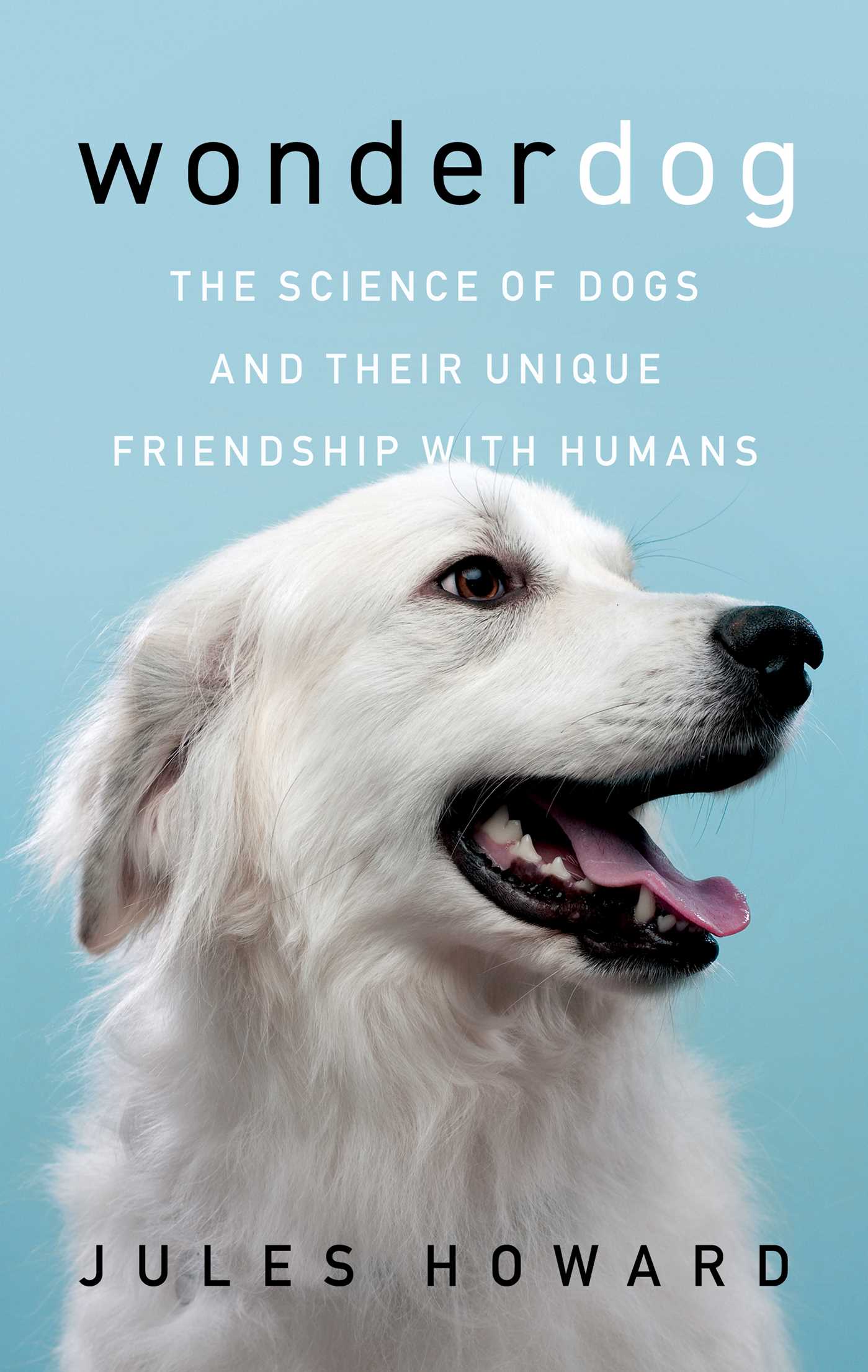
Wonderdog: The Science of Dogs and Their Unique Friendship with Humans
A celebration of dogs, the scientists who've lived alongside them, and how canines have been key to advancements in science for the betterment of all species.
Almost everywhere there are humans on planet Earth, there are dogs . But what do dogs know and understand of the world? Do their emotions feel like our own? Do they love like we do? What do they think of us?
Since our alliance first began on the hunt and on the farm, our relationship with dogs has evolved considerably. And with domestic dog population rising twenty per cent in the last decade alone, it is a bond that will continue to evolve. In order to gauge where our relationship with dogs goes from here, author and zoologist Jules Howard takes a look at the historical paths we have trod together, and at the many scientists before him who turned their analytic eye on their own four-legged companions.
Charles Darwin and his contemporaries toyed with dog sign language and made special puzzle boxes and elaborate sniff tests using old socks. Later, the same questions drove Pavlov and Pasteur to unspeakable cruelty in their search for knowledge. Since then, leagues of psychologists and animal behaviourists have built upon the study of dogs and their much-improved methods have fetched increasingly important dogs have episodic memory similar to ours; they recognise themselves as individuals; and, in addition to their expert sense of smell, dogs’ noses can even detect thermal radiation.
With the help of vets, ethologists, neurologists, historians and, naturally, his own dogs, Wonderdog reveals the study of dogs to be key in the advancement of compassion in scientific research, and crucial to making life on Earth better for all species.
Almost everywhere there are humans on planet Earth, there are dogs . But what do dogs know and understand of the world? Do their emotions feel like our own? Do they love like we do? What do they think of us?
Since our alliance first began on the hunt and on the farm, our relationship with dogs has evolved considerably. And with domestic dog population rising twenty per cent in the last decade alone, it is a bond that will continue to evolve. In order to gauge where our relationship with dogs goes from here, author and zoologist Jules Howard takes a look at the historical paths we have trod together, and at the many scientists before him who turned their analytic eye on their own four-legged companions.
Charles Darwin and his contemporaries toyed with dog sign language and made special puzzle boxes and elaborate sniff tests using old socks. Later, the same questions drove Pavlov and Pasteur to unspeakable cruelty in their search for knowledge. Since then, leagues of psychologists and animal behaviourists have built upon the study of dogs and their much-improved methods have fetched increasingly important dogs have episodic memory similar to ours; they recognise themselves as individuals; and, in addition to their expert sense of smell, dogs’ noses can even detect thermal radiation.
With the help of vets, ethologists, neurologists, historians and, naturally, his own dogs, Wonderdog reveals the study of dogs to be key in the advancement of compassion in scientific research, and crucial to making life on Earth better for all species.
288 pages, Hardcover
First published May 1, 2022
Ratings & Reviews
Friends & Following
Create a free account to discover what your friends think of this book!
Community Reviews
Displaying 1 - 26 of 26 reviews

May 13, 2022
As Jules Howard acknowledges, there have been plenty of books about what makes a dog tick, whether they are training manuals, evolutionary examinations such as The Wolf Within or ethological studies of humans' closest animal partner such as If Dogs Could Talk. But most of Jules Howard's Wonderdog takes us into the roles that dogs have played in advancing science.
Some of this material is fairly gruesome. We discover, for example, dogs' importance to medical research, particularly at a time when experimenting on animals had few ethical limits. What makes the book enjoyable is the way the Howard ties in his history with engaging stories - such as the brown dog statue, put up in Battersea in 1907 as a memorial to a dog horribly misused by vivisectionists, only for the statue to be destroyed by the council to bring an end to frequent attacks by infuriated medical students. (The statue has since been replaced.)
Similarly, dogs have proved valuable in widening our understanding of animal behaviour. As Howard points out, this is ironic, given the way that for a long time dogs were considered by biologists to be of no interest as they were thought to be simply wolves that had... gone to the dogs. In reality, though, dogs' unique skills and relationship with humans made them fascinating studies. And some of those abilities are indeed remarkable. Howard tells us of a dog that could retrieve a range of items from another room when asked for them by name - and then shocked everyone by also retrieving an item it had not been trained to retrieve when asked to bring something with a name it didn't recognise, working out that the new name applied to the unfamiliar item. Similarly, dogs' ability to be directed by pointing is beyond even the capabilities of chimpanzees.
The book has three main sections - one primarily on their medical use (and misuse - though strangely no mention of smoking beagles), one on dog sociology and minds, and one considering what it's like to be a dog, play and emotional connection. Each is interesting in its own way (though Howard to does have to warn sensitive readers of a few paragraphs they may need to skip in the medical section). Along the way, the book is written in a light, friendly style. Howard tends to overuse footnotes, often using them for information that would fit perfectly well in the main text without the reader having to keep skipping down to the bottom if the page, but otherwise it's a great read.
This is obviously going to be of particular interest to dog lovers, but even those who are neutral on the subject of canines will find a lot to learn and enjoy about this unique animal, forged in its interaction with humanity. Good boy, Jules. Good boy!
Some of this material is fairly gruesome. We discover, for example, dogs' importance to medical research, particularly at a time when experimenting on animals had few ethical limits. What makes the book enjoyable is the way the Howard ties in his history with engaging stories - such as the brown dog statue, put up in Battersea in 1907 as a memorial to a dog horribly misused by vivisectionists, only for the statue to be destroyed by the council to bring an end to frequent attacks by infuriated medical students. (The statue has since been replaced.)
Similarly, dogs have proved valuable in widening our understanding of animal behaviour. As Howard points out, this is ironic, given the way that for a long time dogs were considered by biologists to be of no interest as they were thought to be simply wolves that had... gone to the dogs. In reality, though, dogs' unique skills and relationship with humans made them fascinating studies. And some of those abilities are indeed remarkable. Howard tells us of a dog that could retrieve a range of items from another room when asked for them by name - and then shocked everyone by also retrieving an item it had not been trained to retrieve when asked to bring something with a name it didn't recognise, working out that the new name applied to the unfamiliar item. Similarly, dogs' ability to be directed by pointing is beyond even the capabilities of chimpanzees.
The book has three main sections - one primarily on their medical use (and misuse - though strangely no mention of smoking beagles), one on dog sociology and minds, and one considering what it's like to be a dog, play and emotional connection. Each is interesting in its own way (though Howard to does have to warn sensitive readers of a few paragraphs they may need to skip in the medical section). Along the way, the book is written in a light, friendly style. Howard tends to overuse footnotes, often using them for information that would fit perfectly well in the main text without the reader having to keep skipping down to the bottom if the page, but otherwise it's a great read.
This is obviously going to be of particular interest to dog lovers, but even those who are neutral on the subject of canines will find a lot to learn and enjoy about this unique animal, forged in its interaction with humanity. Good boy, Jules. Good boy!
March 23, 2022
Thanks to NetGalley and Bloomsbury for the advanced copy of this title in return for an honest review.
I’m always wary of people who don’t like dogs. If you’re scared of them or have an allergy, then fine. But if you have chosen not to like dogs then I’m already confused by you. Not only are they fluffy and snuggly and great friends, they’re also capable of doing amazing things, as this book explores. From sniffing out diseases or land mines to helping the chronically ill or disabled, they really never seize to amaze me.
There is, of course, a very human element to this book, but there is also a lot of science and history. At times this can be a little overwhelming, especially if you’re not knowledgeable on scientific terms and whatnot, but I believe Jules has found a nice balance by making it informative, but understandable without being patronising.
I would have liked there to have been more images of the dogs in question, however I am aware I had an e-copy and there may be images in the physical copy which I would love to see.
This is a fascinating exploration of the history of man’s best friend that I had never even thought about. It’s hard to believe that domesticated dogs as pets is a relatively new experience, we’re talking a few hundred years; a blink of an eye in mankind terms.
It’s a fairly short book at under 300 pages, which makes it quick to read, with enough knowledge to be interesting, but enough wit to be fun and entertaining.
I’m always wary of people who don’t like dogs. If you’re scared of them or have an allergy, then fine. But if you have chosen not to like dogs then I’m already confused by you. Not only are they fluffy and snuggly and great friends, they’re also capable of doing amazing things, as this book explores. From sniffing out diseases or land mines to helping the chronically ill or disabled, they really never seize to amaze me.
There is, of course, a very human element to this book, but there is also a lot of science and history. At times this can be a little overwhelming, especially if you’re not knowledgeable on scientific terms and whatnot, but I believe Jules has found a nice balance by making it informative, but understandable without being patronising.
I would have liked there to have been more images of the dogs in question, however I am aware I had an e-copy and there may be images in the physical copy which I would love to see.
This is a fascinating exploration of the history of man’s best friend that I had never even thought about. It’s hard to believe that domesticated dogs as pets is a relatively new experience, we’re talking a few hundred years; a blink of an eye in mankind terms.
It’s a fairly short book at under 300 pages, which makes it quick to read, with enough knowledge to be interesting, but enough wit to be fun and entertaining.

August 4, 2022
Very good. The author presents their findings about how dogs have been used to further scientific research and current research into canine behaviour. Warning: The horrific use of vivisection on dogs and other animals is discussed.

November 12, 2025
I was so inspired after listening to
Raising Hare: A Memoir
by Chloe Dalton that I wanted my very next audiobook to be one about animals and led to my decision to embark - pun intended - on Wonderdog by Jules Howard.
While the book was enjoyable on the whole, I really should have paid more attention to the subtitle, Wonderdog - How the Science of Dogs Changed the Science of Life. Styling himself as a zoological correspondent, author and public speaker on his website, Jules Howard was definitely focussed on the science of dogs in this offering, including what we thought we knew about dogs in recent history, how science has overlooked dogs and used them to conduct unmentionable testing in the past and what we know about them now. Leaders in their individual fields of science are mentioned and their studies referenced at a level that didn't really retain my interest.
Instead I enjoyed the few moments in between, like this footnote about eye contact and contagious yawning:
"Dogs can also catch a yawn off their owners, and in doing so, they join an esteemed group of animals who exhibit contagious yawns, just humans, chimpanzees and baboons manage the feat." Chapter 12
Jules Howard does a great job narrating his own work, however this is another case where I have misinterpreted the title Wonderdog and extrapolated a book all about the wonders dogs are capable of and how this has changed science over time. Instead, Wonderdog highlights the evolution of the science surrounding the canine species which was far less interesting to this reader.
Wonderdog by Jules Howard will appeal to readers with a deep interest in dogs and science, but I think I might have been better off listening to something else. How My Dog Saved My Life: Thirty Tales of Courage and Compassion by Cate Cochran sounds interesting.
While the book was enjoyable on the whole, I really should have paid more attention to the subtitle, Wonderdog - How the Science of Dogs Changed the Science of Life. Styling himself as a zoological correspondent, author and public speaker on his website, Jules Howard was definitely focussed on the science of dogs in this offering, including what we thought we knew about dogs in recent history, how science has overlooked dogs and used them to conduct unmentionable testing in the past and what we know about them now. Leaders in their individual fields of science are mentioned and their studies referenced at a level that didn't really retain my interest.
Instead I enjoyed the few moments in between, like this footnote about eye contact and contagious yawning:
"Dogs can also catch a yawn off their owners, and in doing so, they join an esteemed group of animals who exhibit contagious yawns, just humans, chimpanzees and baboons manage the feat." Chapter 12
Jules Howard does a great job narrating his own work, however this is another case where I have misinterpreted the title Wonderdog and extrapolated a book all about the wonders dogs are capable of and how this has changed science over time. Instead, Wonderdog highlights the evolution of the science surrounding the canine species which was far less interesting to this reader.
Wonderdog by Jules Howard will appeal to readers with a deep interest in dogs and science, but I think I might have been better off listening to something else. How My Dog Saved My Life: Thirty Tales of Courage and Compassion by Cate Cochran sounds interesting.

March 11, 2023
This book is kind of the reverse of what I was expecting: rather than the science of dogs (though that is covered to a degree), the focus is more on how dogs impacted science. A lot of the subject matter is interesting, but I wasn't really a fan of the author's style; some things, like the nature of each mentioned figure's scientific contributions, didn't really stick as I went along. While the author deliberately avoids going into detail wherever possible, this book does also cover the less humane side of historical experimentation on dogs - something to be aware of if you're sensitive about that sort of thing.

September 24, 2023
This was a worthwhile read for anyone interested in the history of how dogs have been viewed by science over the past 200 or so years. It’s written at a level that anyone can understand, pop science at its best. It covers Pavlov, the behaviorists, and modern-day research on dog cognition, as well as some brief discussion on dog trainers and the application of science to dog training. I believe that trainers really should know the history of their profession as well as the basic scientific history of man’s favorite animal. Really every trainer should read this book.

July 24, 2022
Dit is een zeer aangenaam en interessant stukje lectuur. Via de studie van het gedrag van honden krijgen we hier een geschiedenis van de gedragswetenschappen te beginnen bij Darwin. Behaviourisme, cognitieve wetenschappen, ethologie... allemaal komen ze aan bod, en dat op een zeer bevattelijke wijze beschreven, zonder in specialistische taal te vervallen.
Doorheen de geschiedenis beperkten de gedragswetenschappen zich tot de "serieuze" studie van primaten en apen, omdat die het meest aan ons verwant zijn. Maar nu blijkt dat gedomesticeerde diersoorten, en meer in het bijzonder de hond, ons heel wat meer te leren hebben over ons dan we tot nu toe vermoedden.
Honden zijn allesbehalve die "lompe afstammelingen van wolven" waar dikwijls zo denigrerend of minachtend naar verwezen wordt. Wel integendeel, hun intelligentie en verwantschap met ons reikt veel verder.
Dit werk is in ieder geval intrigerend genoeg om aan te zetten tot verdere lectuur over het onderwerp, en dat dan allerminst voor hondenliefhebbers alleen.
Doorheen de geschiedenis beperkten de gedragswetenschappen zich tot de "serieuze" studie van primaten en apen, omdat die het meest aan ons verwant zijn. Maar nu blijkt dat gedomesticeerde diersoorten, en meer in het bijzonder de hond, ons heel wat meer te leren hebben over ons dan we tot nu toe vermoedden.
Honden zijn allesbehalve die "lompe afstammelingen van wolven" waar dikwijls zo denigrerend of minachtend naar verwezen wordt. Wel integendeel, hun intelligentie en verwantschap met ons reikt veel verder.
Dit werk is in ieder geval intrigerend genoeg om aan te zetten tot verdere lectuur over het onderwerp, en dat dan allerminst voor hondenliefhebbers alleen.
December 23, 2025
I learned a lot from this book! Very interesting history of how our ideas about dogs have changed since the Victorian period (launched by both Darwin and Dickens). Covers a lot of fascinating science/psychology, and reveals as much about humans as dogs.

February 18, 2026
É curioso coma un libro sobre cans e a súa relación cos humanos mostra o humanos que son e a pouca humanidade que en ocasións tiveron os humanos. Tamén é un bo libro para ver a evolución da ciencia experimental. Teno todo!
April 22, 2025
Fantastic book well researched incredible insight

July 5, 2024
This book was so precious! I recommend it to all dog lovers! This book was extremely interesting and I actually learned a lot from it. It also warmed my heart and made me want to hug my own dog even more, we are so lucky to have them. Aside from them I also just really liked the tone and humour of the author! I included some little snippets as well as the names of the dogs from the famous Pavlov experiments.

April 28, 2023
Como alguien que espera tener perro en unos años, me interesaba mucho leer ese libro. Quuizá era un poco... científico para mí, soy de letras y las cosas de ciencias mal, pero me ha gustado bastante.

January 1, 2023
"Darwin’s ideas ‘taught that if there is this kinship physically between all living creatures, surely a responsibility rests upon us to see that these creatures, who have nerves as we have, who are made of the same flesh and blood as we are, who have minds differing from ours not in kind but in degree, should be protected, as far as in our power lies, from ill-treatment, cruelty and abuse of every kind." Emilie Lind-af-Hageby, an early advocate for animal rights.
That dogs feel love like we do is no longer an outlier’s opinion. That their hearts don’t beat like ours, that their brains don’t light up like ours, or that the warmth you give them is unlike the warmth they give back – opinions like these are now, after 150 years of scientific reasoning, drifting out of the mainstream.
I felt this was more about the history of dogs rather than the science but there was both. There were a lot of psychological studies mentioned that have been replicated and thought to be accurate, and then neuroscience looks at them through a different lens and they are now debunked. I had a class with Martin Seligman, the originator of learned helplessness from dogs, and neuroscience has interpreted it differently, yet it is used in here as fact. The brain may have a default state of helplessness that the studies may have just strengthened, and in truth it is instinctive helplessness that has to be overcome, more like a learned strength. And that may also be studied differently in ages to come.
I think all these studies give us a window into possibilities to help us understand and help people, but the more you try to put brains, people, instincts in boxes the more you start to obscure the truth. Fight or flight has been amended to add “tend and befriend” and yet people still subscribe to old beliefs. Survival of the fittest was misunderstood and continues to be used improperly.
There was good information on the dog alpha male theory debunking:
There is a deep flaw in this philosophy, which is that the ideas around ‘alpha males’ in wolf packs are somewhat bunkum. Misjudged. That is, according to many modern-day scientists. Alphas, as Schenkel viewed them, do not exist. His were captive wolves thrown in with one another, many unrelated to one another, kept in an enclosure at Switzerland’s Zoo Basel. Schenkel’s wolves were behaving as captive animals often do: unpredictably. No wonder they fought. They were placed in cages with unrelated family members, causing social disarray. In short, it was anything but the wolf’s natural environment. When scientists realised this decades later, by studying wild populations of wolves, it was too late. The ideas of dominance theory – of alpha males, of top dogs – had washed into society and could not easily be erased.
That, to a degree, my education misled me. I think education is still like this. A quick search online for learning resources about Pavlov and his discovery of classical conditioning shows a surprising number of slides and print-outs of cartoon dogs, pictured with smiles, sitting respectfully in front of clip-art renderings of bells, with arrows pointing out the gathering saliva. Some of these learning resources are from very respected universities. I remember images on slides just like these when I was at university. I think this is why I never thought much more about the dogs. Perhaps I was, myself, conditioned. The truth is that their untold suffering – and it really was nothing less than that – was, in no small way, a fledgling science’s gain. And so it is right that we remember those dogs whose names we know, even if we know little about their characters, temperaments and experiences. Especially if it helps us vow never again to make such easy slaves of their desperate interest in connection
Take a moment, if you can, to glance over at a nearby dog. Think about what you share in common. Take in the up–down jaws of their skull. The paired nostrils and ears. The in–out mechanism of the breathing. Look at the muscular tongue. Notice their eyes looking back at you. Look at the intensity, shining back. The interest. Gaze into their pupils. Take in the eyelashes. If you’re lucky, you might share a smile.
Now, if you can, lean in for a stroke. Feel the bones in the legs first. Notice the arrangement and how they mirror those in your own limb bones. Start with the heavy bones at the top of the legs: the humerus (forelegs) and femur (hindlegs). Work your way down to the paired bones that connect to them: the ulna and radius in the forelegs and the fibula and tibia in the hindlegs. As with your own, these bones have within them both yellow and red bone marrow. They are factories that produce blood cells and maintain the body. They are what keeps your dog alive.
Move onwards. Run your fingers down your dog’s neck, feeling for the seven neck vertebrae that nearly all mammals possess. Then move your hands lower and guide them in the channel between the shoulder blades (scapulae – again, you have them) and down the spine. Put your hand in front of its mouth now. Feel its muscular tongue give you a loving lick. Observe the arrangement of the teeth – the incisors, the canines, the molars. Like yours, these are likely to be adult teeth; its milk teeth were lost long ago, probably swallowed while eating. Finally, go paw to paw. Feel with your digits, the digits of your dog. The same familiar arrangement, with dewclaw as thumb.
‘In the agony of death a dog has been known to caress his master and everyone has heard of the dog suffering under vivisection who licked the hand of the operator; this man, unless the operation was fully justified by an increase of our knowledge, or unless he had a heart of stone, must have felt remorse to the last hour of his life.’ – Charles Darwin (1871)
In the last 200 years, for instance, the number of dog breeds has seen a dramatic increase, from just fifteen or so known breeds in Britain at the start of the nineteenth century to almost sixty at the end. Today, there are estimated to be more than 400 breeds across the world All of this breed diversity in dogs has taken fewer than 5,000 years to come about, through selective breeding by humans, who consciously or unconsciously were acting in the same way that Darwin imagined, encouraging the breeding of desired traits, rewarding with reproductive opportunities the dogs best at hunting, chasing, pointing, guarding, fighting, digging – in other words, artificially selecting the dogs best up to the job.
That dogs feel love like we do is no longer an outlier’s opinion. That their hearts don’t beat like ours, that their brains don’t light up like ours, or that the warmth you give them is unlike the warmth they give back – opinions like these are now, after 150 years of scientific reasoning, drifting out of the mainstream.
I felt this was more about the history of dogs rather than the science but there was both. There were a lot of psychological studies mentioned that have been replicated and thought to be accurate, and then neuroscience looks at them through a different lens and they are now debunked. I had a class with Martin Seligman, the originator of learned helplessness from dogs, and neuroscience has interpreted it differently, yet it is used in here as fact. The brain may have a default state of helplessness that the studies may have just strengthened, and in truth it is instinctive helplessness that has to be overcome, more like a learned strength. And that may also be studied differently in ages to come.
I think all these studies give us a window into possibilities to help us understand and help people, but the more you try to put brains, people, instincts in boxes the more you start to obscure the truth. Fight or flight has been amended to add “tend and befriend” and yet people still subscribe to old beliefs. Survival of the fittest was misunderstood and continues to be used improperly.
There was good information on the dog alpha male theory debunking:
There is a deep flaw in this philosophy, which is that the ideas around ‘alpha males’ in wolf packs are somewhat bunkum. Misjudged. That is, according to many modern-day scientists. Alphas, as Schenkel viewed them, do not exist. His were captive wolves thrown in with one another, many unrelated to one another, kept in an enclosure at Switzerland’s Zoo Basel. Schenkel’s wolves were behaving as captive animals often do: unpredictably. No wonder they fought. They were placed in cages with unrelated family members, causing social disarray. In short, it was anything but the wolf’s natural environment. When scientists realised this decades later, by studying wild populations of wolves, it was too late. The ideas of dominance theory – of alpha males, of top dogs – had washed into society and could not easily be erased.
That, to a degree, my education misled me. I think education is still like this. A quick search online for learning resources about Pavlov and his discovery of classical conditioning shows a surprising number of slides and print-outs of cartoon dogs, pictured with smiles, sitting respectfully in front of clip-art renderings of bells, with arrows pointing out the gathering saliva. Some of these learning resources are from very respected universities. I remember images on slides just like these when I was at university. I think this is why I never thought much more about the dogs. Perhaps I was, myself, conditioned. The truth is that their untold suffering – and it really was nothing less than that – was, in no small way, a fledgling science’s gain. And so it is right that we remember those dogs whose names we know, even if we know little about their characters, temperaments and experiences. Especially if it helps us vow never again to make such easy slaves of their desperate interest in connection
Take a moment, if you can, to glance over at a nearby dog. Think about what you share in common. Take in the up–down jaws of their skull. The paired nostrils and ears. The in–out mechanism of the breathing. Look at the muscular tongue. Notice their eyes looking back at you. Look at the intensity, shining back. The interest. Gaze into their pupils. Take in the eyelashes. If you’re lucky, you might share a smile.
Now, if you can, lean in for a stroke. Feel the bones in the legs first. Notice the arrangement and how they mirror those in your own limb bones. Start with the heavy bones at the top of the legs: the humerus (forelegs) and femur (hindlegs). Work your way down to the paired bones that connect to them: the ulna and radius in the forelegs and the fibula and tibia in the hindlegs. As with your own, these bones have within them both yellow and red bone marrow. They are factories that produce blood cells and maintain the body. They are what keeps your dog alive.
Move onwards. Run your fingers down your dog’s neck, feeling for the seven neck vertebrae that nearly all mammals possess. Then move your hands lower and guide them in the channel between the shoulder blades (scapulae – again, you have them) and down the spine. Put your hand in front of its mouth now. Feel its muscular tongue give you a loving lick. Observe the arrangement of the teeth – the incisors, the canines, the molars. Like yours, these are likely to be adult teeth; its milk teeth were lost long ago, probably swallowed while eating. Finally, go paw to paw. Feel with your digits, the digits of your dog. The same familiar arrangement, with dewclaw as thumb.
‘In the agony of death a dog has been known to caress his master and everyone has heard of the dog suffering under vivisection who licked the hand of the operator; this man, unless the operation was fully justified by an increase of our knowledge, or unless he had a heart of stone, must have felt remorse to the last hour of his life.’ – Charles Darwin (1871)
In the last 200 years, for instance, the number of dog breeds has seen a dramatic increase, from just fifteen or so known breeds in Britain at the start of the nineteenth century to almost sixty at the end. Today, there are estimated to be more than 400 breeds across the world All of this breed diversity in dogs has taken fewer than 5,000 years to come about, through selective breeding by humans, who consciously or unconsciously were acting in the same way that Darwin imagined, encouraging the breeding of desired traits, rewarding with reproductive opportunities the dogs best at hunting, chasing, pointing, guarding, fighting, digging – in other words, artificially selecting the dogs best up to the job.
January 28, 2026
There’s lots of books available about interpreting dogs behaviour, but this is the first one I’ve read that explains how we’ve come to learn how to interpret that behaviour.
A mix between science and history, at times it’s a hard read for the dog lovers as in the first section the author gives some horrific information about the types of experiments conducted on animals by vivisectionists and that hit me emotionally hard.
Jules Howard however doesn’t write from a love of this practice however, he writes from the perspective of a love of animals. There are some truly moving moments in this book, beautiful stories that had me smiling one minute and feeling a bit teary elsewhere.
It’s far more than a tug at the emotions though - it’s truly a thought provoking read, I feel I’ve learned something new and it’s given me lots of things to think about as I observe my dogs. And it’s given me different ideas for how to observe them.
It’s also a lovely style, not submerged in academia which makes it very accessible for any dog lover.
A mix between science and history, at times it’s a hard read for the dog lovers as in the first section the author gives some horrific information about the types of experiments conducted on animals by vivisectionists and that hit me emotionally hard.
Jules Howard however doesn’t write from a love of this practice however, he writes from the perspective of a love of animals. There are some truly moving moments in this book, beautiful stories that had me smiling one minute and feeling a bit teary elsewhere.
It’s far more than a tug at the emotions though - it’s truly a thought provoking read, I feel I’ve learned something new and it’s given me lots of things to think about as I observe my dogs. And it’s given me different ideas for how to observe them.
It’s also a lovely style, not submerged in academia which makes it very accessible for any dog lover.

January 12, 2025
A fascinating read learning how far dogs and the science of have come and how they've wiggled their way into our lives. Reading about the inhumane ways they were treated all in the name of science kept me wincing. I'm grateful for those who put a stop to it. Nowadays gathering information to learn about dogs is done in a very careful way so the dogs feel good about it. In the end I learned that dogs love the way we do. The MRI results gathered from several dogs showed just that. They have the same brains, feelings, etc. as we do but on a different level. I wish everyone could understand that before they meet and/or own a dog. If we treat them like monsters they will become monsters just as we would if treated that way. Dogs truly are the best friends a person could have.
February 4, 2025
Whilst this focuses more so on the american pet related industries (I'm from the UK), this is an interesting and informative read for pet owners and veterinary professionals. Whilst there are some areas I do not fully get on board with, such as promotion of raw feeding despite domestic dogs being far from their wild counterpants (working as a veterinary professional, the increased risks of e-coli and salmonella issues aren't ideal), overall this book provides an strong insight into the world of the canine and their care.
December 13, 2022
I’ve always known that dogs are life changing. Now, there’s science to back it up.
This seven-hour audiobook was published just in July earlier this year. This recency is important to me in non-fiction books cause it means that the stats are more relevant.
This seven-hour audiobook was published just in July earlier this year. This recency is important to me in non-fiction books cause it means that the stats are more relevant.
December 21, 2023
A decent mix of science and emotion. An interesting look into how our understanding of ourselves has grown through the study of dogs but also how our appreciation has grown for those furry little creatures that take up so much room in our hearts
June 5, 2023
If you read this book, I recommend you skip the first two chapters. They are gruesome. They lend nothing to the book. The remainder of the book is interesting.

January 25, 2024
This book was fun, with lots of interesting stories, fact, and scientific tidbits. Great for a road trip, and happy I listened to it, but not life changing.
November 14, 2024
I really enjoyed this book, both how it was written and the breadth of the content within. It reminded me a lot of Our Dog Our Selves: Dogs in Medieval and Early Modern Art, Literature and Society.
It was a very enjoyable read, no reason for science to be boring! The author was quite poetic at times and each chapter had this lovely art and a quote from one of the scientists within.
As the book is chronological through the times, the start is quite a harrowing read with the experiments originally done on dogs, how they were treated, how the people doing the research regarded them. But it also covered the impressive who fought for their welfare even back in those times and the backlash they faced. I also had no idea that animal welfare was so intrinsically linked with the feminist movement, so I learned a lot. The stories of Lizzy Lind-af-Hageby and Marie Francoise Martin were especially metal and pwoerful.
I would petition this book be renamed to: The survivor species: the science of dogs, the men who tortured them for science, and the women who fought them.
The more further in (and more modern) you got the more you could see dog research change, grow and expand. The book loses its heavy depressing atmosphere that comes with dogs being tortured and the men laughing about it. Instead it moves into how humanity wonders at dogs. I Learned about some studies I didn’t even know about, such as how our bedtime routines affect sleep quality and that praise/petting alongside food rewards made for even faster learners. I knew about the Family Dog Project but I didn’t fully comprehend how much work they do on dogs until reading the chapter that referred to them.
The only con I see is I was hoping for it to delve more into the theory of mind with social mimicry/do as I do. It got a couple of references but I feel like the research into dogs and concepts (no mention of the counting research or the size matching research!). This is a personal con as I find concept training fascinating.
Really good book for anyone wanting to learn how the dog-human relationship has changed over the years, how the treatment has changed, how advanced science has become in how they conduct research and the impacts each of these stages have had on culture.
Impressive list of citations and additional book recommendations at the end.
It was a very enjoyable read, no reason for science to be boring! The author was quite poetic at times and each chapter had this lovely art and a quote from one of the scientists within.
As the book is chronological through the times, the start is quite a harrowing read with the experiments originally done on dogs, how they were treated, how the people doing the research regarded them. But it also covered the impressive who fought for their welfare even back in those times and the backlash they faced. I also had no idea that animal welfare was so intrinsically linked with the feminist movement, so I learned a lot. The stories of Lizzy Lind-af-Hageby and Marie Francoise Martin were especially metal and pwoerful.
I would petition this book be renamed to: The survivor species: the science of dogs, the men who tortured them for science, and the women who fought them.
The more further in (and more modern) you got the more you could see dog research change, grow and expand. The book loses its heavy depressing atmosphere that comes with dogs being tortured and the men laughing about it. Instead it moves into how humanity wonders at dogs. I Learned about some studies I didn’t even know about, such as how our bedtime routines affect sleep quality and that praise/petting alongside food rewards made for even faster learners. I knew about the Family Dog Project but I didn’t fully comprehend how much work they do on dogs until reading the chapter that referred to them.
The only con I see is I was hoping for it to delve more into the theory of mind with social mimicry/do as I do. It got a couple of references but I feel like the research into dogs and concepts (no mention of the counting research or the size matching research!). This is a personal con as I find concept training fascinating.
Really good book for anyone wanting to learn how the dog-human relationship has changed over the years, how the treatment has changed, how advanced science has become in how they conduct research and the impacts each of these stages have had on culture.
Impressive list of citations and additional book recommendations at the end.

September 18, 2023
A fascinating, yet heartbreaking tale about dogs and how research done about them and to them has furthered medical science and understanding about their abilities. It was horrifying reading about some of the experiments scientists such as Pavlov performed on dogs without anesthesia or any consideration of the fact that they feel pain. However, it was good to learn that recent research relies more on observational, non invasive techniques. Dogs' abilities and unique bond with humans are described in detail.
July 6, 2024
Excepcional. Un repaso sin igual de los últimos 150 años de la ciencia dedicada al estudio de los perros. Un recordatorio de lo importante que han sido para el ser humano desde que decidieron unirse a nuestras vidas. Un homenaje a todos aquellos perros que han sufrido las peores condiciones de la investigación y un aplauso a esa nueva generación de científicos que trabajan CON los perros, les respetan, les admiran y no abusan de ellos. Sin duda, una lectura necesaria para todo amente de este ser maravilloso.
January 31, 2023
A thoughtful appraisal of how canine research has evolved and improved from Darwin to the present. Howard explains principal discoveries and conclusions in an entertaining fashion. His analogy of peeing wolves with Twitter posters is inspired.
The book is light on hard science but I recommend it for dog lovers who are curious about their friend’s behaviour patterns.
The book is light on hard science but I recommend it for dog lovers who are curious about their friend’s behaviour patterns.

December 23, 2023
Me lo imagine mas un cuento del estrecho vínculo perro y hombre y resultó siendo una trayectoria científica de investigaciones de comportamiento cognitivos humano hecho en animales y de ahí hasta llegar a demostrar que los perros sienten en diferente grado pero en muchas iguales habilidades igual que el hombre.

June 14, 2023
Un libro de divulgación científica que te hace querer (más todavía) a estos seres maravillosos. Muy bien escrito. Lo he leído sin darme cuenta.
Displaying 1 - 26 of 26 reviews