

What do you think?
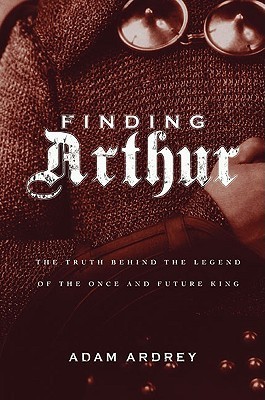
Finding Arthur: The Truth Behind the Legend of the Once and Future King
The legend of King Arthur has been told and retold for centuries. As the king who united a nation, his is the story of England itself. But what if Arthur wasn't English at all? As writer and Arthurian scholar Adam Ardrey discovered, the reason historians have had little success identifying the historical Arthur may be increcidbly simple: He wasn't an Englishman. He was from Scotland and many of the familiar symbols of Arthurian legend - The Round Table, the Sword in the Stone, and the Lady of the Lake -are based on very real and still accessible places in Scotland.
384 pages, Hardcover
First published January 1, 2008
Ratings & Reviews
Friends & Following
Create a free account to discover what your friends think of this book!
Community Reviews
Displaying 1 - 30 of 45 reviews

July 15, 2015
My book blog ----> http://allthebookblognamesaretaken.bl...
So much wrong, I don't even know where to begin. I don't mean with the THEORY itself (because regardless what this guy would have you believe, it is still just a theory), but I mean the presentation, tone, so much. It was a gigantic struggle just to finish this by the last two chapters. I hardly got through the epilogue. I was so excited to find another Arthur book, I can't get enough. Unfortunately by page 53, I was already beginning to regret my decision to read this one, as the tone was incredibly self-righteous and pompous. Certainly not the way to grab readers and earn their respect. Or better yet, get them to buy into your theory.
Now, I love Scotland.It is my favorite country in the world. Edinburgh is the city I belong to (despite me being entirely a US citizen of German and Swedish heritage) and want so badly to make my home there some day. So, I would not be at all opposed to the finding of any evidence indicating Arthur was actually a Scottish. I too hold a special place in my heart for England, so if he was King of the Britons, I am down with that. For me, it is more so a matter of, "did he really live?" For the author it is a matter of "where did he really live?" I get the Scottish pride thing, I have it and I am not remotely Scottish, but due to years of bullying and repression by England, the author is bound and determined to prove Arthur is Scottish.
Unfortunately, all he basically has is what amounts to word play. "This place sounds like this place, this name sounds like this name. We don't know this guy's real name but we know where he might be from, which sounds like this, but it certainly can't be that place because that place is south." He hardly actually refers to England by name at all, ever. It is always 'south'. He doesn't actually have any evidence (unless you count the book "Finding Merlin" which, incidentally, he wrote himself. No joke, he actually uses the phrase, "according to Finding Merlin". And he references it all the time. I think you might need to read that one in order to understand his weird double naming thing he does here with Merlin. But, whatever). There are two problems with this little word play game he has going on. First of all, it is not solid evidence. It is him taking names that sound like other names and saying they sound similar. That's great that they do - to him. To others, perhaps they are not close enough. He uses the very thing he calls others who have come before him for doing. That does not make a lot of sense to me. Same goes for his use of conjecture, which he readily admits multiply times under the guise of being humble, yet continues to state without a doubt that Arthur was a Scottish warrior.
The author has a major axe to grind with Christianity. He states very early in the book that Arthur was not and could not have been a Christian king, and constantly refers to Druids as those of The Old Way. He even goes on to say later (page 252) that it is, "...just daft - holy product placement" in regards to references to Arthur carrying a cross at the battle of Badon. Perhaps it never occurred to him in all his infinite wisdom that this statement could mean Arthur had a cross painted on or affixed to his shield. Certainly other authors have come to such a conclusion - authors who are willing to look at multiply theories, places, and names, and not just fixate on one and say it is right and that is that. I also enjoyed (sarcasm alert!) the part where he said those who have looked and continue to look for the Holy Grail are 'deluded' (page 74). His opinions on Christianity shine through VERY early on.
In addition to the word play he calls evidence for locating the real Arthur, he does a lot of this in regards to his own family name. He references this a lot, about how peoples' last names are only interesting to them, his is so rare, blah blah. You are right buddy, I do not care one iota about your super rare last name or the fact that it is so rare, you are related to everyone who has it. Perhaps this was included to show how great you are at deducing which words in ancient times are equal to our words of today. Either way it was pointless and filler and I half expected him to make the claim that he had discovered he was a descendant of Arthur. Maybe he did, I don't actually know because I skipped over the personal stuff.
I guess you have to give the guy a little credit (though I can't give him much, because his arrogance and pompousness are evident, page after page) for being bold enough to make claims like, "To exist in the south in Britain it was necessary for Arthur to become a legendary figure, because Arthur did not exist in the history of the south" (page 225).
So, in the end I have to say pass on this on, and I certainly won't be reading his Merlin book any time soon - if ever. I had high hopes but they were dashed quickly. Big disappointment here, so if you are looking for books about Arthur, look elsewhere.
So much wrong, I don't even know where to begin. I don't mean with the THEORY itself (because regardless what this guy would have you believe, it is still just a theory), but I mean the presentation, tone, so much. It was a gigantic struggle just to finish this by the last two chapters. I hardly got through the epilogue. I was so excited to find another Arthur book, I can't get enough. Unfortunately by page 53, I was already beginning to regret my decision to read this one, as the tone was incredibly self-righteous and pompous. Certainly not the way to grab readers and earn their respect. Or better yet, get them to buy into your theory.
Now, I love Scotland.It is my favorite country in the world. Edinburgh is the city I belong to (despite me being entirely a US citizen of German and Swedish heritage) and want so badly to make my home there some day. So, I would not be at all opposed to the finding of any evidence indicating Arthur was actually a Scottish. I too hold a special place in my heart for England, so if he was King of the Britons, I am down with that. For me, it is more so a matter of, "did he really live?" For the author it is a matter of "where did he really live?" I get the Scottish pride thing, I have it and I am not remotely Scottish, but due to years of bullying and repression by England, the author is bound and determined to prove Arthur is Scottish.
Unfortunately, all he basically has is what amounts to word play. "This place sounds like this place, this name sounds like this name. We don't know this guy's real name but we know where he might be from, which sounds like this, but it certainly can't be that place because that place is south." He hardly actually refers to England by name at all, ever. It is always 'south'. He doesn't actually have any evidence (unless you count the book "Finding Merlin" which, incidentally, he wrote himself. No joke, he actually uses the phrase, "according to Finding Merlin". And he references it all the time. I think you might need to read that one in order to understand his weird double naming thing he does here with Merlin. But, whatever). There are two problems with this little word play game he has going on. First of all, it is not solid evidence. It is him taking names that sound like other names and saying they sound similar. That's great that they do - to him. To others, perhaps they are not close enough. He uses the very thing he calls others who have come before him for doing. That does not make a lot of sense to me. Same goes for his use of conjecture, which he readily admits multiply times under the guise of being humble, yet continues to state without a doubt that Arthur was a Scottish warrior.
The author has a major axe to grind with Christianity. He states very early in the book that Arthur was not and could not have been a Christian king, and constantly refers to Druids as those of The Old Way. He even goes on to say later (page 252) that it is, "...just daft - holy product placement" in regards to references to Arthur carrying a cross at the battle of Badon. Perhaps it never occurred to him in all his infinite wisdom that this statement could mean Arthur had a cross painted on or affixed to his shield. Certainly other authors have come to such a conclusion - authors who are willing to look at multiply theories, places, and names, and not just fixate on one and say it is right and that is that. I also enjoyed (sarcasm alert!) the part where he said those who have looked and continue to look for the Holy Grail are 'deluded' (page 74). His opinions on Christianity shine through VERY early on.
In addition to the word play he calls evidence for locating the real Arthur, he does a lot of this in regards to his own family name. He references this a lot, about how peoples' last names are only interesting to them, his is so rare, blah blah. You are right buddy, I do not care one iota about your super rare last name or the fact that it is so rare, you are related to everyone who has it. Perhaps this was included to show how great you are at deducing which words in ancient times are equal to our words of today. Either way it was pointless and filler and I half expected him to make the claim that he had discovered he was a descendant of Arthur. Maybe he did, I don't actually know because I skipped over the personal stuff.
I guess you have to give the guy a little credit (though I can't give him much, because his arrogance and pompousness are evident, page after page) for being bold enough to make claims like, "To exist in the south in Britain it was necessary for Arthur to become a legendary figure, because Arthur did not exist in the history of the south" (page 225).
So, in the end I have to say pass on this on, and I certainly won't be reading his Merlin book any time soon - if ever. I had high hopes but they were dashed quickly. Big disappointment here, so if you are looking for books about Arthur, look elsewhere.

April 4, 2017
The author could not decide if he wanted to write a memoir about his research into the subject or an actual academic paper. This created a weird mix which at times is unbearable to read. I also had the feeling the author really wants to think himself descending from the Scottish Arthur.

April 22, 2014
Over the course of this book the author lays out an intriguing, largely language-based argument for locating the historical figure of "King" Arthur in Scotland. I'm not at all familiar with any variety of Gaelic and so am in no position to critique the author's findings, but his linguistic and historical clues seem to add up. I hope other writers pick up this theory. I'd be very much interested in reading about it further.
The only real issue I had with the book was the author's repeated stressing that druids = knowledge, acceptance, and good while Christians = lying, manipulative, and evil. I don't disagree it's likely that the early church leaders avoided local "pagan" history or refashioned it to fit their own belief systems, but the author's repeatedly stressing the point became annoying.
The only real issue I had with the book was the author's repeated stressing that druids = knowledge, acceptance, and good while Christians = lying, manipulative, and evil. I don't disagree it's likely that the early church leaders avoided local "pagan" history or refashioned it to fit their own belief systems, but the author's repeatedly stressing the point became annoying.
December 18, 2020
This is a must read for those actually looking for information. Most of the negative reviews are about the author’s personality. If you can get past the bombastic tone - just smile and keep reading - the information is well documented and fascinating. Was Arthur a real man? Was this an idea of standing against the odds? I found it informative and thought provoking. As the daughter of a fairly abrasive and opinionated Scot, I could hear my beloved dad giving the lecture and enjoyed the read immensely.

April 7, 2014
The author is a Scottish lawyer, and the book is insightful, intuitive, repetitive, redundant, and--did I already say redundant?
No beautiful quotes here; the book was apparently not edited for typos, punctuation, or repetition.
But it is still a fascinating story of the coverup and co-opting of the familiar story of King Arthur and the Round Table, rewritten to make the protagonist a king, a Christian, and a resident of southern England, especially Cornwall, in order to satisfy the Christian establishment and to sell books.
In fact, Arthur mac Aedan was born about 559 in Scotland or Ireland (they were almost the same society in the sixth century). He was never king, since his father, Aedan, was king and Arthur died in 596, several years before his father did. He was a warrior all his life, variously battling the Picts, the Angles, and the Britons.
Some parts of the familiar story are true. Arthur was married to Guinevere, who is thought to be a Pictish woman. There was no alliance with Lancelot; there was no Lancelot. These elements were apparently added later to weaken Arthur in the audience’s eyes.
And why would anyone want to weaken Arthur? Because he was not a Christian. He was of the Old Ways, a Druid. The Old Ways people were educated (for their time), with strong knowledgeable women an important part of the community. They were tolerant of others, and they were healers. When St. Columba brought Christianity to northern England and Scotland, strong knowledgeable women were not allowed, nor were tolerance and healing. Because the church came to control all publishing, the only media of the time, no stories could be printed unless they supported the church’s position.
The story of the author’s search for Arthurian battle sites is fascinating. It ties in with his genealogy research, and there is some linguistic connection between his last name and some typical words used in the border society of the sixth century. Scotland was the last of the British countries to be Christianized, so Arthur’s exploits had to be moved to Cornwall so that readers would not realize that he was probably a Druid involved in wars between the Scots, the Picts, Angles, and Britons.
Some disappointments with the true story: After Arthur’s death in his final battle, Guinevere was married off to someone called Hering (this was the man who was turned into a romantic Lancelot in Christianized stories). But the author did find Avalon (Iona), Camelot, and a dozen battle sites. It was a pretty grim existence in the sixth century.
This is worthy of a re-read for content, not for writing.
No beautiful quotes here; the book was apparently not edited for typos, punctuation, or repetition.
But it is still a fascinating story of the coverup and co-opting of the familiar story of King Arthur and the Round Table, rewritten to make the protagonist a king, a Christian, and a resident of southern England, especially Cornwall, in order to satisfy the Christian establishment and to sell books.
In fact, Arthur mac Aedan was born about 559 in Scotland or Ireland (they were almost the same society in the sixth century). He was never king, since his father, Aedan, was king and Arthur died in 596, several years before his father did. He was a warrior all his life, variously battling the Picts, the Angles, and the Britons.
Some parts of the familiar story are true. Arthur was married to Guinevere, who is thought to be a Pictish woman. There was no alliance with Lancelot; there was no Lancelot. These elements were apparently added later to weaken Arthur in the audience’s eyes.
And why would anyone want to weaken Arthur? Because he was not a Christian. He was of the Old Ways, a Druid. The Old Ways people were educated (for their time), with strong knowledgeable women an important part of the community. They were tolerant of others, and they were healers. When St. Columba brought Christianity to northern England and Scotland, strong knowledgeable women were not allowed, nor were tolerance and healing. Because the church came to control all publishing, the only media of the time, no stories could be printed unless they supported the church’s position.
The story of the author’s search for Arthurian battle sites is fascinating. It ties in with his genealogy research, and there is some linguistic connection between his last name and some typical words used in the border society of the sixth century. Scotland was the last of the British countries to be Christianized, so Arthur’s exploits had to be moved to Cornwall so that readers would not realize that he was probably a Druid involved in wars between the Scots, the Picts, Angles, and Britons.
Some disappointments with the true story: After Arthur’s death in his final battle, Guinevere was married off to someone called Hering (this was the man who was turned into a romantic Lancelot in Christianized stories). But the author did find Avalon (Iona), Camelot, and a dozen battle sites. It was a pretty grim existence in the sixth century.
This is worthy of a re-read for content, not for writing.

August 4, 2020
I found Arthur to be just as fascinating a read as Adam's previous book, Finding Merlin. While this covers much of the same time period, the more in depth information about how Arthur's family came to power was so interesting. For someone who grew up with the King Arthur legend from books such as The Mists of Avalon and movies like Excalibur, this book opened the door to so much more of a wonderful history of Scotland and its people. I loved the in depth breakdown of Malory's Le Morte de Arthur and how the Church completely took over Arthur's story for its own purposes. The reality is so much more fascinating than the fiction. Absolutely a worthwhile read for anyone interested in Arthur or Scottish history in general.
"It would have been especially dangerous for Malory if he had left Arthur in the hands of obviously capable independent women, because such women suggested the Old Way of the druids. Even if this were not so, the women were still capable and independent, and capable independent women were definitely unacceptable to the Church."
"It would have been especially dangerous for Malory if he had left Arthur in the hands of obviously capable independent women, because such women suggested the Old Way of the druids. Even if this were not so, the women were still capable and independent, and capable independent women were definitely unacceptable to the Church."
April 8, 2017
A most enjoyable book detailing how, during the course of his own genealogical research, the author stumbled across proof of the legendary King Arthur’s actual existence in Scottish history. Evidence is drawn from clues found in historic writings, ancient place names and geography

November 9, 2018
The amount of research done to make this book is headache-inducing, which makes it impressive, so I have to give it kudos there. Because I read this for my final essay research paper, it landed in the Slightly Bland Because It's For Uni basket, but I love anything to do with King Arthur so it was enjoyable at least. There are some seriously amazing concepts and facts about the "real" legend of Arthur which I enthusiastically read aloud to a lesser enthusiastic audience of my mum and cat.
While it's a bit of an effort to get through, I highly recommend if you're wanting some in-depth information about the Once and Future King.
While it's a bit of an effort to get through, I highly recommend if you're wanting some in-depth information about the Once and Future King.

November 29, 2018
It's book review time once again, and here I present you with...a total waste of money! :-D
Finding Arthur: The Truth Behind the Legend of the Once and Future King, by Adam Ardrey
I have been reading all things Arthurian for decades now, both fictional accounts and non-fictional/historical searches for the man behind the legend. I have even read more than one hypothesis that the historical Arthur could have been from Scotland, and so was not adverse to reading another book promoting this idea. However, I could barely make it through the first quarter Adam Ardrey's "Finding Arthur: The Truth Behind the Legend of the Once and Future King", as I found the book less about the author's research (which appears to be minimal at best) and more about 1) his rants against early Christians, 2) his rants against anything that suggests Arthur was from "the South" -- England, Wales, or Cornwall, and 3) his promotion of Scottish Nationalism.
Ardrey starts out by telling us his memories of what he knew of the Arthurian legend, based apparently in large part on movies like Disney's "The Sword in the Stone", as well as later films like "Excalibur" and "King Arthur". Nothing wrong with any of those movies, by the way, but I felt too many pages were dedicated to the author's memories of them, with a lot of "as I recall" or "as I remember" qualifiers sprinkled throughout. Makes me wonder when was the last time he watched any of them, if his memory of them is fuzzy.
And as we move along, there's too much reliance on words sounding similar, as in if A sounds similar to B, then A must equal B, rather than hard evidence. Of course, if there was a historical Arthur he would have lived around the 5th century AD, so there's not a lot of hard evidence to work with, and language as well as personal and place names have certainly changed over the centuries. But to rely upon this place sounds like that, therefore that must be the place, is sloppy research (if it deserves to be called research) at best.
There are many books out there about Arthurian research that are much better than this. Definitely not worth the money I spent on it...but hey, live and learn!
Finding Arthur: The Truth Behind the Legend of the Once and Future King, by Adam Ardrey
I have been reading all things Arthurian for decades now, both fictional accounts and non-fictional/historical searches for the man behind the legend. I have even read more than one hypothesis that the historical Arthur could have been from Scotland, and so was not adverse to reading another book promoting this idea. However, I could barely make it through the first quarter Adam Ardrey's "Finding Arthur: The Truth Behind the Legend of the Once and Future King", as I found the book less about the author's research (which appears to be minimal at best) and more about 1) his rants against early Christians, 2) his rants against anything that suggests Arthur was from "the South" -- England, Wales, or Cornwall, and 3) his promotion of Scottish Nationalism.
Ardrey starts out by telling us his memories of what he knew of the Arthurian legend, based apparently in large part on movies like Disney's "The Sword in the Stone", as well as later films like "Excalibur" and "King Arthur". Nothing wrong with any of those movies, by the way, but I felt too many pages were dedicated to the author's memories of them, with a lot of "as I recall" or "as I remember" qualifiers sprinkled throughout. Makes me wonder when was the last time he watched any of them, if his memory of them is fuzzy.
And as we move along, there's too much reliance on words sounding similar, as in if A sounds similar to B, then A must equal B, rather than hard evidence. Of course, if there was a historical Arthur he would have lived around the 5th century AD, so there's not a lot of hard evidence to work with, and language as well as personal and place names have certainly changed over the centuries. But to rely upon this place sounds like that, therefore that must be the place, is sloppy research (if it deserves to be called research) at best.
There are many books out there about Arthurian research that are much better than this. Definitely not worth the money I spent on it...but hey, live and learn!

Read
July 7, 2024A few weeks ago a chap on YouTube had a King Arthur day celebration and posted a lengthy playlist of different videos related to the myth. One of the videos was an interview with / presentation by Adam Ardrey about the historic figure Arthur. It was such an interesting chat that I purchased the book #findingarthur by #adamardrey published in 2013. Apparently Ardrey was researching his family tree and came across references to Arthur and Merlin which led him down a rabbit hole of research and he puts forward a very compelling case that the mythical king Arthur was real and was actually the Scottish warrior Arthur Mac Aedan
Obviously impossible to prove, but this is an interesting theory and the book explains some of the detective work Ardrey did. The geographical references and explanations are probably the most convincing argument, the argument based on names and spelling is weak given that the author admits particular spellings could be simple errors, multiple spellings for the same word or even outright lies and propaganda. Who knows what you can trust and rely on? Ardrey provides an explanation for: the round table (a mound in a field around which warriors would sit); the sword in the stone (a ceremony in which the participant holding his sword removes his foot from a carved footprint); the sword exCALIBUR is actually a sword known as CALIBURn (‘ex’ meaning “out of”); the lady in the lake is a fictional aquatic armorer created by Malory; Avalon is an island off the west coast of Scotland called Iona; Camelot is derived from “cam” meaning ‘twisted/crooked’ and “loth” meaning ‘marsh’ and describes the crooked marsh land that lies between Dunadd and Dunardry the twin hillforts of Dalriada where Arthur Mac Aedan lived.
March 18, 2018
Awful
Being a fan of all things Arthurian I was really looking forward to readings this. The idea of a Scottish Arthur was intriguing. I was so disappointed to find this book mostly full of the author's own prejudice and arrogant conjecture. There are too many references to his own name and personal life. I am removing it from my Kindle
Being a fan of all things Arthurian I was really looking forward to readings this. The idea of a Scottish Arthur was intriguing. I was so disappointed to find this book mostly full of the author's own prejudice and arrogant conjecture. There are too many references to his own name and personal life. I am removing it from my Kindle

January 2, 2015
As other people have mentioned, the author seems to have a real axe (or two!) to grind against Christianity and against Britain. I really wanted to like this book, because I think it has an interesting theory, but the aggressive, argumentative nature of the writing was fairly off-putting.
September 9, 2021
The one almost near end sentence in the book: "The assassination of Merlin-Lailoken brought to an end the age of Arthur" is a rather confusing end line (the last chapter but one) in that according to the author Arthur's father still lived and more to the point didn't Arthur have any children? This book like Finding Merlin to be oddly sexless. Indeed, since the book on Merlin the author seems to have done a complete turn around of not only people but place. In Finding Merlin the author suggested that what we know as Wales today stretched as far as the southern half of Scotland, hence Merlin could speak Welsh as was/is known as Myrddin. In this book to call him Merlin/Myrddin is only for his enemies...In this book it's Scotland versus Britain...which is the "south" and Wales? It's not very clear where the division is in this book. It is as though all the negative criticism Ardrey got from Finding Merlin was carried over into this book and unduly influenced its outcome. Instead of showing the reader where and when he got his conclusions by sharing the possible atmosphere of the time and place, as someone remotely interested in history does, Ardrey instead brings to the fore his attorney cap. He doesn't let you forget it either. Indeed, as an attorney and a human rights advocate (some aspect with law no doubt) he's very convincing and you can get taken in very easily. But, this isn't a court or an attorney's office and he's persuading the reader of a time much further back with much less credible evidence than no doubt what he was trained for. Unfortunately, much of what happens in this book greatly undermines his own work in his first book. Namely how Scotland suddenly has king of the Scots and chieftains whereas rightly so in Merlin the borders of what are current countries were more fluid. Ardrey spends so much of his time telling the reader that his Arthur is the correct and only Arthur the reader never gets a sense of who Arthur (whom ever he was) was as a person. It is a lot of guess work and very compelling, however, there are too many uncertainties for me to be persuaded to say that Ardrey is correct. What he has provided goes give great scope for future writers, of any background, to investigate and come to the conclusion that Ardrey is convincing in his assertions. For me as a reader of this second book which is really no where as good as his first I often felt like his wife newly married watching him slip and slide in the mud looking for family ruins. The reader, like the wife, are not shown anything but murky rain and someone else's enthusiasms. The women in this book, somewhat like the first, are shuffled off into the shadows, and as always Guinevere is unfairly brushed over as a mere business marriage. If she was a Pictish princess, whatever that may mean, she must have had some autonomy? After all according to Ardrey's first book women did, but in this Guinevere seems to be just a mere pawn for power hungry men. Arthur is no less according to Ardrey to be into killing for the sake of killing...provided you are aware that his first serious battle he was fifteen...because an Indigenous people in North America said their young men were fifteen when they first went into battle...because anything before that was too young...not because people had shorter lives but because...anyway, he was fifteen. The one thing that can't be said for this book is that it's dry or academic. It's far from both, but it is considerably toned down from the first book and the Christians take a back seat by halfway. Furthermore, it is rather absurd for the author to separate the peoples' beliefs of the supernatural merely because those beliefs have no application now. The supernatural was very much part of their lives and not because people in authority had no better explanation as that was their explanation because nothing else existed. But like politics in this book being absent, as was culture, traditions and social issues. It is true to say that Ardrey is no historian and seems to be content to not have at least a vague historical interest or context for the Arthur book. I did believe in the first book there was a basis to understand historical context more broadly, but in this book Ardrey seems to have shrugged it off. Not only that but he has approached this book as though people have read Merlin first. A mistake in my opinion because for some this is far from the case. I will admit there were times when I struggled to keep reading the book because reading a book about history from a purely attorney's point of view doesn't make for interesting reading, especially when the obsession is on battles and a passing reference to anything beyond battles, but without explaining how things were or might have been at that time, if only to give the reader a grounding in time and place.

March 15, 2023
The legend of Arthur has never had much historical fact, until now. The reason is because the people who were writing about Arthur were making him a British king in the south of England. Adam Ardrey carefully outlines that Arthur did actually live in the 6th century but that he was in fact Scottish and lived in the north.
The writers who fleshed out the story of Arthur that we all know (Geoffrey of Monmouth, 1095-1155 and Thomas Malory, 1400-1470) were writing for their patrons and also keenly aware of the power of the Christian church. Consequently their Arthur was British and Christian.
But author Ardrey shows how Arthur Mac Aedan actually was Scottish and a follower of the Old Ways (i.e. not Christian but pagan as taught by the druids of the day).
The author goes into great detail about his conclusions describing people's names and place name differences in Celtic languages as well as the various battles that Arthur fought in. I found it to be overwhelming with all the detail.
The writers who fleshed out the story of Arthur that we all know (Geoffrey of Monmouth, 1095-1155 and Thomas Malory, 1400-1470) were writing for their patrons and also keenly aware of the power of the Christian church. Consequently their Arthur was British and Christian.
But author Ardrey shows how Arthur Mac Aedan actually was Scottish and a follower of the Old Ways (i.e. not Christian but pagan as taught by the druids of the day).
The author goes into great detail about his conclusions describing people's names and place name differences in Celtic languages as well as the various battles that Arthur fought in. I found it to be overwhelming with all the detail.

June 12, 2019
I would like to be convinced by the thesis of this book - that Arthur was a Scottish leader Arthur Mac Aedan in the sixth century and the associated legends derive from related events and locations. It is plausible.
His argument that the versions we have from Geoffrey of Monmouth, Malory and Wace are reinterpretations do suit a Christian world view is also plausible.
He relies heavily on names - of both place and people. He establishes connections every bit as credible as those made by southern towns and castles.
I am, however, wary of Ardrey’s ‘attitude’, his persistent claims, rather than evidence-based argument, of establishment conspiracy and propaganda. He wants it to be so and it is a possibility. Unfortunately he claims much more, and assertion does not make it so. His persistently scornful, dismissive and ‘none-but-a-fool’ attitude is wearing, unpleasant and unconvincing.
I’d be interested to read the considered, painstaking work of others who have examined the evidence.
His argument that the versions we have from Geoffrey of Monmouth, Malory and Wace are reinterpretations do suit a Christian world view is also plausible.
He relies heavily on names - of both place and people. He establishes connections every bit as credible as those made by southern towns and castles.
I am, however, wary of Ardrey’s ‘attitude’, his persistent claims, rather than evidence-based argument, of establishment conspiracy and propaganda. He wants it to be so and it is a possibility. Unfortunately he claims much more, and assertion does not make it so. His persistently scornful, dismissive and ‘none-but-a-fool’ attitude is wearing, unpleasant and unconvincing.
I’d be interested to read the considered, painstaking work of others who have examined the evidence.
April 19, 2024
Overall, I am glad to read a carefully researched answer as to who Arthur really was and when and where he lived. This was not an easy read for me. The book has some moments of simple, direct narrative, but most of the book spends a lot of the time repeating the author's prior conclusions and the evidence for those conclusions. The author is apparently an attorney, and it seems like he is trying to convince a typical jury that his are the only valid conclusions that one can draw. Good in some ways, but the approach really tried my patience. I also learned a lot about the various Celtic groups living in Scotland during 500-600 AD/CE and their linguistic relationships that I did not know before, and I am glad that I read the book, but it was a bit tough.
July 7, 2021
Arthur
The one thing that stands out to me is the lack of written history in this time period. I believe there had to be some but where is it? If it still exists anywhere it would be in the Vatican due to the fact that as Christianity spread they whipped out any other beliefs. We do have the histories in the US of this as the Christian religion decimated the beliefs of the Native Americans. They would have done the same to the Celtic religion as well. I believe there was an Arthur and he was a great Celtic man.
The one thing that stands out to me is the lack of written history in this time period. I believe there had to be some but where is it? If it still exists anywhere it would be in the Vatican due to the fact that as Christianity spread they whipped out any other beliefs. We do have the histories in the US of this as the Christian religion decimated the beliefs of the Native Americans. They would have done the same to the Celtic religion as well. I believe there was an Arthur and he was a great Celtic man.

December 2, 2024
I have really wanted to read both this book and the one on Merlin by Ardrey, so much so that I joined an different county library system to check out the book. Glad I picked up two other books not found in our county system, cause this was a dissappointment!
While I can agree with the author's historical research about the historical Scot being the basis for many of the stories about Arthur, research reads more like an academic paper for a Master's thesis, only missing enough maps to really follow where he places Arthur and family.
While I can agree with the author's historical research about the historical Scot being the basis for many of the stories about Arthur, research reads more like an academic paper for a Master's thesis, only missing enough maps to really follow where he places Arthur and family.

September 16, 2024
I have always been fascinated by the King Arthur legends and I love Scotland, and the author makes a good argument for Arthur being from Scotland rather than England. However I admit to skimming through a lot of it as it was so repetitious and redundant--he could have written about half this amount and gotten his points across. Also, the author seems to want to be descended from Author a bit too much to be objective. So 3 stars rather than more.

April 12, 2019
This lengthy tome tries to find the historical Arthur from the various legends and accounts surrounding this popular hero of early English history. Unfortunately it is far too repetitive, at times to the point of tedium, which should have been prevented with careful editing. It would have also benefitted from the use of footnotes to cater for the author's various digressions..
September 29, 2023
Outstanding!
I've never been able to turn away from anything Arthur-related, but I'm also a devout history AND language nerd, and this book satisfies on all fronts. Bravo! The gaelic words and spellings are really hard and slow-going for an English speaker, especially considering the two different gaelics referenced herein, but definitely worth the effort!
I've never been able to turn away from anything Arthur-related, but I'm also a devout history AND language nerd, and this book satisfies on all fronts. Bravo! The gaelic words and spellings are really hard and slow-going for an English speaker, especially considering the two different gaelics referenced herein, but definitely worth the effort!
December 26, 2017
This is a very interesting book and provides a convincing augment that there was a king, or war leader, called Arther - an historic Arther who could have been the inspiration for the legendary Arther who lived in the right age in Dal Riata, not Cornwall or even Wales.

March 17, 2018
A very interesting premise by the author that Arthur was a Scottish warlord. I'm not really sure that he presented enough fact for this to be believable. The book was reasonably interesting, but very repetitious. Certainly an interesting theory though.
August 14, 2021
Another interesting book by Adam Ardrey. Of course I am curious if he will write about Guinevere being Pictish. As he laid some of the groundwork about Arthur in his Finding Merlin it was easy to follow along.

June 4, 2022
Very interesting view of Arthur
I don't agree with everything in this book (Ardrey is not, by training, a linguist and it shows), but he's managed to convince me of the Scottish Arthur.
I don't agree with everything in this book (Ardrey is not, by training, a linguist and it shows), but he's managed to convince me of the Scottish Arthur.

June 11, 2026
Grudgingly I have to admit he proves that Author if real was a Scottish warlord in the late 500s rather than a southern English Roman in Cornwall . However. Any one who ues Richard Dawkins to prove a historical point of view snd believes every anti Christian trope to prove that the Druids were a much better people is still suspect in my mind.
February 14, 2017
Very readable and credible. Fascinating to think and believe that Arthur was Scottish. Loved it and want to visit there with this book as a guide

April 9, 2019
Ardrey repeats himself quite often, and this can become tedious. Other than that, he presents a well-reasoned argument that the legendary Arthur was based upon the historical Arthur Mac Aedan.
November 9, 2019
This book is a load of rubbish written by an individual that used the legends of King Arthur for his nationalistic ideology.
September 15, 2020
I actually didn't finish this. Hopefully I will get back to it someday.
Displaying 1 - 30 of 45 reviews