Jump to ratings and reviews
Rate this book

The Yellow Wind

Rate this book
The Israeli novelist David Grossman’s impassioned account of what he observed on the West Bank in early 1987—not only the misery of the Palestinian refugees and their deep-seated hatred of the Israelis but also the cost of occupation for both occupier and occupied—is an intimate and urgent moral report on one of the great tragedies of our time. The Yellow Wind is essential reading for anyone who seeks a deeper understanding of Israel today.

232 pages, Paperback

First published January 1, 1987

50 people are currently reading
1690 people want to read

About the author

David Grossman

142 books1,188 followers
From ithl.org:

Leading Israeli novelist David Grossman (b. 1954, Jerusalem) studied philosophy and drama at the Hebrew University of Jerusalem, and later worked as an editor and broadcaster at Israel Radio. Grossman has written seven novels, a play, a number of short stories and novellas, and a number of books for children and youth. He has also published several books of non-fiction, including interviews with Palestinians and Israeli Arabs. Among Grossman`s many literary awards: the Valumbrosa Prize (Italy), the Eliette von Karajan Prize (Austria), the Nelly Sachs Prize (1991), the Premio Grinzane and the Premio Mondelo for The Zig-Zag Kid (Italy, 1996), the Vittorio de Sica Prize (Italy), the Juliet Club Prize, the Marsh Award for Children`s Literature in Translation (UK, 1998), the Buxtehude Bulle (Germany, 2001), the Sapir Prize for Someone to Run With (2001), the Bialik Prize (2004), the Koret Jewish Book Award (USA, 2006), the Premio per la Pace e l`Azione Umanitaria 2006 (City of Rome/Italy), Onorificenza della Stella Solidarita Italiana 2007, Premio Ischia - International Award for Journalism 2007, the Geschwister Scholl Prize (Germany), the Emet Prize (Israel, 2007)and the Albatross Prize (Germany, 2009). He has also been awarded the Chevalier de l`Ordre des Arts et Belles Lettres (France, 1998) and an Honorary Doctorate by Florence University (2008). In 2007, his novels The Book of Internal Grammar and See Under: Love were named among the ten most important books since the creation of the State of Israel. His books have been translated into over 25 languages.

See also other authors with similar names.

Ratings & Reviews

What do you think?
Rate this book

Friends & Following

Create a free account to discover what your friends think of this book!

Community Reviews

5 stars
364 (38%)
4 stars
383 (40%)
3 stars
157 (16%)
2 stars
25 (2%)
1 star
11 (1%)
Displaying 1 - 30 of 99 reviews
Profile Image for Orsodimondo.
2,458 reviews2,430 followers
June 25, 2025
UN CONTO APERTO DA TREMILA ANNI

description

Il libro comincia con una premessa all’edizione italiana che mi ha subito messo voglia di poter leggere un’edizione in altra lingua nella speranza di evitare questa prima breve parte dal sapore partigiano, filo israeliana.
Queste prime pagine mi hanno preso in contropiede, perché nonostante l’intento molto giusto e alto e condivisibile, e cioè far presente a chi lo avesse dimenticato che non è ancora scaduta l’importanza della morale umana, i fatti storici che seguono e che secondo Grossman nessuno può ignorare sono un po’ diversi da come ho imparato a conoscerli io.

description
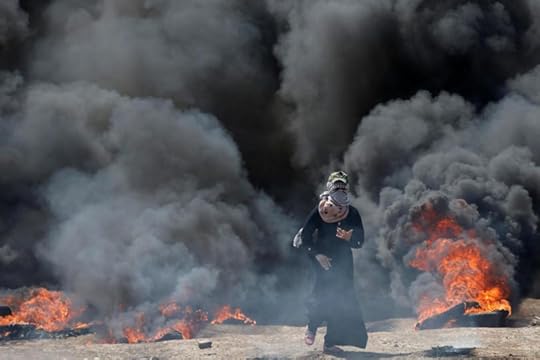
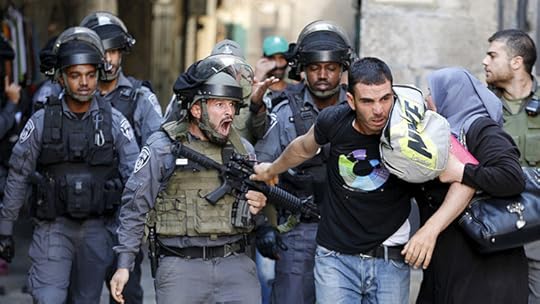
L’immagine sulla copertina.

Ma la sensazione dura solo il tempo della lettura di queste prime poche pagine. Poi, Grossman (cognome di origine polacca), mi prende letteralmente per mano e mi conduce con sé facendomi da gentile cicerone, di quelli che non urlano e non stordiscono, aiutano a focalizzare lo sguardo e a sviluppare la riflessione:
In un buio giorno di pioggia, verso la fine di marzo, esco dalla strada che porta da casa mia, a Gerusalemme, verso Hebron – ed entro nel campo profughi di Deheisha. Dodicimila esseri umani vivono qui in un superaffollamento che quasi non ha il suo pari al mondo, e le case vi si ammucchiano l’una sull’altra, e la casa di ogni famiglia si lascia spuntare attorno brutte escrescenze di cemento armato, e travi di ferro le si innervano sopra e ne sbucano fuori come dita tese… Io salto sopra i rigagnoli, poi smetto di saltarli, perché c’è qualcosa di ridicolo – quasi di immorale – in questo mio delicato stare attento a non macchiarmi di qualche goccia di sporcizia.

description

L’aggettivo “delicato” colpisce: rende molto bene quell’immagine, e rende molto bene l’atteggiamento generale di Grossman, al punto che s’intuisce essere la delicatezza caratteristica dominante della sua personalità. La stessa che emana dalla sua persona.
È un reportage ormai vecchio, targato 1987 com’è: eppure non sembra affatto datato, sembra piuttosto scritto in questo 2018 (per la cronaca, la prima Intifada esplose pochi mesi dopo la sua pubblicazione).

description

Verso sera ritorno a Gerusalemme. Ai lati della strada vedo vecchie macchine arruginite, rottami, lamiere, copertoni conficcati su recinti di filo spinato, vecchi scaldabagni, porte scardinate, muri insudiciati da scritte mezzo cancellate, vecchie scarpe rotte. Tutto buttato ed esposto senza pudore ai lati della strada, tutto custodito qui, ammucchiato, in modo da destare in cuore un senso di indefinita oppressione: tutto questo abbandono è come un urlo di protesta per una situazione fatta di rovina e di corruzione, una situazione disperata.

description

La sensazione di delicatezza si rafforza in questo deambulare, nell’immagine del reporter che esce di casa al mattino col suo taccuino, cammina fino al luogo della sua indagine, e torna a casa la sera, ripercorrendo a piedi la stessa strada durante la quale ripensa a quanto ha visto e sentito durante il giorno.

description

E tra i profughi ci sono anche quelli che sono stati miracolati, ed è stato loro concesso di far ritorno alla loro terra. Di un’azione di così incomprensibile grazia hanno goduto gli abitanti del villaggio Wadi Alfukin: nel 1948 sono stati strappati dal loro paese e per 24 anni hanno vissuto in un campo di profughi o presso parenti pietosi, o in case d’affitto, presso estranei, a Gerico e a Deheisha e a Hussan e Amman, e poi tutt’a un tratto, nel 1972, un misterioso Cesare ha fatto un cenno con la mano ed è stato impartito un ordine: “Fateli ritornare!” e loro sono ritornati al villaggio dal quale erano stati scacciati, e sono forse i soli che abbiano avuto la fortuna di ritornare, dall’inferno della vita dei profughi, a una vita da esseri umani, e perciò possono forse dire qualcosa sulle possibilità di una riappacificazione, di un perdono. E io sono andato a trovarli.

description

Mi pare che la situazione tra israeliani e palestinesi anche a me generalmente scateni emozioni intrise di ideologia basate su pregiudizi favorevoli o contrari, raramente sull’obiettività e sull’approfondimento: perciò, ho l’impressione che in questi reportage di Grossman per la prima volta l’intelligenza e l’onestà prevalgano sulla faziosità e vadano a toccare il cuore dell’immensa questione, estraendone il segreto. Immensa questione che è bene ricordare coinvolge due popoli.
Per sette settimane Grossman è andato in giro incontrando il “nemico”, i palestinesi, gli arabi: nelle case, nelle scuole, negli istituti, per le strade, ai posti di blocco… Visita quelli che si definiscono i Territori, cioè la Striscia di Gaza e la Cisgiordania, che Israele occupò nel 1967 con la Guerra dei Sei Giorni, e non ha più abbandonato.
E racconta come vivono, cosa pensano, cosa provano, cosa sognano gli arabi.

description

Alla sua pubblicazione questo librò scatenò reazioni della destra israeliana che lo accusò di essere filopalestinese: a me sembra che Grossman sia piuttosto interessato da chi soffre, dalle vittime. E i palestinesi sono vittime della storia proprio come gli israeliani, sostiene Grossman, la storia ha distrutto qualcosa sia negli occupati che negli occupanti.

PS
La mitologia araba identifica nel vento giallo la brezza calda che giunge direttamente dall’inferno.

description
Profile Image for Ted.
515 reviews737 followers
August 7, 2016
This is a powerful book written by an apparently open-minded Israeli author, about the shocking day to day facts of the Palestinians' existence in the occupied territories. Grossman seems genuinely moved, even appalled, at some of these facts, which he reports in a way that suggests "yes, I knew it was bad, but I never imagined ...". He seems moved, he seems sympathetic, he seems to sense that a wrong, perhaps a great wrong, is being done here ...

And then one reaches, late in the book, the chapter The Terrorist's Father. Grossman relates the story of a man (Mohammed) living in the occupied territories, whose son (Ali) participated in the brutal murder of two Israeli couples. After many months the son is apprehended and killed. But before he is apprehended the security forces arrest and interrogate the father, humiliate, degrade and terrify the father's family, all the while insisting that the father knows where the son is hiding. Nothing in the story as Grossman relates it indicates that the father actually had any knowledge of where the son was, it is stated that the authorities knew well that the father and son were estranged and seldom saw one another.

But in the occupied territories, the sins of the son are visited upon the head of the father. One day, after the son has been dispatched, but before the father even knows of this, soldiers arrive at his house (he isn't there) and inform his wife that she has fifteen minutes to get her belongings and daughters out of the house. Then it is bulldozed. When the father returns, he is again taken into custody, this time beaten and tortured - now, to find out where his (dead) son was during the time they couldn't find him! The man is not allowed to rebuild or indeed even to own a house again, he has no job, to support his family he has become a beggar.

Grossman's reaction to all this? "One's heart does not go out to Mohammed Al-Kal'ilah, who raised such a son ... he arouses no sympathy." Grossman's only sympathy is for the murder victims, the Israelis. As he said earlier in this narrative
When I learned ... what his son had actually done, I felt that I didn't want to hear the rest of the story from the father. I remembered the innocent, naive, and optimistic faces of the murdered couples, and I could not find in myself any sympathy at all for Ali Al-Kal'ilah's father, lamenting his son and demanding that he be allowed to rebuild his destroyed house.
Grossman senses that his lack of compassion for the father here is symptomatic of the psychic wall that prevents the Israelis from having any understanding of what they are doing to the people of the occupied territories. He seems confused and perhaps even ashamed about his inability to have any compassion whatsoever for Mohammed. The most he can say is "I chose this story because it is a sort of bitter microcosm of the big story - of two nations' life together. One that brings to life the simple misery in which we live."
One can only add, first, that his reference to "two nations" is bitterly ironical, and second, that the misery of which he speaks is not perhaps so simple, and is almost all on one side of the equation.

In the end, I cannot help but feel that Grossman is a good man, but a good man who is squeezed into a mental and emotional straightjacket by what he refers to as "the entire Israeli ethos". He has written a profoundly sad and upsetting book.
Profile Image for Mariel.
667 reviews1,210 followers
October 22, 2012
When I left on this journey, I decided not to talk with Jewish or Arab politicians or officials. Their positions are well known to the point of weariness. I wanted to meet the people who are themselves the real players in the drama, those who pay first the price of their actions and failures, courage, cowardliness, corruption, nobility. I quickly understood that we all pay the price, but not all of us know it.

The Yellow Wind was published in 1988. The introduction was written in 1998. My copy has an afterword from the author from 2002. In 1998 he says that so many things have happened, so little has changed. A lot has happened since 2002. He writes that it is easy to say that those who didn't believe in peace were right. It's always easy to say that if you don't have to live their lives without that hope. It's easy to say there's hope if you don't have to have it for them. He hopes that if both sides lose their illusions than concessions may be possible. He also admits that the struggle could come from knowledge of future painful concessions. There doesn't seem to be a predicting statement possible that can come without a tail to wrap around its own head like a forked tongued lasso. He dedicates the 2002 edition to those who hold onto their hope because the only alternative is the killing despair. It is what reminds us that there is no divine decree that states that Israelis and Palestinians must forever kill, and be killed by, each other. It seems like both sides feel there's one, divine or no, keeping score.

What struck me the most was what he says about the people, both the Israelis and the Arabs, not knowing their own price. When he writes that they did not know how miserable they really were it is true. This isn't true of everyone, but it kind of is. When you are seriously ill you cannot remember what it is like to feel healthy. Community and purpose can be a light. Is it the same to ask it of your next generation when you can't live their lives for them, when they don't know what it is like to really breathe? I feel goosebumps just pondering if I had to live there and consider having children. One young Arab who slaves as a dish washer in Tel Aviv knows that the world doesn't give a shit about him. That's got to be as lonely as you can get. Beating each other because there was no one else to take it out on. Beating your family when you see them every two weeks. I could say that I care. I do. I care about Mexican migrant workers who are virtual slaves on our tomato farms because the law affords them no protection as illegal immigrants. I think of it whenever my vegetarianism comes up (any time food comes up). Arabs working in Israel face the same black hole. Eat and are they paying for it. Are you one of theirs rising up only because the oppressors showed you how? I would want to be an inconsiderate lion were I them. Or a hungry inconspicuous bug. Reading the differences between the courts of law in the territories versus in Israel gave me chills (there was no such thing as a court of appeals). They aren't given the benefit. They are tolerated. The law says so. The crocodile was too full that day. I wish that I could shut it off fast enough. I wish more that I knew how to do this. It isn't hard to imagine that they can't taste their food for turning over the guilt like words in their mouths. Move on and you betrayed a long ass time ago.

The Yellow Wind ends with something from Albert Camus that that passage from speech to moral action is "to become human". During the last weeks, and seeing what I saw, I wondered more than once how many times during the last twenty years I had been worthy of being called human, and how many people among the millions participating in this drama are worthy of it. How do you become human? What's the action? Is caring that there's that kid enough in the cosmic scales? It's hard to live under knowing what it costs, how miserable you are, that you are not really free and then be free. How can you be free when you know that all of the time? It's going to happen somewhere else, to someone else.

David Grossman went on his seven-week assignment for the Israeli newspaper Koteret Rashit because he felt that yawning unawareness inside himself. The answers to the frustrations to the unanswerable questions of how do you go on living that way. The void of an answer puts you to sleep. What can you do? It doesn't do anything to bring it up from time to time that there's confusion and breached loop holes in humanity. Grossman had previously avoided visiting Old Jerusalem because he couldn't "tolerate relations that are not on an equal basis". I feel it too. How you can know things, and yet not know them. I had a sort of a fight with someone I'm close to the other day because she took offense that I "always" wanted to read rather than listen to her talk about politics. I answered the truth that I did listen to her, but after several hours (of what I already knew) it was too much. I think I made a mistake in first saying that it was too depressing to talk about real world stuff for that long because I was treated to a lecture about fantasy and reality. The problem with the world is us who sleep. Well, people like me. I can't really judge the Israelis who feel a frozen sickness inside over the "conflict" and "occupation" and move on as fact of life without considering its toll. The toll of inaction. Is there much difference in acknowledged helplessness? I've wondered about growing up in a culture that doesn't welcome differences (Grossman cannot get an answer out of zealous Ofrans when he asks them what they imagine the greatest pain for their enemies might be), to betray your people by letting in any other. They have all of these words to reduce stolen lives. There's no language to really express it. Self censoring poets after years of being used to it reminded me of journalists in my own country who do not even have to play up to the government as they do (it is the same in Japan, and elsewhere). The caged bird forgets how to sing. At least, there's no language that becomes action, or flying. It's a slow process to get you used to dehumanization. I know that this goes on in my own country and I know when the wool is the proverbial attempted murderer of my eyes. Drone strikes not okay. I'm reminded of what Cioran wrote about only mediocre people caring about the suffering of others because it would be too much for a person with total capacity. It IS too much. I don't know if I agree with it, though. If you have to be 100% to matter. If it has to last forever to count. Peace isn't going to last forever even if you do get it. I can care about others without losing my own soul. I feel like it is wishing that someone would make that leap for you. Prove to me its worth it. Someone have the hope for me. Live through this.
What struck me in his meetings with the refugees, and with the most devout in we're right fury, is that they are lasting forever in nothing. It's a hell version of twiddling your thumbs. Won't you take me to the promised land....and then what. The devil's workshop of doing nothing with your hands. Don't get up and build. Grossman quotes from Calvino's Invisible Cities about the city that is forever in construction to prevent its destruction. Don't wipe your face from the tears. If you've got dirt on your hands leave it. We've got forever. People interviewed when speculating about the future are doubtful about numbers a lot. One person says that they will equal in numbers by 2010. It depressed me to think about pawns. It's all the past and it is future numbers to be crunched under regulation boots. Was anyone anyone right then? Maybe you've gotta think about more than one thing. More than anything else, you've got to think for yourself. If you can hold more than one thing and one person in yourself and not lose your soul. Even if you can't save anyone, or have their hope for them, you can love them. That's got to be better than all of the hate that these people have. I'm more disturbed by the faceless enemy hate people around me have when they don't really care about people far away dying. They don't even have to make the effort to avoid their eyes. Is that better or worse? Maybe it's the same disturbing. Are they really that scared or are they scared of thinking, all of these years after 9/11? In Israel and the West Bank they are very much afraid of dying (but for what as I don't get a sense that it is for fear of the future). Or no one wants to blink first. Their lives are linked. It's not some Mercedes Benz Olympic circle logo entwined but like when Liam Neeson tells Darth Vader that we are all connected. I never gave a shit about the Olympics. I have no problem imagining people and getting very upset about stuff. I don't see much of flags when I look into the future. I'll never understand any of it because I can't see people as lines on a map. I thought of instances from other parts of the world, from other places in time, when reading The Yellow Wind. They reminded me of so many other kinds of people.

I was struck by the differences in the schools he visits. The kids in the camps have total discipline. The Ofran kids are unruly. The Arab university students had to be taught critical thinking skills. I wonder why the sides of "We can do what we want" from fear shows up in some and not in others. I'll never forget an instance from my childhood when my grandfather taught me to do something racist. I understood what I had done when I had seen the look on the woman's face. I never wanted to do anything like that again and nothing my grandfather said could move me again. I feel the shame I felt that day writing about it now. To those who would say that it would open too many cans of "This earth is ours!" worms to change I would ask if they would never have had a civil rights movement in the USA? Sure, it has been nasty where I live after the media played up race over a shooting. Does that mean that things should stay bad because they won't be perfect? One Israeli female airport employee treats people as humans. They are not all like that. Why do some not want to be any different? I was struck by all of the pointing fingers and evil eye. The Israeli Arabs versus those in the West Bank. Those who tried to make a life, versus those who couldn't do more than wish none of it had ever happened. The pining for third generation memories reminded Grossman of his Polish grandmother who couldn't appreciate today for what she had lost yesterday. The Jews who counted offenses from Spain. Grossman asks him why they don't leave to enact revenge too. I had been thinking the same thing. They have a lot in common, those who don't want to live. The University of Jerusalem did a study to compare the dreams of Jewish children with the dreams of Arab children. None of them dreamed of peace. If there was a sandstorm monster sifting them through his glass fist that would explain it to me. They must be born without knowing how to dream. I want to know why they wouldn't want any different. The past is done. The future will be the same past if no one does anything about it.

You could write a book about it. You can talk about it and not read any books. Early in the book Grossman meets with some Arab refugees who dismiss it all like how someone would laugh in the face of dead (as in scared shitless). It's "bolitics". Those who can pronounce the "P" still don't, in defiance. I know how they feel too. I kind of want to bury my head in the sand and wait and not know how miserable I am. When this book was written the airport travel was humiliating for Arabs. One writer announces "To civilization!" as a destination when he gets to leave. I wonder if he would feel that way around the rest of the world these days. My favorite rapper Aesop Rock once said "You can lead a man to city but that don't ensure civility". What the hell is all this talk about this land is our land, anyway? I was struck by the lady who pines for Deheisha refugee camp when some have returned to the village of Wadi Alfuqin (I think the unofficial theory that this rare kindness on part of the Israelis was to make room for expelled Gazans was probably on the money). It is true that you can make a home anywhere, no matter how bad, if there are moments of love and grace. No one can do that for you if you don't have your own grace for it to happen. That's all the thinking and talking stuff. I can say that stuff and sound hopeful about people having that but I can't make them have it. I hate bolitics. I loved reading Grossman's book. I treasured reading about this time with these people and fighting the soul sleeping of no one knowing what it is like for anyone else.

And these are the same people. I saw them in their calm days. Almost in their slack days. Not in the season of their messianic heat. Not at a time of "high messianic tension," but it lies in wait for them always, like a disease. These are historical people, and historical people become- at certain moments- hollow and allow history to stuff them, and then they are dangerous and deadly.

There was one instance where I did not agree with Grossman. It was when he wrote that no one would be sympathetic to the father of a terrorist who helped to murder an Israeli couple. He had been left to wander between worlds after release from half a year in prison. Not less or enough of anything for anyone, I guess. The government ordered the home of his father destroyed. By law given to them by them if they said they suspected that the son had hidden out there. I didn't see any need to render the family homeless and destitute. They lived like animals. I felt sorry for him indeed. It has long sickened me that punishment of criminals is taken out on the family. When a person is committed to death it is also someone else's child who is taken from them. The father did not kill anyone. The man's children didn't kill anyone. He did choose to make an example of this man, though. Maybe he didn't wholly decide in his heart the eye laid on him by everyone else if he chose to write about him too. I wondered why he wrote that a man who could raise a son like that and if Grossman would look at it that there was more than one person raising that man who became a killer. It is said more than once that a person didn't know they were Palestinian until they went to jail...

I really, really don't want to write one of those "I wrote about it so you don't have to read it" book reviews. The Yellow Wind is a wonderful book. A man in his country and among people if they would have the connection or not. I know how he feels. I want to understand too. There is a chapter "Swiss Mountain View" written as a story about an Israeli man who works as an oppressor in a camp. He has had a son born to him that day. He had loved his job. If there's some version of "I'm not a racist. Some of my best friends are gay" version that "the man" utters it would be the whistle while you work tune this guy lives to distract himself. He has no friends. He feels this day the aching of the chasm in himself, finally. I see him as the foreign obstruction in the whole, myself. I loved that he was writing a story about it too to be in this man's place as he was walking crookedly to avoid being upright with his fellows. My copy was previously owned by a student. Judging from the notes in the margins the former owner did not understand Grossman's poetic metaphors and this story they rejected entirely. I thought that was a shame. I freaking love David Grossman's style of writing. It's like holding someone's look, only with words. I don't think he would let himself off the hook for anything. It would toss and turn in his mind like the worst sort of bed hog. No soul sleeping, for all that he wrote this book in the first place to avoid that (I love this man). If I were a victim I wouldn't want to be seen as a victim in that there was nothing else to me either. There's the part that hopes for yourself. Grossman does not write about the people he meets in this way. If an Arab man sells the story that he's better off he checks into it for grovelling cynicism. He doesn't let them off the hook more than he would let himself off either. I loved that. That's a place to start. If you're going to have your own hope you want it to be real for yourself, right?

I was struck by when Grossman writes that he was disappointed in someone he didn't even know. A red-head college student who takes up in a hate rally spurred out of the too thin airless vibes of, well, hate. I love that he had wanted to get a look at the girl that the boy had been trying to impress when he first notices him (he concludes that the boy has no chace). I think he would take them into him and try to be human in any way he could. What he does is all I can think of in the way of having hope for anyone else, in trying to live for them. I wanted to know about everyone. At least that maybe doesn't have to be the price to not care, right? If you had to live there and go on about your life at least you wouldn't have to pay for their life with your own life in that way?

Until this is fully understood, we will all continue, gone foolish from abundane and apathy and feeling inferior in the face of "activism" and "realization of ideals," to sit in the hall and watch the gushnikim playing before us scenes of horror- at every opportunity that presents itself- yet stimulating some pleasant impulse in some hearts, as well as dramas of authentic pioneer idealism, and snatches of scenes of madness and instigation, except that sometimes, while we watch the events in that circular field and pay the small price of not doing anything, someone will awaken in the back corner of the great auditorium and will discover, when he sees the ground moving slowly under his feet, that this wonderful circus is a traveling one, traveling with determination, and that its goal and direction are known to him without any doubt.
Profile Image for J TC.
235 reviews26 followers
November 22, 2024
Uma leitura, uma ode obrigatória. Num mundo dominado pelos acontecimentos de 07/11/23, pela barbárie cometida pelo Hamas, seguida do genocídio da população de Gaza, e no presente timeline, à destruição do Líbano, essa pérola do Mediterrâneo, nesse mundo e neste tempo, a leitura destas reflexões melancólicas de David Grossman sāo ainda mais importantes porque sem procurar culpados obriga-nos a pensar com o coração (Coração Pensante, é o título em português), não para a repartição de responsabilidades, mas para testar a nossa perplexidade e abominação deste duplo crime a que com impávido conforto assistimos diariamente.
Profile Image for Anna.
93 reviews4 followers
May 12, 2008
I have never been able to approach the Arab-Israeli conflict, or even begin to understand it, and as a Jew I always felt I should. On numerous occasions I tried to delve into it through books and articles but nothing ever made sense, and nothing ever stuck. Then, I ran into an article in the Atlantic Monthly entitled "Unforgiven" by Jeffrey Goldberg. The article focused on the relationship of Israeli president Ehud Olmert and the Israeli writer David Grossman. And finally, through the prism of David Grossman I was able to begin to understand the issues and to genuinely want to read more.

He brings to the table the complexities of both Arabs and Israelis, but also Arab-Istraelis and Istraeli-Arabs. He admits his own flaws and his own prejudices and proceeds to dismember them. His writing is introspective and intellectual, and because he uses reason to judge everything, he is as hard on himself and his people as he is on the Arabs. And importantly enough for the region, he thinks in the long term.

In the end, he's not only my kind of writer, but my kind of person, so I trust his writing and finally, I'm starting to understand.
Profile Image for Fatma AbdelSalam.
209 reviews282 followers
October 17, 2015
الكاتب والروائي الاسرائيلي ديفيد جروسمن ، في كتابه " The yellow wind "
أو بترجمته العربية " الزمن الأصفر " بيحكي في الكتاب ده عن مشاهداته وحياته في القدس ولقاءه بالفلسطنيين وسؤالهم عن انهم ازاي بيشوفوا الإسرائيليين وعن إن كان في امكانية إيجاد طريقة ما في العيش سويا في نقطة إلتقاء في الزمن الحالي. راح مخيم " الدهيشة " في الطريق من بيته في القدس إلى الخليل و بدأ يسأل الفلسطنيين هناك الأسئلة دي. سأل طفل عنده خمس سنين انت منين ؟ _ قاله انا من يافا ، _انت عمرك زرت يافا قبل كده ؟ _ رد انه لأ بس جده من هناك وأبوه اتولد فيها. في كذا مناسبة لما كان بيتاح له انه يسأل كان دايما يلاقي نفس الرد دايما من مكانهم القديم حتى وإن كان مش موجود حتى ولو بتسمية تانية .

بيقول : "أكثر الأشياء حضورا هنا هو الغياب. ويمكنك أن تحس إلى حد معين أن الناس هنا حولوا أنفسهم وبمحض ارادتهم إلى نسخ طبق الأصل للناس الحقيقيين الذين كانوا ذات مرة في مكان أخر وصاروا انعكاسا باهتا لهم. وما عادوا سوى اناس يحملون بأيديهم عربونا حقيقيا واحدا : القدرة على الانتظار"

بيحكي عن إن الناس في فلسطين امتلكوا ذاكرة " فورنوغرافية " من جدودهم كلها مبنية على الحكي وصياغة القصص ، رجا شحاتة محامي بيحكي عن تجواله في تلال رام الله وازاي انه في لحظة بقى خارج الزمن وحس تماما بريحة الزعتر وشجر الزيتون وفجأة فتح عنيه لقى إن ده مش موجود أو مش بنفس طريقة الحكاية والأثر وفجأة اتحول الرمز قدامه من النضال للضياع و لغصة وألم واحساس شديد بالمرارة.

الإسرائيلي عنده استعداد يغيّر دينه ولا انه يغيّر معتقده السياسي أو يعترف بأي شيء مخالف للوضع الحالي أو انهم في وضع محتل ومش أصحاب الأرض ، لأنه مش على استعداد انه يخسر حياته بأي شكل من الأشكال ويكون اللي بيعيشه محض كذبة تامة.

حاجة تبدو بسيطة جدا بس هي كل ما نملك ، إن حد يسلب منك الزمن ، الوقت ، انه يوقفك بالساعات عند نقطة تفتيش او انه يفرض عليك حظر تجول لأيام وأيام ، ان وقتك وحياتك كل ما تملك في ايد غيرك وانه امتى يسمحلك بالتطور لحد معين وامتى تقف عند الحد ده عشان تفضل طول الوقت مقطوع من أرضك ومن الزمن المحيط !
سأل أحد الأشخاص في المخيم انتم ليه بتكرهوا الإسرائيليين ؟
_ رد ان وقت ما جيتوا ما كانش عنده شعور محدد تجاهم لا حب أو كراهية ، لكن دلوقتي هو بيكرههم وبيكرههم بشدة ، وقال ما تصدقش أي حد يقنعك بغير كده ، احنا الفلسطنيين بنكرهكم وبشدة. أنا سلبتوا 10 سنين من عمري في السجن من غير ذنب ، طردتوا أبويا من الضفة ومنعتوا أمي لمدة 6 سنين انها تزوره في الأردن. انتم علمتم كل فلسطيني انه يكرهكم.

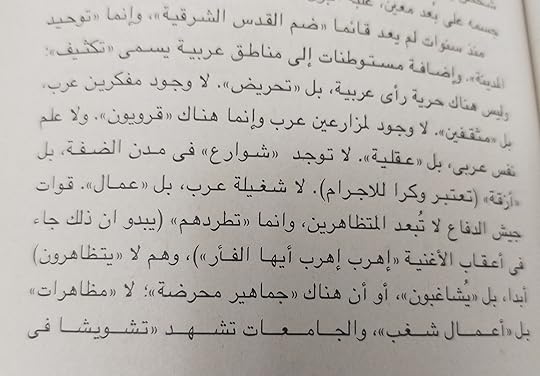
الكلمات خادعة وبتسرق الحقيقة ، مجرد إعادة تدويرها وتسمية الأصل بالزيف بيفقد المعنى وبيحرض ضد الحقيقة المطلقة. ما بقاش في الإعلام الإسرائيلي أي كلمة تدل على المعنى ، فلم تعد " مناطق محتلة " بل مناطق فقط او تريتوريز بالإنجليزية ، ولا "ضم القدس الشرقية " بل توحيد المدينة ، ولم يعد "رأي عربي " بل تحريض ولا " ثائر " بل جماهير مشاغبة ولا " تظاهرات " بل أعمل شغب وتخريب

في التقارير التي تتحدث عن أحداث عنيفة تنتهي بالموت. والناطق بلسان جيش الدفاع يملك صيغة خاصة في إعلان ذلك. وهكذا تكون البداية : " أطلقت دورية تابعة لجيش الدفاع هوجمت هذا الصباح قرب مخيم بلاطه نداءات تحذيرية وأطلقت النار في الهواء " وحسب النغمة المتشائمة يمكنك أن تتكهن بحدوث أمر سيء للغاية . وعند وقوع الضحايا لا يقولون قتل جيش الدفاع مواطنون عربا بل "رموا بالرصاص". وأحيانا ما تكون الصيغة رعوية تماما. " .. في حادثة لقى خلالها عربيان موتهما ..." _مدهش للغاية : خرج صيقان للتحدث في المساء فماذا لقيا؟ موتهما؟_
وقد أجاد مراسل راديو الجيش في المناطق، عندما أنهى قبل شهر تقريره بالكلمات التالية : " ... وقد أطلقت النار على الشخصين حسب الأصول المتبعة".


الكتاب ده كتبه ديفيد بعد مرور عشرين سنة على نكسة 67 ، في نهايته بيحكي ظروف كتابته وانه لقى انه لا مفر انه يواجه طائره الخرافي ، الصوت الداخلي اللي بيدعوه لأخذ موقف وإجابة واضحة كدولة احتلال واحساسه بالذنب من الفظاعات اللي ارتكبتها دولته ، واذا كانت هي دي القيم والأخلاقيات اللي بتتبناها سياستهم ، استمر في كتابته سنتين حب يلاقي الإجابة عند " الإنسان " في الأصل ، أهل البلد الأصليين ومش رأي القادة ولا السياسيين اللي اجابتهم دائما حاضرة ، اللي هو بيقر انه في كتير من الأحيان بيهجو نهجها عشان يزيح عن كاهله عبء الإجابة.
Profile Image for José Van Rosmalen.
1,433 reviews26 followers
January 27, 2025
Dit boek kwam uit in 1987 en het is een kleine veertig jaar later nog verrassend actueel. Helaas, moet ik zeggen. Het gaat over Israël, de Gazastrook en de westelijke jordaanoever. Het boek geneest je al snel van het idee dat het huidige conflict begon op 7 oktober 2023 met de aanslag door Hamas. Het echte probleem is dat Israël zich al tientallen jaren gedraagt als een bezettingsmacht en dat de Palestijnen zich als tweederangs burgers behandeld voelen, Grossman ziet deze pijnlijke waarheid onder ogen en hij doet dat moedig, door met veel mensen te praten en open te blijven communiceren. Het boek vormt de weerslag van zijn zoektocht naar wat je de waarheid achter de waarheid zou kunnen noemen.
Profile Image for Ahmed.
371 reviews23 followers
August 2, 2020
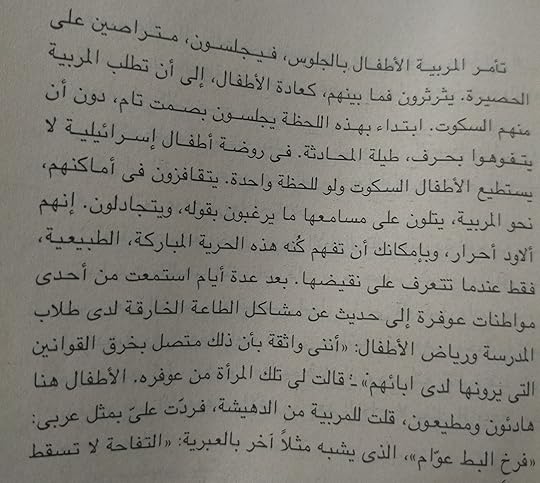
هل تصح فعلا مقولة أن الحق ما شهد به الأعداء، أما أن الحذر مطلوب لئلا تكون شهادته مجرد حقنة تخدير تعمي عن الحقيقة.
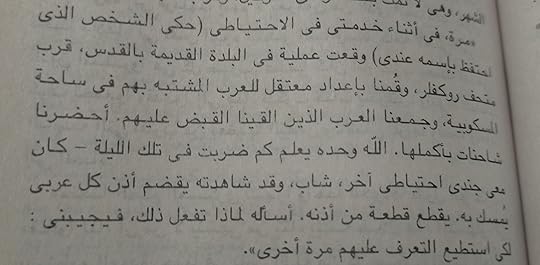
نحن أمام مشاهد متفرقة يسجلها كاتب( إسرائيلي) بعد مرور عشرين عامًا من هزيمة يونيو 67 جرت فيها مياه كثيرة تحت الجسور، يحاول فيها الكاتب أن يبدو موضوعيًا في سرده، مظهرًا رغبته في التعايش وتجاوز الصراعات، لكن أي تجاوز بعد اغتصاب الأرض، وفرض الهيمنة الغاشمة.
لكن قلمه أبي إلا أن يفضح بعضًا من المعاناة الفلسطينية بله محاولات اليهود الحثيثة لمحو تلك الهوية الأصيلة
IMG
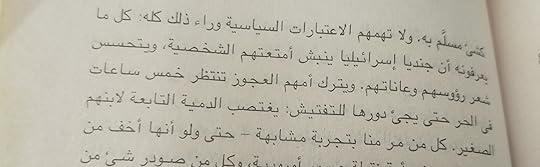
ويا لبشاعة ما يورثه القهر في النفوس، بل وما يمتد إلى الأجيال اللاحقة، وكأنها الرغبة في قتل النفس قبل أن تشب عن الطوق
IMG
ويفضح القلم ما يكون وصفه بالوحشية هينًا غير معبر
IMG
ويظل القهر والإذلال لغة الحياة اليومية
IMG
إن هذا الكتاب يثير في النفس مشاعر متلاطمة نحو قضية كانت يومًا الشغل الشاغل ومحور الحياة، واليوم تكاد تكون أثرًا بعد عين تحت وطأة صراعات مضنية أحسن أعداؤنا وضع تصميماتها، وأجاد أبناؤنا نسج خيوطها تنفيذًا دقيقًا لوطن عربي شائه.
1,987 reviews110 followers
December 5, 2020
In 1987, David Grossman was invited to visit and talk with Arabs living under Israeli rule and to write about his experiences and the conclusions he drew from them. His conclusion was that the situation was damaging to conquer and conqueror alike. Written for an Israeli reader, he invites the reader to empathetically listen to their Arab neighbors, to reflect on the impact the situation is having on Israeli psyche and to forge a new path. I would love to see these conversations revisited 30 years later. How has 3 decades changed the opinions and outlook of the Arabs and Israelis he talked to in these pages.
Profile Image for Trish.
1,422 reviews2,711 followers
August 17, 2016
David Grossman was a novelist when he was commissioned in 1987 to write a series of articles describing his perceptions of conditions in the occupied West Bank at the time of the twentieth anniversary of Israel’s Six Day War. What he wrote became a sensation in Israel. A book of the articles was published. Portions of that book were published in The New Yorker, and translations offered access throughout the world.

My initial reaction upon reading this thirty years since it was written was that it seemed dated. Those of us since who have been willing to grapple with the scene there have encountered stories like these before. The point, I guess, is that the problem has never been resolved and instead has festered, infected, and inflamed an entire region.

Grossman was remarkably naive in his writing—by that I mean he registered his reactions without much apparent editing. When he was horrified and distressed recognizing that Arab children were being taught to hate and kill Jews, he said so. When he discovered he lacked remorse when an Arab’s family home was torn down and the family banished because the son had committed murder, he said so. “They had raised the son and were therefore responsible” was his logic.

Towards the end of the book, however, his insights came hard and fast and terribly prescient. What strikes me now is how none of his insights were acted upon. All the markers I have in this book are in the last 75 pages. The paragraphs are too long to quote, so you will just have to go to the source. If you have been following the Israel Palestine saga, skim the beginning, and start reading at Chapter 12, “Sumud.” Or just read the last chapter, “The First Twenty Years.”
"The occupation is a continuing and stubborn test for both sides trapped in it…demanding that we…take a stand and make a decision. Or at least relate…Years passed…[and] I found myself developing the same voluntary suspension of questions about ethics and occupation…I have a bad feeling: I am afraid that the current situation will continue exactly as it is for another ten or twenty years. There is one excellent guarantee of that—human idiocy and the desire not to see the approaching danger. But I am sure that the moment will come when we will be forced to do something and it may well be that our position then will be much less favorable than it is now."
No one country has the corner on stupidity and reluctance to see danger. America, Europe, China...every country...has been reluctant to acknowledge climate change when it would have been so much easier to address it than now. None of us can claim to be better. There will always be those among us whose moral anguish or need to respond exceeds that of others. But I begin to think the situation in Israel/Palestine has crushed the souls of most people living there until now there is precious little left to save. Please prove to me is isn't so. Make me proud to know you.

The last paragraph of the book quotes Albert Camus. The passage from speech to moral action has a name: “To become human.”

I was led to this reading by a GR friend whose review made me want to see.
Profile Image for Xinyu Tan.
198 reviews30 followers
May 31, 2023
This is the first book I read on Israeli-Arab conflict. The stories are depressing, because one cannot see the hope for change. Everyone is in the prison dilemma and most of them are playing the game “rationally” - mistrust instead cooperate.

“Is the feeling that the situation cannot possibly continue forever really a reasonable guarantee that it will eventually change?”

Later the author gave a grim opinion: “I am afraid that the current situation will continue exactly as it is for another ten or twenty years. There is one excellent guarantee of that--human idiocy and the desire not to see the approaching danger.”

Another side note. I once had the chance to attend a performance by the West-Eastern Divan Ensemble in Ann Arbor several years ago. At the time, I thought it was an interesting ensemble/orchestra, but it was only after reading this book that I truly understood the remarkable endeavor behind creating such an orchestra. It indeed was one of the most memorable concert I’ve ever been to. The 2nd Movement of Brahms’ String Sextet No. 1 made a lasting impression on me.
Profile Image for Leka.
362 reviews
November 18, 2018
..Annoto nel mio quaderno verde queste parole: Ora, la verità: hai paura? Sì, ho paura. E se ti succederà qui qualcosa, se ti colpiranno, pensi che ciò ti farà cambiare opinione? Pensi che ciò ti porterà a cominciare ad odiare? E se colpiranno il tuo bambino? Proprio lui?
E mi sono annotato la risposta, per “memento” e per testimonianza a me stesso, e tutto è scritto lì, nel quaderno verde.


Non ci è dato sapere che cosa Grossman abbia scritto nel quaderno verde in risposta a queste sue domande (esistenziali). Sappiamo però che, a distanza di diciannove anni dall’incontro con la “paura” nell’università di Betlemme -il libro è stato infatti chiuso nel maggio del 1987-, la guerra ha colpito il suo bambino.

Forse un’eco delle frasi annotate allora è rimasto anche nelle righe di a Dio al figlio Uri
http://www.repubblica.it/2006/08/sezi...
Per me un esempio di umanità conservata integra, in quella storia degli uomini –come dice un altro Grossman, Vasilij- che è la lotta del grande male che cerca di macinare il piccolo seme dell’umanità. Ma se anche in momenti come questi l’uomo serba qualcosa di umano, il male è destinato a soccombere.
Questo coraggioso libro –un vento giallo- è una ricerca dei piccoli, nascosti, talvolta smarriti semi d’umanità in una terra contesa, insanguinata e, nonostante tutto, bellissima.
Profile Image for aly Krabs.
8 reviews
February 19, 2024
Deserves 4.5 this book is so well written, we see his bias from his experience in the idf and growing up Jewish, but actively does not diminish the voices or reasonings of the Palestinian people. It’s just so well balanced my god
Profile Image for Clif.
467 reviews189 followers
July 14, 2024
In 1987, twenty years after the 1967 war, Israeli David Grossman traveled around the West Bank and Israel talking to people about "the situation". As a good journalist should, he asked questions and let the individuals he spoke to hold forth.

What he found was plenty of anger and hatred on both sides resulting in despair that things could change. At the time, the first Intifada was about to begin. He wrote a forward to the book in 1998 and an afterward in 2002, when the second Intifada suicide bombings were underway, something that I don't believe he could have imagined at the time the book was written.

To me, the situation is proof of the old saying that two wrongs do not make a right. To provide a land for the Jews seemed like a good idea at the time - to right the wrongs of centuries. To provide it at the expense of the Palestinians was to create a wrong and we have seen the result. Now the hatred is cast in stone and neither people are going to go away.

My belief is that Israel will continue to oppress the Palestinians and take away their lands while being unable to expel them. The alternative of removing the settlements would be Jewish civil war. But the world will not accept the land grab and the continued degradation of the Palestinians. Israel will become more and more isolated in the world, like South Africa with apartheid, and there will be little desire to move there even as the Palestinian population in the occupied territories grows. In the United States, where their heritage is valued, Jews are free from the persecution they faced for so long in Europe, and they have the same rights as their fellow citizens in a state that allows free practice of religion. That is all anyone can ask for. Israel will never be able to rise above the endless strife because it is founded on an injustice.
Profile Image for Nathaniel.
149 reviews11 followers
November 22, 2009
Each chapter is a person or group's view on the Israeli occupation of the Palestinian territories. The opinions and speakers are varied. For example, the person interviewed in chapter 8 expressed the need to remember that the Palestinians will be the Israelis' neighbors someday and that even though Israel is the conqueror, Israel's actions today should start reflecting that future. Others share feelings of hopelessness or viewpoints that are just plain scary.
This book is more emotional than intellectual. You won't learn the "why," but will see the raw, seething passions that fuel the conflict.
40 reviews
July 17, 2009
In this book, Grossman describes several interviews he had with people in Israel & Palestine, both Jews and Arabs, from just about every perspective you can imagine. I read this book for a class in Intercultural Communication.

In reading this book, the stories behind the headlines becomes personal. I found this book to be a little depressing, actually, because it it paints a picture of how little hope the involved people have for peace in their land. I do recommend the book, but just be aware that it may have an emotional impact.
Profile Image for dana brown.
742 reviews4 followers
February 1, 2022
Written in the late 1980’s, Grossman gave me a feel for this conflict - actually about longstanding conflicts in general. It doesn’t provide all the information that I need to truly understand the Palestinian/Israeli conflict but he captures the elements that cause negativity to deepen as time passes. It’s a good starting point and I hope to read more about the Palestinians.
Profile Image for Jonathan Tench.
25 reviews
February 19, 2023
Read this is 2000 as part of my Middle East class at USC. The descriptions of the Israelis and Palestinians he met, and how they’re locked in conflict is still etched into my mind twenty years later. Read this to understand the divide.
Profile Image for Erin Byrne.
25 reviews4 followers
December 17, 2018
An accessible book about the Arab-Zionist conflict- described in vignettes about life on the margins. I've been reading about the conflict for a while and it provided a refreshing perspective
Profile Image for Esi Rubanovich.
39 reviews8 followers
October 17, 2020
Everything happened these past 20 years ,while nothing has happened at all.

This book was released in 1987, 20 years after The Six Day War. Today, 53 years later, that sentence is still a precise description of reality. Much has changed yet everything still remains the same. Well, maybe that’s not completely true, perhaps what has changed is the development of more hatred and fear at both side’s ends. The “rude, cynical, dumb and condescending” Israelis vs. the “hateful, primitive, bitter and murderous” Palestinians. This was the paragraph that had the most impact on me:

If my son’s a murderer- kill him. Kill him straight away. But why did you have to ruin my whole life? Why did you make animals out of me and my family? I have so much anger in my hands now (he clenches his fist at me, trembling) if I had the chance, I’d kill the person who gave the order to destroy my house a million times now. Would I have done anything before, me? Would I have thought that way? I just wanted to live my life. Now they made me this way. They made me a murderer.

It’s difficult to take a stand on these words. It’s not easy to look past the fact that an entire family was brutally murdered by that man’s son. The initial instinct says: “Innocent people were murdered. Who the hell cares about that man’s house? Big deal. It’s just a fucking house.” But as Grossman himself notes: “Maybe precisely due to that initial instinct, we need to set a basic, rational stand. There’s no doubt this is a difficult, nerve-racking test, but maybe these morbid cases are the opportunity to exhibit humane greatheartedness nevertheless, and somewhat lessen the hatred and bitterness.”

53 years we live in a distorted, difficult situation, based on an unstable balance between hatred and anxiety, in an emotional and conscious desert, with the passing time becoming an entity of it’s own. This book was a powerful and emotional read, bringing up a variety of conflicting emotions: bursting rage, fear, empathy, but mostly the feeling of unbearable unfairness and helplessness, raising the question of how could we stay humane within the existing circumstances.
Profile Image for Eve.
250 reviews35 followers
June 9, 2016
Written in 1987 after a journey through the West Bank, acclaimed Israeli novelist David Grossman discovers through the daily lives of the occupied and the occupiers the corrosive effects of the at that time 20 year Israeli Occupation of the West Bank (of the Jordan River). What he learns is the abject hatred of one side for the other and the daily inhumanities that cement these feelings.

It is no surprise that almost 20 years later little has changed, other than a growing list of grievances on both sides and hopelessness that this century long struggle of two people for one piece of land will ever come to anything but more violence, retaliation, injustice and new generations to extend the misery to.

The Israelis keep the Palestinians on the West Bank under military administration, soldiers do as they please to any Palestinian - man, woman or child - at a checkpoint, in the street, and in their home - at any time of the day or night they choose. The settlers in the West Bank are free to live as they please and are protected by the soldiers, whereas the Palestinians have no one to turn even when they are the victims. The terrorist actions (i.e. suicide bombers, knifing Israeli pedestrians and soldiers) designed to be telegenic horrors taken by the Palestinians in retaliation leave all Israeli society in fear and therefore necessitates beefing up military control in the occupied territories. It is a vicious cycle and a cynical political ideology to remain status quo

As an outsider, one can only conclude a just and equitable solution need to come from the outside world and be implemented by such upon the Israelis and the Palestinians. They have been given 40 years and all efforts have come to naught.
Profile Image for Rook Andalus.
12 reviews1 follower
November 6, 2020
An excellent read, and certainly the least biased book on the subject I've ever read. I was introduced to this book while reading a passage in THE OTHER ISRAEL written by Assaf Oron, a Sergeant Major in the Israeli Defense Force Reserves. Assaf is one of the reservists who has refused to serve in the occupied territories after years of serving there.

In THE OTHER ISRAEL, Assaf wrote, "A copy of THE YELLOW WIND..., which had just come out, crossed my path. I read it, and suddenly it hit me. I finally understood what I had done over there [in the occupied territories]. What I had BEEN over there."

This powerful passage taken in context moved me to buy and read the book that moved a soldier to completely change his outlook on the conflict, and I am so fortunate I did.
Grossman's book is written from a uniquely humanist point of view in regard to what life is like for both Palestinians and Israeli citizens since 1967.

He spent 7 weeks in the occupied territories, both in the camps and in the settlements to make a genuine attempt to see the immediate world around him through the Palestinian and Gush Emunim settlers' eyes.

This book does not bog down with the intricacies and interpretations of various peace agreements, nor does it bother to delve into the well-known positions held by political leaders on both sides as so many other books on the subject do. Rather, Grossman focuses entirely on those who are most affected by the situation in the region: the people.

The book was written originally in 1988, and has an afterward by the author written in April 2002. As Grossman says in his afterward, "Nothing has changed." This book is as fresh and revealing today as it was 15 years ago. I really gained a lot by reading this book. You will too.
Profile Image for Lupa.
65 reviews1 follower
June 30, 2022
At first, I thought the book would be a dull report of facts with statistics and accounts.

I was surprised, the author took common characters in different situations to portray the particularity of the area occupied by Israel: West Band.

Cities, characters, leaders, families, farmers, soldiers, all are characters in this collection of related but not dependent chronicles.

In short, for each chapter: 

1. A Man Is Like a Stalk of Wheat (like the wheat that bends when it ripens “yellow”)
It begins to typify the situation of the WestBank refugee and the unbalanced relationship with the Israeli government. On the first visit, where it used to be an agricultural camp, it became a refugee camp (Deheisha). In this chapter he elaborates a phrase that compares the height of Jews to that of a pornography addict: in the same way the Jew changes the name of the West Bank to Judea and Samaria, justifying pornography tries to justify itself with a background like a story.

2. I Want to Shoot Jews
Visit a kindergarten and talk to children about Israel and the Jewish people. In the same way Jewish children picked up patriotic hymns, Arab/Palestinian children sing hymns of rebellion against the state of Israel

3. What the Arabs Dream
An interesting research on the dream. People living in Kalinga camps, Jewish children from Gush Etzion and in Kiryat Arba (Jewish enclaves on the West Bank). Made by Dr Yoram Bilu with young people between 11 and 13 years old.

4. Don't Pity Them Too Much
In Ofra, he reports a debate with the residents and how they saw the Arabs. Interestingly, one of the Jews explains that he can't get too involved with the Arabs so as not to jeopardize his role as defender and soldier. Another reinforces the idea of recovering the area considered biblical as far as Amman in Jordan.

The author is divided between people with radical actions and at the same time with many practical achievements. Ofra, who are reputed to be fanatical, created a system of interdependent communities that reflect the Zionist spirit of independence.

Paragraphs begin with Who are these people.

5. Life Sciences
Visit Bethlehem University Catholic University.

6. The Yellow Wind
Village of Wadi Alfuqin that were removed in 1948 and their homes completely destroyed , but were able to return for unknown reasons in 1972 . The region lies in a fertile valley and was hotly contested in the war. But the return was not easy, they gave a deadline (one month to build) and only for families who could afford to build a house.

The title of the book was inspired by Abu Harb who describes that a yellow wind will come from the gate of hell, (from paradise, only a fresh wind comes), in Arabic Rih asfar, that even people who will seek refuge, but are cruel and unjust, they will burn to death leaving the world covered with organs and the rocks white from the heat and the mountains will turn to dust leaving the earth like yellow cotton.

7. Catch-44
Judgment of a child by a court where there is only one level of justice, there is no appeal to higher courts. The judge cannot exonerate him because the accused was in prison for a long time, but he cannot blame him, because there is no evidence. An “interpretation” was made condemning him for bringing in money from abroad (he had won a scholarship) exempting the state from compensation.

8. Jews Don't Have Tails
In a conversation with an Arab resident who speaks Hebrew, he shows the strong opinion of those who stayed on Jordanian rule and now on Israel’s: “we need to get everything we can from those who dominate us: language, education, etc.” Leaving now would be a disaster for the Palestinians, perhaps a new Beirut.

At the same time, he narrates some of the various excesses of the occupation:
-why stop a Palestinian 5 times to buy a bag of flour
-because humiliating a family man in front of his children.
In his view, that is the behavior of conquerors.

9. The Essence of Being a Sabra
A community with strong and traditional Zionist values. (Kfar Adumin)
They accept autonomy for the Palestinian people, as it would be the only logical way out. An interesting discussion among Israelis living in Jewish colonies surrounded by Arabs and how they see the future.

10. The Other Barta'a (*)
How the two cities evolved, with the same family lineage, but separated by the railroads and united by the last war.

11. Swiss Mountain View—The Store
Story of Gidi, an informant and village leader at the same time. Inhabitants provide information and gain security, bans and work permits.

12. Sumud, means perseverance.
Among the points raised is the difference between an occupation and a domain. Among the issues raised: the demographic risk of Palestinian population growth. In the text, it was reminded that the Jews cannot be counted on, they are right where they are.

13. The Doll at the Allenby Bridge
Before, with Moshe Dayan, the policy of “open bridges” to create coexistence and interdependence, nowadays, the policy and domination against the population with a very radical police force. The doll mentioned in the title shows the intolerance of the border policeman who did not let the doll pass even with banal things.

14. The Wastonaires
Wastonaires are criminals who earn favors from the authorities in exchange for collaboration. Type: permission to build, open a business, etc. This character is denied existence by the authorities. Showing, by the author, one more discrepancies of occupation.

15. Like a Boy with a Teddy Bear
Working at WestBank. They show the working conditions of the population with lower wages and adverse conditions,

16. The Terrorist's Father
The fact that the son is a terrorist (even if suspected) makes life hell. He describes, from there, the destiny that the family has from the suspicion between them, to vacate the house in 15 minutes because it will be destroyed.

17. Last Night There Was an Inferno Here
Alfei Manashe who report on the attack suffered and the consequences in the Palestinian community.

18. The First Twenty Years
Author's report that over 20 years a lot has changed, but little has changed.

In the author's words: “…the occupation is a continuing and stubborn test for both sides trapped in it. It is the sphinx lying at the entrance to each of us, demanding that we give a clear answer. That we take a stand and make a decision. Or at least report. As one child explains about her mother who works as a maid: “She is a little bit of a dog, because she always walks on all fours. And she is also a little bit of a person, because she knows how to talk.”

End of story. So what will be? I can only guess, and be aided by what I know—not about the situation, but about people. I have a bad feeling: I am afraid that the current situation will continue exactly as it is for another ten or twenty years. There is one excellent guarantee of that—human idiocy and the desire not

The impressive reports show two peoples with an enormous desire to live and to establish themselves culturally and somehow find themselves excluding, that is, the existence of one can only be achieved if the other does not exist. On the other hand, the book tries to demonstrate that the existence of Israel can only become viable with the recognition of the right of the Palestinian people.

Finally, it should be noted that there is a distinction between the democratic government of Israel and the military government that dominates the West Bank region, explaining many of the exceptional acts .
This entire review has been hidden because of spoilers.
Profile Image for Colin Freebury.
145 reviews1 follower
August 6, 2023
This is an eye-witness report on a biblical tragedy that continues to this day, 35 years after this book was first published. Reading the book, I had the feeling that Grossman was living a nightmare from which he was struggling to wake up before the inevitable horrible ending. But as we all know, the horrors have continued and extremist positions in Israeli society - as described in chapter 4 of the book - have hardened. Grossman himself writes in the Guardian of 24 July 2023 that "The resistance movement [referring to widespread protests against changes to the judicial system in Israel] has also revealed how sophisticated were the mechanisms of self-deception, delusion and brainwashing in which we engaged so that, for 75 years, we could prevent all these hostilities from erupting. How we learned to hide them, chiefly from ourselves, and found ways to whitewash them, train them, domesticate them – and ourselves." Grossman like all Palestinians and Israelis, whether they know it or not, is still living a nightmare.


Profile Image for Collezionedistorie.
325 reviews13 followers
August 13, 2017
Interessante ritratto dei rapporti tra arabi e palestinesi in Cisgiordania, dove ogni personaggio acquista spessore anche se appare solo per poche pagine, grazie alla capacità dell'autore -il mio preferito in assoluto nella sua produzione da romanziere. Va considerato tuttavia che questo reportage è piuttosto datato: risale infatti al 1987, nove mesi prima dell'Intifada di dicembre, quando Grossman compì un viaggio nei territori della West Bank e si interrogò su come fosse possibile creare una strada verso la coesistenza pacifica. Ho apprezzato la lettura, tuttavia per qualcosa di più attuale consiglierei "Non odierò" di Izzeldin Abuelaish, abitante di un campo profughi della Striscia di Gaza, medico però in Israele, che si è posto la stessa domanda molto più di recente (il suo libro è del 2011). N.B. Il vento giallo del titolo è una leggenda araba di un vento caldissimo dell'Est, che farebbe divampare un incendio su tutta la Terra e la libererebbe dai malvagi.
Profile Image for barry.
47 reviews11 followers
December 5, 2007
Eye opening. Ground breaking. Startlingly honest. I read this years ago but really need to revisit in the context of the death of Grossman's son who died serving in the Israeli military during the Lebanese raids last year . Grossman's eulogy for his son is one of the most moving things I've ever read (wish I could have heard and understood his original reading of this) . Grossman is a rare writer, one that deserves a much higher readership outside of Israel.

P.S. I have not seen his new afterword in this edition. Not sure when it was written
337 reviews3 followers
December 6, 2021
The author writes "I have a bad feeling: I am afraid that the current situation will continue exactly as it is for another ten or twenty years." This book was written in 1988, and the author is correct. The situation continues and continues. Political leaders in Israel, the Gulf States, Iran, etc., etc., talk, but that doesn't change the situation for the people in the West Bank, the Gaza Strip, or even Israel. The author closes with a quote from Camus about the passage from speech to moral action. This "to become human." The author wonders how many times he has been worthy of being called human. I wonder how many times I have been worthy of being called human.
6 reviews4 followers
July 27, 2007
Recommended to me by a friend from kibbutz, this ambitious journalistic look at the Israeli-Palestinian conflict is the the best I've read on the topic. What's most amazing--and perhaps most disappointing--is that, while The Yellow Wind was written some twenty years ago, the injustices and tragedies it draws attention to, as well as a lot of the misconceptions each side has of the other, are still very real today.
Profile Image for Susan.
397 reviews114 followers
October 18, 2012
This is old but excellent. I read it after reading Grossman's To the End of the Land. Nonfiction. He went to visit the West Bank and to interact with people there. Open-minded fact finding mission. Depressing that the situation really hasn't got better since 1987....
Displaying 1 - 30 of 99 reviews

Can't find what you're looking for?

Get help and learn more about the design.