

What do you think?

The Blue Zones American Kitchen: 100 Recipes to Live to 100
Best-selling Blue Zones Kitchen author Dan Buettner spent years uncovering the Blue Zones--the five places around the world where people consistently live to or past, 100--and sharing lifestyle tips and recipes gleaned from these places. Now, creating your own Blue Zone at home is easier than ever, thanks to plant-forward recipes in this inspiring book--all developed right in our own backyard.
In Blue Zones American Kitchen, Buettner uncovers the traditional roots of plant-forward cuisine in the United States. Following the acumen of heritage cooks who have passed their recipes from generation to generation, Buettner uncovers the regions and cultures that have shaped America’s healthiest food landscapes, from Hmong elders living in Minnesota to Quakers in New England. Along the way, he illuminates both traditional and revolutionary ideas in vegetarian food with recipes from chefs like executive chef James Wayman, “the Gullah chef” Bill Green, and “the Cod Chef” Dave Smoke-McCluskey.
With wisdom from more than 50 food experts, chefs, and cooks around the country, Buettner’s road trip across America sheds light on some of its most under-recognized plant-forward communities as Buettner shares the ingredients, recipes, and lifestyle tips that will make living to 100 both delicious and easy. And the proof is in the pudding: 49 Blue Zones Project Cities have demonstrated that eating the Blue Zones way can alleviate obesity, heart disease, diabetes, and more.
Filled with 100 tasty recipes, from Pennsylvania Dutch apple dumplings to Southern Hoppin’ John, Blue Zones American Kitchen will change your diet--and your life.
In Blue Zones American Kitchen, Buettner uncovers the traditional roots of plant-forward cuisine in the United States. Following the acumen of heritage cooks who have passed their recipes from generation to generation, Buettner uncovers the regions and cultures that have shaped America’s healthiest food landscapes, from Hmong elders living in Minnesota to Quakers in New England. Along the way, he illuminates both traditional and revolutionary ideas in vegetarian food with recipes from chefs like executive chef James Wayman, “the Gullah chef” Bill Green, and “the Cod Chef” Dave Smoke-McCluskey.
With wisdom from more than 50 food experts, chefs, and cooks around the country, Buettner’s road trip across America sheds light on some of its most under-recognized plant-forward communities as Buettner shares the ingredients, recipes, and lifestyle tips that will make living to 100 both delicious and easy. And the proof is in the pudding: 49 Blue Zones Project Cities have demonstrated that eating the Blue Zones way can alleviate obesity, heart disease, diabetes, and more.
Filled with 100 tasty recipes, from Pennsylvania Dutch apple dumplings to Southern Hoppin’ John, Blue Zones American Kitchen will change your diet--and your life.
304 pages, Hardcover
Published December 6, 2022
About the author
Dan Buettner
31 books663 followersNational Geographic Explorer Dan Buettner has traveled the globe to uncover the best strategies for longevity.
Ratings & Reviews
Friends & Following
Create a free account to discover what your friends think of this book!
Community Reviews
Displaying 1 - 30 of 82 reviews

October 22, 2023
3 ☆
Author Dan Buettner began his The Blue Zones American Kitchen: 100 Recipes to Live to 100 with a bold claim:
Well, if I live ten years longer than actuaries would predict now based upon my current lifestyle choices, it won't be because of this book's recipes. Buettner found culinary traditions that were prevalent prior to the 20th century in the United States that are consistent with his food recommendations he gleaned from the "Blue Zones."
If like me you don't immediately recognize the author's name, Buettner had teamed up with National Geographic and the National Institute on Aging in 2004 to identify parts of the world with an above average percentage of healthy centenarians. These areas, which were dubbed the "Blue Zones" included Okinawa, Japan; Sardinia, Italy; Icaria, Greece; Nicoya, Costa Rica; and Loma Linda, California. Subsequent research has focused on determining the commonalities in diets and lifestyles that supported / created these pockets of longevity.
Using that knowledge, he combed through American food traditions to find those consistent with these original Blue Zones. Guidance also came from meta-analyses of the Global Burden of Disease study which spanned 204 countries:
This book included recipes from Indigenous peoples of the continental USA and of Hawaii; the Gullah cuisine that hearkened back to traditional foods of West Africa; authentic Tex-Mex that hasn't been drowned by cheese; and Asian American dishes. All the recipes are vegetarian.
I had picked this up because my library featured it as a new nonfiction book. And I thought that it would be interesting to compare and contrast this to Eat to Beat Your Diet: Burn Fat, Heal Your Metabolism, and Live Longer, which had also been featured as a new nonfiction by my library.
I'm not adverse to eating less red meat and processed meats, but I am reluctant to cook dishes which require obscure or esoteric ingredients. That is my primary complaint of four almost half of the recipes. Others may not feel the same. On the other hand, if I drop the perspective of a home cook and adopt an anthropological perspective, then this book carries greater value than as an every day cookbook.
Author Dan Buettner began his The Blue Zones American Kitchen: 100 Recipes to Live to 100 with a bold claim:
this book could help you live an extra 10 good years.
Well, if I live ten years longer than actuaries would predict now based upon my current lifestyle choices, it won't be because of this book's recipes. Buettner found culinary traditions that were prevalent prior to the 20th century in the United States that are consistent with his food recommendations he gleaned from the "Blue Zones."
If like me you don't immediately recognize the author's name, Buettner had teamed up with National Geographic and the National Institute on Aging in 2004 to identify parts of the world with an above average percentage of healthy centenarians. These areas, which were dubbed the "Blue Zones" included Okinawa, Japan; Sardinia, Italy; Icaria, Greece; Nicoya, Costa Rica; and Loma Linda, California. Subsequent research has focused on determining the commonalities in diets and lifestyles that supported / created these pockets of longevity.
Using that knowledge, he combed through American food traditions to find those consistent with these original Blue Zones. Guidance also came from meta-analyses of the Global Burden of Disease study which spanned 204 countries:
The largest gains would be made by eating more legumes, whole grains and nuts and less red meat and processed meats.
This book included recipes from Indigenous peoples of the continental USA and of Hawaii; the Gullah cuisine that hearkened back to traditional foods of West Africa; authentic Tex-Mex that hasn't been drowned by cheese; and Asian American dishes. All the recipes are vegetarian.
I had picked this up because my library featured it as a new nonfiction book. And I thought that it would be interesting to compare and contrast this to Eat to Beat Your Diet: Burn Fat, Heal Your Metabolism, and Live Longer, which had also been featured as a new nonfiction by my library.
I'm not adverse to eating less red meat and processed meats, but I am reluctant to cook dishes which require obscure or esoteric ingredients. That is my primary complaint of four almost half of the recipes. Others may not feel the same. On the other hand, if I drop the perspective of a home cook and adopt an anthropological perspective, then this book carries greater value than as an every day cookbook.

January 18, 2023
I liked the original Blue Zones Kitchen much better - recipes seemed simpler, with fewer and easy to find ingredients and I liked the taste profiles of Sardinia, Ikaria and Nicoya more than those in this cookbook. That said, I enjoyed reading the story behind the research and found several recipes I’d like to try

August 28, 2025
All the recipes are plant based and unfortunately most of the recipes contain ingredients that are not readily available where I live. I understand that most Blue Zones residents use whole ingredients that they can either grow in their region or are readily available. Reading more about the Blue Zones has motivated me to research more about veggies, fruits, and herbs that grow well in my zone.

October 17, 2023
I am really enjoying the new binding and paper that many cookbooks are being made with. They’re gorgeous and packed with stunning full-page photos.
This time, Mr. Buettner applies his blue zones philosophy to different food cultures in the US. I found some recipes that look like gems, and I learned something about the native, Gullah, and other historical food cultures that make our country so rich and interesting.
This time, Mr. Buettner applies his blue zones philosophy to different food cultures in the US. I found some recipes that look like gems, and I learned something about the native, Gullah, and other historical food cultures that make our country so rich and interesting.

October 29, 2022
The Blue Zones American Kitchen Sampler is a short look at the longer book which delves into five areas of North America where people live the longest and explores what they eat. The sampler is, again, very short, but gives an idea of the recipes available. It is a combination of North American ingredients combined with foods brought in from other countries. I was happy to see a Native American dish included in this short preview. This sampler does pique my interest as to what is in the full-length book.
I reviewed a temporary digital sampler of this book from the publisher via Netgalley. My review is voluntary and the opinions expressed are my own.
I reviewed a temporary digital sampler of this book from the publisher via Netgalley. My review is voluntary and the opinions expressed are my own.

March 16, 2023
Far far too much oil in the recipes which is disappointing but the biggest issue which I thought I would never mention in a book review was the horrible chemical smell of the printing. Glad this was a library book.
December 14, 2022
Loved the concept. The recipes weren’t my style (mostly seemed like obscure things that weren’t common). But maybe that’s the whole point 🤣 I just feel like I’ve read other blue zone cookbooks with more easily accessible ingredients to a common person.

January 1, 2023
3.5 stars rounded down. This was a lovely, albeit difficult book to read in ebook format. Try and get a physical copy if at all possible and save your eyes.

November 6, 2022
I love that author Dan Buettner decided to find American-made recipes similar to the more-worldly ones used in the previous "Blue Zone" titles. In the sampler-version of this new book, "The Blue Zones American Kitchen" as read on NetGalley, the recipes I read are tasty-looking recipes from various locations in the United States. These locations' cooks focus on indigenous ingredients and plant-based cooking, just like in the previous "Blue Zones" titles.
The Contents-list mentions Native-American, Latin-American, and Regional American recipes; some of the ingredients used in these include squash, corn, blueberries, beans, mushrooms, nuts -- healthful and tasty foods that our ancestors put together with lots of herbs and regionally tested cooking methods.
Some of the local / regional ingredients may be new to readers; Buettner gives interesting information about these within the recipe itself. He also gives substitutions for the more-difficult of these to acquire (and online food sellers, as well as local shops, will be of use for readers determined to try the recipes as written).
I cannot wait to hold this new book in my hands, once it is published! I loved reading about the Blue Zones, when Buettner first started writing about these locations. It is great to know an American version of this idea is coming soon.
The Contents-list mentions Native-American, Latin-American, and Regional American recipes; some of the ingredients used in these include squash, corn, blueberries, beans, mushrooms, nuts -- healthful and tasty foods that our ancestors put together with lots of herbs and regionally tested cooking methods.
Some of the local / regional ingredients may be new to readers; Buettner gives interesting information about these within the recipe itself. He also gives substitutions for the more-difficult of these to acquire (and online food sellers, as well as local shops, will be of use for readers determined to try the recipes as written).
I cannot wait to hold this new book in my hands, once it is published! I loved reading about the Blue Zones, when Buettner first started writing about these locations. It is great to know an American version of this idea is coming soon.

October 22, 2022
Originally posted on my blog Nonstop Reader.
The Blue Zones American Kitchen: 100 Recipes to Live to 100 is an eclectic collection of plant based indigenous and traditional recipes collected and curated by Dan Buettner. Due out 6th Dec 2022 from National Geographic, it's 304 pages and will be available in hardcover and ebook formats.
There's an abundance of research showing that healthy eating and lifestyle habits have a profound impact on overall health and longevity. This book is a collection of plant based recipes for supporting a healthy lifestyle with a specific emphasis on living a longer life.The author has researched the traditional dishes and ingredients of the areas of the world whose citizens have the longest lifespans, and has curated recipes enjoyed by those traditional societies.
The recipes are arranged thematically: Indigenous, African American, Latin American, and Regional & Contemporary. Recipes are written with an introduction and background, ingredients in a bullet list, and followed by step by step prep instructions. Ingredients are listed with imperial (American) measurements only. The publisher has included a metric conversion table in the back of the book.
The recipes are varied and quite unusual. Some of the ingredients will definitely require a well stocked healthfood store or co-op, or a large international food store (chlorophyll, benne seeds, jicama). The place where this book really excels is the incredible photography. Each of the recipes is accompanied by one or more color photos. Dishes are beautifully styled and presentations are appealing and attractive. Nutritional info is not calculated for the dishes (which I thought was a little odd).
Four and a half stars.Not sure if it'll make anyone live longer, but good food is a joy and its own reward.
Disclosure: I received an ARC at no cost from the author/publisher for review purposes.
The Blue Zones American Kitchen: 100 Recipes to Live to 100 is an eclectic collection of plant based indigenous and traditional recipes collected and curated by Dan Buettner. Due out 6th Dec 2022 from National Geographic, it's 304 pages and will be available in hardcover and ebook formats.
There's an abundance of research showing that healthy eating and lifestyle habits have a profound impact on overall health and longevity. This book is a collection of plant based recipes for supporting a healthy lifestyle with a specific emphasis on living a longer life.The author has researched the traditional dishes and ingredients of the areas of the world whose citizens have the longest lifespans, and has curated recipes enjoyed by those traditional societies.
The recipes are arranged thematically: Indigenous, African American, Latin American, and Regional & Contemporary. Recipes are written with an introduction and background, ingredients in a bullet list, and followed by step by step prep instructions. Ingredients are listed with imperial (American) measurements only. The publisher has included a metric conversion table in the back of the book.
The recipes are varied and quite unusual. Some of the ingredients will definitely require a well stocked healthfood store or co-op, or a large international food store (chlorophyll, benne seeds, jicama). The place where this book really excels is the incredible photography. Each of the recipes is accompanied by one or more color photos. Dishes are beautifully styled and presentations are appealing and attractive. Nutritional info is not calculated for the dishes (which I thought was a little odd).
Four and a half stars.Not sure if it'll make anyone live longer, but good food is a joy and its own reward.
Disclosure: I received an ARC at no cost from the author/publisher for review purposes.

January 15, 2026
In the Blue Zones American Kitchen, I liked the below recipes and the general philosophy of how to eat healthy like those who live in the blue zones. My biggest gripe with all three Blue Zone cookbooks is the lack of consistent pictures of the finished dish for each recipe. Only 2/3 of the recipes have photos and sometimes it isn’t of the finished dish, but “cooking” it midway which is artistic but not helpful.
* Coconut and Spice Chickpeas
* Hopping’ John with Carolina Gold Rice and Sapelo Red Peas
* Cajun Cornbread
* Hawaiian Fresh Fruit Tacos
* Coconut and Spice Chickpeas
* Hopping’ John with Carolina Gold Rice and Sapelo Red Peas
* Cajun Cornbread
* Hawaiian Fresh Fruit Tacos

January 10, 2023
Oh my gosh I love this book! I have been experimenting with a plant based diet the past year and I want to try so many recipes in this book. Basically the author looks for Blue Zones, areas where people commonly live over 80, in the USA and breaks down the different regions and their recipes in the book. People who live in Blue Zones eat 90% plants. They mostly eat greens, beans, nuts, and grains. They eat meat, eggs, and dairy very sparingly. His recipes are all vegetarian and mostly vegan. And they all look so good! He also wrote another cook book that looks at Blue Zones around the world and I have that one waiting for me to read as well. This one is a library book and I will look to see if I can find a used copy online to buy.

October 30, 2022
“Best-selling Blue Zones Kitchen author Dan Buettner spent years uncovering the Blue Zones–the five places around the world where people consistently live to or past, 100–and sharing lifestyle tips and recipes gleaned from these places. Now, creating your own Blue Zone at home is easier than ever, thanks to plant-forward recipes in this inspiring book–all developed right in our own backyard.”
This book, with 100 recipes from all over the Americas, is both a cookbook, and an art piece.
The photos are exactly what you’d expect from a National Geographic work.
Lush. Sumptuous. Vibrant.
The recipes are clear, concise, and laid out exactly how I like it.
I made a restrained (read: only two different types of fungi instead of the suggested six) version of the Mushroom Medley Soup, and it was excellent.
Can something be both simple and complex?
Now, Even though the blurb claims these recipes are “developed in your own backyard”, don’t think they’ll all be made with ingredients you already have. Of the five recipes provided, zero of them could be made with what I’ve already got in my well-stocked, and fairly diverse (quinoa, wolfberries, cassava flour, freekah, etc.). That’s not to say they can’t be sourced, it just may take a bit of extra planning.
I look forward to seeing this book in its entirety.
8/10
Thanks to NetGalley and National Geographic for this beautiful ARC.
This book, with 100 recipes from all over the Americas, is both a cookbook, and an art piece.
The photos are exactly what you’d expect from a National Geographic work.
Lush. Sumptuous. Vibrant.
The recipes are clear, concise, and laid out exactly how I like it.
I made a restrained (read: only two different types of fungi instead of the suggested six) version of the Mushroom Medley Soup, and it was excellent.
Can something be both simple and complex?
Now, Even though the blurb claims these recipes are “developed in your own backyard”, don’t think they’ll all be made with ingredients you already have. Of the five recipes provided, zero of them could be made with what I’ve already got in my well-stocked, and fairly diverse (quinoa, wolfberries, cassava flour, freekah, etc.). That’s not to say they can’t be sourced, it just may take a bit of extra planning.
I look forward to seeing this book in its entirety.
8/10
Thanks to NetGalley and National Geographic for this beautiful ARC.
March 12, 2023
Would love to eat like this but all the recipes have complicated ingredients or recipes, saved just 2 from the entire cookbook
February 4, 2023
Great stories about chefs, and beautiful pictures. Unfortunely many of recipes have hard to find ingredients.

January 25, 2023
Part historical narrative, part cookbook, I had great hopes for this one. Perhaps if I was less familiar with Blue Zone living and the evolution of American culture I would have found this more engaging. The recipes didn't wow me but I really enjoyed reading this and the photography was lovely.

January 20, 2023
Gorgeous pictures and interesting narrative but the recipes don’t feel that accessible for the average American kitchen (although maybe that’s the point :) Love the way the author incorporated his dad!

October 30, 2023
I know it's weird, but yes, I did actually read this entire cookbook. I was amazed at the range of recipes and the knowledge in plant-based eating. I'm not sure why this book isn't rated higher. I think it's great. I love the diversity of recipes. It has given me tons of ideas and much needed inspiration for plant based cooking.
Okay, so I read some of the other reviews. I agree there's way too much oil in a lot of recipes, but not all of them. Plus, that's an easy fix, just cook with water... I can see how some of the ingredients are hard to find, but again, not all of them. Also, maybe this is because I'm already used to cooking a lot of diverse cuisine but it's not that hard to make reasonable substitutions when you have to and still cook the recipes. My mom and grandma had to do it all the time after immigrating to the USA... Would they prefer the native ingredients they were used to? Of course! But did they let some missing ingredients stop them? No! They wanted as close to a taste of home as possible. That's what this book shares, a taste of home for many different people and cultures. That's how I like to think of it.
And all I gotta say to the too many ingredients complaint is this: there's a reason why "American" food is considered so plain to other cultures. It's because we're not willing to put in the effort to make our food taste awesome! That s**t takes work, layering of multiple flavor profiles, etc., especially for plant based cooking. Culture shock for a lot of people, I guess 🤣
Okay, so I read some of the other reviews. I agree there's way too much oil in a lot of recipes, but not all of them. Plus, that's an easy fix, just cook with water... I can see how some of the ingredients are hard to find, but again, not all of them. Also, maybe this is because I'm already used to cooking a lot of diverse cuisine but it's not that hard to make reasonable substitutions when you have to and still cook the recipes. My mom and grandma had to do it all the time after immigrating to the USA... Would they prefer the native ingredients they were used to? Of course! But did they let some missing ingredients stop them? No! They wanted as close to a taste of home as possible. That's what this book shares, a taste of home for many different people and cultures. That's how I like to think of it.
And all I gotta say to the too many ingredients complaint is this: there's a reason why "American" food is considered so plain to other cultures. It's because we're not willing to put in the effort to make our food taste awesome! That s**t takes work, layering of multiple flavor profiles, etc., especially for plant based cooking. Culture shock for a lot of people, I guess 🤣

December 28, 2022
I'm sure these recipes would be delicious if a chef prepared them for me. The ingredients are obscure (unfortunately, as there is an earnest focus on native American foods) and the recipes are complicated. There are a handful of recipes (out of 100!!!) I would consider weekday meals, and only a handful of others I would set aside as weekend projects, leaving about 75% of the recipes there to gaze at longingly. This is NOT the cookbook for those hoping to incorporate standard Blue Zones fare into their daily or weekly meal rotations.
3 stars for centering indigenous and cultural foods.
3 stars for centering indigenous and cultural foods.

March 28, 2023
What I liked: the narrative about local ingredients and indigenous people reviving/nurturing cultural food.
What I didn’t like: arguments about why this diet is best that only present one side of data and don’t explore alternative explanations. To be fair, I just finished a Whole30 program which is just about the exact opposite of this diet. I appreciate the Whole30 explanations of
Nutritional studies as they flat out say “what’s going on with this data could be X or could be Y.” There is no prettying up their message.
What I didn’t like: arguments about why this diet is best that only present one side of data and don’t explore alternative explanations. To be fair, I just finished a Whole30 program which is just about the exact opposite of this diet. I appreciate the Whole30 explanations of
Nutritional studies as they flat out say “what’s going on with this data could be X or could be Y.” There is no prettying up their message.

November 23, 2022
It is difficult to determine the quality of this book with 8 pages of a sampler. It looks to be interesting and the idea of 100 recipes to live to 100 is intriguing. I would like to have seen the whole book before giving my opinion
Thanks to the author, National Geographic and NetGalley for the ARC in exchange for an honest review.
Thanks to the author, National Geographic and NetGalley for the ARC in exchange for an honest review.

October 6, 2023
Looking for unique healthy recipes? Here are 100 recipes from the world's longest-living people, from a Blue Zones explorer Dan Buettner.
The concept of longevity has long been a subject of fascination and inquiry, with theories ranging from genetic predisposition to environmental factors shaping our lifespan. In his compelling work, ‘The Blue Zones Kitchen’, renowned explorer and National Geographic Fellow, Dan Buettner, delves into the belief that our dietary habits and choices play a crucial role in our journey towards a longer and healthier life.
Rejecting the notion of mere genetic luck, Buettner presents a captivating exploration of how simple shifts in our culinary practices can pave the way to longevity. Within the pages of this remarkable book, Buettner not only imparts valuable insights but also offers a treasure trove of 100 delicious recipes, each serving as a culinary stepping stone on our path to a more vibrant and fulfilling existence. Join us as we embark on a remarkable journey towards unlocking the secrets of longevity in ‘The Blue Zones Kitchen’.
Author’s background
Dan Buettner is a renowned explorer, National Geographic Fellow and bestselling author who has significantly contributed to the field of longevity.
In his decade-long travel all around the world, Dan explored the Blue Zone areas to figure out the secret of those people’s longevity. He has put the experience gained during those travels into an extensive number of his books, including ‘The Blue Zones: Lessons for Living Longer’, ’Thrive: Finding Happiness the Blue Zones Way’, ’The Blue Zones Solution: Eating and Living Like the World’s Healthiest People’. All of them became national bestsellers.
Buettner collaborates with governments and insurance companies to introduce Blue Zones Projects in various settings. The projects aim to put the Blue Zones practices into the lives of ordinary people. More than 5 million Americans have already experienced significant health improvements through these initiatives.
What is the book about?
‘The Blue Zones Kitchen’ is a book that explores the connection between healthy eating, lifestyle habits, and longevity. Written by Dan Buettner, it focuses on plant-based recipes inspired by traditional dishes and ingredients from the areas of the world with the longest-lived populations.
The recipes feature ingredients such as squash, corn, blueberries, beans, mushrooms, and nuts, which are not only nutritious but also delicious. Buettner provides interesting information about local and regional ingredients within the recipes themselves, and he also offers substitutions for harder-to-find ingredients, making it easier for readers to try the recipes as written.
One notable aspect of the book is its stunning photography. Each recipe is accompanied by one or more colour photos, showcasing beautifully styled dishes that are visually appealing. However, it is worth mentioning that nutritional information is not included in the book, which may be a drawback for some readers interested in tracking their intake. Imperial measurements are used for ingredients, but a metric conversion table is provided at the end of the book.
Key takeaways from the book
1. The less – the merrier
Blue Zones diets emphasize using a limited set of around 20 ingredients repeatedly. This approach may help prevent overeating and maintain a robust immune system by reducing food variety.
2. Finish dishes with olive oil
Olive oil, rich in monounsaturated fatty acids, is a staple in Blue Zones. Rather than using it for high-temperature cooking, the Blue Zone communities add room-temperature olive oil to bread, drizzle it over vegetables, and incorporate it into soups and stews.
3. Fiber is vital
The book emphasises the importance of fibre-rich foods like grains, greens, nuts, and beans. Apart from providing essential nutrients and promoting heart health, these foods nourish the beneficial bacteria residing in our gut. Fibre encourages the growth of healthy bacteria that produce compounds reducing inflammation, regulating metabolism, and bolstering the immune system.
Strengths and weaknesses, according to readers’ reviews
Strengths:
• The thematic arrangement of recipes.
• Interesting information about local and regional ingredients within the recipes.
• Substitutions provided for harder-to-find ingredients, making recipes more accessible and eco-friendly.
• Beautiful and appealing photography.
• Streamlined layout and step-by-step prep instructions.
Weaknesses:
• The need for substitutions for certain ingredients suggests that readers may encounter challenges in sourcing the exact items required for the recipes.
• The exclusion of metric measurements for ingredients may inconvenience readers outside of the United States who are accustomed to the metric system. However, there is the metric conversion table provided at the very end of the book.
Best quotes from ‘The Blue Zone Kitchen’
“Integrate at least three of these items into your daily diet to be sure you are eating plenty of whole food. 1. Beans – all kinds: black beans, pinto beans, garbanzo beans, black-eyed peas, lentils 2. Greens – spinach, kale, chards, beet tops, fennel tops 3. Sweet potatoes – don’t confuse with yams. 4. Nuts – all kinds: almonds, peanuts, walnuts, sunflower seeds, Brazil nuts, cashews 5. Olive oil – green, extra-virgin is usually the best. Note that olive oil decomposes quickly, so buy no more than a month’s supply at a time. 6. Oats – slow-cook or Irish steel-cut are best. 7. Barley – either in soups, as a hot cereal…“
“The average American now consumes 46 slices of pizza, 200 pounds of meat, and 607 pounds of milk and other dairy products, and washes it down with 57 gallons of soda pop a year. We consume 8,000 teaspoons of added sugar and 79 pounds of fat annually. We eat 4.5 billion pounds of fries and 2 billion pounds of chips a year.“
“This sweet potato – high in flavonoids, vitamin C, fiber, carotenoids, and slow-burning carbohydrates – is one of the healthiest foods on the planet.“
Final takeaway
‘The Blue Zones Kitchen’ by Dan Buettner is a must-read for anyone seeking to improve their health and longevity as well as make their diet more vibrant. In this book, Buettner explores the diets of the world’s longest-lived people, known as the Blue Zones, and shares their secrets to living a long and healthy life. With the rise of chronic diseases and a growing interest in healthy living, it’s more important than ever to understand the role of diet in longevity. ‘The Blue Zones Kitchen’ offers practical and delicious recipes that can help you achieve a longer, healthier life.
The concept of longevity has long been a subject of fascination and inquiry, with theories ranging from genetic predisposition to environmental factors shaping our lifespan. In his compelling work, ‘The Blue Zones Kitchen’, renowned explorer and National Geographic Fellow, Dan Buettner, delves into the belief that our dietary habits and choices play a crucial role in our journey towards a longer and healthier life.
Rejecting the notion of mere genetic luck, Buettner presents a captivating exploration of how simple shifts in our culinary practices can pave the way to longevity. Within the pages of this remarkable book, Buettner not only imparts valuable insights but also offers a treasure trove of 100 delicious recipes, each serving as a culinary stepping stone on our path to a more vibrant and fulfilling existence. Join us as we embark on a remarkable journey towards unlocking the secrets of longevity in ‘The Blue Zones Kitchen’.
Author’s background
Dan Buettner is a renowned explorer, National Geographic Fellow and bestselling author who has significantly contributed to the field of longevity.
In his decade-long travel all around the world, Dan explored the Blue Zone areas to figure out the secret of those people’s longevity. He has put the experience gained during those travels into an extensive number of his books, including ‘The Blue Zones: Lessons for Living Longer’, ’Thrive: Finding Happiness the Blue Zones Way’, ’The Blue Zones Solution: Eating and Living Like the World’s Healthiest People’. All of them became national bestsellers.
Buettner collaborates with governments and insurance companies to introduce Blue Zones Projects in various settings. The projects aim to put the Blue Zones practices into the lives of ordinary people. More than 5 million Americans have already experienced significant health improvements through these initiatives.
What is the book about?
‘The Blue Zones Kitchen’ is a book that explores the connection between healthy eating, lifestyle habits, and longevity. Written by Dan Buettner, it focuses on plant-based recipes inspired by traditional dishes and ingredients from the areas of the world with the longest-lived populations.
The recipes feature ingredients such as squash, corn, blueberries, beans, mushrooms, and nuts, which are not only nutritious but also delicious. Buettner provides interesting information about local and regional ingredients within the recipes themselves, and he also offers substitutions for harder-to-find ingredients, making it easier for readers to try the recipes as written.
One notable aspect of the book is its stunning photography. Each recipe is accompanied by one or more colour photos, showcasing beautifully styled dishes that are visually appealing. However, it is worth mentioning that nutritional information is not included in the book, which may be a drawback for some readers interested in tracking their intake. Imperial measurements are used for ingredients, but a metric conversion table is provided at the end of the book.
Key takeaways from the book
1. The less – the merrier
Blue Zones diets emphasize using a limited set of around 20 ingredients repeatedly. This approach may help prevent overeating and maintain a robust immune system by reducing food variety.
2. Finish dishes with olive oil
Olive oil, rich in monounsaturated fatty acids, is a staple in Blue Zones. Rather than using it for high-temperature cooking, the Blue Zone communities add room-temperature olive oil to bread, drizzle it over vegetables, and incorporate it into soups and stews.
3. Fiber is vital
The book emphasises the importance of fibre-rich foods like grains, greens, nuts, and beans. Apart from providing essential nutrients and promoting heart health, these foods nourish the beneficial bacteria residing in our gut. Fibre encourages the growth of healthy bacteria that produce compounds reducing inflammation, regulating metabolism, and bolstering the immune system.
Strengths and weaknesses, according to readers’ reviews
Strengths:
• The thematic arrangement of recipes.
• Interesting information about local and regional ingredients within the recipes.
• Substitutions provided for harder-to-find ingredients, making recipes more accessible and eco-friendly.
• Beautiful and appealing photography.
• Streamlined layout and step-by-step prep instructions.
Weaknesses:
• The need for substitutions for certain ingredients suggests that readers may encounter challenges in sourcing the exact items required for the recipes.
• The exclusion of metric measurements for ingredients may inconvenience readers outside of the United States who are accustomed to the metric system. However, there is the metric conversion table provided at the very end of the book.
Best quotes from ‘The Blue Zone Kitchen’
“Integrate at least three of these items into your daily diet to be sure you are eating plenty of whole food. 1. Beans – all kinds: black beans, pinto beans, garbanzo beans, black-eyed peas, lentils 2. Greens – spinach, kale, chards, beet tops, fennel tops 3. Sweet potatoes – don’t confuse with yams. 4. Nuts – all kinds: almonds, peanuts, walnuts, sunflower seeds, Brazil nuts, cashews 5. Olive oil – green, extra-virgin is usually the best. Note that olive oil decomposes quickly, so buy no more than a month’s supply at a time. 6. Oats – slow-cook or Irish steel-cut are best. 7. Barley – either in soups, as a hot cereal…“
“The average American now consumes 46 slices of pizza, 200 pounds of meat, and 607 pounds of milk and other dairy products, and washes it down with 57 gallons of soda pop a year. We consume 8,000 teaspoons of added sugar and 79 pounds of fat annually. We eat 4.5 billion pounds of fries and 2 billion pounds of chips a year.“
“This sweet potato – high in flavonoids, vitamin C, fiber, carotenoids, and slow-burning carbohydrates – is one of the healthiest foods on the planet.“
Final takeaway
‘The Blue Zones Kitchen’ by Dan Buettner is a must-read for anyone seeking to improve their health and longevity as well as make their diet more vibrant. In this book, Buettner explores the diets of the world’s longest-lived people, known as the Blue Zones, and shares their secrets to living a long and healthy life. With the rise of chronic diseases and a growing interest in healthy living, it’s more important than ever to understand the role of diet in longevity. ‘The Blue Zones Kitchen’ offers practical and delicious recipes that can help you achieve a longer, healthier life.

December 26, 2022
This is Dan Buettner’s second Blue Zones cookbook in which he shares recipes from longevity hotspots around the United States. A Blue Zone is an area that has been identified as being a locale in which the inhabitants live significantly longer than in other areas, sometimes beyond 100 years.
This particular cookbook is from places in the United States and brings us recipes representative of the different areas and ethnicities. The first Blue Zones cookbook was global and presented recipes from Japan, Okinawa, Costa Rica, Sardinia, and Loma Linda, California. The recipes in both books use quality whole food ingredients and cooking techniques meant to maintain and improve your health.
I received a sample of this cookbook from the publisher via NetGalley; it contained some narrative and I believe seven recipes. Even though this sample was small the photos were GORGEOUS. Of course, with it being published by National Geographic, you would expect they would use only the best photos.
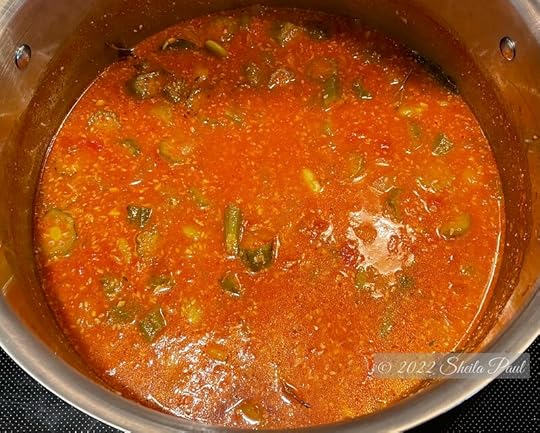
All of the recipes in the sample looked good, but I decided to make the Butter Beans with Benne Seeds and Okra. Benne Seeds are a heritage type of sesame seed that sadly is difficult for me to obtain. I decided to use sesame seeds knowing the flavor wouldn’t be exact. Per the recipe, I toasted and then crushed those sesame seeds; I couldn’t really “pound” them, but I did crush them using my mortar and pestle.

This was an easy recipe and so delicious! I decided I would serve this stew over brown rice for lunch; it was very filling and had a fresh flavor. The only other changes I made to this recipe was to add some vegetable base and some garlic base, both vegan, to add depth.

My husband and I discussed this recipe and the cookbook while we were eating, and when we were done he said “Go ahead and get the cookbook if you want it.” Which I promptly did! Now I am impatiently awaiting its arrival. I recommend it based upon the sample recipes I saw and the previous Blue Zones cookbook which I bought about 2 weeks ago.
A big thank you to Dan Buettner, National Geographic, and NetGalley for allowing me to read a sample of this cookbook pre-publication. I received nothing for my review and my opinions are my own.
This particular cookbook is from places in the United States and brings us recipes representative of the different areas and ethnicities. The first Blue Zones cookbook was global and presented recipes from Japan, Okinawa, Costa Rica, Sardinia, and Loma Linda, California. The recipes in both books use quality whole food ingredients and cooking techniques meant to maintain and improve your health.
I received a sample of this cookbook from the publisher via NetGalley; it contained some narrative and I believe seven recipes. Even though this sample was small the photos were GORGEOUS. Of course, with it being published by National Geographic, you would expect they would use only the best photos.
All of the recipes in the sample looked good, but I decided to make the Butter Beans with Benne Seeds and Okra. Benne Seeds are a heritage type of sesame seed that sadly is difficult for me to obtain. I decided to use sesame seeds knowing the flavor wouldn’t be exact. Per the recipe, I toasted and then crushed those sesame seeds; I couldn’t really “pound” them, but I did crush them using my mortar and pestle.
This was an easy recipe and so delicious! I decided I would serve this stew over brown rice for lunch; it was very filling and had a fresh flavor. The only other changes I made to this recipe was to add some vegetable base and some garlic base, both vegan, to add depth.
My husband and I discussed this recipe and the cookbook while we were eating, and when we were done he said “Go ahead and get the cookbook if you want it.” Which I promptly did! Now I am impatiently awaiting its arrival. I recommend it based upon the sample recipes I saw and the previous Blue Zones cookbook which I bought about 2 weeks ago.
A big thank you to Dan Buettner, National Geographic, and NetGalley for allowing me to read a sample of this cookbook pre-publication. I received nothing for my review and my opinions are my own.
October 30, 2022
The sampler of The Blue Zones American Kitchen is a brief glimpse at what promises to be a beautiful cookbook. The mouthwatering photography is lovely to gawk at and the recipes look marvellous. The blue zones are the areas of the world where life expectancy is high...as in 100+ years! No wonder people yearn to learn more about plant-forward eating. The premise is a fusion of North American ingredients with old world dishes. I like that.
The layout is streamlined but it is surprising that considering it is a healthier lifestyle book the nutritional information is excluded. Some ingredients would be difficult to grow/source and they are amongst those which contribute to longevity. However, there is scope for substitutions if one wishes. I am intrigued to learn more and would be happy to see and cook from the book in its entirety. If the Mushroom Medley Soup ((I will use wild mushrooms foraged myself) is indicative of what is in store, we are in for a treat!
My sincere thank you to National Geographic and NetGalley for the privilege of salivating over this sampling of inspiring recipes!
The layout is streamlined but it is surprising that considering it is a healthier lifestyle book the nutritional information is excluded. Some ingredients would be difficult to grow/source and they are amongst those which contribute to longevity. However, there is scope for substitutions if one wishes. I am intrigued to learn more and would be happy to see and cook from the book in its entirety. If the Mushroom Medley Soup ((I will use wild mushrooms foraged myself) is indicative of what is in store, we are in for a treat!
My sincere thank you to National Geographic and NetGalley for the privilege of salivating over this sampling of inspiring recipes!

December 3, 2022
Thank you to NetGalley and National Geographic for the opportunity to read a free digital sampler of this cookbook for an honest review. (Publish Date: December 6, 2022)
“The Blue Zones American Kitchen” by Dan Buettner immediately sparked my interest, because I have recently tried a couple of recipes from the Blue Zones website and really enjoyed them!
The sample cookbook I received reveals in the contents that the full version will contain 100 recipes ranging from Indigenous/Native/Early American, Asian American, Latin American, African American, and Regional/Contemporary American dishes. The theme for this cookbook is to introduce recipes derived from five places around the world where people consistently live to or past 100 years.
I loved the vibrant images that accompanied the recipes. All were plant-forward and looked delicious! I found the instructions easy to follow and there was a nice variety of recipes ranging from just a handful of ingredients to an entire basket full depending on your preference and time constraints.
Overall, I really enjoyed this sampler and am looking forward to getting the cookbook once it’s released!
“The Blue Zones American Kitchen” by Dan Buettner immediately sparked my interest, because I have recently tried a couple of recipes from the Blue Zones website and really enjoyed them!
The sample cookbook I received reveals in the contents that the full version will contain 100 recipes ranging from Indigenous/Native/Early American, Asian American, Latin American, African American, and Regional/Contemporary American dishes. The theme for this cookbook is to introduce recipes derived from five places around the world where people consistently live to or past 100 years.
I loved the vibrant images that accompanied the recipes. All were plant-forward and looked delicious! I found the instructions easy to follow and there was a nice variety of recipes ranging from just a handful of ingredients to an entire basket full depending on your preference and time constraints.
Overall, I really enjoyed this sampler and am looking forward to getting the cookbook once it’s released!
October 31, 2022
National Geographic publishes lush titles with beautiful photos. This book looks to be no exception to that practice.
This time it is an intriguing look at cooking for health. The “blue zones” are places where people have lived to a very ripe old age. What have they eaten that has sustained them so well? This cookbook offers the general reader and cook the chance to find out and try some of the plant based recipes. The author (in the full book) looks at lifestyles and foods from the Hmong in Minnesota and Quakers in New England to name just two of the groups whose recipes are featured. In completing his task, Mr. Buettner has consulted with over fifty experts.
This review is based upon the sample that was available for advanced reading. From what I can see, this book will make you hungry. Note that I have not seen the entire book.
Many thanks to NetGalley and National Geographic for this title. All opinions are my own.
This time it is an intriguing look at cooking for health. The “blue zones” are places where people have lived to a very ripe old age. What have they eaten that has sustained them so well? This cookbook offers the general reader and cook the chance to find out and try some of the plant based recipes. The author (in the full book) looks at lifestyles and foods from the Hmong in Minnesota and Quakers in New England to name just two of the groups whose recipes are featured. In completing his task, Mr. Buettner has consulted with over fifty experts.
This review is based upon the sample that was available for advanced reading. From what I can see, this book will make you hungry. Note that I have not seen the entire book.
Many thanks to NetGalley and National Geographic for this title. All opinions are my own.

November 3, 2022
Destined to be a classic, The Blue Zones American Cookbook combines Dan Buettner’s worldwide Blue Zone exploration with regional American cooking. This sampler cookbook features Native American, African American and Asian American recipes. The dishes are largely plant based and, while they require some ingredients that may be difficult to source (yellow mustard flowers, chlorophyll, masarepa corn flour, benne seeds), the meals sound delicious and substitutions can be made. Since this is a brief cookbook, this may be addressed in another section. I look forward to the complete Blue Zones American Cookbook. The author and the blue zones recipe concept will surely rate the 5 stars that I give to the sampler.
Thank you to NetGalley, National Geographic Books, Dan Buettner and photographer David McLain for this ARC.
Thank you to NetGalley, National Geographic Books, Dan Buettner and photographer David McLain for this ARC.

March 11, 2023
Impractical as a cookbook, essentially a coffee table book. Half of these recipes come from chefs overseeing upscale vegan restaurants. These dishes require hard-to-find ingredients like Okinawa sweet potatoes, nopalitos, and assorted heirloom cucumbers. Their ingredient lists are a mile long, and the prep/cook/assembly time is daunting. The other half come from cuisines that are traditionally very vegetable heavy - Asian, Black southern, Latin American - but typically include meat as flavoring agents. Without the animal-based protein, these Blue Zones recipes look incredibly bland, simple, and not at all filling. A giant vat of boiled collards with some onion, crushed red pepper, and salt, anyone? The photography is gorgeous and the concept is laudable, but I highly doubt any of these recipes will end up as mainstays in anybody’s kitchen.

January 3, 2023
This gorgeously photographed cookbook offers a wide variety of plant based recipes from multicultural sources (Indigenous/Native American, African American, Latin American, Asian American, and Regional/Contemporary American) in the United States. It's based off of the Blue Zone research of people around the world who live the longest and healthiest. Arguing that by lessening our reliance on eating meat, typical Americans can vastly increase the quality of their lives, Dan Buettner not only gives a sampling of delicious recipes but also shares stories from the people who passed them along.
This book is a delight for the foodie and photography/human interest lover alike.
Special thanks to National Geographic for this GoodReads giveaway win.
This book is a delight for the foodie and photography/human interest lover alike.
Special thanks to National Geographic for this GoodReads giveaway win.

December 8, 2023
This cookbook was not what I was expecting from an American Kitchen Cookbook. If I would have flipped through it in a store I would have put it back on the shelf. However, my family liked the Zucchini Pupusas.
It is definitely designed for adventurous eaters. I am discovering foods I didn't know existed in the grocery store. I couldn't find some things in our grocery store.
Examples of ingredients: Sumac, guajillo chilis, benne oil, epazote, nopal (cactus paddle), prickly pear juice, Thai chili, Chinese chives, tamarind past
Some recipes titles are as follow: Aloo Tikki, Poori, Plant-Powered Arepa, Neoum Salad, Mayak Gimbap, and Fall Harvest Panzanella.
If you like to try new cultural foods you might love this book. I will be passing our book on to someone who will appreciate it.
It is definitely designed for adventurous eaters. I am discovering foods I didn't know existed in the grocery store. I couldn't find some things in our grocery store.
Examples of ingredients: Sumac, guajillo chilis, benne oil, epazote, nopal (cactus paddle), prickly pear juice, Thai chili, Chinese chives, tamarind past
Some recipes titles are as follow: Aloo Tikki, Poori, Plant-Powered Arepa, Neoum Salad, Mayak Gimbap, and Fall Harvest Panzanella.
If you like to try new cultural foods you might love this book. I will be passing our book on to someone who will appreciate it.
Displaying 1 - 30 of 82 reviews