

What do you think?

For Brown Girls with Sharp Edges and Tender Hearts: A Love Letter to Women of Color
This “electrifying debut” ( Los Angeles Times ) arms women of color with the tools and knowledge they need to find success on their own terms
For generations, Brown girls have had to push against powerful forces of sexism, racism, and classism, often feeling alone in the struggle. By founding Latina Rebels, Prisca Dorcas Mojica Rodríguez has created a community to help women fight together. In For Brown Girls with Sharp Edges and Tender Hearts , she offers wisdom and a liberating path forward for all women of color. She crafts powerful ways to address the challenges Brown girls face, from imposter syndrome to colorism. She empowers women to decolonize their worldview, and defy “universal” white narratives, by telling their own stories. Her book guides women of color toward a sense of pride and sisterhood and offers essential tools to energize a movement.
May it spark a fire within you.
For generations, Brown girls have had to push against powerful forces of sexism, racism, and classism, often feeling alone in the struggle. By founding Latina Rebels, Prisca Dorcas Mojica Rodríguez has created a community to help women fight together. In For Brown Girls with Sharp Edges and Tender Hearts , she offers wisdom and a liberating path forward for all women of color. She crafts powerful ways to address the challenges Brown girls face, from imposter syndrome to colorism. She empowers women to decolonize their worldview, and defy “universal” white narratives, by telling their own stories. Her book guides women of color toward a sense of pride and sisterhood and offers essential tools to energize a movement.
May it spark a fire within you.
272 pages, Paperback
First published September 7, 2021
About the author
Prisca Dorcas Mojica Rodríguez
4 books487 followersPrisca Dorcas Mojica Rodríguez was born in Managua, Nicaragua but calls Nashville, Tennessee home. She got her Masters of Divinity from Vanderbilt University in the Spring of 2015. The bulk of her work is around making accessible, through storytelling and curating content, the theories and heavy material that is oftentimes only taught in the racist/classist institutions known as academia.
She started the platform Latina Rebels in 2013, and currently it boasts over 300k organic followers online. She has been featured in Telemundo, Univision, Mitú, Huffington Post Latino Voices, Guerrilla Feminism, Latina Mag, Cosmopolitan, Everyday Feminism, and was invited to the White House in the Fall of 2016. She is unapologetic, angry, and uncompromising about protecting and upholding the stories of Latinx communities. Que viva la gente!
Representation
Bookings manager:
Linda Melodia linda@mtndevelopment.com
Film/TV rights:
Olivia Blaustein olivia.blaustein@caa.com
Literary inquiries:
David Patterson dp@skagency.com
Aemilia Phillips ap@skagency.com
She started the platform Latina Rebels in 2013, and currently it boasts over 300k organic followers online. She has been featured in Telemundo, Univision, Mitú, Huffington Post Latino Voices, Guerrilla Feminism, Latina Mag, Cosmopolitan, Everyday Feminism, and was invited to the White House in the Fall of 2016. She is unapologetic, angry, and uncompromising about protecting and upholding the stories of Latinx communities. Que viva la gente!
Representation
Bookings manager:
Linda Melodia linda@mtndevelopment.com
Film/TV rights:
Olivia Blaustein olivia.blaustein@caa.com
Literary inquiries:
David Patterson dp@skagency.com
Aemilia Phillips ap@skagency.com
Ratings & Reviews
Friends & Following
Create a free account to discover what your friends think of this book!
Community Reviews
Displaying 1 - 30 of 513 reviews

May 3, 2021
I started this last night and it’s fucking brilliant. I wish I had this book in college/grad school. This is the book I always knew I needed but couldn’t find. Highly recommend. Para nuestra Latinx this book was written for you.

May 25, 2021
“Remember who you are, and the rest will come.”
For Brown Girls with Sharp Edges and Tender Hearts by Prisca Dorcas Mojica Rodríguez is a book, that everyone should read.
I hesitated to pick this book up because I wasn’t sure if it’s where I, a white reader, belong. The last thing I wanted to do is claim a book that was not intended to target a white audience in the first place.
This book is not an objective take on white supremacy or an analysation of racism and oppression of BIPOC – That’s exactly what makes it stand out.
Divided into different chapters, the book breaks up major topics, such as decoloniality, toxic masculinity or the politics of respectability. In the process of reading, I became more and more aware of institutional racism and the ground that it’s built on. Prisca’s writing style is very declamatory and emphatic: to read of such painful experiences as hers is not easy but at the same time it’s reality and this book just shows one more time, that society has to face that reality. White people need to do more then just rely on their privileges; there are major problems that must be addressed and dealt with.
While reading this book I learned a lot – probably more than I ever did in school or at university, regarding the above-mentioned topics.
This book opened my eyes and I hope that, as Prisca herself mentions, for all BIPOC who feel helpless or alone, it can be a support and a guideline on how to demand their space in the places that they belong and on how to shine, even though white supremacy doesn’t want them to.
For Brown Girls with Sharp Edges and Tender Hearts by Prisca Dorcas Mojica Rodríguez is a book, that everyone should read.
I hesitated to pick this book up because I wasn’t sure if it’s where I, a white reader, belong. The last thing I wanted to do is claim a book that was not intended to target a white audience in the first place.
This book is not an objective take on white supremacy or an analysation of racism and oppression of BIPOC – That’s exactly what makes it stand out.
Divided into different chapters, the book breaks up major topics, such as decoloniality, toxic masculinity or the politics of respectability. In the process of reading, I became more and more aware of institutional racism and the ground that it’s built on. Prisca’s writing style is very declamatory and emphatic: to read of such painful experiences as hers is not easy but at the same time it’s reality and this book just shows one more time, that society has to face that reality. White people need to do more then just rely on their privileges; there are major problems that must be addressed and dealt with.
While reading this book I learned a lot – probably more than I ever did in school or at university, regarding the above-mentioned topics.
This book opened my eyes and I hope that, as Prisca herself mentions, for all BIPOC who feel helpless or alone, it can be a support and a guideline on how to demand their space in the places that they belong and on how to shine, even though white supremacy doesn’t want them to.
April 3, 2022
okay, so. if this is your first time ever reading a woman of color/latina critique racism and sexism etc, i can see why this might be powerful.
if you've ever read anything by audre lorde or anzaldua or this bridge called my back or anything like that, this is just going to read as a more diluted infographic version of what radical women of color were writing about in the 70s-90s.
parts of this book hit so hard as a first gen/working class latina in a PWI. but other parts are just sooooo weak in comparison. the 'makeup is my war paint' was especially eye roll worthy.
i loved the chapter on respectability. i also love her citational practice. overall, i just hope the brown girls reading this book read the feminist ancestors to this book for more depth and more critical understanding
especially if you're a gay or queer or lesbian brown girl. this book has basically no interaction with queer people or theory despite relying on lesbians like lorde or anzaldua or moraga
if you've ever read anything by audre lorde or anzaldua or this bridge called my back or anything like that, this is just going to read as a more diluted infographic version of what radical women of color were writing about in the 70s-90s.
parts of this book hit so hard as a first gen/working class latina in a PWI. but other parts are just sooooo weak in comparison. the 'makeup is my war paint' was especially eye roll worthy.
i loved the chapter on respectability. i also love her citational practice. overall, i just hope the brown girls reading this book read the feminist ancestors to this book for more depth and more critical understanding
especially if you're a gay or queer or lesbian brown girl. this book has basically no interaction with queer people or theory despite relying on lesbians like lorde or anzaldua or moraga

June 18, 2021
Never in my life have I read a book that reflected such similar experiences to those that I have gone through. As a Latina daughter of immigrants, Prisca Dorcas Mojica Rodriguez excellently captures my struggles and that of other Brown and Black women. She covers topics such as colorism, feminism, and societal values through beautiful and moving writing. I was blown away and truly recommend this eye-opening piece. Especially to my fellow women of color, this love letter powerfully arms us with tools to maneuver life on our own terms.
Thank you Net Galley for this arc in exchange for an honest review!
Thank you Net Galley for this arc in exchange for an honest review!
March 2, 2023
I’ve read a lot of reviews on this book, and while most rated it 5 stars, a lot of readers were also saying that they felt the author came across angry and bitter.
While I agree with this, I also feel she is justified in both her anger and bitterness given what she has been through since migrating from Nicaragua to the US.
This is not my issue with this book. My issue is that it is titled a love letter to women of color, but did not always feel like one. Instead, it felt more like a letter written to white people about their racism, fragility, micro aggressions and anti-indigeneity.
As a woman of color, who experiences micro aggressions and covert racism regularly, I realize all of these situations are very much real and should not be taken for granted.
But I didn’t pick this book up with the intent of diving deeper into the traumas that white people have caused me and other people of color. I picked it up with the intent and expectations of reading what was promised.. a love letter. And that would have sufficed.
With all that being said, I will say there were alot of pages that resonated. What it’s like to be an outcast because of my skin, to try and change myself to fit in, to make myself small in an attempt at avoiding people noticing me and who I am and where I come from, attending a PWI as a woman of color. These are all very real experiences that stick with you throughout life.
All in all I did learn a lot of things that I didn’t know and saw myself in some of the pages.
I would give this book a 3.5⭐️
While I agree with this, I also feel she is justified in both her anger and bitterness given what she has been through since migrating from Nicaragua to the US.
This is not my issue with this book. My issue is that it is titled a love letter to women of color, but did not always feel like one. Instead, it felt more like a letter written to white people about their racism, fragility, micro aggressions and anti-indigeneity.
As a woman of color, who experiences micro aggressions and covert racism regularly, I realize all of these situations are very much real and should not be taken for granted.
But I didn’t pick this book up with the intent of diving deeper into the traumas that white people have caused me and other people of color. I picked it up with the intent and expectations of reading what was promised.. a love letter. And that would have sufficed.
With all that being said, I will say there were alot of pages that resonated. What it’s like to be an outcast because of my skin, to try and change myself to fit in, to make myself small in an attempt at avoiding people noticing me and who I am and where I come from, attending a PWI as a woman of color. These are all very real experiences that stick with you throughout life.
All in all I did learn a lot of things that I didn’t know and saw myself in some of the pages.
I would give this book a 3.5⭐️

December 6, 2021
“In the United States, people like to think that because you are on their conquered land, they can take your name and make it fit into their language. This is covert colonization, to take my Spanish-spelled name and claim it without any regard by turning it into Priscilla instead of Priscila. There’s a difference. Mi mami says my name how it’s meant to be said. Mi papi says my name how it was always intended. I don’t know who the fuck Priscilla is.”
My love for this book knows no bounds. The cover and the title reeled me in. The phrases “brown girls,” “tender hearts,” and “love letter to women of color” appear in the title. And honestly, say less; I’ve already committed. But it doesn’t end there! The content! The content! Nothing I say here will do my thoughts and feelings about this book justice.
I listened to the audiobook; hearing Prisca Dorcas Mojica Rodriguez apply her lived experiences to her analysis of concepts that are often intellectualized (e.g. white fragility, voluntourism, intersectionality, decoloniality, etc.) at the expense of the people that they harm/might benefit added to the experience that is reading this book. There are so many things within it that are just (!!!): the explanation of the purposeful and needless obfuscation of ideas within academia that should be accessible to everyone, the idea that we should think critically about the idea of “oppression olympics” because it is typically invoked to silence, what it means to be a true accomplice and why there are no outs or excuses for anyone (people of color included), frank discussions about sexuality and exploring one’s sexuality freely, et cetera.
I decided to start reading this on the day before Thanksgiving. I thought it would be a nice wind-down read, but instead I was invigorated and energized! This is a book, that for me, is a mirror and a window. This is a book that even made me hate the superfluous and weird term BIPOC slightly less, a testament to the intelligence and beautiful writing of Prisca Dorcas Mojica Rodriguez.
All in all, the reason I love this book so dearly because it is exactly what it purports to be, a love letter to women of color. For Brown Girls with Sharp Edges and Tender Hearts is short on explanatory commas and fucks to give about what anyone aside from women of color may think of it. It is, however, bubbling over with love and tenderness like a fizzy soda poured too quickly. And I am here with my face in the glass, nose tickled by the bubbles, taking in all the sweetness and feeling energized by the carbonated edge.
(Am I doing the most with my weird metaphors? Yes. Does this book deserve all the weird praise I have to give? Also, yes!)

February 9, 2022
I was very excited to get this book and was expecting something completely different. I want to start off saying that I am a Latina with immigrant parents, so this book was targeted to people like me. From the very beginning, it is evident that the author is writing from a place of anger and pain. And although I can relate to many stories of discrimination, I just couldn’t relate to this book. It is very divisive and makes too many generalizations about BIPOC and white people… basically everyone. Throughout the book she uses her skin color to define who she is… but we are much more than that. Every chapter blames someone else (white people) for her bad experiences. There is never any accountability for herself. As a Latina, one of the things I grew up knowing was that I had to advocate for myself. There is none of that in here. It is full of negativity and the assumption that all Latino people need to think the same. She portrays herself as a migrant who is deeply rooted in her Nicaraguan culture, but I’m not convinced. There are too many contradictions in her upbringing that lead me to believe that her experience comes from hatred. For example, she mentions over and over again her strict, evangelical upbringing. Yet she talks about embracing the Chonga culture as her own after she studied it in graduate school. Basically she became something she never was. I am less than impressed with this book and shocked it’s been so well received by Latinos.
September 18, 2021
I did not like this book. As a Latina female I could not relate to the author. Although I shared some of her personal experiences of discrimination in my youth I did not let it define who I was. I was also lucky my Father and Mother were highly educated people whose expectations were that college was the only way to be self sufficient.
I am proud of my heritage and where I came from. I never let anyone tell me I can’t or won’t succeed because my skin is brown.
Rating 2 out of 5
I am proud of my heritage and where I came from. I never let anyone tell me I can’t or won’t succeed because my skin is brown.
Rating 2 out of 5

September 20, 2021
To be a working class BIPOC in academia in a PWI (predominantly white institution) is a wild ride. The posts from @latinrebels made me smile every day I was not sure if my reasons to pursuit graduate school were still valid, namely: "I am doing this because I am not supposed to be here." I was studying Comparative Literature in an elitist institution in the UK, and I was confronted by the first time with well-intentioned highly educated white people who would raise their hands to argue things such as: 'but postcolonialism is offensive for Europeans', and white professors would make jokes about 'postcolonial novels being the same boring story'.
I am not new to white fragility. I had been racialised in Europe countless times, taken for a gipsy: 'gipsies are animals, they stink', said to shut the fuck up because my political opinions are ridiculous, told to educate myself, or even 'flattered' as it follows: 'you don't look Peruvian because Mayas and Incas are disgusting and ugly', etc. The typical daily casual racism where I just laugh because otherwise everything becomes too absurd: 'You can't get a tan', 'you don't need sunscreen', 'you don't need make up for your skin tone', 'you would be considered Black by many Scottish', etc... But in many ways I am new to the racism embedded within what I have always considered safe spaces (if compared with the wide big world).
I don't think it is easy for white people to understand how exhausting it is to participate in this dance where Brown girls must proof to possess a fantastic sense of humour, which is measured with our own humiliation. I don't think upper middle class white people (the vast majority in academia) can even relate with the feelings of many doors shut to those of us who have neither money for internships nor a security net. It is not one or two years playing in an uneven field, it is a life of always having to pretend that yes, we are equals. And I am ok with that. Hey, we are after all privileged Brown people who got an education in countries where most people can't even dream about going to university. As Prisca puts it, our parents crawled so we could run.
But what is really infuriating is the fact that white people can't stand feel excluded from the conversation, for once. They desperately try either proof that identity politics will only lead us to tribalism or try to focus on ridicule 'the oppressed Olympics' in order to make all oppression even. Say "you are a black woman but I am a queer white man, we are the same." And it is not.
Prisca's talent is to put that anger to work in order to write a love letter to all Brown women who had to deal with colorism, toxic masculinity, abusive backgrounds, and the consequent feeling of not being good enough in spaces that are not meant for us, etc. She gives a fuck about 'hurting' white people's white feelings because this book is not addressed to them. It is not about convince white people of anything.
This book is about giving tools to Brown girls so none of us is gaslighted on a daily basis, and especially not by our own friends and family. We are not locas or histéricas. I read it in a couple of days as my sharp heart needed to be reminded that my academic burnout shall pass, because after all, taking up space in the ivory tower is not a whim of my ego, it is a duty.
I am not new to white fragility. I had been racialised in Europe countless times, taken for a gipsy: 'gipsies are animals, they stink', said to shut the fuck up because my political opinions are ridiculous, told to educate myself, or even 'flattered' as it follows: 'you don't look Peruvian because Mayas and Incas are disgusting and ugly', etc. The typical daily casual racism where I just laugh because otherwise everything becomes too absurd: 'You can't get a tan', 'you don't need sunscreen', 'you don't need make up for your skin tone', 'you would be considered Black by many Scottish', etc... But in many ways I am new to the racism embedded within what I have always considered safe spaces (if compared with the wide big world).
I don't think it is easy for white people to understand how exhausting it is to participate in this dance where Brown girls must proof to possess a fantastic sense of humour, which is measured with our own humiliation. I don't think upper middle class white people (the vast majority in academia) can even relate with the feelings of many doors shut to those of us who have neither money for internships nor a security net. It is not one or two years playing in an uneven field, it is a life of always having to pretend that yes, we are equals. And I am ok with that. Hey, we are after all privileged Brown people who got an education in countries where most people can't even dream about going to university. As Prisca puts it, our parents crawled so we could run.
But what is really infuriating is the fact that white people can't stand feel excluded from the conversation, for once. They desperately try either proof that identity politics will only lead us to tribalism or try to focus on ridicule 'the oppressed Olympics' in order to make all oppression even. Say "you are a black woman but I am a queer white man, we are the same." And it is not.
Prisca's talent is to put that anger to work in order to write a love letter to all Brown women who had to deal with colorism, toxic masculinity, abusive backgrounds, and the consequent feeling of not being good enough in spaces that are not meant for us, etc. She gives a fuck about 'hurting' white people's white feelings because this book is not addressed to them. It is not about convince white people of anything.
This book is about giving tools to Brown girls so none of us is gaslighted on a daily basis, and especially not by our own friends and family. We are not locas or histéricas. I read it in a couple of days as my sharp heart needed to be reminded that my academic burnout shall pass, because after all, taking up space in the ivory tower is not a whim of my ego, it is a duty.

January 26, 2022
"I do not burn with the sun; I evolve right before my very eyes."
This was much needed.
So many of my experiences with white peers (especially in academia) were reflected almost word-for-word in this text. All the times I was made to feel that I was overreacting have been validated. All the big and difficult to explain feelings were finally put into words.
In a book breaking down voluntourism, white fragility, intersectionality, colorism, and many other themes, we see complex issues be broken down and simplified in a way that prioritizes accessibility.
This book and this author are so near and dear to my heart now
This was much needed.
So many of my experiences with white peers (especially in academia) were reflected almost word-for-word in this text. All the times I was made to feel that I was overreacting have been validated. All the big and difficult to explain feelings were finally put into words.
In a book breaking down voluntourism, white fragility, intersectionality, colorism, and many other themes, we see complex issues be broken down and simplified in a way that prioritizes accessibility.
This book and this author are so near and dear to my heart now

September 21, 2021
I so badly wanted to love this book, but I just didn’t. As a Latina female, I really could not relate to the author. Although I share some of her personal experiences, I’ve always been proud of my heritage and where I come from. I never let the color of my skin define my success. It’s a memoir that has a tone of harshness and anger when reading it.

May 12, 2022
Immediately move this book to the TOP of your TBR pile. This book in my opinion belongs with the The Bridge Called My Back, Combahee River Collective, etc., cannon. This book was so familiar to me. As a nonimmigrant, non Latina Black woman, this book presented critical nuances of white supremacy and its multiple iterations in a conscious and honest way, while not disparaging Blackness, Black women or being AntiBlack. It seemed like it was written by one of my Afrolatina friends and I believed every word Prisca Dorcas Mojica Rodriguez said as she wrote with such clarity and conviction. She covered a range of topics including meritocracy, colonialism, colorism, antiBlackness and white supremacy in America and Central/South America, the White gaze and the academy. As an educator I would share this book starting in 9th grade, certain chapters in 7th and excepts of essays as early as 4th grade, particularly the one related to academia and self identity. Anyways this was an audio library book (read by the author) that I have returned but went ahead and purchased a copy of for my personal library, and ordered two more for friends. She says this is a love letter and she ain’t lying. I know a lot of women and girls that needed to hear someone else say and affirm some of the thoughts and feelings they may have that are often invalidated by their culture, families, friends, and society. That bravery to believe in yourself and that the life you want to live for yourself is valid and important is something that all young Black and Brown women need to learn quick, fast and in a hurry, and I do believe they rely on those of us that have come before to not only clear the path and tear shit down, but also leave them some Hansel and Gretel crumbs to help them make their own way. This book is a full meal, comfort food for the soul that will just keep on giving.

December 21, 2021
My eldest brother, Paul, has been a huge force in my reading life. He always gave me books when I was a kid (many of which I still own), so when he recommended this one to me, I immediately put it on hold at the library.
This is a voice that feels familiar yet new. Mojica Rodriguez discusses issues of race, gender, socioeconomic differences and taking ownership of your pride in how you represent the latinidad. It's a lot to take in, but important idea to consider.
This quote stood out the most to me: "The idea that you must elevate someone's existence means that you do not view them as capable of knowing what is best for themselves."
This is a voice that feels familiar yet new. Mojica Rodriguez discusses issues of race, gender, socioeconomic differences and taking ownership of your pride in how you represent the latinidad. It's a lot to take in, but important idea to consider.
This quote stood out the most to me: "The idea that you must elevate someone's existence means that you do not view them as capable of knowing what is best for themselves."
January 14, 2022
I love the title of this book, but not the book itself. As the author said, “But this book is not for everyone. No book should be…” As a Latina who migrated from South America, I could not relate to the author except for a few instances. I think the book should have been called “Autobiography/Life/Trauma of a Central American girl.”

September 28, 2021
This book was incredible. It was just so well explored and thoughtful. Prisca Borcas Mojica Rodriguez is a real one. She pulls no punches in her critique of both her external and internal communities, but also has this deep love for herself and her community. She shares her hard won understanding of love and self with passion and clarity. She’s got education for days and provides education for dayssss. I loved this book.
Thanks to Netgalley for letting me read that early release copy!
Thanks to Netgalley for letting me read that early release copy!
January 28, 2022
I have mixed feelings having completed this book. I don’t say that in a negative way because what I mean is that I have a lot to think about and deconstruct.
I relate to this book and I also DONT relate to this book. I learned from this book and I disagreed with it as well.
First, I am NOT an immigrant but I am of Mexican descent. My parents were born in the US during the late 1940s. No immigrant experience in our family and I have only been to Mexico 3 times in my lifetime. I do not relate but I do understand.
I felt her experiences during her journey through academia. I have recognized the imposter syndrome in myself, making myself small or invisible, not speaking up or rocking the boat in white spaces. My daughter attends a prestigious PWI private school and I feel “studied” and like an outsider when I show up.
Many topics were so informative that at my age have been so ingrained in the opposite way that I felt like my eyes were opening. Topics and info almost compelling me to CHANGE and do things MUCH differently.
There was so much she was unpacking by sharing her experiences that are TRAUMA. (Im a psychotherapist). I don’t think I ever looked at it that way but many BIPOC/BIWOC experiences are hurtful, life changing, harmful, devastating that YES they are trauma.
At many points in her book she is so angry and unapologetically so. I almost felt she was hostile. I also felt she was right to feel this way. So confusing to be both. The chapter on White Fragility- I still need to sit with it. While she brings up the need to speak up, she also does not endorse educating white people as a BIPOC’s responsibility. It’s a strange place to be when you want the world to change but it’s not your job to do it. But how does it happen? Sometimes I felt she was almost a “separatist” or hateful of white people. But I also don’t want to generalize her here because these are her life experiences. What she encountered and lived. She’s created limits and boundaries and dammit YOU WILL RESPECT THEM. And by YOU she means white folks.
Overall an excellent read. My online book club chose for January. I really thought it was going to be a lovey dovey, soft, inspirational girl talk but instead I got bad ass chingona take no shit inspiration education. Thanks Prisca!
I relate to this book and I also DONT relate to this book. I learned from this book and I disagreed with it as well.
First, I am NOT an immigrant but I am of Mexican descent. My parents were born in the US during the late 1940s. No immigrant experience in our family and I have only been to Mexico 3 times in my lifetime. I do not relate but I do understand.
I felt her experiences during her journey through academia. I have recognized the imposter syndrome in myself, making myself small or invisible, not speaking up or rocking the boat in white spaces. My daughter attends a prestigious PWI private school and I feel “studied” and like an outsider when I show up.
Many topics were so informative that at my age have been so ingrained in the opposite way that I felt like my eyes were opening. Topics and info almost compelling me to CHANGE and do things MUCH differently.
There was so much she was unpacking by sharing her experiences that are TRAUMA. (Im a psychotherapist). I don’t think I ever looked at it that way but many BIPOC/BIWOC experiences are hurtful, life changing, harmful, devastating that YES they are trauma.
At many points in her book she is so angry and unapologetically so. I almost felt she was hostile. I also felt she was right to feel this way. So confusing to be both. The chapter on White Fragility- I still need to sit with it. While she brings up the need to speak up, she also does not endorse educating white people as a BIPOC’s responsibility. It’s a strange place to be when you want the world to change but it’s not your job to do it. But how does it happen? Sometimes I felt she was almost a “separatist” or hateful of white people. But I also don’t want to generalize her here because these are her life experiences. What she encountered and lived. She’s created limits and boundaries and dammit YOU WILL RESPECT THEM. And by YOU she means white folks.
Overall an excellent read. My online book club chose for January. I really thought it was going to be a lovey dovey, soft, inspirational girl talk but instead I got bad ass chingona take no shit inspiration education. Thanks Prisca!

September 13, 2021
Note: There is a lot of conflict over the usage of Latinx vs Latine. I use Latinx in this review as that is what Rodriguez uses. I want to go by what she prefers.
Refreshing myself through my notes I realized most of my irritation stemmed from one chapter. While I had some other issues they were less significant in hindsight. I am going to format this review similarly to how I did my review for Sitting Pretty by Rebekah Taussig. I’m going to break it down by what I took away from each chapter so you’ll see my major criticism come up when it’s relevant.
Chapter 1: Voluntourism - volunteering on aid trips that’s main purpose is satisfying the ego of the participants - is bad because it comes from a fundamentally incorrect position: the idea that Brown and Black people are lesser than and as such need white typically Christian society to teach them what's right. Voluntourism really is just neo colonialism. Colonialism involved conquer in the form of forced Christianization as it was always about power rather than a genuine desire to spread the true word and forcing a religion is a good way of getting large swaths of people under your thumb. Voluntourism simply shifts the forced part to the more insidious coerced. It’s also rooted in the idea that Christianity has a 'civilizing' effect as the religions of the Black and Brown people were considered savage by default.
Rodriguez outlines how this has affected her country and people as examples of the impact of such endeavors. The US, like those European countries of old, purposely destabilized Nicaragua in order to install their own puppet dictator, uncaring of the effect he and his successors would have as long as their financial interests were taken care of. This kind of meddling by the US is why voluntourism is even a thing in the first place. The only reason the countries being visited are so badly off that this kind of aid is welcome is because the US stepped in in the first place.
So paradoxically white people want acclaim for fixing something historically they helped create whilst simultaneously upholding the system that allows the US to further disenfranchise these countries.
Chapter 2: Colorism is rooted in anti-Blackness and anti-Indigeneity. To be visually seen as more Brown or more Black is seen as a bad thing because our worth is judged based on the proximity to whiteness. You are treated better based on how close to white you are perceived to be. In Rodriguez's case she is visibly Brown due to her father's more pronounced Indigenous features resulting in a lot of internalized racism growing up. Especially since the standards are a lot higher when you identify as a woman or are female presenting
In this chapter there was a struggle I had that I also welcomed for it exposed a blind spot for me. In America a lot of racial identities have become homogenized out of convenience and ignorance. On top of that our idea of white people continues to evolve in this country because by moving the goalposts to include more racial identifiers white supremacy is better able to maintain its power. If the standards are established to be continually shifting then it further disenfranchises POC. It becomes impossible to combat since it is allowed to absorb whatever aspects it wants in order to preserve its superiority.
All of that is to say I have a hard time making distinctions about race other than the obvious broader classifications such as Black, Latinx, or Asian. Rodriguez makes a point to untangle the differences between these groups. It's easy to say she's Latinx and call it day. Being Latinx is only the surface. She's mestiza because she has Spanish and Indigenous heritage. She identifies as non-Black Latinx instead, however, because she has an Afro-Nicaraguan great grandmother who has been willfully erased from her family consciousness and she does not want to add to that erasure by claiming a status that ignores the Blackness she has in her blood. She has a great grandfather she knew as a child but had no idea was Indigenous until a discovery by a family member after his passing. The configuration of her identity is so rich and multi-faceted. While I found it confusing at times I loved the way this encouraged me to deconstruct my idea of race because I am clearly missing a lot of nuance to these conversations. By not looking more critically at these distinctions I am unconsciously reinforcing anti-BIPOC colonialist rhetoric.
Chapter 3: Rodriguez covers racial imposter syndrome, a subset of imposter syndrome not explicitly talked about. It's not just feeling like a fraud it's feeling like a fraud because your race has left you unprepared for the white Americanized concept of success. She uses her own problems in grad school to make her point as imposter syndrome became a permanent thing for her when she was suddenly in predominantly white spaces regularly. I am aware that Minor Feelings came out relatively recently and has not had much opportunity to penetrate the public consciousness, however, I want to point out that the titular minor feelings is a better descriptor than ‘racial imposter syndrome’ for what Rodriguez is intimating. Minor feelings is defined as “the racialized range of emotions that are negative, dysphoric and therefore untelegenic built from the sediments of everyday racial experience and the irritation of having one's perception of reality constantly questioned or dismissed. Minor feelings occur when American optimism is enforced upon you which contradicts your own racialized reality thereby creating a static of cognitive dissonance”. Chapter 4 builds on this concept further.
Chapter 4: Meritocracy is the idea that by working hard enough you will succeed. This is patently untrue for most people regardless of race, but it's especially not true for Brown and Black people. Those in power promote this falsehood because it keeps us from trying to dismantle it. Working in the confines of said system may work for a time but unless you fit into the box of the model minority - even then you face more obstacles than white people do - you will be barred from accessing resources that would help you to achieve the status, acclaim and/or money you deserve for working so hard.
As a BIPOC you are inherently devalued already so when you get into these institutions like higher education you are starting from 0 expected to prove yourself by working up whereas white people get to start at 100 and they decrease. Yet the paradox is people expect you to be at 0 because you're not white yet they treat you poorly if you attempt to climb up because you are not allowed to defy their expectations while simultaneously condemning you for being at 0 even though it's not your fault. You typically will not be lucky enough to have access to what white kids do but it's important not to internalize it as you being the problem. You have to learn to pave your own way to success by framing it as what barriers you can smash through rather than letting gatekeepers bar the way because you don't measure up in their eyes. Meritocracy can work on an individual case by case basis but Brown and Black people should not buy into it as a catch all dogma to live by.
Chapter 5: Respectability politics are an extension of the idea that proximity to whiteness equals success. By acting in a way that is acceptable to white people you gain access to the elusive, honored white spaces. This is because to act 'white' - like I said before an arbitrary metric - is seen as civilized and therefore you are now worth respect. Rodriguez seeks to purposely embrace those behaviors and culture that white people view as distasteful because respectability is faux success. It often means burying your history and burying your actual personality and inflicting strict social rules onto other BIPOC so they are forced to bury themselves as well. It achieves nothing in the long run because white people are never satisfied. They will never appreciate the sacrifice you've made either way. This isn't to shame anyone who code switches because all minorities are forced to do it to some extent - I know I do - but it's important to remember those who don’t are not somehow lesser.
Chapter 6: Most of the chapter is a poignant critique of toxic masculinity with Rodriguez’s complicated relationship to the men in her family taking center stage. It was a very personally impactful chapter as someone who has a similar family dynamic and a cultural background that encourages negative behavior in young men as a means of enforcing patriarchal gender conformity.
Chapter 7: There are many factors that contribute to a person being marginalized and those factors are scaled accordingly because even with many things stacked against you there often is at least one thing you have over another marginalized person. That doesn't mean your problems aren't important, it just means you need to keep perspective when hearing others out.
Chapter 8. This is the chapter I took issue with. It is titled the male gaze and in it Rodriguez discusses sexuality. Her experience was that of a woman raised in purity culture who found her empowerment through sexual encounters with no to little commitment.
Where I have a problem with this narrative is actually rooted in an issue I have with current feminist rhetoric surround sex in general namely the idea that casual sex is inherently a progressive act.
As such I don’t like her framing. She frames her choice to engage in casual sex as a universally empowering thing. She does not discuss any drawbacks and barely touches on anything she did for safety. Nor does she take a deeper look at what exactly is empowering in having meaningless sex with others. Now, I’m not shaming anyone for what they want to do sexually. If you want to only have one night stands or friends with benefits or what have you then go ahead. However, our decisions do not exist in a vacuum. For her this was reclaiming her body after years of allowing others to define what she should be doing. I can absolutely see why that was freeing for her. But, feminism is not about the choices of invididuals. It’s about what is good for all women or the most women possible as a whole.
Why did she feel good after these sexual encounters with men? Because she felt good during the act or because she felt good thinking a man wanted her? How often was she getting off in these situations? Orgasms do not have to happen for two or more people to enjoy sexual activity. Still given the orgasm gap between men and women it feels mighty suspicious that an explanation that conveniently allows for men to not have to concern themselves overly with if their partner orgasms because ‘it’s about the journey’ seems to have arisen. Especially since per the orgasm gap men are much more likely to be orgasming either way. Taking the orgasm gap into account further we have rightfully started to push women to prioritize their pleasure in the bedroom as well. So we tell young women they deserve orgasms as that’s typically a good way of measuring fulfillment in a sexual act yet we simultaneougly promote the idea that swaths of unattached hook-ups are the pinnacle of feminism when statistically it is the least likely situation to end in orgasms because men have no incentive to make it good for the woman since men are socialized to value quantity of sexual encounters over quality.
Women acting like men in this way will never achieve equality for us as aspiring to be like men is flawed. We should be striving for all of us to be better. If you’re having sex for any reason outside of your personal enjoyment, and even then that does not mean it’s the right thing to be doing for your mental or physical health as sex can absolutely be used as an unhealthy coping mechanism, the patriarchy is actually winning.
Rodriguez, in her own words, intentionally decided to 'become a whore' but despite many pages expressing the dangers of purity culture she only spends a single page discussing her transition from it when that is equally if not more important than what created her sexual repression. The reason why she decided this was the proper outlet for her growing past that harmful ideology should be examined further as it’s entirely possible to use sex as a means of ignoring deeper psychological issues.
I’m glad that seems to have worked for her with no lasting repercussions or regrets. However, in her blanket approval she misses the opportunity to have a more important dialogue about how being seen as sexually appealing or having a lot of sex still can be the patriarchy at work because under the effects of the male gaze we are taught that our worth is tied to male validation.
Our current hookup culture is the opposite side of the spectrum from purity culture but it's still all the same continuum where men win. Women are still disproportionately shamed for higher body counts, are still coerced into sexual encounters they do not fully consent to because being sexually adventurous is now an expectation rather than a bonus, and have an increased risk of pregnancy or sexually transmitted diseases. In this culture men always win as long as they have sex point blank. Regardless of your politics or beliefs sometimes the act of having sex with these men validates their pov because like I said before men are socialized to value the act of having sex above all else.
Indiscriminate sex positivity is not only naive, it’s dangerous. It does not spur you to be discerning or consider downsides because the ability to have as much sex as you can outweighs the pragmatism in doing so. Sex positivity as it stands now has been entirely co-opted by mainstream feminism which aligns with the values of white feminists more than anyone else. It’s inherently selfish and ranks individual feelings higher than the betterment of women overall. Rodriguez falls into this trap by not exploring the topic in its entirety.
She talks momentarily about screening dudes for politics and potential fetishization before sleeping with them but she doesn't talk about birth control options, the growing restrictions on abortion, the stigma against abortions, the fear of pregnancy, hypocrisy in her friend groups (there had to be a few naysayers considering the fact that she had friends who were raised the same as she) or what the actual act felt like. She had such a rigid idea of what sex was supposed to be like before, how did the shift to casual sex affect her psyche? Women have gone on record saying that even after getting married they have felt shame for having sex as years of anti-sex propoganda does not disappear by completing certain milestones. She acts like it was easy to do. Maybe it was, but I’d like her to at least say that it was easy so as not to give the impression it’s always like that when it’s a lot more common to have to work at it.
How did her sexual activity affect her choices in future potential partners? When she decided to pursue a long term relationship again how did this affect her mindset now that her tastes had evolved? She doesn't even talk about her sex life that she had with her first husband. What was so different? Presumably it wasn't good but why wasn't it good? And why doesn't she suggest women try masturbation and self pleasure first? Knowing yourself is the first step towards pleasure with a partner. What made casual sex so appealing for her instead?
Basically I found this chapter much too limiting by presenting all sex positivity as good when that's definitely not the case. It's also a harmful message to impart to Brown and Black girls without all the facts because their sexual promiscuity is inherently viewed differently than that of white girls. The stigma will be worse and harder to shake.
That isn’t to say hook-ups need to or should stop. I am saying that the blanket endorsement needs to come to an end post haste as in their current form they primarily serve men. We need to be far more critical of the culture and be willing to admit the very real risks so that young women are able to make fully informed, educated decisions.
Outside of that I don't feel like this chapter actually had much to do with the male gaze because her encounters with the men - their attitudes, how the one night stands went, the negotiation of boundaries, the gross guys she vetoed, etc - are glossed over. Without including their idea of her, her husband’s idea of her when they met vs the reality or the negatives to casual sex there really is no male gaze to analyze.
Chapter 9 and Chapter 10 are on white fragility and decoloniality respectively. It’s more of the same reiterated before in various chapters. There isn’t a point in diving too deeply.
Overall I’d say the book lacks a lot of supplemental evidence to bolster her points. The first two chapters are the strongest as Rodridguez provided interesting historical context to support her arguments. After that the book becomes increasingly more broad with her life being the main focus tying it together. She places an inordinate amount of weight on her own experiences and she doesn’t seem to have done a lot of reflection in some avenues. It reads a lot like her venting about her personal life under the guise of teaching others. Your past actions can be a great learning tool for others, however, it did not always have that air of pedagogy to justify it. If the synopsis made a point to mention that her own experiences would be so essential I’d have no problems. But it doesn't, which misled me to believe the book would be more factually based.
I struggled a lot with whether or not to adjust the rating to 3 stars. That single chapter really brought the quality down overall as it exposes a lot of other problems in the construction of the book. Then again, it is primarily that one chapter I seriously can’t abide by. In the end I stuck with my 2 star rating because I think it best reflects how abjectly harmful I find that one chapter to be. It would really be a fairly average read barring its inclusion.
I do want to make it clear that while I am Black this book is geared towards Brown Latinx girls above all else. While there are some commonalities every minority group has experiences that are going to be native to them. I am aware that I am part of the demographic this appeals to, but I am not the primary demographic it is intended for. If you found this book transformative or helpful then more power to you. I cannot take that away from you nor do I desire to. I only hope you take to heart what I said about chapter 8.
Refreshing myself through my notes I realized most of my irritation stemmed from one chapter. While I had some other issues they were less significant in hindsight. I am going to format this review similarly to how I did my review for Sitting Pretty by Rebekah Taussig. I’m going to break it down by what I took away from each chapter so you’ll see my major criticism come up when it’s relevant.
Chapter 1: Voluntourism - volunteering on aid trips that’s main purpose is satisfying the ego of the participants - is bad because it comes from a fundamentally incorrect position: the idea that Brown and Black people are lesser than and as such need white typically Christian society to teach them what's right. Voluntourism really is just neo colonialism. Colonialism involved conquer in the form of forced Christianization as it was always about power rather than a genuine desire to spread the true word and forcing a religion is a good way of getting large swaths of people under your thumb. Voluntourism simply shifts the forced part to the more insidious coerced. It’s also rooted in the idea that Christianity has a 'civilizing' effect as the religions of the Black and Brown people were considered savage by default.
Rodriguez outlines how this has affected her country and people as examples of the impact of such endeavors. The US, like those European countries of old, purposely destabilized Nicaragua in order to install their own puppet dictator, uncaring of the effect he and his successors would have as long as their financial interests were taken care of. This kind of meddling by the US is why voluntourism is even a thing in the first place. The only reason the countries being visited are so badly off that this kind of aid is welcome is because the US stepped in in the first place.
So paradoxically white people want acclaim for fixing something historically they helped create whilst simultaneously upholding the system that allows the US to further disenfranchise these countries.
Chapter 2: Colorism is rooted in anti-Blackness and anti-Indigeneity. To be visually seen as more Brown or more Black is seen as a bad thing because our worth is judged based on the proximity to whiteness. You are treated better based on how close to white you are perceived to be. In Rodriguez's case she is visibly Brown due to her father's more pronounced Indigenous features resulting in a lot of internalized racism growing up. Especially since the standards are a lot higher when you identify as a woman or are female presenting
In this chapter there was a struggle I had that I also welcomed for it exposed a blind spot for me. In America a lot of racial identities have become homogenized out of convenience and ignorance. On top of that our idea of white people continues to evolve in this country because by moving the goalposts to include more racial identifiers white supremacy is better able to maintain its power. If the standards are established to be continually shifting then it further disenfranchises POC. It becomes impossible to combat since it is allowed to absorb whatever aspects it wants in order to preserve its superiority.
All of that is to say I have a hard time making distinctions about race other than the obvious broader classifications such as Black, Latinx, or Asian. Rodriguez makes a point to untangle the differences between these groups. It's easy to say she's Latinx and call it day. Being Latinx is only the surface. She's mestiza because she has Spanish and Indigenous heritage. She identifies as non-Black Latinx instead, however, because she has an Afro-Nicaraguan great grandmother who has been willfully erased from her family consciousness and she does not want to add to that erasure by claiming a status that ignores the Blackness she has in her blood. She has a great grandfather she knew as a child but had no idea was Indigenous until a discovery by a family member after his passing. The configuration of her identity is so rich and multi-faceted. While I found it confusing at times I loved the way this encouraged me to deconstruct my idea of race because I am clearly missing a lot of nuance to these conversations. By not looking more critically at these distinctions I am unconsciously reinforcing anti-BIPOC colonialist rhetoric.
Chapter 3: Rodriguez covers racial imposter syndrome, a subset of imposter syndrome not explicitly talked about. It's not just feeling like a fraud it's feeling like a fraud because your race has left you unprepared for the white Americanized concept of success. She uses her own problems in grad school to make her point as imposter syndrome became a permanent thing for her when she was suddenly in predominantly white spaces regularly. I am aware that Minor Feelings came out relatively recently and has not had much opportunity to penetrate the public consciousness, however, I want to point out that the titular minor feelings is a better descriptor than ‘racial imposter syndrome’ for what Rodriguez is intimating. Minor feelings is defined as “the racialized range of emotions that are negative, dysphoric and therefore untelegenic built from the sediments of everyday racial experience and the irritation of having one's perception of reality constantly questioned or dismissed. Minor feelings occur when American optimism is enforced upon you which contradicts your own racialized reality thereby creating a static of cognitive dissonance”. Chapter 4 builds on this concept further.
Chapter 4: Meritocracy is the idea that by working hard enough you will succeed. This is patently untrue for most people regardless of race, but it's especially not true for Brown and Black people. Those in power promote this falsehood because it keeps us from trying to dismantle it. Working in the confines of said system may work for a time but unless you fit into the box of the model minority - even then you face more obstacles than white people do - you will be barred from accessing resources that would help you to achieve the status, acclaim and/or money you deserve for working so hard.
As a BIPOC you are inherently devalued already so when you get into these institutions like higher education you are starting from 0 expected to prove yourself by working up whereas white people get to start at 100 and they decrease. Yet the paradox is people expect you to be at 0 because you're not white yet they treat you poorly if you attempt to climb up because you are not allowed to defy their expectations while simultaneously condemning you for being at 0 even though it's not your fault. You typically will not be lucky enough to have access to what white kids do but it's important not to internalize it as you being the problem. You have to learn to pave your own way to success by framing it as what barriers you can smash through rather than letting gatekeepers bar the way because you don't measure up in their eyes. Meritocracy can work on an individual case by case basis but Brown and Black people should not buy into it as a catch all dogma to live by.
Chapter 5: Respectability politics are an extension of the idea that proximity to whiteness equals success. By acting in a way that is acceptable to white people you gain access to the elusive, honored white spaces. This is because to act 'white' - like I said before an arbitrary metric - is seen as civilized and therefore you are now worth respect. Rodriguez seeks to purposely embrace those behaviors and culture that white people view as distasteful because respectability is faux success. It often means burying your history and burying your actual personality and inflicting strict social rules onto other BIPOC so they are forced to bury themselves as well. It achieves nothing in the long run because white people are never satisfied. They will never appreciate the sacrifice you've made either way. This isn't to shame anyone who code switches because all minorities are forced to do it to some extent - I know I do - but it's important to remember those who don’t are not somehow lesser.
Chapter 6: Most of the chapter is a poignant critique of toxic masculinity with Rodriguez’s complicated relationship to the men in her family taking center stage. It was a very personally impactful chapter as someone who has a similar family dynamic and a cultural background that encourages negative behavior in young men as a means of enforcing patriarchal gender conformity.
Chapter 7: There are many factors that contribute to a person being marginalized and those factors are scaled accordingly because even with many things stacked against you there often is at least one thing you have over another marginalized person. That doesn't mean your problems aren't important, it just means you need to keep perspective when hearing others out.
Chapter 8. This is the chapter I took issue with. It is titled the male gaze and in it Rodriguez discusses sexuality. Her experience was that of a woman raised in purity culture who found her empowerment through sexual encounters with no to little commitment.
Where I have a problem with this narrative is actually rooted in an issue I have with current feminist rhetoric surround sex in general namely the idea that casual sex is inherently a progressive act.
As such I don’t like her framing. She frames her choice to engage in casual sex as a universally empowering thing. She does not discuss any drawbacks and barely touches on anything she did for safety. Nor does she take a deeper look at what exactly is empowering in having meaningless sex with others. Now, I’m not shaming anyone for what they want to do sexually. If you want to only have one night stands or friends with benefits or what have you then go ahead. However, our decisions do not exist in a vacuum. For her this was reclaiming her body after years of allowing others to define what she should be doing. I can absolutely see why that was freeing for her. But, feminism is not about the choices of invididuals. It’s about what is good for all women or the most women possible as a whole.
Why did she feel good after these sexual encounters with men? Because she felt good during the act or because she felt good thinking a man wanted her? How often was she getting off in these situations? Orgasms do not have to happen for two or more people to enjoy sexual activity. Still given the orgasm gap between men and women it feels mighty suspicious that an explanation that conveniently allows for men to not have to concern themselves overly with if their partner orgasms because ‘it’s about the journey’ seems to have arisen. Especially since per the orgasm gap men are much more likely to be orgasming either way. Taking the orgasm gap into account further we have rightfully started to push women to prioritize their pleasure in the bedroom as well. So we tell young women they deserve orgasms as that’s typically a good way of measuring fulfillment in a sexual act yet we simultaneougly promote the idea that swaths of unattached hook-ups are the pinnacle of feminism when statistically it is the least likely situation to end in orgasms because men have no incentive to make it good for the woman since men are socialized to value quantity of sexual encounters over quality.
Women acting like men in this way will never achieve equality for us as aspiring to be like men is flawed. We should be striving for all of us to be better. If you’re having sex for any reason outside of your personal enjoyment, and even then that does not mean it’s the right thing to be doing for your mental or physical health as sex can absolutely be used as an unhealthy coping mechanism, the patriarchy is actually winning.
Rodriguez, in her own words, intentionally decided to 'become a whore' but despite many pages expressing the dangers of purity culture she only spends a single page discussing her transition from it when that is equally if not more important than what created her sexual repression. The reason why she decided this was the proper outlet for her growing past that harmful ideology should be examined further as it’s entirely possible to use sex as a means of ignoring deeper psychological issues.
I’m glad that seems to have worked for her with no lasting repercussions or regrets. However, in her blanket approval she misses the opportunity to have a more important dialogue about how being seen as sexually appealing or having a lot of sex still can be the patriarchy at work because under the effects of the male gaze we are taught that our worth is tied to male validation.
Our current hookup culture is the opposite side of the spectrum from purity culture but it's still all the same continuum where men win. Women are still disproportionately shamed for higher body counts, are still coerced into sexual encounters they do not fully consent to because being sexually adventurous is now an expectation rather than a bonus, and have an increased risk of pregnancy or sexually transmitted diseases. In this culture men always win as long as they have sex point blank. Regardless of your politics or beliefs sometimes the act of having sex with these men validates their pov because like I said before men are socialized to value the act of having sex above all else.
Indiscriminate sex positivity is not only naive, it’s dangerous. It does not spur you to be discerning or consider downsides because the ability to have as much sex as you can outweighs the pragmatism in doing so. Sex positivity as it stands now has been entirely co-opted by mainstream feminism which aligns with the values of white feminists more than anyone else. It’s inherently selfish and ranks individual feelings higher than the betterment of women overall. Rodriguez falls into this trap by not exploring the topic in its entirety.
She talks momentarily about screening dudes for politics and potential fetishization before sleeping with them but she doesn't talk about birth control options, the growing restrictions on abortion, the stigma against abortions, the fear of pregnancy, hypocrisy in her friend groups (there had to be a few naysayers considering the fact that she had friends who were raised the same as she) or what the actual act felt like. She had such a rigid idea of what sex was supposed to be like before, how did the shift to casual sex affect her psyche? Women have gone on record saying that even after getting married they have felt shame for having sex as years of anti-sex propoganda does not disappear by completing certain milestones. She acts like it was easy to do. Maybe it was, but I’d like her to at least say that it was easy so as not to give the impression it’s always like that when it’s a lot more common to have to work at it.
How did her sexual activity affect her choices in future potential partners? When she decided to pursue a long term relationship again how did this affect her mindset now that her tastes had evolved? She doesn't even talk about her sex life that she had with her first husband. What was so different? Presumably it wasn't good but why wasn't it good? And why doesn't she suggest women try masturbation and self pleasure first? Knowing yourself is the first step towards pleasure with a partner. What made casual sex so appealing for her instead?
Basically I found this chapter much too limiting by presenting all sex positivity as good when that's definitely not the case. It's also a harmful message to impart to Brown and Black girls without all the facts because their sexual promiscuity is inherently viewed differently than that of white girls. The stigma will be worse and harder to shake.
That isn’t to say hook-ups need to or should stop. I am saying that the blanket endorsement needs to come to an end post haste as in their current form they primarily serve men. We need to be far more critical of the culture and be willing to admit the very real risks so that young women are able to make fully informed, educated decisions.
Outside of that I don't feel like this chapter actually had much to do with the male gaze because her encounters with the men - their attitudes, how the one night stands went, the negotiation of boundaries, the gross guys she vetoed, etc - are glossed over. Without including their idea of her, her husband’s idea of her when they met vs the reality or the negatives to casual sex there really is no male gaze to analyze.
Chapter 9 and Chapter 10 are on white fragility and decoloniality respectively. It’s more of the same reiterated before in various chapters. There isn’t a point in diving too deeply.
Overall I’d say the book lacks a lot of supplemental evidence to bolster her points. The first two chapters are the strongest as Rodridguez provided interesting historical context to support her arguments. After that the book becomes increasingly more broad with her life being the main focus tying it together. She places an inordinate amount of weight on her own experiences and she doesn’t seem to have done a lot of reflection in some avenues. It reads a lot like her venting about her personal life under the guise of teaching others. Your past actions can be a great learning tool for others, however, it did not always have that air of pedagogy to justify it. If the synopsis made a point to mention that her own experiences would be so essential I’d have no problems. But it doesn't, which misled me to believe the book would be more factually based.
I struggled a lot with whether or not to adjust the rating to 3 stars. That single chapter really brought the quality down overall as it exposes a lot of other problems in the construction of the book. Then again, it is primarily that one chapter I seriously can’t abide by. In the end I stuck with my 2 star rating because I think it best reflects how abjectly harmful I find that one chapter to be. It would really be a fairly average read barring its inclusion.
I do want to make it clear that while I am Black this book is geared towards Brown Latinx girls above all else. While there are some commonalities every minority group has experiences that are going to be native to them. I am aware that I am part of the demographic this appeals to, but I am not the primary demographic it is intended for. If you found this book transformative or helpful then more power to you. I cannot take that away from you nor do I desire to. I only hope you take to heart what I said about chapter 8.
September 12, 2021
For Brown Girls with Sharp Edges and Tenders Hearts: A love letter to WOC is exactly that. The most intimate, loving, raw love letter to us brown girls in the U.S. who are caught at the intersection of race, class, and gender.
Prisca is a brave and courageous genius for incorporating her life stories with sociopolitical concepts that are only offered to those in academia. She unapologetically exposes white fragility, US intervention in creating and maintaining conflict and poverty in other countries (countries like hers and where my parents are from). She compassionately admits to her own perpetuation of white supremacy with a self awareness that only comes by through acknowledging and working through her own traumas.
With a lump in my throat (my body’s signal for something that desperately needs to be said) I said to my husband, “can you imagine all the liberated brown girls and women and how they will shape the world? Can you imagine our daughter growing up with this liberation?”
Prisca is a brilliant author, writer, and storyteller. Her words are precise and piercing as she writes through her wounds and delivers through the most tender parts of her hearts and existence.
It’s no surprise that the parts of the book that had the most impact on me were the Author’s note (“Dear brown girl”) that had me in tears within the first few lines, and in her conclusion where she spoke of desahogandonos, letting it go - a literal undrowning. Her call to action is that of self-preservation in the service of our self-love, healing and commitment to the work. And I accept wholeheartedly.
Gracias por tu sabiduria, medicina, courage, and words Prisca. Gracias por desahogarte primero.
Prisca is a brave and courageous genius for incorporating her life stories with sociopolitical concepts that are only offered to those in academia. She unapologetically exposes white fragility, US intervention in creating and maintaining conflict and poverty in other countries (countries like hers and where my parents are from). She compassionately admits to her own perpetuation of white supremacy with a self awareness that only comes by through acknowledging and working through her own traumas.
With a lump in my throat (my body’s signal for something that desperately needs to be said) I said to my husband, “can you imagine all the liberated brown girls and women and how they will shape the world? Can you imagine our daughter growing up with this liberation?”
Prisca is a brilliant author, writer, and storyteller. Her words are precise and piercing as she writes through her wounds and delivers through the most tender parts of her hearts and existence.
It’s no surprise that the parts of the book that had the most impact on me were the Author’s note (“Dear brown girl”) that had me in tears within the first few lines, and in her conclusion where she spoke of desahogandonos, letting it go - a literal undrowning. Her call to action is that of self-preservation in the service of our self-love, healing and commitment to the work. And I accept wholeheartedly.
Gracias por tu sabiduria, medicina, courage, and words Prisca. Gracias por desahogarte primero.
September 22, 2023
So glad I took my time with this book. I finally read it when I was no longer stressed and had the right mindset for it. Prisca sheds light on soooooo many issues BIWOC encounter and her last few chapters were amazing!!!
February 14, 2022
4.5/5
This is probably the first book I've read where I was clearly part of the intended audience. The only reason I didn't give it 5 stars is because I think as a Black woman there are some areas of the book that I have a different perspective. Still, I love that this was written, and how it was written. It's inspired me to start a journal and do some deeper self-reflection to heal from experiences I've tried to brush off, and think about how I want to navigate in a world that was not designed for my success. I would recommend this to any Black or Brown girls who grew up in the US. Thank you Prisca Dorcas Mojica Rodriguez your strength, vulnerability, and inspiration.
This is probably the first book I've read where I was clearly part of the intended audience. The only reason I didn't give it 5 stars is because I think as a Black woman there are some areas of the book that I have a different perspective. Still, I love that this was written, and how it was written. It's inspired me to start a journal and do some deeper self-reflection to heal from experiences I've tried to brush off, and think about how I want to navigate in a world that was not designed for my success. I would recommend this to any Black or Brown girls who grew up in the US. Thank you Prisca Dorcas Mojica Rodriguez your strength, vulnerability, and inspiration.

February 21, 2022
I just want to gift this to every young Latina I know. The author teaches those unaware through her candid storytelling and simultaneously affirms and validates what we Latina folks experience in US society and within practically every institution or structure of society. The struggle and disorientation to shake off conservative, patriarchal machista familial upbringing is sooooo hard and ongoing. I only wish I had this when I was 18! But I still enjoyed the self soothing I got from this book now, in my late 30s.

August 30, 2021
Thank you for the words I didn’t know I needed.
This is 100% a book for US, for the brown girls.
Thank you. Thank you. Thank you.
Please please read this.
***thank you to seal press for sending this finished copy my way***
This is 100% a book for US, for the brown girls.
Thank you. Thank you. Thank you.
Please please read this.
***thank you to seal press for sending this finished copy my way***

July 25, 2024
It's rare to read a book that speaks so powerfully to my soul, life experiences, insecurities and struggles. This book does not mince words and is not for white/white passing people who are ignorant, insecure or sensitive about being held accountable for their actions (or microaggressions) or defensive for being called out for their privileges. It is not for those who diminish or undermine the experiences of women of color who have been told to go back to where they came from, washed their face with milk or used fair/lovely products, were scolded for being in the sun and thus too dark, were told to be subjugated because that is what was most important as a woman. This book empowers BIPOC socially, culturally, and systematically. I wish this was written sooner so I could have learned to better advocate for myself but I'm grateful this exists now. A testament to the strength and power of brown and black girls.
January 1, 2023
I have such mixed feelings about this book! That said, I overall enjoyed it and would definitely recommend it to others. As others have noted, Prisca Dorcas Mojica Rodriguez takes an assertive and unapologetic tone on many things—from the mundane to the controversial. This assertiveness I didn’t mind, even if it isn’t a posture I’d necessarily feel comfortable using in my own toolkit. One of the best observations I think the author makes is when she discusses subjectivity vs. objectivity, and how we all make the choices we need to make in attempt to survive and thrive. Whether this is around aesthetic choices—eg. her red lipstick and growing her hair long—or social postures taken—eg. deflecting oppression with humor or making oneself invisible—she is spot on in this observation that we aren’t all walking the same walk and don’t all have access to the same choices and tools. My favorite part of the book is how Prisca reminds the reader often that this is *her* truth, her trauma, her manifesto, etc—and that maybe before dismissing her we should consider that this book might not be for *us*.
Some specific insights I loved and related to in this book: the intersectional violence of academia, the way Prisca describes her aesthetic choices to be defiantly feminine in patriarchal spaces, and to embrace/reclaim the chonga aesthetic, the labor of dating outside your race and ethnicity, etc. Some insights I didn’t particularly relate to but learned a lot from: the author’s experience with religion and how that intersected w/her family structure, gender, and abuse, the chapter on voluntourism and her experience with it in Nicaragua, etc. The chapter on decolonizing knowledge and how that helped the author with her relationship with her mother was amazing.
My main critique of this book is that it I don’t think is necessarily for “brown girls” as it claims to be—rather, for a specific subset of them with access to a certain type of privilege that I do not think Prisca Dorcas Mojica Rodriguez sufficiently engages with the fact that she has. This wouldn’t be an issue I think if it was just marked as a memoir, but her labeling of this book as “for brown girls” makes it I think come off as naive at times. My other main critique is that I think this book engages in anti-Blackness despite its attempts to be intersectional—through erasure, through appropriating, through attempted solidarity, and through equating. The author discusses anti Blackness in how her family identities as mestizo, and talks about how this construct erases her indigenous and Black relatives—grandparents and great grandparents. She proudly claims her indigenous ancestry and her indigenous facial features as a way of defying the mandate to aspire for whiteness and white adjacency—but not once does she talk about claiming Blackness or acknowledging Blackness and its erasure in her family’s line. I’m aware that claiming Blackness is controversial when one does not look sufficiently “Black”—but I would have liked to see this topic engaged with more. In the chapter about colorism, I was disappointed that Prisca engaged eagerly with the ways she’d been harmed by this system but not the ways she benefits from it. She noted the choice to grow her hair out as defiant, and to embrace her nose which marks her indigenous descent, and her brown skin through wearing her teeniest bikini. However I would have liked to see her discuss more not just the ways she has been oppressed by colorism and featurism, but the ways she’s benefitted and benefitting from it—the way her white classmates assumed she’d be less radical than their Black professor, the way she is presumed to be racially ambiguous and can therefore claim what aspects of her identity she pleases, or the way she is able to date and marry outside her race, or the way she is able to wear her hair however she wants and a bikini if she wishes without being policed for it—teased, sure—but not put in danger for it. These are privileges that can coexist with the harm the author has experienced, and in a book that is a feminist call to galvanization, you need to equally engage with both sides of that coin. Additionally, in this vein, the author makes reference to a lot of theories which have originated in Black queer feminist circles as a way of claiming her own liberation, but does not engage with the fact that in many of these theories, the call would be for someone like her to examine her *own* privileges as well as the oppression she has experienced.
Overall, I think there is a difference between processing and healing from one’s personal trauma and turning that into a feminist manifesto. I liked this book a lot as a memoir and as an account of the authors own experiences, but as an intersectional feminist call to action I found it difficult—in some ways amazing, and in others not sufficiently self reflective and surficial.
I am very glad I read this book, and overall enjoyed it in all of its complexities, contradictions, and wisdom.
Some specific insights I loved and related to in this book: the intersectional violence of academia, the way Prisca describes her aesthetic choices to be defiantly feminine in patriarchal spaces, and to embrace/reclaim the chonga aesthetic, the labor of dating outside your race and ethnicity, etc. Some insights I didn’t particularly relate to but learned a lot from: the author’s experience with religion and how that intersected w/her family structure, gender, and abuse, the chapter on voluntourism and her experience with it in Nicaragua, etc. The chapter on decolonizing knowledge and how that helped the author with her relationship with her mother was amazing.
My main critique of this book is that it I don’t think is necessarily for “brown girls” as it claims to be—rather, for a specific subset of them with access to a certain type of privilege that I do not think Prisca Dorcas Mojica Rodriguez sufficiently engages with the fact that she has. This wouldn’t be an issue I think if it was just marked as a memoir, but her labeling of this book as “for brown girls” makes it I think come off as naive at times. My other main critique is that I think this book engages in anti-Blackness despite its attempts to be intersectional—through erasure, through appropriating, through attempted solidarity, and through equating. The author discusses anti Blackness in how her family identities as mestizo, and talks about how this construct erases her indigenous and Black relatives—grandparents and great grandparents. She proudly claims her indigenous ancestry and her indigenous facial features as a way of defying the mandate to aspire for whiteness and white adjacency—but not once does she talk about claiming Blackness or acknowledging Blackness and its erasure in her family’s line. I’m aware that claiming Blackness is controversial when one does not look sufficiently “Black”—but I would have liked to see this topic engaged with more. In the chapter about colorism, I was disappointed that Prisca engaged eagerly with the ways she’d been harmed by this system but not the ways she benefits from it. She noted the choice to grow her hair out as defiant, and to embrace her nose which marks her indigenous descent, and her brown skin through wearing her teeniest bikini. However I would have liked to see her discuss more not just the ways she has been oppressed by colorism and featurism, but the ways she’s benefitted and benefitting from it—the way her white classmates assumed she’d be less radical than their Black professor, the way she is presumed to be racially ambiguous and can therefore claim what aspects of her identity she pleases, or the way she is able to date and marry outside her race, or the way she is able to wear her hair however she wants and a bikini if she wishes without being policed for it—teased, sure—but not put in danger for it. These are privileges that can coexist with the harm the author has experienced, and in a book that is a feminist call to galvanization, you need to equally engage with both sides of that coin. Additionally, in this vein, the author makes reference to a lot of theories which have originated in Black queer feminist circles as a way of claiming her own liberation, but does not engage with the fact that in many of these theories, the call would be for someone like her to examine her *own* privileges as well as the oppression she has experienced.
Overall, I think there is a difference between processing and healing from one’s personal trauma and turning that into a feminist manifesto. I liked this book a lot as a memoir and as an account of the authors own experiences, but as an intersectional feminist call to action I found it difficult—in some ways amazing, and in others not sufficiently self reflective and surficial.
I am very glad I read this book, and overall enjoyed it in all of its complexities, contradictions, and wisdom.
October 15, 2023
The most solid, easiest 5 ⭐️ I could ever give.

August 24, 2021
Thank you Perseus Books for providing me with an early copy of For Brown Girls with Sharp Edges and Tender Hearts
When I requested this non-fiction novel, I had this preconceived idea that it was going to be a fluffy, heart warming read.
I was incorrect. Instead, it was angry and demanded to be read and acknowledged. Which is exactly what I did.
Reading this work of non-fiction was like sitting in front of a TV, hearing the sound of the VCR and the sound of electric current passing through, seeing many parts of my life.
I am a first generation Cuban American. My mother along with her siblings and mi Abuela came from Cuban to Miami when my mother was in her early teens. So it was also seeing what life was most likely for them when Miami wasn't really the Miami we know today.
This book covers so much and there were many topics that I could not connect with because I had not lived through them, such as immigrating to the States, going to college or getting married.
However, I felt seen in so many topics of having low expectations placed on me because I am Hispanic, I present as a woman, whenever I express how a person has hurt me especially when they're white. This book was just... a lot for me personally.
It was a lot in the sense that I felt seen like I haven't before. I thank Prisca Dorcas Mojica Rodríguez for writing this and thank the publisher for deciding to put this out into the world. I'm sure that so many Brown Latinx folks and even other Brown people who aren't Latinx will find themselves and also find themselves self reflecting and doing more research like me.
Will be buying a physical copy once the paperback is out and will annotate the hell out of that one, too.
I typically do not rate non-fiction ,but it felt wrong leaving this one without 5 stars.
⭐️5 STARS⭐️
When I requested this non-fiction novel, I had this preconceived idea that it was going to be a fluffy, heart warming read.
I was incorrect. Instead, it was angry and demanded to be read and acknowledged. Which is exactly what I did.
Reading this work of non-fiction was like sitting in front of a TV, hearing the sound of the VCR and the sound of electric current passing through, seeing many parts of my life.
I am a first generation Cuban American. My mother along with her siblings and mi Abuela came from Cuban to Miami when my mother was in her early teens. So it was also seeing what life was most likely for them when Miami wasn't really the Miami we know today.
This book covers so much and there were many topics that I could not connect with because I had not lived through them, such as immigrating to the States, going to college or getting married.
However, I felt seen in so many topics of having low expectations placed on me because I am Hispanic, I present as a woman, whenever I express how a person has hurt me especially when they're white. This book was just... a lot for me personally.
It was a lot in the sense that I felt seen like I haven't before. I thank Prisca Dorcas Mojica Rodríguez for writing this and thank the publisher for deciding to put this out into the world. I'm sure that so many Brown Latinx folks and even other Brown people who aren't Latinx will find themselves and also find themselves self reflecting and doing more research like me.
Will be buying a physical copy once the paperback is out and will annotate the hell out of that one, too.
I typically do not rate non-fiction ,but it felt wrong leaving this one without 5 stars.
⭐️5 STARS⭐️
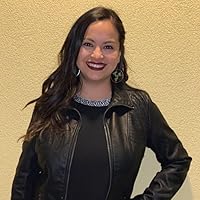
October 11, 2021
Have you ever read something that spoke to your soul? That made you feel seen? That made you feel validated? That made you think, “fuuuuuck, me too.” Well this was the book that made me feel all those things plus so much more. I laugh, I cried, I paused. This book has made me reflect on my own journey, especially in academia.
This book covers a variety of topics such as voluntourism, colorism, intersectionality, imposter syndrome, and much more. For too long, brown girls have dealt with racism, sexism, all the isms. This book tells brown girls that we are seen, that our experiences are valid, that we are knowledge holder, and that the US system will do everything in its power to bring us down. BUT we have power and collectively we can work to dismantle the oppressive systems. It won’t be easy but we can fight, together.
Gracias Prisca Dorcas Mojica Rodriguez (@priscadorcas )
This book covers a variety of topics such as voluntourism, colorism, intersectionality, imposter syndrome, and much more. For too long, brown girls have dealt with racism, sexism, all the isms. This book tells brown girls that we are seen, that our experiences are valid, that we are knowledge holder, and that the US system will do everything in its power to bring us down. BUT we have power and collectively we can work to dismantle the oppressive systems. It won’t be easy but we can fight, together.
Gracias Prisca Dorcas Mojica Rodriguez (@priscadorcas )

January 6, 2022
When I finished this book, I immediately wanted to read it again, and I've never felt that way about a book before. I recommend listening to the audiobook. By listening, you could tell she poured herself into this book. I felt like I was being hugged by her words. It just really emphasized that this book is truly a love letter to Women of Color. I held in my tears until the end, and I haven't stopped thinking about this book since I finished it. I feel like I will want to read this every year or whenever I need to, as a reminder that everything will be okay. This was the book that I didn't know I needed. Thank you to the author for writing this book. I will be forever grateful that it exists.

April 13, 2022
As a Brown woman about to graduate with my Master’s degree, this book came at the right place in my life! The only way I can describe this love letter to Brown women is by comparing it to a big, warm, and loving hug. Prisca poured her heart and soul into each chapter.
The writing was sometimes challenging for me, but only because it was deeply impactful! I had to take breaks at times to truly soak in the wisdom being dropped. Out of all of the stories, I most enjoyed learning about Prisca and her relationship with her mother.
I could have used this book when I was younger, but I’m so grateful to have found it in my twenties! I will definitely be re-reading it from time to time in the future!
The writing was sometimes challenging for me, but only because it was deeply impactful! I had to take breaks at times to truly soak in the wisdom being dropped. Out of all of the stories, I most enjoyed learning about Prisca and her relationship with her mother.
I could have used this book when I was younger, but I’m so grateful to have found it in my twenties! I will definitely be re-reading it from time to time in the future!

April 25, 2022
As a Middle-aged LatinX mother, I'm disappointed. I wanted to LOVE this book! I purchased it in two formats and started referring it out to young, impressionable family members once I read the intro.
We used the book for a friends and family book club (ages 24 - 50) and the group had the same harsh feelings about the writer. Sadly, as I read through the book, I became more and more enraged. I could relate to every chapter and appreciate nuggets of wisdom throughout but the overall tone and her perspective with lack of accountability, left me feeling negative about the writer. It took away from the message. My 24 yr old daughter felt the same although she praised imposter syndrome and I raised my fist in solidarity to white fragility, the overall book was frustrating.
We used the book for a friends and family book club (ages 24 - 50) and the group had the same harsh feelings about the writer. Sadly, as I read through the book, I became more and more enraged. I could relate to every chapter and appreciate nuggets of wisdom throughout but the overall tone and her perspective with lack of accountability, left me feeling negative about the writer. It took away from the message. My 24 yr old daughter felt the same although she praised imposter syndrome and I raised my fist in solidarity to white fragility, the overall book was frustrating.
Displaying 1 - 30 of 513 reviews