

What do you think?

El tercio que nunca existió
Mi nombre es Julián Romero y soy maestre de campo de los tercios del rey nuestro señor. Sirvo hoy con don Felipe II como ayer serví con su augusto padre, el césar Carlos. Queréis que os cuente mi historia y yo os diré que mi único mérito es haber salvado la piel donde otros dieron la vida.
No busquéis aquí epopeyas ni fantasías, que esto no es libro de caballerías, sino memoria fiel y seca de una vida de soldado. Todo cuanto hallaréis en estas páginas son hechos verídicos y ciertos, que bien sabido es que la milicia casa mal con la imaginación.
Habréis oído en tascas y burdeles, que no en palacios ni en casas discretas, que fui mercenario al servicio del rey de Inglaterra. El último que me dijo eso a la cara vio rasgada la suya. Porque serví en Inglaterra, sí, y ciertamente largos años, pero no para el rey Enrique VIII el hereje, sino por oficio de nuestro rey el césar Carlos, a veces secretamente y a veces con los naipes boca arriba. Ni fui tampoco mercenario, sino soldado de honor.
Si queréis saber la verdad de todo lo que en aquellos días aconteció, yo os la contaré.
No busquéis aquí epopeyas ni fantasías, que esto no es libro de caballerías, sino memoria fiel y seca de una vida de soldado. Todo cuanto hallaréis en estas páginas son hechos verídicos y ciertos, que bien sabido es que la milicia casa mal con la imaginación.
Habréis oído en tascas y burdeles, que no en palacios ni en casas discretas, que fui mercenario al servicio del rey de Inglaterra. El último que me dijo eso a la cara vio rasgada la suya. Porque serví en Inglaterra, sí, y ciertamente largos años, pero no para el rey Enrique VIII el hereje, sino por oficio de nuestro rey el césar Carlos, a veces secretamente y a veces con los naipes boca arriba. Ni fui tampoco mercenario, sino soldado de honor.
Si queréis saber la verdad de todo lo que en aquellos días aconteció, yo os la contaré.
440 pages, Kindle Edition
Published February 9, 2022
About the author
José Javier Esparza
52 books91 followersJosé Javier Esparza es un periodista y escritor español, especializado en divulgación histórica.
Ratings & Reviews
Friends & Following
Create a free account to discover what your friends think of this book!
Community Reviews
Displaying 1 - 16 of 16 reviews
January 23, 2023
"Bien sabido es que la milicia casa mal con la imaginación. Y si las armas no ahuyentan a la poesía, y por eso hay soldados bendecidos por las musas, fuerza es decir que tal no es mi caso, que yo siempre me fui más por la prosa, mayormente si suena a metal y huele a pólvora"
Mi nombre es Julián Romero y soy maestre de campo de los tercios del rey nuestro señor.
Sirvo hoy con don Felipe II como ayer serví con su augusto padre, el césar Carlos. Queréis que os cuente mi historia y yo os diré que mi único mérito es haber salvado la piel donde otros dieron la vida..
No busquéis aquí epopeyas ni fantasías, que esto no es libro de caballerías, sino memoria fiel y seca de una vida de soldado.
Todo cuanto hallaréis en estas páginas son hechos verídicos y ciertos, que bien sabido es que la milicia casa mal con la imaginación.
Habréis oído en tascas y burdeles, que no en palacios ni en casas discretas, que fui mercenario al servicio del rey de Inglaterra.
El último que me dijo eso a la cara vio rasgada la suya..
Porque serví en Inglaterra, sí, y ciertamente largos años, pero no para el rey Enrique VIII el hereje, sino por oficio de nuestro rey el césar Carlos, a veces secretamente y a veces con los naipes boca arriba. Ni fui tampoco mercenario, sino soldado de honor.
Si queréis saber la verdad de todo lo que en aquellos días aconteció, yo os la contaré.
Una gran novela histórica, Esparza posee una narrativa a rebosar de conocimiento, pasión, documentación y además instructiva.
Me ha causado una gran impresión este autor con el que tenía el palpito de que iba a ser así como en su momento me pasó con otro, Pedro Santamaría.
Esparza se convertirá en otro referente de novela histórica, grandes lecturas y aventuras.
Julián Romero un maestre de campo de los tercios, las peripecias de estos soldados no reconocidos como un tercio, me recordó nada más empezarlo a Don Diego Alatriste.
Empezar y traer esos recuerdo y ganas de leer más sobre ello, chapó.
Narra a vuesas mercedes los acontecimientos que tuvieron entre el año de nuestro señor 1544 y 1551. Sucesos que tuvieron su lugar entre España, Escocia, Francia, Flandes e Inglaterra.
Basado en hechos documentados, con gran rigor histórico, para hacer que la historia sea más ligera nos mete otros personajes, que tú mismo buscas a ver si existieron. Pocas licencias se ha tomado Esparza. Es una novela (quizás con menos tintes de novela y más de histórica) de los pies a la cabeza.
Que te haga hacer eso es una clara señal de estar sumergido en una trama magistral y que tenga cogido plenamente tu interés.
Julián Romero de Ibarrola nació en tierras conquenses, en Huélamo o en Torrejoncillo del Rey, en 1518 fue un destacado oficial español en los Países Bajos durante la guerra de los Ochenta Años.
Uno de los más míticos y carismáticos soldados de Flandes de todo el siglo XVI. Su trayectoria militar es la de un soldado que ha conquistado todos los escalones de la fama a fuerza de su acero, valor y destreza en los campos de batalla de Europa, que ha conseguido la nobleza por el mérito de las armas más que por la sangre.
Fue considerado un verdadero héroe, ven en él a un modelo a seguir en el campo de las armas.
Los oficiales le consideraban el orgullo de su corporación, los capitanes generales de Flandes le aprecian y le respetan. Se ganó cada paso a base de heridas, me quede alucinado de todo lo que fue perdiendo por el camino, físicamente.
Como casi todo el mundo en aquellos tiempos de incertidumbre y guerras, se alistó en la orden como mochilero, aguador y mozo de tambor, para luego pasar a ser un mercenario.
No solo hablaba cinco idiomas, sino que era un duelista de características asombrosas, y un genio de la táctica con una intuición asombrosa.
Un lenguaje claro, adaptado a la época, narrado desde la pluma de Julián, mostrando los valores de aquellos tercios que llevaron a España a el lugar que ocupó. Un ejército y una fuerza que llegó a ser e imparable.
Que pasaron además por el tiempo por todos los escenarios más relevantes de dichas épocas.
Muchos años de servicio a la espalda. Jaque y retador, matasiete y perdonavidas, bravucón y pendenciero, siempre dispuesto a desnudar el acero y aviar la vizcaína, parroquiano de burdeles y sacristán de tabernas, canónigo de dados y naipes y prior de oscuros callejones..
Y vive Dios que no olvidaréis, sed testigos de su historia..✍️
He dicho. (Me hizo gracia su uso en la novela, me recordó a ti, don Labi.) 🤣
"Porque ninguno de los de buen espíritu fuimos allí por la comida y las pagas, sino por el honor y la gloria, que de esto sí tuvimos más que ningún ejército en los tiempos pasados ni venideros. He dicho."
Mi nombre es Julián Romero y soy maestre de campo de los tercios del rey nuestro señor.
Sirvo hoy con don Felipe II como ayer serví con su augusto padre, el césar Carlos. Queréis que os cuente mi historia y yo os diré que mi único mérito es haber salvado la piel donde otros dieron la vida..
No busquéis aquí epopeyas ni fantasías, que esto no es libro de caballerías, sino memoria fiel y seca de una vida de soldado.
Todo cuanto hallaréis en estas páginas son hechos verídicos y ciertos, que bien sabido es que la milicia casa mal con la imaginación.
Habréis oído en tascas y burdeles, que no en palacios ni en casas discretas, que fui mercenario al servicio del rey de Inglaterra.
El último que me dijo eso a la cara vio rasgada la suya..
Porque serví en Inglaterra, sí, y ciertamente largos años, pero no para el rey Enrique VIII el hereje, sino por oficio de nuestro rey el césar Carlos, a veces secretamente y a veces con los naipes boca arriba. Ni fui tampoco mercenario, sino soldado de honor.
Si queréis saber la verdad de todo lo que en aquellos días aconteció, yo os la contaré.
Una gran novela histórica, Esparza posee una narrativa a rebosar de conocimiento, pasión, documentación y además instructiva.
Me ha causado una gran impresión este autor con el que tenía el palpito de que iba a ser así como en su momento me pasó con otro, Pedro Santamaría.
Esparza se convertirá en otro referente de novela histórica, grandes lecturas y aventuras.
Julián Romero un maestre de campo de los tercios, las peripecias de estos soldados no reconocidos como un tercio, me recordó nada más empezarlo a Don Diego Alatriste.
Empezar y traer esos recuerdo y ganas de leer más sobre ello, chapó.
Narra a vuesas mercedes los acontecimientos que tuvieron entre el año de nuestro señor 1544 y 1551. Sucesos que tuvieron su lugar entre España, Escocia, Francia, Flandes e Inglaterra.
Basado en hechos documentados, con gran rigor histórico, para hacer que la historia sea más ligera nos mete otros personajes, que tú mismo buscas a ver si existieron. Pocas licencias se ha tomado Esparza. Es una novela (quizás con menos tintes de novela y más de histórica) de los pies a la cabeza.
Que te haga hacer eso es una clara señal de estar sumergido en una trama magistral y que tenga cogido plenamente tu interés.
Julián Romero de Ibarrola nació en tierras conquenses, en Huélamo o en Torrejoncillo del Rey, en 1518 fue un destacado oficial español en los Países Bajos durante la guerra de los Ochenta Años.
Uno de los más míticos y carismáticos soldados de Flandes de todo el siglo XVI. Su trayectoria militar es la de un soldado que ha conquistado todos los escalones de la fama a fuerza de su acero, valor y destreza en los campos de batalla de Europa, que ha conseguido la nobleza por el mérito de las armas más que por la sangre.
Fue considerado un verdadero héroe, ven en él a un modelo a seguir en el campo de las armas.
Los oficiales le consideraban el orgullo de su corporación, los capitanes generales de Flandes le aprecian y le respetan. Se ganó cada paso a base de heridas, me quede alucinado de todo lo que fue perdiendo por el camino, físicamente.
Como casi todo el mundo en aquellos tiempos de incertidumbre y guerras, se alistó en la orden como mochilero, aguador y mozo de tambor, para luego pasar a ser un mercenario.
No solo hablaba cinco idiomas, sino que era un duelista de características asombrosas, y un genio de la táctica con una intuición asombrosa.
Un lenguaje claro, adaptado a la época, narrado desde la pluma de Julián, mostrando los valores de aquellos tercios que llevaron a España a el lugar que ocupó. Un ejército y una fuerza que llegó a ser e imparable.
Que pasaron además por el tiempo por todos los escenarios más relevantes de dichas épocas.
Muchos años de servicio a la espalda. Jaque y retador, matasiete y perdonavidas, bravucón y pendenciero, siempre dispuesto a desnudar el acero y aviar la vizcaína, parroquiano de burdeles y sacristán de tabernas, canónigo de dados y naipes y prior de oscuros callejones..
Y vive Dios que no olvidaréis, sed testigos de su historia..✍️
He dicho. (Me hizo gracia su uso en la novela, me recordó a ti, don Labi.) 🤣
"Porque ninguno de los de buen espíritu fuimos allí por la comida y las pagas, sino por el honor y la gloria, que de esto sí tuvimos más que ningún ejército en los tiempos pasados ni venideros. He dicho."

January 23, 2023
Julián Romero es un personaje histórico, real, y fue soldado, capitán y maestre de campo (similar a general) en los Tercios bajo los reinados de Carlos V y Felipe II.
La mayoría de personajes que aparecen por esta novela existieron igualmente. La mayoría de hechos que nos cuenta la novela sucedieron tal y como lo cuenta.
Vale, pues por lo anterior ya veis que la novela refleja fielmente los hechos históricos y las licencias literarias se las toma solo para agilizar un poco lo que se sale de Historia pura y dura. Cuenta la vida y en lo que anduvo involucrado el protagonista, Romero, entre 1545 y 1551, casi todo en Inglaterra y durante los últimos años de Enrique VIII y su tumultuosa sucesión.
Con esto ya suponéis que a mis amistades rendidos a la Historia les encantará, xq pocas licencias se toma el autor.
Narrado en primera persona a modo de memorias, Julián nos va contando las vicisitudes que lo arrastran de Flandes a Inglaterra. El lenguaje que utiliza el autor es genial, magistral, la mayor gozada de la novela. Da gusto ir leyendo. Las palabras y las expresiones te meten de lleno en la época y en los hechos. Y eso, junto a hechos interesantes, hace que la lectura sea placentera. Y además mosquea el título…que es totalmente adecuado.
Donde le bajo la nota es en el apartado de “novela”. NO llega a enganchar tanto como otros autores que todos conocemos, al menos a mí. ¿Tal vez precisamente xq mete poca ficción? Creo que será por eso, aunque ya digo que lo que cuenta es interesante de por sí. El “cómo” lo cuenta es lo que, aun gustándome, me aparta de un disfrute total.
Los personajes…bien, vale, suficiente, aunque no me encantan. Julian Romero lleva todo el peso de la historia y ese me convence, pero del resto solo salvo a uno. De sus compañeros soldados ninguno me ha gustado.
Y si no me encanta cómo desarrolla la trama y los personajes justitos pues ya entenderéis que cinco estrellas no se lleva. Sería más bien un 7,5/10.
Cierra tramas pero sobrevuela el “continuará”, que aún quedan muchas andanzas de este personaje por contar.
La mayoría de personajes que aparecen por esta novela existieron igualmente. La mayoría de hechos que nos cuenta la novela sucedieron tal y como lo cuenta.
Vale, pues por lo anterior ya veis que la novela refleja fielmente los hechos históricos y las licencias literarias se las toma solo para agilizar un poco lo que se sale de Historia pura y dura. Cuenta la vida y en lo que anduvo involucrado el protagonista, Romero, entre 1545 y 1551, casi todo en Inglaterra y durante los últimos años de Enrique VIII y su tumultuosa sucesión.
Con esto ya suponéis que a mis amistades rendidos a la Historia les encantará, xq pocas licencias se toma el autor.
Narrado en primera persona a modo de memorias, Julián nos va contando las vicisitudes que lo arrastran de Flandes a Inglaterra. El lenguaje que utiliza el autor es genial, magistral, la mayor gozada de la novela. Da gusto ir leyendo. Las palabras y las expresiones te meten de lleno en la época y en los hechos. Y eso, junto a hechos interesantes, hace que la lectura sea placentera. Y además mosquea el título…que es totalmente adecuado.
Donde le bajo la nota es en el apartado de “novela”. NO llega a enganchar tanto como otros autores que todos conocemos, al menos a mí. ¿Tal vez precisamente xq mete poca ficción? Creo que será por eso, aunque ya digo que lo que cuenta es interesante de por sí. El “cómo” lo cuenta es lo que, aun gustándome, me aparta de un disfrute total.
Los personajes…bien, vale, suficiente, aunque no me encantan. Julian Romero lleva todo el peso de la historia y ese me convence, pero del resto solo salvo a uno. De sus compañeros soldados ninguno me ha gustado.
Y si no me encanta cómo desarrolla la trama y los personajes justitos pues ya entenderéis que cinco estrellas no se lleva. Sería más bien un 7,5/10.
Cierra tramas pero sobrevuela el “continuará”, que aún quedan muchas andanzas de este personaje por contar.

February 11, 2023
7,5/10
En global he disfrutado bastante de esta lectura, el worldbuilding me ha parecido que está muy bien conseguido, que sí, que al ser una novela histórica es solo documentarse y listo, pero no todo el mundo lo hace bien, y en este caso me ha parecido de notable alto rozando la excelencia. Su pega, es la narración, que me ha parecido mejorable.
A su favor tiene lo ya comentado sobre la ambientación, la forma en que se expresa el protagonista hace que te sientas como si estuvieras en pleno siglo XVI. También me ha gustado que esté basada en hechos reales, es decir, existió un tercio en Inglaterra, aunque nunca de forma oficial, algo que desconocía por completo y que en verdad poco bombo se le ha dado. Los personajes, con sus más y sus menos, no desentonan e incluso alguno de ellos, como nuestro Julián Romero, terminas por encariñarte con ellos.
En su contra, pues lo ya comentado sobre la narración. Obvia decir que el uso de un lenguaje arcaico puede dificultar el ritmo, pero he leído otras novelas con este mismo estilo y fluían mejor. En este caso parece que la cosa vaya a como a trompicones, momentos donde lees páginas y páginas sin darte cuenta y otros en los que te cuesta avanzar mucho. En cualquier caso tampoco es algo que suceda durante toda la lectura.
Resumiendo, novela que hará las delicias a aquellos que disfruten de la historia basada en los "invencibles" tercios españoles, las intrigas políticas de la corte de Enrique VIII y a los que les guste descubrir aspectos de la historia menos conocidos. Para todos los demás, aunque os animo a que la leáis, igual el lenguaje y el estilo narrativo se os puede hacer un poco de bola, pero en cualquier caso creo que es una lectura que merece la pena recomendar.
En global he disfrutado bastante de esta lectura, el worldbuilding me ha parecido que está muy bien conseguido, que sí, que al ser una novela histórica es solo documentarse y listo, pero no todo el mundo lo hace bien, y en este caso me ha parecido de notable alto rozando la excelencia. Su pega, es la narración, que me ha parecido mejorable.
A su favor tiene lo ya comentado sobre la ambientación, la forma en que se expresa el protagonista hace que te sientas como si estuvieras en pleno siglo XVI. También me ha gustado que esté basada en hechos reales, es decir, existió un tercio en Inglaterra, aunque nunca de forma oficial, algo que desconocía por completo y que en verdad poco bombo se le ha dado. Los personajes, con sus más y sus menos, no desentonan e incluso alguno de ellos, como nuestro Julián Romero, terminas por encariñarte con ellos.
En su contra, pues lo ya comentado sobre la narración. Obvia decir que el uso de un lenguaje arcaico puede dificultar el ritmo, pero he leído otras novelas con este mismo estilo y fluían mejor. En este caso parece que la cosa vaya a como a trompicones, momentos donde lees páginas y páginas sin darte cuenta y otros en los que te cuesta avanzar mucho. En cualquier caso tampoco es algo que suceda durante toda la lectura.
Resumiendo, novela que hará las delicias a aquellos que disfruten de la historia basada en los "invencibles" tercios españoles, las intrigas políticas de la corte de Enrique VIII y a los que les guste descubrir aspectos de la historia menos conocidos. Para todos los demás, aunque os animo a que la leáis, igual el lenguaje y el estilo narrativo se os puede hacer un poco de bola, pero en cualquier caso creo que es una lectura que merece la pena recomendar.

March 14, 2022
Ladies and gentlemen we are in my very humble opinion before what for me so far is the best fiction novel of this still coming year 2022.
This is a novel that contains absolutely everything. It is a pity, but unfortunately the best novels are lately the enjoyment of a few, and do not reach the general public, perhaps because they do not reflect what the great plutocratic elites want, but even so we are facing a formidable novel that the user of Goodreads gives him a chance would not disappoint.
I consider myself a big fan of José Javier Esparza. I must confess without any shame, that if I continued to buy the North of Castile it was to read his very interesting chronicles of television programs. For me it was a real loss that the North of Castile will stop publishing. Although he is not a historian, José Javier Esparza has done a lot for this social science. In some cases much more than people we call ourselves historians. If you have read the wonderful novel "Citadel" by the Scotsman A.J. Cronin https://www.goodreads.com/book/show/6... you will have seen that many achievements of medicine are due to people who did not belong to this field of science, but to other professions, and the same goes for history. I am not a big fan of Annale, but if something good had the historical trend initiated by Marc Bloch https://www.goodreads.com/author/show... and Georges Lefebvre https://www.goodreads.com/author/show... was the interdisciplinarity of History and the reception of people who did not belong to the field of History, but who have made great contributions to it, and in this category we have to place José Javier. I also confess a great admirer of his programs on Toro TV, which unfortunately I can not see, because the TV in the living room is my parents. I do not live in Madrid, and I have to settle for DTT so unfortunately this makes me look deprived of watching his wonderful program El Gato al Agua.
It is perhaps together with my admired Juan Manuel de Prada https://www.goodreads.com/author/show... (by the way that once I finish with "The Bell of Iceland" by Halldor Killjan Laxness https://www.goodreads.com/book/show/1... https://www.goodreads.com/author/show... my next book will be "An Amendment to the Whole" we will see if it is able to cope with the book of Cardinal Sarah" It gets late and dusk" https://www.goodreads.com/book/show/4... and then my plan is to start reading Thomas E. Penury City's trilogy Vol 1: Light of Gabriel in English https://www.goodreads.com/book/show/6... and once I have finished publishing the balance of readings from the previous year, and my future readings. https://www.goodreads.com/book/show/5... I apologize to my followers, because I promised them a harsh review of Morris West's "Lazarus" https://www.goodreads.com/book/show/1... but because of my current humor I was not prepared to write such a bitter, and cruel, review, but I warn Goodreads users that that hour will come) one of the strongest defenders of the Catholic faith, even if they play in different schools. Anyway, my opinion is changing, because there are more and more people in this field and there are no longer four cats who dare to leave the catacombs, but more and more fish in the net. I highly recommend his books on the history of Spain, because they are an antidote to the Black Legend and in these times, where education is increasingly ideologized, and in which less and less content is taught so we are facing what Professor Margarita Torremocha has denounced, which is known less and less, and you have to teach history to the people, as if you had no idea about it, and more now that there is so much misrepresentation, and only the last two centuries are taught, especially the Second Republic, Civil War, and Francoism. Which does not mean that people should be imposed arid and brainy readings, but that they can learn by having fun, because as my teacher Alberto Marcos Martín says, the historiadfopr must also have something of a literati, and there is no problem in flirting with the novel, as Bartolomé Benassar did in his very estimable novel of the Galeoto of Algiers. to explain the problem of slavery in North Africa, and the problem of apostasy. In a different way than "Silence" by the Japanese writer Shusaku Endo https://www.goodreads.com/book/show/2... or me always admired Mika Waltari in "Adventures in the East by Mikael Karvajalka" https://www.goodreads.com/book/show/6... (From mika Waltari's novel https://www.goodreads.com/author/show... we will talk, because there is a common event that has both "The third that never existed", and "Adventures in the east of Mikael Karvajalka" ). On the subject of slavery by Muslims I recommend the novel "Poor banished Children" by my friend Fiorella Nash https://www.goodreads.com/book/show/1... https://www.goodreads.com/author/show... and in a non-fiction book "White slaves: Islam and the conquest of Europe" by José Antonio Crespo https://www.goodreads.com/book/show/5... French (for me a required reading, and more after the attacks I was a victim of for writing my review of the book of "The Crusades" by Dan Jones https://www.goodreads.com/review/show... ). By the way, it is very interesting that the name of José Antonio Crespo Francés has come up https://www.goodreads.com/author/show... since also like José Javier Esparza, María Elvira Roca Barea https://www.goodreads.com/book/show/3... https://www.goodreads.com/author/show... , Iván Vélez https://www.goodreads.com/author/show... , Gustavo Bueno https://www.goodreads.com/author/show... , Fernando Paz https://www.goodreads.com/author/show... Pedro Insúa Rodríguez https://www.goodreads.com/author/show... Javier Santamaría Pozo https://www.goodreads.com/book/show/5... https://www.goodreads.com/author/show... or Marcelo Gullo himself https://www.goodreads.com/author/show... (in the case of Gullo with qualms because I do not like that I do not like so much that he flirts with the left, although I recognize that his "Motherland" https://www.goodreads.com/book/show/5... is a very valuable book that I suppose, that I will talk about one day, or as Julián Romero, Mauricio, or whoever wrote his memoirs to him one day I will tell my impressions of that book).
Another thing, which I like a lot about José Javier Esparza is his physical appearance, but you have seen him look like a real pirate, corsair, or sea wolf, although I liked him when he took off his beard, and he looked closer to Moshe Dayan the Israeli general who defeated three armies in three days. In addition, José Javier Esparza has treated some of my friends very well, since he co-wrote the Spanish edition of "Politically Incorrect Guide to Western Civilization" with Anthony Esolen https://www.goodreads.com/author/show... and has also interviewed on some occasions my dear friend Manuel Alfonseca https://www.goodreads.com/author/show... and he has always seemed to me a very sensible person, and very logical, who rarely loses his composure. I've seen him a lot on tv in talk shows, and it's very rare that he loses his nerves. When I was much younger I considered Juan Manuel de Prada, and José Javier Esparza our G.K. Chesterton https://www.goodreads.com/author/show..., and our Hilaire Belloc https://www.goodreads.com/author/show..., although the influences of José Javier Esparza are very different. I also like very much that I am Valencian, since I feel a great affection for that land, even if things did not go well there.
Now speaking properly of the novel that concerns us. The first thing I want to do is thank both my friends at Goodreads Panni Maria and Panni Julia53917 for showing interest in my progress with this book. My Polish friends have shown that they have, despite not knowing the content, a great taste, despite not knowing the content of the book. Hopefully one day this book will reach the beautiful Poland, and the English-speaking countries, and I am sure that he would be very excited to be read by German-language users, because I have the impression that José Javier Esparza is as fond of Germany, as I am of Poland, and of Japan. Hopefully one day the adventures of Julián Romero Urquiola will take him to Poland. It is a pity, because it would be a very interesting topic to investigate the links between Spain, and Poland, as my friend Elentir has done for example. But I don't think I took him through those latitudes, although I'm sure Julián Romero will still tell us many stories.
The first thing to note is that José Javier Esparza has improved enormously in his craft. I read the first novel of his trilogy of the reconquest "The Knight of the White Boar" https://www.goodreads.com/book/show/1... who perhaps lacked a little strength, but has improved a lot in his craft. Perhaps maybe because I am surrounded by such good writers, such as my admired Juan Manuel de Prada, or Jesús Trillo Figueroa whose wonderful novel "The world between scripts" https://www.goodreads.com/review/show... was already reviewed here https://www.goodreads.com/review/show... . The hook that this novel had was undoubtedly the presence of Spanish soldiers in Scotland. Topic that I did not know, but I would know that this topic would like my philosque friends like Jorge Sáez Criado https://www.goodreads.com/author/show... my friend Marta Luján/Christine Cross https://www.goodreads.com/author/show... or my friend Elena María Vidal https://www.goodreads.com/author/show... . We were talking about this topic on Facebook. I mistakenly thought that these soldiers would fight on behalf of Mary of Guise, and her daughter Mary Stuart against the English on religious grounds, but it was the other way around. It is not so much the problem of religion, but geopolitics that leads the Spaniards to fight the Scots in favor of an excommunicated king. It should be remembered that Scotland had very strong ties with France, and they were allies, and Francis I was the greatest enemy of Charles V, and it was not until the battle of San Quintín (which Esparza also novelized, and is the original saga, since this would be a prequel because it occurs before the battle of San Quintín, if the public wants to read from the French perspective what the battle of San Quentin meant for the French read "The page of the Duke of Savoy", https://www.goodreads.com/book/show/1... that despite having written it Dumas is very equanimous, although there is some dart to Philip II, and try to cover the French fiasco with its secondary characters but puts exactly Francis I as it must be put) and the death of Henry II, when Spain was able to carry out its great policy, due to the wars of religion that took place in this country, and that had it out of the front line until the 1590s. Therefore what captivated me most about the book was its exoticism, as well as the historical book of "When the Thirds Defeated the Samurais" by Jesús Lorente Liarte https://www.goodreads.com/book/show/5... .
The novel begins in France thirteen years before the battle of San Quintín, and the action will last between seven, or eight years, and begins with Julián Romero de Urquiola fighting one of the last battles prior to the peace of Crepy (1544) and they do it taking Saint Dizier, and in which we see excellent characterizations of the different historical characters whether they are Maurice of Nassau, Ferrante Gonzaga, and the saga of the Granvela (Claudio, and Antonio), who are going to be the strong men of Charles V, and Philip II, and how they take Saint Dizier. Esparza who has written a lot about the thirds tells us in the novel as a tutorial how the thirds work, and how they can lose battles like Cerisoles, also without leaving the novel undertakes historical digressions, which are very useful to the reader, and is as useful to the Spanish reader, as to the foreigner to understand the importance of Italy, and because France, and Spain fought so long for those lands Esparza explains something very essential, and that is that until the seventeenth century there are no national armies, and that a large part of the troops are composed of soldiers of different nationalities. The prologue of Julián Romero is very important, because it explains the difference between soldiers, mercenaries, knights, and is an apology to justify why Julián Romero (who by the way is a real character, like the D'Artagnan whom Dumas made go down in history), and his companions ended up fighting for Enrique VIII. It will justify to you that it was not fought for him, but for Charles V, and the interests of the Empire. Anyway in a Lecarresian turn, because it has some espionage novel bias https://www.goodreads.com/author/show... (in fact this novel has many genres even romantic I would dare to say) in the end this is not clear. In any case, the historical and political personalities of sixteenth-century Europe are very well described, and not only the English, and the Scottish, but all. Although Waltari is much better in that field. Of course Esparza offers a more considered image of Charles V who is so mistreated in the book of John Julius of Norwich remaining as the worst of the four great sovereigns https://www.goodreads.com/book/show/3... . Esparza drops it, but to understand how the French court worked I recommend the novel "The Princess of Cleves" by Madame Lafayette https://www.goodreads.com/book/show/1... The good thing about Esparza is that he does not invent, since most of the facts he tells us are true, and they really happened as the taking of Saint Dizier, which was for that ruse. The Saint Dizier phase is very interesting to get to know the members of the thirds that are going to be part of the adventure in England, the most important being the turbulent Don Pedro de Gamboa who will be the one who gets them all into the mess. Esparza opts, and this makes the novel more interesting, that it is not mere chance that led the thirds to run aground in England. Although there was one thing to me, which surprised me. It is true that at the time that Esparza tells England was an ally of Charles V, while he attacks Saint Dizier Henry VIII was taking Bolougne au mere, but I am surprised that being Henry VIII so paranoid he is so pleased that the Spaniards arrive in his lands, since he always feared an invasion. Anyway, Esparza through the very interesting Antonio de Egüaras explains very well, because even though Henry VIII is a heretical king, he mistreats his daughter, and is an ambitious, dangerous man why Spain does not form an alliance with France, and does not depose him. This is a question that my Chief Juan del Río Hortega Bereciartu has asked me, and Esparza explains why the Felicísima Armada did not advance 40 years. Because Spain was unable to undertake all the war fronts against the French, German Lutherans, and the Turks. For this reason he could not open one more front, and fight against four countries at once, and France was an unreliable ally, who would have betrayed him, because he feared Spain more than the spiritual health of the English. Neither Francis I nor Henry II were trustworthy. The parts that I liked the most are those that appear Egüaras the beautiful Betsy where they explain how the England of the end of Henry VIII, Lord Somerset, and Dudley works. Esparza understands much better than many historians. It is very interesting how Egüaras comments on the social explosion that will cause the looting of the monasteries, and the high taxes of which the English are victims. Esparza has not written like Hilaire Belloc "Characters of the Reformation" https://www.goodreads.com/book/show/5... or a book like that of Carlos M. N. Eire https://www.goodreads.com/book/show/9... https://www.goodreads.com/author/show... (the latter author has been recommended to me by Sandra E. Miesel https://www.goodreads.com/author/show...
This is a novel that contains absolutely everything. It is a pity, but unfortunately the best novels are lately the enjoyment of a few, and do not reach the general public, perhaps because they do not reflect what the great plutocratic elites want, but even so we are facing a formidable novel that the user of Goodreads gives him a chance would not disappoint.
I consider myself a big fan of José Javier Esparza. I must confess without any shame, that if I continued to buy the North of Castile it was to read his very interesting chronicles of television programs. For me it was a real loss that the North of Castile will stop publishing. Although he is not a historian, José Javier Esparza has done a lot for this social science. In some cases much more than people we call ourselves historians. If you have read the wonderful novel "Citadel" by the Scotsman A.J. Cronin https://www.goodreads.com/book/show/6... you will have seen that many achievements of medicine are due to people who did not belong to this field of science, but to other professions, and the same goes for history. I am not a big fan of Annale, but if something good had the historical trend initiated by Marc Bloch https://www.goodreads.com/author/show... and Georges Lefebvre https://www.goodreads.com/author/show... was the interdisciplinarity of History and the reception of people who did not belong to the field of History, but who have made great contributions to it, and in this category we have to place José Javier. I also confess a great admirer of his programs on Toro TV, which unfortunately I can not see, because the TV in the living room is my parents. I do not live in Madrid, and I have to settle for DTT so unfortunately this makes me look deprived of watching his wonderful program El Gato al Agua.
It is perhaps together with my admired Juan Manuel de Prada https://www.goodreads.com/author/show... (by the way that once I finish with "The Bell of Iceland" by Halldor Killjan Laxness https://www.goodreads.com/book/show/1... https://www.goodreads.com/author/show... my next book will be "An Amendment to the Whole" we will see if it is able to cope with the book of Cardinal Sarah" It gets late and dusk" https://www.goodreads.com/book/show/4... and then my plan is to start reading Thomas E. Penury City's trilogy Vol 1: Light of Gabriel in English https://www.goodreads.com/book/show/6... and once I have finished publishing the balance of readings from the previous year, and my future readings. https://www.goodreads.com/book/show/5... I apologize to my followers, because I promised them a harsh review of Morris West's "Lazarus" https://www.goodreads.com/book/show/1... but because of my current humor I was not prepared to write such a bitter, and cruel, review, but I warn Goodreads users that that hour will come) one of the strongest defenders of the Catholic faith, even if they play in different schools. Anyway, my opinion is changing, because there are more and more people in this field and there are no longer four cats who dare to leave the catacombs, but more and more fish in the net. I highly recommend his books on the history of Spain, because they are an antidote to the Black Legend and in these times, where education is increasingly ideologized, and in which less and less content is taught so we are facing what Professor Margarita Torremocha has denounced, which is known less and less, and you have to teach history to the people, as if you had no idea about it, and more now that there is so much misrepresentation, and only the last two centuries are taught, especially the Second Republic, Civil War, and Francoism. Which does not mean that people should be imposed arid and brainy readings, but that they can learn by having fun, because as my teacher Alberto Marcos Martín says, the historiadfopr must also have something of a literati, and there is no problem in flirting with the novel, as Bartolomé Benassar did in his very estimable novel of the Galeoto of Algiers. to explain the problem of slavery in North Africa, and the problem of apostasy. In a different way than "Silence" by the Japanese writer Shusaku Endo https://www.goodreads.com/book/show/2... or me always admired Mika Waltari in "Adventures in the East by Mikael Karvajalka" https://www.goodreads.com/book/show/6... (From mika Waltari's novel https://www.goodreads.com/author/show... we will talk, because there is a common event that has both "The third that never existed", and "Adventures in the east of Mikael Karvajalka" ). On the subject of slavery by Muslims I recommend the novel "Poor banished Children" by my friend Fiorella Nash https://www.goodreads.com/book/show/1... https://www.goodreads.com/author/show... and in a non-fiction book "White slaves: Islam and the conquest of Europe" by José Antonio Crespo https://www.goodreads.com/book/show/5... French (for me a required reading, and more after the attacks I was a victim of for writing my review of the book of "The Crusades" by Dan Jones https://www.goodreads.com/review/show... ). By the way, it is very interesting that the name of José Antonio Crespo Francés has come up https://www.goodreads.com/author/show... since also like José Javier Esparza, María Elvira Roca Barea https://www.goodreads.com/book/show/3... https://www.goodreads.com/author/show... , Iván Vélez https://www.goodreads.com/author/show... , Gustavo Bueno https://www.goodreads.com/author/show... , Fernando Paz https://www.goodreads.com/author/show... Pedro Insúa Rodríguez https://www.goodreads.com/author/show... Javier Santamaría Pozo https://www.goodreads.com/book/show/5... https://www.goodreads.com/author/show... or Marcelo Gullo himself https://www.goodreads.com/author/show... (in the case of Gullo with qualms because I do not like that I do not like so much that he flirts with the left, although I recognize that his "Motherland" https://www.goodreads.com/book/show/5... is a very valuable book that I suppose, that I will talk about one day, or as Julián Romero, Mauricio, or whoever wrote his memoirs to him one day I will tell my impressions of that book).
Another thing, which I like a lot about José Javier Esparza is his physical appearance, but you have seen him look like a real pirate, corsair, or sea wolf, although I liked him when he took off his beard, and he looked closer to Moshe Dayan the Israeli general who defeated three armies in three days. In addition, José Javier Esparza has treated some of my friends very well, since he co-wrote the Spanish edition of "Politically Incorrect Guide to Western Civilization" with Anthony Esolen https://www.goodreads.com/author/show... and has also interviewed on some occasions my dear friend Manuel Alfonseca https://www.goodreads.com/author/show... and he has always seemed to me a very sensible person, and very logical, who rarely loses his composure. I've seen him a lot on tv in talk shows, and it's very rare that he loses his nerves. When I was much younger I considered Juan Manuel de Prada, and José Javier Esparza our G.K. Chesterton https://www.goodreads.com/author/show..., and our Hilaire Belloc https://www.goodreads.com/author/show..., although the influences of José Javier Esparza are very different. I also like very much that I am Valencian, since I feel a great affection for that land, even if things did not go well there.
Now speaking properly of the novel that concerns us. The first thing I want to do is thank both my friends at Goodreads Panni Maria and Panni Julia53917 for showing interest in my progress with this book. My Polish friends have shown that they have, despite not knowing the content, a great taste, despite not knowing the content of the book. Hopefully one day this book will reach the beautiful Poland, and the English-speaking countries, and I am sure that he would be very excited to be read by German-language users, because I have the impression that José Javier Esparza is as fond of Germany, as I am of Poland, and of Japan. Hopefully one day the adventures of Julián Romero Urquiola will take him to Poland. It is a pity, because it would be a very interesting topic to investigate the links between Spain, and Poland, as my friend Elentir has done for example. But I don't think I took him through those latitudes, although I'm sure Julián Romero will still tell us many stories.
The first thing to note is that José Javier Esparza has improved enormously in his craft. I read the first novel of his trilogy of the reconquest "The Knight of the White Boar" https://www.goodreads.com/book/show/1... who perhaps lacked a little strength, but has improved a lot in his craft. Perhaps maybe because I am surrounded by such good writers, such as my admired Juan Manuel de Prada, or Jesús Trillo Figueroa whose wonderful novel "The world between scripts" https://www.goodreads.com/review/show... was already reviewed here https://www.goodreads.com/review/show... . The hook that this novel had was undoubtedly the presence of Spanish soldiers in Scotland. Topic that I did not know, but I would know that this topic would like my philosque friends like Jorge Sáez Criado https://www.goodreads.com/author/show... my friend Marta Luján/Christine Cross https://www.goodreads.com/author/show... or my friend Elena María Vidal https://www.goodreads.com/author/show... . We were talking about this topic on Facebook. I mistakenly thought that these soldiers would fight on behalf of Mary of Guise, and her daughter Mary Stuart against the English on religious grounds, but it was the other way around. It is not so much the problem of religion, but geopolitics that leads the Spaniards to fight the Scots in favor of an excommunicated king. It should be remembered that Scotland had very strong ties with France, and they were allies, and Francis I was the greatest enemy of Charles V, and it was not until the battle of San Quintín (which Esparza also novelized, and is the original saga, since this would be a prequel because it occurs before the battle of San Quintín, if the public wants to read from the French perspective what the battle of San Quentin meant for the French read "The page of the Duke of Savoy", https://www.goodreads.com/book/show/1... that despite having written it Dumas is very equanimous, although there is some dart to Philip II, and try to cover the French fiasco with its secondary characters but puts exactly Francis I as it must be put) and the death of Henry II, when Spain was able to carry out its great policy, due to the wars of religion that took place in this country, and that had it out of the front line until the 1590s. Therefore what captivated me most about the book was its exoticism, as well as the historical book of "When the Thirds Defeated the Samurais" by Jesús Lorente Liarte https://www.goodreads.com/book/show/5... .
The novel begins in France thirteen years before the battle of San Quintín, and the action will last between seven, or eight years, and begins with Julián Romero de Urquiola fighting one of the last battles prior to the peace of Crepy (1544) and they do it taking Saint Dizier, and in which we see excellent characterizations of the different historical characters whether they are Maurice of Nassau, Ferrante Gonzaga, and the saga of the Granvela (Claudio, and Antonio), who are going to be the strong men of Charles V, and Philip II, and how they take Saint Dizier. Esparza who has written a lot about the thirds tells us in the novel as a tutorial how the thirds work, and how they can lose battles like Cerisoles, also without leaving the novel undertakes historical digressions, which are very useful to the reader, and is as useful to the Spanish reader, as to the foreigner to understand the importance of Italy, and because France, and Spain fought so long for those lands Esparza explains something very essential, and that is that until the seventeenth century there are no national armies, and that a large part of the troops are composed of soldiers of different nationalities. The prologue of Julián Romero is very important, because it explains the difference between soldiers, mercenaries, knights, and is an apology to justify why Julián Romero (who by the way is a real character, like the D'Artagnan whom Dumas made go down in history), and his companions ended up fighting for Enrique VIII. It will justify to you that it was not fought for him, but for Charles V, and the interests of the Empire. Anyway in a Lecarresian turn, because it has some espionage novel bias https://www.goodreads.com/author/show... (in fact this novel has many genres even romantic I would dare to say) in the end this is not clear. In any case, the historical and political personalities of sixteenth-century Europe are very well described, and not only the English, and the Scottish, but all. Although Waltari is much better in that field. Of course Esparza offers a more considered image of Charles V who is so mistreated in the book of John Julius of Norwich remaining as the worst of the four great sovereigns https://www.goodreads.com/book/show/3... . Esparza drops it, but to understand how the French court worked I recommend the novel "The Princess of Cleves" by Madame Lafayette https://www.goodreads.com/book/show/1... The good thing about Esparza is that he does not invent, since most of the facts he tells us are true, and they really happened as the taking of Saint Dizier, which was for that ruse. The Saint Dizier phase is very interesting to get to know the members of the thirds that are going to be part of the adventure in England, the most important being the turbulent Don Pedro de Gamboa who will be the one who gets them all into the mess. Esparza opts, and this makes the novel more interesting, that it is not mere chance that led the thirds to run aground in England. Although there was one thing to me, which surprised me. It is true that at the time that Esparza tells England was an ally of Charles V, while he attacks Saint Dizier Henry VIII was taking Bolougne au mere, but I am surprised that being Henry VIII so paranoid he is so pleased that the Spaniards arrive in his lands, since he always feared an invasion. Anyway, Esparza through the very interesting Antonio de Egüaras explains very well, because even though Henry VIII is a heretical king, he mistreats his daughter, and is an ambitious, dangerous man why Spain does not form an alliance with France, and does not depose him. This is a question that my Chief Juan del Río Hortega Bereciartu has asked me, and Esparza explains why the Felicísima Armada did not advance 40 years. Because Spain was unable to undertake all the war fronts against the French, German Lutherans, and the Turks. For this reason he could not open one more front, and fight against four countries at once, and France was an unreliable ally, who would have betrayed him, because he feared Spain more than the spiritual health of the English. Neither Francis I nor Henry II were trustworthy. The parts that I liked the most are those that appear Egüaras the beautiful Betsy where they explain how the England of the end of Henry VIII, Lord Somerset, and Dudley works. Esparza understands much better than many historians. It is very interesting how Egüaras comments on the social explosion that will cause the looting of the monasteries, and the high taxes of which the English are victims. Esparza has not written like Hilaire Belloc "Characters of the Reformation" https://www.goodreads.com/book/show/5... or a book like that of Carlos M. N. Eire https://www.goodreads.com/book/show/9... https://www.goodreads.com/author/show... (the latter author has been recommended to me by Sandra E. Miesel https://www.goodreads.com/author/show...

February 6, 2023
4,5
Una maravilla, me han tenido totalmente enganchada las aventuras de Julián Romero, que se queda en mi patatita para siempre.
Qué maestría en la lengua del la época sin caer en el abuso, desde mi Alatriste (NADIE puede superar a Alatriste) no había disfrutado tanto con esa inmersión en el leguaje del protagonista de la novela, personaje histórico real que narra con notable gracia el contexto histórico de los convulsos años del reinado de Enrique VIII.
Quizás cae en algún momento en un exceso didáctico, pero a mi me ha interesado muchísimo.
Ya me gustaría que el autor continuara las andanzas de este entrañable personaje, esta vez por Flandes... EDITO, acabo de ver que hay un San Quintín, que debe ser esa continuación...
Os la recomiendo muchísimo, totalmente disfrutona.
Una maravilla, me han tenido totalmente enganchada las aventuras de Julián Romero, que se queda en mi patatita para siempre.
Qué maestría en la lengua del la época sin caer en el abuso, desde mi Alatriste (NADIE puede superar a Alatriste) no había disfrutado tanto con esa inmersión en el leguaje del protagonista de la novela, personaje histórico real que narra con notable gracia el contexto histórico de los convulsos años del reinado de Enrique VIII.
Quizás cae en algún momento en un exceso didáctico, pero a mi me ha interesado muchísimo.
Ya me gustaría que el autor continuara las andanzas de este entrañable personaje, esta vez por Flandes... EDITO, acabo de ver que hay un San Quintín, que debe ser esa continuación...
Os la recomiendo muchísimo, totalmente disfrutona.

November 6, 2023
Interesante relato histórico que trata de hechos ocurridos entre 1544 y 1551 entre España, Inglaterra, Escocia, Francia y Flandes. El tema central se desarrolla en la turbulenta Inglaterra de Enrique VIII, donde un tercio español tuvo una importante actuación. No es un "ensayo aburrido" sobre Historia; extraordinariamente documentada (la fuente son los escritos de una persona que vivió los propios hechos) así mismo la parte novelada es una aventurera biografía muy amena, pero para hacer más convincente la historia, el autor introduce hábilmente personajes no claramente identificados, sugeridos por la imaginación, que tal vez existieron. ¿Mi opinión? Buen trabajo.
Muy muy recomendable lectura.
⭐️⭐️⭐️⭐️⭐️

September 7, 2022
Como bien refiere el autor, una novela histórica no es un relato de ficción, si no una especie de puzzle donde encajan hechos históricos y novelados verosímiles entre ellos, de tal forma que nos cuesta diferenciar lo novelado de lo que ocurrió realmente
Esparza en este asunto es un auténtico experto. En esta novela pone de fondo parte de la historia de Inglaterra del s.XVI, para meternos en la piel de Julián Romero, un capitán de un contingente de soldados españoles en un Tercio no reconocido como tal,durante el periodo de 1544 a 1551.
Podemos por tanto descubrir las peripecias de estos soldados españoles en “tierra de herejes” de una forma fidedigna, amena e incluso desarrollada con un lenguaje que se acerca al de la época.
Una fantástica forma de aprender y divertirse con nuestra historia de España.
Esparza en este asunto es un auténtico experto. En esta novela pone de fondo parte de la historia de Inglaterra del s.XVI, para meternos en la piel de Julián Romero, un capitán de un contingente de soldados españoles en un Tercio no reconocido como tal,durante el periodo de 1544 a 1551.
Podemos por tanto descubrir las peripecias de estos soldados españoles en “tierra de herejes” de una forma fidedigna, amena e incluso desarrollada con un lenguaje que se acerca al de la época.
Una fantástica forma de aprender y divertirse con nuestra historia de España.
May 1, 2022
Magnífico libro escrito como si fuera una crónica del siglo XVI
July 31, 2023
Muy buena descripción de cómo era la vida del soldado y política de la época.

December 27, 2023
El tercio que nunca existió
Libro que trata sobre un grupo de soldados españoles en la Inglaterra del siglo XVI. Pero antes de comentar nada, mejor que se presente el protagonista:
«Mi nombre es Julián Romero y soy maestre de campo de los tercios del rey nuestro señor. Sirvo hoy con don Felipe II como ayer serví con su augusto padre, el césar Carlos. Queréis que os cuente mi historia y yo os diré que mi único mérito es haber salvado la piel donde otros dieron la vida.»
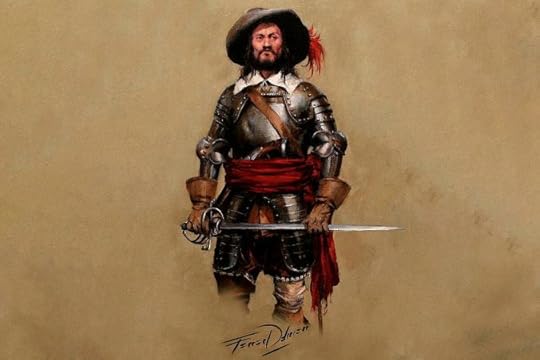
Este grupo de soldados formaron un tercio del ejército español destinados en Inglaterra de forma no oficial. Se dedicaron durante años a ayudar al rey inglés en su lucha contra los escoceses y cualquier cosa que surgiera.
Pero la misión principal fue la de preservar los intereses españoles en terreno inglés. No hay que olvidar que María Tudor, segunda en la sucesión al trono, era nieta de los reyes católicos. Fue reina de Inglaterra entre 1553 y 1558.
Julián Romero, el soldado protagonista de la novela, también se distinguió en la batalla de San Quintín en Francia.
Libro que trata sobre un grupo de soldados españoles en la Inglaterra del siglo XVI. Pero antes de comentar nada, mejor que se presente el protagonista:
«Mi nombre es Julián Romero y soy maestre de campo de los tercios del rey nuestro señor. Sirvo hoy con don Felipe II como ayer serví con su augusto padre, el césar Carlos. Queréis que os cuente mi historia y yo os diré que mi único mérito es haber salvado la piel donde otros dieron la vida.»
Este grupo de soldados formaron un tercio del ejército español destinados en Inglaterra de forma no oficial. Se dedicaron durante años a ayudar al rey inglés en su lucha contra los escoceses y cualquier cosa que surgiera.
Pero la misión principal fue la de preservar los intereses españoles en terreno inglés. No hay que olvidar que María Tudor, segunda en la sucesión al trono, era nieta de los reyes católicos. Fue reina de Inglaterra entre 1553 y 1558.
Julián Romero, el soldado protagonista de la novela, también se distinguió en la batalla de San Quintín en Francia.

February 2, 2023
Magnífica novela histórica en la que se relata la intervención de un no reconocido históricamente y para mí desconocido tercio español, que fue puesto al servicio de Inglaterra en un momento clave de su historia: el final del reinado de Enrique VIII, las posteriores luchas por el poder y la escisión de la iglesia Anglicana.
Narrado en primera persona por un capitán del contingente español, Julián Romero, que aporta su perspectiva de soldado en un convulso ambiente político en el que también se encuentra involucrado.
Un narrador real y fascinante y unos hechos históricos rigurosamente documentados en una novela en la que el autor nos proporciona un glosario de personajes y una detallada cronología histórica.
Una aventura que me ha sorprendido por lo ajustada a los hechos y personajes reales, y aun así tremendamente amena y entretenida.
Narrado en primera persona por un capitán del contingente español, Julián Romero, que aporta su perspectiva de soldado en un convulso ambiente político en el que también se encuentra involucrado.
Un narrador real y fascinante y unos hechos históricos rigurosamente documentados en una novela en la que el autor nos proporciona un glosario de personajes y una detallada cronología histórica.
Una aventura que me ha sorprendido por lo ajustada a los hechos y personajes reales, y aun así tremendamente amena y entretenida.

May 27, 2026
Lectura que narra desde un punto de vista autobiográfico las desventuras en suelo inglés, de los tercios españoles en general, y del capitán Julian Romero en particular. Desarrollada no solo utilizando una adaptación similar al castellano antiguo, sino también mediante un estilo un tanto atribulado, haciendo las veces de lo que sería un mayormente iletrado soldado.
En todo momento mantiene al lector inmerso en la trama, así como en las intrigas palaciegas de la corte de Inglaterra tras su escisión de la Iglesia Romana, en un contexto geopolítico en el que tu amigo era, simplemente, el enemigo de tu enemigo.
Por ponerle un pero, recomendaría no leer los títulos de los capítulos, pues desvelan más de lo que anticipan.
Ampliamente recomendaba.
En todo momento mantiene al lector inmerso en la trama, así como en las intrigas palaciegas de la corte de Inglaterra tras su escisión de la Iglesia Romana, en un contexto geopolítico en el que tu amigo era, simplemente, el enemigo de tu enemigo.
Por ponerle un pero, recomendaría no leer los títulos de los capítulos, pues desvelan más de lo que anticipan.
Ampliamente recomendaba.
August 21, 2024
Empecé con pereza y terminé con pena de acabarlo. Deboré las últimas páginas porque te engancha demasiado.
Toques históricos detallados y buenos. La verdad un gusto leer así sobre nuestros tercios!
Toques históricos detallados y buenos. La verdad un gusto leer así sobre nuestros tercios!

October 26, 2024
Historia de unos soldados españoles que sirvieron en la Inglaterra de Enrique VIII.
Desconocía está aventura de nuestros Tercios, se hace un repaso por la historia inglesa durante esa época y descubrimos la vida militar.
Desconocía está aventura de nuestros Tercios, se hace un repaso por la historia inglesa durante esa época y descubrimos la vida militar.
March 1, 2024
Ha sido uno de los mejores libros que he leído, desde la primera página te introduce en la historia. No conocía la historia de don Julián y me ha encantado.
July 4, 2023
Léelo si odias Inglaterra y quieres odiarla más
Displaying 1 - 16 of 16 reviews