

What do you think?

River of Time: A Memoir of Vietnam and Cambodia
"A splendid memoir...a tale, at once tragic and beautiful, of love and loss, of coming of age and of witnessing the end of Indochina as the West had known it for more than a century."—Los Angleles Times Book Review. From the writer immortalized in the Academy Award-winning film The Killing Fields.
304 pages, Paperback
First published January 1, 1995
About the author
Jon Swain
7 books9 followersJon Swain was born in London and spent his early years in West Bengal and at school in England. He began his career in journalism as a teenager, working in the English provinces. After a brief stint in the French Foreign Legion, his desire to be a foreign correspondent drove him first to Paris and then, in early 1970, to Indo-China to cover the Vietnam war. He stayed until 1975, working first for Agence France-Presse, the French news agency, and then as a freelance reporter and photographer, principally for The Sunday Times, BBC, Economist and Daily Mail before he joined the staff of The Sunday Times.
Jon was the only British journalist in Phnom Penh when it fell to the Khmer Rouge in April 1975. His coverage of these events and their horrific aftermath won him the first of his many awards, the British Press Awards Journalist of the Year. They featured in the Oscar-winning film, The Killing Fields, and form the backdrop to Jon’s bestselling memoir River of Time.
Jon was on the staff of The Sunday Times for 35 years. His career has taken him to most of the world’s wars and disasters. His reporting reflects wide experience in Asia, Africa - where he was kidnapped for three months - and the Middle East.
Jon was the only British journalist in Phnom Penh when it fell to the Khmer Rouge in April 1975. His coverage of these events and their horrific aftermath won him the first of his many awards, the British Press Awards Journalist of the Year. They featured in the Oscar-winning film, The Killing Fields, and form the backdrop to Jon’s bestselling memoir River of Time.
Jon was on the staff of The Sunday Times for 35 years. His career has taken him to most of the world’s wars and disasters. His reporting reflects wide experience in Asia, Africa - where he was kidnapped for three months - and the Middle East.
Ratings & Reviews
Friends & Following
Create a free account to discover what your friends think of this book!
Community Reviews
Displaying 1 - 30 of 119 reviews

March 14, 2014
This book grew on me. At first I was disgusted with the author's exotification of Southeast Asia -- his love of foreign women, French colonial culture, opium. Add to that his addiction to war and social unrest as an excuse to throw off the tedium of life in Western society. That he enjoyed the decadence of prostitutes, drugs and "free living" while the societies around him decayed slowly seemed reprehensible.
However, I just couldn't help being moved by his account of the fall of Vietnam and Phnom Penh. The latter, in particular, is heart-wrenching. The author's account of the fall of PP to the Khmer Rouge is a brilliant piece of journalism and an essential historical account of a critical point in Cambodian history. Swain may have flown back into PP for the thrill of the chase, but not even I could deny the humanity in his account of this dreadful, unspeakable event.
I read this book while traveling in Cambodia which increased its poignancy for me but it will appeal to anyone interested in learning more about a critical part of recent world history. For those traveling in SE Asia this book is a MUST to understand what Cambodian and Vietnamese people have endured over the past 50 years. And while Swain may be nostalgic for a French-ruled Indochina, readers will understand that what these people really needed and continue to need is foreign aid and support, not cultural imperialism.
However, I just couldn't help being moved by his account of the fall of Vietnam and Phnom Penh. The latter, in particular, is heart-wrenching. The author's account of the fall of PP to the Khmer Rouge is a brilliant piece of journalism and an essential historical account of a critical point in Cambodian history. Swain may have flown back into PP for the thrill of the chase, but not even I could deny the humanity in his account of this dreadful, unspeakable event.
I read this book while traveling in Cambodia which increased its poignancy for me but it will appeal to anyone interested in learning more about a critical part of recent world history. For those traveling in SE Asia this book is a MUST to understand what Cambodian and Vietnamese people have endured over the past 50 years. And while Swain may be nostalgic for a French-ruled Indochina, readers will understand that what these people really needed and continue to need is foreign aid and support, not cultural imperialism.

July 1, 2009
This book is haunted. This book is not so much a biography as a pouring out of love and guilt and sadness. On every page the author recounts a treasured memory mixed with people and places tragically erased by horrific circumstances. There is a sadness and a helplessness in the pages, it reads like a confessional at times, a need to get events on paper to exorcise the ghosts and experiences that haunt him. The most complete sections are those that deal with the author's witness to the fall of Saigon and the fall of Phnom Penh.

January 18, 2024
This is a raw outpouring of journalism and personal remembrances of Cambodia and Vietnam in the 1970s, a time when many photographers and journalists were killed for practicing their profession.
Jon Swain has written a perfect counterpart to Sideshow: Kissinger, Nixon & the Destruction of Cambodia, which I read to start this year. His last flight into Cambodia as others were leaving, along with his observations of the takeover are eye opening. His reminisces and occasional romance of the French in Indochina contrasts with the suffering of the people and Pol Pot's destruction of all culture.
Later parts of the book (cannibals among the boat people, return to Vietnam) were likely published as articles in French and British newspapers - Swain was on the staff of The Sunday Times for 35 years. This book is very well written, and reading it was an excellent contrast to the icy Finnish weather outside my window. I finished it in the early morning hours of 18 January, though goodreads wouldn't allow me to select this (to them, future) date.
Jon Swain has written a perfect counterpart to Sideshow: Kissinger, Nixon & the Destruction of Cambodia, which I read to start this year. His last flight into Cambodia as others were leaving, along with his observations of the takeover are eye opening. His reminisces and occasional romance of the French in Indochina contrasts with the suffering of the people and Pol Pot's destruction of all culture.
Later parts of the book (cannibals among the boat people, return to Vietnam) were likely published as articles in French and British newspapers - Swain was on the staff of The Sunday Times for 35 years. This book is very well written, and reading it was an excellent contrast to the icy Finnish weather outside my window. I finished it in the early morning hours of 18 January, though goodreads wouldn't allow me to select this (to them, future) date.

November 4, 2017
River of Time is a beautifully written memoir by an English journalist living in the lands of the Mekong during the wars in Indo-China in 1970-1975. An outstanding and moving account of personal experiences during one of the most tumultuous periods of recent history, River of Time is essential reading for anyone interested in the haunting history of this region.
Swain arrives in Indo-China in his early 20's, at an age not much older than the average American soldier after being posted to Vietnam to cover the war as an Agence France-Presse (AFP) correspondent for a 3 month assignment. Addicted to the countries on whom he is reporting and the adrenaline rush of war, Swain falls in love with a beautiful French-Vietnamese woman, Jacqueline, and ends up staying longer than five years in this amazing part of the world.
Written as if in a beautiful haze some 20 years after the events that took place, River of Time is now seems shrouded and enveloped by the mists of time. Beginning from when Swain first arrives in Vietnam and including a brief period in Cambodia before authorities revoke his Visa, we are swept along with Swain's story of his love-infused moments with Jacqueline snatched amongst the ever present dangers of his reporting. Describing Jacqueline as the person whom he loved the most in the world, they manage to escape from the war by visiting such idyllic and beautiful places as spiritual Hue and Dalat within the Vietnamese Central Highlands.
River of Time perfectly captures the exoticness and enticing danger of the times. Whether watching entrancing woman dressed in áo dài riding cyclos, sampans drifting down the Mekong or describing the fumeries and opium dens of which he frequents, Swain's portayal of Indo-China is beguiling. Accompanied by amazing stories of the colons resident in both countries, River of Time is a genuinely spell-binding read.
All the beauty he depicts, however, is juxtaposed against the horrific scenes that also accompanies both the ongoing Vietnam War (American War as called by the Vietnamese) and the Cambodian Civil Wars. Be warned, Swain describes scenes that are heart wrenching and extremely moving and whilst not graphically described, the horror is in no way diminished.
Anyone who has seen the Roland Joffe directed movie, The Killing Fields, will recognise Swain as one of the central characters. Leaving Vietnam on the last flight into Phnom Penh before its impending fall to the Khmer Rouge, he meets up with Dith Pran and Sydney Schanberg, the New York Time correspondent who wrote the book The Death and Life of Dith Pran on which the movie is based. Describing both the events that occurred up to and the aftermath of the Khmer Rouge's conquest, there will be very few people who aren't moved to tears of both frustration and sadness. Swain's human witness to the death of friends, colleagues, soldiers, civilians and even a piece of himself and ability to convey this to the reader is what makes this books so amazingly good.
Alongside First They Killed My Father by Loung Ung, River of Time is a must read before viewing the marvels of Angkor Wat and more especially before visiting the killing fields of Choeung Ek or the genocide museum of Tuol Sleng. By gaining an understanding that violence is as much a part of the Cambodian character as that of the smiling peasantry portrayed in tourist posters, it provides a deeper context and understanding of the events that have taken place and shaped the countries and people of both Cambodia and Vietnam.
Swain arrives in Indo-China in his early 20's, at an age not much older than the average American soldier after being posted to Vietnam to cover the war as an Agence France-Presse (AFP) correspondent for a 3 month assignment. Addicted to the countries on whom he is reporting and the adrenaline rush of war, Swain falls in love with a beautiful French-Vietnamese woman, Jacqueline, and ends up staying longer than five years in this amazing part of the world.
Written as if in a beautiful haze some 20 years after the events that took place, River of Time is now seems shrouded and enveloped by the mists of time. Beginning from when Swain first arrives in Vietnam and including a brief period in Cambodia before authorities revoke his Visa, we are swept along with Swain's story of his love-infused moments with Jacqueline snatched amongst the ever present dangers of his reporting. Describing Jacqueline as the person whom he loved the most in the world, they manage to escape from the war by visiting such idyllic and beautiful places as spiritual Hue and Dalat within the Vietnamese Central Highlands.
River of Time perfectly captures the exoticness and enticing danger of the times. Whether watching entrancing woman dressed in áo dài riding cyclos, sampans drifting down the Mekong or describing the fumeries and opium dens of which he frequents, Swain's portayal of Indo-China is beguiling. Accompanied by amazing stories of the colons resident in both countries, River of Time is a genuinely spell-binding read.
All the beauty he depicts, however, is juxtaposed against the horrific scenes that also accompanies both the ongoing Vietnam War (American War as called by the Vietnamese) and the Cambodian Civil Wars. Be warned, Swain describes scenes that are heart wrenching and extremely moving and whilst not graphically described, the horror is in no way diminished.
Anyone who has seen the Roland Joffe directed movie, The Killing Fields, will recognise Swain as one of the central characters. Leaving Vietnam on the last flight into Phnom Penh before its impending fall to the Khmer Rouge, he meets up with Dith Pran and Sydney Schanberg, the New York Time correspondent who wrote the book The Death and Life of Dith Pran on which the movie is based. Describing both the events that occurred up to and the aftermath of the Khmer Rouge's conquest, there will be very few people who aren't moved to tears of both frustration and sadness. Swain's human witness to the death of friends, colleagues, soldiers, civilians and even a piece of himself and ability to convey this to the reader is what makes this books so amazingly good.
Alongside First They Killed My Father by Loung Ung, River of Time is a must read before viewing the marvels of Angkor Wat and more especially before visiting the killing fields of Choeung Ek or the genocide museum of Tuol Sleng. By gaining an understanding that violence is as much a part of the Cambodian character as that of the smiling peasantry portrayed in tourist posters, it provides a deeper context and understanding of the events that have taken place and shaped the countries and people of both Cambodia and Vietnam.

August 14, 2016
One of the favourite books I’ve read, a really intoxicating memoir of an amazing place in a crazy time. This travel memoir briefly captures the essence of one individual’s experience of Cambodia at a time now past, preserved in pages and memories. A powerful and colourful recollection of the somewhat enchanting ‘pre-war’ Cambodia, and also the somewhat darker reality of War-era Vietnam, from a working journalist’s point of view. I found it to be an extremely rewarding read. Finishing the book in 5 weekdays (outside of work), all I can think of is how unlucky I am to have missed such an amazing place, one which was irreversibly changed forever. I thank the author for providing us a glimpse into it, of his life, of the characters he got to meet, and of the happiness and sadness he encountered along the way.
If you're thinking about going to Cambodia, or even Vietnam, you seriously need to read this
If you're thinking about going to Cambodia, or even Vietnam, you seriously need to read this
May 23, 2014
It took me a while to appreciate this book. I knew any memoir of Vietnam and Cambodia during this time would be full of atrocities, drugs, bad guys, exploiters, politics, grim images etc. so I was a bit taken back with the author's statement "This was the best time of my life." However, the author's perspective is very well written with vivid details of the day to day incidents that surrounded him. His small personal and humane stories warmed me to him. Having just been to Cambodia and Vietnam, the brutal history made me cringe and I can't say I "enjoyed" reading it.
Read
February 9, 2026This is a very difficult read at times because of the shameful inhumanity and madness that tore through the region during the Vietnam War and its aftermath. It’s also an ode to the innate beauty of the region, its ancient culture and some courageous individuals who the author became close with.
Marie Colvin, portrayed by the Rosamund Pike in the film A Private War, did a lot to promote the importance of war journalism and photography but I think it’s a difficult subject to feel completely comfortable with; news correspondents operate in the shadow of atrocity while benefiting from press credentials, basic protections, usually having safe havens that the civilians around them never have. Also the entire global politics that lead to those very situations negatively influence for me the receptivity to war news, as well as the publicising of personal grief and the way war is even presented or not in hierarchies of news values.
In the River of Time, Jon Swain offers a wider and deeply personal account of his years and coverage of the war and includes himself as being like war many journalists in being a thrill-seeker, drawn to danger and intensity — even as they genuinely risk their lives. The fact that he stresses the terrible daily drudgery and the monotony of days when he was kidnapped in Ethiopia for 3 months on a later mission made it sound like an extended dopamine detox. Slow, frustrated boredom has never been transmitted so well.
War journalists save lives, as Jon Swain did himself not only through direct intervention, but indirectly by exposing crimes to the world. His reporting helped bring international attention to atrocities in Cambodia and Vietnam, and his determination - despite some mixed motives which he is completely candid about - to stay on the ground under extreme pressure ultimately earned him major professional recognition.
Swain’s honesty and love of SE Asia gives the book a kind of lyricism. He writes openly about his opium smoking, love of women and the flowery, relaxed and tolerant Asian lifestyle, his prostitute lady friends. His affection for the region—and for the people who lived and suffered there—is palpable, even when his own compromises or western privileges can make his whole orientation questionable. I don’t support his actions but the larger historical picture he involves himself in is tragic and to zero in moralistically on his lifestyle choices I think betrays and avoids the facts he writes about.
It’s a few weeks since I read it, it’s hard to review - it’s congealed in my memory now into something like a shocking, melancholic book but with a level of trustworthiness and importance that is rare. I don’t know if I could actually recommend it but it’s fairly unique.
J.G Ballard wrote of it,
“Jon Swain's powerful and moving book goes further than anything else I have read towards explaining the appeal of Indo-China and its tragic conflicts.. A brilliant and unsettling examination of the age-old bonds between death, beauty, violence and the imagination, which came together in Vietnam and nowhere else.”
Marie Colvin, portrayed by the Rosamund Pike in the film A Private War, did a lot to promote the importance of war journalism and photography but I think it’s a difficult subject to feel completely comfortable with; news correspondents operate in the shadow of atrocity while benefiting from press credentials, basic protections, usually having safe havens that the civilians around them never have. Also the entire global politics that lead to those very situations negatively influence for me the receptivity to war news, as well as the publicising of personal grief and the way war is even presented or not in hierarchies of news values.
In the River of Time, Jon Swain offers a wider and deeply personal account of his years and coverage of the war and includes himself as being like war many journalists in being a thrill-seeker, drawn to danger and intensity — even as they genuinely risk their lives. The fact that he stresses the terrible daily drudgery and the monotony of days when he was kidnapped in Ethiopia for 3 months on a later mission made it sound like an extended dopamine detox. Slow, frustrated boredom has never been transmitted so well.
War journalists save lives, as Jon Swain did himself not only through direct intervention, but indirectly by exposing crimes to the world. His reporting helped bring international attention to atrocities in Cambodia and Vietnam, and his determination - despite some mixed motives which he is completely candid about - to stay on the ground under extreme pressure ultimately earned him major professional recognition.
Swain’s honesty and love of SE Asia gives the book a kind of lyricism. He writes openly about his opium smoking, love of women and the flowery, relaxed and tolerant Asian lifestyle, his prostitute lady friends. His affection for the region—and for the people who lived and suffered there—is palpable, even when his own compromises or western privileges can make his whole orientation questionable. I don’t support his actions but the larger historical picture he involves himself in is tragic and to zero in moralistically on his lifestyle choices I think betrays and avoids the facts he writes about.
It’s a few weeks since I read it, it’s hard to review - it’s congealed in my memory now into something like a shocking, melancholic book but with a level of trustworthiness and importance that is rare. I don’t know if I could actually recommend it but it’s fairly unique.
J.G Ballard wrote of it,
“Jon Swain's powerful and moving book goes further than anything else I have read towards explaining the appeal of Indo-China and its tragic conflicts.. A brilliant and unsettling examination of the age-old bonds between death, beauty, violence and the imagination, which came together in Vietnam and nowhere else.”

August 19, 2014
This book suffers from ambiguous writing and missed opportunities for insight. For instance, there are various ethical dilemmas he faced that receive superficial treatment and a failure to consider in depth the connection between his wonderful colonial experience and the later suffering and abandonment of the Cambodians. The book also contains maddeningly incomprehensible sentences and long phrases of French and Vietnamese, which the author uses as important parts of paragraphs and yet pretentiously leaves untranslated.
The book nonetheless was a valuable read while I traveled in Vietnam. Swain provides accounts, mostly first-hand, of the many horrors of the conflicts in Cambodia and Vietnam. I found his narration empathetic and sometimes heart-breaking.
The second half of the book seemed much stronger than the first, maybe because Swain's romanticized calm before the storm is less compelling than the storm itself. (Here, the storm is the wars reaching his beloved cities, Phnom Penh and Saigon, and his friends there.)
The book nonetheless was a valuable read while I traveled in Vietnam. Swain provides accounts, mostly first-hand, of the many horrors of the conflicts in Cambodia and Vietnam. I found his narration empathetic and sometimes heart-breaking.
The second half of the book seemed much stronger than the first, maybe because Swain's romanticized calm before the storm is less compelling than the storm itself. (Here, the storm is the wars reaching his beloved cities, Phnom Penh and Saigon, and his friends there.)

October 7, 2015
A harrowing account of the horrors of war in Indo-China, lightened somewhat by Swain's reflections on his own youthful captivation with Cambodia, Vietnam, and their people. It is also a story of how the romantic love of his life is blighted by his own compulsion to travel to war zones and report on them. He forces the reader to face up to the desperate sadness of what we like to call 'inhuman' behaviour - although unfortunately it is all too human. We are left marvelling at the bravery - or foolhardiness (he acknowledges the ambiguity) - of his journalistic passion.
June 28, 2012
It's filled with hopeless exoticism, but a beautiful account of a war correspondent's time in Indochina and to a lesser extent Ethiopia. His portrayal of Cambodia and the rise of the Khmer Rouge is particularly evocative and moving.

April 9, 2016
Beautifully written, poignant, exotic -- a travelogue, war diary, and introspection -- this book is many cuts above the usual of this genre. Highly recommended.
May 5, 2023
I have mixed feelings about this book. On the one hand it is an epic voyage enabled by colonialism, exploitation of women and horrific suffering. On the other a poignant portrait of the a tragic history of Western intervention in the South East Asian region. It is at the least emotional and captivating prose of someone clearly enamoured with Asia. However, when you consider what has enabled it to take place, and the enormous level of human suffering involved - the structural evil behind it makes the two parts irreconcilable.

March 21, 2025
John Swain writes of his time as a foreign correspondent in his beloved South East Asia at the time of the Vietnam war and its aftermath. His recollections of the upheavals he experienced in Vietnam and Cambodia and his profound love for those countries are powerfully written and his balanced treatment of the myriad forces at play during this momentous period is convincingly wrought .
A powerful read at any time and particularly so when visiting the region, as I currently am.
A powerful read at any time and particularly so when visiting the region, as I currently am.

August 24, 2022
It is one of the books that has been languishing on my shelf more than 20 years, probably from the time I first visited South-East Asia. Maybe I intended to read it for background at the time of purchase? Opening it now and reading a bit - managed about a third - it is a fairly predictable journalistic account of Vietnam War spilling over to Cambodia and Laos. Nothing wrong with it but I just could not get into it, did not feel for anybody, felt disengaged. Yet I love that part of the world.

December 4, 2025
River of Time is a fascinating, heart wrenching memoir by a British journalist who spent most of his time between 1970-1975 in Cambodia and Vietnam witnessing and documenting, and even becoming a part of, some of the worst of human atrocities. While it gives an inside look into both the fall of Saigon and later, Phnom Penh, it ultimately is about his love affair with Indochina. Reading this book while travelling in both countries made for an especially powerful read. He kept it real. So well done.

July 8, 2018
I would not recommend this book at all, unless you enjoy reading bemoning about how the colonial days are gone and those 'pesky natives' tried to run things for themselves, but 'oh what a jolly mess they made'. The book is thoroughly racist, and politically very confused making no distinction between the neo-maoist nationalist force the khmer rouge and the vietcong, for example, seeing them all as 'communist'. He makes no attempt to engage with any of the events he is documenting, and he completely ignores the role of western intervention in the conflicts. Even if you can move past the terrible politics, the book is rather boring and difficult to sympathise with - for example when he is in Phnom Penh at it's fall he spends 5 pages droning on about how terrible it was, despite him and the other white people being inside the air-connitied rooms of the embassy with plenty food, water, even alcoholic drinks and cards, while thousands of Cambodians were kept outside with no shelter, water, or worse of all any sympathy by the author. When reading this book it almost feels like it's a parody of the disgusting attitudes of the imperialist countries towards indo-china ... then you realise that unfortunately these are actually the author's real views. Gross.

May 10, 2020
“So we beat on, boats against the current, borne back ceaselessly into the past.”
- F. Scott FitzGerald, The Great Gatsby
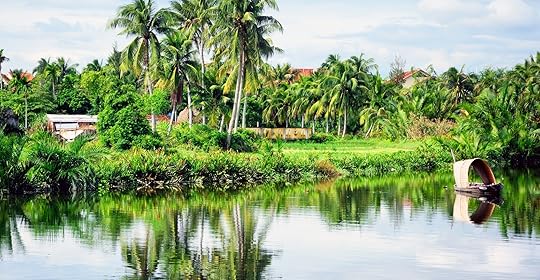
In the years of Jon Swain's sublimely written and beautifully evocative memoir/pseudo-autobiography of his dangerous and frankly terrifying journeys throughout South-East Asia (1970-1975), the countries of Laos, Cambodia and Vietnam were in turmoil, confusion and crippled by war. It was a brutal, blood-stained and destructive time for all the civilians and soldiers of these war-torn nations and it was this world that British journalist Jon Swain entered in 1970.
It was a world unlike any he had seen or experienced in Europe and North America and one that would utterly enthral and ensnare his very heart and soul as he traversed throughout Laos, Cambodia and Vietnam; sailing down the shimmering waters of the Mekong River, meeting and experiencing new and fascinating people and their cultures as he walked through verdant rice fields as the fierce sun shone all the while being at the heart of action as war, communist ideology and the end of French colonisation consumed what was once called Indochina.
Indeed, as one reads Swain's heady, intoxicating and darkly interesting tale of a lone British journalist gallivanting throughout South-East Asia, it is not hard to get the sense that French Indochina in its dying days had a profound and intense impact on Swain himself as he witnessed first hand the slow collapse of Western power in South-East Asia and the swift rise of communist powers in Laos (the Pathet Lao), Cambodia (The Khmer Rouge) and Vietnam (the Viet-Cong).
It is this first-hand account and perspective, albeit from a Western outlook tinged with a romanticised, nostalgic idea of French rule of Indochina and a somewhat condescending outlook on the various peoples and cultures that inhabit South-East Asia, that truly allows the reader to experience the sights, sounds and smells of Indochina as it was in its last, heady, careful and hedonistic days. While the main focus of River of Time is on Swain's intimate personal feelings and experiences throughout slow fall of Indochina, Swain takes the time to interview numerous and diverse people from Europe, America and South-East Asia on their journeys through the life and legacy of dying Indochina, be they good experiences or, sadly, the most horrifying and heart-breaking trials and miseries any people could endure.
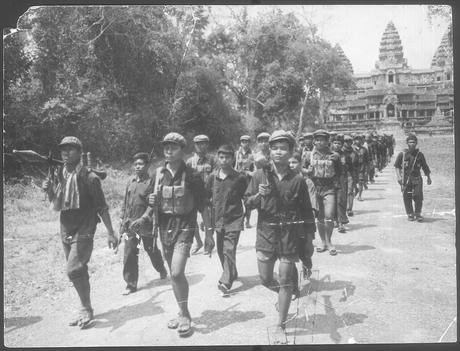
Jon Swain has written a fascinating, hauntingly written chronicle of his journey throughout the lands of Laos, Cambodia and Vietnam as each of these countries and their people are trapped in ceaseless wars and conflicts as civilians pay the heavy price for being in the brunt of action between communist and non-communist armies and ultimately between the deadly Cold War powers of Western Europe and North America vs the Soviet Union and Communist China.
Swain sails down the clear, crystalline waters of the Mekong bordered by swaying trees and small villages, he parties and smokes the nights away in the decadent and pleasure-loving city of Phnom Penh as he revels in the "Bars, Brothels and Boulevards" of French Indochina, he lazes around in the "filthy and free" Saigon, drunk on American prestige and wealth that will not last, with his French-Vietnamese ex-girlfriend Jacqueline, he witnesses, in all its horror and cruelty, the quick, mericless fall of Phnom Penh to the ruthless Khmer Rouge alongside leaving behind Cambodian colleagues and friends to the machinations of Pol Pot and his murderous communists and he sees first hand the desperation and misery heaped upon the boat people of Vietnam as they try to flee their communist-dominated land by boat and often only find death or boundless, savage cruelty at the hands of the sea itself or the pirates who kill and rape those unfortunate enough to fall into their hands.
One story I found particularly sorrowful and harrowing was that of Chung Thi Ai Ngoc, a 13 year old Amerasian girl who, while trying to flee to the US with her mother, only to be captured by Thai pirates, raped and separated from her mother. Her story broke my heart and honestly, since Swain doesn't tell us what happened to her, I can only hope that she had a happy life in the end wherever she went. As Swain tells us, in this world, it is always the innocent children who suffer the most in war and times of poverty.
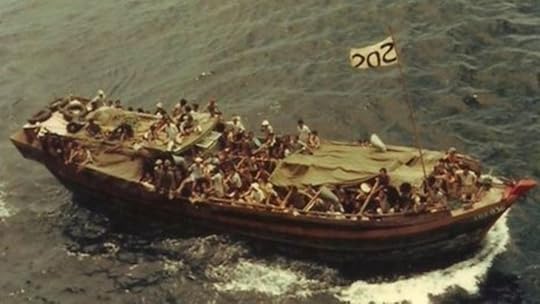
In the end, Swain has written a sensual, almost provocative and eloquent book overflowing with both rampant hedonistic pleasures and heartbreaking, despairing scenes of cruelty and brutality. He writes with nostalgic passion and zest, his words having a sublime beauty and inborn sense of wonder. However, Swain does not shy away from the misery and violence he witnessed in South-East Asia as war, senseless cruelty and rape plagued Indochina in its last breaths and new, rigid regimes took power. In these moments, he is sometimes the participant but more often a powerless observer. However, there are times when his writing and perception of events are coloured by a certain Western arrogance (although this is sometimes tempered with a weary self-awareness) and a keen romanticising of the French colonial past and legacy in South-East Asia. However, this is worth the read as Swain expertly captures a glimpse of South-East Asia as it was in 1970s; a wild, beautiful and haunting land torn apart by war, Western powers and communist ideologies.
Therefore, River of Time has not aged well in certain aspects and can make the modern reader wince as Swain waxes nostalgic for his hedonistic days in Phnom Penh, his exotic descriptions of Cambodian and Vietnamese women and casually remarks somewhat patronisingly on different cultures in South-East Asia. It can be sometimes unsettling to read.
April 2, 2024
Absolutely brilliant and heartbreaking. Reconnected me to my love of Cambodia in particular and brought back those harsh memories of the killing fields and memorial museum.
Some more detailed notes:
The history
- Sihanouk the president replaced by cousin and aide in coup d’etat
- Sides with Khmer Rouge and communists while new leader lon nol sided with America and south Vietnam = Cambodia divided
- Mistrust while Sihanouk in lower by rural working class of those in cities
- Sex and opium commonplace in Phnom Penh
Some of the horrors
- 1975 p 112: the war had become so ugly, engendered such hatred on all sides, that I always believed it would end nastily, but nothing prepared me or anyone else for the horrors in store’
- Amazing story of Khmer Rouge taking Phnom Penh and pran saving their lives
- Tipped people out of hospitals, didn’t let support workers in for crops
- Such a heartbreaking paragraph of the Cambodian couple who had to give up their seven month old baby because they wouldn’t survive the walk to the countryside
- After pran had to leave the embassy: ‘our abandonment of him confirmed in me the belief that we journalists were in the end just privileged passengers in the transit through Cambodia’s landscape of hell. We were eyewitnesses to a great human tragedy none of us could comprehend. We had betrayed our Cambodian friends. We had been unable to save those that had saved us. We were protected simply because our skins were white.’
- Not just pp that people were ordered to abandon but the surrounding towns and villages as well. Kompong chhnang emptied of 500k people. Awful story of doctor who explained that KR had taken all hospital patients to the wood and abandoned them. Then those that remained were told to move but not where.
- Just the most horrendous stories of the people fleeing communist Vietnam post war in small boats and being captured, raped and killed by Thai pirates. Girls of ten repeatedly assaulted and left to die. While other family members killed in front of them.
- Describing his last goodbye to Jacquline: learning all too late one of the most important lessons of all; that it is the time you waste for someone you love that makes them so important
Some more detailed notes:
The history
- Sihanouk the president replaced by cousin and aide in coup d’etat
- Sides with Khmer Rouge and communists while new leader lon nol sided with America and south Vietnam = Cambodia divided
- Mistrust while Sihanouk in lower by rural working class of those in cities
- Sex and opium commonplace in Phnom Penh
Some of the horrors
- 1975 p 112: the war had become so ugly, engendered such hatred on all sides, that I always believed it would end nastily, but nothing prepared me or anyone else for the horrors in store’
- Amazing story of Khmer Rouge taking Phnom Penh and pran saving their lives
- Tipped people out of hospitals, didn’t let support workers in for crops
- Such a heartbreaking paragraph of the Cambodian couple who had to give up their seven month old baby because they wouldn’t survive the walk to the countryside
- After pran had to leave the embassy: ‘our abandonment of him confirmed in me the belief that we journalists were in the end just privileged passengers in the transit through Cambodia’s landscape of hell. We were eyewitnesses to a great human tragedy none of us could comprehend. We had betrayed our Cambodian friends. We had been unable to save those that had saved us. We were protected simply because our skins were white.’
- Not just pp that people were ordered to abandon but the surrounding towns and villages as well. Kompong chhnang emptied of 500k people. Awful story of doctor who explained that KR had taken all hospital patients to the wood and abandoned them. Then those that remained were told to move but not where.
- Just the most horrendous stories of the people fleeing communist Vietnam post war in small boats and being captured, raped and killed by Thai pirates. Girls of ten repeatedly assaulted and left to die. While other family members killed in front of them.
- Describing his last goodbye to Jacquline: learning all too late one of the most important lessons of all; that it is the time you waste for someone you love that makes them so important

April 21, 2024
For some reason I thought that this book was going to be a historical 'memoir' of the Mekong River in the 20th century, telling the tale of Cambodia, Laos and Vietnam through the French colonial period and the war. Boy was I wrong. But at the end it's a book I'm glad I read.
Jon Swain was a journalist who spent 6 years in Cambodia and Vietnam, leading up to the fall of Saigon to the northern forces and of Phnom Penh to the Khmer Rouge. Swain was one of the last journalists in Phnom Penh, and his time there was ultimately realised in the movie The Killing Fields.
Swain expertly narrates the transition of Phnom Penh from oriental playground full of French characters and bustling streets to the terror of being held hostage in the last remaining safe foreign building, together with near-death experiences and seeing Cambodian friends led away to their potential death at the hands of the Khmer Rouge.
But it doesn't stop there - he also documents the swell of refugees leaving Cambodia and Vietnam, providing stories that are both heart wrenching and sickening. Later finally returning to Cambodia, Swain reveals the transformation of his one beloved home and friends. Written also as his own memoir of his time in the area, you can feel the devastation ripping through his own feelings for the country as the country itself is torn apart.
Having lived in Vietnam for 2 years, I found the book to reveal an interesting contrast between the 'liberation' of Cambodia and Vietnam, and I wished Swain had drilled down on this a bit more. The two prevailing forces had (I think) 2 very different underlying motives and vastly different methods, even though I feel many westerners think they are the same. It is also incredible how the viciousness of the Khmer Rouge and nigh-on complete destruction of the country does not seem to occupy much thought compared to Vietnam, even though they are neighbours and these events happened simultaneously.
So be warned, this is not a light holiday read and some parts are very confronting. But if you want a very hard look under the covers of the final days of the wars in these countries, and to try to understand how much the old Indochina region has gone through, then pick up this book, and maybe read it alongside "The Sorrow Of War" by Bao Ninh.
Jon Swain was a journalist who spent 6 years in Cambodia and Vietnam, leading up to the fall of Saigon to the northern forces and of Phnom Penh to the Khmer Rouge. Swain was one of the last journalists in Phnom Penh, and his time there was ultimately realised in the movie The Killing Fields.
Swain expertly narrates the transition of Phnom Penh from oriental playground full of French characters and bustling streets to the terror of being held hostage in the last remaining safe foreign building, together with near-death experiences and seeing Cambodian friends led away to their potential death at the hands of the Khmer Rouge.
But it doesn't stop there - he also documents the swell of refugees leaving Cambodia and Vietnam, providing stories that are both heart wrenching and sickening. Later finally returning to Cambodia, Swain reveals the transformation of his one beloved home and friends. Written also as his own memoir of his time in the area, you can feel the devastation ripping through his own feelings for the country as the country itself is torn apart.
Having lived in Vietnam for 2 years, I found the book to reveal an interesting contrast between the 'liberation' of Cambodia and Vietnam, and I wished Swain had drilled down on this a bit more. The two prevailing forces had (I think) 2 very different underlying motives and vastly different methods, even though I feel many westerners think they are the same. It is also incredible how the viciousness of the Khmer Rouge and nigh-on complete destruction of the country does not seem to occupy much thought compared to Vietnam, even though they are neighbours and these events happened simultaneously.
So be warned, this is not a light holiday read and some parts are very confronting. But if you want a very hard look under the covers of the final days of the wars in these countries, and to try to understand how much the old Indochina region has gone through, then pick up this book, and maybe read it alongside "The Sorrow Of War" by Bao Ninh.

December 8, 2020
I wasn't too enthusiastic when I started "River of time". It has been on my pile of books for a while and I thought now would be a good time to read it after I finished "Finding Orwell in Burma" by Emma Larkin.
This is a heartbreaking, but well-written memoir of a journalist trying to reconcile with his past in Indo-China. The focus is on his experiences, friendships and his relationship with a French-Vietnamese woman between 1970-1975. The main events of the wars are described well but don't expect any detailed information about politics, war tactics or political figures. There are disturbing descriptions on atrocities done to civilians and their sufferings. The fate of the Vietnamese refugees that tried to flee to Thailand is particularly gruesome and I had put down the book for a while before I could continue.
Cambodia was basically dissolved as a country. It stopped existing and I couldn't understand how the Khmer Rouge were planning on achieving their goals of building a new civilisation by destroying everything, and I mean everything -old customs and way of life, buildings of all kinds, vehicles. No more currency, or books, or education. They killed thousands of educated people (who could have been useful), banished hundreds of thousands to the countryside without any clear instructions on what to do or how to survive. Refused international help. They simply broke the people's will to live. It was such pointless bloodshed, clearly, no new order of any kind could be established after all this monstrosity. And it infuriated me.
Nevertheless, a spark has been lit inside me. I want to know more about Indo-China at that period of time in history. So I will find other books to read. There are also two documentaries I watched, which are worth sharing: "Year Zero" by John Pilger and "The Vietnam War" by Ken Burns and Lynn Novick
P.S. One thing that annoyed me about the book was that the author kept some of the sentences in French. I guess most people knew the language in the 70s and 80s. But I gave up trying to translate them after a few tries.
This is a heartbreaking, but well-written memoir of a journalist trying to reconcile with his past in Indo-China. The focus is on his experiences, friendships and his relationship with a French-Vietnamese woman between 1970-1975. The main events of the wars are described well but don't expect any detailed information about politics, war tactics or political figures. There are disturbing descriptions on atrocities done to civilians and their sufferings. The fate of the Vietnamese refugees that tried to flee to Thailand is particularly gruesome and I had put down the book for a while before I could continue.
Cambodia was basically dissolved as a country. It stopped existing and I couldn't understand how the Khmer Rouge were planning on achieving their goals of building a new civilisation by destroying everything, and I mean everything -old customs and way of life, buildings of all kinds, vehicles. No more currency, or books, or education. They killed thousands of educated people (who could have been useful), banished hundreds of thousands to the countryside without any clear instructions on what to do or how to survive. Refused international help. They simply broke the people's will to live. It was such pointless bloodshed, clearly, no new order of any kind could be established after all this monstrosity. And it infuriated me.
Nevertheless, a spark has been lit inside me. I want to know more about Indo-China at that period of time in history. So I will find other books to read. There are also two documentaries I watched, which are worth sharing: "Year Zero" by John Pilger and "The Vietnam War" by Ken Burns and Lynn Novick
P.S. One thing that annoyed me about the book was that the author kept some of the sentences in French. I guess most people knew the language in the 70s and 80s. But I gave up trying to translate them after a few tries.

June 15, 2023
Drawing from his experience as a journalist in Vietnam, Cambodia, Thailand and Ethiopia, Swain looks back on his love affair with Indo-China, the fall of Saigon and then Phnom Penh, the horrors of the Khmer Rouge regime, and the transformation of Cambodia. Also the Vietnamese boat people, the lifestyles and adventures of nerve-frayed (or jaded, or conflict-addicted) war correspondents, and his three months of captivity at the hands of Ethiopian guerrillas. It’s rich in his nostalgia and vivid in its descriptions and it’ll stick in the memory. The reader might not always agree with Swain, or how he approaches certain topics, but will appreciate the writing itself and his candor in sharing a very personal experience. I got the impression he wrote this primarily, or perhaps entirely, for himself, to capture his time in those places of a fading past, which makes it all the more compelling.
Excerpt from the epilogue of Jon Swain’s River of Time:
I was in Indo-China for only five years. But I know that in my heart I will be there all my life. I will always lament its romantic past and sentimentalise the grand adventure of death we lived through in the midst of such ravishing beauty. Perhaps I am deceived by unworldly dreams. Perhaps I weave too many illusions about the past. But I don’t believe it was just a romantic fantasy. After years of travel, I have encountered nowhere like Indo-China, and I am not alone in this. Whole generations of westerners who went out there as soldiers, doctors, planters or journalists like myself, to document the sorrow, the tragedy and the stories of its wars, lost their hearts to these lands of the Mekong. They are places that take over a man’s soul. The pain of memory endures alongside this nostalgia. Some memories remained buried in a body bag so deep within me that it was years before I let them out.
Excerpt from the epilogue of Jon Swain’s River of Time:
I was in Indo-China for only five years. But I know that in my heart I will be there all my life. I will always lament its romantic past and sentimentalise the grand adventure of death we lived through in the midst of such ravishing beauty. Perhaps I am deceived by unworldly dreams. Perhaps I weave too many illusions about the past. But I don’t believe it was just a romantic fantasy. After years of travel, I have encountered nowhere like Indo-China, and I am not alone in this. Whole generations of westerners who went out there as soldiers, doctors, planters or journalists like myself, to document the sorrow, the tragedy and the stories of its wars, lost their hearts to these lands of the Mekong. They are places that take over a man’s soul. The pain of memory endures alongside this nostalgia. Some memories remained buried in a body bag so deep within me that it was years before I let them out.

July 29, 2018
This is certainly an interesting story. Few people would have experienced all the events in vietnam and cambodia and the author does a great job to document all that he saw. What I disliked about the book was the insight it gave into the mind of someone who would deliberately put himself right in the middle of a war for effectively the thrill of it all. There seemed little sense of horror and disgust - it was more just like a great adventure, and the local people, the victims, were just to be taken advantage of whilst the western journalists lived their lives of privilege. I did not have a sense that his journalist contributions were written with the idea to give insight or to try and make things better. As a book it was more like an extended diary without too much self-awareness. Certainly worth a read for the first hand accounts of what happened during the fall of Vietnam and Cambodia. Refers to the North Vietnamese massacre of South Vietnamese at Hue which I had not known about - apparently 3,000 or more civilians were killed whilst the town was occupied. On the other hand despite going out with the american troops to battle there is no mention of US force atrocities - which were much more than what was revealed at My Lai. Time will bring out more truths but I fear this book has not unearthed as much as it could - or should.
March 15, 2024
This autobiography of a war reporter during the Vietnam war in the 1970's is well-written but somewhat dated in its point of view, particular in terms of the author's depiction of women (constantly referred to as girls). However, descriptions of the extreme violence, horror and futility of war are very powerful and distressing. At the beginning the author describes his desperation to get away from the restrictions and boredom of life in the west, whilst clamouring for the exoticism and freedom of the Indo-China area, although there is little acknowledgement that what might seem like freedom to him is not necessarily the same experience for local people (particularly women) who lived under French colonnial rule, then bombardment by American soldiers and Communist fighters. Eventually the author becomes "mesmerised by the war" and, I suppose inevitably in an autobiography, there are many details of his feelings of obsession and being transfixed by the region which seems to be far more motivating to him than his responsibilities as a war correspondent. Through his newspaper reports and this book, however, he has brought the truth of the devastating and totally savage destruction of the war to the world's attention, although whether some rulers have learnt from it is obviously debatable.

November 11, 2023
A personal book about history is always eye-opening. You learn as much about its author as the subject. If the era of foreign correspondence is ending--with those fearless writers dashing in to cover the real story--books like this offer a melancholy elegy for a vanishing form. Swain, a bit of a liberal, dwells less on the conditions that made Vietnam and Cambodia the hellscapes they became and more on the horror of revolution and radicalism wrought by those conditions. Thus, the book is a creditable piece of long-form journalism in 1970s Indochina fashioned from Swain's diaries, but not a quality study of war, ideas, America's foreign policy, or imperialism. It is short and will likely make an arresting movie about "failed hopes" and "fate" and all that--mostly excuse-making that allows great powers to act as they do and forces peoples in developing countries to resist in any way they can, however horrible or deluded. Wouldn't it have been nice to call out Kissinger or Nixon just once in this book for utterly destroying swaths of Laos and Cambodia on top of the millions the US and its allies killed? That would have been a better use of chapters than weeping about the neglected graveyards and memorials to the South Vietnamese army.
September 22, 2026
Such an honest book from the journalist-author! The mistakes in his life choices beautifully woven with his career choice as a wartime journalist who cannot reject chances to report on armed conflicts. Swain didn't attempt to romanticise (which many of us do, I feel) the job as a foreign correspondent - the froclicking moments, the women, the opium and sometimes the reprehensible indulgences - but he was ultimately redeemed by his love of Cambodia and his attempt to report as truthul as he could about what the Khmer Rouge did. I was really drawn into each chapter, following closely where Swain went, felt the sufferings that he experienced, and rejoiced when he found the lost local correspodent Pran. To conclude I would like to quote directly from the book, describing beautifully but hauntingly how he lost his love Jacqueline because of his deliberate career choice:
"A disconsolate and lonely figure on the platform, the Greenhills behind, the blue Mediterranean in front; a circle of love that would never now be closed – that is how she vanished from my World... learning too late one of the most important lessons of all; that it is the time you waste for someone you love that makes them so important. I think that I have found my enemy at last: it was myself."
"A disconsolate and lonely figure on the platform, the Greenhills behind, the blue Mediterranean in front; a circle of love that would never now be closed – that is how she vanished from my World... learning too late one of the most important lessons of all; that it is the time you waste for someone you love that makes them so important. I think that I have found my enemy at last: it was myself."
October 23, 2020
It was interesting in terms of history, beautifully written, and well-researched. It's a series of sad stories, so if you are looking for something heart-warming or uplifting, I would keep looking.
I have to say, you need to remember the time and mindset in which it was written, because by today's standards there are some problematic language terms and ideas relating to race and feminism. So, if you are thinking of using this is class, this would be something to consider talking about before reading it together. To be more specific, there is a lot of the "submissive, exotic, beautiful" stereotype, and the women and Asian men are often treated as accessories rather than fully realized characters.
So, personally I can't fully recommend this book, and many times I had to take a break from it to stop being annoyed and remind myself that he/it shouldn't be judged by today's standards, and to remember it in the context in which it was written. If you can do the same, I'm sure there are many interesting, personal stories that you can learn from.
I have to say, you need to remember the time and mindset in which it was written, because by today's standards there are some problematic language terms and ideas relating to race and feminism. So, if you are thinking of using this is class, this would be something to consider talking about before reading it together. To be more specific, there is a lot of the "submissive, exotic, beautiful" stereotype, and the women and Asian men are often treated as accessories rather than fully realized characters.
So, personally I can't fully recommend this book, and many times I had to take a break from it to stop being annoyed and remind myself that he/it shouldn't be judged by today's standards, and to remember it in the context in which it was written. If you can do the same, I'm sure there are many interesting, personal stories that you can learn from.

December 15, 2019
Great account of the terrible and tragic conflict in Vietnam and Cambodia.
Jon Swain reports with candor his experience as a journalist in those war torn countries and his witnessing of the horror imposed on local populations. The story nevertheless never struck me as moving or shocking as I anticipated (?), perhaps because of the strong images collected from Indochine wars inspired movies, in particular “The Killing Fields” . I somewhat suspect this had to do with the author distancing himself from some the atrocities he saw first hand, and the nature of personal choices he made at the time and still questions.
I recommend to readers with an appetite for more on these events Francois Bizot “ The Gate”. Bizot is the only westerner know to have survived captivity in red Khmer camps and “ The Gate” is his own account of his life and war in Cambodia.
Jon Swain reports with candor his experience as a journalist in those war torn countries and his witnessing of the horror imposed on local populations. The story nevertheless never struck me as moving or shocking as I anticipated (?), perhaps because of the strong images collected from Indochine wars inspired movies, in particular “The Killing Fields” . I somewhat suspect this had to do with the author distancing himself from some the atrocities he saw first hand, and the nature of personal choices he made at the time and still questions.
I recommend to readers with an appetite for more on these events Francois Bizot “ The Gate”. Bizot is the only westerner know to have survived captivity in red Khmer camps and “ The Gate” is his own account of his life and war in Cambodia.

January 8, 2021
I was very excited when I started out reading this book. While it kept me engaged, and also grew on me; it feels like a missed opportunity. The book dwells a lot on the author's personal experiences, his nostalgia, his laments. And while his admission is recurring, there is still a lot of privilege seeping through.
The writing is easy (though the French quotes should have been translated to English). And you can feel his pain in the way he tells you about the war, the destruction of the beautiful country and its people, as well as how the various nations left them high and dry. But the author hasn't done much in giving a context or background for why it all happened. You still don't know much about the history, or the culture, or the geography, or what the future holds for the Indo-China people.
The book was a great journey in time, but you end up none the wiser.
The writing is easy (though the French quotes should have been translated to English). And you can feel his pain in the way he tells you about the war, the destruction of the beautiful country and its people, as well as how the various nations left them high and dry. But the author hasn't done much in giving a context or background for why it all happened. You still don't know much about the history, or the culture, or the geography, or what the future holds for the Indo-China people.
The book was a great journey in time, but you end up none the wiser.

March 27, 2026
This is a journalistic account of the fallout of the involvement in and withdrawal of western countries (USA) from the Vietnam War, followed by the takeover of Cambodia by Pol Pot’s Khmer Rouge. It is captivating and horrifying, but I found myself drawn to Cambodia and Vietnam. The love story in this book is Jon Swain’s adoration of SE Asia.
Others have mentioned Swain’s misogyny, which I also found frustrating to read, along with the lack of acknowledgement of the incredible privilege of being from a colonizing country. I’ll give him credit for growing up somewhat throughout the book. And I’d still recommend this book to anyone wanting to understand where the world is at today and both the bravery and the horrible cruelty that people are capable of.
Others have mentioned Swain’s misogyny, which I also found frustrating to read, along with the lack of acknowledgement of the incredible privilege of being from a colonizing country. I’ll give him credit for growing up somewhat throughout the book. And I’d still recommend this book to anyone wanting to understand where the world is at today and both the bravery and the horrible cruelty that people are capable of.

February 1, 2020
An absolutely harrowing yet beautiful account of Indochina during the Vietnam War and the aftermath. Reading it felt like reading a love letter to the region, yet a love letter that is so full of heartbreak and sorrow as well.
I recently went to Loas and Cambodia so I can understand why the author fell in love with both countries even in their war torn state. One minute he will be getting a scoop, the next a fight for his life along with other journalist during the fall of Phnom Pehn. I was enchanted by the texts but was also on the edge of my seat in certain parts because of the risks and uncertainty surrounding the war.
This one is definitely a favorite for sure.
I recently went to Loas and Cambodia so I can understand why the author fell in love with both countries even in their war torn state. One minute he will be getting a scoop, the next a fight for his life along with other journalist during the fall of Phnom Pehn. I was enchanted by the texts but was also on the edge of my seat in certain parts because of the risks and uncertainty surrounding the war.
This one is definitely a favorite for sure.
Displaying 1 - 30 of 119 reviews