In this first of a groundbreaking multivolume set, THE MCCARTNEY LEGACY, VOL 1: 1969-73 captures the life of Paul McCartney in the years immediately following the dissolution of the Beatles, a period in which McCartney recreated himself as both a man and a musician. Informed by hundreds of interviews, extensive ground up research, and thousands of never-before-seen documents THE MCCARTNEY LEGACY, VOL 1 is an in depth, revealing exploration of McCartney’s creative and personal lives beyond the Beatles.
When Paul McCartney issued a press release in April 1970 announcing that the world’s most beloved band, the Beatles, had broken up no one could have predicted that McCartney himself would go on to have one of the most successful solo careers in music history. Yet in the years after the Fab Four disbanded, Paul McCartney became a legend in his own right. Now journalist and world-renowned Beatles’ historian Allan Kozinn and award-winning documentarian Adrian Sinclair chronicle in technicolor McCartney’s pivotal years from 1969 to 1973, as he recreated himself in the immediate aftermath of the Beatles breakup – a period when, newly married and with a growing family, he conquered depression and self-doubt, formed a new band, Wings, and recorded five epochal albums culminating in the triumphant smash, Band on the Run.
Part 1 of a multivolume set, THE MCCARTNEY LEGACY, VOL. 1 documents a pivotal moment in the life of a man whose legacy grows increasingly more relevant as his influence on music and pop culture remains as relevant as ever. It is the first truly comprehensive biography, and the most finely detailed exploration of McCartney’s creative life beyond the Beatles, ever undertaken.
Supplemental enhancement PDF accompanies the audiobook.
PLEASE When you purchase this title, the accompanying PDF will be available in your Audible Library along with the audio.
This was definitely a case of What Was I Thinking when I Asked for This For Christmas??
In 2013 a guy named Tom Doyle wrote an excellent book Man On the Run: Paul McCartney in the 1970s. He took 285 pages to cover the whole decade. Now two other guys Kozinn and Sinclair have produced this FIRST volume of a series in which they take 700 much larger pages containing quite tiny print to cover the years 1969 to 1973. So you don’t have to be Mr Spock to deduce that there will be cataracts, geysers and torrents of brain-killing detail about every action or contemplated action performed by Paul McCartney and his immediate circle on each and every one of these 700 pages. Not all of which will be especially interesting.
Typical of the sort of stuff you will encounter here :
Some of the mixing had been done along the way, so at the April 12 session Paul put the rest of the preliminary stereo mixing in Eirik’s hands, along with tasks like joining the still separate “Uncle Albert” and “Admiral Halsey”, and executing Eirik’s idea of splitting “Ram On” into two section, one for each side of the LP. A few days later Paul returned to check on Eirik’s progress and to do some tweaking of his own (countermanding Eirik’s idea of putting the flugelhorn solo in “Admiral Halsey” in a bed of ambient reverb, for example).
You like that? There is so much more. Our authors move smoothly from granular studio microdetail
Paul was finally pleased. Four hours of mixing yielded eight attempts, RS10 to RS17; RS14 was sent for mastering (and assigned the matrix 7YCE.21692.)
to some treacly banalities about cosy family life:
Cousin Ian Harris, son of Paul’s Aunty Gin, hosted the McCartney clan in New Brighton, where the family gathered around a burning pile of scrap wood with baked potatoes and sausages for a backyard firework display.
Or what about page 585
Their Labrador, Poppy, gave birth to seven puppies. The McCartneys kept one, which they named Captain Midnight, and gave the others to friends, including Brown Meggs, named for the vice president of Capitol Records, and the liveliest of the litter, which they named Jet, for his solid black colour.
SHOCK AS REVIEWER CONFESSES TO LIKING THIS DRIVEL
But actually, most of the time I seem to have enjoyed this book in a weird woozy zoned-out guilty-pleasure where did all the time go kind of way. Every now and then the authors would lob something at me which caused boggling of eyes and short burst of mirth and startled me awake, as on page 459 when they tell us that having accepted the commission to write the title song for the new Bond movie Live and Let Die Paul got to work immediately :
Being a fan of Fleming’s work, Paul was already familiar with the novel, but on the weekend of September 9 he read it again, refreshing himself with the narrative’s finer points. Four chapters in, Paul fell upon a first flash of lyrical inspiration.
This was a passage of dialogue in which one character says ”Our policy with Mr Big is live and let live.” And the other character says “I have another motto. It’s live and let die.” Yes, Paul stumbled on the title of the novel he was reading! And this inspired him to write a song with the same title! Which was also the title of the film! Brilliant!
THE MCCARTNEYS COULD GET ON PEOPLE’S NERVES
The authors are scrupulous in keeping their own feelings to themselves, leading to a general feeling of efficient impersonal fact-gathering busyness about this book. But they let their interviewees vent forth their anguish to the point where if our authors see McCartney coming down the street they might be best ducking down an alley until he’s gone. Here is David Lucas, New York studio owner, on Linda in 1972:
She was annoying, a complete pain in the ass… I watched Paul go way beyond acquiescing. He was subservient to this rude, indulged, entitled woman of very little or no talent.
Then there’s Glyn Johns, the producer of the second Wings album. He wasn’t impressed, and he told the unfamous members of the band
If you think because you are playing with Paul McCartney that everything you do is a gem of marvellous music, you’re wrong. It isn’t. It’s shite. Frankly, it’s a waste of tape and it’s a waste of my energy.
MCCARTNEY’S STRANGE CAREER
After a decade of unique commercial and artistic success, praised by everyone as a pop genius and everything turning to gold, for Paul McCartney it all fell to bits in 1969. We know the unhappy story of the chaotic fractious end of the Beatles, and we know the depression that came crashing down on McCartney. He was the one it had all meant the most to, and he was the one who had to sue the other three to legally terminate the Beatles. So for a time he was Suspect Number Two (after Yoko Ono) in the hunt for the person who broke up the world’s favourite musical combo. And not surprisingly maybe, his pop genius seemed to desert him.
He thought it was a cute idea to play all the instruments on his first album, and it was, but the songs were thin and weedy*. The critics trashed that album. So he thought okay, next one will be highly produced & played by top sessionmen and will feature an impressively eclectic range of styles. This was Ram. The critics hated that one even more. Then he formed a band because he wanted to be in a band - this was a brave move, the other Beatles never did any such thing – but he recorded the first Wings album when they’d hardly had chance to say hello to each other – half of the album was based on studio jamming. No surprise, the critics hated that one too. And when you listen to it, you have to say that if there was any justice this band would never have got signed. They would have said come back when you’ve got some decent songs.**
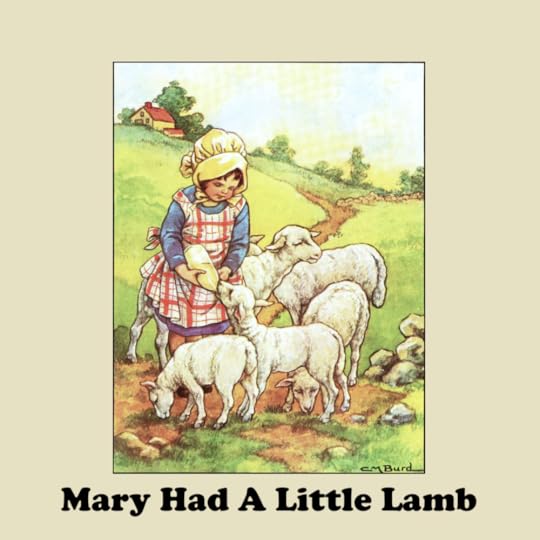
So this most curious part of PM’s very long career is like the story of a guy having made it in the music business now trying to make it again in the music business. He tries this, tries that, one step forward, two steps back. And nobody has the nerve to tell him not to issue Mary Had a Little Lamb as a single. All the bad press of 1970-72 would have made a lesser egomaniac give up. But not this egomaniac.
AND IN THE END
Mr Kozinn and Mr Sinclair may be assured that if, as scientists believe, the Planet Earth has another five billion years to go before the sun transforms into a red giant and extinguishes all life, no one in that five billion years will have any chance of writing a more thorough account of Paul McCartney’s life between 1969 and 1973.
3.5 stars
*except for Maybe I’m Amazed **Once again, there’s one great song, Dear Friend
This mammoth book was almost a decade in the making, originally intended to be a sessionography of a post-Beatles Paul McCartney...but (thankfully) evolved into a full-fledged biography. The digital early reviewer copy I read was 1,000 pages, the last 20% accounting for bibliography, discography, videography, concert tours and end notes. As a lifelong die-hard Beatles fan, I am always skeptical when yet another book comes out on the topic asking myself, "What more can be said 50 years on???" So I must confess that I am genuinely surprised and gobsmacked at the shear amount of new information I gleaned from this offering. It's the difference between yet another rehashing of details and an exquisite quality book with a fresh take and uncovered gems.
The book begins in 1969 when The Beatles are breaking up, and ends in 1973 with Paul's most successful solo album up to that point- "Band on the Run". This "Volume 1" tome lays out in minute detail all the recording sessions for Paul's solo efforts spanning 1969-1973, which were "McCartney", "Ram", "Wings Wild Life", "Red Rose Speedway" and "Band on the Run". Paul and Linda also co-wrote "Live and Let Die" for the James Bond movie, which ticked off a notch on Paul's bucket list. But interspersed between these very expansive session entries are a robust biography of The McCartneys' life at the time, interacting with family, friends and band members. The author marvels at the day-to-day personal diaries and journals that a handful of people close to the McCartneys had the foresight to document and share. Married along with extensive research, these personal accounts brought this story to life so vividly.
There were also recording sessions that Paul and Linda dropped in on for other artists when they happened to be using the same studio, and would offer their services to sing background vocals and provide supporting instrumentation. This happened with Carly Simon and I loved checking out the song on YouTube to hear The McCartneys' contribution. There was another story where Paul and Linda visited famous actor Dustin Hoffman, where Hoffman challenged McCartney to spontaneously write a tune at his house. He did...and it wound up on the "Band on the Run" album! Along with the treasure trove of information in this book, there are photos interspersed throughout. This is a very important and worthwhile addition to any Beatle fan's library...highly recommended!
Thank you to the publisher Dey Street Books for providing an advance reader copy via NetGalley.
I've read a lot of books about The Beatles, including books about individual members, but Kozinn and Sinclair have accomplished something special here. Many Years From Now by Barry Miles is probably still the high water mark for breaking down McCartney as an individual (artist and person), but Miles also focused heavily (and rightfully) on his Beatles years. The fact that The McCartney Legacy covers mainly the very end of The Beatles and McCartney's first four years as a solo artist makes it unique. At nearly 700 pages, it is mind-bogglingly detailed and honestly too detailed for me and I'm a pretty massive fan. This is not a put down. These authors left no details out and truly included even the most trivial anecdotes. Usually this was interesting, but occasionally these choices bogged the narrative down quite a bit. However, it was always insightful to read about McCartney from a microscopic perspective. His confidence shaken after the Beatles breakup, the awkwardness of his early solo years, the sloppiness of the birth of Wings and, inevitably, the same character flaws (dominance, condescension, social cluelessness) that arguably played a major role in breaking up the Beatles coming back to wreak havoc on Wings - all of these things and many, many more are examined, as I said, with an extremely zoomed in lens. It was nice to see McCartney regain some of his old stature by the time the book came to a conclusion (and no, I don't feel like this is a spoiler because his life is so well documented), but between 1971 and 1973 McCartney had to be feeling a bit insecure. It was fun to read about his songwriting process as a solo artist and I especially enjoyed the section on the making of Band on the Run. All in all though, McCartney doesn't come across as the most likable person. Maybe this is why he's so successful? It just seems that for all of the easy going, light-hearted troubadour posturing he did (still does?), he's an absolute egomaniac and only collaborated in such a noose-like controlled way (at least in the solo years and with Wings) to serve his own vision. Again, it makes sense and this is why he's a true artist, but reading some of his dictator-ish tendencies made it hard to imagine why anyone would want to work with him...and yet, I found myself rooting for him the entire time - the other three Beatles frequently ganged up on him, his own wife - who really couldn't perform or sing well - was selected by him and faced some harsh criticism, and some of the songs in the 1971-1973 Wings catalog (and beyond) are just awful and yet it's hard to not want to see him succeed. The man had/has a vision and he's one of the few true musical geniuses left from the 60's. I don't think I'll be onboard for the next installment of this series - this was long enough - but, I feel like a much more informed fan of McCartney's for having read this. Hats off to the authors for putting out this labor of love.
This book was exactly what I hoped it would be— a deep dive into McCartney’s solo career. It’s in the granular details that the story of how McCartney’s work developed really shines. In the wonderful lineage of Mark Lewisohn ( THE Beatles scholar extraordinaire—if you know, you know) , this work only makes me wish that the other volumes were being released simultaneously.
Perhaps the most interesting Beatles-adjacent biography I’ve ever read. I lost count of the events and stories that I’d never heard before. Can’t wait for volume 2!
Gotta say, after having read literally hundreds of books about either the Beatles as a group, or the individual members, or peripheral personalities (Epstein, George Martin, Sutcliffe, Best), I'd finally reached the point where I decided, no more. There's nothing new to be learned.
Yeah, well, first it was Mark Lewisohn with his utterly incredible Tune In, Part 1 and Tune In, Part 2 (if you're a Beatles fan, don't settle for the single book, get the full 1700+ page story in all its glory), who decided to prove me wrong.
And now Allan Kozinn and Adrian Sinclair are doing the same with this monster. Almost 700 pages for four years of McCartney's post-Beatle life? Hell yes, sign me up.
The level of detail, and the stories that finally settle some of the myths around McCartney and Wings, and the honesty to which they deal with Linda's contributions, make this a fantastic read.
They don't shy away from some of the headscratching decisions Paul made (and continues to make) on things like his Mary Had a Little Lamb and other songs that are simply terrible, but that he seems to love. It's a fair and balanced approach.
Overall, despite digging into a virtually day-to-day accounting of Paul and Linda's movements and activities, I was never bored. Loved this book, and eagerly await the next volumes.
You better really REALLY be interested in All Things McCartney, because that's what this book delivers. Focussing solely on the artist's first four post-Beatles years (more volumes are to come), the authors have written a detailed, clearly written and largely fascinating portrait of the artist.
The book does three things: dive deep into McCartney's creative process; give an account of his byzantine, internecine post-Beatles show-business havoc; and dig into the private life of McCartney as husband, collaborator and young father. This last element is perhaps the most wanting, as the authors are careful not to do much in the way of analysis or supposition. No doubt other biographies take greater liberties in assessing McCartney's personal life, but this does a stellar job of wedding it to his artistic output.
If like me you're a fan of McCartney and the Beatles, you'll find this a compelling read chock full of all the right details. If you're less interested in McCartney's music, I'd still recommend it as a useful portrayal of creative process, of fame — and ultimately, of the struggle for healing and reinvention.
Part solo music session/ part in-depth history of Sir Paul's life and time from the Beatles break-up through 1973 which covers his first solo album through his work with Wings and Band on the Run. Kozinn uncovers every twist, turn, tour and all the drama in between in this thoroughly examined book which is only just the first of three volumes. I am looking forward to the next one!
As expected, The McCartney Legacy vol. 1 is a sprawling epic, capturing a period in McCartney’s career that is undoubtedly his peak solo output (to me, at least, though the critics did not originally agree). This biography covers every possible moment of 1969-1973: starting with Paul’s struggle to cope with the nasty and very legal-heavy break-up of the Beatles, to the driving forces (thank you, Linda) behind his 1970 debut solo record, to the subsequent four albums he wrote and released with Linda and Wings by the end of 1973 (including the classic, ‘Band On the Run’).
The McCartney Legacy vol. 1 features an in-depth look at Paul’s personality. He can be a moody jerk, a control freak; He’s competitive, at times vengeful, angry, petty. Yet, you can’t help but continue to love and root for Paul and Linda to succeed in proving wrong his doubters. Ya know, the ones who put him down as Lennon’s “hapless inferior.” (I can’t apologize for ‘Mary Had a Little Lamb’, though, sorry Paul.)
He’s a family man at the heart of it all, with the authors emphasizing how Paul and Linda would take their children not only to family trips in the Caribbean, but on tour through the UK and Europe. Also emphasized are Paul and Linda’s annual trips to Liverpool for New Year’s Eve, to gather with the McCartney clan for songs around the piano, beers in hand.
The authors break up the granular detail of Macca’s day to day family and legal obligations with Recording Session insights, elaborating on the evolution of Paul’s songs, musicianship, instrumentation and eagerness to experiment. It’s worth listening to the songs that are mentioned while reading, as Kozinn and Sinclair make a point of calling out fun Easter eggs in many of the songs. As the story progresses, you can really start to hear Paul’s personality of the moment coming through in his music.
Kozinn and Sinclair have written the defining biography for Paul McCartney’s most exciting and interesting solo period, and is a must for any Beatle head. My love (pun intended) and appreciation for Paul McCartney has grown immensely after reading The McCartney Legacy vol. 1.
+++++ My Favorite Quotes +++++
Writing to Allen Klein: “Dear Pig, You have nothing to do with my affairs, so keep out of them! Fuck off. P.M.”
Glyn Johns on the Red Rose Speedway sessions: “Glyn Johns, by contrast, was flummoxed by the group's self-indulgent, two-day pot-infused trip. They were “just getting high and jamming,” he grumbled.”
++++ My Favorite Songs Written About ++++
McCartney (1970) Every Night. Teddy Boy.
Ram (1971) Another Day (single). Too Many People. Monkberry Moon Delight.
Wild Life (1971) Mumbo. Love Is Strange.
Red Rose Speedway (1973) Hi, Hi, Hi (single). My Love. Get On The Right Thing. Tragedy (released on archive edition).
Band On the Run (1973) Helen Wheels (single). Country Dreamer (b-side to Helen Wheels). Band On the Run. Jet. Mamunia. Picasso’s Last Words (Drink to Me).
Very comprehensive look at the cute Beatle dealing with the collapse of his old band and trying to rebuild his career with Wings. One depressing thing I’m reminded of is that no matter how famous or successful you are, the money people will still keep you on a tight leash. In this case McCartney wanted to release Wings’s album Red Rose Speedway as a double album but EMI said no. Even Paul McCartney—from The Beatles!—was not powerful enough to get his way. Remember this.
I liked this book, it had lots of information that was new to me. But for me, it had too much information, and I'm not sure I've ever said that about anything. I can only assume that was the plan, and the publisher of this book was fully onboard with the piles of minutia included in this book. After awhile I started to wonder if I was going to learn Paul's preference in undergarments. Boxers or briefs, and what brand? Luckily, the author never drilled down quite that far. But if you want to know whether or not Paul and Linda had Chinese take-away after laying down the initial vocal track for "When the Night", or where Denny Laine's parents got married, or which of 16 tracks contained the drum backing for "Uncle Albert/Admiral Halsey" and how many takes were necessary to get it there, this is the book for you. There is a lot of in-depth musical dissection of most of the songs McCartney recorded 1969-1973, talking of chord progressions and other such stuff, and I didn't understand 99% of that. And we really do learn which musical components are on which track, for almost every song recorded by Paul McCartney and Wings during the years included in this book. The plus side of this deep research is that there's loads of material from interviews with Paul McCartney, Linda McCartney, Denny Laine, Henry McCullough, Denny Seiwell, and others, that I would never have come across on my own. There's also lots of information about the legal troubles that came between Paul and the other Beatles, and his struggle to be legally free of the Beatles and Apple Corps. The authors do not sugarcoat things, and I think you get a pretty full picture of McCartney, his talent and musicianship, and the fact that he can be difficult to work with, because at the end of the day, you have to do it Paul's way. And unfortunately it's kind of hard to argue with that because, you know, it's Paul McCartney, and he's got a pretty impressive track record. There were also some moments in the book where the reality of his having been a Beatle - a world-renowned figure since he was only 20-years-old - really hits home. He comes across as almost naïve in some places and you realize that although he grew up middle class, from the time he was 20 he has literally been treated like royalty, and doesn't always seem to understand how most of us live. He is so used to just asking for stuff, and getting it, no questions asked. He would book musicians and studio time, and then come in late, futz around, waste other people's time. But that seems like it was the Beatles' way of working, and I don't think he ever questioned it, or worried about wasting money, or infringing on other people's lives. It didn't come across that he did any of these things out of malice, but because this is the way he works, and he just expects others to adapt. I listened to the audiobook version, which is why I had to sit through all of the musical stuff I didn't understand. If I decide to tackle Volume 2, I will definitely just get the book, so I can scan the stuff that means nothing to me to get to the parts I'm interested in. Because there is lots of interesting stuff.
This was so excellent, a really impressive blend of biography and a comprehensive look on how songs were developed over recording sessions. This will definitely be a hit for any die-hard, detail-oriented Beatles fan, and 100% stands up to the the Tune In comparisons. One of my favorite books of the year, genuinely cannot wait for the next installment (Allan Kozinn drop ur location I just wanna talk).
First of all, this book was very difficult to read. Small print and a huge book of nearly 700 pages not including the bibliography and other notes. And it only covered 1969-1973! It was quite detailed in the information about studio recordings. And really quite boring. Who cares how many takes and overdubs a recoding has! The acknowledgment says the book started out being a sessionography of Sir Paul’s music after the Beatles that became a biography. I would hardly call this a biography although it does cover the history of Wings and some of Paul and Linda’s life. It is more of a sessionography than biography. So if you’re interested in how songs are recorded and how much overdubbing and cutting goes into making a record you might enjoy this. I did not.
Quite simply one of the greatest Beatle books ever written, and one that I’ve been waiting a long time for. This is essentially the Tune In for Paul’s solo career. And while it may not reach Lewisohn’s level of forensic detail, it’s probably the closest we will get in following Paul’s career after the Beatle split. Kozinn and Sinclair also take Lewisohn’s approach of not revealing outcomes (other than footnotes) to give it the feel of a ‘thriller’. My only minor criticism is that at times it strays into fiction, imagining Paul in situations that couldn’t possibly be sourced or witnessed. But it’s definitely a page turner and such a revealing account of Paul and Linda’s life in the early seventies (although it really isn’t clear how they managed childcare - surely there was a nanny?!). Quite joyfully the authors reference the ‘we’ve gone on holiday by mistake’ Withnail and I quote as the basis for how the book became a biography. And as Paul himself knew, accidental mistakes often reaped fantastic outcomes.
'The McCartney Legacy (Vol 1 1969-73) by Adrian Sinclair and Allan Kozinn
If you're looking for a one-word review, how about "Wow!"? This book is an indispensable resource for any serious McCartney or Beatles aficionado. The authors explain that their project, initially conceived as a study of McCartney's session work, evolved into a comprehensive biography - 700 pages worth.
The book focuses on the start of McCartney's solo career. The extensive detail and thorough research, and historical context provided are truly remarkable. There are also invaluable insights into the Beatles' final years, particularly the contracts and lawsuits that led to the band's dissolution and Paul's solo career.
Easily the best book on McCartney I have ever read - and I've read just about them all. And this only takes you to 1973, and 'Band on the Run'! Volume 2 awaits.
I listened to this mostly while at work although I'm not sure how long it would've taken me to finish a 30 hours audiobook (THIRTY HOURS). I loved the voice of the reader though so that was very pleasant to get through and I must admit I lacked a lot of knowledge of the post-Beatles life of Paul especially, so it was very interesting (and I spaced out a lot when there were too many technical explanations of the recording sessions, I won't lie). I also felt like this didn't sugarcoat anything and told facts even when Paul wouldn't come out in a good light. I was honestly afraid I would've gotten bored but it felt like listening to a very long podcast, if it makes sense.
A tremendous accomplishment, but even for a Macca near-fanatic like me, I think this was just a little too much. I'll take a pass on the subsequent volumes.
If you are a Beatles/Paul McCartney fan--and I do mean "FAN," not "casual listener, I enjoy their music sometimes"--and if you are seriously intrigued by sentences such as "On Monday, October 23, 1972, Live and Let Die was mastered at EMI Studios and given the matrix number 7YCE.21722," this book is for you! And me.
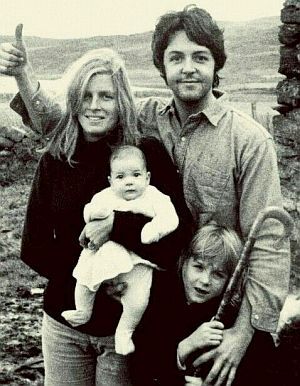
What I did NOT like: There are no captions on any of the photos, so sometimes I had no idea who was in the pic or what was going on there. Also, the asterisks for the footnotes are seriously tiny, like smaller than the periods in the text. Sometimes I really had to hunt for them. Annoying.
Gosh, I wanted to love this book so badly. The 70s McCartney years with Wings was a gap in my Beatles knowledge and this felt like the perfect way to fill it. But man, this could’ve been half the length with a fraction of the detail and serve the same purpose. Way too detailed, way too drawn out. I appreciate the dedication and fact finding that the authors put into this, but this was way too much.
You want to read a book on the technicality involved in producing an album, then this is the book for you, if you want to get to know about Paul McCartney’s Life and understand him as a person, skip this how to produce an album tome. Very tedious and boring.
You were dying to know on what Edinburgh street and from what business the McCartneys bought kilts in mid-August of 1970, weren't you? And surely you were curious about the matrix numbers for all of Paul's releases?
Details, details. If you want a deep dive into all things Paul McCartney a little before the Beatles breakup and in the four years thereafter, this is the book for you. Part biography of those years, part exhaustive chronicle of his recording sessions, The McCartney Legacy, Volume 1 is almost always fascinating for the Beatles/McCartney fan. Sure, you'll get some information that doesn't do much for you or that might be beyond your knowledge — for me, documenting songs' key changes or other technical music details qualifies — but so much fascinating stuff surrounds the trivia that you can, as another Band's song goes, "take what you need and you leave the rest."
Fortunately, this detailed account is well-written and generally well-organized. There are a few careless typos, weird or absent punctuation, and the authors' inconsistent and eccentric use of commas can be distracting. But it's fascinating reading. It clearly was a mind-fuck for McCartney, one of the most famous people in the world, to attempt to start over from scratch musically and retreat to a simple life with his new wife and young girls on a farm in very out-of-the-way rural Scotland.
The authors have neither McCartney's cooperation nor his opposition in this multivolume writing project; he wasn't quoted specifically for this project, but there were so many interviews of McCartney down through the years that that really doesn't matter. Kozinn and Sinclair certainly weren't lazy, though — there is so much recently sourced material on events that happened in the early 1970s that you wonder how they found all of these people. The authors seem pretty fair in their chronicle — getting the blessings of Tune In author Mark Lewisohn, who seems to be the greatest Beatles authority on the planet, says they know what they're doing. But keep in mind that this is a warts-and-all book; McCartney definitely isn't St. Paul in these pages.
This first book in the series has the advantage of detailing the most interesting years of McCartney's post-Beatles career, with the legal battles, reunion rumors, McCartney's finding new musicians to play with, his new group Wings' efforts to, well, take wing. The group's two-week university tour very — very! — quickly after it was formed is fascinating. Often, the band just turned up in a city and tried to find an open venue to play at a college, sending organizers into quick scramble mode to set up a concert for a couple of thousand or sometimes just hundreds of people even if the band had to play in a dining hall.
The authors make a point of not writing with hindsight, trying to present events, including the largely negative response to McCartney's and Wings' efforts during this time, as they happened. So the fact that McCartney's albums from the 1970s have almost universally undergone positive critical re-evaluation — sometimes very significant shifts — is not part of the narrative.
Book 1 comes to a close with McCartney in triumph after the overwhelmingly positive reception of the Band on the Run album (after what some considered four consecutive duds), made after two members quit and recorded under incredibly difficult circumstances mostly in Nigeria, where Paul was mugged at knifepoint and could easily have been murdered.
Lots of interesting pieces of trivia are fed to us along this 672-page journey. I didn't know, for instance, that the 1969 "Paul is dead" rumor started in my home state of Iowa, in the Drake University student newspaper.
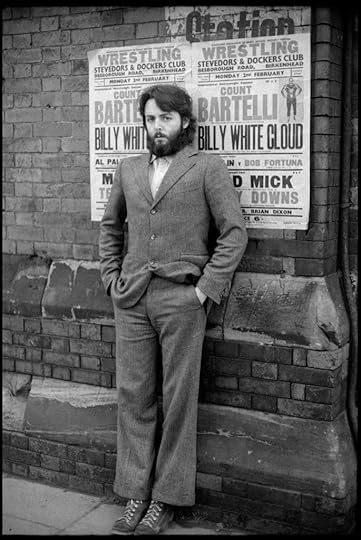
The book isn't perfect. I've mentioned the typo problems, which is embarrassing. There also is no index and no captions with photographs (a problem remedied in the second volume). And could they have found a goofier photo of McCartney for the cover? (Answer: probably not).
Still, I really loved this book, deficiencies and details and all. I absolutely feel like I have a real understanding of who Paul and Linda are/were after reading this, and to me, that's the prime test of a biography.
If you’re looking for a McCartney-centric follow-up to Mark Lewisohn’s Tune In, you’ve (sort of) found it. This is an incredibly well researched document of Paul McCartney’s time immediately following the breakup of the Beatles until the release of the album many consider his greatest post-Beatles work, Band on the Run. I’m most happy with this exploration of Paul’s feelings and the events surrounding the breakup. Less so with the second half of the book, which covers the formation and initial breakup of Wings.
Is it as good as Lewisohn’s work? Not by a long shot. This book may have the same level of comparative detail, but it didn’t grab me nearly as much as Tune In. The writing is not as engaging or as funny, the authors don’t seem to understand McCartney quite as well as they want to nor do they present him psychology as well as they promise to do in the introduction of the book.
Another issue I have is how the book finds so many ways to make Paul and Linda look like self-centered assholes literally the entire time. This is my favorite period of Paul’s work, honestly probably anyone’s work of music. I’ve heard and loved all of these albums so many times, usually without the context of how they were received or the culture at the time. After reading this book, I both have a newfound appreciation for these songs, thanks to the detailed recording session entries, but also a kind of disgust with them after being bombarded with the negative reviews they got at the time and with McCartney’s behavior at the time. The book presents Paul and Linda as two crusaders against the world but also as out-of-touch rich people who go out of their way to be rude to friends, band mates, and fans. But then there’s all the good stories as well which don’t get quite as much spotlight, all the times Paul and Linda were kind and go out of their way to make something better. I guess I can’t fault the authors for presenting both sides of Paul, it is the truth after all, but the negative stories definitely leave a bigger impact throughout the book.
Maybe my frustration is how the authors seem content to give us these varying stories without any kind of comment or analysis of Paul’s psyche or justification, aside from some at the beginning and end of the book. Because of this, the book drones from recording session to press event to concert to vacation and it stops feeling like I’m reading a compelling, driving story (a feeling Tune In always had) and more like someone’s dull diaries. The recording session sections are interesting only if you relisten to the songs alongside the text. If not, they’re skippable.
Overall, I’m disappointed that, rather than creating a feeling of knowing these people via the deep research and keen storytelling like Tune In does about the Beatles, The McCartney legacy is largely content to drill you with the facts like a newspaper article (a very quotation heavy one) and leave it at that. A biography as long as this one needs a compelling story, themes and insights about the subject to drive it. The narrative arc is just so much looser and feels distant from the subjects it’s exploring. I’ve met Denny Laine and I feel that I got more from him in our two minute conversation than I learned about him from this book.
I hate to keep comparing this book to Lewisohn’s, but, like McCartney himself encounters throughout this book, it’s going to be compared to its more successful predecessor. I applaud the attempt and encourage other Beatles/McCartney fans to read this, especially if they’re unfamiliar with the chronology, but it’s bad when I would rather have listened to the albums and read the Wikipedia pages on them. I didn’t need the extra tales of Paul underpaying band mates, being demanding, buying Lamborghinis, or Linda sticking her nose up at anyone who dares challenge or disagree with the couple.
When the Beatles flew to America for the first time in early 1964, Phil Spector happened to be on the same flight. Paul McCartney, nervous about the band’s prospects in the New World, quizzed the producer: “What are we going to give them that they don’t already have?”
To say that thousands of books have been written about the Beatles is no exaggeration. Noted biographers including Philip Norman, Barry Miles and Howard Sounes have written comprehensive studies of the life and work of McCartney — the “cute” Beatle, the one with the uncanny knack for melody, the one whose stubbornness and drive helped hasten the group’s downfall in 1970.
So just what does this first volume of “The McCartney Legacy” give us that we don’t already have? Well, if you just so happen to be looking for an exhaustive survey of the singer’s post-Beatles career (both solo and with his band Wings), you’ve come to the right place.
In the vein of Mark Lewisohn’s classic “The Complete Beatles Recording Sessions” (1988), longtime New York Times classical music critic Allan Kozinn and researcher Adrian Sinclair have assembled a compulsively readable (for Beatlemaniacs, at any rate) blow-by-blow account of McCartney’s final days in the world’s most astonishingly creative rock ’n’ roll band and his willful determination to make a go of it out on his own. Here the full range of the “eager-to-please” Beatle’s emotions — from spitefulness to guile, with occasional crises of confidence — is on display.
It’s a welcome portrait of a complicated man who is too often depicted as a smiling jukebox. For a superstar who has thrived in the public eye with a no-drama mantra, there’s plenty of drama in these pages.
McCartney’s squabbles with the other Beatles — rooted largely in his exasperation with being outnumbered when the group agreed to a management deal with the ruthless businessman Allen Klein — take up plenty of oxygen. But so too does McCartney’s headstrong insistence on featuring his untrained wife, Linda, in Wings, the band he mustered to take the place of the previous gang in his life.
This first volume covers the period from McCartney’s self-titled solo debut through the triumph of “Band on the Run” (1973), which returned him to the megastardom of his Fab former life. The path he took to get there is full of intriguing detours, from his and Linda’s homebody getaway on their Scottish farm early in their marriage to the unannounced get-in-the-van tour of British universities they undertook in early 1972 following the release of “Wild Life.”
“I’m starting all over again and working upwards,” McCartney explained. “It’s like boxing. You don’t fight Cassius Clay your first time out.”
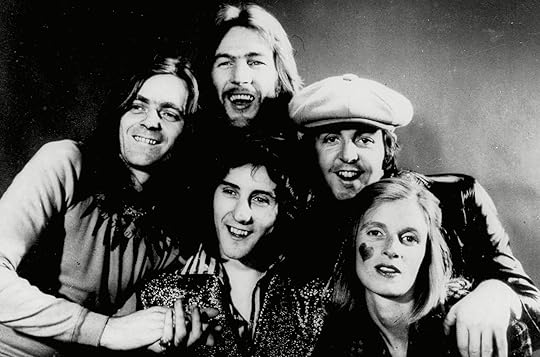
As with any Beatles rehash, the unexpected bits are the real draw in “The McCartney Legacy.” To avoid excess scrutiny, McCartney and his new mates toyed with aliases — Sam Browne and the Dazzlers, for one. A chronic weed smoker who was busted more than once for holding, McCartney apparently preferred the term “herbal jazz cigarette” for his habit. And the photos are revelatory.
Kozinn is an astute musical analyst. For the Beatles completist, his soundboard insights are unfailingly sound, even when he’s dealing with some of McCartney’s least fathomable pursuits (“Mary Had a Little Lamb,” anyone?).
But the book’s prose, like its subject, is sometimes prone to banality. After the BBC banned McCartney’s “Give Ireland Back to the Irish,” the phones at his publicity office “lit up like Christmas trees.” His band’s energetic performance of the same song on the first of those surprise university gigs “nearly blew the roof off.”
Still, these post-Beatles years provide plenty of fodder — even, yes, a few things we didn’t already have.