

What do you think?
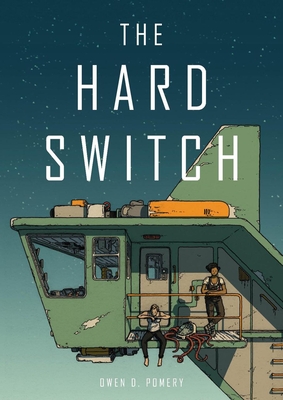
The Hard Switch
Ada, Haika, and Mallic are on a mission . . . one last mission, before everything, everywhere shuts down. They’re raiding old, abandoned spaceships and wrecks for the (sometimes-expensive) parts – and they make just enough money to get by. But living their nomadic, exploring life isn’t sustainable when they can’t afford fuel anymore.
The time is coming when the mineral that makes inter-system jumps possible runs out. When it does, the scattered inhabitants of the vast galaxy will be stuck where they are. Everything will be different . . . unless the discovery in the latest wreck Ada, Haika, and Mallic are scavenging can unlock a whole new kind of interstellar transit.
The time is coming when the mineral that makes inter-system jumps possible runs out. When it does, the scattered inhabitants of the vast galaxy will be stuck where they are. Everything will be different . . . unless the discovery in the latest wreck Ada, Haika, and Mallic are scavenging can unlock a whole new kind of interstellar transit.
100 pages, Hardcover
First published December 15, 2023
Ratings & Reviews
Friends & Following
Create a free account to discover what your friends think of this book!
Community Reviews
Displaying 1 - 30 of 176 reviews

October 14, 2023
I backed this book when it came up on Kickstarter, and since I recognised the author's name from the FANTASTIC Victory Point - one of the rare books on my 'favourites' shelf - I knew this one would be well worth the wait.
The Hard Switch is a sci-fi book set in the distant future when mankind has mastered interstellar travel. The only problem is, the material that enables that kind of travel is dwindling very, very low. In fact, so low that migrants from all corners of the galaxies are scrambling to get back to the 'centre' of the galaxy, and haulers make their living searching old shipwrecks for crumbs.
In just a short amount of pages, Pomery tells a heartbreaking story about human trafficking and desperation, against the backdrop of a very pretty deep-space universe. It's equal parts unfamiliar, and also deeply relatable.
If you like sci-fi graphic novels, this is a must-read.
The Hard Switch is a sci-fi book set in the distant future when mankind has mastered interstellar travel. The only problem is, the material that enables that kind of travel is dwindling very, very low. In fact, so low that migrants from all corners of the galaxies are scrambling to get back to the 'centre' of the galaxy, and haulers make their living searching old shipwrecks for crumbs.
In just a short amount of pages, Pomery tells a heartbreaking story about human trafficking and desperation, against the backdrop of a very pretty deep-space universe. It's equal parts unfamiliar, and also deeply relatable.
If you like sci-fi graphic novels, this is a must-read.

November 7, 2024
space outlawism ! love

December 26, 2023
Gorgeous artwork and a solid sci-fi romp with fantastic world building. It lacked some heart, I didn’t feel the bond between the rag-tag crew as strongly as I expected. It also could have been a tad longer, the end feels rushed. I’d love to see this world and these relationships developed more over a series.
February 26, 2024
Wonderfully detailed and complex illustrations are a highlight of this rough-and-tumble space story. (Think an especially depressing "Star Wars" story.) Refreshingly, we have backstory and world-building that clues readers in to what's going on--an increasingly rare scenario in comics, especially in the fantasy genres.
June 26, 2024
This was a fun and quick ride. Beautiful illustrations, an interesting premise and complex world-building. The only reason I can't give it 5 stars is that it's too short and leaves much to be explored in a potential sequel (hopefully).

August 31, 2024
Good idea, but the pace is off. Too much speech, not enough punch. Drags its heels, then gets off the ground in the final 15 pages, to a slightly jarring effect. Beautiful artwork though. Definitely see the Moebius inspiration.

July 2, 2024
A charming little graphic novel!
The story had enough forward momentum that I am interested in what comes next, but (as someone that has no artistic talent whatsoever) I found the art style lacking dynamism.
I really liked the characters, but the small moments were usually either skipped or briefly mentioned which leaves the reader to fill in the holes for themselves.
But again… I really liked it.
TW: violence, human trafficking, death.
The story had enough forward momentum that I am interested in what comes next, but (as someone that has no artistic talent whatsoever) I found the art style lacking dynamism.
I really liked the characters, but the small moments were usually either skipped or briefly mentioned which leaves the reader to fill in the holes for themselves.
But again… I really liked it.
TW: violence, human trafficking, death.

January 18, 2024
Pomery does no wrong. #Facts. This is a love letter to Firefly and so I am here for that. The fact that he makes this both familiar and totally unique is the magic trick. Now I just have to wait three more years for whatever he does next.

February 7, 2025
I had the pleasure of discovering The Hard Switch in a small Oxford bookshop, and I’m very glad I did. This book resonates deeply with me. It is beautifully illustrated, and the meticulous attention to detail immerses the reader entirely in its world. The dialogue feels authentic and engaging, though at times it leans a little heavy-handed in its handling of diversity. A touch more subtlety in these moments could have elevated the narrative even further.
This was my first encounter with Owen Pomery’s work, but I suspect fans of Becky Chambers will find a similarly welcoming space here. A sci-fi adventure that wears its influences, Star Wars and Dune proudly, The Hard Switch never feels derivative; rather, it pays thoughtful homage to the genre’s greats with sincerity and a lot of heart.
It’s not a long read, but it is one I wholeheartedly recommend. A sequel would be most welcome, many thanks.
This was my first encounter with Owen Pomery’s work, but I suspect fans of Becky Chambers will find a similarly welcoming space here. A sci-fi adventure that wears its influences, Star Wars and Dune proudly, The Hard Switch never feels derivative; rather, it pays thoughtful homage to the genre’s greats with sincerity and a lot of heart.
It’s not a long read, but it is one I wholeheartedly recommend. A sequel would be most welcome, many thanks.

December 16, 2024
4⭐ but I'm not sure how to rate graphic novels.
The illustrations were beautiful and atmospheric, and I felt immersed in the world from the get go. The story wasted no time, setting up the situation amidst action and movement. The premise (the material that facilitates intergalactic space travel is running out) was simple and intriguing, although it didn't play as big of a part in the narrative as I was hoping for at the start, it was more of a silent backdrop really.
The characters were full-bodied and real feeling. The dialogue felt perfectly lifelike, not veering to any extreme but balancing exposition and feeling.
The whole thing played out like a movie in my head, with sound effects, pacing, the lot. I could really visualise this as a piece of film, which made for a great experience.
A great, neat lil graphic novel - and one that's inspired me to look out for more.
The illustrations were beautiful and atmospheric, and I felt immersed in the world from the get go. The story wasted no time, setting up the situation amidst action and movement. The premise (the material that facilitates intergalactic space travel is running out) was simple and intriguing, although it didn't play as big of a part in the narrative as I was hoping for at the start, it was more of a silent backdrop really.
The characters were full-bodied and real feeling. The dialogue felt perfectly lifelike, not veering to any extreme but balancing exposition and feeling.
The whole thing played out like a movie in my head, with sound effects, pacing, the lot. I could really visualise this as a piece of film, which made for a great experience.
A great, neat lil graphic novel - and one that's inspired me to look out for more.

October 27, 2025
I've had this on my TBR for a looong time. Oddly enough it was cheaper in Waterstones that it was on Amazon!
This story is very similar to the plot of Star Trek Discovery (The Burn - IYKYK) but oddly with a Star Wars ramshackle vibe which I really enjoyed. The art style took a bit of getting used to, seen some people compare it to TinTin, not as sharp as anything by Image but not as stressful as anything by Neil Gaiman or Frank Miller.
It's really really good. The characters are somwhere between Outlaw Star and Firefly but there's a lot of heart and found family (I am a sucker for this) and they're a bit snarky with each other but a lot of love. The themes of class/money and poverty played out against a fuel shortage is a little on the nose for 2025 but it works.
Come for a unique art style, stay for the great story and wonderful characters.
This story is very similar to the plot of Star Trek Discovery (The Burn - IYKYK) but oddly with a Star Wars ramshackle vibe which I really enjoyed. The art style took a bit of getting used to, seen some people compare it to TinTin, not as sharp as anything by Image but not as stressful as anything by Neil Gaiman or Frank Miller.
It's really really good. The characters are somwhere between Outlaw Star and Firefly but there's a lot of heart and found family (I am a sucker for this) and they're a bit snarky with each other but a lot of love. The themes of class/money and poverty played out against a fuel shortage is a little on the nose for 2025 but it works.
Come for a unique art style, stay for the great story and wonderful characters.
This entire review has been hidden because of spoilers.

May 31, 2024
Takes ligne-claire to a bit of an extreme, in that it’s bursting with gorgeous environments (Pomery’s always great with architecture and nature, plus here he gets to do spaceships) and then the human characters all look like : |

October 23, 2024
Two human women, an octopus engineer, and a marginally-sentient fish named Jones eke a living aboard a light freighter across various interplanetary shipping lanes. Crate transport. Scavenger assignments. Curious quests to stay alive amid shifting sociopolitical loyalties. Times are tough.
In THE HARD SWITCH, banal and expressionless characters push their way through a benevolently clever narrative premise whose promise loses its luster sooner than it should. The graphic novel's visual design, page composition, and coloring style are highly attractive and engender a relaxed, curious, and comfortable atmosphere. But the graphic novel's poor pacing, unremarkable character designs, and heavy reliance on dialogue nudges a tale of conflict concerning intergalactic immigration toward a meandering and unexceptional story about luckless freighters who regularly escape with their lives (for reasons left unexplained).
Ada and Hiaka guide their small-craft freighter here and there, scoring what they can to keep their meager lives going. Both have a good deal of experience under their belts; however, hauling junk for years on end will leave one with a few blind spots. Neither are immune to the temptation of a rare find, a newly discovered relic, or in Hiaka's case, traditional clothing sold by locals that looks too cool to pass up. The two are accompanied, primarily, by a pragmatic octopus, Mallic, the ship's engineer.
Such is the crew. Readers of THE HARD SWITCH will find little when it comes to discerning the attitudes and ambitions of the book's primary characters, but not for lack of trying. Ada and Hiaka aren't very distinguishable, in terms of personality, and the way they engage the primary plot point is debatable: Alcanite, a dwindling resource that powers interplanetary travel, is a good source of income for scavengers. But whether this group can actually scavenge up some alcanite is typically up to luck.
Much of the graphic novel teeters on plodding. Splinter plots concerning Ada's obsession with ancient markings on a random hunk of metal, an accidental scrap with interplanetary bureaucracy, and an unexpected visitor to the ship lend color and shape to Ada and Hiaka's adventures . . . but they don't necessarily bend the narrative in a way that's principally and confidently helpful. Alas, if the story hook is that all interplanetary travel is doomed when a certain finite resource goes dry, then why are readers wasting time on ship repair, negotiating bad-faith deals with fellow freighters, and more?
The crew faces lazy law enforcement officers, corrupt locals, and maleficent business operators, but at best, only a fraction of these events are remotely tangential to the primary story. THE HARD SWITCH isn't really about the upcoming "hard switch" from alcanite at all; the comic is about a handful of random encounters, of a small crew of freight pilots, who survive a few nuisance betrayals despite their own tediousness.
One loses energy hunting for the reasons. The dialogue is good, but the author clearly fell in love with their characters and couldn't figure out how to shut them up. The book's production design exhibits incredible detail and originality (e.g., off-world street markets, cockpit systems), but some panels are simply overloaded with dialogue. The book's lettering, on a related note, lacks grace. The font-size is painfully small, and since the author eschewed all font stylings of all kind (e.g., no bold, no italics, no changes in size or color), dinner arguments, explosive action scenes, and contemplative morning greetings all read the same: bland.
The lack of variability might also be crudely consigned to the comic's character design, but that's not fully the case. Stylistically, the book is clever and attractive. But upon further scrutiny, the lack distinguishing facial features means button-eyed characters look the same when they're angry as when they're happy. How excited is Ada to learn more about a potential alternative to alcanite that she heard of in old stories? Hard to say. How angry is Hiaka when their octopus engineer pal proffers a reasonable argument against bringing a stranger on board (e.g., fearing possible contamination)? Also hard to say. Lacking a dimensional nose, readable eyes, and functional eyebrows makes a huge difference.
THE HARD SWITCH takes place in an interesting universe, but the story readers encounter isn't itself all that interesting. The comic's First Act is slow, while the comic's Third Act is rushed and condensed; one feels put off, albeit not entirely surprised, when one encounters a regrettably familiar sci-fi scene in which one might ask the perilously eternal question: "Why do they have a switch for that on their ship?" THE HARD SWITCH is interesting, but only just so.
In THE HARD SWITCH, banal and expressionless characters push their way through a benevolently clever narrative premise whose promise loses its luster sooner than it should. The graphic novel's visual design, page composition, and coloring style are highly attractive and engender a relaxed, curious, and comfortable atmosphere. But the graphic novel's poor pacing, unremarkable character designs, and heavy reliance on dialogue nudges a tale of conflict concerning intergalactic immigration toward a meandering and unexceptional story about luckless freighters who regularly escape with their lives (for reasons left unexplained).
Ada and Hiaka guide their small-craft freighter here and there, scoring what they can to keep their meager lives going. Both have a good deal of experience under their belts; however, hauling junk for years on end will leave one with a few blind spots. Neither are immune to the temptation of a rare find, a newly discovered relic, or in Hiaka's case, traditional clothing sold by locals that looks too cool to pass up. The two are accompanied, primarily, by a pragmatic octopus, Mallic, the ship's engineer.
Such is the crew. Readers of THE HARD SWITCH will find little when it comes to discerning the attitudes and ambitions of the book's primary characters, but not for lack of trying. Ada and Hiaka aren't very distinguishable, in terms of personality, and the way they engage the primary plot point is debatable: Alcanite, a dwindling resource that powers interplanetary travel, is a good source of income for scavengers. But whether this group can actually scavenge up some alcanite is typically up to luck.
Much of the graphic novel teeters on plodding. Splinter plots concerning Ada's obsession with ancient markings on a random hunk of metal, an accidental scrap with interplanetary bureaucracy, and an unexpected visitor to the ship lend color and shape to Ada and Hiaka's adventures . . . but they don't necessarily bend the narrative in a way that's principally and confidently helpful. Alas, if the story hook is that all interplanetary travel is doomed when a certain finite resource goes dry, then why are readers wasting time on ship repair, negotiating bad-faith deals with fellow freighters, and more?
The crew faces lazy law enforcement officers, corrupt locals, and maleficent business operators, but at best, only a fraction of these events are remotely tangential to the primary story. THE HARD SWITCH isn't really about the upcoming "hard switch" from alcanite at all; the comic is about a handful of random encounters, of a small crew of freight pilots, who survive a few nuisance betrayals despite their own tediousness.
One loses energy hunting for the reasons. The dialogue is good, but the author clearly fell in love with their characters and couldn't figure out how to shut them up. The book's production design exhibits incredible detail and originality (e.g., off-world street markets, cockpit systems), but some panels are simply overloaded with dialogue. The book's lettering, on a related note, lacks grace. The font-size is painfully small, and since the author eschewed all font stylings of all kind (e.g., no bold, no italics, no changes in size or color), dinner arguments, explosive action scenes, and contemplative morning greetings all read the same: bland.
The lack of variability might also be crudely consigned to the comic's character design, but that's not fully the case. Stylistically, the book is clever and attractive. But upon further scrutiny, the lack distinguishing facial features means button-eyed characters look the same when they're angry as when they're happy. How excited is Ada to learn more about a potential alternative to alcanite that she heard of in old stories? Hard to say. How angry is Hiaka when their octopus engineer pal proffers a reasonable argument against bringing a stranger on board (e.g., fearing possible contamination)? Also hard to say. Lacking a dimensional nose, readable eyes, and functional eyebrows makes a huge difference.
THE HARD SWITCH takes place in an interesting universe, but the story readers encounter isn't itself all that interesting. The comic's First Act is slow, while the comic's Third Act is rushed and condensed; one feels put off, albeit not entirely surprised, when one encounters a regrettably familiar sci-fi scene in which one might ask the perilously eternal question: "Why do they have a switch for that on their ship?" THE HARD SWITCH is interesting, but only just so.

January 17, 2024
I wanted to like this but it was too confusing and there wasn’t enough connection to the characters. The whole book was basically set up for a series—which is fine, but it was too cloaked in scifi nonsense to be enjoyable. And the stakes were incredibly low. Very deus ex machina ending. Likely this book would benefit from another 50-100 pages. It would’ve allowed more time to parse out the action, characters, and concepts introduced. As it was, the story was rushed and I couldn’t get a sense of identity from any individual or place.
Also I couldn’t figure out how or why this trio was a crew. How did they meet? Why did they work together? What made the octopus intelligent enough to be the engineer?
Also I couldn’t figure out how or why this trio was a crew. How did they meet? Why did they work together? What made the octopus intelligent enough to be the engineer?

March 27, 2024
Loved the artwork. Very quick read. Expected this to be a one-off graphic novel, but the ending is very open-ended so I may be on the lookout for another volume.

August 13, 2026
A tiny but tender sci fi story with delicious settings and a lot of warmth. I only wish it had been longer!

January 28, 2024
7,5 I like science fiction graphic novels. I have a visual imagination and find I'm inspired as much or more by imagery than by prose. One of the reasons I love science fiction is because of the fantastic worlds presented in the stories, with their own rules and their own inhabitants, full of details. These, to me, can lead to a sense of wonder, of awe. And graphic storytelling lends itself well to showing worlds, without the need for page on page of tedious descriptions, letting you as the reader inhabit the world instantaneously (if done well). But, on the other hand, graphic storytelling tends to be a bit superficial - it's hard to explain backgrounds of situations and characters, or delve deep into the philosophical underpinnings of the situation. Visual storytelling can be very exciting, but it is nog often very 'deep'. So, to get to the depth of a 100 page novella one would need a 200 page graphic novel or so. If the author wants to convey depth that is (which is not needed per se, I like a great adventure on its own).
This graphic novel could have done with another fifty or a hundred extra pages to give more background to the world, and provide the characters with more depth as to why they work together and why they look at the world a certain way. Then the situation at the end could also have been built up more, with the antagonist fleshed out more, instead of being a cypher. Especially as this graphic novel tries to be a commentary on our own times of dwindling resourses and rising oceans, with people in threat of being left to their own devices while others try to enrich themselves by dubious means and the rest of the world looks the other way, happy to be relatively safe (for a while). Here it's a galaxy threatened by the loss of interstellar travel, but the point is clear. It just feels like it's just touched without working out the complexities in more detail.
On the other hand: I really liked the visual story telling. The art has the old fashioned feel of ligne claire with a Moebius-influence thrown in. The backgrounds are detailed with lots of life. The design of technology and space suits feels 'lived in' and innovative at the same time, while the relatively simple faces of the characters convey lots of emotion. The action is well done, as well. There could have been more consequences, but still, I liked the palpable sense of threat. I soaked in the art of every page and will read the comic again, if only for the imagination on display. There's even an intelligent octopus who serves as an engineer. Need I say more?
I think the review at Slings & Arrows says it all: 'This is low key, yet with a full set of adventure priorities wrapped into a warning.'
This graphic novel could have done with another fifty or a hundred extra pages to give more background to the world, and provide the characters with more depth as to why they work together and why they look at the world a certain way. Then the situation at the end could also have been built up more, with the antagonist fleshed out more, instead of being a cypher. Especially as this graphic novel tries to be a commentary on our own times of dwindling resourses and rising oceans, with people in threat of being left to their own devices while others try to enrich themselves by dubious means and the rest of the world looks the other way, happy to be relatively safe (for a while). Here it's a galaxy threatened by the loss of interstellar travel, but the point is clear. It just feels like it's just touched without working out the complexities in more detail.
On the other hand: I really liked the visual story telling. The art has the old fashioned feel of ligne claire with a Moebius-influence thrown in. The backgrounds are detailed with lots of life. The design of technology and space suits feels 'lived in' and innovative at the same time, while the relatively simple faces of the characters convey lots of emotion. The action is well done, as well. There could have been more consequences, but still, I liked the palpable sense of threat. I soaked in the art of every page and will read the comic again, if only for the imagination on display. There's even an intelligent octopus who serves as an engineer. Need I say more?
I think the review at Slings & Arrows says it all: 'This is low key, yet with a full set of adventure priorities wrapped into a warning.'

Read
April 15, 2024I liked this compact interstellar tale. Of the artwork, I especially liked the colors, and also appreciated that it was easy to follow all the action. The crew feels like they have a history together, although there's a lot of tension between the two humans. The premise was intriguing and the world felt lived-in. At some points, it felt a close critique of our current system. I'd have liked a little more on the villain, and their motives, in the first half of the book. While I found this satisfying on its own, it seems open to a sequel -- I'd read it.

March 7, 2024
There better be more of this! I need to know what happens! I loved the art style of this too. It was a really interesting story that I will for sure be reading more of.

January 21, 2025
A short but insightful graphic novel. How it crammed so much commentary about the real world in go barely 100 pages is mad to me, all wrapped in a lovely sci fi feel.

June 16, 2025
rlly good

July 14, 2025
It’s a little dialog heavy at times but what a beautiful, tidy little sci-fi adventure.
A world I would love to see more of please and thank you.
A world I would love to see more of please and thank you.

June 11, 2025
Un album qui fera le bonheur des fans de science-fiction et de space-opera où l'humanité est en train d'épuiser les stocks d'un minerai vital pour sa survie.
Tiens donc !?
Ah ce fameux Jour de dépassement, dont on nous rebat les oreilles chaque année, et de plus en plus tôt !
En cette année 2025, nous avions épuisé nos ressources dès le ... 19 avril !
En anglais l'album s'intitulait "The hard switch" mais la traductrice-éditrice, Marie Lavabre, a eu la bonne idée de rebondir sur cette rengaine annuelle, ce gong fatidique, pour un titre qui résonne lui-aussi, et bien en accord avec le propos de l'album.
L'auteur de cette fable d'anticipation c'est le britannique Owen D. Pomery qui a d'abord pu aiguiser ses crayons dans l'architecture avant de se mettre au roman graphique.
Owen D. Pomery nous propulse bien au-delà du 19 avril 2025, plutôt du côté de 3025 même si ce n'est pas dit. L'humanité a déjà conquis de multiples planètes dans toute la galaxie mais les stocks du minerai qui permet la super-propulsion (l'alcanite) seront bientôt épuisés.
Les planètes vont bientôt de retrouver isolées les unes des autres et l'humanité se replier dans le chaos.
Bien évidemment l'allégorie est transparente avec notre époque dont les ressources s'épuisent (et notamment celles de notre propre carburant propulseur).
Mais revenons à l'alcanite : Ada et Haika sont deux jeunes femmes audacieuses qui tentent de récupérer ici ou là, sur des vaisseaux naufragés quelques grammes du précieux minerai.
➔ C'est un album qui pourra faire le bonheur des fans de science-fiction classique et de space-opera d'autant que certains dessins peuvent peut-être évoquer l'héritage de Moebius. On va même croiser quelques petites bêtes curieuses.
On l'a dit, Owen Pomery a étudié l'architecture et cela se ressent dans son coup de crayon, bien plus à son aise pour saisir les panoramas et les perspectives spatiales que pour détailler les visages, souvent réduits à leur plus simple expression.
On aime ou on n'aime pas (moi, pas trop j'avoue) mais on peut facilement se laisser bercer par ces planches un peu naïves.
➔ Et puis il y a cette histoire, plutôt bien vue, d'humanité intergalactique qui court à sa perte et se désorganise. Une histoire où toute ressemblance avec des faits et des humains existants serait purement fortuite et ne pourrait être que le fruit d'une pure coïncidence.
➔ Malheureusement le lecteur restera un peu sur sa faim puisque l'album se termine sur une fin très ouverte qui laisse présager une suite. Que vont devenir Ada et Haika ?
Un album curieux qui laisse un petit goût d'inachevé avec des dialogues taillés à l'emporte-pièce et des personnages souvent peu expressifs (Ada, Haika, ...) ou peu exploités (les bestioles comme Mallic ou Hodge)
Tiens donc !?
Ah ce fameux Jour de dépassement, dont on nous rebat les oreilles chaque année, et de plus en plus tôt !
En cette année 2025, nous avions épuisé nos ressources dès le ... 19 avril !
En anglais l'album s'intitulait "The hard switch" mais la traductrice-éditrice, Marie Lavabre, a eu la bonne idée de rebondir sur cette rengaine annuelle, ce gong fatidique, pour un titre qui résonne lui-aussi, et bien en accord avec le propos de l'album.
L'auteur de cette fable d'anticipation c'est le britannique Owen D. Pomery qui a d'abord pu aiguiser ses crayons dans l'architecture avant de se mettre au roman graphique.
Owen D. Pomery nous propulse bien au-delà du 19 avril 2025, plutôt du côté de 3025 même si ce n'est pas dit. L'humanité a déjà conquis de multiples planètes dans toute la galaxie mais les stocks du minerai qui permet la super-propulsion (l'alcanite) seront bientôt épuisés.
Les planètes vont bientôt de retrouver isolées les unes des autres et l'humanité se replier dans le chaos.
Bien évidemment l'allégorie est transparente avec notre époque dont les ressources s'épuisent (et notamment celles de notre propre carburant propulseur).
Mais revenons à l'alcanite : Ada et Haika sont deux jeunes femmes audacieuses qui tentent de récupérer ici ou là, sur des vaisseaux naufragés quelques grammes du précieux minerai.
➔ C'est un album qui pourra faire le bonheur des fans de science-fiction classique et de space-opera d'autant que certains dessins peuvent peut-être évoquer l'héritage de Moebius. On va même croiser quelques petites bêtes curieuses.
On l'a dit, Owen Pomery a étudié l'architecture et cela se ressent dans son coup de crayon, bien plus à son aise pour saisir les panoramas et les perspectives spatiales que pour détailler les visages, souvent réduits à leur plus simple expression.
On aime ou on n'aime pas (moi, pas trop j'avoue) mais on peut facilement se laisser bercer par ces planches un peu naïves.
➔ Et puis il y a cette histoire, plutôt bien vue, d'humanité intergalactique qui court à sa perte et se désorganise. Une histoire où toute ressemblance avec des faits et des humains existants serait purement fortuite et ne pourrait être que le fruit d'une pure coïncidence.
➔ Malheureusement le lecteur restera un peu sur sa faim puisque l'album se termine sur une fin très ouverte qui laisse présager une suite. Que vont devenir Ada et Haika ?
Un album curieux qui laisse un petit goût d'inachevé avec des dialogues taillés à l'emporte-pièce et des personnages souvent peu expressifs (Ada, Haika, ...) ou peu exploités (les bestioles comme Mallic ou Hodge)

December 31, 2023
The dialogue could use a little editing, and the periods in the lettering font were almost invisible. Other than those details I really enjoyed this book. For having such a short page count there was a lot of world and character building. The story builds on itself very naturally, and there is a whole lot of potential for a sequel.
May 8, 2025
fantastic world building and such a cool original concept. I loved it!

December 15, 2023
23.11.2025---
88%
A really wonderful short to go and revisit. It sat with me different this time, the ending felt fuller the longer I sat with it, the shocking moments more pointy, and the ending more hopeful. While, again, ending a little too fast, this is one I love to both return to and to recommend.
14.12.2023---
4 Stars/
88%
A really stunning stand alone science fiction graphic novel with a really gorgeous art-style reminiscent of Herge; simplisitic yet filled with emotion. A great cast of characters, and a thriving world that did remind me a little of The Interdependency trilogy by John Scalzi.
The last act felt a little rushed, and could have done with a few more pages, just to let the story a settle and breathe a little. But it hit, and maintained, its stride early on, and well worth a read.
A slightly violent, spacefaring fairytale, about family, hope, following your moral compass into the tempest...and a talking octopus. To be fair, any sort of cephalopod in a story makes my ears perk up.
88%
A really wonderful short to go and revisit. It sat with me different this time, the ending felt fuller the longer I sat with it, the shocking moments more pointy, and the ending more hopeful. While, again, ending a little too fast, this is one I love to both return to and to recommend.
14.12.2023---
4 Stars/
88%
A really stunning stand alone science fiction graphic novel with a really gorgeous art-style reminiscent of Herge; simplisitic yet filled with emotion. A great cast of characters, and a thriving world that did remind me a little of The Interdependency trilogy by John Scalzi.
The last act felt a little rushed, and could have done with a few more pages, just to let the story a settle and breathe a little. But it hit, and maintained, its stride early on, and well worth a read.
A slightly violent, spacefaring fairytale, about family, hope, following your moral compass into the tempest...and a talking octopus. To be fair, any sort of cephalopod in a story makes my ears perk up.

April 20, 2025
I'm not clear why this doesn't have five stars on Goodreads. The art is incredibly detailed and Mobius-like. I just have such awe for someone that puts this much detail into every single panel of their artwork. Just stop and look at anyone of the panels and ask yourself "what does this tell me about the world I'm looking at?"
There's a little shot that focuses in on a coffee pot that's designed in a futuristic way. How do you have the imagination to come up with a new coffee pot but the intelligence to design it in a way that works? And I figured it would be a bad story with great art, similar to The Electric State, but instead the story is warm and sweet and action packed. I wouldn't say it was Tolstoy, but I don't think that that really matters. What matters is the Gestalt feeling of the art, the storytelling, the action, and the characterization.
When it was done, I was bummed and can't wait for more.
There's a little shot that focuses in on a coffee pot that's designed in a futuristic way. How do you have the imagination to come up with a new coffee pot but the intelligence to design it in a way that works? And I figured it would be a bad story with great art, similar to The Electric State, but instead the story is warm and sweet and action packed. I wouldn't say it was Tolstoy, but I don't think that that really matters. What matters is the Gestalt feeling of the art, the storytelling, the action, and the characterization.
When it was done, I was bummed and can't wait for more.

January 3, 2024
The art work was gorgeous and contemplative. Really nailed the indie graphic novel aesthetic that I tend to go for.
Narratively, The Hard Switch was a blend of new wave SF ideas and golden age sci fi storytelling conventions in a not-so-compelling way. The art did a lot to dazzle away the shortcomings, but I wasn't fully fooled.
5 stars for the art, 3 stars for the writing. Solid four star effort.
Narratively, The Hard Switch was a blend of new wave SF ideas and golden age sci fi storytelling conventions in a not-so-compelling way. The art did a lot to dazzle away the shortcomings, but I wasn't fully fooled.
5 stars for the art, 3 stars for the writing. Solid four star effort.

January 17, 2024
A wonderfully original story! Great sci-fi!
Displaying 1 - 30 of 176 reviews