A sobering, penetrating, and illuminating examination of Chinese-US relations, what has contributed to their deterioration, and what it means for the future.
Relations between China and the United States have deteriorated to the point that, in Susan Shirk's assessment, we are now fully embroiled in Cold War II. Combining her decades of research and experience, Shirk, one of the world's most respected experts on Chinese history and policy, focuses on this collapse in relations. Military flashpoints have increased in number and frequency, and rather than acting as trade partners, the two countries view economic competition in zero-sum terms. As Shirk notes, China and the United States have become so fearful of one another that they are weaponizing their interdependence. Not even the common threat of the COVID-19 pandemic could convince them to coordinate their efforts.
Overreach assesses how things got to this point. Using her decades of research, analysis, and first-hand experience, Shirk sheds light on China's politics and its evolving role on the world's stage. She opens the black box of China's political system and looks at what lies behind its attempt to expand soft and hard power abroad. Prior to the global financial crisis in 2008, China seemed willing to engage with domestic and international issues in a constructive manner. Following the crisis, however, power dynamics shifted, and so, too, did China's approach. It began to view the U.S. as a declining superpower, one China was well on its way to supplanting. Internationally, China began to act more belligerently with its neighbors. Internally, circumstances have enabled Xi Jinping to consolidate more power than any leader since Mao Zedong.
Clearly, China has changed. In this sobering, penetrating, and illuminating book, one of the world's leading experts looks not just at how things got to this point but what lies ahead, and how it could affect us all.
In "Overreach," Susan Shirk presents a compelling analysis of China's departure from Deng Xiaoping's strategy of strategic prudence and economic prioritization toward an increasingly assertive stance on political, ideological, and foreign affairs. This shift, Shirk argues, has resulted in slower economic growth, diminishing global popularity, and notable concern among her contacts in China's academic, reformist, and diplomatic circles.
A central argument of the book is that the appropriate response to China's overreach should be increased rather than decreased engagement. Shirk contends that American overreaction to China's assertiveness risks undermining the United States' core strengths: its open society, market-based economy, and ability to attract global talent. She warns that politicizing market access and restricting technology transfers, while potentially offering short-term advantages, ultimately compromise American economic efficiency and innovation while pushing China toward greater technological self-reliance.
The book traces China's institutional evolution, arguing that under Deng Xiaoping, Jiang Zemin, and initially Hu Jintao, China was developing a more rules-based and reform-oriented system. This trajectory began to reverse during Hu's tenure, driven by two key factors. First, the weaknesses inherent in collective leadership allowed powerful interests to dominate policy-making—for instance, Shirk demonstrates how the military-industrial complex effectively created the South China Sea dispute. Second, the 2008 financial crisis eroded the United States' position as a model system, while temporary social controls implemented for the Beijing Olympics became permanent and increasingly restrictive. This reversal accelerated under Xi Jinping's personalistic rule, which dismantled many of the reforms implemented by his predecessors.
Shirk suggests, though with limited supporting evidence, that Xi's approach may be less stable than it appears. She points to growing discontent among elite circles, economic slowdown, and increasing international isolation as potential vulnerabilities. However, she also notes Xi's pragmatic side, citing his Davos speech, support for multilateral initiatives like the Asian Infrastructure Investment Bank, and engagement with global challenges such as climate change as evidence that his positions might be more flexible than commonly assumed.
While the book occasionally suffers from repetition and organizational issues, it provides valuable insights, particularly regarding the Hu Jintao era and the early origins of current Chinese policy directions. Shirk's thesis that China's current approach represents "overreach" is intriguing, suggesting that its actions may not serve its rational interests—though this argument depends heavily on how one defines those interests and whose perspective is considered authoritative.
The book's most persuasive argument is its prescription for American policy: combining greater openness to maintain influence where possible while simultaneously strengthening alliances to address challenges that the United States cannot manage unilaterally. This balanced approach offers a thoughtful alternative to both uncritical engagement and wholesale confrontation.
Susan L. Shirk’s Overreach remarkably charts the changes of Chinese leadership at home and their actions abroad since the demise of Mao Tsedong.
The regime of Xi Jinping is much more authoritarian and insecure than we generally understand, leading us to both underestimate the Chinese Communist Party’s ambition and overestimate its capabilities for world domination.
While the diminutive Deng Xiaoping began a process of decentralizing China’s government to prevent the concentration of power in the hands of a charismatic leader in the future, the men who followed him turned the bureaucracy into a self-serving mosh pit of corruption and inertia.
Xi attempts to turn the ship of state around with crackdowns on corruption, more stringent social controls, and aggression on foreign objectives. He announced a new “socialism with Chinese characteristics.”
Shirk’s thesis is that Xi is achieving the opposite of his goals making his regime less secure in the process.
At the risk of making Xi the bogeyman, one has to ask, in all fairness and with a straight face, what really is “socialism with Chinese characteristics?”
a) A country where most people would rather speculate on real estate than attend Party meetings?
b) A country so corrupt that the new bridge built for a state of the art high-speed train collapses within a couple years because its builders opted to use low-grade concrete and pay out enormous bribes to get the contract?
c) A country that gives brownie points to citizens who don’t jay walk using social media and high-powered facial recognition technology?
“Socialism with Chinese characteristics” harkens back to Alexander Dubcek’s famous speech associated with the doomed Prague Spring of1968. As Czechoslovakian exports began losing competitiveness on world markets Dubcek became First Secretary of the Czech Communist Party promising economic and cultural reforms.
He called his new program “socialism with a human face,” in fact too human for his conservative opponents. Dubcek’s reforms were snubbed out when Warsaw Pact countries answered with columns of Russian tanks. The following year he was dumped from the leadership of the Party.
Nuclear scientist and Russian dissident Andrei Sakharov later credited Dubcek with the birth of dissent in the Soviet Soviet Union and made possible Gorbachev’s perestroika and the breakup of the Soviet union.
Xi’s announced reforms had nothing to do with liberalization. Rather, he has hardened the Chinese Communist Party’s response to dissent in Beijing, in Hong Kong, and throughout the CCP’s sphere of influence.
Slogans aside, there is no justification on God’s Green Earth for a single party state. None.
It’s not as though people are clamoring to immigrate to the great workers’ paradise.
Not even given what we know about the Republican Party, amazon.com, and the Sam Bankman-Frieds of the world. (Winston Churchill once said that: “democracy is the worst form of government – except for all the others that have been tried.”)
Yet President for life Xi Jinping operates as if there were.
And it is one of the great ironies of history that instead of building a workers’ paradise, China’s social architects have built a Walmart paradise.
While Shirk doesn’t go quite this far, it is both ironic and fitting that Xi’s prdecessors, incl. Hu Jintao and Jang Zemin, ultimately built governments of such self-dealing and logrolling it would have made the bureaucracies of Ronald Reagan and George W. Bush blush with shame.
Shirk’s prescription for US Presidents handling the Chinese Leviathan in international affairs is to fix democracy at home and slowly feed incentives to the Chinese leadership to want to cooperate with its neighbours so that they will bully them less.
But in the real world the US and its ally the United Kingdom are arming Australia with nuclear subs to police the South China Sea.
Also in the real world Xi brokers a deal re-opening diplomatic ties between Saudi Arabia and Iran which if it lasts demonstrates that One Party States can prove helpful to international relations. Granted it was one dictatorship talking to two other dictatorships.
An excellent account of a phenomena I have been observing since 2009, but has reached a crescendo of sorts in recent years. The book confirms what I myself have been saying, that China's backsliding into more authoritarian control methods, and more aggressive nationalist posturing globally began under the Collective Leadership of the previous Hu Jintao Administration, rather than the Personalistic Xi Regime. The key take home points are that the highly illiberal nature of the Control Coalition (Propaganda Department, People's Armed Police, PLA and MSS) seized upon unrest in 2008 and 2009 to expand state power and curtail personal freedoms and the bandwagoning nature of Chinese politics enabled Xi Jinping to amass greater personal power that was afforded to either Hu, Jiang or Deng. The book contains some decent policy prescriptions that policy makers would do well to read, as the US has itself also overreached in its response to China, and a more balanced approach can be carved out. A more worrying take home point is that Xi is unlikely to relinquish power unless deposed in a Coup or his health fails, so it is up to more cooler heads in the US to accommodate themselves to a more pragmatic and realistic China policy, as opposed to the overreactive measures under Trump, and their half hearted continuation under Biden.
Shirk lays out the domestic and international consequences of collective leadership under Hu Jintao and makes a compelling case for how these conditions influenced Xi Jinping's policy decisions. Shirk explains the unique domestic political mechanisms and international contexts that caused China under both Hu's collective leadership and Xi's personalistic rule to overreach internationally and alienate its neighbors.
The conclusion is worth reading for the constructive policy recommendations for the United States, namely that the U.S. should: 1. Remain open to China's participation in certain multilateral agreements granted e.g., digital agreements; 2. Help Taiwan expand informal ties with third parties (while reaffirming strategic ambiguity); 3. Be realistic about the prospect of changing China's domestic behavior vis-a-vis human rights; 4. Avoid framing competition with China in ideological terms.
Very precise and insightful analysis of CCP's political development from Mao to Xi. As what Susan pointed out, most people thought the root cause of CCP's overreach was the financial tsunami in 2008 but after reading this book, I'm convinced that it could be traced earlier, to Hu's collective leadership (I still remember the catchphrase of Hu being the first among the equals in the Politburo Standing Committee). Yet, the collective leadership ended up as a collection of leaders among the Standing Committee.
Highly recommended look at how China has, through its ineffective and fragmented top political leadership during the Hu era to the last ten (and still counting) personalistic years of the Xi era, has overreached and overextended itself, economically, politically and strategically, and has ended up creating a far more hostile, isolated and difficult position for itself.
Having loved the author’s early book The Political Logic of Economic Reform in China, I found this book a sad disappointment. While the former book helped you understand the world as seen by Chinese politicians, the latter offers little more than crude generalizations. ‘As I mentioned’ gets used too often as the same few examples get repeated over and over. More frustratingly, it refuses to consider the idea that Chinese foreign policy might be driven in some measure by what other countries are doing. When the author writes “democracies are generally less prone to use force”, she might want to reflect how that statement would look to a Chinese diplomat reviewing US actions since the end of the Cold War.
Easy to get turned off by the hawkish and opinionated premise but actually an excellent book.
A readable but serious and thorough review of key foreign policy trends in China, and a carefully researched view on what’s driving those trends. Super interesting insights into the “black box” of Chinese elite governance.
The focus on the bureaucracy causes some important issues, Taiwan for example, to be obscured.
An excellent analysis of events in the past few decades surrounding China's pivot to more assertive domestic and foreign policies. The book provides evidence that, contrary to the views of some other analysts, the derailment of China's peaceful rise began before Xi Jinping took office, starting under Hu Jintao's model of collective leadership.
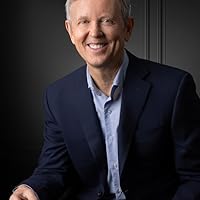
Susan L. Shirk is a Research Professor and Chair of the 21st Century China Center at the School of Global Policy and Strategy, UC San Diego. From 1997-2000, she served as the US Deputy Assistant Secretary of State in the Bureau of East Asia and Pacific Affairs, with responsibility for China, Taiwan, Hong Kong and Mongolia.
The central argument of this book is that China’s peaceful rise has been derailed largely for reasons to do with it’s internal politics, but exacerbated by the world (particularly the US) reacting to it.
The author charts the course of Chinese Government developed which seems to have flipped between dictatorial personal rule under Mao to forms of collective leadership. However, almost like a boomerang effect personal rule has come back. Shirk makes the case that this case that this was largely due to the failures and therefore public discrediting of how collective leadership worked, particularly under Hu Jintao who was seen by many Chinese as a weak leader. This made it less controversial for Xi Jinping to push for personal rule, so as to clear up the mess left by his predecessor.
What went wrong with collective leadership? The issue was that in a system with no accountability from the bottom upwards, it was left to those at the top. But after the 1989 Tiananmen Square protests and the fall of the Soviet Union, the ruling elites came to fear splits in the party as a possible prelude to the fall of Chinese Communism. So, they collective leaders hardly contradicted each other. Their respective portfolios got bigger and their own initiatives grew more bloated and took on new resources. However, this came at a price of the internal security agencies creeping more into the lives of ordinary Chinese citizens and foreign policy adventurism under the Chinese maritime agencies and the Navy getting more out of hand.
Xi Jinping as the most powerful leader of China since Mao was seen initially as a cool hand. But ironically, given Trump’s fixation on China as a “threat”, I was taken by their similarities. Trump, Johnson and Xi all tapped into a simmering sense of nationalism that is wilfully ignorant of recent history. The more I read about Xi in this book the more I appreciated how much he follows the Populist playbook. I am sure the irony is entirely lost on those Western leaders. Chinese Nationalism rose up around the time of the 2008 banking crisis, due to China being not as badly effected by it as the West. Chinese propaganda interests whipped up Chinese exceptionalist themes about how the Chinese system could rise above Western centred economic shocks. Xi has heavily centralised and personalised decision making in China. The cost is that he is trapped in an information bubble of “Yes Men” and he must attain power to protect himself from elites he has slated during his crackdowns carried out in the name of corruption. In this way there is very little incentive for him to relinquish power for fear of the consequences to him personally.
The central argument of the book is compelling and well justified. But there is a problem and there is no way getting around it. It is terribly tediously written even for one that came from an academic. To be frank this needed a much bigger editorial process than it appears to have got. There is a lot of repetition in this book. I think this book could easily have been 100 less pages and had gotten it’s point across. It is a shame, because some very good points are made but it’s lack of fluency puts the wind out of the reader’s sails.
The end of the book discusses ideas for remedying the situation on both the Chinese and US side. Given her former Government position I can forgive some US centrism, but I think she went overboard. Arguably, Europe has been more dynamic and various in handling China. Think about Hungary’s odd closeness to China, Macron’s diplomatic games and Germany going from being heavily reliant to having second thoughts. I thought it a tad bit odd to discuss in such depth about why the PRC would reverse it’s policies. Surely, they would have done it already? The author made better points when it came to changing the course of US policy. We have arguably seen the limits of punishing China economically and there is a danger where they may feel their lot is similar if not the same to Russia and follow a similar course. The author’s central remedy of pushing for more openness and collaboration, particularly on scientific research, between the US and China with sensible precautions seems like a sensible one. She illustrated well the danger of being stuck in a vicious political cycle of political interests in the US trying to outdo each other with anti-Chinese measures.
Overall, I believe this book had some valuable arguments and unveiled some unappreciated intricacies of Chinese politics. But sadly the ride could have been a lot smoother and concise to make the same points clearer, given some better editing.
This entire review has been hidden because of spoilers.
Many Americans seem to assume that the current tension between the US and China arose only with the election of Donald Trump in 2016—or with the rise of Xi Jinping to the top of the Chinese Communist Party (CCP) four years earlier. But that’s far from the case. In Overreach: How China Derailed Its Peaceful Rise, veteran China analyst Susan Shirk reveals the fateful changes that played out in Beijing beginning a decade earlier. Bringing to bear a half century’s experience as a student of Chinese politics, Dr. Shirk digs deeply into the weeds of the country’s opaque political system to document the emergence of its aggressive new stance in the world—and the growing risk of war between the US and China.
MISSTEPS IN CHINESE POLICY
Of course, history tells us that whenever one great power’s influence is fading and a rival’s is growing, conflict is inevitable. But the competition doesn’t necessarily require military action. Yet the risk of a military clash between the US and China has grown markedly over the past two decades. Certainly, the US shares some responsibility for this shift. But, as Dr. Shirk makes clear, a series of missteps in Chinese policy—none of them inevitable—has been the determining factor. And the first of those missteps predated the ascension of Xi Jinping by a decade. It was under his predecessor as General Secretary, Hu Jintao, that the pattern was set. And in Overreach, the author explains how this new course in Chinese foreign and military policy emerged from the bureaucratic muddle at the top of the Chinese Communist Party (CCP).
As Dr. Shirk makes clear, the root cause of the problem, if any single factor can be identified, was Hu Jintao’s weak leadership. Clearly, Hu was saddled with uncooperative holdovers from his much stronger predecessor, Jiang Zemin. And he faced constaent meddling by the security forces and propaganda department. But Hu proved unable to corral the clashing agendas of the eight others on the Politburo Standing Committee. Each of them had responsibility for one policy area—and allowed the others to pursue his own policy goals. The budget ballooned, corruption flourished, and the country was soon at odds with its neighbors over the South China Sea, Taiwan, North Korean aggressiveness, and the islands disputed between China and Japan. By the time Xi Jinping assumed the top job in 2012, the Chinese Communist Party—and the country—were in crisis.
CHINA’S OVERREACH, AMERICA’S OVERREACTION
Dr. Shirk’s thesis is straightforward. Beginning in Hu Jintao’s first term as General Secretary of the CCP (2002-7), gathering momentum during his second term (2007-12), and then steadily growing riskier and more aggressive under Xi Jinping (2012-), China’s foreign and military policy apparatus took an increasingly nationalistic stance toward its neighbors and the world at large. At the same time, the country adopted draconian domestic security measures, both on the ground and online. “The center” lashed out not just in response to violent protests in Xinjiang and Tibet but throughout Chinese society. The level of social control hasn’t reached the level of totalitarianism. But the signs are disquieting. Dr. Shirk defines this as overreach. And “China’s overreach has triggered an American overreaction that is almost as self-defeating.”
In a concluding chapter to her book, the author cautions the Biden Administration and the Congress against taking any further steps that would make China turn even more resolutely inward—because the more the mandarins in Zhongnanhai heed the clamor of the Chinese public—clamor they’ve generated with their own propaganda—to strike out against their perceived enemies, the greater the risk of war between China and the West. However, Dr. Shirk advocates a series of thoughtful steps American leaders might take to reduce this risk. Steps that, sadly, many loud voices in Washington seem unwilling to take.
ABOUT THE AUTHOR
According to her page at the University of California, San Diego, Susan L. Shirk is research professor and founding chair of the 21st Century China Center at UC San Diego. She is one of the most influential experts working on U.S.-China relations and Chinese politics. She is also director emeritus of the UC Institute on Global Conflict and Cooperation (IGCC). Dr. Shirk first visited China in 1971 and has been teaching, researching, and engaging China diplomatically ever since. From 1997-2000, she served as Deputy Assistant Secretary of State in the Bureau of East Asia and Pacific Affairs under President Bill Clinton, with responsibility for China, Taiwan, Hong Kong and Mongolia.
Susan Shirk's book, "Overreach," provides a deeply insightful and timely analysis of the complexities and potential consequences of overreach in international relations. With a keen focus on U.S. foreign policy, Shirk presents a thought-provoking examination of the ways in which the United States has, at times, exceeded its limits, leading to unintended consequences and negative outcomes. One of the book's strongest aspects is Shirk's meticulous research and extensive knowledge of the subject matter. Drawing from historical events, case studies, and a wealth of academic sources, the author expertly weaves together a narrative that sheds light on the dangers of overreach in a world where interconnectedness and global dynamics play an increasingly significant role. Shirk's writing style is engaging and accessible, making complex ideas and theories understandable to a broad readership. She effectively breaks down the intricacies of international relations, utilizing real-world examples and anecdotes to illustrate her arguments. By doing so, she keeps readers captivated and encourages them to think critically about the balance of power and the potential pitfalls of overreaching. One of the book's few drawbacks is its primarily U.S.-centric focus. While Shirk acknowledges the relevance of other countries' overreach, the emphasis on American foreign policy might limit the book's applicability for readers seeking a more global perspective. However, it is important to note that this focus allows for a deeper exploration of the topic within a specific context. "Overreach" prompts readers to reflect on the United States' role as a global superpower and raises important questions about the long-term implications of its actions. Shirk's analysis is nuanced, offering balanced insights into the benefits and risks associated with wielding power on the world stage. The book serves as a cautionary tale for policymakers and citizens alike, urging them to consider the potential costs of exceeding reasonable boundaries. By examining the historical and contemporary instances of overreach, the book sparks a vital conversation about responsible global engagement and the delicate balance of power. Anyone interested in international relations and the United States' role in the world will find this book both enlightening and thought-provoking.
A must read for those interested in the black box of Chinese politics. Shirk argues that the structural features of the Chinese Party-State induce policy overreach and self-defeating aggressiveness on the international stage.
Under Hu Jintao's oligarchy, logrolling among powerful parochial interests led the Party to overestimate domestic and external security concerns. Since Hu was unable to exhibit strong leadership, the Politburo Standing Committee members were free to exercise their will and authority over their respective policy domains. Instead of fostering collective leadership, the Party-State became a mere collection of leaders.
Under the personalistic rule of Xi Jinping, party officials became obsessed with pleasing the core leader by correctly interpreting his policy pronouncements. Doing so helps improve their career prospects but also leads them to go beyond Xi's originally intended outcomes. Xi had purged his rivals and consolidated control of the Chinese Party-State in ways that hark back to the Mao era.
As the Chinese Party-State enacts increasingly restrictive social measures to ensure internal stability and strikes a more assertive and belligerent posture to defend its geopolitical interests, leaders and policy-makers in many countries have become convinced that it is no longer a benign rising power with sincere intentions. However, Shirk also warns the United States and other international actors from overreaching that may further escalate tensions and push the Chinese Party-State away from peacefully integrating itself into a rules- and rights-based global order.
Susan Shirk summarises how Hu Jintao's aimless oligarchy and Xi's statist, personal dictatorship bungled the country's economic and political rise. The book made me even more bearish on China's prospects under Xi.
CCP paranoia is strong. Most companies now have party cells within them; Xi oversees repeated purges of the party that fail to create stability; and his capricious efforts to remodel the economy create massive economic self-harm. E.g., for whatever reason, Xi's government banned Didi (the biggest ride-share company) from signing up new riders for 18 months. Since 2021, the stock market has lost 6.5$ trillion in market value.
One saying I found particularly memorable is "yuè wéiwěn yuè bù wěn" ("越维稳越不稳"), which roughly translates to "the more you try to maintain stability, the more unstable things become." E.g., as there is no clear transition away from Xi, more and more rivals become impatient and might start plotting some way to get XI out of the way as their own path to power is blocked.
As has happened after Mao, once Xi is gone and economic reopening once again takes place, the country will likely do a lot better. The country does, by now, have a large middle class that simply wants more economic prosperity. There are also many intellectuals, including professors, who still remember stronger economic growth once the government embraced market reforms. Would be interested in prediction markets on how much longer Xi will be in power!
Would recommend reading for everyone who wants to have an up-to-date overview of China's recent past
Overreach: How China Derailed Its Peaceful Rise by Susan Shirk is a fantastic book covering China's various mis-steps over the past two decades. It was also a book I didn't think I needed to read, as I argued China had overreached - and indeed used the same term - back in grad school. Boy, was I wrong. Shirk puts a truly monstrous amount of detail, carefully crafting a series of thematic narratives that show how got in the way of its own development. Xi's not the origin, but his leadership has been a major contributor to things starting to fall apart. The byzantine "black box" of CCP leadership has also caused problems, and I was amused and dismayed at how officials lower in the totem poll feel encouraged to outdo Xi's directives to show support and obtain promotions, even to the point where it is entirely counterproductive. Or how people asked others not to criticize Xi's policies, as they would not be inclined to report that up the chain of command out of fear that it would blow back on them. Or even that the military picked a fight with India while Xi was visiting Modi in India at the time. There's a lot to read and explore here. The overall thesis wasn't new, but my understanding and appreciation was greatly enhanced by reading this book. I highly recommend it, for both China hands and generalists alike.
Fascinating but a handful of details of history that are obfuscated in this book but clearly highlighted and detailed in other books left me wondering ‘Why?’
One example: early in the book the author rolls back Lin Biao’s famous plane crash during a failed defection attempt under Mao. Were a reader unfamiliar with history or only read this book, they would be left with the impression that a lot of mystery remains around his death.
It leaves a bad impression on me and makes me question motives or other possible obfuscations convenient to the narrative. But I don’t see what was gained or why. I’m just left with doubts about enough passages in the book that I couldn’t recommend it without recommending additional books for better historical context.
While I had some issues with this book, I found it overall an informative and insightful look into modern China. I am by no means a China expert, so I found the details on the inner workings of the CCP valuable, and thought the policy recommendations for the US at the end of the book were measured and nuanced. However, I think this book is certainly very US-centered, and would have like to heard the perspective on how other countries around the world view China, not how the US THINKS they view China. Overall, an interesting look into Chinese domestic and foreign politics, and for those interested in Chinese power politics, I would highly recommend.
Just a stunning book explaining the systemic changes (incl China’s failed experiment with collective leadership and expanding the Politburo Standing Committee which empowered internal security agencies), people, and events (incl 2008 Olympics and financial crisis) that led China to become more oppressive domestically and assertive internationally. And why it started well before, and isn’t unique to, Xi Jinping.
Exceptionally well researched and written (for China experts or generalists) that is well worth reading
Listened to the audiobook. Would have given a higher rating, but the book is full of Chinese names and terms while the audiobook reader doesn't even try to come close to pronouncing those names and terms correctly. I don't expect perfect pronunciation of a foreign language, but here it's bad to a degree that it becomes confusing to the listener. Don't understand why she didn't receive any instruction on how to pronounce those words.
There are many other audiobooks about China that don't have this problem. Do better.
Very detailed information not only about Xi Jinping but also Hu Jintao which helps to understand the shifts in Chinese policy and its relation to the US, EU, Russia, other Asian countries, etc. The final chapter, Conclusion, should be studied very very carefully by all those involved with US/China relations.
Reading this book has enlightened my understanding of China and has given me the basis needed to understand not only current events but future events also.
This is a excellent, highly detailed account of the reasons why China's communist party is overreached itself, causing all kinds of problems, both for itself and the rest of the world. The author uses her deep background knowledge of the subject matter to tease out lots of insights. Highly recommended.
If we expect to understand how to respond to the challenges America faces in the coming decades, we must educate ourselves. I can think of no better place to start than with this excellent book.
One of the best books on modern China and the CCP I’ve read in years. Definitely the best one I’ve read this year. Keeps its distance while guiding the outsider through the ebbs and flows of power within the Chinese communist party.
Great book but felt encumbered by the need to hit every facet of the US-China relationship, at the expense of the argument (which is very interesting). I would love a shorter version, or a paper that hones in on the bones of the argument.