

What do you think?

The Penguin Book of the Modern American Short Story
A selection of the best and most representative contemporary American short fiction from 1970 to 2020, including such authors as Ursula K. LeGuin, Toni Cade Bambara, Jhumpa Lahiri, Sandra Cisneros, and Ted Chiang, hand-selected by celebrated editor and anthologist John Freeman
In the past fifty years, the American short story has changed dramatically. New voices, forms, and mixtures of styles have brought this unique genre a thrilling burst of energy. The Penguin Book of the Modern American Short Story celebrates this avalanche of talent.
This rich anthology begins in 1970 and brings together a half century of powerful American short stories from all genres, including—for the first time in a collection of this scale—science fiction, horror, and fantasy, placing writers such as Ursula K. Le Guin, Ken Liu, and Stephen King next to some beloved greats of the literary Raymond Carver, Grace Paley, Chimamanda Ngozi Adichie, and Denis Johnson. Culling widely, John Freeman, the former editor of Granta and now editor of his own literary annual, brings forward some astonishing work to be regarded in a new light. Often overlooked tales by Dorothy Allison, Percival Everett, and Charles Johnson will recast the shape and texture of today’s enlarging atmosphere of literary dialogue. Stories by Lauren Groff and Ted Chiang raise the specter of engagement in ecocidal times. Short tales by Tobias Wolff, George Saunders, and Lydia Davis rub shoulders with near novellas by Susan Sontag and Andrew Holleran. This book will be a treasure trove for readers, writers, and teachers alike.
In the past fifty years, the American short story has changed dramatically. New voices, forms, and mixtures of styles have brought this unique genre a thrilling burst of energy. The Penguin Book of the Modern American Short Story celebrates this avalanche of talent.
This rich anthology begins in 1970 and brings together a half century of powerful American short stories from all genres, including—for the first time in a collection of this scale—science fiction, horror, and fantasy, placing writers such as Ursula K. Le Guin, Ken Liu, and Stephen King next to some beloved greats of the literary Raymond Carver, Grace Paley, Chimamanda Ngozi Adichie, and Denis Johnson. Culling widely, John Freeman, the former editor of Granta and now editor of his own literary annual, brings forward some astonishing work to be regarded in a new light. Often overlooked tales by Dorothy Allison, Percival Everett, and Charles Johnson will recast the shape and texture of today’s enlarging atmosphere of literary dialogue. Stories by Lauren Groff and Ted Chiang raise the specter of engagement in ecocidal times. Short tales by Tobias Wolff, George Saunders, and Lydia Davis rub shoulders with near novellas by Susan Sontag and Andrew Holleran. This book will be a treasure trove for readers, writers, and teachers alike.
496 pages, Paperback
First published May 4, 2021
About the author
John Freeman
55 books286 followersNote: There is more than one author in the Goodreads database with this name.
John Freeman is an award-winning writer and book critic who has written for numerous publications, including The New Yorker, The New York Times Book Review, The Los Angeles Times, The Guardian, and The Wall Street Journal. Freeman won the 2007 James Patterson Pageturner Award for his work as the president of the National Book Critics Circle, and was the editor of Granta from 2009 to 2013. He lives in New York City, where he teaches at NYU and edits a new literary biannual called Freeman's.
John Freeman is an award-winning writer and book critic who has written for numerous publications, including The New Yorker, The New York Times Book Review, The Los Angeles Times, The Guardian, and The Wall Street Journal. Freeman won the 2007 James Patterson Pageturner Award for his work as the president of the National Book Critics Circle, and was the editor of Granta from 2009 to 2013. He lives in New York City, where he teaches at NYU and edits a new literary biannual called Freeman's.
Ratings & Reviews
Friends & Following
Create a free account to discover what your friends think of this book!
Community Reviews
Displaying 1 - 30 of 110 reviews

October 3, 2024
My favorite stories were authored by Raymond Carver, Joy Williams, Lydia Davis, Lucia Berlin, Nathan Englander, Percival Everett, and Edwidge Danticat.

June 30, 2021
My librarian husband and I have started a project (we like projects). Every day for past 37 days we have read one of these stories to each other, marked them out of five, and talked about what we thought about them - what we felt worked and what didn't. Surprisingly perhaps, we were mostly agreed: those that scored five usually got a five from both of us. And there were three that we were completely agreed on to stop reading because we weren't enjoying them. Unfortunately there were quite a few that neither of us liked, and those that we loved were by authors we generally already knew and loved: Raymond Carver, Joy Williams, Denis Johnson, George Saunders, and Lauren Groff. But there were also a few stories by authors that which have already inspired us to go and read more of their short fiction, including Stuart Dybek, Tobia Wolff, and Julie Otsuka. Thanks to Eric Anderson for the inspiration for this project. We're going to read a short story collection, rather than anthology, next. But which one...?

January 12, 2025
A little bit so-so for me; best ones were :
"Bicycles, Muscles, Cigarettes" by Raymond Carver
"Girl" by Jamaica Kincaid (only two pages but wow!)
"The Way we Live Now" by Susan Sontag
"River of Names" by Dorothy Allison
"Emergency" by Denis Johnson
and of course
"The Things they Carried" by Tim O'Brien
- there was a law passed years ago which stated that every anthology of great American stories had to include "The Things they Carried".
"Bicycles, Muscles, Cigarettes" by Raymond Carver
"Girl" by Jamaica Kincaid (only two pages but wow!)
"The Way we Live Now" by Susan Sontag
"River of Names" by Dorothy Allison
"Emergency" by Denis Johnson
and of course
"The Things they Carried" by Tim O'Brien
- there was a law passed years ago which stated that every anthology of great American stories had to include "The Things they Carried".

November 15, 2024
Sometime back, I suddenly started feeling a lot of love towards short stories, and I started looking for short story collections. That is when I found this collection.
This collection covers a period of fifty years from 1970 to 2020. It has 37 short stories. Because it covers the contemporary era, most of the writers featured are known to us. Many of the legends and popular short story masters are there – Raymond Carver, Grace Paley, Alice Walker, Jamaica Kincaid, Louise Erdrich, Isaac Bashevis Singer, Lydia Davis, George Saunders, Lucia Berlin, Jhumpa Lahiri, Chimamanda Ngozi Adichie. The editor John Freeman doesn't just stick to literary short stories and includes stories from other genres too. So we have stories by Ursula K. Le Guin, Stephen King, Ted Chiang. I loved the way the editor thought on this aspect. There were also stories by writers whom I've never heard of or who are less well known, like Nathan Englander, Rick Bass, Manuel Muñoz. Their stories were surprising and excellent.
One of the things about an American short story collection is that sometimes it is called a collection of North American short stories, and then the editor sneaks in some Canadian writers. At other times, the editor removes the 'American' from the title, though the book contains mostly American writers, and then sneaks in some British writers. This book doesn't do either. It is a 100% American collection. That is one of the things I liked about the book. (Of course, there is an exception to this also. This book has a story by Chimamanda Ngozi Adichie. Whether Adichie is American or Nigerian, we can debate till the cows come home. So I won't get into that 😊)
How does this collection compare with other American short story collections? American short story collections are dime-a-dozen. There is The Best American Short Stories collection which comes out every year, there is the O'Henry Prize stories which again comes out every year, there is the Pushcart Anthology which is again an annual thing. There are also legendary anthologies edited by Raymond Carver and Robert Penn Warren in the past. Then there are countless other anthologies, too numerous to name. How does this collection compare to them all? It is hard to tell. American short story writers are prolific and so that is reflected in the number of anthologies out there. So, without comparing this book with other anthologies, and just looking at it as a standalone thing, I'd say that the book is excellent. Many of the stories ended up becoming my favourites (I counted atleast 15 favourites out of the 37 stories – that is a lot for me). Short story anthologies, especially contemporary ones, are typically hit-and-miss for me, and I'm happy to say that this one is a hit. I'm glad I discovered it, and I'm glad I read it. I loved it, and it is one of my favourite books of the year. So, if you like short stories, don't wait, go get this and read it now 😊
Now on some of my favourite short stories.
The Paper Menagerie by Ken Liu – I've heard of Ken Liu's short story collection of the same name but haven't got around to reading it. Then I read this story and I cried. It is a beautiful, haunting story about a mom and her son. In a letter, the mom writes to her son – "You know what the Chinese think is the saddest feeling in the world? It's for a child to finally grow the desire to take care of his parents, only to realize that they were long gone." I couldn't stop crying when I read that. It made me think of my own mom. I was blessed to spend the last years of my mom with her, but I sometimes keep wondering whether I took care of her well. I think I did my best (but I probably could have done better), but definitely not as well as she did when she took care of me when I was a baby. I recently saw a video in which an interviewer asked a 101-year old man whom he wanted to meet and speak to again, and he said his mother and started crying. Even a 101-year man, when he thinks about his mom, starts crying like a baby. That is how it is.
A Temporary Matter by Jhumpa Lahiri – Friends have been raving about Jhumpa Lahiri for a long time, but I never got around to reading her books. I'm biased against 'Indian' writers, who are really American or British or Canadian writers with Indian roots. I hate the fact that because they have easier access to the international literary environment, they are able to get their works across to an international readership easily, and because of this they are regarded as experts on India and Indian-ness, while actual Indian writers who pursue their literary art while sitting in India are mostly ignored or are regarded as inferior. So subconsciously I've rejected these Indian-American and Indian-British and Indian-Canadian writers and refuse to read them. Jhumpa Lahiri is one of them. But our friendly editor John Freeman had sneaked in one of her stories into this book, and so I was compelled to read it. And I loved it so much. It is the story of a marriage. It is so beautiful, and moving, and haunting. Lahiri's writing style is so calm and serene, it is like a Zen monk meditating. And I felt ashamed after I finished reading it. In my bias against the so called 'Indian' writers, I nearly rejected an excellent writer who wrote beautiful stories. I'm glad that I read this story. Hoping to read more by Jhumpa Lahiri. I'll continue to be biased against 'Indian' (= Indian-American + Indian-British + Indian-Canadian) writers, but I'll make an exception for Jhumpa Lahiri. She is a great American writer.
The Reencounter by Isaac Bashevis Singer – A man gets up in the morning. He finds that something is odd. And then he discovers that he is dead. What happens after that forms the rest of the story. At one point, our main character meets another dead friend and they have this conversation –
Friend – "What do you say to all this?"
Our Man – "The unbelievable, the absurd, the most vulgar superstitions are proving to be true."
Friend – "Perhaps we will find there is even a Hell and a Paradise."
Our Man – "Anything is possible at this point."
Friend – "Does this mean that all the philosophic works you read and wrote were one big lie?"
Our Man – "Worse – they were sheer nonsense."
I couldn't stop laughing when I read that 😄 Grandpa Singer is just brilliant! He is one of the great masters of the short story form. Love his work very much. I have a huge collection of his short stories somewhere. I need to get it out and get cracking.
The Red Convertible by Louise Erdrich – I've heard a lot about Louise Erdrich, but have never read her stories before. This story is about two brothers and it is moving, haunting, and heartbreaking. So happy that I got to read my first Louise Erdrich story and loved it. Went and got a whole collection of her stories after I read this. Looking forward to reading it.
The Twenty-Seventh Man by Nathan Englander – I've never heard of Nathan Englander before. I don't know anyone who has read his stories. It is surprising because this story is exceptional. It grabs you from the first sentence and doesn't let you go till the end. Clearly the work of a master. How many more such masters are there, who keep creating great literary art but are virtually unknown?
The Hermit's Story by Rick Bass – A beautiful, haunting story set in a winter landscape which involves a long trek under a frozen river. Exceptional. Again an unknown American master at the top of his form. Then suddenly I remembered that one of my friends had reviewed two of his books. Hoping to read more of Rick Bass' books now.
The Fix by Percival Everett – A man who runs a sandwich shop discovers an unknown stranger outside his shop one day. He is kind to this stranger. Then he discovers that this stranger can fix things. He fixes the fridge, then he fixes the water pipe. And soon we discover that our stranger can fix anything. And then one day he brings a woman back from the dead. Of course, this is not going to end well. What happens after that is heartbreaking. I read up on Percival Everett. Before his Booker Prize shortlist in 2022 for 'The Trees', he was virtually unknown. But when we look at his backlist, he has been writing and publishing for 40 years! Yes, 40 years! He is not someone who just came out of the blue. He has been keeping at it for a long, long time. It makes me wonder why a black writer has to keep on working at it for decades before he gets anywhere. It made me think of Morgan Freeman, who worked for decades before he got international recognition because of his performance in 'Driving Miss Daisy'. He was 52 by that time. These days Morgan Freeman says that the system is fair and everyone gets equal opportunities. I don't know whether to laugh or to cry. It also made me think of Viola Davis who for the first 15 years of her career, mostly did bit parts, before her breakthrough role in 'The Help'. She was a Juilliard graduate and all. If you are a black person, it doesn't matter whether you are a Juilliard graduate, or whether you went to Harvard or whether you cured cancer. You have to put in the grunt work for 20, 30, 40 years, before you are recognized for your work. If you are lucky. I don't know why the system works like this. It just sucks.
Bicycles, Muscles, Cigarettes by Raymond Carver – I've read one or two Raymond Carver stories in anthologies before. They went over my head. I didn't understand what the fuss was all about. But I read this, and loved it. I must be growing as a short story reader to finally be able to appreciate Raymond Carver. I decided that I should dedicate some time for him and went and got his complete short story collection. Hoping to read it one of these days.
The Dune by Stephen King – It is vintage Stephen King with a surprise in the end. The only problem is that I didn't get the surprise. It is revealed in the last line but I'm not smart enough to get it. I'm able to guess it, but I don't know whether my guess is true. If you've read this story, please tell me what you think about the ending.
My other favourite stories from the book are 'A Conversation with my Father' by Grace Paley, 'Girl' by Jamaica Kincaid, 'China' by Charles Johnson, 'Silence' by Lucia Berlin, 'The Last Thing We Need' by Claire Vaye Watkins, 'Anyone Can Do It' by Manuel Muñoz. I want to write more about these stories, but my mind is feeling very tired now and so I'll stop here.
I loved 'The Penguin Book of the Modern American Short Story'. It is one of my favourite short story collections, and it is one of my favourite reads of the year. Go read it 😊
This collection covers a period of fifty years from 1970 to 2020. It has 37 short stories. Because it covers the contemporary era, most of the writers featured are known to us. Many of the legends and popular short story masters are there – Raymond Carver, Grace Paley, Alice Walker, Jamaica Kincaid, Louise Erdrich, Isaac Bashevis Singer, Lydia Davis, George Saunders, Lucia Berlin, Jhumpa Lahiri, Chimamanda Ngozi Adichie. The editor John Freeman doesn't just stick to literary short stories and includes stories from other genres too. So we have stories by Ursula K. Le Guin, Stephen King, Ted Chiang. I loved the way the editor thought on this aspect. There were also stories by writers whom I've never heard of or who are less well known, like Nathan Englander, Rick Bass, Manuel Muñoz. Their stories were surprising and excellent.
One of the things about an American short story collection is that sometimes it is called a collection of North American short stories, and then the editor sneaks in some Canadian writers. At other times, the editor removes the 'American' from the title, though the book contains mostly American writers, and then sneaks in some British writers. This book doesn't do either. It is a 100% American collection. That is one of the things I liked about the book. (Of course, there is an exception to this also. This book has a story by Chimamanda Ngozi Adichie. Whether Adichie is American or Nigerian, we can debate till the cows come home. So I won't get into that 😊)
How does this collection compare with other American short story collections? American short story collections are dime-a-dozen. There is The Best American Short Stories collection which comes out every year, there is the O'Henry Prize stories which again comes out every year, there is the Pushcart Anthology which is again an annual thing. There are also legendary anthologies edited by Raymond Carver and Robert Penn Warren in the past. Then there are countless other anthologies, too numerous to name. How does this collection compare to them all? It is hard to tell. American short story writers are prolific and so that is reflected in the number of anthologies out there. So, without comparing this book with other anthologies, and just looking at it as a standalone thing, I'd say that the book is excellent. Many of the stories ended up becoming my favourites (I counted atleast 15 favourites out of the 37 stories – that is a lot for me). Short story anthologies, especially contemporary ones, are typically hit-and-miss for me, and I'm happy to say that this one is a hit. I'm glad I discovered it, and I'm glad I read it. I loved it, and it is one of my favourite books of the year. So, if you like short stories, don't wait, go get this and read it now 😊
Now on some of my favourite short stories.
The Paper Menagerie by Ken Liu – I've heard of Ken Liu's short story collection of the same name but haven't got around to reading it. Then I read this story and I cried. It is a beautiful, haunting story about a mom and her son. In a letter, the mom writes to her son – "You know what the Chinese think is the saddest feeling in the world? It's for a child to finally grow the desire to take care of his parents, only to realize that they were long gone." I couldn't stop crying when I read that. It made me think of my own mom. I was blessed to spend the last years of my mom with her, but I sometimes keep wondering whether I took care of her well. I think I did my best (but I probably could have done better), but definitely not as well as she did when she took care of me when I was a baby. I recently saw a video in which an interviewer asked a 101-year old man whom he wanted to meet and speak to again, and he said his mother and started crying. Even a 101-year man, when he thinks about his mom, starts crying like a baby. That is how it is.
A Temporary Matter by Jhumpa Lahiri – Friends have been raving about Jhumpa Lahiri for a long time, but I never got around to reading her books. I'm biased against 'Indian' writers, who are really American or British or Canadian writers with Indian roots. I hate the fact that because they have easier access to the international literary environment, they are able to get their works across to an international readership easily, and because of this they are regarded as experts on India and Indian-ness, while actual Indian writers who pursue their literary art while sitting in India are mostly ignored or are regarded as inferior. So subconsciously I've rejected these Indian-American and Indian-British and Indian-Canadian writers and refuse to read them. Jhumpa Lahiri is one of them. But our friendly editor John Freeman had sneaked in one of her stories into this book, and so I was compelled to read it. And I loved it so much. It is the story of a marriage. It is so beautiful, and moving, and haunting. Lahiri's writing style is so calm and serene, it is like a Zen monk meditating. And I felt ashamed after I finished reading it. In my bias against the so called 'Indian' writers, I nearly rejected an excellent writer who wrote beautiful stories. I'm glad that I read this story. Hoping to read more by Jhumpa Lahiri. I'll continue to be biased against 'Indian' (= Indian-American + Indian-British + Indian-Canadian) writers, but I'll make an exception for Jhumpa Lahiri. She is a great American writer.
The Reencounter by Isaac Bashevis Singer – A man gets up in the morning. He finds that something is odd. And then he discovers that he is dead. What happens after that forms the rest of the story. At one point, our main character meets another dead friend and they have this conversation –
Friend – "What do you say to all this?"
Our Man – "The unbelievable, the absurd, the most vulgar superstitions are proving to be true."
Friend – "Perhaps we will find there is even a Hell and a Paradise."
Our Man – "Anything is possible at this point."
Friend – "Does this mean that all the philosophic works you read and wrote were one big lie?"
Our Man – "Worse – they were sheer nonsense."
I couldn't stop laughing when I read that 😄 Grandpa Singer is just brilliant! He is one of the great masters of the short story form. Love his work very much. I have a huge collection of his short stories somewhere. I need to get it out and get cracking.
The Red Convertible by Louise Erdrich – I've heard a lot about Louise Erdrich, but have never read her stories before. This story is about two brothers and it is moving, haunting, and heartbreaking. So happy that I got to read my first Louise Erdrich story and loved it. Went and got a whole collection of her stories after I read this. Looking forward to reading it.
The Twenty-Seventh Man by Nathan Englander – I've never heard of Nathan Englander before. I don't know anyone who has read his stories. It is surprising because this story is exceptional. It grabs you from the first sentence and doesn't let you go till the end. Clearly the work of a master. How many more such masters are there, who keep creating great literary art but are virtually unknown?
The Hermit's Story by Rick Bass – A beautiful, haunting story set in a winter landscape which involves a long trek under a frozen river. Exceptional. Again an unknown American master at the top of his form. Then suddenly I remembered that one of my friends had reviewed two of his books. Hoping to read more of Rick Bass' books now.
The Fix by Percival Everett – A man who runs a sandwich shop discovers an unknown stranger outside his shop one day. He is kind to this stranger. Then he discovers that this stranger can fix things. He fixes the fridge, then he fixes the water pipe. And soon we discover that our stranger can fix anything. And then one day he brings a woman back from the dead. Of course, this is not going to end well. What happens after that is heartbreaking. I read up on Percival Everett. Before his Booker Prize shortlist in 2022 for 'The Trees', he was virtually unknown. But when we look at his backlist, he has been writing and publishing for 40 years! Yes, 40 years! He is not someone who just came out of the blue. He has been keeping at it for a long, long time. It makes me wonder why a black writer has to keep on working at it for decades before he gets anywhere. It made me think of Morgan Freeman, who worked for decades before he got international recognition because of his performance in 'Driving Miss Daisy'. He was 52 by that time. These days Morgan Freeman says that the system is fair and everyone gets equal opportunities. I don't know whether to laugh or to cry. It also made me think of Viola Davis who for the first 15 years of her career, mostly did bit parts, before her breakthrough role in 'The Help'. She was a Juilliard graduate and all. If you are a black person, it doesn't matter whether you are a Juilliard graduate, or whether you went to Harvard or whether you cured cancer. You have to put in the grunt work for 20, 30, 40 years, before you are recognized for your work. If you are lucky. I don't know why the system works like this. It just sucks.
Bicycles, Muscles, Cigarettes by Raymond Carver – I've read one or two Raymond Carver stories in anthologies before. They went over my head. I didn't understand what the fuss was all about. But I read this, and loved it. I must be growing as a short story reader to finally be able to appreciate Raymond Carver. I decided that I should dedicate some time for him and went and got his complete short story collection. Hoping to read it one of these days.
The Dune by Stephen King – It is vintage Stephen King with a surprise in the end. The only problem is that I didn't get the surprise. It is revealed in the last line but I'm not smart enough to get it. I'm able to guess it, but I don't know whether my guess is true. If you've read this story, please tell me what you think about the ending.
My other favourite stories from the book are 'A Conversation with my Father' by Grace Paley, 'Girl' by Jamaica Kincaid, 'China' by Charles Johnson, 'Silence' by Lucia Berlin, 'The Last Thing We Need' by Claire Vaye Watkins, 'Anyone Can Do It' by Manuel Muñoz. I want to write more about these stories, but my mind is feeling very tired now and so I'll stop here.
I loved 'The Penguin Book of the Modern American Short Story'. It is one of my favourite short story collections, and it is one of my favourite reads of the year. Go read it 😊

July 5, 2026
I picked this up to compare with the two big Best American Short Stories compilations I’d recently read. My hope was that not being limited to stories selected for BASS might mean the stories were overall better, but on average I think the quality is about the same. I only sort of overlap with Freeman’s taste (the beginning in particular was rough going), but there aren’t many outright duds here, and it was nice to get some new-to-me authors, and see another facet of others, as well as rereading several oft-anthologized stories. Fairly diverse in authors and perspectives, and worth checking out if you’re interested in some quick exposure to a combination of big names and hidden gems.
Thoughts on the individual stories:
“The Lesson” by Toni Cade Bambara: If this story is intended to teach readers the lesson the neighborhood teacher wants to impart to the students—economic inequality exists and is wrong!—then it’s awfully heavy-handed. But if the real point is the narrator’s reaction—if she can’t compete, she won’t play—it becomes more interesting, though it would’ve been more so if not relegated to a single paragraph at the end. Did this lesson benefit these kids?
“A Conversation With My Father” by Grace Paley: A metafictional story that did little for me. The stakes aren’t really there, and perhaps it’s because I’ve not read a ton of Russian short stories nor much Paley, but I didn’t quite understand what the divergence was between the types of stories each character preferred.
“The Ones Who Walk Away From Omelas” by Ursula K. Le Guin: Such an influential piece that it needed to be included, but this is more thought experiment than story. It has been endlessly discussed and responded to so no need to say more here.
“Bicycles, Muscles, Cigarettes” by Raymond Carver: A story about what fathers pass down to their sons—fine, did little for me.
“The Flowers” by Alice Walker
“Girl” by Jamaica Kincaid
“Salvador Late or Early” by Sandra Cisneros
“Sticks” by George Saunders
Four flash fiction stories. Flash fiction doesn’t tend to work for me without a great twist, and the current trend is for literary short stories to consider themselves above twists, hence none of these did much for me. However, amongst the four, each one is better than the previous.
“The Red Convertible” by Louise Erdrich: The first story I genuinely liked and appreciated, about a man’s relationship with his brother before and after the brother goes to war.
“The Reencounter” by Isaac Bashevis Singer: A quirky story about the afterlife. It wouldn’t be much in a fantasy anthology but is entertainingly different in a literary one.
“Taking Care” by Joy Williams: A nice story about a man who takes care of everyone around him.
“Story” by Lydia Davis: Fortunately this is quite short as it feels like a panic attack, successfully evoking the experience of a woman obsessed with a man who is not that into her.
“China” by Charles Johnson: A quietly provocative story about an aging woman who depends on her husband’s incapacity, and resents his decision to change his life and get fit.
“Pet Milk” by Stuart Dybek: A non-sequitur string of reminisces. I don’t get what people see in it.
“The Way We Live Now” by Susan Sontag: An AIDS story told in an experimental style, focusing on the extensive grapevine of largely featureless friends supporting a sick man and constantly discussing his situation with one another. Distinctive but not necessarily enjoyable; my personal pick for an AIDS story would’ve been “In the Gloaming.”
“The Things They Carried” by Tim O’Brien: I can’t precisely say I like this famous Vietnam War story (I have read it three times now in various places); the plot and characters seem rather weak scaffolding on which to hang an astute and incisive examination of the soldiers’ psychology, but there’s a lot to be said for that examination.
“Men killed, and died, because they were embarrassed not to.”
“River of Names” by Dorothy Allison: A trauma dump about all the worst things that have happened in the life of a huge, violence-prone extended family of “poor white trash,” and how this background continues to affect a woman who has escaped. Effective but not for the faint of heart.
“Emergency” by Denis Johnson: A string of weird happenings in and out of the emergency room, as related by a low-level employee. Entertaining enough and sort of deliberately out-of-control.
“Fiesta, 1980” by Junot Diaz: A strong story about a troubled Dominican-American family from the perspective of a young boy. The family dynamics are evoked well, and I’m interested in more from this author.
“Silence” by Lucia Berlin: A vivid story of ups and downs in an unusual, wartime childhood. I’d previously read this in the author’s collection, where it didn’t stand out, because all her stories being semi-autobiographical means they tend to blend together. In an anthology I think it works better. So much life packed into a short, colorful story.
“The Twenty-Seventh Man” by Nathan Englander: In a departure from typical Americana, this one focuses on a group of Jewish writers set to be executed by Stalin. It’s very strong, a blend of drama and humor and a look at how one finds meaning under dire circumstances.
“Bullet in the Brain” by Tobias Wolff: Quite short and not notable to me, this feels like a revenge fantasy (a book critic gets shot) without really going anywhere. The explicit allusion to “The Killers” just highlights the clunkiness of that bit of dialogue while preventing the story from standing on its own.
“The Hermit’s Story” by Rick Bass: A lovely story about a wilderness experience so unearthly it feels magical. (Although having looked up the phenomenon encountered here, I’m not sure the ice would really be so sturdy.) Leaves a lot of questions about the characters in a way that echoes the unknowability of the landscape.
“A Temporary Matter” by Jhumpa Lahiri: The first Lahiri story I’ve actually liked, about a couple who have lost a baby briefly reconnecting during a series of power outages. The characters and their relationship are well-drawn.
“The Penthouse” by Andrew Holleran: The longest story in the anthology, but I didn’t get a lot out of it. Gay Great Gatsby no doubt works better for people who liked straight Great Gatsby.
“The Fix” by Percival Everett: An engaging, but ultimately rather simplistic, tale of a man with magical powers so valuable people can’t leave him alone.
“Water Child” by Edwidge Danticat: A strong story about a Haitian-American nurse, with a subtle framing around voicelessness: her patient has literally lost her voice, while the nurse has metaphorically lost hers through isolation and inhibition.
“The American Embassy” by Chimamanda Ngozi Adichie: I think I would like this better if I hadn’t read much Adichie, and could attribute this story about a grieving mother hating on everyone around her (her journalist husband, who is a performative egomaniac rather than brave or principled; the embassy personnel, who dare ask for proof when she asks for asylum; the guy behind her in line whose obnoxious insistence on talking to her consumes much of the tale) to her grief. But I have read a bunch of Adichie and devoting stories to relentless criticism of everyone but the protagonist is typical for her. And tiring to me.
“The Conductor” by Aleksander Hemon: A good story about an aspiring (and later moderately successful) writer who goes into exile, and his complex relationship with his homeland and an older writer who remained behind.
“I . . . [fretted] all along that an enraged reader would stand up and expose me as a fraud, as someone who had no talent—and therefore no right—to talk about the suffering of others. It never happened: I was Bosnian, I looked and conducted myself like a Bosnian, and everyone was content to think that I was in constant, uninterrupted communication with the tormented soul of my homeland.”
“St. Lucy’s Home for Girls Raised by Wolves” by Karen Russell: A great, fantastical story about children of werewolves attending a school meant to teach them to be human. Strong pathos and imaginatively builds out the details of their specific situation, with a parallel to real-world residential schools intended to change people’s culture.
“The Last Thing We Need” by Claire Vaye Watkins: Once I got over my annoyance at this being an epistolary story (because nobody ever writes letters the way authors write fiction), I liked this a lot. It’s about a man dealing with unacknowledged guilt and inflicting his understanding of the world as a harsh place on his young daughter, and gains a lot of depth as it goes.
“The Paper Menagerie” by Ken Liu: I have read this twice and the emotional effect it’s going for is not successful for me. The characters feel too broad, and the mother’s literacy in Chinese not quite believable (that takes many years of schooling and intensive memorization).
“The Dune” by Stephen King: About what I expected from a Stephen King story. Competent, a bit creepy, male-focused, forgettable.
“Diem Perdidi” by Julie Otsuka: A Japanese-American mother’s life as seen through the lens of her dementia, and her daughter trying to deal with it. Fine but not my favorite.
“The Great Silence” by Ted Chiang: Less a story and more a short essay observing that people are fascinated by the idea of communication with extraterrestrial life, while overlooking all the life on our own planet we can’t communicate with. Creating a parrot narrator to forgive humanity is an uncomfortable sort of wish-fulfillment.
“The Midnight Zone” by Lauren Groff: A well-written story about a woman trapped off the grid with a head injury. The ending leaves a lot of room for interpretation: has the woman been replaced by or somehow merged with the panther? If she delusional, perhaps dying but unaware of it? Does the title, in her case, refer to the last moment she could have been saved, or just to her dark night of the soul?
“Anyone Can Do It” by Manuel Muñoz: A young mother struggles with money after the husband she doesn’t like that much anyway is deported. I’m pretty neutral on this one.
Overall, not many new favorites here, but these are mostly well-written, engaging stories, and I do have a few new authors to check out. So overall, three stars.
Thoughts on the individual stories:
“The Lesson” by Toni Cade Bambara: If this story is intended to teach readers the lesson the neighborhood teacher wants to impart to the students—economic inequality exists and is wrong!—then it’s awfully heavy-handed. But if the real point is the narrator’s reaction—if she can’t compete, she won’t play—it becomes more interesting, though it would’ve been more so if not relegated to a single paragraph at the end. Did this lesson benefit these kids?
“A Conversation With My Father” by Grace Paley: A metafictional story that did little for me. The stakes aren’t really there, and perhaps it’s because I’ve not read a ton of Russian short stories nor much Paley, but I didn’t quite understand what the divergence was between the types of stories each character preferred.
“The Ones Who Walk Away From Omelas” by Ursula K. Le Guin: Such an influential piece that it needed to be included, but this is more thought experiment than story. It has been endlessly discussed and responded to so no need to say more here.
“Bicycles, Muscles, Cigarettes” by Raymond Carver: A story about what fathers pass down to their sons—fine, did little for me.
“The Flowers” by Alice Walker
“Girl” by Jamaica Kincaid
“Salvador Late or Early” by Sandra Cisneros
“Sticks” by George Saunders
Four flash fiction stories. Flash fiction doesn’t tend to work for me without a great twist, and the current trend is for literary short stories to consider themselves above twists, hence none of these did much for me. However, amongst the four, each one is better than the previous.
“The Red Convertible” by Louise Erdrich: The first story I genuinely liked and appreciated, about a man’s relationship with his brother before and after the brother goes to war.
“The Reencounter” by Isaac Bashevis Singer: A quirky story about the afterlife. It wouldn’t be much in a fantasy anthology but is entertainingly different in a literary one.
“Taking Care” by Joy Williams: A nice story about a man who takes care of everyone around him.
“Story” by Lydia Davis: Fortunately this is quite short as it feels like a panic attack, successfully evoking the experience of a woman obsessed with a man who is not that into her.
“China” by Charles Johnson: A quietly provocative story about an aging woman who depends on her husband’s incapacity, and resents his decision to change his life and get fit.
“Pet Milk” by Stuart Dybek: A non-sequitur string of reminisces. I don’t get what people see in it.
“The Way We Live Now” by Susan Sontag: An AIDS story told in an experimental style, focusing on the extensive grapevine of largely featureless friends supporting a sick man and constantly discussing his situation with one another. Distinctive but not necessarily enjoyable; my personal pick for an AIDS story would’ve been “In the Gloaming.”
“The Things They Carried” by Tim O’Brien: I can’t precisely say I like this famous Vietnam War story (I have read it three times now in various places); the plot and characters seem rather weak scaffolding on which to hang an astute and incisive examination of the soldiers’ psychology, but there’s a lot to be said for that examination.
“Men killed, and died, because they were embarrassed not to.”
“River of Names” by Dorothy Allison: A trauma dump about all the worst things that have happened in the life of a huge, violence-prone extended family of “poor white trash,” and how this background continues to affect a woman who has escaped. Effective but not for the faint of heart.
“Emergency” by Denis Johnson: A string of weird happenings in and out of the emergency room, as related by a low-level employee. Entertaining enough and sort of deliberately out-of-control.
“Fiesta, 1980” by Junot Diaz: A strong story about a troubled Dominican-American family from the perspective of a young boy. The family dynamics are evoked well, and I’m interested in more from this author.
“Silence” by Lucia Berlin: A vivid story of ups and downs in an unusual, wartime childhood. I’d previously read this in the author’s collection, where it didn’t stand out, because all her stories being semi-autobiographical means they tend to blend together. In an anthology I think it works better. So much life packed into a short, colorful story.
“The Twenty-Seventh Man” by Nathan Englander: In a departure from typical Americana, this one focuses on a group of Jewish writers set to be executed by Stalin. It’s very strong, a blend of drama and humor and a look at how one finds meaning under dire circumstances.
“Bullet in the Brain” by Tobias Wolff: Quite short and not notable to me, this feels like a revenge fantasy (a book critic gets shot) without really going anywhere. The explicit allusion to “The Killers” just highlights the clunkiness of that bit of dialogue while preventing the story from standing on its own.
“The Hermit’s Story” by Rick Bass: A lovely story about a wilderness experience so unearthly it feels magical. (Although having looked up the phenomenon encountered here, I’m not sure the ice would really be so sturdy.) Leaves a lot of questions about the characters in a way that echoes the unknowability of the landscape.
“A Temporary Matter” by Jhumpa Lahiri: The first Lahiri story I’ve actually liked, about a couple who have lost a baby briefly reconnecting during a series of power outages. The characters and their relationship are well-drawn.
“The Penthouse” by Andrew Holleran: The longest story in the anthology, but I didn’t get a lot out of it. Gay Great Gatsby no doubt works better for people who liked straight Great Gatsby.
“The Fix” by Percival Everett: An engaging, but ultimately rather simplistic, tale of a man with magical powers so valuable people can’t leave him alone.
“Water Child” by Edwidge Danticat: A strong story about a Haitian-American nurse, with a subtle framing around voicelessness: her patient has literally lost her voice, while the nurse has metaphorically lost hers through isolation and inhibition.
“The American Embassy” by Chimamanda Ngozi Adichie: I think I would like this better if I hadn’t read much Adichie, and could attribute this story about a grieving mother hating on everyone around her (her journalist husband, who is a performative egomaniac rather than brave or principled; the embassy personnel, who dare ask for proof when she asks for asylum; the guy behind her in line whose obnoxious insistence on talking to her consumes much of the tale) to her grief. But I have read a bunch of Adichie and devoting stories to relentless criticism of everyone but the protagonist is typical for her. And tiring to me.
“The Conductor” by Aleksander Hemon: A good story about an aspiring (and later moderately successful) writer who goes into exile, and his complex relationship with his homeland and an older writer who remained behind.
“I . . . [fretted] all along that an enraged reader would stand up and expose me as a fraud, as someone who had no talent—and therefore no right—to talk about the suffering of others. It never happened: I was Bosnian, I looked and conducted myself like a Bosnian, and everyone was content to think that I was in constant, uninterrupted communication with the tormented soul of my homeland.”
“St. Lucy’s Home for Girls Raised by Wolves” by Karen Russell: A great, fantastical story about children of werewolves attending a school meant to teach them to be human. Strong pathos and imaginatively builds out the details of their specific situation, with a parallel to real-world residential schools intended to change people’s culture.
“The Last Thing We Need” by Claire Vaye Watkins: Once I got over my annoyance at this being an epistolary story (because nobody ever writes letters the way authors write fiction), I liked this a lot. It’s about a man dealing with unacknowledged guilt and inflicting his understanding of the world as a harsh place on his young daughter, and gains a lot of depth as it goes.
“The Paper Menagerie” by Ken Liu: I have read this twice and the emotional effect it’s going for is not successful for me. The characters feel too broad, and the mother’s literacy in Chinese not quite believable (that takes many years of schooling and intensive memorization).
“The Dune” by Stephen King: About what I expected from a Stephen King story. Competent, a bit creepy, male-focused, forgettable.
“Diem Perdidi” by Julie Otsuka: A Japanese-American mother’s life as seen through the lens of her dementia, and her daughter trying to deal with it. Fine but not my favorite.
“The Great Silence” by Ted Chiang: Less a story and more a short essay observing that people are fascinated by the idea of communication with extraterrestrial life, while overlooking all the life on our own planet we can’t communicate with. Creating a parrot narrator to forgive humanity is an uncomfortable sort of wish-fulfillment.
“The Midnight Zone” by Lauren Groff: A well-written story about a woman trapped off the grid with a head injury. The ending leaves a lot of room for interpretation: has the woman been replaced by or somehow merged with the panther? If she delusional, perhaps dying but unaware of it? Does the title, in her case, refer to the last moment she could have been saved, or just to her dark night of the soul?
“Anyone Can Do It” by Manuel Muñoz: A young mother struggles with money after the husband she doesn’t like that much anyway is deported. I’m pretty neutral on this one.
Overall, not many new favorites here, but these are mostly well-written, engaging stories, and I do have a few new authors to check out. So overall, three stars.

December 4, 2022
I don't often read short stories, but I enjoyed this collection, which spans a period from 1972 to 2019.
With the exception of a couple authors whose works have never connected with me, I read everything, and I was glad I did. Of course, any short story anthology will be a mixed bag, because the styles and approaches and even length vary widely.
It included pieces I had read before on both the good and bad side. Tom O'Brien's Vietnam War saga, the Things They Carried, remained powerful and moving. Karen Russell's St. Lucy's Home For Girls Raised By Wolves, about girls raised by werewolf parents who are being trained to become human, was just as show-offy and inconsequential as I remembered.
Beyond that, I'll mention four:
* The Dune, by Stephen King, is an almost perfect mixture of stemwinder and horror story, worthy of the O'Henry tradition.
* The Fix, by Percival Everett, is a highly realistic surrealistic tale, if that's possible, and it raises disturbing questions about what we want in our saviors.
* Diem Perdidi, by Julie Otsuka, is one of the best short depictions of dementia and its consequences I've ever read.
* Anyone Can Do It, by Manuel Munoz, is a tale about a woman whose migrant worker husband may have been picked up by immigration authorities, and who reluctantly agrees to help a neighbor pick peaches. From this simple tale comes a story of faith, poverty, motherhood and betrayal.
With the exception of a couple authors whose works have never connected with me, I read everything, and I was glad I did. Of course, any short story anthology will be a mixed bag, because the styles and approaches and even length vary widely.
It included pieces I had read before on both the good and bad side. Tom O'Brien's Vietnam War saga, the Things They Carried, remained powerful and moving. Karen Russell's St. Lucy's Home For Girls Raised By Wolves, about girls raised by werewolf parents who are being trained to become human, was just as show-offy and inconsequential as I remembered.
Beyond that, I'll mention four:
* The Dune, by Stephen King, is an almost perfect mixture of stemwinder and horror story, worthy of the O'Henry tradition.
* The Fix, by Percival Everett, is a highly realistic surrealistic tale, if that's possible, and it raises disturbing questions about what we want in our saviors.
* Diem Perdidi, by Julie Otsuka, is one of the best short depictions of dementia and its consequences I've ever read.
* Anyone Can Do It, by Manuel Munoz, is a tale about a woman whose migrant worker husband may have been picked up by immigration authorities, and who reluctantly agrees to help a neighbor pick peaches. From this simple tale comes a story of faith, poverty, motherhood and betrayal.

April 28, 2021
Penguin has put together a solid collection of the names and texts to know in short fiction from 1972 to the present. Editor John Freeman provides insight into the thematic trends that flow through the texts in his introduction. While most of the included works from the 20th century can be found in many anthologies, the stories from the year 2000 to the end of the book feel fresh and engaging. Freeman has captured a range of voices and genres with authors that are easily recognizable from contemporary best-selling lists. The book could easily be used in a secondary or post-secondary academic setting and would be equally appropriate as a general read. There is a brief biographical note about each author in the final pages, but the stories are absolutely the stars of this anthology.
Thank you to John Freeman, Penguin Books, and NetGalley for an Advance Reader Copy in exchange for an honest review
Thank you to John Freeman, Penguin Books, and NetGalley for an Advance Reader Copy in exchange for an honest review
April 15, 2024
A five-star anthology is a rare thing indeed, but this is a brilliant collection of short fiction that hits to all fields. By my count, I marked down 22 of the 37 stories in this collection as completely outstanding. I bought at least half a dozen books by authors I had never read till this point because I was so convinced of their abilities and charmed by their voice.
Hard to pin down the favorites. It almost feels cheating to highlight "The One's Who Walk Away From Omelas" by Ursula Le Guin, "Emergency" by Dennis Johnson and "The Penthouse" by Andrew Holleran because those are already some of the most celebrated short stories in the English language. If I had to give some love elsewhere, I simply have to point out "China" by Charles Johnson which is as every bit charming as it is thought provoking, "Pet Milk" by Stuart Dybek which is a memory machine that unspools in a way I've never seen a short story do, "The Way We Live Now" by Susan Sontag which basically invents an entirely new language of understanding, and "The Midnight Zone" by Lauren Groff, which busts out some major literary firepower.
A high recommendation for anyone looking to read a wide range of different short stories. I've been told to keep a lookout for story anthologies to teach in future English classes-- this one is at the top of my list to try and bring into my own classroom.
Hard to pin down the favorites. It almost feels cheating to highlight "The One's Who Walk Away From Omelas" by Ursula Le Guin, "Emergency" by Dennis Johnson and "The Penthouse" by Andrew Holleran because those are already some of the most celebrated short stories in the English language. If I had to give some love elsewhere, I simply have to point out "China" by Charles Johnson which is as every bit charming as it is thought provoking, "Pet Milk" by Stuart Dybek which is a memory machine that unspools in a way I've never seen a short story do, "The Way We Live Now" by Susan Sontag which basically invents an entirely new language of understanding, and "The Midnight Zone" by Lauren Groff, which busts out some major literary firepower.
A high recommendation for anyone looking to read a wide range of different short stories. I've been told to keep a lookout for story anthologies to teach in future English classes-- this one is at the top of my list to try and bring into my own classroom.
June 12, 2025
Reading these stories, I felt like a fat lady, lounging on an overly stuffed sofa, my petite fat lady feet tucked under my bovine sized backside, eating a large valentine's day box of bonbons. Each story was a scrumptious gem. My hat's off to John Freeman for curating such a delectable collection of truly top of their game writers. I enjoyed each story, but if I could specify a few of them as my favorites, I'd choose: "Bicycles, Muscles, Cigarettes" by Raymond Carver, "The Red Convertible" by Louise Erdrich, "Pet Milk" by Stuart Dybek, "River of Names" by Dorothy Allison, "Bullet in the Brain" by Tobias Wolff, "The Paper Menagerie" by Ken Liu, "The Dune" by Stephen King, and "Anyone Can Do It" by Manuel Munoz.

July 1, 2021
… Ashley put down his chopsticks, glanced at the cat, pointed to the man, and said: “Kill, Doris. Kill!”
Not the best collection. Most of the stories reminded me why I hated doing my MFA. But a couple of good ones stuck in my mind, barring “The Midnight Zone” by Lauren Groff and “Story” by Lydia Davis since I had already read them before:
“Bicycles, Muscles, Cigarettes” by Raymond Carver (Carver has such a way of escalating and ending a story—if you haven’t already read “Popular Mechanics,” please do.)
“Taking Care” by Joy Williams
“The Twenty-Seventh Man” by Nathan Englander
“Diem Perdidi” by Julie Otsuka
Read
January 23, 2025I unfortunately can’t rate an anthology, so I decided, instead, to rank every story.
Notes: I was going for a somewhat normal distribution of ratings, I think I had a bias toward stories I’d already read, and half these stories have a baby that dies.
Pet Milk, Dybek (1984) 5 stars
Bullet in the Brain, Wolff (1998) 5 stars
The Things They Carried , O’Brien 1986 5 stars
A Temporary Matter, Lahiri (1998) 5 stars
The Last Thing We Need, Vaye Watkins (2010) 5 stars
The Hermit’s Story, Bass (1998 version) 5 stars
The Red Convertible, Erdrich (1981) 5 stars
The Ones Who Walk Away from Omelas, LeGuin (1973) 4 stars
China, Johnson (1984) 4 stars
Sticks, Saunders (1994) 4 stars
The Twenty-seventh Man, Englander (1998) 4 stars
Bicycles, Muscles, Cigarettes, Carver (1973) 4 stars
The Conductor, Hemon (2005) 3 stars
The Midnight Zone, Groff (2016) 3 stars
Fiesta, 1980, Díaz (1996) 3 stars
Anyone Can Do It, Muñoz (2019) 3 stars
The Dune, King (2011) 3 stars
St. Lucy’s Home for Girls Raised by Wolves, Russell (2007) 3 stars
Salvador Late or Early, Cisneros (1986) 3 stars
Taking Care, Williams (1982) 3 stars
River of Names, Allison (1988) 3 stars
The Lesson, Bambara (1972) 2 stars
Girl, Kincaid (1978) 2 stars
Died Perdidi, Otsuka (2011) 2 stars
Silence, Berlin (1998) 2 stars
Emergency, Johnson (1991) 2 stars
A Conversation with My Father, Paley (1972) 2 stars
Water Child, Danticat (2000) 2 stars
The American Embassy, Ngozi Adichie (2003) 1.5 stars
The Reencounter, Singer (1982) 1.5 stars
The Paper Menagerie, Liu (2011) 1.5 stars
The Penthouse, Holleran (1999) 1.5 stars
The Way We Live Now, Sontag (1986) 1 stars
The Great Silence, Chiang (2015) 1 star
Story, Davis (1983) 1 star
The Fix, Everett (1999) 1 star
The Flowers, Walker (1973) 1 star
Notes: I was going for a somewhat normal distribution of ratings, I think I had a bias toward stories I’d already read, and half these stories have a baby that dies.
Pet Milk, Dybek (1984) 5 stars
Bullet in the Brain, Wolff (1998) 5 stars
The Things They Carried , O’Brien 1986 5 stars
A Temporary Matter, Lahiri (1998) 5 stars
The Last Thing We Need, Vaye Watkins (2010) 5 stars
The Hermit’s Story, Bass (1998 version) 5 stars
The Red Convertible, Erdrich (1981) 5 stars
The Ones Who Walk Away from Omelas, LeGuin (1973) 4 stars
China, Johnson (1984) 4 stars
Sticks, Saunders (1994) 4 stars
The Twenty-seventh Man, Englander (1998) 4 stars
Bicycles, Muscles, Cigarettes, Carver (1973) 4 stars
The Conductor, Hemon (2005) 3 stars
The Midnight Zone, Groff (2016) 3 stars
Fiesta, 1980, Díaz (1996) 3 stars
Anyone Can Do It, Muñoz (2019) 3 stars
The Dune, King (2011) 3 stars
St. Lucy’s Home for Girls Raised by Wolves, Russell (2007) 3 stars
Salvador Late or Early, Cisneros (1986) 3 stars
Taking Care, Williams (1982) 3 stars
River of Names, Allison (1988) 3 stars
The Lesson, Bambara (1972) 2 stars
Girl, Kincaid (1978) 2 stars
Died Perdidi, Otsuka (2011) 2 stars
Silence, Berlin (1998) 2 stars
Emergency, Johnson (1991) 2 stars
A Conversation with My Father, Paley (1972) 2 stars
Water Child, Danticat (2000) 2 stars
The American Embassy, Ngozi Adichie (2003) 1.5 stars
The Reencounter, Singer (1982) 1.5 stars
The Paper Menagerie, Liu (2011) 1.5 stars
The Penthouse, Holleran (1999) 1.5 stars
The Way We Live Now, Sontag (1986) 1 stars
The Great Silence, Chiang (2015) 1 star
Story, Davis (1983) 1 star
The Fix, Everett (1999) 1 star
The Flowers, Walker (1973) 1 star

September 12, 2025
The editor of this anthology has impeccable taste. I loved almost every story.
November 25, 2024
still on the hunt for a tall story🤔

December 30, 2022
A stronger collection than other anthologies I've read, or maybe the stories just hit better at this particular time. A couple of standouts:
- The Ones Who Walk Away from Omelas, Ursula K. Le Guin - not so much a story with a moral as directly a moral, but what beautiful delirium takes you to it
- The Flowers, Alice Walker - did not see that coming
- The Way We Live Now, Susan Sontag - maybe the fact that it seems to drag on is part of the point? Such a matter-of-fact portrait of everyday pain and living with it
- Silence, Lucia Berlin - that ending kicks you in the 'nads
- Bullet in the Brain, Tobias Wolff - one of the best vignettes I've ever, EVER read
- A Temporary Matter, Jhumpa Lahiri - yes, she remains one of my favorite writers, because of pieces like this one
- The Fix, Percival Everett - yeah, this is exactly how this would go if it were real
- The Last Thing We Need, Claire Vaye Watkins - what a great spin on the oft-gimmicky epistolary trick
- The Ones Who Walk Away from Omelas, Ursula K. Le Guin - not so much a story with a moral as directly a moral, but what beautiful delirium takes you to it
- The Flowers, Alice Walker - did not see that coming
- The Way We Live Now, Susan Sontag - maybe the fact that it seems to drag on is part of the point? Such a matter-of-fact portrait of everyday pain and living with it
- Silence, Lucia Berlin - that ending kicks you in the 'nads
- Bullet in the Brain, Tobias Wolff - one of the best vignettes I've ever, EVER read
- A Temporary Matter, Jhumpa Lahiri - yes, she remains one of my favorite writers, because of pieces like this one
- The Fix, Percival Everett - yeah, this is exactly how this would go if it were real
- The Last Thing We Need, Claire Vaye Watkins - what a great spin on the oft-gimmicky epistolary trick

April 17, 2026
Esta antología ofrece un recorrido muy bien curado por el cuento estadounidense entre 1970 y 2020, mostrando no solo la evolución del género, sino también su capacidad para capturar distintas formas de experiencia: social, íntima y existencial.
La primera sección es quizá la más contundente. Aquí predominan relatos con una fuerte carga social y moral, que incomodan y confrontan. Destacan "The Lesson" de Toni Cade BAMBARA , una brillante apertura sobre la desigualdad; "The Ones Who Walk Away from Omelas" de Ursula K. Le GUIN , una joya filosófica inolvidable; y "The Red Convertible" de Louise ERDRICH , profundamente conmovedora en su retrato del trauma. También sobresalen miniaturas demoledoras como "The Flowers" de Alice WALKER y "Girl" de Jamaica KINCAID , en las que la brevedad intensifica el impacto.
La segunda sección desplaza el foco hacia lo íntimo y lo fragmentario. Aquí el cuento se vuelve más experimental, más atento a la percepción y al lenguaje. Me impresionaron especialmente "Taking Care" de Joy WILLIAMS , por su retrato sutil del amor en medio de una vida desordenada, y "Story" de Lydia DAVIS , una viñeta mínima pero contundente. Otros relatos, como "Emergency" de Denis JOHNSON , exploran el caos desde dentro, mientras que "Sticks" de George SAUNDERS demuestra cómo lo más simple puede volverse profundamente emotivo. "Fiesta, 1980" de Junot DÍAZ aporta una voz culturalmente cercana y reconocible, llena de matices familiares.
La tercera sección abre el panorama hacia una narrativa más contemporánea y diversa, donde el cuento se expande en temas y registros. Aquí destacan "The Paper Menagerie" de Ken LIU , un relato devastador sobre identidad, lenguaje y pérdida, y "The Dune" de Stephen KING , más contemplativo, centrado en el destino y el paso del tiempo.
En conjunto, la antología funciona como un mapa del cuento moderno: desde la denuncia social hasta la exploración del yo y las preguntas más amplias sobre la existencia. Un libro para leer sin prisa, permitiendo que cada historia deje su propia huella.
La primera sección es quizá la más contundente. Aquí predominan relatos con una fuerte carga social y moral, que incomodan y confrontan. Destacan "The Lesson" de Toni Cade BAMBARA , una brillante apertura sobre la desigualdad; "The Ones Who Walk Away from Omelas" de Ursula K. Le GUIN , una joya filosófica inolvidable; y "The Red Convertible" de Louise ERDRICH , profundamente conmovedora en su retrato del trauma. También sobresalen miniaturas demoledoras como "The Flowers" de Alice WALKER y "Girl" de Jamaica KINCAID , en las que la brevedad intensifica el impacto.
La segunda sección desplaza el foco hacia lo íntimo y lo fragmentario. Aquí el cuento se vuelve más experimental, más atento a la percepción y al lenguaje. Me impresionaron especialmente "Taking Care" de Joy WILLIAMS , por su retrato sutil del amor en medio de una vida desordenada, y "Story" de Lydia DAVIS , una viñeta mínima pero contundente. Otros relatos, como "Emergency" de Denis JOHNSON , exploran el caos desde dentro, mientras que "Sticks" de George SAUNDERS demuestra cómo lo más simple puede volverse profundamente emotivo. "Fiesta, 1980" de Junot DÍAZ aporta una voz culturalmente cercana y reconocible, llena de matices familiares.
La tercera sección abre el panorama hacia una narrativa más contemporánea y diversa, donde el cuento se expande en temas y registros. Aquí destacan "The Paper Menagerie" de Ken LIU , un relato devastador sobre identidad, lenguaje y pérdida, y "The Dune" de Stephen KING , más contemplativo, centrado en el destino y el paso del tiempo.
En conjunto, la antología funciona como un mapa del cuento moderno: desde la denuncia social hasta la exploración del yo y las preguntas más amplias sobre la existencia. Un libro para leer sin prisa, permitiendo que cada historia deje su propia huella.

August 7, 2022
As with any anthology, it is easy to find fault with the material selected, the choices made, the criteria clung to. Anthologies are hardly ever exhaustive, and neither is this one. It doesn’t, however, claim to be.
The Penguin Book of the Modern American Short Story sketches a literary landscape and captures a mere moment of American letters, from 1972 through 2019. It can only gesture at the whole, at the continent – the culture – pulsing behind and (sometimes) through the prose, and that is fine. And, perhaps, the point. It is a selection of stories, after all, that bundles voices, decades, genres, backgrounds, styles, histories, &c.
I commend Penguin and the book’s editor John Freeman for curating a selection of short stories that strives to capture this diverse discipline in celebration of its variety. It led me to stories and authors I might not otherwise have encountered or considered.
The Penguin Book of the Modern American Short Story sketches a literary landscape and captures a mere moment of American letters, from 1972 through 2019. It can only gesture at the whole, at the continent – the culture – pulsing behind and (sometimes) through the prose, and that is fine. And, perhaps, the point. It is a selection of stories, after all, that bundles voices, decades, genres, backgrounds, styles, histories, &c.
I commend Penguin and the book’s editor John Freeman for curating a selection of short stories that strives to capture this diverse discipline in celebration of its variety. It led me to stories and authors I might not otherwise have encountered or considered.
August 23, 2025
the red convertible, the way we live now, fiesta 1980, a temporary matter, pet milk
October 6, 2025
I liked this book. Collections of this sort are hit or miss, this one has many more pluses than minuses. Many of these stories have been heavily anthologized, I have read quite a few of these previously. I have been making notes as I read them.
The Lesson by Toni Cade Bambara (1972) : Narrated by a young black girl she tells of a woman in her neighborhood who the parents send the children to for educational enrichment activities. Being young they mock the woman
A conversation with my father by Grace Paley (1972) : a woman, probably modelled after the author, is having conversations with her octogenarian father, himself ill bedridden breathing oxygen from a tank. He wants her to tell him a story as it appears she is a writer. She finds it hard to produce a story that will meet his satisfaction.
The ones who walk away from Omelas by Ursula Le Guin : probably the most famous story written by this science fiction writer. I’ve read it before. It still holds. The question it asked outside of its own story is what will a society allow to happen to the individual for the betterment of the majority. In the story, we see that a great deal can happen to the individual, and that rationalization will take place from those benefitting from the pain that individual feels. But some, as in the title, cannot make that bargain. Those are the ones who walk away.
Bicycles, muscles, and cigarettes by Raymond Carver 1973 : I have read all of Carver‘s work, so certainly this is something I’ve read before. It is quite a story. A man, a husband, a father, has quit smoking, just quit smoking, and he is suffering for it. Calling his son to suffer one evening he sees a boy from the neighborhood, waiting on a bicycle in the driveway. It seems the boy has gotten in a little bit of trouble at a neighbours house. It involves a bicycle, and vandalism, and ends up, resulting in a physical altercation between the man, the father and another of the same. The boy tells his father that night as his father sits with him as he prepares for sleep that “he wishes he had known his father when he (his father) was a boy. “ That He felt almost lonesome about it, not knowing that version of him. That, to me, is a very mature statement from a young boy. I feel that way as an adult and because my son is quite introspective I think he also feels this way.
The Flowers by Alice Walker : Very short piece from 1973 about a young black girl gathering flowers in the spring and in the process discovering a long ago lynching victims skeleton by stepping in the ridge between the brow and eye socket. Great contrast of joy and then sadness.
Girl by Jamaica Kincaid : Oft anthologized story about a young girl placing laundry on the line and thinking of the countless remonstrations of how to be and how to live from her mother.
The Red Convertible by Louise Erdrich : Story tells of Marty and Stephen, two Native A Erica brothers in tne sixties. They buy a red convertible together and travel the northwest. When they return Stephen is off to Vietnam. He returns a changed man. Quiet, emotional, a shell. Marty damages the car he had kept in perfect condition for his arrival in tne holes Stephen might find himself in the repair project. It appears to work until one day at tne River together Stephen goes into the fast current and does not return. This prompts Marty to push the car into the River to sink to the bottom with him.
The Reencounter by Isaac Bashevis Singer : From 1982 an aged man, a Dr. Greitzer gets an early morning call telling him his long ago love, they had been together fifteen years has died. He goes that morning to the funeral parlor, well before the service to see the body. Whilst there the woman joins him in tne morgue room looking at her body. It was the he realizes they are both dead. The rest of tne story is them commenting on the afterlife experience they both did not believe in and now are not enjoying.
Taking Care by Joy Williams : From 1982 another example of the authors near perfect ability with a short story. Jones is a simple man, a minister in a small church. He is trying to be all things to all people. His wife has cancer, a Tumor and is very ill, his congregants, and his granddaughter less than a year old and left with him while his daughter traipses around Mexico trying to find herself
Story by Lydia Davis : Far from her best story about a woman and a man she is dating and tne back and forth of their ambiguous relationship over the course of an evening
China by Charles Johnson : Odd and lengthy story from 1984. Evelyn is a woman in her fifties, a black woman raised in SC who married a preachers son who has been a mailman for thirty one years. He feels he is in the slow process of dying until at tne movies one night he sees a trailer for a karate movie. This is during the Bruce Lee seventies, although Lee has died by now. Within a year he has transformed his weight, eating habits, discipline, even his belief, now lack of in God. Evelyn is out out, she had been out out by his disintegration before, but now she was in a different way. Until at stories end she sees him flying through the air in one of his exhibitions. She cannot help herself, she is on her feet clapping.
Pet Milk by Stuart Dybek : A young Chicago man, fresh out of college with his first real job remembers times in his grandmothers kitchen, listening to the tinny radio playing tne polka station softly while she made them coffee with pet milk (canned milk). Now as a young man he and his girlfriend have a regular restaurant they go to where the waiter makes them a special drink, a “King Alfonso” which involves adding pet milk to the alcohol. They both have big dreams. Because of these dreams he writes “ Our plans for the future made us laugh and feel close, but those same plans somehow made anything more than temporary between us seem impossible. It was the first time I’d ever had the feeling of missing someone I was still with.” The rest of the story involves a night at the restaurant where after champagne and oysters they left before ordering hurrying to catch a train to her place in tne suburbs, touching, feeling, holding, dying to get there and be together. A quite affecting story and picture of young passion.
The Way We Live Now by Susan Sontag : Written in 1986 when the AIDS epidemic was full blown and desperate this piece describes the circle of friends around a man who is diagnosed and becomes ill. With challenging story structure this must have been so very powerful at that time when where we are now with AIDS seemed like an unlikely outcome.
The Things They Carried by Tim O’Brien : If you’re a reader, if you took AP English courses for a period of a couple decades, you have read this. I’ve read it several times. It holds up. What’s true though is many other stories in O’Briens collection are even better
A River of Names by Dorothy Allison : Just a brutal story told by a grown woman talking about her poor, backward childhood and all the awful things that happened to her and her countless cousins. So very dark.
Emergency by Denis Johnson: Love his work, this not his best. Narrator works as an orderly in an ER. Often high he recounts a man coming in with a knife in his high and a drug fueled trip he took to the desert with a friend.
Sticks by George Saunders : Three short pages of brilliance. Describing his father as bereft of joy “We were allowed a single Crayola from the box at a time. He hovered over us as we poured ketchup saying good enough.” And yet in the yard were the makeshift poles which became Santa at Christmas, Uncle Sam in the 4th. And more. The narrator calls it his single concession to joy. As they all grew up and moved away the pole grew odder displays. When his wife, the narrators Mother, died, his father dressed the sticks all in black to represent death. The cruelest sentence of all ends the story:”… and then he died in the hall with the radio on and we sold the house to a young couple who yanked out the pole and the sticks and left them by the road on garbage day.”
Wow, what an illustration of our impermanence. What is important to us will be meaningless, most likely to those who follow.
Fiesta by Junot Diaz : fine story narrated by a young Dominican boy. We are not told his age but I’m thinking anywhere from 11 to 13. His family his is going to an extended family and friends celebration. Think block party maybe. His father is not nice to him. Quick tempered, physically and verbally intense and borderline abusive. He vomits every time he gets into his dad’s new line green van.
Silence by Lucia Berlin : I had read this before but it still holds. A woman recounts growing up poor in El Paso. An uncaring Mother, bad grandparents and no friends. A bad back with a too small brace, life’s only solace her Uncle John. He too had his own problems rooted in alcohol
The Twenty Seventh Man by Nathan Englander: Wow! What story. In the late forties Stalin purges many of the remaining great Jewish writers in the country. Our story centers on the four in a particular cell, awaiting their moment against the wall. Three very well known Yiddish writers, poets, essayists. Being Communist didn’t not protect them. The last was an unknown a 27 year old hermit, he wrote constantly but only for himself. He feels unworthy of his placement with these greats. In his mind he composes a final work and in their last moments recites it for the gray men. They compliment him and he goes to his death with at least some sense of satisfaction
Bullet In the Brain by Tobias Woolf is a heavily anthologized story and for very good reason. A man is in line at the bank when robbers appear. He gets himself in trouble by marveling at the cliche terms they use. Dead meat and such. Finally after being told to be quiet or else and then “Capiche” he can’t stand in and launches into a fit of laughter. The robber confronting him shoots him in the head. The second part of the story focuses on the action in his brain in that millisecond when the brain passes through. We are told much of what he does not remember, (perhaps with the implication that he should) but finally are told what his last though is, a summer day of his youth, pickup baseball and a southern boy visiting a friend and thus joining the game ending a sentence with the phrase “they is.”
The Hermit’s Story by Rick Bass : on Thanksgiving an Ice Storm has taken out the power as two families celebrate the holiday together. As they tell stories one of the women tells about a time she returned six trained pointers to their owner and in the process of training the owner with his new dogs spent a day and night under the hollowed out ice of a frozen lake.
A Temporary Matter by Jhumpa Lahiri: A story from her prize winning debut that I had read before. Still so good. A young Indian couple living in Boston struggle with the after effects of a stillborn baby.
The Penthouse by Andrew Holloran gives a description of life among the artistic gay community of NYC circa 1980
The Fix by Percival Everett is interesting. A man who runs a small sandwich shop intercedes when a man is being beaten in the alley behind his shop. The man after gathering himself in his shop heads the compressor grinding on his old refrigerator and fixes it. He can fix anything, it soon comes to pass he can fix anything and anyone. It is not necessarily a blessing.
Water Child by Edwidge Danticat tells the story of a lonely Haitian immigrant nurse working at an ENT hospital in the states.
The American Embassy by Chimamanda Ngozi Adichie : Early story by the noted writer. A Nigerian woman waits in line at the American embassy in Lagos, Nigeria hoping to apply for and be granted asylum. Her husband, after writing many articles critical of the government, has been snuck out of the country and awaits her. She is in shock however having just buried her toddler son, killed by government toughs when they searched her home. When asked for proof of the need of assylum she cannot bring herself to speak to the Americans about it and in the end walks away.
The Conductor by Aleksander Hemon : Story tells of the relationship between a group of established poets in Bosnia in the days leading up to the war in the nineties as well as in the years after in America. A bit difficult at first but worth the time.
St Lucy’s Home For Girls Raised by Wolves by Karen Russell : I love this author. There are no safe tries from her, all big swings. The premises she comes up with are amazing. In this we have just as the title says a group of girls raised by wolves, specifically werewolves. Because the gene skips a generation as they have grown into older girls their parents want them to adapt into human society. This story follows their adventures at a school run by nuns trying to learn to close their mouths, wear shoes, stop urine marking and much more. Some great sentences here. Including “ the nuns swept our hair back into high, bouffant styles. This made us look more girlish, and less inclined to eat people, the way that squirrels are saved from looking like rodents by their poofy tails.“
The Last Thing We Need by Clare Vaye Watkins : this works well as a series of letters. Written by Thomas Grey to Duane Moser after the former finds what he calls “the remnants of an auto accident” out in the desert. Items include coke cans, filled prescriptions and a sealed baggy of pictures and letters. One of those pictures is of a junked out Chevelle which, if it’s the same one ( could it be Thomas wonders) holds a strong memory for him as well. Another strong sentence here. Writing about his young daughter Thomas says “ The sooner that Layla understands that we are nothing but the sum of that which we endure, the better.
The Paper Menagerie by Ken Liu is heartbreaking. A man recounts his youth with an American father and Chinese mother. As he grew up his feelings grew harsh toward his Mother. She struggled with English, had a backstory that seemed to imply his father bought her, in general she embarrassed him. Even in college his behaviour toward her as she died young of cancer cannot be callled anything but cold. The story moved through his memories of the origami figures she made for him in his childhood and that seem to hold a final message for him from beyond the grave. A great line near the story’s end. “ you know what the Chinese think is the saddest feeling in the world? It’s for a child to finally grow the desire to take care of his parents, only to realize they were long gone.
The Dune by Stephen King is a story I had read before. A ninety year old gentleman living in Florida discovered in his youth a dune on the sea side of a tiny island off his family’s large property on the Florida Gulf Coast. The dune seems to be able to predict death, names appearing there represent people who will be dead in a short span of time.
Diem Perdidi by Julie Otsaka : Stunning oft anthologized work that is written in unique form. Over a series of pages the author simply writes what her Mother, an elderly woman suffering from Alzheimer’s remembers, and does not remember. Brilliant in simplicity and illustrative of that terrible affliction. The title is Latin for “I have lost the day.”
The Great Silence by Ted Chiang has a parrot talking about that species relationship to humans and lamenting the latter’s desire to find alien life to communicate with when they, the parrots, are right there in arms reach being destroyed. Speaking of the Fermi paradox as human explanation for why no evidence of alien existence has been found the parrot says” one proposed solution to the Fermi paradox Is that intelligent species actively try to conceal their presence, to avoid being targeted by hostile invaders. Speaking as a member of a species that has been driven nearly to extinction by humans, I can attest that this is a wise strategy.”
The Midnight Zone by Lauren Groff has a young family using a friends remote cottage for a getaway. When the husband has to go back home to take care of an emergency she opts to stay behind with her young sons. One blown lightbulb that evening leads to an accident that shows just how much all of us live on the precipice of disaster without ever knowing it. Which of course has to be that way or we would never get out of bed. I think of myself last year when playing with the dog my knee gave out sending me face forward, concussing myself. I could just have easily gone over an edge, hit my head and broke my neck or some such thing. Unlikely, of course, but unlikely things happen everyday to better people than me.
Anyone Can Do It by Manuel Munoz is a story about some immigrant workers in the fields and what happens to the women left behind after a raid. The story ends up different than one might expect in terms of “hero’s and villains” which anytime that can be accomplished is interesting
The Lesson by Toni Cade Bambara (1972) : Narrated by a young black girl she tells of a woman in her neighborhood who the parents send the children to for educational enrichment activities. Being young they mock the woman
A conversation with my father by Grace Paley (1972) : a woman, probably modelled after the author, is having conversations with her octogenarian father, himself ill bedridden breathing oxygen from a tank. He wants her to tell him a story as it appears she is a writer. She finds it hard to produce a story that will meet his satisfaction.
The ones who walk away from Omelas by Ursula Le Guin : probably the most famous story written by this science fiction writer. I’ve read it before. It still holds. The question it asked outside of its own story is what will a society allow to happen to the individual for the betterment of the majority. In the story, we see that a great deal can happen to the individual, and that rationalization will take place from those benefitting from the pain that individual feels. But some, as in the title, cannot make that bargain. Those are the ones who walk away.
Bicycles, muscles, and cigarettes by Raymond Carver 1973 : I have read all of Carver‘s work, so certainly this is something I’ve read before. It is quite a story. A man, a husband, a father, has quit smoking, just quit smoking, and he is suffering for it. Calling his son to suffer one evening he sees a boy from the neighborhood, waiting on a bicycle in the driveway. It seems the boy has gotten in a little bit of trouble at a neighbours house. It involves a bicycle, and vandalism, and ends up, resulting in a physical altercation between the man, the father and another of the same. The boy tells his father that night as his father sits with him as he prepares for sleep that “he wishes he had known his father when he (his father) was a boy. “ That He felt almost lonesome about it, not knowing that version of him. That, to me, is a very mature statement from a young boy. I feel that way as an adult and because my son is quite introspective I think he also feels this way.
The Flowers by Alice Walker : Very short piece from 1973 about a young black girl gathering flowers in the spring and in the process discovering a long ago lynching victims skeleton by stepping in the ridge between the brow and eye socket. Great contrast of joy and then sadness.
Girl by Jamaica Kincaid : Oft anthologized story about a young girl placing laundry on the line and thinking of the countless remonstrations of how to be and how to live from her mother.
The Red Convertible by Louise Erdrich : Story tells of Marty and Stephen, two Native A Erica brothers in tne sixties. They buy a red convertible together and travel the northwest. When they return Stephen is off to Vietnam. He returns a changed man. Quiet, emotional, a shell. Marty damages the car he had kept in perfect condition for his arrival in tne holes Stephen might find himself in the repair project. It appears to work until one day at tne River together Stephen goes into the fast current and does not return. This prompts Marty to push the car into the River to sink to the bottom with him.
The Reencounter by Isaac Bashevis Singer : From 1982 an aged man, a Dr. Greitzer gets an early morning call telling him his long ago love, they had been together fifteen years has died. He goes that morning to the funeral parlor, well before the service to see the body. Whilst there the woman joins him in tne morgue room looking at her body. It was the he realizes they are both dead. The rest of tne story is them commenting on the afterlife experience they both did not believe in and now are not enjoying.
Taking Care by Joy Williams : From 1982 another example of the authors near perfect ability with a short story. Jones is a simple man, a minister in a small church. He is trying to be all things to all people. His wife has cancer, a Tumor and is very ill, his congregants, and his granddaughter less than a year old and left with him while his daughter traipses around Mexico trying to find herself
Story by Lydia Davis : Far from her best story about a woman and a man she is dating and tne back and forth of their ambiguous relationship over the course of an evening
China by Charles Johnson : Odd and lengthy story from 1984. Evelyn is a woman in her fifties, a black woman raised in SC who married a preachers son who has been a mailman for thirty one years. He feels he is in the slow process of dying until at tne movies one night he sees a trailer for a karate movie. This is during the Bruce Lee seventies, although Lee has died by now. Within a year he has transformed his weight, eating habits, discipline, even his belief, now lack of in God. Evelyn is out out, she had been out out by his disintegration before, but now she was in a different way. Until at stories end she sees him flying through the air in one of his exhibitions. She cannot help herself, she is on her feet clapping.
Pet Milk by Stuart Dybek : A young Chicago man, fresh out of college with his first real job remembers times in his grandmothers kitchen, listening to the tinny radio playing tne polka station softly while she made them coffee with pet milk (canned milk). Now as a young man he and his girlfriend have a regular restaurant they go to where the waiter makes them a special drink, a “King Alfonso” which involves adding pet milk to the alcohol. They both have big dreams. Because of these dreams he writes “ Our plans for the future made us laugh and feel close, but those same plans somehow made anything more than temporary between us seem impossible. It was the first time I’d ever had the feeling of missing someone I was still with.” The rest of the story involves a night at the restaurant where after champagne and oysters they left before ordering hurrying to catch a train to her place in tne suburbs, touching, feeling, holding, dying to get there and be together. A quite affecting story and picture of young passion.
The Way We Live Now by Susan Sontag : Written in 1986 when the AIDS epidemic was full blown and desperate this piece describes the circle of friends around a man who is diagnosed and becomes ill. With challenging story structure this must have been so very powerful at that time when where we are now with AIDS seemed like an unlikely outcome.
The Things They Carried by Tim O’Brien : If you’re a reader, if you took AP English courses for a period of a couple decades, you have read this. I’ve read it several times. It holds up. What’s true though is many other stories in O’Briens collection are even better
A River of Names by Dorothy Allison : Just a brutal story told by a grown woman talking about her poor, backward childhood and all the awful things that happened to her and her countless cousins. So very dark.
Emergency by Denis Johnson: Love his work, this not his best. Narrator works as an orderly in an ER. Often high he recounts a man coming in with a knife in his high and a drug fueled trip he took to the desert with a friend.
Sticks by George Saunders : Three short pages of brilliance. Describing his father as bereft of joy “We were allowed a single Crayola from the box at a time. He hovered over us as we poured ketchup saying good enough.” And yet in the yard were the makeshift poles which became Santa at Christmas, Uncle Sam in the 4th. And more. The narrator calls it his single concession to joy. As they all grew up and moved away the pole grew odder displays. When his wife, the narrators Mother, died, his father dressed the sticks all in black to represent death. The cruelest sentence of all ends the story:”… and then he died in the hall with the radio on and we sold the house to a young couple who yanked out the pole and the sticks and left them by the road on garbage day.”
Wow, what an illustration of our impermanence. What is important to us will be meaningless, most likely to those who follow.
Fiesta by Junot Diaz : fine story narrated by a young Dominican boy. We are not told his age but I’m thinking anywhere from 11 to 13. His family his is going to an extended family and friends celebration. Think block party maybe. His father is not nice to him. Quick tempered, physically and verbally intense and borderline abusive. He vomits every time he gets into his dad’s new line green van.
Silence by Lucia Berlin : I had read this before but it still holds. A woman recounts growing up poor in El Paso. An uncaring Mother, bad grandparents and no friends. A bad back with a too small brace, life’s only solace her Uncle John. He too had his own problems rooted in alcohol
The Twenty Seventh Man by Nathan Englander: Wow! What story. In the late forties Stalin purges many of the remaining great Jewish writers in the country. Our story centers on the four in a particular cell, awaiting their moment against the wall. Three very well known Yiddish writers, poets, essayists. Being Communist didn’t not protect them. The last was an unknown a 27 year old hermit, he wrote constantly but only for himself. He feels unworthy of his placement with these greats. In his mind he composes a final work and in their last moments recites it for the gray men. They compliment him and he goes to his death with at least some sense of satisfaction
Bullet In the Brain by Tobias Woolf is a heavily anthologized story and for very good reason. A man is in line at the bank when robbers appear. He gets himself in trouble by marveling at the cliche terms they use. Dead meat and such. Finally after being told to be quiet or else and then “Capiche” he can’t stand in and launches into a fit of laughter. The robber confronting him shoots him in the head. The second part of the story focuses on the action in his brain in that millisecond when the brain passes through. We are told much of what he does not remember, (perhaps with the implication that he should) but finally are told what his last though is, a summer day of his youth, pickup baseball and a southern boy visiting a friend and thus joining the game ending a sentence with the phrase “they is.”
The Hermit’s Story by Rick Bass : on Thanksgiving an Ice Storm has taken out the power as two families celebrate the holiday together. As they tell stories one of the women tells about a time she returned six trained pointers to their owner and in the process of training the owner with his new dogs spent a day and night under the hollowed out ice of a frozen lake.
A Temporary Matter by Jhumpa Lahiri: A story from her prize winning debut that I had read before. Still so good. A young Indian couple living in Boston struggle with the after effects of a stillborn baby.
The Penthouse by Andrew Holloran gives a description of life among the artistic gay community of NYC circa 1980
The Fix by Percival Everett is interesting. A man who runs a small sandwich shop intercedes when a man is being beaten in the alley behind his shop. The man after gathering himself in his shop heads the compressor grinding on his old refrigerator and fixes it. He can fix anything, it soon comes to pass he can fix anything and anyone. It is not necessarily a blessing.
Water Child by Edwidge Danticat tells the story of a lonely Haitian immigrant nurse working at an ENT hospital in the states.
The American Embassy by Chimamanda Ngozi Adichie : Early story by the noted writer. A Nigerian woman waits in line at the American embassy in Lagos, Nigeria hoping to apply for and be granted asylum. Her husband, after writing many articles critical of the government, has been snuck out of the country and awaits her. She is in shock however having just buried her toddler son, killed by government toughs when they searched her home. When asked for proof of the need of assylum she cannot bring herself to speak to the Americans about it and in the end walks away.
The Conductor by Aleksander Hemon : Story tells of the relationship between a group of established poets in Bosnia in the days leading up to the war in the nineties as well as in the years after in America. A bit difficult at first but worth the time.
St Lucy’s Home For Girls Raised by Wolves by Karen Russell : I love this author. There are no safe tries from her, all big swings. The premises she comes up with are amazing. In this we have just as the title says a group of girls raised by wolves, specifically werewolves. Because the gene skips a generation as they have grown into older girls their parents want them to adapt into human society. This story follows their adventures at a school run by nuns trying to learn to close their mouths, wear shoes, stop urine marking and much more. Some great sentences here. Including “ the nuns swept our hair back into high, bouffant styles. This made us look more girlish, and less inclined to eat people, the way that squirrels are saved from looking like rodents by their poofy tails.“
The Last Thing We Need by Clare Vaye Watkins : this works well as a series of letters. Written by Thomas Grey to Duane Moser after the former finds what he calls “the remnants of an auto accident” out in the desert. Items include coke cans, filled prescriptions and a sealed baggy of pictures and letters. One of those pictures is of a junked out Chevelle which, if it’s the same one ( could it be Thomas wonders) holds a strong memory for him as well. Another strong sentence here. Writing about his young daughter Thomas says “ The sooner that Layla understands that we are nothing but the sum of that which we endure, the better.
The Paper Menagerie by Ken Liu is heartbreaking. A man recounts his youth with an American father and Chinese mother. As he grew up his feelings grew harsh toward his Mother. She struggled with English, had a backstory that seemed to imply his father bought her, in general she embarrassed him. Even in college his behaviour toward her as she died young of cancer cannot be callled anything but cold. The story moved through his memories of the origami figures she made for him in his childhood and that seem to hold a final message for him from beyond the grave. A great line near the story’s end. “ you know what the Chinese think is the saddest feeling in the world? It’s for a child to finally grow the desire to take care of his parents, only to realize they were long gone.
The Dune by Stephen King is a story I had read before. A ninety year old gentleman living in Florida discovered in his youth a dune on the sea side of a tiny island off his family’s large property on the Florida Gulf Coast. The dune seems to be able to predict death, names appearing there represent people who will be dead in a short span of time.
Diem Perdidi by Julie Otsaka : Stunning oft anthologized work that is written in unique form. Over a series of pages the author simply writes what her Mother, an elderly woman suffering from Alzheimer’s remembers, and does not remember. Brilliant in simplicity and illustrative of that terrible affliction. The title is Latin for “I have lost the day.”
The Great Silence by Ted Chiang has a parrot talking about that species relationship to humans and lamenting the latter’s desire to find alien life to communicate with when they, the parrots, are right there in arms reach being destroyed. Speaking of the Fermi paradox as human explanation for why no evidence of alien existence has been found the parrot says” one proposed solution to the Fermi paradox Is that intelligent species actively try to conceal their presence, to avoid being targeted by hostile invaders. Speaking as a member of a species that has been driven nearly to extinction by humans, I can attest that this is a wise strategy.”
The Midnight Zone by Lauren Groff has a young family using a friends remote cottage for a getaway. When the husband has to go back home to take care of an emergency she opts to stay behind with her young sons. One blown lightbulb that evening leads to an accident that shows just how much all of us live on the precipice of disaster without ever knowing it. Which of course has to be that way or we would never get out of bed. I think of myself last year when playing with the dog my knee gave out sending me face forward, concussing myself. I could just have easily gone over an edge, hit my head and broke my neck or some such thing. Unlikely, of course, but unlikely things happen everyday to better people than me.
Anyone Can Do It by Manuel Munoz is a story about some immigrant workers in the fields and what happens to the women left behind after a raid. The story ends up different than one might expect in terms of “hero’s and villains” which anytime that can be accomplished is interesting

December 20, 2025
A few stories I probably wouldn’t have picked but most were amazing and I hadn’t read them before

November 23, 2021
Really liked most of them, but they started to slowly loose their individuality after reading 4-5 in a row. The "American" voice is shown pretty clearly in almost all these stories, and it's structured in a way where there's exposure to enough variety so that it doesn't become repetitive.
I didn't finish all the stories but sampled a few from each time period.
I didn't finish all the stories but sampled a few from each time period.

May 18, 2021
Thank you to Penguin for sending me the finished copy of this book in exchange for my honest review. I bought the audiobook to listen while I read and I am really glad I did as each story has a unique narrator and was cast perfectly. I give the audio production 5 stars.
While I enjoyed many of these stories, and really liked the fact that they were in chronological order, I wished there was more of a central, identifiable theme that tied the collection together. Some of the stories seemed to capture the time it was written while others were more general. Some authors are known well within certain genres and others not. I am not a knowledgeable reader of short stories, so my view is by no means an educated one, and look forward to seeing the thoughts and impressions of other readers.
While I enjoyed many of these stories, and really liked the fact that they were in chronological order, I wished there was more of a central, identifiable theme that tied the collection together. Some of the stories seemed to capture the time it was written while others were more general. Some authors are known well within certain genres and others not. I am not a knowledgeable reader of short stories, so my view is by no means an educated one, and look forward to seeing the thoughts and impressions of other readers.
August 11, 2021
There are three great things about discovering a new anthology of modern short stories: First, I get to revisit the stories of authors I discovered years ago but had forgotten; Next, I'm introduced to new stories by favored authors that I never knew about; Last,I get to immerse myself in a bounty of wondrous new writers and add their book titles to my "Must Read Next" list.
I love that editor John Freeman, and the team with whom he worked, made a conscious effort to include voices of first-generation writers who've made America their second home next to third- and fourth-generation writers with deep roots in the country. Also, this particular collection is a true anomaly because it contains stories published between 1970 and 2020, with works by authors of speculative fiction, adding bits and pieces of both science fiction and fantasy, to the great canon of literary fiction for the first time. Hurrah!
The stories in this collection are incredible: A mix of heart-rending, ground-breaking, and illuminating life experiences from around the globe.
Before I forget, here are some of my favs:
The Lesson, Toni Cade Bambara, 1972
The Red Convertible, Louise Erdrich, 1981
The Way We Live Now, Susan Sontag, 1986
Silence, Lucia Berlin, 1998
The Last Thing We Need, Claire Vaye Watkins, 2010
The Paper Menagerie, Ken Lui, 2011
Diem Perdidi, Julie Otsuka, 2017
The Midnight Zone, Lauren Groff, 2016
Anyone Can Do It, Manuel Munoz, 2019
I love that editor John Freeman, and the team with whom he worked, made a conscious effort to include voices of first-generation writers who've made America their second home next to third- and fourth-generation writers with deep roots in the country. Also, this particular collection is a true anomaly because it contains stories published between 1970 and 2020, with works by authors of speculative fiction, adding bits and pieces of both science fiction and fantasy, to the great canon of literary fiction for the first time. Hurrah!
The stories in this collection are incredible: A mix of heart-rending, ground-breaking, and illuminating life experiences from around the globe.
Before I forget, here are some of my favs:
The Lesson, Toni Cade Bambara, 1972
The Red Convertible, Louise Erdrich, 1981
The Way We Live Now, Susan Sontag, 1986
Silence, Lucia Berlin, 1998
The Last Thing We Need, Claire Vaye Watkins, 2010
The Paper Menagerie, Ken Lui, 2011
Diem Perdidi, Julie Otsuka, 2017
The Midnight Zone, Lauren Groff, 2016
Anyone Can Do It, Manuel Munoz, 2019
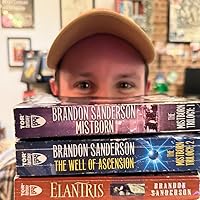
Read
March 12, 2023Not rating this one because I’m coming to realize literary fiction short stories just aren’t my thing (hence taking so long to complete).
I picked this up from the library pretty much entirely because I wanted to read “The Ones Who Walk Away From Omelas” by Ursula K. Le Guin, which did live up to its reputation. Some other standouts:
- “A Conversation with My Father” by Grace Paley (a very inventive way to tell a story within a story)
- “The Red Convertible” by Louise Erdrich (a fiction-as-metaphor that didn’t feel as overwrought as some (many tbh) do to me)
- “China” by Charles Johnson (a fascinating exploration of the way an older couple can still surprise each other and, in the process, come apart and maybe together again)
- “The Things They Carried” by Tim O’Brien (I’ve read this one before, and it such a great story device)
- “The American Embassy” by Chimamanda Ngozi Adichie (a compelling portrait of grief both personal and societal)
- “The Paper Menagerie” by Ken Liu (fantastical realism to tell a heartbreaking story of how children and their parents grapple with living lives as “others”)
A cool idea for a collection largely without theme with a number of more genre stories (sci-fi and horror, though the King short story falls kind of flat for me) that also loses a little only being organized by date and not say, themes or genre.
I picked this up from the library pretty much entirely because I wanted to read “The Ones Who Walk Away From Omelas” by Ursula K. Le Guin, which did live up to its reputation. Some other standouts:
- “A Conversation with My Father” by Grace Paley (a very inventive way to tell a story within a story)
- “The Red Convertible” by Louise Erdrich (a fiction-as-metaphor that didn’t feel as overwrought as some (many tbh) do to me)
- “China” by Charles Johnson (a fascinating exploration of the way an older couple can still surprise each other and, in the process, come apart and maybe together again)
- “The Things They Carried” by Tim O’Brien (I’ve read this one before, and it such a great story device)
- “The American Embassy” by Chimamanda Ngozi Adichie (a compelling portrait of grief both personal and societal)
- “The Paper Menagerie” by Ken Liu (fantastical realism to tell a heartbreaking story of how children and their parents grapple with living lives as “others”)
A cool idea for a collection largely without theme with a number of more genre stories (sci-fi and horror, though the King short story falls kind of flat for me) that also loses a little only being organized by date and not say, themes or genre.

Read
February 21, 2025So many great stories in this anthology! Here were my favorites:
The Ones Who Walk Away from Omelas by Ursula K Le Guin - TFW you realize your comfort comes at the exploitation of others
The Red Convertible by Louise Erdrich - A guy's brother has PTSD
The Things They Carried by Tim O'Brien - War is always personal.
The Hermit's Story by Rick Bass - Just a really beautiful meditation on nature and hope
A Temporary Matter by Jhumpa Lahiri - Gut. Punched.
The Penthouse by Andrew Holleran - How NYC, and gay subculture, has gentrified
The Paper Menagerie by Ken Liu - Heart. Broken. (2nd time reading this)
The Dune by Stephen King - Look, Stephen King really does write better sober.
The Great Silence by Ted Chiang - Chiang is one of the few geniuses of our time.
The Ones Who Walk Away from Omelas by Ursula K Le Guin - TFW you realize your comfort comes at the exploitation of others
The Red Convertible by Louise Erdrich - A guy's brother has PTSD
The Things They Carried by Tim O'Brien - War is always personal.
The Hermit's Story by Rick Bass - Just a really beautiful meditation on nature and hope
A Temporary Matter by Jhumpa Lahiri - Gut. Punched.
The Penthouse by Andrew Holleran - How NYC, and gay subculture, has gentrified
The Paper Menagerie by Ken Liu - Heart. Broken. (2nd time reading this)
The Dune by Stephen King - Look, Stephen King really does write better sober.
The Great Silence by Ted Chiang - Chiang is one of the few geniuses of our time.

February 11, 2024
I really enjoyed this anthology! In no particular order, my favorites were:
"The Ones Who Walk Away From Omegas" by Ursula K. Le Guin
"The Things They Carries" by Tim O'Brien
"The Twenty-Seventh Man" by Nathan Englander
"The Hermit's Story" by Rick Bass
"The Fix" by Percival Everett
"St. Lucy's Home for Girls Raised by Wolves" by Karen Russel
"The Paper Menagerie" by Ken Liu
"The Dune" by Stephen King
"The Ones Who Walk Away From Omegas" by Ursula K. Le Guin
"The Things They Carries" by Tim O'Brien
"The Twenty-Seventh Man" by Nathan Englander
"The Hermit's Story" by Rick Bass
"The Fix" by Percival Everett
"St. Lucy's Home for Girls Raised by Wolves" by Karen Russel
"The Paper Menagerie" by Ken Liu
"The Dune" by Stephen King

March 19, 2022
SIX WORD STORY: Introduced me to wonderful Percival Everett.
December 7, 2023
best short story collection i own

July 5, 2025
No Barthelme or Oates is, frankly, insane. And no Lorrie Moore.. I mean, come on. Really average collection with a handful of standouts.
June 23, 2024
A Treasure Trove of American Stories: A Modern Anthology Review - “Dive into the Heart of American Storytelling with John Freeman’s Curated Gems”
I recently had the joy of exploring The Penguin Book of the Modern American Short Story, a magnificent collection curated by John Freeman. Published by Penguin Press, this anthology is like a journey through the American literary landscape, showcasing the rich diversity of short stories from 1972 to 2019. It's a vibrant mix of voices, styles, and genres that offers a deep dive into the evolution of American storytelling.
A Carefully Curated Collection
John Freeman, a seasoned editor with experience at Granta, has handpicked 37 short stories that span nearly five decades. His expertise shines through in the selection, as each story not only stands on its own as a compelling read but also contributes to a broader narrative of what the American short story has become over the years. From the very first story, "The Lesson" by Toni Cade Bambara, to the last, "Anyone Can Do It" by Manuel Muñoz, this collection is a testament to the vast range of voices and experiences that define contemporary American literature.
Chronological Brilliance
The anthology is arranged chronologically, starting with stories from the 1970s and moving towards the present. This structure allows readers to witness the evolution of themes and styles over the years. The journey begins with Toni Cade Bambara’s "The Lesson" from 1972, a story that was entirely new to me, and yet it felt like a discovery of an old friend. The opening lines grabbed me immediately:
"Back in the days when everyone was old and stupid or young and foolish and me and Sugar were the only ones just right, this lady moved on our block with nappy hair and proper speech and no makeup."
This captivating start drew me into the world Bambara created, a world so vividly real and relatable.
Diverse Voices and Perspectives
Freeman’s selection highlights the incredible diversity within the American short story tradition. The anthology features works by renowned authors like Ursula K. Le Guin, with her unforgettable tale "The Ones Who Walk Away from Omelas," and Raymond Carver, known for his minimalist style. It also includes stories from voices that might be lesser-known to the broader audience but are equally powerful, like Grace Paley’s "A Conversation with My Father" and Sandra Cisneros’ poignant "Salvador Late or Early."
Each story in this collection offers a unique perspective, reflecting the multiplicity of experiences in America. The stories range from the intimate and personal to the fantastical and speculative, such as Stephen King’s "The Dune" and Ted Chiang’s "The Great Silence." These diverse genres and voices coalesce into a rich tapestry that mirrors the complexity of American life.
Unexpected Gems and Fresh Insights
One of the joys of reading this anthology was encountering stories I had not read before or seeing familiar stories in a new light. For instance, Alice Walker’s "The Flowers" and Jamaica Kincaid’s "Girl" are short yet profoundly impactful, revealing layers of meaning upon each reading. Freeman’s choice to include both celebrated and lesser-known works allows for a fresh perspective on what constitutes a great short story.
A Comparison to Indian Literary Gems
Reading this anthology reminded me of A Clutch of Indian Masterpieces, edited by David Davidar. Just as Davidar’s collection captures the essence of Indian short fiction, Freeman’s anthology encapsulates the spirit of modern American storytelling. Both collections are treasure troves that highlight the cultural and thematic richness of their respective literary landscapes. They serve as a bridge for readers, allowing them to explore diverse narratives from across the globe.
Conclusion
The Penguin Book of the Modern American Short Story is a must-read for anyone who loves short fiction. It offers a panoramic view of American literature, showcasing its evolution and the myriad voices that contribute to its vibrant landscape. John Freeman has crafted a collection that not only celebrates the art of the short story but also invites readers to explore and appreciate the depth and diversity of American storytelling.
This anthology is a gem for readers, writers, and educators alike, providing a wealth of inspiration and insight into the power of the short story. Whether you are a seasoned reader or new to American fiction, this collection is a delightful journey that promises to leave a lasting impression.
So, if you’re ready to embark on a literary adventure through modern American short stories, this book is the perfect guide. Happy reading!!!!!!!!!!!!!!!
I recently had the joy of exploring The Penguin Book of the Modern American Short Story, a magnificent collection curated by John Freeman. Published by Penguin Press, this anthology is like a journey through the American literary landscape, showcasing the rich diversity of short stories from 1972 to 2019. It's a vibrant mix of voices, styles, and genres that offers a deep dive into the evolution of American storytelling.
A Carefully Curated Collection
John Freeman, a seasoned editor with experience at Granta, has handpicked 37 short stories that span nearly five decades. His expertise shines through in the selection, as each story not only stands on its own as a compelling read but also contributes to a broader narrative of what the American short story has become over the years. From the very first story, "The Lesson" by Toni Cade Bambara, to the last, "Anyone Can Do It" by Manuel Muñoz, this collection is a testament to the vast range of voices and experiences that define contemporary American literature.
Chronological Brilliance
The anthology is arranged chronologically, starting with stories from the 1970s and moving towards the present. This structure allows readers to witness the evolution of themes and styles over the years. The journey begins with Toni Cade Bambara’s "The Lesson" from 1972, a story that was entirely new to me, and yet it felt like a discovery of an old friend. The opening lines grabbed me immediately:
"Back in the days when everyone was old and stupid or young and foolish and me and Sugar were the only ones just right, this lady moved on our block with nappy hair and proper speech and no makeup."
This captivating start drew me into the world Bambara created, a world so vividly real and relatable.
Diverse Voices and Perspectives
Freeman’s selection highlights the incredible diversity within the American short story tradition. The anthology features works by renowned authors like Ursula K. Le Guin, with her unforgettable tale "The Ones Who Walk Away from Omelas," and Raymond Carver, known for his minimalist style. It also includes stories from voices that might be lesser-known to the broader audience but are equally powerful, like Grace Paley’s "A Conversation with My Father" and Sandra Cisneros’ poignant "Salvador Late or Early."
Each story in this collection offers a unique perspective, reflecting the multiplicity of experiences in America. The stories range from the intimate and personal to the fantastical and speculative, such as Stephen King’s "The Dune" and Ted Chiang’s "The Great Silence." These diverse genres and voices coalesce into a rich tapestry that mirrors the complexity of American life.
Unexpected Gems and Fresh Insights
One of the joys of reading this anthology was encountering stories I had not read before or seeing familiar stories in a new light. For instance, Alice Walker’s "The Flowers" and Jamaica Kincaid’s "Girl" are short yet profoundly impactful, revealing layers of meaning upon each reading. Freeman’s choice to include both celebrated and lesser-known works allows for a fresh perspective on what constitutes a great short story.
A Comparison to Indian Literary Gems
Reading this anthology reminded me of A Clutch of Indian Masterpieces, edited by David Davidar. Just as Davidar’s collection captures the essence of Indian short fiction, Freeman’s anthology encapsulates the spirit of modern American storytelling. Both collections are treasure troves that highlight the cultural and thematic richness of their respective literary landscapes. They serve as a bridge for readers, allowing them to explore diverse narratives from across the globe.
Conclusion
The Penguin Book of the Modern American Short Story is a must-read for anyone who loves short fiction. It offers a panoramic view of American literature, showcasing its evolution and the myriad voices that contribute to its vibrant landscape. John Freeman has crafted a collection that not only celebrates the art of the short story but also invites readers to explore and appreciate the depth and diversity of American storytelling.
This anthology is a gem for readers, writers, and educators alike, providing a wealth of inspiration and insight into the power of the short story. Whether you are a seasoned reader or new to American fiction, this collection is a delightful journey that promises to leave a lasting impression.
So, if you’re ready to embark on a literary adventure through modern American short stories, this book is the perfect guide. Happy reading!!!!!!!!!!!!!!!

March 17, 2025
I'm glad Daniel made me read this book for our book discussion. The short story is my favorite form of storytelling. This 2021 anthology features some of the best stories from the last 50 years in all genres but including for the first time - science fiction, horror and fantasy. I felt nostalgic for young love after reading "Pet Milk" by Stuart Dybek. The casual violence of large families shocked me after reading "River of Names" by Dorothy Allison. Daniel also liked "Emergency" by Denis Johnson. Johnson's unique use of baby rabbits and snow storms stuck in my mind. After hearing online news about another young abuse victim, I wondered how Ursula K. Le Guin knew how true her fantasy story was when she wrote "The Ones Who Walk Away From The Omelas". "The Red Convertible" by Louise Erdich wowed me with her skill in crafting a story where every single word is vital to a heart-breaking end. "China" by Charles Johnson was a pure delight to read. His characters are so full of life, I feel I know them intimately. Talking with Daniel reminded me how wonderful and deep a story can be, even when it's tiny like Alice Walker's "The Flowers", a story about a young girl who stumbles across the remains of a lynching. A good short story not only entertains, it amazes me with new visions, ideas and wonder. How does this writer create this complete complex beautiful world using only words? It's magic.
Displaying 1 - 30 of 110 reviews