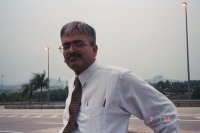
Dinesh C. Sharma is a New Delhi-based award-winning journalist and author with over thirty-five years’ of professional experience. He has written extensively on science and technology, climate change, health, environment and innovation for national and international media, including The Lancet and Wired. He has been Science Editor at Mail Today, and Managing Editor at India Science Wire and is currently the Jawaharlal Nehru Fellow (2020-2021). His book The The Story of India’s IT Revolution was awarded the Computer History Museum Book Prize in 2016. He has also been a visiting faculty at the Jawaharlal Nehru University, New Delhi and Ateneo de Manila University, Manila. Dinesh Sharma tweets at @dineshcsharma
Indian innovation ~not jugaad~ : 100 Innovations that transformed India
Author : Dinesh C. Sharma Published by : Roli Books
Thank you Roli books for a media copy of the book.
The author argues that , weIndians are great innovators , but the term “jugaad” seems to be thrown around ever too often regarding are greatest innovations. The term has attained some amount of respectability , thanks to Management gurus and Western experts. These people use “jugaad” to describe frugal and grassroots innovations in the Indian context. The author finds this foolish to compare innovation and jugaad. To quote the author “ (Jugaad) is a quick fix , a short term solution to overcome inefficiency in a system or product or shortcomings in infrastructure, and has harmful consequences for users. Jugaad connotes improvisation to fulfil certain immediate needs.” Jugaad’s depiction of cool, normalised-it mostly due to pop culture. The book covers the term ‘innovation’ in the broadest possible sense. From technology, business strategies to government policies, this book cove all.
The book is divided into 10 different chapters, the first one describing ‘most’ of the major revolutions are country has gone through in terms of innovation, emphasis on “most” , but more on that later. The remaining 9 chapters are divided based on different categories , like the first category (after the innovations) is Food,Water and Sanitation, which covers the Swaraj tractor , Sulabh toilets ,mid-day meals etc (the Swacch Bharat mission could have been mentioned here , but was excluded) , the forth chapter being about Transport and mobility , which covers everything from the Delhi Metro to the Maruti 800 . Each innovation has been dealt with as a stand alone narrative and not necessarily be read after completing the previous one. Each innovation mentioned contains enough context, origin and core features of the innovation, as well as its dissemination, impact and the key people behind it. Most narratives are brief .
Of the 100 odd innovations mentioned , all are given justice to, with the due credits to the innovators and proper citations after each chapter provided. There are many unsung heroes who get their due in the book.
I am well aware that 100 is a very small number to cover all the brilliant innovations of our fellow countrymen, but their are some MAJOR ONES the author seems to have skipped , like in the innovations sections , the digital revolution should have been mentioned. And as mentioned before , the Swacch Bharat Mission and the IHHL (Individual Household Latrines) fail to get a mention. I would have forgiven non inclusion of these but when you also happen to have space “Chota Recharge” , how can one NOT MENTION JIO? In fact barely any innovation post 2014 seems to have been mentioned apart from UPI (which is brilliant and a life saving invention(perhaps literally)) , i do not know whether that is because of political reasons or perhaps the author wanted to avoid recency bias(which seems like a good enough reason).
In the Generic Drugs section, the author mentions reverse engineering process for making cheaper medicines. Isn’t that too technically “jugaad” as per the author’s own definition mentioned previously?
All in all , i would say an interesting though incomplete list of innovations. Perhaps 100 is too small a number. But i will not stop anyone from picking the book up , as I genuinely believe the author has done a good job and given justice to each innovation mentioned.
Indian Innovation by Dinesh C Sharma, Ph D is a must-read. It covers the 100 most significant innovations cutting across various sectors in the post-independence era from Green Revolution to the Swaraj tractor to ICDS to Jaipur foot to Maruti 800 to Simputer to Nutan to Indelible ink for voting to IITs to Lijat papad to the Seed bank to many more.
What I really admire about the book is that each Innovation is like a beautiful snapshot that defines the context, the origin of the idea, the core feature of the Innovation and most importantly the key people (unsung heroes behind this - Innovators and bureaucrats who were behind success) with the references after each chapter. Every innovation nudges me to think and delve more into that reading. I fell these innovation stories in grassroots, governance, and all sectors must be told to students
Few questions and pointers to nudge you to read this book?
- Do you know the triumvirate of White Revolution - Tribhuvandas Patel (Gandhian), Verghese Kurien(we all know), Harichand Dalaya(Techno mind) and their role? - Do you know Narendra K Patni - The most important contributor to the IT revolution? - Are you aware of the innovations that CSIR and its allied research units gave to India? - One example - Designing of the Swaraj tractor can be a case study given to Engineers - Do you know Tarabai Modak and Anutai Wagh? - 2 teachers and their Balwadi movement - Do you know that a PIL by Colin Gonsalves, Kavita Srivastava and Jean Dreze paved to Right to Food? - Guess the name of the professor who was behind Sulabh toilets? - The Virologist Dr T. Jacob from CMC's role behind Polio eradication - How McDonald's inspired Dr Govindappa to start Aravind Eye Care? - Who was behind STD Revolution in India? - Do you know the story and downfall of Simputer? - Credits go to Dr Mashelkar for saving our Turmeric, neem and basmati from Pharma patents - Dr Salimuzzaman Siddiqui- the organic chemist behind Indelible ink used in voting - Story of Dr Yashpal on how he made science reach the masses...
This book caught my eye in a book cafe in Pondicherry. It’s a nice collection of innovations that helped India rise to its current state along with key people involved in ideation and execution. I could see a pattern of going for high volume, high quality, and affordable cost.
Good collection of various ideas that were implemented in India. I am sure a lot of them will not be even known to this generation as many of them are taken for granted now. An example will be Pay &use toilets by se sulabh shauchalay