Jump to ratings and reviews
Rate this book

Solo

Rate this book
With an imaginative audacity and lyrical brilliance that puts him in the company of David Mitchell and Alexander Hemon, Rana Dasgupta paints a portrait of a century through the story of a hundred-year-old blind Bulgarian man in a first novel that announces the arrival of an exhilarating new voice in fiction.
In the first movement of Solo we meet Ulrich, the son of a railroad engineer, who has two great passions - the violin and chemistry. Denied the first by his father, he leaves for the Berlin of Einstein and Fritz Haber to study the latter. His studies are cut short when his father's fortune evaporates, and he must return to Sofia to look after his parents. He never leaves Bulgaria again. Except in his daydreams; and it is those dreams we enter in the volatile second half of the book. In a radical leap from past to present, from life lived to life imagined, Dasgupta follows Ulrich's fantasy children, born of communism but making their way into a post-communist world of celebrity and violence.
Intertwining science and heartbreak, the old world and the new, the real and imagined, Solo is a virtuoso work.

357 pages, Hardcover

First published January 1, 2009

82 people are currently reading
1798 people want to read

About the author

Rana Dasgupta

14 books148 followers
Rana Dasgupta is a British-Indian writer. He grew up in Cambridge, England and studied at Balliol College, Oxford, the Conservatoire Darius Milhaud in Aix-en-Provence, and the University of Wisconsin–Madison. He lives in Delhi, India.

His first novel, Tokyo Cancelled (2005), was an examination of the forces and experiences of globalization. Billed as a modern-day Canterbury Tales, thirteen passengers stuck overnight in an airport tell thirteen stories from different cities in the world, stories that resemble contemporary fairytales, mythic and surreal. The tales add up to a broad exploration of 21st century forms of life, which includes billionaires, film stars, migrant labourers, illegal immigrants and sailors. [1] Tokyo Cancelled was shortlisted for the 2005 John Llewellyn Rhys Prize.

Dasgupta's second novel, Solo (2009) is an epic tale of the twentieth and twenty-first centuries told from the perspective of a one hundred-year old Bulgarian man. Having achieved little in his twentieth-century life, he settles into a long and prophetic daydream of the twenty-first century, where all the ideological experiments of the old century are over, and a collection of startling characters - demons and angels - live a life beyond utopia.

Ratings & Reviews

What do you think?
Rate this book

Friends & Following

Create a free account to discover what your friends think of this book!

Community Reviews

5 stars
299 (20%)
4 stars
535 (37%)
3 stars
418 (29%)
2 stars
141 (9%)
1 star
40 (2%)
Displaying 1 - 30 of 211 reviews
Profile Image for Richard Derus.
4,197 reviews2,267 followers
March 16, 2014
Rating: 5* of five

My review has moved to my blog because of the data deletion problem here on Goodreads.

This could very easily be one of the few novels I'll ever re-read. Ulrich stays with me, years later.
Profile Image for Lit Bug (Foram).
160 reviews497 followers
October 25, 2013
New Review:

Before the man lost his sight, he read this story in a magazine: a group of explorers came upon a community of parrots speaking the language of a society that had been wiped out in a recent catastrophe. Astonished by their discovery, they put the parrots in cages and sent them home so that linguists could record what remained of the lost language. But the parrots, already traumatized by the devastation they had recently witnessed, died on the way.


The man feels a great fraternity with those birds. He feels he carries, like them, a shredded inheritance, and he is too concussed to pass anything on.


How does a broken man pass on his broken, fragile legacy? What adverse times has he witnessed, that torment him so? As he strives to unravel the century of life he has seen, how does he relate that massive history in tune with his own tale? Or is the tale not solely his own?

Rana Dasgupta said in an interview: "I have lived in the US and India for a long time and they are such big countries and so obsessed with themselves and think they are the whole world. I found it interesting to write about a small country."

“It’s had fascism, it’s had communism, it’s had empire – and I wanted to look at the effect it has on an individual’s life when their country is ripped apart and they must to put themselves back together for a new regime.”


Woven through the narrative is the turbulent history of Bulgaria and its imminent impact on its people – the Crimean wars, the internal struggles between the Communist government and capitalist factions, the antagonism with Germany when ‘the Fatherland’ started murdering the Jews at the height of the World Wars. It is the story of Bulgaria as it is forced to suddenly discard the old and come to terms with a new world order; a world where overnight loyalties changed, and with it did the fortunes of many. A world where now even language become paralyzed, unable to keep its meanings stable in that implosion of culture; where the patriot suddenly became a traitor, and a musician a vagrant. The country and the people become entwined with each other’s fates, and thus begins the journey of Ulrich in a turbulent period of Bulgarian history.

A history that not only brought economic ruin for Ulrich, but also drew a chasm between the older and the newer generation, exemplified by Ulrich and his father, the former wishing to usher in a new time, untouched by brutality, giving his life to old-world music, the latter clutching at the old world to hold it together by discarding the old and embracing the new world-order. It is a story of idealism and disillusionment, of a solo movement in music and in life, of an existence far removed from the rest of humanity by its willing and unwilling breaks with Time and Circumstances; of the unseen disturbances that goes on beneath the soothing, calm surfaces.

We follow Ulrich as he discards his first love, Music at his father’s disapproval, replacing it with a love for Chemistry, that “struck him that the two have this thing in common: that an infinite range of expressions can be generated from a finite number of elements”, his return to a civil-war torn Sofia when his family is too broke to fund his studies in Berlin, the execution of his closest revolutionary friend Boris and his wife’s desertion of him.

We witness the disintegration of a whole civilization, a whole nation, an entire city known for its cultural fecundity, a whole family, an entire life; their destinies interwoven with the threads of music, chemistry and bloodshed. A hundred years’ history.

But then, Ulrich begins day-dreaming in the second movement of the novel, whose first movement was yet only Chemistry, the external world of Ulrich, and of Bulgaria. But Ulrich is no longer bound by the past. He is free to imagine the world that might have been, if he had a new century to live in. A life that might have been, but which never happened. Reality and day-dreams, one merging into the other, so you cannot know the difference.

In a sense, it is as much an anti-Communist novel as Animal Farm – the pictures of the physical and moral destruction of everything Sofia represented is still vivid, as the novel overflows with corruption, violence and persecution for as little as a lone voice of dissent or possessing a piece of non-Bulgarian, and therefore, bourgeoisie music. But then, it is subtly critical of Capitalism as well.

Music and Science, considered some of the hallmarks of human advancement, are viewed through this spectacle of socio-political chaos; or rather, the disintegration of civilization is silently observed by what it does to music and science.

Dasgupta said: “I was very attracted to Bulgaria through its music. The country has an amazing musical tradition. There is a vibrant folk music, but, having been part of the Ottoman Empire, there has also been Turkish, Arabic and Gypsy music. And the story of how the Communist state banned all this other music, banned jazz, and created an enormous silence around music – all this is a very Bulgarian story, and it’s a big part of the story I wanted to tell.”

Similarly, for science as a creative field pursued for the betterment of life, Dasgupta said, “People followed Einstein’s theories and the newspapers explained those theories, and there was this connection between public culture and science. Then [when the Nazis began to persecute Jewish scientists], this scene was completely destroyed. I mean it was an amazing handover of Europe to America.”

The disillusionment with science is complete, for Ulrich in the wake of Hiroshima after the burning light of progress has shown its dangerous side: “What happened to those beautiful scientists when they got to America?”, he wonders.

The second movement captures life in the 21st century Georgia – what would it be like for Boris the musician, and Ulrich to have had their youth in a world so different from the one they had lived? Ulrich’s daydreams takes us to the post-Twin Towers-collapse Georgia where Khatuna rises abruptly in her career as a business-woman when she catches the attention of Kakha, a millionaire, while her brother Irakli writes poetry and fiercely abhors the gangster’s company his sister enjoys. Where Boris signs contracts with Universal Studios and gives concerts in New York. Where Ulrich no longer falls from aristocracy to poverty. Is life any better? Have we really made our lives better, with all the money and smart businesses? With illegal crime replacing the atrocities of an approved monarchy, has the world moved on to become a better place?

It is a dreamy, tragic, melancholic and strange story wound around music and chemistry, spanning the whole twentieth century and a little of twenty-first century. A tragedy so subtle, it leaves no traces of its wounds. There are no scars to show; the wounds are concealed beneath. And there's nothing so overwhelming as an underscored tragedy.

Where has humanity failed itself? From evolving into a harmonic orchestra, has it been reduced to every artist playing a solo, lonely and consumed by the self?

Told from the sightless eyes of the hundred year old Ulrich, it is a haunting story of the ultimate failure of humanity in saving itself. Not from an alien attack, but from its own implosion. For every genius it brings forth, it thwarts back a few more. For every melody it sings, it deafens a life with its cries. For every new invention it prides itself on, it marks its own body with destruction. For every publicized glittering success, it withholds a million failures that paid the price.

It is not Ulrich we see in the two movements, but the possibilities that could have been. And the impossibility of true peace. Wherever Ulrich might have been, he would be denied harmony. He is destined to play solo. And so are we.

That was when the ones who smiled,
Were the dead, glad to be at rest.
Profile Image for Kunal Sen.
Author 1 book44 followers
January 9, 2012
‘Solo’ is a novel by Rana Dasgupta that is actually two novels- movement one and movement two, the life and the daydreams, the reality and the illusion, or maybe the illusion and the reality. Somewhere for me, ‘Solo’ combined the lyrical existentialism from the cobbled streets of Kafka's Prague with the detached, disjointed sweep of Tulse Luper’s suitcases.

There are three things that, I think, are striking about it:

1) THE CONCEPT

The first thing has to do with the conception of the novel, its intent, not because it should decide why the book is necessarily better or worse because of it, but because it is one of the reasons why I had recommended it for discussion.

I think, it was in the South Asian literature festival, where one remembers Rana saying that he did not believe in the old adage: ‘Write what you know’. He said that he considered that baggage limiting to his imagination. And thus he took on the novel, almost as a personal challenge. He chose Bulgaria simply because it is considered 'banal' and probably one of the least ‘attractive’ European countries and a place that no body would want to write about. He also chose Bulgaria, because he was drawn to its ravaged history and music. That he manages to create an evocative world fraught with characters that resonate and live, simply out of this self-imposed challenged, is a fascinating tale in theory. And while I vehemently disagree with his point of view (I still think the greatest writing comes from inside-out), I have to respect it and also respect that he backed his theory with not arguments, but work.

2) THE NARRATIVE

The second and least important is that it is a monument to ordinariness. Nothing much is ever accomplished by Ulrich, in Bulgaria or anywhere. Often many lives pass his, tangentially touching him but not quite dwelling with him. As a result, the novel’s form (rudderless in essence but labored and structured in execution, wherein it is basically housing two novels) becomes relevant as it allows for the more fanciful reveries of Ulrich to contrast with the humdrum vestiges of his hundred year old life. The novel exemplifies how each life, important or unimportant, is worth telling and chronicling.

3) THE FORM AND THE ESSENCE

And yet, it is not just a novel about celebrating ‘the form’ because all along the cerebral odyssey, there is a residual, yet paradoxically overarching core that retains its ability to disarm the reader, with snippets of unexpected melancholy. Take for example, Ulrich's memories of his mother's smile turning orange in the dawn, a contrast to her 'philharmonic sadness' described earlier on. Suddenly, that smile, in that sentence, that dawn, that one, isolated moment of his mother’s happiness, becomes more affecting and soulful than any sadness that could’ve been depicted, as is.

Throughout the novel, the author’s use of the language is unconventional. He eschews the maudlin in favour of a science-journal like approach to pain, as though the narrative itself is one of Ulrich’s chemistry experiments or lab-rats, bottled in slipstream vignettes and what not. Often, when confronted by a plot-point where normally one would expect to ecnounter an emotional response, Rana primarily works around it, not because his voice is disdainful of showing emotion but it is as though his characters are too affected by it, too emotionally-full to even talk about it viscerally, honestly. And so when Ulrich’s father throws his violin into the fire, Ulrich immediately starts talking about the different colours of the sparks, the copper of the G-string, the varnish and the wood, as the violin burns. The fact that he would never play the violin again, after this incident, is mentioned only hurriedly in other places in the book. This ‘tone’ of the novel is one of its biggest strengths, as though Ulrich is an outsider looking in on his own life, not heuristically, but voyeuristically, from a peephole.

As to reservations and minor irks, one could say that the novel, in part, seems to sound unmistakably like a bunch of loosely-connected vignettes (it does even become an itemised list at times) than a novel but then again, in an exercise of memory and existence, that is probably as good a writing technique as any other.

My rating: 5/5.
Profile Image for Tanuj Solanki.
Author 6 books447 followers
December 18, 2015
A Miserable Pretension

I picked up this novel because of Anis Shivani's glowing recommendation on an article in the American Book Review. Anis Shivani, for those who don't know, is an against-the-grain literary critic and a lit-mag-represented poet and probably some other things, who endeared me some time back with an article bashing the contemporary American short story. That even in that article on short stories his conclusions ran astray and he ended up making a demand for pointless novels a la Haruki Murakami must have guarded me against the fluidity of his views. Nevertheless, I'd nothing against pointless novels or Murakami, and because Shivani was now recommending Solo as the unparalleled manifestation of a new kind of 21st century novel, a post-ideological one perhaps, the kind that makes him salivate, I decided to dig in, mostly because of curiosity. Of course, the fact that Rana Dasgupta has Indian connections and an Indian name must have pushed me further.

The novel began earnestly, quickly dispensing, in a series of declarative sentences, all that needed to be known about the central character Ulrich. Ulrich is in Bulgaria; he is 100+, which means he has gone through a lot; and we are going to 'remember' his life.

This idea of a man (usually an old man) looking back on a long life ravaged by political movements and personal strife isn't really new. Midnight's Children is about that, though Saleem Sinai protagonist is only 30+ when he gets into his exuberant first person telling. Here Dasgupta chooses a third person voice.

The first error Dasgupta commits is to present the flurry of memories not as a binding narrative in itself, but as a scenopedia of episodic memories, a scenopedia that harks back to the protagonist's current life of decrepitude every now and then. The problem is the evident cleavages of the whole thing. The writing is just not good enough to maintain the hazy memory-stream vision. It is too formulaic, too clear; it is pure telling, and although at times it is laced with sentences of Marquez-like poetry, those moments are few and far between. This and this and this, and that. One feels indifferent to and unaware of Bulgaria's history, nor does one feel the gravity of events in Ulrich's youth, nor does one feel any relevance in being told what is happening in Ulrich's life today. The personal and the historical don't gel like in other great novels; the drama is very often very predictable; the temporal interplay is there just for the sake of it and serves no purpose at all. Now, of course, Shivani will say that that is the point of a pointless novel. To which I would say, Bah!

When communism arrives in post-War Bulgaria, the novel assumes a solemnity that makes the reader believe that it will save itself now. Some interesting events do take place. But Dasgupta, in his immaturity, carries certain characters too long. Ulrich's mother's character is a total burden in these parts, and one wonders why the silly interactions with her had to take so much space. And then one inches toward this conclusion: maybe Dasgupta didn't have enough confidence to give us 100 pages of a truly made-lonely character. The guy probably just doesn't have the talent.

And so part 1 ends not very long after Ulrich's mother dies, and the reader is a bit tired after wading through a hundred years of narration compressed in 180-odd pages with paragraphs that seldom go beyond the complexity of 200 words, and rely so heavily on expository dialogues that it almost makes the reader wonder if this is a novel of 17th century written in the early 18th.

Part 2 begins, and the 'experiment' or 'leap' or 'novelistic gamble' that many have called it begins to unfold. Ulrich's daydreams of contemporary youngsters from Georgia and Bulgaria reveal themselves as stories. It appears, again, for a short while, that the novel will redeem itself, but it doesn't. The writing is even worse than in the first part. The connections with Ulrich's real life seem forced at most points. And the entire project of an old man reviving himself through daydreams of youngsters becomes a total farce. A farce that is unintended, and hence a supreme failure. Dasgupta gives us nothing to even think of him as a writer to look forward to. Pages after pages pass by with no substantial kick to the already bland narrative, no linguistic delight, no technical innovation, no decent imagery -- nothing! The novel hurtles along to end itself, repeatedly invoking tropes of sex, crime, drugs, machismo, music, music industry, poetry, for the sole reason to be understood as a grave novel. As if just that forced gravity would make it good. The characters are hurriedly sketched, there are very few moments of any poignancy. The novel doesn't unfold, it collapses unto itself, and while critics have called Dasgupta an imaginative writer, I would like to say that his imagination fails miserably. In fact imagination is so absent from this work...it is only the effects of imagination that is attempted here.

Solo is literary dregs. It hides behind its obvious blurb-happy effects, a total failure of talent, and a total devaluation of the rigour that goes into a wonderful novel. It's criticism across the world has tended to be favorable, and that is shocking because it is not very difficult to see how bad it is. Its reception makes one a pessimist.

About its post 20th century new novel credentials

Solo is decidedly anti-ideological, placing a value to even individual failures that are well earned. Its poetic flourish of calling the living the daydreams of the dead is fresh. Its aside on the value of dreams, of life being bigger than what is lived, are also refreshing in some ways. In other words, when it sticks to what it wants to say, it is good. And perhaps some of that messaging is required. I think an equitable diminishing of both communism and capitalsim, as is evinced here, is a good thing. But alas, there is too much gibberish packed in, too much 'desire to be a complex work of art'. Its credentials to be the new novel are seriously damaged by how it has come out to be. Someone else will write a better Solo.
Profile Image for Tony.
1,032 reviews1,910 followers
January 23, 2012
The rest room in the railway station is out of order, and has been for decades. Ah, but there is a wall nearby and men wander over. They stand there, adding their own vignettes to Bulgarian history, through Fascist, Communist and Gangsta times. The collective wafts upwards, to a spare apartment, where Ulrich, though blind now and nearing 100, sees and remembers it all.

Solo is Art. It is what a novel can be.

Broken into two 'Movements', the first part of the book looks back on Ulrich's life: Music, in the form of a violin that burns in different hues in his father's fireplace; Chemistry, like the Curies' radium or Einstein's math, which could save a life or destroy it all; Love, his Clara Blum, left in Berlin, where, for her, he would assume there would be no escape.

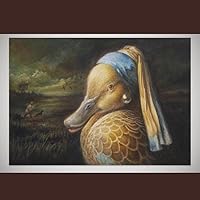
The second Movement is impressionistic Jazz. Look at that cover! From Ulrich's perch, birds fly. People, themes, history itself are all reprised, but in different, sometimes discordant themes. When he was a boy, Ulrich's mother would carry magnesium wire for spelunking adventures. He'd pirate some for his own amusement. He loved the white brilliance that left a black hole in his vision when he looked away, and the smoke that ribboned cooly from the ardor. But two birds flew, to Japanese cities to end a war. Now, in his blindness, his imagination has become more vivid. Two infernal flashes, immense shadows clutching for an instant at the earth, and survivors stumbling in the dust, their retinas burned.

Dasgupta has a purchase on both language and memory. And he is inventive. The development of character, however, and maybe even the exploration of politics, remained superficial at the expense of the art. It was well worth the exchange.
Profile Image for emre.
432 reviews336 followers
April 27, 2022
iki büyük tutkusunu da -müzik ve kimya- aile ve devlet eliyle yaşayamayan, savaşlar ve '-izm'lerle yıkılıp yıkılıp yeniden kurulan dünyanın bir türlü parçası olamayan, onu seyretmekle, hatta sonunda gözlerinden de olduğu için "her şey bambaşka olabilirdi"yi yalnızca hayallerinde yaşatmakla yetinen ulrich'in acı-tatlı hikâyesini sevdim. ikinci bölümü okurken bir süre, olmasa da solo'nun iyi bir kitap olacağını, yazarın bize "bakın ne kadar yaratıcıyım" demek için yazdığını düşündüm. fakat bölümün son öyküsünde ulrich'in anıları ve hayalleri, hangisi gerçekti denebilecek biçimde öyle iyi düğümlendi ki hemmen tükürdüğümü yaladım. :D

bulgaristan talihsizlik ve yanlış seçimler konusunda bize ürpertici biçimde benzeyen bir komşumuz olduğu için zaman zaman okumak çok iç daraltıcıydı bu arada. bu yüzden biraz neşeli, umutlu bir şeyler okumak istiyorum solo'nun ardından. beril eyüboğlu'nun ustalıklı çevirisine de değinmeden edemeyeceğim, ismine çok aşina olduğum bir çevirmen değildi, çevirilerini takip etme kararı aldım.
Profile Image for Jill.
Author 2 books2,059 followers
January 6, 2011
Despite the title SOLO, this is a book that focuses on duality: reality versus daydreams, science versus music, communism versus oligarchy, success versus failure. It’s an audacious book, a highly imaginative one, and certainly an enigmatic one.

Given its duality, it’s no surprise that I’m of two minds about it: in many places, I admired SOLO more than I loved it. Characters are often sacrificed to themes, yet often, the themes do become transcendent.

SOLO is divided into two movements. In the first movement we meet Ulrich, an everyman, a blinded centurion who has lived his life in politically unstable Sofia, Bulgaria. As he combs through his life, his memories are mostly linear: he ruminates about his friend Boris who fell victim to anti-communist reprisals, his mother who was exiled to a labor camp, and his own spotted career as the handpicked factory administrator of an overly ambitious five-year plan. For the most part, he has lived his life on a false note, subjugating his passionate love of music for the pursuit of his chosen work in chemistry.

It is the experimentation of chemistry that causes so much heartache, including his blinding with acid. Ulrich’s real chemistry is with music, not with science. In the second movement, Daydreams, there is a propulsive energy that is missing earlier on as Ulrich births a world of new characters and situations.

His best friend Boris, for example, is transformed from a murdered would-be-musician to a Bulgarian prodigy, discovered by Plastic – an American music producer. The poetic Irakli and his highly ambitious and magnificently beautiful sister Khatuna likely morph from qualities within Ulrich; like him, they survive a rough transition from communism and a hard-drinking mother. The millennial setting and the thrillerish pace are at sharp contrast with the first movement.

The brilliance of the book can be found in the way that Mr. Dasgupta weaves and reinvents characters, motifs, and themes in a subtle way. More than once, I stopped and thought, “This rings a bell”, only to realize that it had appeared in a different form earlier on in the book.

There is definitely political undertones – or overtones – throughout, sometimes used seamlessly and at other times, a little jarringly. Bulgaria under communism in the first movement is contrasted with the imagined exploration of what happens when a nation’s economy is turned over to a wealthy gangsta oligarch; it’s no longer about “the people”, it’s about personal interest only. Both societal models are shown to be wanting.

Yet there is beauty, too, as Ulrich muses, “Life happens in a certain time. But there is a great surplus left over, and where will we stow it but in our dreams?” And a little later: “When I die they will put me under the ground, and I will lie with an eternity of dreamers, breeding visions that will flicker on the surface – and the children of my daydreams will roam free.” Life and daydreams, Mr. Dasgupta suggests, are fluid, one harmoniously leading from the other. And in communicating that thought, he hits the right note. (3.5)
Profile Image for Samidha; समिधा.
759 reviews
December 2, 2016
This summer has been a blessing. I have read such amazing books that are actually going to stay with me for life.
One such book is Solo. Initially when I started it I thought it would be another politically-forward book and through politics it'll talk about life but I was so wrong.
Solo is divided into two parts. This man, Ulrich is almost ninety when he decides that he still has a lot to give to the world, that his legacy needs to be out there.
The first part of the book is talking about his own self, parents and the choices that he made that define him today.

The second part, which follows the lives of three other people, is the part that absolutely touched my heart.
Solo is so well written that I had to literally flag every page and underline ever quote.
The beauty of Solo is that the lines that he uses are so specific to the context that you can't use them in any other way.
I have read another one of Rana Dasgupta's books and I liked that one too, but there was something about Solo that I admire in very few books. I am definitely going to re read this again in a couple of months.
A beautiful mirage of music,politics, love, decisions, life and familial relationships. This is everything one needs to read about.
Profile Image for Metodi Markov.
1,729 reviews443 followers
December 17, 2025
Дасгупта е живял едва една година в България, но успява да осмисли и предаде в този роман България и българите по-добре от повечето български автори!

Препоръчвам!
Profile Image for Parikhit.
196 reviews
January 16, 2012
Can dreams and reality ever be combined to create a rich work of literature? Absolutely, for Rana Dasgupta does that and beautiful is the amalgamation. 'Solo' is a masterpiece, in my opinion. The effect can be delusional as it becomes hard to distinguish between dreams and reality. But the book isn't just a cryptic take on merging existence with hallucination; the book is uncannily identifiable.

Equally retrospective and introspective, Ulrich narrates his hundred year life-all that was and could have been. Born in Bulgaria and destined to never leave the country Ulrich reflects back upon his ‘unsuccessful’ and ‘rudderless’ life. But is there truly a definition for what separates a successful life from one without any hint of success? 'Solo' is the biography of an ordinary person under extraordinary circumstances. Ulrich’s life is much like the Bulgarian state of affairs-crumbling and dwindling happiness. His family is reduced to a piteous condition in war-torn Bulgaria, he lets go his passion for music and chemistry, his wife and son abandon him, and he is, over decades, reduced to a blind man. That is the first part. In the second part, Ulrich’s daydreams are portrayed; they seem independent stories but are soon threaded together as indispensable elements of the same story. The dreams seem so vivid and real that reality feels dreamy in the second part. His dreams catapult Ulrich to the valley of success if success were to be defined by the standards we know of. Ulrich isn't the poster of achievement or failure; he represents us, our dreams and reality.

Rana Dasgupta is a wizard of strange and beautiful description. He abruptly closes those moments of impending rush of emotions but creates a void for the reader to fill. Ulrich’s changing relationship with his mother was what touched me the most and so did the reappearance of Ulrich’s love. Albert Einstein is mentioned in the book and strangely makes his presence felt throughout-appalling, shocking yet truthful.

‘Solo’ would be one of the best books I’ve read recently. It has been days with the closure of this book yet Ulrich refuses to disappear from my thoughts.
Profile Image for Sve.
616 reviews189 followers
December 17, 2010
Rana Dasgupta says in an interview : "I have lived in the US and India for a long time and they are such big countries and so obsessed with themselves and think they are the whole world. I found it interesting to write about a small country."
The book tells a story of a 100-year old Bulgarian. It was published in Bulgarian by "Janet-45" and has a marvellous tranlation.
I am too much connected to this book already to comment extensively, just want to say it is a brave and exciting literary experiment.
Hope more Bulgarians read it and share how they feel...
And Rana Dasgupta is an author to definitely keep an eye on in future :)
Added on 10 May: Here is one review atempt in Bulgarian: http://azcheta.com/index.php?option=c...
15 reviews
April 13, 2009
Solo

Painting the surreal landscape of love, relationshsips, society, bonds, politics comes naturally to Rana. His imagination creeps slowly and steadily binding the reader's thoughts and taking them on this experience that leaves them at the end of the ride either drained or mesmerised or floating.

Rana is an artist at work, his language flows, "On hot days, the smells become overpowering, and rain comes as a relief, washing everything away. The blind man sits by the window when the rain is heavy and he can hear the different patters of near and far: the silky spray in the trees, the heavy drumming on plastic water tanks, the hard scatter of roads and pavements, the different metallic pitches of car roofs and drain covers, the baritone trilling of tarpaulin, the sticky overflow of mud, the concentrated gushing of drainpipes ?and, for a moment, the landscape springs forth, and he is reminded of how it is to see."

"He raised his violin and played the things of sixty minutes. The colours, the thought. The uncippled nails, the oval pool of vision. the time, the need, and the sounds that break through from beyond. The book on the fence post. The other person drawing close. The normal emotions, the thing-at-hand, the body's suck and pump.
He did it in a couple of moments, which was another part of the feat"

His language dances with a range of ideas, like a butterfly flirting one moment and suddenly sucking at the flower the next moment drawing out a unique flavour and spilling the atmoshpere with a strange perfume.

where the real ends and where the surreal begins happens so easily that one keeps asking, how will this story end? where will this story take me? I used to feel that with fairy tales. They had overpowering and overwhelming strenghts and great imagination and Rana is most times a fairytale writer.

Solo is like that too. Its a journey that starts with the rich telling of the story of science, Bulgarian history, its society and politics through the dreams and memories of Ulrich -the failed musician turned chemist who somehow could never find his place in the world order.


I loved the first half of the book. the second half made me jerk out of comfort and sit up to keep a watch out for the surreal taking over the real and then it ends in a strange wisdom as mystical as life and its mysteries perhaps?

I thiink the dream that ulrich sees in the second half is pivotal to the story's narrative. I would love to discuss this with Rana and figure out more.

An amazing book but only for those who are willing to shift from the mundane to the strangeness of dreams and the deja vu they bring each time they recur.
Profile Image for Lowrha.
9 reviews6 followers
February 22, 2011
I saw Rana Dasgupta speak at the launch of Solo in NYC at 192 Books; his word choice is as impeccable in speech as it is in writing. Solo is a mystifying book I’ll need to revisit.

I’ll admit it—when I arrived at the second half of the book, I didn’t understand that I was reading Ulrich’s daydreams. I saw the scenes unfolding in a fantastic and far-fetched alternate dimension. As the story of Boris, Irakli, and Khatuna blooms and wilts, and increasingly apparent symbols from Ulrich’s life bubble to the surface, I grasped it better.

Still, the second half never transported me the way the first did. I enjoyed, however, his daring treatment and transcendence of an abstract but simple concept that weaves its way through the lives of Ulrich, those who lived only in his imagination, and one who existed in the same world as the rest of us.

The strangest of the passages gave me the sense I was reading ideas that came just as puzzling to Dasgupta when he wrote them as they did to me when I read them. In fact, he may have said something to that effect at the reading. Déjà vu blended with nonsensicality reminds me of when I wake up and write down the craziest of my nighttime dreams.
Profile Image for Ahtims.
1,674 reviews124 followers
January 30, 2012
This was an incredible read - quite an unusual one for my tastes, but I enjoyed reading this book and conjecturing about it. This book has a central character, Ulrich, who is a blind old man, maybe well into his nineties when the book starts. In Part 1 of the book he lives alone, is poor and depends upon his kind neighbours for food and other material things. He introspects a lot, thinks a lot, and through his thoughts and actions we come to know of his life starting from his childhood - a comfortable one till his father became invalid and later died. He loves music, but cannot pursue with it, loves chemistry and has hopes of winning the Nobel prize, but those too are shattered. He loses his lover to freak circumstances, loses his son to his divorced wife; inspite of all the setbacks, he is not disappointed, or he tries to live with his disappointments. He takes care of his old mother, leads an ordinary life, and has a rich inner life after he loses his eyesight. Part 2 deals with various characters who are bound together at the end of the book, including Ulrich who makes brief appearances. I understood part 2 much less than part 1, nevertheless it was a satisfying read.
Profile Image for ΠανωςΚ.
369 reviews70 followers
November 18, 2016
Ευρηματικό αλλά άνισο: το πρώτο μέρος είναι σπουδαίο, το δεύτερο έχει κάποιες πολύ κακές στιγμές. Χαίρεσαι να το διαβάζεις, αλλά καμιά φορά σκέφτεσαι ότι η σύνδεση του δεύτερου μέρους με το πρώτο είναι κάπως βεβιασμένη, πρόχειρη και ετσιθελική.
Ετυχε να το διαβάζω (καθώς τελείωνα αυτό, άρχιζα το άλλο) παράλληλα (κακό συνήθειο, αλλά μού συμβαίνει) με το ολοκαίνουργιο του Μάρα "Ο τσάρος της αγάπης και της τέκνο", και μου φάνηκε ότι ταιριάζουν ως έναν βαθμό, κυρίως σε ό,τι αφορά τη διάψευση των προσδοκιών, προσωπικών και συλλογικών, μέσα από την άνοδο αλλά και την πτώση των κομμουνιστικών καθεστώτων.
Profile Image for Katrina.
17 reviews
April 23, 2022
I thought this book would be about parrots
Profile Image for Kirsty.
2,792 reviews190 followers
February 7, 2018
I chose to read Rana Dasgupta's novel Solo for the Bulgaria leg of my Around the World in 80 Books challenge. I went to Sofia on holiday last year, and absolutely loved it; it's probably the only capital city I have ever visited which has not succumbed entirely to tourism, and it still felt rather authentic. I have read very little set in the country though, and was very much looking forward to this novel in consequence.

Solo, which was the winner of the 'Best Book' category of the Commonwealth Writers' Prize in 2010, is blurbed as 'a book about lost roots, broken traditions and wasted endeavours - and the exquisite ways in which human beings overcome them.' Salman Rushdie deems it 'a novel of exceptional, astonishing strangeness', and most of the other reviews which I have seen when scrolling through blogs and Goodreads have been largely positive.

Solo, in its first part at least, centres upon a blind chemist named Ulrich, who is 'reaching the end of his life's tenth decade' in Sofia. This has caused him to comb through his life: 'He has no wealth and no heirs, and if he has anything at all to leave behind, it will be tangled deep, and difficult to find.' He lives in poverty, helped by his neighbours who ensure that he is fed and has company for at least part of each day. 'The absurdity of [his] name,' writes Dasgupta, 'can be blamed on his father, who had a love affair with all things German. Over the years, a lot of time has gone into explaining it.'

We first meet Ulrich as a child; when his father forbids his love of music, for reasons not explained until much later in the novel, he makes friends with a boy at school named Boris, whose father has a laboratory in the family home. He begins to embark on an exploration of chemistry, and it soon becomes a large part of his life: 'The teenager who laboured there believed he would chance upon something that would change the world forever.' Whilst relatively well off when he is younger, taken on many foreign trips, and living in a luxurious house, Ulrich's fortune changes when his father goes off to fight in an unnamed war, and he is left in Sofia with his mother. The family have to move to a smaller home, and uncertainty begins to rule their lives. When his father returns, 'his left trouser leg was rolled up and empty, and his ears were damaged by the shells'. Rather than feel the pity for his father which is expected of him, Ulrich struggles with his emotions: '... he found it hard not to blame him for having returned so unlike himself, and over time he began to punish him in countless insidious ways.'

Dasgupta's prose is beautiful, and it has such depth to it. He recognises from the very beginning the tumultous position of Bulgaria in the wider world; it has belonged to both Europe and Asia, and is a melting pot of differing influences and customs in consequence. The historical context which is given is rich and textured. Dasgupta's descriptions of Ulrich's loss of sight are sensitively wrought, and appear to be highly understanding of the character's plight: for instance, 'The shape of the world changed when Ulrich lost his sight. When he had relied on his eyes, everything was shaped in two great shining lone rays. Without them, he sank into the black continuum of hearing, which passed through doors and walls, and to which even the interior of his own body was not closed.'

Searching and introspective, the precise and haunting story within Solo which focuses upon Ulrich is a wonder to read; he is presented as a believable and three-dimensional protagonist. Dasgupta slowly leads his reader through a life lived against rather an unstable social and historical backdrop. Whilst the first part was often achingly beautiful, I felt that the novel lost momentum somewhat when other protagonists were written about later on. These characters had not been introduced until at least a third of the way through the book, and it felt rather jarring to tear myself away from Ulrich's story and become invested in those of others. This structure detracted rather a lot from Ulrich and his plight, and had Dasgupta focused solely upon the first protagonist here and carried his story throughout, I would more than likely have loved it.
Profile Image for switterbug (Betsey).
936 reviews1,501 followers
September 21, 2013
Bulgaria is not a common locale for English language novels, but the verb "Balkanize" has been disseminated widely, and no longer limited in meaning to just the hostile division of the Balkans. Now, author Rana Dasgupta has given the reader an epic overview of Bulgaria's geopolitical hardships and character, acquainting us with a blemished region often overlooked. The theme that we all go solo, either literally or spiritually, is identified here, in both the Balkanization of a region and of the soul.

There is a new type of fiction written by young, talented, inventive authors, called "altermodernism," and Dasgupta is among them. It is a term coined by Nicolas Bourriaud to describe a type of art within today's global context that is a reaction against standardization and commercialism, stressing the experience of wandering in time, space, and mediums. I mention this primarily to warn that this type of fiction is an acquired taste.

Dasgupta examines the life of centenarian Ulrich, a Bulgarian from Sofia with a German name and German wanderlust. The first half, or "movement" of the novel takes us through Ulrich's difficult life. The second half, "Daydreams," is Ulrich's re-imagined life of repressed dreams flowering into a fabricated existence.

Much cross cutting of events and ideas takes place to realize the fullness of the story. Ironically, the first half, Ulrich's actual life, is more dreamily narrated. The dream-life events of part two are more linear, with a concrete storyline occasionally interrupted by temporal shifts. Certain characters from the first half reenter the dream world but are altered to a different relationship with Ulrich.

Ulrich's desire to become a musician was cruelly arrested by his father. Later, he studied chemistry in Berlin until he was forced to return to Sofia and care for his mother. Ulrich's life of mediocrity and tragedy in part one was re-imagined in part two, which takes the reader to Georgian territory and eventually to the U.S., in New York. A Gypsy musician, a quasi-narcissistic mistress of a gangster, and her bohemian poet brother seem initially disconnected to Ulrich. This is where Dasgupta's style of altermodernism comes into play and unites the two disparate halves.

It took me a while to warm up to this book. The author is a skilled craftsman of descriptive language; however, it was initially too muted and cool for me to engage emotionally. There was a riot of images taunting me like a slide show, but the tale was told through a portal of politics and sociology more than felt. Dasgupta's cerebral approach held the essence of the story suspended above me, or from me. It was educating and coldly visceral, rich in its industrial ugliness, and dryly poetical, yet I felt vaguely outside of it. But, in the last 150 pages, I was hooked, and read it in one intense sitting. The narrative was splintery, immediate, and petulant. The author also used various entry and exit points of the first half and juxtaposed them in the latter part of the story to render a measured gravity. I don't want to say any more except that the author's insurrectionist technique is part of the journey and grip of the tale.

"Life seemed nothing more than a series of improbable accidents, and yet everyone had a sense--didn't they?--that there was something else, deeper and prior, to which they had to return."

As you read, you will feel and anticipate that deeper sense of things, dormant but sharp. Stay. The whole is a provocative sum of its parts.

Profile Image for Benjamin.
656 reviews
September 30, 2010
First half was quite good, but then when Ulrich was no longer the main character the book felt confused, pointless and a little silly. Very disappointing. There was no flow, and what was charming at the first half was stilted and amateurish and contrived in the second half.
Profile Image for Lane Ashfeldt.
Author 11 books4 followers
October 26, 2012
WITH his debut novel, British-born author Rana Dasgupta threw his cards on the table as if to announce that here was one new writer who refused to play the ethnic fiction game.
Hailed as a kind of Canterbury Tales of its time, Tokyo Cancelled, in which 13 travellers exchanged their stories in the neutral space of an airport waiting room, proved Rana’s ability to leap in and out of a variety of cultural mindsets.
So when his second book, Solo, fades up on an old man who sits alone “in front of beauty contests, infomercials, German pornography, travel shows, and other similar kinds of modern wisdom”, the reader may be forgiven for wondering: Where are we now? London? Lagos? Delhi? Tokyo?
But this is not Tokyo, this book is no literary Lost in Translation. Its subject is the strange days we live in now, viewed through the eyes of an aged Bulgarian man.
The book covers a 100-year period from 1905 to 2005, and was appropriately launched at Clerkenwell’s Crown Tavern, where in 1905 Lenin met Stalin. But why did Rana choose Bulgaria as the setting for Solo?
“Bulgaria is a country that has been a kind of laboratory for ideological experiments,” he says.
“It’s had fascism, it’s had communism, it’s had empire – and I wanted to look at the effect it has on an individual’s life when their country is ripped apart and they must to put themselves back together for a new regime.”
From an unquiet room in Sofia the aged Ulrich, whose father was a catalyst for progress, relives the advent of trains and cars and science and plastic, and muses on the disappearance of horses.
He remembers the rise of one kind of music or one kind of dictator, and the fall of another.
Over its 360 pages the novel reveals stories of wars – ideological and physical – and allows the reader to witness the moment when Ulrich’s ambitions as a scientist, and indeed science itself, are sold off to the highest bidder.
By this point, the young Ulrich has travelled to Berlin, a city then at the forefront of technological advance, in order to study science.
“That moment completely fascinates me,” Rana says, “because it was the end, really, of the time when science was part of culture.
“People followed Einstein’s theories and the newspapers explained those theories, and there was this connection between public culture and science. Then [when the Nazis began to persecute Jewish scientists], this scene was completely destroyed. I mean it was an amazing handover of Europe to America.”
Or, as the bewildered Ulrich wonders in the wake of Hiroshima after the burning light of progress has shown its dangerous side: “What happened to those beautiful scientists when they got to America?”
Music and creativity are other key themes in Solo. The book is divided in two self-contained movements in the style of a musical composition, and the second half offers a variation on what went before, looking forward instead of back.
Rana says: “I was very attracted to Bulgaria through its music. The country has an amazing musical tradition. There is a vibrant folk music, but, having been part of the Ottoman Empire, there has also been Turkish, Arabic and Gypsy music. And the story of how the Communist state banned all this other music, banned jazz, and created an enormous silence around music – all this is a very Bulgarian story, and it’s a big part of the story I wanted to tell.”
Early on in the novel Ulrich’s father bans him from learning the violin, and his best friend Boris gives up a promising musical career for politics. But in the second movement, in which Ulrich daydreams about the modern world, he meets a young and different Boris: one who grew up in a forgotten village, untouched by “isms”, for whom music is everything.
Rana’s eyes light up as he speaks of the contemporary resurgence in Bulgarian music of old musical forms, and of more recent popular hybrids. “There’s a form called chalga that mixes Turkish and Arabic sounds with hiphop,” he says. “Middle-class Bulgarians sneer at it because in the 1990s this became the official music of the gangster elite.”
The end of Solo, when its characters are caught up in the 1990s über-capitalism that replaces communism, takes on the strains of chalga’s restless, unstoppable urgency. To this tune, perhaps, Ulrich follows the new Boris to an imagined America, and struggles blindly to make sense of this unknown world.
This is a powerful and exhilarating novel that entices readers to see old stories afresh.
(Review I wrote for Camden New Journal)
Profile Image for Leon.
Author 23 books12 followers
August 14, 2009
In Dana Dasgupta’s first book Tokyo Cancelled passengers are stranded in Tokyo. Having nothing to do, they tell each other stories. However, they have a tenuous connection to each other, or the passengers: each has his own stand-alone story. This makes the book more a collection of stories than a novel. But in Solo, Dana’s new book, the stories seem just as tenuous, but Solo, in fact, is a proper novel, not an story anthology. The second story begins in the second half, a tale about a runt of a son of one strong-man Old Petar.
After a disastrous attempt at slaughtering a huge pig at his uncle the mayor’s party, young Petar wins the heart and hand of beautiful Irina. They have Boris, and one cold night they inhale gas in their sleep. This leaves him to be brought up by his grandmother in a deserted town, with pigs for companions. Then there is Khatuna, an accidental birth of a drunken night of sex in the car after an official dinner.
Unconnected, the lives of all these characters still dovetail ultimately. For the main character Urlich his meeting with them, especially Boris, is all but surreal, near the end of the book.
Another connecting thread throughout is music, or rather, the talent or abilities of the characters. For Ulrich, he finally realises that he has no special talent, when he figures out the meaning of what Einstein said to him when he retrieved his dropped papers: ‘I would be nothing without you.’ Ulrich tells Boris: “It was not success he saw written in my face. He saw, rather, that I would never accomplish anything in my life.”
As a youngster he thinks he would become a musician when he grows up, but his ambitions are curtailed, by a father who once had such ambitions, known to him only after his death. So Ulrich decides to be interested in chemistry. Unfortunately he has to cut short his education, and work as a bookkeeper, and a very good one at that. So much so that later the Communists want him to manage the very factory he worked in.
For Khatuna her talent is for business. She survives her country’s economic disaster by succeeding in persuading people to buy her Malboro cigarettes. Which is how she meets Kakha, a rich gangster, whom she loves and marries. The only other person for whom she cares this much is her brother Irakli, who writes poetry. After Kakha gets gunned down, she has to leave the country with Irakli, for fear of the same reprisal. They meet Boris, later, in New York, where he becomes a huge star. Khatuna has a relationship with Plastic, who manages Boris.
All the characters had good comfortable lives in childhood, but have to struggle to survive in later life. Ulrich’s finances run out, and he nearly starves to death, if not for neighbours, who help pay for his electricity and food. Khatuna uses her intelligence and wit, and her wiles, to survive. Boris survives his young life alone, after his grandmother dies, with only his battered violin.
Dana has written a gripping novel, with interconnecting stories, his forte, that tell of extraordinary people struggling against the odds of economic and personal disasters. Your heart is wrenched, to read their stories.
Profile Image for Darryl.
416 reviews1 follower
April 7, 2010
Solo was selected by readers of the Guardian's Books page as the inaugural winner of the paper's "Not the Booker" prize, for the best book that was not nominated for this year's Booker Prize. This captivating novel is divided into two distinct and minimally related parts, or movements. In the first movement, 'Dream', we are introduced to Ulrich as he approaches his 100th birthday in his home town of Sofia, the Bulgarian capital. He has no heirs and is nearly penniless, and he despairs that his life's work has been meaningless. Ulrich reviews his life from early youth, and uncovers the multiple external disappointments and personal failures that characterized his early life. His father throws his beloved violin in the fire, destroying his dream of becoming a classical musician, and he is forced to give up his university studies in Berlin before obtaining his degree, and to say goodbye to the love of his life. He returns to mid-1920s Sofia, where brutal government suppression of dissidents leads to personal tragedy. The country is devastated by World War II and its aftermath, as the communist regime strips Ulrich and his mother of dignity and freedom. He is able to use his chemistry background to eke out a meager living, but unscrupulous apparatchiks thwart and destroy his best efforts. He is given a pittance of a pension, and only the grudging generosity of his neighbors prevents him from homelessness.

The second movement, 'Daydreams', is initially set in post-communist Bulgaria and Georgia at the turn of the century, and features three young people eager to make their mark: Khatuna, a beautiful and ruthless woman who uses powerful men and her own considerable wit and skill to climb out of poverty; her brother Irakli, a sensitive and troubled poet; Boris, a farm boy and talented violinist; and 'Plastic' Munari, a popular music producer in the US whose discovery of Boris leads to a meteoric rise that threatens to engulf and destroy all of them in a post-9/11 America that is both welcoming and fearful of eastern European culture. Toward the end of this movement Ulrich makes several appearances, which provide a linkage to the first movement as this symphonic novel closes.

This novel manages to cover a lot of territory for its relatively short length of just over 350 pages, with rich portrayals of its main and secondary characters. The differences between the first and second movements are quite striking, and it took me quite awhile to get used to the flow of the second half. Once I did, the novel regained its hold on me. This would have been a worthy nominee for the Booker Prize, and it would have made my shortlist had it been selected.
Profile Image for Кремена Михайлова.
630 reviews209 followers
October 22, 2013
Първата част – безстрастен разказ според моите критерии за стил и емоционалност.

Още преди четенето ми беше чудно какво по-специално може да каже един индиец за България – така че да е различно и интересно за българите и да е разбираемо за чужденците (имаше някои фактологически неточности). Аз не видях нищо ново, само припомняне.

Но интересно, че именно с тази книга, при толкова четене и разсъждаване преди, за първи път си казах – „Да…, Втората световна война е била неизбежна…“

В началото (особено за годините преди комунизма) ми беше сравнително интересно, а и бях заредена с търпение. След 9.9.1944 г. все още се опитвах да запазя търпението си, макар че непланирано ми се бяха заредили няколко (хубави) книги, включващи годините на комунизма („Бежанци“, „Чудесни години – кучета ги яли“). Преди средата на книгата вече бях наясно, че няма да ми хареса, но все пак разчитах на втората част.

Предположението ми: на българите може би трудно би предложила нещо оригинално книгата (първата част), а на чужденци би била интересна, ако наистина искат да научат нещо за България, но ако не им се напъва – ще е трудно (без да „страдам“ изобщо от патриотизъм, на някои места все пак доста пресилено беше описана България като мизерна дупка, както има и такива книги за мизерията на Индия). На моменти разказването за моменти от историята или за известни личности ми приличаше на справка, доклад… Може би за първи път изчетох доста други мнения (и на чужденци) и не можах да повярвам на нищо положително… Не че не исках…

Втората част - по едно време мислех, че ще дам първата си единица в goodreads… Едно мъничко послание и проблясъци в няколко страници спасиха двете звезди. Но толкова ми беше опротивяло всичко, че изобщо не исках да търся нещо повече…

А сега дори вече нищо не помня от книгата… Ако това е модернизъм, не е за мен…Странно, че вече трети път съм отблъсната от книги, за които любимият ми Салман Рушди се е изказал ласкаво… Пленил ме е като писател, но явно имаме различни вкусове като читатели…;))))
Profile Image for Lisa.
3,787 reviews492 followers
May 8, 2011
Solo, by Rana Dasgupta, won the Commonwealth Writers’ Prize Best Book award in 2010, and deservedly so for many reasons. It’s a compelling tale and highly imaginative but it also explores some confronting truths about the much-lauded end of Soviet communism.

Dasgupta is British-Indian, but is really a citizen of the world with an international outlook. He spent his childhood in the UK but has studied not only at Balliol College Oxford, but also at the Conservatoire Darius Milhaud in Aix-en-Provence, and the University of Wisconsin–Madison. These days he lives in Delhi in India.

His choice of setting for Solo, however, is primarily Bulgaria, not exactly a place familiar to most western readers. I admit to checking out its exact location and a bit about its history and politics on Google, and I bet I’m not the only reader to do so. Not that it’s necessary to do this, I hasten to add, it’s just that reading the novel made me interested in Bulgaria, its capital Sofia and the St Nedelya Church which makes an appearance in the story. I had a bit of a look at Tbilisi too, but the intricacies of Georgia’s recent history are as bewildering now as they were when we heard about them in the media during the break up of the Soviet Union. One of the achievements of this novel is that it puts a human face on the turbulence of this period of history.

To see the rest of my review please visit http://anzlitlovers.wordpress.com/201...
Profile Image for Argos.
1,262 reviews495 followers
May 31, 2017
Bulgaristan'ın yakın çağ tarihi (son 100-120 yıl) içinde kurgulanmış bir roman. Romanın iç içe geçmiş hikayeleri tek tek ilginç olmakla birlikte kopuk kopuk, bu nedenle bazı şeyler havada kalıyor. Kitapta fahiş bilgi yanlışlıkları var, örneğin aspirinin ilk keşfedilen antibiyotik olmadı, kemoterapi denilen tedavi şeklini bulan kişinin adının P. Erlich olması gibi. Bir de komik bir zaman hatası var ki güldürüyor insanı. Yaklaşık 1920'lere uyan tarihlerde bir yahudi tiyatrosunda Lenin ve Musolini'nin taklidinin yapılması yer alıyor romanda, kötü bir dikkatsizlik. Mussolini o tarihlerde neredeydi?
Daha önce Tokyo Uçuşu İptal adlı kitabını okumuş ve beğenmemiştim, belki bu düşüncemi değiştirir dedim ama bu kitabını da sevmedim Dasgupta'nın.
Profile Image for Хейко.
19 reviews2 followers
September 27, 2012
Книгата възприех като философия, където солото на човешкия живот е изпято, подвластно на събитията, случките на своето съвремие, а за хората остава илюзията, че те пишат собствената си музика как да живеят.
Хареса ми точно незавършеността на героите, което ми даде възможност в моите си размисли да се доразвият.
Profile Image for Hannah.
23 reviews72 followers
June 16, 2014
Just keep going with this book. It's remarkable. The second half of the book will blow your mind. It reminded me of David Mitchell's Cloud Atlas that way. You lose your grounding, but in the most wonderful way.
Profile Image for Aharon.
631 reviews23 followers
November 20, 2011
Too dull and awkward to read for more than 30 pages.
Displaying 1 - 30 of 211 reviews

Can't find what you're looking for?

Get help and learn more about the design.