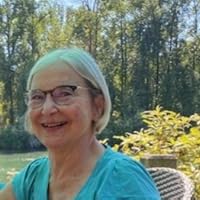
She was everything everyone else wanted her to be. Until she followed her own path.
Helena Rho was six years old when her family left Seoul, Korea, for America and its opportunities. Years later, her Korean-ness behind her, Helena had everything a model minority was supposed to want: she was married to a white American doctor and had a beautiful home, two children, and a career as an assistant professor of pediatrics. For decades she fulfilled the expectations of others. All the while Helena kept silent about the traumas—both professional and personal—that left her anxious yet determined to escape. It would take a catastrophic event for Helena to abandon her career at the age of forty, recover her Korean identity, and set in motion a journey of self-discovery.
In her powerful and moving memoir, Helena Rho reveals the courage it took to break away from the path that was laid out for her, to assert her presence, and to discover the freedom and joy of finally being herself.
If this were fiction, I would suspect there was an unreliable narrator.
I’m not suggesting that autobiographer Helena Rho made anything up, quite the contrary, she describes her life in a realistic and detailed manner. But like other reviewers, I notice some inconsistencies and glaring omissions, and these are too distracting to allow me to leave this work with a favorable opinion.
I picked this up because I wanted to learn about Korean / American culture and Rho’s history as a physician turned writer seemed unique. We learn that she was raised by Korean immigrant parents, who lived for a while in Uganda, before settling in the Unites States. Rho struggled some with cultural differences, some family issues, some marital issues, but was a successful pediatrician until she later became a writer.
Painful as it is to write, it was also somewhat painful to read as Rho comes across as bitter and victimized, though she seemed to have an otherwise prosperous life.
I found myself identifying more with her family than I did with her and really did not like her very much. If I met Rho at a party she would be a person who I politely extricated from so I could move on to more interesting guests.
I did not love the author's bitter and defensive tone, and I got the impression there are major parts of the story missing throughout. But by far the strangest part of this book was the Acknowledgments -- after spending dozens of pages ruminating on her complicated relationship with her mother, and dozens more pages speculating about the complicated relationship her mother might have had with her own mother, the author does not once mention her own daughter in the Acknowledgments (she does, however, thank her son). That omission raises so many questions in my mind.
“American Soul” is an engrossing, well-crafted memoir. I grew up in a multi-cultural expat community and am fascinated by cultural differences and how women are affected by their maternal ancestors’ traumas. Helena was born in Korea, spent formative years in Uganda, and then immigrated to the United States with her family. Feeling pressure from her parents, she pursued an unsatisfying medical career that she later gave up to become a writer. Her memoir documents trauma, tragedy, and seemingly unsurmountable challenges and her journey to overcome them and live her own life. I found it eloquent, insightful, moving, brave, and brutally honest. And I devoured the whole thing in one sitting.
Helena Rho's gripping memoir is at once depressing and uplifting - depressing for how she is treated both by family and then an abusive husband and uplifting because she decides to become the master of her own fate and take charge of a life she lived only to please others. I'm not that knowledgable about Korean society and culture (the author was born in Korea to a very traditional family, moved to Uganda and the US as she grew up) but I did live in Japan for a time and found that both societies share very similar attitudes and pressures/expectations they place upon their children. (I could also relate, in a way, to what it's like to live as a minority among a homogenous society as the only caucasian in a Japanese school and city - the reverse of the author's experience in the US.) I found the writing style very conversational and soul-bearingly honest. My only regrets, and they are minor, is that the frequent switchbacks in times of her life were a bit jarring but they served to move the narrative along effectively. I thought the last 10% of the book was not as strong as the first 90% thus it's a 4.5* for me rounded up. A really fascinating story where you will feel sadness and anger at her abuse (especially by her mother who is quite the character in her own right) but there are moments of joy as Helena discovers that she needs to live for herself and not through everyone else's expectations for her.
I first came across Helena Rho’s work in the 805 Lit + Art where they published the first chapter of American Seoul, “Crossroad.” I was immediately captivated by Helena’s writing. To be honest, I haven’t reviewed many memoirs. I looked up an article where it said a memoir is successful if it entertains you, makes you think, makes you feel, makes you learn, and if it makes you remember. After reading American Seoul, I can confidently say Helena wrote a memoir that successfully encapsulated these five traits.
Personally, I related a lot to Helena. Little things like people asking her if she’s Korean or spoke Korean or immediately assumed she could. I was born in Gwangju City, South Korea and adopted at four months and have not grown up in Korean culture. I’ve never come across a memoir or novel whatsoever about a woman’s struggle with her Korean identity and really enjoyed Helena’s story of self-discovery. I learned a lot and appreciated Helena's attention to detail when she talked about Korean dishes and pronunciations and definitions of Korean words. It was interesting to learn about Korean culture itself and see what’s changed and stayed the same.
The biggest heartbreak was reading about Helena’s estranged relationships with her parents, sisters, and ex-husband as well as the traumatic experiences in her childhood and adult life. For Helena to go through what she did and come out the other side is inspiring. To quit a successful job and take a big risk like that to become a writer…I could never. I hope readers can look back on this memoir too and realize it’s never too late to start over and to keep moving forward. I have the wonderful privilege of speaking with Helena this summer about American Seoul and can’t wait to have an open conversation and thank her for sharing her story.
This is definitely not a memoir I could recommend reading if you're looking for something uplifting. Rather, it is a depressing account of a Korean woman, Helena Rho, who's family immigrates to the US when she is a child. She writes about how she hated being a pediatrician, how dysfunctional her parents were, how pitiful and selfish her sisters are, how abusive her ex-husband was, how racist and misogynistic people who are not Korean are, and how many Koreans treated her badly because she couldn't speak Korean proficiently. On the upside, she did have a good experience connecting with her relatives in Korea and spending a month in Cuba. In the Author's note, she acknowledges her son and how grateful she is to him, but says nothing of her daughter, whom she praised in the book until she dropped out of college, This makes me think she destroyed that relationship as well. If it weren't for the fact that it is a short read, I would have stopped reading it.
I had high hopes for this memoir when I chose it as my free Amazon First Read for May- second generation Korean American, became a pediatrician "for" her parents, married to a white psychopath husband who emotionally abused her, not to mention being sexually abused as a child(all from the synopsis and introduction) and decided to stop practicing medicine later in life because it was "never" her own wish; but, here's the but, why did I feel like this book was a long pity party?
This entire review has been hidden because of spoilers.
Couldn’t put it down! Being half Japanese myself, I can see where her story could relate to stuff my dad (the Japanese one) had to go through with relationships between his parents who had been in the American internment camps when they were young.
She perfectly describes a women’s situation in a marriage gone bad. Even though I am a very strongly opinionated woman, I dated one of these “Ss” guys (the writers ex husband) before I married my husband and was luckily able to get away free and clear. After dating him, I was very cautions about who entered my life.
The author writes “Ironic, but he was the one who left in 2011 because he was dallying with several women. I don’t think I could ever have left. I was too damaged, too dangerously invested in the narrative that we were a happy family: husband, wife, and two children.”
Me- This abusive man (physician) is able to continue abusing her, not paying child support, basically being Okayed to be an asshole. He is every straight woman’s worst nightmare. And there are many of these guys out there, anyone who has dated more than 10 guys can tell you that.
The author writes “A therapist once pointed out that I, being a masochist who constantly blamed myself for the failure of my marriage, and who stayed in it for twenty years, was perfect prey for what the therapist casually called “a charming narcissist” like SS….In attempting to reframe my way of thinking, the therapist also pointed out that in being a masochist, I was being arrogant: I thought if I took all the blame, then I could also fix everything. I thought I had more power than I really did. But I think believing in that misguided logic was my only option, because I could not acknowledge the horrific mistake I had made in marrying SS. That would mean admitting to failure. Now it astounds me what I was willing to do not to admit failure.”
Me- What I love about the personality I was born with, is that I don’t have the drive to be a success. Nothing about being number 1 sounds relaxing to me. With that ability, I was able to leave men who were bad for me once I could pinpoint that they were leading me into a bad direction in life, but I never had kids with one of those guys. That would be a lot harder to rationalize.
One thing that is hard to witness in this book is how she is so much time and energy focusing on people who treat her bad instead of living a life surrounded by people who are nice. It’s exhausting to read let alone, actually live that way.
Her relationship with her daughter seems great and then disappears at the end of the book….maybe another book is in order to celebrate what she learned from being a mother to her daughter. So much about mothers and daughters, interesting that she ended with talking about her son only. I feel like there was more she couldn’t tell us and feel like it must be private because she couldn’t have left out that huge circle round of the story unless there was a reason.
I was looking forward to a memoir that explored the cultural issues of a Korean family’s emigration to the US. I enjoyed discovering insights into Korean culture. Sadly, I found the writing tedious and exhausting. In my eyes she is a victim and life has just happened to her. She does not take responsibility for her actions. When she discovers the sexual abuse of her son, she makes it about her in what could be described as typical narcissistic behaviour!
All three sisters despise her which surely is strange. They travel to Korea to release their mother’s ashes and don’t include her which gives me more suspicion about the author. On returning to Korea, she is worried about seeing her aunt who has welcomed her so warmly when they met 10 years prior. She fails to accept personal responsibility regarding her negligence toward her aunt and somehow makes it all about herself, again.
Where is her daughter? Is the toxic mother-daughter cycle continuing? I sincerely hope not. What I have taken from this book is a reminder to try to keep striving for self-awareness as difficult and challenging as it is and keep checking my contribution to difficult circumstances.
This book is a gripping exploration of identity and recovery. The author grapples with complex issues such as cultural identification, abuse, prejudice, language identity, cultural expectations, and physical challenges. I found it particularly engaging due to my interest in Korean culture, my background of living in Korea in the 80s and 90s, and the fact that I was a child immigrant to the US (from another country). There was a lot to hold my interest.
What I liked most about this book were the raw emotions, a genuine portrayal of immigration, a recounting of a unique family history and how it affected the author’s life, and the impact of physical events on one’s life choices. Ultimately, the book is about making life choices, which I found very interesting.
What I liked less is related to my personal preference. I prefer a more straight forward and clear timeline. Sometimes this story jumped and followed the emotional journey (which made sense) but I lost track of details which were important to me, such as the ages of siblings or exactly which event followed which. I also felt that some of the stories in the book could have been developed further. The fact that I wanted to know more, however, is testimony to my engagement with the book and the interest it held for me.
While this is probably not the book to turn to for a tutorial in modern Korean culture, it provides an excellent account of cultural influences on immigration and what can happen when a child is removed from her original culture. Overall, this is a sensitive, engaging, and fascinating read, and I recommend it to anyone interested in psychology, culture, healing from trauma, or traditional Korean culture.
A unique cultural experience. Very brave of the author to break through her cultural and familial expectations, and despite all the odds against her, to be able to succeed in what she was meant to do. Now that takes courage!
Thank you, Prime for choosing this book for First reads this month. I choose this book because I really want to understand Korean families, their traditions, and how the dynamics of the family work. I felt this book written by a Korean-American would help me achieve this. At times the book is so heart-wrenching I almost stopped reading. Helena Rho is so brutally honest with her writing, no holds on the difficult stuff. I did learn a lot about Korean history and how much tradition and family play a huge part in the Korean family. I will say that I did wonder what happens to Erin.
At times shocking, disheartening, and hopeful, this memoir really hits on what it’s like to separate from your homeland so entirely that you have no language or shared history but still you yearn to reconnect with family, language, and culture. Inflicted trauma diverts her paths through life. Not until she reconnects with relatives in Korea does she seem to feel heard and accepted. Moving. Highly recommended.
A quick and interesting read. The author has issues as the daughter of Korean immigrants growing up in the US. As an adult she embraces her Korean heritage and overcame many trials and tribulations including a very difficult divorce.
Free Amazon Prime book for April 2022. This is the first book I've read this year that I don't really care about. The book is fine, and the author is a capable writer, but one things I've found in the numerous memoirs I've read this year is that I learn about something other than the author during the book. I learned about butterflies, or drug cartels or transgender issues in past books, but in this book it is basically the writer's life which just didn't interest me too much unfortunately.
The other thing I noticed about this book is that is felt incomplete. What happened to her daughter? She thanks her son in the Acknowledgements, but doesn't mention her daughter who is mentioned throughout the book. Did her sisters and her ever have any type of reconciliation? It seems as though a wrap up was needed to answer some of the questions I have. It was weird.
She reached for my hands with both of hers and pulled them to her face, pressing my palms to her cheeks.
Hands are significant in this memoir: a daughter’s hand reaching out, a doctor’s hand healing, a writer’s hand moving across the page, the self moving across continents. Helena Rho dedicates American Seoul to her mother. Her memoir emphasizes the value of heritage, the persistence of personality, and the triumph of memory.
Having lived in Korea in early childhood, and started school there, the author with her family moved to Uganda, where she started to learn English. In adulthood, in the U.S., she remembered not one word of her native language. A language constitutes a world; that idea is significant in Rho’s memoir. She goes into a Korean shop for lunch with her daughter, and a woman working there encourages her to speak Korean, as does a woman, a minister’s wife, with whom Rho talks on the phone about lessons in Korean for her daughter and son. Growing up, she didn’t speak Korean with her parents. They had artifacts from Korea in their home, but they never talked to her about Korea. She wants her daughter and son to know they are Korean, she wants them to know their heritage. They travel with her to Korea, and meet her cousins and play with her cousins’ children. Most importantly, she wants to know she is Korean, and that fervent desire is clear in the bond she forms with Emo, her mother’s sister, her aunt who lives in Korea. Emo is a role model for heritage in this memoir, helping the author to know herself, that she is Korean, kin to ancestors who go back thousands of years. Symbolic in Rho’s memoir is the framed picture of a crane that was prominently displayed in her mother’s home, and that is now with the author, literally with her and her daughter as they drive on a rainy day and a few raindrops get on the picture, and she imagines the crane in flight. They have just come from her mother’s apartment where she and her daughter stood outside a door that was not opened. In contrast Emo opens her own door to Rho, and the also doors to her heritage.
Rho’s father was a physician. He was the oldest son in his family. Her mother had four daughters, but no son; that is one reason the family left Korea. Her mother was looked down on, especially by her father-in-law, for having no son. The author, like her father, becomes a medical doctor, a pediatrician, a doctor with a love of Shakespeare and English literature, who wants to write. She is a dedicated physician. Her mentor is a doctor who pioneered work with children who have AIDS; he was the first doctor to show how children are born with AIDS, how the disease is passed from parent to child. Some of the most poignant parts of Rho’s memoir are her interactions with seriously ill, often terminally ill children, and with parents. She herself is the parent, who mostly cares for two young children on her own, since her husband, also a physician is often away. At age forty, Rho leaves medicine to be a full-time parent, who wants to write. She feels alone in her marriage, and bored playing children’s game, and also distanced from her three sisters, who seem jealous of her and unable to understand why she stopped being a doctor. She is self-conflicted, and that conflict is manifested in her love of the American writer Ernest Hemingway. She loves Hemingway the writer, and loathes the Hemingway man, the misogyny and big-game hunting machoism Hemingway is known for. In some ways he is like SS, her ex-husband. During and after their divorce he “drags out” legal proceedings, not so much for money but for power. Rho’s mother was despised by her father-in-law, for not having a son. Ironically Rho is very close to her own father-in-law, whom she affectionately calls Poppy. He calls her Pook, and encourages her to write, to be herself. Ironically he is the opposite of his narcissistic son, the husband who gets angry and breaks things and says it’s his wife’s fault, the husband to whom she apologizes, the husband who, ironically, initiates the break up, the husband she comes to know for who he is, and, in the process, comes to know herself.
Helena Rho is a writer, a memoirist who is working on a novel about Korea. She is a daughter, a sister, a mother. She was a pediatrician. Who she was is part of who she is. She was the girl sexually abused by the older boy, the girl sexually abused by the male math tutor in Uganda, the wife bruised by the out of control husband, the doctor sued by the mother of boy whose injured hand she tended, sued for something that happened through no fault of her own. The girl who saw from a boat the blood clouded water where an alligator had killed a flamingo, and instinctively became aware of the danger that lurks beneath the surface. The woman who remembers all she has lived. She knows a person can bear scars and live “happily ever after.” There is distance in this memoir, between parent and child, between husband and wife, between sisters. There is also closeness: Dr. Oleske, Emo, Poppy, Liam the author’s son, also her cousins in Korea, are living presences in that closeness. As is the woman in the shop where mother and daughter have gone for lunch, after the daughter’s Saturday ballet lesson. The woman encourages Rho to speak Korean, there in Pittsburg, PA, to be Korean, to be herself, an integral part of a culture that goes back four thousand years. To read Helena Rho’s story is to know what it is to be human, and to experience the triumph of memory in sentences that are lyrical and precise, so very well written. There’s only one Helena Rho, there is no other memoir like hers.
2 1/2 stars. The beginning was pretty good, the last half was boring and I got tired of her blaming everyone in her life for the fact that she's not happy. She went through school, became a doctor, married, had 2 kids, became a novelist and does nothing but pity herself. Some bad things happened as happens to many many others, including people of all nationalities. That part is sad, but how about celebrating the good things she has which are better than most people have. Such a bitter person.
This book's title suggests a kind of generic immigrant story, but I found it deeply specific and personal in the best possible way. Rho is a brilliant storyteller who somehow brings lightness to her accounts of very hard things. She turns her unflinchingly honest gaze at herself as well as the forces shaping her. I could not put it down once I started it and by the end I wanted more time in her company.
I feel like I should give this a better rating since it was an Amazon Prime free book but I just didn’t enjoy it. The first 2/3 of the book were super depressing. I like to read memoir by authors who struggled but she wrote with such bitterness and such a chip on her shoulder it felt like being buried alive. The more optimistic last third didn’t make up for it, especially because it was such a short book.
I’ve spent a good amount of time thinking and talking about what I expect of and like most from memoir as a genre. My best friend/roommate/favorite book discussion partner and I talk a lot about how memoir works best when it’s about a specific experience (The Year of Magical Thinking, for example). I’m also glad to read a collection of essays, but that’s a different genre (I Miss You When I Blink, for example). Great memoirs may also be built more around a certain theme in a person’s life (Educated) or stem from a certain time/experience that also broadens the reading experience into something wider than a straightforward memoir (H is for Hawk).
I’ll also say I absolutely think celebrity memoirs are held to a different standard, and that’s okay. These tend to lean more toward autobiography in scope, but the buy-in is different—I’m probably reading a celebrity memoir because I want to know more about that person, including their childhood experiences and gossip from their lives in the spotlight. There are plenty of good examples (Bossypants; Just As I Am; In Pieces; Love, Loss, and What We Ate; even Becoming to an extent).
I say all of this because I found that American Seoul disappointed me on many levels, but as a memoir was probably the biggest. At the risk of sounding harsh, I couldn’t understand what made this story worth telling. I don’t say that to belittle Rho’s life or experiences, but to ask why a reader would wish to pick up this book and what they might hope to gain from it. There’s no unity to guide the experiences detailed in these essays. If celebrities get buy-in from readers because of their fame, why should I want to read the memoir of a regular woman? This book didn’t really answer that question for me.
Rho has had undeniably difficult and tragic experiences in her life, but it’s hard to know what to latch on to in this memoir. Personally, I found the deepest feeling in her essay on connecting with another Korean woman at the supermarket about their languages and their daughters. I was frustrated by a lot of the storytelling (very “woe is me” all the time, though I don’t at all mean this in relation to the abuses she’s suffered), and I take personal umbrage with her characterizations of Hemingway in the penultimate chapter (she doesn’t seem to know that much about her supposed favorite writer, who doesn’t come up until this moment).
So. I felt a lot related to this book, which says something about it. I just wish some of those feelings were more positive.
I wanted to read this book because I had the chance to visit South Korea a while ago. Two of my children lived and taught there for a few years. The main character is a daughter of a physician who desperate wanted at least one of his children to be a doctor. This family left Korea originally because Mom was unable to bear a son, which is extremely important in the Asian culture. After bearing four daughters they relocated to the United States. So this main character, who is the author of this book, grew up in the USA and knows very little about Korean customs. She marries a ‘white man’, as she puts it, another doctor. He is verbally and physically abusive. With her background as a woman, she is of the opinion that she is always at fault. A car accident changes her life as does the rigorous hours of the attending physician. She has a difficult time when she fails as a pediatrician and then when she is sued, she completely unravels. That is the jist of the beginning of the story. Way more details go into revealing how she leaves medicine to become a writer. This book begins to splay into all kinds of issues with this families’ dynamics. I ended up feeling like I was in the seat of a family therapist thinking this woman/daughter/mother/wife/doctor/writer was a bit of a whiner. One thing I did decide was that I was glad she left medicine. No one wants to be treated by a physician who is in medicine for all the wrong reasons. The book was interesting to a point. I did enjoy her descriptions of South Korea and talking about the customs of their culture.
This entire review has been hidden because of spoilers.
Growing up with first-gen immigrant parents from an Asian background, I was hoping to be able to relate to the author on some level. However, I was quite disappointed by this memoir - although a lot has happened to the author throughout her life, the story telling was superficial at best. I would have appreciated some introspection/dissection from the author on why events transpired in certain ways, rather than it being a pity party.
I did not enjoy this book although it is well-written. The author is definitely not someone I would enjoy meeting because of her attitude toward life. I am happy that she seems to have found a measure of happiness in spite of her constant negativity.