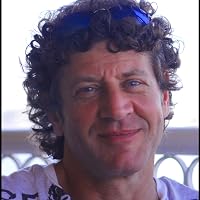
Are you worried about the current market uncertainty? Have you been living paycheck to paycheck? Are you tired of normal and ready to become exceptional?
If so, this book is for you.
Here is just a fraction of what you'll • How to reclaim 80% of your time and 4x your results • Why Self-Sufficiency and Self-Reliance are traps • How to leverage the knowledge and connections of others to shortcut your path to success • Practical steps to increasing your income to $200,000 • 4 ways to wage war on procrastination • How billionaires double their wealth in recessions and how you can too!
Plus, inside the book, you get a free download link for the audiobook.
And if that isn't enough, you could have the opportunity to get much more than that. For instance... if you implement these principles, you could double your income in the next few years...which would most likely 4x your discretionary income...which means you can invest in ways you couldn't before...giving you opportunities and results like never before.
Even if you only applied one of the principles covered in this book, it would easily cover the cost of this book 10x over. Click "Buy Now" and grab your copy today!
OK, I have quite a bit to say about this book. I was skeptical by the generic nature of the topic. It seems like just another one of those self-help books encouraging you to conquer your fear and crush it in life. And, well, it totally is.
It has the same message as books by Simon Sinek, Mark Manson, Grant Cardone, and all those other guys. That being said, the message is still fantastic. I agree with everything in the book and it reads really well. The pacing is on point and the writing is engaging.
I can tell the author went to a lot of effort to make this a high-quality book. He also went through Chandler Bolt’s self-publishing school, which he plugs quite a bit throughout the book. And I have to admit, this book is a lot better than most of the books I see coming out of self-publishing school—which are usually extremely subpar. This one is different and it stands out.
The other interesting part about this book is that the author shamelessly advocates all the other authors and books he clearly took heavy influence from. So kudos to him for that.
Anyway, as far as the content itself, the theme was basically life is short and life is fleeting. So why be concerned with all this pointless crap that everyone is always worrying about?
He also goes into productivity and motivation, such as themes like don’t put off what you can do today. He gives the example about procrastinating about making important phone calls. And then the consequences that immediately come after. Procrastination just comes from worry about the future.
You are literally worrying about something that hasn’t happened yet. But if you get what you want now and then, it doesn’t matter if something bad happens in the future, everything is always going to turn out OK, and if it’s not OK, we’re not done yet.
The sections throughout the book consist of important topics like procrastination and motivation and other things like that. Pretty typical and generic but still very relevant. The workbook pages were also completely unnecessary to me, but I know some people are really into that type of thing. The writing is a little overly simplistic at times, but the book still keeps me turning the pages.
Overall, I’m glad I read the book and enjoyed it very much. I do recommend it if you are a self-help book and motivational book junkie like I am. Finally, my favorite line is “kill your television set. I’m serious. It will be liberating.“ He even goes as far as to suggest smashing it to bits with a hammer. It makes me think of the movie office space and made me laugh hysterically out loud. Love it. This guy has real character.
I found this motivational self-help book to be frank, blunt, and passionately focused on how to help us be all we are meant to be. I identified with the authors revelations about certain thoughts, feelings, and behaviors that hold us back from our unlimited potential. I really liked his suggestions about clarity; commitment; a self-improvement routine; the importance of friendships and mentors; and the imperative to take positive action to change. I do take issue with his argument against entitlements. I don't see anything wrong with all of us being entitled to perfect peace, perfect joy, and even miracles. But I say yes to this thought-provoking five star read!
Part of the reason I like this book is because how it’s written. It feels like you’re sitting in a room with the author one-on-one and he’s coaching you. Outside of that, there is some great advice to make improvements in your life. I particularly liked the section about how “being yourself” can be used as a saying to make excuses for yourself and the great detail about focusing on your strengths, outsourcing tasks and valuing your time.
Recommended to those looking to improve their lives.
Give Nate Hambrick credit. He has a way of making some of the usual self-help advice in his debut book stand out by inserting his own stories along the way. In the first chapter, “Crush Negativity,” he talks about when he was a senior in college attempting to sell children’s books one household at a time as an intern with one of his friends, waking up one minute before 6 a.m. “to remind ourselves that normal people wake up at 6 a.m.”
All right-y then.
There are some folks on this planet who just know you have to do things differently to stand out, and Hambrick is one of those individuals. I admire him for that. The further along I got into Crush Your Kryptonite, the more I saw that the author is far from a get-rich-at-all-costs type of person. Hambrick is serious and passionate about making (and saving) money, but he also realizes what’s truly important in life. Additionally, it was refreshing to see someone write about his religious beliefs and ethics in a self-help book.
Hambrick relates his advice throughout the book in both a no-nonsense and quite vulnerable way. He emphasizes there are no shortcuts to greatness in life, and in order to “make it,” to really be somebody special in your field, you have to be intentional about mastering just a few things and have the discipline to shove aside all the clutter of life. When I say “clutter,” I’m talking about everything from watching too much Tik Tok to learning to play the guitar if you have no ambitions to be a rock star. Many of us (including Hambrick at times) want to be that Renaissance-type person who can do everything (fix things around the house, repair the car, etc.), but the author recommends striving to be selectively great at just three to five things. He also says he works hard now so that he and his wife and their future children can enjoy the fruits of that labor in the future. What a great mentality.
I won’t rehash all the other good advice in Crush Your Kryptonite, but I do want to mention how timely and relevant the chapter “Master Your Friendships” was to me. Earlier in the book, Hambrick talks about the importance of surrounding yourself with accomplished, positive people, mentors who can help you find your way in life. But in the “Master Your Friendships” chapter, he relates how crucial it is to accept more people into your life, even if their personalities can be grating or they have less than stellar ways of living. “Yes, letting lots of people in your life is messy,” the author writes, “but it’s also vital to our well-being.”
He is so right about that. For longer than I care to admit, I’ve been pushing people away – sadly, people who are very close to me in my life – because aspects of their personality don’t jibe with mine. This stifles personal growth and is not at all a good way to be. Relationships and people, after all, are what make life interesting and fulfilling, so I’m grateful the author reminded me of that.
It’s been many, many years since I have read any sort of self-help book. “Crush Your Kryptonite,” has a catchy title and an apt book cover. (Although, if it were up to me, I would have made the title words a bit smaller since they cover up the background image too much.) In the introduction, Hambrick states that we all have the ability to be “superheroes,” but we also have “kryptonites,” which keep us from succeeding and achieving our goals. So, suppress your kryptonite, and go after what you want! Sounds pretty easy, right? But first you must identify your kryptonite, and it might not be easy. For instance, in his first anecdote, he tells of an intense sales job in which he worked over 12 hours a day, 6 days each week to achieve success in the position. (That immediately raised a red flag for me. I do not believe in working more than 8 hours per day, five days per week-at least, not on a permanent basis. I believe people need time for relaxation and recreation to have a balanced life or they will burn out after a while. At least that is true if you are a fast, efficient worker.) Anyway, he attributed his success on the job to positive self-talk. Interestingly, he later cited positive self-talk as a kryptonite, because it kept him from realizing that the career he had at the time was not the right one for him. So, a good technique that brings you success can become overused and turn into a kryptonite. Another anecdote bothered me: Hambrick said he took twice the recommended college units (so like 24 units?), slept 9 hours each day, volunteered 18 hours each week, and managed his classes by showing up to study 15 minutes before classes, taking notes during the classes and reviewing the notes as he walked to his next one. My advice: do not to try this at home. In my experience, college courses usually require reading and assignments outside of class that may take many hours of your time to complete. Does this book contain advice that readers will find helpful? Yes, there are many good recommendations in this book. So, in spite of the quibbles I have mentioned, I would encourage others to read the book and draw their own conclusions. I expect most readers will find one or two ideas that may provide them with a new perspective and get the mental wheels turning. Fortunately, Hambrick’s writing is engaging and easy to get through. And at the end, he includes his recommendations of other non-fiction books that he found helpful.
I have read a lot of self-help and level up books, maybe more than I should admit to reading sometimes… This is one of the more realistic, down to earth ones that I have read. What I like is that this author does not sugarcoat it for you. It will feel like he is calling you out, and he is. Not everyone is going to reach their dreams, because they won’t do the work and he is honest about that. Some readers will put the book down because they want to keep making excuses and others of us just need this kick in the pants.
He shows throughout the book that most people spend far more time complaining than they do taking action to make change. “Living with your kryptonite is easier than crushing it.” But then if you want to make some changes in your life, he helps to show ways you can do that. It’s an easy read, with actionable steps you can take as you read the book, and the authors motivating voice comes through the page.
Like I said, I have read a quite a few books like this, and I consider myself above average in the getting things done department, but there were still a few things I had to learn.
If you have not read any books on leveling up your life and business, this is a great one to start with. You will be able to skip a bunch of the other books that go on and on but are just circling the same point. This one gets right into what you need to do without lots of longwinded stories and fluff. If you have read a bunch of other level up books, many things here will be stuff you have read before, but, like was the case for me, there may still be one or two things you haven’t tried before.
How to Turn your life Upside-down to Achieve a Life of Greatness
Well, if you prefer a life of greatness over a life of mediocrity Nate Hambrick has written this book for you.
This book is a literal road map on how you can transform your life from what it is to what you want it to be.
One way is positive self-talk. Self-talk will change how you think and how you act. It's the difference between a yes I can versus a yes I can't attitude. And never forget, your attitude is everything about everything.
Nate talks about crushing your entitlements and says "Don't blame society for your choices.
In chapter 5 he talks about his favorite question "How can I --- " it's a question everyone should be asking every day.
According to Nate, the more books you read, the better you'll perform. Don't focus on what you're doing, focus on the results you're getting.
In chapter 6 Nate talks about procrastination. He points out that "That ultra successful people are better at saying "Yes" or "No." Indecisiveness costs the average person a fortune in time and money.
Nate also says patience may be a virtue, procrastination is definitely not.
A couple of final thoughts from Nate. He encourages people to learn how to get out of their own way and he reminds us that the universe does not limit us, we limit ourselves.
This book is loaded with practical ideas that work and if you adopt them your life will change.
Now do not procrastinate, buy this book right now.
"Most people who complain about never having enough time haven’t invested the time to figure out where they're wasting it." The author puts his finger on the many reasons we procrastinate and describe solutions to them. He also affirms the importance of positivity when our brains are hardwired to focus on the negative- both external circumstances and our personal weaknesses. The negativity spiral is something I need to work on, and I greatly appreciated his advice in the chapter.
The chapter on outsourcing tasks like cooking and cleaning was also particularly on point. No one needs to be self-sufficient, learning to be good at absolutely everything from fixing cars to making food. If I can pay someone who is an expert at cooking or fixing cars to save me the time I need to make a higher income/hr (offsetting the cost of outsourcing a task) why shouldn't I? Any yet, I didn't think of time as money in such an eloquent way before.
I'm happy to say the author also needs 9hrs of sleep a night because that's me! And yet, there are ways to maximize my waking time despite sleeping more than most of my friends, lol.
All in all, a motivational read full of practical advice.
"Crush Your Kryptonite" is a compelling guide that empowers readers to confront their weaknesses head-on and transform them into strengths. The author skillfully navigates the realms of self-discovery, offering practical "Crush Your Kryptonite" is a compelling guide that empowers readers to confront their weaknesses head-on and transform them into strengths. The author skillfully navigates the realms of self-discovery, offering practical strategies to conquer personal challenges. The book not only delves into the psychological aspects of overcoming obstacles but also provides actionable steps for unleashing one's inner superpower. With insightful anecdotes and engaging prose, it serves as a motivational roadmap for anyone seeking to harness their full potential. A must-read for those on a journey of self-improvement and empowerment. roadmap for anyone seeking to harness their full potential. A must-read for those on a journey of self-improvement and empowerment.
This is one of the best self-help books that I have ever read. It is edited well, which is a plus.
There are great quotes provided at the end of each chapter that aligns with the section that he wrote about, such as: "The secret of getting ahead is getting started." - Mark Twain
Some of the things that I liked in the book are the how versus can question, the solid examples that the author lists, the interesting stories that relate to what he's writing about, and the chapter on procrastination. The author claims that "procrastination is the silent killer", and I cannot agree with him more.
I thought that the font for the chapter titles was too big and that the formatting could have been better for the chapter titles. I also thought that the book cover could have been better, especially since the content was great.
Wow this author leads off with a powerful opening that pulls no punches! The Kryptonite metaphor is a great way to express key mindset principles in a visceral and compelling way. But just as important, the author is also about taking decisive, positive action. As the author notes, victimhood is a losing strategy for all areas of life, while go-getters can take advantage of opportunities created by the sometimes fearful majority.
The author covers a wide range of key topics including personal effectiveness, self-reflection, prioritization, perfectionism, friendships and many others. This is an effective book to reinforce existing good habits and open doors to additional best practices and strategies.
The book exudes an overwhelming sense of boundless optimism. It not only provides strategies to replace average thinking with unwavering confidence but also highlights ways to elevate our abilities to face challenges and mediocrity to unprecedented heights. The pages brim with motivation, compelling us to take resolute action, amplify our effectiveness, and unlock our true potential. It unyieldingly pushes us to take responsibility for every aspect under our control, obliterating any losing strategies like victimhood or stubborn resistance to change. By fueling our curiosity and transforming mere statements into empowering solution-based questions such as "Why?" or "How can I?", we unearth the power of the mind.
Dive into a transformative journey with this book that not only addresses market uncertainties but also guides you towards exceptional living. Packed with actionable insights, from reclaiming time to waging war on procrastination, it's a roadmap for success. The emphasis on leveraging knowledge and connections, along with practical steps to boost income, sets this book apart. The promise of doubling wealth in recessions adds a unique perspective. The inclusion of a free audiobook download is a valuable bonus. Whether seeking financial freedom or personal growth, this book is a worthy investment. Click 'Buy Now' and embark on a path to unlock your extraordinary potential.
This book does an amazing job of revealing how your strengths can also be your weaknesses! A drive for excellence and perfection has its strengths but unchecked, it can be super crippling! I loved the example of how you can spend endless amounts of time on one task (scrapping paint off an old house) and it only make a minimal improvement to the overall purpose. So true... The author does a wonderful job of empowering you with practical steps to tap into your strengths without giving into the dark sides. I would recommend that everyone read this book!
If I were to purchase the hard copy of a book this would be it.
From chapter 1 I found myself reflecting on how I’ve allowed things like negativity, distractions, and other things to hold me back from really going after what I want. I appreciated the author breaking down each concept into concise and easy to understand topics along with compelling stories to drive the points home.
The action items at the end of each chapter gave me a chance to Incorporate what the book teaches and quite often that is lacking in many self help books I’ve read recently.
This book is easy to follow! It is easy to see right away that Nate is a well-researched author. I honestly couldn’t put it down once I started reading and just ate up the action steps at the end of each chapter. My 2 favorite quotes were:
“Busyness is a convenient way to numb the pain inside of us. Social media, music, television, and the internet are some of the most convenient ways we silence ourselves.” “the most successful of society are often the most hated, while their unsuccessful counterparts get to live in the anonymity of being average.” This book is amazing!
AN IMPORTANT RESOURCE. For anyone who cares about personal effectiveness, this book is an important resource. I love books like this because they remind me of so many important elements of mindset that I forget all too easily. But this book went the next step and challenged me to consider something I've never previously thought of - self reliance can be a form of kryptonite. I wouldn't have thought so, but this book has convinced me to give serious consideration to outsourcing and delegating a lot more of the maintenance work I do in my publishing business. And it's given me some ideas about where to start ...
Crush Your Kryptonite has lots of little gems like the famous Mark Twain quote I borrowed for the title of my review. Based on the primary theme throughout the book Nate Hambrick warns against procrastination. The Mark Twain quote is a perfect addition to highlight Nates key points. Besides lots of personal revelations and antidotes about his own journey to conquer his weaknesses, Nate provides tons of great and priceless exercises at the end of every chapter. This book is truly a worthwhile read if you’re seeking to take your life from normal yo exceptional. I learned a lot from this book
Everyone has their weaknesses and at certain times in life you may find yourself ready to take some serious inventory and break out into the next level. Nate Hambrick has put together a fine collection of self examination studies along with life experiences that perfectly lay out the need for quality self assesment and gives you the tools to put better plans into action. The book is wonderfully serious and can be the best thing you ever got your hands on, if you are ready to face the reality of the limits of your personality as it is presently.
This self-help book is unique and refreshing, and I found myself actually sitting down to complete the exercises. I believe that I will be looking back on it for quite some time. The author is succinct and profound. He is positive, yet refreshingly blunt. I really appreciated his easy writing style, almost as if he was having a poignant conversation with me personally. I highly recommend it to everyone who is interested in rising above the mediocrity of the day to day grind.
This book offers invaluable insights and practical strategies that will revolutionize the way you approach your life and career. From the moment I started reading, I was captivated by the author's expertise and the transformative potential of the book’s teachings.
What I found most helpful was by implementing the strategies outlined you can unlock up to 80% of your time while achieving four times the results. This is a must-read for anyone who is ready to break free from mediocrity and unlock their full potential therefore, I would highly recommend this excellent book.
I've had this book for weeks and when I finally had the time, I read it in one sitting :) I like the author's use of RL everyday language. Like what he says, no BS. I was a bit cheeky and went straight to my particular "kryptonite" chapter first and I got busy scribbling notes! After that, I did go ahead and read the rest of the book. I read one reviewer's comment that he felt there could've been more "kryptonites" discussed and I agree but that doesn't take away from the value of the current book and its contents for me.
The author Nate Hambrick does an awesome job outlining 7 major krypotonite’s that people could experience, and I found myself relating to them all. It was a quick, but powerful read, so now I’m going back through and spending time answering the author’s questions at the end of the chapters to come up with a game plan to crush my own kryptonite in 2022. Highly recommended!
The only reason this doesn’t get 5 stars is the formatting. Not sure if it was purposeful but needs a few tweaks with font size. Ok on to the good stuff!
This book really resonates with me because I like authenticity. Someone who walks the walk and talks the talk. Not someone who writes about things but lives them. Nate check out my book we are two peas from the same pod lol!
Nate shatters any excuse you may have used to justify your lack of taking action toward your goals, and dreams and becoming the best version of yourself.
Nate shares valuable insights from his personal experiences and successes that will change your life.
An inspiring read for you if you want to take your life to the next level.
Loved the authors boldness and honesty on the topics of entitlement and negativity. It's about time someone says what many of us have thought! This book really makes you take an honest look at yourself and how you can make improvements. I need to start doing more of these things, or get back to doing them. The stories helped emphasize the points and make them more relatable. This may be one of those books I read every year to remind me of my kryptonite.
Like fans of Carnegie's work, Hambrick takes a balanced approach to wellbeing in this inspiring and thoughtful guide book. Though there are sections on wealth, Hambrick takes a more pastoral approach, preferring to focus on life balance and the richness of living our best, than the mere materialistic needs. The book is littered with great examples from Hambrick's life and written in a very down to earth tone. A must read for people looking for more out of life.
The author's use of real-life people and experiences to explain the main points of each chapter is something I really appreciate. Additionally, I find the action steps at the end of each chapter to be very helpful in applying what I've learned to my life. Personally, I can attest to the benefits of removing "perpetual noise" such as Facebook, Instagram, and other distractions, as it has allowed me to focus on my priorities. Overall, the book has been great so far.
What a great motivational book. Nate covers everything you need to know about time value, how to be more efficient and most of all how being successful is buried deep inside all of us. The only thing holding us back is ourselves. Grab a copy and make this a daily reader. I will refer back on a regular basis until I can recite this book word for word. Highly recommended!
I was super interested in this book because I am not a person who holds themselves back. This is the opposite of me but I’m super interested in how people think and why people don’t make a way to what they want. This is so good!! This book discusses qualities of people who do not allow barriers and as someone who doesn’t see barriers….it’s spot on. A great resource for people needing the extra push to unlock their full potential!