

What do you think?

Two Tons o’ Fun
A charming coming-of-age novel set in a Johannesburg township
I caught a glimpse of my mother busy stuffing her own loot into a bag. On seeing me, she grinned. ‘Are you on a sight-seeing trip, girl? Come on, roll up your sleeves and work!’ She was a huge woman with the agility of a thin girl. Think of the well-endowed Queen Latifah moving like Sho Madjozi.
A car has collided with a Coca-Cola truck in Alexandra. The overturned trailer is spilling its contents, which residents are carrying off in their plastic ‘Shangaan Gucci’ bags. With two other bystanders, Lerato Morolong, age fourteen, helps the injured truck driver. The woman who drives them to hospital is Professor Ngobese, matriarch of the family at Number 80, the only house in the neighbourhood with a street address, aka Those White People.
Here begins Lerato’s relationship with the Ngobeses – Auntie Gugu and her daughter Janine, who becomes Lerato’s bf and one half of the dancing duo, Two Tons o’ Fun (because life’s too short to spend in a tent dress).
As Lerato’s story unfolds, you’ll meet her quick-fingered, beer-loving, man-eating mom June-Rose, who’s not afraid to use the knife she keeps in her bra, and has passed on her tough survivor’s spirit to her daughters, especially 12-year-old Florence. When June-Rose brings home yet another man, Florence runs away with dire consequences. Revelations emerge, such as the truth about Lerato’s father, who lost his way in the conflicts at the end of apartheid.
Rich and humorous, this vibrant coming-of-age story sees a young woman uncover her skill as a writer, explore her sexuality, travel, and finally understand her mother.
I caught a glimpse of my mother busy stuffing her own loot into a bag. On seeing me, she grinned. ‘Are you on a sight-seeing trip, girl? Come on, roll up your sleeves and work!’ She was a huge woman with the agility of a thin girl. Think of the well-endowed Queen Latifah moving like Sho Madjozi.
A car has collided with a Coca-Cola truck in Alexandra. The overturned trailer is spilling its contents, which residents are carrying off in their plastic ‘Shangaan Gucci’ bags. With two other bystanders, Lerato Morolong, age fourteen, helps the injured truck driver. The woman who drives them to hospital is Professor Ngobese, matriarch of the family at Number 80, the only house in the neighbourhood with a street address, aka Those White People.
Here begins Lerato’s relationship with the Ngobeses – Auntie Gugu and her daughter Janine, who becomes Lerato’s bf and one half of the dancing duo, Two Tons o’ Fun (because life’s too short to spend in a tent dress).
As Lerato’s story unfolds, you’ll meet her quick-fingered, beer-loving, man-eating mom June-Rose, who’s not afraid to use the knife she keeps in her bra, and has passed on her tough survivor’s spirit to her daughters, especially 12-year-old Florence. When June-Rose brings home yet another man, Florence runs away with dire consequences. Revelations emerge, such as the truth about Lerato’s father, who lost his way in the conflicts at the end of apartheid.
Rich and humorous, this vibrant coming-of-age story sees a young woman uncover her skill as a writer, explore her sexuality, travel, and finally understand her mother.
267 pages, Kindle Edition
Published February 1, 2022
About the author
Fred Khumalo
23 books71 followersFred Khumalo is the author of the novels Bitches’ Brew, which was a joint winner of the 2006 European Union Literary Award, and Seven Steps to Heaven. His memoir, Touch My Blood, was shortlisted for the Alan Paton Prize for Non-fiction in 2007, and his most recent book, #ZuptasMustFall and Other Rants, was published in 2016. His short fiction has appeared in various anthologies, literary journals and magazines. He holds a MA in Creative Writing from the University of the Witwatersrand in Johannesburg, where he lives.
Ratings & Reviews
Friends & Following
Create a free account to discover what your friends think of this book!
Community Reviews
Displaying 1 - 16 of 16 reviews

March 13, 2022
Two tons o' fun, by Fred Khumalo, is pretty much just that. But it's also peppered with the realities of township life in South Africa and all its chaotic, hectic and complicated intricacies and personalities.
It's a fascinating and well-written novel set in Alexandra Township in Joburg. I found the slice-of-life enlightening and absorbing.
This coming-of-age tale follows young Lerato and her friends and their families through their township lives, trials and tribulations.
It also touches on very real issues and real (recent) historic incidents.
I think this book would make a fantastic set-work read for Matrics. But make no mistake, this is not a YA novel, it's certainly cross-over. There wasn't a minute of this read that I thought wasn't for me.
I also think this is the best thing Fred Khumalo has written (and I've really enjoyed his previous work). It couldn't have been easy, as an older male author, to inhabit the world of 14-year-old Lerato Morolong and her friends. But I think he nailed it. It's full of relatable human truths, and believable characters.
The ending came a bit quickly for me, and wasn't necessarily the ending I wanted, but I can't tell you why without giving spoilers. That being said, ultimately, this is an impressive read, and one I highly recommend for all South Africans as an enjoyable, edifying and more unifying read.
I'm so pleased that work like this is being written and published.
And how fab is this cover? I hope the publishers enter it in this year's GBAS Cover Design Awards.
It's a fascinating and well-written novel set in Alexandra Township in Joburg. I found the slice-of-life enlightening and absorbing.
This coming-of-age tale follows young Lerato and her friends and their families through their township lives, trials and tribulations.
It also touches on very real issues and real (recent) historic incidents.
I think this book would make a fantastic set-work read for Matrics. But make no mistake, this is not a YA novel, it's certainly cross-over. There wasn't a minute of this read that I thought wasn't for me.
I also think this is the best thing Fred Khumalo has written (and I've really enjoyed his previous work). It couldn't have been easy, as an older male author, to inhabit the world of 14-year-old Lerato Morolong and her friends. But I think he nailed it. It's full of relatable human truths, and believable characters.
The ending came a bit quickly for me, and wasn't necessarily the ending I wanted, but I can't tell you why without giving spoilers. That being said, ultimately, this is an impressive read, and one I highly recommend for all South Africans as an enjoyable, edifying and more unifying read.
I'm so pleased that work like this is being written and published.
And how fab is this cover? I hope the publishers enter it in this year's GBAS Cover Design Awards.
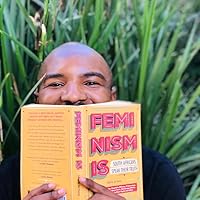
April 8, 2022
“When this country prosper, the rats prosper . They eat and mate and multiply. They always leave us alone. Rats love decadence. When we begin to starve, they too starve. But when they starve, they have nowhere to go but to us, to our kitchen . With our kitchens having been taken over by poverty, our houses are plunged into decay…”
Khumalo puts us into the deep impoverished Alexander in short Alex, It forms part of the City of Johannesburg Metropolitan Municipality and is located next to the wealthy suburb of Sandton. Khumalo plays with contrast in the book, right next door to Alex is the rich Sandton. Alex, nicknamed Gomora because of the notoriety it got when the Msomi gang roamed large. Where rats are scavenging and feasting on infants, looters are making their way to a coca-cola truck.
You know when an author seduces you with their words ? no. Not fancy words. Simple words that you fall in love with them at first sight and you climax together with the story as you both reach a satisfying climax ?That is what Fred Khumalo has done with the book. I think it is a book that every book lover would enjoy, the characters are so recognizable and fully formed. Fred, as a man of a particular age, he describes young people so well, their reactions, thoughts in life and life in the township.
The story is a coming of age story, loosely I would say : a story about friendship and more importantly about life in Alex. This was a really funny, hopeful and also a little bit disheartening book. The book reminded me of what Kholeka Putuma once said that black joy moments were not accidental in our lives. The book has different forms of violence :of how violence is either used as a language of silencing, or disciplinary. And this bizarre concept which is still prevalent of how if something can’t be explained in the township it is concluded that it is witchcraft.
This is petty but I was really not a fan of the cover. It’s literally a picture of Alex. One would think this book is a nonfiction book about poverty and life in squatter camps. Which lol… this book is about that, but also rising from challenges and institutionalized poverty. The book reads like a YA, sometimes the narrator was unreliable and she spoke to you directly as the reader. Which was funny at times.
Fred Khumalo really put the fun in “Two Tons O’ Fun”, a laugh out loud, dense, complex, social commentary on South Africa’s landscape. Unputdownadable, with tender moments and black joy. Rich, multicutural, tackles jackrolling, poverty, friendship, language and so much more.

March 29, 2022
TWO TONS O’ FUN by Fred Khumalo
So well written with empathy and humour, Fred Khumalo has somehow managed to understand the mind and thoughts of a 14-year-old girl, Lerato, despite being an older man himself. Underlying the humour is a portrait of current life in the turmoil of Alexandra, a massive township close to Johannesburg. The characters are so true, the escapades of the young girls, the love of family and complicated friendships along with the desire to learn and discover a larger world, when all put together, make this a fun read as well as being informative. The introduction of current well-known people, other authors and incidents flavour this book as an up-to-date account of life in South Africa.
I really enjoyed this book.
So well written with empathy and humour, Fred Khumalo has somehow managed to understand the mind and thoughts of a 14-year-old girl, Lerato, despite being an older man himself. Underlying the humour is a portrait of current life in the turmoil of Alexandra, a massive township close to Johannesburg. The characters are so true, the escapades of the young girls, the love of family and complicated friendships along with the desire to learn and discover a larger world, when all put together, make this a fun read as well as being informative. The introduction of current well-known people, other authors and incidents flavour this book as an up-to-date account of life in South Africa.
I really enjoyed this book.

January 5, 2023
Fred Khumalo is a revered South African story-teller, writer and journalist - and for good cause. He always has an uproariously funny story that speaks to people's humanity and that hints at a deeper message of hope. And in Two Tons o'Fun he does it again.
Two Tons o'Fun tells the story of Lerato, a 14 year old Black girl, living in Alexandra township - an incredibly poor township a stones-throw away from Sandton, one of the riches suburbs in South Africa - as she deals with township life, explores her sexuality and finds her voice as a story-teller. Khumalo's writing style harkens back to an oral story-telling culture - you can almost hear his voice in every paragraph and see a glint in his eyes before he gets to a joke or a funny turn. Two Tons o'Fun is funny, but it's also human. And especially his narratives of township life uses humour deftly to prevent the reader from feeling a sense of pity for the characters. Khumalo is intentional about showing heartache and pain, yes, but also joy in his characters. There were times where I wished Khumalo would linger in the emotional lives of the characters a bit more, but overall he wanted to portray a slice of township life, with a larger-than-life character who charts her own path - and he does that very well!
Two Tons o'Fun tells the story of Lerato, a 14 year old Black girl, living in Alexandra township - an incredibly poor township a stones-throw away from Sandton, one of the riches suburbs in South Africa - as she deals with township life, explores her sexuality and finds her voice as a story-teller. Khumalo's writing style harkens back to an oral story-telling culture - you can almost hear his voice in every paragraph and see a glint in his eyes before he gets to a joke or a funny turn. Two Tons o'Fun is funny, but it's also human. And especially his narratives of township life uses humour deftly to prevent the reader from feeling a sense of pity for the characters. Khumalo is intentional about showing heartache and pain, yes, but also joy in his characters. There were times where I wished Khumalo would linger in the emotional lives of the characters a bit more, but overall he wanted to portray a slice of township life, with a larger-than-life character who charts her own path - and he does that very well!

January 18, 2023
I enjoyed this book a lot as it was something different by Mr. Khumalo. Here he is writing about a teenage girl, which he did really well in my opinion. The stories within the novel sounded familiar, which is really not a bad thing if you know Alexandra, the township used as the setting. I was impressed with how much history Baba Mbulazi managed to archive and was blown away by the twist to the story, right at the very end. I do wish that the Two Tons of fun group was explored more, as far as their dancing is concerned. I feel that part of the story was not told enough. With that being said, I really recommend this book, especially for young readers, as it is told simply and really well.

May 6, 2022
Hilarious, relatable - South African's would love this easy to read well-written book. The pace of the book felt too rushed at times, leaving me as the reader with questions (which is a blessing and a curse when it comes to storytelling). You'll laugh a lot and cry a little, gaining insight into a small piece of township life as Lerato narrates her life story.

April 14, 2022
Two tons of fun, tears and tragedy, yet approached in a witty and sensitive way; this book is about resilience and hope
See full book review on link below:
https://culture-review.co.za/review-t...
See full book review on link below:
https://culture-review.co.za/review-t...
March 21, 2022
A fun coming of age story set in Alexandra. I enjoy Fred Khumalo’s writing and I was glad that was less violent than Bitches Brew which I read earlier in the year.

February 16, 2023
He took us from Alex and left us in the US. I don't know how old uncle Fred is but in this book, he was a 14 year old, not just a 14 year old but a 14 year old girl.
It's a story of Alexander - real life stories. Those who know this township say it's just a stone throw away from SANDTON, they are just separated by M1 Highway but they are two different worlds apart. While Sandton prides itself with mansions and state of the art malls, Alex is just made up of small houses with a lot of backrooms (shacks) which leave no space for privacy for each household. You can actually stretch your arm and greet your neighbour through the window. Nixhawulane... There's no privacy, you can sit in your house and hear every detail of what your neighbour is discusssing, what they are up to or cooking for dinner. You might as well join their conversation. This set up has made them to be a close-knit community. They are like one family with different surnames. Your neighbours are in your face, daily. Like the real family they are, they laugh, fight, dance, cry, protect each other.
Atleast, that is the life of this 14 year old, Lerato, with her family. Through her young life, she takes us through the real life of Alex (The rats and owls included) . Through her stories, you can picture how 6 families would stay in one yard, raise their kids with the hope that they will finish school, be successful and help their families out of this place. While the parents wish for this, the lives they lead leave much to be desired. Example, Lerato's mother, June-Rose, changes men on daily basis and gets pregnant now and again. She "liberates the super-rich white people from their belongings" (steals) but she is raising a boy and two girls. But without education and with high unemployment rate, what do we expect? With corruption and a lack of basics, what do we expect? For a few young ones, poverty becomes the only motivation for them to work hard with the hope that one day they will succeed and leave Alex while most give up and find other quick ways to fix their lives like dating blessers, crime and many more.
Uncle Fred, in this book, through Lerato, shares our township stories, our history and our current social issues. These include stories of witchcraft, xenonophobia, teenage pregnancy, crime, rape, women and children abuse, inequality, death, polygamy, sexuality and many more. All these are shared with such humour and sensitivity where it's due.
Because I am now used to uncle Fred's writing, and I know his passion for certain social and political issues and especially our history, I could sometimes hear his voice in this little girl. Lerato would go very deep on issues at some point and I would be like, there he is, but overall, he was a 14 year old girl. He managed to get into the world of a 14 year old girl, what they go through, the confusion, the boys, the relationships, the dreams, uncertainty and many more.
It's a story of coming-of age, it's a story of hope, it's a story of resilience, trials, tribulations, the ups and downs of a township life. It's a story of rising from challenges, a story of discovering oneself and the world at large. Amid all these and more, all work and no play makes Jack a dull boy, so there was two tons o' fun. They laughed and danced and you would join them too. You would laugh and celebrate with the characters as they overcome their challenges and dance the night away with them. Their situation did not take away their creativity and their dreams but it made them stronger by the day.
A very good read for everyone but especially the young ones for they are still to face challenges. This book can add as a motivation for them to say, if Alex kids made it with everything discribed in that book, so will I. Looking at all the success stories of some of names mentioned in the book of real people (authors, actors, musicians) who come from Alex, why would you fail?
NB
The escapades Lerato and her friends, especially Janine as they explored the world and themselves, would keep you on your tippy-toes.
Thank you, Mbulazi. This is rich history for the coming generation. We have a very rich history but we have recorded a very small percentage, hence we call our kids a lost generation. Whatever we tell them is not written anywhere, and we know they don't take orders which do not explain the why. So with your contribution to this body of knowledge of our history, township set ups and the real life issues, we appreciate you and we have hope.
*UNEDITED*
It's a story of Alexander - real life stories. Those who know this township say it's just a stone throw away from SANDTON, they are just separated by M1 Highway but they are two different worlds apart. While Sandton prides itself with mansions and state of the art malls, Alex is just made up of small houses with a lot of backrooms (shacks) which leave no space for privacy for each household. You can actually stretch your arm and greet your neighbour through the window. Nixhawulane... There's no privacy, you can sit in your house and hear every detail of what your neighbour is discusssing, what they are up to or cooking for dinner. You might as well join their conversation. This set up has made them to be a close-knit community. They are like one family with different surnames. Your neighbours are in your face, daily. Like the real family they are, they laugh, fight, dance, cry, protect each other.
Atleast, that is the life of this 14 year old, Lerato, with her family. Through her young life, she takes us through the real life of Alex (The rats and owls included) . Through her stories, you can picture how 6 families would stay in one yard, raise their kids with the hope that they will finish school, be successful and help their families out of this place. While the parents wish for this, the lives they lead leave much to be desired. Example, Lerato's mother, June-Rose, changes men on daily basis and gets pregnant now and again. She "liberates the super-rich white people from their belongings" (steals) but she is raising a boy and two girls. But without education and with high unemployment rate, what do we expect? With corruption and a lack of basics, what do we expect? For a few young ones, poverty becomes the only motivation for them to work hard with the hope that one day they will succeed and leave Alex while most give up and find other quick ways to fix their lives like dating blessers, crime and many more.
Uncle Fred, in this book, through Lerato, shares our township stories, our history and our current social issues. These include stories of witchcraft, xenonophobia, teenage pregnancy, crime, rape, women and children abuse, inequality, death, polygamy, sexuality and many more. All these are shared with such humour and sensitivity where it's due.
Because I am now used to uncle Fred's writing, and I know his passion for certain social and political issues and especially our history, I could sometimes hear his voice in this little girl. Lerato would go very deep on issues at some point and I would be like, there he is, but overall, he was a 14 year old girl. He managed to get into the world of a 14 year old girl, what they go through, the confusion, the boys, the relationships, the dreams, uncertainty and many more.
It's a story of coming-of age, it's a story of hope, it's a story of resilience, trials, tribulations, the ups and downs of a township life. It's a story of rising from challenges, a story of discovering oneself and the world at large. Amid all these and more, all work and no play makes Jack a dull boy, so there was two tons o' fun. They laughed and danced and you would join them too. You would laugh and celebrate with the characters as they overcome their challenges and dance the night away with them. Their situation did not take away their creativity and their dreams but it made them stronger by the day.
A very good read for everyone but especially the young ones for they are still to face challenges. This book can add as a motivation for them to say, if Alex kids made it with everything discribed in that book, so will I. Looking at all the success stories of some of names mentioned in the book of real people (authors, actors, musicians) who come from Alex, why would you fail?
NB
The escapades Lerato and her friends, especially Janine as they explored the world and themselves, would keep you on your tippy-toes.
Thank you, Mbulazi. This is rich history for the coming generation. We have a very rich history but we have recorded a very small percentage, hence we call our kids a lost generation. Whatever we tell them is not written anywhere, and we know they don't take orders which do not explain the why. So with your contribution to this body of knowledge of our history, township set ups and the real life issues, we appreciate you and we have hope.
*UNEDITED*

May 14, 2025
This is a coming of age story about Lerato, set in Alexandra, where she lives with her mother and siblings in a communal home shared with other families, whose children have become her friends. The thing about reading South African fiction is that the stories are so familiar and they would narrate about events or places that you so familiar with. The other thing that the author did with this novel was to tackle the socio-economic issues that are faced by most people in townships and can even extend to rural areas. Oh and it wouldn’t be a novel about Alex without the rats🙈
This was my first time reading Fred Khumalo’s work and when I get a chance will try his other books to really make an assessment of his writing style. But overall it was okay and a typical South African story.
This was my first time reading Fred Khumalo’s work and when I get a chance will try his other books to really make an assessment of his writing style. But overall it was okay and a typical South African story.
June 24, 2022
Great insight into township life. Enjoyable read.

August 18, 2026
This frenetic, contemporary tale, told through the lens of Alexandra native Lerato Morolong, is a humorously charged, ghetto-fabulous regaling of the haphazard, movie-like existence of life in the township. A motor vehicle accident would come with it a jackpot overflowing with free loot of carbonated beverages, as well as an unlikely friendship that would blossom into a refreshing change of scenery from the bleak drudgery of raw sewage, murderous criminals, and flesh-eating rats.
This femme-centric novel is not afraid to paint a vivid image of women who–as a matter of survival–had to learn to be streetwise. Lerato's mother, June-Rose, for all her charms as a veritable femme-fatale, is a legendary house thief. Lerato's little sister, Florence, despite still being on the fringes of teenagehood, walks around with the earned reputation of a fierce warrior with a victory over a notorious criminal under her belt. Even one of Lerato's friends, Mikateko, despite possessing the subtle, velvety allure of a stage model, is hailed in their compound and the surrounding streets as a fearsome tigress, skilled at combat on a level far beyond her years, with a mother being the oracle of a divinity so ethereal, she is said to be able to turn bullets into water!
Khumalo manages to paint each character with the polarising complexities of a community that has more to them beyond the brokenness of forgotten promises, giving the reader an understanding of circumstance and why people do what they can. Also, with its short chapters and somewhat playful style of writing, the reader is taken too quickly with each new sequence of dramatic events to dwell long enough to judge June-Rose for changing men like underwear, or even Lerato for using words like, "supermygoddelicious." Whatever that means.
The men, for all their flaws, are also given bursts of opportunity to express their vulnerability, as well as their desires beyond the semblance of being the bastions of masculinity that they are recognised as. Bra Vic, the local godfather of sorts, is able to get things done decisively for those who seek his assistance, and Moroke, who eventually turns out to be Lerato and her siblings' ACTUAL UNCLE, and not just some dude soliciting a steamy night with their mother in exchange for fast food and false promises, also happens to inspire other men in their hood, one shiny pair of shoes at a time. Matlakala's father, however, is a sobering reminder of the humiliation a man is subjected to when he is unable to put bread on the table as his body grows limp, withstanding the shame of being horned by his wife almost every night with resigned indifference, just so their kids can eat.
Unlike the sombre, defiant tragedy of DANCING THE DEATH DRILL, you can see the happy ending waiting for you when Lerato learns to read properly. TWO TONS O'FUN is thorough enjoyable from cover to cover.
This femme-centric novel is not afraid to paint a vivid image of women who–as a matter of survival–had to learn to be streetwise. Lerato's mother, June-Rose, for all her charms as a veritable femme-fatale, is a legendary house thief. Lerato's little sister, Florence, despite still being on the fringes of teenagehood, walks around with the earned reputation of a fierce warrior with a victory over a notorious criminal under her belt. Even one of Lerato's friends, Mikateko, despite possessing the subtle, velvety allure of a stage model, is hailed in their compound and the surrounding streets as a fearsome tigress, skilled at combat on a level far beyond her years, with a mother being the oracle of a divinity so ethereal, she is said to be able to turn bullets into water!
Khumalo manages to paint each character with the polarising complexities of a community that has more to them beyond the brokenness of forgotten promises, giving the reader an understanding of circumstance and why people do what they can. Also, with its short chapters and somewhat playful style of writing, the reader is taken too quickly with each new sequence of dramatic events to dwell long enough to judge June-Rose for changing men like underwear, or even Lerato for using words like, "supermygoddelicious." Whatever that means.
The men, for all their flaws, are also given bursts of opportunity to express their vulnerability, as well as their desires beyond the semblance of being the bastions of masculinity that they are recognised as. Bra Vic, the local godfather of sorts, is able to get things done decisively for those who seek his assistance, and Moroke, who eventually turns out to be Lerato and her siblings' ACTUAL UNCLE, and not just some dude soliciting a steamy night with their mother in exchange for fast food and false promises, also happens to inspire other men in their hood, one shiny pair of shoes at a time. Matlakala's father, however, is a sobering reminder of the humiliation a man is subjected to when he is unable to put bread on the table as his body grows limp, withstanding the shame of being horned by his wife almost every night with resigned indifference, just so their kids can eat.
Unlike the sombre, defiant tragedy of DANCING THE DEATH DRILL, you can see the happy ending waiting for you when Lerato learns to read properly. TWO TONS O'FUN is thorough enjoyable from cover to cover.
This entire review has been hidden because of spoilers.

February 5, 2023
There’s a lot more that I didn’t like about this book than what I did like. But I want to start by saying that I enjoyed the nuggets of South African history glittered throughout the book, more so in the middle and towards the end. It gave great context to the plots (of which there are multiple) in the story. I think it was a good attempt at telling a story about a place through it’s people and had moments of clever and witty writing. But, as a person who was the same age as these characters, around the same time that these characters were experiencing what they were experiencing… I was deeply annoyed by how they were written. They spoke like black South African characters written by a white person who’s studied black South Africans, and as such there was little authenticity to them. Which is disappointing because that is not the description of who Fred Khumalo is. Also, nobody was listening to Nkalakatha un-ironically in the 2010s. I really needed to say that for how often it was mentioned in the book. It was over a decade old at that point, and new acts like Professor and Big Nuz and Tira were freshly around and they were all the hype at the time. The characters were not easy to connect to and the relationships between them felt random and shallow at points. Because the book tried to do a lot of things and tell several stories in the span of 270 pages, the plot lines were left hanging at points where there could have been a bit more depth, and the characters were incredibly underdeveloped… so much so that at some point before half-way I wondered if we were meant to care about these characters at all. The periphery characters were so far in the distance that it always felt so odd when the story would jump to them, especially since we don’t know them that well. Which would have been forgivable if the storylines were strong, but they weren’t. I like what this book tried to do, I really do, I just think it needed more time to develop and maybe was released to the public a little too soon. It felt rushed, like an overdue essay handed in by a third-year literature student. I’m happy to have read this, the themes were fun and I respect Khumalo as a writer.

March 25, 2023
This book grew on me in an unexpected way. I struggled to get into it at first, because the main character seems like a bit of a caricature of herself and the rendering of township South Africa seems a little exaggerated. But the characters and the story really came into their own from about halfway through, and I realised that this was a telling of a story I haven't read before. It gave me an opportunity to see something of my home country that I haven't seen before, and to start to understand a slice of South African society in a more sympathetic way.
July 30, 2026
It is good but too many jumps in time in closing chapters. Good characterisation. Excellent writing.
April 28, 2025
Overall, a really well written glimpse into township life from the point of view of a teenage girl. The story had my laughing out loud at some parts and crying at others. There are scything critiques of the past and present regimes' failure towards the people they should be serving. My only issue with this book is that some parts felt entirely unnecessary, while some were not given the attention and page count they deserved.
Displaying 1 - 16 of 16 reviews