Snow, secrets, an icy lady of the manor, a vile villain, open fires, and hidden love.
A frosty December, Bethan Griffiths has returned home for Christmas to unwrap secrets. It's the 1970s and she is back in the village of Foel in the Welsh hills to raise her daughter. They arrive to the open arms of her family and the community, but not all is what it seems, and Beth isn't home for the reason she pretends, either.
Vicious notes start appearing that reveal harsh truths about the village inhabitants, stirring up ancient pasts, old loves, and the dead. Not even local dignitary, the elegant and aloof Lady Melling who hides in her manor house, is safe from the accusations.
But when Beth receives her notes, they aren't what she expected. Is she being toyed with like the other villagers, or is she being guided to a long-sought truth?
The Tell Tale has been watching and waiting, because there's something queer about the village of Foel.
Clare Ashton loves writing sapphic stories. Whether it’s a romcom or mystery, there’s always a queer woman about. With gorgeous settings, from the hills of Wales to college halls of Oxford, every book is a travel destination from the comfort of an armchair. Best known for her award-winning, sunny romance, Poppy Jenkins, and rollercoaster family drama, The Goodmans, Clare has a new series that captures the best of both and more, with Meeting Millie kicking off The Oxford Romance series.
Clare lives in the UK with her wife and kids and can be found spending too much time on social media – https://linktr.ee/clareashton
Wow! I’m almost at a loss for words. This will not be my favorite book by Ashton, but it is easily one of her best. It’s an excellent historical-fiction mystery. In fact, I think this was one of the better done mysteries that I have read in a while. This is not going to be an easy review to write, because I would never want to spoil a single second of this book for anyone, so this might be a little on the vague side. I think the main point to take away is that this was a pretty brilliant book.
I called this a historical-fiction book since it takes place in a small Whales town in the early 1970’s. While it is the 70’s, the small town is so backwards that it almost feels like the 1800’s instead. The sexism, homophobia, and just plain misogyny are so rampant that it is uncomfortable to read. It’s so bad that I actually thought about DNF’ing this book. Not forever, but I thought I might have to put this down and pick it up at a time I felt a little more fortified. Luckily, once the first third is over, the mystery starts to unfold and I could breathe again. There are still some tough and uncomfortable parts to read, but everything starts to click and you understand why Aston had to put you in such a toxic place.
While this town is filled with nasty people, men and women alike, there is some good there in the form of the main characters and some select secondary characters too. I really enjoyed Meg, the friend, who had no filter and always told it like it is, but there was one secondary character that absolutely stole the book for me and that was Carys the housekeeper. I’m not going to go into all the great parts with her, but trust me that she is so well done! I also wanted to say that I really liked how diverse the cast was with lesbian, gay, trans, asexual, and a character that I’m not sure if they would be considered gender fluid or trans, if they were in a current time period book.
I would not call this book a romance, but there are some love stories that are in the book. This book really is a mystery and a damn good one at that. I’m going to keep this part super vague but I do want to say how well written it was. Once you get passed the first third of the book, you can’t put the book down. While there are no big exciting parts, there are all these little threads, and twists and turns and you just can’t wait to find out what exactly happened! Again, it is so well done and it just feels very satisfying when you reach the end. In fact, the last chapter, which is really an epilogue even though Ashton didn’t call it that, was one of my favorite parts of the whole book. That’s last chapter was gold.
If you are a mystery fan or a historic fiction fan, this book is a must. If you are not into mysteries but are an Ashton fan, don’t pass this up either. The beginning might make you a tad uncomfortable, like it did me, but don’t stop reading because it is so worth it. This book is easily going onto my list of best books of 2021.
Edit: September 22nd 2022, audiobook review, 5 ⭐️ As usual, when I review an audiobook after reading the book, I reread my initial review before writing this one. Good news, I still agree with what I wrote then, which isn’t much of a surprise since I adored this book. The atmosphere, the character development, the mystery, the twists, everything is as I remembered, clever and brilliant and, it seemed to me, even more so in audio. This was my first narration by Lucy Rayner and I needed a couple of chapters to get used to the lilt in her narrator voice, but once that happened, I loved everything: the voices, the variety of accents and mannerisms, the pace. Everything felt “more” but never too much, which is precisely what I hope for when listening to the audiobook of a book I’ve read and loved.
------------------------------------------------
There is nothing obvious, nothing in your face in this novel. The tension between the characters is for the main part in what isn’t said. That’s one of the reasons I love Clare Ashton’s writing, that way she has of letting the reader infer from what’s between the words rather than from the words themselves. The words are the frame for the feelings the story she’s telling evokes. Everything is in the implicit. From the first sentence, the atmosphere is set. Little things, suspicions, not knowing is scarier than knowing. Ashton cloaks the village of Foel in a shroud of unease that gets darker and grimmer as the story develops.
Sophie Melling inherited her father’s manor in Foel, Wales, and, having moved back home wishes she could live her life quietly without responsibilities towards the village. Beth Griffiths moved back to her parents’ too, to care for her ailing mother and get away from her life. Not long after, villagers start receiving notes, unveiling their secrets.
This isn’t the kind of story in which twists and revelations explode in fireworks. There are plenty of twists and revelations, however. On the surface, the story is unassuming and takes its time to progress, all the better to surprise the reader, breathlessly trying to hold on to the illusion of comfort, with unexpected developments. And the ending is like the sun finally bursting through the clouds, brilliant and warm.
There are a lot of characters, a whole village and more, and they’re all wonderfully written. I love that how Beth sees herself isn’t who Sophie thinks she is, that Sophie isn’t who the rest of the world thinks she is, that Elin is exactly as beautiful, both inside and outside, as everyone thinks she is. This isn’t a romance, yet there is a love story, more than one actually, and they’re just as captivating as the rest of the book, in that subdued way Clare Ashton hides them behind. The unsaid, once again, actually says a lot.
The Tell Tale is a story of lost people finding themselves and each other and of dominants being taken down. With their anonymous letters and veiled threats, the tell tale is first portrayed as, or at least assumed to be the villain. But as the story develops, they become not exactly the saviour of the village, but the harbinger of truth. In a world ruled by stifling men and immovable patriarchy, it seems that change can only come from violence, physical or emotional. Truth can be a very effective weapon, bringing shame to some and freedom to others.
There’s a lot of fear in this book. Ashton set it in the 1970s but a lot of that fear is still relevant today. Frustration too, at how easy it is to mistreat women, to sideline them, dismiss them. The Tell Tale is a book that says educate your sons, empower your daughters.
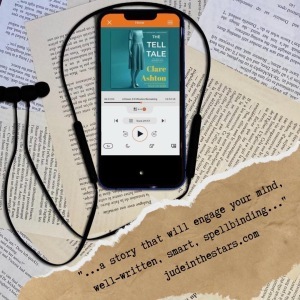
If you’re looking for a fluffy read, get another book. If, however, you’re looking for a story that will engage your mind, well-written, smart, spellbinding, you’ve found it.
I received a copy from the author and I am voluntarily leaving a review.
How much I loved this! This is actually only my second book that I read by Ashton but I’m already noticing a pattern. These books start rather slow, not boring, but slowly building. The small village and its inhabitants and the mystery are crafted beautifully, but ow if it wasn’t frustrating to read about this male dominated society! Multiple times I had the urge to snap Brin’s neck, what an awful, miserable man! I was surprised by the diversity in gender and sexuality in the book especially since this is set in the 70’s.
I’m not going to say anything about the story, just that it captivated me. I listened to the audiobook and really appreciated the Welsh accents. Recommend.
5⭐ The Tell Tale is a wonderful story about several women, set in a small Welsh town in the seventies. The homophobia and sexism are still in full bloom and it almost felt like the story was set much earlier, as I was a teenager in the seventies and it didn't feel as oppressive. But I lived in a bigger city, my parents were open-minded and equal, and I didn't even know I was into women, so I guess that made a big difference.
Beth Griffiths comes back to the small town of Foel with her teenage daughter to care for her aging mother to leave her life in London behind and get some distance. Lady Sophie Melling is the heiress to her parents' manor and she had hoped to live a quiet life here without having to worry much about the community. But the community is demanding and sometimes ruthless and not afraid to demand everything they think they are entitled to.
The mystery surrounding the disappearance of two young people twenty years ago still haunts the community. Why did the two take off without a note? When suddenly several people receive notes that draw attention to events that you don't want to be dragged into the public eye, the story begins to pick up steam. Who is writing these notes and how does this person know all these things?
The story begins at a leisurely pace but the author has a fantastic gift for slowly but gradually building the suspense until you can't put the book down. Soon a suspect is in the sights of the reader, only to discover at the end that not everything is so clear and simple.
POV is from several characters which fit very well for this story. I don't always love this as it can also bog the story down, but not in this case. Here it brings a lot of insight into what happened and is happening. The dynamics in the community, led by patriarchs whose big-headed behavior and the way they treated the women made me angry several times. In the end, however, it is the women who prevail.
The characters are fantastically drawn and I loved each of the women in their own way. I wish I could be more like Meg sometimes and dare to say exactly what I think. Slowly we learn what Sophie, Beth, and Elin's relationship were with each other. And twenty years later they have to realize that sometimes appearances are deceiving or one's own feelings can cloud one's real view of another person and they have to change their minds to see the true character. And Carys, the housekeeper at the manor, has found a special place in my heart. The sometimes grumpy older woman has her heart in the right place and is the secret star of the book. Find out by yourself why. What really impressed me is how many diverse (for example lesbian, gay, trans, asexual) characters Clare Ashton was able to incorporate into the book without it becoming too cluttered.
This is not a classic romance but it has a fine, beautiful love story, and it is also about friendships and the dynamics in small towns. The story is, as always from this author, very well written, detailed but fluid. Lots of subtleties and twists and turns, but without getting bogged down. An exciting and in the end even thrilling story. Thank you Clare for the entertaining and captivating hours.
My rating is 5 stars. Thanks to the author for receiving an ARC for an honest review.
Ashton is one hell of a writer and her writing skills are solid. So solid that Finding Jessica Lambert remains one of my all time favourites.
The Tell Tale is nothing like anything I've seen coming from Ashton before. It's a mystery this time and it's set in 1970s Wales. It tells the tale of three women in a misogynistic society, the choices they make and the lives they are resigned to. It tells the story of a mysterious tell tale that threatens to expose their deepest secrets. Ashton shows off her brilliance once again here. Her writing will draw you into the universe the characters live in. It will captivate you with the complexities of each character and a storyline that will leave you angry and sad at various points. And then it will reward you with a love story that has a happy ending.
I received an ARC from the author in exchange for an honest review.
In my recent review of Finding Jessica Lambert, I was singing praises of Clare Ashton’s versatility in writing different genres. Ms. Ashton can write rom-coms, dramas, traditional romance… Now I can add mysteries and historical fiction to this list. It amazes me when authors can tackle a variety of genres and, in this case, all with fantastic results.
In the early 1970s, Beth Griffiths goes back home with her daughter to her small town in Wales after years of absence. A few months later, different people in the village start receiving anonymous notes revealing their secrets. But when Beth starts receiving hers it seems that they are revealing a mystery from the past…
Wow, I’m incredibly impressed by Ms. Ashton’s talents, so much so that I’m running out of compliments. This novel is so hard to categorise, it’s a mystery, it’s historical fiction, and there’s romance too. Ultimately, it doesn’t matter because despite these labels Ms. Ashton manages to produce an epic feminist tale that will grab you by the throat, put a lump there, and make you hold your breath until the very end. There are few books in lesfic that have the ability to rip your heart off and put it under a shoe (in the words of poet Miguel Hernández), stories that will stay with you for a long while, if not forever, and this is one of them.
This novel is set in a Welsh rural town in the early 1970s, though it could have been set almost anywhere. As in every small town, people’s private lives are everyone else’s business, gossip that opens doors to ostracism, power imbalance and injustice. Not everyone is judged with the same severity, this is the 1970s and if you think that gender and sexual orientation inequalities are bad now, think again. Women were considered second-class citizens who should stay at home and serve their husbands, treated as sexual objects, or regarded as evil temptresses who shouldn’t provoke men or else deserve what they get. Queers were seen as unnatural and an abhorrence of nature. I was a little girl in the 70s and let me tell you, Ms. Ashton isn’t exaggerating at all.
Fortunately, the other side of homophobia, misogynism, and injustice are women and queer empowerment, it’s the ability to make one’s voice be heard above the judgemental cries of the masses. The Tell Tale shows that empowerment at its best and against all odds, it gives hope that honour, friendship, and ultimately love can conquer it all.
The Tell Tale is unique in so many ways and the setting is one of them. Ms. Ashton’s depiction of rural Wales is the perfect background for the mystery in its desolation, inhospitable landscape, and gloomy weather. Even the random power cuts contribute to the dark tone. Funny how different is the depiction of the same nation if we compare it with Ashton’s romance Poppy Jenkins, also set in a small town in Wales. Two sides of the same coin that the author knows well, as she was brought up in Wales.
Mysteries are hard to write and need to have a consistent and tight plot without loose ends and, at the same time, give some hints to the reader without giving it away. Ms. Ashton did an excellent job in weaving a complex web of intrigue. The novel is written from four different points of view and has multiple characters and suspects, a considerable amount of information that finally makes sense at the very end. The author has the reader turning pages until the last page. And what an ending it is, absolutely fantastic. This novel would make a great movie, just saying. 5 stars.
ARC provided by the author in exchange for an honest review.
Oh this boooook! It will wrap you up in feelings and mystery, it'll spread little tiny clues and bits of information out like breadcrumbs and you'll finish this gorgeous tale and look back and give the the softest "oh" at just how incredibly it was all laid out. Don't wait to read this, it is everything.
Oh the '70's. Those of us who lived through those Laura Ashley floral wallpaper years were happy to get away from the many shades of beige, orange and brown and were grateful for a bit of colour in our lives at last. What hadn't changed was the misogyny along with the conviction that women should marry and stay home with the children.Those of us looking at a career and an escape to the cities were frowned upon by the locals and made to feel less for having the nerve to strike out on our own. The Tell Tale is set in this repressed, male dominant world. Ashton pulls you into the attitudes and behaviours of the time with ease. She also nails small town life and the busy bodies who took great delight in spreading gossip and rumours about those who left the narrow moral trail we were all expected to follow.
This is a much darker look at small town life in Wales in comparison to Ashton’s Poppy Jenkins. Poppy is full of cheer, beloved by the locals and living her best life. Not having a girlfriend is the only shadow in her sunny spring world of Wells. The Tell Tale takes place in 1970’s Foel, a small village filled with folks who love to gossip and spread rumours. Their narrow views on acceptable behaviour set tongues wagging when Beth returns to her parents home with her young daughter in tow but no husband. The locals also have low regard for the new Lady of the Manor and her frequently absent husband. Instead of sunshine and flowers, Ashton makes us feel uncomfortable and on edge watching the way the men of the village treat the women, the sense of fear and trepidation, the notes which set many in the community on edge. The reader can feel danger lurking in the air. We worry Beth and Nia will be safe and wonder how Sophie will cope with the blustery Bryn’s attempts to force her out of her rightful place as head of the Manor. The mysterious notes only add to the unease. In other words, a perfect setting for a mystery. I like how the author drops little bits of information along with a large enough cast to keep the reader looking for motives and means while sorting the villains from the village idiots.
I love a good mystery, the darker the better. Tell Tale lives up to the high standards we’ve all come to expect from Ms. Ashton. Well done.
A copy of this book was received with thanks from the author for review.
Oh, to find the words to write a worthy review... 🥺
*Takes a deep breath...*
Featured presentation: The Tell Tale by Clare Ashton
No secret is safe…
Cast: Beth Griffiths finds herself back in her hometown of Foel with her young daughter. Lady Sophie Melling recently inherited her father’s estate and decided to take up residence in the old manor. A covert presence leaving menacing notes all over town.
The Plot: The colourful inhabitants of Foel find themselves at a loss when mysterious notes start to appear. Nobody is exempt from the Tell Tale’s quest to air the town’s dirty laundry. But then the tone of the notes begin to change…
The blazing: At first, I just wanted to say “this book” and be done with it as the author's name speaks for itself, but there are a few things that deserve to be mentioned…
From the get-go, Ms Ashton makes this small town in Wales come to life! She effortlessly sets the mood and you can feel the Welsh air to the degree where it almost becomes a character by itself…
The variety of characters employed by Ms Ashton to spin her web of intrigue adds gravity to the extent of the mystery and each person is detailed and given purpose.
And, oh, that ending!!!
The bright: Ms Ashton includes different types of sexual orientation and gender identification, but as this takes place during the 1970s, none of it is addressed head-on. This adds to the authentic feel of the narrative.
The bleak: Nothing, apart from the weather in Foel at times…
The burned-to-ashes: Nothing.
And then The Plot Thickens like a thick fog that envelops you and robs you of your eye sight. There is a sound in the distance that compels you to follow it. The direction from which the sound comes changes with the change in character voice. And the reader follows blindly. Suddenly, the fog clears and the reader receives answers to all the questions that have been nagging since the first page.
Ms Ashton then succeeds in providing a satisfying ending for all…
Studio: Breezy Tree
Closing credits: And, yes, I’m still baffled by the excellence of "The Tell Tale". Pure class, Ms Ashton, pure class!
OMG this book is fantastic! I loved the mystery and the (likable) characters. This one kept me guessing all the way through, and I adored the ending!
So, this book started out pretty slow for me. Except for the occasional ominous note left by the Tell Tale, it didn’t seem like much was happening. It was hard keeping track of all the characters, and the town’s men (who we, unfortunately, spend a lot of time with) are absolutely repugnant. I wasn’t sure how much more I could take. But at around the 30% mark, I found myself getting invested in the main characters as things started to pick up the pace. From then on, I was hooked!
The Tell Tale has four POVs in total. Beth Griffiths, one of the two main POVS, is reluctantly back in Foel with her daughter to take care of her ailing mother. She has terrible memories of Foel and I felt her dread at the prospect of watching her daughter going through the same things. The other main POV is Lady Sophie Melling, the reclusive heir to Foel’s manor who can’t escape the townspeople trying to tell her what to do. This book features a large cast of characters (wonderful and reprehensible alike) who are all acquainted with one another, giving a feeling reminiscent of a dark, twisted soap opera.
As I mentioned, the pacing is rather slow at first, but for most of the book, it was hard to put it down. Secrets are dropped and small truths are revealed, and my main question while reading was “What the hell is going ON in this town?” Sometimes there’s info-concealing, but I didn’t mind that because I liked how it adds to the mystery and increasing tension.
There are some love stories in this book, all of which I adored! I won’t spoil anything about who or what, but I loved the different types of relationships featured. I also loved the different queer identities represented, especially the character who is asexual. I loved the way this character describes their love, and I cheered them on for loving themself as they are.
The only other book I’ve read by Ashton so far is Poppy Jenkins, a sweet romance, so this is completely different genre-wise. What the two books have in common, though, are lush descriptions of Wales scenery, lovely queer characters to root for, and relationships with lots of depth and history. This just shows Ashton’s incredible range of writing: I truly think she could write any genre and retain her particular flair.
My one real complaint is that a few of the lines of inquiry didn’t wrap up completely. They’re not major plot points at all though, and the answers can be inferred so that they make sense.
In short, this novel completely absorbed me and I can’t wait to read the rest of Ashton’s back catalog!
4.5 stars I will say up front that I'm not one that usually reads mysteries. I don't dislike them, but I don't like the genre enough to seek them out. But Clare Ashton is one of a handful of authors whose immense talent makes me want to read everything she writes. And as usual, I'm glad I did. The build-up is a bit slow, putting all the pieces together... allowing us time to gradually get to know the characters, their backgrounds, their motivations. A little surprise nugget is sprinkled here and there. I appreciated that in spite of this being a small community, there was more diversity than one might expect. I found the relationship between Elin, Beth and Sophie unique and fascinating. One of the other highlights for me was learning about an unfamiliar land, their customs and language. This being a mystery, not much can be said about it without giving something away, but I believe those who enjoy this genre or Ashton's work in general will be quite pleased.
The Tell Tale is a historical fiction with many awesome queer reps, and it is the quality mystery we need!
The year is 1971 and Beth Griffiths (~38) has returned to the village of Foel with her daughter Nia at the same time people start getting anonymous notes that reveal secrets of their past. Lady Sophie Melling (~38), who recently inherited a manor from her late father Lord Melling, is also back in the village. And the villagers are pointing fingers, desperate to find out who is the tell tale as more and more details about what happened in Foel twenty years ago begins to unveil.
Now, where to begin.
It is almost impossible to talk about any of the characters, their relationships and identities without spoiling something about the story. I can only say that reading The Tell Tale was quite an emotional ride, and the storyline definitely kept me on the edge of my seat.
While it is set in Wales in the 1970s, the story reflects so much of the world today. The many themes of injustice (including queerphobia, misogyny, homelessness, class segregation in social settings, mistreatment of the working class, racism, etc.), of toxic masculinity, of queer representations are spread throughout the scenes. None felt like checking diversity and inclusion boxes but were deeply woven into the storyline. Through the characters’ interactions with each other, we learn about the village of Foel, the characters themselves, and the overall world.
There is a lot of misogyny. And by “a lot” I mean it is literally what the story is based on and set in. Many of the characters are completely repulsive, twisting the truths and people’s words to serve themselves. At many occasions, I could feel my blood boiling and I just wanted to scream. I felt helpless as a reader seeing the scenes unfurl, but I trust that the story is going somewhere and it would not end on a painful note. And the ending was so satisfying!
At first, I had trouble remembering who’s who. But as the story progressed, we get to know all of the characters—the lovely ones and the despicable ones—and deeply feel all their dynamics, their motivations and drives and loves and fears. At no point did the story lull. Throughout the almost-400-page book, the village of Foel came to life and I felt all sorts of emotions—anger, repulsiveness, sadness, softness, and happiness.
And the writing, the warmth of Ashton’s words, the little descriptions in the story, and the flow of the sentences. Ashton writes so well I felt everything taking place around me—the details of a space, the thoughts and feelings of the character; I can see them happening.
I love the queerness of the story, both in the sense of weirdness and the queer characters. I especially appreciate the ace rep and genderqueer rep, and seeing them makes my gay heart so happy! Also, I love that Welsh is incorporated into the dialogues. It infuses so much life to the story and setting.
While a sense of sadness and foreboding permeates through the book, The Tell Tale is a very satisfying mystery that ends on a wholesome note. Queer folks have always existed, and thank you, Ashton, for writing this story for us.
content warnings: misogyny/sexism, discrimination/hate against LGBTQ+ people, hate crime, domestic abuse, gun, hunting, blood, bones, alcohol (recreational & abuse), death, loss of loved one, homelessness, mental illness, trauma, non-consensual drug use, drug withdrawal, injury, violent attack, outing of queer people, cheating (minor character), racism
Buddy read with Gabriella! Check out her review here!
I received a digital review copy from the author and am voluntarily leaving a review.
This is unexpectedly a very good one. Okay I did expect it a little but not this much. I came to conclusion that this book is meant to be read in one go or you won't stop wondering about what actually happened. I don't have enough time for that and I tell you, it's a torture.
Some part of me believe that historical fiction can be boring and slow and for that reason, I avoid reading one but this one definitely not boring. Slow at first but quickly getting interesting before you know it.
So this book is about 70s small town mystery and for the sake of the mystery I won't tell what is it about. Not a romance according to others but there are part of it ofc. Okay, for this one, I must say it's different from the rest of book that I ever read. Feeling exchange between Beth, Elin and Sophie are a bit confusing for me. I think I get it but then I don't understand how it work. Btw one of them are asexual and this is the first time I encounter this kind of character. It is interesting.
Another beauty from this author. The story is phenomenally carved out in gorgeous language, a small town mystery, laden with the claustrophobic secrets that only tiny populaces can harbour.
When Lady Sophie Melling and Bethan Griffiths reunite, it’s awkward and painful. Decades have passed since they last saw each other at school and no one in Foel seems to be on the same page as to what really happened back then. The town and its lore are so layered in lies and corruption that the world seems inside out. Foulness is king and decency has been been smothered or, at least, muted out of existence. The story is set in the 1970’s and somehow, it seems even more backwards since women have no voice or purchase in this town, a darkness looms for all who are not male. The Tell Tale is an extraordinarily told mystery but also a heavy weight on the heart and mind but I thought it well worth the journey.
Listened to the audio with the help of the ebook in front of me. I did have to rewind now and again but hearing the Welsh accents and words in the narration added to the atmosphere and made the story more present.
“Oh, wow!” I started repeating this about one chapter into the novel, The Tell Tale by Clare Ashton, and continued the exclamations long after I finished the book. You can ask my partner. After a while she would just answer, “Yes, dear, I know,” every time I said it. This story is very different from any I’ve read before, but I’m so glad I asked to read and review it.
This is a story set in a small rural village called Foel in Wales in the 1970’s. Homosexuality had only been legal a few years (1967), but in Foel, that wouldn’t have mattered much. The place is definitely male oriented to the point that the women are relegated to being only wives and mothers after they graduate high school. Gossip is the sport of choice for the villagers, and anyone deemed “different” is going to live a hard life. In this atmosphere we are told the story of three women: Beth Griffiths, Lady Sophie Melling, and Elin Mathews, and wow, is there a story here.
The author has told a masterful tale of a village (and its people) filled with secrets that someone wants out in the open. This is an intricate mystery and intrigue filled with more twists and turns than a knotted ball of yarn. The setting is kind of creepy in a misogynistic, homophobic way. The characters, both main and secondary are unforgettable. The story itself is amazing with an ending I never saw coming.
I’m still going, “Oh, wow!” whenever I think about this book, and it’s been a few days since I finished reading it. This story is worth way more than 5 stars. It has my highest recommendation. You must read this novel.
I could not stop listening to this book. Lucy Rayner did a fabulously sultry and wonderful job. The story itself. Oh my. Clare Ashton has outdone herself with this book. The descriptions and threads of mystery were delicious. I adored the characters, and even those I despised were so fleshed out and well rounded I couldn’t help but nod and purse my lips, having known them at some point in my life.
The turns and twists in this book had my head spinning in all the right ways. I loved thinking a theory, and then having it blown out of the water, only to wonder was it really? I distinctly remember getting a very Sweeney Todd feel at some points, despite the apparently more enlightened time The Tell Tale is sent in.
The representations of identities in The Tell Tale were absolutely incredible and I couldn’t help by feel for them all.
But with amazing lines like this:
- they both laughed, the kind that shifts you into the person you once were. - Sophie’s past eerily walking through her present. - There was nothing like being stripped back to childhood to make a person vulnerable.
I have said it before and will no doubt say it again, Clare Ashton writes exceedingly good books, and they are getting better and better.
The writing is masterful, managing 4 different points of view and interweaving the action and memories from events 20 years earlier along with a huge cast and more twists and turns, red-herrings and secrets than most authors fit into a series.
It is essentially a mystery, although Ashton manages to weave in 2 romances, and, based in the small village trope, set in the 1970’s and demonstrating the misogyny of the day, it is also a political commentary on the attitudes of the time. I’ve compared her to Jane Austen before and the likeness becomes stronger with each new work.
The plot is complex and intriguing, who is the tell tale and how do they know the secrets of the village? Why and how are they suddenly posting their notes, embarrassing and exposing the less than pleasant underside of village life? Like any well-done mystery it pulls you in and twists your mind around like a pretzel while you follow the convoluted storyline. I genuinely don’t think anyone will guess the crypic outcome before we are allowed to start piecing it together.
Like any great literature the characters are multi-faceted, they have depth, history and presence. Ashton has the ability to put you inside their minds, feeling their emotions and living their hopes and fears. Doing it with 4 points of view is a new level of complexity which sounds ripe for failure, but she pulls it off with what appears to be consummate ease.
And most of all, it is a great read. Its witty and charming while also being sometimes dark and claustrophobic. At times heartbreakingly sad it will leave a lump in the throat, at others it is full of light and laughter. Don’t plan on putting it down before you finish it – it wont let you go before it’s done.
I don't have anything else to say which haven't been said by other GR readers. The Tell Tale is THAT good, so well-written that it held my interest from the get-go and had me staying up the whole night as my hand itched towards the ending and refused to simply off my kindle. And my eyes helped as well as it refused to close.
TTT is not your typical romance. So if you are expecting something sweet, something fluffy, then TTT is not the book for you. It is more than just a love story... There is a mystery that needs to be solved; who is writing those notes? Where and what happened to the 2 teenagers who ran away. It's a story of 3 ladies, Beth, Sophie and Elin, who met in their teens, developed feelings, had a relationship until one went missing; left town overnight with a boy without as much as saying goodbye or eloped as whispered by the villagers. Some twenty years later, Beth returned to Foel with her daughter to look after her mum, Lady Melling or Sophie living in the manor which she inherited and Elin still missing. And notes, which revealed hard truth start to appear as the villagers tried to ascertain who is the mystery writer of these notes.
Many wonderful secondary characters in the story (Nia, Carys, Megan, the Vicar) and just as many, if not more, misogynist men that really irked me and had me all worked up while reading TTT.
Solid 5 ⭐️ and TTT is one book which I’ll read again.
Have you ever read a book that kept you riveted to your seat (or bed lol) for hours, anticipating each new twist with bated breath until that final 'Aha!' moment when all the clues finally come together and you finally get to that gratifying ending? Well..The Tell Tale is one of those. Better hang tight on your Chesterfields my friends because this one's full of twist and turns and some delightful surprises along the way.
----
The Tell Tale is set in 1970s Wales, in a town called Foel. The story is divided into four alternating perspectives. Each character's POV is vital and adds depth to the story as it unfolds. We have Lady Sophie Melling, Lady of the Manor and unwilling gentry. She's been called names by the towns people because of her unwillingness to bend to the whims of the men that run the town. There's Beth Griffiths, an old resident of Foel who recently gone back home with teenage daughter Nia. Her days are full of dread of the town finally knowing the truth of why she's really back home and her nights haunted by a lost she still has not recovered from 20 years later. Geraint Thomas, a local and one of his imposing father's lackeys and finally, his mother Rhian, whose life in the past 20 years has been filled with sorrow and questions for the son who ran away. Deeply hidden secrets will be revealed and lives will be turned upside down when the Tell Tales notes start appearing in the lives of these characters.
This book..Wow, what a ride..is all I could really say. Clare Ashton has this uncanny ability of just reeling you in and never letting you go until the very last page. I have to admit though, the first few chapters had me going 'what the heck is going on?!' but by the middle of the book I was so invested in the story that I had to know what comes next and didn't stop until the very end. Each chapter is a revelation and a cry of how the patriarchy's power is destructive to many people's lives especially women. Despite this being set in the 70s, the atrocities committed by men in power is relatable in our modern times. It was maddening to read that I had moments when I was silently seething and wanted to punch the faces of each mysoginistic turd in this book. And that, I believe, is the magic and the power of Ms Ashton's words, because it gets to you. It makes you think. It makes you seeth with anger.. and makes you rejoice for the triumphs of the characters especially the women in her stories, making her one of my favorite authors.
For future reader's benefit, I will not give any more spoilers , but let me tell you that there are parts and storylines in this book that were a pleasant surprise and gave a definite smile on my face. If you want a book that has so many layers, a riveting plot, a sweet and enduring love and a lot of representation, then this is the book for you. I, for one, cannot wait for the next book from this author. ♥️
What a lovely, moving and compelling mystery novel. I've had a mixed history with Clare Ashton books- I absolutely loved Finding Jessica Lambert and I enjoyed Poppy Jenkins, but I have the unpopular opinion of not really liking The Goodmans. So I didn't know what to fully expect out of The Tell Tale, but I think it jumped up to my favorite of Clare Ashton's books.
The Tell Tale follows Beth Griffiths who returned with her daughter to her small hometown of Foels in Wales. Beth was apprehensive about coming back home as this town is as old thinking as it's possible to get, especially for the 1970s. And this gets even more amplified when many members of the town start receiving mysterious notes revealing things they would prefer to keep hidden. But what is the point of these notes? And what truths are there really to be revealed in a small town?
So I was super into this. I actually took notes through the first part of the book not just so I could keep the large cast of characters straight (pardon the pun) but so I could potentially figure out this the secret! This book was exciting and thrilling!
Another thing about this book that I particularly enjoyed is how entrancing and thrilling it is without being particularly scary. It could be dark, and there was one scene where I felt it was creepy, but this book isn't scary. And for a mystery book I felt like it was so well done.
As I briefly mentioned, there are a lot of characters to keep track of in this book, and the majority of them are really interesting and well done in one way or another. This is something I feel particularly shines in a lot of Ashton's writing, and it comes out in spades here. Beth is such a lovely character, and I really loves seeing Sophie's progression through the book. And my favorite characters ended up being who would in many mystery novels be side characters like Reanne and Carys.
There isn't really romance in this book in the strictest of sense, but there definitely is a lot of love in this book. And seeing a budding love and trust slowly grow between Beth and Sophie was touching to me, and how they came together over their love for Elin was really sweet. I really enjoyed reading about all of them.
Fair warning, for other people reading, there is a decent amount of misoginy and homophobia in this book.
This is a fun and exciting mystery novel, with a lot of heart and not many scares. I really enjoyed it. 4.75/5
I have read this book as an ARC copy provided by the author in exchange of an honest review.
This book is not a love story. Or not only a love story. And it’s definitely not about who I thought it would be about. This book is simply put, about the fact that “There (is) nothing so threatening as a beautiful middle- aged woman who knew her mind.”
The book is set in the 70’s in Wales 🏴 , which is described beautifully as the author is personally familiar with this area. Claire posts some beautiful pictures from Wales sometimes and through her beautifully crafted words, which is among why she is my absolute favourite author within this genre, I felt from the first page that I walked there myself and knew all about this place. The little town of Foel, Wales, where “new idea took an eternity to spread and seemed exhausted by the time they arrived so that they never really took hold.”
The chapters are being told from different characters POVs and that’s how we are also introduced to the colourful people of Foel.
There’s no love lost between some of the MCs, but we don’t know why yet and the way Ashton is unraveling the background story of these people is in her characteristic wonderful writing: “She stared at the conflicting mass of Bryn Thomas, perceived as the generous heart and soul of the village when all Sophie could see was malignant jealousy, seething conspiracies and foiled plots.”
The wonderful writing doesn’t stop here of course, the way Ashton describes the misogyny of the 70s, unfortunately still present today, is also precisely on point and yet in the same beautiful, raw language I have grown used to from her: “He didn’t mind women in trousers like some, so long as you could see the shape of them. She’d be tender, ripe, adoring against his body and he felt powerful like the man owning the skyscrapers of 7th Avenue that rose in the poster’s background.”
There’s a high level of angst throughout this book and I personally found myself triggered and catapulted back down memory lane into a life under communism in the 80s where nobody dared to talk back to teachers in school, not even parents, not even when kids would be abused. I hadn’t even realized this until Ashton herself points it out to me: “Beth lay, blinking back tears, feeling quietly savaged by the place called home.”
There’s drama unfolding left and right, some more serious than other like Rhian Thomas’s use of very strong pills for years, while for Sophie “It was barbaric not to have a cigarette with her morning coffee.” 🤣 And this use of subtle humour, another characteristic of Ashton’s writing, is just amazing, putting a smile on my face just when I think I can’t handle the stress. Then she gets right back into the writing language that got me hooked on to her books from the start: “Sophie found poetry impenetrable. Why couldn’t poets say clearly what they meant? Who cares if it took a few more lines? What was the point of alluding to antiquated works when no-one read them anymore? But when Elin read, when Elin spoke, the words bled. The obscure meaning on the page fluttered into life. It filled the air with living breathing souls.”
It’s the very first time I believe when my favourite characters in a book are not the main ones. The vicar is a quiet, private and sweet man, always there “to talk or for quiet company, whichever is more useful.” So courageous to live his truth, even more so probably in the 70s. And Meg, sweet Meg who’s the only one at times willing to be herself. To stand up and shout in front of the entire village about the unjust criteria girls have to live up to compared with the boys. And Carys, who does the right thing even as she intimidates those around her.
The mystery and background of the characters starts to be disclosed from chapter 22 and it’s nothing short of exciting and shocking at times.
Chapter 33 is very raw and one of my favourites due to the honesty in it.
The whole world status is described in such a raw, direct and honest writing, which reminded me of Taylor Jenkins Reid’s book: “Because we’re not even at the table for discussions. We’re not present when decisions are made. Remember all those times you told me that half a village bobby’s job is informally chatting to folk. But where do you talk to them? At the Round Table. In the men’s bar. At the village council where all the representatives are men.”
This book is definitely not your usually light reading, wlw romance or fluff. It’s deep and raw and triggering and emotionally draining, but again this is what I have come to expect from Ashton and I would be quite disappointed if she didn’t offer me these kind of stories.
There’s open and subtle conflict, there’s history, there’s mystery, there are three dimensional, complex characters and situations, there’s love, there’s hate, and there’s everything else in between. And this book is a masterpiece. Best yet to date by Ashton in my opinion and as I said, she is my favourite author and I have read all her books. So do yourselves a favour and grab at least this book if you aren’t familiar with this author, a thing which I strongly suggest y’all immediately correct!
This entire review has been hidden because of spoilers.
Clare Ashton is an amazing writer, and this story is unlike any other that I have read. It's quite dark, which is not usually my thing, but I couldn't put it down.
A powerful statement on the right to be who you are. The best thriller I’ve read this year.
There’s nothing scarier than reading a thriller that reminds you how much fiction doesn’t differ from reality. When you realize that what you are reading is a story that has been told many times on the news, you embrace all its power, and you start wondering why it’s still so important that these stories are told. Most of all you end up asking yourself the question many of us don’t dare to, and the one that Clare Ashton used as dedication of The Tell Tale: “Why?”.
The answer to that doesn’t come easily, and this is the reason I just couldn’t put the book down. Like a intricated puzzle, you are given subtle hints, to put each piece together, little by little. When you are halfway done, you start letting your mind wonder about the mysterious villagers of Foel. Some words, some passages, some hidden truths: quiet, eyes, believe, dead, witness, silence, empty, control, voice… much left unsaid.
I really don’t want to say anything about the plot or the characters (no spoiling this at all, as it’s a beauty to discover it by yourself), just be patient at the beginning, as Clare Ashton takes time to introduce all the characters in a very detailed way, as this will serve later to the story, to understand how each of them is connected.
But after you read it, ask yourself if what it’s written in the book isn’t something that us, women, are still fighting for: recognition, right to be who we want to be, love who we want to love, dress the way we want to dress, speak our minds the way we want to, be heard and most of all be respected as human beings, equal to any other gender.
Beautifully written, with a gloomy atmosphere as a setting and a whirlpool of gossiping you mostly find in small villages. Everybody knows everybody… but do they really do? I flipped page after page, pausing every now and then to think, to marvel at the plotting, to point fingers too, to make hypothesis. A thriller that puts your brain at work is a feast for your imagination.
When you dig under the surface it’s like opening Pandora’s box, all demons and secrets are free to infest the apparent normality, the forced appearances, the fake smiles. What is different is looked as unnatural and feared.
The unknown is scary, and this hasn’t changed in million of years, therefore the importance of this book.
It screams: "Change", "let me feel at home", "let me be happy", "let me be who I am", "don't judge me if you don't know me".
You simply must read The Tell Tale by Clare Ashton.
I'll be honest, I really struggled with the beginning of this novel, but I'm going to place some of the blame on the audiobook (highly recommend putting this at 1.25 speed) and I came so close to DNF'ing this at 20% because it was such a slog. But I am a masochist and I hate investing that much time into a book simply to abandon it. And, yes, I understand this is a little bit insane. But I am so glad for my stubbornly determined mind because I would have given up on what is a really compelling mystery and a super queer story. This is all the more remarkable because it's set in a small Welsh village in the 1970's. And that's all I can say about this novel without giving anything/everything away.
You convoluted for simple folk like me. No love for main characters, there were many of them, too many to pin down and by 20% (on Kindle) by brain was about to explode. Not for me.
Oh the '70s. Those of us who lived through those Laura Ashley floral wallpaper years were happy to get away from the many shades of beige, orange and brown and were grateful for a bit of colour in our lives at last. What hadn't changed was the misogyny along with the conviction that women should marry and stay home with the children.Those of us looking at a career and an escape to the cities were frowned upon by the locals and made to feel less for having the nerve to strike out on our own. The Tell Tale is set in this repressed, male dominant world. Ashton pulls you into the attitudes and behaviours of the time with ease. She also nails small town life and the busy bodies who took great delight in spreading gossip and rumours about those who left the narrow moral trail we were all expected to follow.
This is a much darker look at small town life in Wales in comparison to Ashton’s Poppy Jenkins. Poppy is full of cheer, beloved by the locals and living her best life. Not having a girlfriend is the only shadow in her sunny spring world of Wells. The Tell Tale takes place in 1970’s Foel, a small village filled with folks who love to gossip and spread rumours. Their narrow views on acceptable behaviour set tongues wagging when Beth returns to her parents home with her young daughter in tow but no husband. The locals also have low regard for the new Lady of the Manor and her frequently absent husband. Instead of sunshine and flowers, Ashton makes us feel uncomfortable and on edge watching the way the men of the village treat the women, the sense of fear and trepidation, the notes which set many in the community on edge. The reader can feel danger lurking in the air. We worry Beth and Nia will be safe and wonder how Sophie will cope with the blustery Bryn’s attempts to force her out of her rightful place as head of the Manor. The mysterious notes only add to the unease. In other words, a perfect setting for a mystery. I like how the author drops little bits of information along with a large enough cast to keep the reader looking for motives and means while sorting the villains from the village idiots.
I love a good mystery, the darker the better. Tell Tale lives up to the high standards we’ve all come to expect from Ms. Ashton. Well done.
A copy of this book was received with thanks from the author for review.
This is the first mystery book I ever read from Clare Ashton, and I was hooked from the first page. It transported me to the remote Welsh village in the 70s, I could feel the chill of the bitter winter and saw the story unfold like a IMAX 3D movie. The writing is endearing and although there aren't too many plot twists and few surprises, I can't help but loving the main characters, the three high school friends and admire their courage and bravery and I am very happy with the dream ending.
Beth had returned to the small town where she grew up but things don’t seem right despite the warm welcome she receives. Notes that expose secrets of the townspeople start turning up randomly upon Beth’s arrival and fingers start pointing but when Beth receive some notes, they aren’t the secrets she expected them to be which sets her on a path to perhaps find out what it is that is making everything seem so strange.
WOW! What a story! I am actually speechless and don’t really know how to do this story justice with a review because everything about it just had me on the edge of my seat. Being a mystery it is packed with red herrings, twists, turns, the unexpected and I had no idea what the outcome of it was going to be, nor who I was supposed to suspect.
I loved every minute of the story, hooked from the very first chapter and unable to put the story on. Intrigued by each and every character. Feeling nostalgic by the period in which the story was set, and just loving the mystery presented. The notes were brilliant little insights, revealing things about characters without giving much away. To say I was shocked by the outcome is an understatement. It was in no way predictable and when you read the story, I am certain you’ll agree.
Everything going on was cryptic and got me thinking and suspecting everyone in this town. The secrets that were being revealed, the truths about days gone by, everything; just has me excited to read this story again and again. It is an expertly created, intriguing mystery. The small town setting really suited the story and characters. I could imagine everything perfectly from the wonderful descriptions. The intimate descriptions of the characters feelings made it easy to connect with them all, whilst still keeping some distance between revealing their real selves too early.
Absolutely exquisite story and I highly recommend it. You really do have to read it to experience it for yourself because the feeling as everything was exposed and surfaced was amazing. I was completely engrossed and so excited to find out what the truth was. There is a bit of everything in the story, providing amazing representation and a variety of characters, situations, relationships, and emotions.