When director Matt Reeves was first developing his upcoming reboot The Batman, he co-wrote the script with Mattson Tomlin, who is a filmmaker in his own right, having written and directed his debut feature Mother/Android. Although Tomlin remains uncredited on The Batman, his involvement led to him writing his own Batman comic for DC Comics, working alongside with one of the best artists working today, Andrea Sorrentino.
Although I initially thought this comic would tie in with Reeves’ film, Batman: The Imposter is ultimately doing its own thing, albeit yet another grounded, gritty take on the Batman mythos. The story centres on Bruce Wayne, who has only Batman for a couple of years, and during one night after being a bloody pulp, he finds himself reunited his old childhood psychologist, Dr. Leslie Thompkins. As much as Thompkins is determined to help Bruce with his mental state, a Batman imposter is causing chaos in the city through murder, making the real Batman a target of the GCPD, including Detective Blair Wong.
With a narrative that focuses on both an antagonist inspired by Batman’s vigilantism and the psychology of the flawed hero, all of which told in a grounded manner that evokes Year One, Tomlin isn’t breaking any new ground. The first issue is fairly standard in how it sets up in its players and central conflict, but the more you continue reading the book, does it fleshes out an emotional core.
In terms of how it takes liberties with the mythos is interesting, as seen in flashbacks where we see Alfred struggling to parent Bruce as a young, difficult child and seems to be no longer in Bruce’s current life. Also, James Gordon is no longer a policeman due to his alliance with the Batman, tying to an old case that plays a huge part in the story. Some members of the rogues gallery appear, including one who is featured prominently, but only pays off towards the very end, the story is more fixated with its new characters.
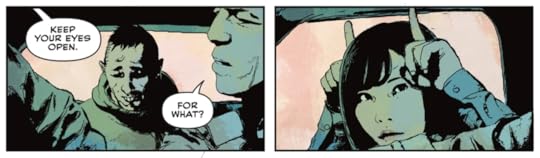
There are characters who mirror one another, whether it is Batman facing a version of himself that doesn’t mind the bloodshed, or Bruce forming a dynamic with Blair, who went a similar trauma as a child like Bruce’s. Considering how emo Bruce gets in the story, Blaire serves as a nice counter as she serves as a co-protagonist and their relationship brings out the emotional core, as well as showing a life that Bruce could have outside of the Batman.
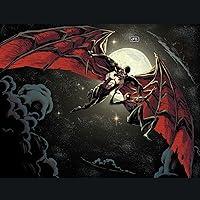
Having previously drawn Batman comics that were written by his Gideon Falls collaborator Jeff Lemire, Andrea Sorrentino has proven himself to be one of the best to draw the Dark Knight. Presenting a realistic Gotham, where anyone can be vulnerable – including Batman, who gets beaten a lot – Sorrentino does not hold back on pages where panels are constantly changing, mixing characters and environments, which can be hard to follow at times, just beautiful to look at either way. The action is also spectacular as Jordie Bellaire’s colours are used to punctuate the impact of characters getting hurt.
Like I said, Batman: The Imposter re-treads ideas that we have seen before in Batman stories, but the execution of what it sets it out to do makes it an exciting read, from the compelling characterisation to the stunning artistry.