

What do you think?

Customs: Poems
Winner of the 2023 CLMP Firecracker Award for PoetryWinner of the 2023 Northern California Book Award for PoetryFinalist for the 2023 Kingsley Tufts Poetry AwardFinalist for the 2022 L.A. Times Book Prize for PoetryLonglisted for the 2023 PEN/Jean Stein Book AwardIn Customs, Solmaz Sharif examines what it means to exist in the nowhere of the arrivals terminal, a continual series of checkpoints, officers, searches, and questionings that become a relentless experience of America. With resignation and austerity, these poems trace a pointed indoctrination to the customs of the nation-state and the English language, and the realities they impose upon the imagination, the paces they put us through. While Sharif critiques the culture of performed social skills and poetry itself—its foreclosures, affects, successes—she begins to write her way out to the other side of acceptability and toward freedom.Customs is a brilliant, excoriating new collection by a poet whose unfolding works are among the groundbreaking literature of our time.
101 pages, Kindle Edition
First published March 1, 2022
About the author
Solmaz Sharif
12 books211 followersBorn in Istanbul to Iranian parents, Solmaz Sharif holds degrees from U.C. Berkeley, where she studied and taught with June Jordan’s Poetry for the People, and New York University. Her work has appeared in The New Republic, Poetry, The Kenyon Review, jubilat, Gulf Coast, Boston Review, Witness, and others. The former managing director of the Asian American Writers’ Workshop, her work has been recognized with a “Discovery”/Boston Review Poetry Prize, scholarships the Bread Loaf Writers’ Conference, a winter fellowship at the Fine Arts Work Center in Provincetown, an NEA fellowship, and a Stegner Fellowship. She has most recently been selected to receive a 2014 Rona Jaffe Foundation Writer’s Award as well as a Ruth Lilly and Dorothy Sargent Rosenberg Fellowship. She is currently a lecturer at Stanford University. Her first poetry collection, LOOK, published by Graywolf Press in 2016, was a finalist for the National Book Award.
Ratings & Reviews
Friends & Following
Create a free account to discover what your friends think of this book!
Community Reviews
Displaying 1 - 30 of 213 reviews
![Profile Image for s.penkevich [hiatus-will return-miss you all].](https://i.gr-assets.com/images/S/compressed.photo.goodreads.com/users/1735525095i/6431467._UX200_CR0,11,200,200_.jpg)
April 26, 2022
Where does one exist between a homeland and a place to call home? Solmaz Sharif explores this space in her newest collection, Customs, looking at the immigrant experience to ‘learn’ a nation that seems to push you aside while mourning another to which you cannot return. She writes that it is ‘to exist in the nowhere of the arrival terminal,’ always between two spaces while contemplating the horrors that brought her to this condition and seeing in her new home, the US, the war-making that creates refugees, to be ‘without the kingdom,’ she says, ‘and thus of it.’ This is a deeply moving collection that grapples with imperialism and the culture shock for those who flee it, as Solmaz Sharif plays with form to rally the reader not simply towards empathy but towards action that would hopefully deconstruct the culture of war-making and islamophobia.
‘I have long loved what one can carry.
I have long left all that can be left
behind in the burning cities and lost
even loss—not cared much
or learned to. I turned and looked
and not even salt did I become.’
Born to Iranian parents, Solmaz Sharif’s first collection, Look: Poems, examined how war alters people and language. She wrote of having never seen the war but her life being forever affected by it, and in Customs she continues to look at the way this has placed her in an in-between of a nation out of reach—’a without which / I have learned to be’—and a nation that Others her. Much of the imagery in this collection surrounds the idea of airports, such as He, Too. Take a read:
“Returning to the US, he asks
my occupation. Teacher.
What do you teach?
Poetry.
I hate poetry, the officer says,
I only like writing
where you can make an argument.
Anything he asks, I must answer.
This he likes, too.
I don’t tell him
he will be in a poem
where the argument will be
anti-American.
I place him here, puffy,
pink, ringed in plexi, pleased
with his own wit
and spittle. Saving the argument
I am let in
I am let in until”
The final line remains unresolved, letting ‘until’ never reach completion much like the way she describes her never feeling completed or arrived in the US in this collection. Several poems employ this ending style, piling non-resolution upon non-resolution to impose that enormous and terrible weight on the reader. Other poems frequently use short bursts of lines spaced out on the page, leaving much blank space, making the poem feel fractured and scattered about the page much like the lives of refugees have been fractured and scattered around the globe.
This poem is also placed in a space where the speaker must answer in ways that satisfy, a theme that appears throughout, such as in the poem Social Skills Training where she lists advice to avoid confrontations. ‘Studies suggest How may I help you officer? is the single most disarming thing to say and not What’s the problem?’ she writes, ‘Studies suggest it’s best the help reply My pleasure and not no problem.’ Sharif looks at the way the American culture must not only be learned, but also lived fearfully when the color of your skin, or an accent, can mark you for increased scrutiny or violence. ‘History is a kind of study,’ she writes, ‘History says we forgive the executioner.’ It is a sad reality that the victors write history and the imperialists enforce the rules while demanding subservience. Or using any struggle for survival as reason to inflict harm. This all hit very hard reading it right after the recent murder of unarmed Patrick Lyoya (a 26 year old refugee from Congo) by police in Grand Rapids, MI just down the freeway from me. Sharif examines how situations like these are a dangerous space, especially for those who are marginalized and Othered, and the death is often followed by little more than a paid leave for the one who ended a life. ‘Solmaz,’ she writes ‘have you thanked your executioner today?’
‘To recall the Texan that held a shotgun to your father’s chest
sending him falling backwards, pleading, and the words came
to him in Farsi.
These are powerful poems, though in several interviews, she has expressed that she is distrustful of the sort of empathy people speak of when reading works like this, especially when ‘empathy means // laying yourself down / in someone else’s chalklines // and snapping a photo.’ It is the sort of performative empathy she criticizes, like changing your Facebook photo frame to support a cause and expecting applause, which she refers to as ‘emotional tourism.’ What Sharif says she wants is action, action that will disrupt the systems that lead to tragedy, that cause the refugee crises, and action that will keep the displaced and marginalized safe. I've had some really good conversations about this lately and while I believe empathy is important to doing that sort of work and treating people with dignity, I understand the ways in which she sees empathy being thought of as an endpoint and not a catalyst for change. It's a good reminder how we can all do better and not just learn but move forward with what we have learned.
‘No crueler word that return.
No greater lie.
The gates may open but to return.
More gates were built inside.’
This collection examines the immigrant experience and the ways living ones own life can be ‘the life that is not mine,’ feeling it is something being held over your head in a land that should feel like home but consistently gatekeepers itself from being the embrace of a home. Solmaz Sharif’s Customs is an important, well-argued and poetically emotional plea for action.
4.5/5
‘My life can pass like this
Waiting for beauty’
‘I have long loved what one can carry.
I have long left all that can be left
behind in the burning cities and lost
even loss—not cared much
or learned to. I turned and looked
and not even salt did I become.’
Born to Iranian parents, Solmaz Sharif’s first collection, Look: Poems, examined how war alters people and language. She wrote of having never seen the war but her life being forever affected by it, and in Customs she continues to look at the way this has placed her in an in-between of a nation out of reach—’a without which / I have learned to be’—and a nation that Others her. Much of the imagery in this collection surrounds the idea of airports, such as He, Too. Take a read:
“Returning to the US, he asks
my occupation. Teacher.
What do you teach?
Poetry.
I hate poetry, the officer says,
I only like writing
where you can make an argument.
Anything he asks, I must answer.
This he likes, too.
I don’t tell him
he will be in a poem
where the argument will be
anti-American.
I place him here, puffy,
pink, ringed in plexi, pleased
with his own wit
and spittle. Saving the argument
I am let in
I am let in until”
The final line remains unresolved, letting ‘until’ never reach completion much like the way she describes her never feeling completed or arrived in the US in this collection. Several poems employ this ending style, piling non-resolution upon non-resolution to impose that enormous and terrible weight on the reader. Other poems frequently use short bursts of lines spaced out on the page, leaving much blank space, making the poem feel fractured and scattered about the page much like the lives of refugees have been fractured and scattered around the globe.
This poem is also placed in a space where the speaker must answer in ways that satisfy, a theme that appears throughout, such as in the poem Social Skills Training where she lists advice to avoid confrontations. ‘Studies suggest How may I help you officer? is the single most disarming thing to say and not What’s the problem?’ she writes, ‘Studies suggest it’s best the help reply My pleasure and not no problem.’ Sharif looks at the way the American culture must not only be learned, but also lived fearfully when the color of your skin, or an accent, can mark you for increased scrutiny or violence. ‘History is a kind of study,’ she writes, ‘History says we forgive the executioner.’ It is a sad reality that the victors write history and the imperialists enforce the rules while demanding subservience. Or using any struggle for survival as reason to inflict harm. This all hit very hard reading it right after the recent murder of unarmed Patrick Lyoya (a 26 year old refugee from Congo) by police in Grand Rapids, MI just down the freeway from me. Sharif examines how situations like these are a dangerous space, especially for those who are marginalized and Othered, and the death is often followed by little more than a paid leave for the one who ended a life. ‘Solmaz,’ she writes ‘have you thanked your executioner today?’
‘To recall the Texan that held a shotgun to your father’s chest
sending him falling backwards, pleading, and the words came
to him in Farsi.
These are powerful poems, though in several interviews, she has expressed that she is distrustful of the sort of empathy people speak of when reading works like this, especially when ‘empathy means // laying yourself down / in someone else’s chalklines // and snapping a photo.’ It is the sort of performative empathy she criticizes, like changing your Facebook photo frame to support a cause and expecting applause, which she refers to as ‘emotional tourism.’ What Sharif says she wants is action, action that will disrupt the systems that lead to tragedy, that cause the refugee crises, and action that will keep the displaced and marginalized safe. I've had some really good conversations about this lately and while I believe empathy is important to doing that sort of work and treating people with dignity, I understand the ways in which she sees empathy being thought of as an endpoint and not a catalyst for change. It's a good reminder how we can all do better and not just learn but move forward with what we have learned.
‘No crueler word that return.
No greater lie.
The gates may open but to return.
More gates were built inside.’
This collection examines the immigrant experience and the ways living ones own life can be ‘the life that is not mine,’ feeling it is something being held over your head in a land that should feel like home but consistently gatekeepers itself from being the embrace of a home. Solmaz Sharif’s Customs is an important, well-argued and poetically emotional plea for action.
4.5/5
‘My life can pass like this
Waiting for beauty’

April 29, 2022
Customs is one of those words. Could mean habits and mores, as in of a people or culture or even family. Or it could mean some bureaucratic mess you have to wade through when passing through the dreaded borders of nationalism.
Which is somewhat on Sharif's mind here, as she speaks from the POV of an Iranian-America poet and teacher at Arizona State University who feels like a stranger in an increasingly-strange land (formerly known as the US of A).
The book is divided in three Roman-numeraled sections and, traditionalist me preferred the first, a collection of mostly short poems, 16 in total. Part II has two long poems, and Part III is consumed by one sprawling work that uses as much white space as words.
Hmn.
Anyway, here's the epistolary opener:
Dear Aleph,
Like Ovid: I'll have no last words.
This is what it means to die
among barbarians. Bar bar bar
was how the Greeks heard
our speech -- sheep, beasts -- and so we became
barbarians. We make them reveal
the brutes they are by the things
we make them name. David,
they tell me, is the one
one should aspire to, but ever since
I first heard them say Philistine
I've known I am Goliath
if I am anything.
Sets the tone nicely, doesn't it? If you control the message, if you write the history, then good guys and bad ones are conveniently shelved and labeled for you from the get-go.
This, then, is Sharif's struggle. Her poems speak to ways that America 2022 perpetuates history, or at least a certain version of history. A Florida version, if you will. Or if you won't.
Doesn't matter. If you get in the way, you're just another Philistine.
Which is somewhat on Sharif's mind here, as she speaks from the POV of an Iranian-America poet and teacher at Arizona State University who feels like a stranger in an increasingly-strange land (formerly known as the US of A).
The book is divided in three Roman-numeraled sections and, traditionalist me preferred the first, a collection of mostly short poems, 16 in total. Part II has two long poems, and Part III is consumed by one sprawling work that uses as much white space as words.
Hmn.
Anyway, here's the epistolary opener:
Dear Aleph,
Like Ovid: I'll have no last words.
This is what it means to die
among barbarians. Bar bar bar
was how the Greeks heard
our speech -- sheep, beasts -- and so we became
barbarians. We make them reveal
the brutes they are by the things
we make them name. David,
they tell me, is the one
one should aspire to, but ever since
I first heard them say Philistine
I've known I am Goliath
if I am anything.
Sets the tone nicely, doesn't it? If you control the message, if you write the history, then good guys and bad ones are conveniently shelved and labeled for you from the get-go.
This, then, is Sharif's struggle. Her poems speak to ways that America 2022 perpetuates history, or at least a certain version of history. A Florida version, if you will. Or if you won't.
Doesn't matter. If you get in the way, you're just another Philistine.

March 4, 2023
The best poetry collection i have ever read.
Update: i have re-read every single poem at least 3 times, some i have read more than 3, and i still think it is the best poetry collection that i have read.
Update: i have re-read every single poem at least 3 times, some i have read more than 3, and i still think it is the best poetry collection that i have read.

Read
October 25, 2022“Like, I’ve decided,
is the cruelest word,
To step out of my door and hope to see
something like a life,
something passably me”
For personal reasons, unrelated to the quality of the writing, I’ve decided not to give this poetry collection a star rating. however, if i were to give one based solely on the writing itself, i would probably give it 2.75 stars.
I don’t know how to describe this other than by saying it was simply extremely underwhelming. As some of you may know, being iranian myself, i am usually extremely biased and easy-to-please when it comes to persian literature and have never rated anything less than 4 stars so it says a lot that i was so utterly disappointed by this. Solmaz Sharif takes the important subject of being an iranian and having to immigrate to the united states and somehow does nothing impactful with this whatsoever. every poem seems to almost scratch the surface of what it aimed to do without actually doing it. the poems felt empty and devoid of thought and emotion and while the writing was pretty and the poems didn't drag, they didn't do anything for me.
is the cruelest word,
To step out of my door and hope to see
something like a life,
something passably me”
For personal reasons, unrelated to the quality of the writing, I’ve decided not to give this poetry collection a star rating. however, if i were to give one based solely on the writing itself, i would probably give it 2.75 stars.
I don’t know how to describe this other than by saying it was simply extremely underwhelming. As some of you may know, being iranian myself, i am usually extremely biased and easy-to-please when it comes to persian literature and have never rated anything less than 4 stars so it says a lot that i was so utterly disappointed by this. Solmaz Sharif takes the important subject of being an iranian and having to immigrate to the united states and somehow does nothing impactful with this whatsoever. every poem seems to almost scratch the surface of what it aimed to do without actually doing it. the poems felt empty and devoid of thought and emotion and while the writing was pretty and the poems didn't drag, they didn't do anything for me.
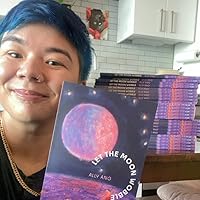
March 14, 2022
“This will be the last I write of it directly, I say each time.”

May 6, 2024
a gorgeous follow-up to look!!!!!!!!!

January 22, 2023
I don't think there is a language available for me to express the manner in which Sharif's work reached into what makes me me and shuffled it around, made it something different.
March 4, 2022
SOLMAZ SHARIF GOAT

May 26, 2022
By turns, gripping, horrifying, and mesmerizing, Solmaz Sharif's book, Customs, places her among the most relevant voices of our time.
From "An Otherwise":
Downwind, I walked the wide hallways
of a great endowment.
It didn't matter if I did or didn't,
It changed only myself, the doing.
It fed down to one knuckle
then the next, this compromise.
It fed down to one frequency
and another, leaving me only a scrambled sound.
It would burn your fingertips
to walk the length of the hall
dragging them along the grass-papered walls
where they punished you
for not
wanting enough. For not wanting
to be nonbelligerent
by naming the terms
for belligerence.
The shellacked
shelves, the softly shaking
pens in their pencase.
What was given there
could be taken, and
quietly, you were reminded of this.
You were reminded all
was property of the West.
The mess of a raven's nest
built behind a donor's great bust
then gone.
The mess of bird shit on the steps
then gone. All dismantled and scrubbed
sensibility. And this was it.
This nowhere.
My school of resentment commenced.
----------------------------------------
Reviewers have used the title of Ms. Sharif's book as a way of introducing its themes, which, in part, involve the refugee/immigrant experience: individuals that war, political or economic circumstances have forced to live in an inhospitable land, with no prospect for either welcome assimilation or the return to a (now unwelcome) homeland. Thus, "customs" flourish as a fitting metaphor to explore the subject matter with a multilayered approach, approximating the experience of Borges' "Aleph", the nominal addressee of a couple of the introductory epistolary poems.
Although many excellent reviews have been written on Customs, I have not yet read any that speak to Sharif's use of Julia Kristeva's concept of abjection to illustrate the contempt and inner revulsion that accompanies the present-day refugee/immigrant experience. In the second poem, "Beauty", Sharif makes a passing reference to Kristeva's Black Sun: Depression and Melancholia ("Frugal musicality is how Kristeva described depression's speech"). Yet, in Powers of Horror: An Essay on Abjection, Kristeva uses the "border" as a metaphor for separating life from death, the clean from unclean, the "I" from the "Other". When the border breaks down, the individual experiences the nausea and (conversely) the sublimity of becoming that which is normally reviled and excluded. Examples of abjection abound in Customs, and these are not at all strictly limited to the immigrant experience, even if precipitated from it. The book's final section, aptly entitled "An Otherwise"(a small part of which I have quoted above) refers to what I call "academic abjection", where the "school of resentment" begins under the auspices of a presumably desirable academic endowment that expects the immigrant poet (as either student or teacher) to knuckle under, to be submissively grateful and by all means "nonbelligerent" (in other words, "to not make trouble") in a world that defines belligerence as unacceptable without exception. The foreigner is thus disentitled from exercising her right to dissent, a right that any American citizen has, making full assimilation impossible. The same inner conflict (which I call "poetic abjection") is expressed in "Patronage", which illustrates the ironic position of the poet who, lacking the mass adulation and monetary rewards of a rock star, must therefore find safe harbor in servile posturing. The poet is therefore cultivated as a "poodle" to simultaneously perform her tricks in poems that amuse, flatter, or not-so-secretly mock her patrons, who represent her "meat" (which I construe as both "food" and "fodder"). The resentment and guilt associated with the "other" in a foreign land are manifest through abjection in the emotional overlay that typifies many of the poems in Customs. Nevertheless, the collection ends on a faint note of hope, with the poet drawn toward "this otherwise", passing through a "door" to the next stage and a better life:
I wipe clean my blade
I tap at the door
I pass through there so that
The import of this finale is rendered ambiguous by ellipsis. Somehow, we want to feel positive about this development, that the statement "Enough, I said" on the penultimate page marks a turn toward acceptance which, among other things, is reinforced by the late references to the cypress, a symbol of death and mourning, but also of purification and hope.
One can only wish Sharif the best of all futures as a poet and teacher. Rage on, Solmaz. You are a rock star, like it or not.
From "An Otherwise":
Downwind, I walked the wide hallways
of a great endowment.
It didn't matter if I did or didn't,
It changed only myself, the doing.
It fed down to one knuckle
then the next, this compromise.
It fed down to one frequency
and another, leaving me only a scrambled sound.
It would burn your fingertips
to walk the length of the hall
dragging them along the grass-papered walls
where they punished you
for not
wanting enough. For not wanting
to be nonbelligerent
by naming the terms
for belligerence.
The shellacked
shelves, the softly shaking
pens in their pencase.
What was given there
could be taken, and
quietly, you were reminded of this.
You were reminded all
was property of the West.
The mess of a raven's nest
built behind a donor's great bust
then gone.
The mess of bird shit on the steps
then gone. All dismantled and scrubbed
sensibility. And this was it.
This nowhere.
My school of resentment commenced.
----------------------------------------
Reviewers have used the title of Ms. Sharif's book as a way of introducing its themes, which, in part, involve the refugee/immigrant experience: individuals that war, political or economic circumstances have forced to live in an inhospitable land, with no prospect for either welcome assimilation or the return to a (now unwelcome) homeland. Thus, "customs" flourish as a fitting metaphor to explore the subject matter with a multilayered approach, approximating the experience of Borges' "Aleph", the nominal addressee of a couple of the introductory epistolary poems.
Although many excellent reviews have been written on Customs, I have not yet read any that speak to Sharif's use of Julia Kristeva's concept of abjection to illustrate the contempt and inner revulsion that accompanies the present-day refugee/immigrant experience. In the second poem, "Beauty", Sharif makes a passing reference to Kristeva's Black Sun: Depression and Melancholia ("Frugal musicality is how Kristeva described depression's speech"). Yet, in Powers of Horror: An Essay on Abjection, Kristeva uses the "border" as a metaphor for separating life from death, the clean from unclean, the "I" from the "Other". When the border breaks down, the individual experiences the nausea and (conversely) the sublimity of becoming that which is normally reviled and excluded. Examples of abjection abound in Customs, and these are not at all strictly limited to the immigrant experience, even if precipitated from it. The book's final section, aptly entitled "An Otherwise"(a small part of which I have quoted above) refers to what I call "academic abjection", where the "school of resentment" begins under the auspices of a presumably desirable academic endowment that expects the immigrant poet (as either student or teacher) to knuckle under, to be submissively grateful and by all means "nonbelligerent" (in other words, "to not make trouble") in a world that defines belligerence as unacceptable without exception. The foreigner is thus disentitled from exercising her right to dissent, a right that any American citizen has, making full assimilation impossible. The same inner conflict (which I call "poetic abjection") is expressed in "Patronage", which illustrates the ironic position of the poet who, lacking the mass adulation and monetary rewards of a rock star, must therefore find safe harbor in servile posturing. The poet is therefore cultivated as a "poodle" to simultaneously perform her tricks in poems that amuse, flatter, or not-so-secretly mock her patrons, who represent her "meat" (which I construe as both "food" and "fodder"). The resentment and guilt associated with the "other" in a foreign land are manifest through abjection in the emotional overlay that typifies many of the poems in Customs. Nevertheless, the collection ends on a faint note of hope, with the poet drawn toward "this otherwise", passing through a "door" to the next stage and a better life:
I wipe clean my blade
I tap at the door
I pass through there so that
The import of this finale is rendered ambiguous by ellipsis. Somehow, we want to feel positive about this development, that the statement "Enough, I said" on the penultimate page marks a turn toward acceptance which, among other things, is reinforced by the late references to the cypress, a symbol of death and mourning, but also of purification and hope.
One can only wish Sharif the best of all futures as a poet and teacher. Rage on, Solmaz. You are a rock star, like it or not.
March 12, 2022
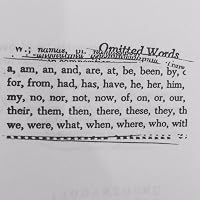
"Like Ovid: I’ll have no last words.
This is what it means to die
among barbarians. Bar bar bar
was how the Greeks heard
our speech—sheep, beasts—and so we became
barbarians. We make them reveal
the brutes they are by the things
we make them name. David,
they tell me, is the one
one should aspire to, but ever since
I first heard them say Philistine
I’ve known I am Goliath
if I am anything."
(from "Dear Aleph," p7)
This is what it means to die
among barbarians. Bar bar bar
was how the Greeks heard
our speech—sheep, beasts—and so we became
barbarians. We make them reveal
the brutes they are by the things
we make them name. David,
they tell me, is the one
one should aspire to, but ever since
I first heard them say Philistine
I’ve known I am Goliath
if I am anything."
(from "Dear Aleph," p7)

Read
May 29, 2026many bangers. i liked the structure with two very long poems in the last two sections writing and rewriting through the themes of the first section, finding the fantasy of return dead, but An Otherwise still possible... language as violence, language as the structures and checkpoints of exile, but also: "I thought it was loss— / language, its little / radius— / when it's a beckoning, / a way."
Thank you, fear. That's enough now.
Thank you, fear. That's enough now.
January 3, 2025
first book of 2025 and it might already be my favourite. Gorgeous poetry , mesmerizing.
________
Like, I’ve decided,
is the cruelest word.
To step out of my door and hope to see
something like a life,
something passably me,
________
Like, I’ve decided,
is the cruelest word.
To step out of my door and hope to see
something like a life,
something passably me,

April 23, 2022
An excellent collection and food for my mind and soul. Picked this up at Kramer's in DC after seeing dear old friends for brunch a few weeks ago. I really enjoyed "Dear Aleph" (the first one), "Beauty", and "He, Too", but the whole collection was really great.

May 8, 2023
*Homeland* is where one’s wake was held
and so——
No crueler word than return.
No greater lie.
The gates may open but to *return*.
More gates were built inside.
and so——
No crueler word than return.
No greater lie.
The gates may open but to *return*.
More gates were built inside.
July 29, 2022
i gasped at the final line

November 17, 2025
Brilliant that this collection is titled Customs rather than Rituals

April 21, 2022
There will be many, many mentions of the restraint of this collection. Yet within the restraint, if form and content are truly aligned, there is room to consider the vast world experience within the specificity of Solmaz's mind on the page. I've already been haunted by this collection, with lines echoing in my mind again and again. I reread "Social Skills Training" five times over upon first encounter, and look forward to keeping this book by my side for many rereads.

January 22, 2023
This collection absolutely captivated me with its clever rhymes, vivid sketches, and rumination on family, immigration, and loss. I’m normally fine just reading through poetry after grabbing it from the library, but this was one, I think, that I’d like to add to my bookcase.

Read
February 24, 2025How to say what he is selling—
it is no thing
this language thought worth naming.
No thing I have used before.
It is his
life I don’t see daily.
Not theater. Not play.
it is no thing
this language thought worth naming.
No thing I have used before.
It is his
life I don’t see daily.
Not theater. Not play.
February 25, 2022
My partner passed this to me first, which is exciting, because I’ve been looking forward to this since it was announced. Besides the expected poems about existing as an immigrant in the nightmare hellscape that has been the last four years, there’s some deeply poignant poems about depression and love and anger here, and the imagery she uses is amazing. Pick it up, you’ll be in for a hell of a treat.
February 19, 2026
i cant possibly speak on this collection in a way that does it justice. but oh do i have to try... i cannot say i read every poem as i did experience them, literally jumping in my seat at times and clutching my hair in my heads because each piece was so batshit insane i had to react in that way. but also im dramatic af and i love poetry so theres that. i read every single one of these poems with an intense anxiety like i was on the edge of my seat, sometimes literally, and i meant to only start the collection before i went to bed bc i wanted a little poetry to cap off my night but i devoured the entire thing in one feral go. ok but enough about me! i looked up solmaz sharif and apparently her first ever poem to be published was written when she was 13. THIRTEEN! so im not the only one who thinks shes a genius. this is the only time ill ever wish i went to berkeley instead of ucla bc wdym shes a prof there. let me hang my hopes to die okay. the entire collection covers an extraordinary breadth of topics, most of them what it means to be american. and if you know my poetry tastes then you know diaspora poetry always gets me. her mastery of language, its absolute precision, these perfect words, perfect lines, perfect usage of space... i could go on. i feel like ive been run over a train for the past half hour just constantly hit after hit
“Frugal musicality is how Kristeva describes depression’s speech / .... / My life can pass like this / Waiting for beauty / Tomorrow—I say / A life is a thing you have to start / ..... / You asked for beauty, and one morning, a small blue eggshell on the stoop, shattered open, its contents gone / Likely eaten / M asked if I’ve ever made a choice to live and why / I lied the way you lie to the suicidal / A few times, I said—not Most days / Most mornings”
“The hours I’ve stood to savor the seconds earlier, seconds more by which my eye may reach the disembarking and exclaimed, She’s here, watched, from shadow to shape to gait, my imagined life come to life and approach, briefly, me. / My imagined life crying hot in my ear. / Ink on its fingerpads. / This will be the last I write of it directly, I say each time. / This is a light that lights everything and dimly. / All my waiting at this railing. / All my writing is this squint.”
“To recall the Texan that held a shotgun to your father’s chest, sending him falling backward, pleading, and the words came to him in Farsi / To be jealous of this, his most desperate language / To lament the fact of your lamentations in English, English being your first defeat / To finally admit out loud then, I want to go home”
!!!!!!!!! ^^^^^^^^
“Frugal musicality is how Kristeva describes depression’s speech / .... / My life can pass like this / Waiting for beauty / Tomorrow—I say / A life is a thing you have to start / ..... / You asked for beauty, and one morning, a small blue eggshell on the stoop, shattered open, its contents gone / Likely eaten / M asked if I’ve ever made a choice to live and why / I lied the way you lie to the suicidal / A few times, I said—not Most days / Most mornings”
“The hours I’ve stood to savor the seconds earlier, seconds more by which my eye may reach the disembarking and exclaimed, She’s here, watched, from shadow to shape to gait, my imagined life come to life and approach, briefly, me. / My imagined life crying hot in my ear. / Ink on its fingerpads. / This will be the last I write of it directly, I say each time. / This is a light that lights everything and dimly. / All my waiting at this railing. / All my writing is this squint.”
“To recall the Texan that held a shotgun to your father’s chest, sending him falling backward, pleading, and the words came to him in Farsi / To be jealous of this, his most desperate language / To lament the fact of your lamentations in English, English being your first defeat / To finally admit out loud then, I want to go home”
!!!!!!!!! ^^^^^^^^

July 31, 2022
it can be hard walking the line between smart-clever and ham-fisted-clever, especially if you're a try-hard. sharif erases the line completely in 'customs,' where stanzas can be somber, pathetic, and hilarious, depending on how you look at them (see: the title of the book itself). astute, scathing, biting commentary on immigration, assimilation, imperialism, commercialism, commodifying mental illness, taking everything from unpleasant exchanges to trauma and vocalizing them for public consumption, a poetic expose of formal and informal interaction. literary references and influences are scattered about, noteworthy ones being from epic poetry of travelers trapped. "he, too" might be my favorite, and worth googling to see if you'd like sharif's subject and style. 'customs' is the kind of poetry collection that makes me want to go back and revise my own work, then go back and read sharif's again. not only probably poetry book of the year, but possible BOTY outright.

Read
May 20, 2022They say / willingness is what one needs / to succeed. / they say one needs to succeed. (25)
I should’ve stayed. I should’ve stayed. (26)
It is very / private / to be in another’s / syntax. (29)
Homeland is where one’s wake was held / and so— / no crueler word than return. / no greater lie. / The gates may open but to return. / more gates were built inside. (51)
To recall the Texan that held a shotgun to your father’s chest, / sending him falling backward, pleading, and the words came / to him in Farsi. / to be jealous of this, his most desperate language. (60)
Nights were longer / with you in them. (73)
The knowing is the dullest part of all. (75)
I should’ve stayed. I should’ve stayed. (26)
It is very / private / to be in another’s / syntax. (29)
Homeland is where one’s wake was held / and so— / no crueler word than return. / no greater lie. / The gates may open but to return. / more gates were built inside. (51)
To recall the Texan that held a shotgun to your father’s chest, / sending him falling backward, pleading, and the words came / to him in Farsi. / to be jealous of this, his most desperate language. (60)
Nights were longer / with you in them. (73)
The knowing is the dullest part of all. (75)

January 21, 2024
An exquisite collection exploring exits and entrances, the spaces between home and homeland, the loss of self and place, the interminable grief after violence, both for those who experienced it firsthand and those who grow up in its aftermath. The writing is biting and beautiful. I loved the way Sharif played with form and spacing.
A collection I would highly recommend!
A collection I would highly recommend!
April 29, 2022
this is the most beautiful collection of poetry i've read in a very, very long time. i read it as a pdf through the library, but i think i need to buy a physical copy and mark it up. some of these poems i just won't get over, ever i don't think

November 4, 2022
On loss and longing, mourning and moving on, liminals and transitions. Subject to the customs of both the family and nation, Sharif illustrates the experiences and violences of immigration: what it means to be the other in your home, whether in the imperial nation-state or the unfamiliar ancestral land. Divided into three parts, the literary format diverges from poetic customs as you progress through the collection. Ending mid sentence, Sharif reminds us that the war is-was
4.5
4.5
February 12, 2024
'Then, revolution.
Simple.'
Among the top 3 diaspora poetry books I have ever read (and as someone with a lot of migration blues I have alas read many). It's halting, full of emptiness and yearning, terrified of history and border guards and ready to put a knife in the imperial beast's belly.
Simple.'
Among the top 3 diaspora poetry books I have ever read (and as someone with a lot of migration blues I have alas read many). It's halting, full of emptiness and yearning, terrified of history and border guards and ready to put a knife in the imperial beast's belly.

July 14, 2022
Searing and masterful, this may be my new favorite collection

May 5, 2023
plus one just for the Social Skills Training poem

July 5, 2023
Spare, effective poems of exile from a home never known and the struggle to find place where one is. Benefit from reading out loud.
Displaying 1 - 30 of 213 reviews