Jump to ratings and reviews
Rate this book

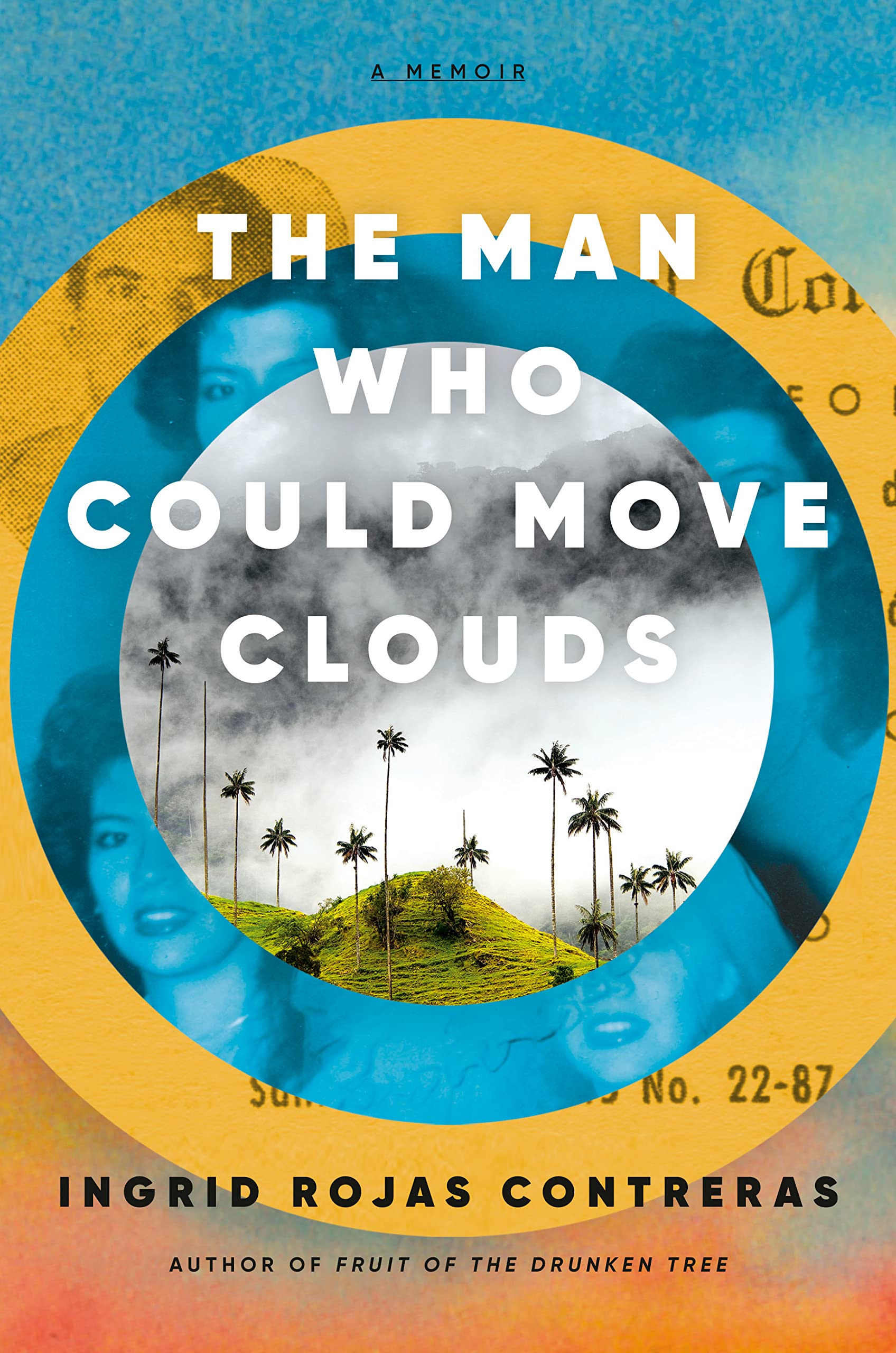
The Man Who Could Move Clouds

Rate this book
From the author of the critically acclaimed novel Fruit of the Drunken Tree, comes a dazzling, kaleidoscopic memoir reclaiming her family's otherworldly legacy.

For Ingrid Rojas Contreras, magic runs in the family. Raised amidst the political violence of 1980s and '90s Colombia, in a house where "what did you dream?" was the preferred greeting in place of "how are you?," very little was out of the ordinary. Her maternal grandfather, Nono, was a renowned curandero, a community healer gifted with what the family called "the secrets: " the power to talk to the dead, tell the future, treat the sick, and move the clouds. As a young girl Rojas Contreras spent her days eavesdropping on her mother's fortune-telling clients and eagerly waiting for the phone calls from relatives reporting that her mother's apparition had, yet again, visited them thousands of miles away from where Mami stood in the family's kitchen.
So when Rojas Contreras, now living in the United States, suffered a head injury in her twenties that left her with amnesia--an accident eerily similar to a fall her mother took as a child, from which she woke not just with amnesia, but also the ability to see ghosts--the family assumed "the secrets" had been passed down once again.
Spurred by a shared dream among Mami and her sisters, and her own powerful urge to relearn her family history in the aftermath of her memory loss, Rojas Contreras joins her mother on a journey home to Colombia to disinter Nono's remains. With her mother as her unpredictable, stubborn, and often hilarious guide, Rojas Contreras traces her lineage back to her Indigenous and Spanish roots, uncovering the violent and rigid colonial narrative that would eventually break her family into two camps: those who believe "the secrets" are a gift, and those who are convinced they are a curse.
Interweaving family stories more enchanting than those in any novel, resurrected Colombian history, and her own deeply personal reckonings with the bounds of reality, Rojas Contreras writes her way through the incomprehensible and into her inheritance. The result is a luminous testament to the power of storytelling as a healing art and an invitation to embrace the extraordinary.

308 pages, Kindle Edition

First published July 12, 2022

663 people are currently reading
24023 people want to read

About the author

Ingrid Rojas Contreras

5 books1,088 followers
INGRID ROJAS CONTRERAS was born and raised in Bogotá, Colombia. Her memoir, The Man Who Could Move Clouds, was named a “Best Book of Summer” by TIME. Her first novel Fruit of the Drunken Tree was the silver medal winner in First Fiction from the California Book Awards, and a New York Times editor’s choice. Her essays and short stories have appeared in the New York Times Magazine, The Cut, and Zyzzyva, among others. She lives in California.

Ratings & Reviews

What do you think?
Rate this book

Friends & Following

Create a free account to discover what your friends think of this book!

Community Reviews

5 stars
1,662 (36%)
4 stars
1,637 (36%)
3 stars
939 (20%)
2 stars
205 (4%)
1 star
57 (1%)
Displaying 1 - 30 of 587 reviews
Profile Image for Jennifer ~ TarHeelReader.
2,772 reviews31.9k followers
August 21, 2022
I loved The Fruit of the Drunken Tree and had a spectacular reading experience. Ever since, I’ve been waiting for Ingrid Rojas Contreras’ next book. Wow, did I ever find a story better than any fiction in that of her family’s life.

About the book: “A TIME BEST BOOK OF THE SUMMER

From the author of the "original, politically daring and passionately written" (Vogue) novel Fruit of the Drunken Tree, comes a dazzling, kaleidoscopic memoir reclaiming her family's otherworldly legacy.”

I chose a read/listen, which allowed me to be fully immersed. The author grows up in Colombia during the 80s and 90s with political unrest as the backdrop along with the beautiful Colombian mountains. Her grandfather, Nono, is a curandero, a healer; literally the man who could move clouds. Her mother inherits the same gift and tells fortunes. She can also appear in more than one place at a time. In her twenties, while living in the US, Rojas Contreras has a brain injury resulting in amnesia. Her mother previously had a fall and amnesia, which left her with the gift, and now her family thinks she, too, will have “the secrets.”

In sharing her family’s story, the author explores the history of Colombia. Entrenched in her family’s culture, this is a memoir like nothing I’ve read before. There’s nice tension as the story builds, including as Nono’s remains are disinterred. Make sure to check out the photos included in the book and the pdf along with the audio. So much of this endearing family was shared with the reader. There’s much more depth here than I can even begin to describe. A captivating multi-generational story. A work of art that opened my heart and made it soar.

Audiobook thoughts: Marisol Ramirez flawlessly narrated. She added all the emotion to bring Rojas Contreras’ family’s story.

I received a gifted book and ALC.

Many of my reviews can also be found on my blog: www.jennifertarheelreader.com and instagram: www.instagram.com/tarheelreader
Profile Image for Traci Thomas.
865 reviews13.3k followers
July 9, 2022
This book is a really beautifully crafted multigenerational memoir that weaves history, legend, memory, and narrative into a kind of book I’ve never read before. Contreras can write her ass off. Toward the end the book felt repetitive and loses its way, but the first 4/5 are super engaging and propulsive. It’s almost an adventure mystery.
129 reviews17 followers
May 14, 2022
A brilliant book about one family’s lineage as curandero/as. But it is so much more than that. In it’s slim 320 pages it holds a family history that, as Contreras writes, is like holding two mirrors up to each other. Mirrors and mirroring are a constant theme in the text as are hauntings and grief. Words truly do not do justice to what Contreras has created here. To read this book is to be haunted by it. The sharing of these stories is to imbibe the tales and to be able to call on these spirits to help inform one’s own understanding of the nature of grief, familial history, and colonial curses that are no less potent today.
Profile Image for Derrick Contreras.
228 reviews7 followers
August 1, 2022
I’m so grateful for this book. I cried somewhere in the beginning just because of how much it made me think of my grandma and dreams and how much I miss her. This book makes you think a lot about the erasure of indigenous culture and spirituality through white supremacy and Christian colonization. I can’t really explain it but this book has made me love myself more and embrace the culture that has been attempted to be stripped away from me and my father’s ancestors.
Profile Image for Elizabeth .
475 reviews21 followers
April 16, 2022
There is one line in this memoir that says something like ‘Jane Austen is realism in America & Gabriel Garcia Marques is magical realism. In Colombia, GGM is just realism.’ It’s better written than that - but really sticks with me now that I’ve finished reading.

I loved this memoir - it’s unbelievable in the best way, I loved all the spirits and memories and photos and stories. I love how she talks about dealing with trauma and how it lingers. I had to keep reminding myself that this was non-fiction - it’s such an amazing story.
Profile Image for Judy.
1,954 reviews456 followers
September 22, 2023
The man in the title of this memoir was a Curandero (a folk healer, medicine man, user of herbs or hallucinogenic plants, magic and spiritualism.) He was the author's grandfather and lived near the mountains of Columbia in South America. If this sounds too far out of your comfort zone, you might want to steer clear.

But that would be too bad because in every part of the world where outside colonizers have taken over from an ancient indigenous race, the play book has been similar. Americans live in such a country.

Ingrid Rojas Contreras was a nominee for the 2023 Pulitzer Prize for Memoir and Autobiography. Her book centers around a journey she and her mother took from America to Columbia in 2012 with the mission to disinter her grandfather's remains.

It is not told in a linear fashion but circles around between the time of the journey to family stories that go back through generations. Are the "secrets" of those healers a gift or a curse? What legacy of struggles and familial conflict still resonate in the author's life?

The writing sparkles with elements of the magical, lights up the narrative with bittersweet humor, and left me as moved as I've been by Gabriel Garcia Marquez or Isabel Allende. Hard truths about the violence of Spanish conquest, drug lords and a brutal Christian colonial narrative imposed on the country add to the reality of Contreras's Columbian childhood, which was filled with fear and trauma.

Finally, with a most subtle feminist slant, the story includes how the author's mother became the first woman in a long line of curanderos to inherit "the secrets", the power to heal, to cast out spirits and move the clouds.
Profile Image for Kelsey (Kelseylovesbooks).
464 reviews74 followers
July 16, 2022
I’ll start by saying that if you aren’t willing to entertain the possibility of the supernatural or those gifted with the ability to connect to something greater out there, then you probably won’t enjoy this memoir.

I, on the other hand, absolutely love the connection to the spiritual and ancestors that is present is South American culture. Contreras’s memoir is a ghost story, a family saga, and an education on colonialism in Colombia.

The story weaves through her connection to her mother, who both gain “the secrets” through traumatic injuries. This begins them on a path to disinter her grandfather, Nono, a healer who just wants peace in death. Along the way, we hear about her childhood in Colombia, her Mami’s eccentric siblings, and the powers of a curandero.
Profile Image for Kasia.
312 reviews55 followers
February 16, 2023
Colombian family takes a trip home to dig up body of grandpa, because he’s tired of granting wishes to people who pray to him and ask him for miracles.
41 reviews
July 17, 2022
After three chapters and I gave up on the book. Not well written and hard to believe the family stories told. Gave two stars for effort and would not waste my time reading this “non fiction”.
1,044 reviews
May 25, 2022
I received this book from NetGalley in exchange for an honest review.

requested this book because I enjoyed the author's Fruit of the Drunken Tree.

This memoir details her family legacy--magic . "Raised amid the political violence of 1980s and '90s Colombia, in a house bustling with her mother’s fortune-telling clients, she was a hard child to surprise. Her maternal grandfather, Nono, was a renowned curandero, a community healer gifted with what the family called “the secrets”: the power to talk to the dead, tell the future, treat the sick, and move the clouds. And as the first woman to inherit “the secrets,” Rojas Contreras’ mother was just as powerful. Mami delighted in her ability to appear in two places at once, and she could cast out even the most persistent spirits with nothing more than a glass of water.

This legacy had always felt like it belonged to her mother and grandfather, until, while living in the U.S. in her twenties, Rojas Contreras suffered a head injury that left her with amnesia. As she regained partial memory, her family was excited to tell her that this had happened before: Decades ago Mami had taken a fall that left her with amnesia, too. And when she recovered, she had gained access to “the secrets.”" And so it begins--the back of forth of Rojas Contreras' life and her [extended] family history.

However, I dispute the words of R.O. Kwon that this is an "often hilarious book" and the blurb that says Mami is an "often hilarious guide." Yes, stubborn and unpredictable, but not much laughter in this tale. Instead, much grief, sorry, and haunting. And the horrors of COLONIALISM and political violence--guerrillas and drugs in Colombia. And the lowly position and abuse of women.

The memoir takes place in Colombia [predominantly], Venezuela, and the United States.

As the author's note states: "This is a memoir of the ghostly--amnesia, hallucination, the historical specter of the past--which celebrates cultural understanding of the truths that are, at heart, Colombian.

At times enthralled, other times somewhat bored. I thought quite repetitive. BUT.

Some of the writing/phrases I thought fabulous/interesting:

"thieved the joy of others"
"I fought the marshmallow of nothingness, but soon I was consumed by it."
"The stupid things peop[e say are true. Ignorance is bliss."
"leisured with a drink"
"grandfather lived on my face."

The details of the anorexia of Ingrid's sister, Ximena, enlightened me.

And I learned something new--philtrum--look it up, I did.

And, think about this: "U.S Americans flew the Confederate flag, then insisted racism didn't exist. The told me theirs was a country founded on ideals, then got upset when I brought up the genocide of Indigenous peoples or slavery, which were clear indications to me that the country was founded on something else."

Surely it was extremely cathartic to write this tome.

3.5; not rounding up.
Don't forget! Come back to your Review on the pub date, 12 Jul 2022, to post to these retailers.This site uses cookies. By continuing to use the site, you are agreeing to our cookie policy. You'll also find information ab
Profile Image for Debbie.
650 reviews34 followers
October 26, 2023
The day I was started this audio book, I was going to visit a friend who was having some dreams she found upsetting and wanted someone to talk to who took dreams and dreaming seriously. I had worked up an outline of considerations when interpreting dreams. As I headed out my driveway, I started the book and was surprised the author was talking early on about dreams and dreaming and their importance to the author and her family for interpreting their lives and surroundings. I was instantly hooked and I have loved every moment of listening to it.

This memoir is a look at the real life, beliefs, observations of Ingrid Rojas Contreras, giving her background and then relating the story of her deceased grandfather who made it known that he wanted his grave moved, that he was unhappy with where it was. He neglected to tell them where to move it. So we wind around the history of the family, grandmother and grandfather, mother and father, and her own story. One interesting aspect was that, in many ways, her own story was a mirror of her mother's story. There were times in the story, in fact I had to go back a short distance and re-listen because I got confused whether we were hearing about her or her mother!

As I finished, I could not help but think of the loss of richness in the lives of those who do not believe in the value of remembering, let alone understanding their dreams. I feel sad at narrowness of conceptions of the world not believing in ghosts or other things belived by cultures which live closer to nature and the earth than do most USians. (Why did I not say "Americans"? Because Colombians are Americans, too.)
Profile Image for Abigail Bok.
Author 4 books257 followers
March 13, 2023
This book tests the boundaries of memoir in interesting ways. Nominally, it is the story of author Ingrid Rojas Contreras’s bicycle accident that caused her to suffer temporary amnesia. But its scope is far broader, encompassing her whole life (so far) and the lives of several of her relatives going back generations. It is also a rumination about the nature of memory, about how we define truth, about what constitutes reality itself.

The eponymous “man who could move clouds” was her maternal grandfather, a curandero in Colombia who looms large over the story even though he died when the author was only a year old. In addition to having an interesting life in his own right, he provides a gateway into an examination of Colombian culture’s fault lines and gender relations, as well as into a penetrating analysis of how different cultural assumptions color what is regarded as history and what as myth. These theorizing portions of the book were more interesting to me than the details of the family story, vivid and colorful as those were. When the author dons her sociology hat she is shrewd and subtle.

As issue for me was that the family anecdotes that provide the basis for the theorizing went on too long and were not always credible. For instance, there’s a scene in which Ingrid falls into a vat of crude oil as a child; the psychological impacts of this accident get attention but there is virtually no mention of the physical impacts of such a major exposure to crude, which ought to have burned her severely at a minimum. Her recollection of the incident and her father’s differ, and I was left to wonder whether it happened at all. It dovetailed all too neatly with a point she was trying to make. The family anecdotes also jump around a lot in time and focus on many different people, making the reading of them sometimes a chore. In general, I felt the book took too long to get to the insights derived from the experiences.

Once she did get to those insights, though, I was a happy camper. Often the “lessons learned” portions of a memoir feel thin and obvious, but not here. She is fascinating when talking about memory and how we construct our understanding of ourselves, and especially when she turns to a critique of how we define reality. I have long felt discomfort about the term “magical realism,” which has always seemed like a piece of narrow-minded colonialist arrogance, and she articulated that discomfort far better than I ever could. She says her first book was pigeonholed as fiction because of what its editors regarded as its magical-realist content, which they defined as a narrative tactic “in which the magical was delivered as if matter-of-fact,” while the author herself regarded those elements as simply fact, lived experience. She adds that in Colombia, the European colonizers “told us what was real and not, what history and what legend, what oral history and what folklore, what religion and what superstition. . . . Magical realism was just realism to us.” It’s a gulf between a culture that views the material world as having a monopoly on truth, versus a culture that roots truth in story and metaphor. Rojas Contreras eloquently brings to life the truth as seen by her Colombian ancestors and her own Colombian American identity, making this an enriching read.

Profile Image for Barbara.
1,898 reviews25 followers
January 25, 2023
I forgot this was a memoir until I started to write this review. Rojas Contreras tells the story of her grandfather and mother, both of whom had the power to heal and advise people who were ill and struggling. In the U.S. we often refer derogatorily to healers (curanderos/as) as "witch doctors".
This family story also tells us a lot about the history of Colombia and sadly, the violence that has characterized certain eras. The most recent period is very familiar to us, and is that of the drug cartels and the terror of the period when politicians, and journalists who were murdered by the cartels. The author's family finally flees Colombia when threats to their safety and lives grow.

The author uses a great deal of Spanish in the text. She doesn't translate, but the meaning is embedded in the text. There are readers who will not like this and wonder why an author does this. The language lends so much to the story. I am fairly fluent in Spanish and very interested in how the meanings of common words change from country to country.

This is a wonderful story that is very revealing about parts of live in Colombia that readers may not know. Highly recommended.
Profile Image for Micaela Gerhardt.
38 reviews
September 12, 2024
I'm going to need everyone I know to read this book & then go look at the maps Ingrid made while writing it. My newest creative inspiration. "Do you trust abundance?" "Yes, yes, yes."

I read this at exactly the right time.
Profile Image for Lolly K Dandeneau.
1,931 reviews251 followers
July 18, 2022
via my blog:https://bookstalkerblog.wordpress.com/
𝙄 𝙬𝙤𝙣𝙙𝙚𝙧 𝙞𝙛- 𝙨𝙞𝙣𝙘𝙚 𝙢𝙮 𝙡𝙞𝙛𝙚 𝙚𝙘𝙝𝙤𝙚𝙨 𝙈𝙖𝙢𝙞’𝙨, 𝙬𝙝𝙞𝙘𝙝 𝙞𝙣 𝙩𝙪𝙧𝙣 𝙚𝙘𝙝𝙤𝙚𝙨 𝙉𝙤𝙣𝙤’𝙨- 𝙖𝙡𝙡 𝙤𝙛 𝙪𝙨 𝙖𝙧𝙚 𝙤𝙣 𝙩𝙝𝙚 𝙨𝙖𝙢𝙚 𝙜𝙝𝙤𝙨𝙩 𝙬𝙖𝙡𝙠, 𝙧𝙚𝙩𝙧𝙖𝙘𝙞𝙣𝙜 𝙖𝙣𝙙 𝙪𝙣𝙙𝙤𝙞𝙣𝙜 𝙤𝙣𝙚 𝙖𝙣𝙤𝙩𝙝𝙚𝙧’𝙨 𝙡𝙞𝙫𝙚𝙨.


Ingrid Rojas Contreras’s debut novel, 𝘍𝘳𝘶𝘪𝘵 𝘰𝘧 𝘵𝘩𝘦 𝘋𝘳𝘶𝘯𝘬𝘦𝘯 𝘛𝘳𝘦𝘦, was a tale of wealth, poverty, war and politics in Columbia, but the superstitious fancies that dominated the Santiago daughters’ minds in relation to their young maid, Petrona was a window into old world culture, burning in superstition. Through Ingrid’s memoir, the supernatural influence on her family roots connects readers to the fictional inspiration and political upheaval in her stories. Dangerous violence in Columbia was the catalyst that left her family with no other choice than to move to Chicago. It is also what caused a kink in the chain of her magical education under her Mami’s tutelage. Ingrid’s inheritance is one of unique gifts wrapped up in accidents of amnesia, walking in worlds of the living and the dead. While she was growing up in Bogotá, her Mami ran a ‘fortune-telling’ business, but a practicing curandera is what she truly is. A word loaded with old world origins, a truth to be kept hidden from the more ‘progressive’ people, despite the fact they seek her gift for guidance and healing. These are the very same people that spit ugly words meant to shame Mami if she dared to acknowledge the family lineage. One thing is translatable throughout this planet, hypocrisy. What Ingrid’s Mami does to make money and support the family costs Papi his jobs, so maligned is her profession. The sexism is just as bad. Ingrid wonders in her youth if she will ever possess the family gifts, aware she doesn’t see or hear ghosts nor have visions of the future. Is it all fake, as some believe, certainly there is proof in the accounts friends, family and strangers share about her mother that her gifts are genuine? It is uncanny. If their folk healing is passed down through the blood, Ingrid should be able to lay claim, as she looks just like her Mami. It all comes from Nono, the “Man Who Could Move Clouds”, the same man who tells his family through shared dreams that he wants his remains disinterred. It is through dreams their dead walk.

This is just one of many validations that something supernatural is deeply ingrained in her family, long before colonialism scattered native people, and later, drugs and wars ravaged those still standing. Nono’s mysterious knowledge, passed down through his forefathers, has always been ‘a well-guarded secret’, for over hundreds of years. One can imagine the horror and fear when Ingrid informs her Mami that she wants to write about the very things that have been buried and hidden for so long. Writing is for Ingrid a gift, one that helps her remember where she comes from, who she and her people are. More fascinating after an accident leaves her with amnesia, a peculiar heritage of its own. The truth in her family transcends the times, forces those who scoff at magic to consider the culture of native beliefs and recall the brutality visited upon them, birthing a third culture, one that has Spanish and Native wisdom ‘entwined’. Add to that Ingrid’s own life being remade in a foreign country, America. Her immigration cost her the loss of a path that her ancestors had followed, a natural process of passing down what her Nono and Mami had been carrying, now barred to her by a vast distance and a cultural divide. Her assimilation into America won’t stop the calling. Her accident is a doorway and in order to learn, she is forced to temporarily forget. As memories return, the truth of her family refuses to be denied. Secrets have always been about survival for her people, hence the need to share traditions ‘in whispers’, but they are getting too loud and the time for cowering in the shadows is over. Now, it is written.

It is a courageous act to speak about one’s beliefs, that has survived untoward violence and shaming. To risk the laughter of strangers and the damning judgements and yet Ingrid Rojas Contreras’s mission is to remember her powerful family, with haunting reflection. It is looking into the mirror and seeing not just herself, but all those who can before her. It is a transformation the reader gets to witness as she is on her journey of spirit, unearthing many stories about her family, one that splintered toward religion and away from the ‘witchery’, accusing the other half of sin, demanding they seek salvation. Too, the men often make the women in the family suffer, due to their own inner turmoil. It’s an endless cycle. It is an engaging memoir about ‘living at the edge of what is socially acceptable’, it is about cultural clashes, political chaos and the reach of it’s arm. It is division of oneself between worlds, ghosts (living and dead), inheritance and surrendering to the truth. Ingrid’s family history is even richer than her fiction and her memoir a gorgeous exploration into our personal belief systems. It is about what we bury and what we bring into the light.

Gorgeous memoir and it’s available now!

Publication Date: July 12, 2022

Doubleday Books
Profile Image for Michelle.
715 reviews5 followers
September 13, 2022
I really enjoyed this memoir. It is FULL of family stories, history, legends, and magic. The audiobook is great.
Profile Image for MaryAnn.
232 reviews2 followers
July 18, 2022
The Man Who Could Move Clouds
by Ingrid Rojas Contreras


“We are both women transformed by the exit and the return. In this way, we alone understand each other: we know what it’s like to wake up disassembled and witness, hour by hour, the invention of self.”


From the author of Fruit of the Drunken Tree, The Man Who Could Move Clouds comes an honest and illuminating memoir about the author and her exceptional multigenerational Columbian family. I have to admit that I wanted to like this memoir a great deal more than I did. It took me a while to get through the book. While the language was poetic at times, the flow was as fragmented as the authors thoughts likely were during her long episode of amnesia. And perhaps, this was the point. However, the disjointed structure was difficult to stay with and I found myself putting the book down a great deal more than I normally would. What I thought it did well was embed historical information throughout the novel to enlighten the reader regrading significant events and cultural practices. I thought it also did an wonderful job of conveying how Latin and Central American cultures view the veil between this and the spiritual world to be thin and knowable. I’m sorry to say that this book was not for me, although it might be for others. I look forward to seeing what Contreras writes next.

Many thanks to NetGalley and Double Day Books for the gift of an eARC in exchange for an honest review.
Profile Image for Emily.
239 reviews6 followers
December 19, 2022
3.5 stars, rounded up after a great book club discussion

I have mixed feelings on this book. The author writes beautifully and a lot of the stories in this memoir are super interesting and engrossing, but the book lacks a clear narrative (besides disinterring Nono). As the book bounces around, we hear about Nono’s life, her mother’s life and her own life in small snippets. This leads to some repetition, and also leads to a book that is hot and cold (some stories more interesting and enjoyable than others). I also struggled with the way women were treated in the historical parts of this book (even recent history) - obviously something the author can’t avoid since this is real life, but also something she glosses over in many ways.
Profile Image for Caroline.
60 reviews1 follower
August 28, 2024
Do I… believe in magic now??

What a book to challenge my thoughts and assumptions about what it means to exist, to make my life among the living seem dull. This book turns a person who doesn’t believe in ghosts and spirits and magic into a person with a closed mind.

Favorite section was probably the last - Ash.

This book might deserve five stars, but memoirs are still hard for me to get through. This does read somewhat like a novel, as Manon promised on the front end. :) Book club book! Listened via audiobook, mostly.
Profile Image for Rachel.
164 reviews81 followers
August 7, 2022
loved!!!! ingrid rojas contreras is an incredible storyteller with an endlessly fascinating family history. she writes her family stories with such beauty and grace. I also really appreciated the way she seamlessly weaves in bits about indigenous mythology, impacts of colonialism and the political situation in pablo escobar-era colombia - I learned a lot.

also?? one of the best descriptions of a panic attack I’ve ever read

yeah this was great highly recommend if you like memoirs
Profile Image for Jan.
1,322 reviews29 followers
October 17, 2022
An interesting, well-written memoir from a novelist for whose family and culture “magical realism” is simply “realism.” Great October/Halloween reading that includes ghosts aplenty and honors Latino Heritage Month.
Profile Image for Jen K.
1,498 reviews5 followers
November 26, 2022
Fascinating memoir where Contreras shares the family secrets that she had been told to never share outside of the family. Her family's story is more surreal than her fiction. The memoir is told in layers upon layers of the supernatural gift of some of her family but especially her grandfather who worked as a local healer gifted with the power to speak with the dead. The "secrets" were only to be passed to sons but Contreras' mother fell headfirst into a well after a long ailment and recovery with extreme amnesia was able to see and speak to ghosts/ spirits. Contreras herself also suffered a head injury leading to extreme amnesia not knowing who she was for months. Contreras shares the secret gifts of her family which also tore the family into two, those who believe in the healing and spirits and those who became born again Christians and denounced the other family as taken by demons. At the same time, Contreras and a select few in the family, disinter her grandfather requiring a trip to Columbia. He came to them all in a dream and claimed to be bothered by all the spiritual requests at his grave.

Fascinating family and story which is well written. It is troubling to hear the stories of Columbia that informed her fiction and forced her to leave Columbia and the resulting trauma. I would like to read more of her work.
Profile Image for Sonja.
451 reviews32 followers
May 10, 2023
How do I write about this book? A memoir about forgetting? It reads like poetry:

After survival, there is the survival of the survival.
It is useful then to ask what lives on beyond the book that self-combusts.
The person who escapes.
The mind that forgets itself.
The culture that is thought to be erased.
The answer is everything.
Everything survives.

It is about Colombia during the terror. It is about the author’s grandfather, her mother and herself who all had the gift of healing and of seeing and forgetting and its opposite.

“So it can begin to seem that this state of awareness is ignorance, and that that state of amnesia was knowledge.”

What is a valid memory? According to society oral histories or stories people in families tell are not valid. Documentation in print or in photos is primary. What we hear may have been remembered wrong but isn’t that a truth too?

There are many pieces of knowledge we can read in this book, such as
“What the men in the family couldn’t see was that, in their suffering alone, they only made us, their wives and daughters, carry the weight of what they would not deal with themselves.”

But I would like to read it again sometime to grasp it better but maybe I still won’t really understand because I am from another culture.
Profile Image for Fabiola Barral.
349 reviews9 followers
September 13, 2022
one of the best books on latinidad, identity, and spirituality I have ever read. I adored everything about this book. could very well be my favorite of the year.
Profile Image for Holden Fitzgerald.
26 reviews
April 5, 2023
incredible

One of the best books I’ve read in a while. A beautiful, magical family memoir traced over three generations. Violence, change, suffering, and memory take center stage and are handled wonderfully in their interactions. Highly recommend.
Profile Image for Maggie.
55 reviews
February 13, 2025
Literally sobbed through the entire end of this and I haven’t even been that into crying lately. Kudos
Profile Image for Marc.
439 reviews11 followers
December 30, 2022
The more Latin American & South American literature I read, the more there is to learn about the broader America's rich history & cultural traditions. It's exciting to know there's so much more to explore in the writing & tales of these lives, countries, recorded histories, folklore, and people.
Profile Image for Camilla de Koning.
105 reviews8 followers
May 30, 2024
One of the most beautiful books I’ve ever read. The writing is exquisite, drawing you completely into another world, even though it is a biography. She opens the door to a beautiful culture of storytelling by telling that of her family. Can’t wait to read her other book.
Profile Image for Bookreporter.com Biography & Memoir.
710 reviews51 followers
July 17, 2022
Award-winning author Ingrid Rojas Contreras follows up her debut novel, FRUIT OF THE DRUNKEN TREE, with her first memoir, THE MAN WHO COULD MOVE CLOUDS. Searching with her mother for the remains of her grandfather, she finds lost aspects of herself, illuminating hidden talents and opening further paths to mysticism and memory.

With Latin flavor infusing her phrasing and magic in her heritage, Rojas Contreras recalls her childhood in the conflicted, politically scarred homeland of Colombia, which she fled as a young woman. In the forefront of her memories are impressionistic portraits of family members: her dictatorial father Papi, sorceress mother Mami, and grandfather Nono, the man of the book’s title, who practiced ancient herbal medicine along with his deeper knowledge of humanity, psyche and myth. That dynamic grouping gave him the title “curandero,” roughly translated as healer, seer and necromancer. After a blow to the head, Mami took on some of Nono’s healing capacities as a fortune teller who believed that her customers sought a good story rather than hard truths. So she led them by gentle trickery from one to the other.

These secrets were shared with the child from an early age, along with harsh litanies that seeped into everyday life: to be Brown was bad, violence lurked around every corner, and, as a girl, she must kowtow to her brothers, like it or not. She did not like it, once cutting her hair to prove that she was a boy and their equal. This same strength of character will emerge when she, too, is the victim of an accident that leaves her with memory loss and a growing comprehension that her connection with Nono must be explored. With Mami, she sets out to return to Colombia and disinter the remains of her mystical forebear. Revelations will assail her at every step as she draws the reader into her viewpoints and visions.

Rojas Contreras, who now resides in the US, is a teacher as well as a practitioner of writing arts. THE MAN WHO COULD MOVE CLOUDS veers from chronology to speculation, from the realities of constant political upheaval to poignant candle-lit moments with Mami in the attic, listening to her mother’s sage advice about how to guide people to solutions by weaving complex, magical fables for them to follow. Her path, one senses, is still multilayered. She concludes that, beyond “the person who escapes,” the “mind that forgets itself,” the culture that is thought to be erased,” lies --- everything: “Everything survives.”

Those who read this book for the conceptions and comforts hidden beyond bare facts will find themselves soaring into imagination with Rojas Contreras and hoping for further visualizations from this gifted artist.

Reviewed by Barbara Bamberger Scott
Profile Image for Airy Peña-Camacho.
277 reviews16 followers
January 18, 2023
En sus clases, pasábamos absurdas cantidades de tiempo concentrados en historias y literatura escrita por los hombres blancos de sus tierras. Nos instruían sobre cosas que nos resultaba difícil aprehender. Por ejemplo: que Jane Austen era literatura realista, mientras que Gabriel García Márquez era literatura fantástica. El realismo mágico era simple y llanamente realismo para nosotros, y Jane Austen no retrataba una vida que fuera posible en nuestra tierra.

A veces me resulta sorprendente como estas historias, estas palabras, solo esperan que llegue alguien, las lea y les de sentido.
Llegué a los brazos de Ingrid Rojas Contreras sin expectativas y me acabe topando con una historia que me movió hasta mi centro. Una memoria llena de misticismo, legado y magia. Un libro brillante que nos habla del linaje existente en una familia de curanderos colombianos. No tengo palabras para describirlo como se merece, pero sepan que lo terminé el ultimo día del año y apenas hoy (casi 3 semanas después) pude forzarme a escribir una reseña.

Amé todo de esta memoria, fue una travesía de inicio a fin. Desde sus primeras palabras me atrapó y se negó a soltarme hasta el ultimo momento. Creo que no ha habido un día en el que no se me venga a la mente este libro, sobre todo en su certera descripción de lo que fue el exterminio de la cultura indígena durante la colonización en Latinoamérica y en nuestro intento desesperado por encajar en una sociedad blanca que no ha hecho mas que despojarnos de nuestra identidad.

No puedo explicar muy bien el por que, pero este libro me hizo amarme tanto a mi misma y abrazar la cultura que me vio nacer. Sabía que iba a clasificarlo dentro de mis favoritos del año pero no fue hasta que llegué a la frase con la que comencé esta reseña que supe cuantas estrellas acabaría dándole.

Si pueden, entren a este libro a ciegas como yo, investiguen lo menos posible de que se trata, para que puedan sumergirse por completo en la experiencia. Eso si, si no son capaces de creer en la posibilidad de que lo supernatural existe, de que hay fuerzas mas grandes que nosotros mismos en esta tierra, que la magia existe ... entonces tal vez no sea el libro para Uds.

5/5 estrellas
Displaying 1 - 30 of 587 reviews

Can't find what you're looking for?

Get help and learn more about the design.