What do you think?
Rate this book


56 pages, Paperback
First published January 1, 1592

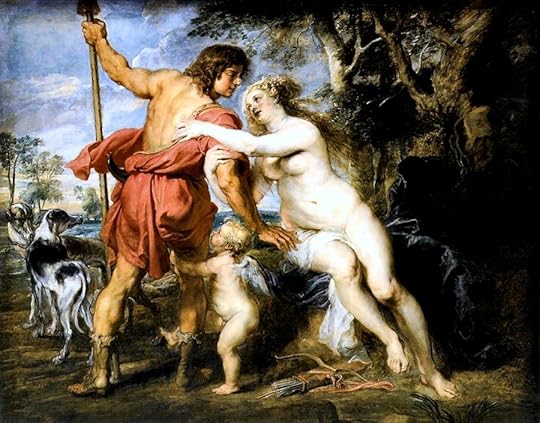
"Fondling," she saith, "Since I have hemmed thee hereBut this comes relatively early in the poem. If Adonis is not going to reciprocate, there is nowhere this can go. Even when Venus faints, and Adonis kneels astride of her to rouse her, she is still denied:
Within the circuit of this ivory pale,
I’ll be a park, and thou shalt be my deer:
Feed where thou wilt, on mountain, or in dale;
Graze on my lips, and if those hills be dry,
Stray lower, where the pleasant fountains lie.
"Within this limit is relief enough,
Sweet bottom grass, and high delightful plain,
Round rising hillocks, brakes obscure and rough,
To shelter thee from tempest, and from rain:
Then be my deer, since I am such a park.
No dog shall rouse thee, though a thousand bark."
Now is she in the very lists of love,
Her champion mounted for the hot encounter:
All is imaginary she doth prove,
He will not manage her, although he mount her;
That worse than Tantalus' is her annoy,
To clip Elysium and to lack her joy.
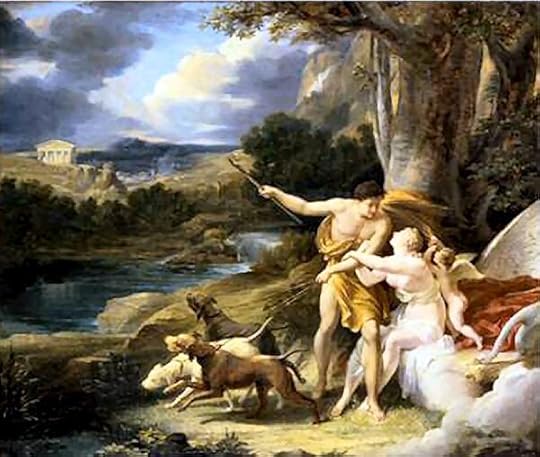
Love comforteth like sunshine after rain,It's neat certainly, but how much better would Shakespeare express the same theme in Sonnet 129, "The expense of spirit in a waste of shame." By this time, of course, he was much more experienced as a poet, and the sonnet form is much more compact that the multi-stanzaic ode. But more than that: he had experienced the corrosive power of lust; he was no longer philosophizing from the outside, but writhing from within. That sonnet is intrinsically more dramatic than anything in Venus and Adonis.
But Lust's effect is tempest after sun;
Love's gentle spring doth always fresh remain,
Lust's winter comes ere summer half be done.
Love surfeits not, Lust like a glutton dies;
Love is all truth, Lust full of forgèd lies.

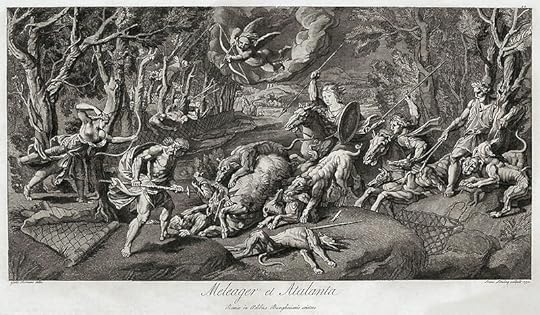
Fair flowers that are not gather'd in their prime
Rot and consume themselves in little time.