

What do you think?

Great Cities #2
The World We Make
Goodreads Choice Award
Nominee for Readers' Favorite Fantasy (2022)Three-time Hugo Award-winning and New York Times bestselling author N.K. Jemisin crafts "a glorious fantasy" (Neil Gaiman) -- a story of culture, identity, magic, and myths in contemporary New York City, in the final book of the Great Cities Duology.
Every great city has a soul. A human avatar that embodies their city's heart and wields its magic. New York? She's got six.
But all is not well in the city that never sleeps. Though Brooklyn, Manny, Bronca, Venezia, Padmini, and Neek have temporarily managed to stop the Woman in White from invading--and destroying the entire universe in the process--the mysterious capital "E" Enemy has more subtle powers at her disposal. A new candidate for mayor wielding the populist rhetoric of gentrification, xenophobia, and "law and order" may have what it takes to change the very nature of New York itself and take it down from the inside. In order to defeat him, and the Enemy who holds his purse strings, the avatars will have to join together with the other Great Cities of the world in order to bring her down for good and protect their world from complete destruction.
The Great Cities Duology
The City We Became
The World We Make
Every great city has a soul. A human avatar that embodies their city's heart and wields its magic. New York? She's got six.
But all is not well in the city that never sleeps. Though Brooklyn, Manny, Bronca, Venezia, Padmini, and Neek have temporarily managed to stop the Woman in White from invading--and destroying the entire universe in the process--the mysterious capital "E" Enemy has more subtle powers at her disposal. A new candidate for mayor wielding the populist rhetoric of gentrification, xenophobia, and "law and order" may have what it takes to change the very nature of New York itself and take it down from the inside. In order to defeat him, and the Enemy who holds his purse strings, the avatars will have to join together with the other Great Cities of the world in order to bring her down for good and protect their world from complete destruction.
The Great Cities Duology
The City We Became
The World We Make
357 pages, Hardcover
First published November 1, 2022
Ratings & Reviews
Friends & Following
Create a free account to discover what your friends think of this book!
Community Reviews
Displaying 1 - 30 of 2,740 reviews

March 16, 2022
If you 1-star a book before there are even ARCs of it, I'm gonna 5-star it and not be even slightly sorry.

November 28, 2022
What an amazing sequel! Started this book and could not put it down. Jemisin turns Lovecraftian cosmic horror on its head to explore the modern politics of one of the world’s greatest cities. And it was damn fun. Big up NYC!!!

September 23, 2022
It is no secret that I love New York. A result of a cliched siren's call all writers--or at least most of them--face every time they read about dreamers of the unknown. As such, the idea of a novel this unique and bizarre that has decided to personalise a city sounds like something that someone with a bent like mine would profoundly appreciate. And boy, did I!
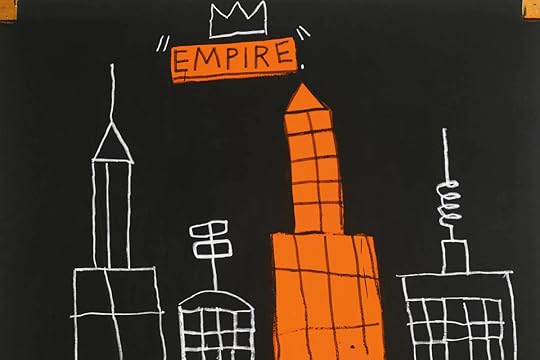
"Mecca" Jean Michel Basquiat
This book picks up a while after the events of the first book, The City We Became. In that one, the New York Burroughs, manifested as different avatars come together to sublimate the power of New York Prime, a smart-mouthed street artist who calls himself Neek. Together with Manny (Manhattan), Veneza (New Jersey), Padmini (Queens), Bronca (The Bronx), and Brooklyn (eponymous), they have to find a way to fight the Great Big Evil, Ry'leh aka The Woman In White aka Squigglebitch. She comes from a dimension known as Ur. And their belief is that to ensure their survival, they have to destroy cities like New York.
Ry'leh is a Lovecraftian construct and harkening to the creator of such monsters, relies on the worst of human instincts to strengthen her foothold in New York, like bigotry and fear of the unknown. She successfully does that in the first book by excising xenophobic little Aislyn (Staten Island). Aislyn believes that Ry'leh is her friend. Even when she was turning her people into mindless puppets, personality gentrification. Aislyn even complains that their new brand of milquetoast racism is too bland.
In the sequel, the stakes are higher than ever. Brooklyn is running for mayor, Bronca wants to start dating again, Padmini is facing deportation, Veneza thinks they should make peace with Aislyn and Manny is finally ready to admit--at least to himself--that he's in love with Neek. Even with the world in imminent danger, their interpersonal lives have a lot to be fought for.
I appreciated how layered this book was. It was simultaneously prescient and prophetic. But one could say that of American politics since the dawn of the orange one. Jemisin herself said that relying on real-life events to inform her fiction almost made her give up on the book. In her author's note, she explains that she decided to leave out the pandemic because she didn't know where things would end up. Which was a shame because there was a lot of sci-fi material to take from that. How humans refused to wear masks to protect their neighbours. The innate nature of idealistic selfishness is a universal threat. One that can be ruthlessly vivisected in sci-fi. But wait, guess what this book did.
One of the main plot elements was New York realising it may need the assistance of the other Cities to take out Ry'leh. The oldest Cities, like Tokyo, were affronted by Manhattan's arrogance in making their urgency her problem. Sound familiar? Other old Cities like Paris and London were pragmatic, willing to at least hear out Young New York. Istanbul was my favourite new City to meet. A lovely old man who was a cat person and whose primary construct was the cats of Istanbul's streets. (Incidentally, according to the Atlantic, cats did come from Istanbul.) The summit eventually happens in Atlantis, a city that died eons ago. But untethered from their home bases, they have no access to the powers of their Cities, no way to create constructs to fight Ry'leh. Could it be a trap?
I call this book existential sci-fi because it is ultimately a question about the inevitability of existence. Since the universe went bang, we were always going to happen. And sometimes, to mark our place, we need to stand and shout and fight. Especially those who have been marginalised or othered. This book takes pains to show how you can use the worst of yourself to help. Are you angered by injustice, you can weaponise that passion. The Bible warns followers not to be quick to anger, or to surrender to the impulses of rage. As someone with common sense, you know that you should probably not pull out a gun on someone because you have road rage.
In her paper on The Politics of Anger, Qinyi Luo argues, When we attribute to our feeling the legitimate name of anger, on the other hand, we acquire a new understanding of ourselves as victims of injustices: we begin to see the world as unjust and needing to be changed; we begin to think that there should be other ways of life that are better than the existing one. The recognition of one’s own anger allows one to perceive things differently and to imagine other ways of life – and this is in itself liberating.
For the New York avatars, anger is a gut instinct against the Ur's need to erase them, against the other cities refusing to rise up with them even knowing that the enemy would be coming for them after it was done with New York.
There is also supposed to be care in how we respond to the unpredictable chaos of life. When incels and tech bros weep and moan and thrash against "DEI" or "wokeness", blaming visibility, accessibility and inclusion for the pitfalls of capitalism their first response is to quash accessibility. They want to revert to a status quo that never really existed. Padmini has choice words for them, though it's unlikely they will ever read them,
This book may be about New York but many of its core tenets apply to anyone who faces injustice. While for many of us, our problems wouldn't go away from the vanquishing of some eldritch horror monster, it requires small, consistent incremental actions if good is ever to rule the day. It may not be in perpetuity, but sometimes, the fighters are the best of the world we make.
PS.// I hope Jemisn considers giving us graphic novels of small adventures these cities have. I would really really like to see a comic book about Istanbul and his cats. No, Igor didn't write this bit.
"Mecca" Jean Michel Basquiat
This book picks up a while after the events of the first book, The City We Became. In that one, the New York Burroughs, manifested as different avatars come together to sublimate the power of New York Prime, a smart-mouthed street artist who calls himself Neek. Together with Manny (Manhattan), Veneza (New Jersey), Padmini (Queens), Bronca (The Bronx), and Brooklyn (eponymous), they have to find a way to fight the Great Big Evil, Ry'leh aka The Woman In White aka Squigglebitch. She comes from a dimension known as Ur. And their belief is that to ensure their survival, they have to destroy cities like New York.
Ry'leh is a Lovecraftian construct and harkening to the creator of such monsters, relies on the worst of human instincts to strengthen her foothold in New York, like bigotry and fear of the unknown. She successfully does that in the first book by excising xenophobic little Aislyn (Staten Island). Aislyn believes that Ry'leh is her friend. Even when she was turning her people into mindless puppets, personality gentrification. Aislyn even complains that their new brand of milquetoast racism is too bland.
She hates that she suddenly has "friends" she neither knows nor trusts, and even that the racists are just ordinary hateful people instead of fitting into Staten's unique brand of pro-Wu Tang anti Blackness.Even after all this, Aislyn feels sorry for Ry'leh. Something the other New York avatars find hard to stomach.
Brooklyn bursts out laughing, bitterly, "You people really will overlook anything so long as the monsters are polite."Some people will object to this kind of line delivery because it's "on the nose" but I fail to see why privileged people, blithely unacknowledging of their privilege, should be inoculated against their complacency.
In the sequel, the stakes are higher than ever. Brooklyn is running for mayor, Bronca wants to start dating again, Padmini is facing deportation, Veneza thinks they should make peace with Aislyn and Manny is finally ready to admit--at least to himself--that he's in love with Neek. Even with the world in imminent danger, their interpersonal lives have a lot to be fought for.
I appreciated how layered this book was. It was simultaneously prescient and prophetic. But one could say that of American politics since the dawn of the orange one. Jemisin herself said that relying on real-life events to inform her fiction almost made her give up on the book. In her author's note, she explains that she decided to leave out the pandemic because she didn't know where things would end up. Which was a shame because there was a lot of sci-fi material to take from that. How humans refused to wear masks to protect their neighbours. The innate nature of idealistic selfishness is a universal threat. One that can be ruthlessly vivisected in sci-fi. But wait, guess what this book did.
One of the main plot elements was New York realising it may need the assistance of the other Cities to take out Ry'leh. The oldest Cities, like Tokyo, were affronted by Manhattan's arrogance in making their urgency her problem. Sound familiar? Other old Cities like Paris and London were pragmatic, willing to at least hear out Young New York. Istanbul was my favourite new City to meet. A lovely old man who was a cat person and whose primary construct was the cats of Istanbul's streets. (Incidentally, according to the Atlantic, cats did come from Istanbul.) The summit eventually happens in Atlantis, a city that died eons ago. But untethered from their home bases, they have no access to the powers of their Cities, no way to create constructs to fight Ry'leh. Could it be a trap?
I call this book existential sci-fi because it is ultimately a question about the inevitability of existence. Since the universe went bang, we were always going to happen. And sometimes, to mark our place, we need to stand and shout and fight. Especially those who have been marginalised or othered. This book takes pains to show how you can use the worst of yourself to help. Are you angered by injustice, you can weaponise that passion. The Bible warns followers not to be quick to anger, or to surrender to the impulses of rage. As someone with common sense, you know that you should probably not pull out a gun on someone because you have road rage.
In her paper on The Politics of Anger, Qinyi Luo argues, When we attribute to our feeling the legitimate name of anger, on the other hand, we acquire a new understanding of ourselves as victims of injustices: we begin to see the world as unjust and needing to be changed; we begin to think that there should be other ways of life that are better than the existing one. The recognition of one’s own anger allows one to perceive things differently and to imagine other ways of life – and this is in itself liberating.
For the New York avatars, anger is a gut instinct against the Ur's need to erase them, against the other cities refusing to rise up with them even knowing that the enemy would be coming for them after it was done with New York.
There is also supposed to be care in how we respond to the unpredictable chaos of life. When incels and tech bros weep and moan and thrash against "DEI" or "wokeness", blaming visibility, accessibility and inclusion for the pitfalls of capitalism their first response is to quash accessibility. They want to revert to a status quo that never really existed. Padmini has choice words for them, though it's unlikely they will ever read them,
Mind your business. Just stop trying to control other worlds, stop even looking at them. You're the problem. Just let go.I liken them to the bootlickers of patriarchy in my country who worship at the altar of fundamentalism, homophobia and "men's rights".
This book may be about New York but many of its core tenets apply to anyone who faces injustice. While for many of us, our problems wouldn't go away from the vanquishing of some eldritch horror monster, it requires small, consistent incremental actions if good is ever to rule the day. It may not be in perpetuity, but sometimes, the fighters are the best of the world we make.
PS.// I hope Jemisn considers giving us graphic novels of small adventures these cities have. I would really really like to see a comic book about Istanbul and his cats. No, Igor didn't write this bit.

December 3, 2022
If you liked The City We Became you’ll like The World We Make. Just not as much. It has much of the same feel, the same sass. The eclectic city avatars are all back, and a few, like Manhattan and Queens, are fleshed out significantly. The avatars have all come into their powers, with an idea of what’s going on. There are multiple tense and exciting action sequences.
But a couple of things are just a bit off. The most obvious examples of this, for me, are the human political villains. There’s a nefarious mayoral candidate running with the slogan “Make New York Great Again!” A nasty organized group of violence bros are called the Proud Men. I don’t have a problem with the author’s politics (I share them) — but it all feels just a little too on the nose. Perhaps it is just so wearying dealing with these things in real life that it is exhausting to meet them so exactly in my entertainment.
Then there’s the issue of the repeating instances of peril. Jemisin builds the tension well, takes you to the edge of your seat, and resolves at the last minute. The problem is that she follows this formula so many times throughout the book that, after the first couple times, you lose the sense of actual peril and just begin wondering what device will get our heroes out of trouble this time.
I did enjoy reading The World We Make. It earned a solid, three stars I liked it rating. Anyone who read The City We Became should read it. But, as the sequel to an amazingly creative novel that I gave a five star rating, it still managed to disappoint me. The City We Became felt like a brilliantly creative passion project. This sequel felt more like a solid writer churning out a contracted book.
But a couple of things are just a bit off. The most obvious examples of this, for me, are the human political villains. There’s a nefarious mayoral candidate running with the slogan “Make New York Great Again!” A nasty organized group of violence bros are called the Proud Men. I don’t have a problem with the author’s politics (I share them) — but it all feels just a little too on the nose. Perhaps it is just so wearying dealing with these things in real life that it is exhausting to meet them so exactly in my entertainment.
Then there’s the issue of the repeating instances of peril. Jemisin builds the tension well, takes you to the edge of your seat, and resolves at the last minute. The problem is that she follows this formula so many times throughout the book that, after the first couple times, you lose the sense of actual peril and just begin wondering what device will get our heroes out of trouble this time.
I did enjoy reading The World We Make. It earned a solid, three stars I liked it rating. Anyone who read The City We Became should read it. But, as the sequel to an amazingly creative novel that I gave a five star rating, it still managed to disappoint me. The City We Became felt like a brilliantly creative passion project. This sequel felt more like a solid writer churning out a contracted book.

January 23, 2023
Well I thought this was perfect. I love the way this author writes, the way she keeps the momentum of the story full speed ahead and yet still adds all the necessary touches to her characters and the settings.
All the characters in this book are brilliant, especially Mannie and Neek, but also the avatars of the other cities. London needs a whole book to herself, and Istanbul and his calico cats are to die for. Jemisin notes at the end that her plan for a trilogy had to change to a duology because her fictional ideas for New York politics and society were being shadowed by factual events and she felt unable to continue further. I humbly suggest she should just move the story to another country!
The story was exciting, the ending was perfect and I loved every second of it. Looking forward to whatever she writes next:)
All the characters in this book are brilliant, especially Mannie and Neek, but also the avatars of the other cities. London needs a whole book to herself, and Istanbul and his calico cats are to die for. Jemisin notes at the end that her plan for a trilogy had to change to a duology because her fictional ideas for New York politics and society were being shadowed by factual events and she felt unable to continue further. I humbly suggest she should just move the story to another country!
The story was exciting, the ending was perfect and I loved every second of it. Looking forward to whatever she writes next:)

February 8, 2023
If N.K. Jemisin has a million fans; then I'm one of them.
If N.K. Jemisin has one fan, then I'm THAT ONE.
If N.K. Jemisin has no fans, that means I'm dead.
In all seriousness, I bow down in awe of N.K. Jemisin's genius, and will read anything and everything she writes forevermore. She is an auto-buy author for me, and I haven't been disappointed yet!
The World We Make is the second and final installment of the Great Cities duology, a gloriously weird SFF story of a group of seemingly random New Yorkers slammed together as they are transformed into the living avatars of their multifarious city just in time to fight for their very survival.
This was a return to the campy, sharp-tongued commentary that I so loved in the first book, laced with humour and so profoundly relevant to the here and now.
I adore these characters, I love this world, and I'm smitten with N.K. Jemisin's brain.
This was included in my Top 10 Favourite Sci-Fi Books and Series video:
https://youtu.be/2v0hcBS9zlQ
Trigger/content warnings: Racism, Xenophobia, Violence, Police brutality, Deportation, Transphobia, Injury/injury detail
You can find me on...
Youtube | Instagram | TikTok
You can join our book club over on Patreon...
PBB Book Club
If N.K. Jemisin has one fan, then I'm THAT ONE.
If N.K. Jemisin has no fans, that means I'm dead.
In all seriousness, I bow down in awe of N.K. Jemisin's genius, and will read anything and everything she writes forevermore. She is an auto-buy author for me, and I haven't been disappointed yet!
The World We Make is the second and final installment of the Great Cities duology, a gloriously weird SFF story of a group of seemingly random New Yorkers slammed together as they are transformed into the living avatars of their multifarious city just in time to fight for their very survival.
This was a return to the campy, sharp-tongued commentary that I so loved in the first book, laced with humour and so profoundly relevant to the here and now.
I adore these characters, I love this world, and I'm smitten with N.K. Jemisin's brain.
This was included in my Top 10 Favourite Sci-Fi Books and Series video:
https://youtu.be/2v0hcBS9zlQ
Trigger/content warnings: Racism, Xenophobia, Violence, Police brutality, Deportation, Transphobia, Injury/injury detail
You can find me on...
Youtube | Instagram | TikTok
You can join our book club over on Patreon...
PBB Book Club

Want to Read
April 20, 2022YES! NOW WE'RE FINALLY GETTING A SEQUEL.
I AM SO EXCITED!
I AM SO EXCITED!

February 28, 2023
I really did not enjoy the aspect of this book where the author states at the end that "...the Great Cities series to be a metaphor for the COVID-19 pandemic, nor for my country’s swan dive into Deep Fascism (we’ve always been swimming in the fashy shallows)."
But nevertheless, it is a solid sequel and considering it's a fantastical ode to a real city, it has stayed true to itself rather than be fantasy. Always interesting writing from the author, splendid and wondrous but I liked the first book much better.
But nevertheless, it is a solid sequel and considering it's a fantastical ode to a real city, it has stayed true to itself rather than be fantasy. Always interesting writing from the author, splendid and wondrous but I liked the first book much better.

November 4, 2022
Well, the publication of this book really caught me by surprise. I only knew about it when reading a tweet. And then apparently it became a duology, and not trilogy. Not that I complain though, we should have more duologies.
What can I say now hmm. It was good but also rather predictable. I have a feeling Jemisin got tired in writing this. I still enjoyed some of the characters (especially the Queens avatar and the enigmatic Neek) but when I read about other cities' avatars I could not help but getting curious with their stories. What would these cities do when faced with mundane, not-magical problems like climate change, crime, pandemic, etc? Somehow my thoughts strayed when reading the book with all kinds of scenarios everytime I read about a new city avatar and their personality. I can imagine how the Jakarta avatar would be like, poor thing.
Anyway, overall an interesting duology, but could not hold a candle against the magnificent Broken Earth trilogy.
What can I say now hmm. It was good but also rather predictable. I have a feeling Jemisin got tired in writing this. I still enjoyed some of the characters (especially the Queens avatar and the enigmatic Neek) but when I read about other cities' avatars I could not help but getting curious with their stories. What would these cities do when faced with mundane, not-magical problems like climate change, crime, pandemic, etc? Somehow my thoughts strayed when reading the book with all kinds of scenarios everytime I read about a new city avatar and their personality. I can imagine how the Jakarta avatar would be like, poor thing.
Anyway, overall an interesting duology, but could not hold a candle against the magnificent Broken Earth trilogy.
October 15, 2022
First of all, I would like to thank Netgalley and the publisher for providing me with an early copy of the book in return for an honest review. As this is part 2 of a duology, you can also find my review of part 1 on Goodreads.
The story continues to follow the conflict between the newborn New York and its borroughs on the one hand, and the Ur on the other. The conflict between Staten Island and the other NY borroughs also persists. We get introduced to many other cities, finally understand the reasons for the meta conflict, get a glimpse of the metaverse (with some quantum physics for dummies to boot), discover more about the relationships between and of the protagonists, receive further doses of vitriol against modern capitalism and the dominant political system, and participate in a mayoral race. Oh and there is also the micro universe. No spoilers though. Just teasers.
What to like about this book? Jemisin is a phenomenon. Her writing is captivating, and her ability to create characters one falls in love with is among the top 5% of authors. She is also able to inject emotion and sentiment into an otherwise caricaturistic urban fantasy with deft and precision.
What is there to dislike? Well... a lot. I will mention but the few things that come to mind most of all.
First, the writing is erratic and jumpy. Sometimes things move quickly, and sometimes whole months pass between chapters. Hard to follow.
Second, while characters develop, they develop without the full narrative of how and why. They just change. Like Neek. And it's never clear why.
Third, the story has numerous holes that are glaring and galling. How come Manny's family knows about Cities? Why do the Proud Men disrupt the court proceedings? What happens to the passengers that went overboard during the ferry episode? How do cities communicate with each other? Why is there such discrepancy between campaign financing scrutiny on the two sides of the mayoral race?
Fourth, while I love the author to bits, and adore her imagination and fantasy, her understanding of how politics works (the mayoral election....) and how companies work (so called "evilcorp"...) is either a badly executed joke, or a sign of deep ignorance. I'm not sure what's worse.
Fifth, while some of the toxicity towards white people and corporations has been played down vs the previous installment, some of it persists, and it is both annoying and lazy. Even within the universe that the author creates, banks and corporations should be as much a part of the fabric of NY as working class people and minorities.
Sixth, some parts of the book are wildly derivative. And before the reader of this review screams that this is both a homage and criticism of Lovecraft, some of the references are just lazy. They oscillate between the plain lazy (Poe) and the offensively lazy (borrowing the NYC character from A Little Life).
Lastly, while I love LGBTQ characters getting the attention they should have always had, this deserves to be done well. While many other authors do this justice (as per my review of the prior installment) Jemisin just doesn't. The obsession with sexual orientation of all the protagonists is just odd. It doesn't add anything to the story, in my opinion.
Worst of all, it just feels like the author I learned to love through her first three Fantasy universes (and numerous short stories) is just gone. Like she was replaced by someone else - an angry, impatient, bad writer.
The story continues to follow the conflict between the newborn New York and its borroughs on the one hand, and the Ur on the other. The conflict between Staten Island and the other NY borroughs also persists. We get introduced to many other cities, finally understand the reasons for the meta conflict, get a glimpse of the metaverse (with some quantum physics for dummies to boot), discover more about the relationships between and of the protagonists, receive further doses of vitriol against modern capitalism and the dominant political system, and participate in a mayoral race. Oh and there is also the micro universe. No spoilers though. Just teasers.
What to like about this book? Jemisin is a phenomenon. Her writing is captivating, and her ability to create characters one falls in love with is among the top 5% of authors. She is also able to inject emotion and sentiment into an otherwise caricaturistic urban fantasy with deft and precision.
What is there to dislike? Well... a lot. I will mention but the few things that come to mind most of all.
First, the writing is erratic and jumpy. Sometimes things move quickly, and sometimes whole months pass between chapters. Hard to follow.
Second, while characters develop, they develop without the full narrative of how and why. They just change. Like Neek. And it's never clear why.
Third, the story has numerous holes that are glaring and galling. How come Manny's family knows about Cities? Why do the Proud Men disrupt the court proceedings? What happens to the passengers that went overboard during the ferry episode? How do cities communicate with each other? Why is there such discrepancy between campaign financing scrutiny on the two sides of the mayoral race?
Fourth, while I love the author to bits, and adore her imagination and fantasy, her understanding of how politics works (the mayoral election....) and how companies work (so called "evilcorp"...) is either a badly executed joke, or a sign of deep ignorance. I'm not sure what's worse.
Fifth, while some of the toxicity towards white people and corporations has been played down vs the previous installment, some of it persists, and it is both annoying and lazy. Even within the universe that the author creates, banks and corporations should be as much a part of the fabric of NY as working class people and minorities.
Sixth, some parts of the book are wildly derivative. And before the reader of this review screams that this is both a homage and criticism of Lovecraft, some of the references are just lazy. They oscillate between the plain lazy (Poe) and the offensively lazy (borrowing the NYC character from A Little Life).
Lastly, while I love LGBTQ characters getting the attention they should have always had, this deserves to be done well. While many other authors do this justice (as per my review of the prior installment) Jemisin just doesn't. The obsession with sexual orientation of all the protagonists is just odd. It doesn't add anything to the story, in my opinion.
Worst of all, it just feels like the author I learned to love through her first three Fantasy universes (and numerous short stories) is just gone. Like she was replaced by someone else - an angry, impatient, bad writer.

June 13, 2023
Maybe it's because I live in New York myself, but this was hard to read at times because of how closely it mirrors reality. This was Jemisin's pandemic book and I think you can feel that. The City We Became is equally political, but in a hopeful and empowering sort of way. The World We Make is still hopeful, but less so and you feel the effort and the grind of trying to bring about change. At least that's how it felt to me. I do think it's a satisfying conclusion to the duology and I liked it, but it's not my favorite thing from Jemisin.
Join me on Patreon to see a reading vlog for this title! I do one a month. https://www.patreon.com/posts/june-20...
Join me on Patreon to see a reading vlog for this title! I do one a month. https://www.patreon.com/posts/june-20...

November 10, 2022
I really sympathize with the author of this book. In the afterword, she notes that she struggled to finish and actually cut it from a planned trilogy to a duology. The political and social themes which had started out as prescient were our lived reality by the time she was writing book number two, and truth is stranger than fiction. It's very hard to write about the rise of bigotry and fascism when it's already happening and people aren't nearly bothered enough about it.
So, that should tell you that this volume of the book is equally as political as the first. I respect an author's artistic freedom to cover whatever topic they wish, but much like the first, the persistent reality of this one kept it from being fun. These books are also a love letter to NYC in a way that felt ham-fisted to someone who has never lived there, and has roots in southern cities that are New York's diametric opposite. It felt a bit cliche, honestly, because every personification of the boroughs felt like stereotypes of what I've seen on TV.
The first book was more of an ensemble effort but this book has a heavy emphasis on Manny and Neek. I wish I cared more, but there simply wasn't enough time for their stories to be shown rather than told. We also get a MAJOR bombshell regarding Manny's past (. That was definitely fertile ground for the story to explore and I wish we had gotten more time with that. Padmini, Bronca and Veneza all kind of languished here and Aisling's plot resolution was super disappointing.
This is one of those books where I loved the concept but the execution didn't quite win me over. However, Jemisin is a brilliant writer and I look forward to seeing what she comes up with next.
So, that should tell you that this volume of the book is equally as political as the first. I respect an author's artistic freedom to cover whatever topic they wish, but much like the first, the persistent reality of this one kept it from being fun. These books are also a love letter to NYC in a way that felt ham-fisted to someone who has never lived there, and has roots in southern cities that are New York's diametric opposite. It felt a bit cliche, honestly, because every personification of the boroughs felt like stereotypes of what I've seen on TV.
The first book was more of an ensemble effort but this book has a heavy emphasis on Manny and Neek. I wish I cared more, but there simply wasn't enough time for their stories to be shown rather than told. We also get a MAJOR bombshell regarding Manny's past (. That was definitely fertile ground for the story to explore and I wish we had gotten more time with that. Padmini, Bronca and Veneza all kind of languished here and Aisling's plot resolution was super disappointing.
This is one of those books where I loved the concept but the execution didn't quite win me over. However, Jemisin is a brilliant writer and I look forward to seeing what she comes up with next.

March 8, 2024
in my humble opinion this kinda didn’t need to be written
![Profile Image for laurel [the suspected bibliophile].](https://i.gr-assets.com/images/S/compressed.photo.goodreads.com/users/1645808644i/7494844._UX200_CR0,6,200,200_.jpg)
December 3, 2022
Look, if NK Jemisin decides to maybe write a third book, I will happily write to her editors and push for it to be called New City, Who Dis?.
It's hard to sum up this one, and I feel like the afterward says everything that needs to be said. This is a book that was finished with grit and stubbornness and let's-just-get-it-done, and while the heart it there, there's a solid rush at the end to wrap things up in a short book two of what was meant to be a duology. No bashing here.
Life is rough, being a writer is hard as fuck, especially when you are the greatest sci-fi writer who is capturing the essence of a NYC that no longer exists. Who'd have thought a virus would be more devastating than Lovecraftian eldritch horrors?
Anywho, I liked this one. I didn't love it as much as the first, but it was still good, despite the weak climax.
It's hard to sum up this one, and I feel like the afterward says everything that needs to be said. This is a book that was finished with grit and stubbornness and let's-just-get-it-done, and while the heart it there, there's a solid rush at the end to wrap things up in a short book two of what was meant to be a duology. No bashing here.
Life is rough, being a writer is hard as fuck, especially when you are the greatest sci-fi writer who is capturing the essence of a NYC that no longer exists. Who'd have thought a virus would be more devastating than Lovecraftian eldritch horrors?
Anywho, I liked this one. I didn't love it as much as the first, but it was still good, despite the weak climax.

December 6, 2022
BEYOND FIVE STARS
THIS WAS SO GOOD
REVIEW TO COME
THIS WAS SO GOOD
REVIEW TO COME

January 31, 2023
Any time Jemisin drops, I'm looking to pick up a coffee and settle in for some heavy duty reading. For whatever reason, I had a stutter-start to the second, and surprisingly final, novel in N.K. Jemisin's Great Cities series. Though it was almost *checks watch incredulously* THREE years ago that Jemisin released the first novel, The City We Became, I remember liking the novel well enough even if it didn't reach the lofty heights of the Broken Earth trilogy. In the intervening years, my interest in the series waned slightly, and it was heartening to read at the end of this novel that Jemisin too had struggled with capping off the tale.
COVID-19, racial unrest, and a Trump presidency collided with Jemisin's original plans for the series causing her to redraft the second novel as a conclusion to a duology. Now, the reading of the novel with these facts at hand make the book more interesting on a few levels. First, I'm in some ways glad this is the end of the series: this just hews too close to the parts of reality I'm looking to escape from in my reading. Secondly, The World We Make feels overstuffed with ideas in a way that suggests a larger structure and plan that was condensed.
It's this jam-packing that leaves a little to be desired. For me, the character beats suffer the most. Though the whole Manny/Neek situation felt like it had an obvious end, and Manny's interesting revelation about his past is just touched on before it becomes another stop on a relentless ticking of plot points. Some of the other boroughs, Padmini and Brooklyn in particular, are given their moments to shine, but Bronca and Veneza feel sidelined.
In terms of concepts: holy over-boiling pot Batman! I loved the ventures into the multiverse, but they felt like small morsels of larger set pieces I wanted to get into. Sure, the "lost city" ventures with Padmini are cool, but I craved the rest of that history in a way that made the final scene in that setting a little flat. My absolute favourite portions of the novel are the different aspects of New York visiting other cities' avatars. I could read an entire novel where Manny walks the streets of foreign cities just looking to have a chat with similarly powered up humans. Some of these sections feel almost like Sandman-era Gaiman, which is among the highest compliment I'm able to offer to any fantasy!
In the end, I understand Jemisin's need to finish this for herself, her fans, and NYC. Now, it might not be a novel that I cherish in the same way I do the novels of the Broken Earth or Inheritance trilogies, but I can respect the effort. For me, it's Jemisin at her most unruly, with ideas popping off like fireworks: beautiful, but brief. I didn't love this, but you can bet your ass I'll be first in line for whatever she's got lined up next!
COVID-19, racial unrest, and a Trump presidency collided with Jemisin's original plans for the series causing her to redraft the second novel as a conclusion to a duology. Now, the reading of the novel with these facts at hand make the book more interesting on a few levels. First, I'm in some ways glad this is the end of the series: this just hews too close to the parts of reality I'm looking to escape from in my reading. Secondly, The World We Make feels overstuffed with ideas in a way that suggests a larger structure and plan that was condensed.
It's this jam-packing that leaves a little to be desired. For me, the character beats suffer the most. Though the whole Manny/Neek situation felt like it had an obvious end, and Manny's interesting revelation about his past is just touched on before it becomes another stop on a relentless ticking of plot points. Some of the other boroughs, Padmini and Brooklyn in particular, are given their moments to shine, but Bronca and Veneza feel sidelined.
In terms of concepts: holy over-boiling pot Batman! I loved the ventures into the multiverse, but they felt like small morsels of larger set pieces I wanted to get into. Sure, the "lost city" ventures with Padmini are cool, but I craved the rest of that history in a way that made the final scene in that setting a little flat. My absolute favourite portions of the novel are the different aspects of New York visiting other cities' avatars. I could read an entire novel where Manny walks the streets of foreign cities just looking to have a chat with similarly powered up humans. Some of these sections feel almost like Sandman-era Gaiman, which is among the highest compliment I'm able to offer to any fantasy!
In the end, I understand Jemisin's need to finish this for herself, her fans, and NYC. Now, it might not be a novel that I cherish in the same way I do the novels of the Broken Earth or Inheritance trilogies, but I can respect the effort. For me, it's Jemisin at her most unruly, with ideas popping off like fireworks: beautiful, but brief. I didn't love this, but you can bet your ass I'll be first in line for whatever she's got lined up next!

November 9, 2022
Series Review Video: https://youtu.be/9_xgVvGFojo
So lovely to read a book that meets your expectations. Do I think this was a perfect book? Probably not but it was a lovely continuation to everything the City We Became set up and I can't wait to re-read this with the fantastic audiobooks one day!
So lovely to read a book that meets your expectations. Do I think this was a perfect book? Probably not but it was a lovely continuation to everything the City We Became set up and I can't wait to re-read this with the fantastic audiobooks one day!

August 17, 2022
It took me a little while to get into, because I didn't want to read about Panfilo. But there are so many things to love about this book!
Best: WITH BONUS APPEARANCE BY ISTANBUL AND HIS CATS.
(I used to have a calico cat from Istanbul!!! Istanbul cats are amazing! And there do seem to be a lot of calicos and orange-and-white ones.)
Other awesomeness:
+ the Math
+ I refuse to believe kugelblitz is not actually a pastry.
+ that city Padmini likes
+ R'lyeh being randomly whimsical or absurdist while trying to interact with humans
+ the burp after that door closes
+ Padmini, Neek, and Manny interactions in general
Best: WITH BONUS APPEARANCE BY ISTANBUL AND HIS CATS.
(I used to have a calico cat from Istanbul!!! Istanbul cats are amazing! And there do seem to be a lot of calicos and orange-and-white ones.)
Other awesomeness:
+ the Math
+ I refuse to believe kugelblitz is not actually a pastry.
+ that city Padmini likes
+ R'lyeh being randomly whimsical or absurdist while trying to interact with humans
+ the burp after that door closes
+ Padmini, Neek, and Manny interactions in general
February 21, 2026
My journey with NK Jemisin is finally complete with me finishing this novel. But don't let my undying love for Jemisin curb your enthusiasm in any way.
The first book was much more action packed, and a lot of the set up was very high stakes and dramatic. I felt like the second installment was much more of a mellow tone. The building of found family and learning to work together to overcome a common evil. Much more mellow in action but not any less compelling or bingeable.
I will admit that the ending did feel a little rushed and anti-climatic. But I was still fully satisfied with where the story went as a complete completed whole. I do think the fact that this was supposed to be a trilogy that was then changed into a duology affected the second book. I felt like a lot more could've been expanded in this novel, but again they were compressed for length of series.
I feel like we got even more information on the characters and the additions to the world building really rounded the story out well. The summit was super interesting and getting to see a range of other cities was absolutely a high point of this book.
I'm not sure where my journey with Jemisin will go after this point. But I'm anticipating some long awaited rereads because honestly, if you have not gotten into this author yet, what are you doing with your life?
The first book was much more action packed, and a lot of the set up was very high stakes and dramatic. I felt like the second installment was much more of a mellow tone. The building of found family and learning to work together to overcome a common evil. Much more mellow in action but not any less compelling or bingeable.
I will admit that the ending did feel a little rushed and anti-climatic. But I was still fully satisfied with where the story went as a complete completed whole. I do think the fact that this was supposed to be a trilogy that was then changed into a duology affected the second book. I felt like a lot more could've been expanded in this novel, but again they were compressed for length of series.
I feel like we got even more information on the characters and the additions to the world building really rounded the story out well. The summit was super interesting and getting to see a range of other cities was absolutely a high point of this book.
I'm not sure where my journey with Jemisin will go after this point. But I'm anticipating some long awaited rereads because honestly, if you have not gotten into this author yet, what are you doing with your life?

December 18, 2022
3.5 stars, rounded up
It would have been a solid four, with minor reservations about it being feeling surprisingly rushed and a bit difficult to suspend my disbelief at a couple points… but that ending. Not the coda, but the ending. I feel more than a little disappointed. Blah. I’m not even sure my rating should be rounded up — maybe I’ll round it down in a day or two. I want some time to process the book as a whole.
It would have been a solid four, with minor reservations about it being feeling surprisingly rushed and a bit difficult to suspend my disbelief at a couple points… but that ending. Not the coda, but the ending. I feel more than a little disappointed. Blah. I’m not even sure my rating should be rounded up — maybe I’ll round it down in a day or two. I want some time to process the book as a whole.

January 22, 2023
Lots of people love these books. I do not.
I looked forward to the first installment eagerly, pre-ordered it in hardcover, and disliked it intensely. Rather than rating and reviewing it at the time, I thought I'd see whether it would end up somewhere that redeemed it for me.
Nope. Ugh.
Here's the crux of the problem summarized in one quote towards the end of the second book:
Double ugh. Let me rephrase: "We have culturally colonized the world and set trends that everyone else must follow in order to count as people by us, we use the tools of empire to drive countries into poverty and slavery, we have some big skyscrapers, we call ourselves the greatest city in the world because we are fucking narcissists and also have destroyed actively any possible competitors, and we will flag wave the American Dream as a positive emblem of hope rather than a symbol of empire, calling ourselves heroes and saviours because HERE the foot inside the boot on the world's neck might be of any gender or race, and the neck under that boot might be white."
Yuck.
I'm honestly trying to be a little distanced and rational here but I can't contain my distaste for the philosophy in these books. If you are, actually or mentally, American, possibly you will be on board with all of this, this flagrant proselytizing of Intersectional Empire in grand glittering lights.
Look, let's put aside entirely that the series reads as a not-too-thinly-veiled attack on White Feminism. Surely it deserves criticism. So fine, make the intergalactic baddie a white woman dressed like a suffragette and making political claims that sound like a 1965 feminist. Whatever. Make her earthly handmaiden the one white girl. Ok.
But then to make Wall Street a god-damned hero in a set of books ostensibly about equity and equality?
Oh hell no.
Wall Street is as much a destroyer of worlds as any army or racist ideology. Swapping out the straight white dudes at the top for brown trans ones is not going to change that.
And sure, cities have positive ecological qualities in terms of density for energy use and transportation and what-not, and I'm very much pro-city in terms of concentrated humanity on environmental grounds for many reasons, but that they are also primary engines for Empire of all kinds, largely responsible for flattening cultures, extracting resources from vassal areas through slavery and war, forcibly exporting culture as a tool of Empire, creating regional and global structures of dominance and hierarchy, is also incontrovertible. And I just cannot understand nor defend writing a series of books about cities as heroes of an intergalactic battle over EQUALITY. No.
Anyway. If you agree with the quote, you'll like these books, I suspect.
Fingers crossed that Jemisin's next is better.
I looked forward to the first installment eagerly, pre-ordered it in hardcover, and disliked it intensely. Rather than rating and reviewing it at the time, I thought I'd see whether it would end up somewhere that redeemed it for me.
Nope. Ugh.
Here's the crux of the problem summarized in one quote towards the end of the second book:
We still set trends that the world follows, we drive whole economies toward or back from the brink, maybe we aren't called the greatest city in the world because we have the biggest skyscrapers but because here the American Dream has a hope of someday becoming truth--
Double ugh. Let me rephrase: "We have culturally colonized the world and set trends that everyone else must follow in order to count as people by us, we use the tools of empire to drive countries into poverty and slavery, we have some big skyscrapers, we call ourselves the greatest city in the world because we are fucking narcissists and also have destroyed actively any possible competitors, and we will flag wave the American Dream as a positive emblem of hope rather than a symbol of empire, calling ourselves heroes and saviours because HERE the foot inside the boot on the world's neck might be of any gender or race, and the neck under that boot might be white."
Yuck.
I'm honestly trying to be a little distanced and rational here but I can't contain my distaste for the philosophy in these books. If you are, actually or mentally, American, possibly you will be on board with all of this, this flagrant proselytizing of Intersectional Empire in grand glittering lights.
Look, let's put aside entirely that the series reads as a not-too-thinly-veiled attack on White Feminism. Surely it deserves criticism. So fine, make the intergalactic baddie a white woman dressed like a suffragette and making political claims that sound like a 1965 feminist. Whatever. Make her earthly handmaiden the one white girl. Ok.
But then to make Wall Street a god-damned hero in a set of books ostensibly about equity and equality?
Oh hell no.
Wall Street is as much a destroyer of worlds as any army or racist ideology. Swapping out the straight white dudes at the top for brown trans ones is not going to change that.
And sure, cities have positive ecological qualities in terms of density for energy use and transportation and what-not, and I'm very much pro-city in terms of concentrated humanity on environmental grounds for many reasons, but that they are also primary engines for Empire of all kinds, largely responsible for flattening cultures, extracting resources from vassal areas through slavery and war, forcibly exporting culture as a tool of Empire, creating regional and global structures of dominance and hierarchy, is also incontrovertible. And I just cannot understand nor defend writing a series of books about cities as heroes of an intergalactic battle over EQUALITY. No.
Anyway. If you agree with the quote, you'll like these books, I suspect.
Fingers crossed that Jemisin's next is better.

February 11, 2023
Initial thoughts: Pacing issues, rushed in the end, great in some places but lacking in others. Jemisin created a vibrant world filled with concepts and characters that deserved more? I feel like the first book in the series is superior to this one, although Padmini and Manny really shine in this book as compared to the first. TLDR: Great ideas, great characters: rushed, dusted off and filed away plot. A rare instance when I feel a trilogy would have been better than a duology.
An uneven offering to an unparalleled world.
An uneven offering to an unparalleled world.

November 6, 2022
‘Every great city has a soul. A human avatar that embodies their city's heart and wields its magic. New York? She's got six. But all is not well in the city that never sleeps.’
My thanks to Little, Brown Book Group U.K./Orbit for an eARC via NetGalley of ‘The World We Make’ by N. K. Jemisin.
This is the second and final book in N. K. Jemisin’s Great Cities Duology that combines urban fantasy, science fiction, politics, and horror.
In her Acknowledgements Jemisin advises that “The Great Cities trilogy that I’d initially planned became a duology because I realized my creative energy was fading under the onslaught of reality, and I didn’t have it in me to write three books in this milieu.” I am grateful that she was able to continue and complete the story.
Given that this is a tale told over the course of two books, they are best read in order. As a result I am wary of spoilers for ‘The City We Became’ so just a general overview.
It’s been three months since New York City came alive and six New Yorkers became its living avatars - one for each of its seven boroughs, minus Staten Island. While there’s been a brief hiatus in the conflict, it’s not long before the Enemy (with a capital E) is back.
Jemisin’s writing is so vivid both with respect to her myriad characters and the energy that she brings to her world building incorporating elements from the real world including gentrification, protests, and a politician with the slogan, ‘Make New York Great Again’. In addition, I appreciated the interludes and appearances of other city avatars.
Overall, a stunning conclusion to the story of the Great Cities written with wit and social awareness. Her writing demonstrates her confidence with the tropes of the horror and urban fantasy genres and a willingness to be playfully subversive.
Highly recommended.
My thanks to Little, Brown Book Group U.K./Orbit for an eARC via NetGalley of ‘The World We Make’ by N. K. Jemisin.
This is the second and final book in N. K. Jemisin’s Great Cities Duology that combines urban fantasy, science fiction, politics, and horror.
In her Acknowledgements Jemisin advises that “The Great Cities trilogy that I’d initially planned became a duology because I realized my creative energy was fading under the onslaught of reality, and I didn’t have it in me to write three books in this milieu.” I am grateful that she was able to continue and complete the story.
Given that this is a tale told over the course of two books, they are best read in order. As a result I am wary of spoilers for ‘The City We Became’ so just a general overview.
It’s been three months since New York City came alive and six New Yorkers became its living avatars - one for each of its seven boroughs, minus Staten Island. While there’s been a brief hiatus in the conflict, it’s not long before the Enemy (with a capital E) is back.
Jemisin’s writing is so vivid both with respect to her myriad characters and the energy that she brings to her world building incorporating elements from the real world including gentrification, protests, and a politician with the slogan, ‘Make New York Great Again’. In addition, I appreciated the interludes and appearances of other city avatars.
Overall, a stunning conclusion to the story of the Great Cities written with wit and social awareness. Her writing demonstrates her confidence with the tropes of the horror and urban fantasy genres and a willingness to be playfully subversive.
Highly recommended.

November 2, 2022
N.K. Jemisin is one of the best active fantasy and sci-fi authors, and so her books are must-reads for me whenever they come out. The City We Became was a fascinating book that was as much love story for New York (a city I don't live in, but that my family is from) as it was a compelling fantasy story, so I couldn't wait for the sequels (originally, it was meant to be a trilogy). It set up a compelling conflict for the future and a world that felt really expansive. So I preordered this book, picked it up from my local bookshop, and stayed up late on release day to try and finish it.
But unfortunately, I felt that The World We Make was a letdown for me. The City We Became released in March 2020, a different time. As Jemisin said herself in the afterword, this was a difficult book to write for her due to real-world events - not just the COVID-19 pandemic, but also real-world political events. And rather than abandoning the story, she wanted to push through and finish, changing it from a trilogy to a duology.
The problem with that approach is that The World We Make very much felt like it was compressing two books of story into a single book. And that was its biggest flaw, because we had character development really truncated, relationships evolving in ways that weren't well-explained, and world-building not particularly well-explained (a major plot point is never really well-explained, for example). We had a chapter skip forwards months all at once with us being told what happened. And so, this book just never quite hooked me in the same way that The City We Became or the Broken Earth Trilogy did. While it didn't feel like a chore to read, it was also a huge letdown for me because I have read Jemisin's work and I know how good it can be when it is at its best. This was not that, unfortunately.
But unfortunately, I felt that The World We Make was a letdown for me. The City We Became released in March 2020, a different time. As Jemisin said herself in the afterword, this was a difficult book to write for her due to real-world events - not just the COVID-19 pandemic, but also real-world political events. And rather than abandoning the story, she wanted to push through and finish, changing it from a trilogy to a duology.
The problem with that approach is that The World We Make very much felt like it was compressing two books of story into a single book. And that was its biggest flaw, because we had character development really truncated, relationships evolving in ways that weren't well-explained, and world-building not particularly well-explained (a major plot point is never really well-explained, for example). We had a chapter skip forwards months all at once with us being told what happened. And so, this book just never quite hooked me in the same way that The City We Became or the Broken Earth Trilogy did. While it didn't feel like a chore to read, it was also a huge letdown for me because I have read Jemisin's work and I know how good it can be when it is at its best. This was not that, unfortunately.

July 7, 2025
If I were a high school teacher this would become one of my immediate must read series recommendations for students.

November 11, 2022
Boy New Yorkers really love to sit around and congratulate themselves for being New Yorkers huh
Jokes aside, and aside from all the eye-rolling I did at the overweening New-York-Pride of it all (which is so over-the-top that I was astonished to discover that N.K. Jemisin isn't actually from there; no zealot like a convert, I guess) I really didn't enjoy this book. Jemisin says in her afterword that she nearly didn't finish this book, and compressed the planned trilogy into a duology, and it shows -- in fact, I feel like one can almost pinpoint the exact spot where she said "fuck it, I can't deal with writing another book of this" and dashed off a "climactic" final battle. Plot threads are resolved with lightning speed (or discarded entirely -- the first half of the book spends a huge amount of time on the avatar of Brooklyn deciding to run for mayor, and the book ends before the primary).
The basic premise ("cities have avatars, and the enemy is the city of R'lyeh") is great, but I've never quite gotten over how it's applied, with no US city having achieved critical mass to become a City until this present moment, except for New Orleans and Port-au-Prince (in order to cram-fit the real-world natural disasters that befell each city in the last 20 years into consequences of the Enemy opposing their transformation). Jemisin tries to justify it in New York's case as the city changing culturally too rapidly (and the present moment being the first time it's stayed pretty consistent for a few decade span at a time) and more broadly as the Enemy suppressing City formation in the Western Hemisphere, but that has never quite scanned for me. I can't speak to the cultural continuity of New York over its history, but surely someplace like Boston would have hit the criteria long ago -- of course, it would be anathema for Boston to achieve something before New York City, so it is never or barely mentioned here.
It's obvious that Jemisin has tried to hand-wave away that implausibility because New York City, at the present moment, is so important to her, but as someone who doesn't have that connection to NYC (been there, it's fun, The Strand is great, but the city is not incredibly special to me) I'm left a little out in the cold. Plus, as with Max Gladstone's No Exit, the absolute identification of Cosmic Evil with parochially American political and social problems feels like it will keep this book from aging well. (Maybe if the political aspects were a little less pervasive, but Jemisin has a LOT to cover, from the NYPD to gentrification to Trumpism to a truly bizarre sequence dunking on California Pizza Kitchen.)
Recommended only to people from New York (but not Staten Island, of course) who want to wallow in self-congratulatory New-Yorkness.
Jokes aside, and aside from all the eye-rolling I did at the overweening New-York-Pride of it all (which is so over-the-top that I was astonished to discover that N.K. Jemisin isn't actually from there; no zealot like a convert, I guess) I really didn't enjoy this book. Jemisin says in her afterword that she nearly didn't finish this book, and compressed the planned trilogy into a duology, and it shows -- in fact, I feel like one can almost pinpoint the exact spot where she said "fuck it, I can't deal with writing another book of this" and dashed off a "climactic" final battle. Plot threads are resolved with lightning speed (or discarded entirely -- the first half of the book spends a huge amount of time on the avatar of Brooklyn deciding to run for mayor, and the book ends before the primary).
The basic premise ("cities have avatars, and the enemy is the city of R'lyeh") is great, but I've never quite gotten over how it's applied, with no US city having achieved critical mass to become a City until this present moment, except for New Orleans and Port-au-Prince (in order to cram-fit the real-world natural disasters that befell each city in the last 20 years into consequences of the Enemy opposing their transformation). Jemisin tries to justify it in New York's case as the city changing culturally too rapidly (and the present moment being the first time it's stayed pretty consistent for a few decade span at a time) and more broadly as the Enemy suppressing City formation in the Western Hemisphere, but that has never quite scanned for me. I can't speak to the cultural continuity of New York over its history, but surely someplace like Boston would have hit the criteria long ago -- of course, it would be anathema for Boston to achieve something before New York City, so it is never or barely mentioned here.
It's obvious that Jemisin has tried to hand-wave away that implausibility because New York City, at the present moment, is so important to her, but as someone who doesn't have that connection to NYC (been there, it's fun, The Strand is great, but the city is not incredibly special to me) I'm left a little out in the cold. Plus, as with Max Gladstone's No Exit, the absolute identification of Cosmic Evil with parochially American political and social problems feels like it will keep this book from aging well. (Maybe if the political aspects were a little less pervasive, but Jemisin has a LOT to cover, from the NYPD to gentrification to Trumpism to a truly bizarre sequence dunking on California Pizza Kitchen.)
Recommended only to people from New York (but not Staten Island, of course) who want to wallow in self-congratulatory New-Yorkness.

October 5, 2023
This is my 5th Jemisin/Miles experience and TBH- they set the bar insanely high for book listening experience.
The stories are easy to escape in and Mile’s voice work is top notch.
The stories are easy to escape in and Mile’s voice work is top notch.
January 14, 2023
This book was one of my most anticipated reads of the year. However I walked away so disappointed for so many reasons. Mainly, it was a complete 180 from the previous book and was heavy with political and social propaganda.
Book one was gritty and abrasive. It had tension, pace and uniqueness of style in prose, world building and character. I really enjoyed it.
However, THIS BOOK gave me an unenthusiastic and disappointing reading experience. Moreover, the fantastical urban aspects of the story were non existent. I wonder why Nora decided to write this book. I reckon she just wanted to get it over with. She said as much in her own words. Please Read her acknowledgments before reading the book.
Content warnings: political and social propaganda, explicit language and sexual content, LGBTQ, some gore and violence
Book one was gritty and abrasive. It had tension, pace and uniqueness of style in prose, world building and character. I really enjoyed it.
However, THIS BOOK gave me an unenthusiastic and disappointing reading experience. Moreover, the fantastical urban aspects of the story were non existent. I wonder why Nora decided to write this book. I reckon she just wanted to get it over with. She said as much in her own words. Please Read her acknowledgments before reading the book.
Content warnings: political and social propaganda, explicit language and sexual content, LGBTQ, some gore and violence

August 23, 2023
Absolutely loved it! Brilliant conclusion that starts pretty much right after the last book ends and wraps everything up beautifully while still leaving just enough open for imagination. I really enjoyed learning more about all of the avatars, as well as getting to meet some of the other cities. Manny continues to be my favorite, and the resolution to everything was quite interesting and another one of those perfect Jemisin solutions that I never see coming but work so well! I devoured this in one sitting--so good!

March 4, 2023
Wow. Auf eine andere Art als Band 1!
Displaying 1 - 30 of 2,740 reviews