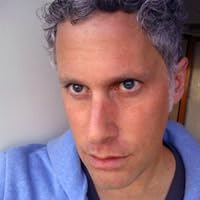
Alan Wilson Watts (6 January 1915 – 16 November 1973) was a British born philosopher, writer, and speaker, best known as an interpreter and populariser of Eastern philosophy for a Western audience. Born in Chislehurst, he moved to the United States in 1938 and began Zen training in New York. Pursuing a career, he attended Seabury-Western Theological Seminary, where he received a master's degree in theology. Watts became an Episcopal priest but left the ministry in 1950 and moved to California, where he joined the faculty of the American Academy of Asian Studies.
Alan Wilson Watts was a British philosopher, writer and speaker, who held both a Master's in Theology and a Doctorate of Divinity. Famous for his research on comparative religion, he was best known as an interpreter and popularizer of Asian philosophies for a Western audience. He wrote over 25 books and numerous articles on subjects such as personal identity, the true nature of reality, higher consciousness, the meaning of life, concepts and images of God and the non-material pursuit of happiness. In his books he relates his experience to scientific knowledge and to the teachings of Eastern and Western religion and philosophy.
This is a very brief, illustrated book. Each image is a circle that stands alone on the left-hand page, with some text on the right. It is very good writing, and it is hard to criticize spiritual writing for being to breif, because it ideally should be something that you think about while not reading. This book gives plenty to meditate on,and would be a nice introduction to Alan Watts for people who don't want to dive right in to theological prose.
The book is the third of a ten part series on the short and sweet of Watts’ thinking on Eastern Buddhism. It was published after his death, so this is a remembrance of sorts.
The topic of this book is Nothingness. The essence of his thinking in this regard is represented by a picture of a meditating Buddha on page 32, bounded by a frame. The left half of the Buddha is visible. The right half is dark. Watts’ point is subtly made: Without words, the viewer fills out the darkness, which is nothing, with something.
In his summaries, he writes that one can’t have something without having nothing. Nothing defines something. By implication, one might think that Watts is saying that nothing is nothing, but he’s saying that nothing is real. We look at the material world and think it’s real, but modern physics says that is not so. Ultimately, there “are vast spaces within the very heart of the atom.” But it is this “emptiness” that gives form to the material world. By extension, with consciousness we think we know, but a vast unknown resides in the unconscious. Though we don’t know, it is there.
Watts has a brilliant way of presenting his thoughts. Though written in the 1960s-70s, he weaves modern cosmology, physics and computer science into his Eastern mysticism. He anticipates all counter arguments, and addresses them. Watts is not asserting that unknowns underlie the known. He is, rather, asserting that something underlies it. That something is the soul of the universe, of which we are a part.
As Herbert Spencer observed of ultimate reality, we can ask the question, but we cannot know the answer. That doesn’t stop Watts. He fills nothing with something. The deeper question might be, why does he need to do this?
A quick read, but a profound read on clarity, nothingness and perception.
“And so it’s all made up of off and on and conscious and unconscious. But the unconscious is a part of experience which is doing consciousness, just as the trough manifest the wave, the space manifests the solid, the background manifests the figure. And so all that side of life which you call unconscious, unknown, impenetrable is consciousness, unknown, impenetrable, because it’s really you. In other words, the deepest you is the nothing side is a side which you don’t know. “
“ think once again of the image of clarity crystal clear. Nothing is what brings something into focus. This nothing symbolized by the crystal is your own eyeball your own consciousness.”
A really interesting view of the world. I want to sit and think about it for a while but basically what Watts is saying is that nothingness is something to embrace and love because the nothingness is pivotal to the something that we feel/see/hear/sense everyday. One of the passages that really stuck out to me was his view of the fear of the universe ending. He feels that it's a completely unreasonable fear because with nothing, something is always there to fill the space. The idea that there is no something is so unimaginable because it can't happen. Without the something to fill the nothing, nothingness can't be there. (I'm butchering this but it was cool and made sense to me)
A bit off-the-wall with equal doses of science and irreverence but an enjoyable lightning-quick reads on one of my fave core reasons for everything... nothing.